
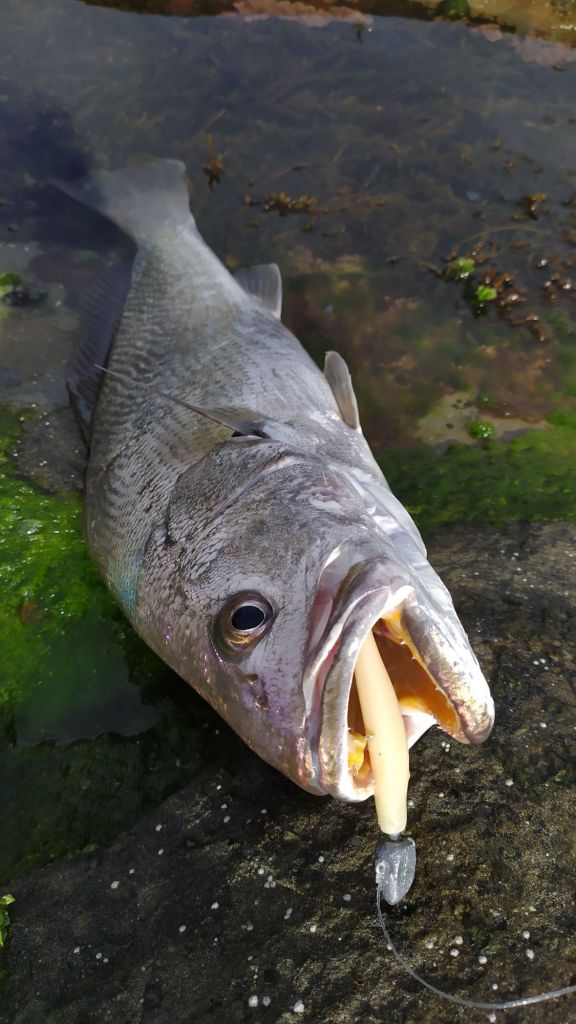
At the end of march the mullet and garfish had started to school up in the Clarence River. As we moved into April the mullet started to emerge at the mouth of the river in huge schools. The month started with some good tailor and jew/ mulloway fishing sessions on the headlands. I even caught some 50 – 60 cm jewfish on my last packet of GULP Lizard soft plastics (another long discontinued pattern that never really caught on).
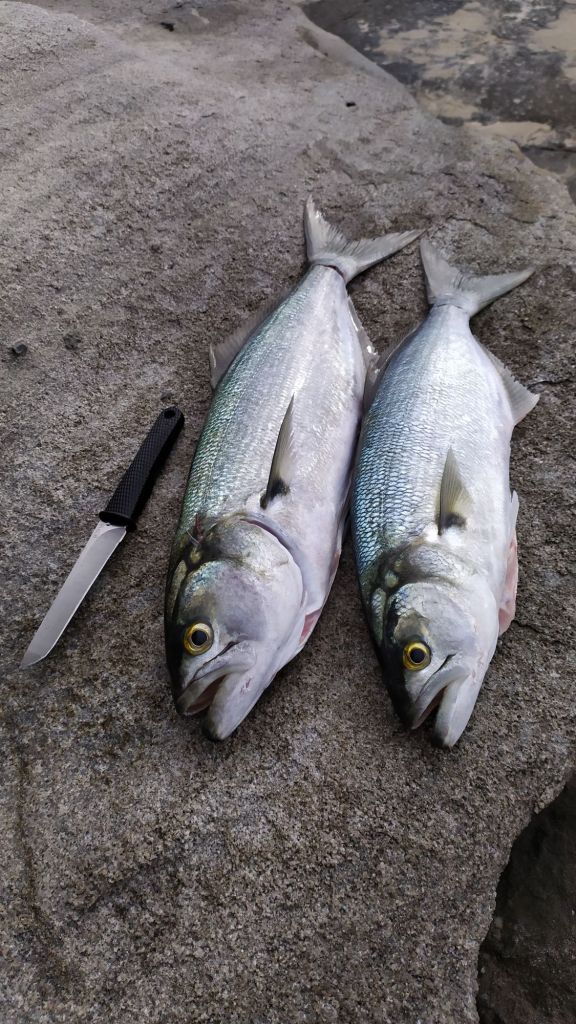


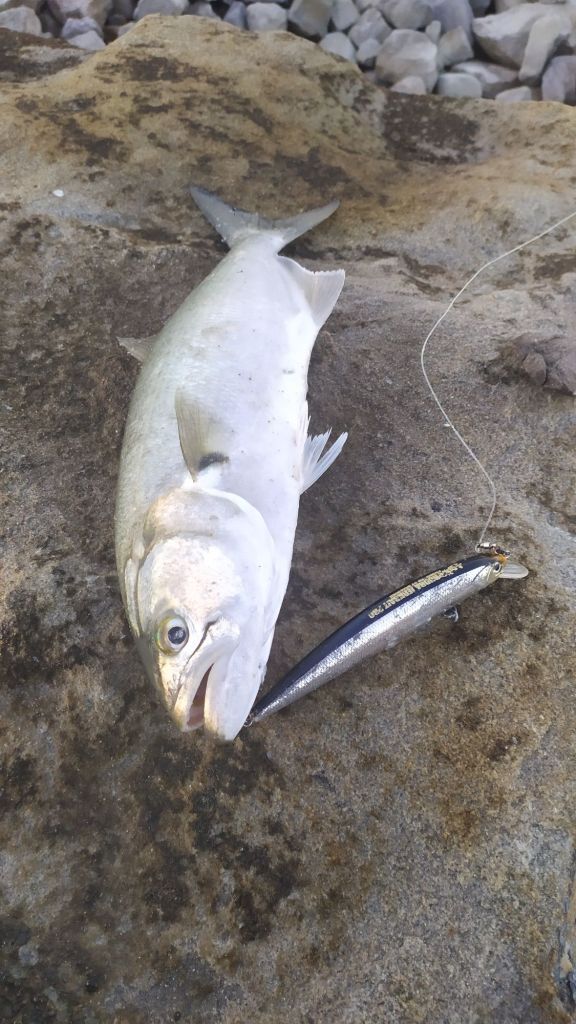
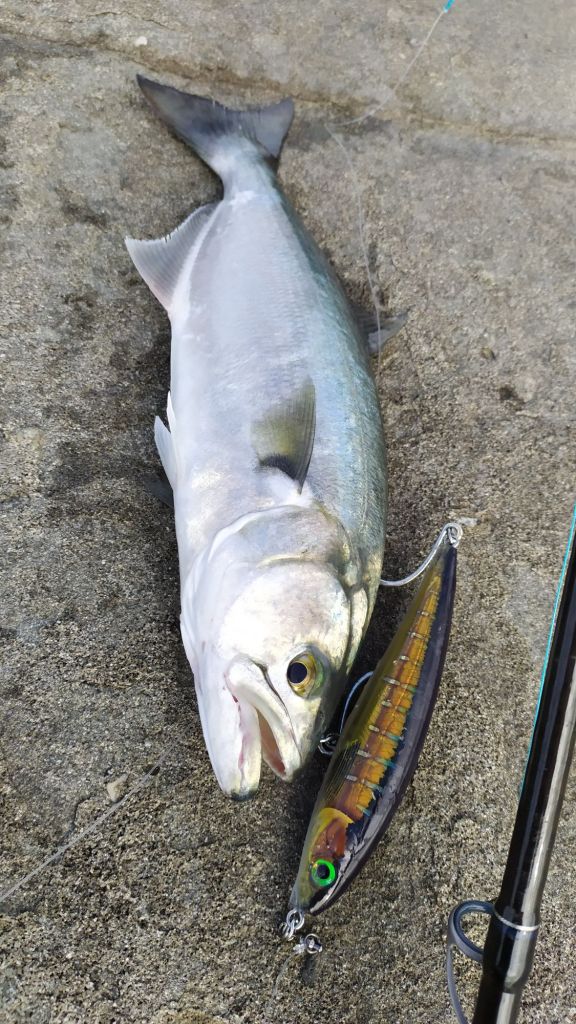


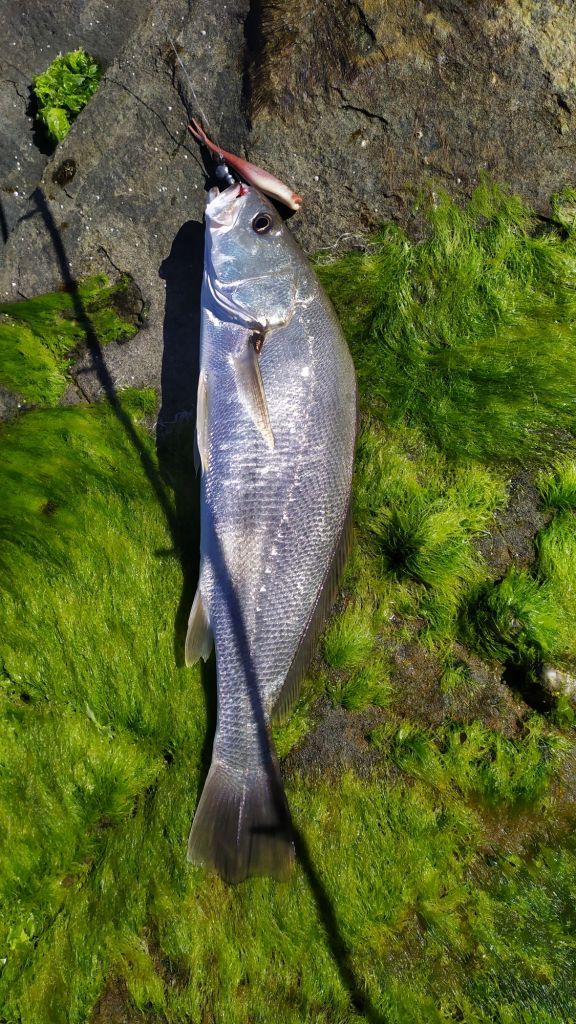


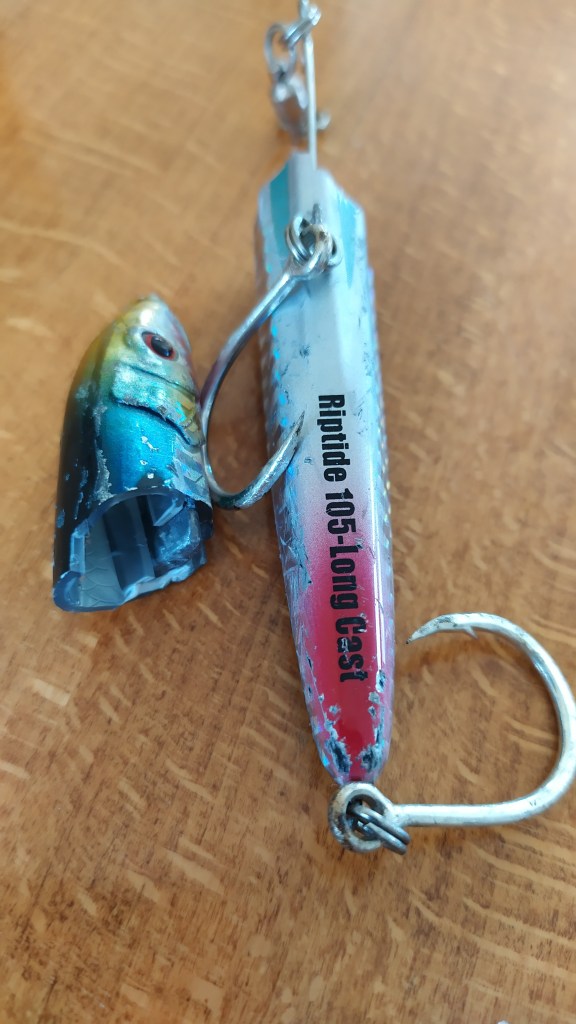
Out on the rock wall one morning I was casting a small sinking NOMAD Riptide 105 Longcast into the wash, just behind the wave break at dawn. A big fish came out of nowhere and engulfed the lure. I fought it for a while and then looked for a place to land it. I eventually found some flattish rocks I could get down to and manage to pull it up to me by the leader. It was another stonker tailor approaching 90 cm long. I like the action of the NOMAD Riptide but they cannot handle rock fishing, this one was fatally weakened during its first run in with a big fish. Longcast perhaps, long last – not so much.


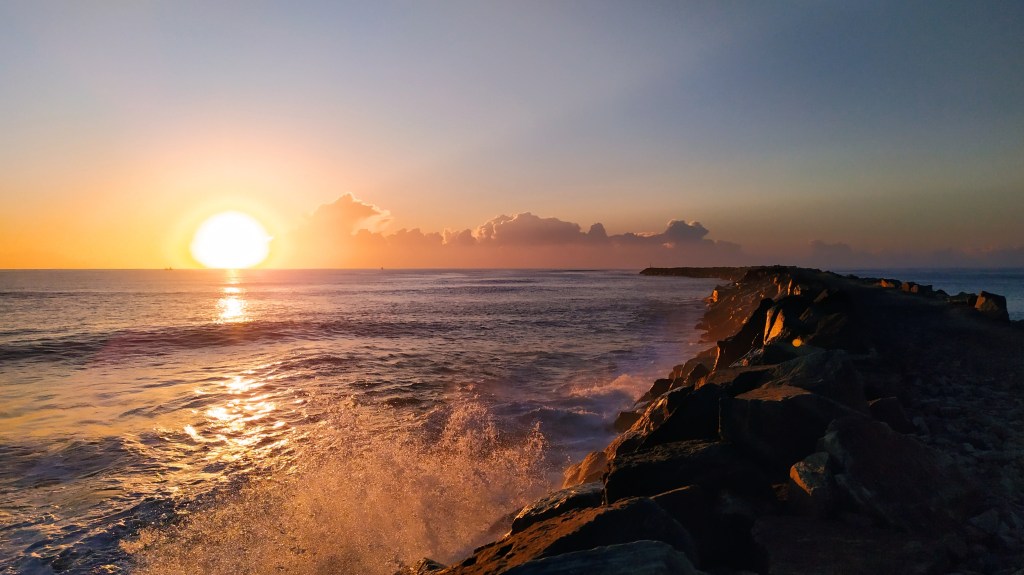
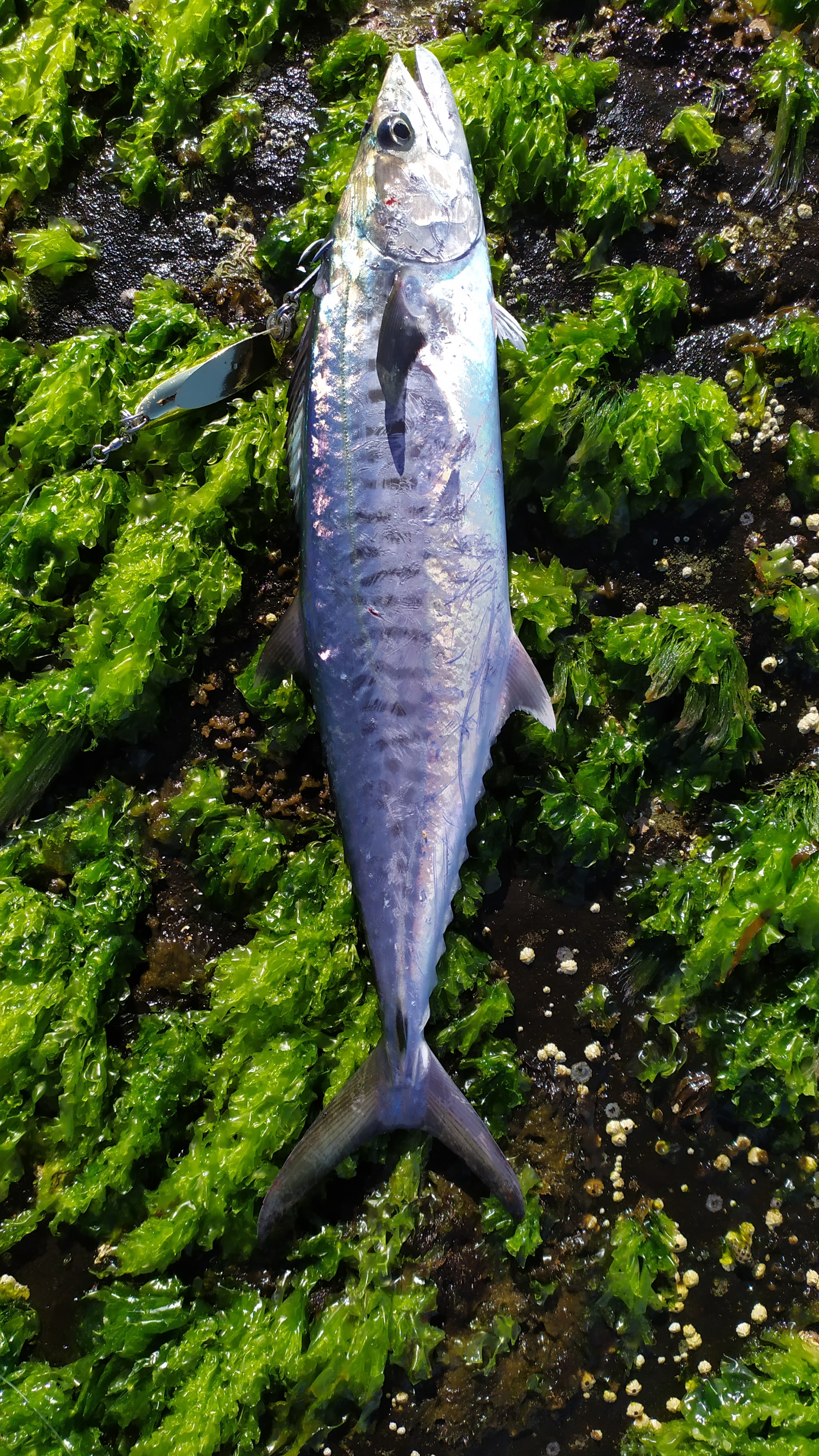
Once the garfish were heading out into the sea it was only matter of time before the bigger predators turned up. Sure enough at the beginning of April people started to catch a few longtail tuna from the north wall of the river. Whilst chasing tailor I managed to hook a small mackerel and lost a few metal slugs to bite offs, which I assume where bigger mackerel.
I have tangled with plenty of tuna over the years but never managed to stop one. This year I was determined to change things. I now have a bigger reel – a Daiwa Saltist 10,000 size. I matched it with my Daiwa Saltist 962 MH rod and rigged up with 40lb braid and a 50lb fluorocarbon leader.
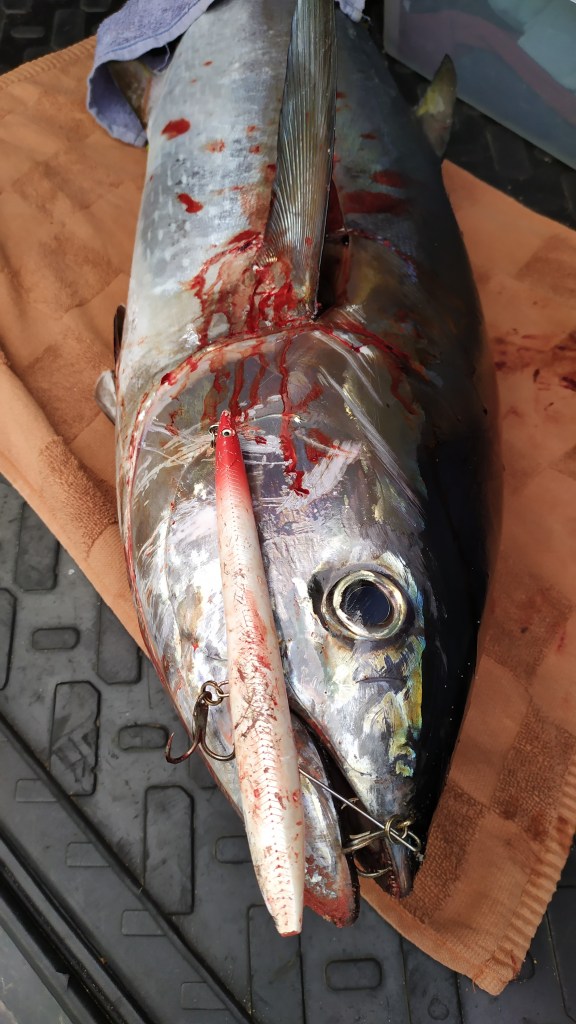
I started fishing the tide changes on the wall and one Saturday morning, I arrived to find a few longtails had already been caught. Whilst I was rigging up the long tails came past again, of course I wasn’t ready. I finally got sorted and started casting with a hard bodied surface garfish imitation. I did not have to wait long for them to swim by for another pass.
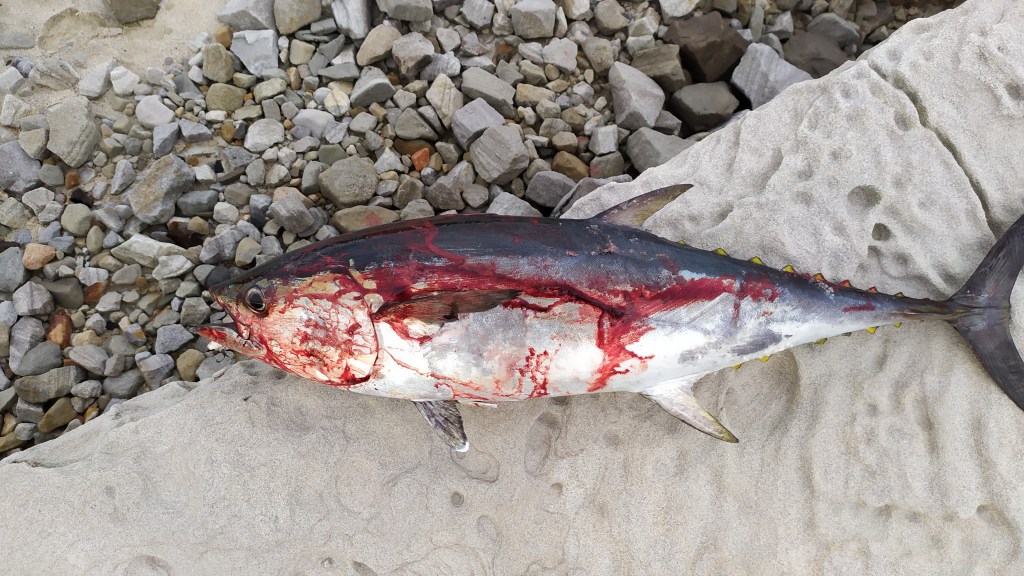
I was doing a sweeping retrieve and moving the lure quite quickly over the surface. My lure was about 4 metres from the base of the rockwall, swimming towards the beach, when a long-tailed tuna rocketed up behind it and took it on the surface.
It took off on a blistering initial run. My drag was set fairly tight. I watch the line peel from the spool and listened to that delightful sound. It’s difficult to tell but it took perhaps a hundred and twenty metres in that first run. It then paused for just a second and was off again.
It finally paused just long enough for me to start winding and getting some line back. The rod tip was beating fast. I watched as the fish now started to swim parallel with the wall.
I was very lucky and there was an experienced tuna fisherman (with gaff) close buy who came to help. He explained the mechanics of turning the fishes head as it started to swim in towards the rocks. The hooked tuna will swim in arcs in front of you and the aim is to gradually reduce the size of those arcs by keeping a constant pressure on the fish. Basically, tuna only swim forwards so you need to allow the fish to turn its head, so that it can swim back in the opposite direction when it finish its arc, at the base of the rocks. In order to do this it needs to feel slightly less pressure, this will make it turn away from the rocks and swim back in an arc the other way. So as the fish approaches the base of the rocks you ease up on the bend in the rod, just a little and it turns back in the other direction. You keep doing this as the fish tires and the arcs get smaller and smaller.
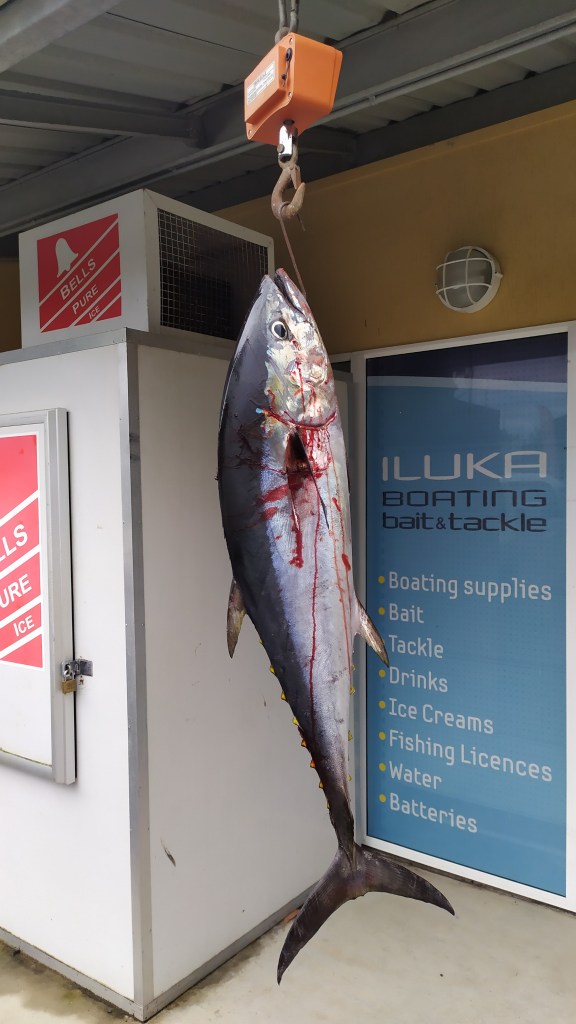
After what felt like and hour ( but was actually only about 15 minutes) the fish was at our feet and my new friend expertly gaffed the fish for me – mission accomplished. It later weighed in at 9.4 kgs.



April – what a month!
 Landangler's Blog