Iluka – the Clarence River and the Bundjalung Headlands –  April 2024

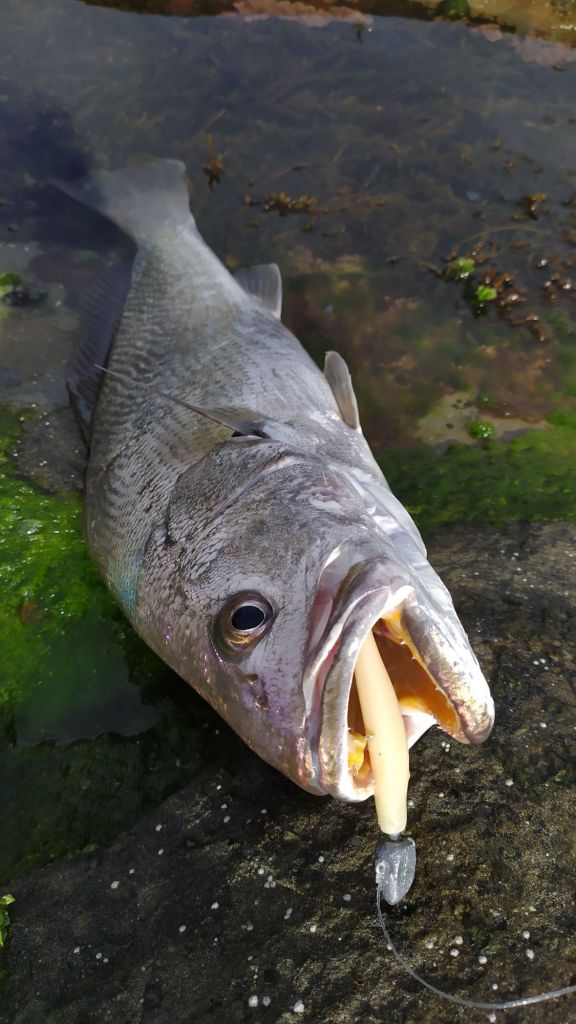
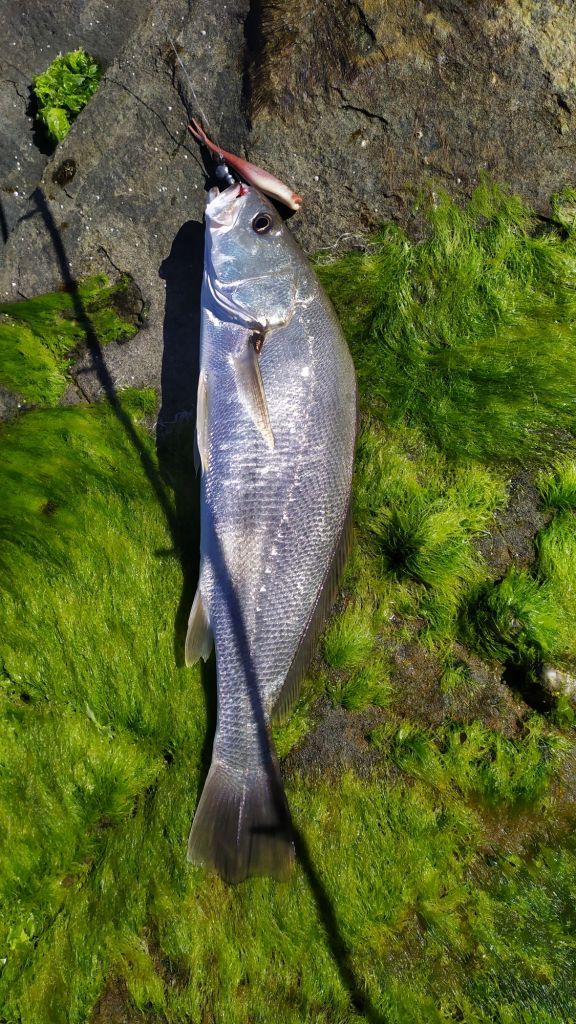
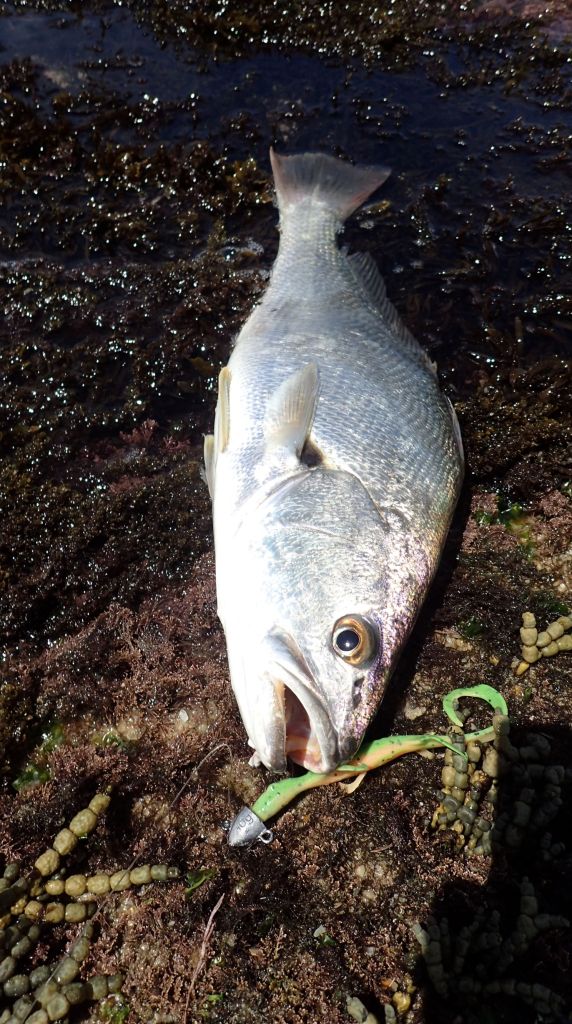
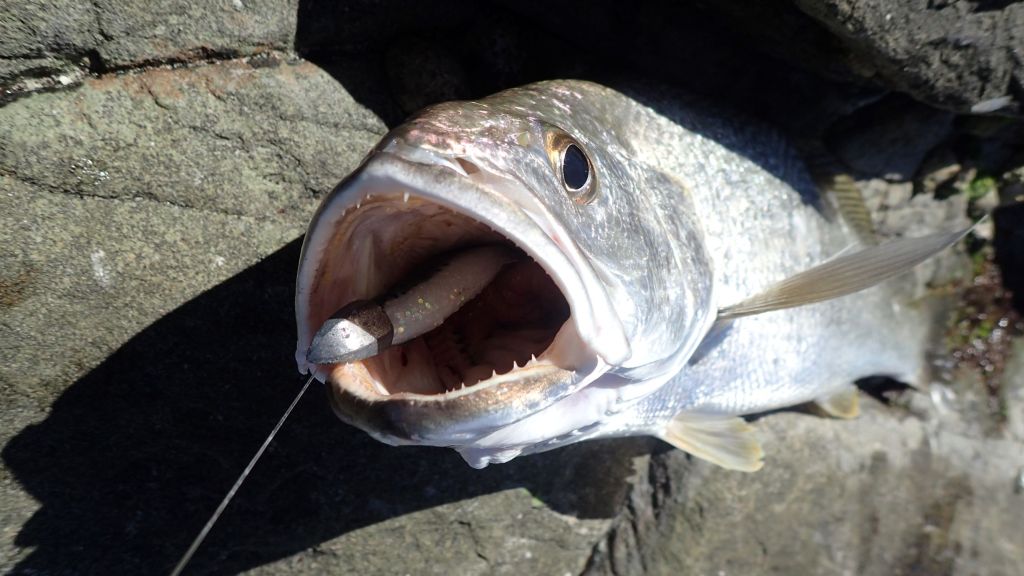
At the end of march the mullet and garfish had started to school up in the Clarence River. As we moved into April the mullet started to emerge at the mouth of the river in huge schools. The month started with some good tailor and jew/ mulloway fishing sessions on the headlands. I even caught some 50 – 60 cm jewfish on my last packet of GULP Lizard soft plastics (another long discontinued pattern that never really caught on).
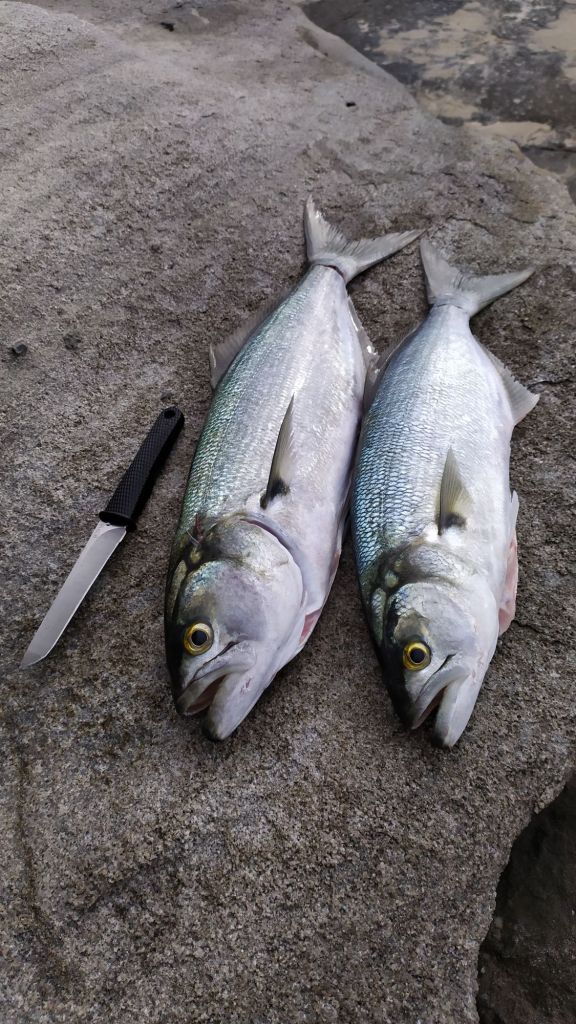
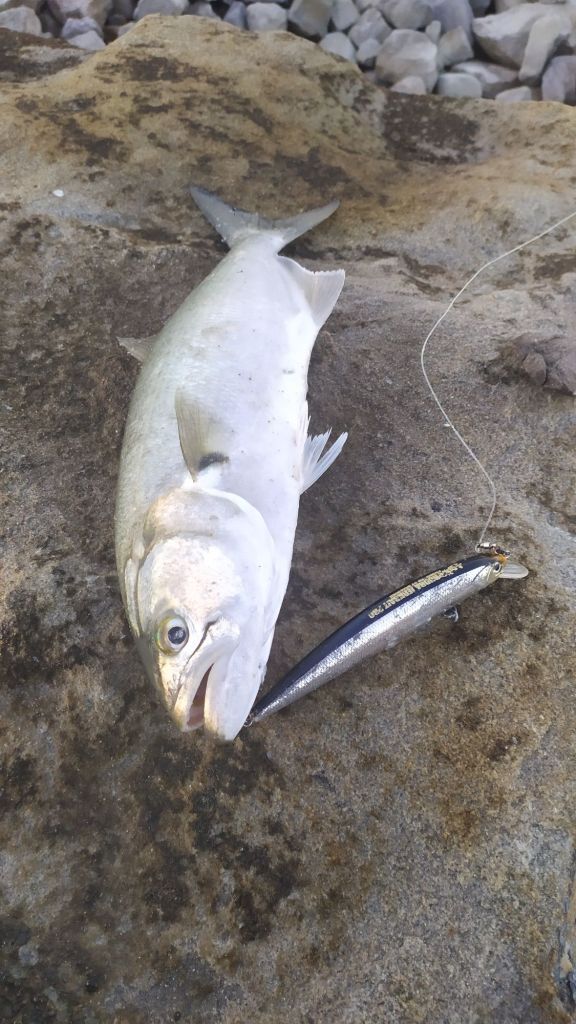
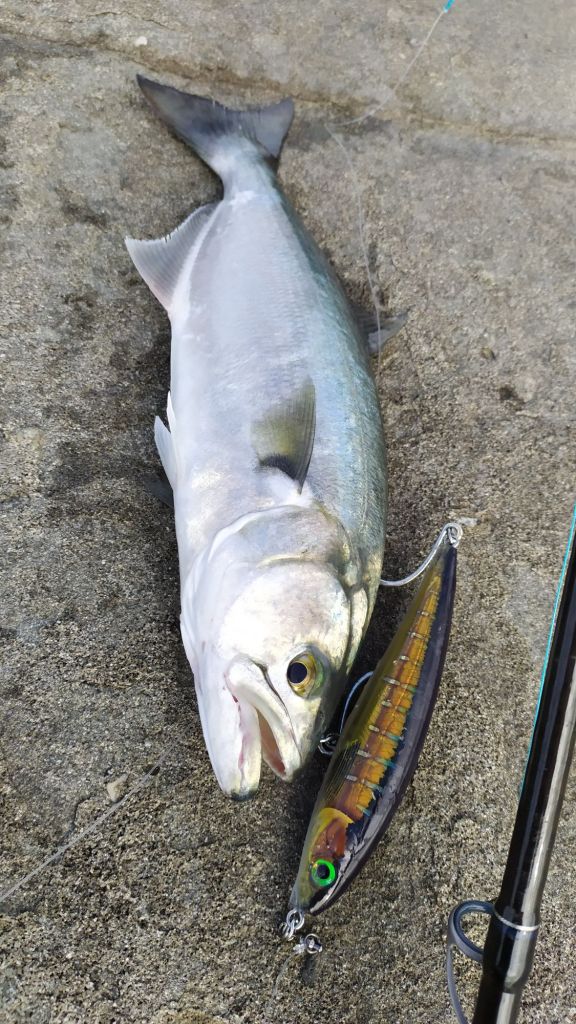
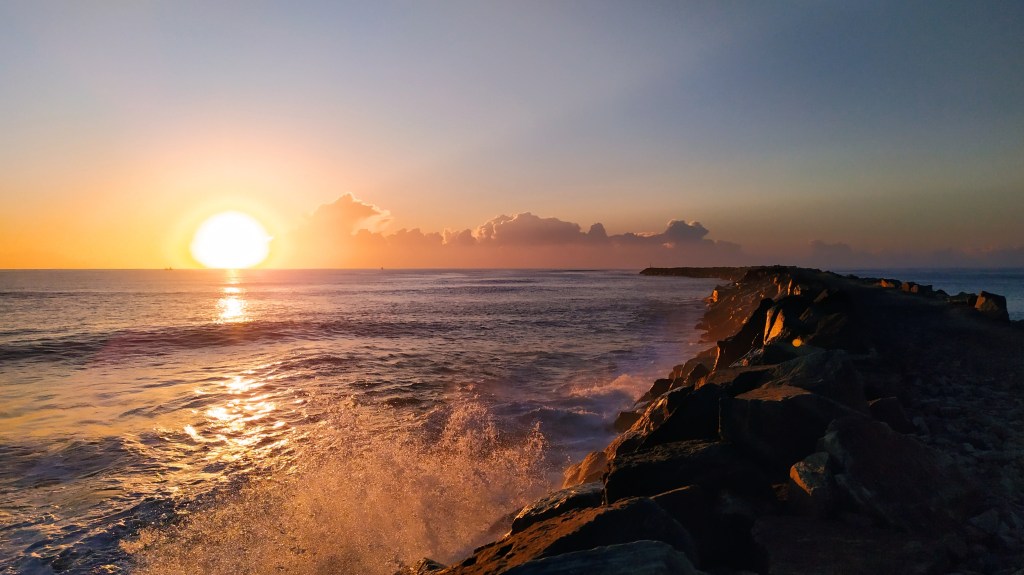
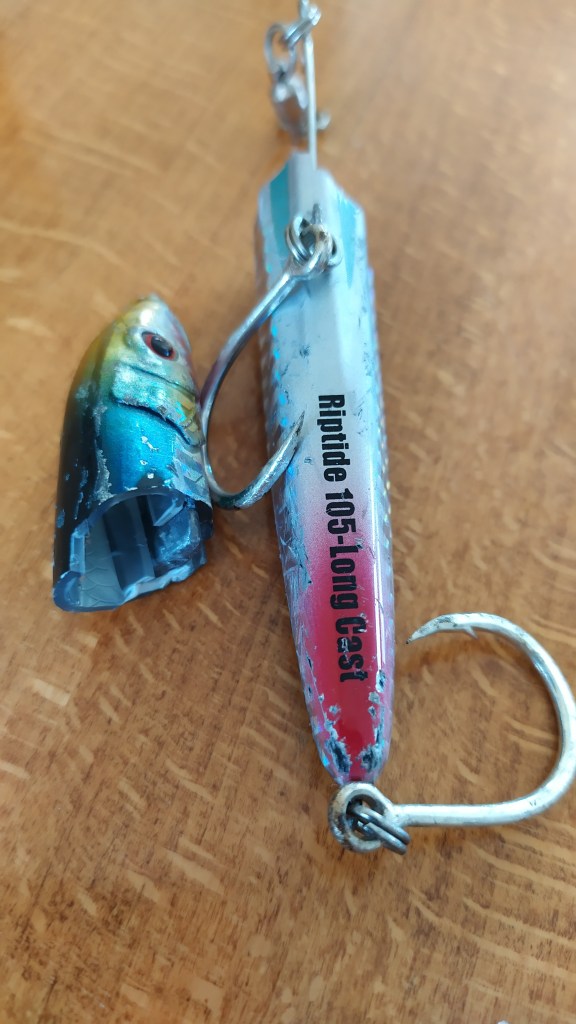
Out on the rock wall one morning I was casting a small sinking NOMAD Riptide 105 Longcast into the wash, just behind the wave break at dawn. A big fish came out of nowhere and engulfed the lure. I fought it for a while and then looked for a place to land it. I eventually found some flattish rocks I could get down to and manage to pull it up to me by the leader. It was another stonker tailor approaching 90 cm long. I like the action of the NOMAD Riptide but they cannot handle rock fishing, this one was fatally weakened during its first run in with a big fish. Longcast perhaps, long last – not so much.
Once the garfish were heading out into the sea it was only matter of time before the bigger predators turned up. Sure enough at the beginning of April people started to catch a few longtail tuna from the north wall of the river. Whilst chasing tailor I managed to hook a small mackerel and lost a few metal slugs to bite offs, which I assume where bigger mackerel.
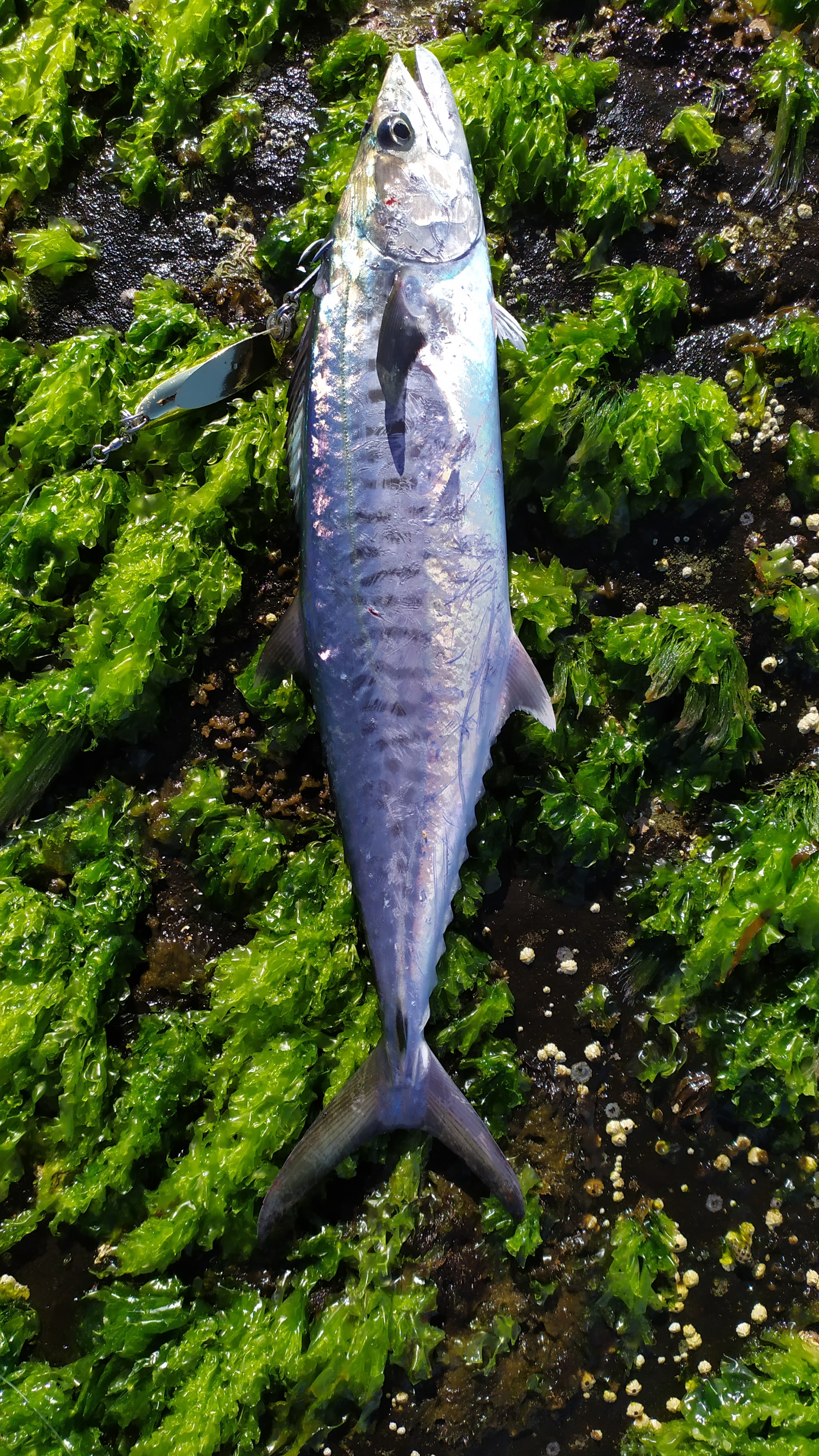
I have tangled with plenty of tuna over the years but never managed to stop one. This year I was determined to change things. I now have a bigger reel – a Daiwa Saltist 10,000 size. I matched it with my Daiwa Saltist 962 MH rod and rigged up with 40lb braid and a 50lb fluorocarbon leader.

I started fishing the tide changes on the wall and one Saturday morning, I arrived to find a few longtails had already been caught. Whilst I was rigging up the long tails came past again, of course I wasn’t ready. I finally got sorted and started casting with a hard bodied surface garfish imitation. I did not have to wait long for them to swim by for another pass.

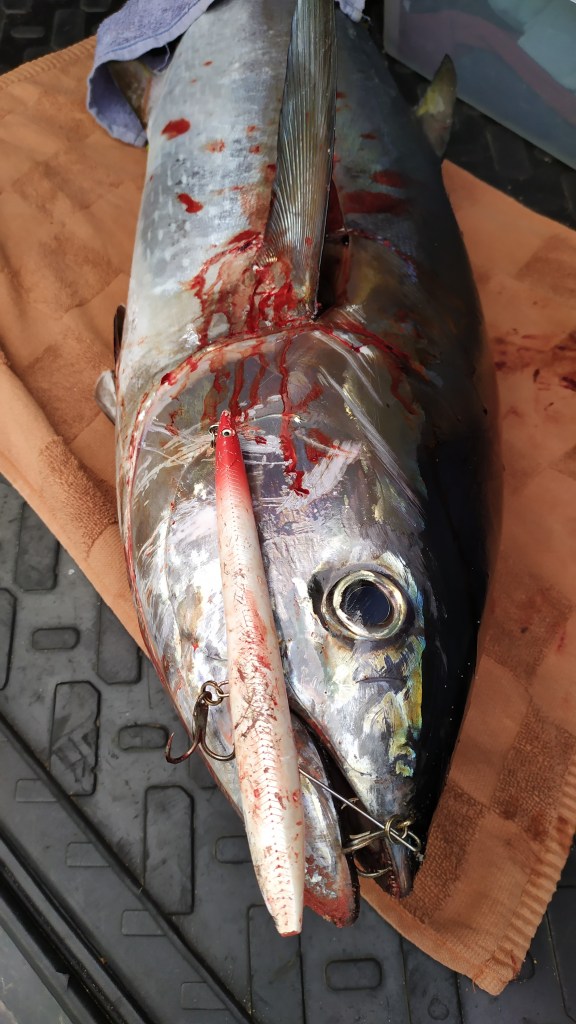
I was doing a sweeping retrieve and moving the lure quite quickly over the surface. My lure was about 4 metres from the base of the rockwall, swimming towards the beach, when a long-tailed tuna rocketed up behind it and took it on the surface.

It took off on a blistering initial run. My drag was set fairly tight. I watch the line peel from the spool and listened to that delightful sound. It’s difficult to tell but it took perhaps a hundred and twenty metres in that first run. It then paused for just a second and was off again.

It finally paused just long enough for me to start winding and getting some line back. The rod tip was beating fast. I watched as the fish now started to swim parallel with the wall.

I was very lucky and there was an experienced tuna fisherman (with gaff) close buy who came to help. He explained the mechanics of turning the fishes head as it started to swim in towards the rocks. The hooked tuna will swim in arcs in front of you and the aim is to gradually reduce the size of those arcs by keeping a constant pressure on the fish. Basically, tuna only swim forwards so you need to allow the fish to turn its head, so that it can swim back in the opposite direction when it finish its arc, at the base of the rocks. In order to do this it needs to feel slightly less pressure, this will make it turn away from the rocks and swim back in an arc the other way. So as the fish approaches the base of the rocks you ease up on the bend in the rod, just a little and it turns back in the other direction. You keep doing this as the fish tires and the arcs get smaller and smaller.

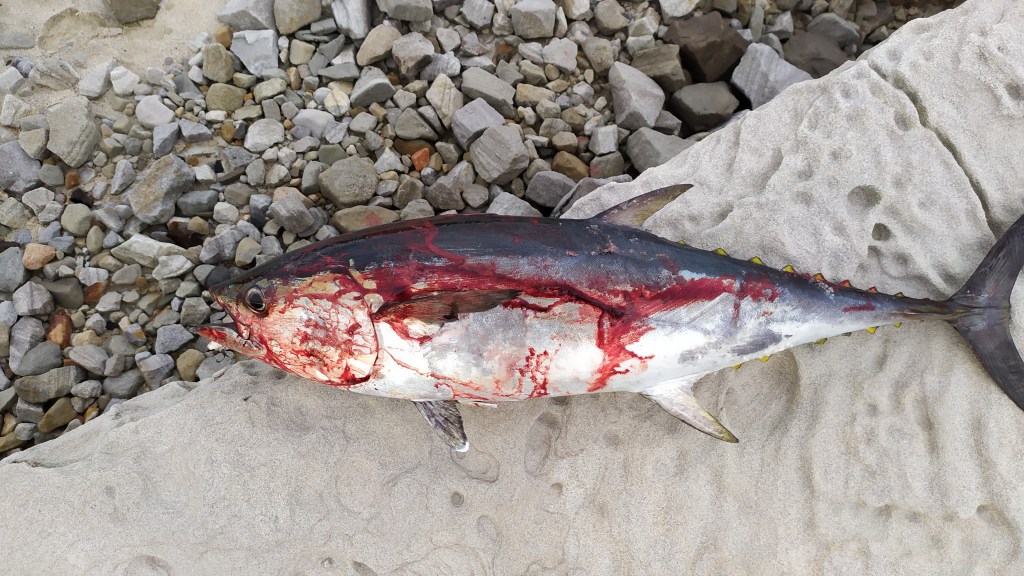
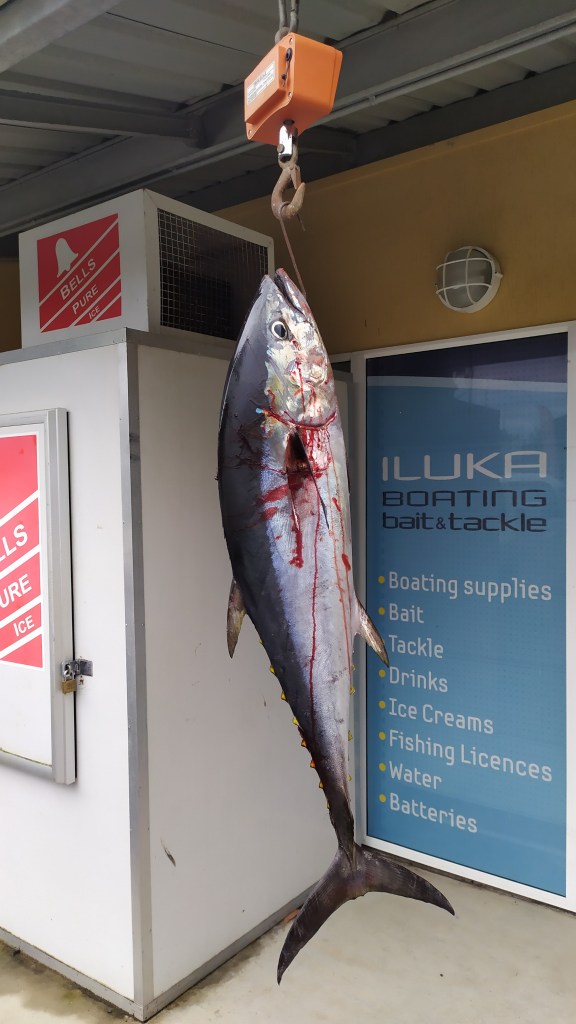
After what felt like and hour ( but was actually only about 15 minutes) the fish was at our feet and my new friend expertly gaffed the fish for me – mission accomplished. It later weighed in at 9.4 kgs.

April – what a month!
Iluka – Woody Head – Jewfish/ Mulloway – 9 March 2021

I took a few days off to nurse my bruised behind and besides, the southeasterly winds blew the rain in and brought back high seas. By Tuesday conditions had improved significantly but we had still had a lot of rain and the Clarence River had not cleared up much. So, it had to be one of the headlands or the rockwall at the mouth of the river. There had been quite a lot of tuna landed from the wall a few weeks earlier, when the water was fairly clear. I desperately want to catch a good one, but I still do not have the patience or the gaff skills. One day I will get there!

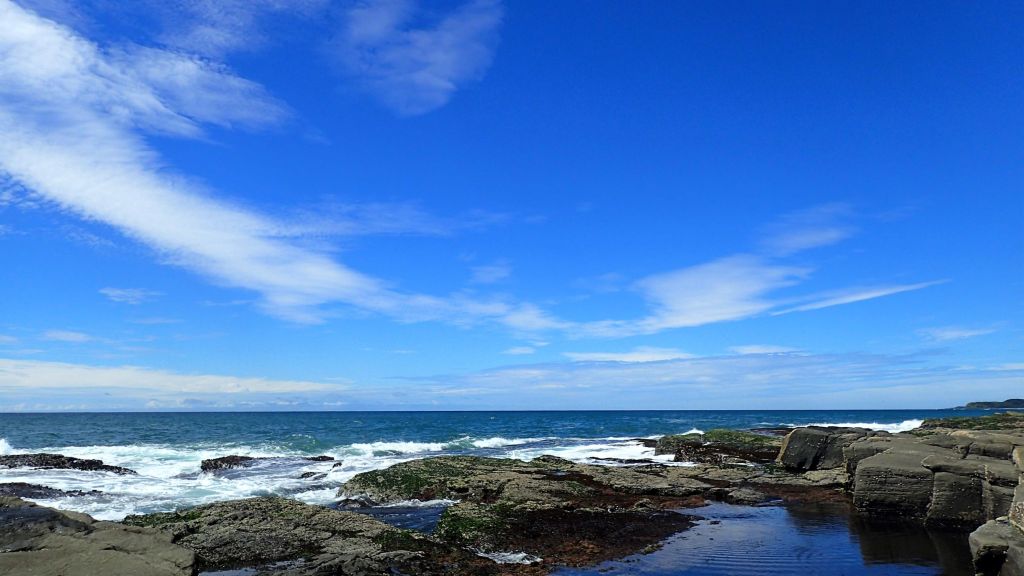
There are a lot less options on a high tide on the headlands, so I decided to fish the southern end of the Woody Head platform, through the low tide change. Low tide would be at about 1.00 pm and I arrived at Woody Head at about 10.00 am. The wind was light from the south-east and forecast to switch round to a north-easterly in the afternoon. The new moon was due on 4 days. It was bright, warm and sunny and the water around the headlands seemed clearer than it had been the week before.

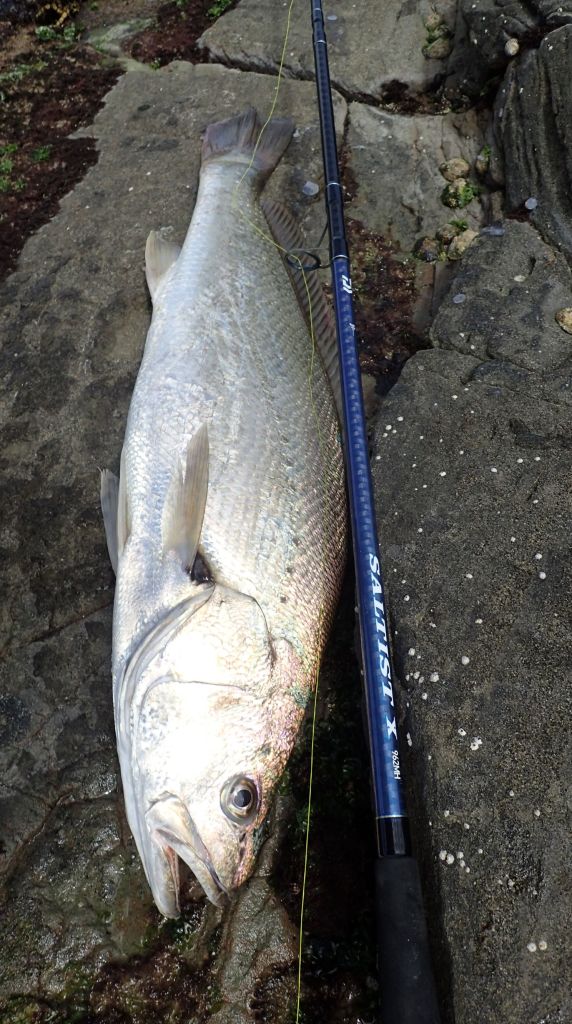
I was fishing with the heavier of my two rock spinning/ plastics outfits – based on the DAIWA Saltist X MH 962 rod. Today I tied on a 30lb fluorocarbon leader. I had my reel loaded with 40lb braid. I selected a 1/4 ounce jighead and loaded a GULP 4″ Minnow soft plastic in the Watermelon Pearl colour. I cast out, about 10 metres beyond the wash and let it sink for about 5 seconds. I hopped the jighead back up, just before I felt it would be on the bottom and paused. When I lifted the rod again a fish whacked the plastic and then dropped it. Almost immediately another fish (or the same one) came in for another bite. I set the hook and knew it was a tailor by its initial madness. I muscled it up to my feet. It was about 35 cm long and I threw it back.

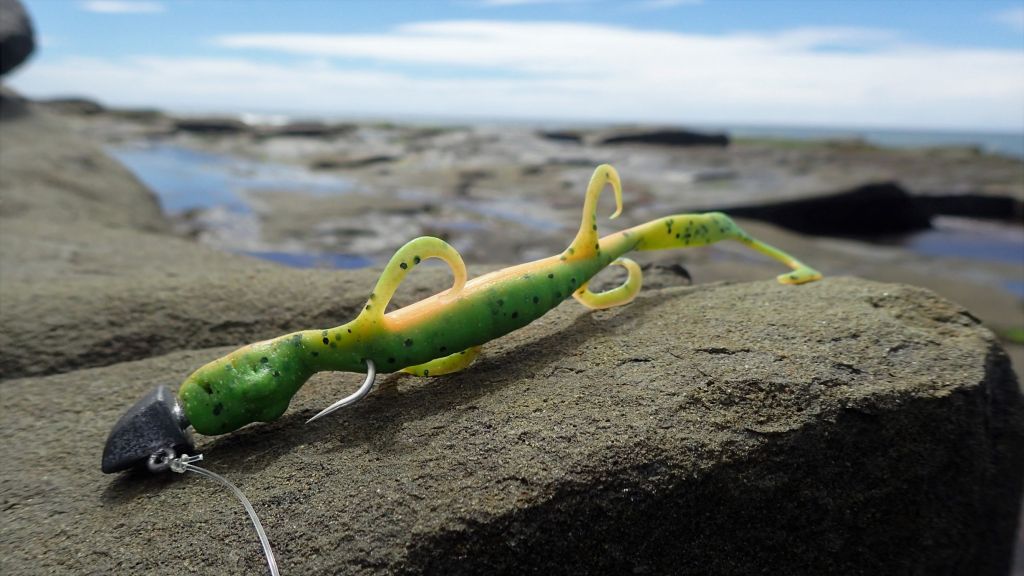
Now I was confident. The soft plastic was ruined so I had to pick out another. I have had a jar of the GULP Lizard shaped soft plastics sitting on my tackle shelf for ages. I think I bought them by mistake a couple of years ago, thinking they were Crazylegs Jerkshads. Perhaps limited re-supply shipments of GULP are arriving due to COVID or the tackle shops have all had to find space for the new DAIWA Bait Junkie soft plastic range – either way – one of my favourite GULP colours: Lime Tiger (green and orange with a black fleck) is getting hard to find, in any profile. There also aren’t many 4″ Minnow profiles left on sale in any colours. The jar of lizards is in the Lime Tiger colour, so I have been taking a few out with me on each session. So @purefishing and https://berkley-fishing.com.au/, get the Lime Tiger Minnows, Shrimps & Jerkshads back on the shelves, please.

The GULP Lizard soft plastic in Lime Tiger colour

I put the GULP Lizard soft plastic on a 1/4 ounce, size 1/0 hook jighead and cast it out. It was now about 10.45 am. The swell was slapping up against the rocks as the tide got lower but it was fairly light. I cast around a few times and did not get a bite. I slowed things right down and tried to get the soft plastic fluttering around on the bottom, as close to the base of the rocks as possible. I felt a gentle bite but I thought it could be the cunjevoi that covers the rocks round here and snatched the lure back to the surface. On the next cast the same thing happened. On the third try I lingered longer and when I started to retrieve, I hooked something. It slowly wriggled for a bit and then pulled hard. It was swimming under a ledge/ overhang and almost immediately, I could feel the line rubbing. As I tried to fight back the leader rubbed through.

I re-rigged and chose a slightly heavier 3/8th ounce, size 1/0 jighead. I put a GULP Lizard soft plastic on again. I followed the same process as before and after a few more casts I was on again in the same spot. It was a smaller fish, and it swam out, not in – making things much easier. After a brief fight I lifted it up on a wave. The was a small school mulloway/jewfish, about 45cm long. I threw it back, straightened the Lizard on the jighead and cast out again. After about 10 minutes if fishing I was on again. This time it was a bigger one, but I have fished here a few times and figured out where I can use the stepped ledges and surf to get the fish up. I pulled it up on a big surge and the leader held. It was about 55 cm long. I snapped it and let it go.

I carried on fishing for about another 15 minutes with the GULP Lizard. I hooked and dropped another jewfish that might have reached the legal 70 cm size. Then I lost the jighead and lizard soft plastic by snagging them on the bottom.

I did not have any more GULP Lizards with me, so I swapped to a 5″ GULP Paddleshad soft plastic, in the pink colour. I went with another 3/8th ounce, size 1/0 jighead. I had obviously found a school of jewfish that were sitting under an overhang or in an underwater cave. If I could let my soft plastic waft in close to them, they would bite. The Paddleshad worked just as well as the Lizard and I soon had another decent fish on. This time I had luck on my side again – its solid initial run was out towards open water. I tightened my drag a little and it turned around. I kept the rod tip up and looked for a landing zone. I found a good spot and I wound in fast as a big surge lifted the fish over the ledges and into a safe, shallow rock pool that I could jump down to. This one was a keeper – just over 80cm long.

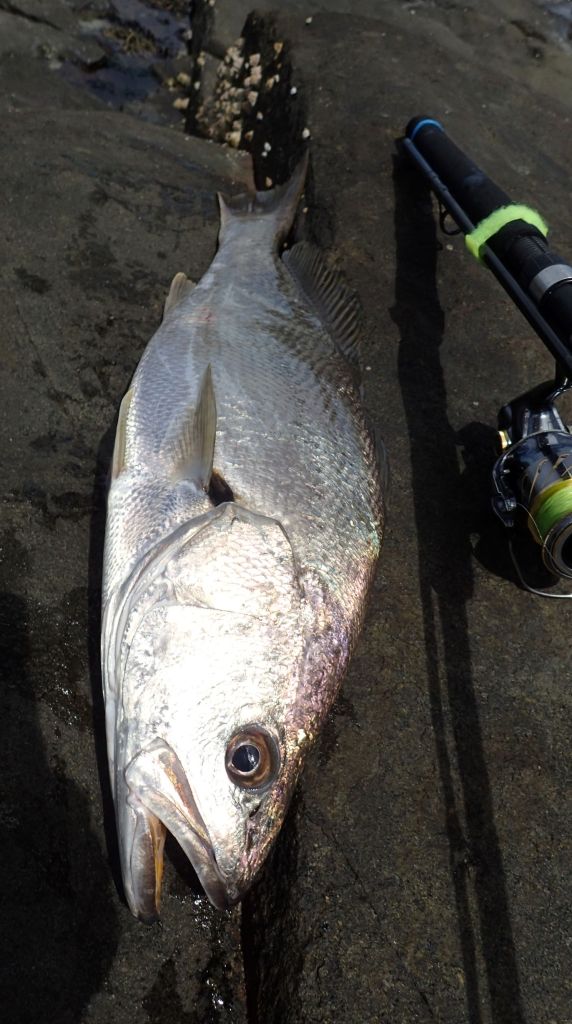
I caught three more jewfish all around 60 cm long. Then the tide started to run in again and they either stopped eating or wised up to my tactics. At about 2.00 pm I cleaned up my fish and walked back to the car.

It was a very active jewfish/ mulloway bite, in the middle of the day with a not particularly big tide or moon influence. There was plenty of bait in the water but no other obvious reason why they were so hungry. I love winter fishing – bring on the cooler weather.