Iluka – the Clarence River and the Bundjalung Headlands –  April 2024

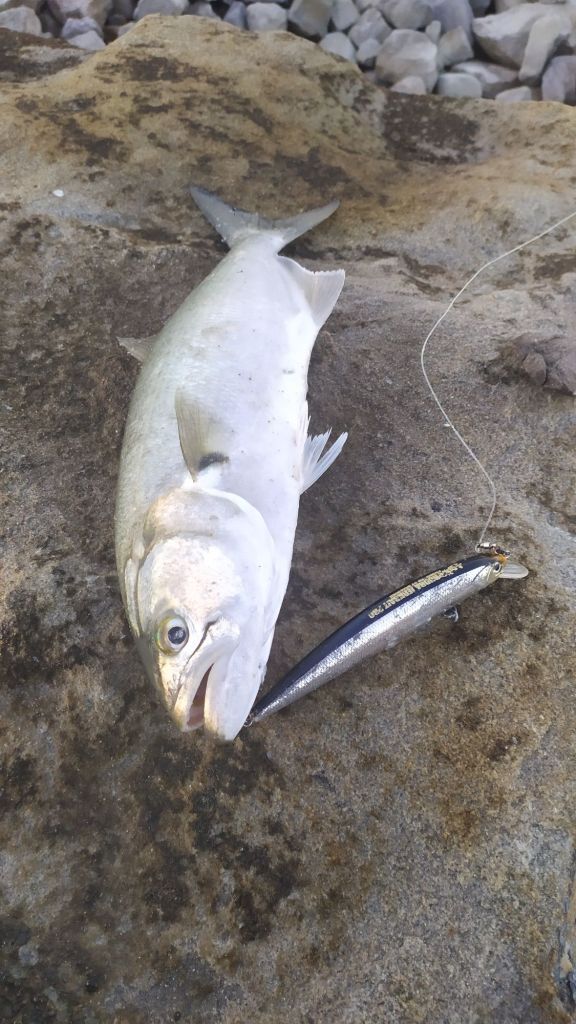
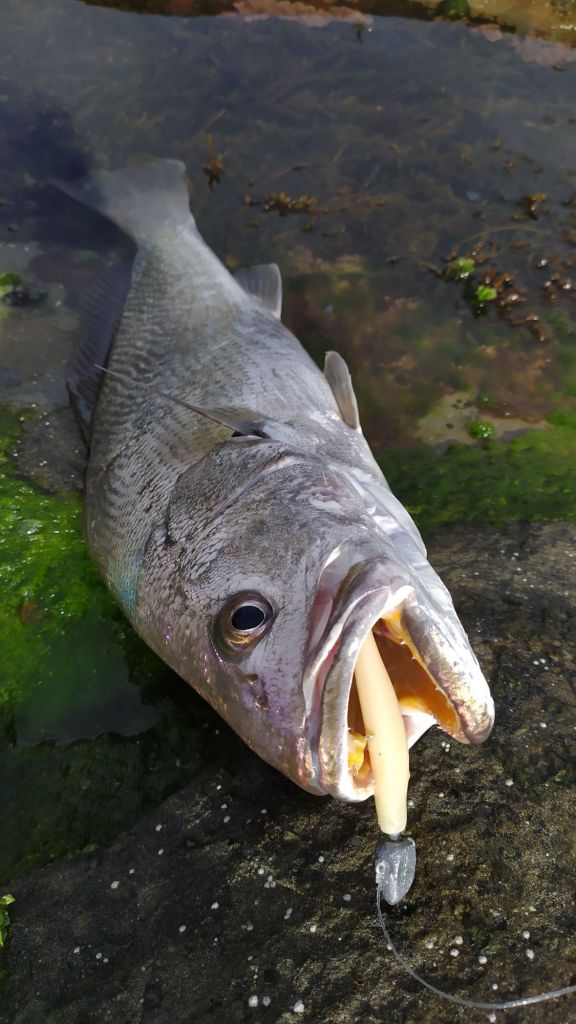
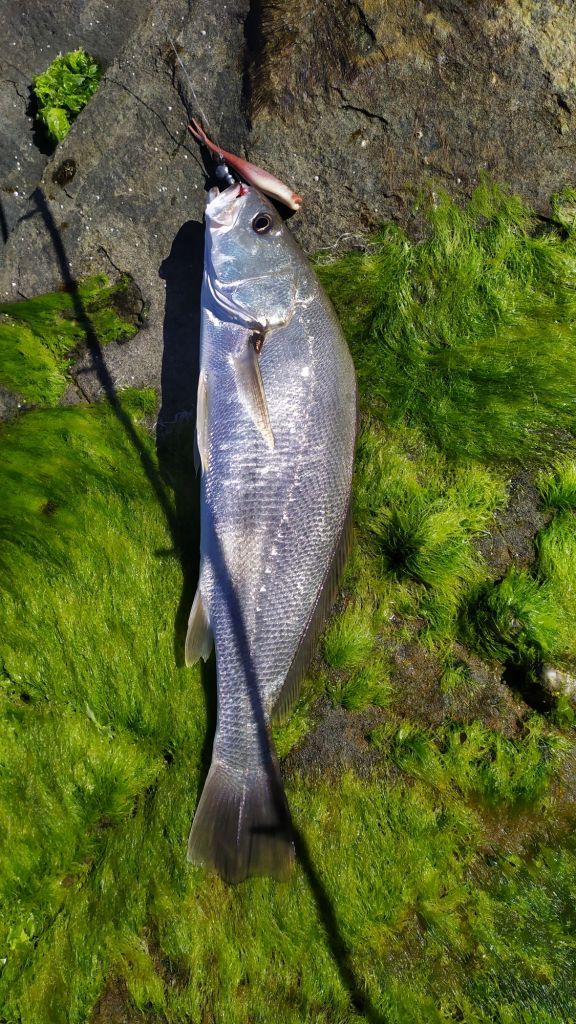
At the end of march the mullet and garfish had started to school up in the Clarence River. As we moved into April the mullet started to emerge at the mouth of the river in huge schools. The month started with some good tailor and jew/ mulloway fishing sessions on the headlands. I even caught some 50 – 60 cm jewfish on my last packet of GULP Lizard soft plastics (another long discontinued pattern that never really caught on).
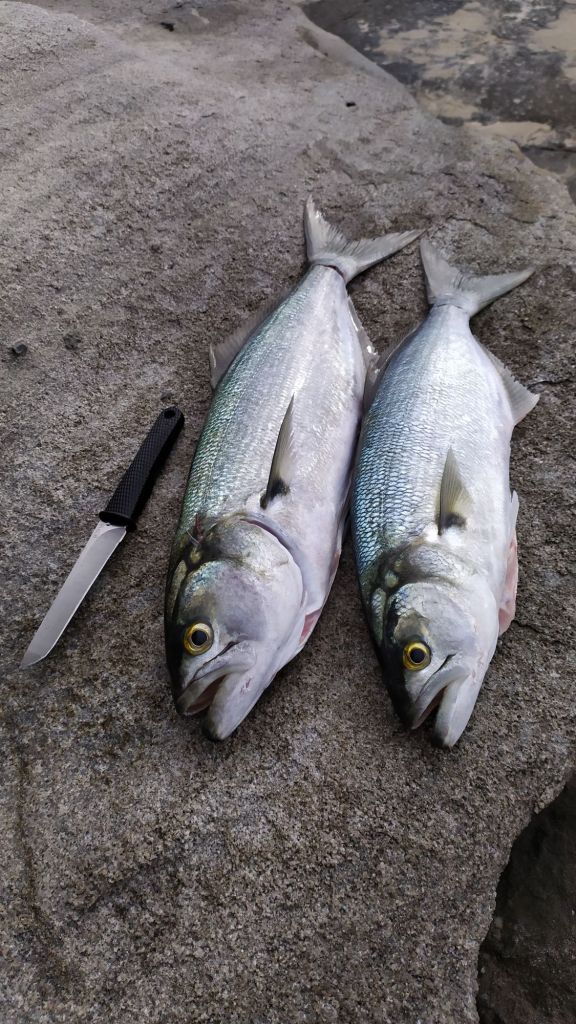
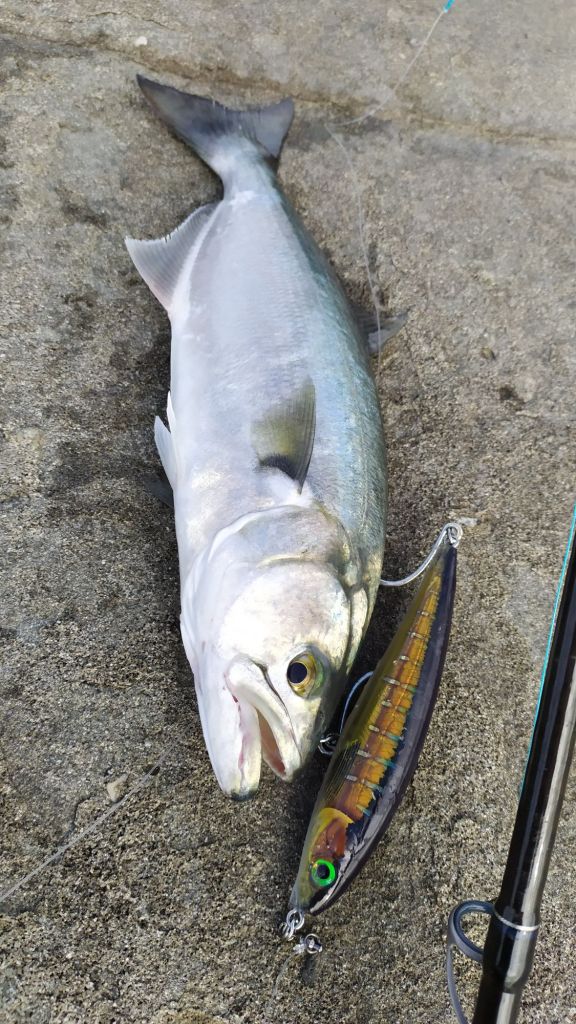
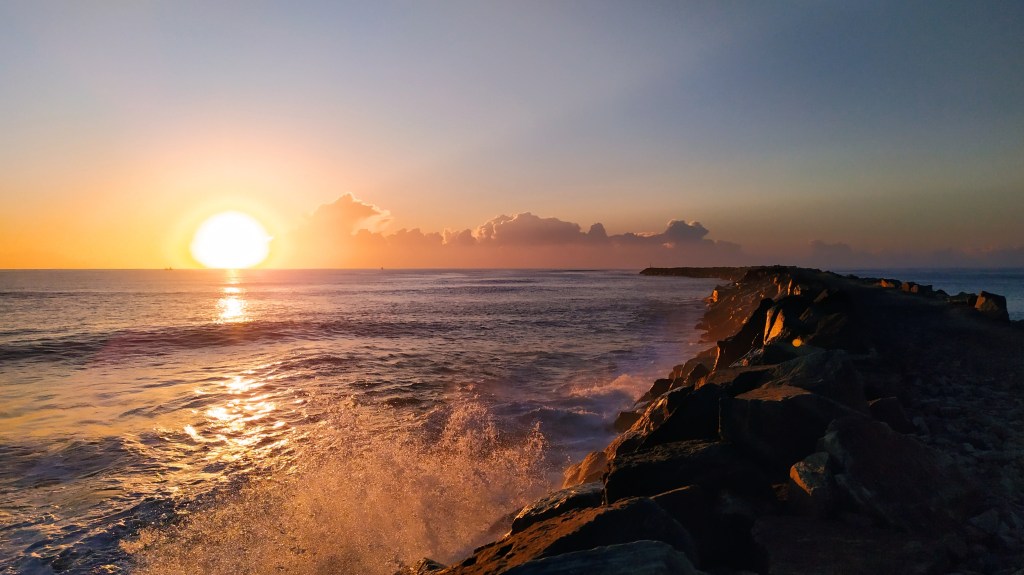
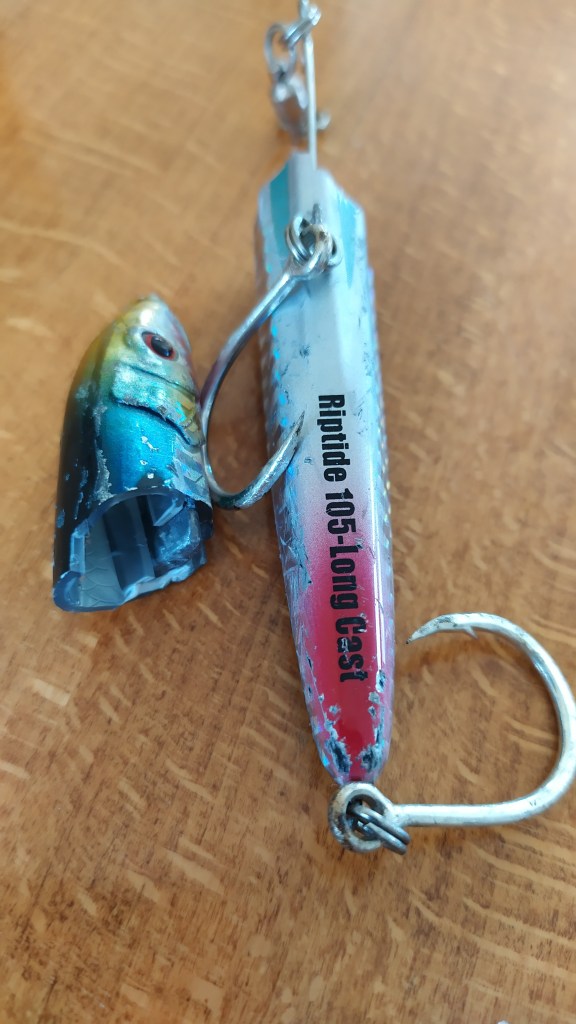
Out on the rock wall one morning I was casting a small sinking NOMAD Riptide 105 Longcast into the wash, just behind the wave break at dawn. A big fish came out of nowhere and engulfed the lure. I fought it for a while and then looked for a place to land it. I eventually found some flattish rocks I could get down to and manage to pull it up to me by the leader. It was another stonker tailor approaching 90 cm long. I like the action of the NOMAD Riptide but they cannot handle rock fishing, this one was fatally weakened during its first run in with a big fish. Longcast perhaps, long last – not so much.
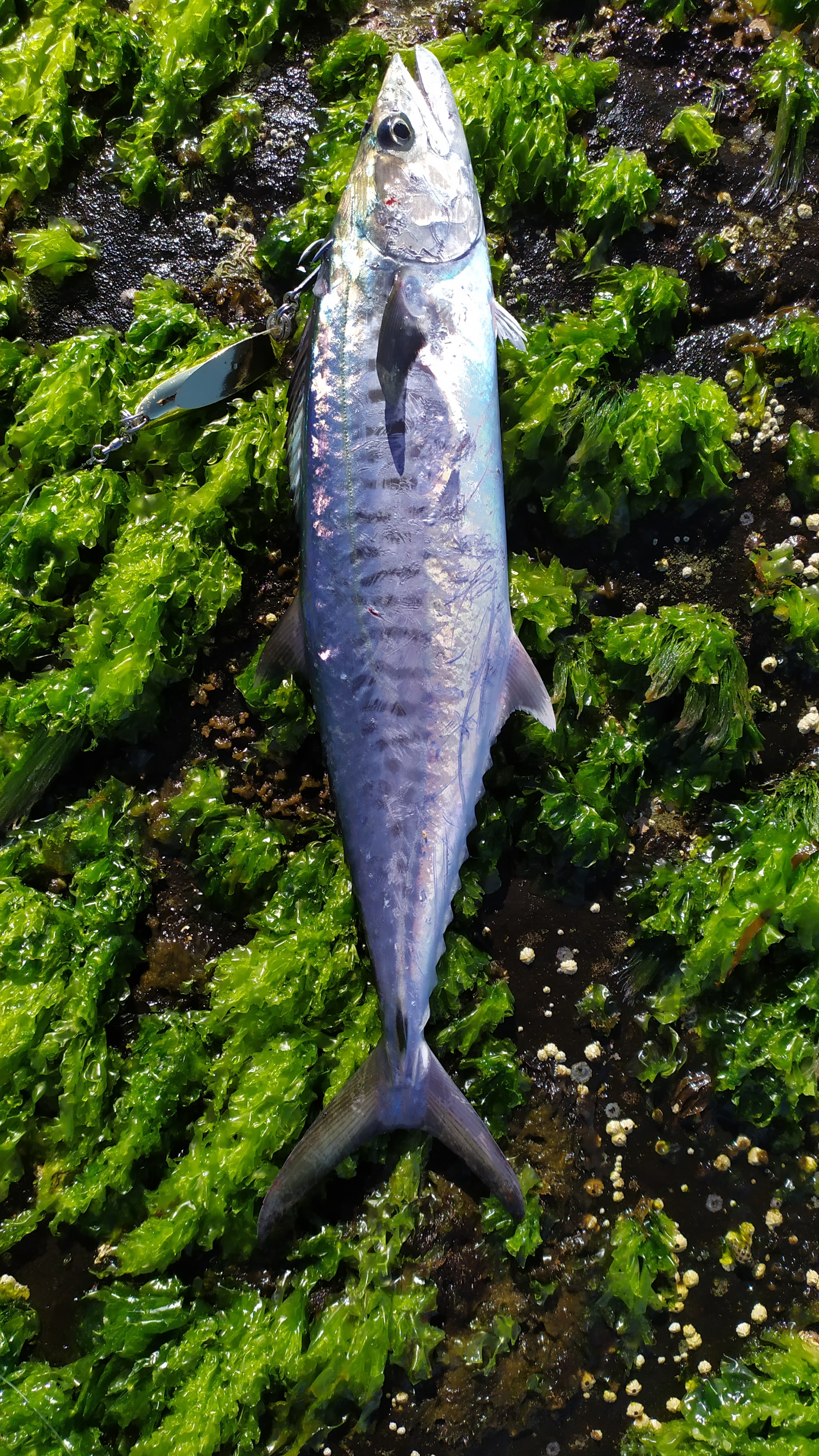
Once the garfish were heading out into the sea it was only matter of time before the bigger predators turned up. Sure enough at the beginning of April people started to catch a few longtail tuna from the north wall of the river. Whilst chasing tailor I managed to hook a small mackerel and lost a few metal slugs to bite offs, which I assume where bigger mackerel.
I have tangled with plenty of tuna over the years but never managed to stop one. This year I was determined to change things. I now have a bigger reel – a Daiwa Saltist 10,000 size. I matched it with my Daiwa Saltist 962 MH rod and rigged up with 40lb braid and a 50lb fluorocarbon leader.

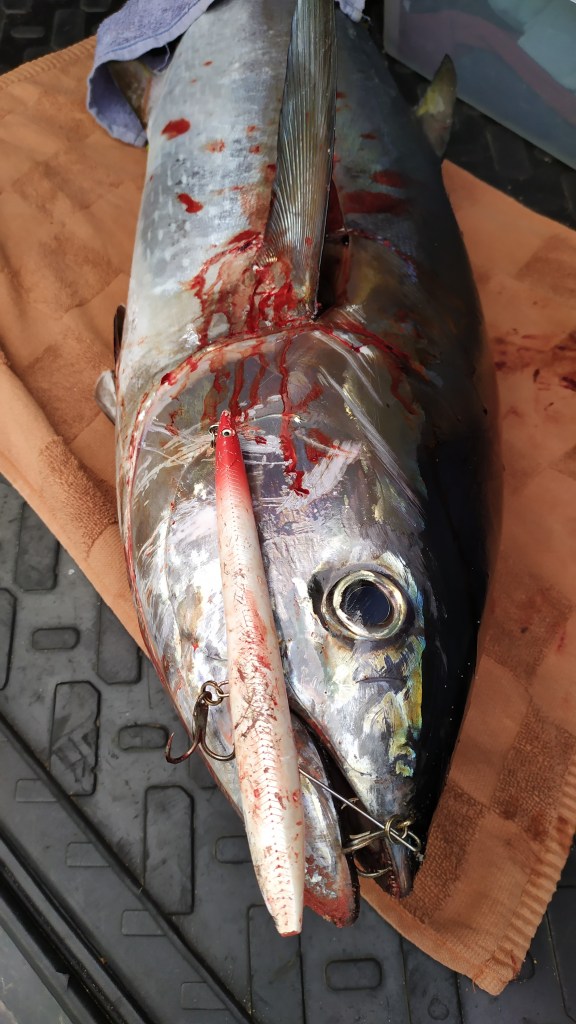
I started fishing the tide changes on the wall and one Saturday morning, I arrived to find a few longtails had already been caught. Whilst I was rigging up the long tails came past again, of course I wasn’t ready. I finally got sorted and started casting with a hard bodied surface garfish imitation. I did not have to wait long for them to swim by for another pass.

I was doing a sweeping retrieve and moving the lure quite quickly over the surface. My lure was about 4 metres from the base of the rockwall, swimming towards the beach, when a long-tailed tuna rocketed up behind it and took it on the surface.

It took off on a blistering initial run. My drag was set fairly tight. I watch the line peel from the spool and listened to that delightful sound. It’s difficult to tell but it took perhaps a hundred and twenty metres in that first run. It then paused for just a second and was off again.

It finally paused just long enough for me to start winding and getting some line back. The rod tip was beating fast. I watched as the fish now started to swim parallel with the wall.

I was very lucky and there was an experienced tuna fisherman (with gaff) close buy who came to help. He explained the mechanics of turning the fishes head as it started to swim in towards the rocks. The hooked tuna will swim in arcs in front of you and the aim is to gradually reduce the size of those arcs by keeping a constant pressure on the fish. Basically, tuna only swim forwards so you need to allow the fish to turn its head, so that it can swim back in the opposite direction when it finish its arc, at the base of the rocks. In order to do this it needs to feel slightly less pressure, this will make it turn away from the rocks and swim back in an arc the other way. So as the fish approaches the base of the rocks you ease up on the bend in the rod, just a little and it turns back in the other direction. You keep doing this as the fish tires and the arcs get smaller and smaller.

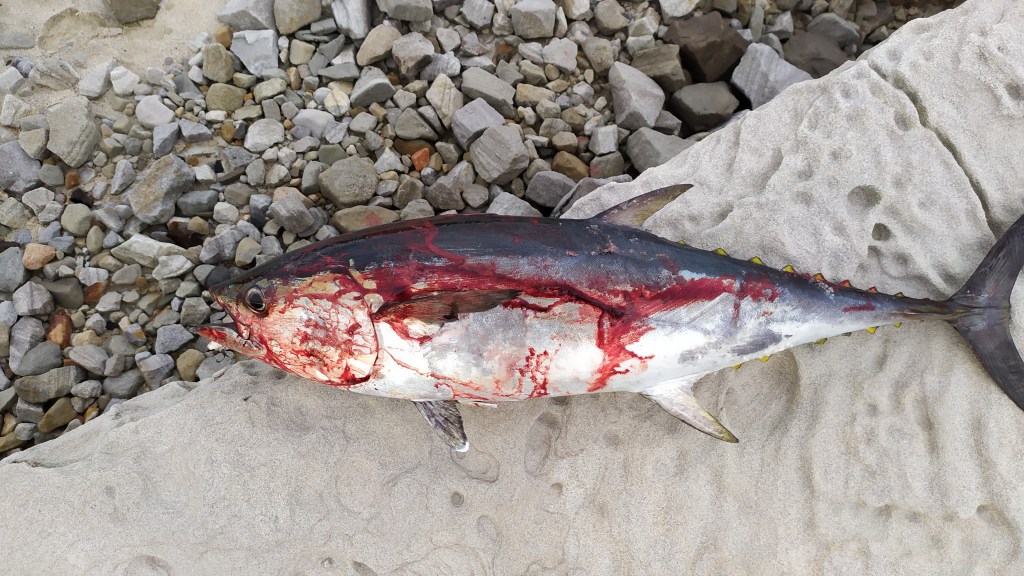
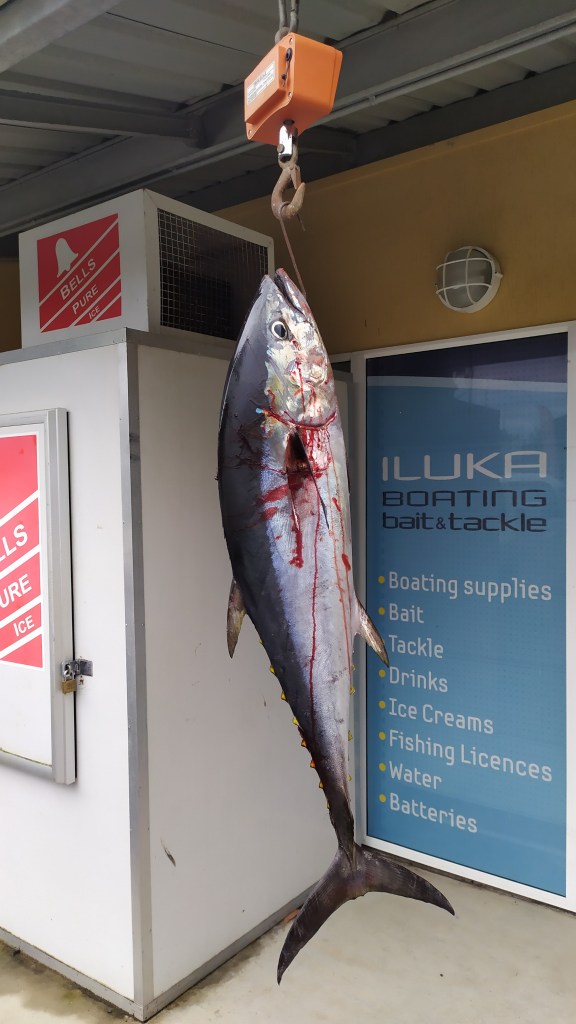
After what felt like and hour ( but was actually only about 15 minutes) the fish was at our feet and my new friend expertly gaffed the fish for me – mission accomplished. It later weighed in at 9.4 kgs.

April – what a month!

The Catwalk & Tom’s Creek 1770 – 10 October 2011

Monday

I decided it was time to look for some serious fish. This area is a ‘Mecca’ for land based fisherman looking to catch big pelagic species. The one place that everyone heads for when they are up here is the ‘Catwalk’.

1770 - Looking north towards the Catwalk


The ‘Catwalk’ on the eastern side of 1770 headland is strictly a heavy gear fishing location. It is one of the best land based fishing spots on the east coast of Australia. This is because it is one of the few places where the East Australian Current comes within casting distance of the shore. On a clear, calm day you can see the current line snaking straight past the foot of the rocks. When the pods of Tuna break the surface they are almost always swimming near or along the current line, chasing the bait schools that move with it. This doesn’t mean catching fish here is easy. For one thing most of the fish on offer are big – 10kg and above. This means you need patience, heavy gear and a good gaff, to stand a chance of landing something. The food chain is also highly developed, there are plenty of lazy sharks around who will happily rob you of your fish, as you bring it in and if they don’t get it, the two or three enormous resident Groper will regularly snaffle big fish at the foot of the rocks.

The Catwalk 1770 - on a busy day


My thanks to the various locals who fish these rocks – particularly Dennis and George who are always willing to give me an update on what has been happening and which lures, baits, tides are working best. When I arrived on the Catwalk this week, there had been plenty of big fish hook ups but not many successful captures. The Tuna had arrived in the second week of September and some big Spanish Mackerel had also been wreaking havoc. On the Sunday of my visit George had landed a monster 25kg Giant Trevally which he had snared with a 130mm fluorescent yellow, bibless minnow, cranked along just below the surface. The Spanish Mackerel had been grabbing poppers, slugs and bait and the best bite time seemed to be sunrise through to about 9.00 am.

On the morning I fished the Catwalk there was an experienced crew of land based fisherman from Byron Bay down there and a few others. Just after first light, one guy hooked up with what appeared to be a good sized Spanish Mackerel. He had been casting and retrieving a silvery blue, 140mm surface popper. He played it for a few minutes and began to make some headway. Then suddenly the line went slack as a shark swallowed the fish whole and bit clean through the wire trace.

We all started casting again – slugs, poppers and bibless minnow lures. Then the guys at the top of the rocks shouted that a pod of Blue Fin Tuna were heading our way. As they went by we all timed our casts and let rip. Six of us cast into the pod – one guy hooked up. He had a solid connection with a fish and after a few big initial runs, he started to put some pressure on it. It had headed back towards the mouth of Round Hill Creek. It was clearly a big fish as his attempts to get back line where met with more blistering runs. Unfortunately, it was now heading in shore over the rocky and reefy area directly north of the Catwalk. Suddenly the line went slack – the fish was gone – Shark? Rocks? We will never know.

I rigged a small soft plastic and caught a tiny Trevally which one of the Byron crew put out under a balloon. After 20 minutes or so, no more than 4 metres from the shore there was a huge swirl in the water as a Mackerel hit the live bait and almost simultaneously, was swallowed by a sizeable Shark. Miraculously the livebait was intact, but with a neat triangular Mackerel bite on its side.

The shark ate the Mackerel that tried to eat this Trevally

After a couple more hours of casting, there had been no more hook ups so I decided to try some of the land based fishing opportunities in Round Hill Creek. I headed down a four wheel drive track to the edge of Toms Creek a small mangrove lined tributary on the south side of Round Hill Creek. There are a few openings in the mangroves where you can fish the creek. It is a shallow system with a strong tidal flow, so it is best to fish it around the high tide, when the water slows.

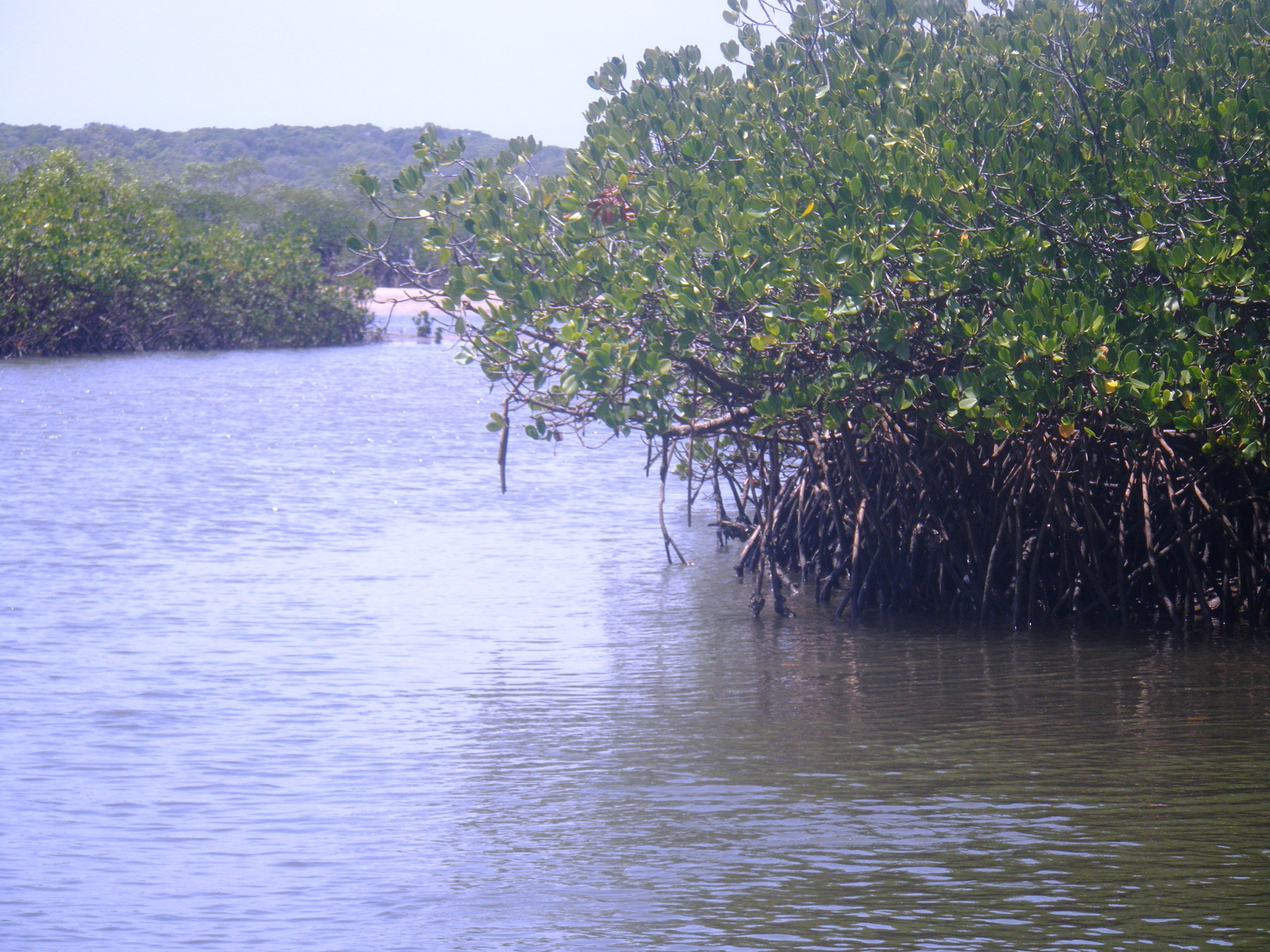
Mangrove fishing - Tom's Creek 1770


I arrived about noon and rigged a Gulp 3” Minnow soft plastic on a 1/8th 1 jighead. There were already plenty of midges around so I covered my head and gave myself a good coating of insect repellent. The submerged rocks and mangrove roots looked like good hiding places for Mangrove Jacks, but I suspect the water was not yet warm enough for them.

Grunter -Tom's Creek 1770

I fished across the sandy/ muddy bottom of the creek, occasionally getting snagged on submerged rocks and water logged branches. I caught Moses Perch, Bream, Whiting, a few grunter Bream and tiny Trevally, none where big enough to keep but I decided this was definitely a spot to return at dawn or dusk, when the tides were right.