June started with some light winds and swell so I could fish on the headlands. On the dawn falling and low tides I fished for tailor. I focused on metal slugs and big hard bodied lures. When the tailor slowed down I swapped to the lighter gear to fish for bream in the wash. I even caught a few mini queen fish on the metal slugs. During daylight there were plenty of small jewfish around and they kept things interesting by regularly hitting the bream soft plastics.
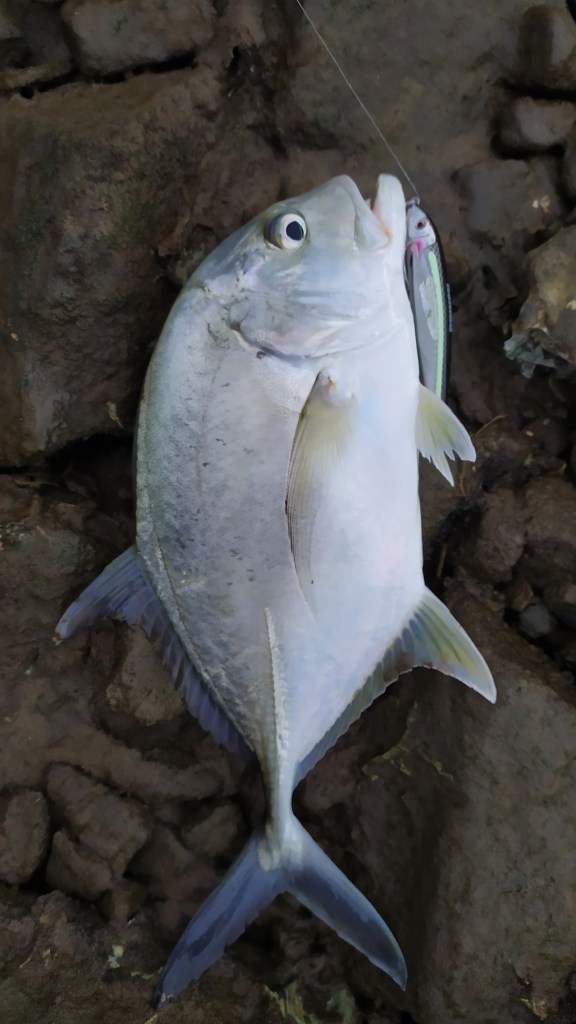
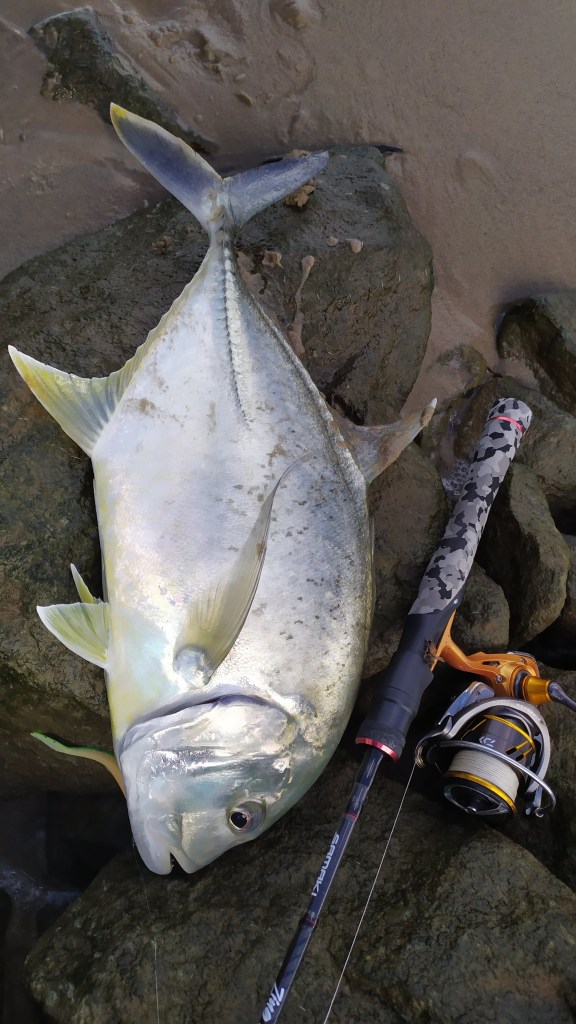
In the river there was ample bait schooling close to the banks. There were flathead everywhere and at dawn and dusk there were also schools of junior giant trevally marauding around and the odd decent sized tailor. I spent a few dusk sessions fishing for the trevally on Goodwood Island. I experimented with a few different lures and concluded that the favourite was the DUO Realis Pencil 110mm surface lure. I fished it with plenty of jerks and pauses. The trevally were not huge (the biggest was around 45 cm), but they are so much fun to fish for, especially when they strike a surface lure.
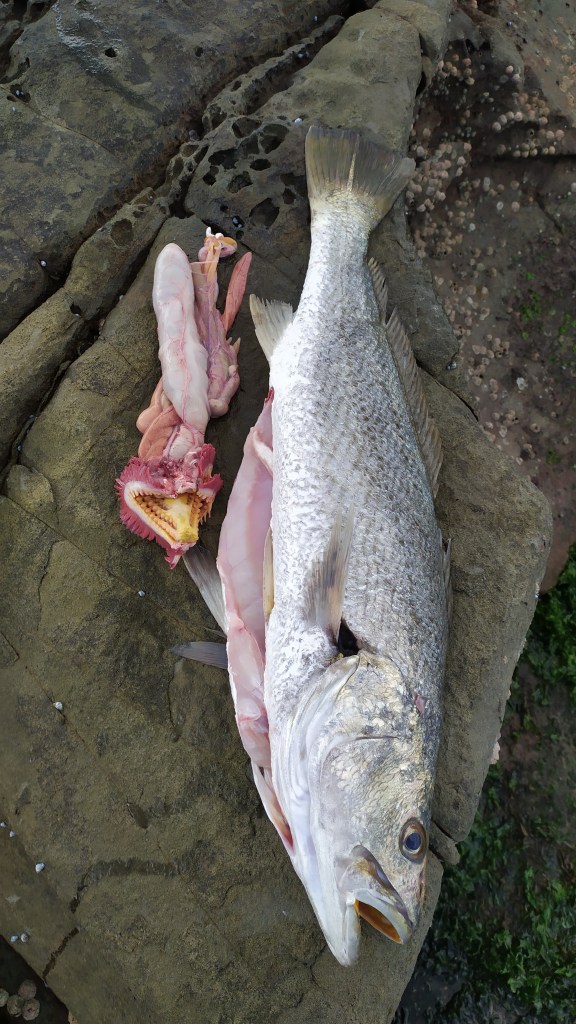
I caught a few keeper jewfish out on the headlands at low tide on the day of the new moon, on the 6th June. The bottom of the tide is the easiest time to fish on most of the ledges I frequent. I caught the two mid 70’s cm fish in successive casts at about 12.30 pm. The fish may well also bite on the top of the tide but unless its a very calm day with a low high tide, I cant get to them.
For the first time in a while both of these fish were very fat and the one I kept and gutted had a belly full of “yakkas” (yellowtail scad). Hopefully the bait will hang around for a while.
March and April are traditionally excellent months for flathead fishing in the Clarence River. In 2022 after the catastrophic floods the fishing had bounced back very quickly and I had caught good numbers of flathead throughout the system. But in 2023, April was less successful than it had been the year before. Perhaps the shift from the La Nina to El Nino weather pattern had something to do with it. There was definitely a little less bait around despite comparatively warm water temperatures.
Bait prawn trawling in the Clarence River has been suspended due to an outbreak of white spot disease in the prawn farms that are adjacent to the river. The disease was detected in August 2022 and then again in early 2023 so all of the prawn farms destroyed their stock and and have stopped operating. Its very disappointing for the local economy but it will allow the river bed to recover its weed beds and other fish habitats if the trawling ban stays in place.
I still caught plenty of flathead, a good mangrove jack and a few good trevally. The juvenile jewfish and tailor were also always on the bite around dawn and dusk. The bream, however were noticeably absent (even around the full moon).
I was away for the second half of November and the swell had picked up again meaning that the rocks were largely unfishable. In the first half my son came down to fish with me and he caught his first mulloway on a soft plastic. It could not have been any smaller but he is off the mark! We caught plenty of good flathead and a few bream in the Clarence River, fishing at Browns Rocks. There were lots of very small jewfish hanging about in the holes or next to the drop offs but they only ever seemed to bite before sunrise or after sun set.
We had plenty of rain through early February and there was not much fishing to be done in the muddy brown waters of the Brunswick, Richmond, Wilsons or Clarence River.
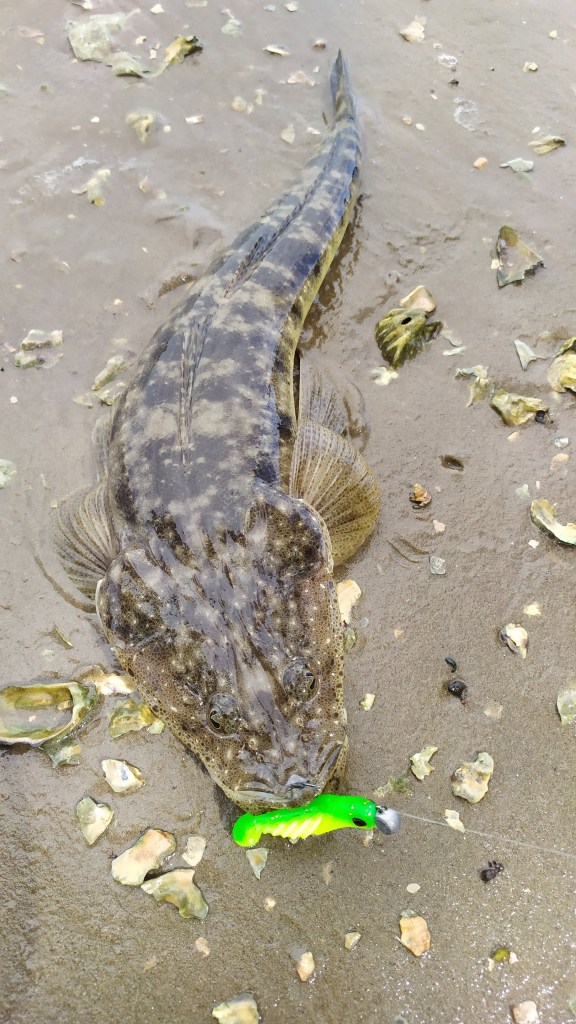
In the middle of the month the Clarence River started to clear up a bit and I fished the flats at Browns Rocks, near Iluka. I saw quite a few big flathead lies so they were definitely back in the river after the deluge. I fished my light rig with minnow and paddle tail soft plastics and a 10lb fluorocarbon leader. I was mainly using 1/8th and 1/6th ounce jigheads. I caught a few flathead and a lot of small jewfish. The tailor were also a constant and I had a few snip offs.
The Clarence River began to clear up after lots of rain in mid-February
On the 20th the swell eased off and I had a fish on the rock platform at Woody Head in the Bundjalung National Park. I started with soft plastics on my heavy set up and caught a few bream. I moved around, casting until the tide started to run in and swapped to a GULP Crazylegs Jerkshad in the Lime Tiger colour. I was using a 3/8th ounce jighead and 40lb fluorocarbon leader. After a couple of drops I felt the weight of a good fish. I pulled its head out from under the ledge but it was too heavy and kept thrusting its nose back down into the cunjevoi. The swell wasn’t big enough to help me and soon my leader was tightly tangled. The fish swam away leaving my jighead firmly lodged in the rocks. It had felt like a jewfish but trevally are also good at using this technique to free themselves.
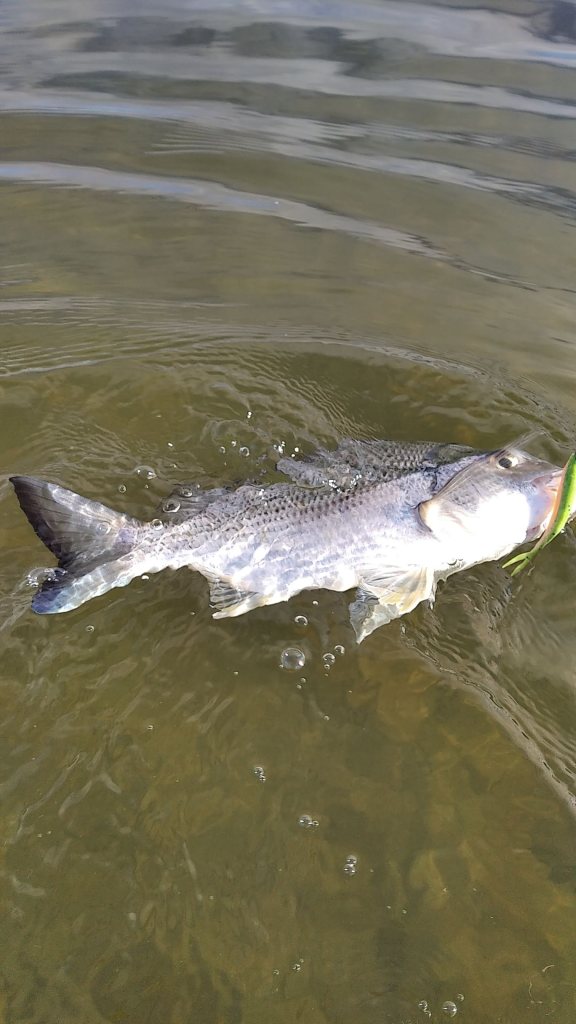
I tied on the same set up and threw it out again. Three casts later I was onto a fish again. It was not as powerful as the first but it still tried to get under the ledge. I let it run a little way but when I put some pressure on it swam out rather than in and I was abled to subdue it. It was a decent school jewfish about 65cm to 70 cm long. I took a picture and speared it back into the water pretty quickly.
There are so many sharks in this zone that I am not sure whether these released fish have much chance of survival. Hopefully they swim straight back under the ledge.
A nice jewfish from Woody Head
After a few more river fishing sessions the rain set in again. This time it just did not stop and the soaked river catchments could not absorb it. A low off the east coast dropped solid rain for three days and nights and the whole Northern Rivers area of New South Wales suffered the worst floods in living memory. Lismore was completed wiped out and Broadwater/ Wardel/ Mullumbimby/ Ocean Shores/ South Golden Beach/ Brunswick Heads, Fingal Head and many more areas were completely flooded and rendered in accessible for days.
Telstra and the NBN, it transpired, had chosen to route their entire regional telecommunications backbone through a basement telephone exchange at Wardell which was 5m under water. This made local communications next to impossible, severely hampering rescue and recovery efforts. The devastation was complete. People dragged their flooded belongings out onto the streets and the clean up began.
On the Clarence River the flood waters cause massive fish kills. Dead mullet, mulloway, flathead, bream washed ashore along the banks, unable to survive the sudden deluge of fresh and filthy water.
I had a quick fish at Iluka in the beginning of the New Year before the weather turned wild and stormy in early January. The flathead and small jewfish were still in the river. I did best fishing the run out tides before we had some really heavy rain that turned the river brown in the middle of the month.
For the rest of the month I escaped Australia for a visit to my relatives in England. The UK seemed to have already moved on to living with Covid and although restaurant and pub staff were still masked up, everybody else was over it. It was bloody cold and I caught a stinking cold but regular RAT and PCR tests refused to say it was Covid. The plane was already packed with travellers keen to reunite and the additional Covid checks and paperwork made the tedious process of long haul travel more miserable than ever. I was glad to get back to Australia for some fishing in February.
As November rolled into December, Queensland and Western Australia remained cut off from the rest of the country as they realised that it might not be a bad idea to get vaccinated. I continued to go bankrupt and found solace in fishing.
The wind and swell were relentless out on the Iluka headlands but the lower reaches of the Clarence River remained calm and clear. There were a few shrimp in the river and almost as soon as they arrived in numbers the river trawlers set about catching them. They ploughed up and down, day after day trying their best to catch their quotas. This is almost exclusively a bait fishery; the prawns are frozen and sold for bait. The trawler owners say it is a traditional and sustainable fishery but it seems like a lot of activity for a very meagre return. I understand that they frequently receive less than A$1000 a tonne for the prawns. Since 2018 the average catch per licensed boat has been around 5 tonnes per year. If you deduct labour, fuel, boat maintenance and depreciation then no one is making any money. Maybe we could just buy back the boats and licenses, give them a tinny each and all start fishing with lures!
Despite the prawn trawlers the fishing was pretty good on the flats around Browns Rocks (so they may not being doing much harm). I concentrated on fishing the falling tides on the flats. I swapped between hard bodied minnow lures (the DUO Realis Rozante 63/ DUO Realis Shad 52 MR SP, the DUO Realis Jerkbait 100 SP and a variety of no name cheap ones) I also used my favourite GULP soft plastic minnows and paddleshads.
Luderick, jewfish and bream
Some mornings were beautifully calm but the northerly winds usually picked up in the afternoons. We had a couple of big storms in the middle of the month. But the river stayed mostly clear.
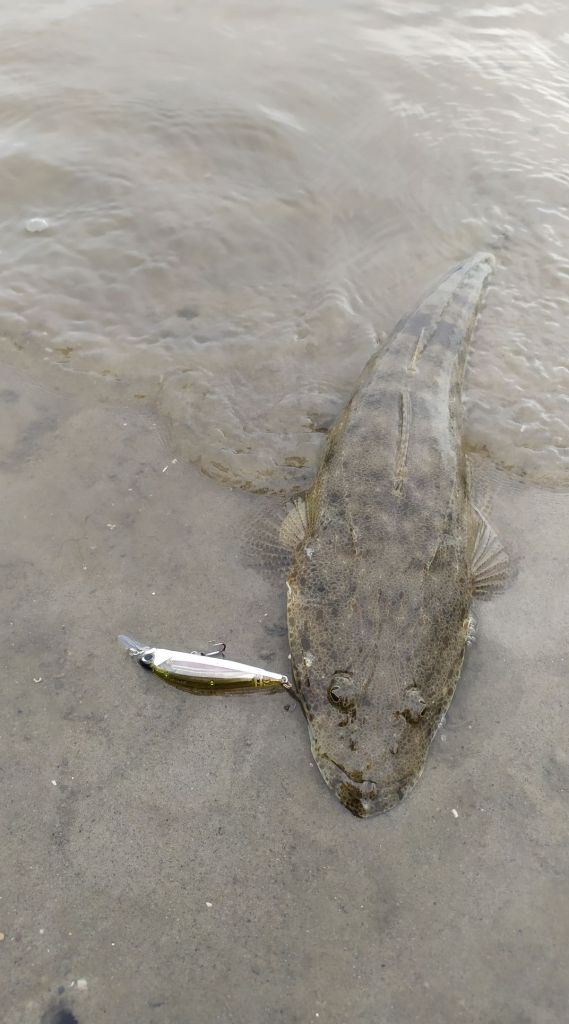
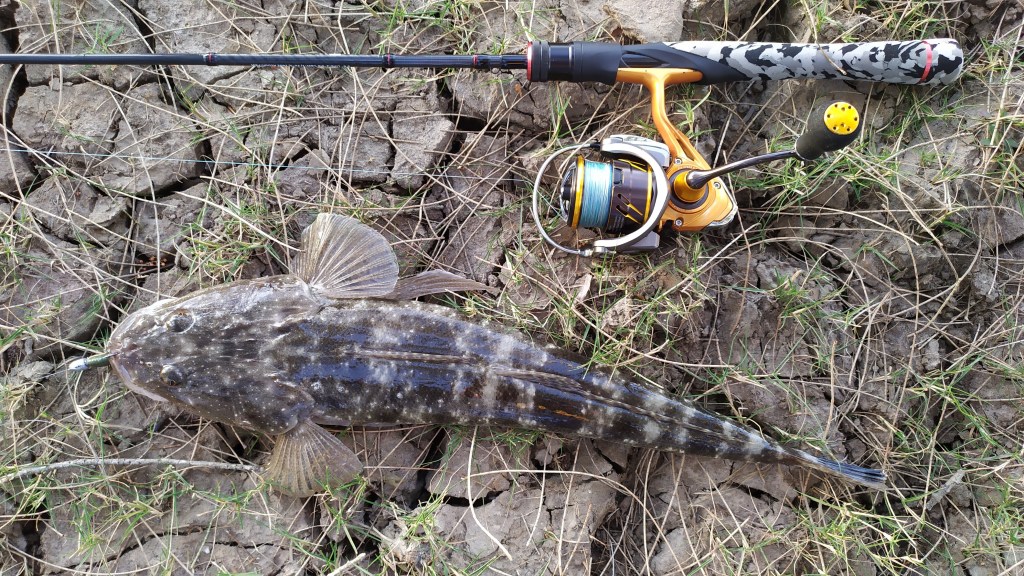
Plenty of flathead in the Clarence River in November
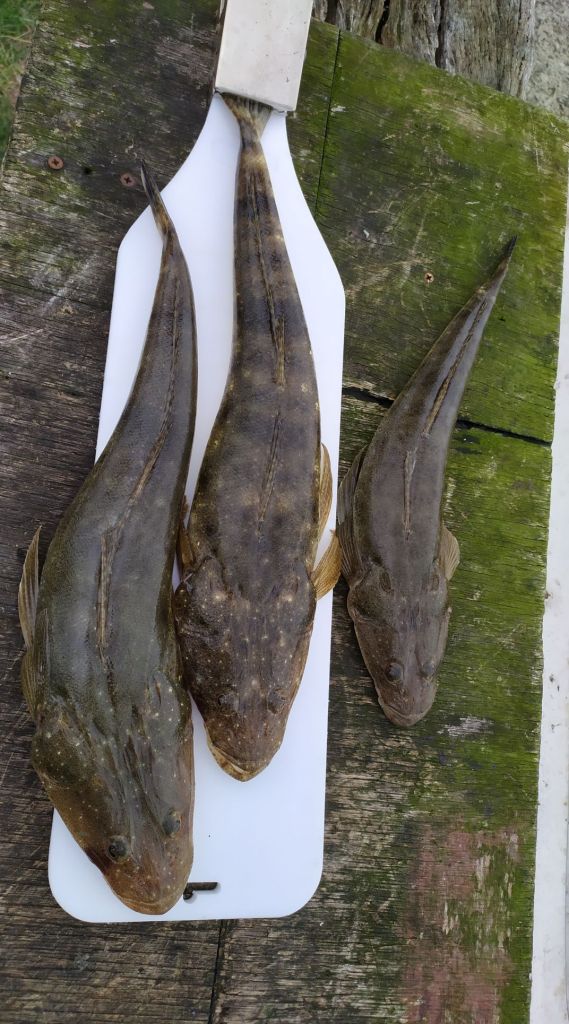
I caught the usual range of species – bream, flathead, small jewfish, whiting and even the odd luderick. There were plenty of tiny tailor marauding around at dawn and dusk but not many keeper sized fish. On several days I managed a bag of 5 keeper size flathead. It was a month of flat river dawns and beautiful but very early sunrises.
As Covid 19 continued to wreak havoc all around, I carried on fishing. Those of us in New South Wales were locked out of Queensland. Everyone was locked out of Western Australia. Victoria was open, then closed, then open again. I have no idea what was going on in Tasmania.
The swell was big and we had a bit of rain. I focused on fishing with my light gear and soft plastics lures over the sand flats, on the edge of the Clarence River at Browns Rocks. I found a few different species. I caught flathead, bream, tailor and quite a few small jewfish. The flathead seemed comfortable eating just about any type of lure, once you found them.
Plenty of flathead in the Clarence River in November
I was using a mix of different soft plastics but, as usual, the GULP Minnows where the star performers. I also caught fish on the new Berkley Shimma prawn and a packet of DUO Realis knot tailed soft plastics in a green colour, that somebody sent me to try. I was usually fishing these with 10lb fluorocarbon leader on 1/8th ounce, size 1/0 hook jigheads.
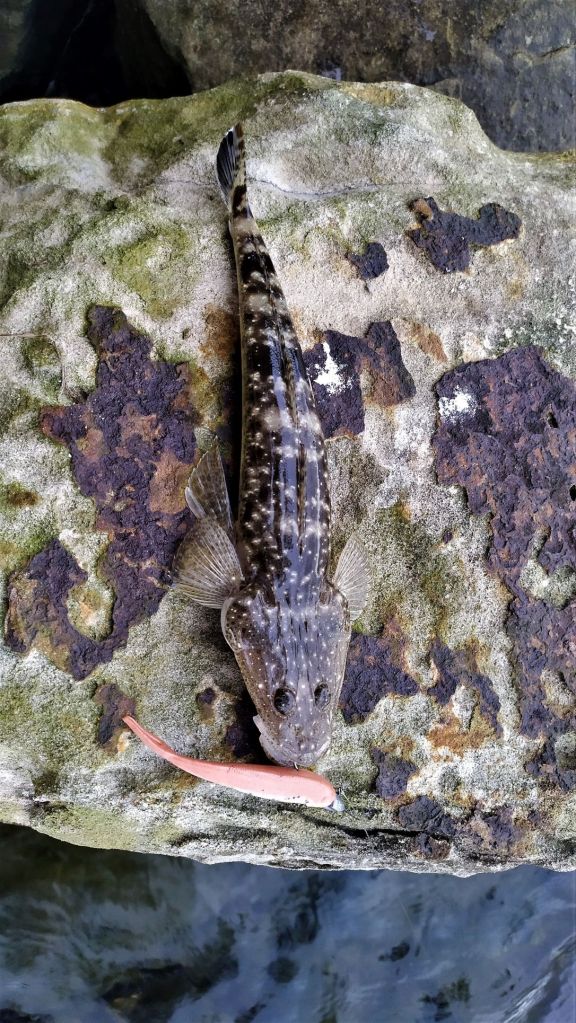
There were quite a few small jewfish around Browns Rocks
At one point I noticed the water close to shore was teaming with some kind of tiny jelly fish larvae. They were all along the shoreline for a few days. There was plenty of bait around and the pelicans and gulls chased the schools relentlessly. They only got out of the way when the dolphins turned up.
I have been alternating between the rocks and the Clarence River at Iluka, this year. This is why I love the area so much. When the swell is up on the headlands, I grab my waders and light rig and fish in the river. July and August are also my favourite fishing months. Bright sunshine, cooling water and with the shorter days, it is easier to fish at dawn and dusk.
The Clarence River around Goodwood Island was very clear and there was plenty of bait in the water. I fished with my favourite GULP soft plastic and also had some success targeting flathead with bigger hard bodied minnow lures. I caught plenty of flathead between 36cm and 45cm, but not many bigger than that. I also caught a few good (35 cm plus) bream.
Lots of variety in the Clarence River at Goodwood Island
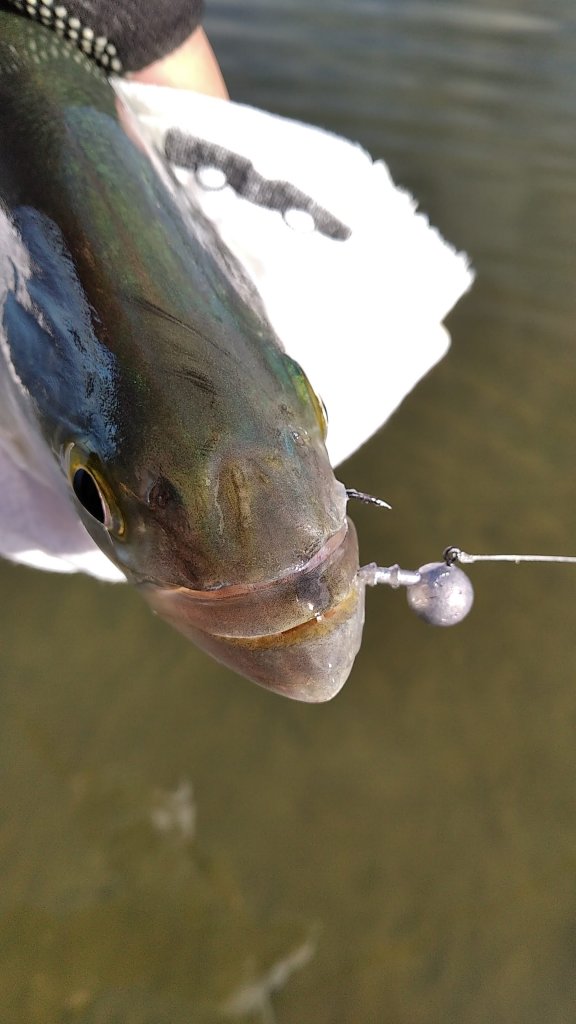
The tailor were still coming and going, especially at dawn. The birds would chase them up and down the river and signal their location. I rarely caught one over 35cm but the biggest few always grabbed my lure just before or after sunrise/ sunset.
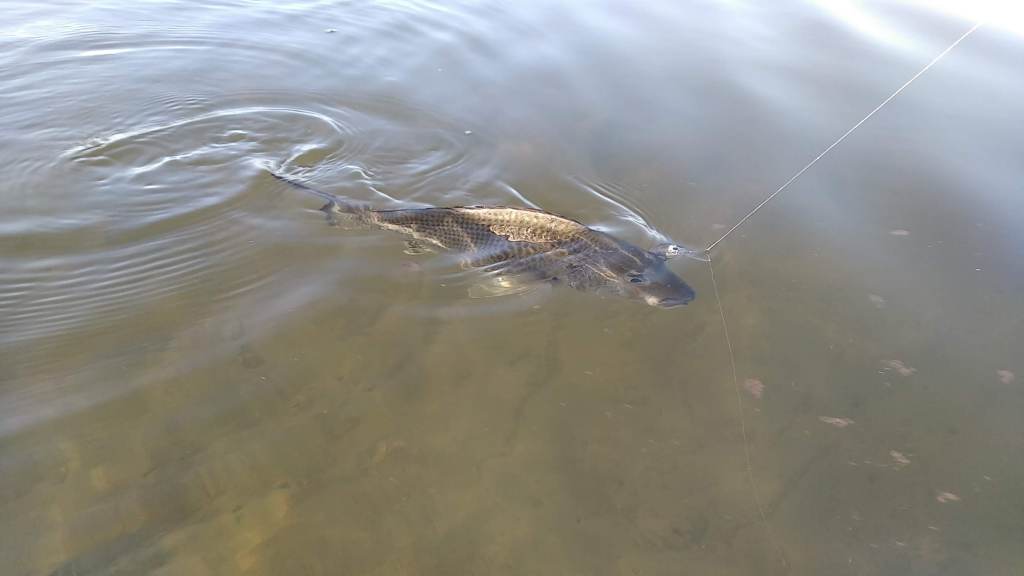
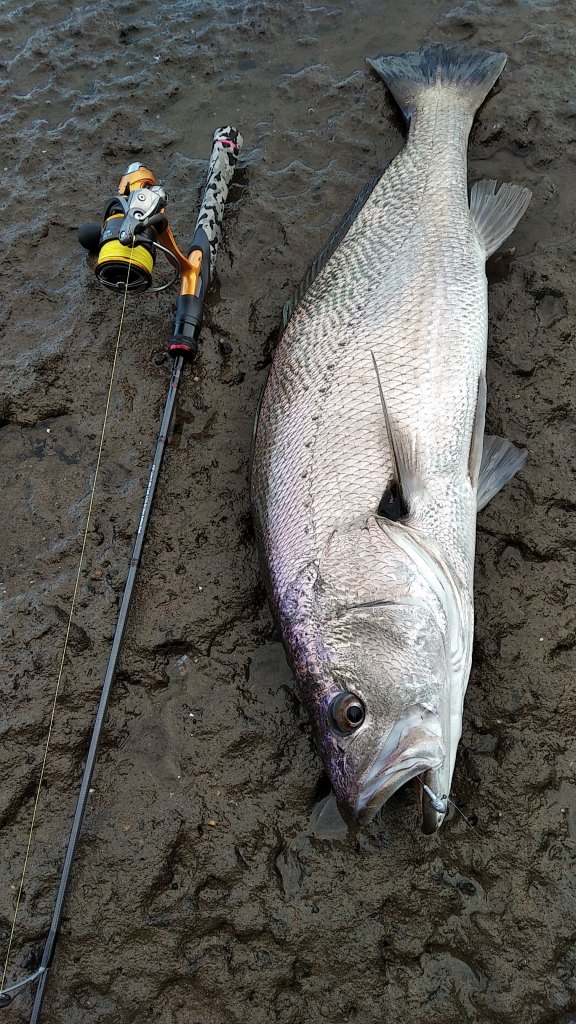
The highlight was a decent jewfish which I caught while wading in the shallows looking for flathead. It grabbed my GULP Crazylegs Jerkshad in the Lime Tiger colour while I was casting over a coffee rock ledge at Browns Rocks. It was the bottom of the tide and the water was fairly dirty. I only had a 12lb fluorocarbon leader and my Samaki Zing SZG-562SXL 2-6lb ultralight rod so it was a long slow fight. Fortunately, the 1/8th ounce, size 1/0 hook jighead was lodged tightly in the corner of the fish’s mouth. I initially thought it was a ray, then a big flathead and then I caught sight of silver and knew it was a jewfish. I had a beach to land it on so, after about 25 minutes of to and fro, I pulled it on to the muddy shore. It measured 73cm so I decided to keep it for a family feed – great fish.
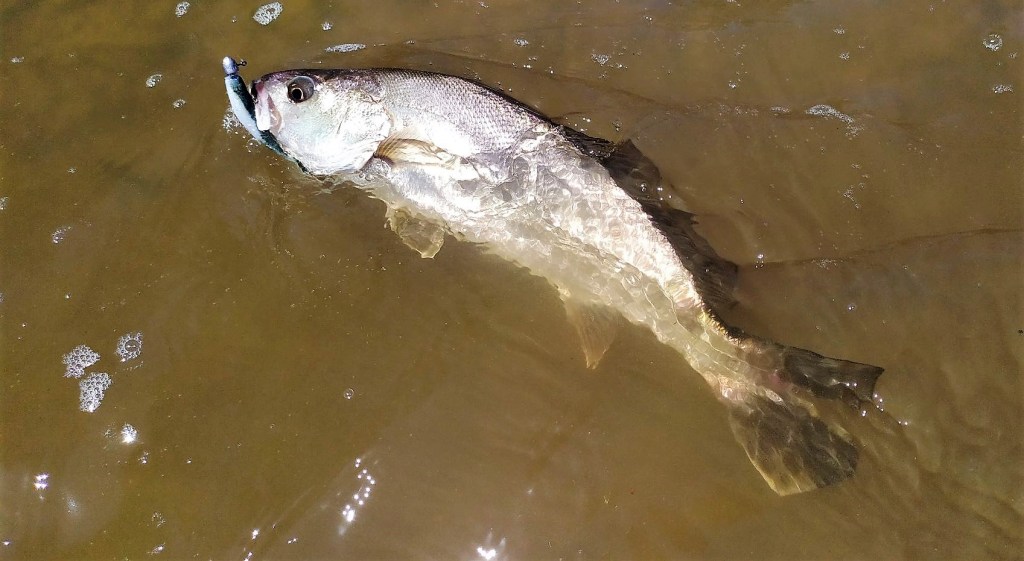
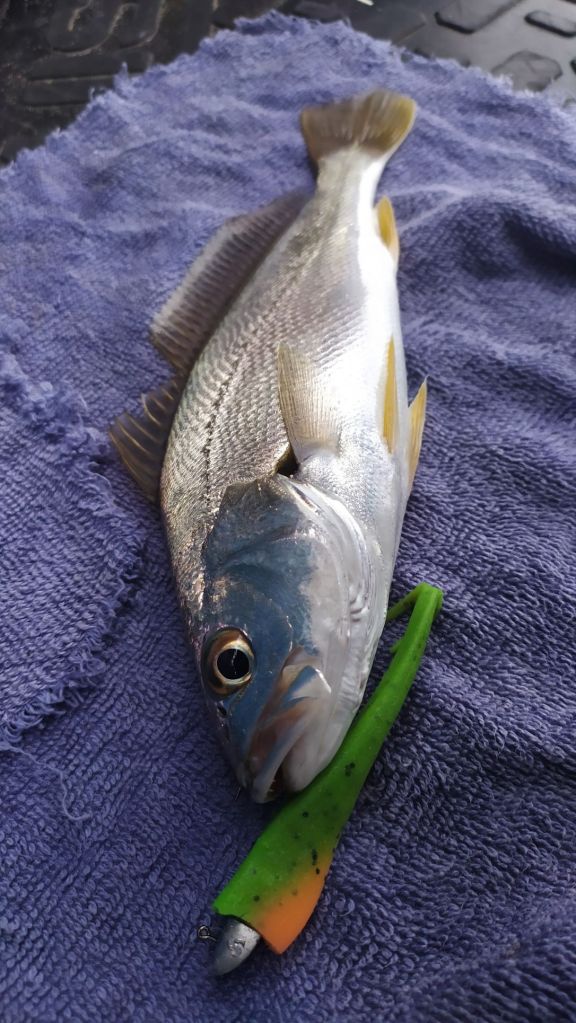
A 73cm Clarence River mulloway caught on a Gulp Crazylegs Jerkshad soft plastic lure.
On Wednesday the skies were clear but the wind and swell were still making it too hard to fish the rocky headlands around Iluka. So I decided to flick some soft plastic lures around in the shallows, near Browns Rocks on Goodwood Island.
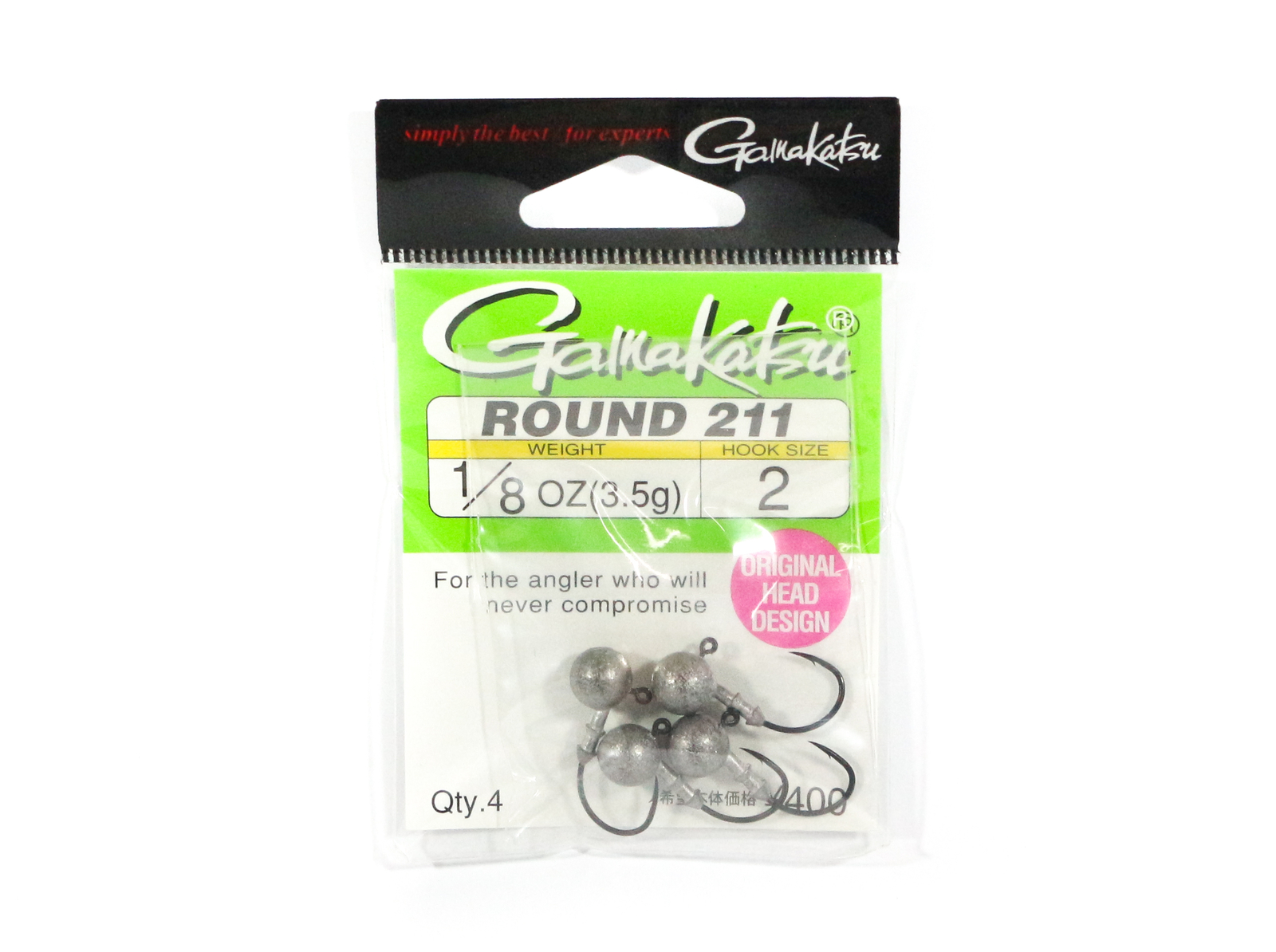
I started around 7.00 am using a GULP 4 inch Minnow in the Lime Tiger Colour on a 1/8th, 1/0 jighead. I have been using the Gamakatsu Round 211, 1/8th ounce, size 2 hook jigheads lately, as I find they are better than the regular jigheads for hooking bream. They are a good fit with the 2, 3 and 4 inch soft plastic lures.
These Gamaktsu round hook jigheads are great for bream
I always consider June and July the best bream fishing months in the estuaries and around the rocky headlands. As the water cools and the bait supply increases, the bream and several other species start to school up to spawn.
Flathead, tailor and bream from the Clarence River at Browns Rocks
I was back fishing the main arm of the river. First I tried the flats to the east of the Goodwood Island Wharf and later, I fished along the bank – to the north of the wharf. I was fishing with my light rig and 12lb fluorocarbon leader. The water was clear and there was plenty of bait in the shallows. I caught a couple of keeper sized bream, several tailor around the 30-35 cm mark, two small flathead; one that would have been around the 40cm long size.
Clarence River – Browns Rocks – Tailor
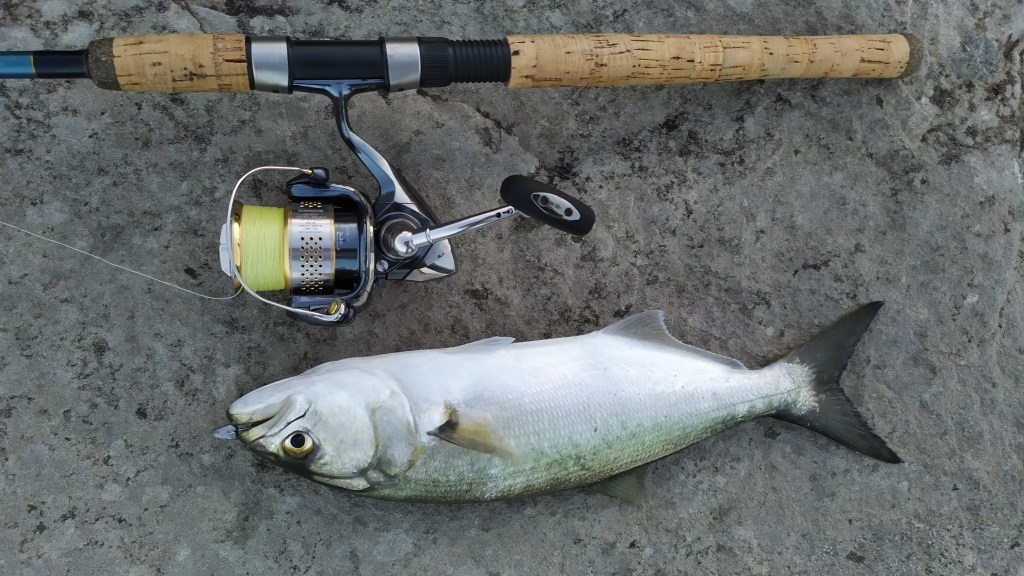
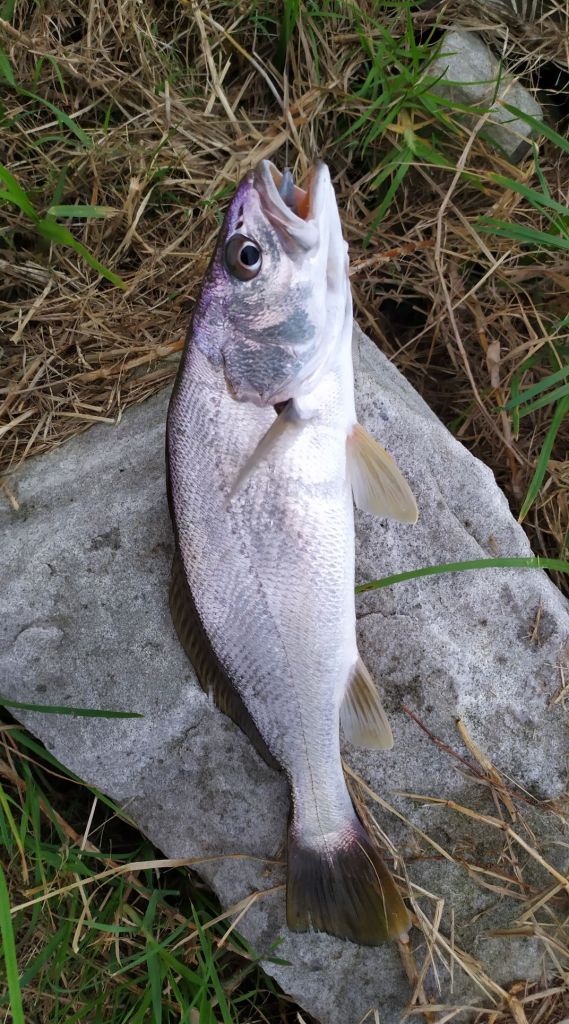
As I drove past the Browns Rocks Caravan Park on my way home. I saw the birds dive-bombing something close to shore. I stopped and tied on a MARIA MJ Twitch 90mm hard bodied minnow lure (another favourite). I put in three casts at where the birds were divebombing. On the third cast I connected with a 38 cm tailor. This is about as big a tailor as I have ever caught in the Clarence River. I am sure I have been bitten off by bigger, but as I am generally fishing with a very light leader (10lb-12lb, max 20lb), so I cant stop them. I released it and hooked and dropped a couple more, before giving up at about 9.15 am.
Follow me on Instagram, for more fishing pictures and updates;
On Monday the 19th the swell was up again and the wind came with it. I had a lie in, cleaned my light spinning rig and took it easy in the morning.
In the afternoon the wind dropped a little. So I went out to explore. I decided to fish through dusk on the north arm of the Clarence River. I drove down past the Goodwood Island Wharf and walked across to the other side of island. The river bank is fairly over grown but there are a few good fishing spots in this area.
I rigged up with a 12lb fluorocarbon leader down to a 1/8th ounce, size 1/0 hook jighead. I put on a GULP 4″ Minnow soft plastic in the Watermelon Pearl colour. This is such a consistent performer for me and has caught jewfish, flathead, bream, dart, tailor, whiting and a whole range of weird and wonderful less common species.
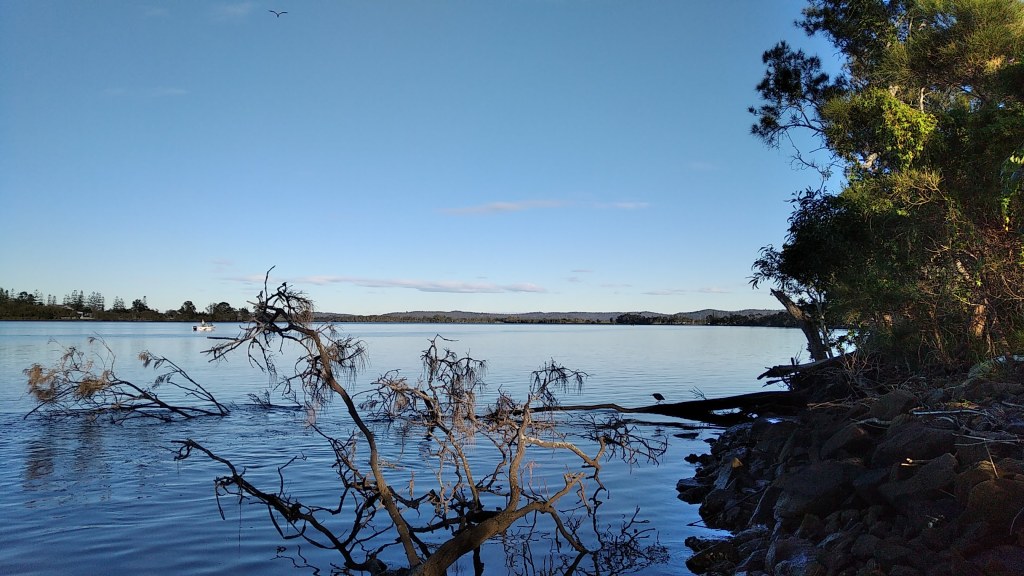
In this area the north arm of the Clarence River is wide and shallow, There are open patches along the river bank and then large patches of young mangroves. Its is slightly muddier and swampier than the main arm.
Fishing the north arm of the Clarence River – near Iluka
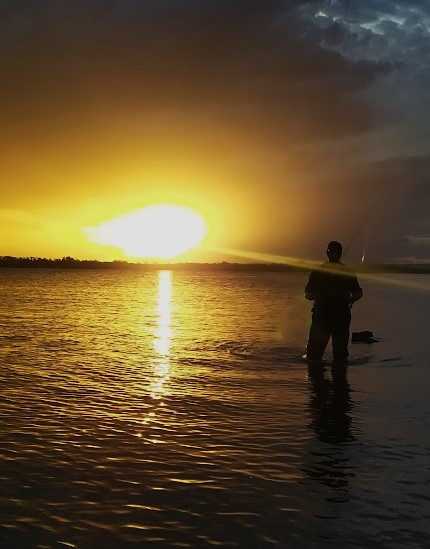
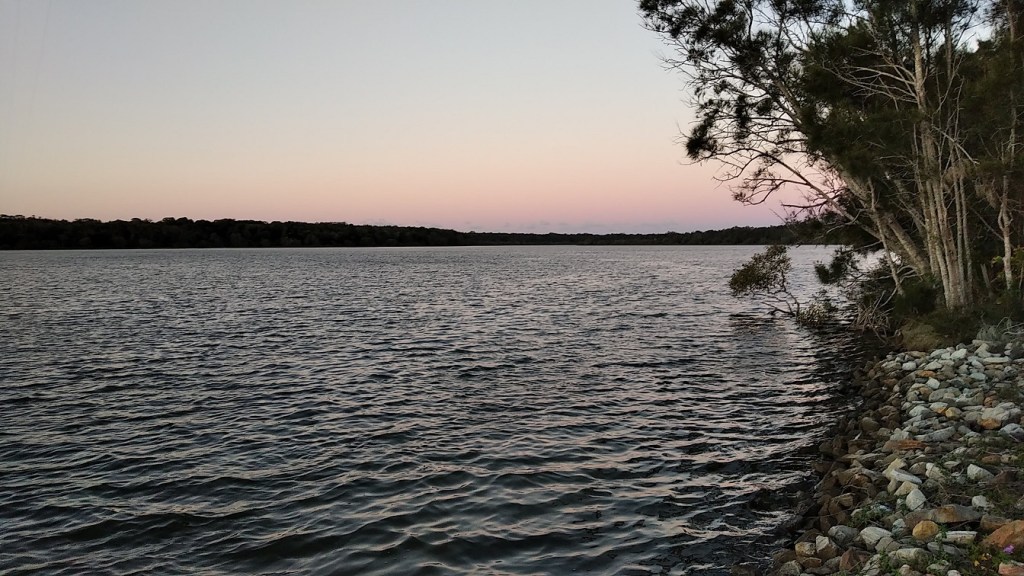
The tide was pretty high and running in. I fished for a couple of hours until just after sunset. A couple of times a small school of tailor came past and bit the end of the soft plastic, but I did not catch any of them. I managed two flathead, one decent bream and an amazing sunset for the session. Its always good to explore.
The next morning the swell came up and the rocky headlands of the Bundjalung National Park were too tough to fish. I had a bit of a lie in and then drove up the Clarence River to fish on Goodwood Island at Browns Rocks. There are fish to be found all the way along the banks of Goodwood Island. At this time of year it is mainly bream, flathead and schools of 30 cm to 40 cm marauding tailor.
On this particular morning I arrived about 7.00 am and drove down to fish an area of the river bank, where I could see the birds dive bombing some bait. It was about 7.00 am and I was fishing with my light spin rig and a 10lb fluorocarbon leader. I tied on a 1/8 ounce, size 1/0 hook jighead and GULP Minnow in the Camo colour. By the time I got organised the birds and bait had moved on. The tide was running in.
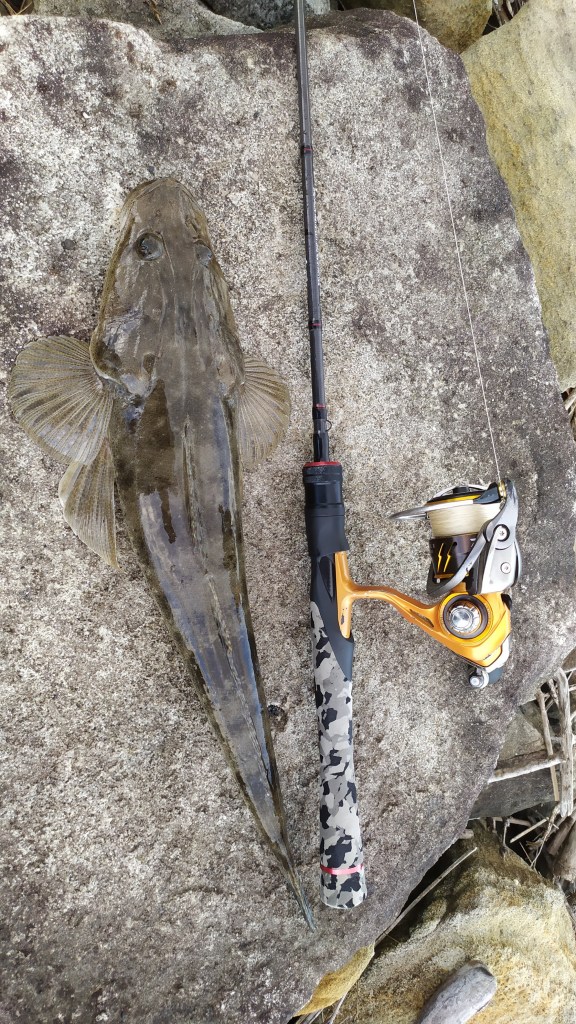
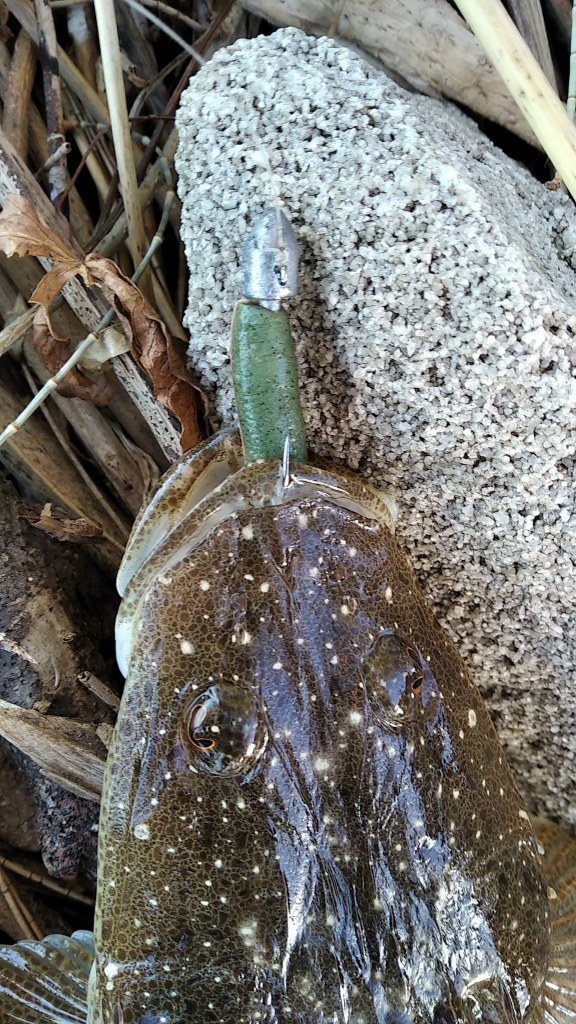
I cast my soft plastic up into the incoming tide and hopped it along the bottom, with lots of long pauses. It was a cold morning and the water was very clear despite the recent rain. A small flathead about 30 cm long, was the first taker. It grabbed my lure as it lay still, beside a fallen tree. I kept casting in the same spot and found two more flathead. One was bigger but probably not legal to keep. Dusky flathead need to be 36cm long in New South Wales. The other was a little smaller. I moved along the bank but that was it for the morning.
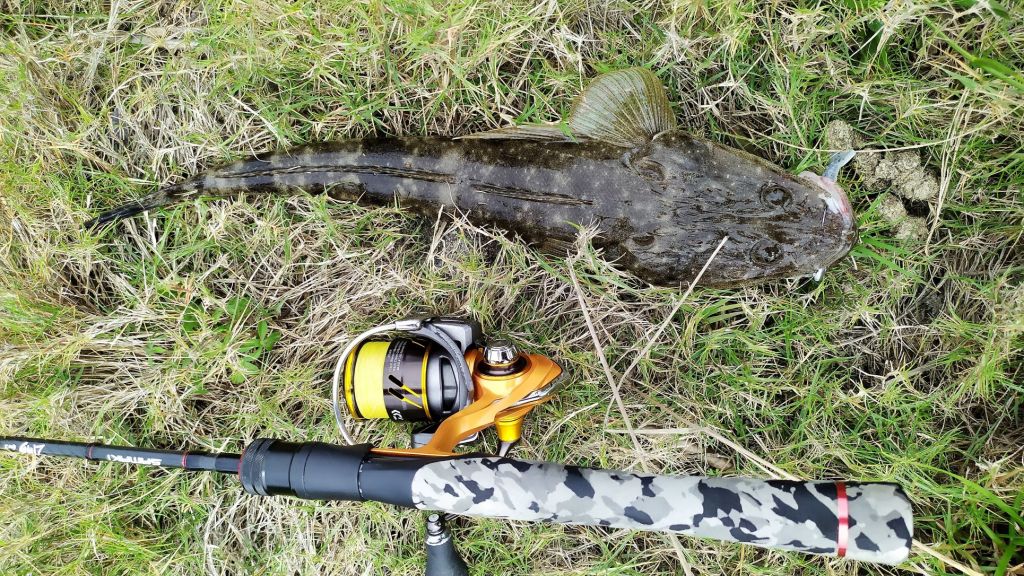
Flathead fishing – Goodwood Island
The next morning I tried again and started a little earlier. This time the birds were still around when I started casting and I could see there was a school of tailor chasing small herring along the shoreline. I knew they were tailor as, on my first cast my jighead and soft plastic were almost immediately bitten off.
I re-rigged and put on a new soft plastic. This time it was a GULP Minnow in the green and black speckled orange Lime Tiger colour. I carried on moving along the bank casting and retrieving and soon found a decent flathead – 43 cm long. I released it and carried on. The next taker was a solid bream about 35 cm long.
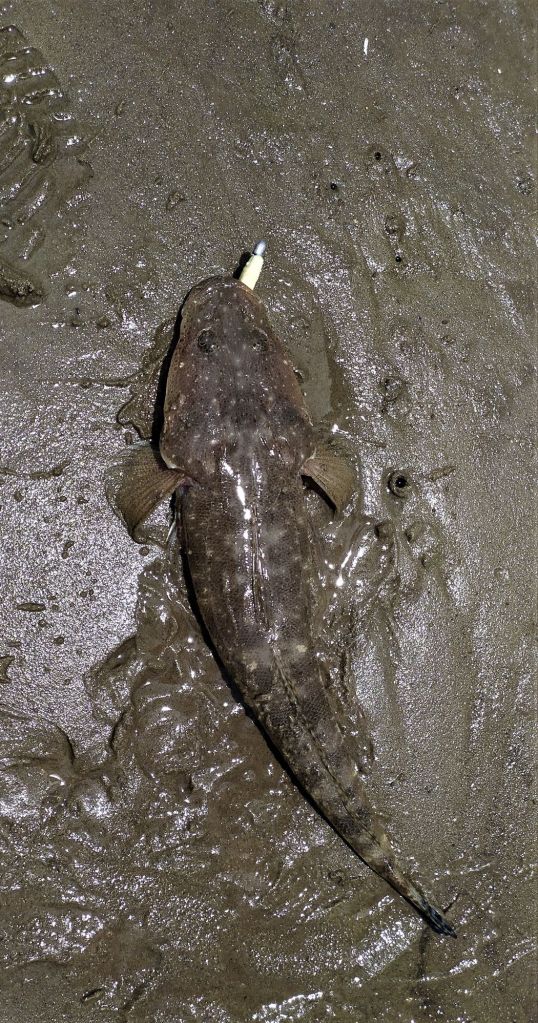
Bream and flathead from the Clarence River
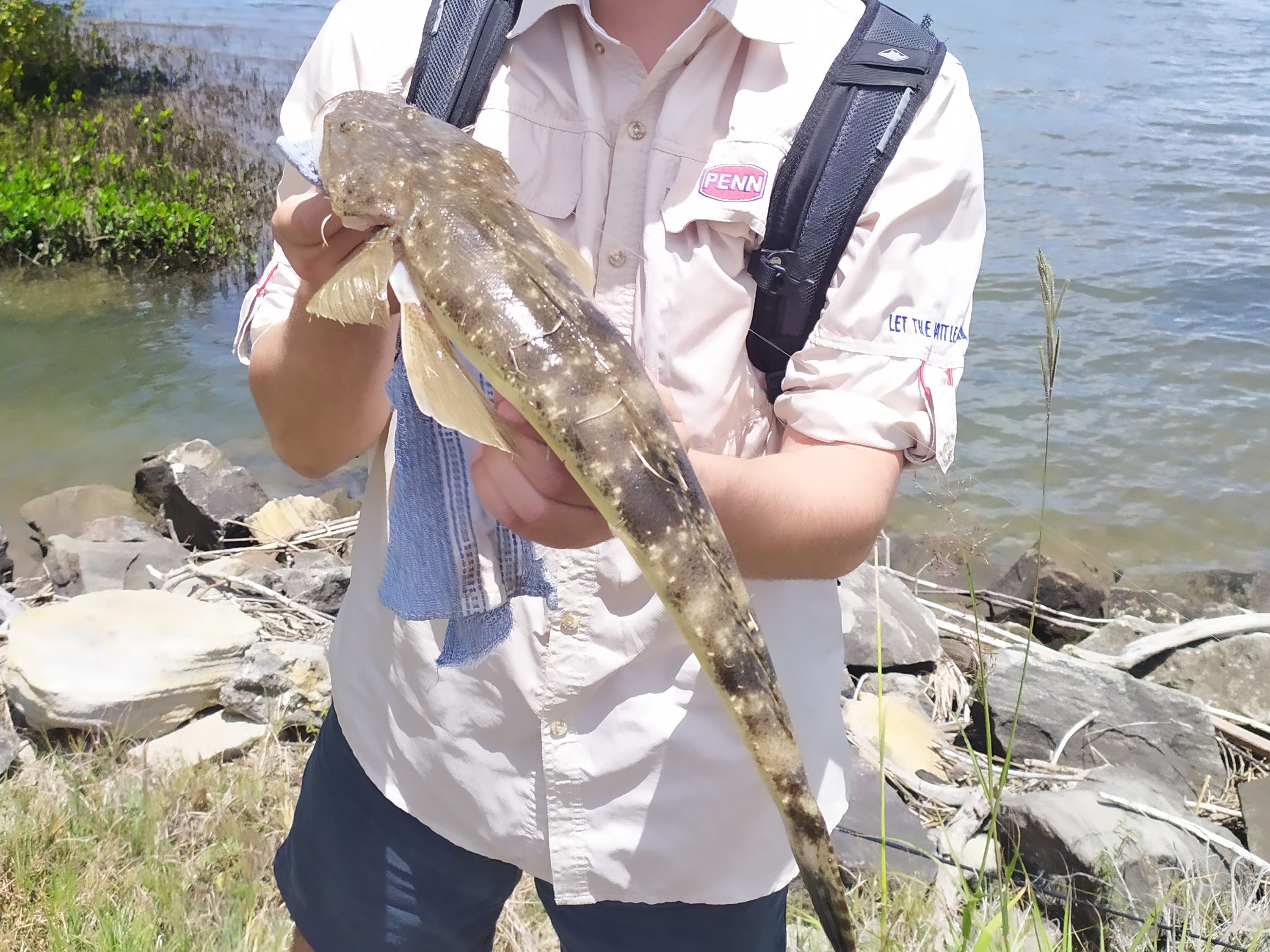
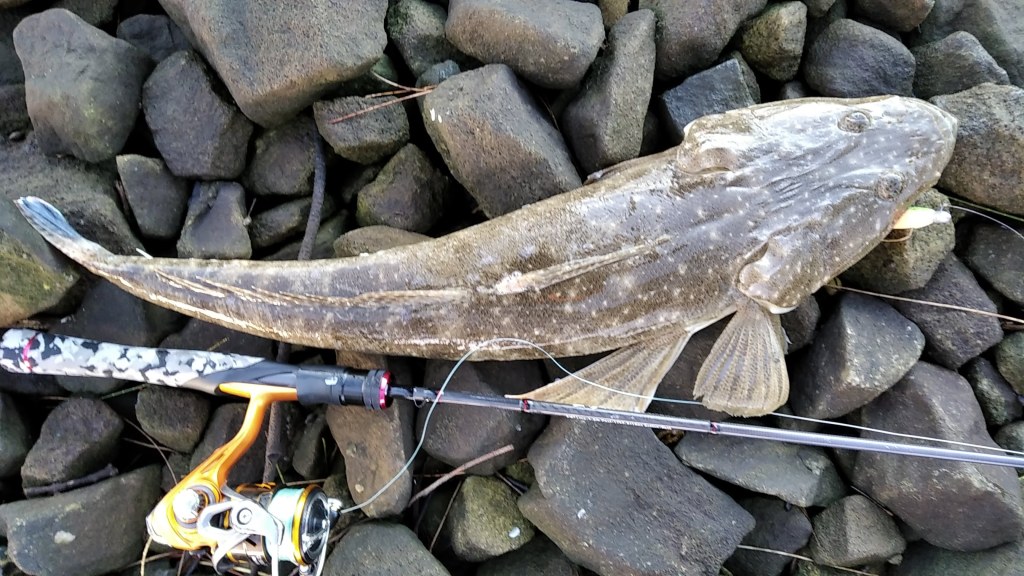
The fish were on the bite and I caught a couple more smaller bream. I swapped up to a bigger GULP Crazylegs Jerkshad soft plastic in the same colour and kept casting. Nearly all the flathead had taken the soft plastics at the base of the rock wall, that lines the river bank. So this is where I kept pausing. This tactic worked again at about 8.00 am and I connected with a solid 50 cm flathead that headed for the middle of the river. After a short fight, I had it at my feet. I took a picture and let it go. I decided that would do for the morning
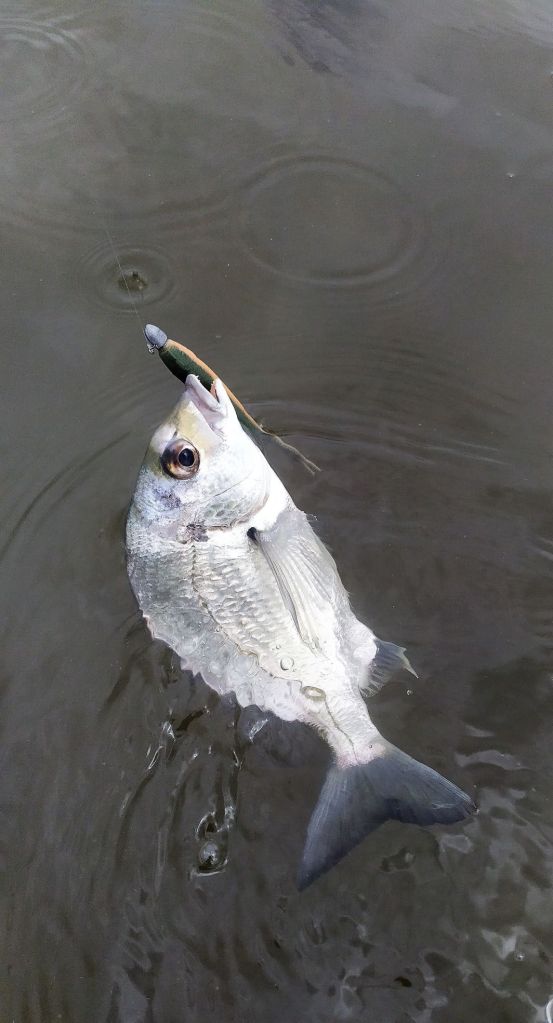
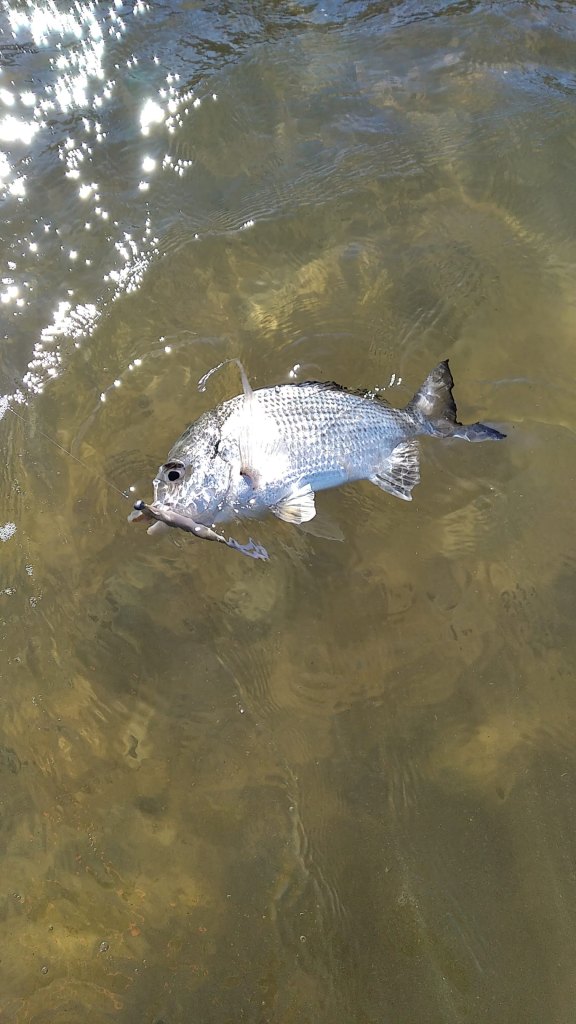
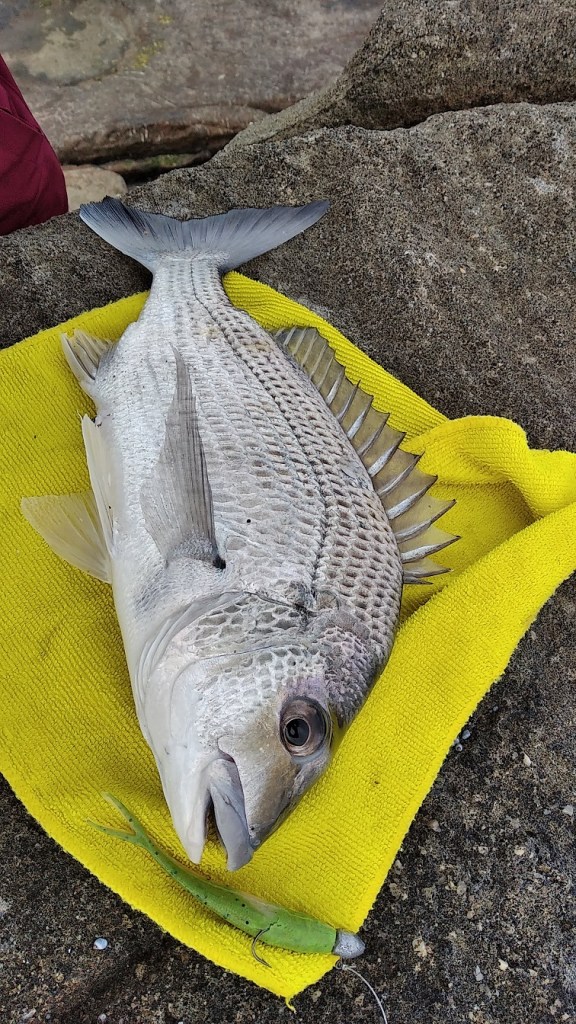
A decent Clarence River bream
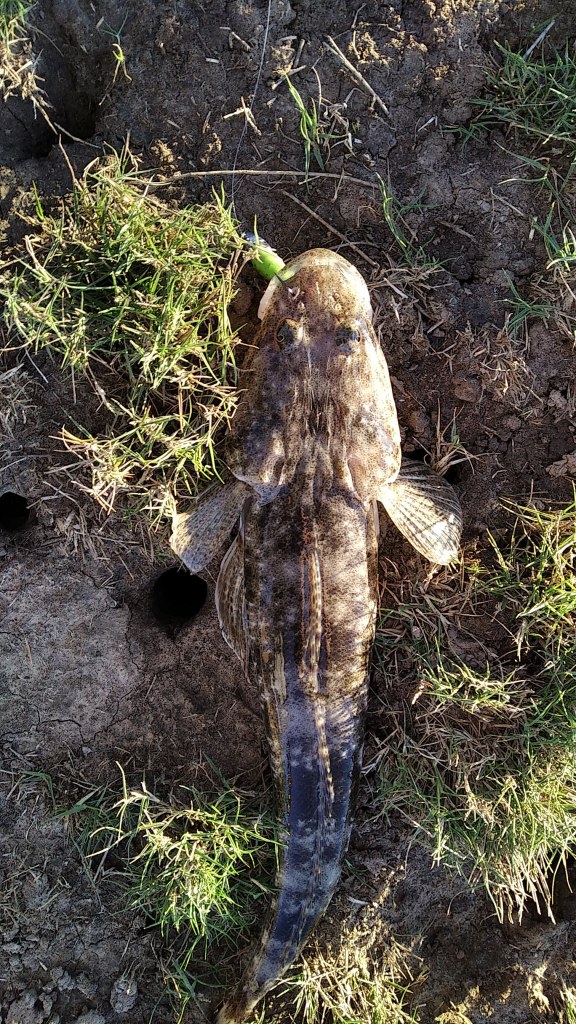
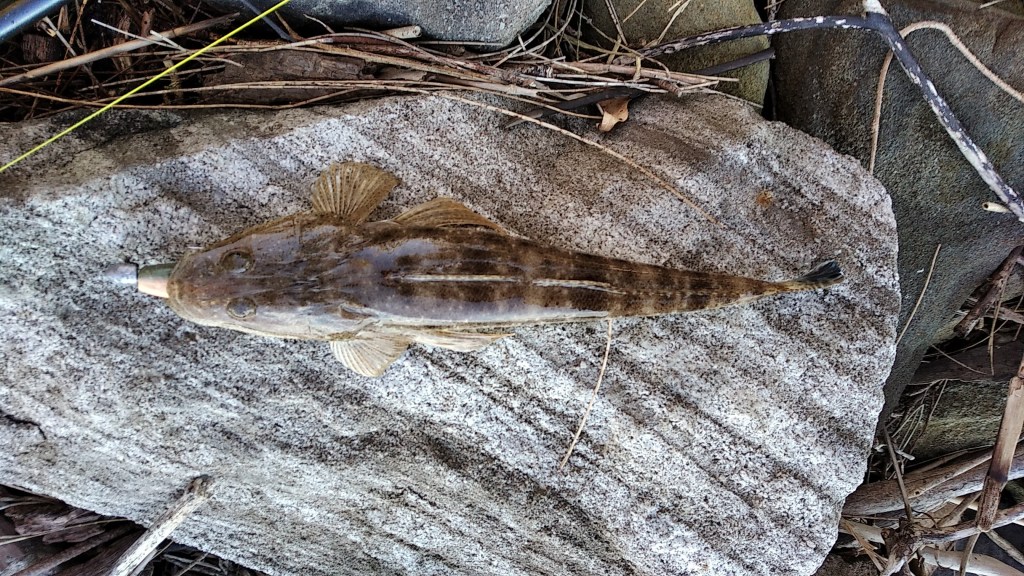
That afternoon I drove over to the north side of Goodwood Island to fish through until sunset. The wind dropped and the water was pretty flat. I had a few grabs from what I think where passing tailor and then caught a couple more keeper flathead which I took home for supper.
















































 Landangler's Blog