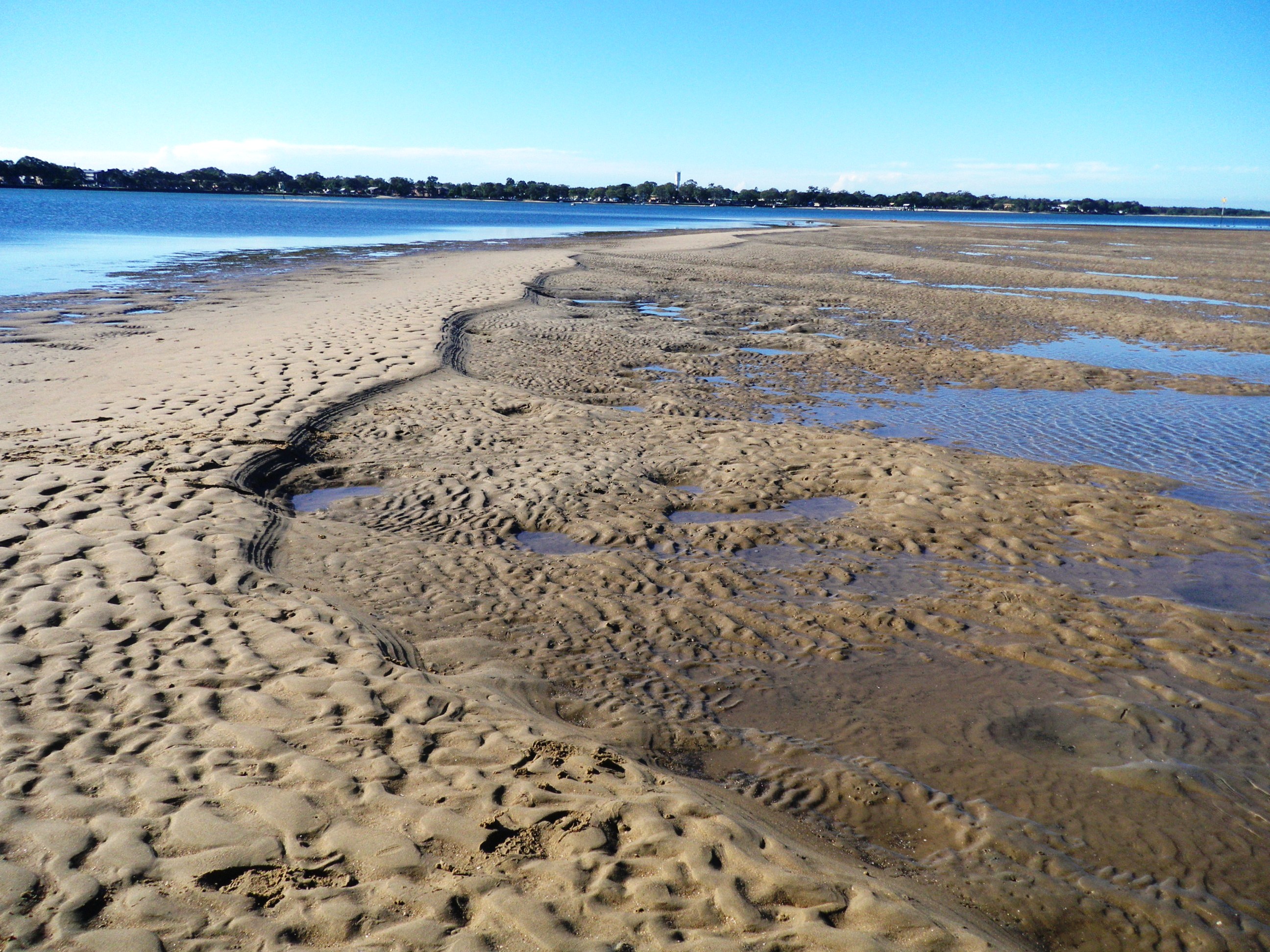
Bribie Island – old oyster jetty flats – 6 January 2012

Sunday

Between the wind and the increased traffic, finding the fish has been far from easy over the Christmas period at Bribie. All you can do is keep trying your favourite spots, on your favourite tides and hope things improve. As I look back over the blog and my dairies, which precede it – I see that December and January have been my toughest fishing months in the Pumicestone Passage for the last few years. Partly because if this, I have often run away to fish the rocks at Iluka or elsewhere, at this time of year.

The only spot that has been consistently producing fish for me is the area to the south of the old oyster jetty on the mainland side of the Passage, so this is where I started on Sunday morning. To add to the challenge high tide was just on dawn (3.57 am at 1.9m) and there would be a fairly strong south-easterly blowing at about 10 to 15 knots. This had the advantage of frightening off the boat traffic but would make casting less simple.

I started with a hard bodied lure as there was not much weed around. I love the DUO Realis Shad 59 MR. It is another of DUO’s finesse range, probably designed with bass in mind, but it annoys the hell out the flathead. It is 59mm long and weighs a little less than 5 grams. This is rapidly becoming my favourite suspending lure. It casts a mile and it seems to be able to just hang for ages in the water column. It’s great in this terrain, where you want to stay off the bottom. I was using an olive coloured model.

I was fishing a stretch of sandy bottom about 6 metres out from the edge of the mangroves. It was covered in about 80cm of water. I was retrieving the lure over the edge of a weed bed when suddenly something grabbed it. First it ran away from me and then it changed direction and hurtled back towards me. This must have left some slack in the line and as it came tight again, the drag screamed and the lure pulled free. Not sure what it was but it seemed a bit fast for a flathead – who knows?

I carried on working the same area and about 10 minutes later, there was a tug and a splash and an angry flathead appeared, shaking its head on the surface. After a brief fight I had it subdued and pulled it over to a gap in the Mangroves. It was about 55cm with a small open wound on its back and a pattern on its scales that looked as if it had been mauled by something with a broad mouth. Perhaps a wobbegong had had a go at it. I have seen some big ones cruising these flats.

I let the fish go and carried on peppering the area with casts. I felt another tug and lunge but again the hook pulled after a brief fight. The weed was starting to become a nuisance so I decided to swap to a soft plastic lure. I picked out a GULP jerkshad in the lime tiger colour, which has been doing quite well lately. I was fishing with a 1/8th 1/0 jighead. On the first cast I saw a flathead appear from the weed, grab the lure and immediately roll over, flashing its white belly, to release itself. I kept going and soon hooked it again. This time I kept it on the line. It was another nice fish, about the same size as the first.

As the tide started to run out strongly I gradually followed it, casting over the weed and sand banks. The gradually increasing high tides and big south-easterly blow had lifted a lot of sea grass and this was now clogging almost every cast. I reached the green channel marker and walked slowly back towards the oyster jetty. About half way along I connected with another fish, but it shook out the hook. I carried on casting in the same area for about 10 minutes until I felt another solid thud. I paused and then lifted the rod. It was another flathead about 45cm. I released it and battled the wind and weed for a further 30 minutes before giving up. I had found a few fish but also lost a few – not a bad session.

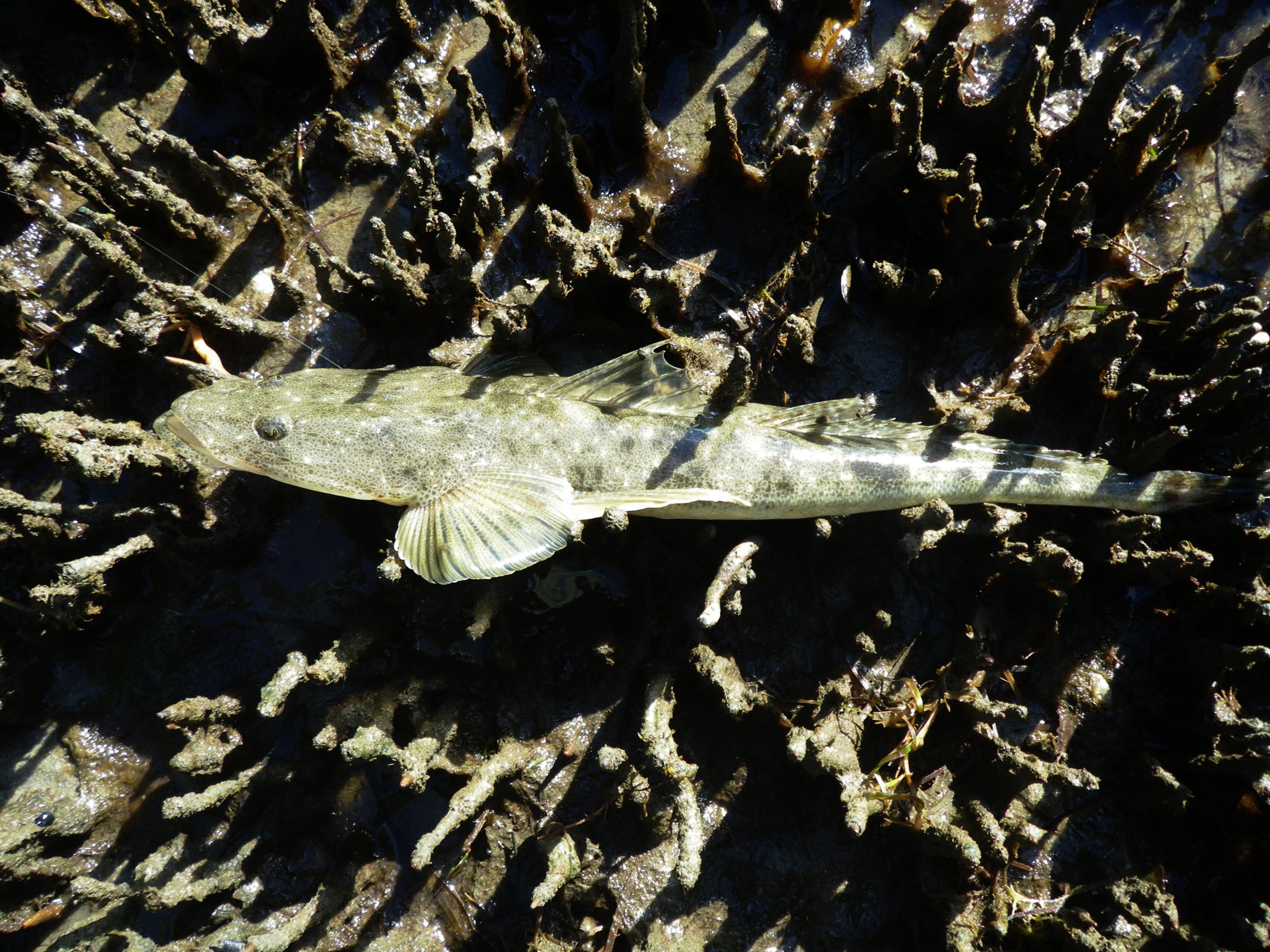
Bribie Island – From the Bridge to Sandstone Point – 29 May 2011

Sunday

I decided on Bribie Island again today. If you fish the flats on the mainland side of the Pumicestone Passage you are fairly sheltered from a cold south-westerly wind. The wind was forecast to be a 10 -12 knot south-westerly, but it was a good deal lighter than at 5.00 am, when I arrived by the bridge across to Bribie Island. I pulled on the waders and beanie and wandered out under the bridge lights, on the island side. There were a few lightning flashes over towards Moreton Island and the stars were blocked out by low cloud.

I fished around the bridge pylons and almost immediately, caught a few Pike, but there was not much surface action. The tide was running in and high water would be just before seven. There was now plenty of water close to the Mangrove roots and I concentrated on the area just to the south of the bridge, where I often see Flathead ‘lies’ at low tide. After a few casts with a GULP 3” Lime Tiger Minnow soft plastic, on a 1/8th 1/0 jighead, I was on to a fish. It struck hard, but it was only small – just under 40 cm. In the process of releasing it, it gave me a good spiking in the side of the thumb. I don’t know what’s on the Flathead spike, but there must be some kind of anti-coagulant, because whenever I get spiked, the blood just pours out – not ideal when standing waist deep in water in the pre-dawn light.

I moved gradually south, about 20 metres from the shore, casting all around. I continued to get the odd Pike but as the water slowed on the high tide, everything went very quiet and I had no bites for about 90 minutes. Then as the tide really started to run out I switched to a heavier 1/6th 1/0 jighead and a bigger GULP 4” Minnow in the Pumpkinseed colour. I was standing to the south-west of the long sandbar at the Sandstone Point corner and casting my lure over it and hopping it back with the run out tide. Suddenly the line went tight and I had a fish. I towed it back to a gap in the Mangroves – it was a nice Flathead at around 61cm. Plenty of fish in our fridge, so I let it go.

61cm Flathead caught on a GULP Pumpkinseed Minnow

The wind was getting up now and as this was a fairly sheltered spot, so was the boat traffic. I caught a couple more fish around the 40 cm size and then finally, just to the north of the oyster jetty, I got a 51cm Flathead. I had caught 4 of the 5 Flathead on the Pumpkinseed coloured soft plastics and the session was a good reminder of how useful this colour can be. At around 9.30 am I gave up and headed home for a warm shower.

51 cm Flathead - Caught on a GULP Pumpkinseed Jerkshad

Bribie Island – A bagful of Flathead – 27 May 2011

Thursday

Back up to Bribie Island, in search of Flathead. I was pleasantly surprised when I arrived around 5.00 am. It really was not too cold and the south westerly wind was far lighter than the predicted 15 knots. High tide had been at about 4.00 am so there was still plenty of water around the bridge pylons. I decide to start on the island side and as soon as arrived I could see and hear the Pike and Chopper Tailor breaking the surface as they grabbed smaller baitfish/ shrimps.

Small Flathead - under the bridge on Bribie Island side

I started with the GULP 4” Minnow soft plastic in the Pearl Watermelon colour, rigged on a 1/6th 1/0 jighead. I was using a 12lb leader and fishing with my Loomis GL2 light spin rod matched with a Shimano Stradic 3000 reel. After a couple of casts I caught a small Flathead – just about 40cm. It must have been lying in the shadows beside the first pylon, in no more than 40cm of water. I released it. The next cast gave me a Pike that was bigger than the Flathead and then, a few casts later, a 25cm Chopper Tailor.

Choppers - Juvenile Tailor under the Bribie Island bridge lights

Before the tide got too low I decided to go back over to the mainland side and fish around the pylons under the bridge lights. I stuck with the same soft plastic and jighead and worked my way around the pylons. I waded quietly, stopping frequently to pepper the spots where I have caught fish before. This soon paid off and just south of the bridge, about 6 metres from the mangrove line, I caught another Flathead. It was around 50cm long so it went in the keeper bag.

A Flathead from the mainland side about 50 cm

There was the glow of dawn on the horizon but the sun was still not up. It was cold now, but this area is shielded from the westerly breeze. The water looked fairly clear so I switched to a bigger GULP Crazylegs Jerkshad in the Curry Chicken colour – basically a flecked combination of pink and yellow with a forked curly tail. After a couple more casts I caught another fish – despite the bigger lure it was a much smaller Flathead at around 42cm – Keeper No.2.

Bigger lure but a smaller fish! around 42cm

The sun came up and I continued wading south, past the old oyster farm jetty. I walked right along the big sand bar – that is exposed at low tide, casting on either side. I reached the pole that warns boats about the remains of the old oyster racks and then turned north again and started wading back, alongside the sandbar, in waist deep water. I swapped back to the Pearl Watermelon Minnow. I was casting back at the sand bar and after about 50 metres I hooked another fish. It was another Flathead, about 48cm long –Keeper No.3. I dragged it up onto the sand and then resumed my course towards the oyster jetty. Over the next half an hour I got two more slightly bigger Flathead (Keepers 4 & 5) and a monster Pike – well over 45cm – which I kept for the cat.

When water covers this spot the Flathead sit along this lip

A bag of five Bribie Flathead and a big Pike for the cat

I now had my bagful of fish and so I decided to call it quits. The forecast wind was really arrived and was starting to blow so I headed back to the car and then the gutting table. It had been another good fishing session in the Pumicestone Passage.