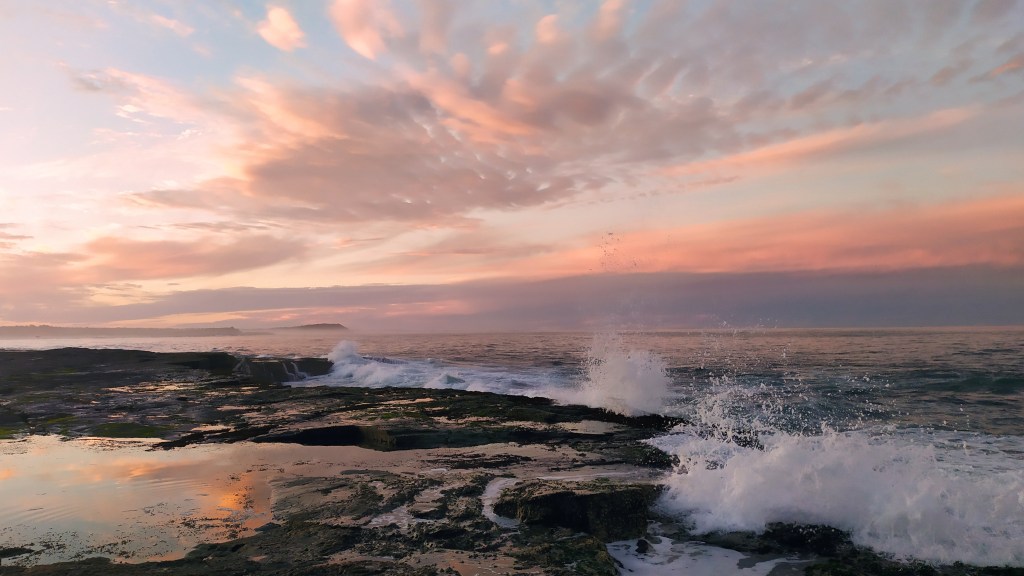
June started with some light winds and swell so I could fish on the headlands. On the dawn falling and low tides I fished for tailor. I focused on metal slugs and big hard bodied lures. When the tailor slowed down I swapped to the lighter gear to fish for bream in the wash. I even caught a few mini queen fish on the metal slugs. During daylight there were plenty of small jewfish around and they kept things interesting by regularly hitting the bream soft plastics.
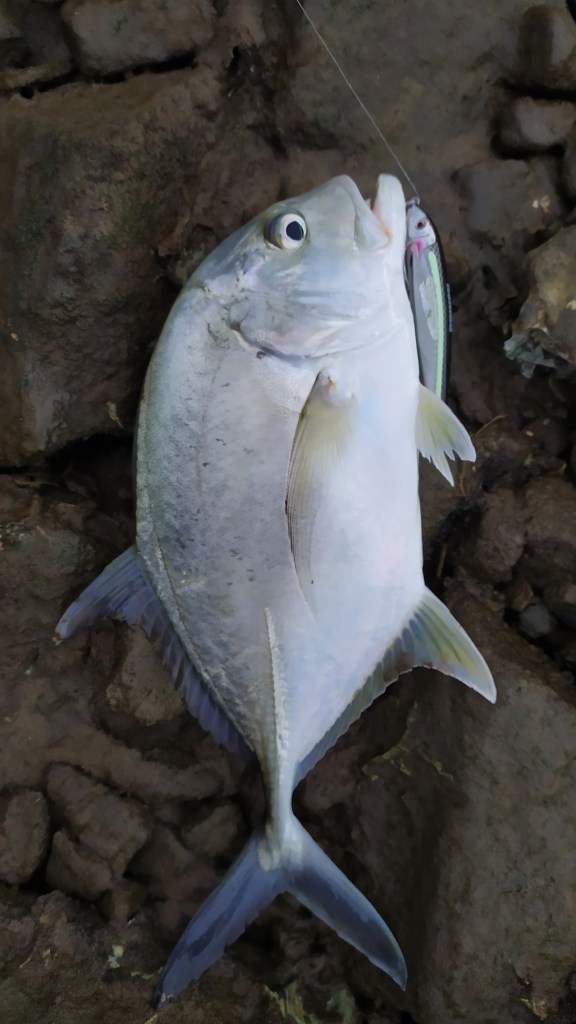
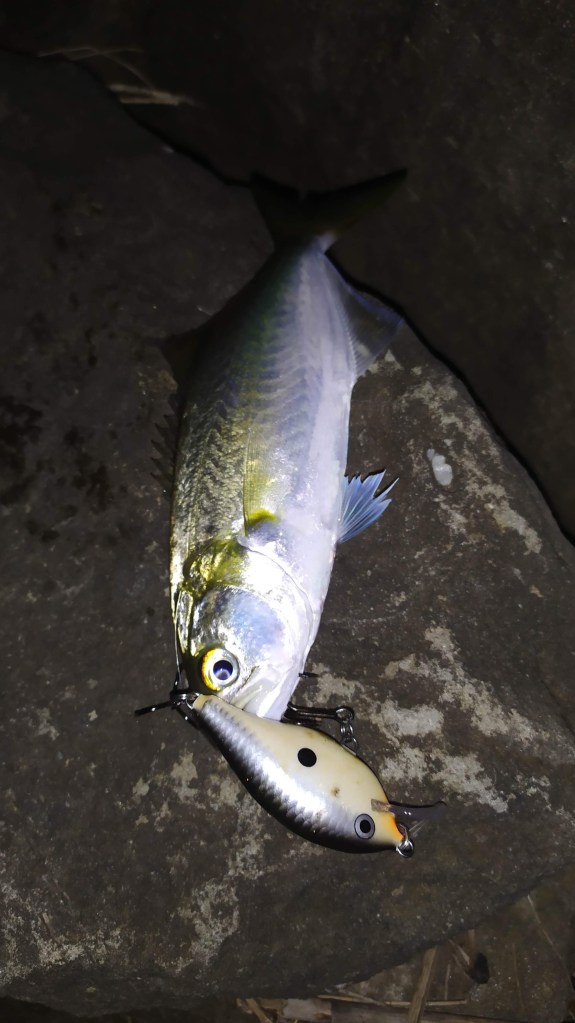
In the river there was ample bait schooling close to the banks. There were flathead everywhere and at dawn and dusk there were also schools of junior giant trevally marauding around and the odd decent sized tailor. I spent a few dusk sessions fishing for the trevally on Goodwood Island. I experimented with a few different lures and concluded that the favourite was the DUO Realis Pencil 110mm surface lure. I fished it with plenty of jerks and pauses. The trevally were not huge (the biggest was around 45 cm), but they are so much fun to fish for, especially when they strike a surface lure.
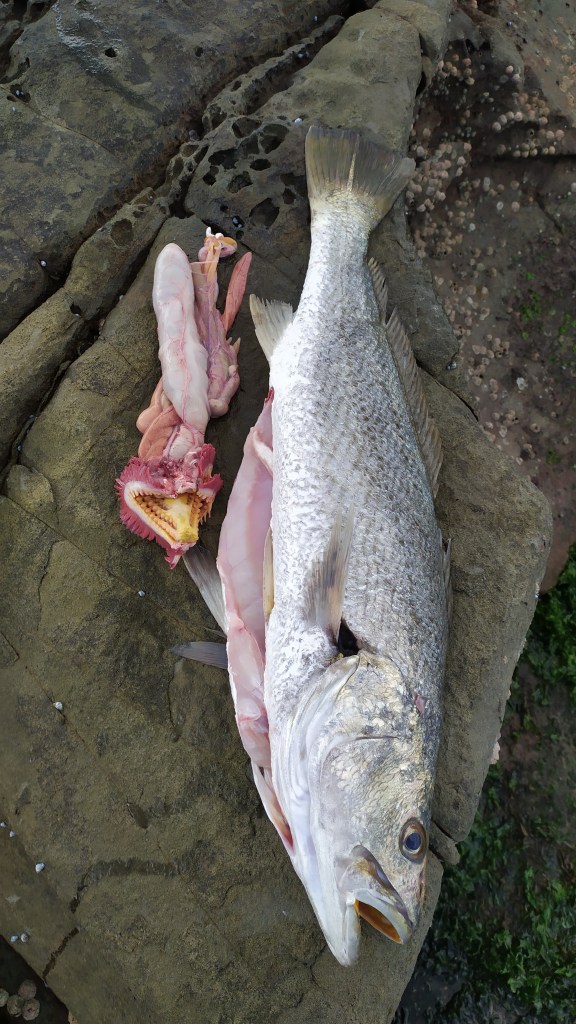
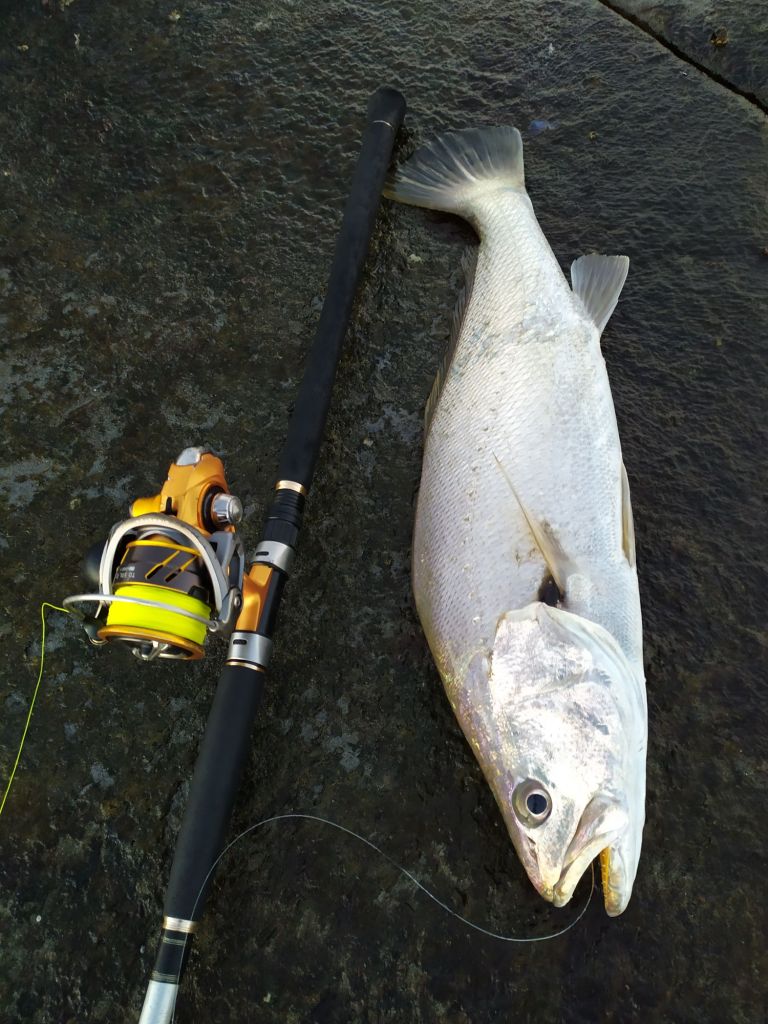
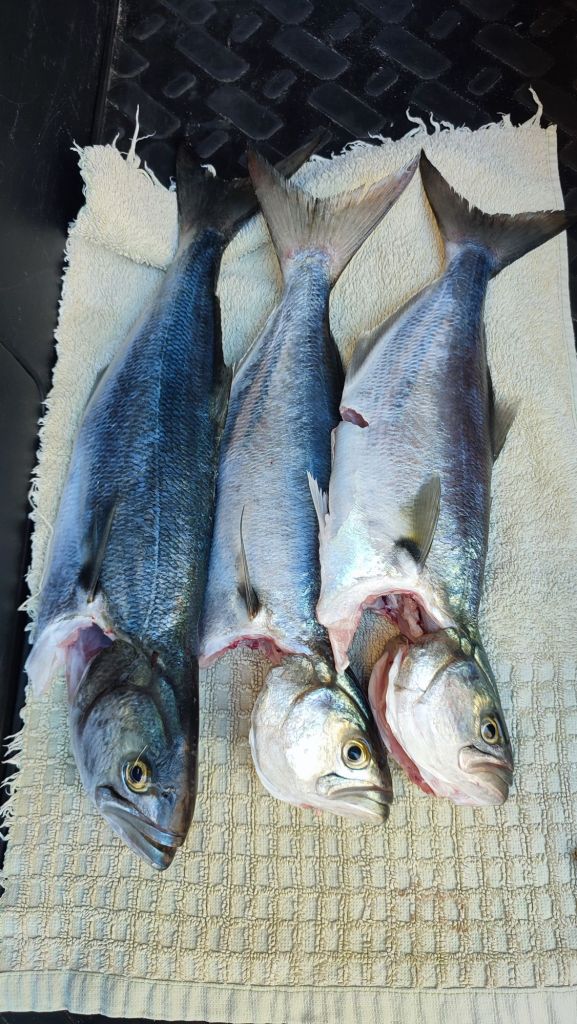
I caught a few keeper jewfish out on the headlands at low tide on the day of the new moon, on the 6th June. The bottom of the tide is the easiest time to fish on most of the ledges I frequent. I caught the two mid 70’s cm fish in successive casts at about 12.30 pm. The fish may well also bite on the top of the tide but unless its a very calm day with a low high tide, I cant get to them.
For the first time in a while both of these fish were very fat and the one I kept and gutted had a belly full of “yakkas” (yellowtail scad). Hopefully the bait will hang around for a while.
I was away from fishing from mid January to mid February.
In early January the Clarence River at Iluka was full of bait. The black cormorants flew up and down early in the morning looking for the schools of small fish and prawns. Wherever they stopped was a good place to fish. On one morning I was surprised to catch a Cobia on a soft plastic jerkshad, whilst wading on the flats, near Browns Rocks.
There were still plenty of flathead in the river and the odd bream. It was quite windy at the beginning of the month but I did manage to fish at Woody Head and Iluka Bluff on a few mornings, where I picked up a few small jewfish and some keeper sized tailor.
July had its fair share of windy days but was also a good fishing month. The mulloway/ jewfish were all around the ledges, when I could safely get at them and I caught plenty of keepers.
When the swell is up I focus on land-based fishing around Iluka and Yamba. If you have a pair of waders the options are pretty much endless and you can always find a spot to get out of the wind.
Fishing with my light rig and a 12lb fluorocarbon leader I caught plenty of decent flathead on soft plastics and small hard bodies. I also caught a few bream and tailor on these lures. The best tailor were caught working hard bodied minnow lures along the riverbanks at dusk. I got bitten off a few times like this. The biggest tailor I landed from the river where about 40cm long.
We had plenty of rain through early February and there was not much fishing to be done in the muddy brown waters of the Brunswick, Richmond, Wilsons or Clarence River.
In the middle of the month the Clarence River started to clear up a bit and I fished the flats at Browns Rocks, near Iluka. I saw quite a few big flathead lies so they were definitely back in the river after the deluge. I fished my light rig with minnow and paddle tail soft plastics and a 10lb fluorocarbon leader. I was mainly using 1/8th and 1/6th ounce jigheads. I caught a few flathead and a lot of small jewfish. The tailor were also a constant and I had a few snip offs.
The Clarence River began to clear up after lots of rain in mid-February
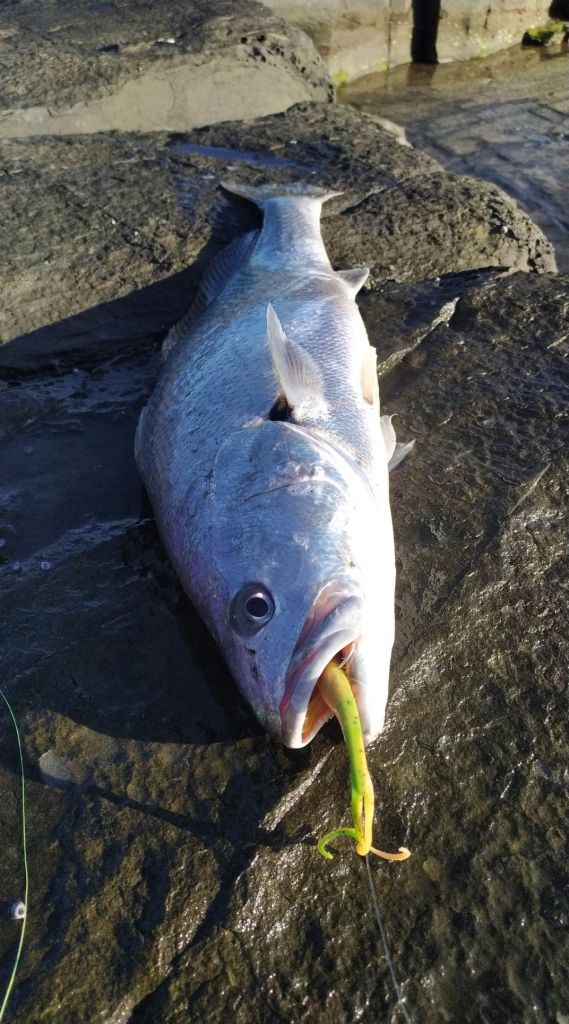
On the 20th the swell eased off and I had a fish on the rock platform at Woody Head in the Bundjalung National Park. I started with soft plastics on my heavy set up and caught a few bream. I moved around, casting until the tide started to run in and swapped to a GULP Crazylegs Jerkshad in the Lime Tiger colour. I was using a 3/8th ounce jighead and 40lb fluorocarbon leader. After a couple of drops I felt the weight of a good fish. I pulled its head out from under the ledge but it was too heavy and kept thrusting its nose back down into the cunjevoi. The swell wasn’t big enough to help me and soon my leader was tightly tangled. The fish swam away leaving my jighead firmly lodged in the rocks. It had felt like a jewfish but trevally are also good at using this technique to free themselves.
I tied on the same set up and threw it out again. Three casts later I was onto a fish again. It was not as powerful as the first but it still tried to get under the ledge. I let it run a little way but when I put some pressure on it swam out rather than in and I was abled to subdue it. It was a decent school jewfish about 65cm to 70 cm long. I took a picture and speared it back into the water pretty quickly.
There are so many sharks in this zone that I am not sure whether these released fish have much chance of survival. Hopefully they swim straight back under the ledge.
A nice jewfish from Woody Head
After a few more river fishing sessions the rain set in again. This time it just did not stop and the soaked river catchments could not absorb it. A low off the east coast dropped solid rain for three days and nights and the whole Northern Rivers area of New South Wales suffered the worst floods in living memory. Lismore was completed wiped out and Broadwater/ Wardel/ Mullumbimby/ Ocean Shores/ South Golden Beach/ Brunswick Heads, Fingal Head and many more areas were completely flooded and rendered in accessible for days.
Telstra and the NBN, it transpired, had chosen to route their entire regional telecommunications backbone through a basement telephone exchange at Wardell which was 5m under water. This made local communications next to impossible, severely hampering rescue and recovery efforts. The devastation was complete. People dragged their flooded belongings out onto the streets and the clean up began.
On the Clarence River the flood waters cause massive fish kills. Dead mullet, mulloway, flathead, bream washed ashore along the banks, unable to survive the sudden deluge of fresh and filthy water.



















 Landangler's Blog