Bribie Island – White Patch – Unexpected Jewfish – 23 August 2013

Friday

Another cold fine morning and I decided to try Whit Patch on Bribie Island again. As you will see from recent reports fishing can be hit and miss here. The coffee rock ledge structure that appears at various points all along either side of the Pumicestone Passage creates several holes and submerged mini rock bars along this stretch of shore.
I started early in the cold at White Patch

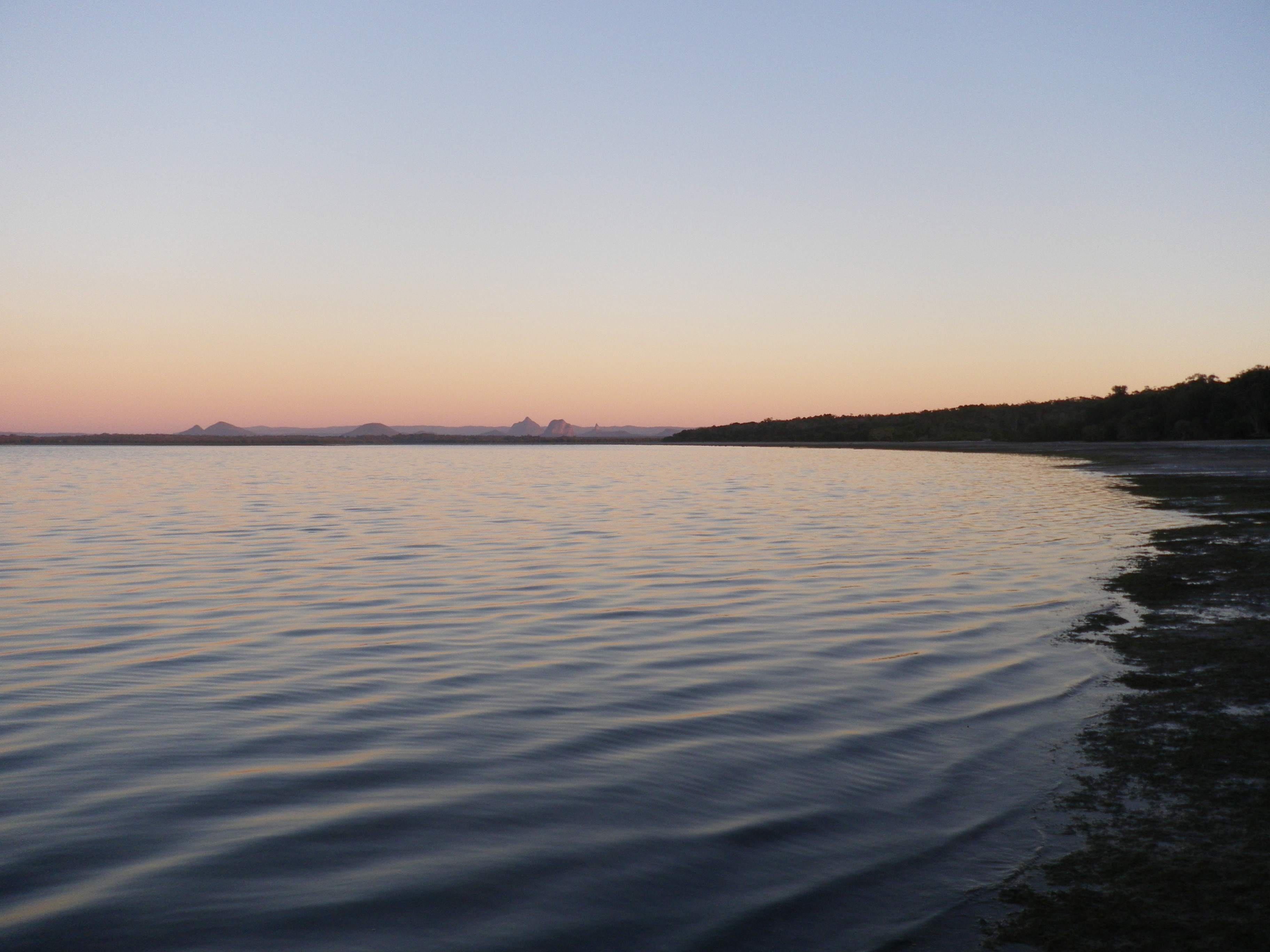
I started early in the cold at White Patch

There is a lot more sediment around after two years of floods, followed by a very wet period at the beginning of winter. This means that water clarity is not very good at the bottom of the tide. It also means that the weed/ sea grass beds that clump on the sand above the ledge, are taking longer than usual to spring up. But there must be something to eat in the area, as the first thing I saw, as I walked out in the pre-dawn light at the north end of White Patch beach, was the bristly snout of a Dugong. It was cruising along the ledge surfacing every now and then, to blow.

Great minds think alike and Bribie Island local – Colin was already out flicking some soft plastics further up the beach. I saw him pull up a legal Flathead, so I was enthused. I rigged up with a GULP 2” Shrimp in the Banana Prawn colour, on a 1/8th ounce, #1 hook jighead. I was sticking with the 8lb fluorocarbon leader.
An ambitious pike was my first customer

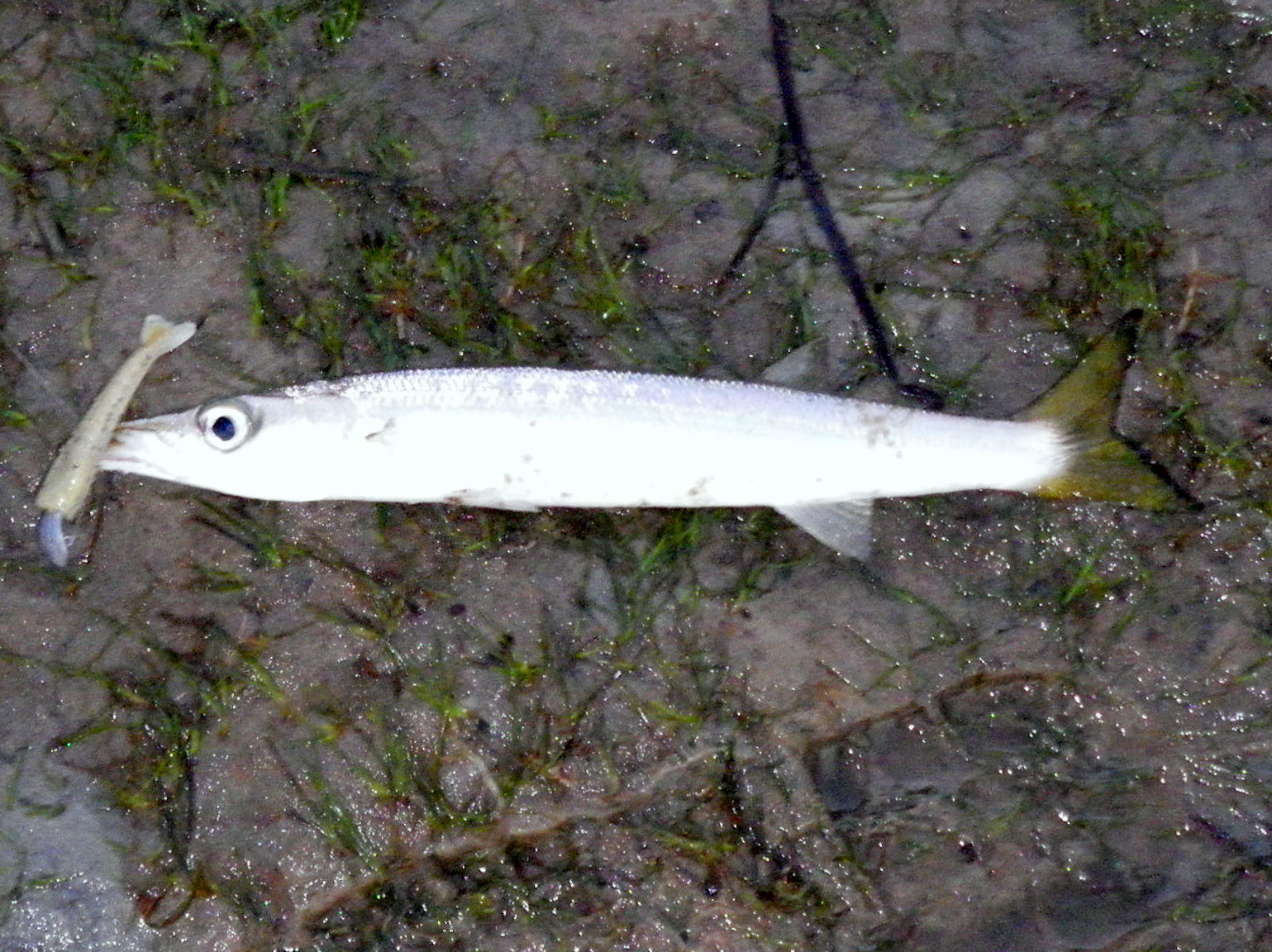
An ambitious pike was my first customer

Low tide was at about 5.30 am – just on first light. There was no wind to speak off and I was starting fishing in the slack water just on low – which is not ideal. The first half an hour was uneventful – apart from the Dugong sighting. At about 6.15 am an ambitious pike grabbed the soft plastic but it was only about 15cm long. I wandered up and down casting diligently, but I had to wait another hour for a decent bite. I connected with the fish, which felt like a Flathead, but after a few moments it was gone.

At about 7.15 am, I caught a Flathead that was not much bigger than the pike and was sitting in only about 10 cm of water. I always forget just how quickly these fish will move up the beach with the tide. I decided to swap to the Zman range and put on a Minnowz paddle tail shape soft plastic, in the Houdini colour. I cast in all directions but this did not produce anything.

This one was only 20cm long

This one was only 20cm long

At about 7.30 am I swapped to a GULP 4” Minnow in the flecked New Penny colour. I cast it over the ledge and let it sink. I paused until I was sure it was on the bottom then hopped it up and paused again. On the second lift the rod bent over and then line started peeling – something decent had eaten the soft plastic. It mad a solid and long initial run. My drag was not very tight and I need to re-spool this reel, so I quickly found myself down to the backing line. Patience is the key at moments like this. I left the drag alone and wound every time the fish paused. I kept the rod tip up and maintained the fairly light pressure. I gradually covered the backing line with braid and felt more comfortable.

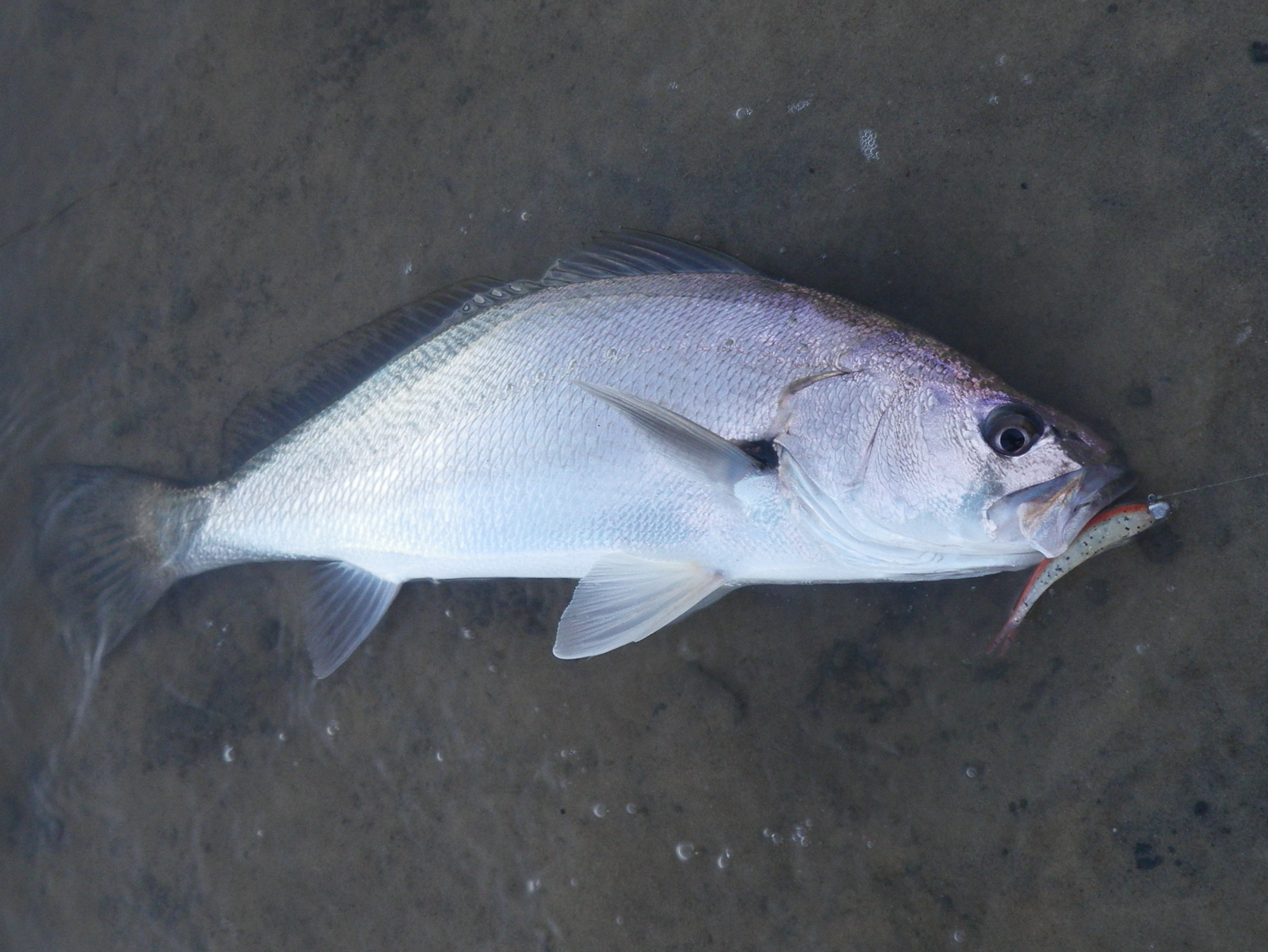
The fish did not have very much power left after that first initial long run and so I had an inkling it was a jewfish/ mulloway. Now I tightened the drag just a little so that I could pull the fish cleanly over the ledge. As I did so I saw the silvery blue spots along its lateral line and confirmed it was a Jewie. A gentle stroll backwards and I had it up on the sand.

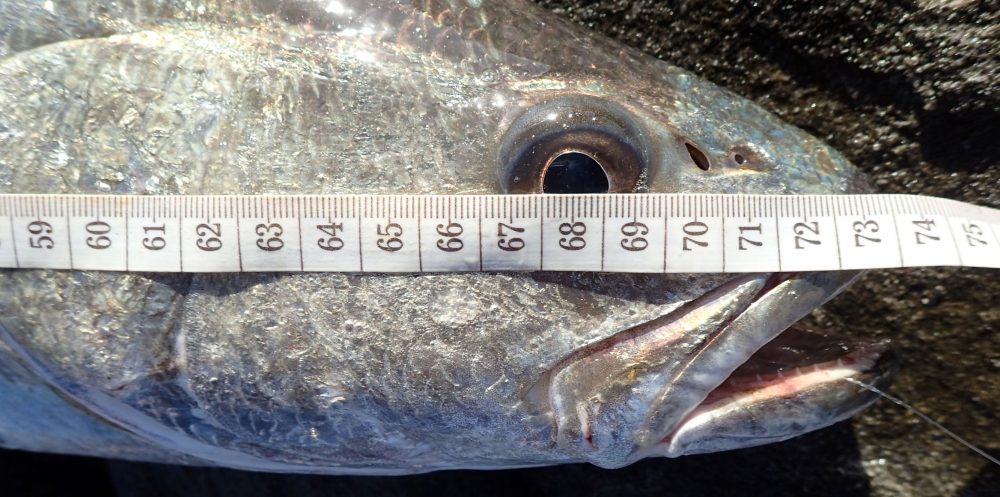
I measured it – 68cm – still not legal in Queensland, but a cracking fish nonetheless. I took a few photos in the shallows then sent it on its way. I fished on for a while but I could not find anymore. I looked back through my archives and realise this is the farthest up the Pumicestone Passage that I have caught a Jewfish/ Mulloway – it’s a very encouraging sign and more evidence of a healthy fishery.
68cm - still not a legal Jewfish - it is taking a while to find one at Bribie this year
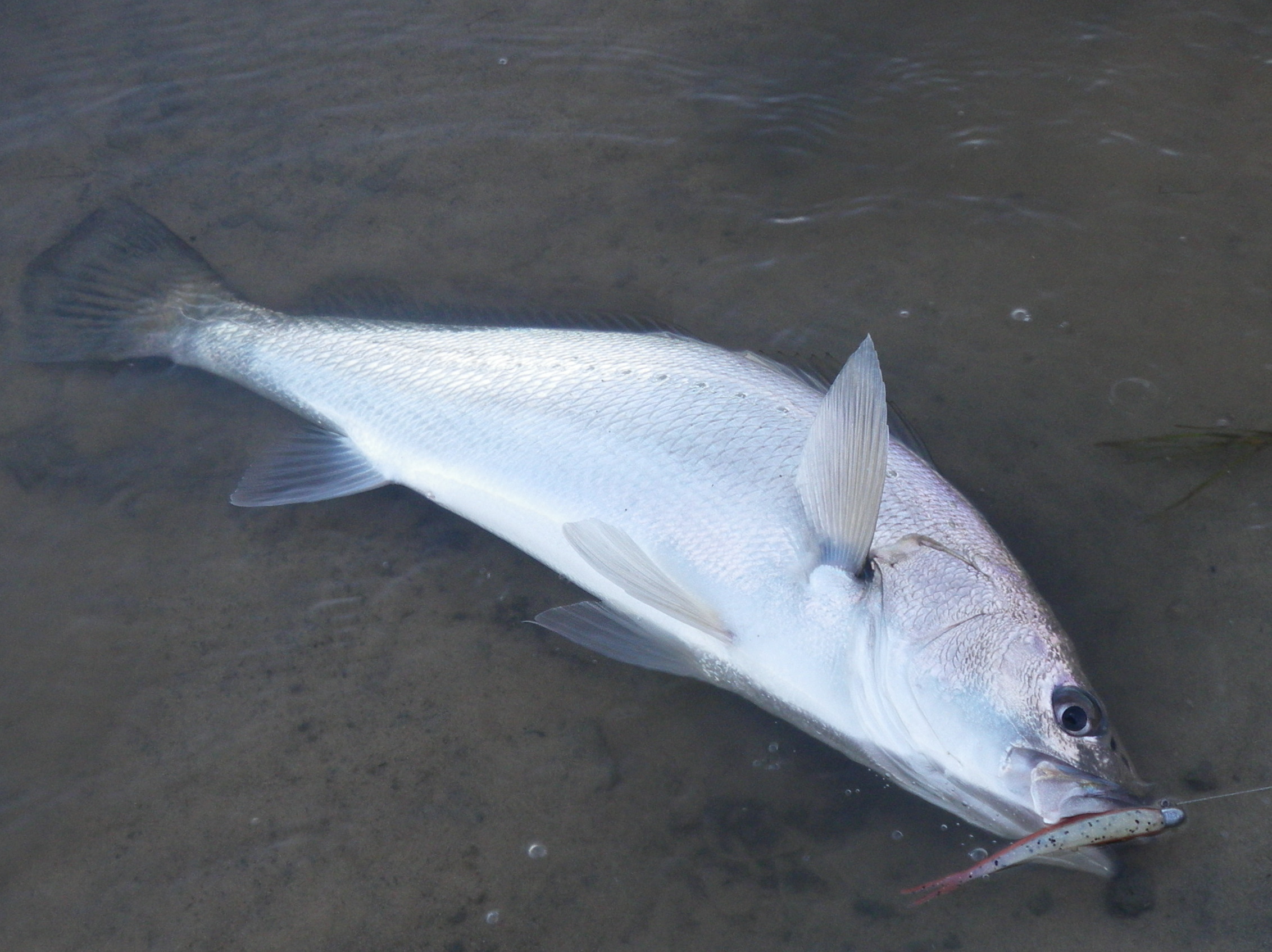
68cm – still not a legal Jewfish – it is taking a while to find one at Bribie this year


I had not expected to find a Jewfish at White Patch

I had not expected to find a Jewfish at White Patch

I stopped for a coffee at Scoopys and ran into an old friend – local Brisbane children’s author – Julie Fison. Her Hazard River series of adventure stories are a great tool for engaging both reluctant and accomplished young readers. She has also just launched a series for teenage girls. I should warn my readership to check their pacemakers before they delve into these! Its book week in Queensland, so she was spreading the word about the wonder of reading, at the Bribie library. I would think there are some sections of our community where children don’t know what a book looks like! So full marks to Julie for taking this on. For more about the books visit http://www.hazardriver.com/. or Julie Fison visit http://juliefison.wordpress.com/. She also has an amazing and painful tale related to a Garfish encounter – but that is for another time.
Iluka – Woody Bay – 13 February 2013

Wednesday

On Wednesday I woke to more showers which were blowing through on a building south-easterly wind. I made some breakfast and waited for them to pass.

By the time the rain stopped it was about 6.30 am. The south-easterly was already blowing at about 15 knots and was forecast to get stronger through the day. There was not much point in trying to fish the headlands. The tide had been low at 5.00 am and had now turned in. I decided to fish around the rocks beside the boat launching area, on the edge of Woody Bay. This area, directly in front of the camp site, is sheltered by Woody Head. Even in a big south-easterly blow, it stays pretty calm.

A grey morning on Woody bay

A grey morning on Woody bay

I decided to switch to my really light spinning outfit – Shimano Stella 2500 reel, Loomis GL2 rod, 1.8kg Fireline and a 10lb fluorocarbon leader. The bait that had been jumping around close to the rocks, had been some kind of small whitebait, so I chose a GULP 3” minnow soft plastic in the Watermelon Pearl colour, which would represent a similar profile. I rigged up the plastic on a 1/8th oz., 1/0 jighead. As I stood in the shallows, the water was warm and I started casting along the edge of the semi – submerged rock bars. At about 6.45 am the rain started again and just as it did, I felt the familiar double tap bream attack. I did not hook up but on the next cast, I did. I wound in another very respectable bream.

GULP Minnow gets the first bream

GULP Minnow gets the first bream

I let it go and moved on, casting out and trying to rest my soft plastic lure, for as long as possible, right where the rocks met the sand. Just before 7.00 am I felt the faintest of grabs, as I hopped the lure along the bottom beside the rocks. Two more casts in the same spot produced nothing. On the third, the rod bent over as the jighead stopped dead.

It felt like the lure had stuck fast in the rocks but then very slowly the ‘rocks’ started to move. In a long slow run the fish moved about 6 metres to the south. Then paused and did the same thing again. I pulled up on the rod and tried to recover some line. It was only at this point that the fish realised that it was hooked and started really fighting. It was still so slow and heavy that I thought it was a ray or shovel nose shark. After a few more lunges it turned towards me and rose to the surface shaking its head. I could now see it was a big flathead.

With a ten pound leader I could not risk any abrasion from the barnacle-covered rocks so I let the fish play itself out. It had been lurking in less than 30cm of water so it was hard to keep its head down but I took my time and used the swell. I found a nice sloping rock bar and gradually eased the fish up in a breaking wave. It was a nice flathead who measured up at about 74cm. After a few snaps I put her back and she swam away.

The Clarence River is still very de-oxygenated and full of fresh water from the floods. It is likely that all sorts of species (including flathead) have settled around these headlands to wait for it to clear. The birds were very active, constantly swooping in to pick up baitfish. So it looks like a fair amount of bait has also been washed out.

I decided to wade around the shallows in the bay and look for some more fish. I was soaked from the rain and being in the water was warmer than being out of it. I tried all around the rocks with the same soft plastic and a few others, to see if I could find anymore flathead – but I couldn’t. I watched a few long toms follow my lures in and have a snap at them, but did not hook any.

I swapped over to one of my favourite DUO hard bodied lures. With the river out of bounds there was not much water where I could use their range of finesse lures, but this bay was flat enough and clear of weed, so it was perfect. I tied on the DUO Ryuki Spearhead 45s in a gold/ green colour. This is a small trout lure that seems to work well on bream. It weighs 4 grams and is 45mm long with a small bib. As with most of the DUO range it casts a long way and slips into its action almost as soon as it hits the water. Although it is technically a sinking lure, its lightweight means that it effectively suspends, when you pause the retrieve.

I cast it over the flats and around the rock bars as the tide rose. First it attracted a few undersize moses perch. Then, as I moved into slightly deeper water I found a patch of small bream. I caught a couple before they decided they had had enough.

At about 10.00 am I found myself almost back where I had caught the big flathead earlier. I had waded round the bay in a big circle. I continued to cast along the edge of the rocks and suddenly felt a solid hit and run. The fish was hooked and after a few good runs it calmed down and I pulled it up to the sandy beach. It was another good bream – just over 35cm long. I released it and carried on fishing for about another hour with no luck, so I decided to give up for the morning.