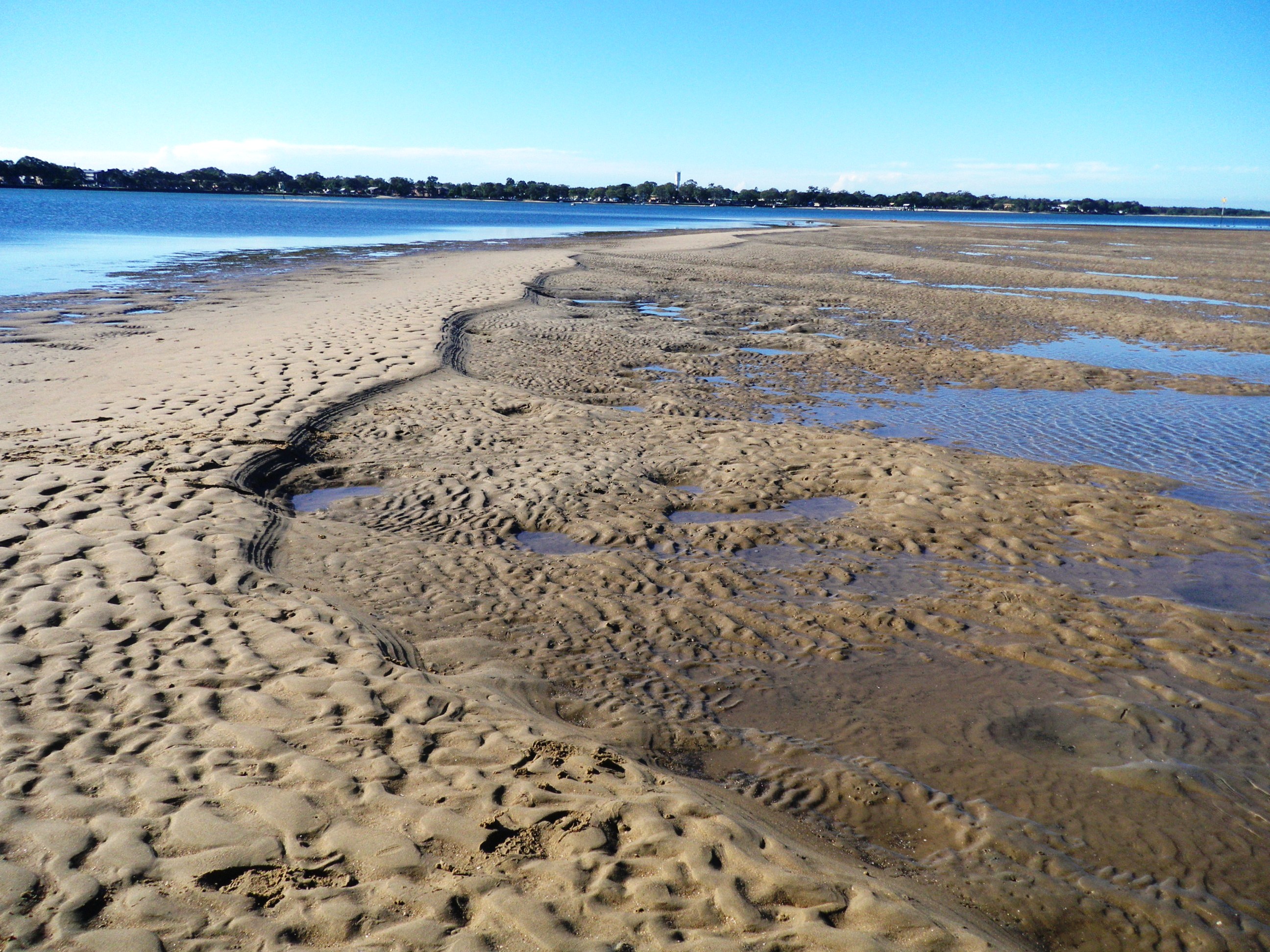
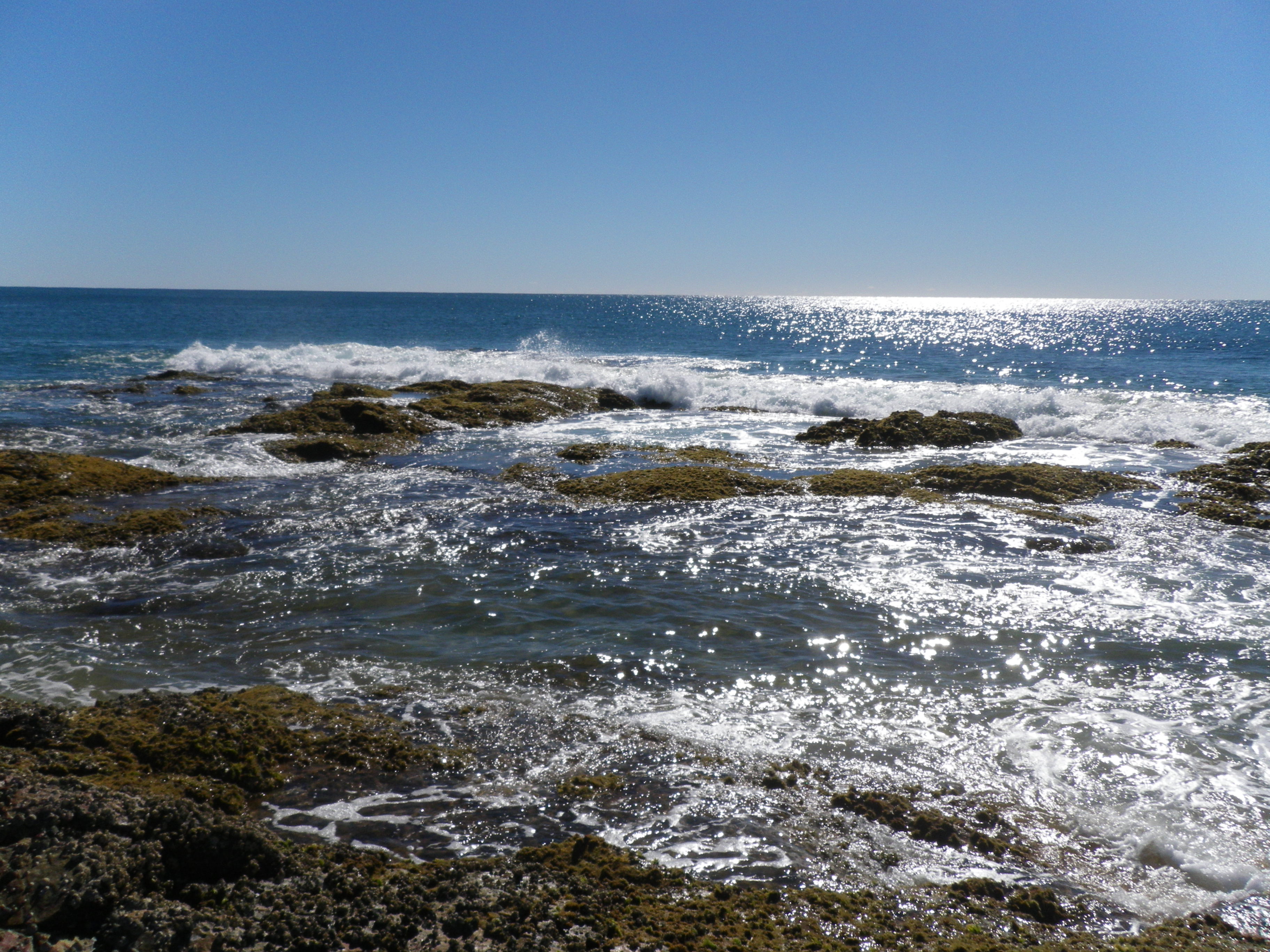
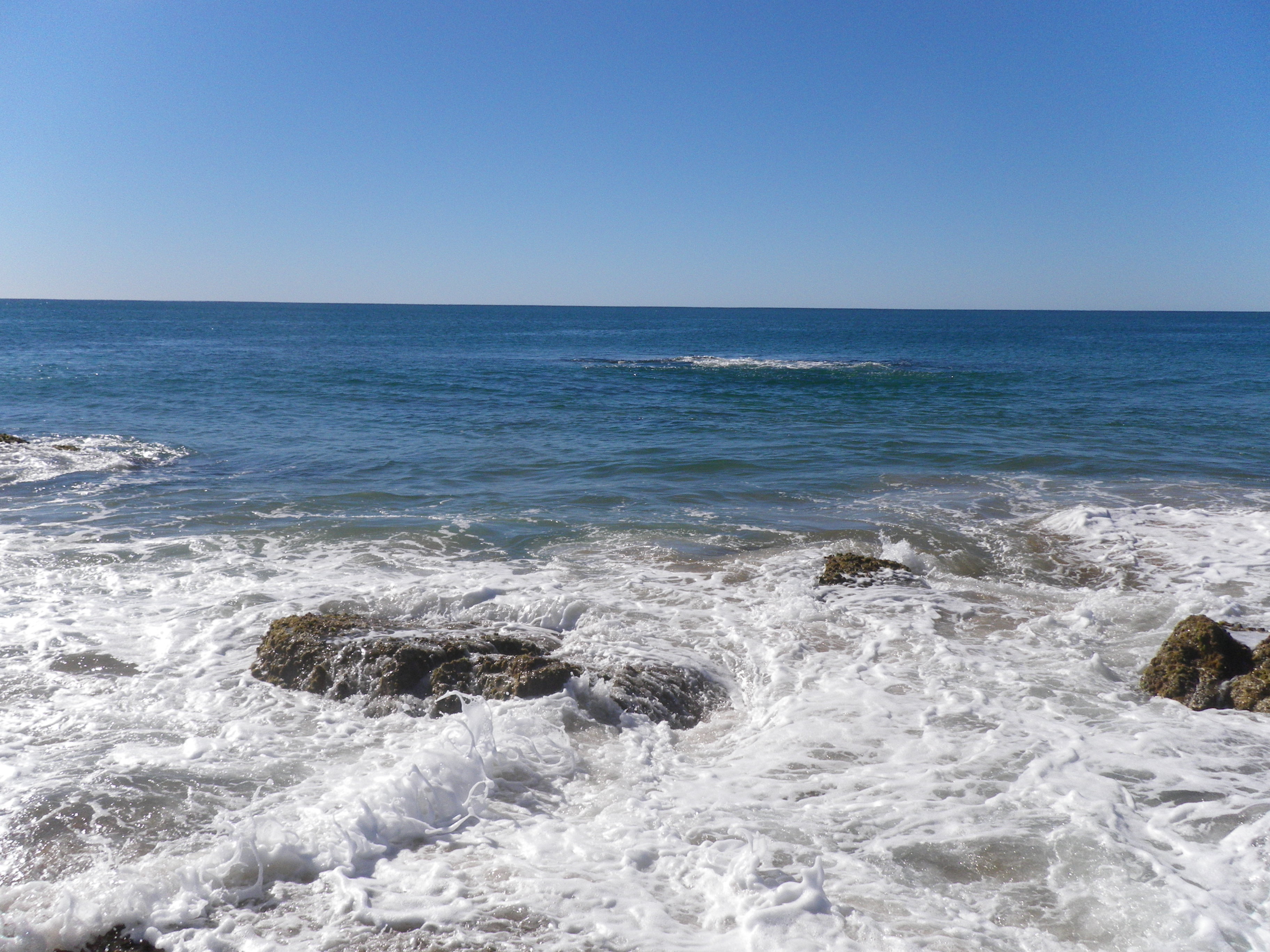
Tweed River – South Rockwall – Tailor, Trevally – 6 Aug 2011

Saturday

I have not been doing so well at Bribie Island lately so I decided to fish the Tweed River mouth on Saturday morning. I chose to fish the southern rock wall which you reach by driving through Fingal Head.

The forecast was for a light northerly wind and low tide would be just before dawn. You have to be in this spot before dawn, as the light change often brings the fish on to the bite – often just for half an hour or so. I left Brisbane around 3.45 am and arrived just after 5.00 am. I walked out the end of the rock wall and rigged up with my headlamp. I try to keep the light off the water when I am doing this.
I rigged up a GULP 5” Jerkshad in the Cajun Chicken colour – this is a black soft plastic with a purple/ pink underbody. I put it on a ½ oz 3/0 hook jighead. I had the Daiwa Demon Blood 9 foot rod loaded with 40lb braid and about 2 metres of 30lb fluorocarbon leader. I had a couple of casts in the dark, but with no bites, I decided to wait for some light.

A choppy morning on the South Rockwall at the Tweed River mouth

About 10 minutes later, I could see what I was doing and I cast my soft plastic straight out into the river mouth. It landed about 15 metres off shore and slowly sank, as it ran out with the tide. Before it reached the bottom I felt a couple of solid strikes. I jerked the lure up and then paused and let it sink again. As I started to repeat the process there was a solid pull on the end of the line and the rod tip started wiggling. The fish took some line and then raced out towards the middle of the river. It was moving fast and then broke the surface with a vertical, head shaking leap. It was a good size Tailor – probably around 60 cm long. I tightened the drag a little and played it to the base of the rocks. I tightened the drag some more and gradually heaved it up the rocks towards me – just as I grabbed the leader the hook pulled from its mouth and it was gone. Bugger!

I checked the plastic – it was pretty mauled but serviceable, so I cast it back out. This time the action was instant – bitten off, as soon as it hit the water. I re-rigged – same colour plastic, same weight jighead. First cast – nothing, but I hooked up again on the second. This time it was a small Tailor – about 40cm and I pulled him safely over the rocks. I presumed they had just moved up the river and would be back again shortly but they did not return. It was just before 7.00 am and it had all gone quiet.

A Tweed Tailor grabs the GULP Crazylegs Jerkshad
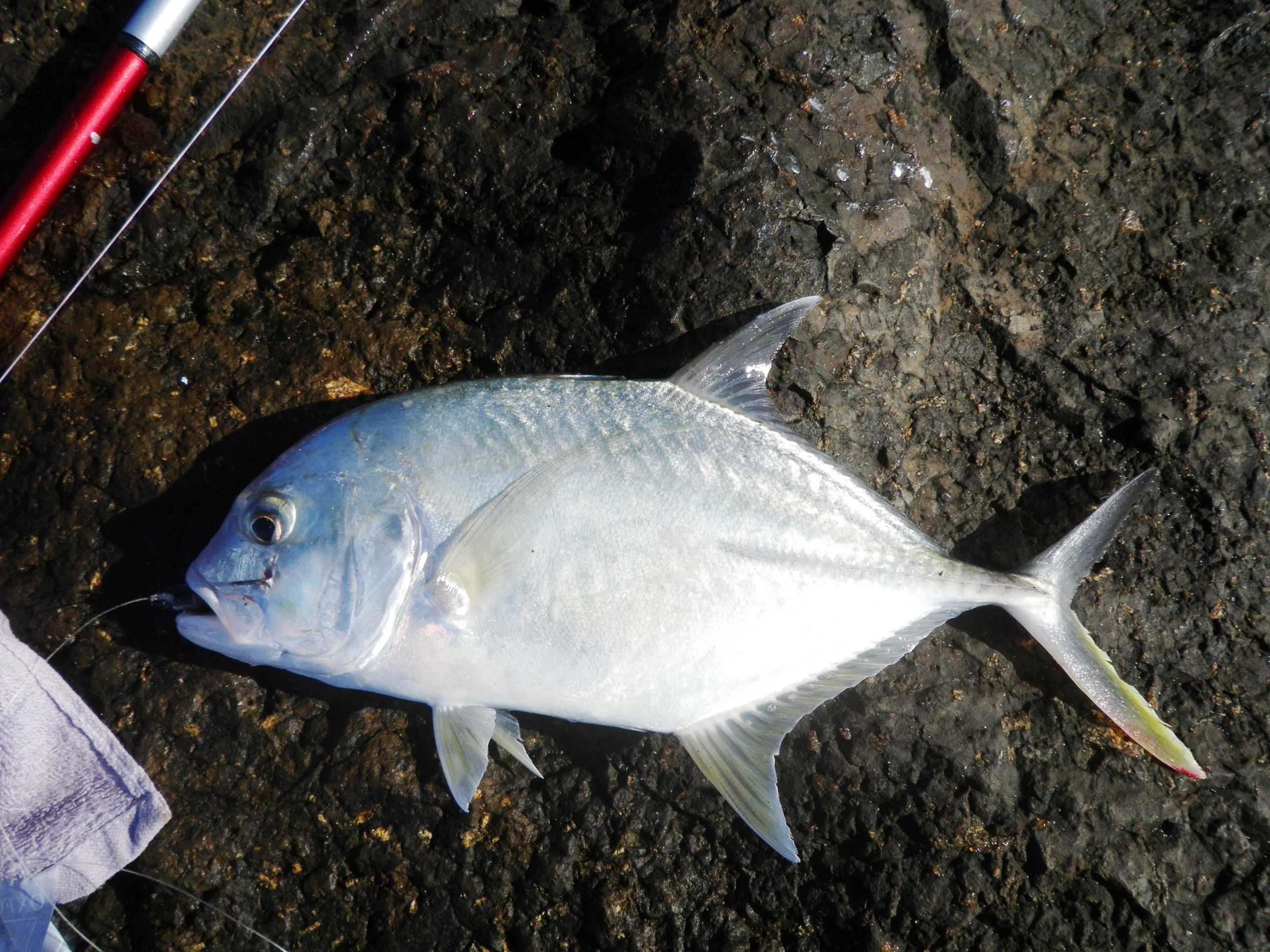
I finished the session with this Trevally

I moved around the front of the rockwall casting in a broad semicircle. I changed to different colored plastics, I tried lighter jigheads. I tried various minnows and grub shapes. By 8.00 am the sun was up and the choppy swell had started to settle down a bit. The tide was now running in again. I had dropped right down to a 3/8th oz 2/0 jighead and I was using a 4” Gulp Minnow in the Pearl Watermelon colour. Just as I was about to flick it up, out of the water, at the base of the rocks, a Trevally grabbed it. It was around 40cm long and I landed it safely. I hoped there would be more but after another 30 minutes without a bite I decided to pack up and head home.

Bribie Island – A bagful of Flathead – 27 May 2011

Thursday

Back up to Bribie Island, in search of Flathead. I was pleasantly surprised when I arrived around 5.00 am. It really was not too cold and the south westerly wind was far lighter than the predicted 15 knots. High tide had been at about 4.00 am so there was still plenty of water around the bridge pylons. I decide to start on the island side and as soon as arrived I could see and hear the Pike and Chopper Tailor breaking the surface as they grabbed smaller baitfish/ shrimps.

Small Flathead - under the bridge on Bribie Island side

I started with the GULP 4” Minnow soft plastic in the Pearl Watermelon colour, rigged on a 1/6th 1/0 jighead. I was using a 12lb leader and fishing with my Loomis GL2 light spin rod matched with a Shimano Stradic 3000 reel. After a couple of casts I caught a small Flathead – just about 40cm. It must have been lying in the shadows beside the first pylon, in no more than 40cm of water. I released it. The next cast gave me a Pike that was bigger than the Flathead and then, a few casts later, a 25cm Chopper Tailor.

Choppers - Juvenile Tailor under the Bribie Island bridge lights

Before the tide got too low I decided to go back over to the mainland side and fish around the pylons under the bridge lights. I stuck with the same soft plastic and jighead and worked my way around the pylons. I waded quietly, stopping frequently to pepper the spots where I have caught fish before. This soon paid off and just south of the bridge, about 6 metres from the mangrove line, I caught another Flathead. It was around 50cm long so it went in the keeper bag.

A Flathead from the mainland side about 50 cm

There was the glow of dawn on the horizon but the sun was still not up. It was cold now, but this area is shielded from the westerly breeze. The water looked fairly clear so I switched to a bigger GULP Crazylegs Jerkshad in the Curry Chicken colour – basically a flecked combination of pink and yellow with a forked curly tail. After a couple more casts I caught another fish – despite the bigger lure it was a much smaller Flathead at around 42cm – Keeper No.2.

Bigger lure but a smaller fish! around 42cm

The sun came up and I continued wading south, past the old oyster farm jetty. I walked right along the big sand bar – that is exposed at low tide, casting on either side. I reached the pole that warns boats about the remains of the old oyster racks and then turned north again and started wading back, alongside the sandbar, in waist deep water. I swapped back to the Pearl Watermelon Minnow. I was casting back at the sand bar and after about 50 metres I hooked another fish. It was another Flathead, about 48cm long –Keeper No.3. I dragged it up onto the sand and then resumed my course towards the oyster jetty. Over the next half an hour I got two more slightly bigger Flathead (Keepers 4 & 5) and a monster Pike – well over 45cm – which I kept for the cat.

When water covers this spot the Flathead sit along this lip

A bag of five Bribie Flathead and a big Pike for the cat

I now had my bagful of fish and so I decided to call it quits. The forecast wind was really arrived and was starting to blow so I headed back to the car and then the gutting table. It had been another good fishing session in the Pumicestone Passage.

Wreck Rock & Middle Rock – Tuna & Trevally – Deepwater National Park – 14 May 2011

Saturday

On Friday evening the keen fisherman camped nearby told me he had hooked up to a freight train Tuna, off the beach, in the early afternoon and unfortunately pulled the treble out. He had spent the rest of the day running up and down the beach trying to get his metal slug back in front of the fish but they just never came close enough. I decided to try the slugs in the morning down at Flat Rock where I had also seen the Tuna working. As the sun came up I cast and cast and cast in the direction of the feeding Tuna – but they just never quite came close enough.

Flat Rock beach - with the rock just covered - just after dawn

After a couple of hours I gave up and went back to camp for breakfast. I was greeted by my neighbour whose persistence had paid off and finally he had a good size Mac Tuna. He had eventually caught up with a school that came into less than 3 metres of water, only about 25 metres from the shore, about 1km south of Wreck Rock, along the beach. He had followed the birds and dead Whitebait that littered the beach until he saw a boil of feeding fish on the surface close in to the beach. He hooked up on his second cast and hung on. I was delighted for him, but he looked almost as tired as the fish. Who said angling is a sedentary sport?

Mac Tuna caught off Wreck Rock Beach on a chrome slug - May 2011

Mac Tuna off the beach - does not happen very often - full marks to this fisho for putting in the hard work

Now I was really fired up but I needed to have a look at some other spots, so that afternoon with a high tide due for about 6.00 pm, I jumped in the car and drove along the track to Middle Rock. Middle Rock, predictably sits between Flat Rock and Wreck Rock. It is a set of three rocky promontories that are almost completely submerged on the bigger high tides. It was approaching high tide when I started fishing there just after 5.00pm.

I was using the light spin rod and was casting out a 1/6th 2/0 jighead loaded with a GULP Jerkshad in the Pumpkinseed colour. I was hopping the plastic over the submerged rocks pretty quickly so that it would not get snagged. Suddenly a fish smashed the soft plastic lure ran with it for a few metres, then dropped it. A few casts later and I was in contact with a fish again. It took off and took plenty of line. The light rod has no real strength so I had to wear this one out with the drag and use the waves to bring it in. It put up a good fight but it was solidly hooked and I soon had a 50cm Trevally at my feet. I think it was a Big Eye – but I am never quite sure as some of the species can look pretty similar. The sun had gone down by now and the south-westerly wind was chilling so I gave up for the day.

This slideshow requires JavaScript.

Wreck Rock – Deep Water National Park 1770 – 13 May 2011

Friday

Having seen the Tuna working just offshore, all afternoon the day before, at both Wreck Rock and Flat Rock, I decided to spend dawn on Friday casting slugs from the southern tip of Wreck Rock. The tides where getting bigger in the run up to the full moon. Low tide would be at 11.10 am, so there would be plenty of water close into the rocks, at dawn.

The south end of Wreck Rock at dawn

The southern tip of the Wreck Rock bay has a couple of rocky outcrops and submerged bommies. At low tide there is only about a metre of water in front of them, but at high tide, this can increase to almost 4 metres. South of these rocks is a long, almost completely uninterrupted beach ( Rules Beach), that runs all the way down to the mouth of Baffle Creek. At the moment, the big seas and storms through the summer months have created a very steep, sloping beach with a few nice wholes and gutters. This means there is good deep water on high tide, all along this section.

Looking south from Wreck Rock - towards the mouth of Baffle Creek

It was another bitterly cold morning, the sky was crystal clear, but there was a light south-westerly wind blowing. As the sun came up I was casting a 90g slug from the rocks. I then tried a River to Sea – Dumbbell Popper and various heavy blades and big hard bodies. I could not interest the fish. I could see the Tuna, in small groups, smashing into the bait fish and the birds diving in to get a free breakfast, but they stayed at least 800m away the whole time.

Wreck Rock bay - just after dawn


I switched from the Daiwa 9’ 6” Demon Blood rod, which I use for slugs and poppers, to the light spin rod and rigged a soft plastic on a ¼ oz 1 jighead. I chose the GULP 2” Shrimp in the Banana Prawn colour. After about 30 minutes I had caught two tiny Dart and a Long Tom. At about 8.30am I headed back into my camp to thaw out with a hot cup of tea and some breakfast.

Mackerel, Trevally, Tailor and a few reef species all cruise around these rocks at the southern end of Wreck Rock bay


I considered my options and spoke to another keen fisherman who was camped nearby. He too had seen the Tuna and was planning to spend the day casting slugs at them. As low tide approached I decided to head out the rocks on the southern tip of Wreck Rock bay. The Tuna were there but always just out of reach. They would swing in tantalizingly close and I would cast slugs at them then they were gone again. As the tide dropped I moved as far as I could out onto the exposed rocks to the south. I cast out at about 45 degrees to the shoreline and as my slug landed a huge circle of bait scattered around it. Then ‘zzzzzzzzzzzzzzzzzzzzzz ….fftt’ and the fish was gone. I wound the line back in and it looked like a clean bite through the 40lb leader. I presumed it was a Mackerel or some other toothy species. I rigged a wire trace and carried on, but after twenty more casts I was still without a decent fish.

The bait that shelters around this bommy at Wreck Rock, attracts all sorts of predators

I switched from the slug rod to the light spin rod again and rigged a GULP Jerkshad in the Lime Tiger colour. I wanted to cast a bit of distance, but I also wanted to make sure the lure wafted around in the strike zone for as long as possible. I settled on a ¼ oz 2/0 jighead and downgraded to 16lb fluorocarbon leader. First cast was hit on the drop but then the fish dropped it. Third cast and I had a solid hook up. The fish took line in a couple of fast blistering runs then swam round in front of the rocks into a good position. On the next surge I tightened the drag and pulled it up to my feet (getting soaked in the process). Then I grabbed the leader and pulled the fish clear. It was a Giant Trevally around 50cm – no monster, but a decent fish. Cold and wet, I decided I had enough – it was just after noon.

Finally a decent fish - 50cm GT at Wreck Rock

As always when fishing an area that you have not been to for a while, you need to spend a few sessions figuring out what works and where the fish are. It was my fourth day and I finally felt I understood when and where to concentrate. I headed back to camp for some fish cleaning.

Bribie Island – Sandstone Point – Monster Flathead – 2 May 2011

Monday – Labour Day

10 to 12 knot winds forecast and even though there would be a big swell offshore, the estuaries would be good for fishing. Back up to Bribie, to the Sandstone Point flats where I have been getting some good Flathead.

At about 5.00 am I waded out under the bridge – on the mainland side, to cast around under the lights. The tide was running in, so I was casting from the north side of the bridge, under the bridge, into the shadows and hopping my lure across the bottom, along with the current, back towards me. Theoretically, the Flathead will be lying facing the current flow, waiting for their prey to be washed towards them. After a couple of casts with the GULP 4” Pearl Watermelon soft plastic, I had a fish. This area can be tricky, as there are loads of prominent rocks to trip over and lose the fish on. Unfortunately just as I got a look at a decent 50cm + Flathead, it lunged down behind one, bumped the jighead out of its mouth and slowly swam away.

As the horizon started to glow I walked south and then around the corner onto the Sandstone Point flats. On my way, I caught a small Flathead in the weed beds, about 20 metres from the shore. It was only just 40cm long, so I released it.

I moved past the jetty to the point where the shoreline turns right, casting as I went. I waded over the big sandbar that runs roughly north to south; onto the area I call the Sandstone Point flats. This area is very rocky initially and then softens to sandy weed beds with some central channels and drains. It holds plenty of fish, especially at the top of the tide. The Flathead lie between the rubble and the weed beds waiting to pounce, while the Bream cruise over the top.

I was still fishing with the same soft plastic, but as the water was less than a metre deep, I was only using a 1/8th 1/0 jighead. The tide was still running in and this meant I was casting directly in front of me, as I waded across the flats. Because I had missed a fish on the rocks earlier, I had switched up from a 10lb to a 16lb leader. I was retrieving the lure fairly quickly with very short pauses to avoid getting snagged. I felt a bit of resistance and thought I was snagged. I jerked the jighead up and what felt like a rock, rolled towards me a little and then felt like it was free. I wound in my line and as I was about to lift the plastic from the water, the line went tight again and the ‘rock’, which I now realise was a fish, swam straight past me. Line started peeling at a steady pace and then, as the fish realised it had eaten something sharp, it took off on a powerful initial run, with the current.

My Loomis GL2 6’6 Light spin rod is very sensitive and amazingly flexible but it is not designed for power. If you get a big fish on, patience is the key. I let it run. Then I recovered some line and let it run again. It was obviously nicely hooked, but at the beginning of each run, it would put in a series of angry headshakes. I realised now it was a very big Flathead. I identified a break in the Mangroves and started to steer the fish in that direction. It must have made five or six long, determined runs for freedom and after each one, I had tightened the drag slightly, with little effect. Even 16lb leader will not last forever and the longer the fight goes on, the more likely the fish is to find a conveniently placed rock or snag. I tightened the drag and got the fish into the slacker water close to the shore. There was another short run but it was tired now and had no current to help it. With one long last heave I pulled it up onto the sand. The leader snapped as soon as its weight hit the sand but it was clear of the water.

This slideshow requires JavaScript.

It was a monster female Flathead – well over 75cm. I measured it as best I could with my tape, took a few pictures and released it. I am settling on 75cm for the length, which makes it this year’s ‘personal best ‘Flathead for me.
Ironically, I still had no fish to eat, so I waded on. I caught a few undersize bream cruising over the weed and then in a small sandy depression, I finally picked up a 42cm Flathead. It was a good end to a great mornings fishing.

Bribie Island – Sandstone Point Flats – 1 May 2011

Sunday

After a week of wind I was keen for some fishing this morning. I decided on Bribie Island, as the forecast wind and swell were not great and it offers a few sheltered spots. I drove up from Brisbane and arrived at about 5.00 am. I would be fishing the last few hours of the run in tide and the first few hours of the run out. With all the recent wind and rain, the water was predictably dirty and as high tide approached, there was plenty of weed floating around.

I started in the dark, next to the old oyster farm jetty on the mainland side of the Bribie Bridge. The area under the bridge was being flogged by the cast netters who had a few crab pots out on long ropes. There were already a couple of boats anchored in by the bridge pylons so I decided to wade south towards Sandstone Point.

I have been experimenting with which plastics to fish in the dark and pre-dawn. My latest theory is that the high contrast plastics with a solid silhouette seem to work better than the lighter/ white glow colours. I decided to put it to the test this morning. I started about 5.30am by fishing with a GULP 2” Shrimp soft plastic lure in the Midnight Tiger colour. This is a predominantly black colour with a flash of orange on its underside. It has been a great Bream lure for me at night. I rigged it on a 1/8th 1 hook jighead, as the tide was not running very fast. I was fishing with a 10lb fluorocarbon leader and my light spin rod.

This slideshow requires JavaScript.

Just before six, it was still pretty dark and I was wading south, parallel with the shoreline, about 10 metres out. I cast into a spot about 3 metres out from the Mangrove roots, where the water was around 30cm deep. As the lure hit the water, there was a great splash and line started peeling. The water was shallow and the fish started shaking its head immediately and splashing about. I let get into some deeper water and calm down and then gradually walked it back to a gap in the mangroves and pulled it up onto the beach. It was a good size Flathead at 58cm. I released it and moved back to the same spot to try for more. I could not get another bite so I moved on.

I worked the flats around the corner, towards Sandstone Point. At the top of the tide the water was very dirty close into the Mangroves and the cleaner water was just out of reach of my wading capability. I waded along the edge of the shoreline casting out onto the flats and slowly retrieving my soft plastic. As the tide started to run out at about 8.30 am I got a couple of hits from some Pike and then a few casts later, a solid hook up. I pulled the fish back to the shore and it was another good size Flathead at 54cm. I released it, as well and headed back to the car.

The fish were not thick and there was not much bait around so I was happy with two good fish from my session. Conditions look like they will improve as the week goes on.

Bribie Island – Large Easter Sunday Flathead – 24 April 2011

Easter Sunday

I had a big Easter BBQ planned for Monday. Four Good Friday Flathead was a good start but I would need a bit more fish to make sure my guests didn’t go hungry. That was my excuse for getting out on Easter Sunday!

I arrived at the Bribie Island Bridge at 5.00am and parked on the bank, on the mainland side. I put on my waders and had a few casts around the rocks under the bridge. I caught a small Moses Perch and released it.

Just as it started to get light I moved off to the south. There was lots of surface feeding going on and the tide was running out strongly. Low tide was at around 8.00am. I waded past the oyster jetty with no more bites and then started to fish the drain that runs round from Sandstone Point. I fished all along it without a touch. I moved out to a point where the water was waist deep and started to move north, back towards the bridge.

I was fishing with a new favourite, the GULP 3” Smelt Crazylegs Grub soft plastic. It is a short version of the Crazylegs Jerkshad that has proved so useful. I had it rigged on a 1/6thoz 1/0 jighead. I was using my light spin rod and a 12lb fluorocarbon leader.

I got a couple of solid bites but could not keep the fish on. Then as I moved towards the oyster jetty a fish grabbed the plastic about a metre away from me. I struck with rod and stepped back. It was a good fish but it did not do much, initially. I decided to walk it back to the shore. I loosened the drag a little, as I did not want a bust off. I started to tow it towards the bank and about half way there it really woke up and made a few powerful runs. As I dragged it up onto the muddy shore the leader snapped, but it was clear of the water.

It was a healthy female Flathead, just under 70cm long. I fished around this area for another hour and caught and released several Flathead that were around the legal size limit of 40cm. At about 8.30 I gave up. It had been great morning land-based fishing in the Pumicestone Passage.

70cm Flathead

Bribie Island – Jew and Flathead – Good Friday – 22 April 2011

Good Friday

I am back in Brisbane for Easter and so I decided to drive up to Bribie to fish, wading the flats, early on Good Friday. I arrived by the bridge on the mainland side, at around 4.45am and low tide would be at about 7.00 am, so there was not much water under the bridge lights.

I cast around in that area using the GULP 4” Pearl Watermelon Minnow on a 1/6th 1/0 jighead. There was plenty of surface action with Long Toms and a few Pike cruising around. After wading around for a while I felt a light tug and paused. When I raised the rod tip and set the hook – I had a fish. I assumed it was a Flathead but as I saw a flash of silver I realised it was a Jewfish/ Mulloway at 40cm. I took a picture and released it. These are the one species that really love dirty water and after all the recent rain, conditions are currently perfect for them. I could not find any more and so as first light started to glow above the horizon, I waded south.

I passed under the Oyster Jetty and fished the weed beds, rocky bumps and dips, just to the south. I stuck with the same soft plastic and soon found a few Flathead. I caught 6 in this area in the next couple of hours, of which four were between 42 and 56cm. I kept these for the Easter BBQ and the rest went back. Things seemed to slow down with the turning of the tide and just after 8.00 am, I went home.

Brisbane River – Pinkenba Rockwall – More Trevally – 7 April 2011

This slideshow requires JavaScript.

Thursday

Everywhere I looked the wind was blowing 20 knots – add a few showers and things did not look promising. I decided that the Brisbane River was the best option so I drove down to Pinkenba around 9.30 am and walked along the rock wall.

The tide was running in and the water was still very cloudy – I am not sure if it is the wind, the recent rain or left over silt from the floods. I was still using my light spin rod – the Loomis GL2 – but I had upgraded my leader to 14lb. I tied on a 1/6th 1/0 jighead and loaded it with a GULP Crazylegs Jerkshad in the Pink Shine colour.

I was hoping for a few more Trevally and it was not long before I ran into them. I was walking along the shore towards the river mouth, putting out fairly short casts, straight from the bank. I had started beside the cement plant and walked about 500 metres without any bites. Just before I crossed the oil pipeline, the lure was snatched right at the bank and the fish took off. It was a nice junior Trevally and I soon had it under control. I put it back and moved on.

The first Trevally of the day - close to the pipeline

After another half an hour or so, the wind got really gusty and a rain squall came over. I sheltered under some trees and switched to a small GULP 2” Shrimp soft plastic in the Pepper Prawn colour. I cast it out under the tree branches and just as I got it back to the bank, I felt a few tugs and then I was losing line at a blistering pace. I bumbled through the tree branches following the fish along the bank. I tightened the drag but initially, it did not make much difference. It kept pulling line but eventually I got some back and after a few more runs I grabbed the leader and pulled a good size Trevally up the rocks. It would have been around the 45cm mark. I put it back and carried on towards the river mouth looking for more.

Second Trevally - around 45cm


The tide was now running out strongly and the wind was probably blowing well over twenty knots. It was a challenge to cast. I reached a spot where water was running over the rockwall and I cast around on either side. I switched back to the GULP Crazylegs Jerkshad in the Pink Shine colour and after a couple of casts; it was snaffled at my feet. It was another blistering initial run. I made a mental note that the GL2 light spin rod is not the right rod for these fish, and hung on. This was another good fish and I was very concerned it would rub me off on the oyster covered rocks. It took a while and I must have scrambled up and down about 10 metres of shoreline but eventually the fish surrendered and I grabbed the leader. I lifted it out of the water and the leader broke just as I did. Luckily it fell into a little depression in the rocks and I got a couple of pictures before I released it. It was another solid Trevally that measured approximately 50 cm.

The biggest Trevally of the day at 50cm


I walked until I could walk no further – because the rockwall was submerged and cast around on both sides. It was now about 1.15pm and the tide was running out, strongly. Again the lure was grabbed right next to the rocks on the river side of the wall. This fish was tough and it decided to cross over the partially submerged rockwall and try to escape on the other side. I watched as it swam in between the oyster covered rocks and somehow did not manage to bust me off. It was a smaller Trevally and I released it.

At around 1.30pm I got drenched in another rain squall and decided the make the long walk back to the car. It had been another great session fishing with soft plastics on the Brisbane River.

Brisbane River – Boggy Creek Shark – 29 March 2011

Tuesday

With the wind still blowing and rain threatening there were not many good options on Tuesday. I decided to go down to Boggy Creek on the Brisbane River again. I arrived about 7.15am and the tide had only just started to run out.

There was lots of surface action, close to the far bank, just under the foot bridge, so I focused on that area. I started with a 1/6th 1/0 jighead, rigged with a GULP 4” Minnow in the Pearl Watermelon colour. Once the tide starts to run, the water flows very fast under the bridge. The narrowing of the creek at the bridge footings creates a fast-moving channel that is reasonably deep in the middle. I have caught Bream, Flathead, Tailor, Estuary Cod and Jewfish in this spot. The fish seem to gather in the eddies, that form on either side, depending on which way the tide is running.

A predator was surging up into the bait schools or jelly prawns that were sitting in these eddies, but I could not tempt it with my soft plastic lure. I switched to a ¼ oz vibration blade in a silvery green colour. I covered the same area with casts but still did not get any bites.

I moved along the bank, towards the creek mouth and came across a dead shark. It must have been caught the night before. It seems a shame to leave a creature like this to die on the river side. My fishing philosophy is – if you are not going to eat it, photograph and release it.

This slideshow requires JavaScript.

I switched to a lighter jighead – 1/8th 1/0 and put on a GULP 2” Shrimp in the Peppered Prawn colour. I was now fishing in the slower water, up close to the Mangrove fringe. At an opening next to the abandoned timber log boat ramp, I felt a very faint bite. I cast back in the same spot and slowed the retrieve right down – counting to five in between each hop. After a few hops, I got a solid bite and I was on. It was no monster but it was a keeper flathead, at around 44 cm.

I moved on along the bank and watched the numerous mullet schools swim by. As the water cools I presume the Pike and Bream will get thicker and thicker and the bigger Flathead will start to follow them. The fishing should be excellent in the coming cooler months. After another 30 minutes I decided to give up at around 9.00 am.

Brisbane River – Boggy Creek – 28 March 2011

A trip away, a cold and car trouble have all conspired to keep me away from fishing for a few weeks. To those of you who have been checking in to see what is biting – I apologise.

I managed to sneek out yesterday morning for a quick fix. I only had a couple of hours, so I headed down to Boggy Creek. A small swampy tributary on the north side of the Brisbane River, only a few kms from where it opens into Moreton Bay. I parked up by the foot bridge that crosses the creek and leads to the oil refinery. I arrived around 10 am and the tide would be low around midday. I would be fishing the last few hours of the run out. This is not a great time to fish, as there is very little water – but beggars cant be choosers.

This slideshow requires JavaScript.

I have not fished in the River since the floods and I was delighted to see so much bait in the water. There were jelly prawns in close to the shore and lots of roving schools of small mullet. I decided to fish the soft plastic lures and went for a natural colour – a 2″ GULP Shrimp in the Peppered Prawn colour. I rigged it on a 1/6th 1/0 jighead. I was fishing a light spin rod with a 10lb Fluorocarbon leader. I moved along the bank, casting my lure into the middle of the main channel and bouncing it along the bottom with the run out tide, until it reached my feet.

I cast around on each side of the bridge and got a few bites but no hook ups. I moved east, in the direction of the creek mouth and switched to a lighter, 1/8th 1 jighead. I changed the plastic to a 2″ Minnow pattern, in the same colour. I was putting in a couple of casts at each break in the Mangroves when, at the third spot, a small bream grabbed it. I took a picture and let it go – my first fish for three weeks – a trifle small but very satisfying.

I carried on moving east, casting into the channel as the water got shallower and shallower. At the mouth of a drain, about 60 metres from the bridge, I felt a light thud. I paused, then lifted the rod tip. The line came up taught and there were a few head shakes. I had a 30cm Flathead.

At noon I gave up, just as the tide was starting to run in again. With the smell and noise of the refinery, this is not the prettiest environment to fish in. But after a three weeks off I was glad to get out there and see that there are plenty of fish around.

Bribie Island – Bridge, White Patch & Oyster Jetty – 8 March 2011

Tuesday

Up early and back to Bribie Island. I arrived at the mainland side of the bridge at around 4.00 am and started by casting soft plastics in amongst the pylons. The tide was in the last hour of running out and the rain showers overnight had again stirred things up. There is also a storm water drain under the bridge that empties out from time to time, further clouding the water.

I had rigged up a GULP 5” Jerkshad soft plastic in the Satay Chicken colour on a 1/8th 1/0 jighead. I was fishing with 10lb braid and a 12lb fluorocarbon leader, on my light spin combo – a Loomis GL2 rod with a Shimano Stradic 3000 reel.

I started just to the north of the bridge and got no bites for a while. I moved quietly, round to the north and cast into the area where the light and bridge shadows meet. Thud – a solid hit, I dropped the rod tip, paused and then struck. The fish took some line then settled into the current. I gradually eased it up on to the sandy area at the foot of the rocks. It was a nice, 46cm Flathead. I let it go, straightened the plastic on the jighead and peppered the area with more casts. It was about 4.20 am. A few retrieves later there was a smaller bite, in about the same spot and I caught another Flathead. This time it was just on 40 cm. I released it and moved all around the bridge area and down to the street light beside the boat hire outlet, but I could not find any more.

This slideshow requires JavaScript.

As dawn broke, I drove up to White Patch to look for some more fish. I walked down on to the beach and out towards the drop off, that runs all the way along the edge of the Pumicestone Passage. It was just after low tide and I waded along casting in all directions, out over the drop off and on top of it, in the shallow water. I did not get a bite on the soft plastic lures. I swapped to a 1/6thoz weight, Berkley Big Eye vibration blade, but this did not find any fish either. After an hour of wading up and down, I decided to change locations again.

I drove across the bridge to the Oyster Jetty and waded out beside it, on the south side. The tide was now running in solidly and the water was much cleaner than it had been up at White Patch. However, the wind was really getting up and there were some very nasty clouds on the horizon. I hooked a decent fish but was disappointed when it leapt out of the water – a huge Long Tom. I got rid of it and waded south for about 60 metres, casting in front of me, into the run in tide. I swapped to a GULP 4” Pearl Watermelon Minnow soft plastic and rigged it on a 1/8th 1 jighead. After a few casts in this area, the line came up taught and I had another fish. There was a bit of weight to it, so I decided to wade back the shoreline. It was a good size Flathead at 49cm.

I carried on for another 45 minutes but then a couple of monster rain squalls gave me a good soaking and the cooler southerly wind was really getting up. At about 9.45 am I headed home.

Bribie Island – Bridge and Oyster Jetty – 5 March 2011

Saturday

After a stinking hot week – but some pretty good fishing Flathead fishing, the rain was back. A south-easterly change and big wind and seas were forecast but it did not look as if it would get up until around lunchtime, so I decided on a quick early morning Saturday session. I headed for Bribie Island and was out under the bridge lights, on the island side by 4.15am.

A word on waders – I use the A S Horne waders which have a tough Blundstone gum boot. With postage, they are around A$ 120/30 but they are definitely worth the price premium. Before I bought them I went through 7 sets of cheap ones; Wilson, Mojiko, Shakespeare, and various other BCF/ Anaconda offerings, in just under two years. I was constantly patching up holes on these cheap ones. I have now had my A S Horne waders for 2 years and they have no leaks, despite lots of run ins with oyster covered rocks. They are pretty hot at this time of year but with so many jelly fish, Wobbegongs and various other creepy crawlies in the water – I am prepared to suffer the heat.

At 4.15 am this morning it was cool and wet. The tide had just started to run in and the rain had made the water even more murky than usual. I decided to started with a GULP 5” Jerkshad in the Satay Chicken colour – yellow on top and pumpkinseed underneath. I was standing in 30cm of water casting in close to the pylons. After a few retrieves I was on to a fish. I brought him to the shore – a Flathead just on 40cm. The family decided they will go on hunger strike if I bring another Flathead to the table – so it was released. I got a few more hits from what I think where Pike, but as the sun came up an hour later I had not landed anymore fish.

I moved across to the Oyster Jetty on the other side of the Passage. It was now around 5.45am and the tide was running in strongly. I waded out beside the jetty to a point about ¾ of the way along and started putting casts out in a semicircle. I was casting into the run in tide and hopping the plastic along the weedy bottom. After two or three casts I was on to something. After a few short runs, I could see it was a small Flathead, again around 40 cm long. I did not want to wade back to the bank with it so I grabbed it with a cloth and released it.

I could not find any more in that area so I moved further south. I fished the drain, just before you turn the corner for Sandstone Point, but apart from a few Long Toms, I did not get another bite. The wind was now beginning to howl and it was spitting rain again so I waded back to the car and headed home.

Bribie Island – Bridge & Sandstone Point – 3 March 2011

Thursday

Thursday was set to be another hot day with a possible thunderstorm. There would be a slight northerly wind in the Pumicestone Passage, which would freshen through the day. I decided to keep looking for Flathead, as these have been the only consistent fish for me, in recent weeks.

I started under the bridge on the Island side about 4.15 am. The tide was running in and there was about 30cm of water at the base of the rockwall by the shore, to the north of the bridge. There was not much surface action and I think the Pike prefer a little more depth, to feel safe. I cast out a GULP 2” Shrimp soft plastic in the Banana Prawn colour, on a 1/8th 1/0 jighead and bounced it along the bottom under the lights. Three casts later, after a pause on the bottom, the line came up tight. There were a few head shakes and a short run and then the fish was gone. A couple of casts later; same soft plastic, same place, maybe the same fish, I hooked up again. This time I got him to the rocks – a Flathead – around 45cm, but as I was lifting him in to the bag, he spiked me and slithered out of my grip to freedom.

Dawn by the Bribie Island bridge - the fish come to the lights

After 30 minutes more, prospecting both north and south of the bridge, I could not find any more fish so I decided to change location. Just as the sun was coming up, I drove round to Pebble Beach and walked along the beach to the far end, towards Sandstone Point. The water was fairly high but there were still a couple of hours before high tide. It was a beautiful, calm, still morning. The thunderstorms had passed over earlier and there were still a few flashes of lightning as they moved in land, but the sky was bright red.

A very calm morning

At the end of the beach, I walked out in front of the fringing Mangroves and cast out over the rubble and boulders that dot the ground. I was aiming for the sandy patches in between the rocks, where the Flathead often shelter. As I moved nearer to the corner I had a few encounters with the Long Toms, who kept grabbing and then dropping, the lure. When one finally did get hooked it started leaping and splashing and effectively shredded the 16lb Fluorocarbon leader I was using. I re- rigged and tied on a new leader and put on a GULP 4” Jigging Grub soft plastic in the Pepper Prawn colour, on a 1/8th 1/0 jighead. A few cast later as the lure bumped over the rocky bottom, a fish grabbed it and took off. It only made a small run and then settled in the current. I pulled it on to some rocks – a 48cm Flathead – I released it and carried on casting. A few casts later I had another on the same plastic, this time it was just over 50cm.

After working the corner thoroughly I move round it, heading north and on to the broad flats of Sandstone Point, which almost form a tidal lagoon. With another hour to go before a 2.3m high tide, I could still wade out to the middle of the area and cast back in towards the Mangrove roots along the shore. The Long Toms where patrolling and I had a couple of tussles with them. After 30 minutes, the water was getting too deep to stay in the middle so I turned and headed south, in closer. I switched to a GULP 2” Shrimp in the Pepper Prawn colour and put in long casts parallel with the shore. A fish grabbed the lure as it landed and this time it was a Flathead, I dragged it in under the Mangroves – it was around 40cm – and after a quick picture, I unhooked it and sent it on its way.

That was the last fish for the morning and even thought it was only 8.15 am, it was already blisteringly hot. I dumped the gear in the car and had a quick swim before heading home. Another good session, the water is still full of sediment on these big tides but there is plenty of bait around and so the fish will come.

This slideshow requires JavaScript.

Bribie Island – Bridge and Sandstone Point – 1 March 2011

This slideshow requires JavaScript.

Tuesday

Up at 3.45 am and back up to the Pumicestone Passage in search of more Flathead. I decided to start by fishing the Bribie Island side of the bridge, this morning. There is always plenty of surface action in this area with Jew, Pike, Moses Perch, Bream, Tailor, Flathead and even juvenile Snapper, all drawn in to feed on the jelly prawns and small baitfish that gather under the bridge lights.

In recent sessions, I have noticed the small jelly prawns are everywhere and the Flathead that I have caught and gutted, generally have a belly full of them. I therefore grabbed a bag of the GULP 2” Shrimp in the Jelly Prawn colour and decided to try these out. The tide was running in so I decided to start by casting my soft plastic at the base of the first bridge pylon, on the north side of the bridge and jigging my plastic along the bottom , all the way back to the edge of the rock wall. On the first cast, just as it reached the base of the wall, in about 30cm of water, the lure was grabbed. I was using a 1/8th 1/0 jig head and a 12lb fluorocarbon leader. The fish took a bit of line but I soon subdued it and swung it up, over the rocks. At 42cm it was the first keeper Flathead of the day. It went in the bag and I cast back out. A couple of casts later, I had another – this one was just on 40 cm so I let it go. I moved to the south side of the bridge and carried on. I had a couple of bites from Pike and dropped a better fish, which was probably a Flathead and then I decided to move over to the mainland side of the bridge.

I put on a GULP Crazy Legs Jerkshad soft plastic in the Lime Tiger colour, waded out and cast to the south of the bridge. The tide was now rushing in and a few Pike grabbed the bigger plastic but usually released it just before they reached me. There were some big surface bust ups erupting, in close to the Mangroves, so I cast straight into one and the line came up taught. I brought the fish in – the headshakes were too rapid for a Flathead and as it came close there was a flash of silver. It was either a Bream or a juvenile Snapper, but it spat out the lure so I will never know.

With the dawn I decided to change positions again and I drove round to Pebble Beach. I walked out onto the beach and turned left. I walked to the end of the beach and along the rocky area that fronts the Mangroves. I was casting in to the sandy areas amongst the rocks and although I lost a fair amount of jigheads, the strategy paid off. Over the next couple of hours, I caught nine more Flathead in this area – between about 25cm and 48cm. I experimented with different colour and size plastics and they did not appear to be fussy. I caught fish on the GULP Crazy Legs Jerkshad in Lime Tiger and Pink Neon, the 2” Shrimp in Jelly Prawn and Banana Prawn, the 3” and 4” Minnow in Pearl Watermelon and the 4” Minnow in Vader. The Long Toms were a constant menace – slashing through the soft plastics and often wrecking the last few cms of the leader.

I kept the first four fish over 40cm, to add to the one I had kept at the bridge, so I had another bag full. It was another good session and as there was a Northerly wind blowing the whole time, it did not really support my idea that the fish don’t like it!

Bribie Island – Sandstone Point Drain – 27 Feb 2011

Sunday

Up early, 3.30am and back to Bribie to see if the Flathead were still around. There was no real wind but officially the wind direction had turned to a northerly. When I arrived at about 4.20am the bridge resembled Scapa Flow submarine base during WW2. There were about ten lines in the water from the north side of the bridge and a couple of cast nets kept splashing over the side. There were also a couple of crab pots hanging off the bridge further along. It was good to see so many land based anglers out fishing but a stealthy approach in this area, was out of the question.

As I was rigging up I ran into a local fisherman who also patrols this area with lures and we waded out under the bridge together. The tide was still running in but as there had been a lot of disturbance on the north side of the bridge, we decided to fish the south side. There were lots of surface breaks and tiny jumping jelly prawns. We both hooked into some Pike – I was also bitten off, but I think it was only and aggressive Pike. They can really chomp as I had a 16lb fluorocarbon leader tied on.

After 30 mins of fishing, neither of us had a Flathead so I decided to move south and my friend headed off to Pebble Beach. I continued south, casting along the shore line in front of me. The surface bust ups continued, but died off as the sun came up. The tide was slowing now and about to turn. I walked south and round the corner towards Sandstone Point.

As the tide started to run out, I positioned myself in the mouth of a big sandy drain that is just on this corner. I took out a GULP 2” Shrimp in the Banana Prawn colour and rigged it on a 1/8th 1/0 jighead. I cast it into the run out tide and jigged it along the bottom of the drain with the current. A few jumps into my retrieve I felt the unmistakable ‘thud’ of a Flathead bite. I paused, counted to five, then struck – I was on. I pulled it clear of the Mangroves and walked it round the corner to a small bay where I pulled it up onto the sand. It was a 48cm Flathead and it was just after 6.10 am. I released it and went in search of more.

The Long Toms arrived and made a couple of impressive aerial lunges for the plastic, especially when I speeded up the retrieve. After half an hour or so of fishing with the same soft plastic lure, I swapped to a GULP 4” Jigging Grub in the Pepper Prawn colour. This is a fairly robust grub tail soft plastic. The tail vibrates nicely and when the water is not very clear I think this helps the fish find it. It worked this time as it was grabbed on the first cast. In fact, it had hardly hit the water when something ate it. It took a couple of turns of the reel to realise it was hooked and then it made a great tail splash and took a bit of line. Again I gradually walked it back to shore to unhook it. It was another Flathead, around 43cm long.

I photographed and released the fish and carried on for another hour without any luck. The water was very murky, as the big tide had stirred up the all the sediment again. I was pleased to see there were still fish around but I would like a bit of south-easterly wind to come back soon.

Bribie Island – Sandstone Point Drain – 26 Feb 2011

Saturday

After a good session on Thursday, I headed back up to Bribie Island early on Saturday morning. I was wading out under the bridge, on the mainland side, just after high tide, at about 4.30 am. I decided to try some big GULP Crazy Legs Jerkshads, to see if I could find some bigger fish, under the bridge lights. I rigged a pink shine version on a 1/8th 2/0 jig head and cast out to the north side of the bridge. After a few casts, nothing was happening so I moved to the south side. The first cast came up taught as soon as I flicked the reel bail arm over. The fish held on until it was only a couple of metres away and then let the lure go. The same thing happened, a couple of casts later. I could not see what was biting, but I think they were probably Pike or Moses Perch.

As the sun came up I moved south, past the old oyster jetty to the big drain that empties round the corner from the direction of Sandstone Point. The tide was really running out now and I decided to try a 1/5th of an ounce Berkley Big Eye Blade lure. I cast it out let it sink briefly, and jerked it back towards me fairly quickly. To get the right action you really need to keep these lures moving fast. After a few cast, I had a fish. The small, soft hooks on these blades mean I often lose the fish before I can get it back to shore. There was no problem this time. I had a nice Flathead around 48cm.

This slideshow requires JavaScript.

After a 15 minutes more fishing with the blade lure, it got snagged and I lost it. I switched to a GULP 3” Minnow Grub soft plastic in the pepper prawn colour and rigged it on a 1/8th 1/0 jighead. I was now fishing along the edge of the big sand bank that channels the water down through the drain. After a couple of hits I cast back in the same spot about 6 times before I finally connected with the fish. It was another, bigger Flathead at 52cm. I wandered around this area for another hour or so. I hooked up with a couple more fish but dropped them or they spat out the lure. Finally I connected with a good size Long Tom who jumped clean out of the water when it realised it was hooked. These really are ugly fish.

Another great morning fishing and as we have plenty of fish in the fridge, they were all released today, some unintentionally!

Bribie Island – Old Oyster Jetty – Flathead & Cod – 20 Feb 2011

This slideshow requires JavaScript.

Sunday

Back in Brisbane and it was time to go looking for some fish in the Pumicestone Passage at Bribie Island. Conditions looked pretty good for Sunday morning so I was wading out in the pre-dawn light, by the old oyster jetty, on the mainland side of the Bribie Bridge at around 4.45 am.

It was just after low tide and there was no real current flow. The water was very murky with plenty of sediment stirred up by the big tides of the full moon (which was the night before). I started with a 1/8th 1 hook jighead and a GULP 3” minnow soft plastic in the lime tiger colour.

There is plenty of debate about the use of bright coloured soft plastics for murky water. I am yet to be convinced that they work better than natural colours, in these conditions. I think darker, natural colours, which create a clear silhouette in the water, probably work better. I am also a convert to using bright colours in extremely clear water, although this is somewhat counter intuitive and has taken a while for me to accept. Today the lime tiger had produced nothing in the first twenty minutes and as this was the bite window around dawn, I switched to a more natural coloured pearl watermelon minnow in the 4” size.
I waded slowly south, parallel with the shoreline casting in between the patches of rocky reef that are exposed on a low, low tide in this area. I got a couple of bites from what felt like Bream, or perhaps Long Toms, but no hook ups. At about 6.00 am the tide started to flow in with a bit more power and the water began to clear slightly.

At a point about 50 metres to the south of the old oyster jetty, I felt a light thud as I jerked the soft plastic off the bottom. I waited and then struck, but there was no fish. I cast back in the same direction and in the same spot, another thud. I dropped the rod tip slowly and then struck and I got the fish. It was a very small Flathead, around 20cm long, but at least I was off the mark.

The tide was really moving now and it was covering the weed beds very quickly. I found a patch of weed in about one metre of water. I cast up current and let the plastic hop across the bottom. As it reached the weed patch – thud. I set the hook and realized this time I had a better sized fish. I walked it back to the shoreline – it was another Flathead – just over 40cm long. With plenty of fish in the fridge I decided to let this one go.

I waded back out to the same area and over the next hour or so caught three more similar sized Flathead and a 40cm Estuary Cod – all on the same 4” pearl water melon coloured soft plastic. The water had been quite clear for a while at the beginning of the run in tide but now it was full of stirred up sediment again. By 8.45 am it was already around 30 ° C so I stopped fishing and headed for the air con.

Bribie Island – Buckley’s Hole – 5 Feb 2011

This slideshow requires JavaScript.

Saturday

Ok – no fish at Fingal. Where next? Well there is no shortage of coastline to try in Queensland. I had loads of excuses for my recent poor performances – warm water, floods, cyclones etc, but I have concluded that this summer, northerly winds have been the key factor in making life hard. The Mangrove Jacks and a few other species that like it humid, are not put off, but I think the fish I usually catch – Flathead, Bream, Tailor, Jew, etc – don’t like them.

I decided to go back up to Bribie Island and see what the water was like now. Was all the silt flushing out of the bay and the Pumicestone Passage? I started under the bridge lights on the island side, just before low tide at 4.15 am. There were small jelly prawns jumping everywhere, especially sitting just on the weed beds, in the shallows. There were also hardy heads and other small baitfish all around. It was new moon and it looked very promising. I rigged up the light spin rod – 1- 3kg and tied on a 10lb leader. I put in a 1/8th 1/0 hook jighead and started by fishing a GULP 2”Shrimp soft plastic in the banana prawn colour. After half an hour of walking up and down and watching surface busts ups, jumping prawns and big bait schools swimming between my legs, I had not had a bite.

I swapped locations and drove down to the saltwater lagoon just in front of Buckley’s Hole, on the southern end of the island. The topography at the mouth of the lagoon has changed dramatically because of the wild weather we have had. It now drains out into the Passage much further north than it did even a few months ago. The tide was just turning and there was a lot of weed in the water. The water is still holding a lot of sediment but as I walked south along the flats it looked quite clear.

I walked south, parallel with the shore, casting and retrieving and again, there was a lot of surface activity. I tried all sorts of soft plastic lures – big and small minnows, minnow grubs, jerkshads and shrimps. I tried bright colours and natural colours, I tried a heavier jighead – nothing. As the tide started to run in it brought a few jellyfish with it and the water clouded up. Obviously the incoming tide now lifts all the sediment that has settled on the bottom.

At around 7.30am I turned around and waded back north. I put on a GULP 3” Minnow in the pearl watermelon colour and started to pull this along the bottom with long pauses between each lift. After about 10 mins, I felt a bit of weight on the rod and the tip started shaking. At last – a fish. It was not a big one but I waded back to the beach and pulled it out onto the sand – it was a Flounder, about 30cm long. It had completely swallowed the jighead so I cut it off and released it.

It was now very hot and the water had turned really brown so I gave up and headed back to the car. There is no shortage of bait in the Passage but the water quality is still very poor – it looks like it may take quite a while for things to settle down.

Bribie Island – A few Flathead – 26 Jan 2011

This slideshow requires JavaScript.

Australia Day – Wednesday

Although I did not catch anything yesterday, I was encouraged by the conditions in the Pumicestone Passage at Bribie Island. I love estuary fishing in Queensland but Bribie Island is by far my favourite spot near Brisbane. So this morning I was up early and wading out from the shore, on the mainland side, under the Bribie Island bridge at around 4.15 am.

There was virtually no breeze and the tide was about half way out. Low tide would be at about 8.40 am, at around 0.6m. The area that is lit by the bridge lights always attracts bait and this morning was no exception. There were surface bust ups all around with prawns and bait fish jumping everywhere. The bottom is a mixture of sand, weed and rubble so you cannot fish too heavy. The run out tide starts to run fast over the rubble areas as the water gets shallower and this forms a few ridges, channels and drains that hold the Flathead. A 1/6th oz jighead with 1/0 or 2/0 hook is perfect in these conditions. I decided to fish my favourite soft plastic for Flathead – the GULP 4” Minnow in the pearl watermelon colour. I rigged up my light spin rod and waded along the edge of the mangroves heading south, so I could come back up and cast from the darkness up into the area lit by the bridge lights.

I was standing in about 400mm of water casting up into the run out tide. The plastic was spooking the bait schools and they would burst out of the water each time I jerked it off the bottom. After a few casts a felt a good crunch and let the rod tip drop. A few seconds later I lifted it and had a small Flathead around 30 cm. It was now about 4.30 am and the sky was brightening very slowly. I continued casting around the same area and about ten minutes later a caught another one on the same plastic – this time it was around 35 cm.
I continued casting – I still could not clearly see the colour of the water but it looked a lot dirtier on the run out tide, than it had when I fished the run in tide, yesterday. I moved into slightly deeper water and lost a couple of jigheads to the snaggy bottom. I re-rigged and on my first cast a Flathead more or less caught the lure as it hit the water. There was a good deal of tail splashing and head shaking but when I got it to the bank, I could see it was not much bigger than the others at around 40cm. I let it go, hoping for something better.
As the sun cleared the horizon the surface activity gradually slowed and I started to walk down to fish around the old oyster farm jetty. My plastic was getting plenty of hits but they were not Flathead and I could not seem to hook up. Finally I set the hook on one of the bites and pulled up a tiny Moses Perch. They certainly have an appetite for a decent sized lure (see photo).

I spent another hour fishing the end of the run out tide and as the water got lower, it got dirtier and dirtier. Finally at about 7.30 am I decided there was not enough water in this area, so I packed up. It was good to find a few fish – even though they were small. Hopefully the good weather will continue and the water quality will gradually improve.