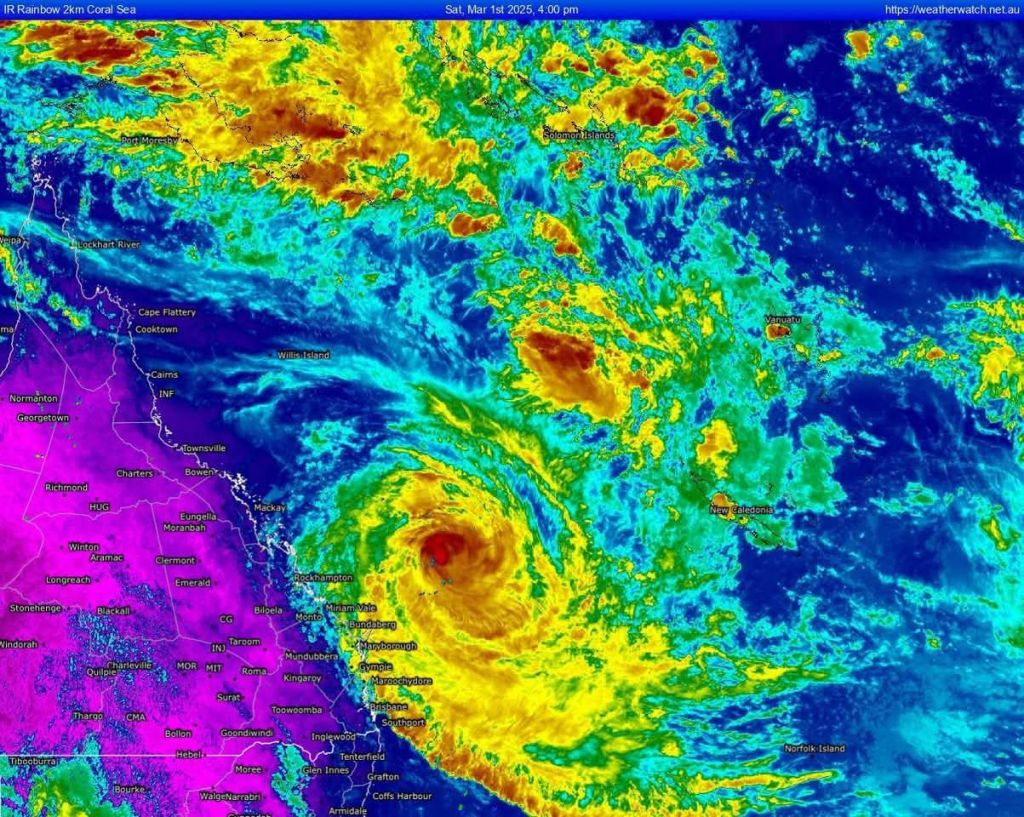
In early March tropical Cyclone Alfred crossed the Queensland coast over Moreton Island. Fortunately for me I was out of Australia. I flew in late in the month to find a very dirty Clarence River at Iluka. The cyclone had dumped over 800 mm of rain on some of the upper parts of the Clarence River catchment.
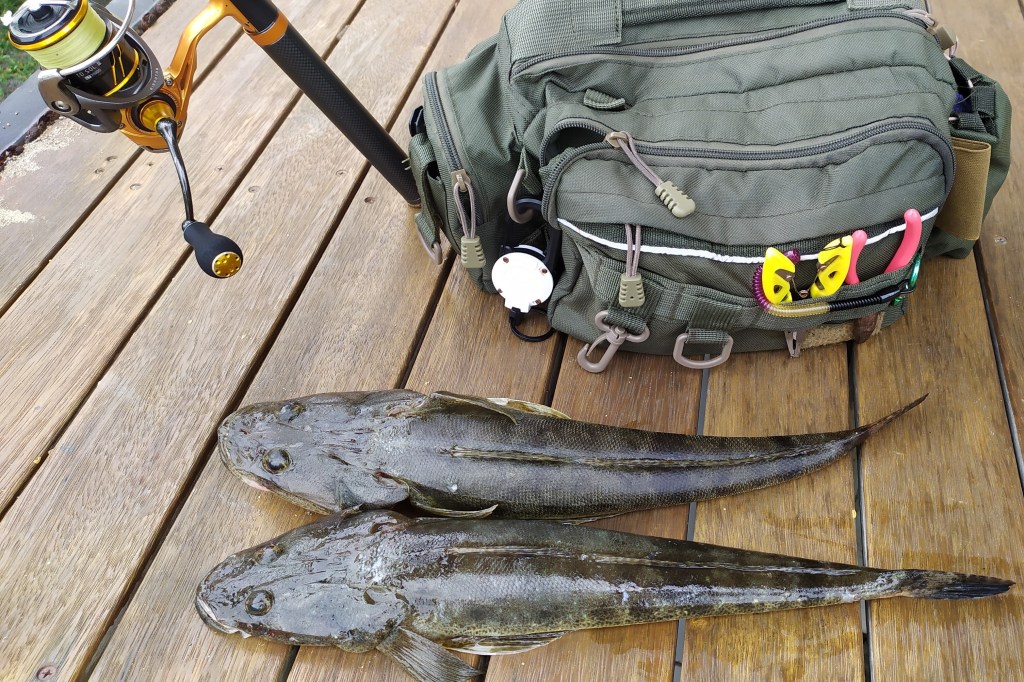
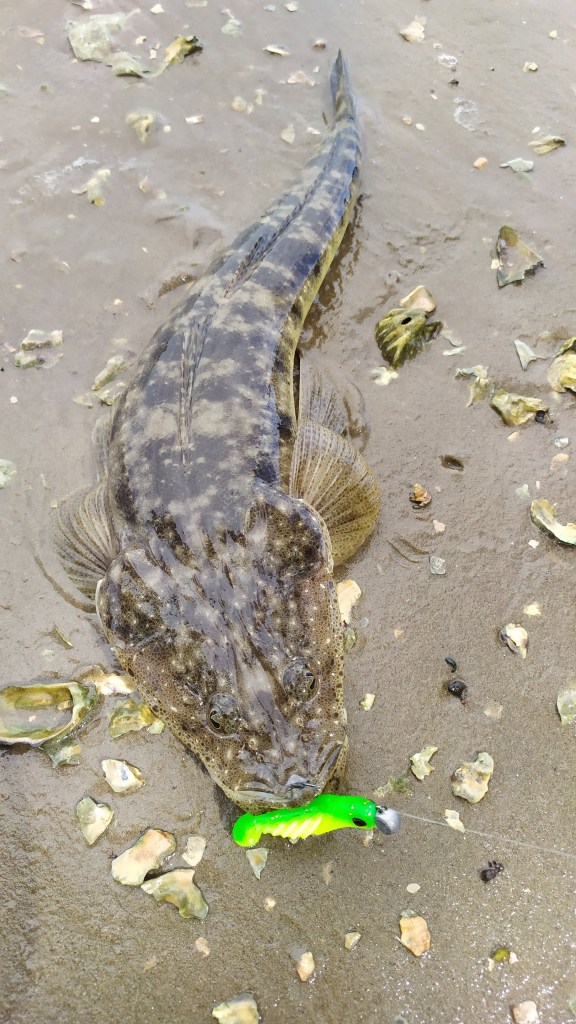
Despite the wind damage and the dirty water coming down the Clarence River, the fishing was surprisingly good. The deluge of rain, particularly upstream from Maclean seemed to push some big flathead down towards the river mouth. Local fishermen had been catching plenty of bream and flathead in the silty water.
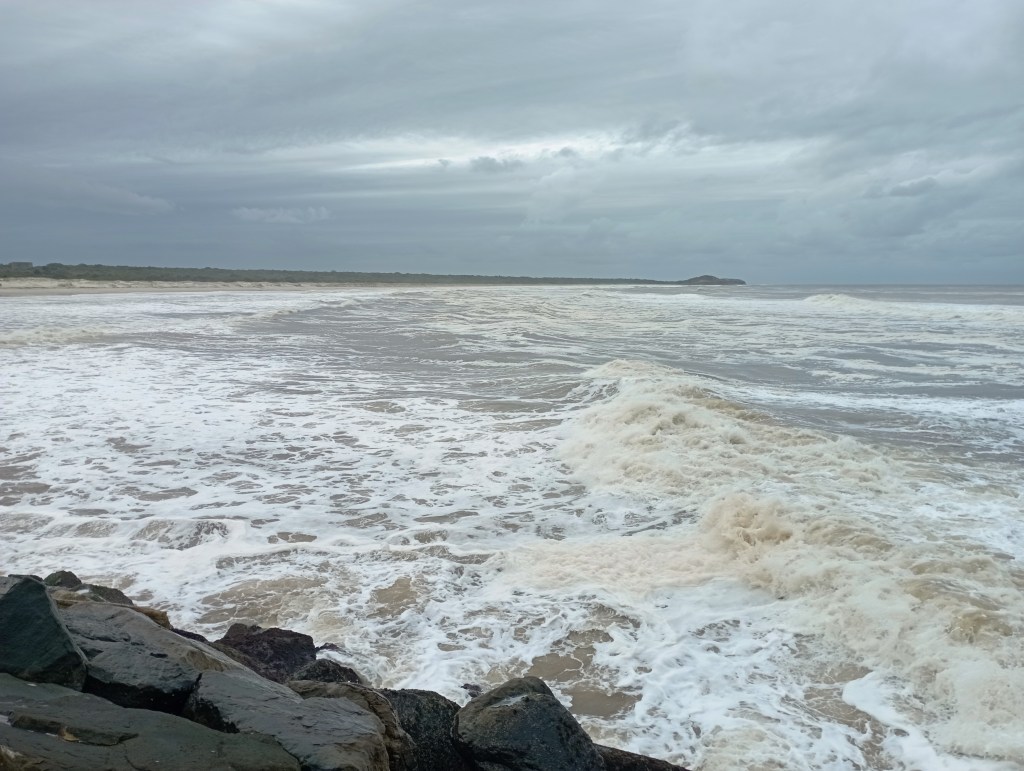
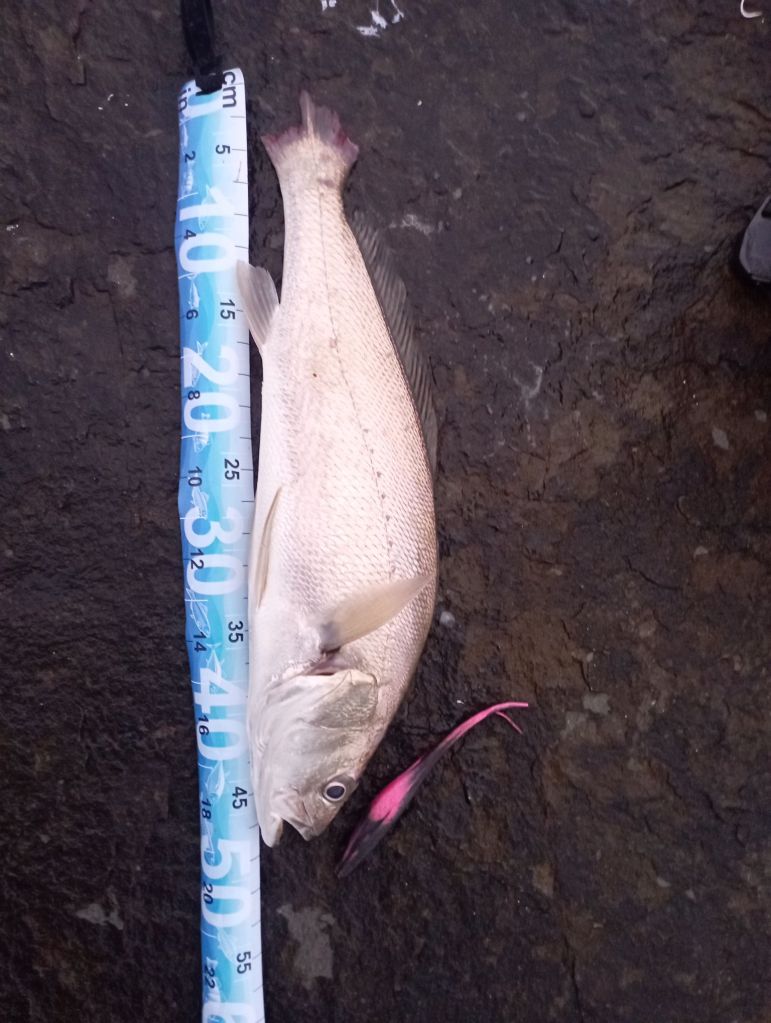
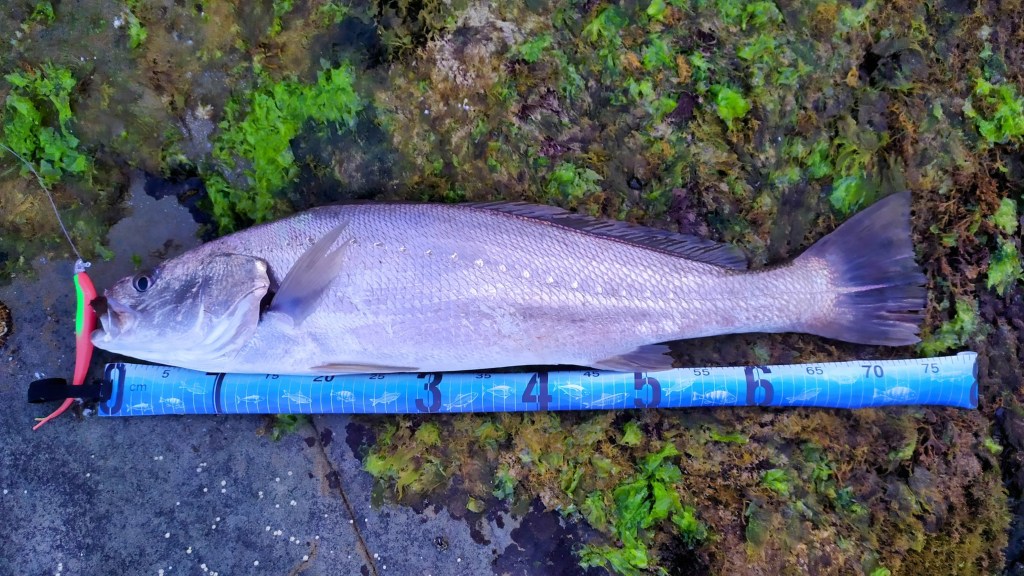
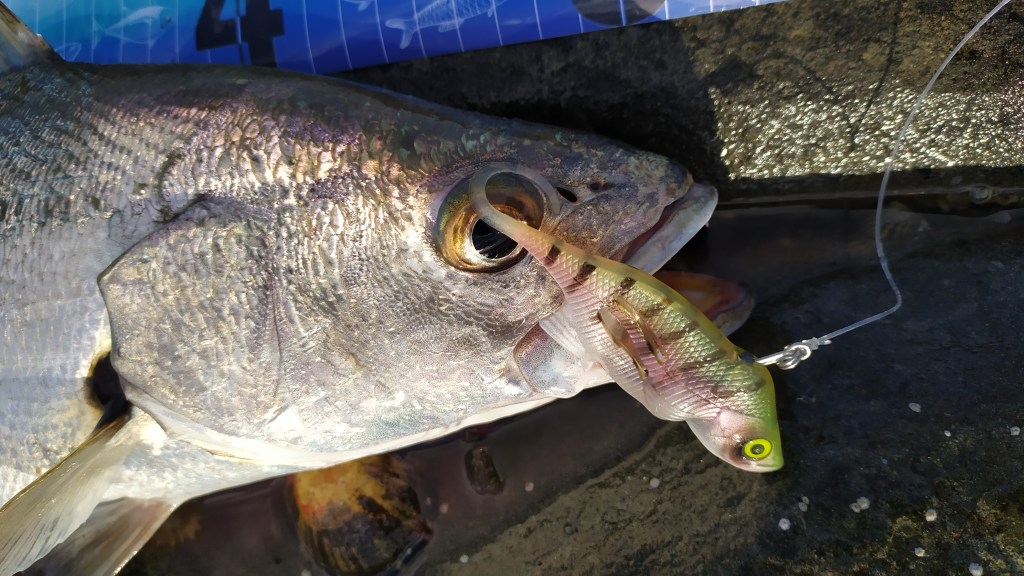
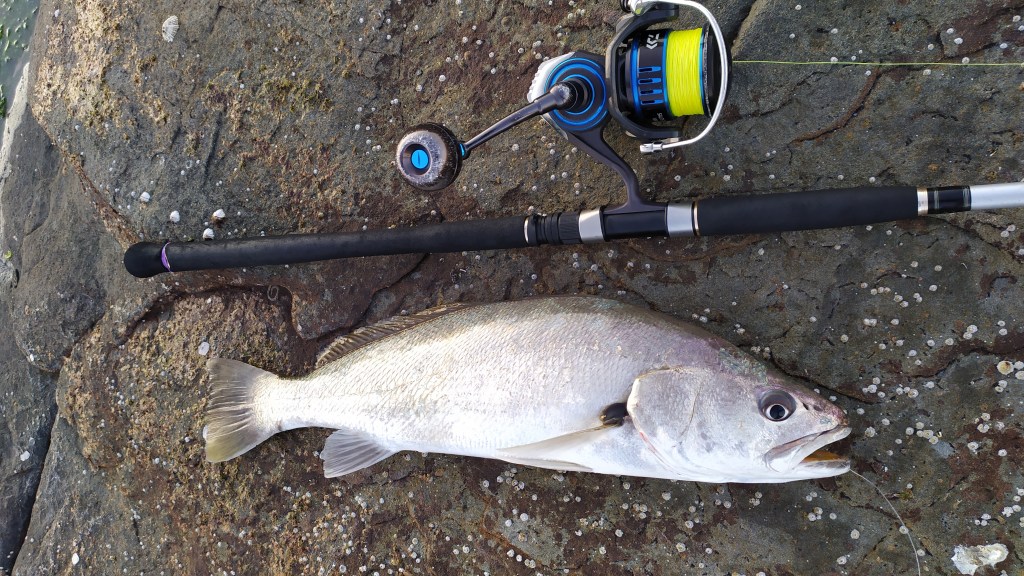
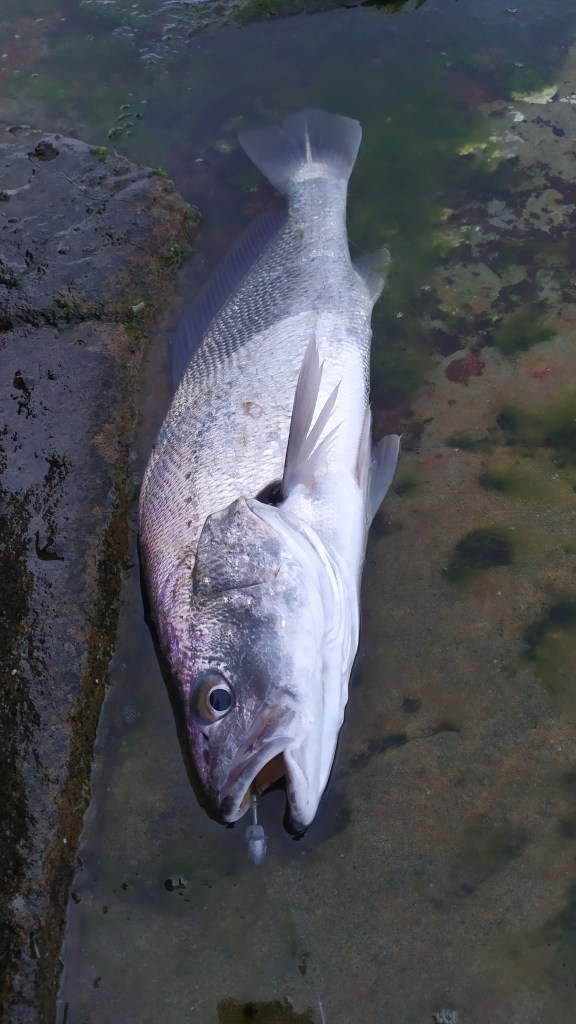
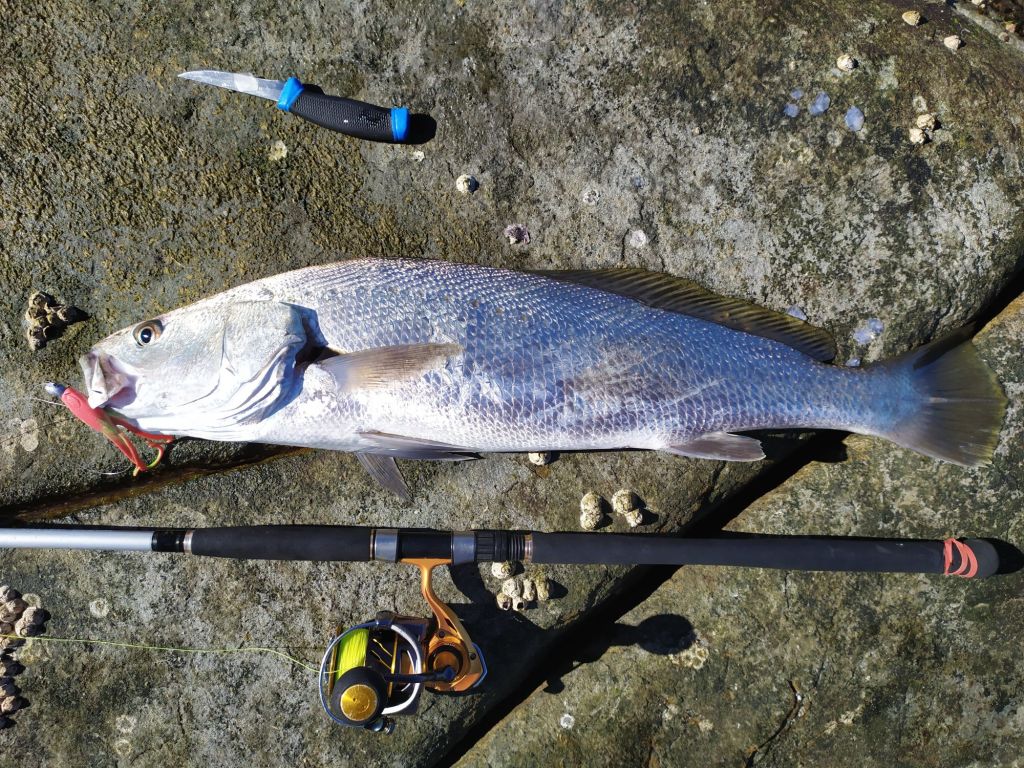
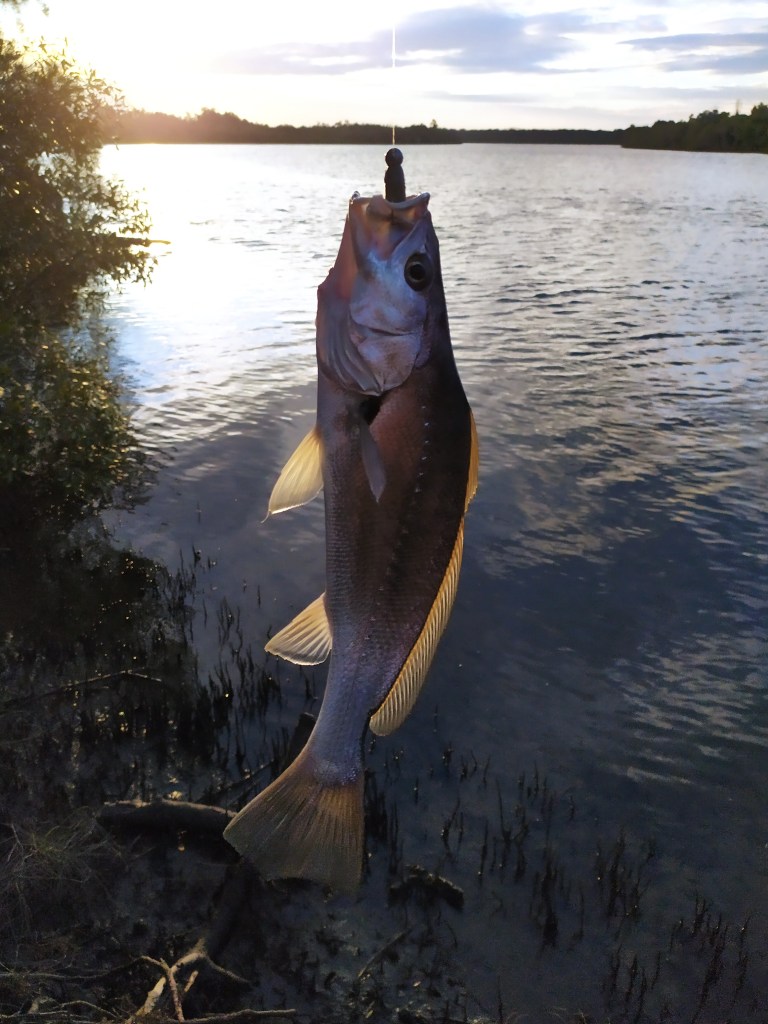
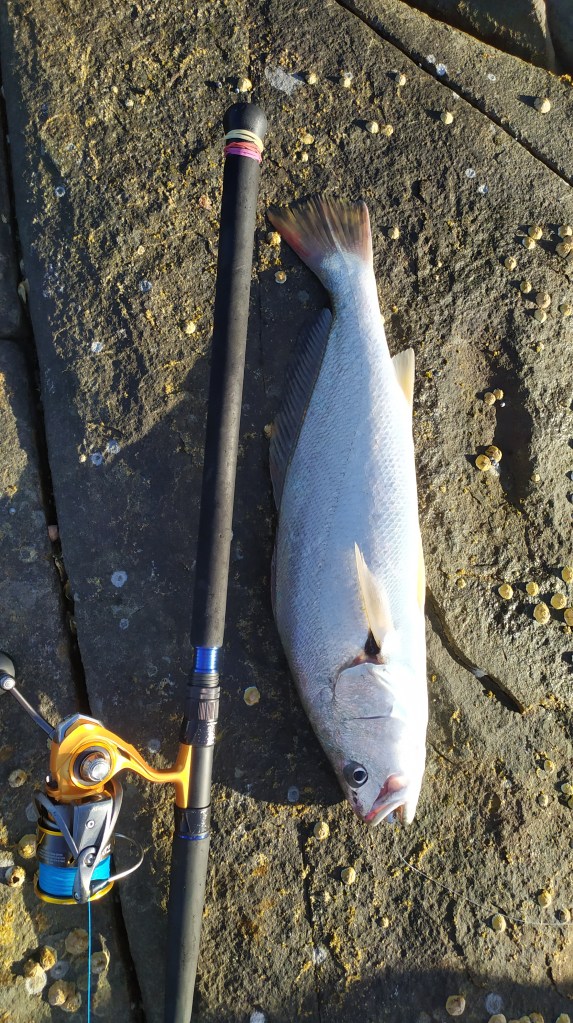
I decided the best strategy would be to fish the rock wall at the Clarence River mouth on the top of the tide, when the water would be cleanest. This paid off on a few mornings and I caught some school jewfish, mostly just under the legal 70 cm size limit. The water can never be too dirty for jewfish / mulloway.
I was away for most of February but early in the month I caught plenty of jewfish on the rocky headlands of the Bundjalung National Park at Iluka.
February is traditionally the month when we get the warmest sea surface temperatures and this year was no exception. The water surface temps were hovering around 26 °C. There were plenty of mullet schools already passing the headlands and lots of smaller bait hugging the ledges. The water was clear. It was a relatively dry month with less than 40 mm of rain recorded.
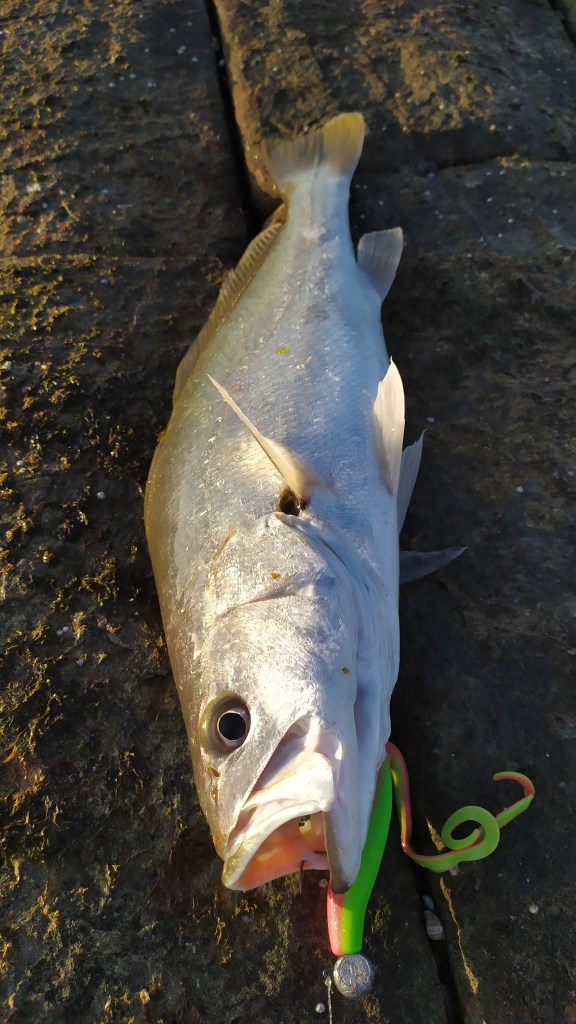
In two days following the full moon I had a couple of good fishing sessions at Woody Head. I started fishing just before low tide for each session. I caught six school Jewfish on the first morning and seven on the next. I was mostly fishing with the GULP jerkshad and squid patterns rigged on 10g and 18g jigheads. The biggest mulloway of the two sessions was 67 cm long.
The excellent mulloway fishing around Iluka continued in January 2025.
In early January the weather was kind and I had a few great morning sessions fishing the rock ledges at Woody Head. The new moon had appeared on New Years Eve and I caught several solid 70 cm plus mulloway / jewfish and plenty of smaller fish in the days following.
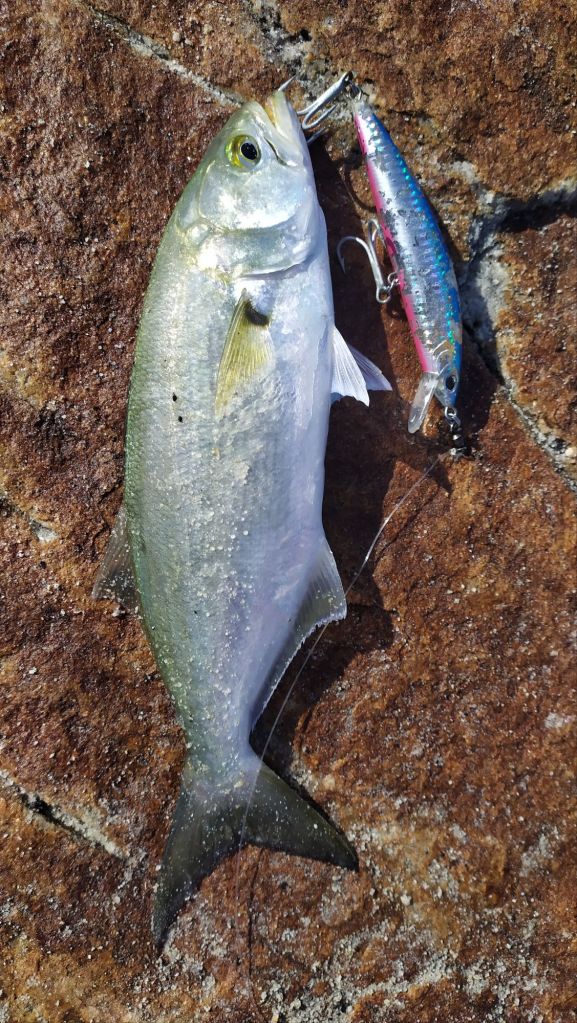
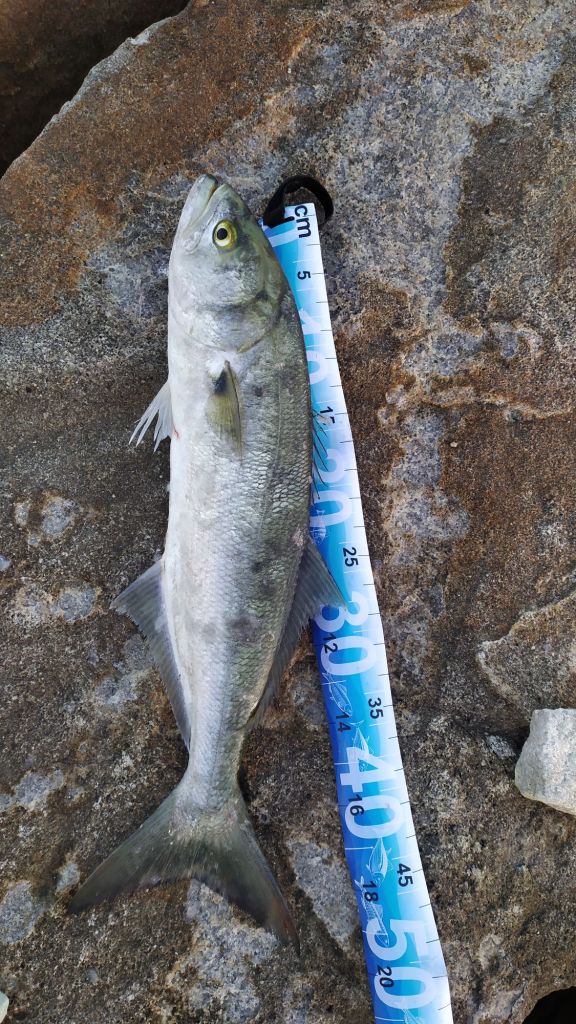
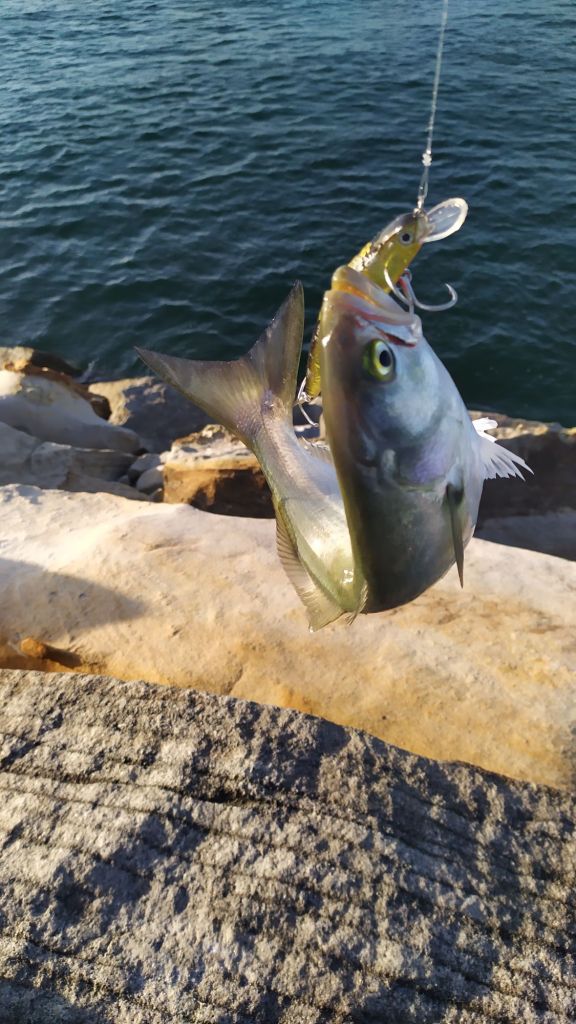
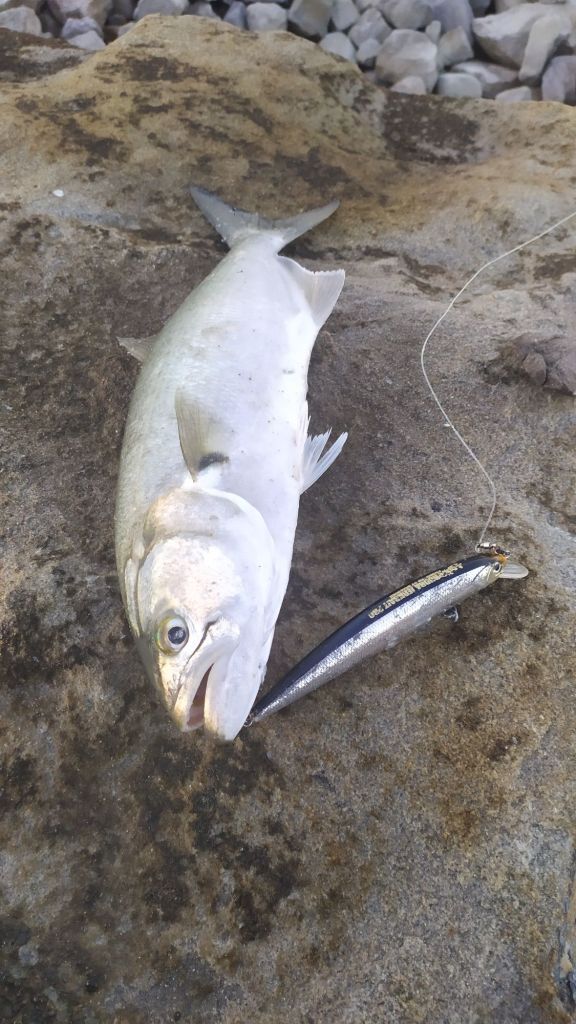
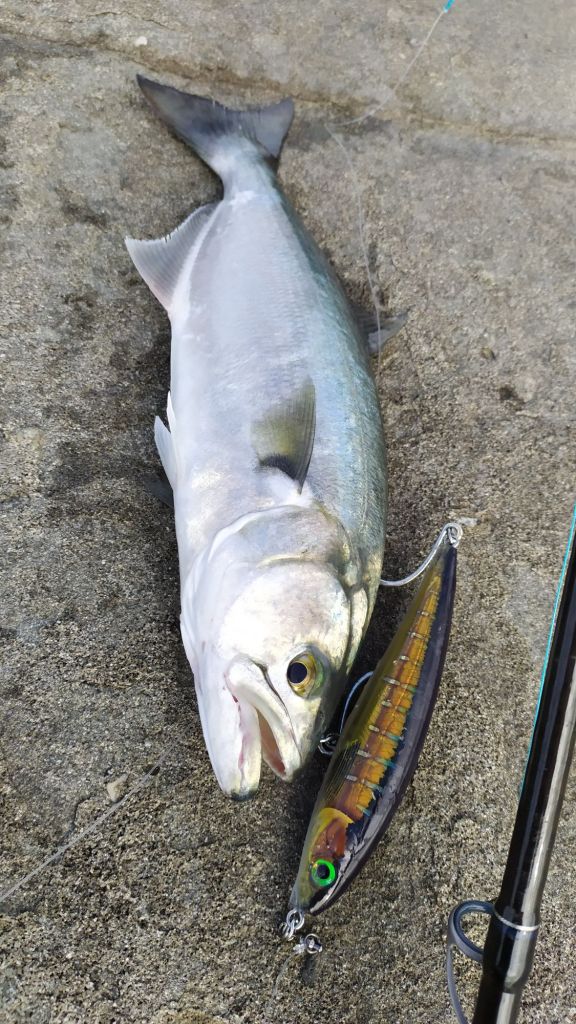
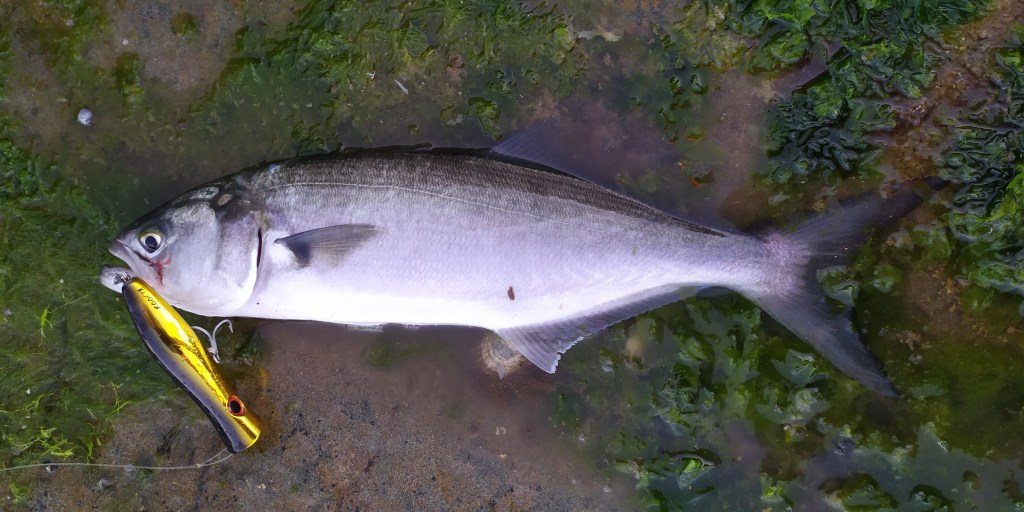
On the 5th of January low tide was at about 5:30 am. Sunrise was at 4:59 am. It was five days after the new moon. There was a light south westerly breeze and about a metre of swell. I did not have any luck fishing with a soft plastic through first light. So just before dawn I swapped to a hard bodied minnow. After a couple of casts I foul hooked a tailor.
I moved along the ledge and cast through a few different spots with a couple of hits from small tailor.
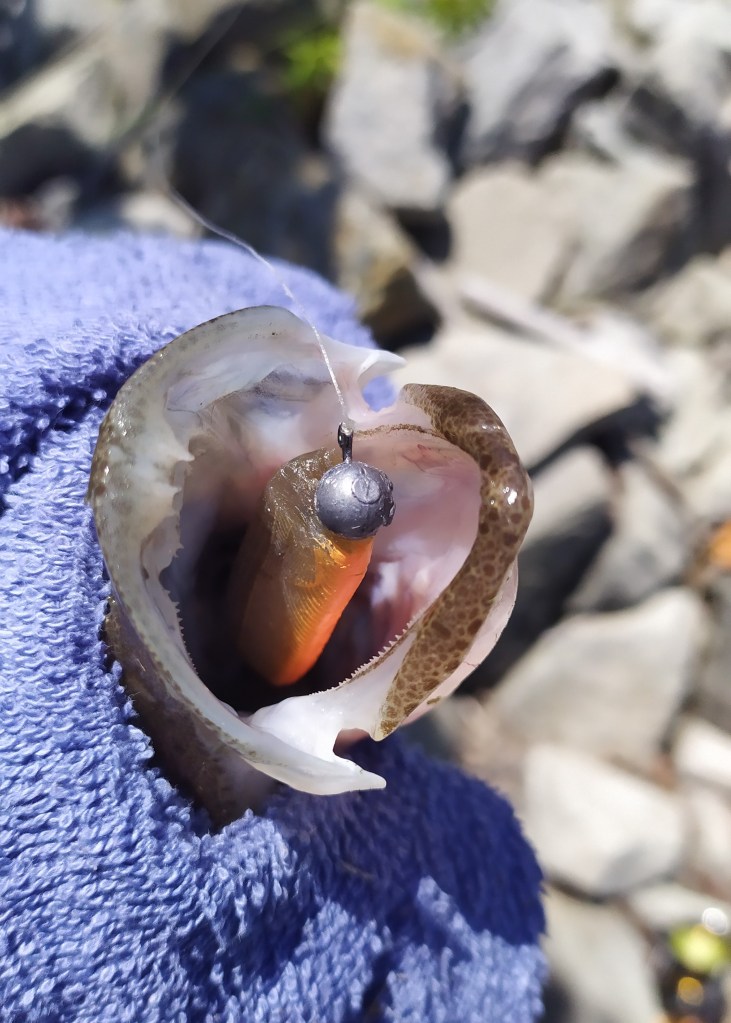
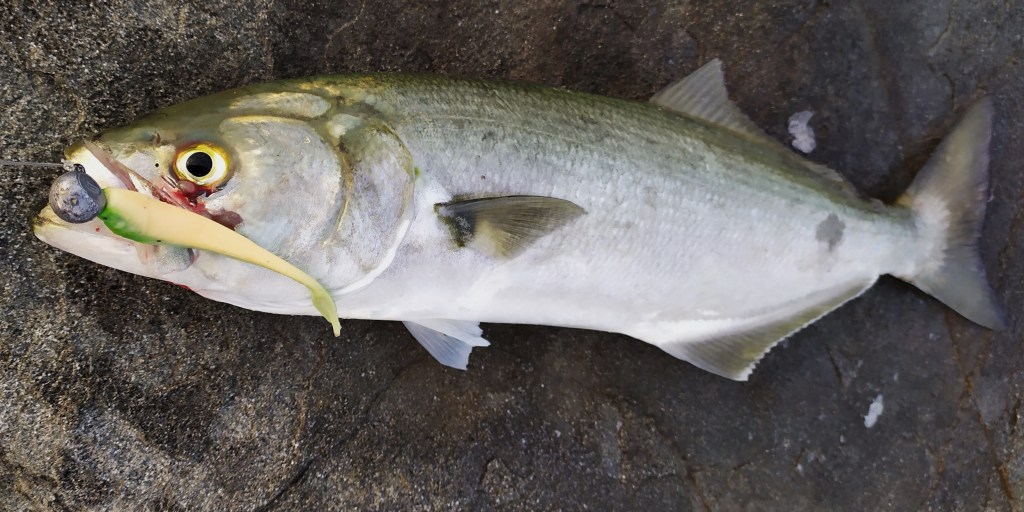
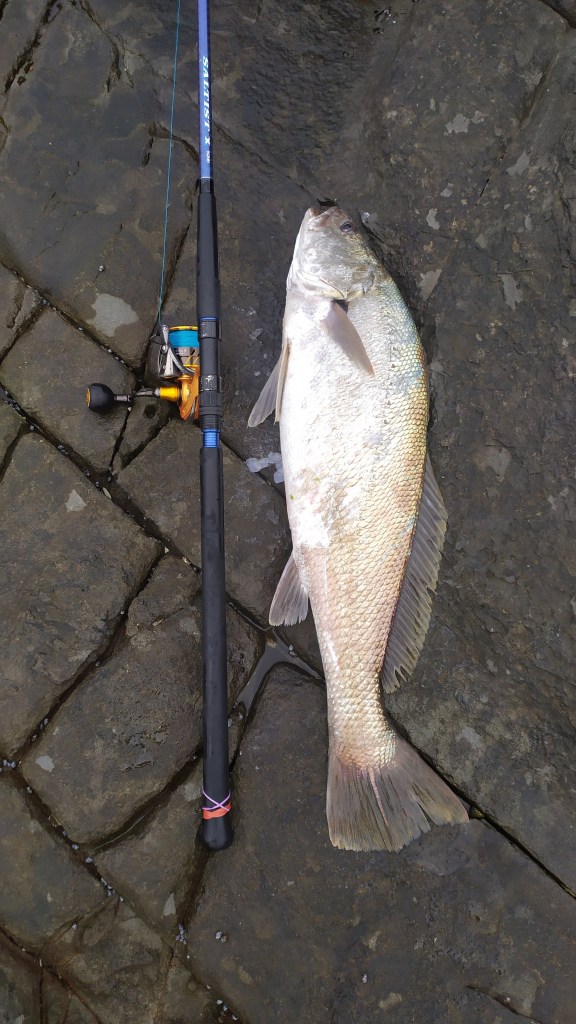
At about 6.15 am I swapped back to a big Gulp 7″ Crazylegs Jerkshad in the orange bellied shrimp colour that I loaded onto a 22 gram jighead. I was fishing with my Daiwa Saltist X MH962 rod and Saltist 10000 reel, 50 lb fluorocarbon leader and 40lb braid.
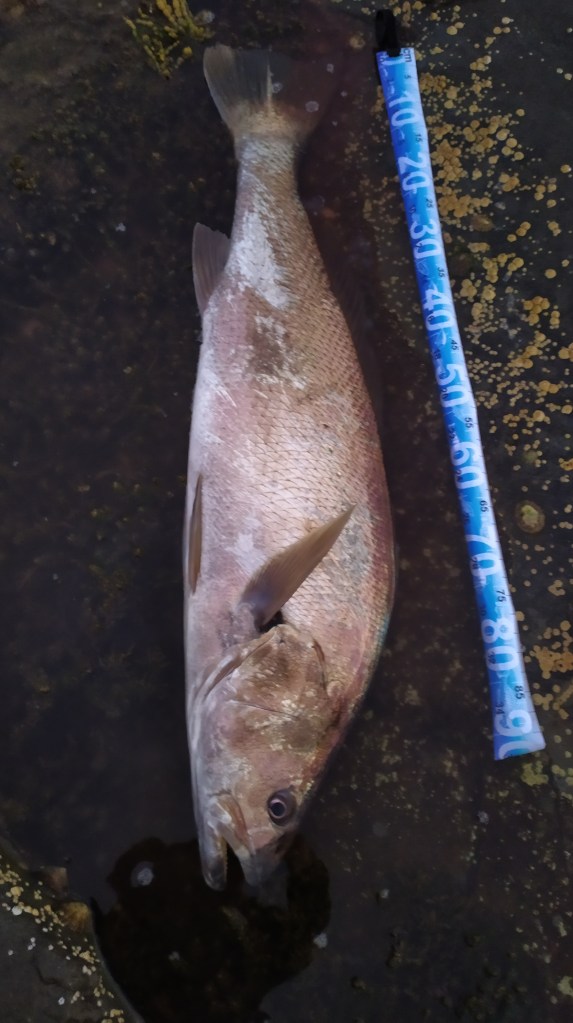
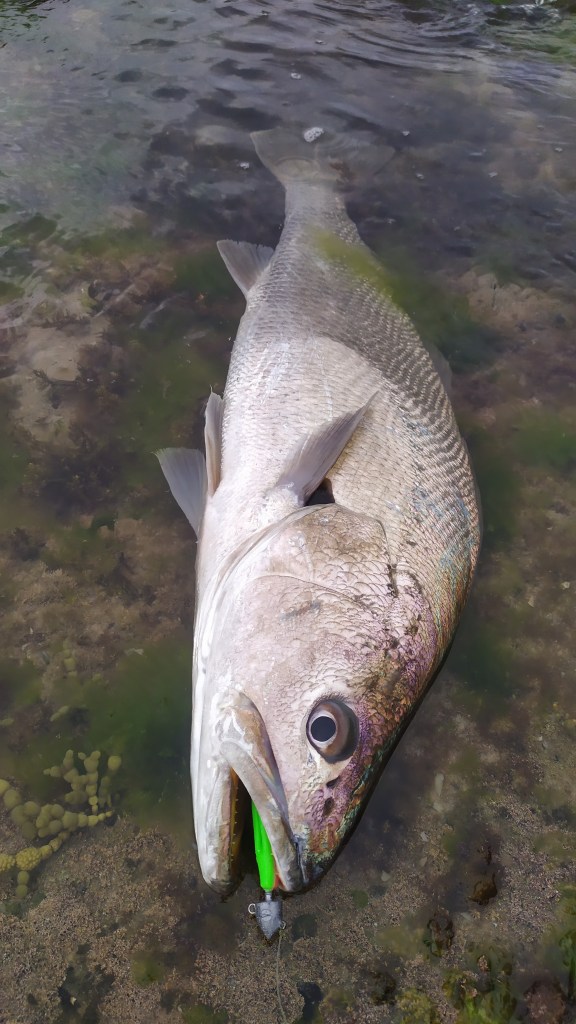
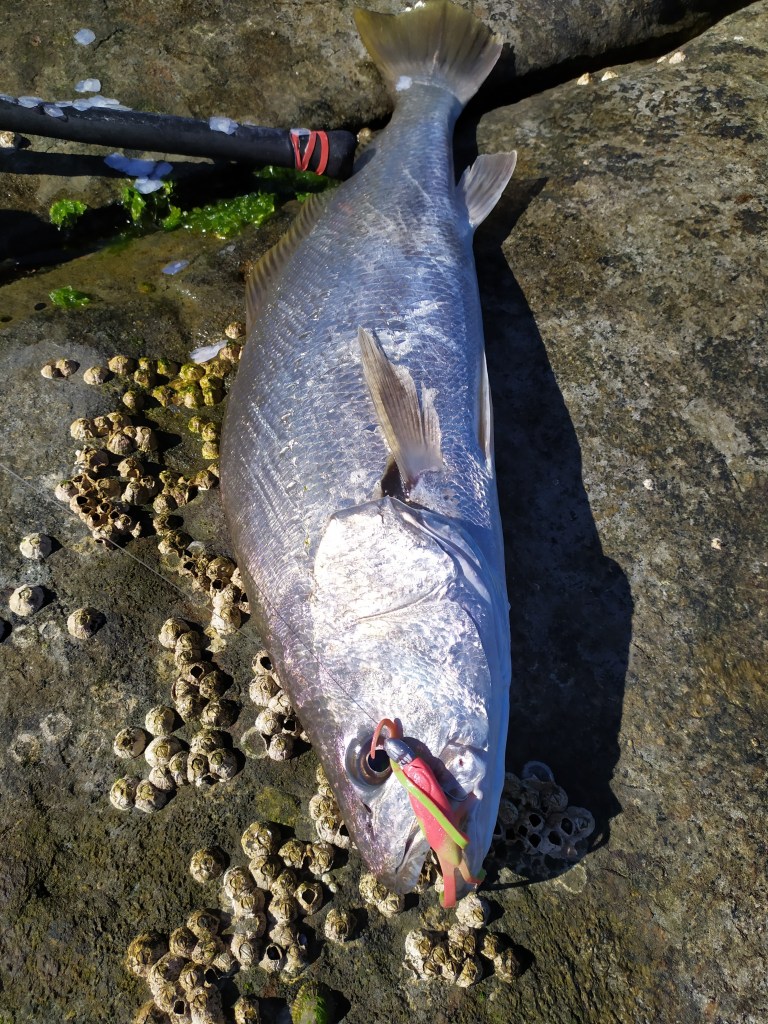
I let the lure settle on the bottom, a few feet from the base of the ledge. I counted to twenty, letting the soft plastic flail a little in the current and hoping it wouldn’t get snagged. As I went to give it a hop off the bottom, I felt a solid thud. I paused for maybe three seconds, then struck hard. The rod bent over and I felt the initial weight of a good sized fish before it started stripping line on its first run. It went straight under the ledge and the leader was immediately rubbing. I kept the line tight but eased off on the rod pressure slightly and looked at the swell. As the wave came in I dropped the rod tip for a moment then heaved it back up as the wave sucked the water back out. Fortunately the fish came out with it.
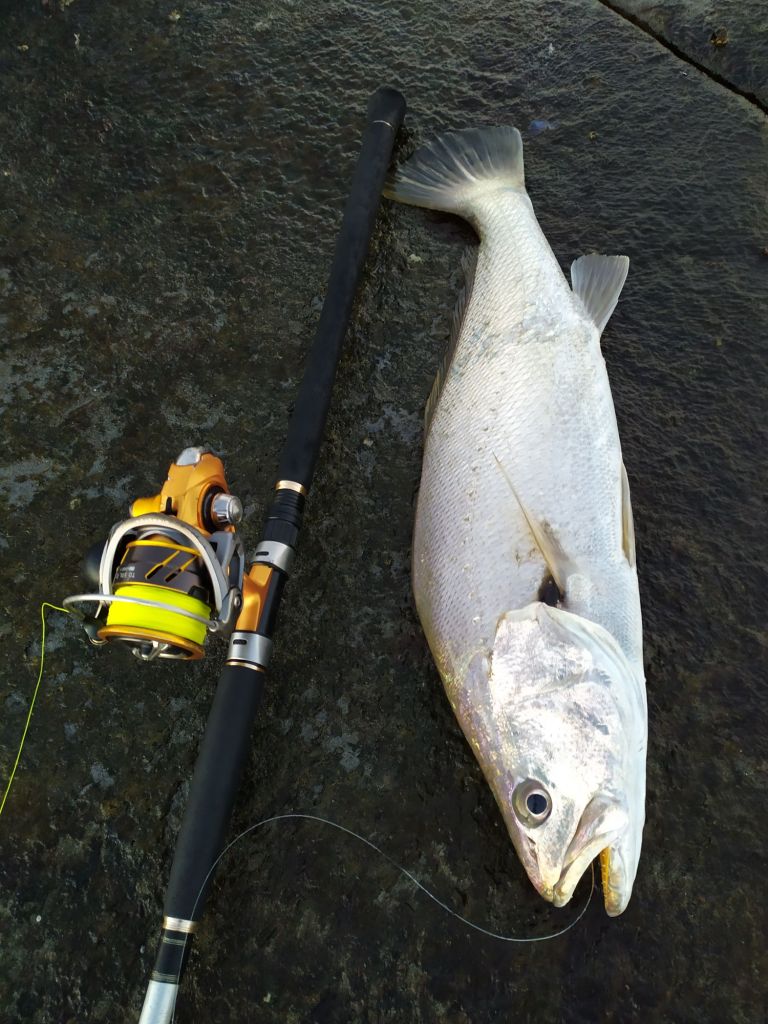
It was heavy and made a few powerful short lunges. I loosened the drag just a little and looked for a landing spot. I had to use the swell but a good set would be strong enough to push it up to the next level of ledge below me. This rod could subdue it but not lift it. I waited and kept its head out of the cunjevoi covered rocks. A big set started to roll in . I was going to get wet. I tightened the drag and kept in contact with the fish as the wave lifted it straight past me, up onto the rocks. I grabbed the leader to stop it washing back in.
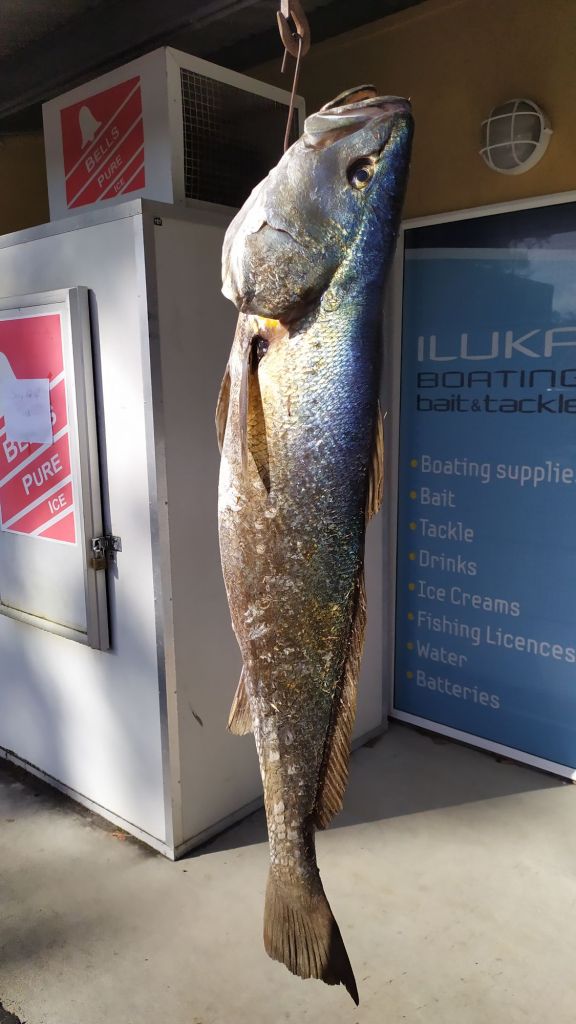
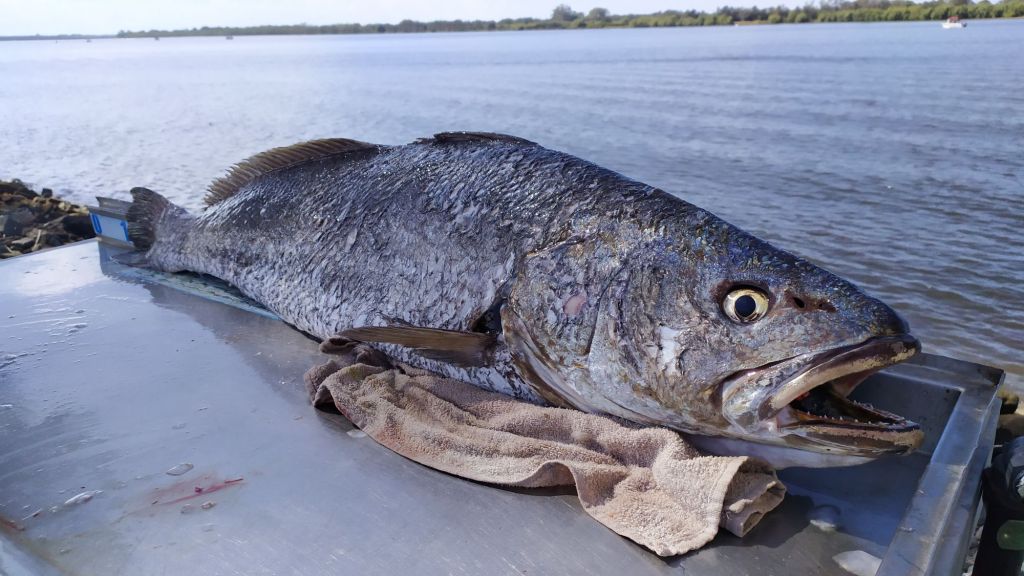
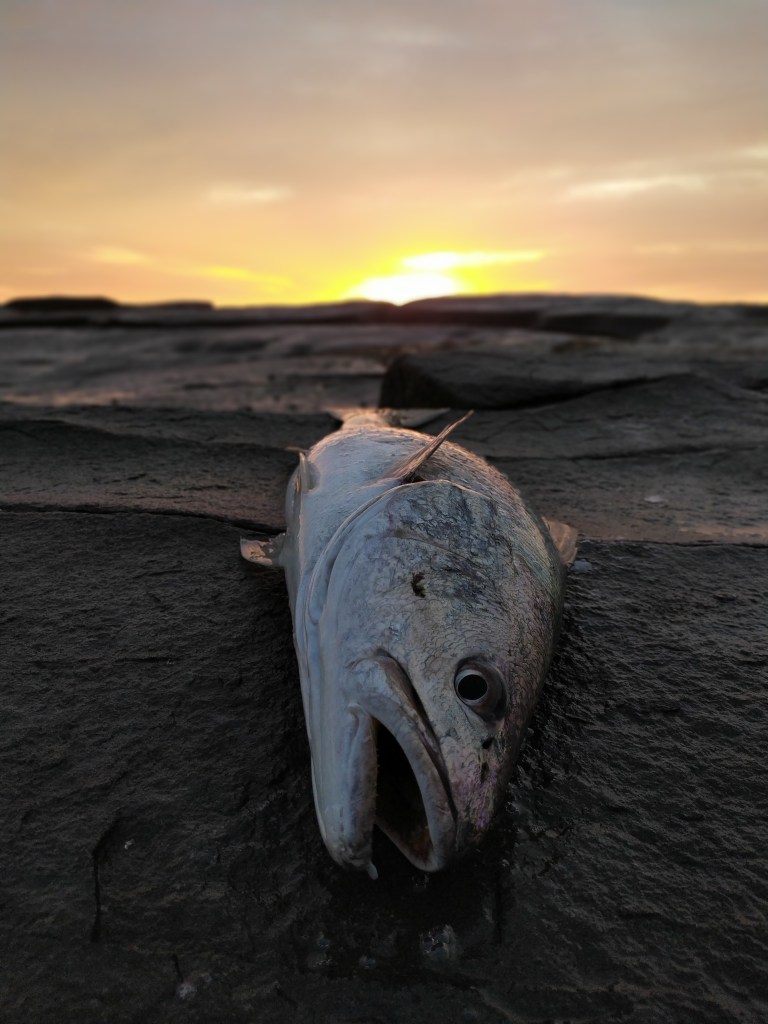
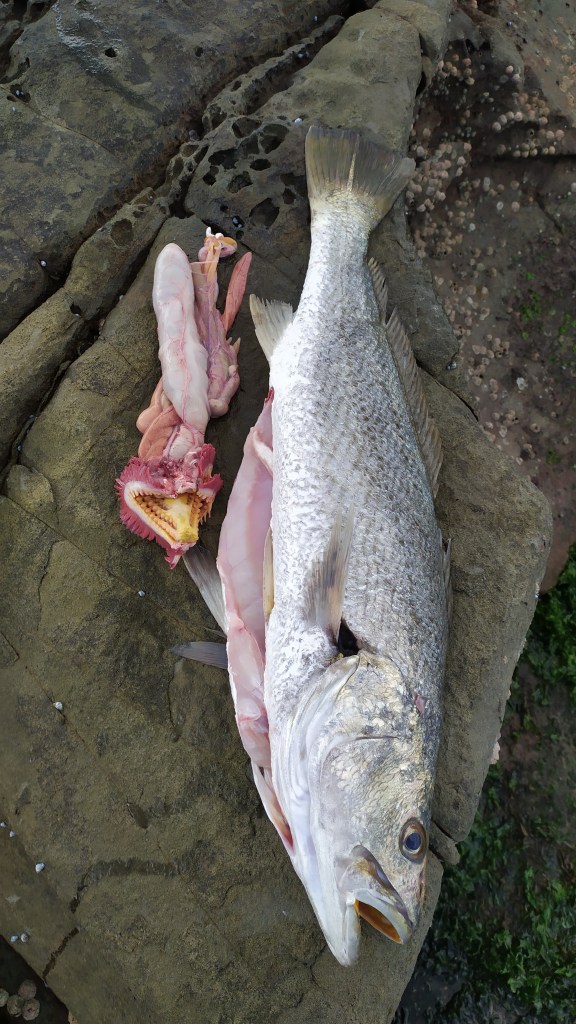
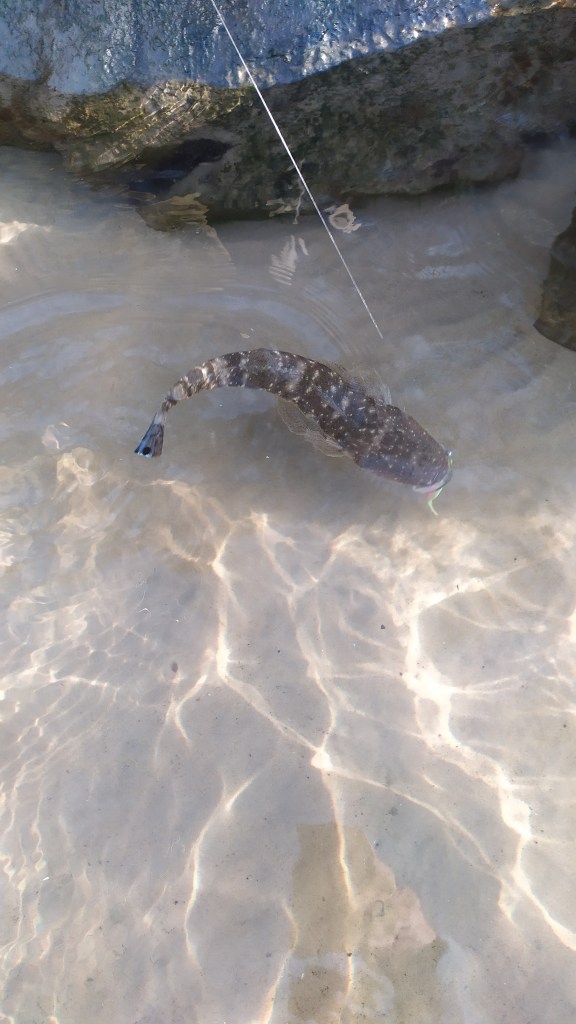
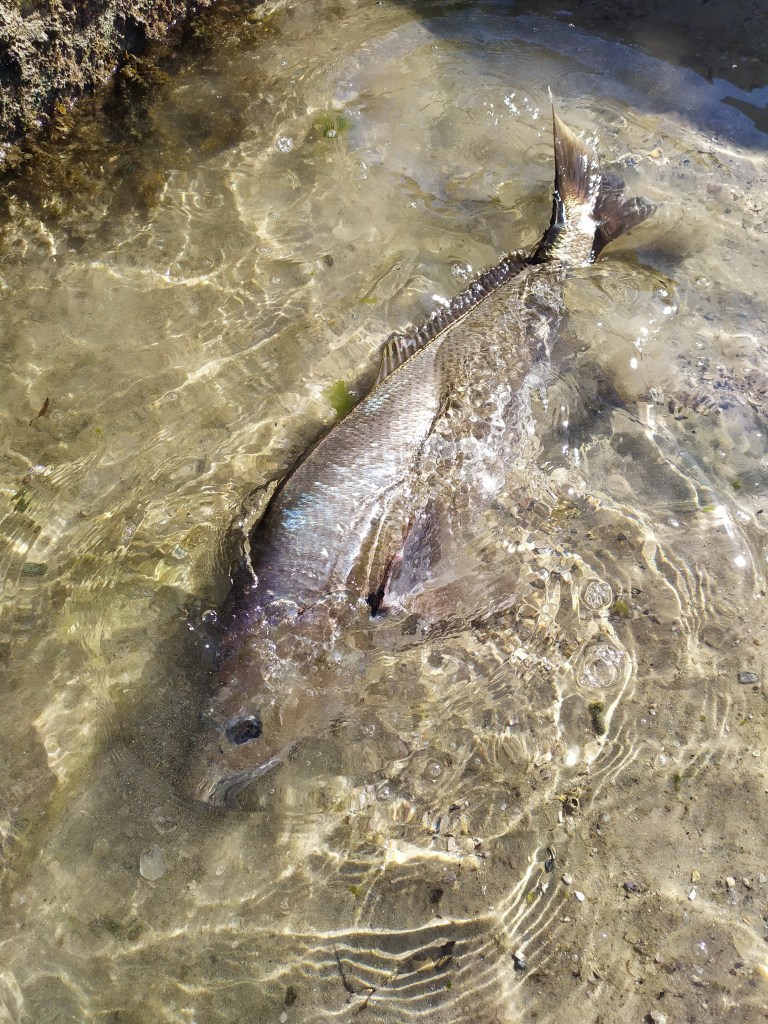
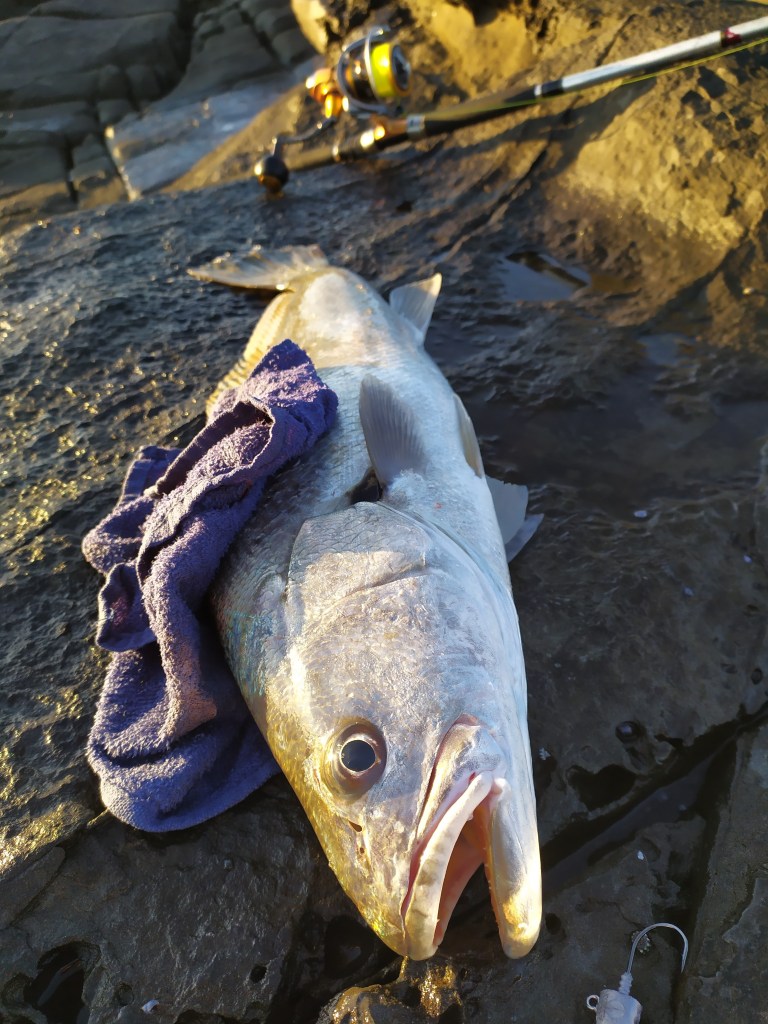
I had landed my personal best Mulloway that weighed in at 17.6 kg.
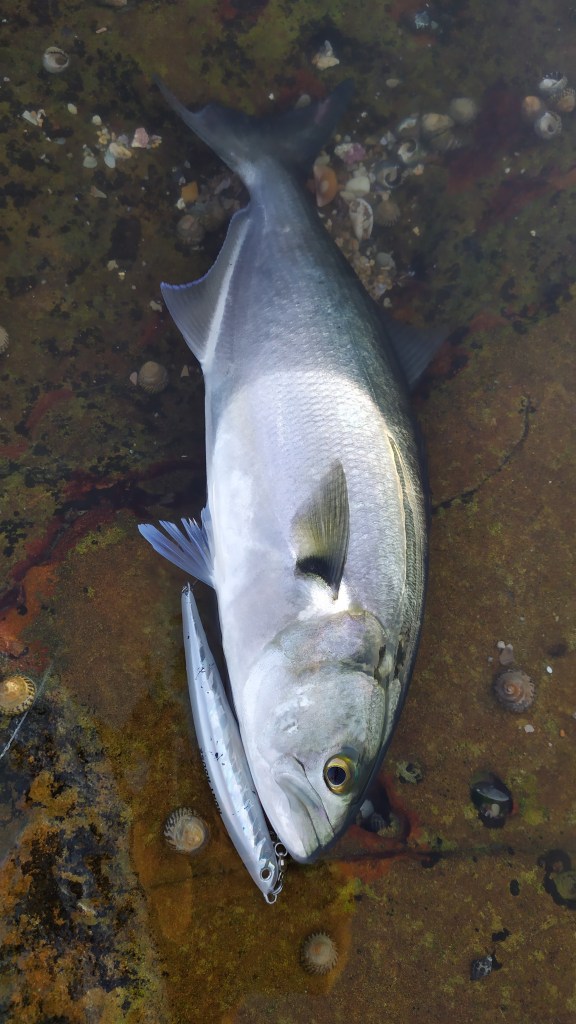
There were plenty of whitebait on the headlands and I caught tailor on just about every lure in the tackle box. I also found a few good sized dart and trevally.It was a great start to the year.
During 2024 I had caught record numbers of mulloway while fishing in the Clarence River and out on the headlands of the Bundjalung National Park at Iluka. I presume over the years I have got better at finding them and landing them, but I have no doubt that the population is as healthy as it’s been since I started fishing in this area 20+ years ago.
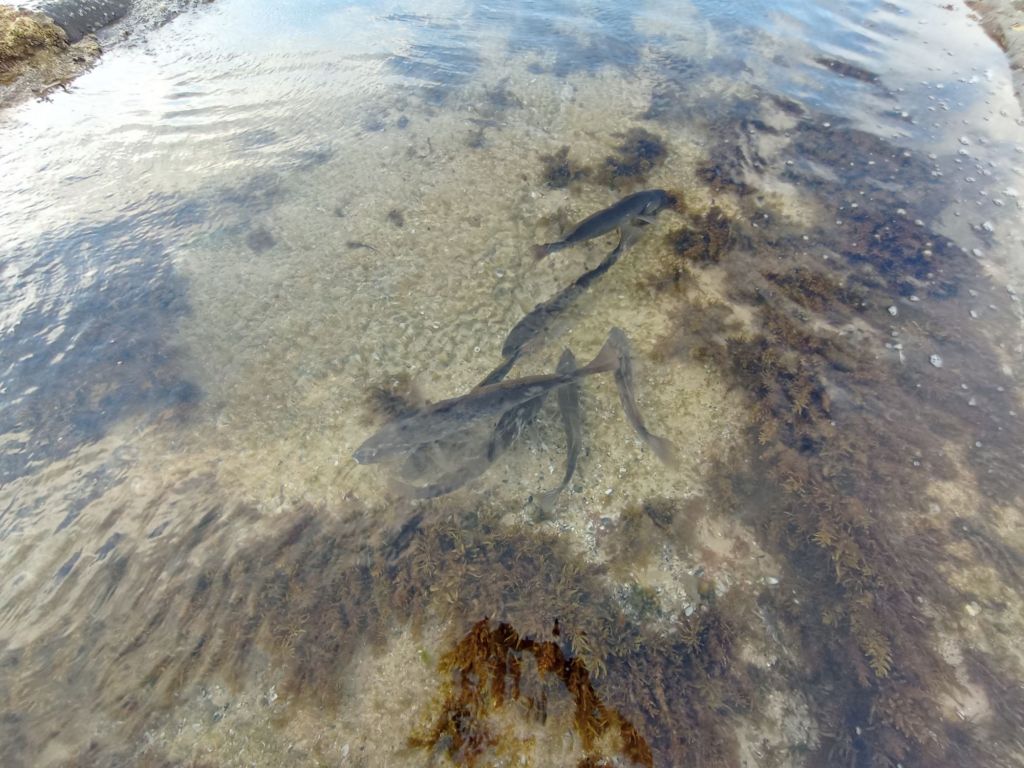
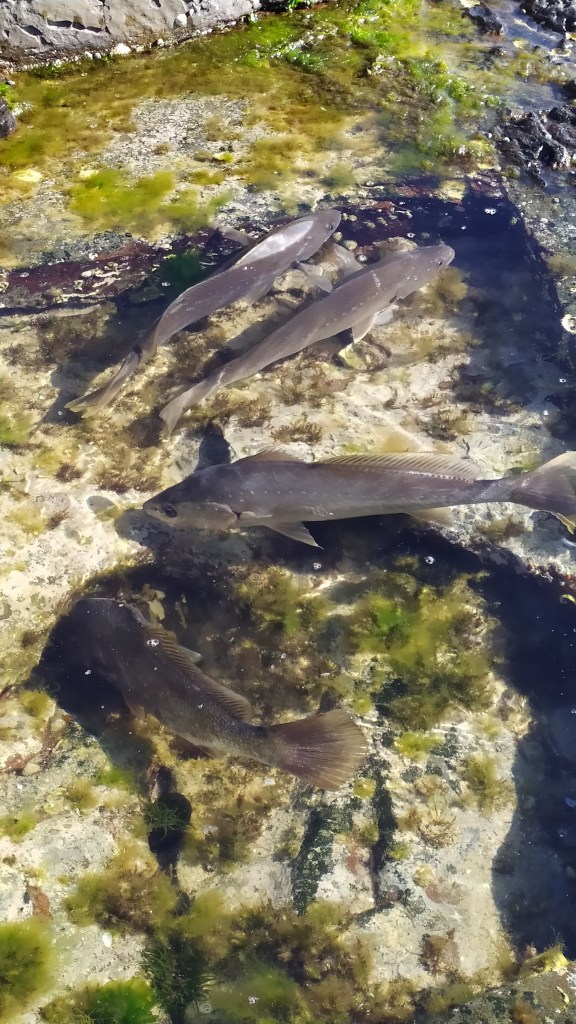
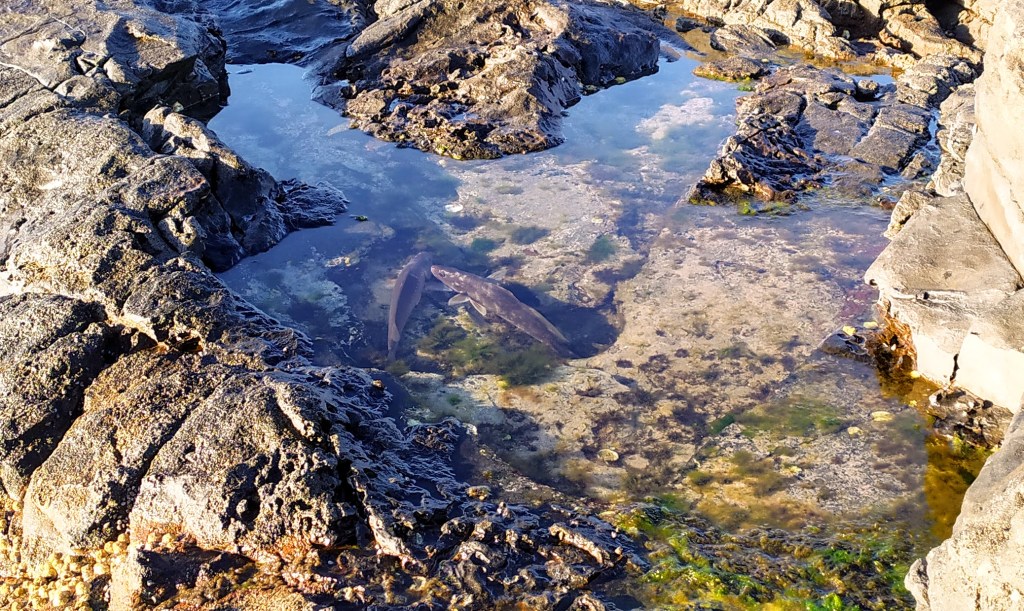
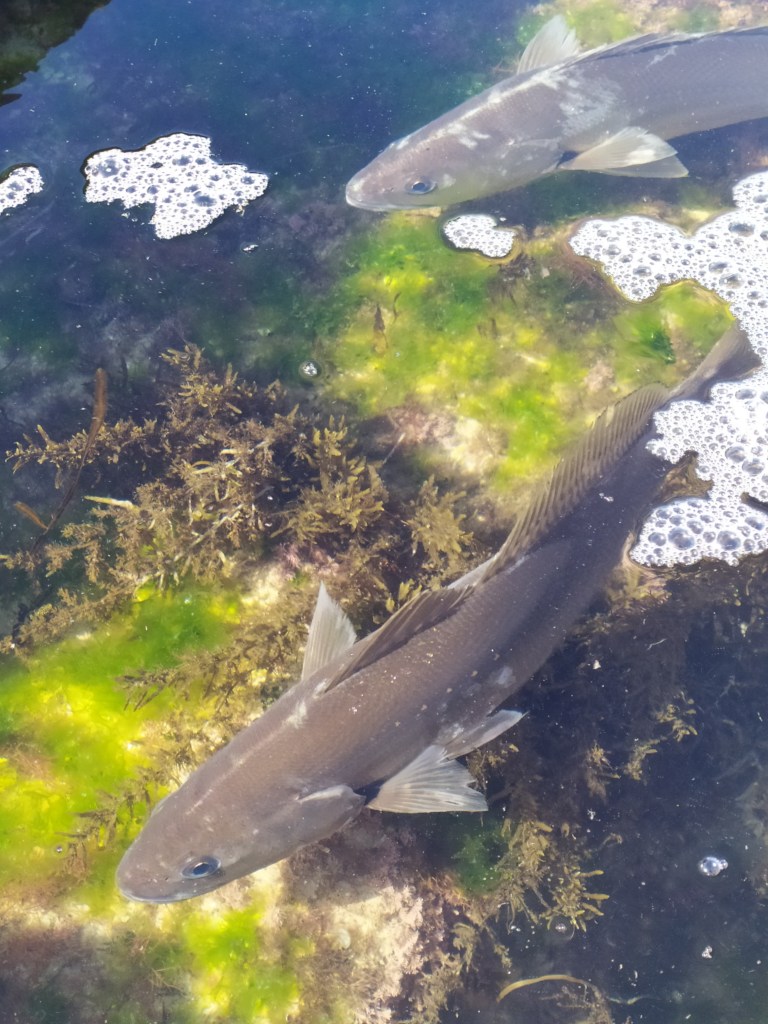
I have consistently caught many juvenile jewfish up river as far as Maclean. I have also had many rock fishing sessions where I caught and released more than twenty mulloway. I find that if they are given some time to recover from the trauma of the fight, in a freshly filled rockpool, the vast majority of smaller fish I catch swim away looking pretty fit.
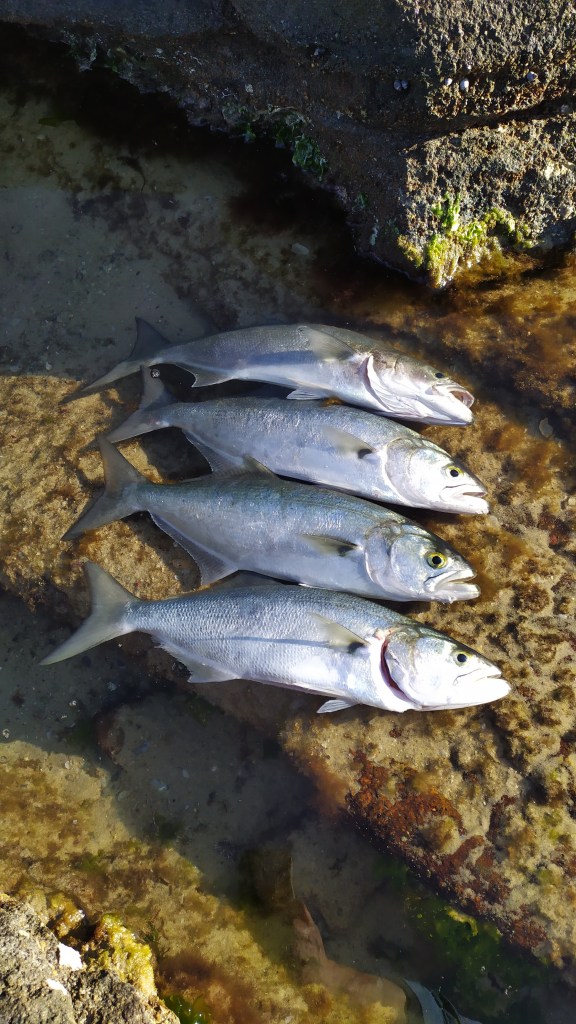
I attach a link to a full gallery of most of the jewfish/mulloway I caught in December. I took a measured photo whenever possible during the month . I estimate I caught approximately 10 more ( eight under legal size, and two over) that I de-hooked and immediately released. So in the month I estimate I caught 32 mulloway of which six where over 70 cm long. I also tangled with at least four fish that I could not stop, most of which I also suspect were mulloway.
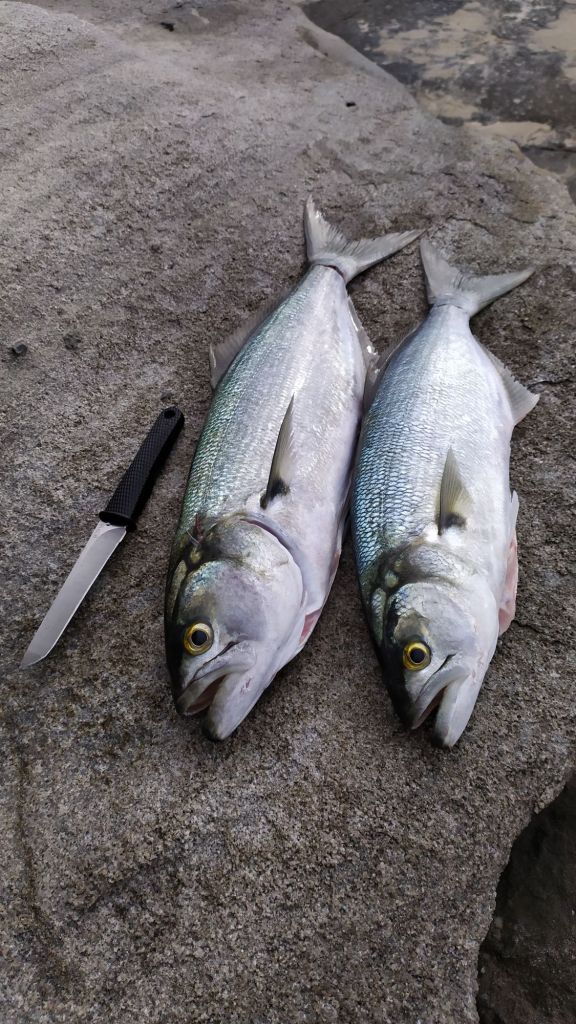
The tailor were always hanging around the headlands, wherever there was plenty of bait. I had several great sessions where they would hit anything I tied on. The biggest fish were about 50 cm long. As usual, I had my most consistent sessions in the half hour between first light and sunrise.
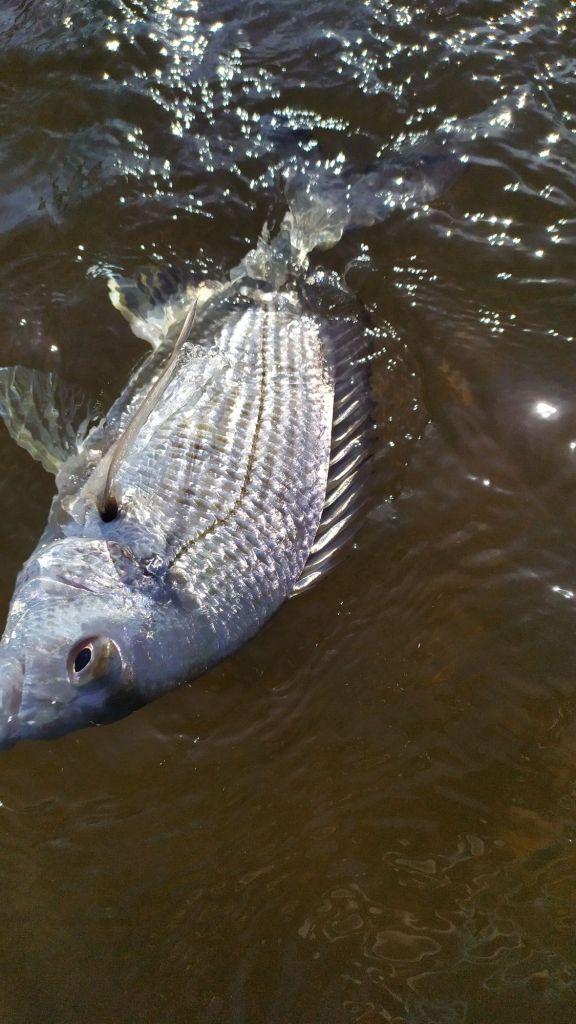
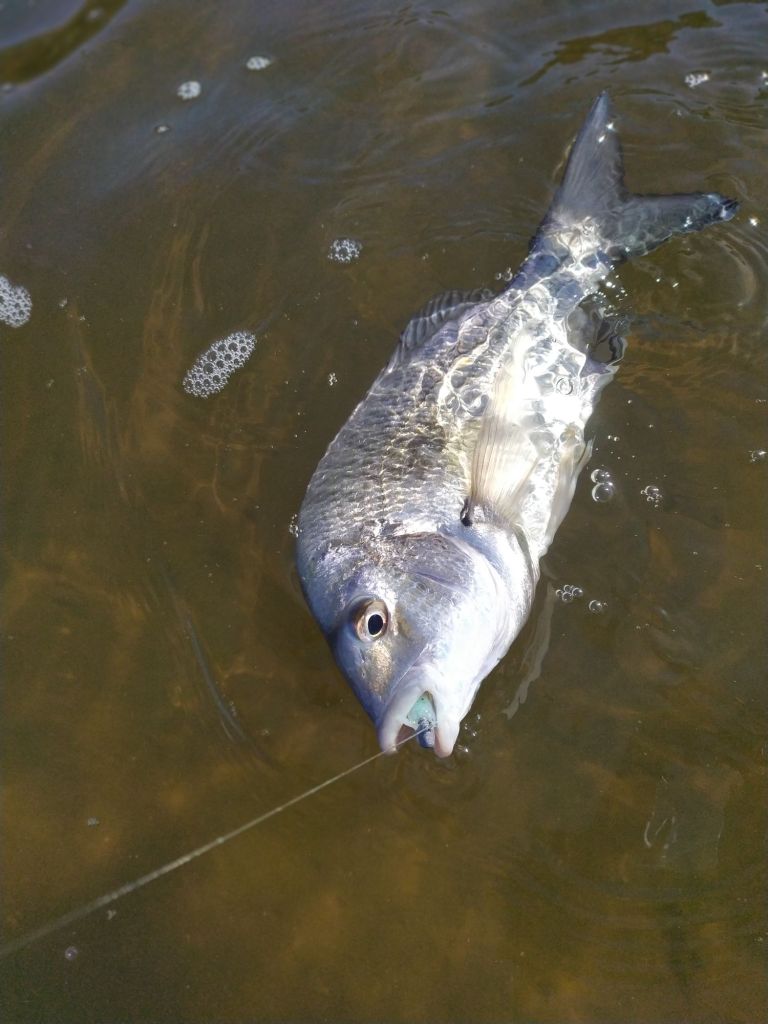
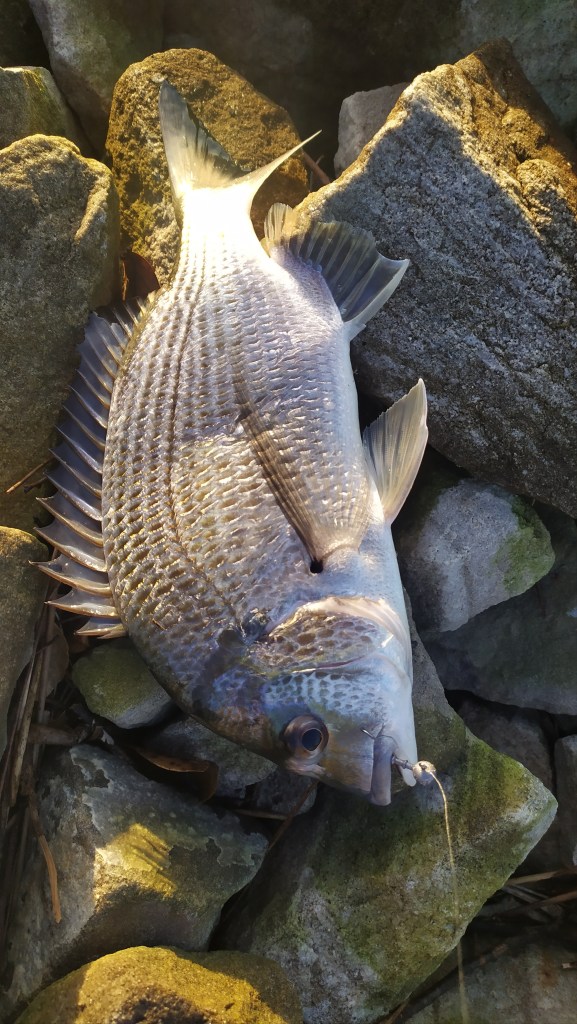
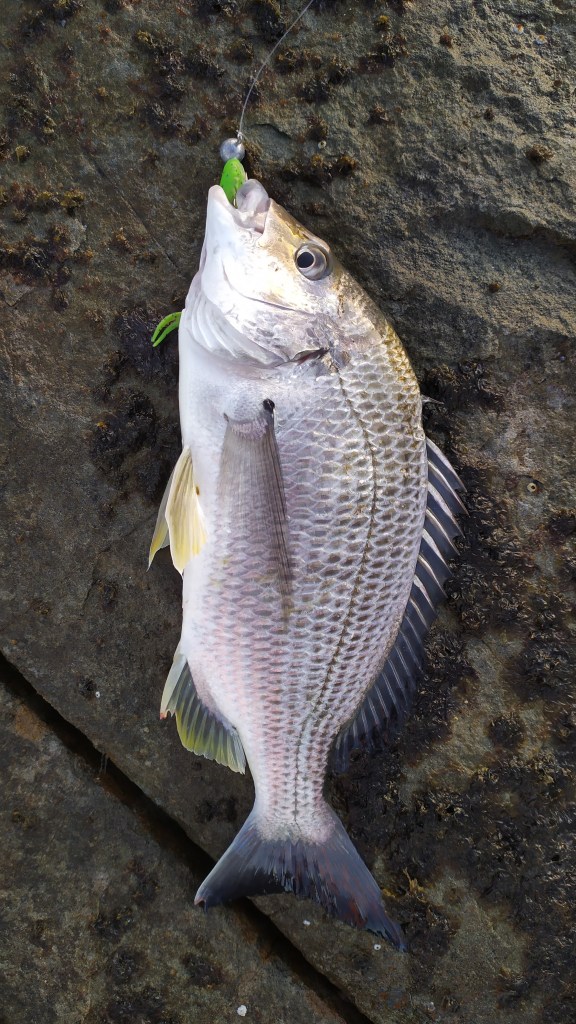
When the swell was too big to fish the rocks I focused on wading the flats and fishing the rockwalls of the Clarence River. The bream fishing was excellent as it had been for months. I caught bream around all the usual drop offs especially when I dropped down to fishing two and three inch minnow/ shrimp pattern soft plastics on 1/8th ounce, size two hook jigheads. I was generally fishing 8lb braid and 10lb fluorocarbon leader.
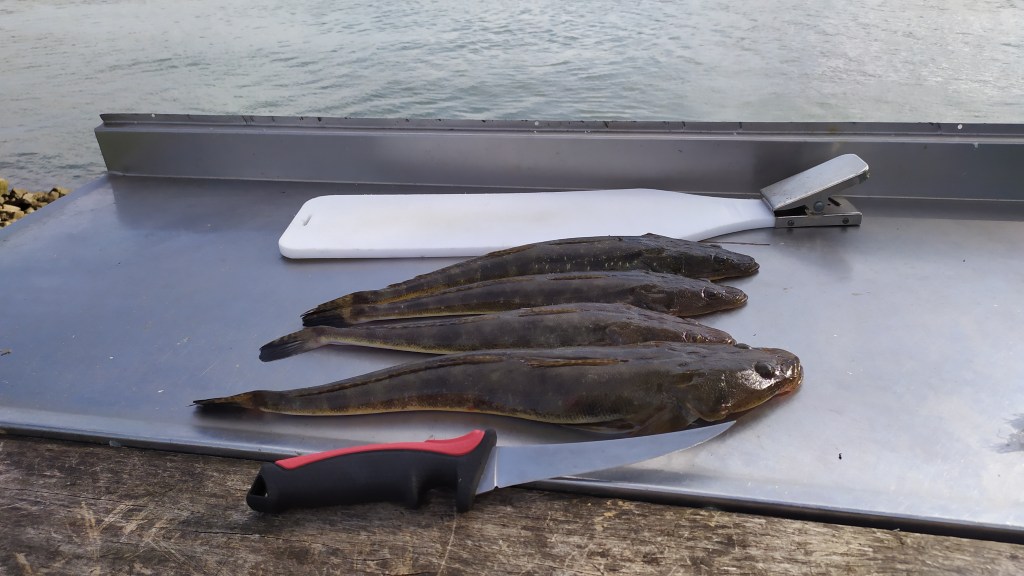
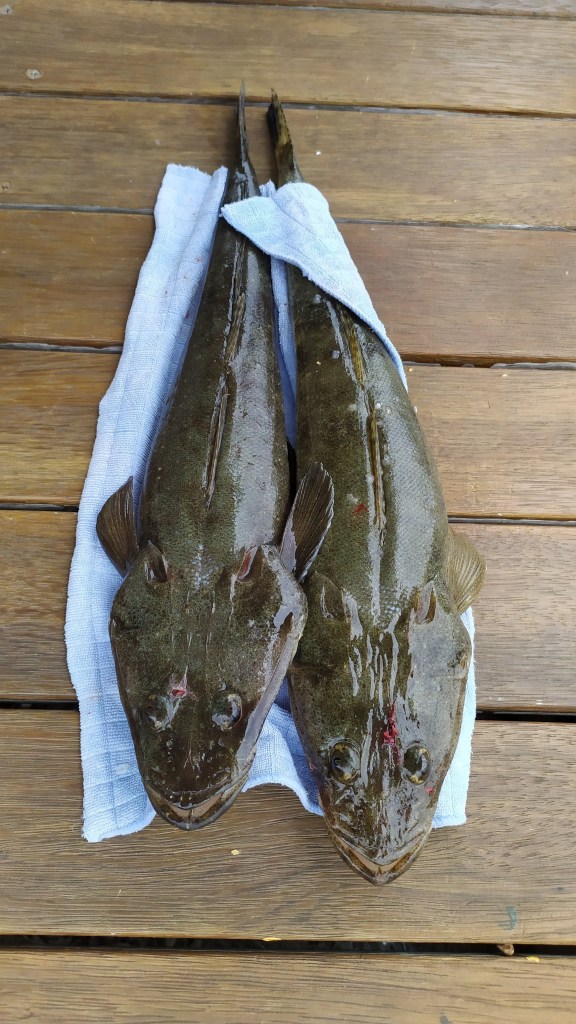
I found plenty of flathead in the river fishing mainly with GULP soft plastics. Some of my favourite colours and shapes have now been retired, so I am rationing my remaining favourites.
December was a great month with all species plentiful in the Clarence River. The prawn trawlers made a brief appearance in the river for a few days and then gave up. Although the local river prawn population is declared to have ‘White Spot’, the river trawlers are allowed to work if they cook their catch immediately, on board. ‘White Spot” is not harmful to humans. Previously the river trawlers sold their green prawns almost exclusively for bait. Given the plentiful supply and price of fresh ocean king prawns (they are quite often $20/ kg or less) it seems difficult to believe that they could make any money dragging up two inch school prawns from the river and selling them for $10/ kg but perhaps they like giving the trawlers a run, every now and then.
Sea surface temperature was about 24 Celsius through most of November 2024, well above the long term average of around 20 Celsius.
The weather was kind with not too much rain and light seas. This meant I was able to fish the rocks on both the full and new moons. There was a new moon on the 1st and another new moon on the 30th with a full moon on the 16th, in between the two.
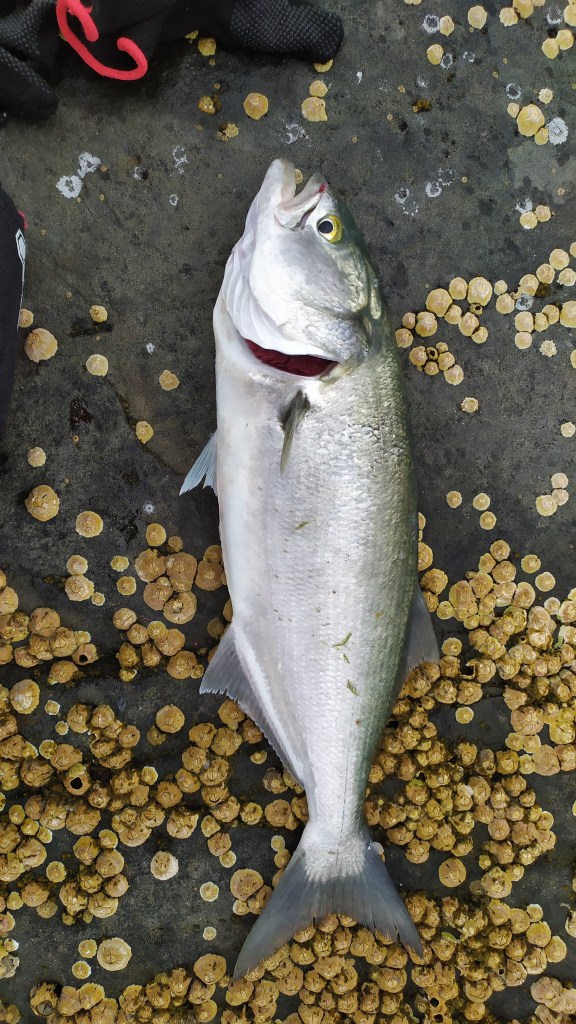
I caught plenty of tailor through the month. They would often destroy my soft plastic when I was trying to catch a jewfish. They were generally quite big, ranging between 45 cm and 60 cm. When I swapped my lure to a big surface popper or garfish shaped stickbait, I tended to catch bigger fish.
I also caught plenty of jewfish (approximately 35 over about six sessions on the headlands). I usually found them when I was fishing close in to the base of the rocks with big GULP soft plastics. I was set up with 50 lb fluorocarbon leader down to 1/2 ounce or 3/8th ounce jigheads, depending on the amount of swell. I used to favor using the lightest jigheads possible but I have recently been fishing heavier to make sure my soft plastics hit the bottom fairly quickly. When things are slow/tuff I often go lighter with both jigheads and leader, to get the strike.
The best jewfish / mulloway fishing session was on the 5th, just a few days after the new moon. I caught three keeper size (all over 75 cm) and 5 smaller ones. I caught the two bigger fish in quick succession, about an hour after low tide.
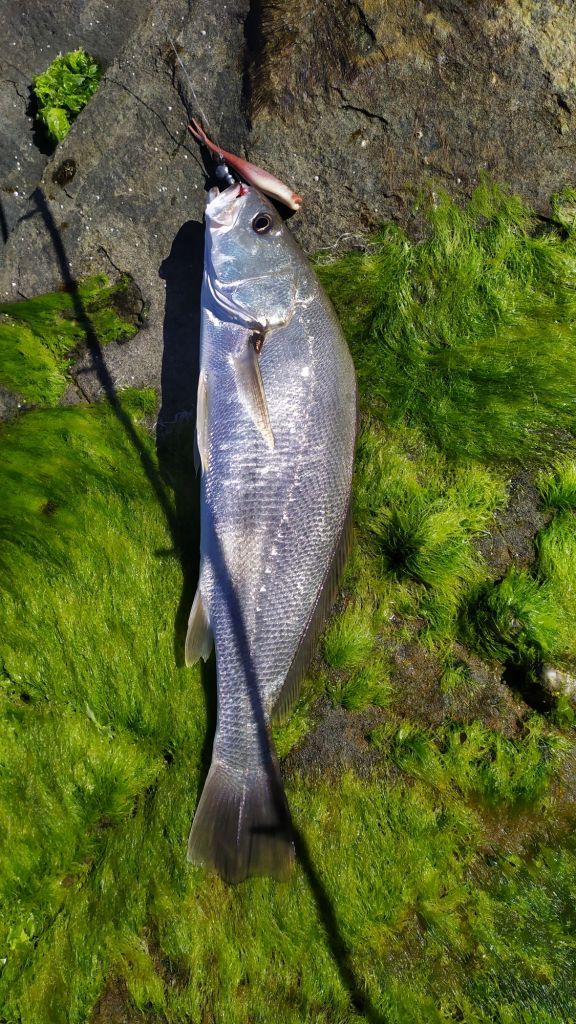
I caught a few smaller jewfish around the drop offs in the river. The trevally were also marauding around, particularly at dusk and dawn. As ever, I also caught flathead and bream too.
November had been another great fishing month on the Clarence River at Iluka.
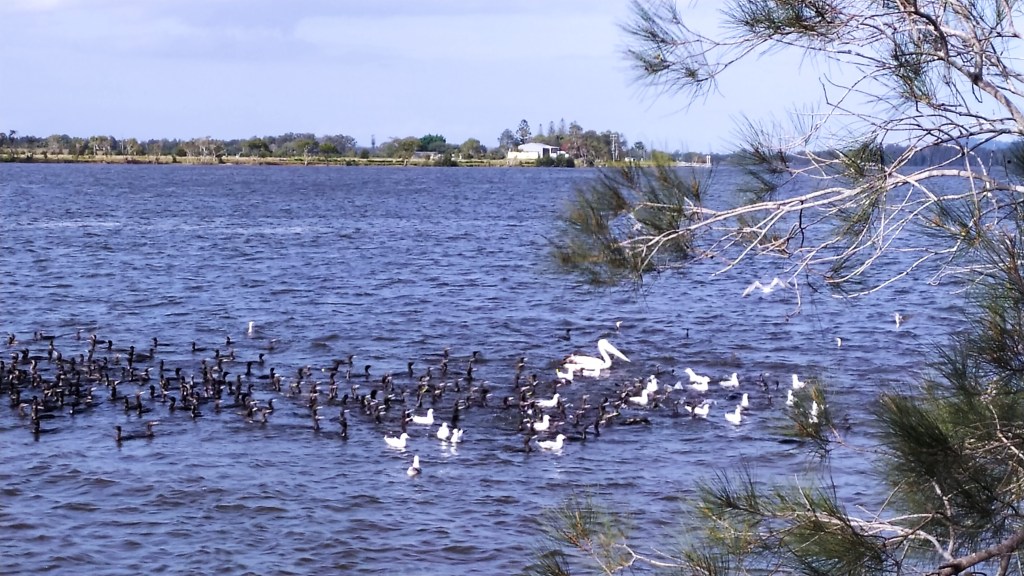
The weather in the Clarence Valley was great in October. Temperature and rainfall sat almost exactly on the 100 year average. Spring had definitely sprung. The river was clear and I caught flathead, bream, flounder, jewfish and a few trevally and small tailor. The bream were voracious, hitting all types of bait and lures. The flathead were harder to find and seemed to have followed the bait down into the deeper holes and channels. The big flock of black cormorants scoured the river every morning looking for the small bait or prawns.
When the swell was up I decided to go and explore some other fishing spots. I drove further to the north in the Bundjalung National Park and hiked out to the mouth of Jerusalem Creek. This is a shallow tidal creek system that runs out into the ocean a few kilometers north of the National Park run Black Rocks camping area. There is a well marked track that you can walk down to reach it. The track runs along the creek for almost it’s entire length and there are plenty of spots where you can walk along casting.
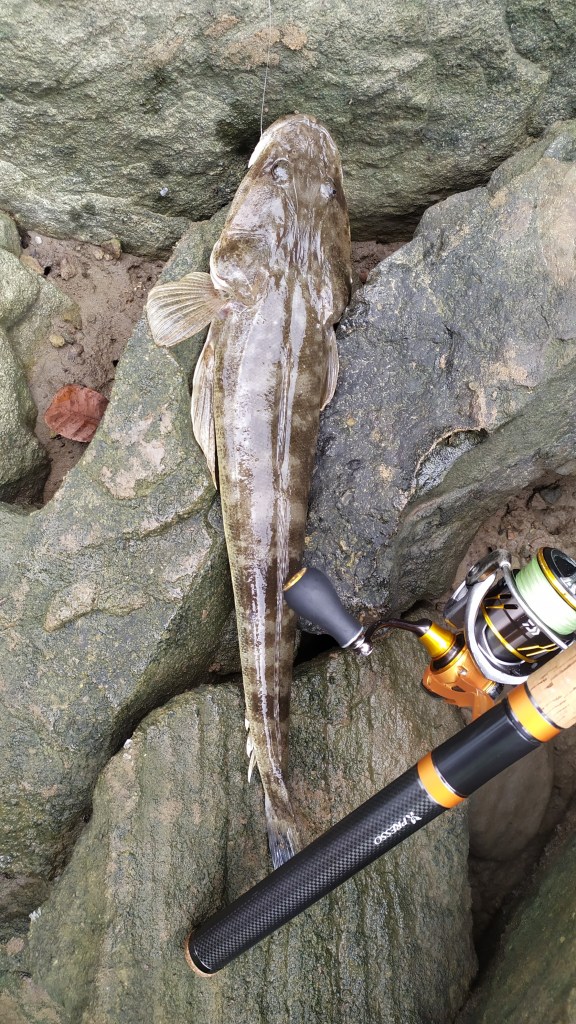
I fished with my ultra light spin combo which is currently a Daiwa Presso 22 562 ULRS trout rod matched with a Daiwa TD Sol LT III 2500 reel. I was using PE0.8 braided line down to a 10 lb fluorocarbon leader and 1/8th ounce, size 1/0 hook jighead. I love the super fast action of these trout rods have. You can feel every touch, bite, stone or even bump in the sand on the bottom.
Jerusalem Creek starts off narrow and gradually gets wider and shallower as it winds it’s way out to the ocean. I found a few fish in the wide expanses, on the edge of the channels. I couldn’t find any keepers but I saw plenty of good sized flathead lies, especially at the mouth of the creek. I also caught a few whiting in the shallows.
Fishing out on the rocky headlands of the Bundjalung National Park was excellent. The tailor were consistently turning up at Iluka Bluff, Woody Head and Fraser’s Reef at dawn and dusk. They were particularly active around the full moon. On one morning I was surprised to see my lure attacked by an Australian Salmon.
There were plenty of junior jewfish schooling up in the caves and sheltered corners. Even the occasional group of long tail tuna were still swimming by. In October the vast majority of the 50 or so jewfish that I caught were between 50 cm and 60 cm long. The biggest was just over 80 cm and I caught a total of five jewfish that were over 70 cm long.
Another great month of fishing in the Clarence Valley.
September was a great fishing month on the rocky headlands of the Bundjalung National Park at Iluka. The winds were often from the north or north west with an occasional south westerly/easterly change for a day or two. The westerly element helped to flatten the swell during the early morning fishing sessions. Through the day the wind built up to a stronger and stronger northerly. This would often dirty the water up and make fishing in the afternoons more challenging.
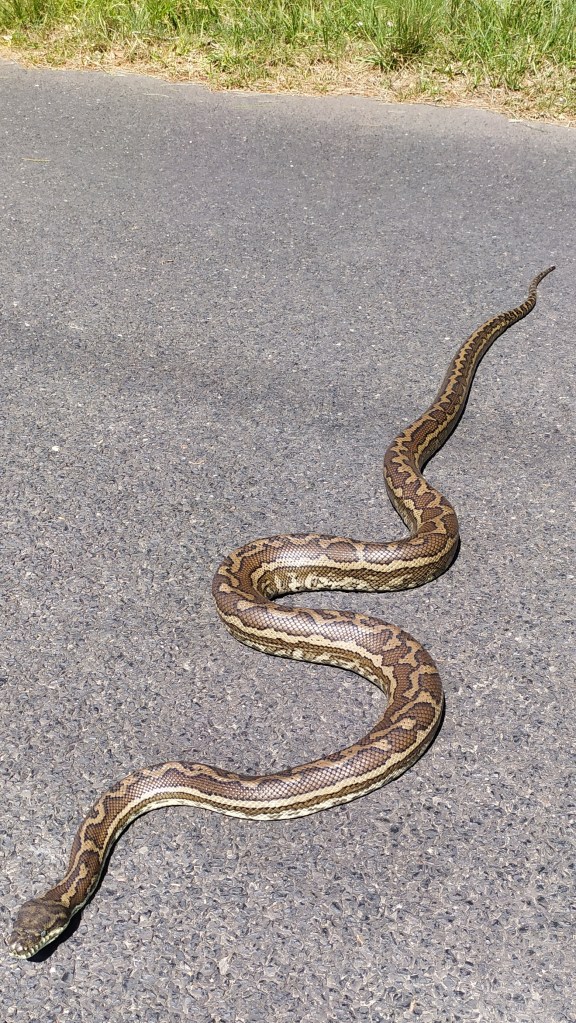
During the transition through our short spring to summer the fishing can be difficult. There were plenty of flathead, tailor and flounder in the river but the bream fishing was the stand out, both in the Clarence River and off the headlands. As the weather warmed up, the local snake population was also on the move looking for mating opportunities. Apparently, lying in the middle of the road is a favourite pastime for horny pythons.
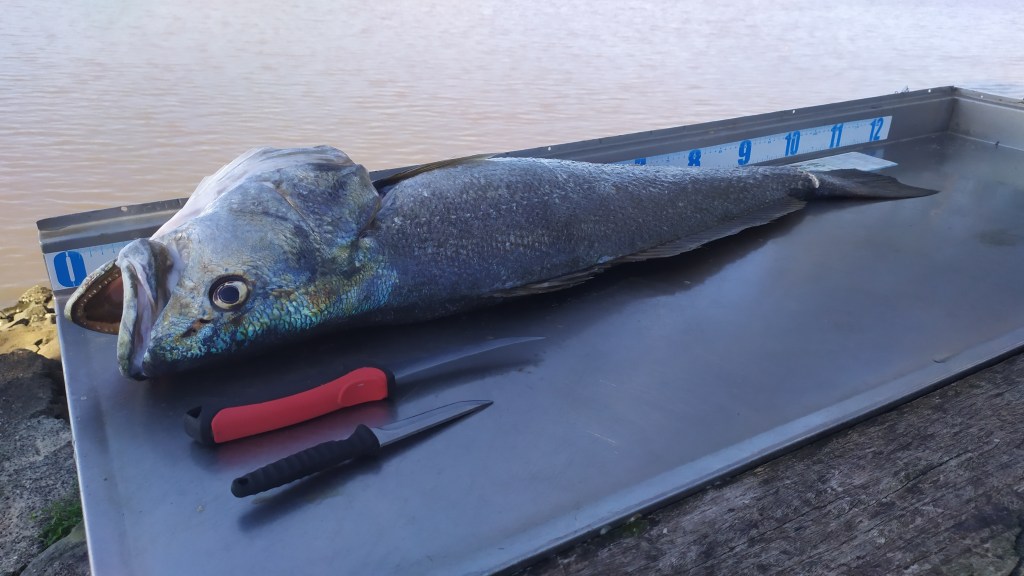
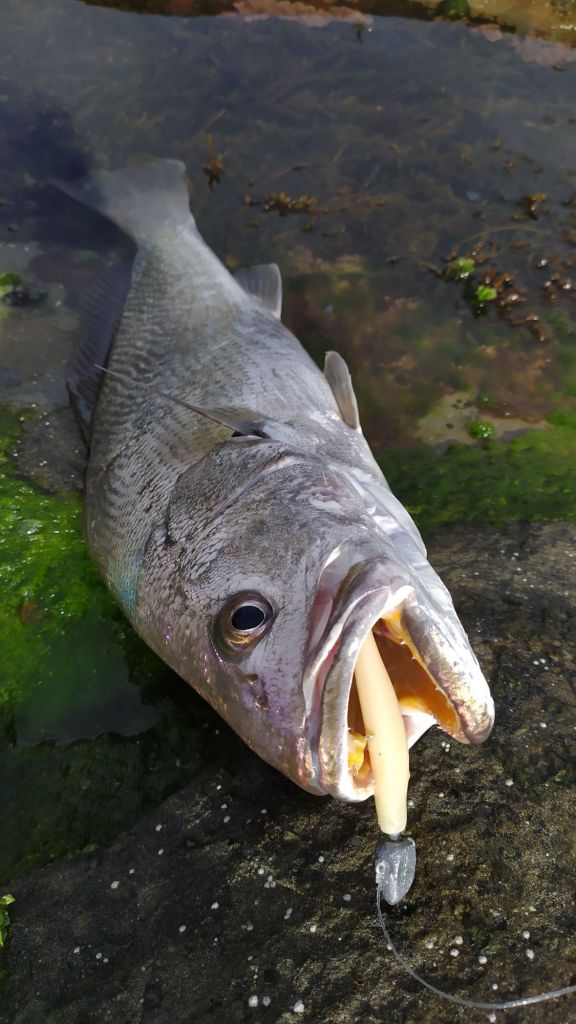
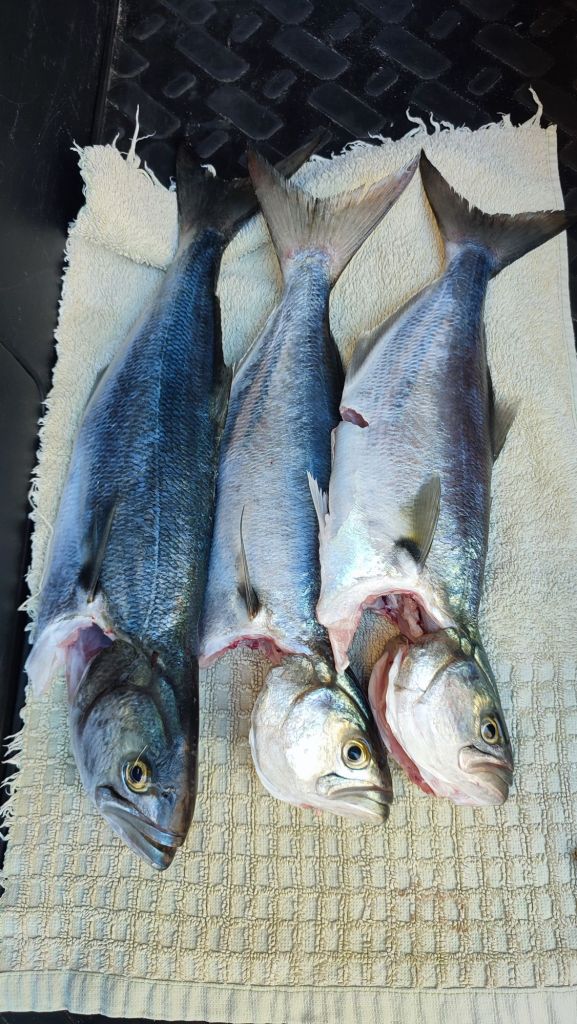
The mulloway/jewfish were everywhere, especially 40 to 60 cm fish. I am concluding through experience that light and tide changes are a big factor in their decision to feed. Early starts and first light fishing produced the best fish for me. Over the month I caught 12 legal sized keeper mulloway, between 70cm and 86cm and perhaps 40-50 smaller fish. I also missed plenty of fish after heavy runs and pulled hooks. I kept a few of the bigger fish I landed for supper but returned 90% of my catch to the water.
I was generally fishing with the lighter of my two rock fishing rods – the Daiwa Saltist X MH962 matched with my Daiwa Saltist 10000 size reel. I was running 40lb braid and usually a 40 or 50lb fluorocarbon leader down to a 10 gram to 20 gram jighead and a big GULP soft plastic. I am not sure that colour is important but a higher contrast between two colours seems to work well. I think this is the secret to the success of the Nuclear Chicken and Lime Tiger colours that I like to fish with. I like to use the 6 inch Squid Vicious pattern GULP soft plastic out on the headlands.
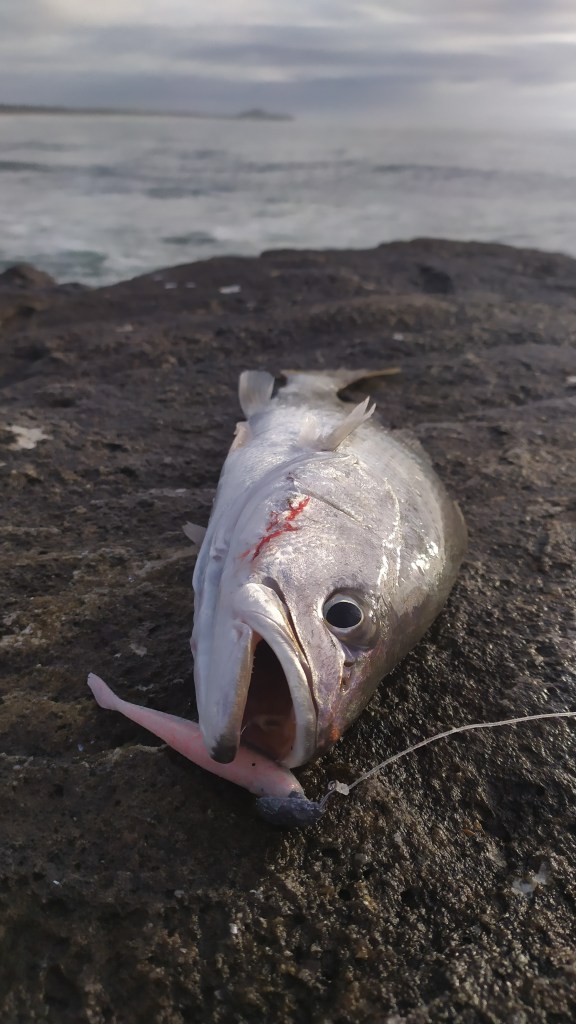
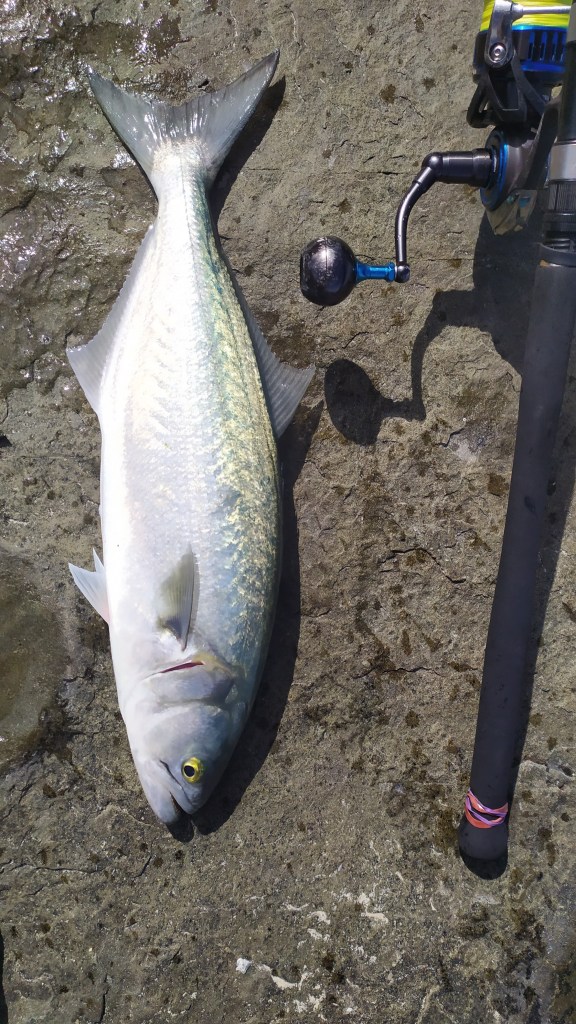
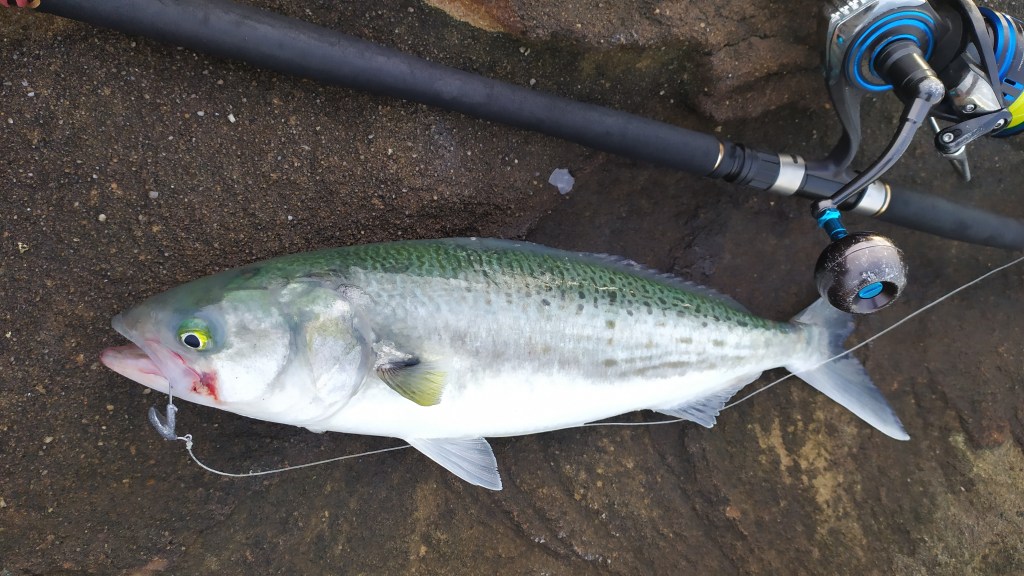
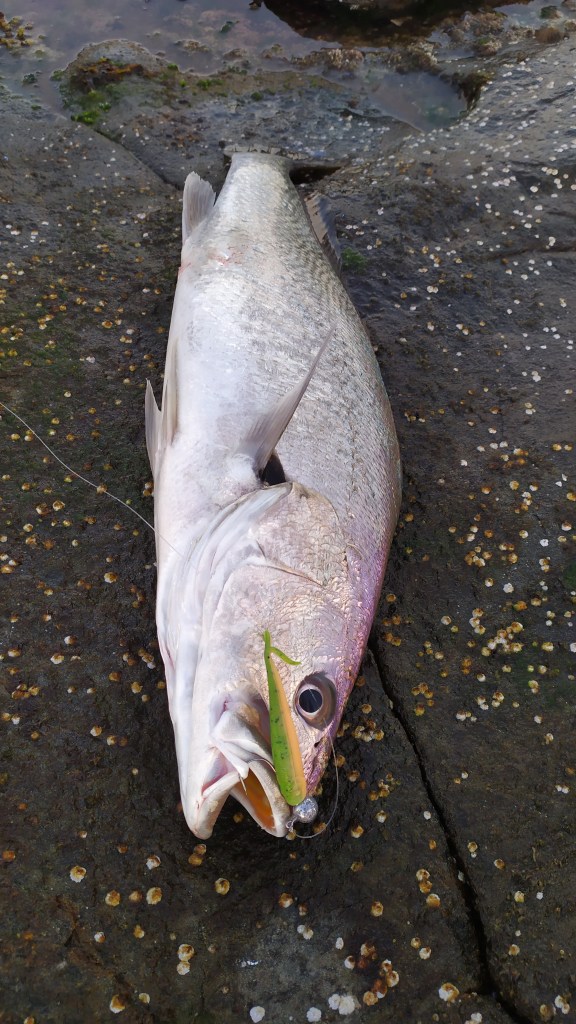
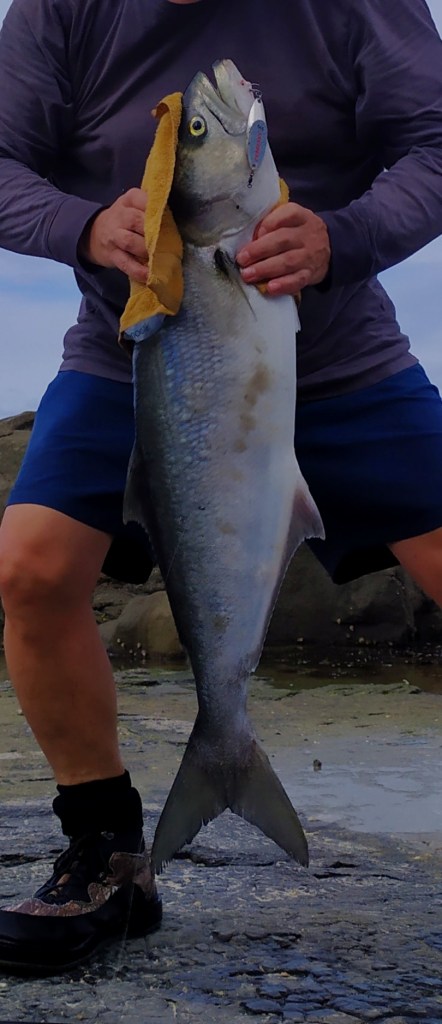
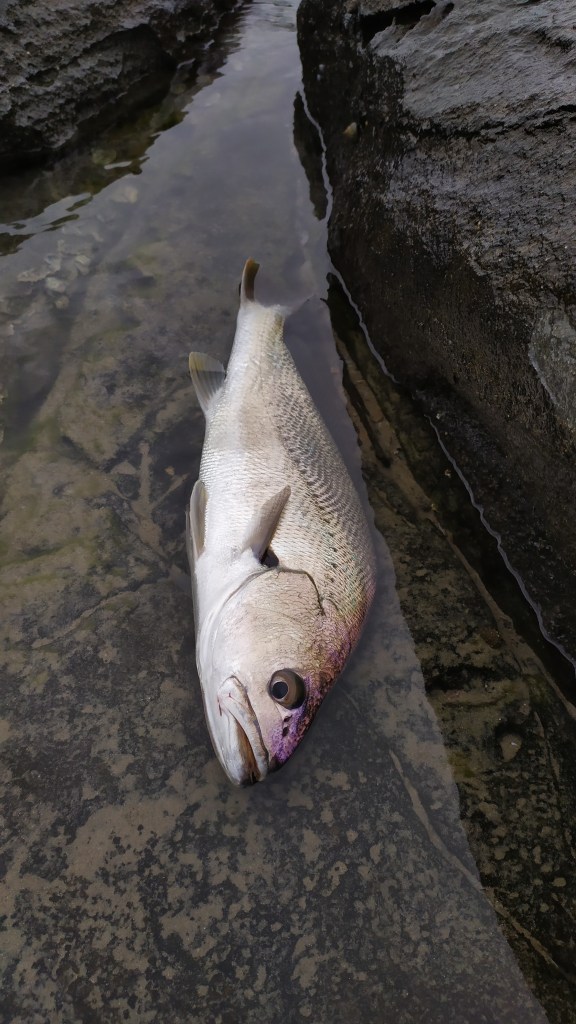
86 cm Iluka mulloway82 cm Iluka mulloway70 / 76 cm Iluka mulloway82cm Iluka mulloway
The biggest fish I landed came three days and four days after the full moon, respectively. However I tangled with a couple of fish I couldn’t stop just a few days after the new moon at the beginning of the month.
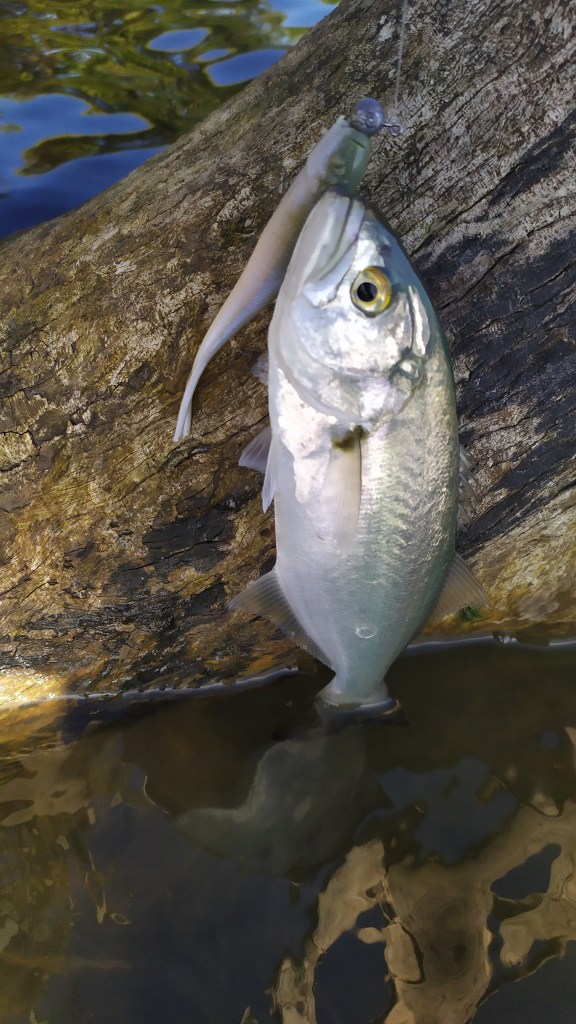
I was away for most of July and some of August. This meant I missed the coldest time of the year which is traditionally very good for flathead and bream in the Clarence River. Unlike 2023, the bream were on the bite with local anglers catching plenty in the river and off the headlands. I got a few while fishing big soft plastics for jewfish.
I eased back into fishing with a couple of sessions on the Iluka rock wall. This is a great place to try when there is a moderate swell on the rocky headlands. Just behind the wave break on the ocean side, I caugh plenty of tailor, school jewfish and a surprise Australian salmon. The challenge here is not so much hooking the fish, but landing them. There are a few spots where you can get quite close to the water but everything is slippery. If you hook something big you need a gaff. Be careful, remember rock fishing can be deadly.
As the month progressed and the swell eased, I fished a few tide change sessions at Iluka Bluff and caught plenty of tailor and the odd school jewfish there, as well.
Towards the end of the month, I had a dawn session with a waning crescent moon (20% full) in light north westerly wind and very light swell at Woody Head. I caught fish from the first cast, before first light, but they were all 45 cm to 55 cm small jewfish. I worked through a few different soft plastics but kept only getting the juniors. In the end it was the Gulp 4 inch minnow soft plastic in the lime tiger colour that caught a keeper. It had destroyed the lure so I put on a fresh Gulp squid vicious soft plastic in the nuclear chicken colour and cast it out. A fish smashed it as soon as it hit the bottom and tried to take me under the ledge. I wrangled it out and had another keeper, this time a bit bigger. Fortunately the first fish was still alive in the recovery pool. As the second fish was bleeding from the gills, I released the recovered fish and dispatched the bleeding one.
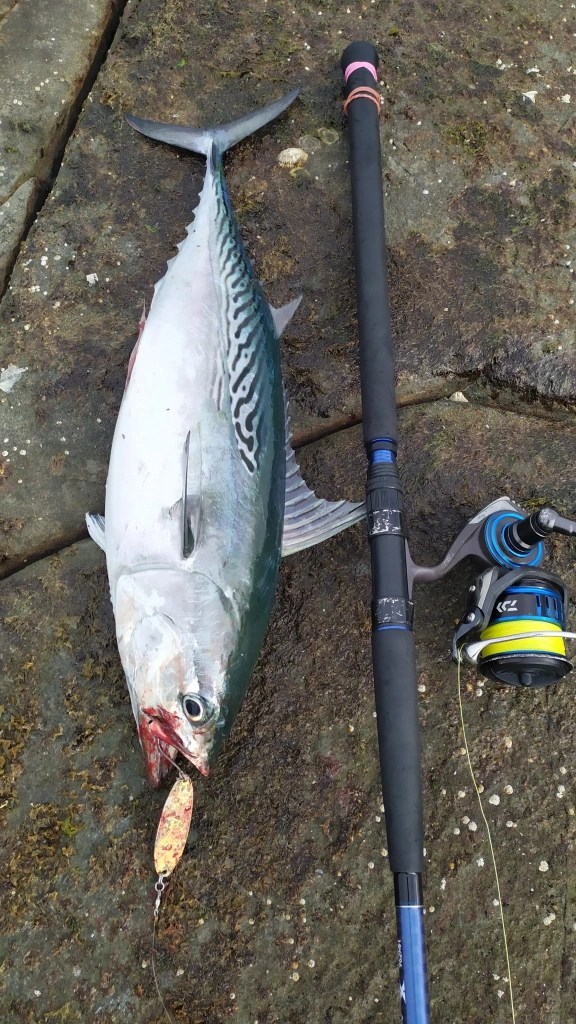
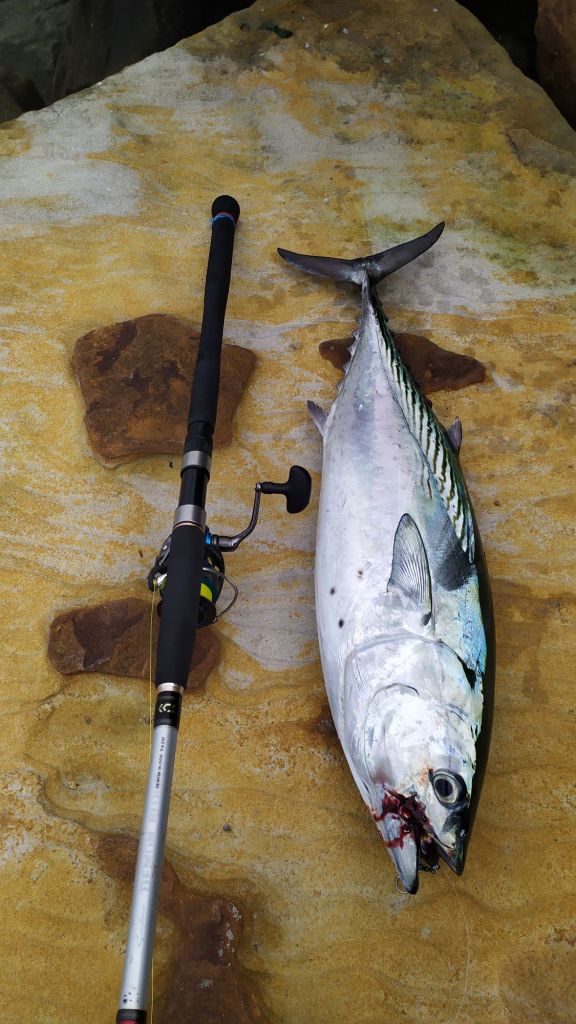
It was now well past dawn and just after low tide. I thought I saw a few bait sprays about 40 metres offshore. I swapped to a 5 inch Gulp jerkshad in the orange tiger colour, rigged on 40 lb fluorocarbon leader and a 10 gram jighead and cast out in that direction. The lure fluttered down and I lifted it off the bottom a couple of times, then line started peeling. The fish ran hard, out to sea. I could tell from the tail beats it was a tuna of some kind. After a couple of good runs and a few arcs back and forth in front of me, I landed it. It was a small mac tuna. I killed the fish and bled it and left it in a rock pool, planning on using it for sashimi.
I then swapped back to soft plastics to try for another jewfish. I found a few more little ones. Then I noticed the tuna jumping around again. I tied on a 50 gram no name metal slug and cast it out as far as I could and wound like hell. After about 5 seconds a fished smashed the lure. It was a bigger mac tuna this time and was considerably harder to subdue. I took my time and managed to turn it way from hazardous rocks a couple of times and then landed it.
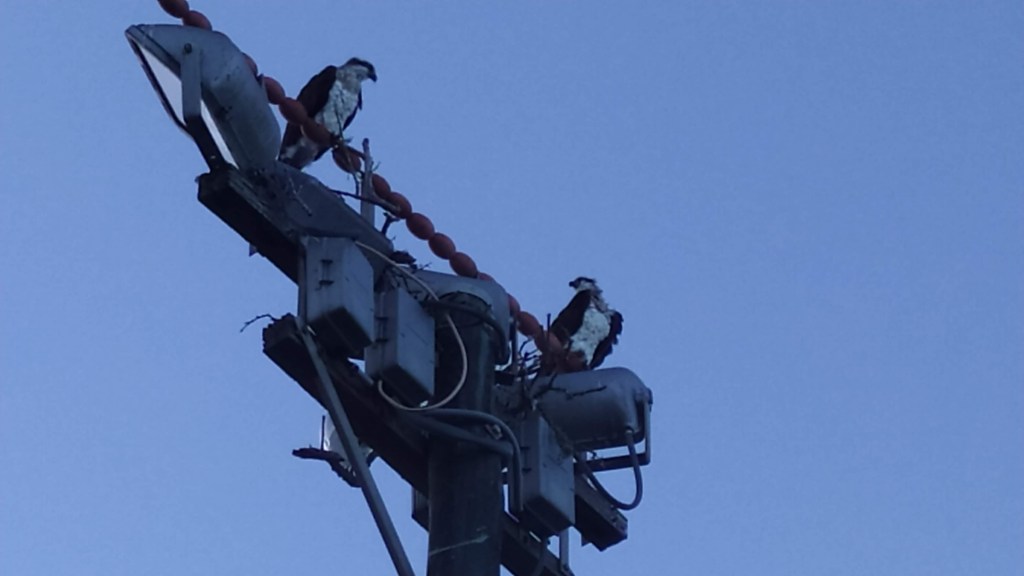
It was bleeding from the mouth so I quickly unhooked it and speared it back into the water. It looked like it swam away ok. I put my gear down and walked about 25 metres to the rockpool where I had left the first tuna. As I approached I saw the eagle tucking in. The fish was too heavy to fly off with so it had decided to tuck in, in situ. It had helped itself to most of of the fishes belly for breakfast whilst I was catching the bigger one.
Some great fishing but as always, I got a reminder that everyone likes a meal at my expense!
June started with some light winds and swell so I could fish on the headlands. On the dawn falling and low tides I fished for tailor. I focused on metal slugs and big hard bodied lures. When the tailor slowed down I swapped to the lighter gear to fish for bream in the wash. I even caught a few mini queen fish on the metal slugs. During daylight there were plenty of small jewfish around and they kept things interesting by regularly hitting the bream soft plastics.
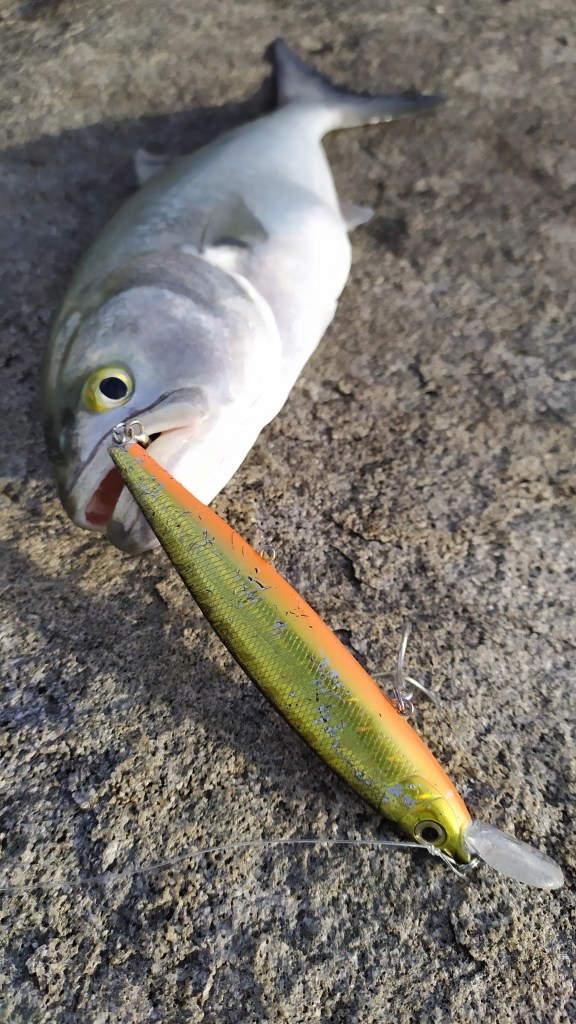
In the river there was ample bait schooling close to the banks. There were flathead everywhere and at dawn and dusk there were also schools of junior giant trevally marauding around and the odd decent sized tailor. I spent a few dusk sessions fishing for the trevally on Goodwood Island. I experimented with a few different lures and concluded that the favourite was the DUO Realis Pencil 110mm surface lure. I fished it with plenty of jerks and pauses. The trevally were not huge (the biggest was around 45 cm), but they are so much fun to fish for, especially when they strike a surface lure.
I caught a few keeper jewfish out on the headlands at low tide on the day of the new moon, on the 6th June. The bottom of the tide is the easiest time to fish on most of the ledges I frequent. I caught the two mid 70’s cm fish in successive casts at about 12.30 pm. The fish may well also bite on the top of the tide but unless its a very calm day with a low high tide, I cant get to them.
For the first time in a while both of these fish were very fat and the one I kept and gutted had a belly full of “yakkas” (yellowtail scad). Hopefully the bait will hang around for a while.
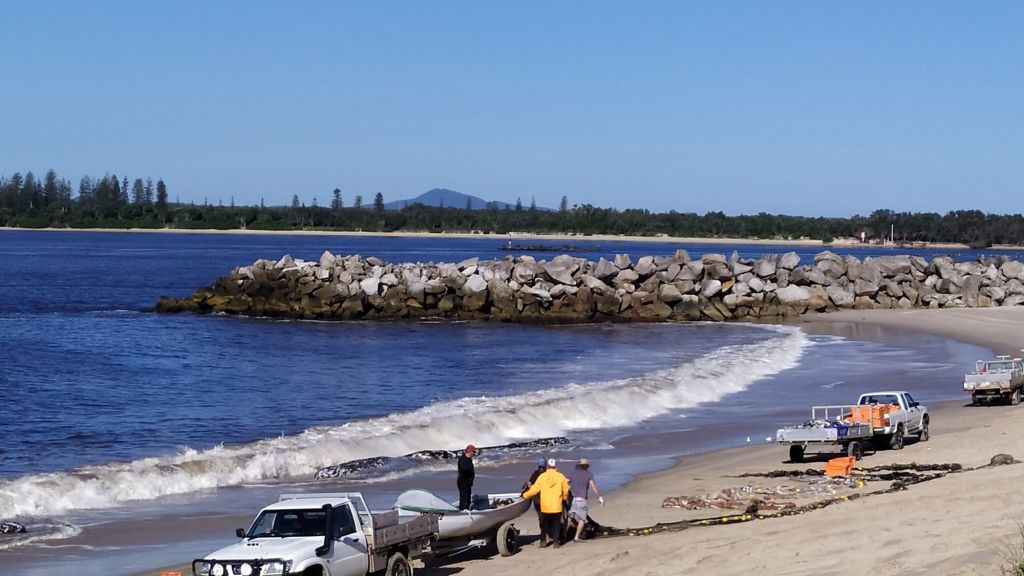
In Iluka, the mullet netting really got going in May. There were some big hauls at the mouth of the Clarence River and round on the beaches at Shark Bay. However with the fish plentiful everywhere it seems that prices were well down on last year. Beach hauling looks increasingly like a hobby or a tradition rather than a profession. Only the hardiest pro fisherman are still at it. The resource is sustainable but when the fresh fish is retailing at $2/kg only the export of the roe to Japan makes the process worthwhile. City dwellers are always clamouring for more fresh fish, but they just won’t eat mullet.
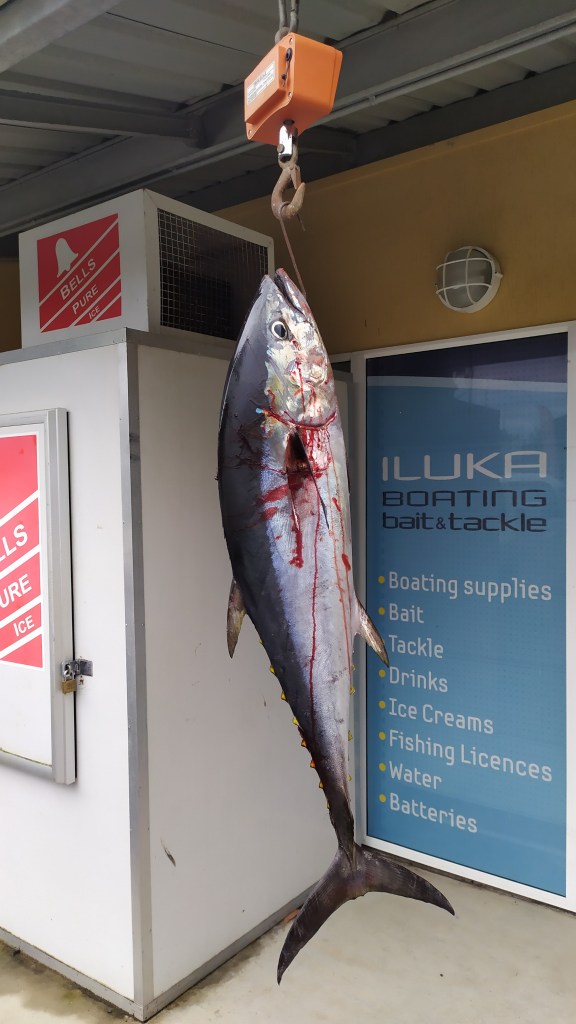
As the mullet rested near the river mouth, the bigger jewfish and ever present sharks got stuck in. A tidy 16 kg mulloway was weighed in at Iluka Bait & Tackle. It was caught after the full moon, in the middle of the morning, close in to the wall on the riverside, while slow rolling a Reidys hard bodied lure.
We had a far amount of rain in May but the weather was quite warm. A few storms kept seas fairly high for most of the month. The tailor moved up the river following the bait on the high tides and the dive-bombing seagulls would show you where they were. There were plenty of flathead in close to the banks.
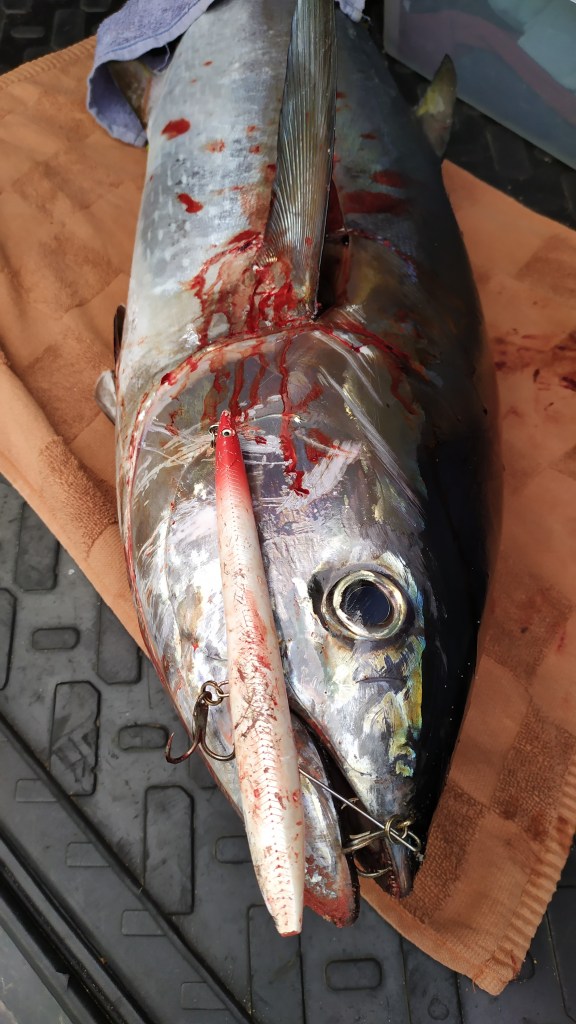
The longtail tuna were still coming and going. I spent a couple sessions around the tide changes casting big surface lures for them. From time to time they came close, but never close enough to cast at. One morning I decided to try fishing the riverside of the wall. I put in an hour of casts with a few soft plastics for no results, so I swapped to a Halco Max 110 mm vibe type hard body. I rig these with single hooks so that I have a chance of getting them back when fishing off the rocks. On my third or fourth cast a speedster grabbed the lure and took off. From the tail beats I could see it was a tuna. The swell was light and I was able to go down quite close the waters edge as the fish ran in ever decreasing arcs. Finally I pulled it up onto a flattish rock and reached down and grabbed it. It was a solid mac tuna.
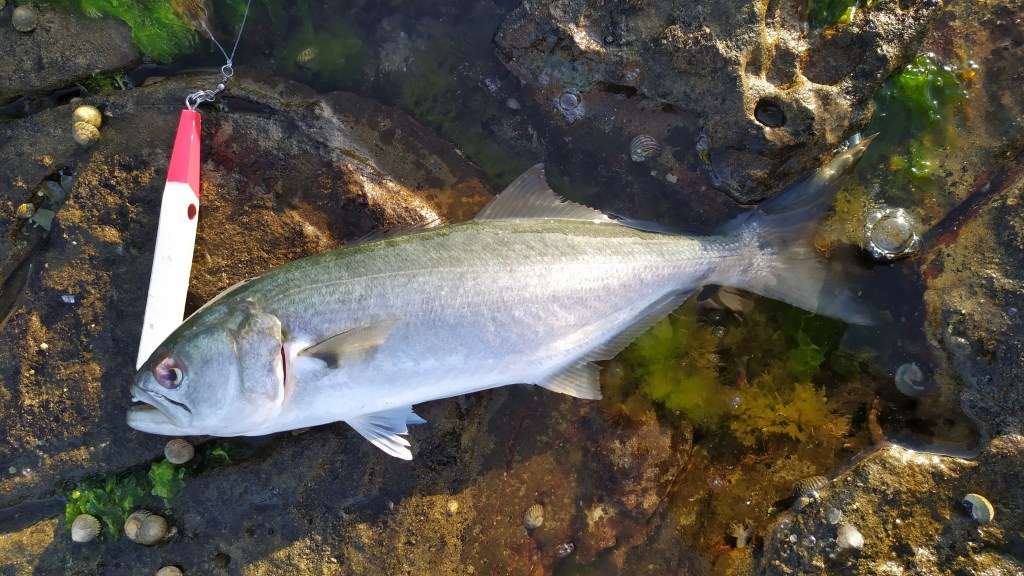
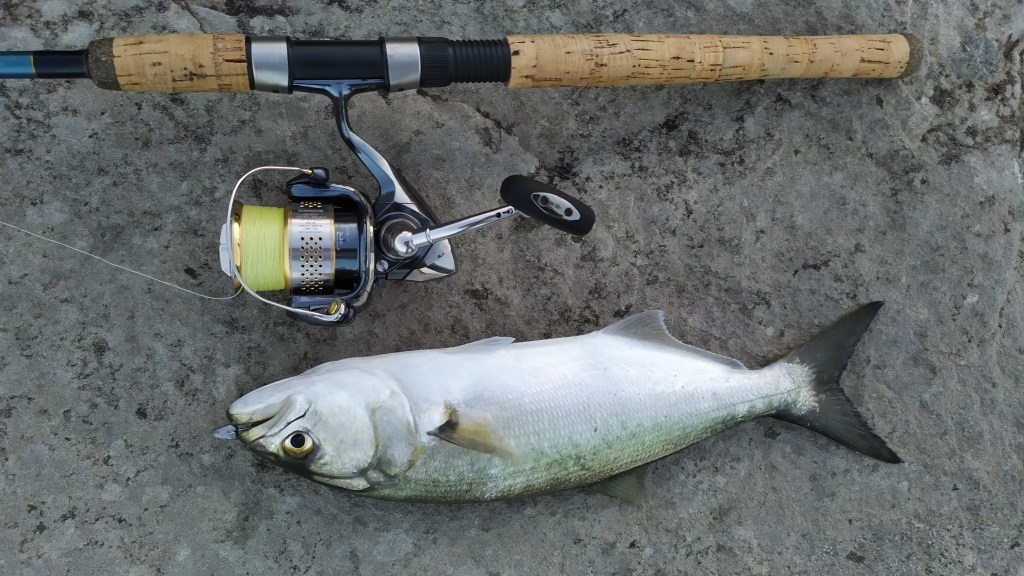
I put in some sessions fishing at Iluka Bluff and landed a some more decent tailor. There were also a few trevally around. When the tailor slowed, I dropped down to the lighter gear – 12 lb leader and 1/6th ounce jig heads. I cast these around in the wash a found plenty 35 cm plus bream. The jewies were also on all the headlands.
At the end of march the mullet and garfish had started to school up in the Clarence River. As we moved into April the mullet started to emerge at the mouth of the river in huge schools. The month started with some good tailor and jew/ mulloway fishing sessions on the headlands. I even caught some 50 – 60 cm jewfish on my last packet of GULP Lizard soft plastics (another long discontinued pattern that never really caught on).
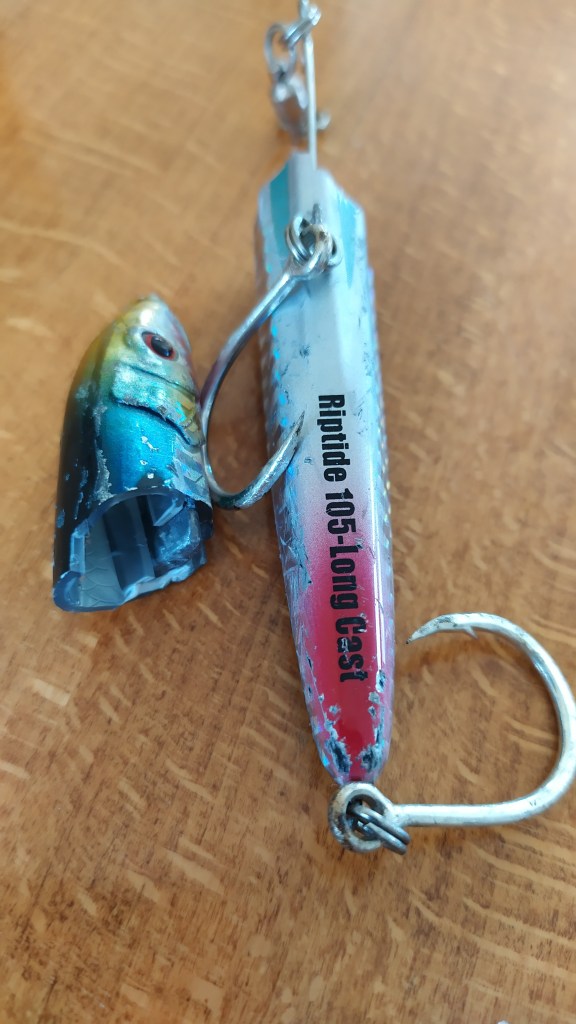
Out on the rock wall one morning I was casting a small sinking NOMAD Riptide 105 Longcast into the wash, just behind the wave break at dawn. A big fish came out of nowhere and engulfed the lure. I fought it for a while and then looked for a place to land it. I eventually found some flattish rocks I could get down to and manage to pull it up to me by the leader. It was another stonker tailor approaching 90 cm long. I like the action of the NOMAD Riptide but they cannot handle rock fishing, this one was fatally weakened during its first run in with a big fish. Longcast perhaps, long last – not so much.
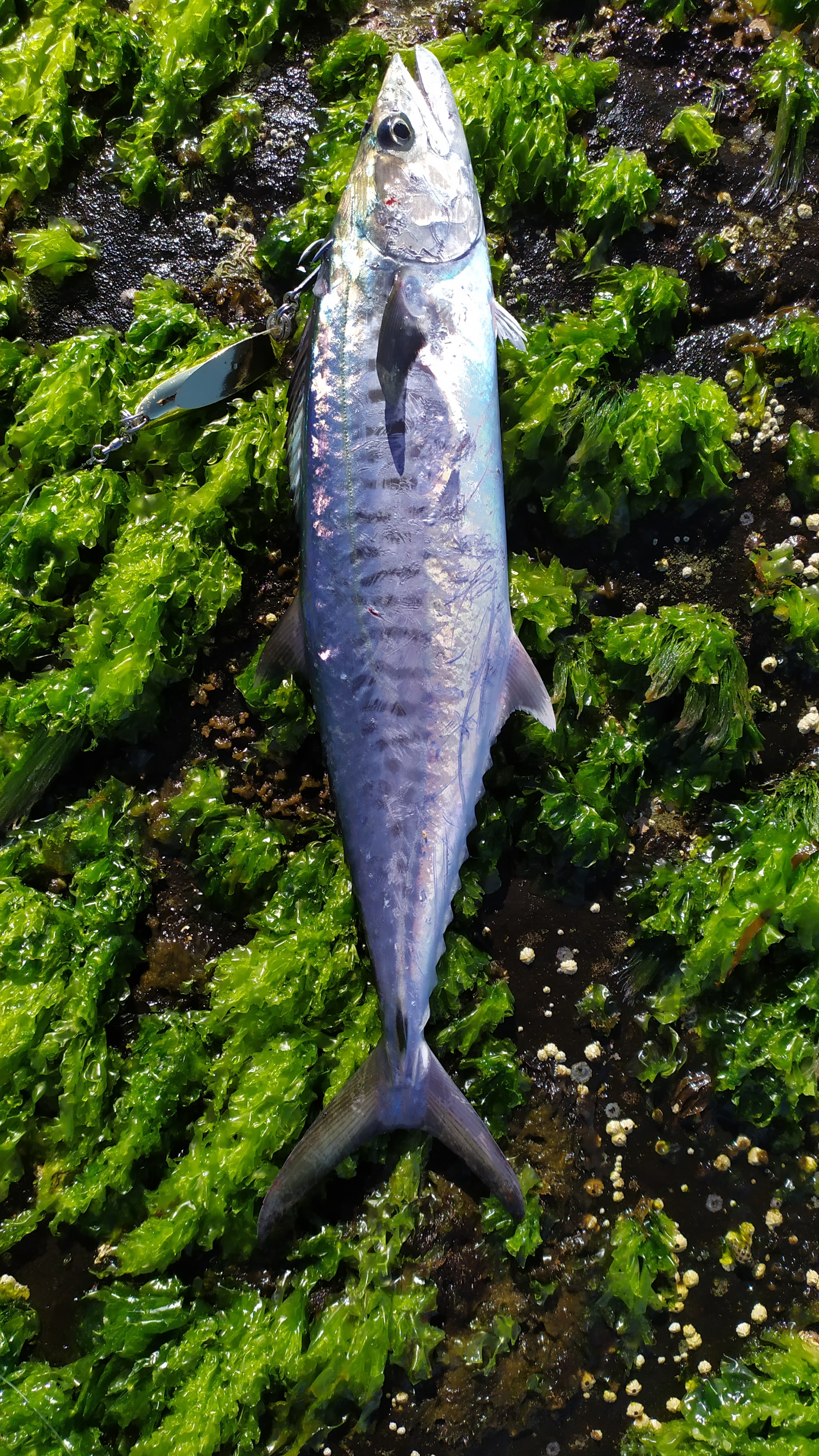
Once the garfish were heading out into the sea it was only matter of time before the bigger predators turned up. Sure enough at the beginning of April people started to catch a few longtail tuna from the north wall of the river. Whilst chasing tailor I managed to hook a small mackerel and lost a few metal slugs to bite offs, which I assume where bigger mackerel.
I have tangled with plenty of tuna over the years but never managed to stop one. This year I was determined to change things. I now have a bigger reel – a Daiwa Saltist 10,000 size. I matched it with my Daiwa Saltist 962 MH rod and rigged up with 40lb braid and a 50lb fluorocarbon leader.
I started fishing the tide changes on the wall and one Saturday morning, I arrived to find a few longtails had already been caught. Whilst I was rigging up the long tails came past again, of course I wasn’t ready. I finally got sorted and started casting with a hard bodied surface garfish imitation. I did not have to wait long for them to swim by for another pass.
I was doing a sweeping retrieve and moving the lure quite quickly over the surface. My lure was about 4 metres from the base of the rockwall, swimming towards the beach, when a long-tailed tuna rocketed up behind it and took it on the surface.
It took off on a blistering initial run. My drag was set fairly tight. I watch the line peel from the spool and listened to that delightful sound. It’s difficult to tell but it took perhaps a hundred and twenty metres in that first run. It then paused for just a second and was off again.
It finally paused just long enough for me to start winding and getting some line back. The rod tip was beating fast. I watched as the fish now started to swim parallel with the wall.
I was very lucky and there was an experienced tuna fisherman (with gaff) close buy who came to help. He explained the mechanics of turning the fishes head as it started to swim in towards the rocks. The hooked tuna will swim in arcs in front of you and the aim is to gradually reduce the size of those arcs by keeping a constant pressure on the fish. Basically, tuna only swim forwards so you need to allow the fish to turn its head, so that it can swim back in the opposite direction when it finish its arc, at the base of the rocks. In order to do this it needs to feel slightly less pressure, this will make it turn away from the rocks and swim back in an arc the other way. So as the fish approaches the base of the rocks you ease up on the bend in the rod, just a little and it turns back in the other direction. You keep doing this as the fish tires and the arcs get smaller and smaller.
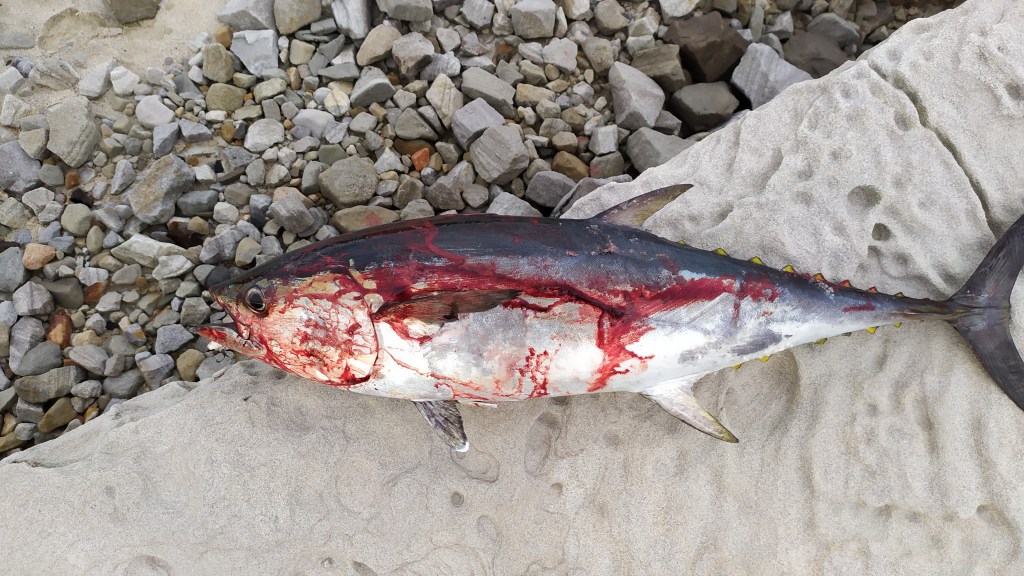
After what felt like and hour ( but was actually only about 15 minutes) the fish was at our feet and my new friend expertly gaffed the fish for me – mission accomplished. It later weighed in at 9.4 kgs.
In March the winds were predominantly from the east and south east. The water temperatures were around 26.9 degrees which was slightly above average. The tailor started to show up in on the headlands towards the full moon. I caught my best tailor of the month on a 60 gram metal slug at Iluka Bluff, just after low tide on an overcast afternoon. It was over 85 cm long. I caught plenty more through the month when the swell allowed. They were nearly always over 40 cm long. I tried a few sinking hard boiled lures but metal slugs caught the biggest fish.
In the run up to the new moon on the 10th I had a couple of good sessions fishing for jewfish/ mulloway at Woody Head. I caught plenty of small jewfish before finally tempting an 80cm unit on a GULP squid vicious soft plastic in the Nuclear Chicken colour.
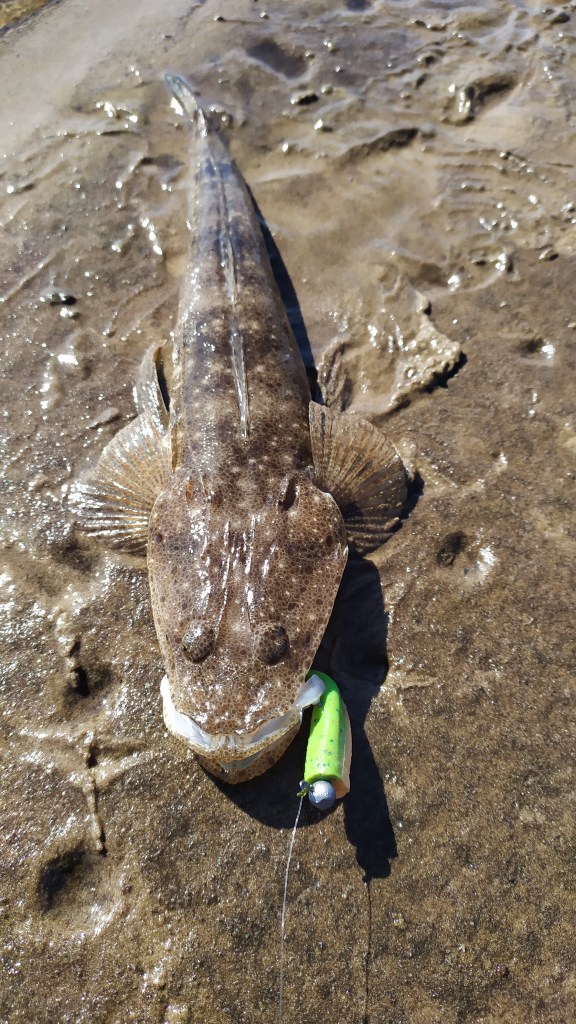
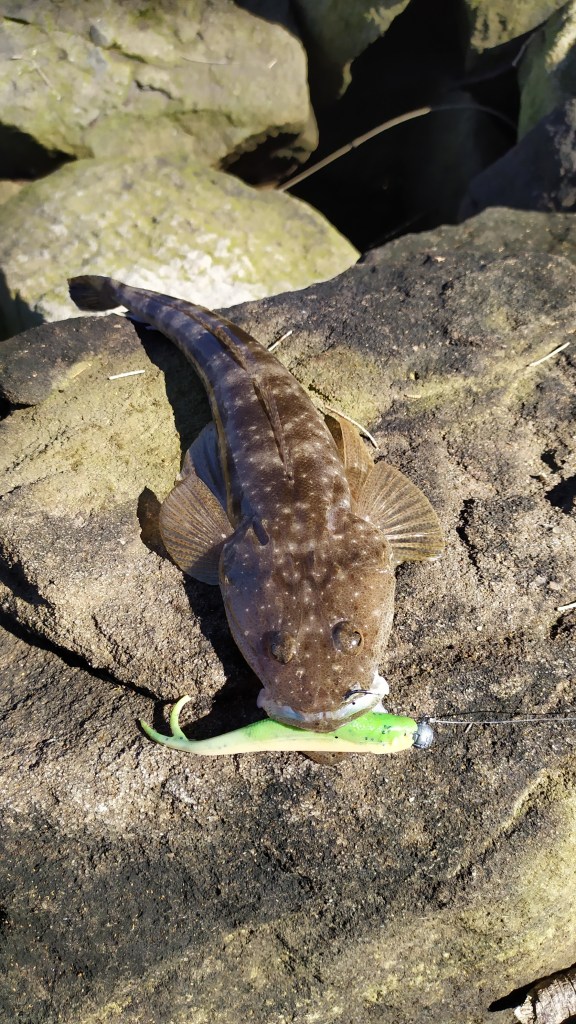
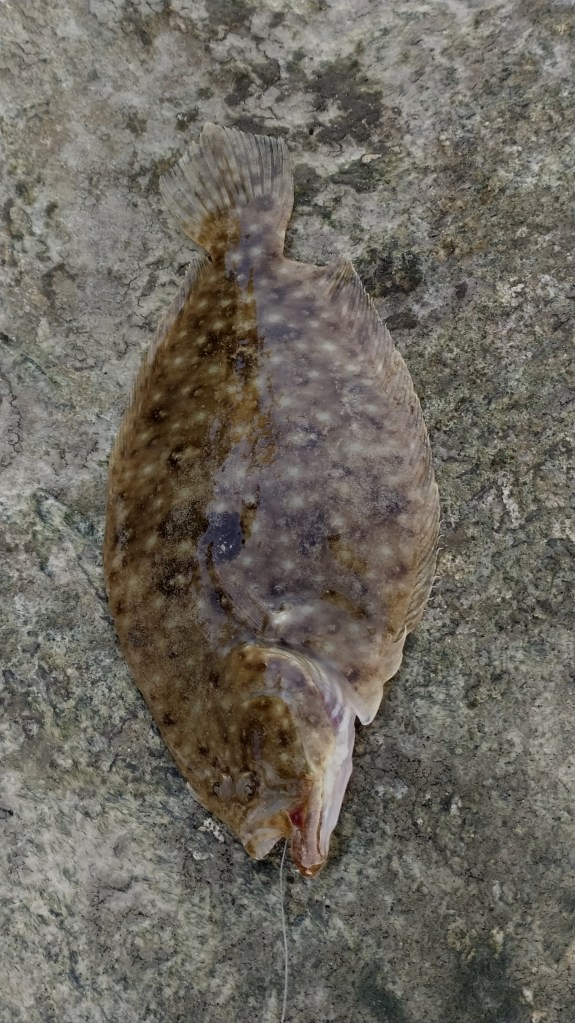
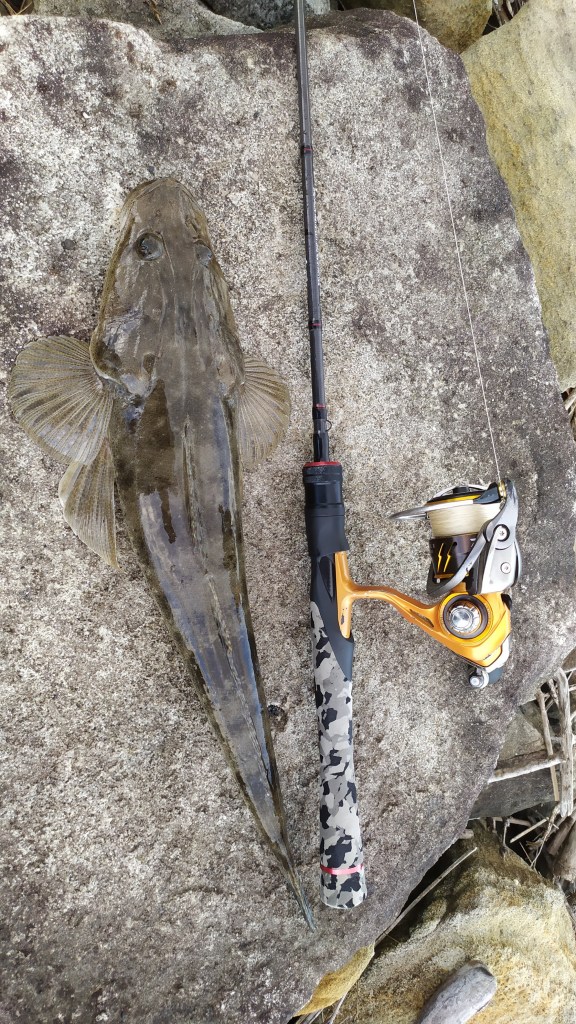
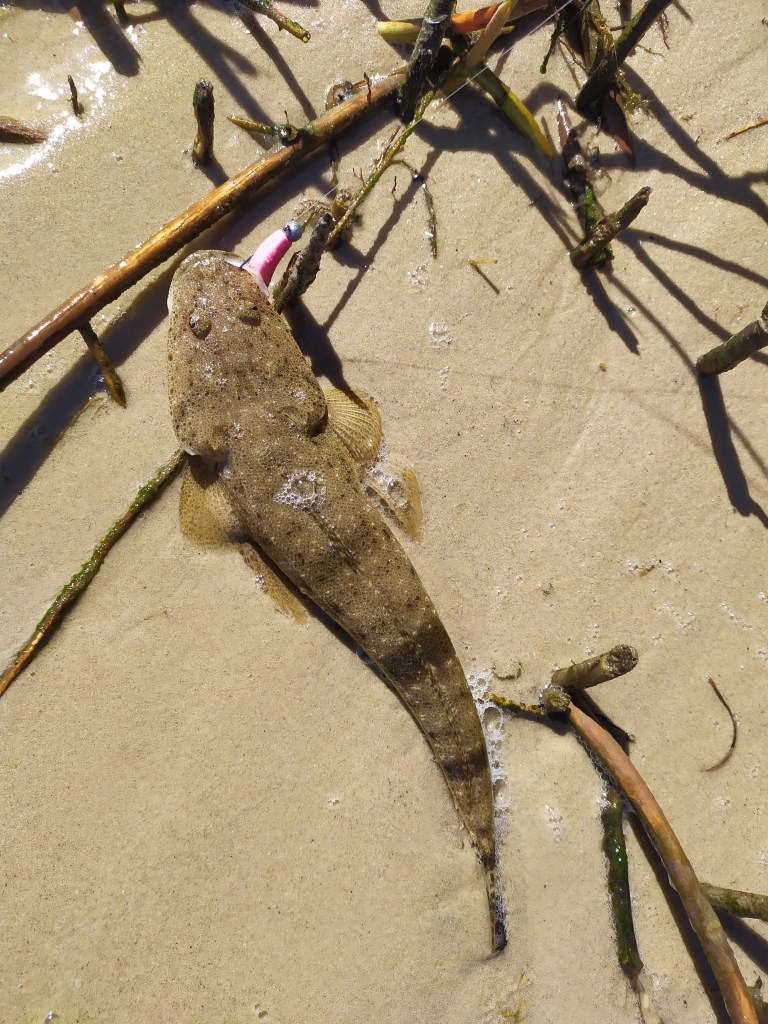
The river was fishing well and running fairly clear. I caught a few flathead and flounder in the shallows in between the rock fishing sessions.
I was away from fishing from mid January to mid February.
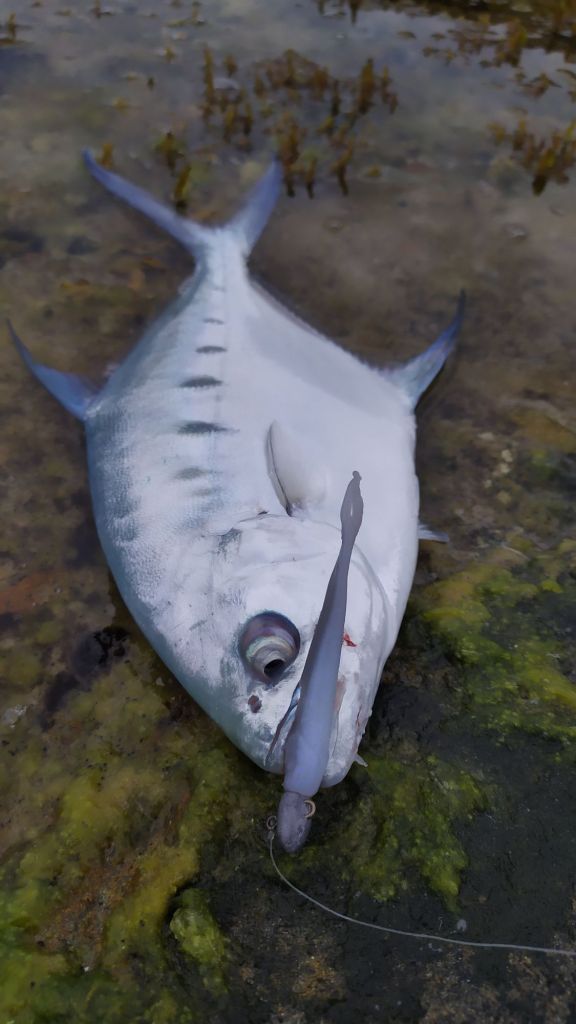
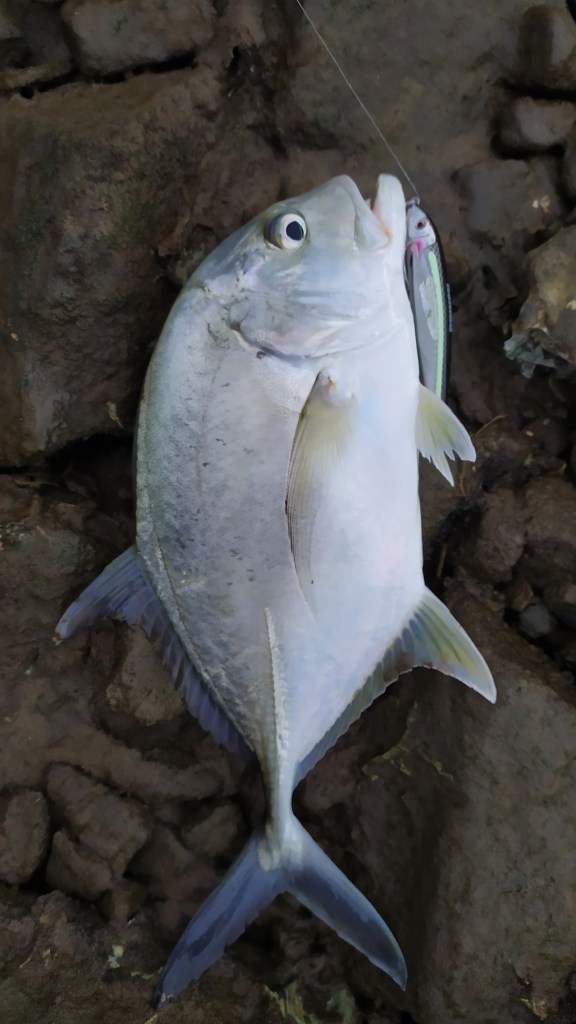
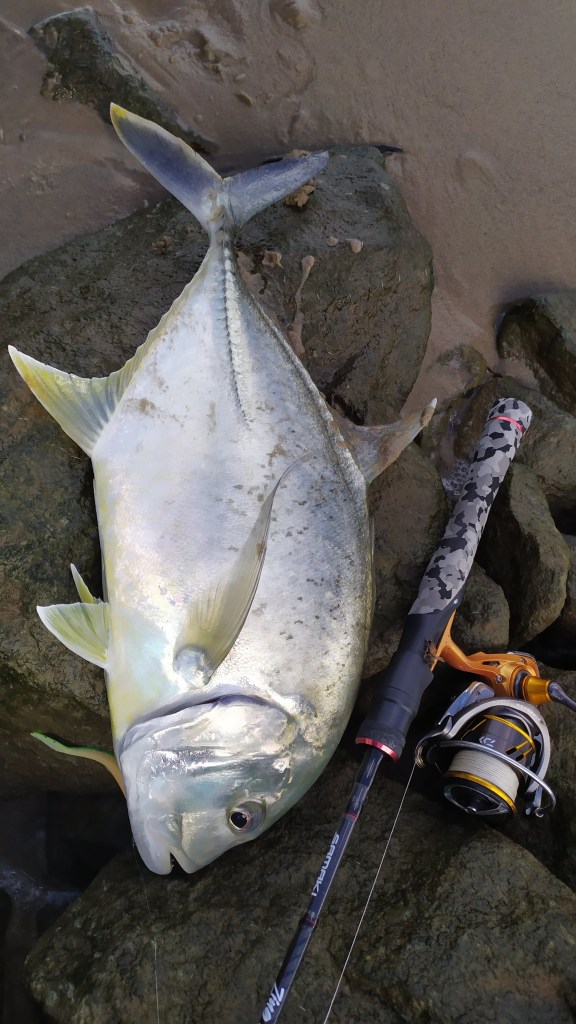
In early January the Clarence River at Iluka was full of bait. The black cormorants flew up and down early in the morning looking for the schools of small fish and prawns. Wherever they stopped was a good place to fish. On one morning I was surprised to catch a Cobia on a soft plastic jerkshad, whilst wading on the flats, near Browns Rocks.
There were still plenty of flathead in the river and the odd bream. It was quite windy at the beginning of the month but I did manage to fish at Woody Head and Iluka Bluff on a few mornings, where I picked up a few small jewfish and some keeper sized tailor.
December was hotter and drier than usual in the Clarence Valley. In fact the only substantial rain for the month came on Christmas Day. The river was crystal clear and full of bait. The flathead were plentiful and even though I could not find them, other anglers were catching mangrove jacks especially on the more humid days..
Since I decided I can no longer afford G.Loomis rods (or perhaps just cant look after them properly), I have been using the Samaki Zing Gen 3 SZG-562SXL for light tackle fishing in the estuary. It is a great rod with a very fast action and sensitive tip. It is also unbelievable value at under A$150. However I never miss an opportunity to spend more money on tackle so I have been looking for something even lighter.
My search for and even more sensitivity put me firmly in trout rod territory and after a few windy days scrolling the internet and reading the reviews I decided to buy a Daiwa 22 Presso 562ULRS. This is an even faster action rod with a 0.3g to 5.0g cast weight rating but Daiwa stresses it should be very durable thanks to its ” X45 and HVF Nanoplus blank “. It is very light and demands a very light line and leader with its tiny guides. I pair it with my Daiwa TD SOL MQ 2500D spinning real, PE 0.8 braid and usually a 10 or 12lb breaking strain fluorocarbon leader. When fishing for flathead and bream in the estuary it really means you feel absolutely everything your lure comes in to contact with. So far I have found it very capable of subduing quite big fish and I am very happy with it. If I hook a small jewfish or a big flathead it makes landing the fish a little more challenging but I am prepared to let the drag do the work.
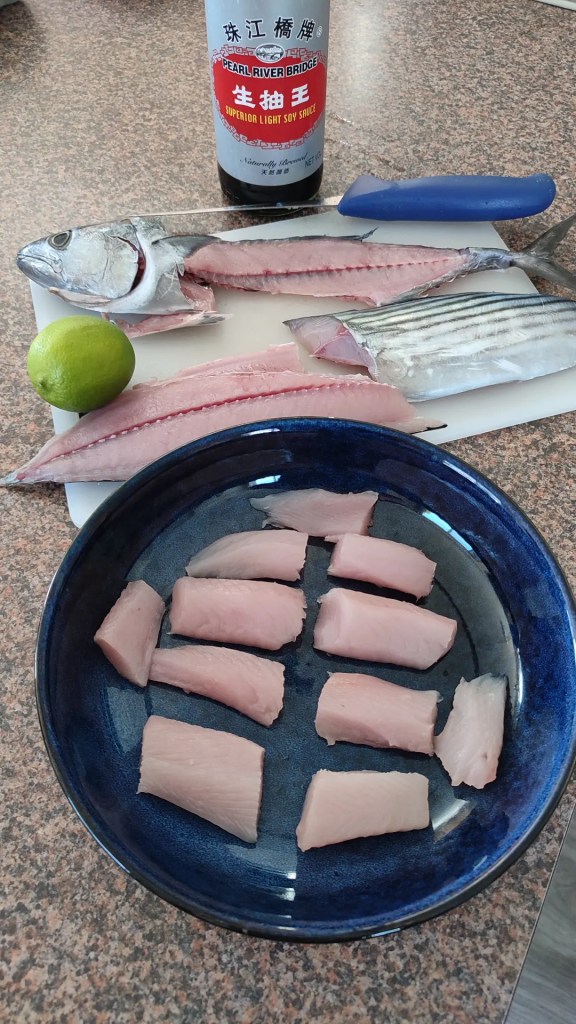
There were not many days when the swell stayed light enough to fish the rocky headlands. However when conditions were safe enough I went looking for jewfish. I found quite a few. They were mainly hiding under the overhanging ledges but not many were keeper size. The bait was thick and we had a run of bonito following the schools around. The tailor were also hanging around. The bonito eat what the tailor eat and will attack any fast moving lure. I kept a few for sashimi, which I have never tried before and they were delicious. It is a much lighter flavour than fresh tuna. As always eating it within12 hours of catching it probably helps. I am very lucky to live where I do.
November was an excellent month for fishing at Iluka on the Clarence River. The weather was cool and dry. The river was full of small bait fish and the flathead were plentiful. I caught plenty, fishing mainly GULP soft plastic lures along the bottom. Their favoured hang out is the sandy or muddy bottom right at the base of the rock walled river banks.
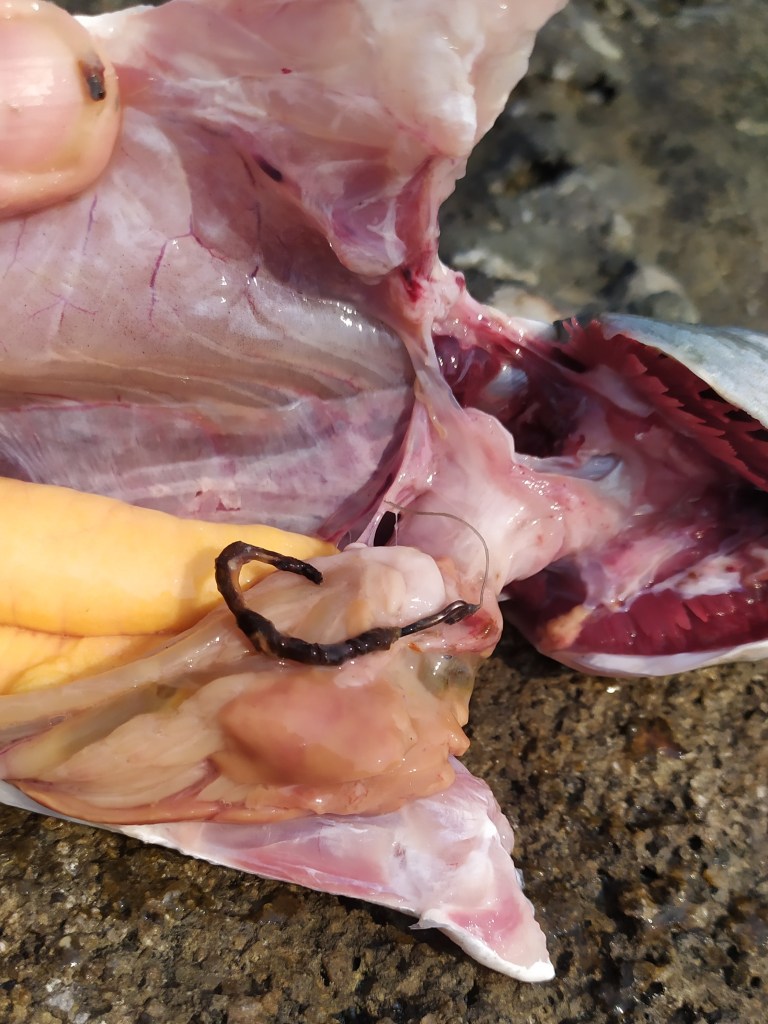
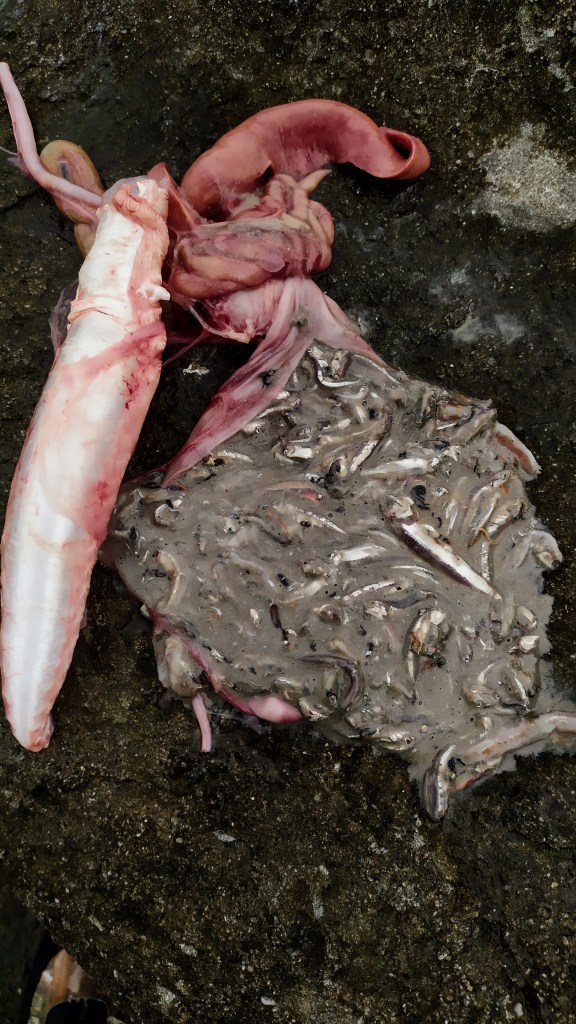
Out on the rocky headlands of the Bundjalung National Park the swell was safely manageable for a few sessions and I caught my biggest jewfish of the year, so far. It was 90cm long and put up quite a fight trying to flee into an underwater cave. It was just after first light a few days before the new moon. On several mornings I caught and released multiple fish over 70 cm. I opened the stomach of one of the particularly fat mulloway that I caught. It was bursting with small whitebait.. I also had a few good early morning tailor sessions, out on the rocks. The tailor were also spitting up the same small bait.
July brought more cool mornings but quite consistent south westerly and south easterly winds. These usually turned northerly in the afternoons. The month started off with sea temperatures a degree or so cooler than usual at around 18.0 C. We had a few quite misty starts. We started the month with a full moon and a pretty wet week.
The tuna were still visible, jumping around out beyond casting distance. The pro fisherman thought they were hanging around because there was a huge school of pilchards in the area. I have hooked a few but never stopped one.
When the swell and wind was light enough I had some great rock fishing sessions, particularly in the lead up to the full moon at the end of the month. I caught tailor and mulloway. The mulloway took soft plastics and the tailor ate anything I threw at them.
The small tailor were everywhere in the Clarence River and the trevally were marauding around. There were still plenty of flathead in close to the banks, feeding on tiny jelly prawns.
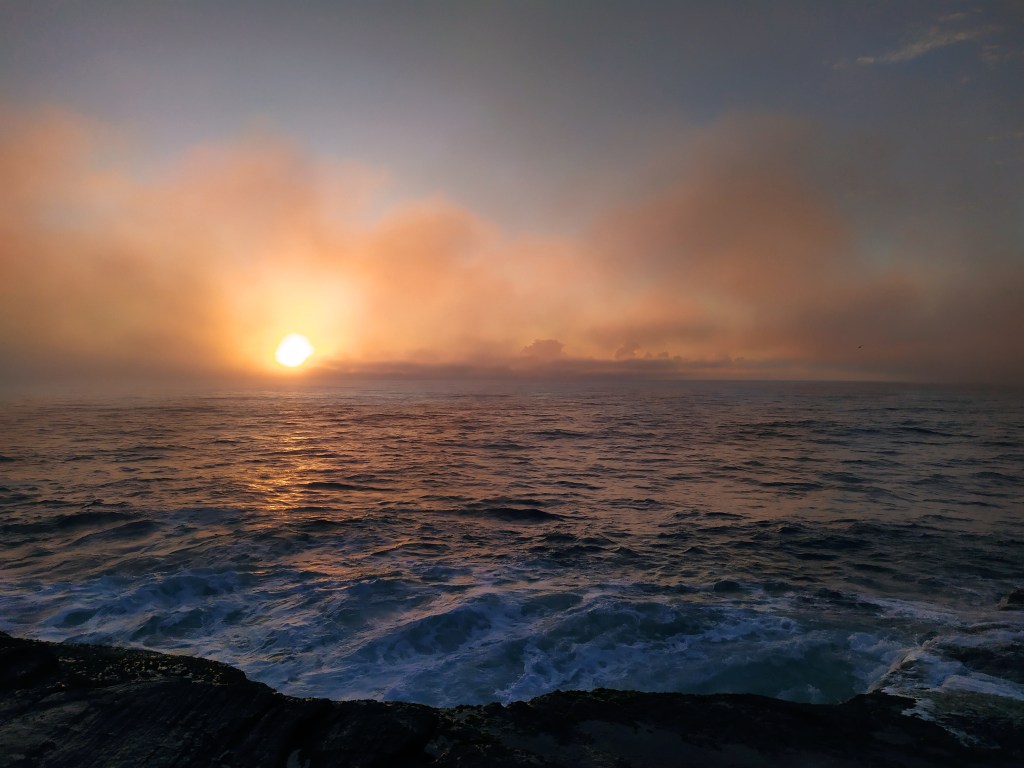
In June, winter finally arrived on the Clarence River. We had plenty of bright and calm sunrises. The early mornings were the time to fish with light south easterly and south westerly winds, first thing.
I fished the rocky headlands and caught plenty of jewfish/ mulloway, trevally but only very few bream. Whilst the mulloway definitely prefer certain spots to school up, they seemed to be everywhere in the half an hour between first light and dawn. I caught smaller fish on all the headlands but could only land the bigger ones at Woody Head.
Some nice gutters had formed on Ten Mile Beach and I caught some good sized flathead in the wash using soft plastic lures. The run out tides seemed to be the best time to fish. There were also plenty of flathead and juvenile jewfish/ mulloway in the river.
The weather cooled but very slowly in May. The water temperature dropped quite quickly and averaged about 2 degrees C cooler than May 2022. We had a few misty starts on the river and some spectacular sunrises.
The swell settled and I managed a few rock fishing sessions at Iluka Bluff, Fraser’s Reef and Woody Head. I landed a few jewfish using the GULP Crazylegs Jerkshad and Squidvicious soft plastic lures, mainly in the nuclear chicken colour. The dangling legs of these patterns often seem to attract a strike when other shapes are not working. Only two of the jewfish/ mulloway that I caught in May were big enough to keep. Both were around 80 cm long. There were a few tailor around but not many bream.
The flathead were still hard to find in the river even though there were plenty of jelly prawns hatching on the new and the full moons. The trevally were still marauding around, especially at dawn and dusk.
March and April are traditionally excellent months for flathead fishing in the Clarence River. In 2022 after the catastrophic floods the fishing had bounced back very quickly and I had caught good numbers of flathead throughout the system. But in 2023, April was less successful than it had been the year before. Perhaps the shift from the La Nina to El Nino weather pattern had something to do with it. There was definitely a little less bait around despite comparatively warm water temperatures.
Bait prawn trawling in the Clarence River has been suspended due to an outbreak of white spot disease in the prawn farms that are adjacent to the river. The disease was detected in August 2022 and then again in early 2023 so all of the prawn farms destroyed their stock and and have stopped operating. Its very disappointing for the local economy but it will allow the river bed to recover its weed beds and other fish habitats if the trawling ban stays in place.
I still caught plenty of flathead, a good mangrove jack and a few good trevally. The juvenile jewfish and tailor were also always on the bite around dawn and dusk. The bream, however were noticeably absent (even around the full moon).
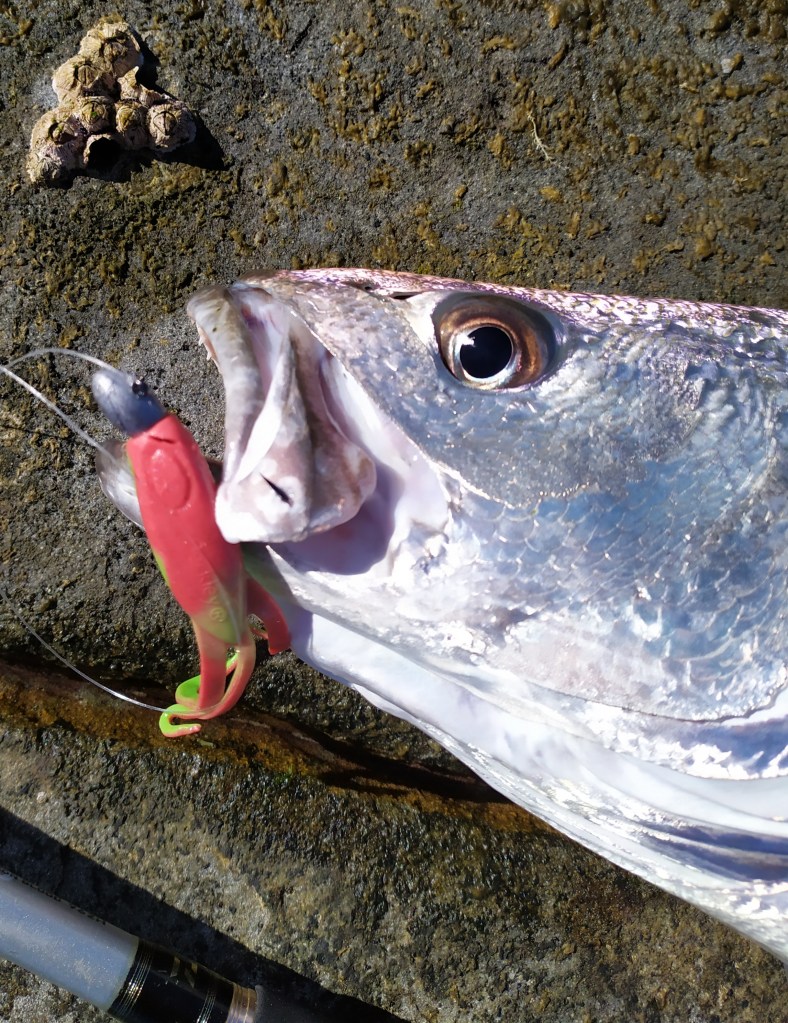
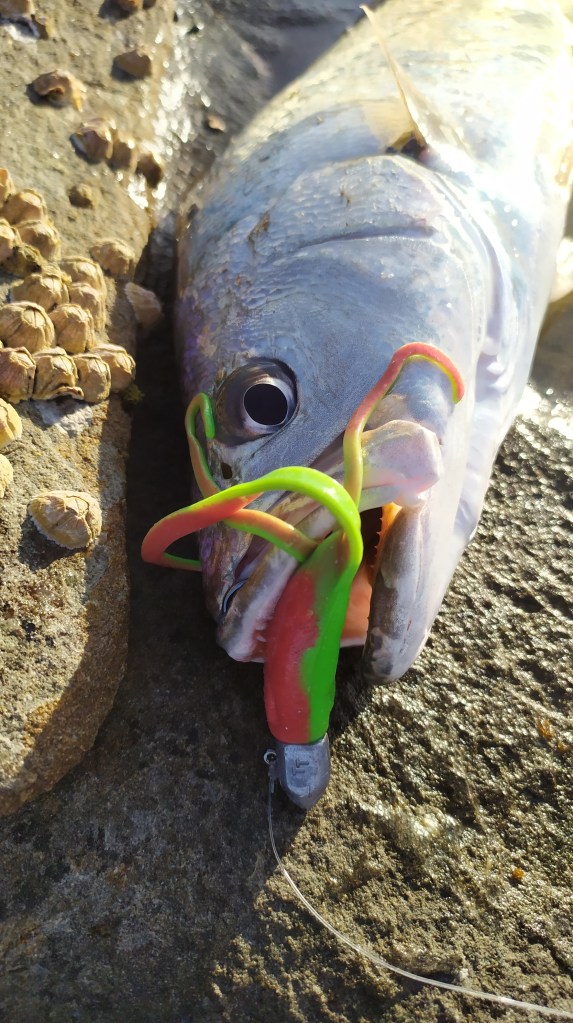
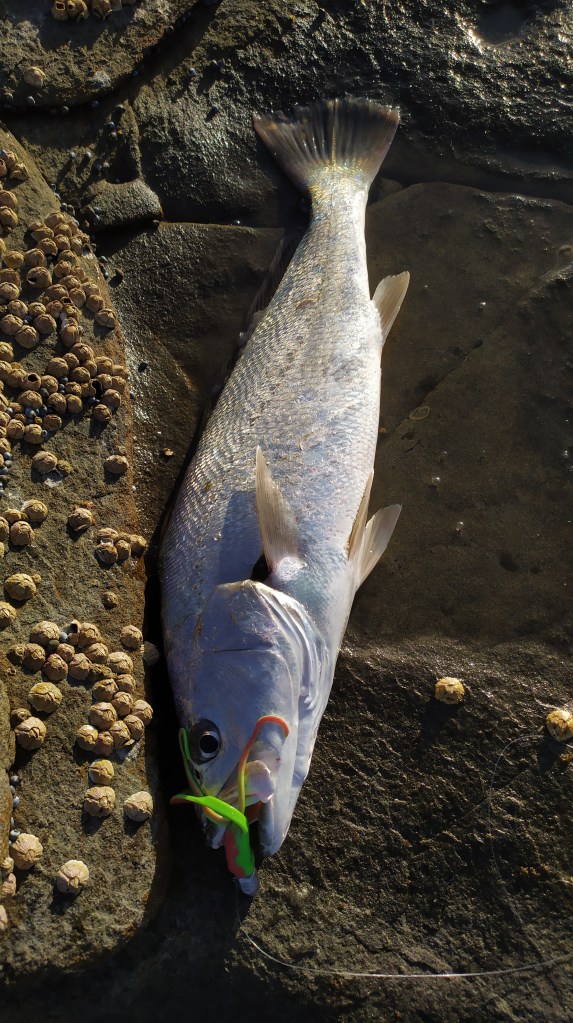
The swell was up and down again in December. I managed a few mornings fishing on the rocky headlands and caught quite a few juvenile jewfish on my favourite GULP Squid Vicious soft plastics. I can pretty much no longer find the lime tiger (green and orange) colour so I have switched to the nuclear chicken (red and green) colour. When the mulloway are hungry they don’t much seem to care which soft plastic you use, but I think the dangling legs of the squid pattern can tempt them out of hiding, when they are reluctant. I also believe the GULP scent makes a difference.
There were also a few tailor around, particularly at dawn and dusk. I caught them on the surface and with the soft plastics I had intended for mulloway. I found plenty of flathead, fishing the Clarence River around Iluka and Browns Rocks.
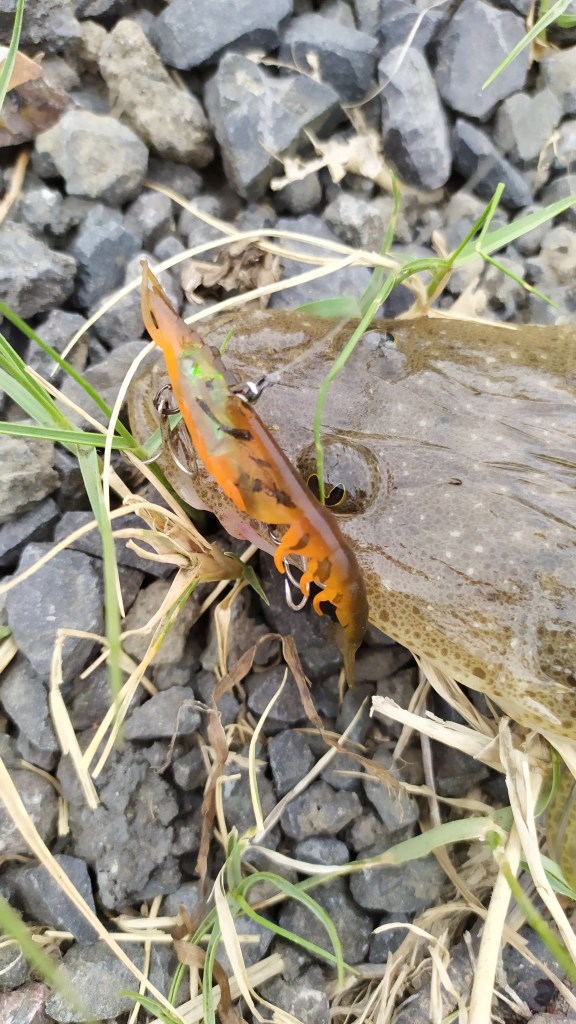
There was a hatch of prawns and when the jelly prawns were in the shallows close to the rocks, so were the flathead. I swapped through a few different Powerbait Shrimps and tried the Berkley Shimma Shrimp soft vibe. They both caught fish but so did any soft plastic minnow, worked slowly along the bottom, close to the bank.























































































































 Landangler's Blog