Sea surface temperature was about 24 Celsius through most of November 2024, well above the long term average of around 20 Celsius.
The weather was kind with not too much rain and light seas. This meant I was able to fish the rocks on both the full and new moons. There was a new moon on the 1st and another new moon on the 30th with a full moon on the 16th, in between the two.
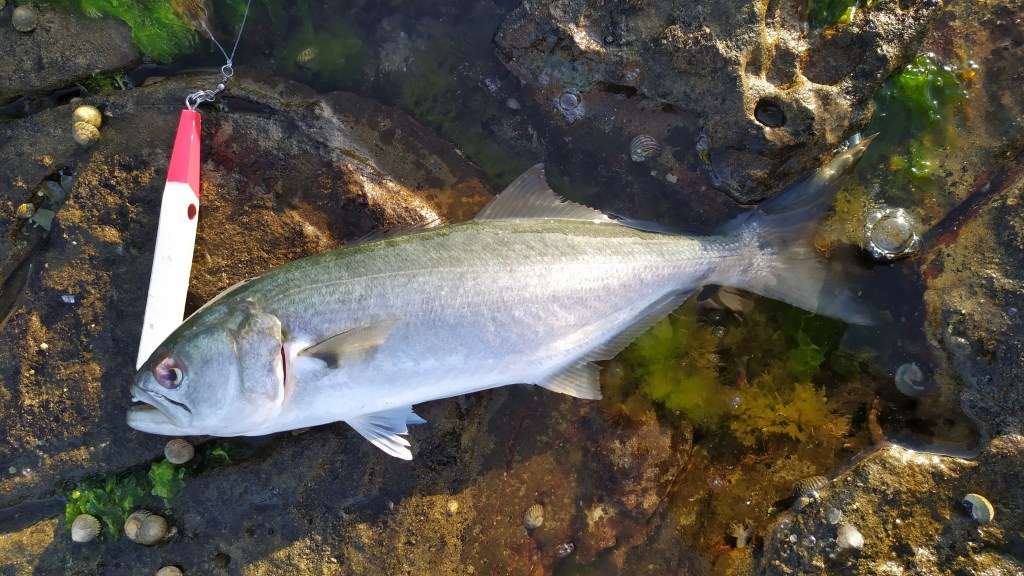
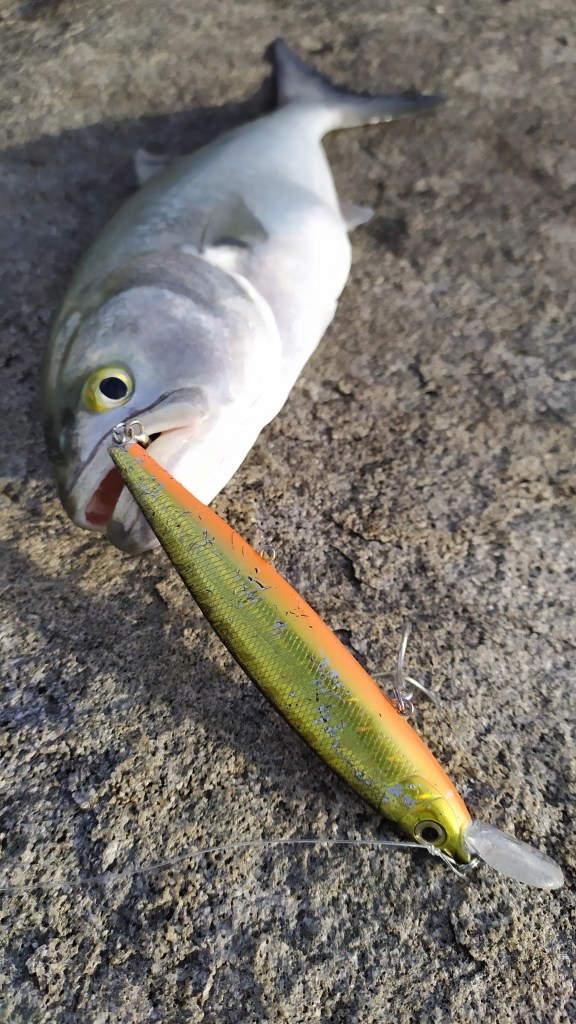
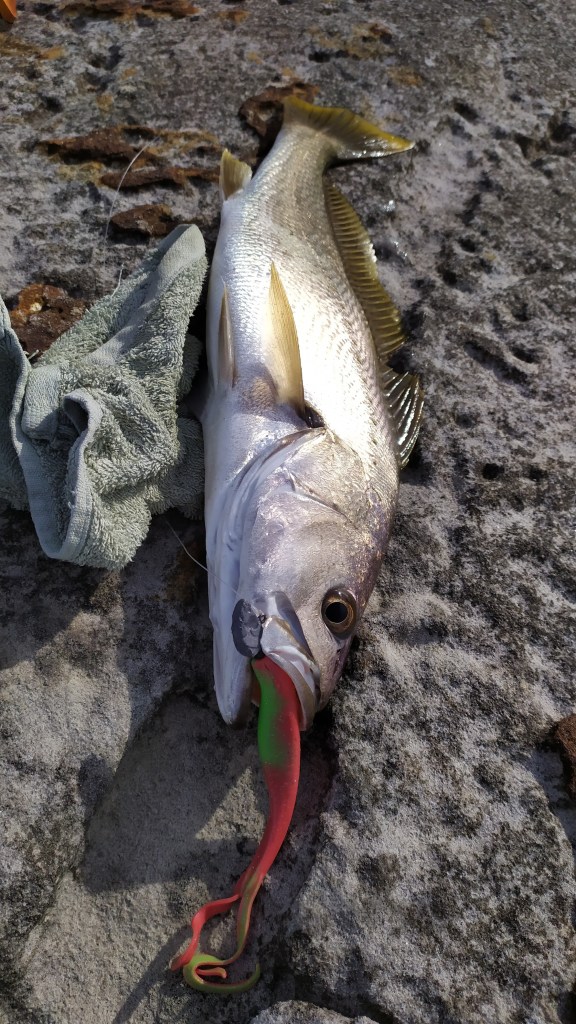
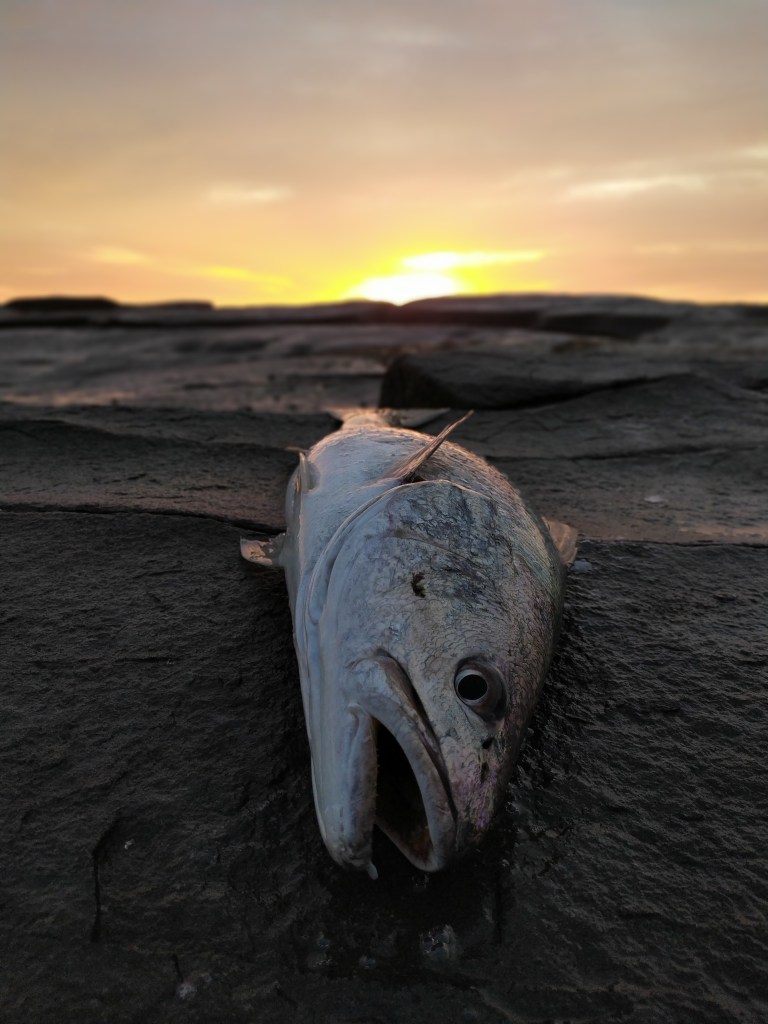
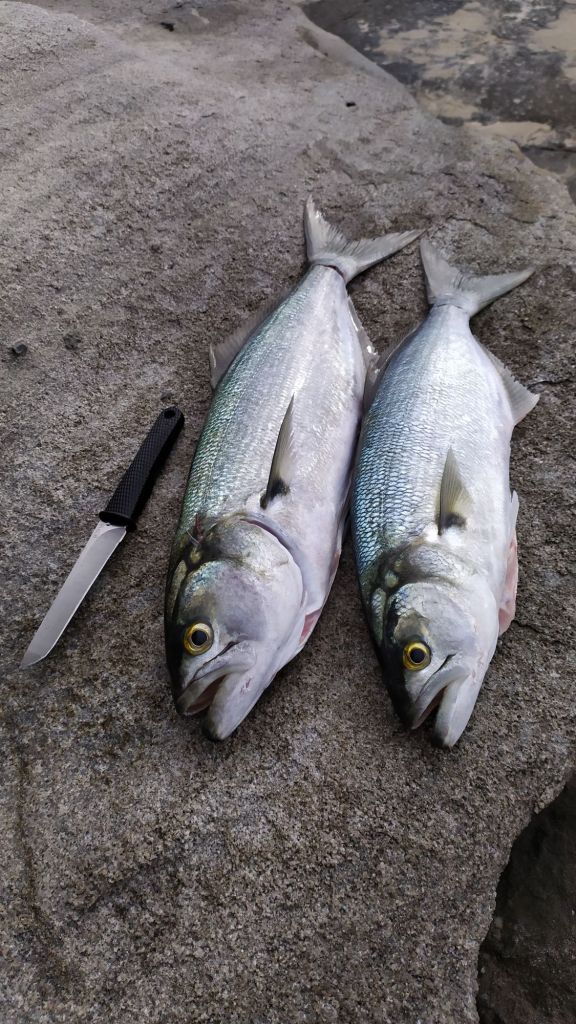
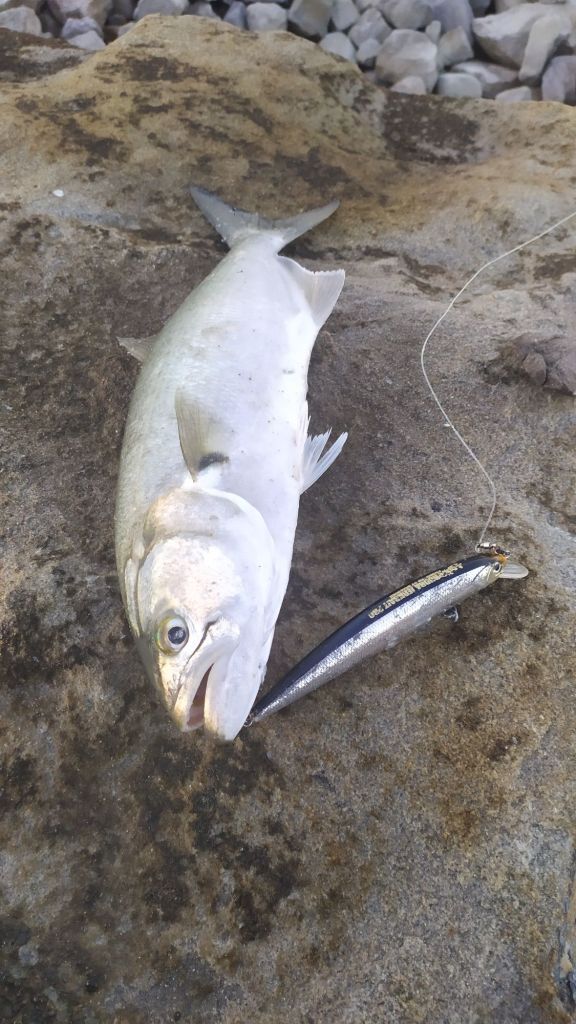
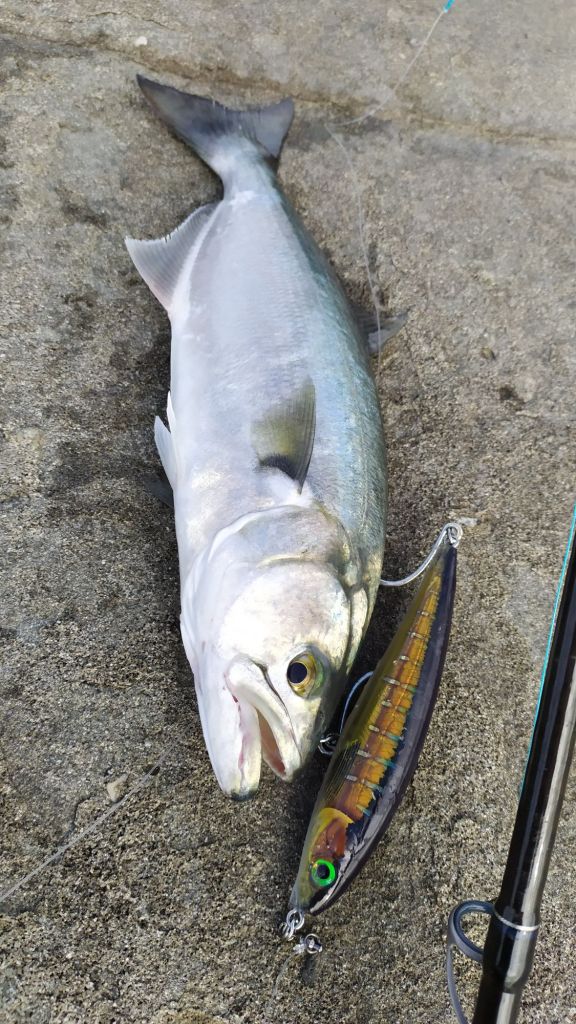
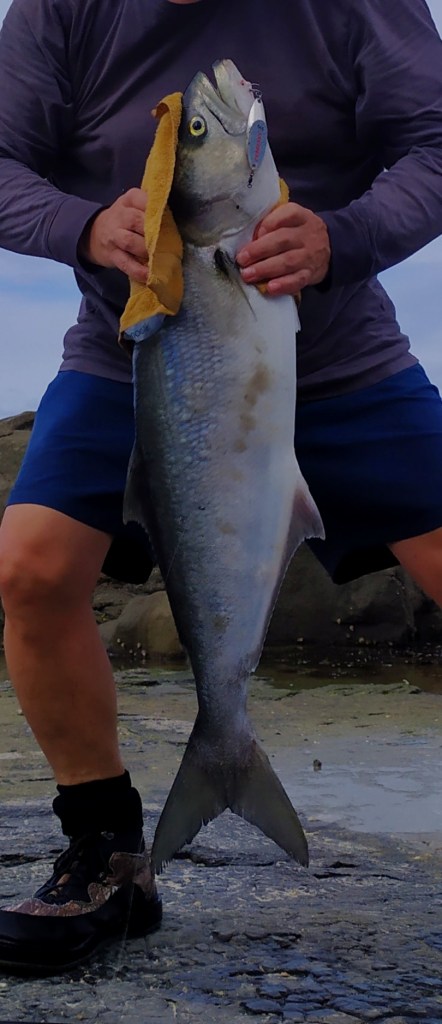
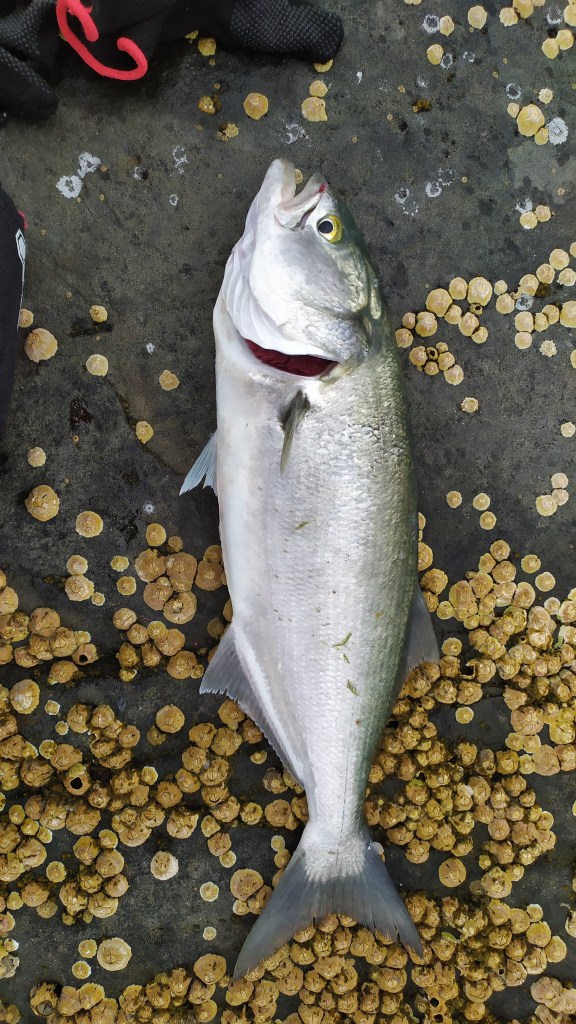
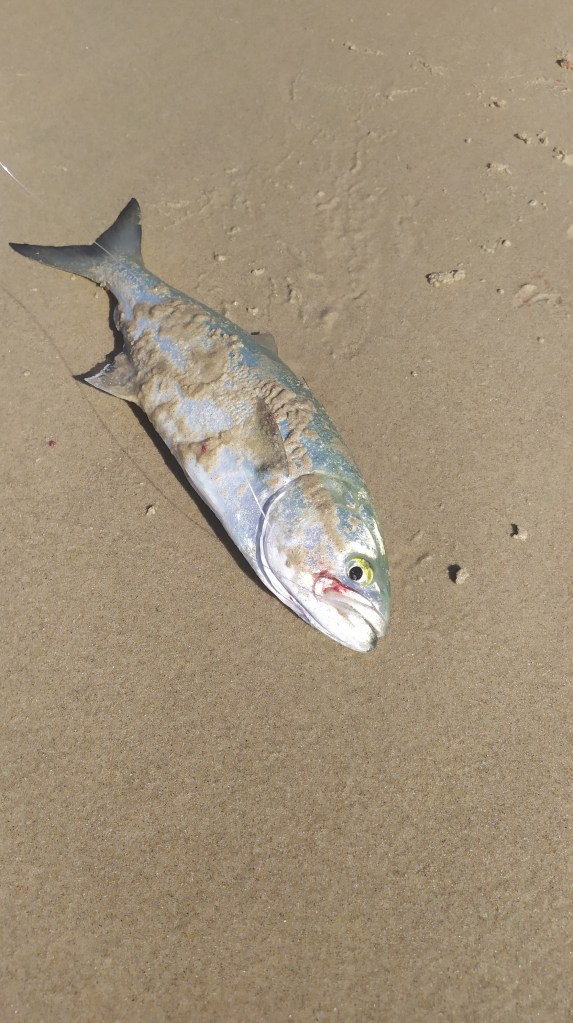
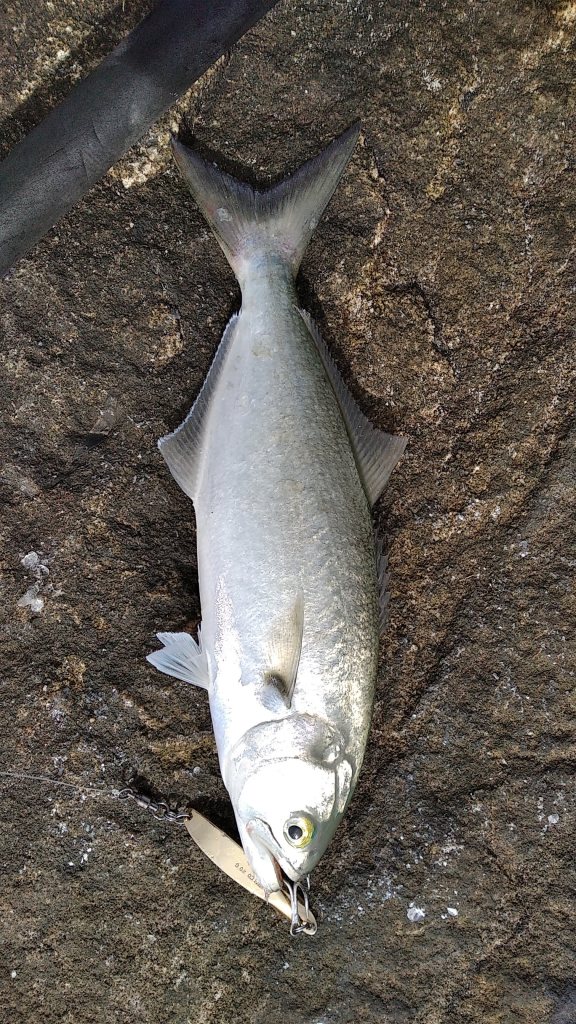
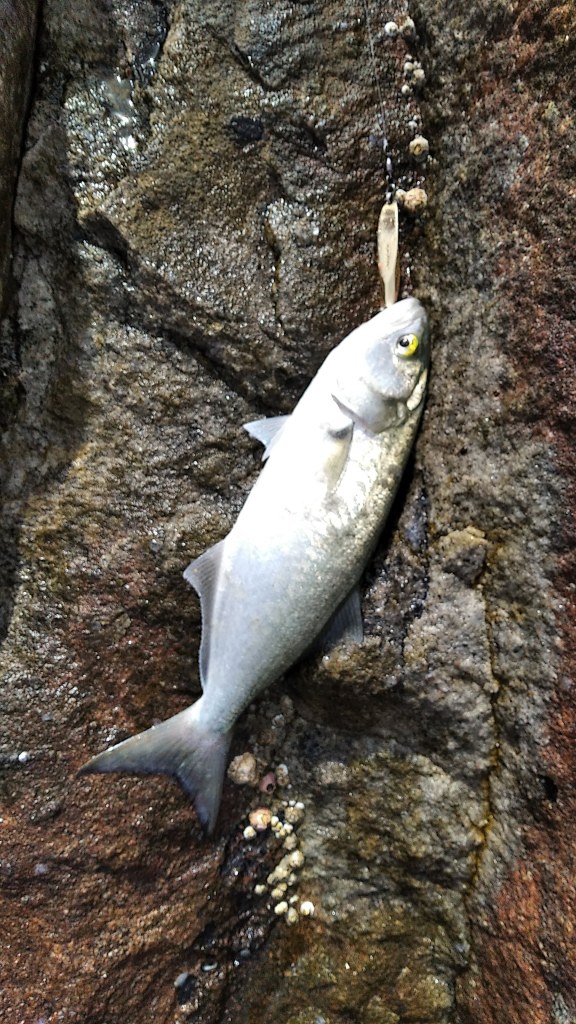
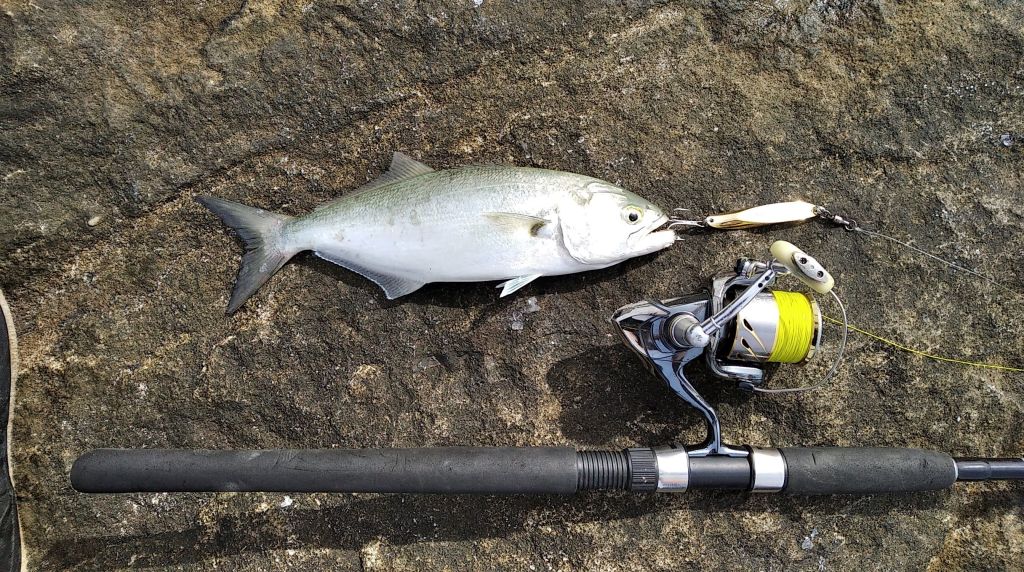
I caught plenty of tailor through the month. They would often destroy my soft plastic when I was trying to catch a jewfish. They were generally quite big, ranging between 45 cm and 60 cm. When I swapped my lure to a big surface popper or garfish shaped stickbait, I tended to catch bigger fish.
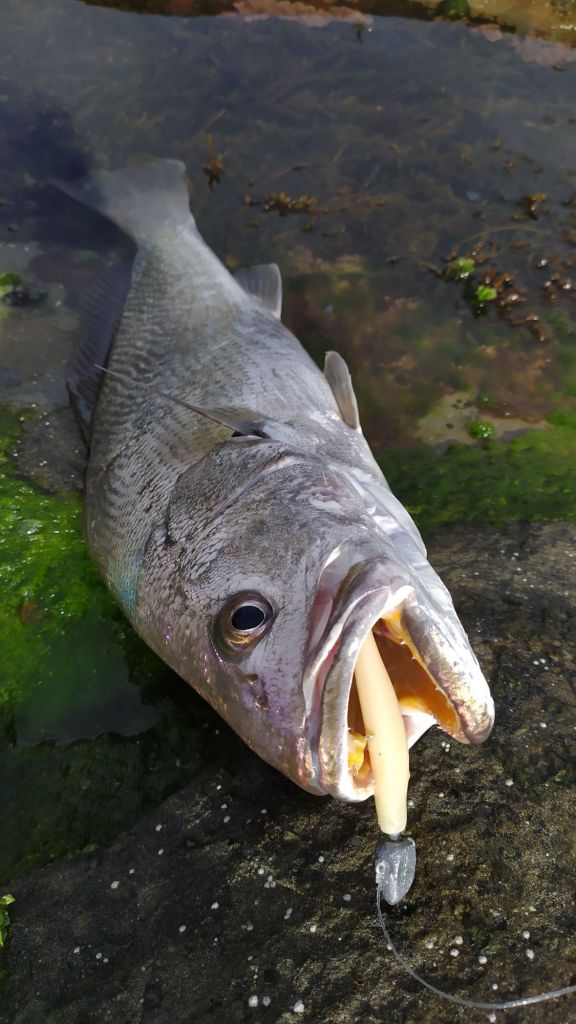
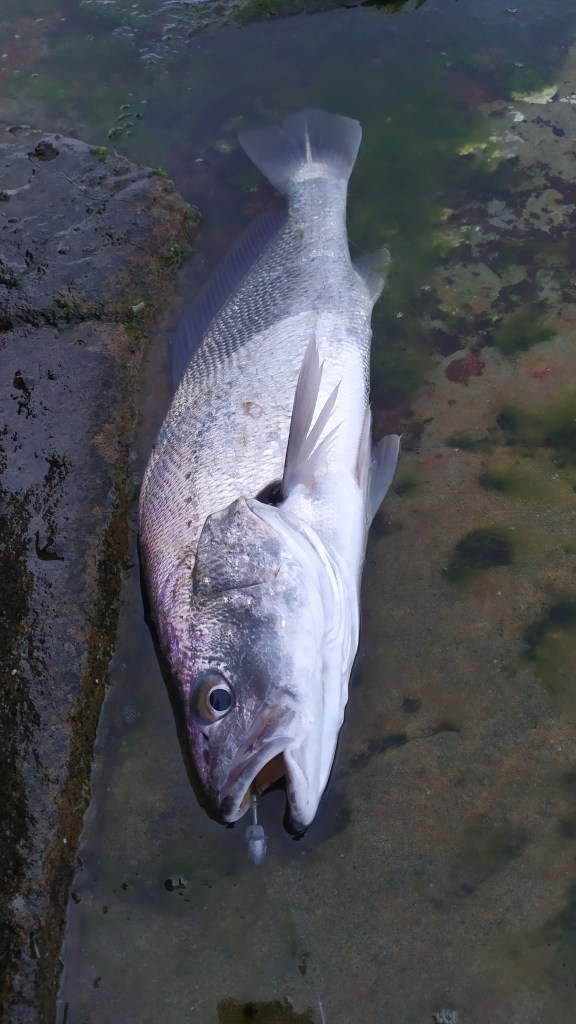
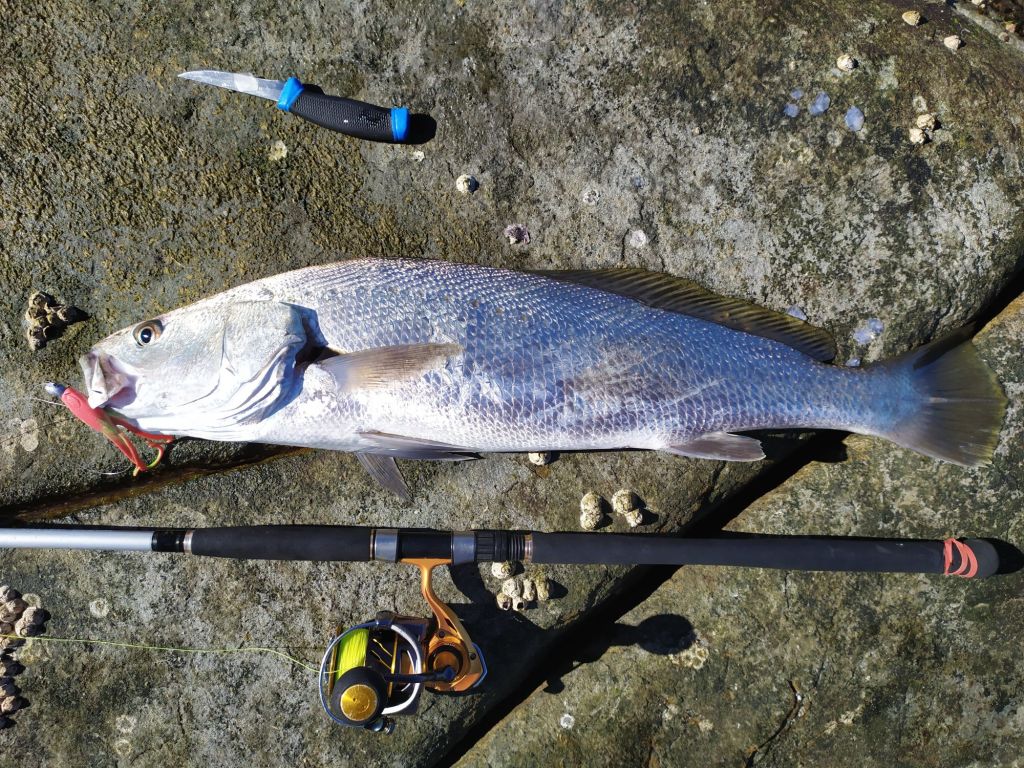
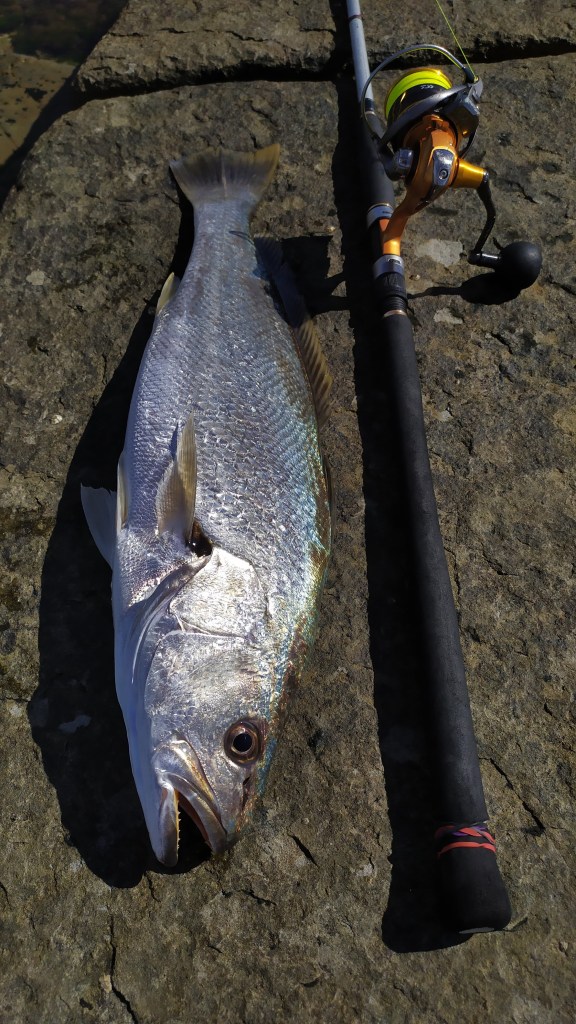
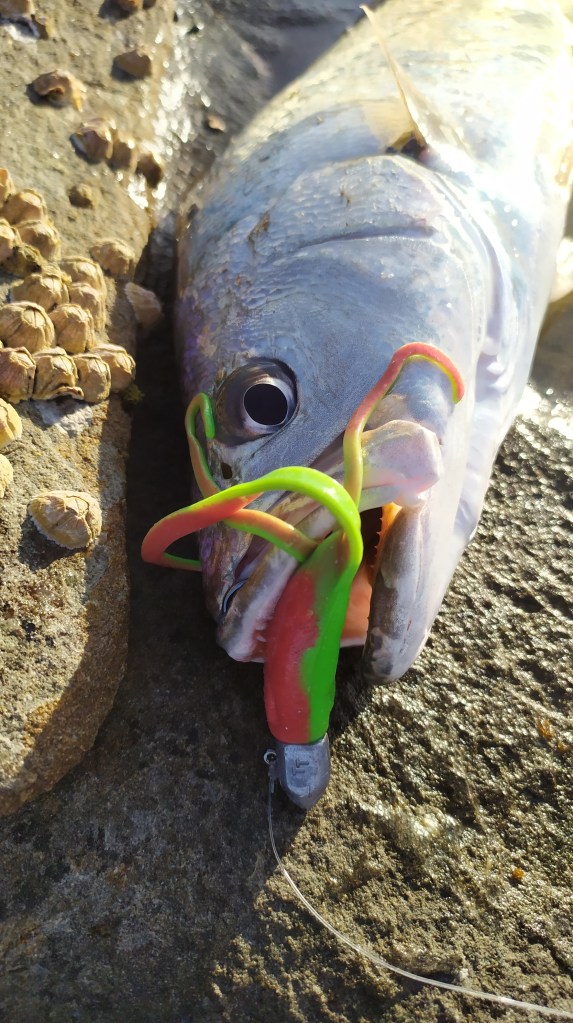
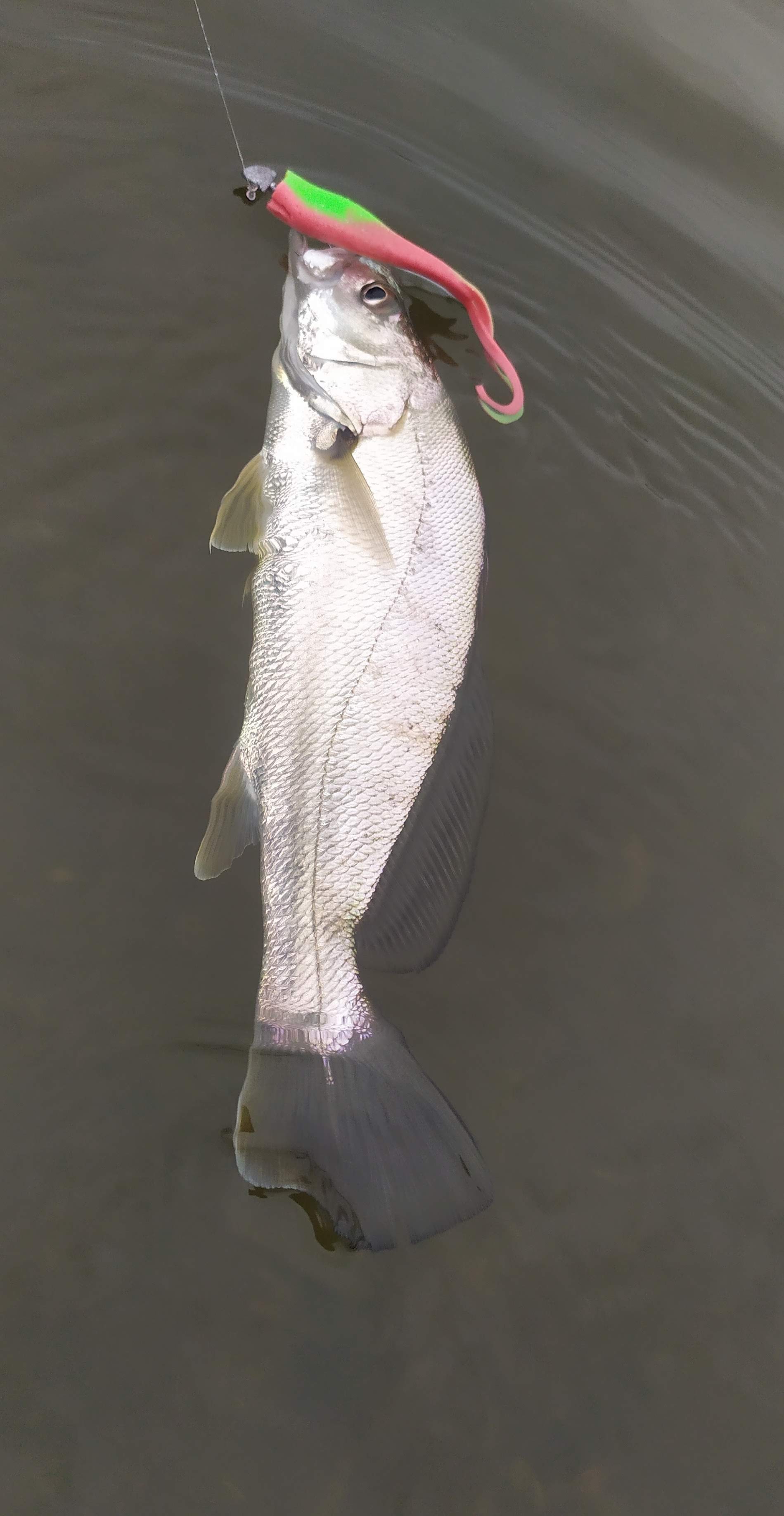
I also caught plenty of jewfish (approximately 35 over about six sessions on the headlands). I usually found them when I was fishing close in to the base of the rocks with big GULP soft plastics. I was set up with 50 lb fluorocarbon leader down to 1/2 ounce or 3/8th ounce jigheads, depending on the amount of swell. I used to favor using the lightest jigheads possible but I have recently been fishing heavier to make sure my soft plastics hit the bottom fairly quickly. When things are slow/tuff I often go lighter with both jigheads and leader, to get the strike.
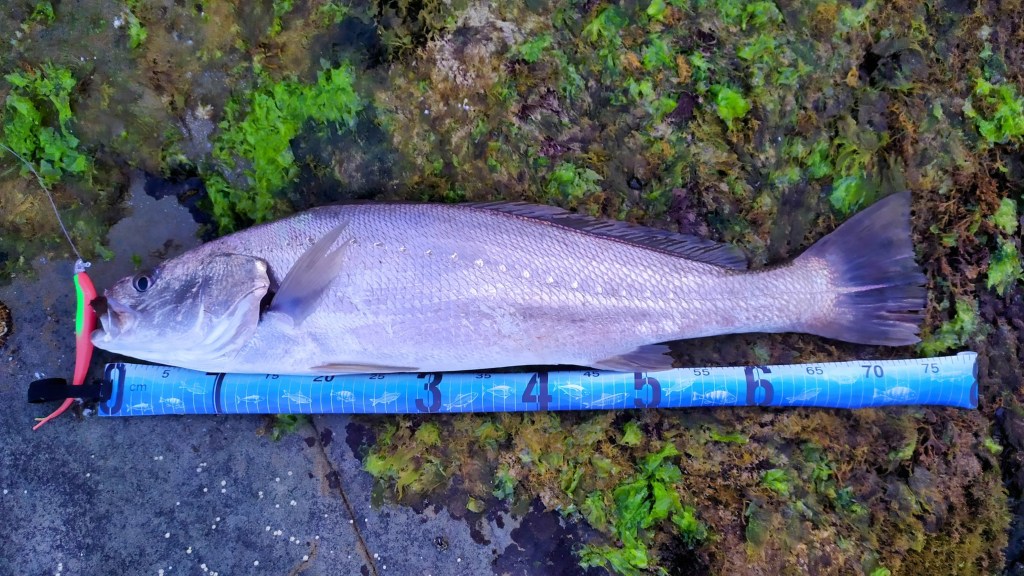
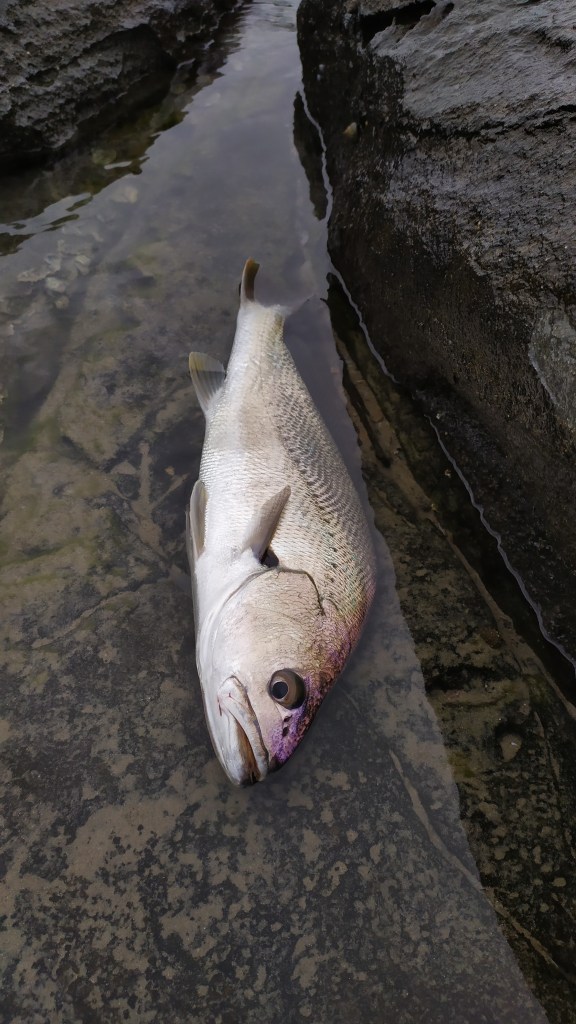
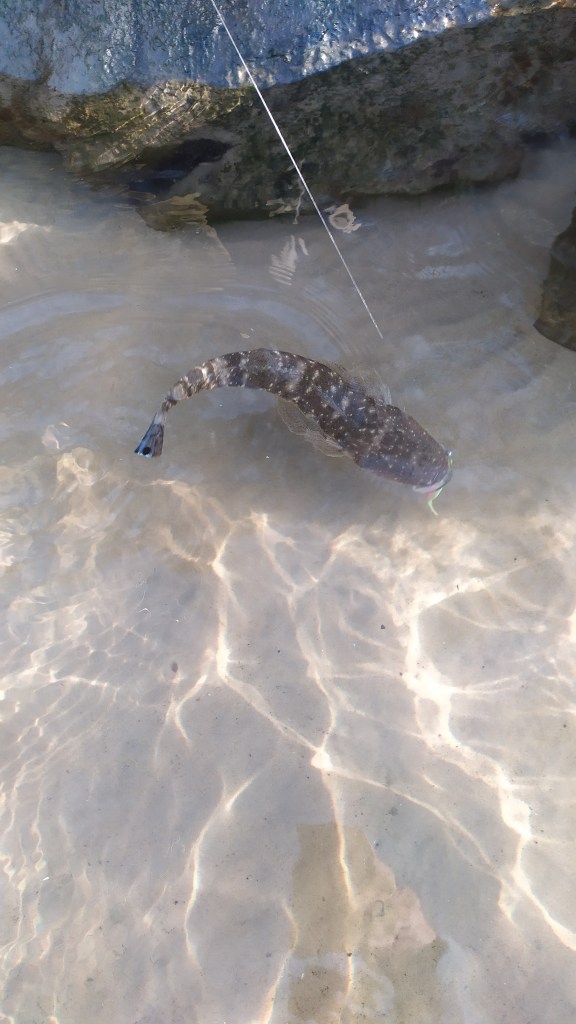
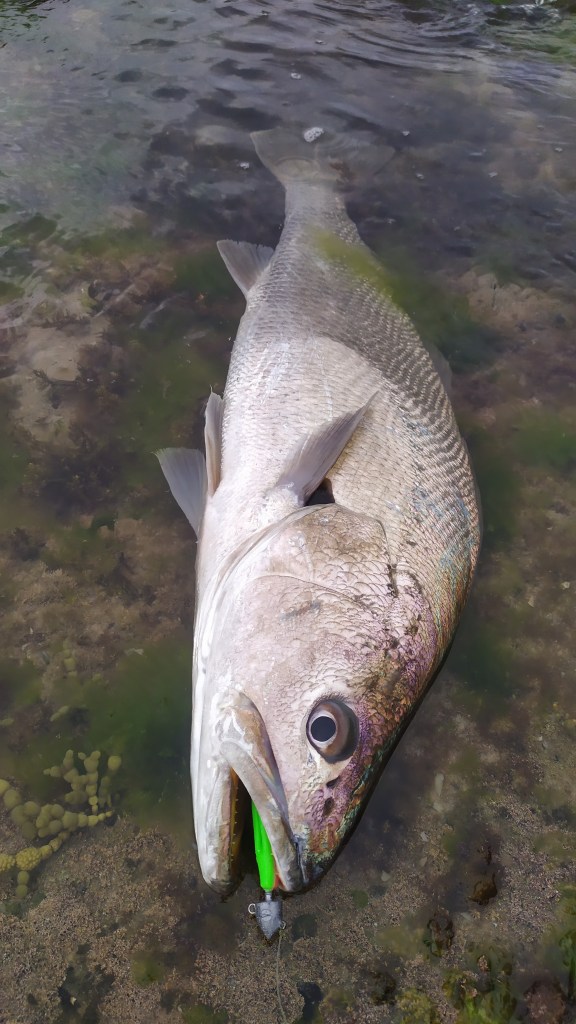
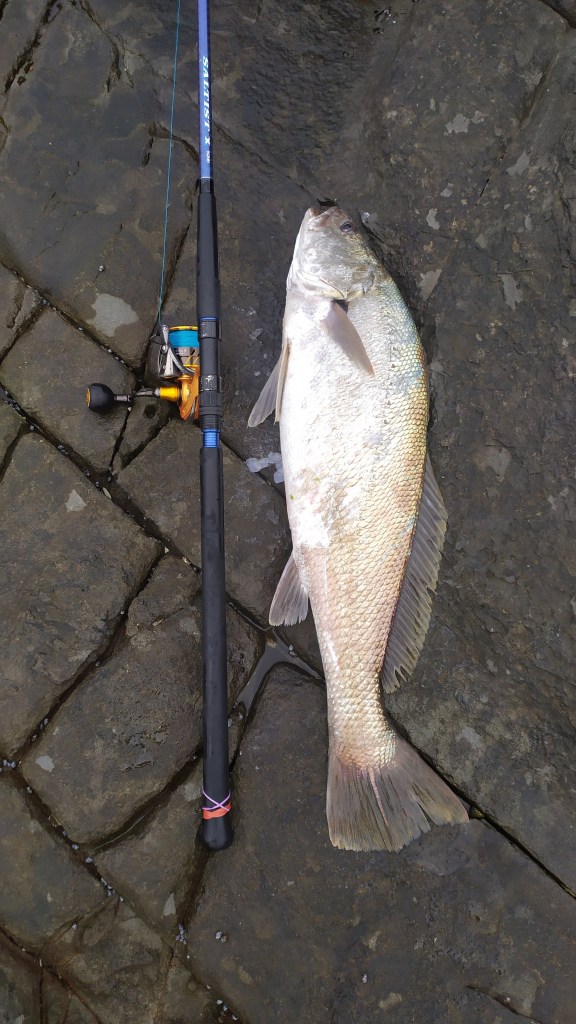
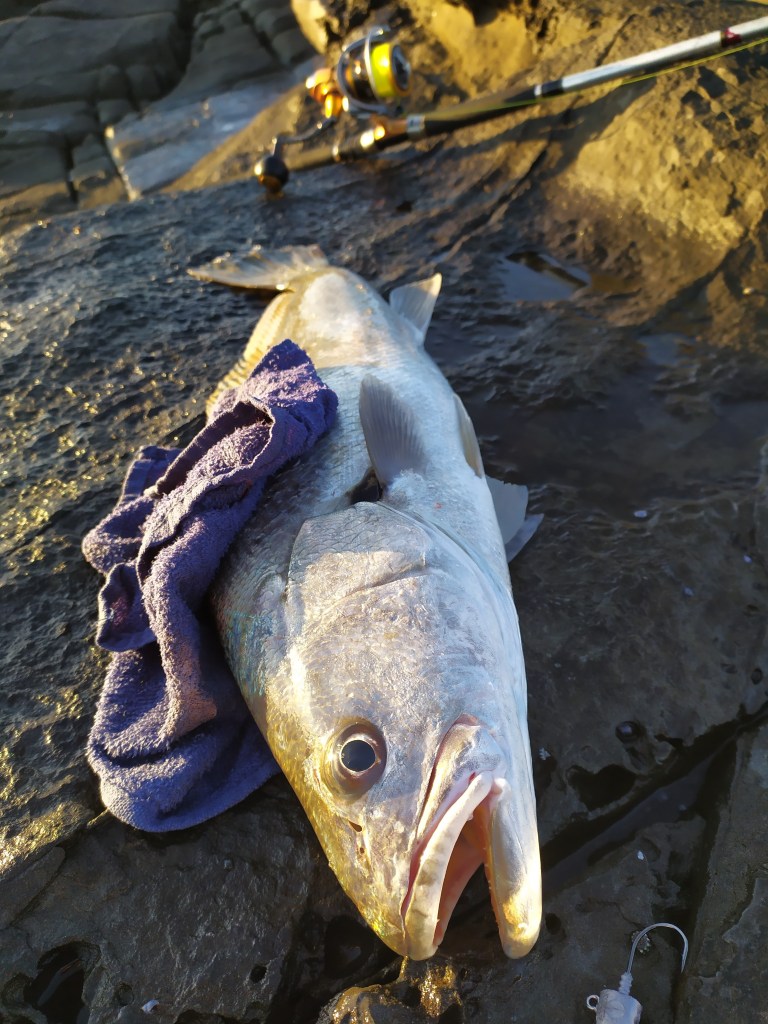
The best jewfish / mulloway fishing session was on the 5th, just a few days after the new moon. I caught three keeper size (all over 75 cm) and 5 smaller ones. I caught the two bigger fish in quick succession, about an hour after low tide.
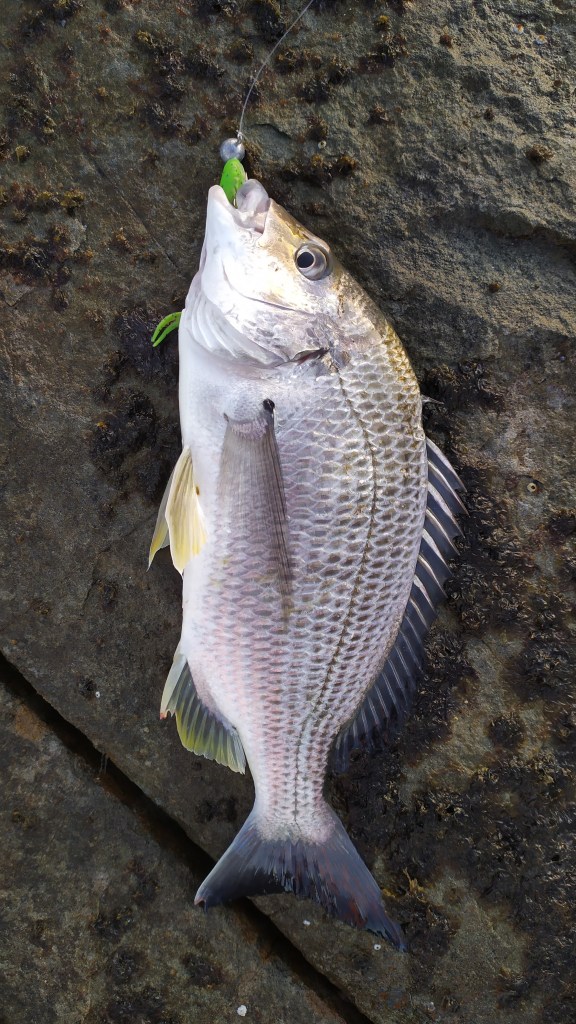
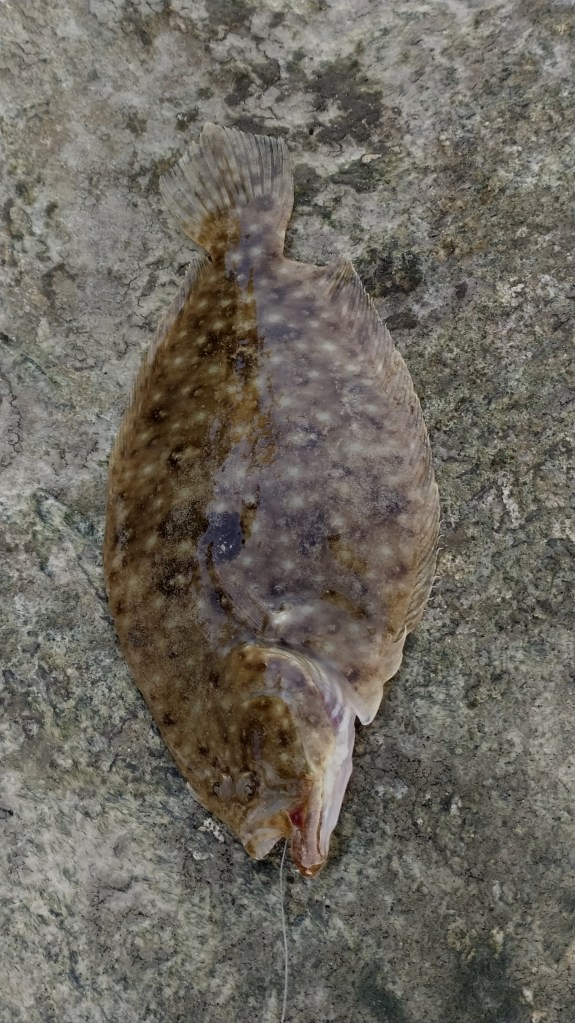
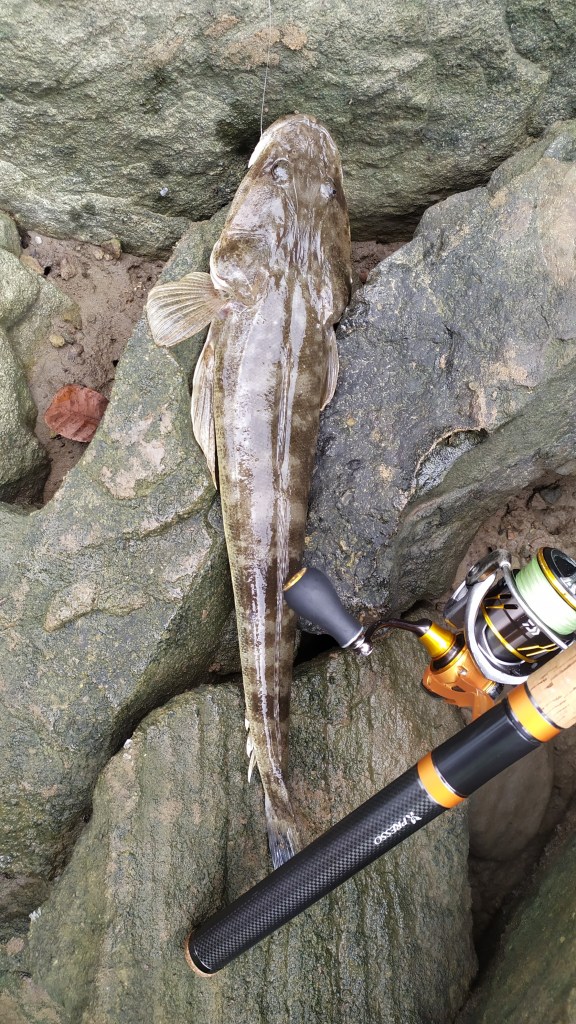
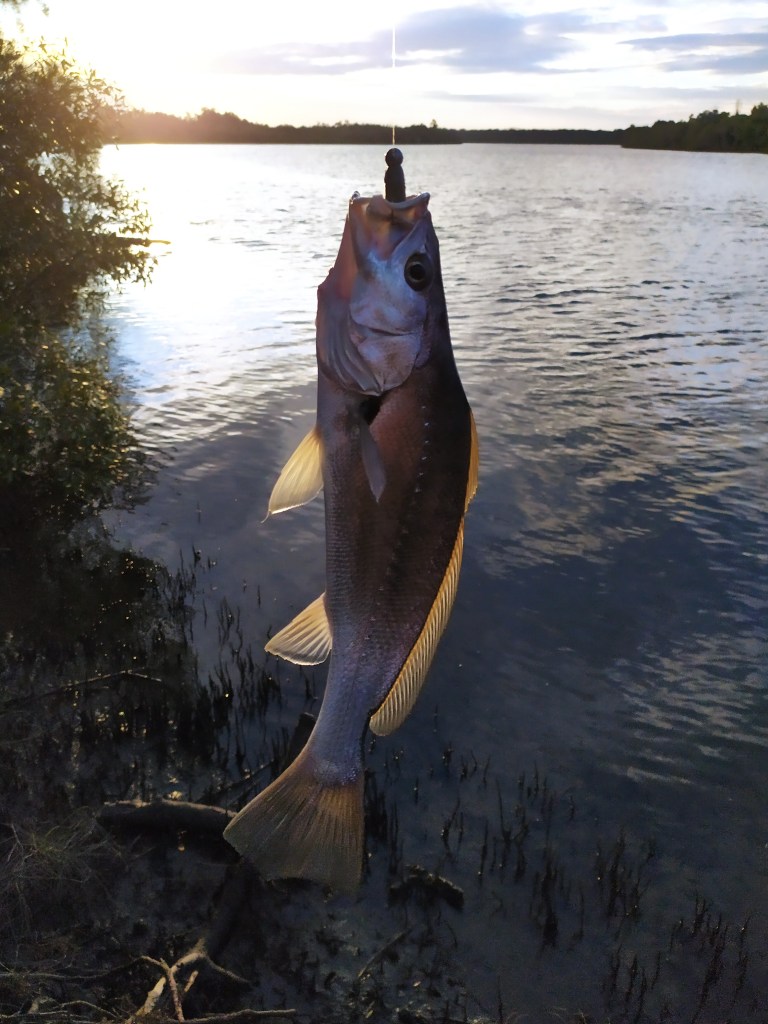
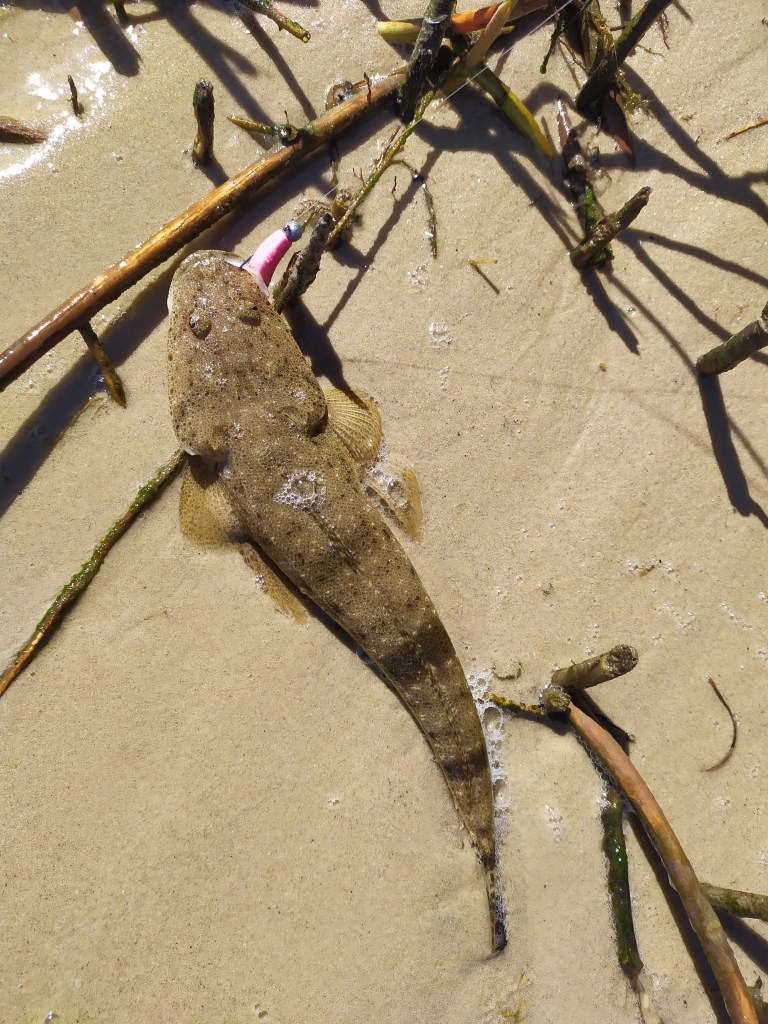
I caught a few smaller jewfish around the drop offs in the river. The trevally were also marauding around, particularly at dusk and dawn. As ever, I also caught flathead and bream too.
November had been another great fishing month on the Clarence River at Iluka.
September was a great fishing month on the rocky headlands of the Bundjalung National Park at Iluka. The winds were often from the north or north west with an occasional south westerly/easterly change for a day or two. The westerly element helped to flatten the swell during the early morning fishing sessions. Through the day the wind built up to a stronger and stronger northerly. This would often dirty the water up and make fishing in the afternoons more challenging.
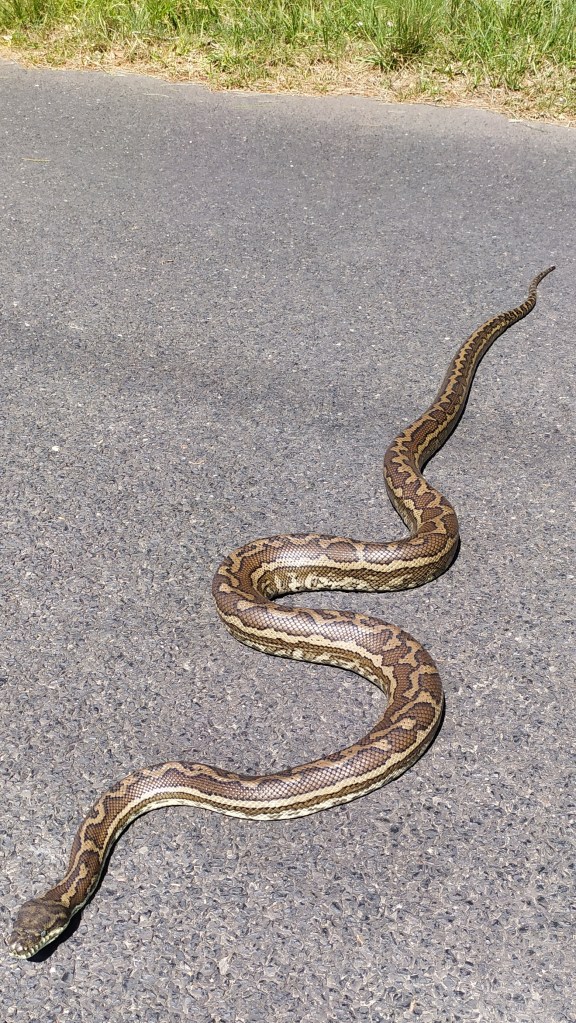
During the transition through our short spring to summer the fishing can be difficult. There were plenty of flathead, tailor and flounder in the river but the bream fishing was the stand out, both in the Clarence River and off the headlands. As the weather warmed up, the local snake population was also on the move looking for mating opportunities. Apparently, lying in the middle of the road is a favourite pastime for horny pythons.
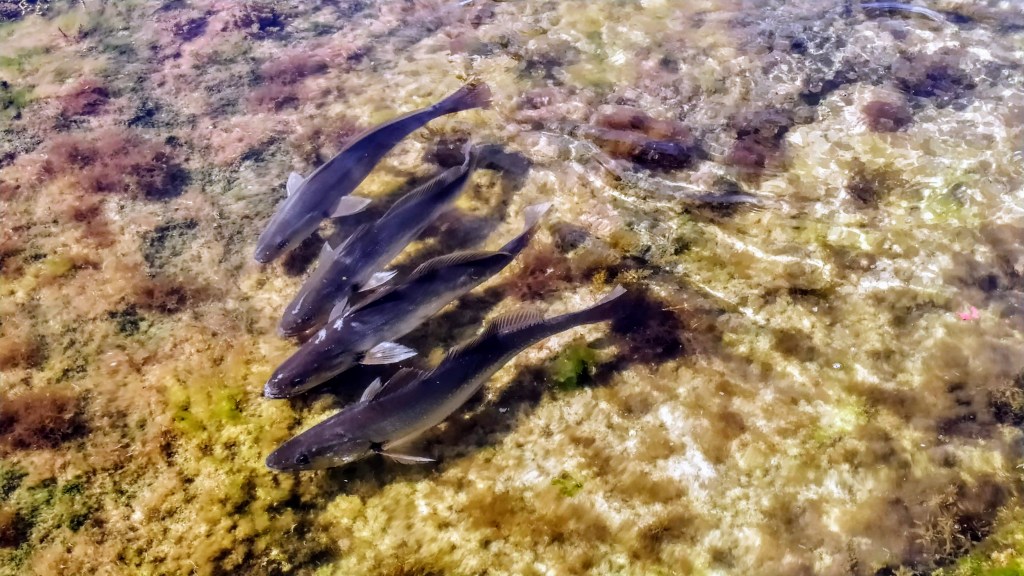
The mulloway/jewfish were everywhere, especially 40 to 60 cm fish. I am concluding through experience that light and tide changes are a big factor in their decision to feed. Early starts and first light fishing produced the best fish for me. Over the month I caught 12 legal sized keeper mulloway, between 70cm and 86cm and perhaps 40-50 smaller fish. I also missed plenty of fish after heavy runs and pulled hooks. I kept a few of the bigger fish I landed for supper but returned 90% of my catch to the water.
I was generally fishing with the lighter of my two rock fishing rods – the Daiwa Saltist X MH962 matched with my Daiwa Saltist 10000 size reel. I was running 40lb braid and usually a 40 or 50lb fluorocarbon leader down to a 10 gram to 20 gram jighead and a big GULP soft plastic. I am not sure that colour is important but a higher contrast between two colours seems to work well. I think this is the secret to the success of the Nuclear Chicken and Lime Tiger colours that I like to fish with. I like to use the 6 inch Squid Vicious pattern GULP soft plastic out on the headlands.
86 cm Iluka mulloway82 cm Iluka mulloway70 / 76 cm Iluka mulloway82cm Iluka mulloway
The biggest fish I landed came three days and four days after the full moon, respectively. However I tangled with a couple of fish I couldn’t stop just a few days after the new moon at the beginning of the month.
At the end of march the mullet and garfish had started to school up in the Clarence River. As we moved into April the mullet started to emerge at the mouth of the river in huge schools. The month started with some good tailor and jew/ mulloway fishing sessions on the headlands. I even caught some 50 – 60 cm jewfish on my last packet of GULP Lizard soft plastics (another long discontinued pattern that never really caught on).
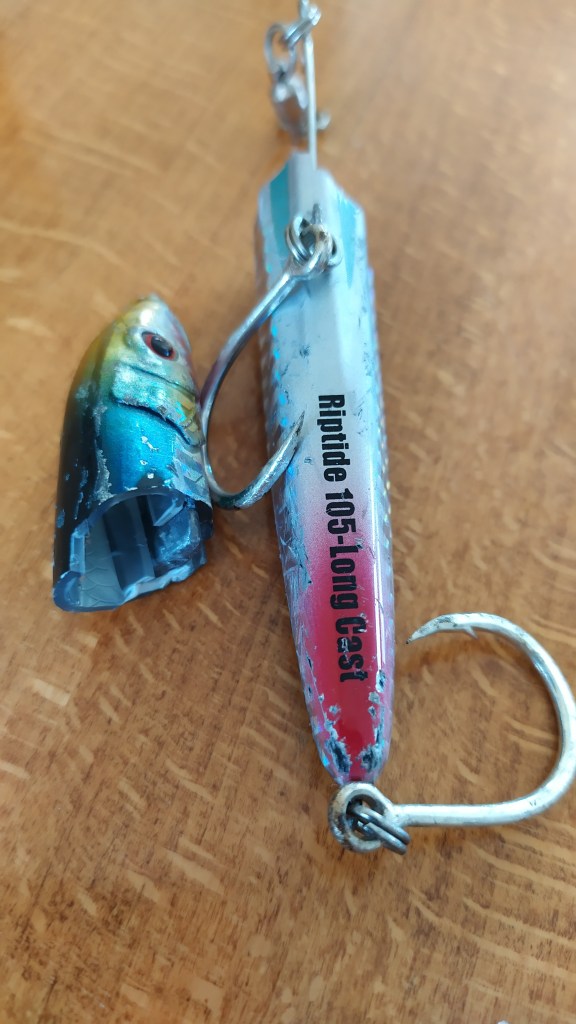
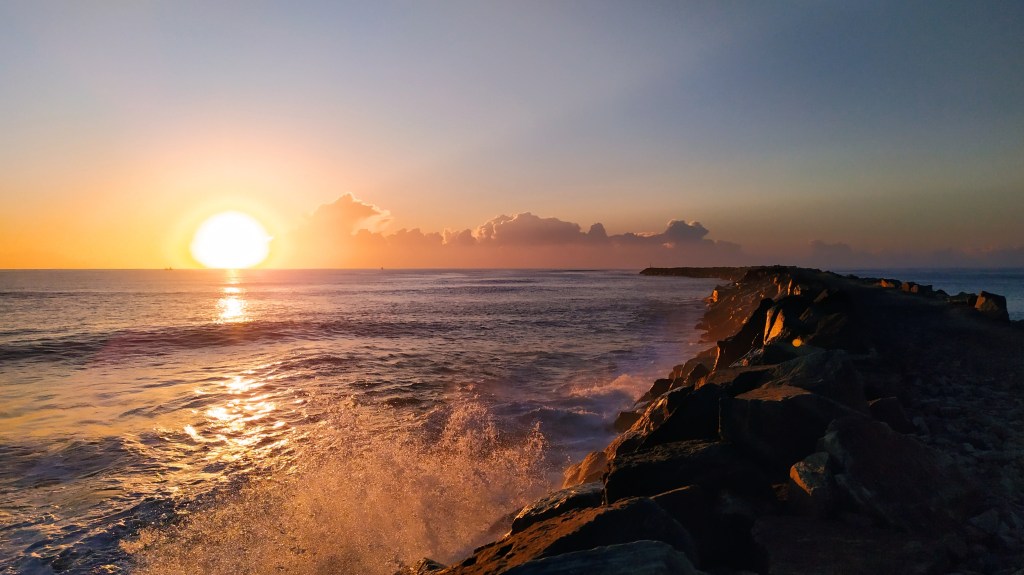
Out on the rock wall one morning I was casting a small sinking NOMAD Riptide 105 Longcast into the wash, just behind the wave break at dawn. A big fish came out of nowhere and engulfed the lure. I fought it for a while and then looked for a place to land it. I eventually found some flattish rocks I could get down to and manage to pull it up to me by the leader. It was another stonker tailor approaching 90 cm long. I like the action of the NOMAD Riptide but they cannot handle rock fishing, this one was fatally weakened during its first run in with a big fish. Longcast perhaps, long last – not so much.
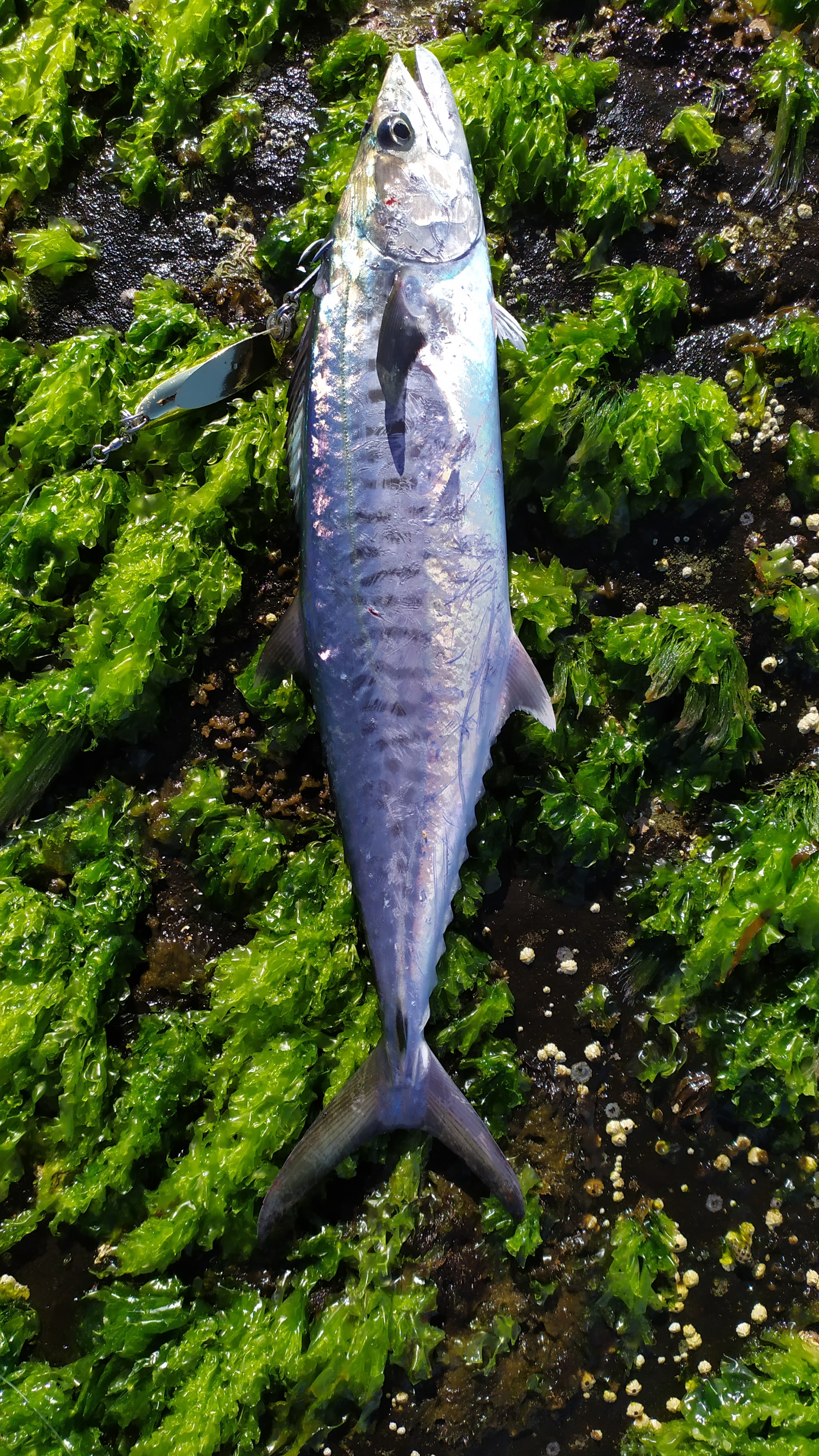
Once the garfish were heading out into the sea it was only matter of time before the bigger predators turned up. Sure enough at the beginning of April people started to catch a few longtail tuna from the north wall of the river. Whilst chasing tailor I managed to hook a small mackerel and lost a few metal slugs to bite offs, which I assume where bigger mackerel.
I have tangled with plenty of tuna over the years but never managed to stop one. This year I was determined to change things. I now have a bigger reel – a Daiwa Saltist 10,000 size. I matched it with my Daiwa Saltist 962 MH rod and rigged up with 40lb braid and a 50lb fluorocarbon leader.
I started fishing the tide changes on the wall and one Saturday morning, I arrived to find a few longtails had already been caught. Whilst I was rigging up the long tails came past again, of course I wasn’t ready. I finally got sorted and started casting with a hard bodied surface garfish imitation. I did not have to wait long for them to swim by for another pass.
I was doing a sweeping retrieve and moving the lure quite quickly over the surface. My lure was about 4 metres from the base of the rockwall, swimming towards the beach, when a long-tailed tuna rocketed up behind it and took it on the surface.
It took off on a blistering initial run. My drag was set fairly tight. I watch the line peel from the spool and listened to that delightful sound. It’s difficult to tell but it took perhaps a hundred and twenty metres in that first run. It then paused for just a second and was off again.
It finally paused just long enough for me to start winding and getting some line back. The rod tip was beating fast. I watched as the fish now started to swim parallel with the wall.
I was very lucky and there was an experienced tuna fisherman (with gaff) close buy who came to help. He explained the mechanics of turning the fishes head as it started to swim in towards the rocks. The hooked tuna will swim in arcs in front of you and the aim is to gradually reduce the size of those arcs by keeping a constant pressure on the fish. Basically, tuna only swim forwards so you need to allow the fish to turn its head, so that it can swim back in the opposite direction when it finish its arc, at the base of the rocks. In order to do this it needs to feel slightly less pressure, this will make it turn away from the rocks and swim back in an arc the other way. So as the fish approaches the base of the rocks you ease up on the bend in the rod, just a little and it turns back in the other direction. You keep doing this as the fish tires and the arcs get smaller and smaller.
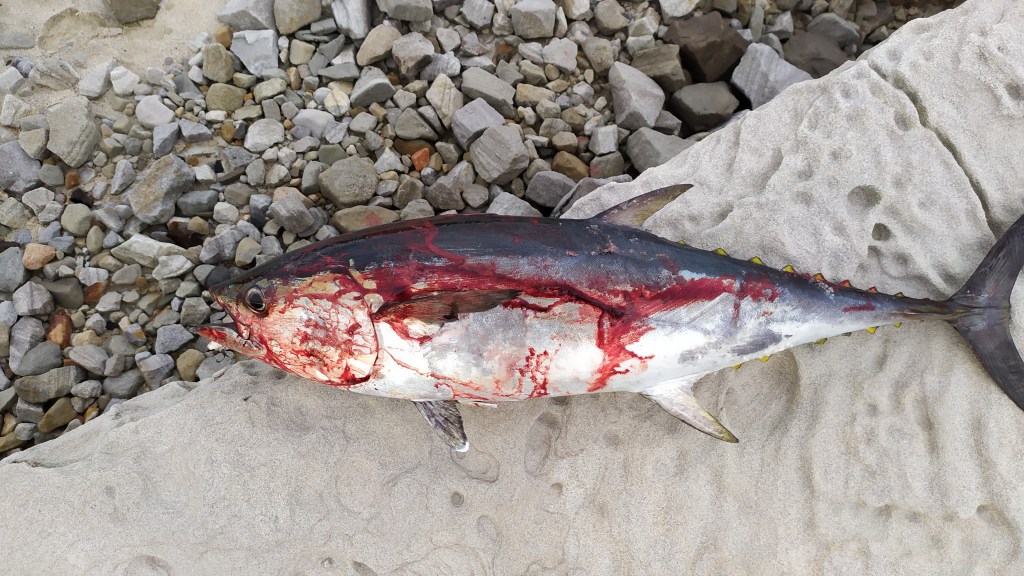
After what felt like and hour ( but was actually only about 15 minutes) the fish was at our feet and my new friend expertly gaffed the fish for me – mission accomplished. It later weighed in at 9.4 kgs.
In March the winds were predominantly from the east and south east. The water temperatures were around 26.9 degrees which was slightly above average. The tailor started to show up in on the headlands towards the full moon. I caught my best tailor of the month on a 60 gram metal slug at Iluka Bluff, just after low tide on an overcast afternoon. It was over 85 cm long. I caught plenty more through the month when the swell allowed. They were nearly always over 40 cm long. I tried a few sinking hard boiled lures but metal slugs caught the biggest fish.
In the run up to the new moon on the 10th I had a couple of good sessions fishing for jewfish/ mulloway at Woody Head. I caught plenty of small jewfish before finally tempting an 80cm unit on a GULP squid vicious soft plastic in the Nuclear Chicken colour.
The river was fishing well and running fairly clear. I caught a few flathead and flounder in the shallows in between the rock fishing sessions.
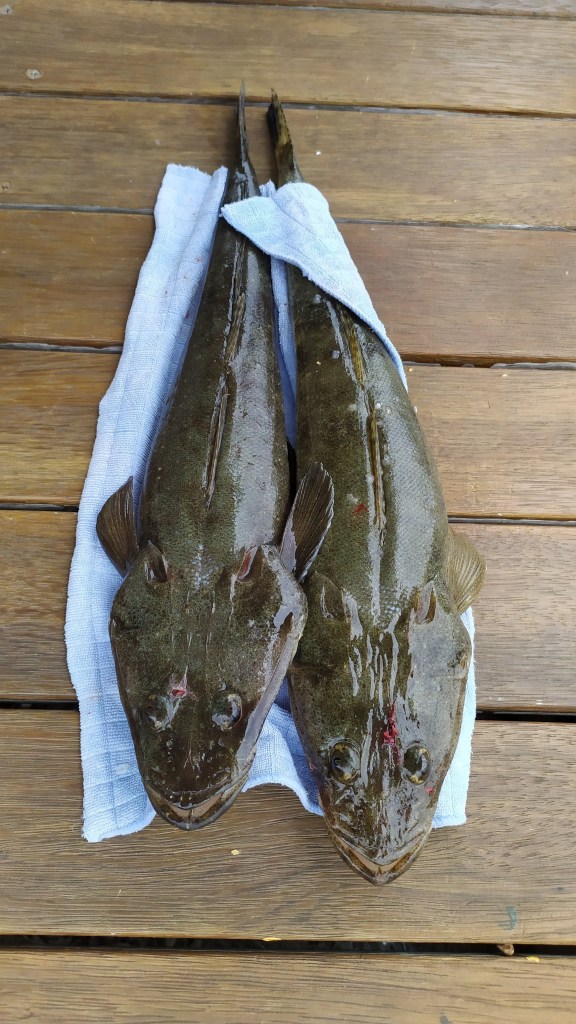
November was an excellent month for fishing at Iluka on the Clarence River. The weather was cool and dry. The river was full of small bait fish and the flathead were plentiful. I caught plenty, fishing mainly GULP soft plastic lures along the bottom. Their favoured hang out is the sandy or muddy bottom right at the base of the rock walled river banks.
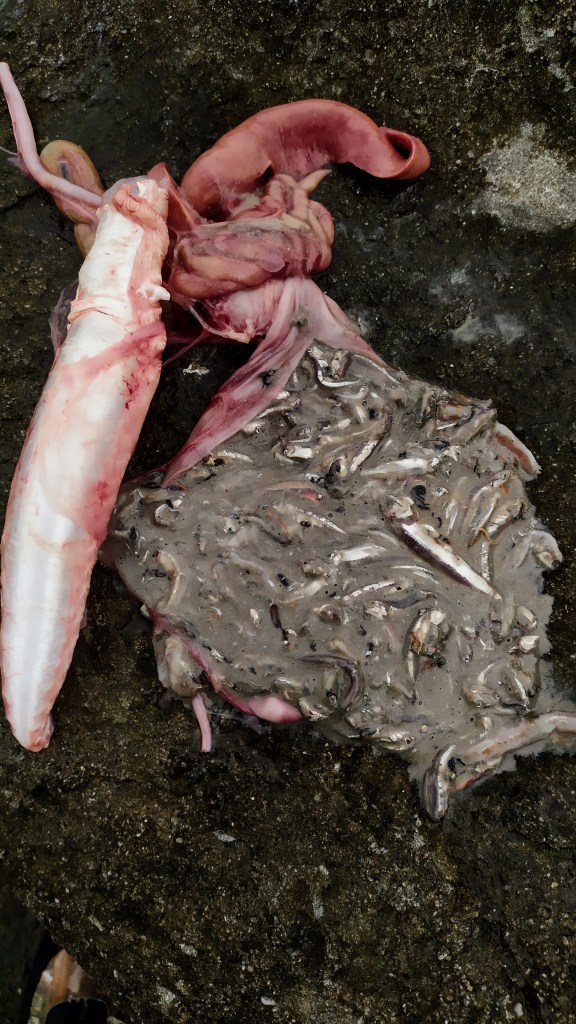
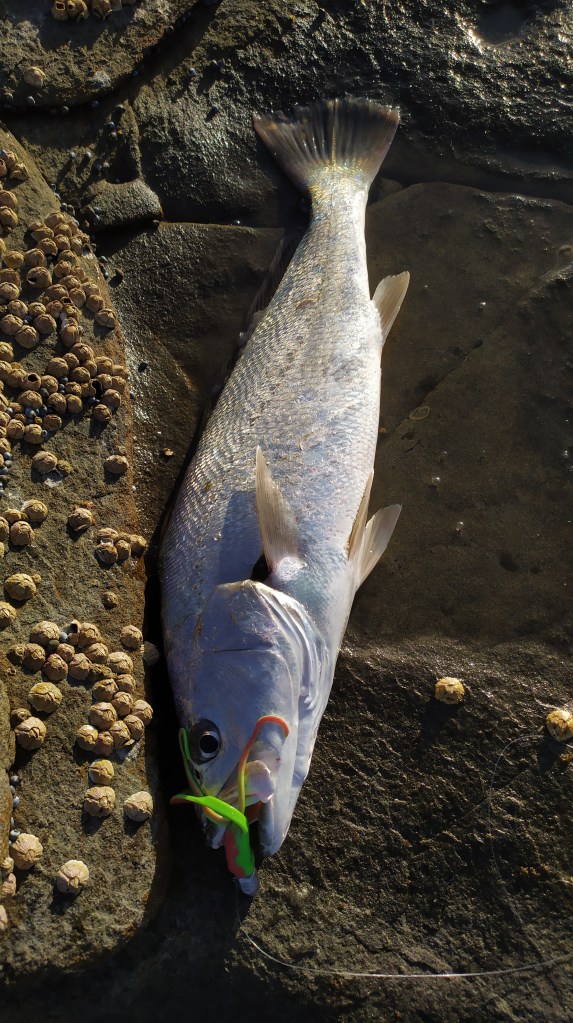
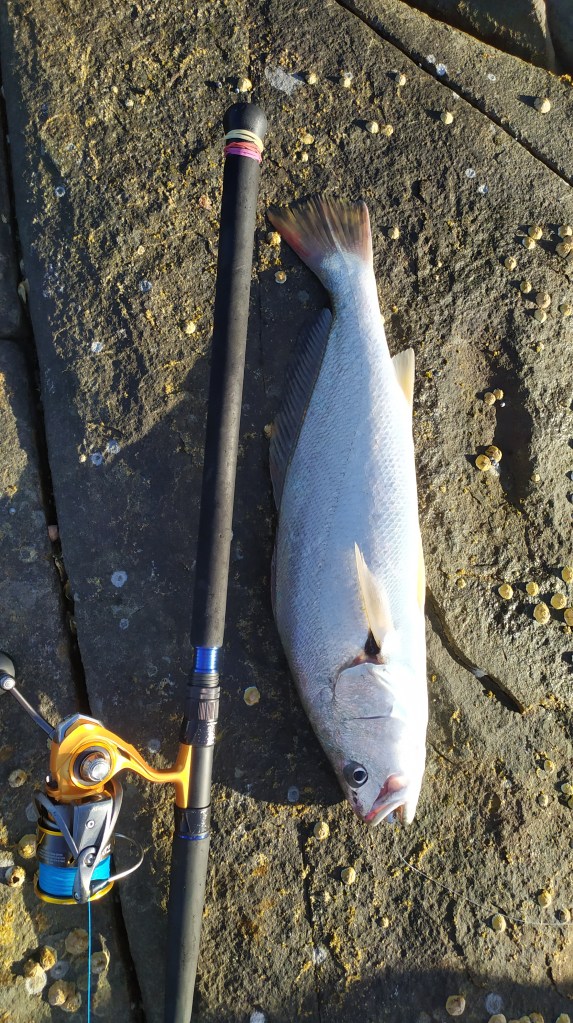
Out on the rocky headlands of the Bundjalung National Park the swell was safely manageable for a few sessions and I caught my biggest jewfish of the year, so far. It was 90cm long and put up quite a fight trying to flee into an underwater cave. It was just after first light a few days before the new moon. On several mornings I caught and released multiple fish over 70 cm. I opened the stomach of one of the particularly fat mulloway that I caught. It was bursting with small whitebait.. I also had a few good early morning tailor sessions, out on the rocks. The tailor were also spitting up the same small bait.
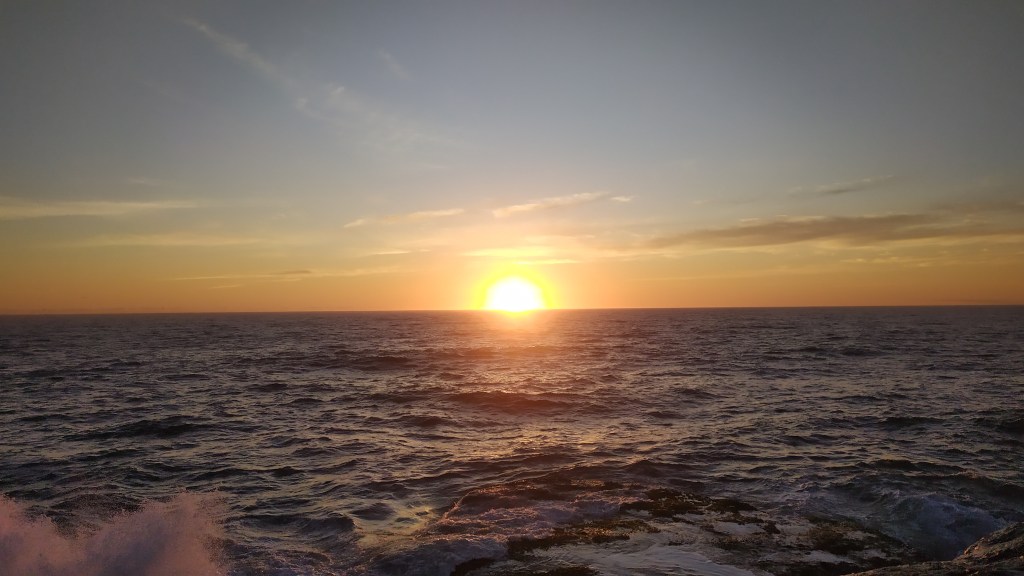
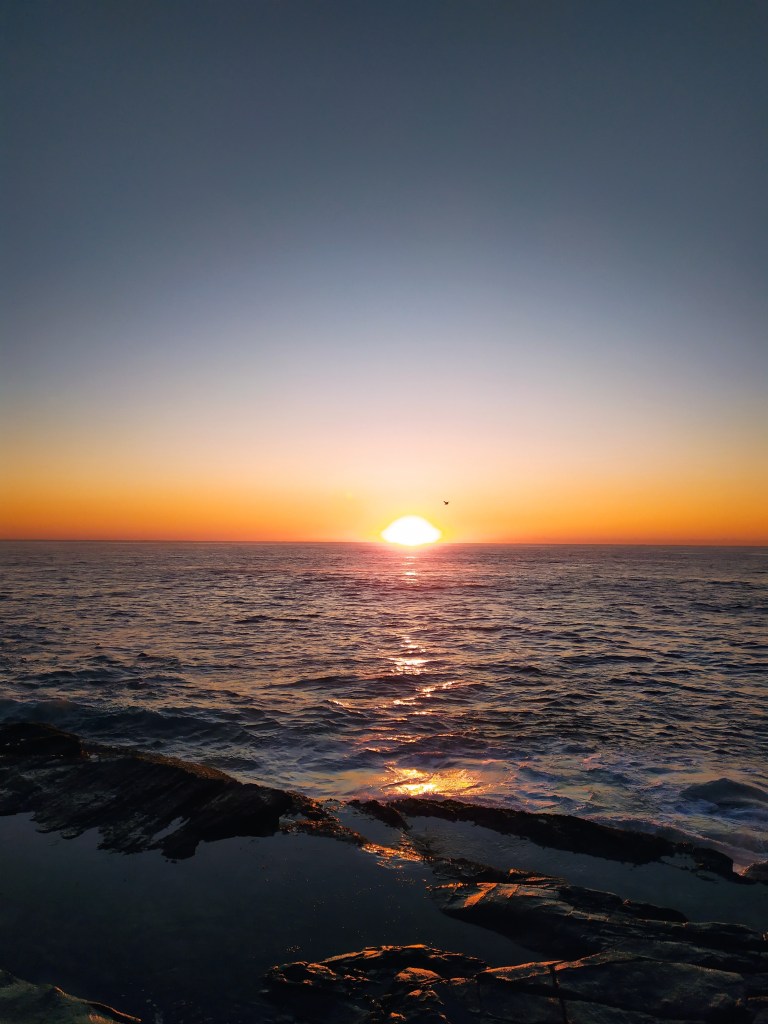
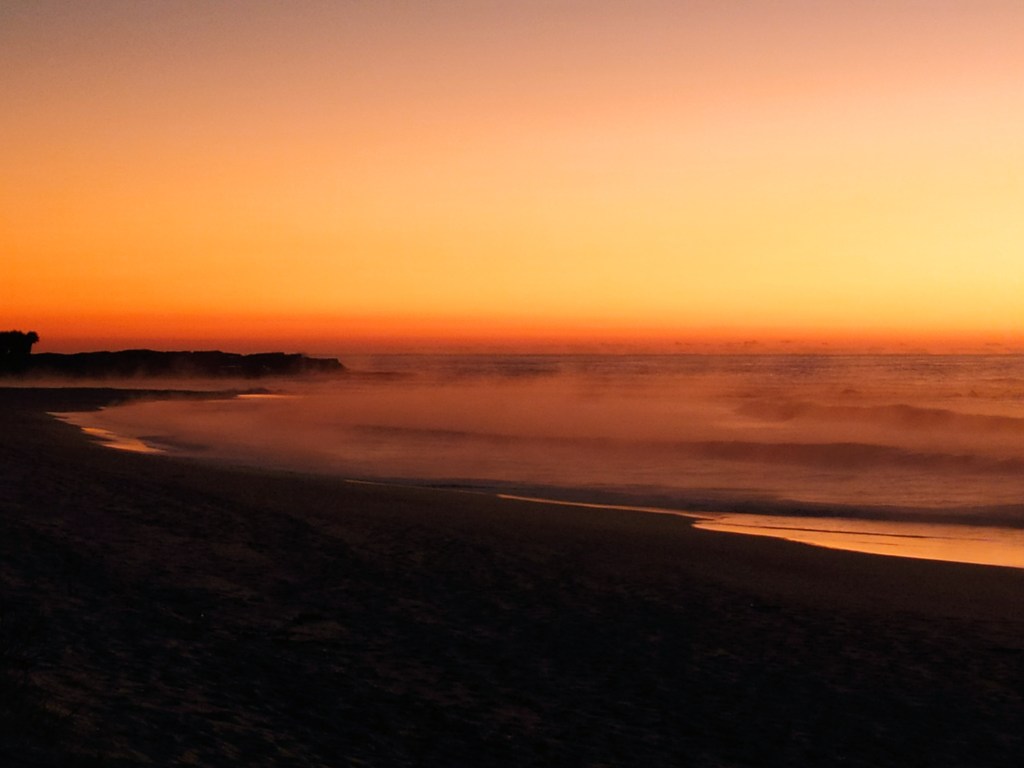
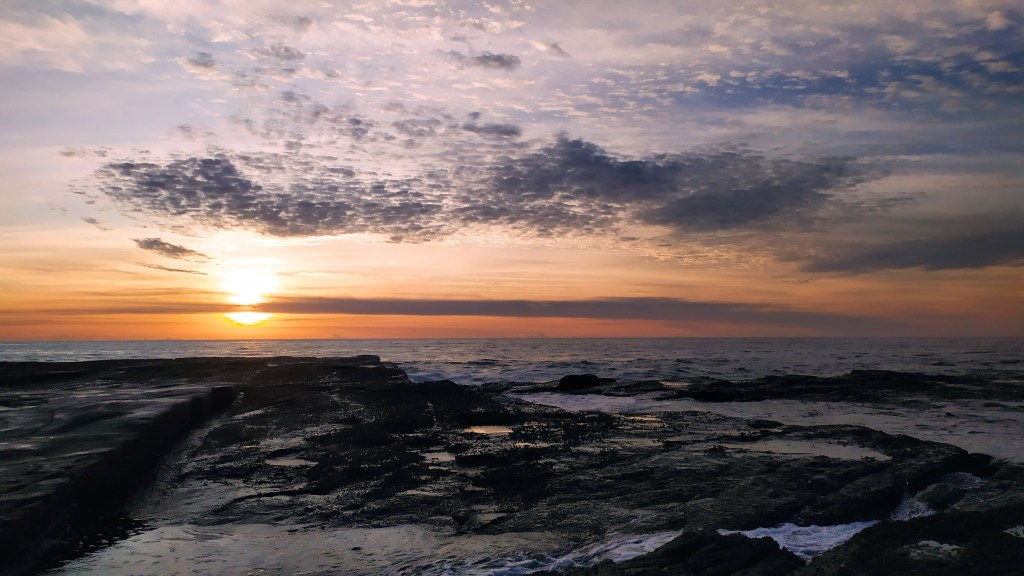
The weather cooled but very slowly in May. The water temperature dropped quite quickly and averaged about 2 degrees C cooler than May 2022. We had a few misty starts on the river and some spectacular sunrises.
The swell settled and I managed a few rock fishing sessions at Iluka Bluff, Fraser’s Reef and Woody Head. I landed a few jewfish using the GULP Crazylegs Jerkshad and Squidvicious soft plastic lures, mainly in the nuclear chicken colour. The dangling legs of these patterns often seem to attract a strike when other shapes are not working. Only two of the jewfish/ mulloway that I caught in May were big enough to keep. Both were around 80 cm long. There were a few tailor around but not many bream.
The flathead were still hard to find in the river even though there were plenty of jelly prawns hatching on the new and the full moons. The trevally were still marauding around, especially at dawn and dusk.
In March 2023, I was able to spend a bit more time fishing the rocky headlands of the Bundjalung National Park at Iluka. The swell came down to around the 1 metre mark on a few days and this meant I could safely fish in very close to the base of the various rock ledges at Woody Head, Frazer’s Reef and Iluka Bluff. I think the jewfish are always around, but when the swell is light you have much more chance of getting a lure in front of them for long enough to entice a strike.
I caught plenty of jewfish/mulloway through the month. I was mainly successful around the tide changes, particularly when these coincided with dawn or dusk. In one of the best sessions I caught five mulloway, all of which where over the 70 cm size limit. After a quick spell in the recovery rock pool I released them all. I often keep a fish for dinner but find the smallest fish (i.e. those closest to 70 cm) tend to taste the best. A 70 cm fish will yield about 1.2 to 1.3 kg of boneless fillets and I also roast up the frames and wings for a good meal. The head is usually given away to a neighbour for his crab pots.
The biggest mulloway that I managed to stop and land was just over 90 cm. I caught it at Woody Head, using a 5 inch GULP Crazylegs Jerkshad soft plastic in the nuclear chicken colour on a 3/8th ounce 3/0 hook jighead, 40lb fluorocarbon leader and 30lb braid. I was fishing with my Daiwa Saltist MH962 rod and Saltist 3000 reel. The moon was in the waning crescent phase and was 47% full. The tide had been running in for about an hour.
There were also a few tailor around as there usually are at this time of year and I caught quite a few spinning metal slugs around the rocks.
The fishing was also good in the river with jelly prawns and herring lining the banks. I caught plenty of flathead, small jewfish, bream and a few flounder.
The swell was up and down again in December. I managed a few mornings fishing on the rocky headlands and caught quite a few juvenile jewfish on my favourite GULP Squid Vicious soft plastics. I can pretty much no longer find the lime tiger (green and orange) colour so I have switched to the nuclear chicken (red and green) colour. When the mulloway are hungry they don’t much seem to care which soft plastic you use, but I think the dangling legs of the squid pattern can tempt them out of hiding, when they are reluctant. I also believe the GULP scent makes a difference.
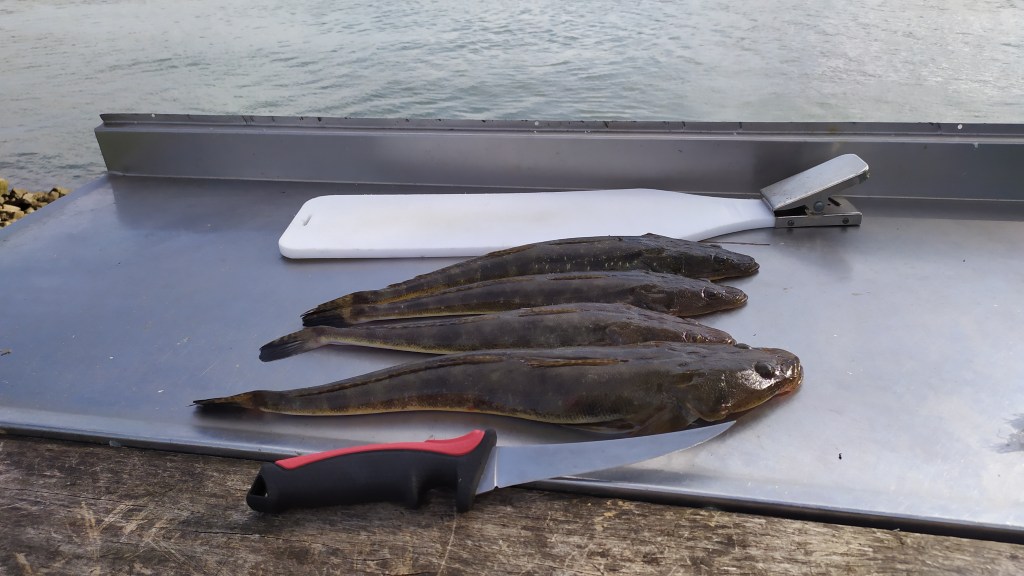
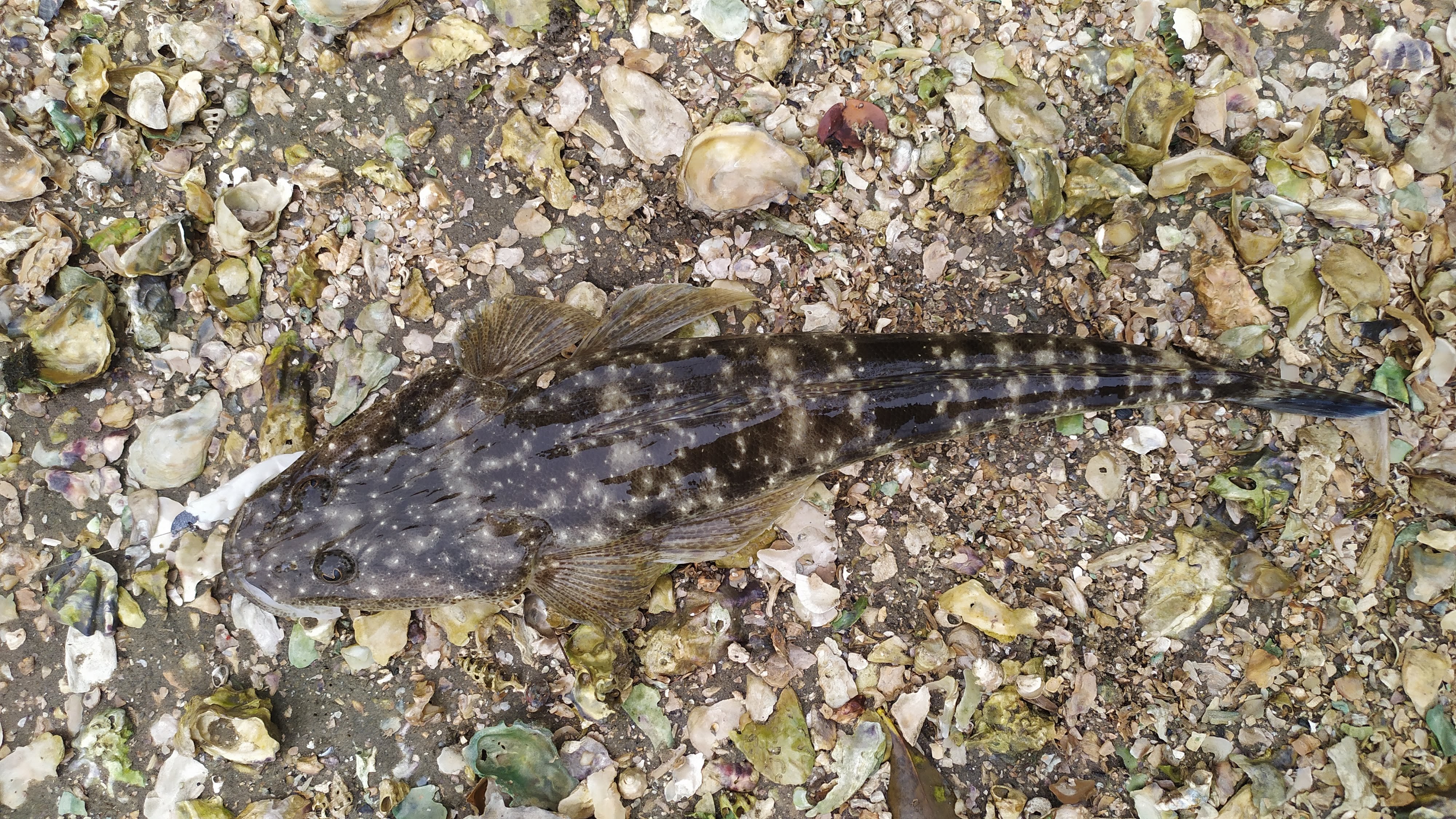
There were also a few tailor around, particularly at dawn and dusk. I caught them on the surface and with the soft plastics I had intended for mulloway. I found plenty of flathead, fishing the Clarence River around Iluka and Browns Rocks.
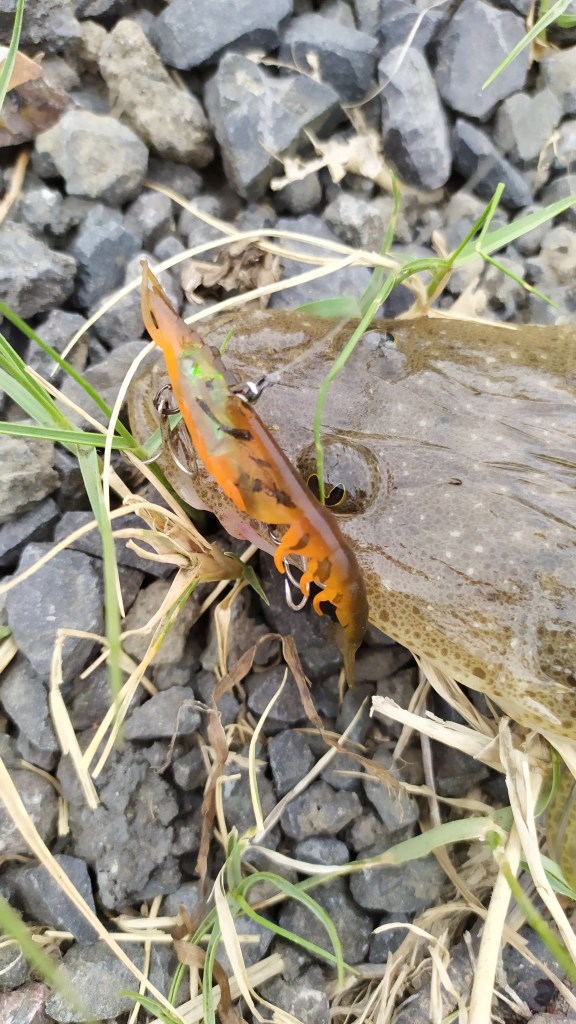
There was a hatch of prawns and when the jelly prawns were in the shallows close to the rocks, so were the flathead. I swapped through a few different Powerbait Shrimps and tried the Berkley Shimma Shrimp soft vibe. They both caught fish but so did any soft plastic minnow, worked slowly along the bottom, close to the bank.
My fishing diary is now so far out of date that posting pictures may seem superfluous. But in the interests of trying to maintain and approximate record of what I caught and when, I will post some pictures for each month and try to catch up.
There were lots of flathead in the river in October and loads of junior jewfish. I only managed one rock fishing session and landed one just legal size jewfish / mulloway. Everything was caught on soft plastics.
We had plenty of rain through early February and there was not much fishing to be done in the muddy brown waters of the Brunswick, Richmond, Wilsons or Clarence River.
In the middle of the month the Clarence River started to clear up a bit and I fished the flats at Browns Rocks, near Iluka. I saw quite a few big flathead lies so they were definitely back in the river after the deluge. I fished my light rig with minnow and paddle tail soft plastics and a 10lb fluorocarbon leader. I was mainly using 1/8th and 1/6th ounce jigheads. I caught a few flathead and a lot of small jewfish. The tailor were also a constant and I had a few snip offs.
The Clarence River began to clear up after lots of rain in mid-February
On the 20th the swell eased off and I had a fish on the rock platform at Woody Head in the Bundjalung National Park. I started with soft plastics on my heavy set up and caught a few bream. I moved around, casting until the tide started to run in and swapped to a GULP Crazylegs Jerkshad in the Lime Tiger colour. I was using a 3/8th ounce jighead and 40lb fluorocarbon leader. After a couple of drops I felt the weight of a good fish. I pulled its head out from under the ledge but it was too heavy and kept thrusting its nose back down into the cunjevoi. The swell wasn’t big enough to help me and soon my leader was tightly tangled. The fish swam away leaving my jighead firmly lodged in the rocks. It had felt like a jewfish but trevally are also good at using this technique to free themselves.
I tied on the same set up and threw it out again. Three casts later I was onto a fish again. It was not as powerful as the first but it still tried to get under the ledge. I let it run a little way but when I put some pressure on it swam out rather than in and I was abled to subdue it. It was a decent school jewfish about 65cm to 70 cm long. I took a picture and speared it back into the water pretty quickly.
There are so many sharks in this zone that I am not sure whether these released fish have much chance of survival. Hopefully they swim straight back under the ledge.
A nice jewfish from Woody Head
After a few more river fishing sessions the rain set in again. This time it just did not stop and the soaked river catchments could not absorb it. A low off the east coast dropped solid rain for three days and nights and the whole Northern Rivers area of New South Wales suffered the worst floods in living memory. Lismore was completed wiped out and Broadwater/ Wardel/ Mullumbimby/ Ocean Shores/ South Golden Beach/ Brunswick Heads, Fingal Head and many more areas were completely flooded and rendered in accessible for days.
Telstra and the NBN, it transpired, had chosen to route their entire regional telecommunications backbone through a basement telephone exchange at Wardell which was 5m under water. This made local communications next to impossible, severely hampering rescue and recovery efforts. The devastation was complete. People dragged their flooded belongings out onto the streets and the clean up began.
On the Clarence River the flood waters cause massive fish kills. Dead mullet, mulloway, flathead, bream washed ashore along the banks, unable to survive the sudden deluge of fresh and filthy water.
I was out of action for most of October as I had to have a hernia repaired (curse of any elite sportsman – fisherman and beer drinkers included). But at the end of the month the doctor approved a return to light exercise.
I chose to cast some soft plastic lures around in the mouth of the Brunswick River. The water was clear and there were plenty of bait schools in the shallows. I was using my light spinning set up and a 10lb fluorocarbon leader down to a 1/8th ounce, size 1/0 hook jighead. I fished for a couple of hours in the middle of the falling tide. I caught three flathead, the largest of which was 44cm long.
On Monday the 19th the swell was up again and the wind came with it. I had a lie in, cleaned my light spinning rig and took it easy in the morning.
In the afternoon the wind dropped a little. So I went out to explore. I decided to fish through dusk on the north arm of the Clarence River. I drove down past the Goodwood Island Wharf and walked across to the other side of island. The river bank is fairly over grown but there are a few good fishing spots in this area.
I rigged up with a 12lb fluorocarbon leader down to a 1/8th ounce, size 1/0 hook jighead. I put on a GULP 4″ Minnow soft plastic in the Watermelon Pearl colour. This is such a consistent performer for me and has caught jewfish, flathead, bream, dart, tailor, whiting and a whole range of weird and wonderful less common species.
In this area the north arm of the Clarence River is wide and shallow, There are open patches along the river bank and then large patches of young mangroves. Its is slightly muddier and swampier than the main arm.
Fishing the north arm of the Clarence River – near Iluka
The tide was pretty high and running in. I fished for a couple of hours until just after sunset. A couple of times a small school of tailor came past and bit the end of the soft plastic, but I did not catch any of them. I managed two flathead, one decent bream and an amazing sunset for the session. Its always good to explore.
We had some heavy rain in mid-June. I decided to spend a week at Iluka. When I arrived the water in the Clarence River was surprisingly clear but the water around the headlands was very cloudy. The swell was reasonably light so on my first morning I fished at Woody Head. I started by casting a metal slug all through the pre-dawn period. I hooked and then dropped one decent fish before sun up which I presume was a tailor.
As the sun rose in the sky. I swapped to my lighter rock fishing rod and reel and cast 1/4 ounce, size 1/0 jighead around, loaded with various GULP soft plastics. As is often the case, as soon as I dropped down the light tackle a tailor struck. I held on to it long enough for it to jump and then it was gone. I kept fishing and found a solid bream and a small striped trevally but at the end of four hours I had nothing to take home.
I was hoping the tailor would come back to the beach so I kept revisiting it over the next few days. But the wind picked up and started blowing from the north east and north west. We had a bit of rain and the edge of a low pressure system passing the bottom of Australia, stirred things up a bit.
On Thursday 10th June the sun came out and the wind eased off. It was new moon so I thought the fishing would be worth a try. I walked out onto the beach at North Head at about noon. Low tide was due just before 2.00 pm, so I would be fishing the last of the run out tide.
I was using my light rock fishing rig with 16 lb fluorocarbon leader, in case the tailor re-appeared. I was using a 1/4 ounce, size 1/0 hook jighead. I needed a heavy jighead to put in a decent cast against the breeze. The water was crystal clear so I chose a bright colour. I also did this because if big dart are around, they seem to attack the brighter patterns. This was a 4 inch, Savage Gear Minnow in a yellow and pink colour. I sometimes put a few of the cheaper Savage Gear plastics in the GULP packet to soak up a bit of the GULP scent. This keeps my average tackle cost per fish a little lower! You have to be careful doing this as some plastics simply dissolve if they are mixed together.
I aimed at a sandy bank at the mouth of a gutter and let the plastic waft along its edge with the current. Once I figured out where to cast I got a hit straight away. After a few more casts I had a small flathead. I released it. I cast back in the same spot and hooked and then dropped another one.
Flathead from the beach – New Brighton
I moved south along the beach to where it meets the rocks known locally as ‘seagulls’. I swapped to a small GULP 3″ Minnow in the Watermelon Pearl colour and caught a 48 cm flathead. By about 2.00 pm the wind started howling and I gave up for the afternoon.
On the morning of the 4th of June conditions were perfect for fishing. The moon was a waning crescent, about 30% full. There was little wind, a clear sky and a very light swell. I set off for the mouth of the Brunswick River to see what I could find at about 10.00 am. Low tide was at 10.09 am at the river mouth.
I parked in the small car park at the southern end of North Head Road. I picked up my light spin rig (flathead fishing gear) and decided to walk along the wooded path down to the north bank of the river and Harry’s Hill Beach. As I walked parallel with the beach, I could see the birds circling, close in. I broke off the path down to the beach and realised they were dive bombing bait schools, very close to the beach.
I ran down to the shoreline, rigged a big bright soft plastic and cast in to the mayhem. I got a couple of hits on the first cast, but no hook up. On the next one I did a faster retrieve. Half way back to me a tailor slammed the soft plastic. It was a bigger fish than I had expected, my ‘noodle like’ Samaki Zing Gen 2 rod was in for a work out. I was rigged with 12Lb fluorocarbon leader, so I did not think I had much of a chance but after a fairly protracted fight a wave washed a 40cm tailor up to my feet.
It’s great fishing when the tailor come into this beach gutter in calm conditions
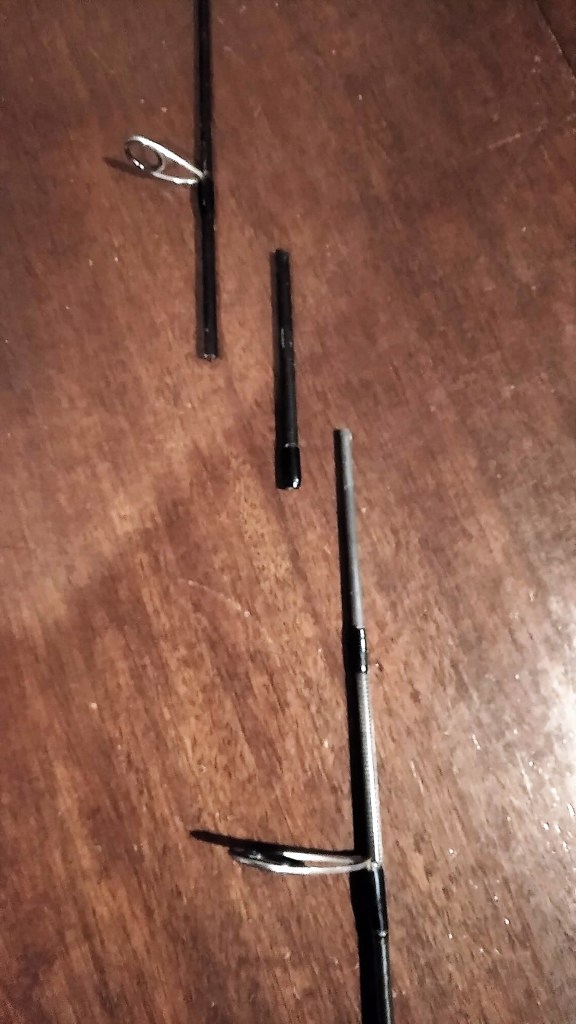
I should have quit at the point but I released the fish and cast out again. I hooked up almost straight away and this time the Samaki Zing had had enough. It snapped just above the join as the tailor took off. No complaints about the rod – I had just brought a knife to gunfight.
The light rod could not take it – two piece became three piece
I jogged back to the car got out my light rock fishing rig – Daiwa Crossfire 1062 and Shimano Stella 4000 reel, 30lb braid and (luckily) 30lb fluorocarbon leader and my keeper bag. I made it back to the beach in about 10 minutes and the mayhem was in full swing.
I started with another big bright soft plastic and that landed a couple of tailor before it was destroyed. I swapped to the 40g Duo Dragmetal Cast Slow. This is a jig designed to be worked quite slowly. It has two assist hooks at the top and one on the bottom. I cast it out and jigged it back to me. I immediately caught a couple of solid dart.
By now I could see the reason the fish where here. All along the wavebreak there were thick schools of small baitfish. A huge school of dart and tailor were roaming the shoreline smashing into this bait. I cast the jig out again and it was picked up almost immediately. I started playing the fish and let it take some line. When I pulled the fish towards me it suddenly felt much heavier. It also started moving really erratically. There were a couple of swirls and splashes and then I realised I had hooked two tailor on the one jig. I kept up the pressure and then one of them pulled the hook/ bit through the jig and I landed the single fish on one of the remaining hooks.
A great tailor and dart fishing session on the beach at New Brighton
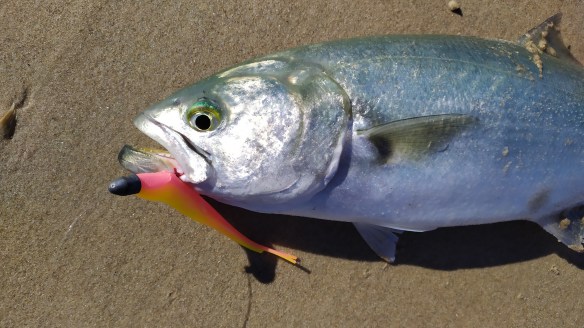
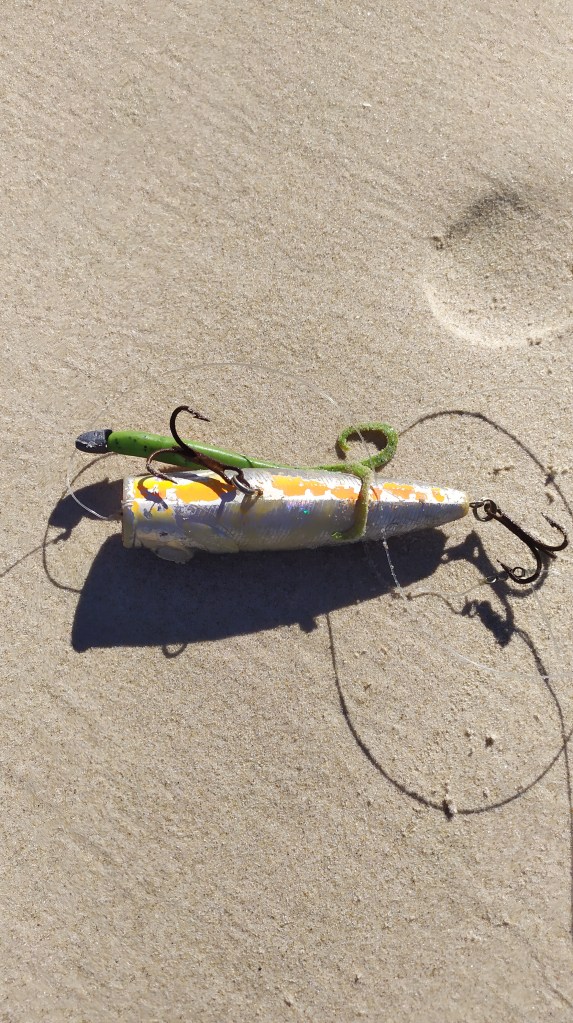
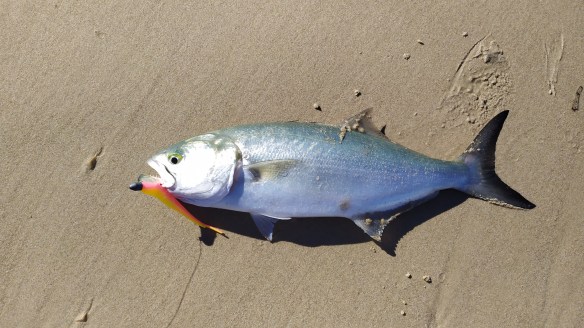
I swapped around between soft plastics metal slugs and jigs for about an hour. Everything caught fish and at one point I reeled in a big popper that someone else must have lost. By just after 11.30 am the bait school gradually moved to the north along the beach and took the tailor dart and birds with it. I kept six tailor for a family fish pie and let the dart and the rest of the fish go.
A couple of days later on the 6th June I arrived at dawn, to see if the fish were there. This time I started fishing further to the north on the beach at New Brighton, just before sunrise. There was a good gutter and cast into its mouth. The first taker was a tailor. It bit down hard on a 55g Halco Twisty metal lure, in the gold colour. But there was only one and I put in a lot of casts trying to find another. Once the sun was truly up, I swapped to a big GULP Crazylegs Jerkshad soft plastic in the lime tiger colour. I fished this on 1/4 ounce, size 1/0 hook jighead. I cast it into the gutter and let it waft around. I hooked a fish, almost immediately. As I pulled it towards me it wriggled off. I carried on peppering the area with casts and after about 10 more I came up tigh on another (or perhaps the same one).
A couple of days later things were much slower
On Tuesday, 8th June I came down to fish the area again at about 11.30 am. It was now two days before the new moon and the tidal flow was quite powerful. There had been some rain the day before and the river was a little murky on the run out tide. I walked out to the end of the rockwall at North Head. I started fishing with a 40g Halco Twisty. I cast and retrieved it across the mouth of the river and then along the line where the river running out met the clearer ocean wash. I soon had a fish – a 35cm tailor. I released it and caught another two straight way. Then things went quiet.
I swapped to a soft plastic minnow and caught a couple of 30cm bream and then things went quiet again. On the way back to the car I had a quick cast in the shallows in the corner of the beach. On about my 4th try, I felt the unmistakable thud of a flathead bite and after a short tussle I had a 45cm fish at my feet. Not a bad session but the big tailor school had clearly moved on.
On Saturday I had another session fishing land-based at Brunswick Heads. I started at 1.30 pm on a Saturday afternoon. This is pretty much breaking every rule in my fishing book. ‘Fish at dusk and dawn’, I am always telling everyone. But the last couple of days had produce lots of fish and I had other commitments at dusk and dawn. I was enjoying a good red wine at dusk and sleeping it off at dawn, so I decided to get some fresh air and put in a few casts.
It was a cloudy day and there was a light south easterly wind blowing. I was fishing the beginning of the run in tide. Low tide had been at 12.08 pm. The water was clear and once again there were small schools of tiny baitfish close to the shore line and around the various rocky outcrops.
I was using my light spinning combo and I put on a 4 inch GULP Pulseworm in the Moebi colour. This was another of GULPs short lived shapes in Australia. I found it was pretty good for flathead but it obviously did not sell very well and is now disappearing. However Pure Fishing/Berkley Gulps’ loss is my gain and I picked up an armful of packets for for $5 dollars each to feed my habit.
The first taker was a 20 cm flathead that must have been sitting in the shallows. It was about 30 cm from the shoreline. It had been buried in the sand and grabbed the soft plastic lure just as I was about to cast again. I cast around the rocks and lost a few jig heads by hooking the river bed.
I moved further down towards the river mouth and kept casting. Just before 2.00 pm my line pulled up tight and I caught another flathead – it was probably just 36 cm long. I released it. Almost immediately I caught and released another one, about the same size. I carried on fishing and swapped through a few different soft plastics. At 2.06 pm I caught yet another, This one was about 43 cm so I decided to keep it.
I kept casting. I was now fishing the GULP 4″ Minnow in the Smelt colour. The bream kept trying to pull this one off the jighead. Eventually one of them struck and hooked itself. Just after 3.00 pm I caught the best flathead of the day on a GULP 2″ Shrimp soft plastic in the Peppered Prawn colour. It was about 50 cm long.
At about 3.30 pm I gave up and cleaned up the two biggest fish to take home for supper. So you can catch fish in the Brunswick River on a Saturday lunchtime – but probably only when the river is teeming with bait and it’s not the school holidays.
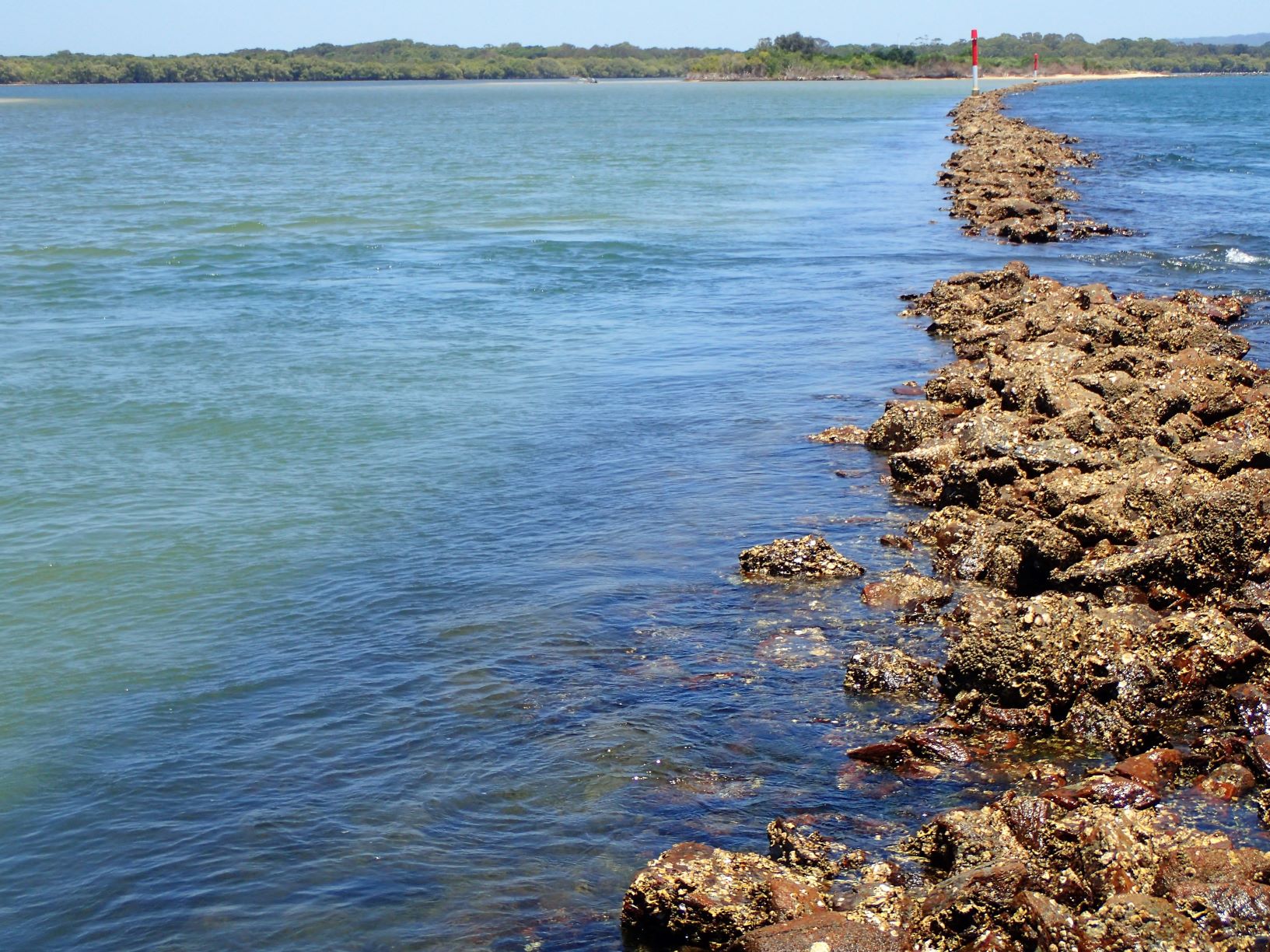
In December I did not get a lot of time to fish. The weather was windy and so when I did get time for a session it was not on the headlands or beach. I drove down to the Richmond River at Ballina and decided to fish the shallows on the south side, near the river mouth. There are good tidal sand flats – lined by oyster covered rocky shore and mangroves.
I waded around with a light spin rod, 10lb fluorocarbon leader and a few of my favorite soft plastic lures. I generally used a 1/8th ounce, size 2 hook jighead loaded with a small 3 inch GULP Minnow or Shrimp shaped soft plastic. I was fishing the run out tide through the middle of the day. I did not have very high expectations but its is always good to explore for the early morning and dusk sessions, which are when I am most likely to catch supper.
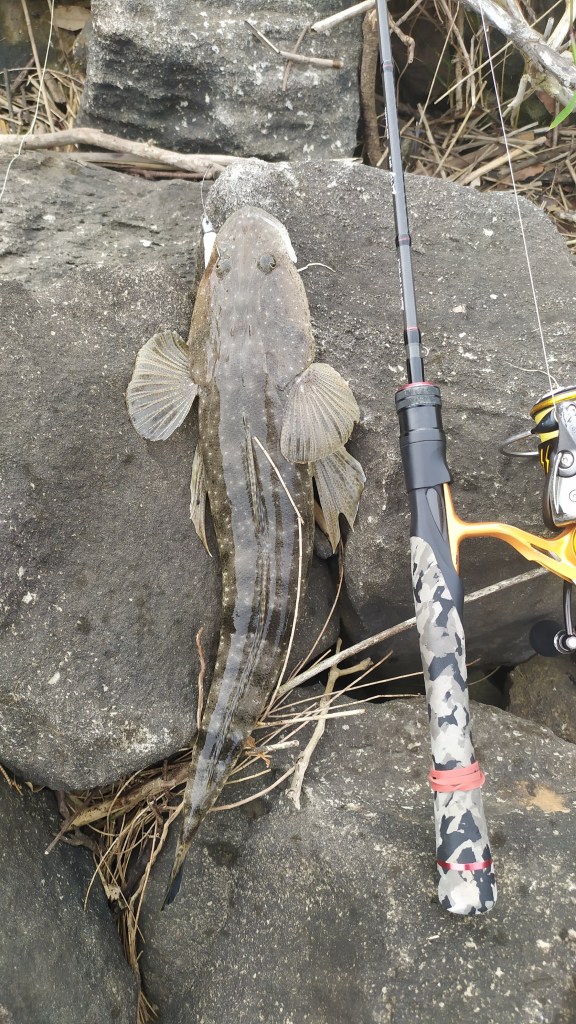
My session started with a couple small bream in close to the shoreline. As I waded around and the tide headed for low, I started to catch small flathead. I caught about 8 in a few hours but only one would have been just about legal size. So they were all released today.
In summary this looks like it will be a productive spot in the cooler months and I will definitely be back to fish it.
In mid-July I had a great winter afternoon fishing session at my favourite old stomping ground – the flats of the Pumicestone Passage at Bribie Island. It was a beautiful clear afternoon and the tide would be running out. I waded out to the north of the Bribie bridge, to a point where the water was about waist deep. I was fishing with a 2 metre long 12lb fluorocarbon leader and a fast action 6’6” spinning NS Blackhole spinning rod. I was using a GULP 4“Minnow soft plastic in the Pearl Watermelon colour which I loaded on to a 1/8th ounce, 1/0 jighead.
I cast in a semi-circle to the north of me. The tide was running out and I hopped the soft plastic along the bottom with two or three second pauses between each hop. The idea was to make my lure look like a wounded/ drunk baitfish wobbling along the bottom with the run-out tide. After about three casts the strategy worked, and I felt the solid thud of the flathead bite. I dropped the rod tip for a few seconds then pulled it up and set the hook. I let it take some line and the fast action rod absorbed its initial lunges. I slowly walked it back the beach under the bridge where a handy Woolworths shopping trolley provided a good spot to unhook it. It was about 47cm long and would be dinner.
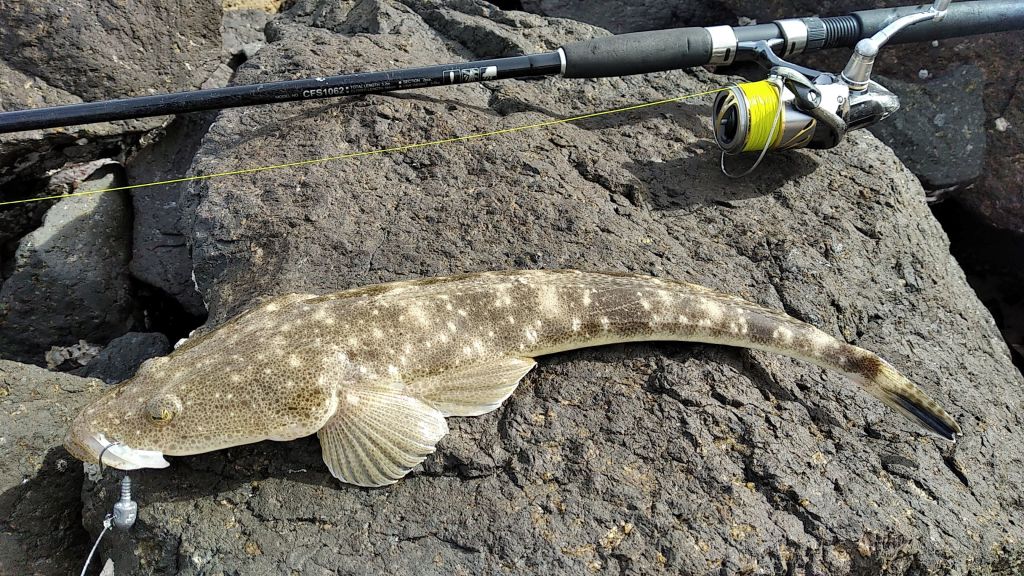
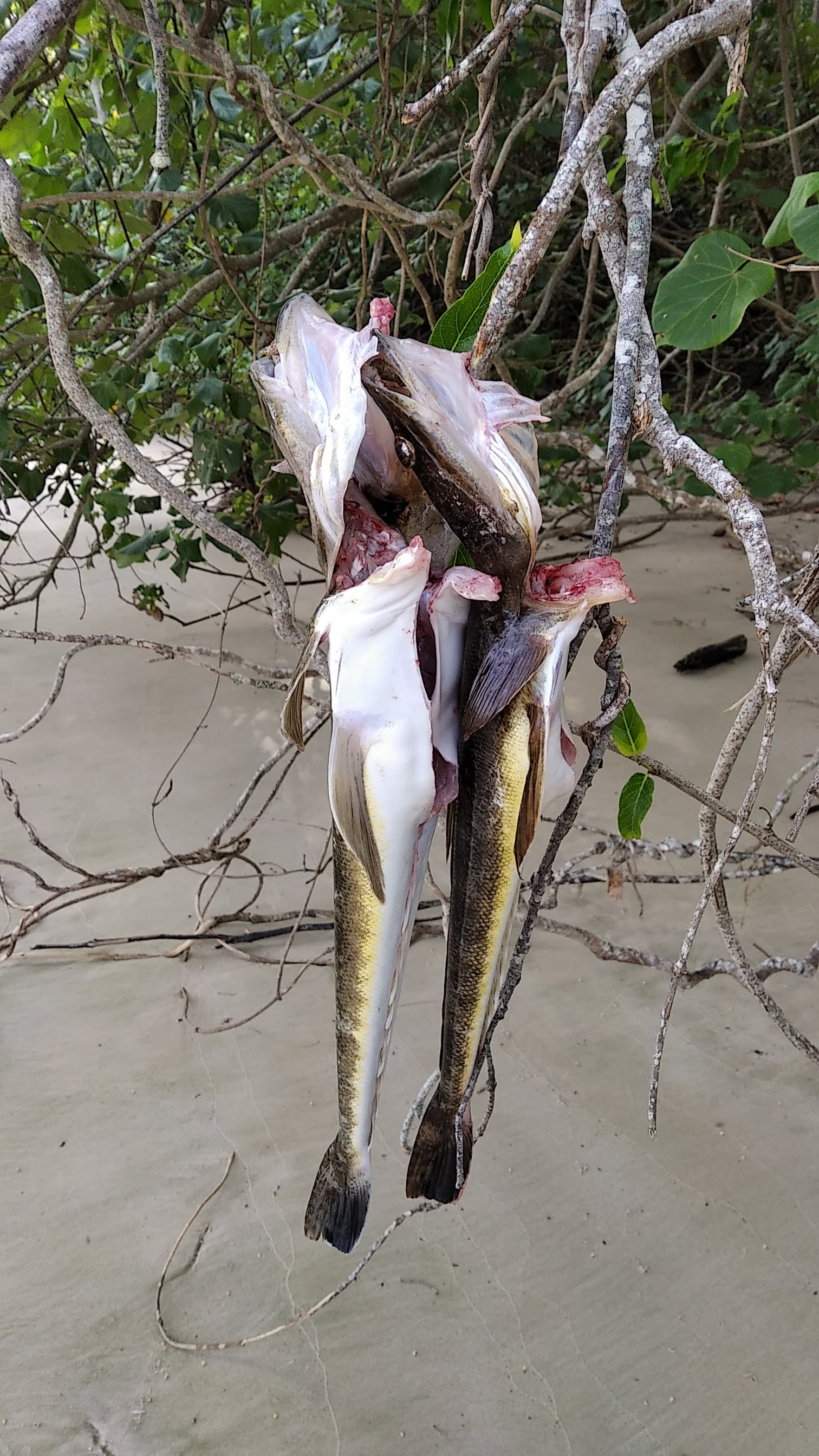
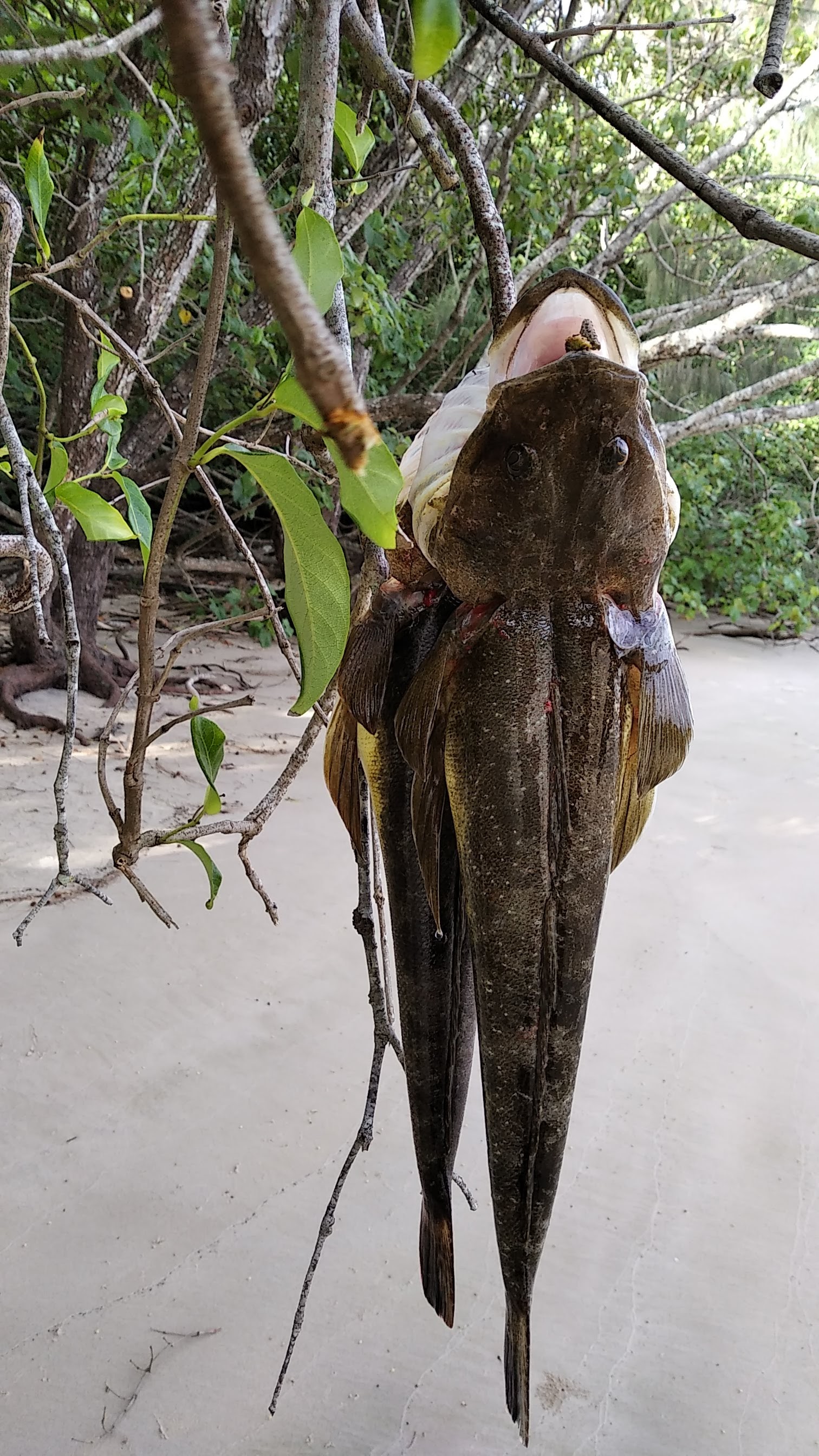
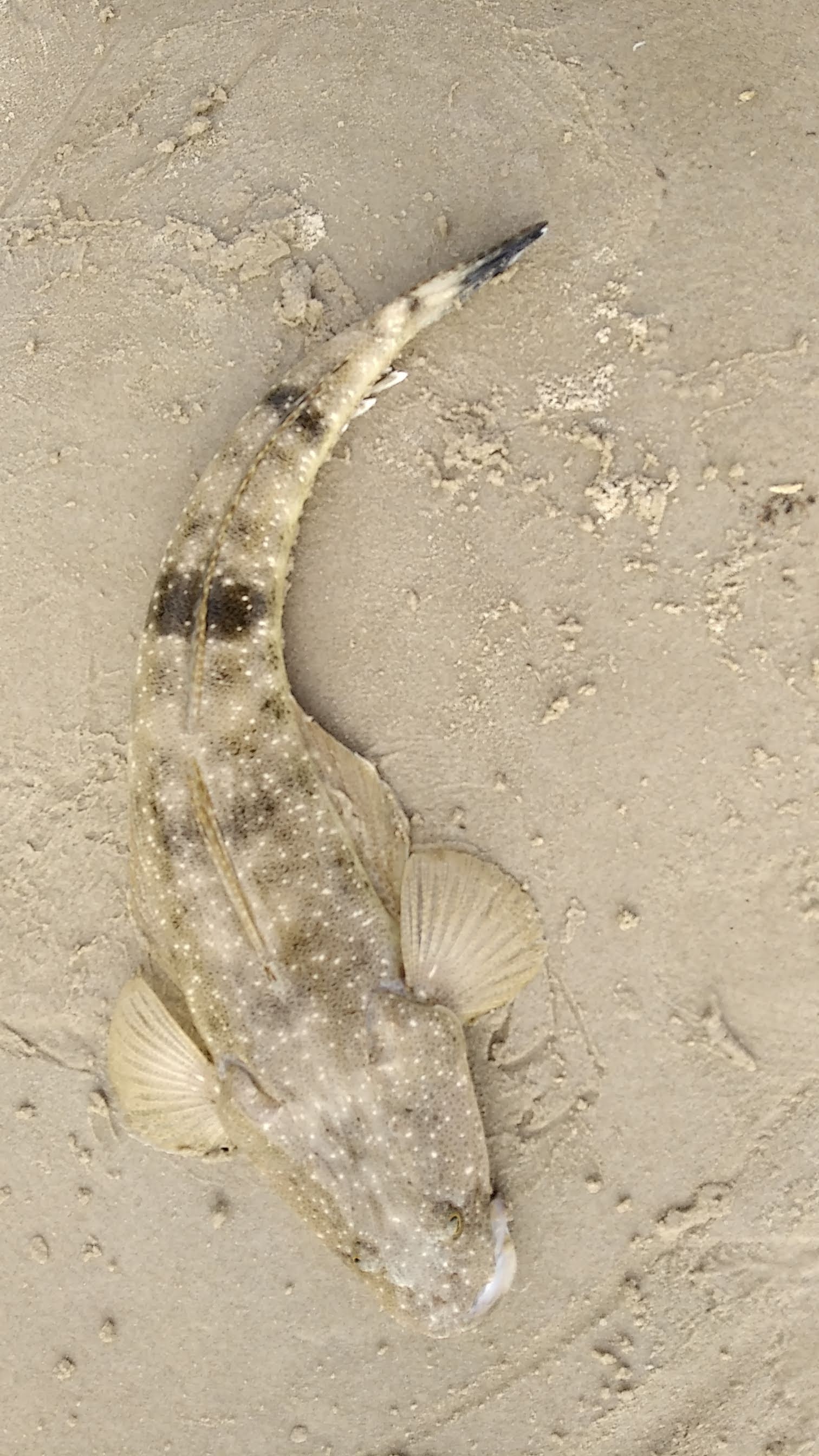
I carried on the technique moving south under the bridge and caught 4 more flathead through the afternoon. Of these two were just under 40 cm and one was a little bigger. I also hooked a couple of pike who seemed to be hanging around over the weed beds.
Monday had been pretty good so I decided to go back up to Bribie on Tuesday morning. Low tide would be about an hour later, at 10.30 am. There was not much tidal flow as the moon was not really doing much. This time I chose the oyster jetty flats on the mainland sided of the Pumicestone Passage.
It was another hot, clear morning but with a little more northerly wind, when I arrived at about 8.00am. I was still fishing with my short, fast action G.Loomis trout rod and 10lb fluorocarbon leader. I tied on a 1/8th ounce, size 1/0 hook jighead and put on a GULP 4” Minnow soft plastic in the Pearl Watermelon colour.
I was just south of the bridge and once more the first taker was a long tom. These fish are tricky to hook. They have plenty of teeth and usually the bigger ones thrash around until they slice through your line or shake the hook loose. This on managed to wrap the light line thoroughly around its snout. I untangled it and released it.
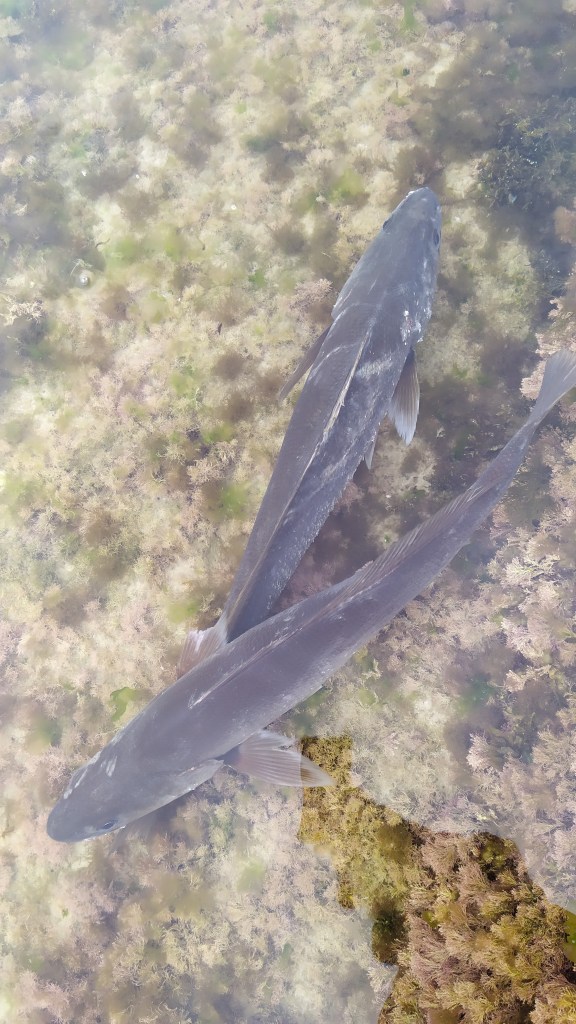
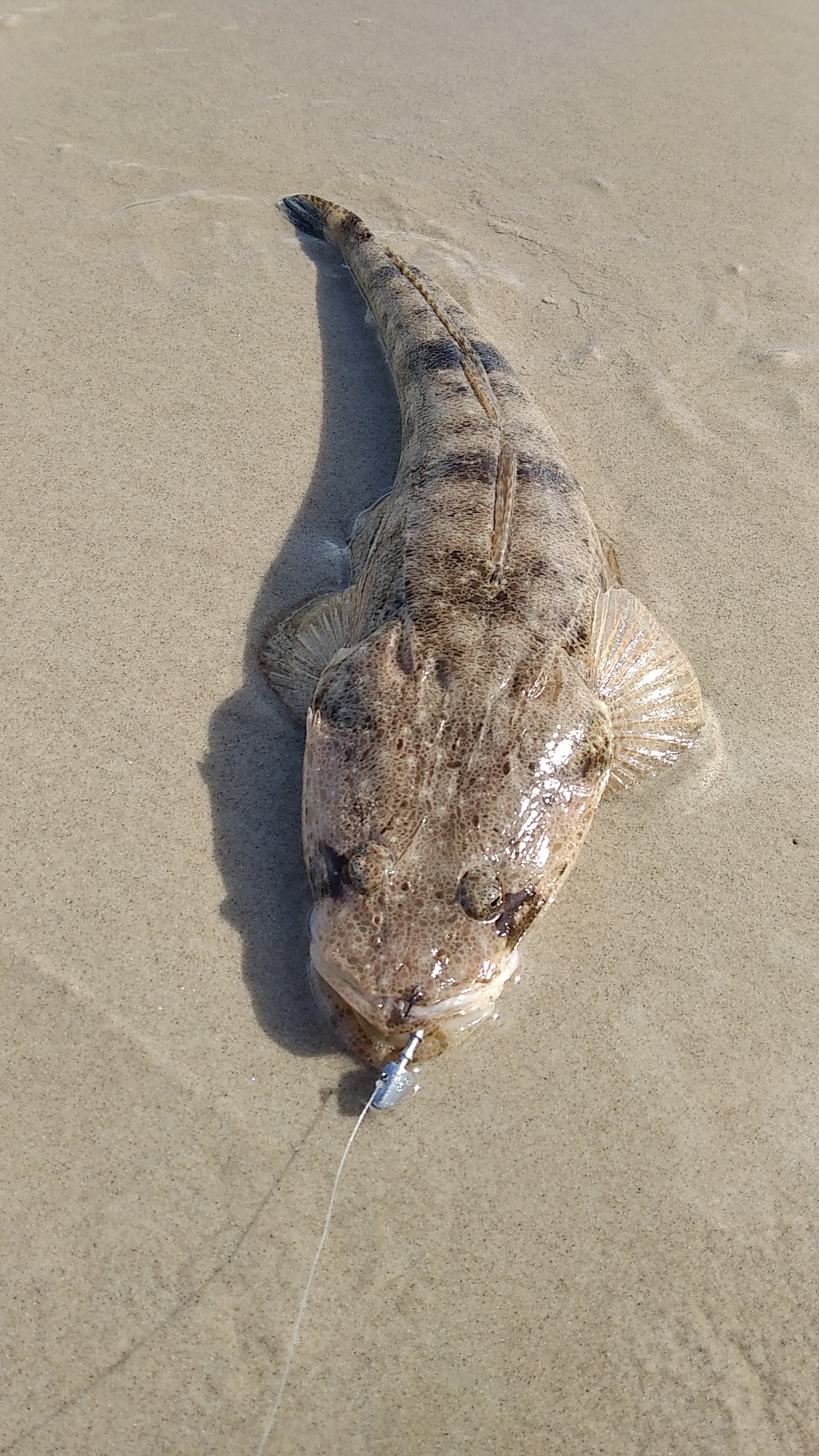
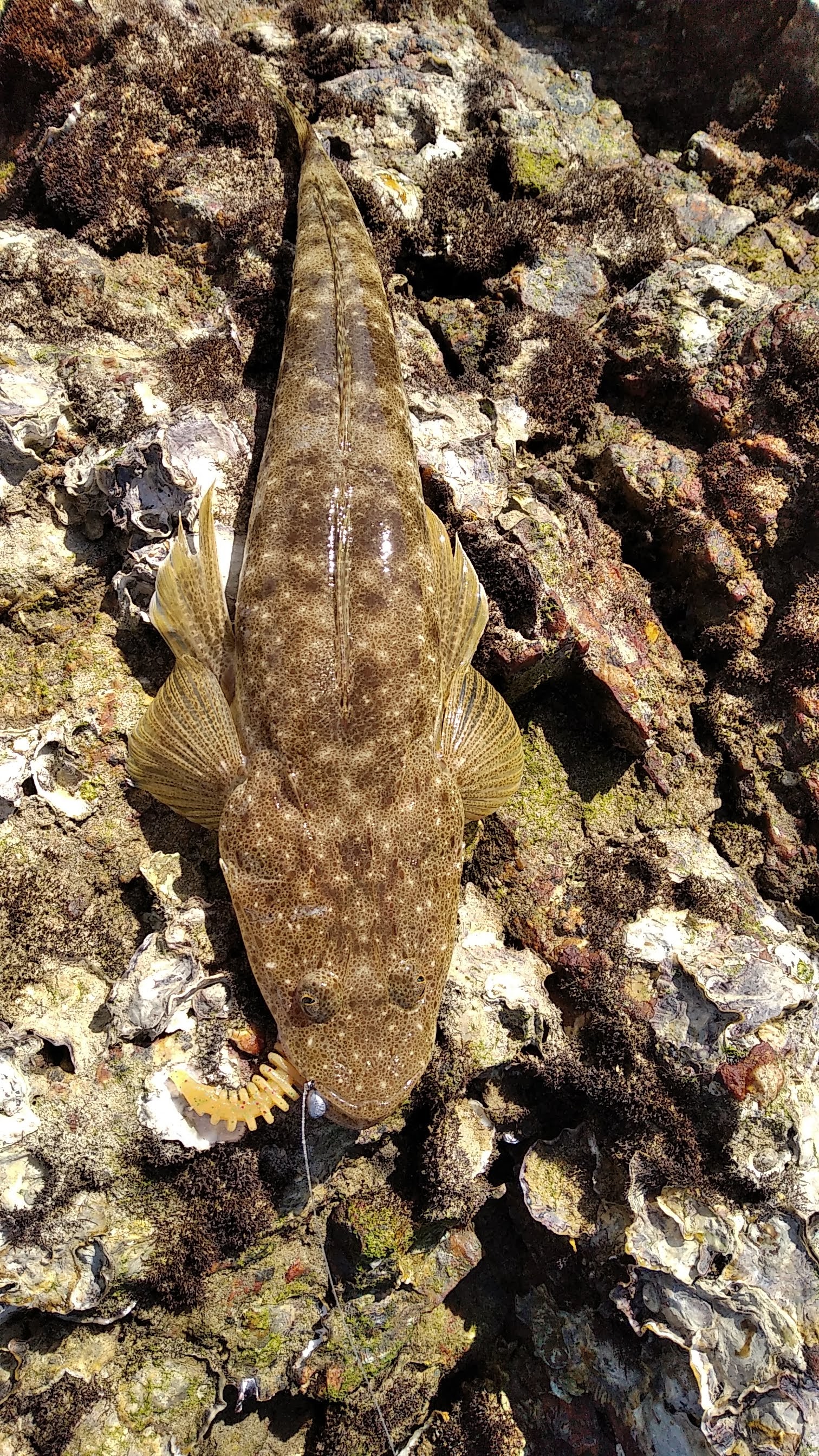
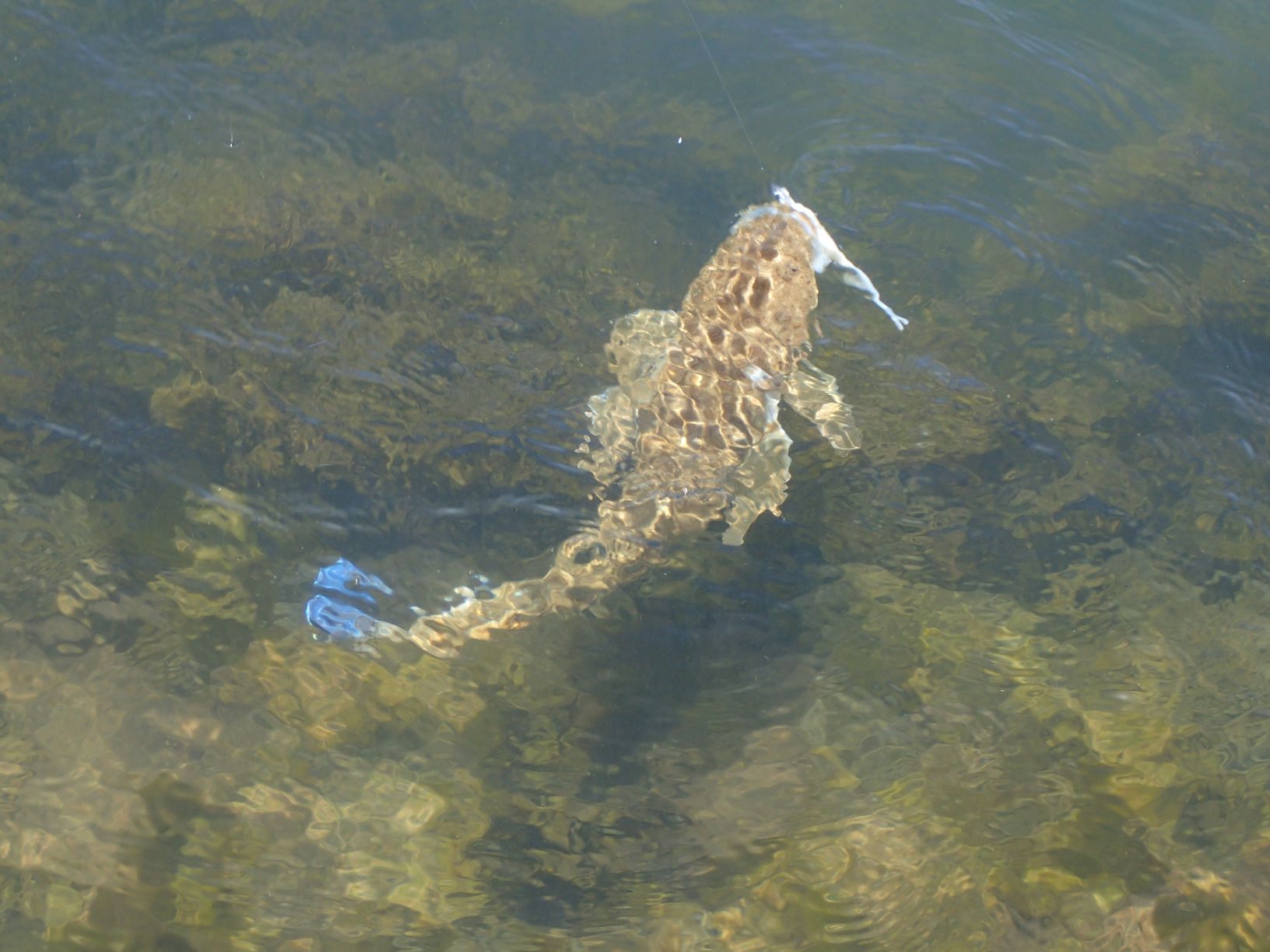
I moved south and swapped soft plastics to a GULP Cajun Chicken Jerkshad. This black and pink lure seems to stir things up sometimes probably because it is such high contrast. I was now well to the south of the old oyster jetty. I felt a slid thump, dropped the rod tip and paused. When I lifted it the fish was on and the hook pushed home. It took off and felt like a pretty good flathead. It later measured 58cm. I took a few underwater shots with my new camera. This is a fairly hit and miss operation when you are not swimming with them!
I carried on moving south and caught another 30 cm flathead about 3 casts later. After another 30 minutes I swapped to a GULP Satay Chicken Jerkshad and not long afterwards I caught another 50cm plus flathead. As the tide stopped running the action slowed. I caught three more smaller flathead before giving up at about 11.00 am.
On Friday I decided to fish on Bribie Island itself, at Bongaree. This ever changing stretch of sandy shore runs along a coffee rock ledge and is a good fishing spot. The winds were light and low tide would be at 9.35 am. The water was very clear and the northerlies had blown a few big blue jellyfish into the Pumicestone Passage.
The I started fishing on the flat sandy areas next to the drop off at about 8.00 am. The tide was running out, but not very quickly. I was fishing with a GULP Fry soft plastic in the Lime Tiger Colour on a 1/8th ounce, size 1 hook jighead. I was using 10lb fluorocarbon leader. Things were fairly slow but after about thirty minutes I felt a solid bite and hooked a 45cm flathead. I released it and moved along the ledge.
I swapped to a GULP 3” Minnow in the Pearl Watermelon colour and cast around just of over the ledge. I felt some quicker, more aggressive bites and soon caught a Pike. This was followed by another, a few moments later. A hungry Pelican came over and when I caught a third Pike, it tried to pull it off the hook.
As the tide changed, I stopped for a cup of coffee and then repositioned myself over on the other side of the bridge on the old oyster jetty flats. I started with the bigger GULP Minnow in the same colour and soon found a flathead. It was sitting on the bottom just beside the new pontoon.
I continued south and swapped to a jighead with a red painted head. Local fisherman, Colin has been painting his jigheads either red or yellow and feels this makes them more attractive to the fish. He very kindly gave me a few to try.
They worked for me and the next fish was a bigger flathead, caught just to the south of the jetty. It was now about 11.00 am and I had nearly reached the green channel marker. The tide was coming in faster and the water was getting too deep so at about noon I finished for the day.

























































































 Landangler's Blog