Sea surface temperature was about 24 Celsius through most of November 2024, well above the long term average of around 20 Celsius.
The weather was kind with not too much rain and light seas. This meant I was able to fish the rocks on both the full and new moons. There was a new moon on the 1st and another new moon on the 30th with a full moon on the 16th, in between the two.
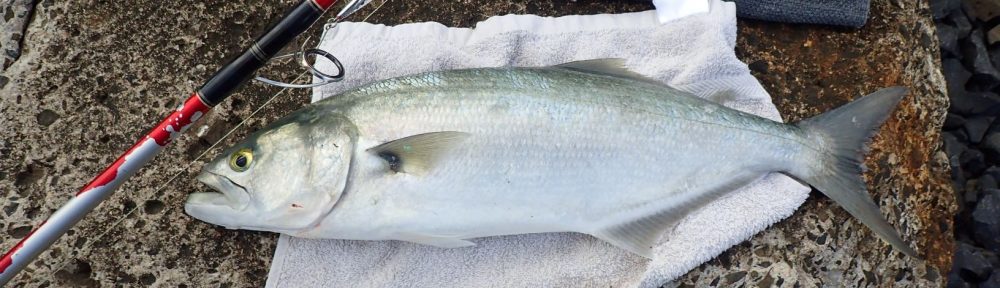
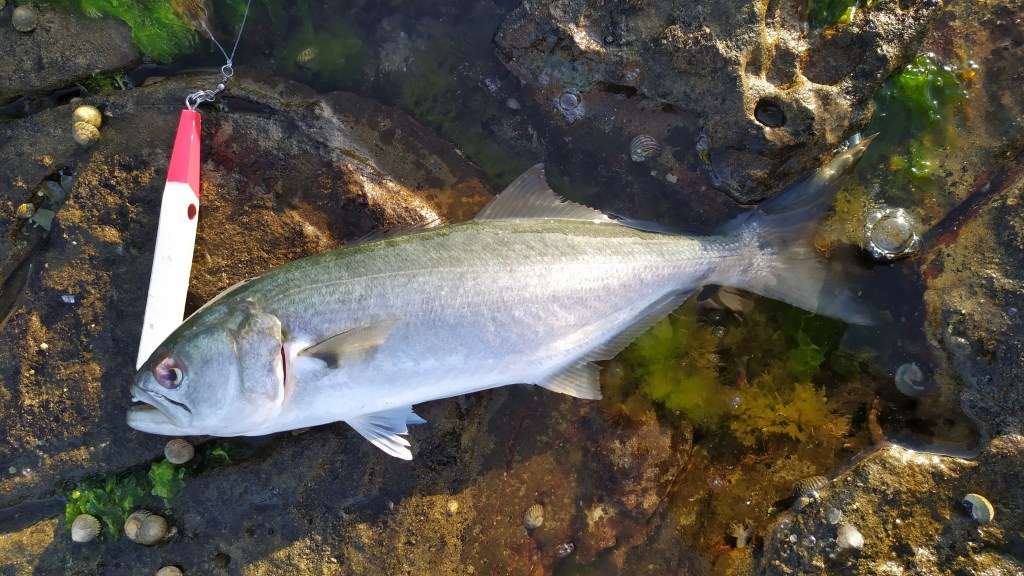
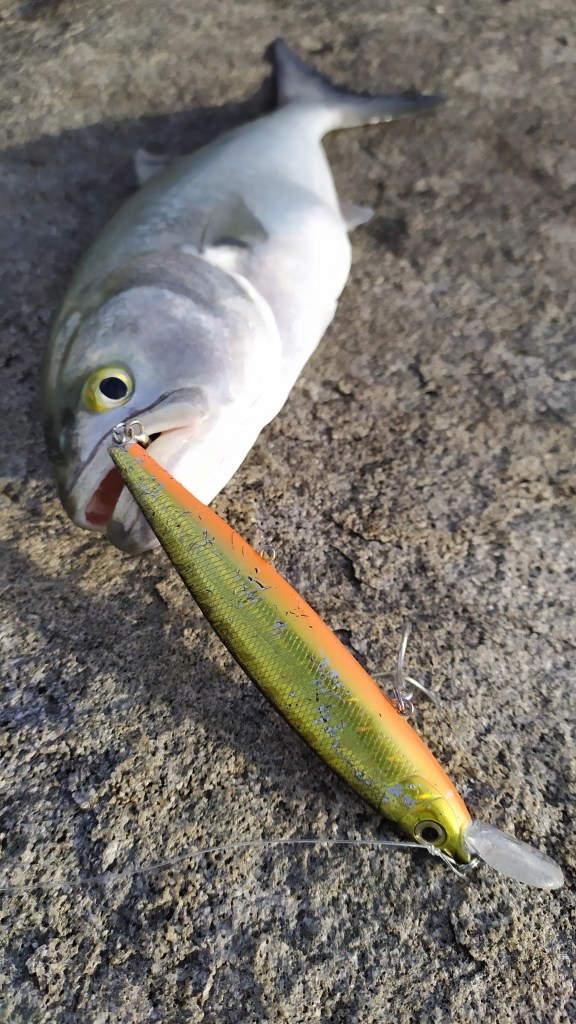
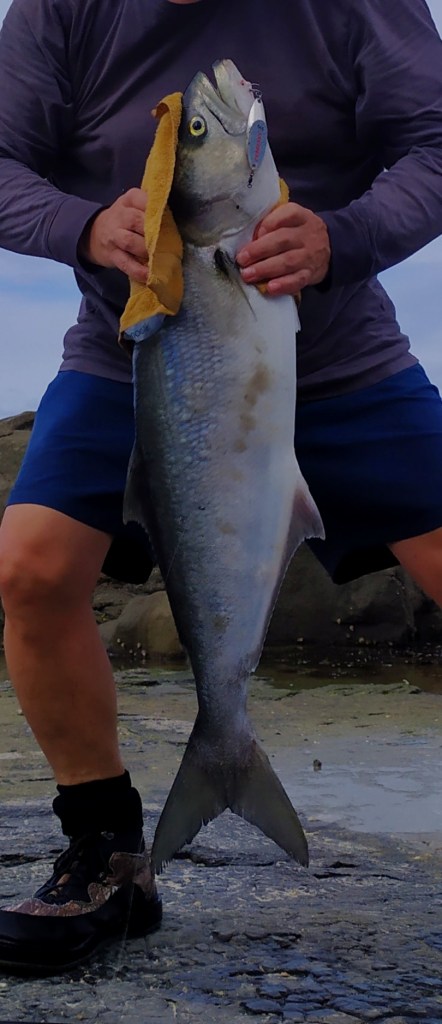
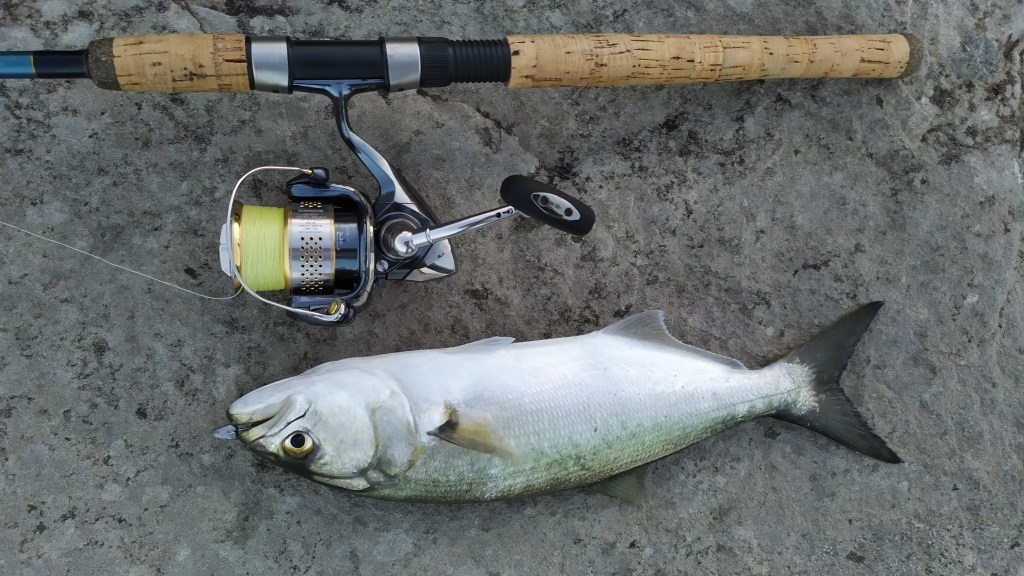
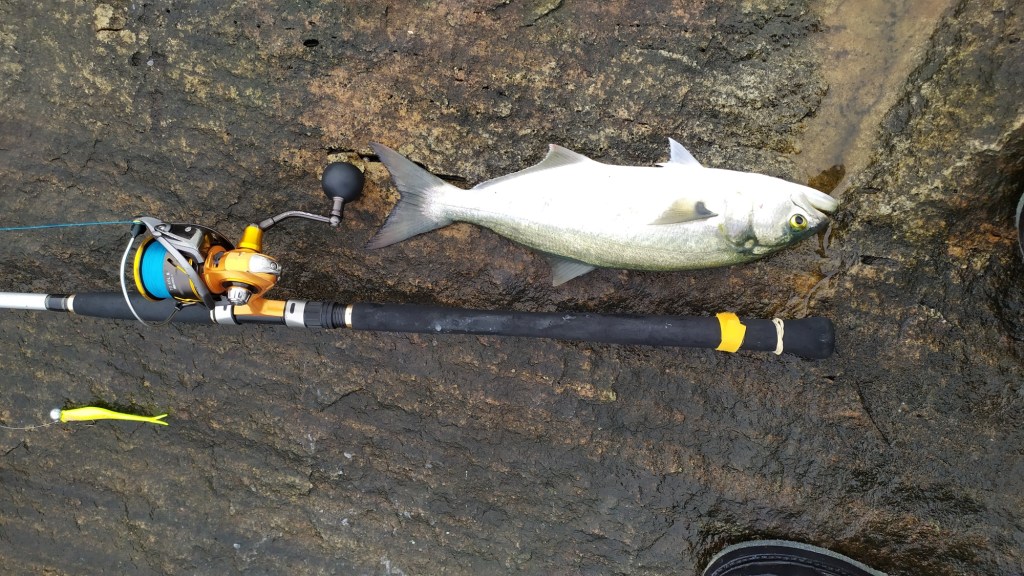
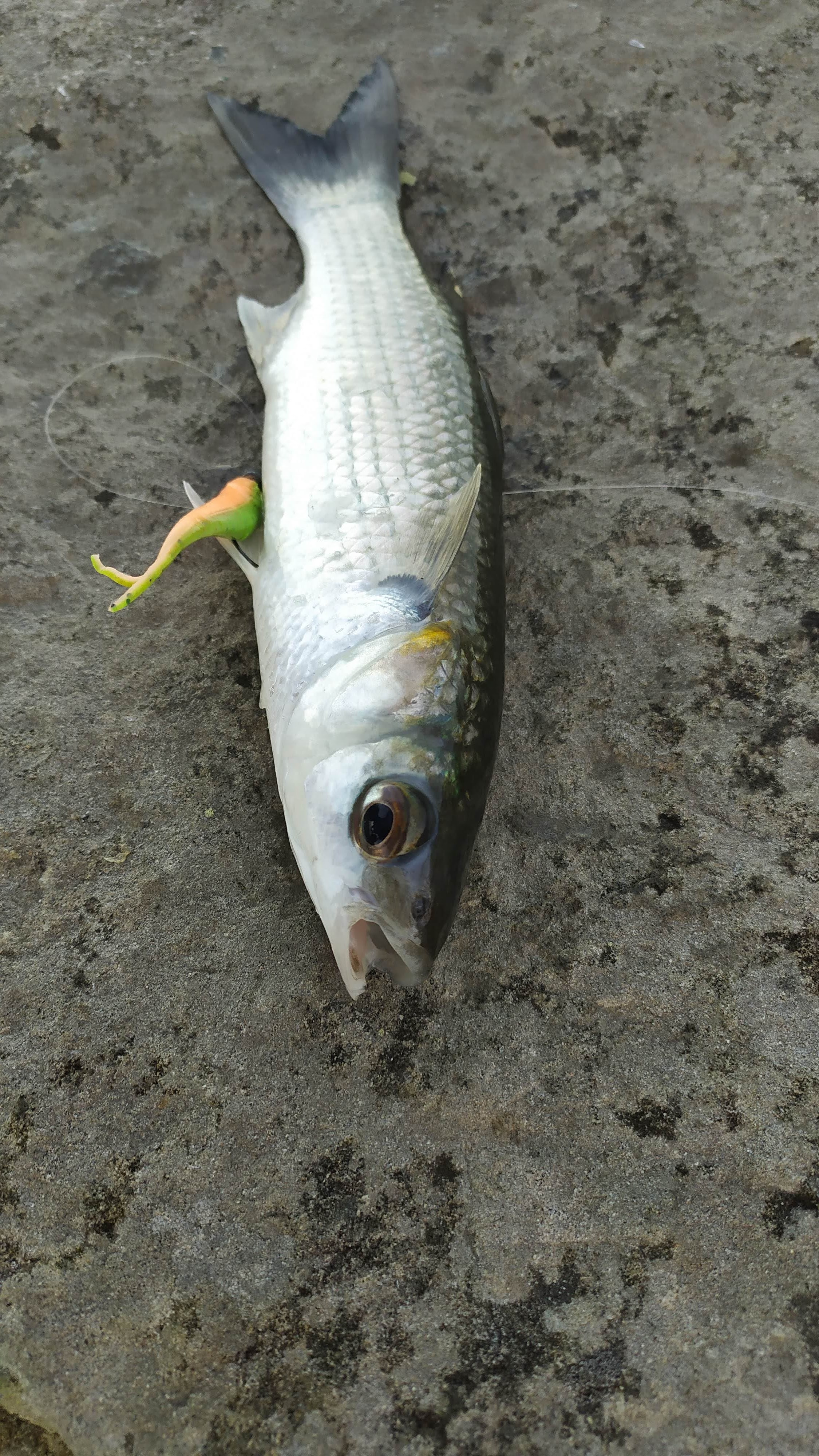
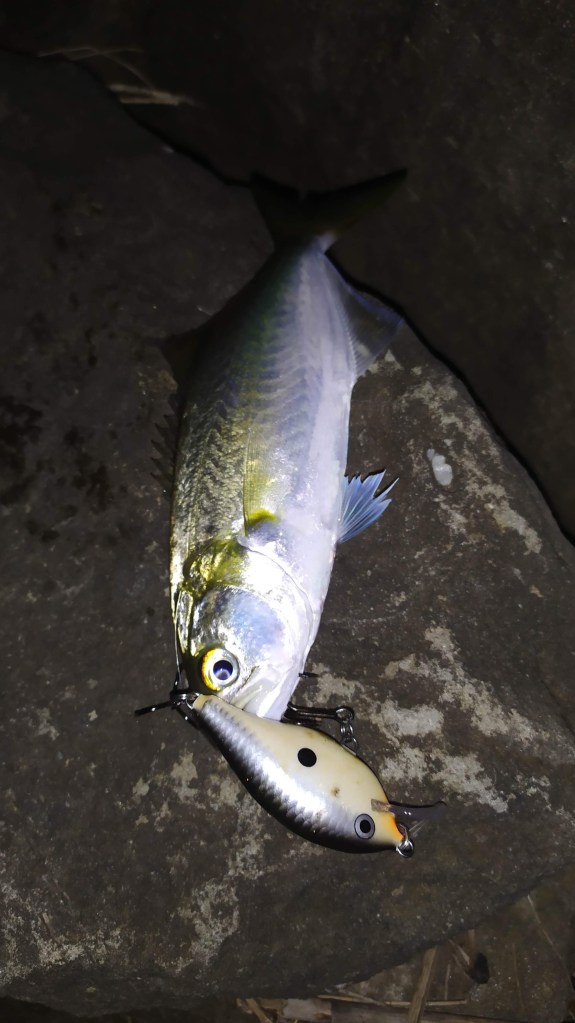
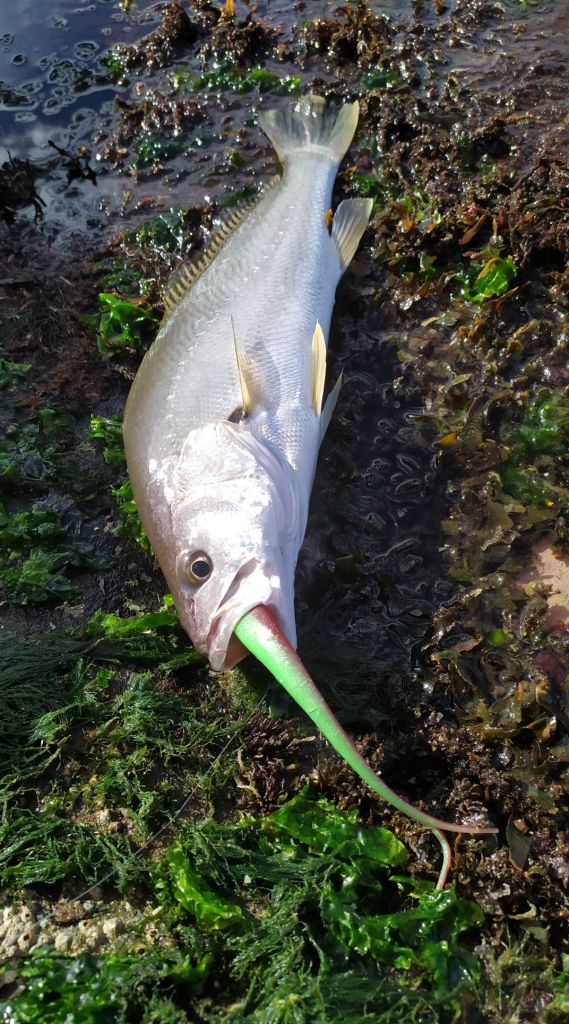
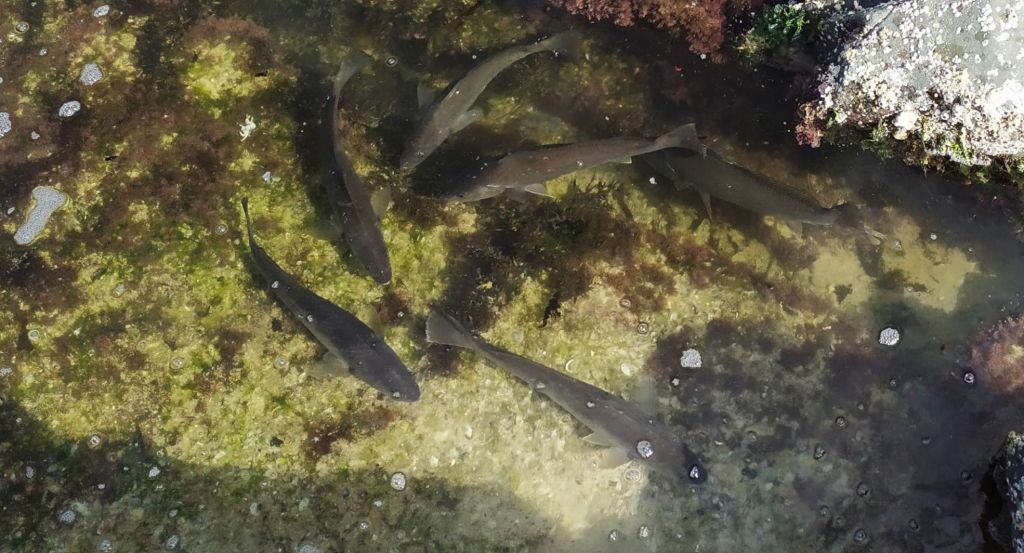
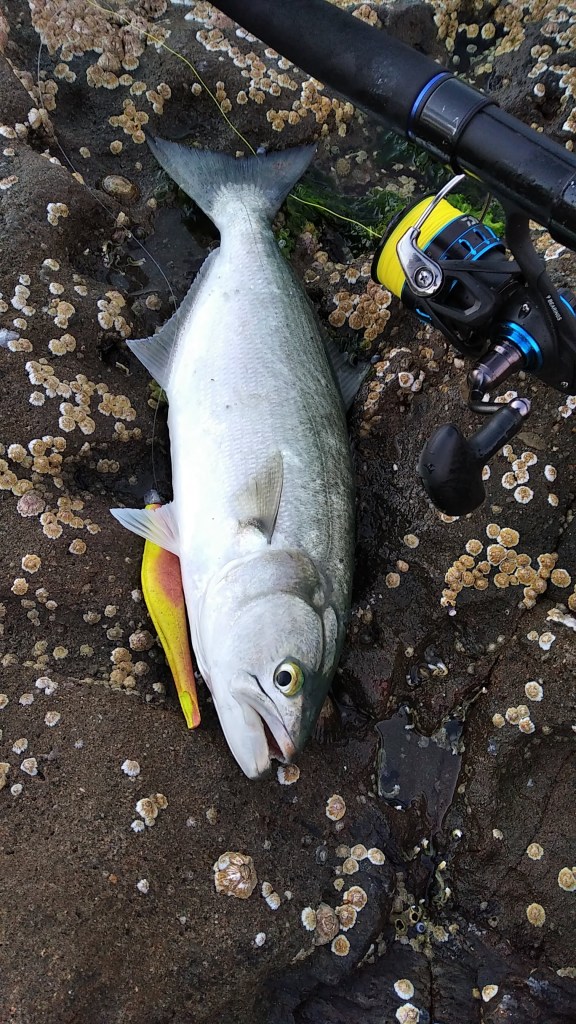
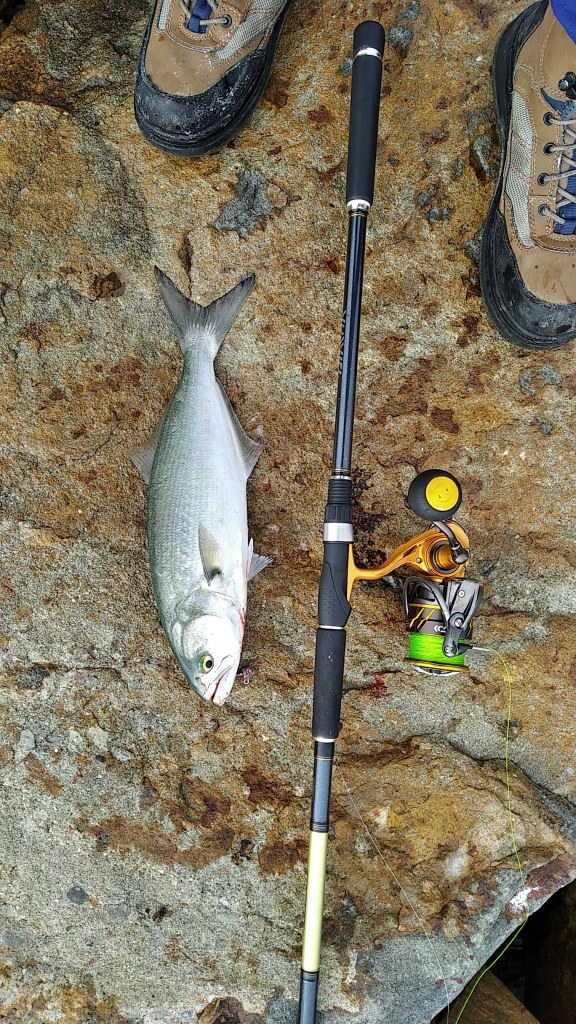
I caught plenty of tailor through the month. They would often destroy my soft plastic when I was trying to catch a jewfish. They were generally quite big, ranging between 45 cm and 60 cm. When I swapped my lure to a big surface popper or garfish shaped stickbait, I tended to catch bigger fish.
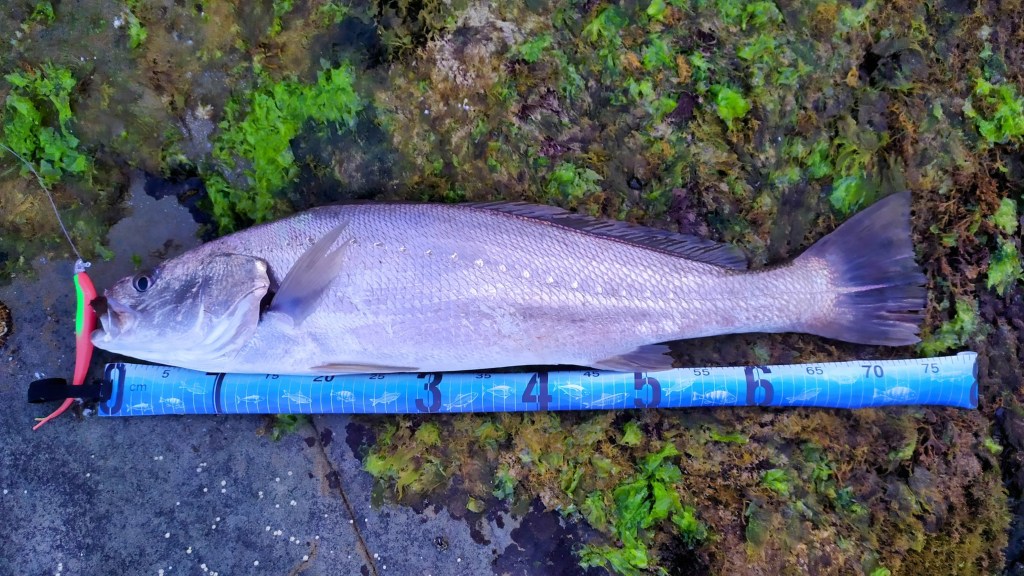
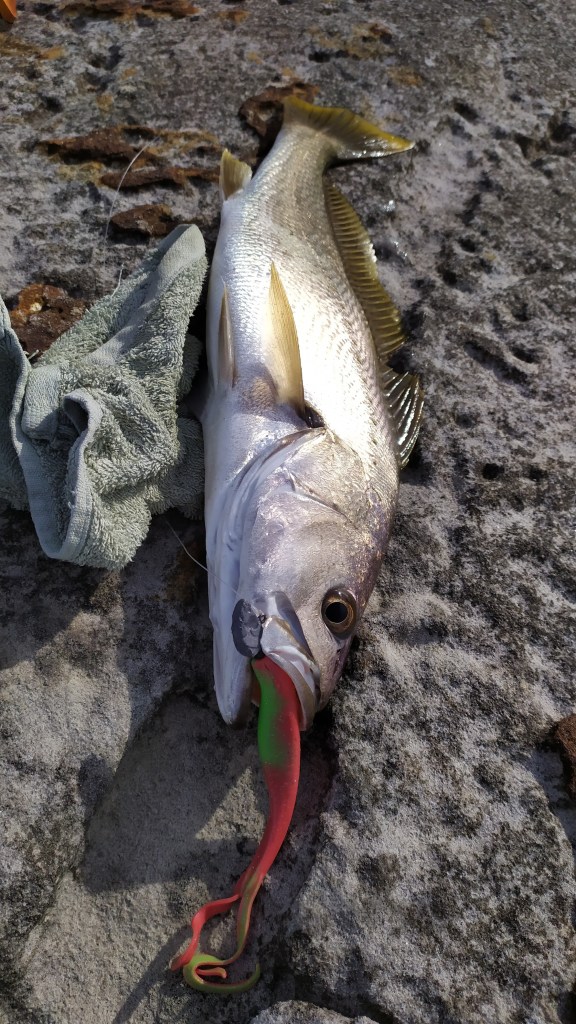
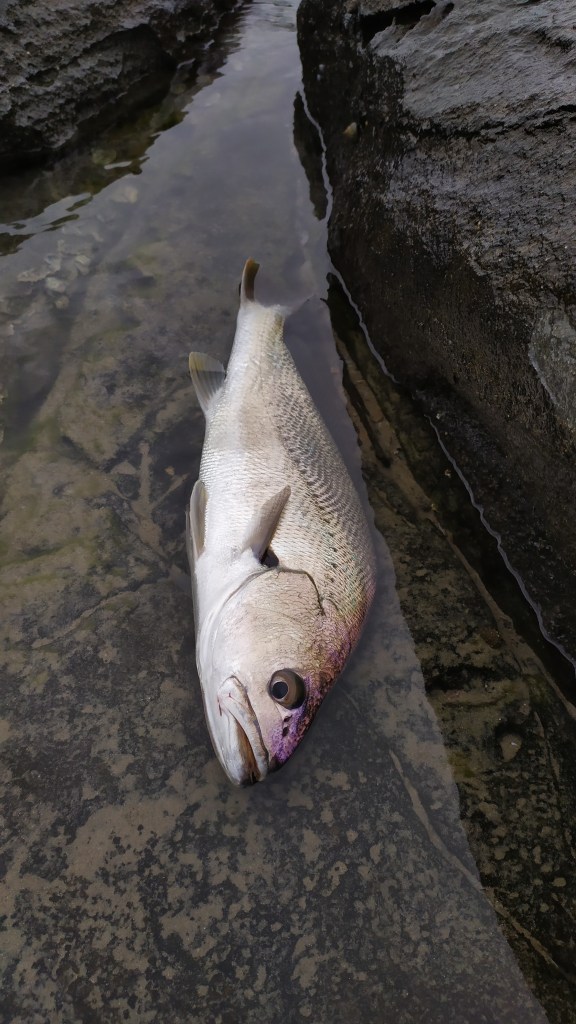
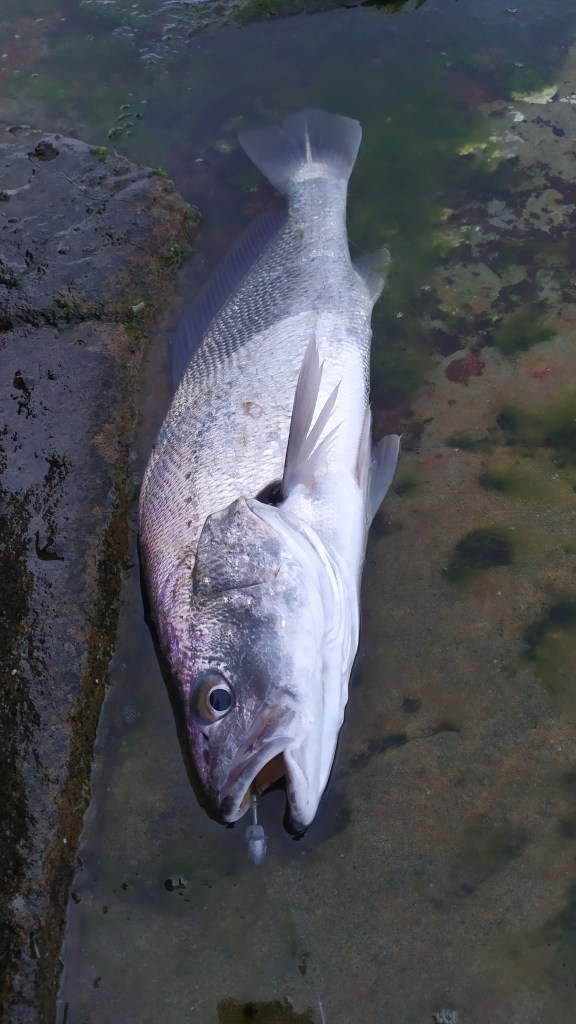
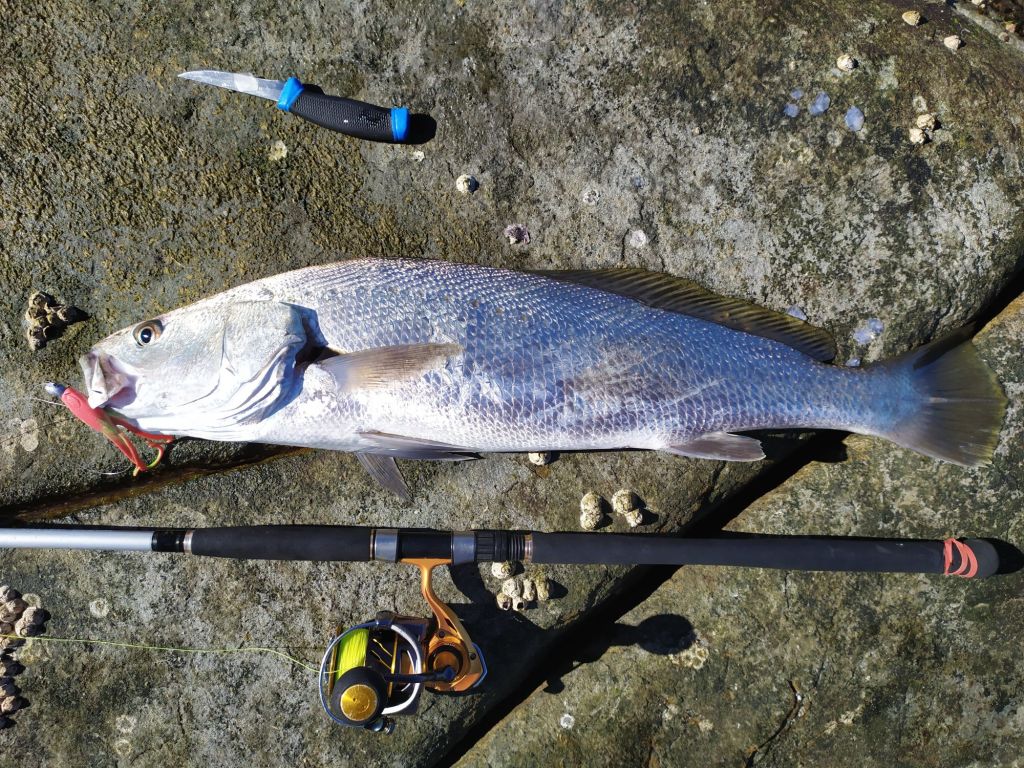
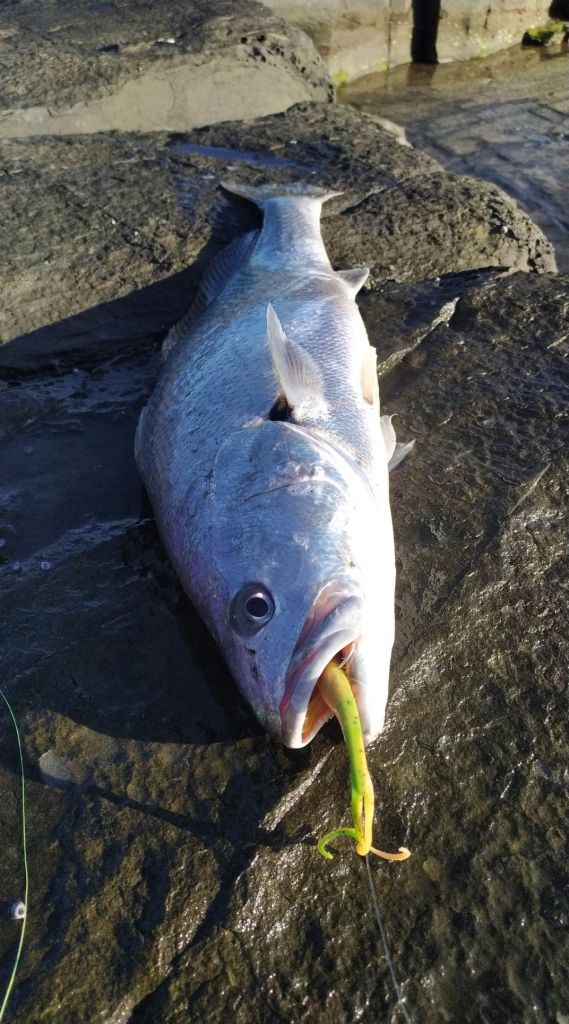
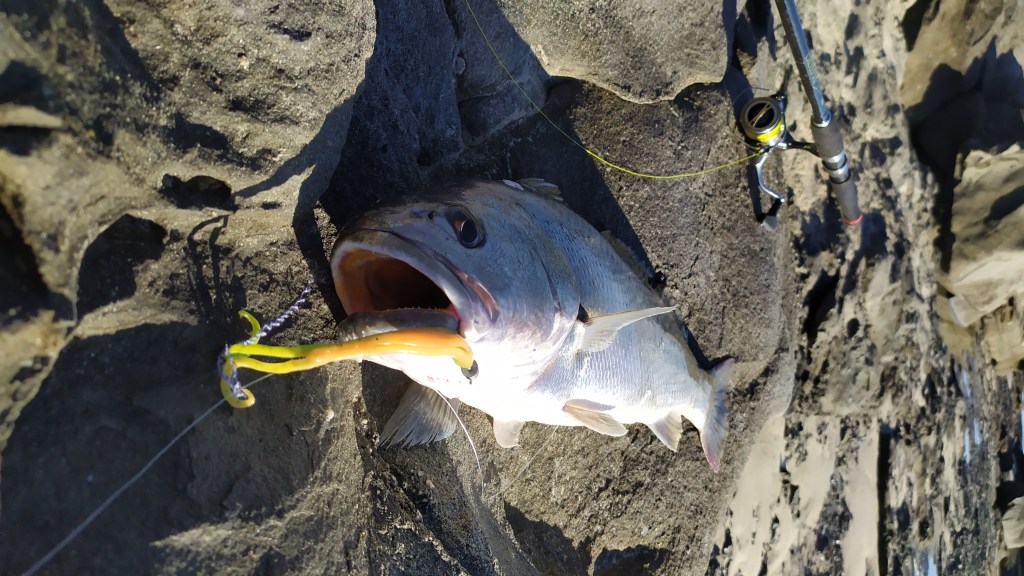
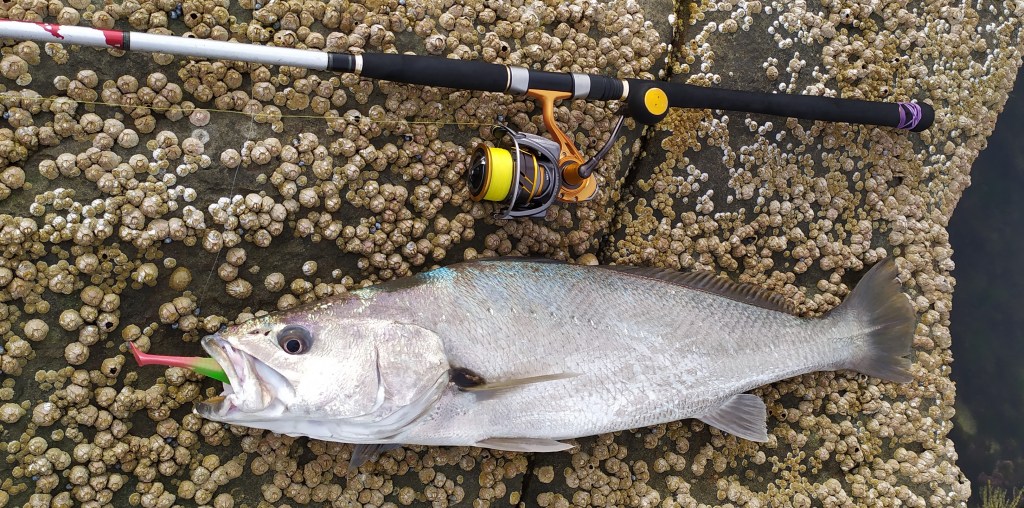
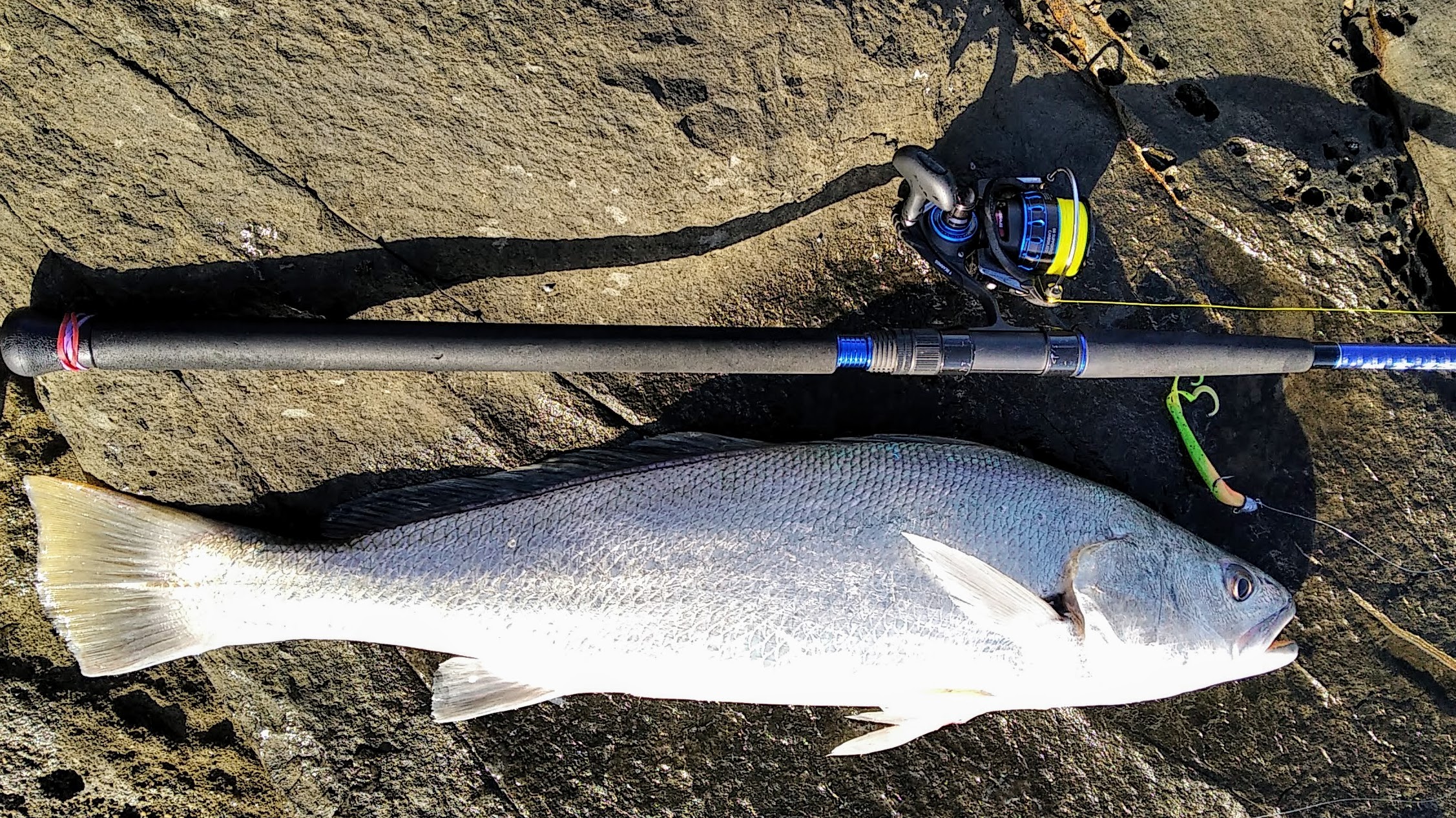
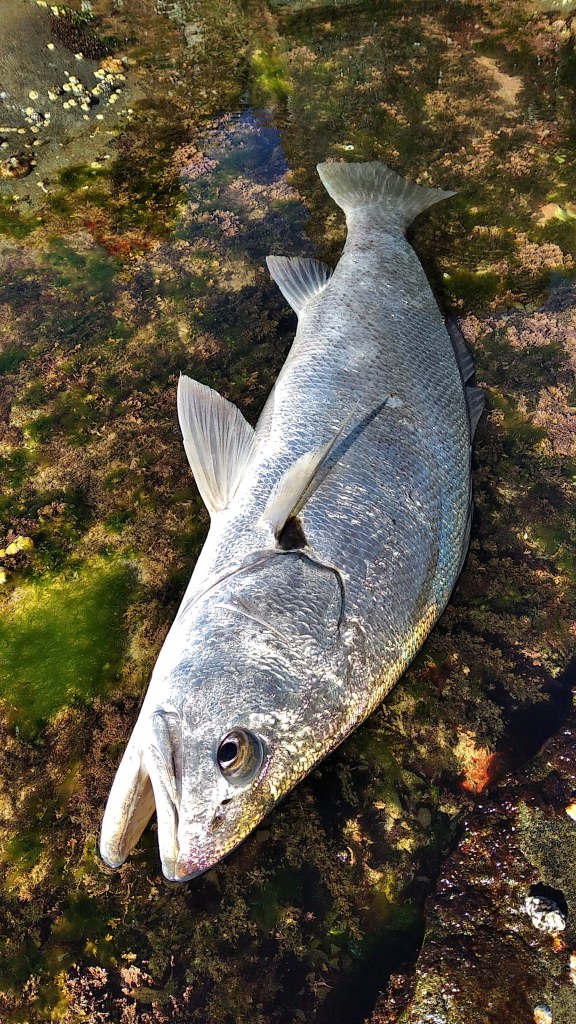
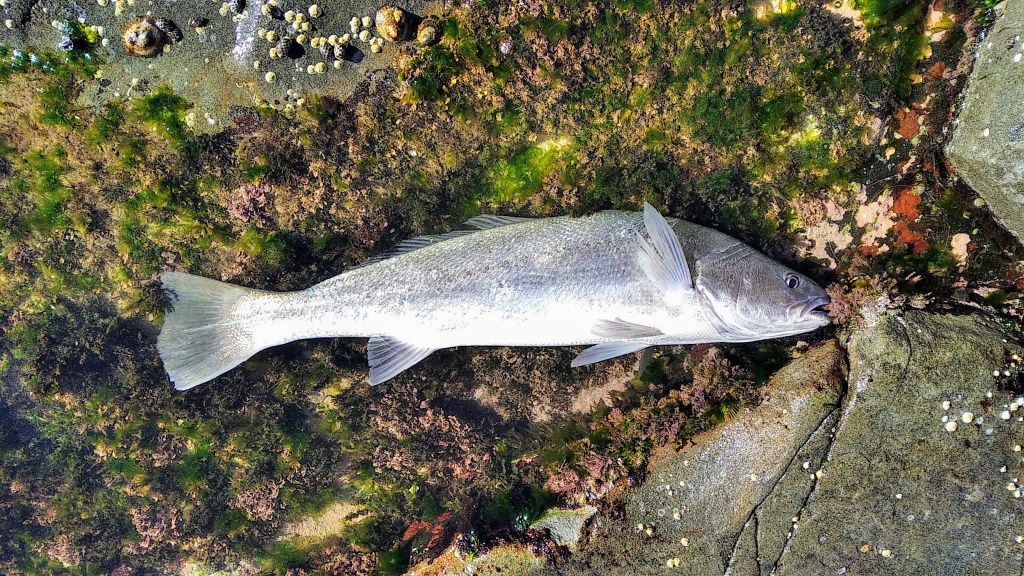
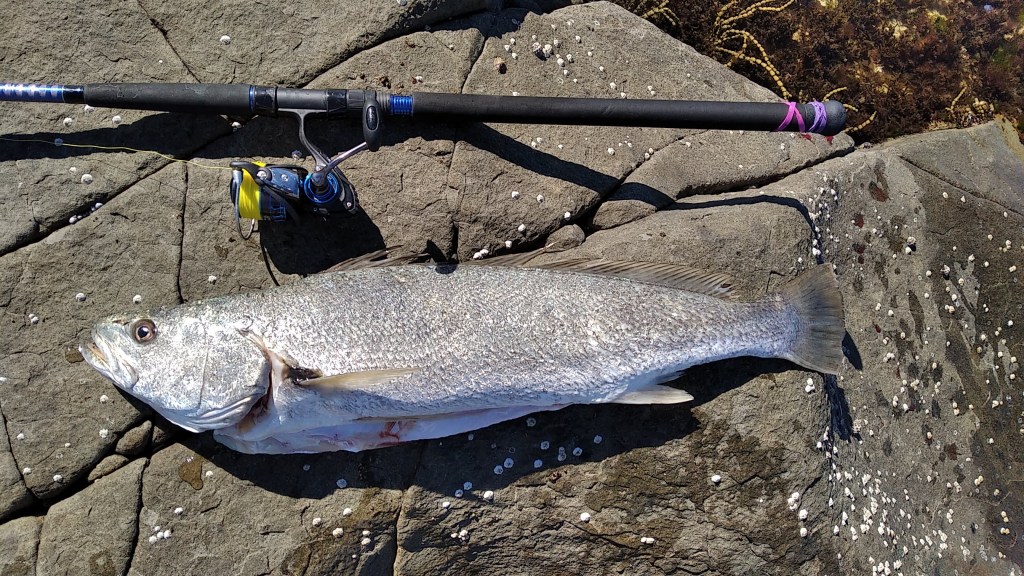
I also caught plenty of jewfish (approximately 35 over about six sessions on the headlands). I usually found them when I was fishing close in to the base of the rocks with big GULP soft plastics. I was set up with 50 lb fluorocarbon leader down to 1/2 ounce or 3/8th ounce jigheads, depending on the amount of swell. I used to favor using the lightest jigheads possible but I have recently been fishing heavier to make sure my soft plastics hit the bottom fairly quickly. When things are slow/tuff I often go lighter with both jigheads and leader, to get the strike.
The best jewfish / mulloway fishing session was on the 5th, just a few days after the new moon. I caught three keeper size (all over 75 cm) and 5 smaller ones. I caught the two bigger fish in quick succession, about an hour after low tide.
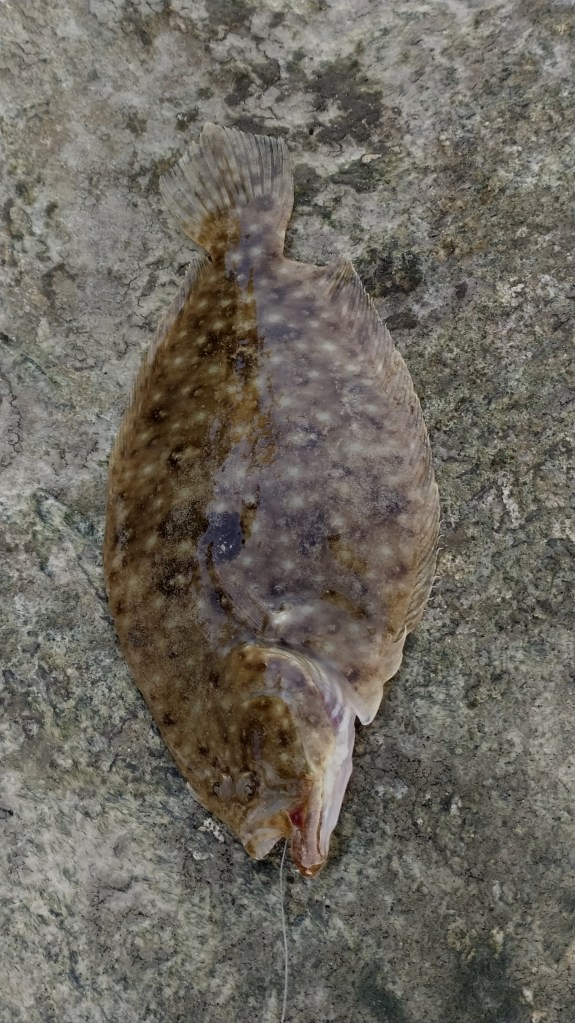
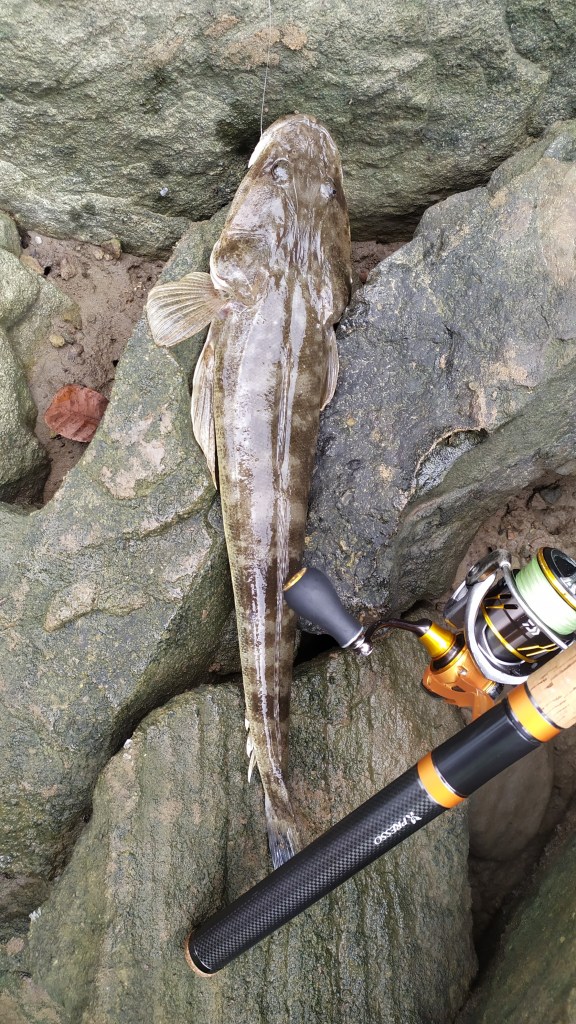
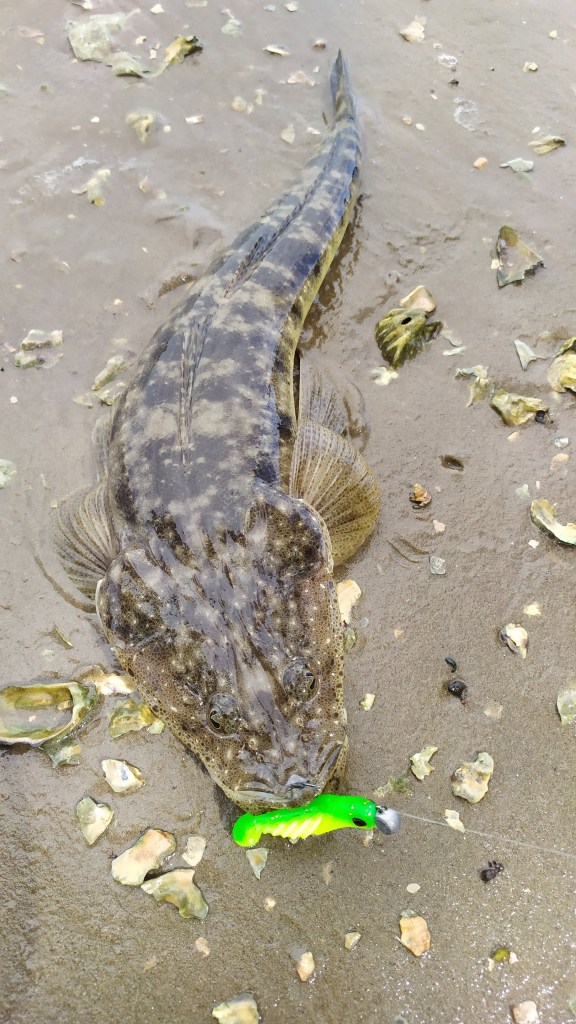
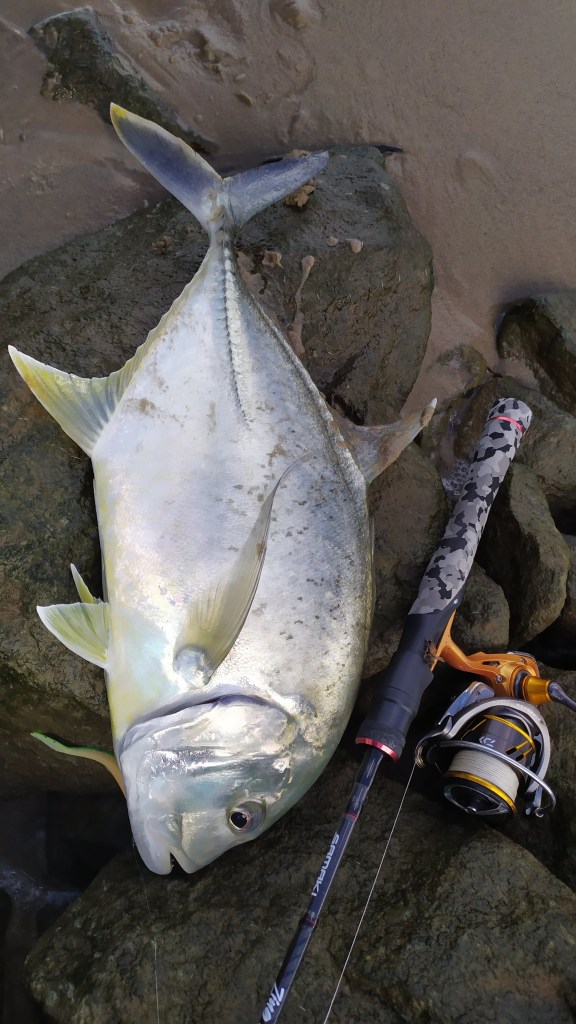
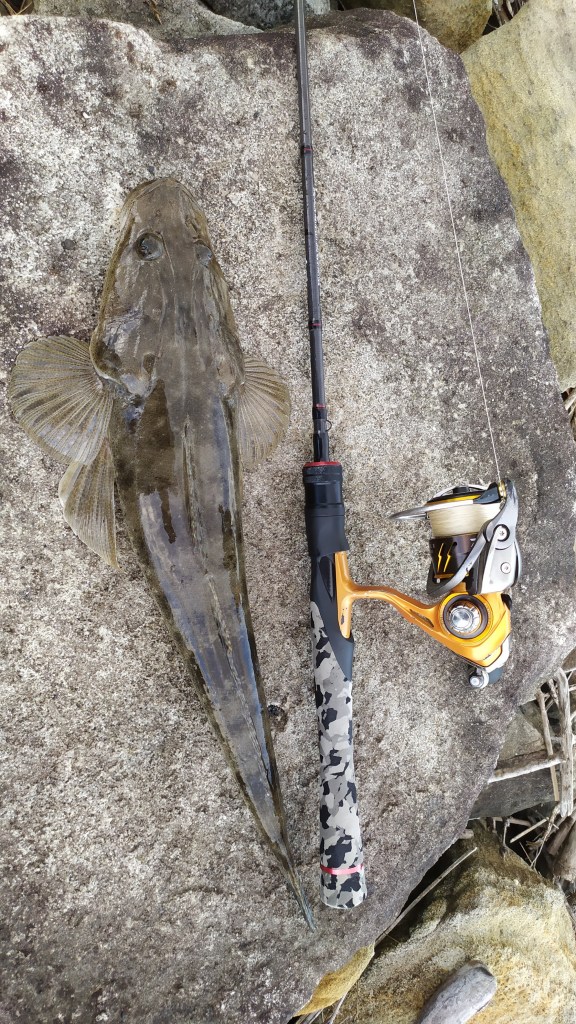
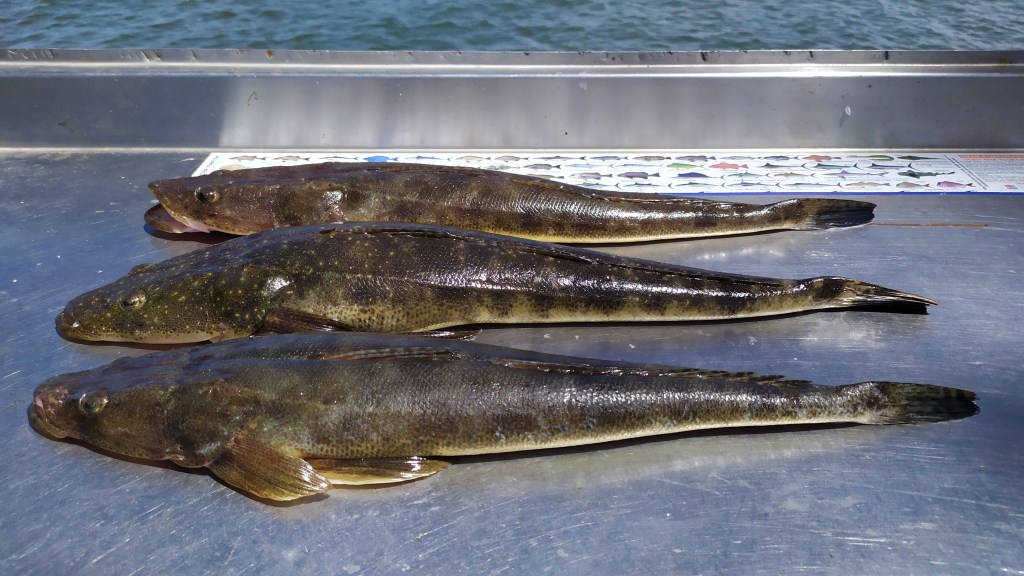
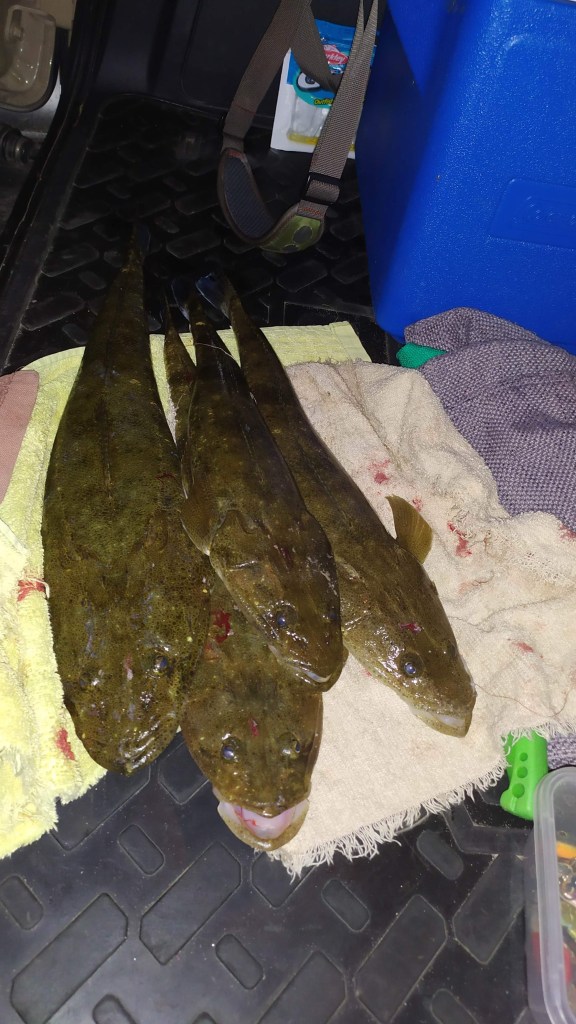
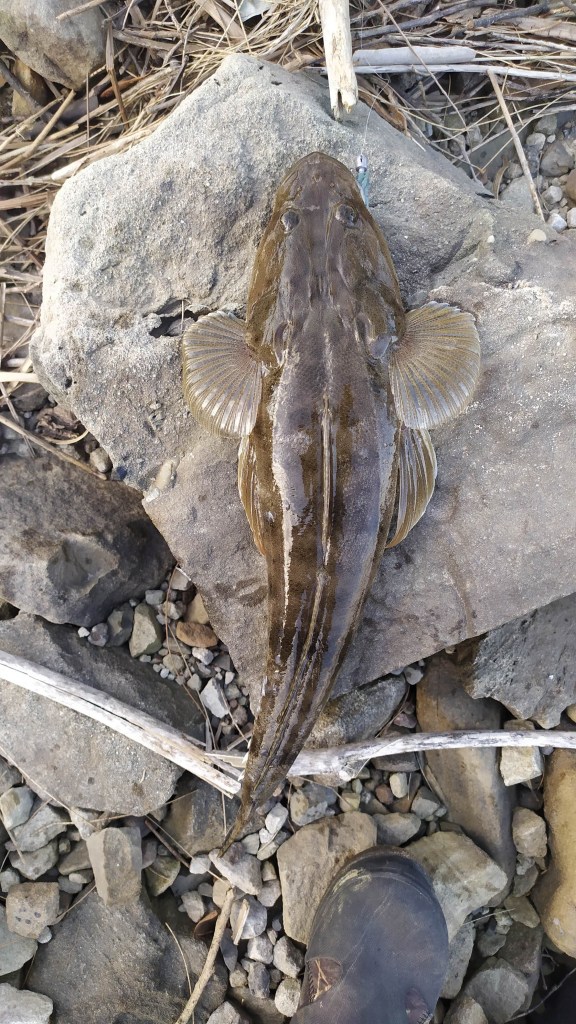
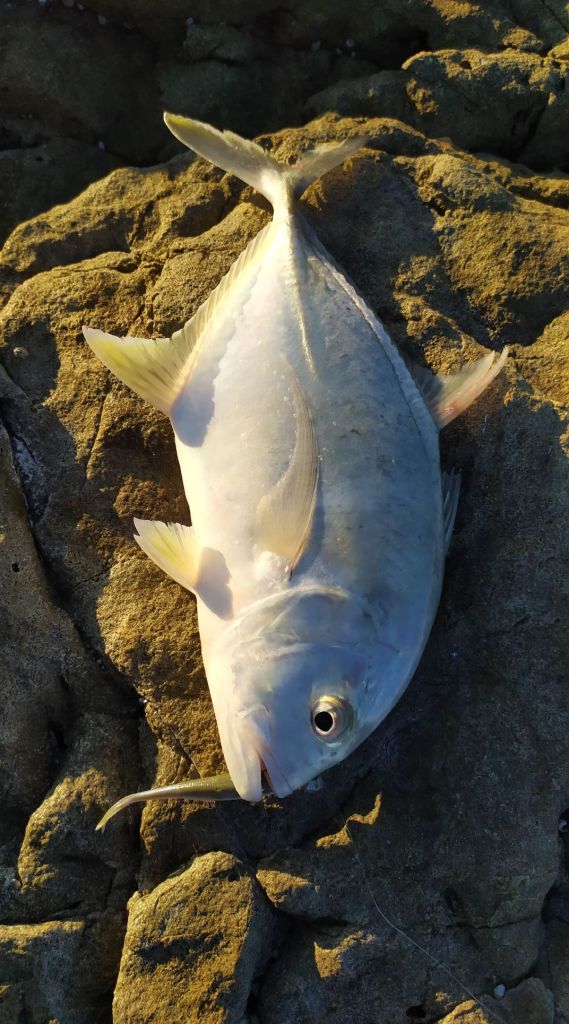
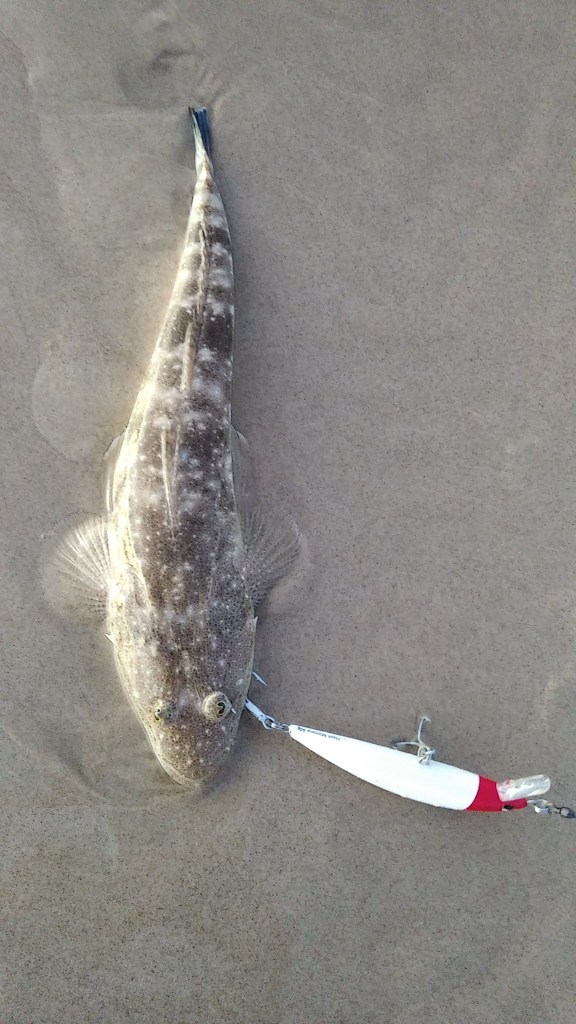
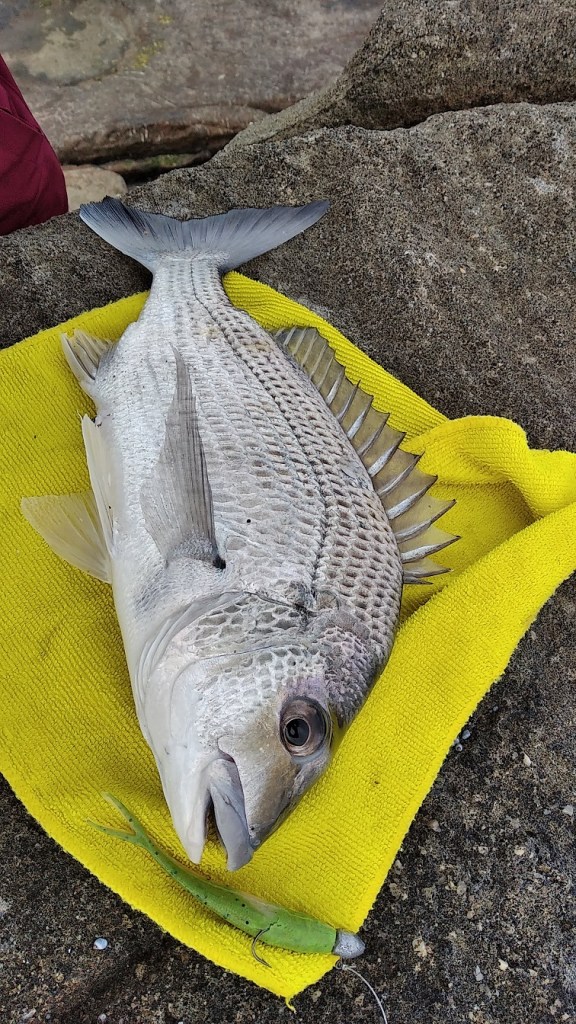
I caught a few smaller jewfish around the drop offs in the river. The trevally were also marauding around, particularly at dusk and dawn. As ever, I also caught flathead and bream too.
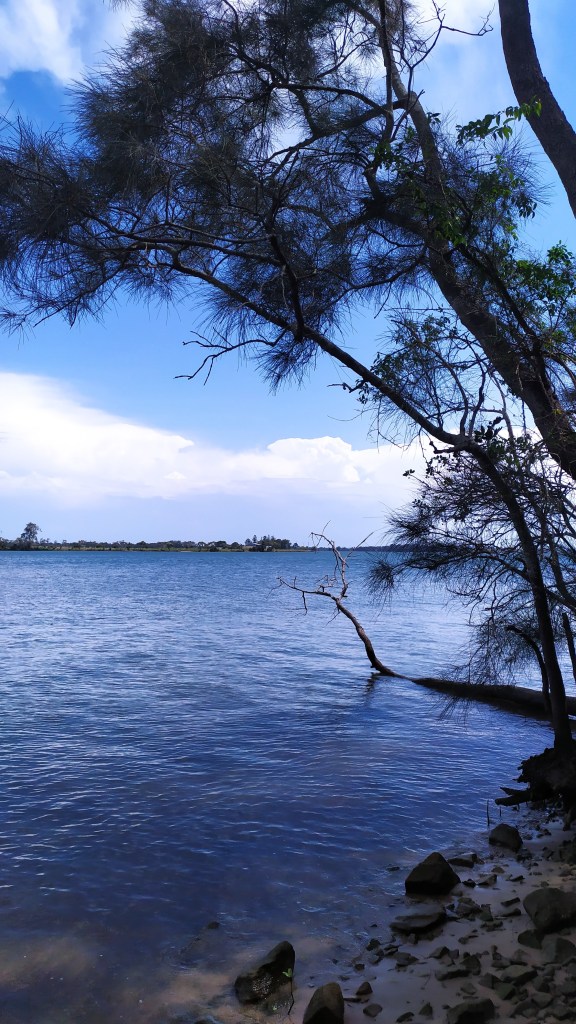
November had been another great fishing month on the Clarence River at Iluka.
In March the winds were predominantly from the east and south east. The water temperatures were around 26.9 degrees which was slightly above average. The tailor started to show up in on the headlands towards the full moon. I caught my best tailor of the month on a 60 gram metal slug at Iluka Bluff, just after low tide on an overcast afternoon. It was over 85 cm long. I caught plenty more through the month when the swell allowed. They were nearly always over 40 cm long. I tried a few sinking hard boiled lures but metal slugs caught the biggest fish.
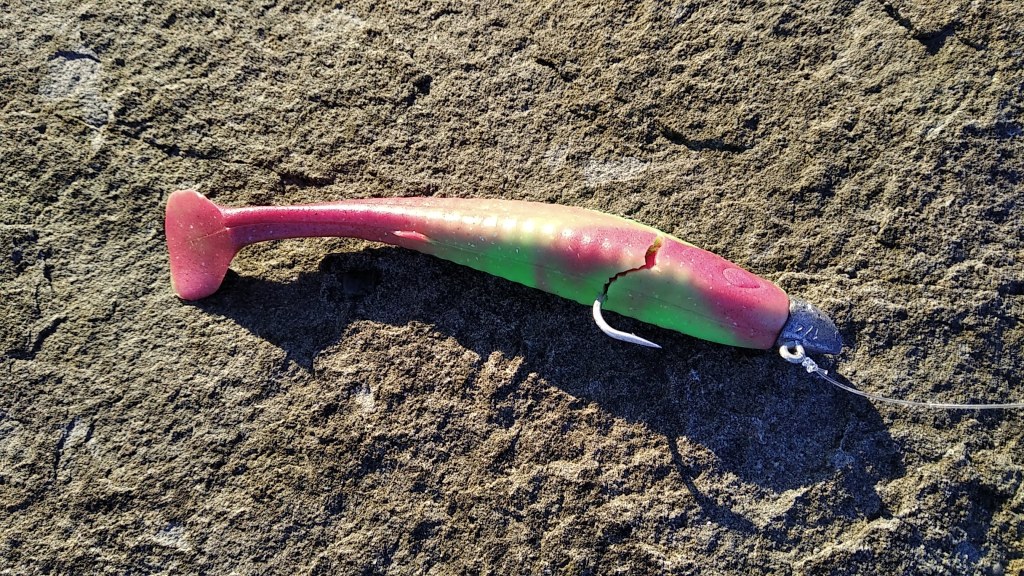
In the run up to the new moon on the 10th I had a couple of good sessions fishing for jewfish/ mulloway at Woody Head. I caught plenty of small jewfish before finally tempting an 80cm unit on a GULP squid vicious soft plastic in the Nuclear Chicken colour.
The river was fishing well and running fairly clear. I caught a few flathead and flounder in the shallows in between the rock fishing sessions.
March and April are traditionally excellent months for flathead fishing in the Clarence River. In 2022 after the catastrophic floods the fishing had bounced back very quickly and I had caught good numbers of flathead throughout the system. But in 2023, April was less successful than it had been the year before. Perhaps the shift from the La Nina to El Nino weather pattern had something to do with it. There was definitely a little less bait around despite comparatively warm water temperatures.
Bait prawn trawling in the Clarence River has been suspended due to an outbreak of white spot disease in the prawn farms that are adjacent to the river. The disease was detected in August 2022 and then again in early 2023 so all of the prawn farms destroyed their stock and and have stopped operating. Its very disappointing for the local economy but it will allow the river bed to recover its weed beds and other fish habitats if the trawling ban stays in place.
I still caught plenty of flathead, a good mangrove jack and a few good trevally. The juvenile jewfish and tailor were also always on the bite around dawn and dusk. The bream, however were noticeably absent (even around the full moon).
January rolled into February and we had a bit of rain and a south easterly blow. After the massive floods the year before everyone was on edge. But the rain did not last long and there was to be no repeat inundation in northern NSW.
The river was full of jelly prawns and other bait schools and fished well for flathead. The small tailor were everywhere. They were a pest when trying to fish for flathead with a soft plastic lure. You would feel a bump and grab on the drop and pull up a munched and now useless soft plastic.
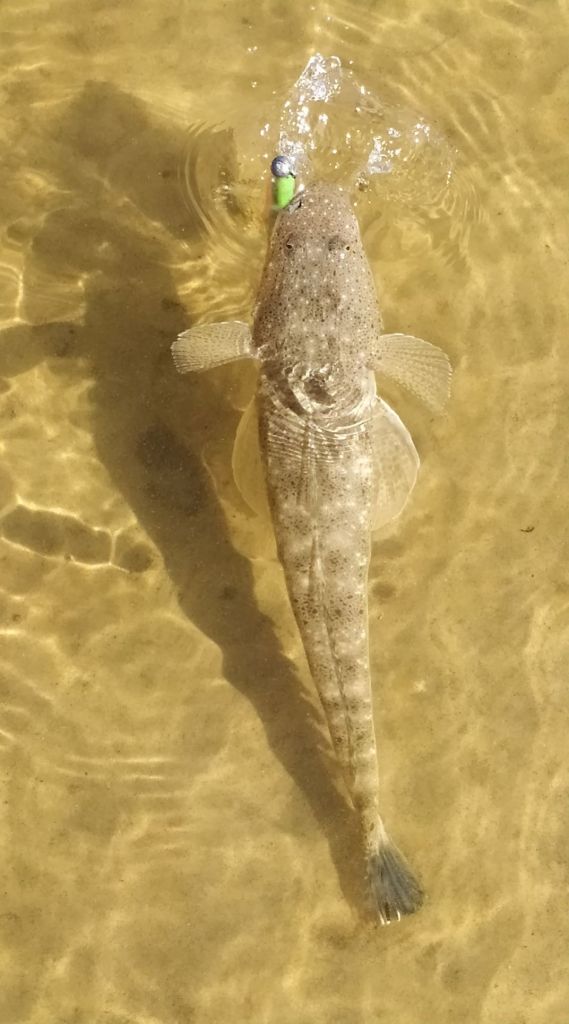
I caught plenty of flathead and had a few good fishing sessions on the flats nearer the mouth of the Clarence River at Yamba. On one occasion I hooked a small flathead that was then eaten by bigger one at my feet. I dropped the rod tip and waited for about 30 seconds and when I took up the slack, sure enough the bigger fish took off. I pulled it around for about five minutes and then it either regurgitated the fish or just spat it out. I reeled the little one back in it looked completely unharmed. I took the hook out of its lip and it swam off.
I was able to get out to fish the rocky headlands on a few days. I caught plenty of small jewfish/ mulloway at Woody Head and Iluka Bluff, but none of February’s fish were big enough to keep. There were also a few tailor schools hanging around at dawn and dusk.
July rolled into August and although the La Nina weather pattern persisted, we did have a few cool clear days. There was plenty of bait in the river and a few mullet but according to the professionals the floods had killed the traditional autumn/ winter mullet ‘run’.
The birds would show me where the bait was schooled up and I would plan my fishing around their focus, whenever I could reach it. I caught plenty of flathead in the run ups to the new and full moons. In this river system when the bait is up close to the rock walls that line the bank the flathead are usually sitting directly underneath. I like to fish from high tide down to about half way out but I have caught them at any point in the cycle.
There were lots of junior jewfish in the river
With plenty of bait, the mini tailor were around in big numbers and so were the small jewfish. In some sessions it was hard to catch a flathead because these two species would always beat them to the soft plastic lures
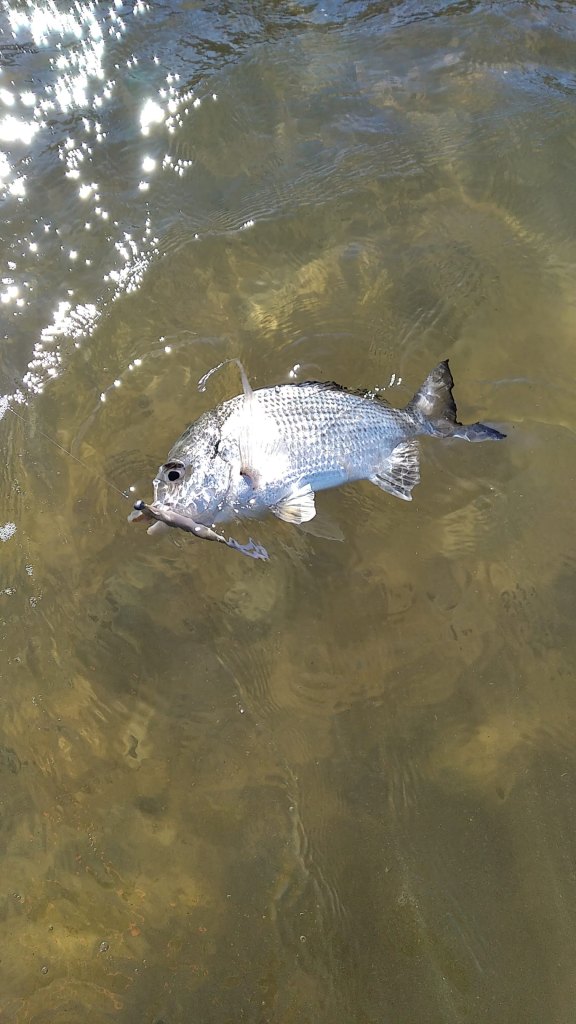
The bream were also a consistent catch. Soft plastics, hard-bodied lures and a variety of fresh and frozen baits all seemed to work. On angler even claimed the only thing they really liked is chicken breast marinated in curry powder. I live and learn.
The big swells put the rocky headlands out of bounds for all but a few days of the month. However, when I could safely fish at Woody Head I caught a few tailor and a couple of legal sized mulloway / jewfish. The lure of choice for the jewfish remained the GULP Squid Vicious soft plastic in the nuclear chicken colour.
July had its fair share of windy days but was also a good fishing month. The mulloway/ jewfish were all around the ledges, when I could safely get at them and I caught plenty of keepers.
When the swell is up I focus on land-based fishing around Iluka and Yamba. If you have a pair of waders the options are pretty much endless and you can always find a spot to get out of the wind.
Fishing with my light rig and a 12lb fluorocarbon leader I caught plenty of decent flathead on soft plastics and small hard bodies. I also caught a few bream and tailor on these lures. The best tailor were caught working hard bodied minnow lures along the riverbanks at dusk. I got bitten off a few times like this. The biggest tailor I landed from the river where about 40cm long.
June was a cracking fishing month on the headlands and also pretty good in the Clarence River. The bream fisherman where getting good catches.
I caught plenty of jewfish at Woody Head, Iluka Bluff and Frasers Reef. The start of the incoming tide seemed to fish best for me and the GULP Squid Vicious soft plastic in the nuclear chicken colour, rigged on a 3/8th ounce, size 2/0 hook jighead worked best. I was generally fishing with a 40lb leader.
When fishing for jewfish I often caught some ambitious, chunky, bream. They are often lurking in the wash at the base of the rocks. I also caught some decent tailor and trevally, when I was casting metal slugs around at dawn or dusk.
For most of April the Clarence and Richmond Rivers continued to run completely brown. The rain kept coming in bursts. There were no more floods but the displaced silt and sediment washed around. Towards the end of the month a little clarity returned on the higher tides. The flathead were back quite quickly, in their usual spots, even when the water was still pretty murky.
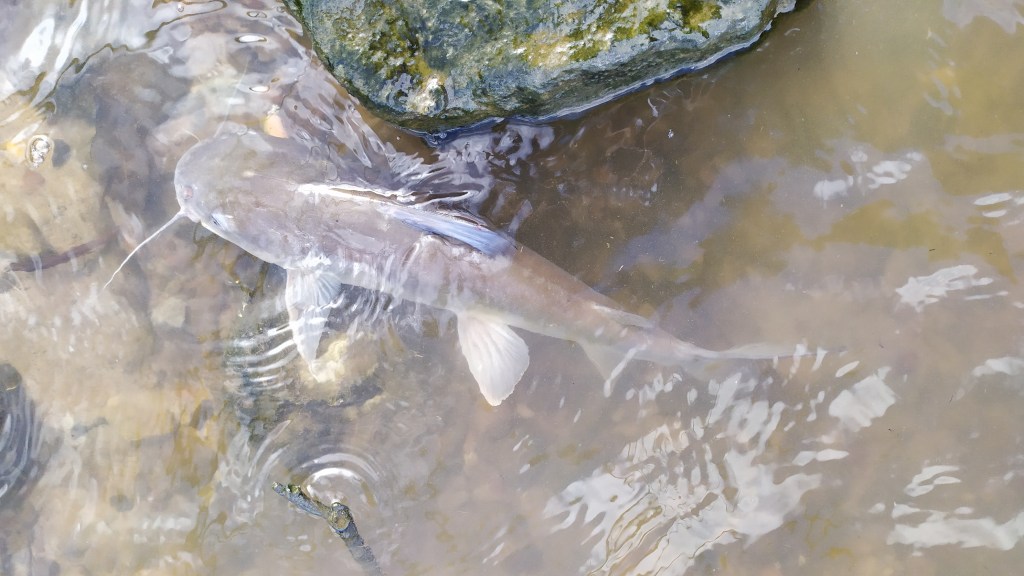
By about the 20th the catfish were thinning out and the flathead were solid. I did best fishing with high contrast and dark coloured soft plastics stirring up the bottom with a 1/6th ounce, 1/0 hook jighead. A few bream re-appeared. There were quite a lot of zombie fish with sores on them but the flathead all looked ok. Perhaps they are hardier than the bream.
I could not get out to fish the rocky headlands as the swell was constant, but I presume the jewfish were also out there.
I say fishing post the floods – plural because a few weeks after the first floods we were hit with another one. The torrential rain came through and the flood plains of northern New South Wales all filled and the rivers burst their banks again.
The Brunswick River is fairly small and started to clear up on the incoming tides within about 10 days of the original flood. As the water cleared it was immediately apparent how the floodwaters has scoured out the riverbed, creating a much rockier river bed.
I had a couple of sessions fishing the beginning of the run out tide with various soft plastics and found a few flathead. There was plenty of bait in the shallows. The flood washed so much sand away that it revealed a wreck near the river mouth on the north shore.
I also decided to try fishing the Richmond River at Ballina. This was a different story. In such a big river there was filthy water pushing down for much longer and even on high tide the water was still a chocolate soup full of debris. On the flats in front of the Aquatic Centre I did manage to catch a decent flathead. But after a long walk out to the end of the South Ballina rockwall, I could only raise a few dart.
Large chunks of river bank came floating down as I fished. With the sewage treatment systems knocked out in most of the are I decided to release everything.
On Friday 24th September, a slightly calmer morning was forecast. I was up early and set out for Middle Bluff, the headland just to the north of Frazer’s Reef at Iluka. I arrived just before dawn and started casting off the rock ledge with a GULP Crazylegs Jerkshad in the Lime Tiger colour. I was using 1/4 ounce, size 2/0 hook jighead. My reel was rigged with 30lb braid and a 40lb fluorocarbon leader. I kept the soft plastic in close to the rocks and left it on the bottom as long as I could between hops. Low water had passed at around 4.00 am and the tide was running in. The fishing was fairly slow around dawn. I felt a few hits, which I thought might be bream, but I did not hook up and I was thinking of moving on.
At about 8.00 am I cast out next to the large rock bommy that dominates the headland. As soon as I lifted the lure off the bottom, a fish grabbed it. It was another nice Mulloway/ Jewfish – which I pulled up the rock ledges. It measured 76cm long. They are great eating at this size so I kept it for a family supper. If I am careful, I will get about 1.5 to 1.75 kg of fillets from a fish this size and that will give us a couple of dinners.
The swell came back up, so over the next few days I fished in the shallows of the Clarence River around Browns Rocks. The water was very clear and at dawn and dusk I caught plenty of keeper sized flathead on various soft plastics. There were also tailor, bream and the odd whiting around.
On the 29th the swell eased off again and I fished the rocks at Woody Head. I arrived just after low tide and was fishing using my Daiwa Demonblood rod. There is not much sensitivity in this unit but plenty of power.
I had run out of my beloved GULP Crazylegs Jerkshads in my favourite Lime Tiger colour. This was probably a good thing because it forced me to persist with some other colours and shapes. The reasonably new GULP paddle shad shape worked well. I caught the biggest jewfish of the day on a 5 inch paddle shad in the nuclear chicken colour. It was approximately 85cm long. I let it go as I now had a fridge full of flathead.
Woody Head – Mulloway – September
The end of September had been great fishing around Iluka. The school jewfish were the biggest of the year so far and there was plenty of bait around.
At the end of the month the swell eased for a few days and I set off to fish the rocks at Woody Head. The swell was forecast to be 0.9 m but was a bit higher than that when I arrived at first light. I was using my one of my heavier rock fishing rigs – Daiwa Saltist X 962 MH rod matched with a Daiwa Saltist 3000 reel. I had it loaded with 30lb braid and about 1.5 metres of 30lb fluorocarbon leader.
I put on a GULP Crazylegs Jerkshad in the Curried Chicken colour, on a 1/4 ounce, size 2/0 hook jighead, cast out it out and let it sink. The target was a jewfish. So I kept the soft plastic on the bottom for as long as I dared. I repeated the process for about twenty minutes. I moved further to the south along the main rock platform and cast around in another promising jewfish spot. This time a fish hit the lure as it sank, but from the manic run and the head shakes I knew it was a tailor. It was about a 35 cm tailor and it had destroyed the soft plastic lure. I released it and moved again.
This time I put on a 1/4 ounce, size 2/0 hook jighead and a GULP Crazylegs Jerkshad in the Lime Tiger colour. I cast out, let the soft plastic sink and hopped it back to me, along the bottom.
The fish must have been sitting very close to the foot of the rock ledge. They were probably sheltering under a rocky overhang. I kept my retrieve going as close as I could to the ledge.
A 75cm school mulloway caught off Woody Head, Iluka.
The tactic worked and after about 30 minutes of casting and retrieving, a fish grabbed the soft plastic, off the bottom. It was now about 8.00 am, almost exactly dead low tide. It tried to swim deeper in to its underwater cave and took a bit of line, but it quite quickly changed directions and swam out. Jewfish of this size only seem to have a couple of really good runs in them and if they go in a safe direction, you can soon stop them. The swell helped with a big surge and I soon had this one at my feet. It measured in at just over 75cm. After a couple of pictures and a swim in the reviver pool, it went back.
Through late August the weather was bright and sunny but the swell was still pretty difficult to manage on the rocks. I focused on fishing in the Brunswick River. I also had a few dawn sessions, fishing on the beach at New Brighton.
Most of the time I was fishing with my Samaki Zing Gen III 562SXL ultralight rod. But when I cast a lure into the surf (looking for tailor) I moved up to my Daiwa Crossfire CFS1202L. There was not much rain in August and the Brunswick River was fairly clear, even on the low tides.
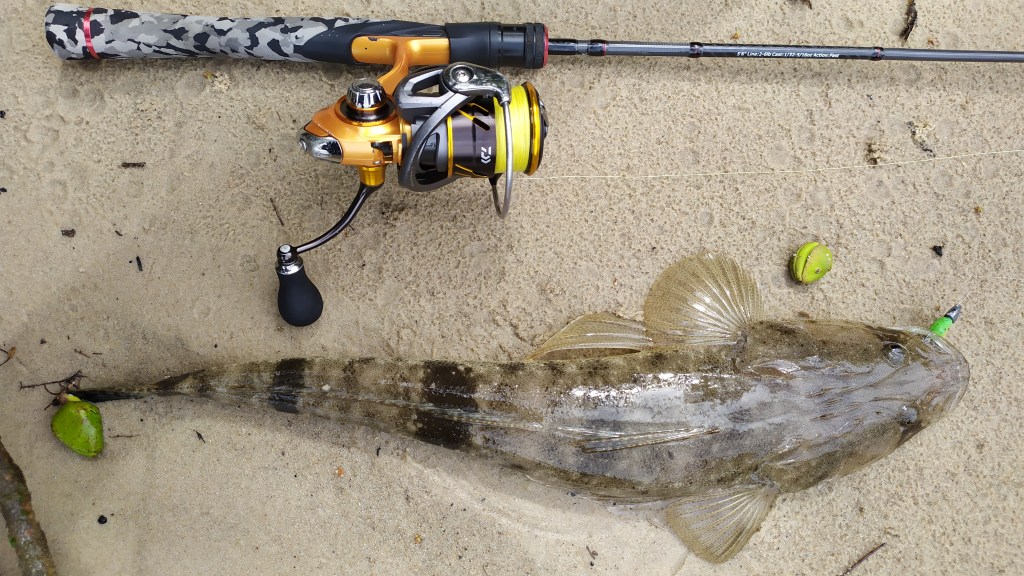
I had a few sessions around the mouth of the river and caught a few small flathead on minnow soft plastics. On a couple of sessions I trekked up river on the south bank and caught plenty more small flathead. The star performer was the GULP Pulseworm soft plastic in various beige/ camo colours.
Upstream on the Brunswick River
I had hoped to find some tailor from the beach on a few morning sessions. I have some new Samaki 40g Flash Minnow hard bodies which I think will be great for tailor. They are solid, sink fast, cast well and have a great action. I think they will be great in rough seas but this time I only caught flathead with them during my dawn sessions.
Found flathead instead of tailor in the beach gutters in August
I have been alternating between the rocks and the Clarence River at Iluka, this year. This is why I love the area so much. When the swell is up on the headlands, I grab my waders and light rig and fish in the river. July and August are also my favourite fishing months. Bright sunshine, cooling water and with the shorter days, it is easier to fish at dawn and dusk.
The Clarence River around Goodwood Island was very clear and there was plenty of bait in the water. I fished with my favourite GULP soft plastic and also had some success targeting flathead with bigger hard bodied minnow lures. I caught plenty of flathead between 36cm and 45cm, but not many bigger than that. I also caught a few good (35 cm plus) bream.
Lots of variety in the Clarence River at Goodwood Island
The tailor were still coming and going, especially at dawn. The birds would chase them up and down the river and signal their location. I rarely caught one over 35cm but the biggest few always grabbed my lure just before or after sunrise/ sunset.
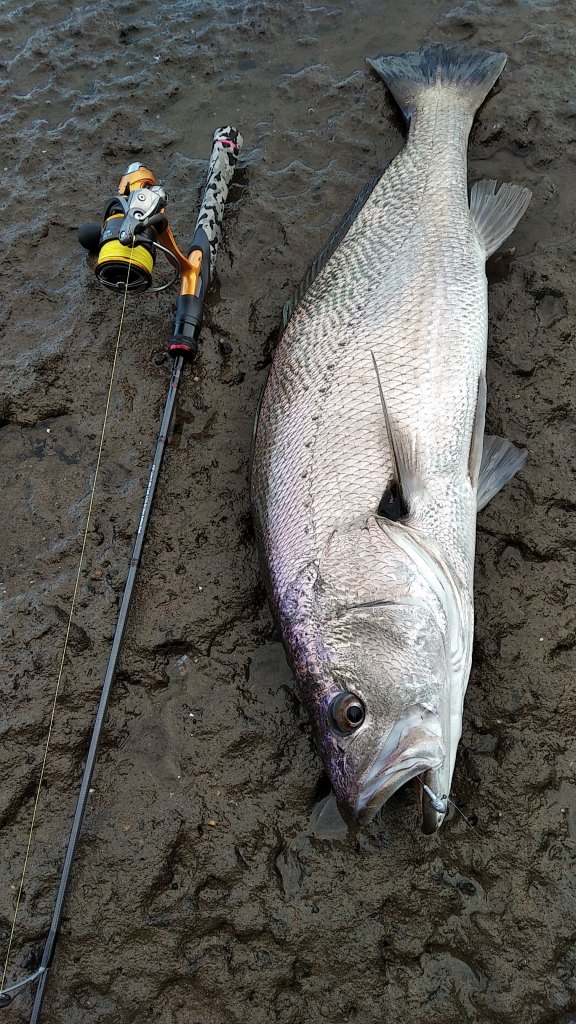
The highlight was a decent jewfish which I caught while wading in the shallows looking for flathead. It grabbed my GULP Crazylegs Jerkshad in the Lime Tiger colour while I was casting over a coffee rock ledge at Browns Rocks. It was the bottom of the tide and the water was fairly dirty. I only had a 12lb fluorocarbon leader and my Samaki Zing SZG-562SXL 2-6lb ultralight rod so it was a long slow fight. Fortunately, the 1/8th ounce, size 1/0 hook jighead was lodged tightly in the corner of the fish’s mouth. I initially thought it was a ray, then a big flathead and then I caught sight of silver and knew it was a jewfish. I had a beach to land it on so, after about 25 minutes of to and fro, I pulled it on to the muddy shore. It measured 73cm so I decided to keep it for a family feed – great fish.
A 73cm Clarence River mulloway caught on a Gulp Crazylegs Jerkshad soft plastic lure.
Another lull in the swell meant I could get out on to the rocks to fish in early August. I stuck with Woody Head as I had caught some good fish there in July, last time I was down here. I started early, about 30 mins before first light and conditions were forecast to be pretty good. We were 4 days before the new moon. Low tide would be at about 10.20 am and the swell was forecast to be no more than 1.0 metre high.
I was fishing with my heavier rock fishing set up. This is a Daiwa Saltist X MH 962 rod now matched with a Daiwa Saltist 3000 reel. I have it rigged with 40lb braid and today I was using a 30lb fluorocarbon leader. I started with a GULP Jerkshad soft plastic lure in the satay chicken colour, loaded into a 1/4 ounce, size 1/0 hook jighead.
As soon as I could see what I was doing I had a couple of casts and retrieves with the plastic. At about 6.30 am something hit the plastic hard at the base of the rocks. It pulled hard for a while but swam away from the rocks. I tightened my drag a a little and recovered some line whilst looking for a landing spot. I love this Daiwa Saltist XMH62 as it is sensitive enough to stay in contact with the soft plastic even with quite a light jighead. However the flip side is that it is sometimes too light to muscle a fish past the rocks. The fish took a bit more line and I pulled hard, trying to turn its head. Suddenly the hook pulled and it was gone. I never got a look at it – so it could have been anything. But given what happened later I think it was a jewfish.
Bent hook and one I pulled out
I re-rigged and put on a GULP 5 inch Paddleshad soft plastic in the nuclear chicken colour. This time I chose a tougher jighead – a Berkley Nitro Saltwater Pro, 1/4 ounce with a size 1/0 hook. These are pretty difficult to straighten. Two or three casts with this and I felt a very solid bite at the base of the rocks. I paused as long as I dared and then struck. I thought I had the fish but I was just snagged on the rocks. I yanked the jighead free and when I examined the soft plastic I realised from the bite marks, I had missed another fish.
I cast around for the next couple of hours with hardly a touch. At about 10.00 am, just as we were approaching low tide, I felt a bite in close to the base of the rocks again. I paused this time and dropped the rod tip. When I lifted the rod I had a fish on, but it went straight under the rock ledge and soon I could feel the leader rubbing. I moved along the ledge and changed my angle slightly. I flicked the bail arm over and let the pressure off. I waited about 10 seconds and then flicked it back over and pulled hard. The fish came out and ran again but buy now it was beaten. With the aid of a few decent waves I got it up to my feet. It was an 83 cm jewfish
I cleaned it up and kept it for supper. Bottom of the tide seems to be a good time for them.
Bottom of the tide – 83 cm jewfish/ mulloway at Woody Head
At the end of July I was back in South Golden Beach. Possibly in lockdown (I can no longer remember) but fortunately the Brunswick River mouth was within easy reach for fishing ‘exercise’.
I set out to fish the north rock wall, which is reached down the unmade section of North Head Road. I walked out on to the wall at about 10.30 am. The tide was coming in and would be high at about 2.00 pm. I was fishing with my light set up and rigged up a GULP 4″ Minnow in the Watermelon Pearl colour on a 1/8th ounce, size 1/0 hook jighead. I was using 12lb fluorocarbon leader. The water was crystal clear and the swell was less than a metre. There was a very light northerly wind blowing.
I put in a few casts on the north side of the wall into the wave break area, close to the beach. Sometimes there are flathead lurking around the base of the rocks, but not today. The first taker was a bream. I threw him back and kept casting. I soon caught another small one.
I moved out to the end of the rock wall and swapped soft plastics to a GULP Pulseworm in the Moebi (beige flecked) colour. After a few casts I found another small bream and then lost the tail of the soft plastic. I put on a GULP 3″ Minnow in my favourite Lime Tiger colour. I thought there might be some dart around and this colour seems to work well on them.
A few bream and a queenfish from the north wall at Brunswick Heads
I worked my way around the far end of the rock wall and cast around in the mouth of the river. I had a few nibbles but could not hook anything so I moved back to the north side, I let the soft plastic sit as long as I dared, on the bottom beside the base of the rock wall. At about 11.45 am a fish grabbed my plastic close to the base of the rocks, as I lifted it to recast. It took off quite fast out to sea and then jumped clear of the water. I tightened the drag a little and soon subdued and landed it. It was a juvenile queenfish, about 45 cm long. I snapped it and threw it back. There were no more bites so after about 30 minutes more, I gave up for the day.
On Wednesday the skies were clear but the wind and swell were still making it too hard to fish the rocky headlands around Iluka. So I decided to flick some soft plastic lures around in the shallows, near Browns Rocks on Goodwood Island.
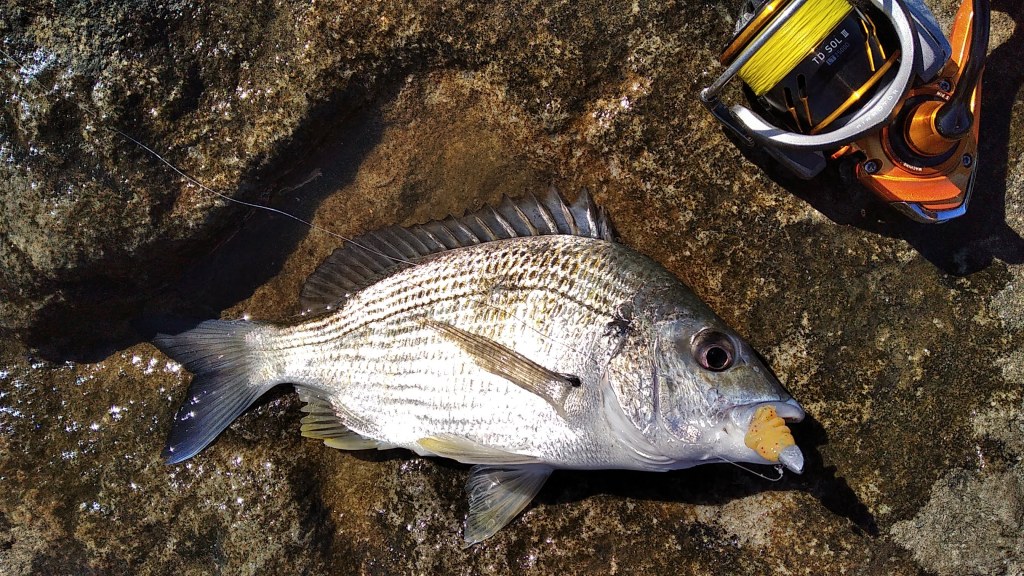
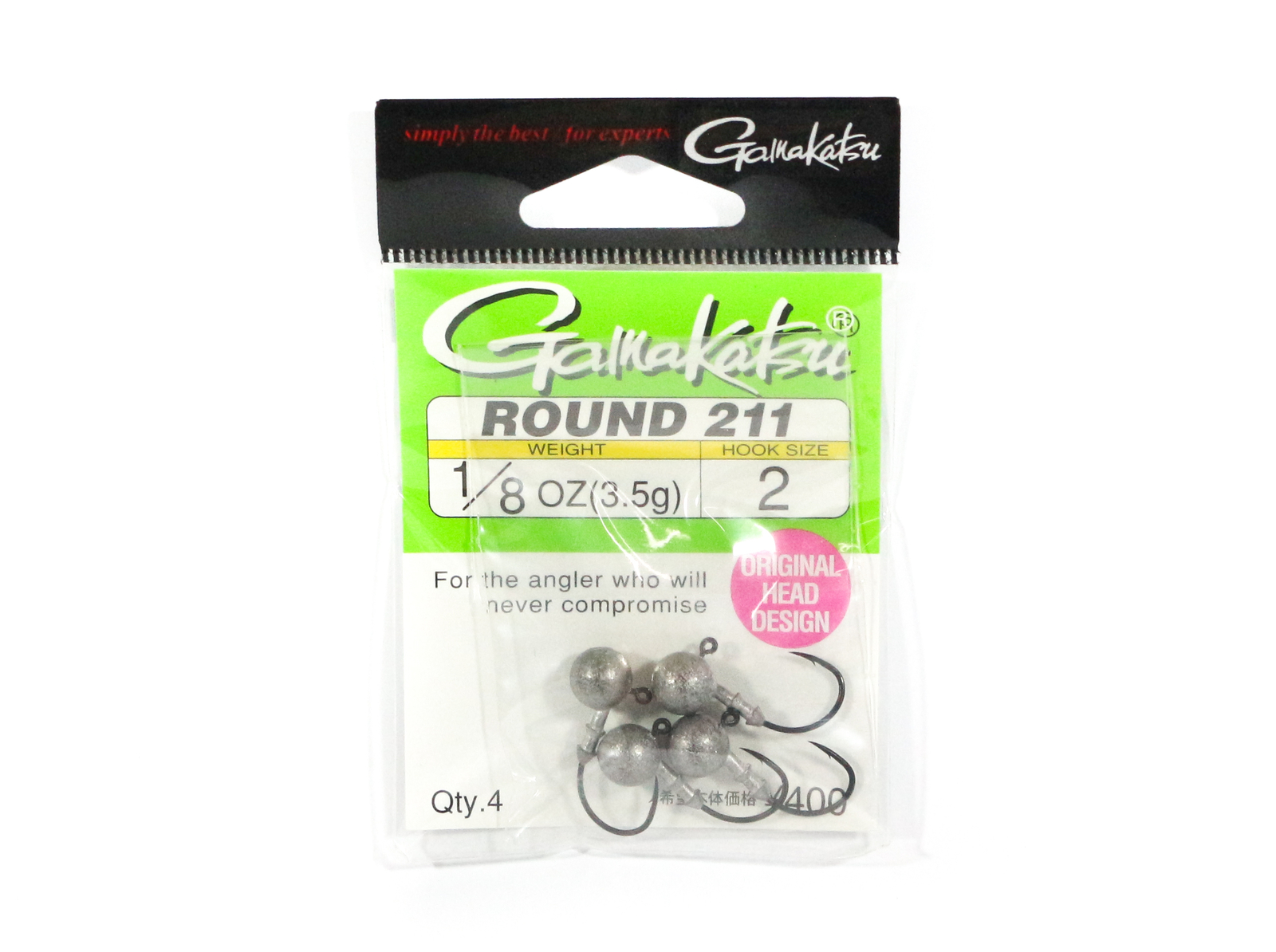
I started around 7.00 am using a GULP 4 inch Minnow in the Lime Tiger Colour on a 1/8th, 1/0 jighead. I have been using the Gamakatsu Round 211, 1/8th ounce, size 2 hook jigheads lately, as I find they are better than the regular jigheads for hooking bream. They are a good fit with the 2, 3 and 4 inch soft plastic lures.
These Gamaktsu round hook jigheads are great for bream
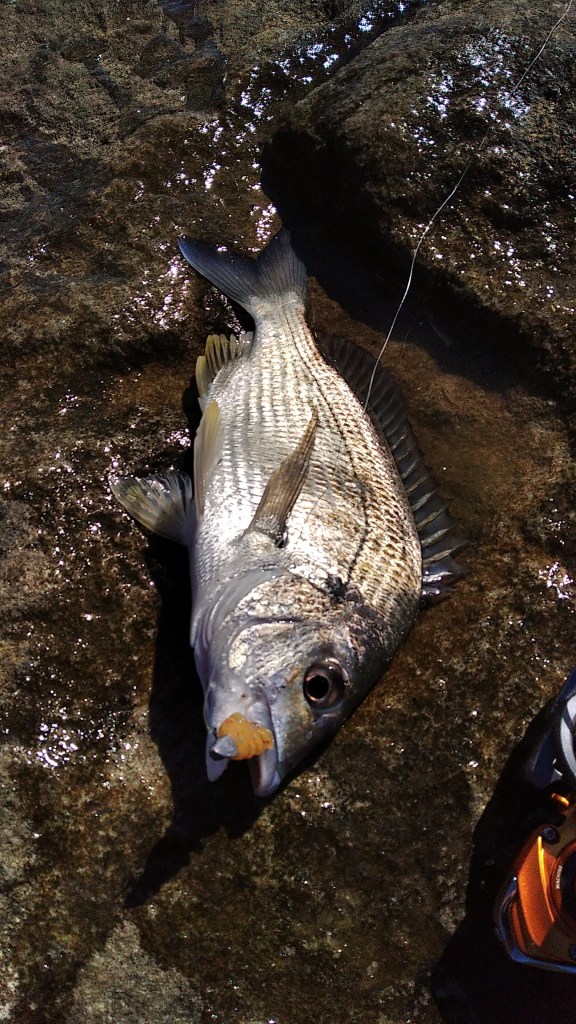
I always consider June and July the best bream fishing months in the estuaries and around the rocky headlands. As the water cools and the bait supply increases, the bream and several other species start to school up to spawn.
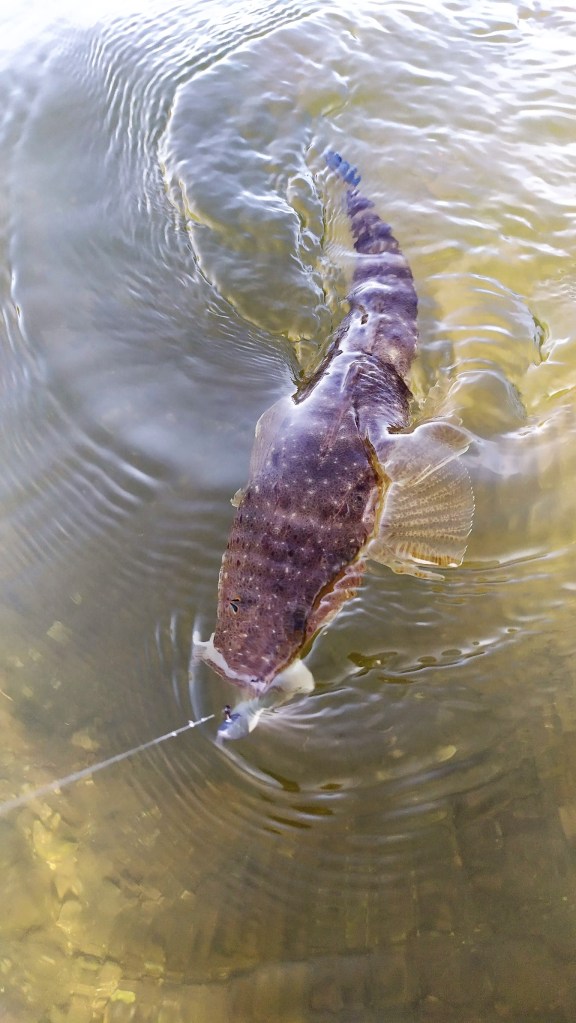
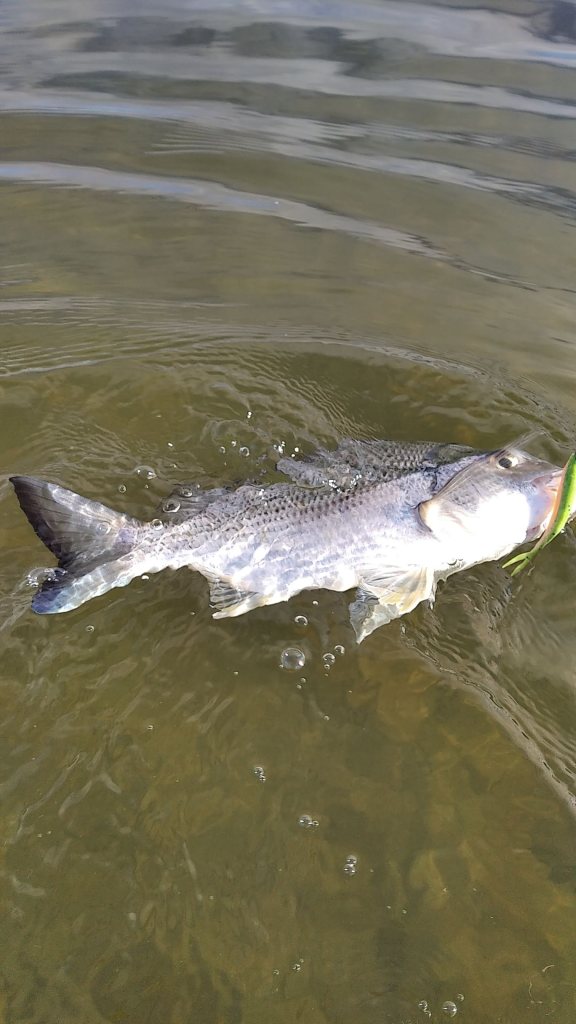
Flathead, tailor and bream from the Clarence River at Browns Rocks
I was back fishing the main arm of the river. First I tried the flats to the east of the Goodwood Island Wharf and later, I fished along the bank – to the north of the wharf. I was fishing with my light rig and 12lb fluorocarbon leader. The water was clear and there was plenty of bait in the shallows. I caught a couple of keeper sized bream, several tailor around the 30-35 cm mark, two small flathead; one that would have been around the 40cm long size.
Clarence River – Browns Rocks – Tailor
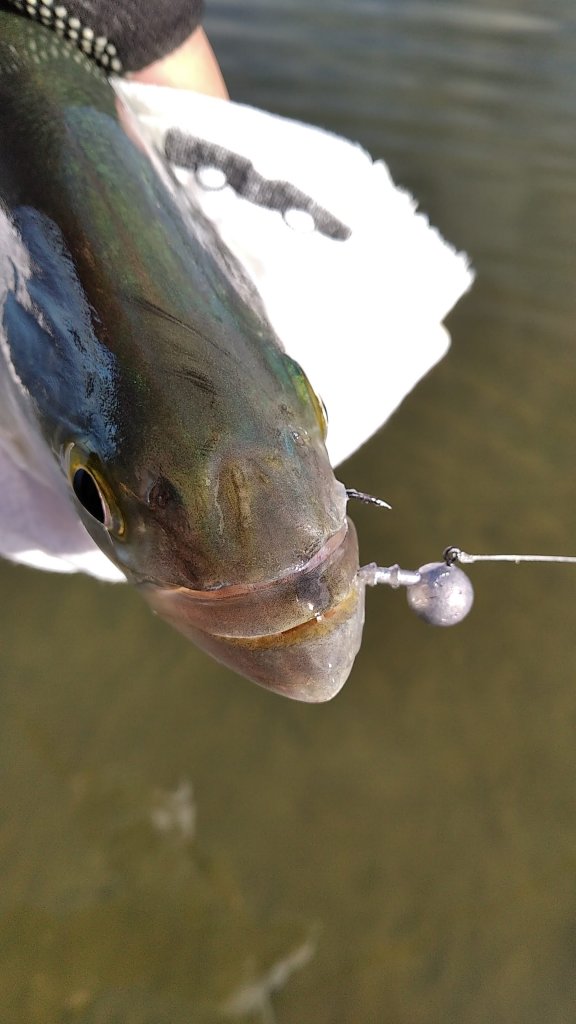
As I drove past the Browns Rocks Caravan Park on my way home. I saw the birds dive-bombing something close to shore. I stopped and tied on a MARIA MJ Twitch 90mm hard bodied minnow lure (another favourite). I put in three casts at where the birds were divebombing. On the third cast I connected with a 38 cm tailor. This is about as big a tailor as I have ever caught in the Clarence River. I am sure I have been bitten off by bigger, but as I am generally fishing with a very light leader (10lb-12lb, max 20lb), so I cant stop them. I released it and hooked and dropped a couple more, before giving up at about 9.15 am.
Follow me on Instagram, for more fishing pictures and updates;
On Monday the 19th the swell was up again and the wind came with it. I had a lie in, cleaned my light spinning rig and took it easy in the morning.
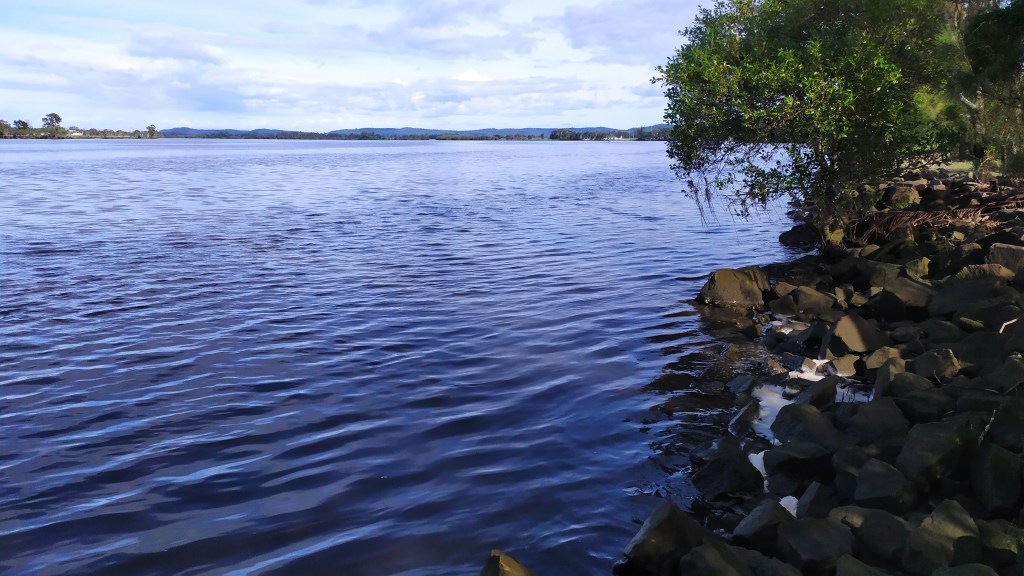
In the afternoon the wind dropped a little. So I went out to explore. I decided to fish through dusk on the north arm of the Clarence River. I drove down past the Goodwood Island Wharf and walked across to the other side of island. The river bank is fairly over grown but there are a few good fishing spots in this area.
I rigged up with a 12lb fluorocarbon leader down to a 1/8th ounce, size 1/0 hook jighead. I put on a GULP 4″ Minnow soft plastic in the Watermelon Pearl colour. This is such a consistent performer for me and has caught jewfish, flathead, bream, dart, tailor, whiting and a whole range of weird and wonderful less common species.
In this area the north arm of the Clarence River is wide and shallow, There are open patches along the river bank and then large patches of young mangroves. Its is slightly muddier and swampier than the main arm.
Fishing the north arm of the Clarence River – near Iluka
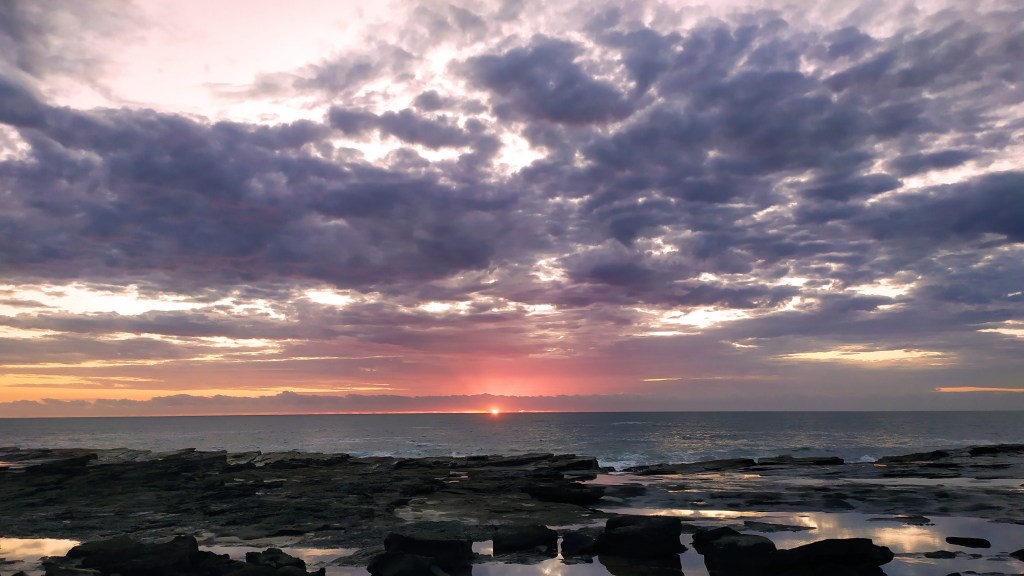
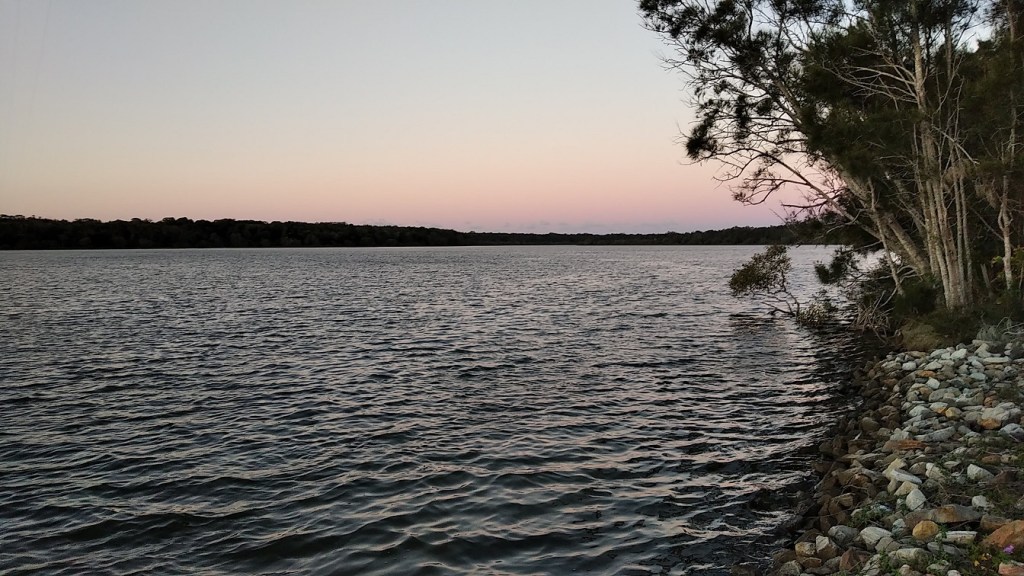
The tide was pretty high and running in. I fished for a couple of hours until just after sunset. A couple of times a small school of tailor came past and bit the end of the soft plastic, but I did not catch any of them. I managed two flathead, one decent bream and an amazing sunset for the session. Its always good to explore.
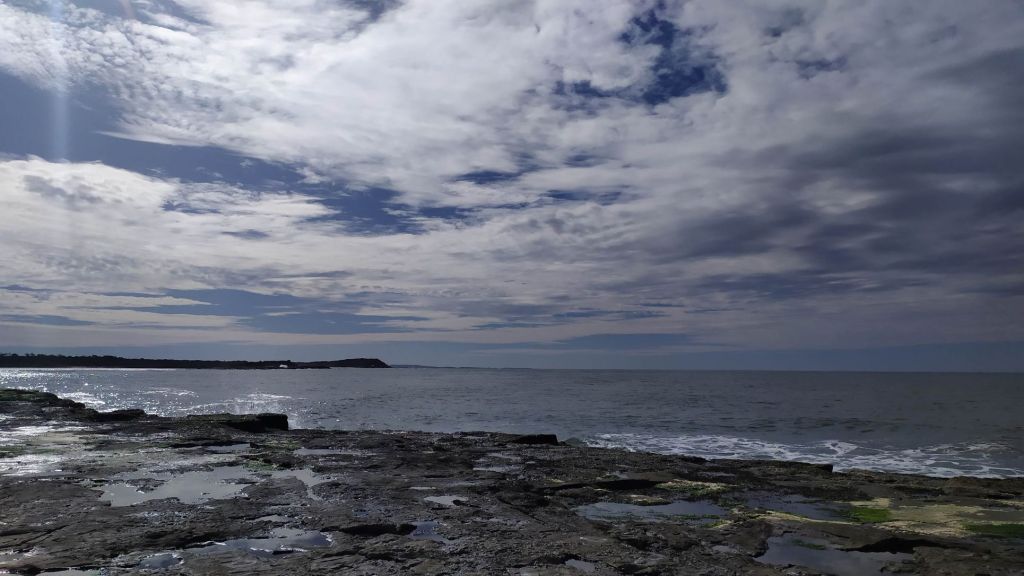
On the 17th the swell was forecast to be light again so I decided to try fishing at Woody Head. Low tide would be at about 7.30 am and we were about a week away from the full moon. I arrived at about 6.00 am, 30 mins before first light. I walked out onto the rock platform and the swell was disappointingly powerful again.
I started fishing at the north end, casting a 60g metal slug towards the gap in the rocks north of the area known as the barnacles. There are nearly always tailor or trevally here on dawn and sometimes jewfish. It was too rough to cast a soft plastic so I stuck with the slug. I hooked and dropped a couple of fish, just after first light, which I assume were tailor. Then I lost my slug to the rocks.
I dropped to the lighter rig and put on a GULP 4″ Minnow soft plastic on a 1/4 ounce, size 1/0 hook jighead. I cast out in front of the rock platform and let the plastic sink through the wash. You cannot leave the plastic long on the bottom as it will get snagged, but you need it down there for five or ten seconds, to be in with a chance of attracting a bite. After a few casts I caught a decent bream and then dropped another.
Bream came first
After sunrise things went quiet and I moved further south along the rock platform, casting in various spots. I moved back up to the heavier rig (40lb braid/ 30lb fluorocarbon leader), as I approached a few known jewfish spots. I was now fishing with a GULP 5″ Jerkshad in the Satay Chicken colour. I was still using 30lb leader but I had changed to a 1/4 ounce, 2/0 jighead. The swell was little lighter now and the tide was running in.
I kept casting and retrieving the soft plastic and leaving it for as long as possible right at the base of the rock ledge, on the bottom. I felt a pretty faint bight and then lost my rig to the cunjevoi again. I retied with the same set up and kept going south along the rocks.
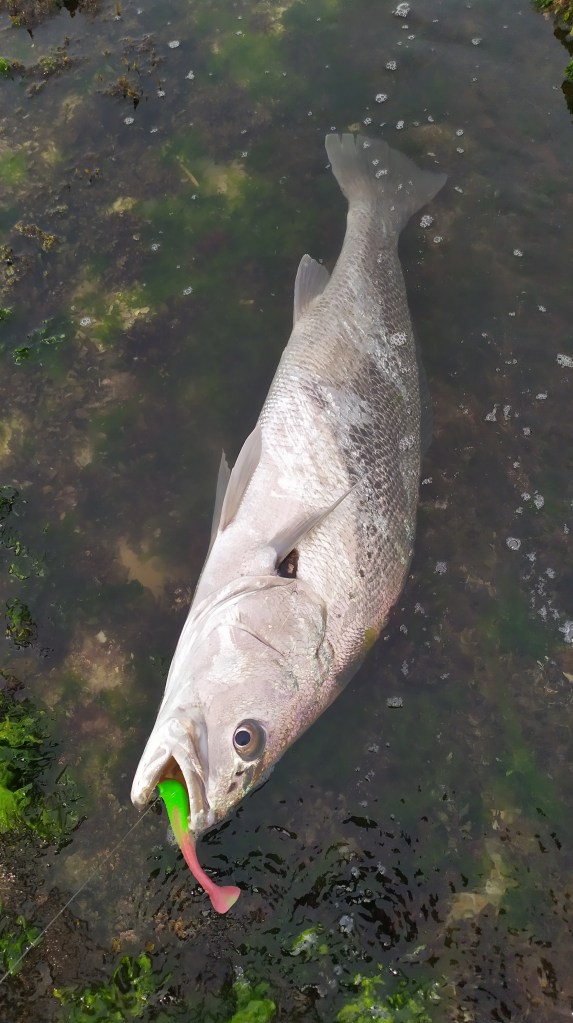
It was now about 8.30 am. As I pulled up the rod tip to recast, the jighead stopped. I pulled again and it moved a little more and then line started peeling. Unfortunately, I could immediately feel the line rubbing on something, so the fish was probably swimming in, under an overhang. I tightened the drag a fraction and it slowed. I got some line back and hoped it was coming out. However it got its breath back and ran the wrong way again. I decided to flick the bail arm open to see if it swam out, once I had released the pressure. I left the fish with slack line for about 15 seconds. In this time I got a little nearer to the edge, in between the wave sets. I then flicked the bail arm over, took up the slack line and heaved the fish out. It was just clear of the overhang and the line flicked free. I now had the drag very tight. The fish was pretty much beaten and it popped up, a big slab of silver. It rolled over on its side in the wash. The Daiwa Saltist 962 MH rod would not be able to lift it clear of the water so I would have to use the wave sets and the stepped rock ledges to land it. I managed this and got a soaking in the process. It was a solid jewfish / mulloway about 85cm cm long. I put it in a fresh rockpool to recover for a while. After a few photos I decided it looked well enough to release so I sent it on its way.
I released this one after a swim in the recovery pool
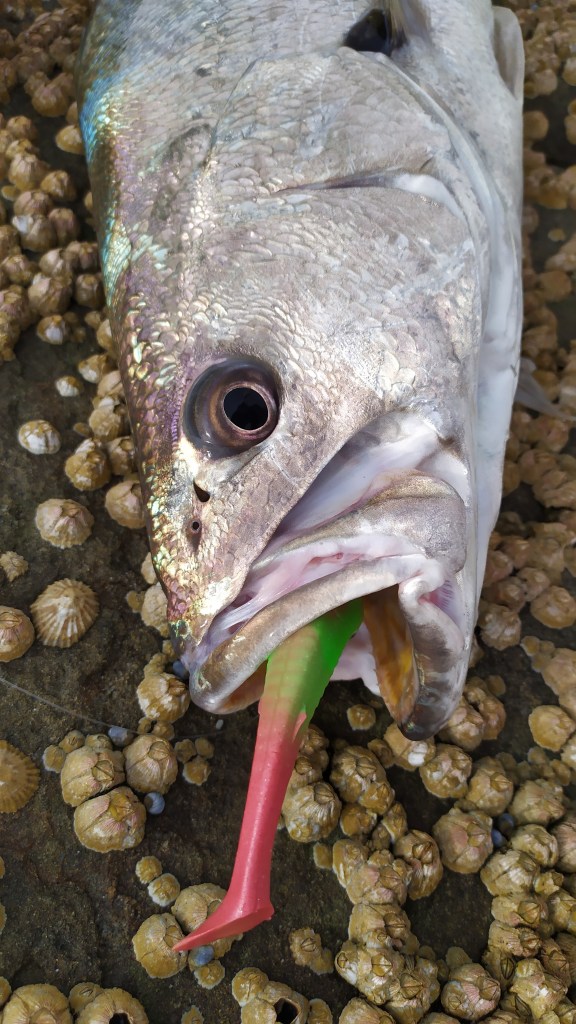
The leader was pretty shredded, as was a good section of braid, so I cut it all off and re-rigged. I decided to stick with the winning combination and dug out another GULP 5″ Jerkshad in the Satay Chicken colour. I cast out in the same spot let the lure flutter down and wash in to the base of the rocks. By the second hop I felt a bite and dropped the rod tip again and paused. After a few seconds pulled up hard and set the hook. It was another jewfish. This time I had started with a tighter drag and I kept the fish from getting its head down and swimming under the ledge. It made a solid run bit fortunately it was in the direction of the open sea. I turned its head and again used the waves to to lift it onto one ledge, then another and then up to my feet. It was another nice fish, closer to 90 cm this time. After five minutes this one did not perk up in the recovery pool, so I decided it would be dinner. I spiked it, then gutted and scaled it and later weighed it in at the shop – 5.7 kg. It was a beautiful fish.
Jewfish/ Mulloway at Woody Head
I decided that two good fish was more than enough for one session and gave up for the day.
In mid-July I got back down to Iluka for some fishing. I decided to fish with my light rig at Iluka Bluff. Low tide was just before 7.00 am and a 1.1 metre swell was forecast. We were five days into the new moon and there had been some pretty significant rain the week before.
I arrived at about 6.00am, well before dawn. I started by throwing large stickbaits and a 55g Halco Twisty, looking for tailor or trevally. The in-shore swell was significantly bigger than forecast and I got my first soaking before the sun came over the horizon. The big lures did not get anything, so I dropped down to my lighter rock fishing rig which is the Daiwa Crossfire Surf CFS 1062, 3.2m, 3-5kg rod, matched with my very battered (but still brilliant) Shimano Stella 4000. I set it up with 40lb braid and16lb fluorocarbon leader. It is perfect for casting lightly weighted soft plastics off the rocks.
I put on my favourite soft plastic – the 5″/13 cm GULP Crazylegs Jerkshad in the Lime Tiger Glow colour. As I have mentioned before it looks like this colour is disappearing from the GULP range (and possibly this pattern too). Grab them while you can, if you see them in your local tackle store. I rigged it on a 1/4 ounce, size 1/0 hook jighead.
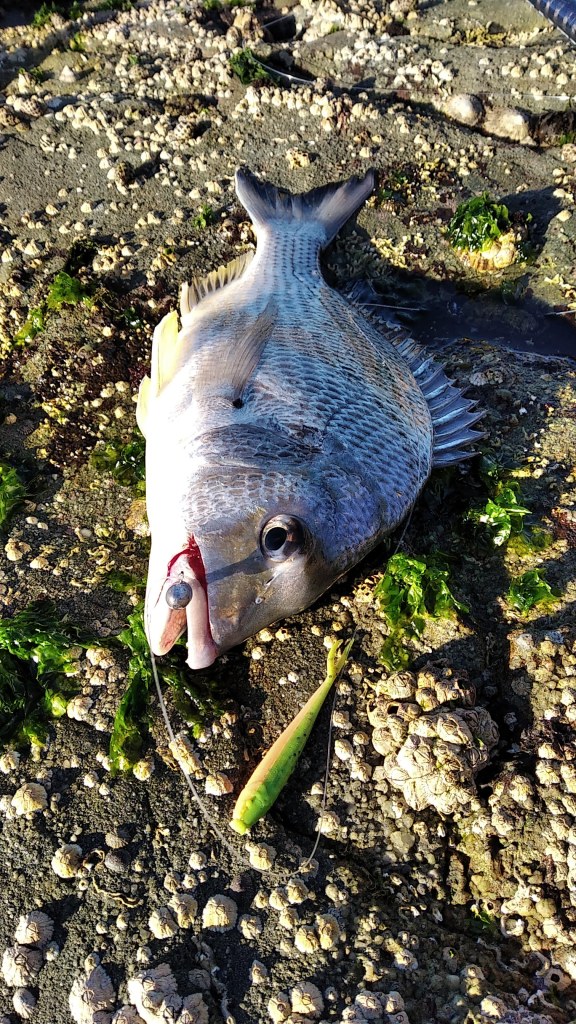
The sun was up and and the clouds were clearing. I cast the soft plastic out into the area beyond the wash and let it sink. I hopped it a couple of times, then repeated the process. After five or six tries a small big eye trevally grabbed it. I threw it back and kept casting. About ten minutes later a fish pulled the plastic off the jighead. This is usually the bream who gather in the wash. I put on a 4 ” GULP Minnow in the Smelt colour and cast that out. I had a few hits and then hooked up with a decent, 35cm Tarwhine. I released it and moved further south, around to another ledge.
A few different species on offer at Iluka Bluff
On my first cast on this spot I connected with a small jewfish/ mulloway. It put a decent bend in the lighter rig, but with the aid of the swell I successfully pulled it into a rockpool at my feet. It was about 55cm long. I photographed and released it. I cycled through a few more soft plastic colours and patterns and lost a few jigheads to the cunjevoi covered rocks, but did not land anymore fish.
At about 8.30am the incoming tide pushed me back from the edge of the ledge and I gave up for the day.
In early July, before more lockdown madness started, I did a bit of work in the Hunter Valley. Catching a plane anywhere has become such a lottery that I decided to drive down and stopped on the way back to fish at Port Macquarie.
I only had one morning and the weather was pretty rubbish so I chose to fish the rock-wall. I had arrived just on dusk the night before and seen the birds working over a school of something in the river mouth. So at first light I drove round and took the ferry across the river to fish the north wall. To my surprise I could drive almost all the way to the end and park more or less next to where I wanted to fish – very civilised.
It was soon raining and very grey. I cast a 40g metal slug for I while. I was using my old Daiwa Seabass rod which is great for casting small slugs or soft plastics for tailor – although it does take a while to land a decent greenback – if you find one. The slug was not working so I swapped to a soft plastic lure. I chose a GULP 4″ Minnow. First in the Lime Tiger and then later in the Camo colour. I loaded them on a 1/4 ounce, size 1/0 hook jighead and both caught tailor for me. I caught half a dozen tailor and a couple of small trevally all between 30 and 40 cm, over about the next hour. Eventually the rain started to set in and I gave up.
A grey morning at the Hastings river mouth – Port Macquarie
The estuary looks like it would fish well for flathead, bream, jewfish and all the usual suspects. I look forward to visiting again soon.
















































































 Landangler's Blog