Bribie Island – Bridge to Boat Hire Jetty – 2 June 2010

Thursday

The weather forecast was not great, but a fishing day should never be given up on! I started on the island side of the Bribie Bridge, just after 5.00 am. It was cold but the south-westerly breeze was light and the tide was about half way out. There were prawns jumping everywhere. They were under the bridge lights, in close to the pylons, but the first couple of soft plastic lures I tried – the GULP 2” Shrimp in the Banana Prawn colour and the 4” Minnow in the Vader colour – did not get any bites.
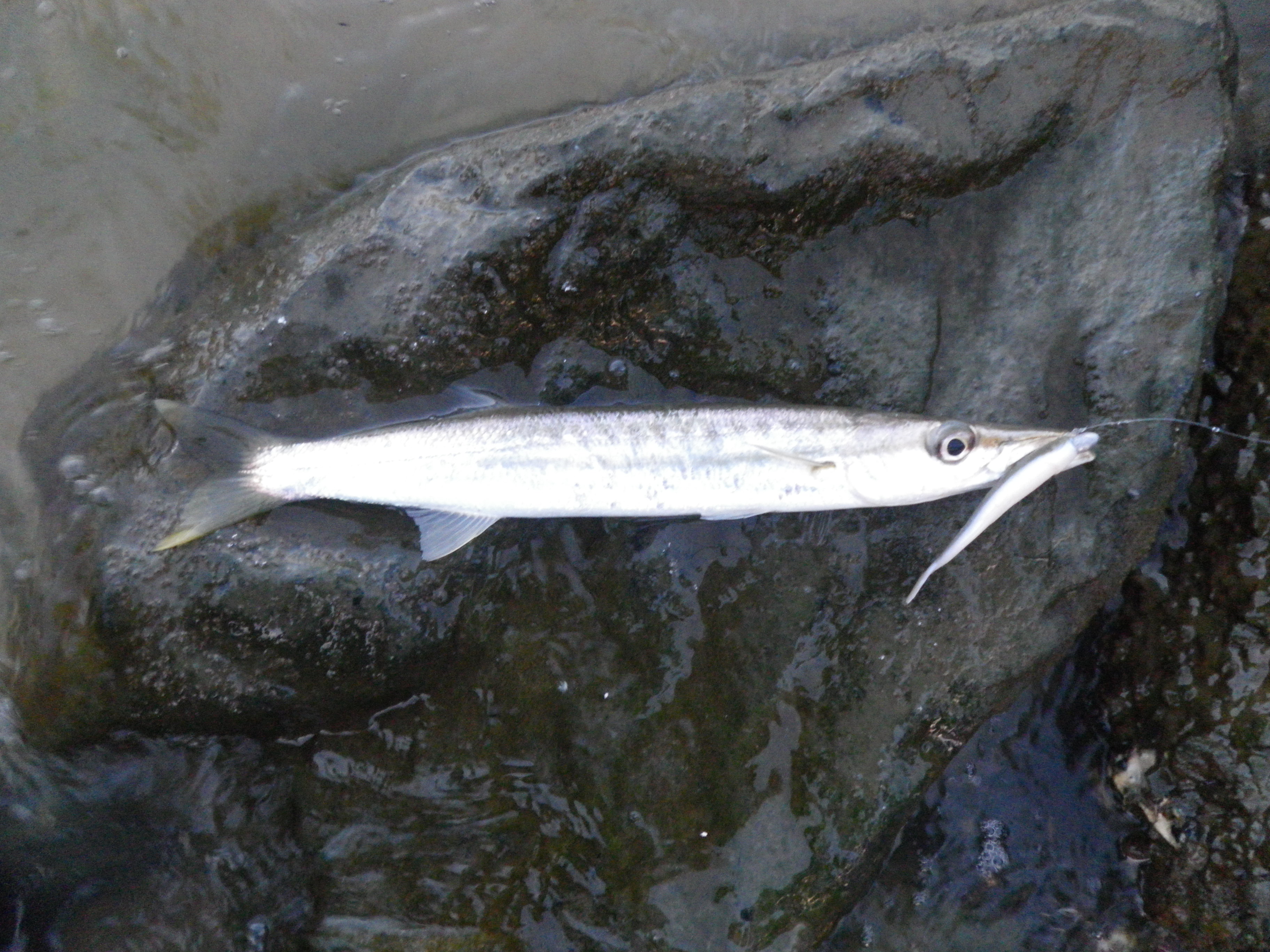
Big Pike lurk around the Bribie Bridge lights

I switched to a 2” Shrimp in the Peppered Prawn colour. I was fishing it on a 1/6th 1/0 jighead and using a metre of 12lb fluorocarbon leader, tied on to 10lb Fireline mainline. It was almost first light now and I am not sure if it was the light or the colour change, but I immediately started catching fish. The first was a monster Pike – around 40 cm, then an undersized Flathead and then a small Chopper Tailor, then more Pike. After a fish a cast for about 20 minutes, I finally found a 42cm Flathead that I could keep for dinner.

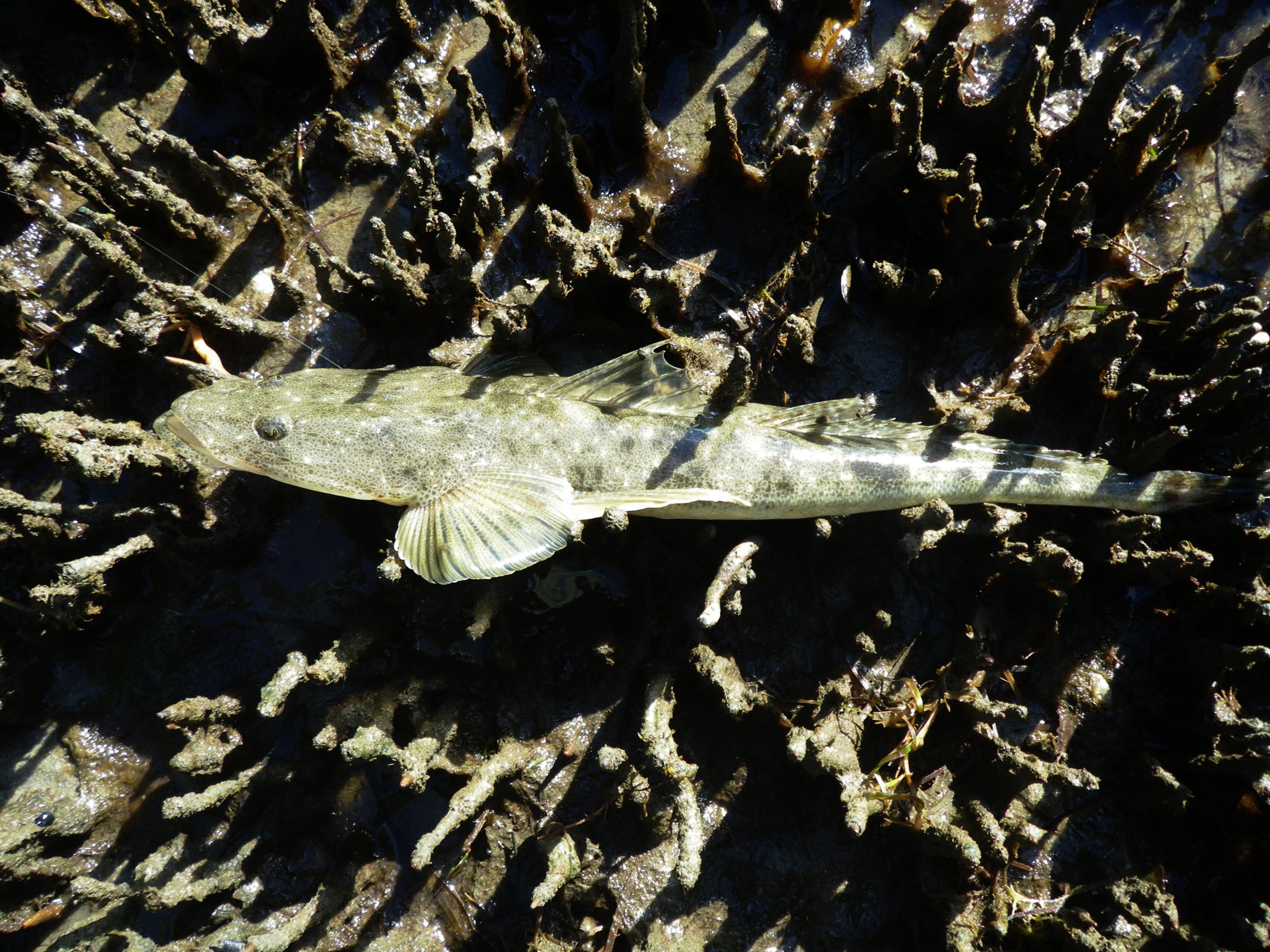
A 42 cm Flathead

As the sun came up I waded north, towards the boat hire spot and after plenty of casts and plenty of Pike, finally got another Flathead that was just over 40 cm. By 8.30am the wind was a solid south-westerly and I had had enough.

Bribie Island – More Flathead from around that jetty – 31 May 2011

Tuesday

When you are catching fish in a particular spot, it is difficult to tear yourself away. So at sunrise this morning I found myself back to the south of the old oyster jetty, on the mainland, opposite Bribie Island.

I started at about 6.00 am, just on first light. High tide would be just after 8.00 am. The wind was a very light south-westerly. From 6.00 am to 8.00 am, all I could find were a couple Pike. I often find the last hour of the run in tide is difficult. I think the fish need a bit of current to get them in feeding mood. When the water is completely still, at high tide, they just stop biting. Around high tide I was also limited by the water depth, to within 30 metres of the Mangrove fringed shoreline.

Around 8.30 am, as the tide started running out, I caught my first Flathead of the day – 42cm long, on a 1/6th 1/0 jighead loaded with a GULP 4” Minnow soft plastic in the Pumpkinseed Colour. As the run out tide grew stronger and the water level dropped, I walked further and further south, catching Flathead all the way along the big sandbar. I turned around when I reached the green channel marker and waded back up the Passage, casting into the run out tide. I swapped between the Pumpkinseed and Pearl Watermelon colour soft plastics and both caught fish. In total I caught 11 Flathead, of which 7 were over 40cm – the biggest was 61cm. I caught 4 fish on the sand right next to the green channel marker. All the fish were caught in less than a metre of water.

I finished up back at the bridge by about 11.00 am. All the fish caught today were released, so get out there and catch them!

This slideshow requires JavaScript.

Bribie Island – From the Bridge to Sandstone Point – 29 May 2011

Sunday

I decided on Bribie Island again today. If you fish the flats on the mainland side of the Pumicestone Passage you are fairly sheltered from a cold south-westerly wind. The wind was forecast to be a 10 -12 knot south-westerly, but it was a good deal lighter than at 5.00 am, when I arrived by the bridge across to Bribie Island. I pulled on the waders and beanie and wandered out under the bridge lights, on the island side. There were a few lightning flashes over towards Moreton Island and the stars were blocked out by low cloud.

I fished around the bridge pylons and almost immediately, caught a few Pike, but there was not much surface action. The tide was running in and high water would be just before seven. There was now plenty of water close to the Mangrove roots and I concentrated on the area just to the south of the bridge, where I often see Flathead ‘lies’ at low tide. After a few casts with a GULP 3” Lime Tiger Minnow soft plastic, on a 1/8th 1/0 jighead, I was on to a fish. It struck hard, but it was only small – just under 40 cm. In the process of releasing it, it gave me a good spiking in the side of the thumb. I don’t know what’s on the Flathead spike, but there must be some kind of anti-coagulant, because whenever I get spiked, the blood just pours out – not ideal when standing waist deep in water in the pre-dawn light.

I moved gradually south, about 20 metres from the shore, casting all around. I continued to get the odd Pike but as the water slowed on the high tide, everything went very quiet and I had no bites for about 90 minutes. Then as the tide really started to run out I switched to a heavier 1/6th 1/0 jighead and a bigger GULP 4” Minnow in the Pumpkinseed colour. I was standing to the south-west of the long sandbar at the Sandstone Point corner and casting my lure over it and hopping it back with the run out tide. Suddenly the line went tight and I had a fish. I towed it back to a gap in the Mangroves – it was a nice Flathead at around 61cm. Plenty of fish in our fridge, so I let it go.

61cm Flathead caught on a GULP Pumpkinseed Minnow

The wind was getting up now and as this was a fairly sheltered spot, so was the boat traffic. I caught a couple more fish around the 40 cm size and then finally, just to the north of the oyster jetty, I got a 51cm Flathead. I had caught 4 of the 5 Flathead on the Pumpkinseed coloured soft plastics and the session was a good reminder of how useful this colour can be. At around 9.30 am I gave up and headed home for a warm shower.

51 cm Flathead - Caught on a GULP Pumpkinseed Jerkshad

Brisbane River – Boggy Creek Shark – 29 March 2011

Tuesday

With the wind still blowing and rain threatening there were not many good options on Tuesday. I decided to go down to Boggy Creek on the Brisbane River again. I arrived about 7.15am and the tide had only just started to run out.

There was lots of surface action, close to the far bank, just under the foot bridge, so I focused on that area. I started with a 1/6th 1/0 jighead, rigged with a GULP 4” Minnow in the Pearl Watermelon colour. Once the tide starts to run, the water flows very fast under the bridge. The narrowing of the creek at the bridge footings creates a fast-moving channel that is reasonably deep in the middle. I have caught Bream, Flathead, Tailor, Estuary Cod and Jewfish in this spot. The fish seem to gather in the eddies, that form on either side, depending on which way the tide is running.

A predator was surging up into the bait schools or jelly prawns that were sitting in these eddies, but I could not tempt it with my soft plastic lure. I switched to a ¼ oz vibration blade in a silvery green colour. I covered the same area with casts but still did not get any bites.

I moved along the bank, towards the creek mouth and came across a dead shark. It must have been caught the night before. It seems a shame to leave a creature like this to die on the river side. My fishing philosophy is – if you are not going to eat it, photograph and release it.

This slideshow requires JavaScript.

I switched to a lighter jighead – 1/8th 1/0 and put on a GULP 2” Shrimp in the Peppered Prawn colour. I was now fishing in the slower water, up close to the Mangrove fringe. At an opening next to the abandoned timber log boat ramp, I felt a very faint bite. I cast back in the same spot and slowed the retrieve right down – counting to five in between each hop. After a few hops, I got a solid bite and I was on. It was no monster but it was a keeper flathead, at around 44 cm.

I moved on along the bank and watched the numerous mullet schools swim by. As the water cools I presume the Pike and Bream will get thicker and thicker and the bigger Flathead will start to follow them. The fishing should be excellent in the coming cooler months. After another 30 minutes I decided to give up at around 9.00 am.

Bribie Island – Sandstone Point Drain – 27 Feb 2011

Sunday

Up early, 3.30am and back to Bribie to see if the Flathead were still around. There was no real wind but officially the wind direction had turned to a northerly. When I arrived at about 4.20am the bridge resembled Scapa Flow submarine base during WW2. There were about ten lines in the water from the north side of the bridge and a couple of cast nets kept splashing over the side. There were also a couple of crab pots hanging off the bridge further along. It was good to see so many land based anglers out fishing but a stealthy approach in this area, was out of the question.

As I was rigging up I ran into a local fisherman who also patrols this area with lures and we waded out under the bridge together. The tide was still running in but as there had been a lot of disturbance on the north side of the bridge, we decided to fish the south side. There were lots of surface breaks and tiny jumping jelly prawns. We both hooked into some Pike – I was also bitten off, but I think it was only and aggressive Pike. They can really chomp as I had a 16lb fluorocarbon leader tied on.

After 30 mins of fishing, neither of us had a Flathead so I decided to move south and my friend headed off to Pebble Beach. I continued south, casting along the shore line in front of me. The surface bust ups continued, but died off as the sun came up. The tide was slowing now and about to turn. I walked south and round the corner towards Sandstone Point.

As the tide started to run out, I positioned myself in the mouth of a big sandy drain that is just on this corner. I took out a GULP 2” Shrimp in the Banana Prawn colour and rigged it on a 1/8th 1/0 jighead. I cast it into the run out tide and jigged it along the bottom of the drain with the current. A few jumps into my retrieve I felt the unmistakable ‘thud’ of a Flathead bite. I paused, counted to five, then struck – I was on. I pulled it clear of the Mangroves and walked it round the corner to a small bay where I pulled it up onto the sand. It was a 48cm Flathead and it was just after 6.10 am. I released it and went in search of more.

The Long Toms arrived and made a couple of impressive aerial lunges for the plastic, especially when I speeded up the retrieve. After half an hour or so of fishing with the same soft plastic lure, I swapped to a GULP 4” Jigging Grub in the Pepper Prawn colour. This is a fairly robust grub tail soft plastic. The tail vibrates nicely and when the water is not very clear I think this helps the fish find it. It worked this time as it was grabbed on the first cast. In fact, it had hardly hit the water when something ate it. It took a couple of turns of the reel to realise it was hooked and then it made a great tail splash and took a bit of line. Again I gradually walked it back to shore to unhook it. It was another Flathead, around 43cm long.

I photographed and released the fish and carried on for another hour without any luck. The water was very murky, as the big tide had stirred up the all the sediment again. I was pleased to see there were still fish around but I would like a bit of south-easterly wind to come back soon.

Tweed River – The Rockwall – Another Duck

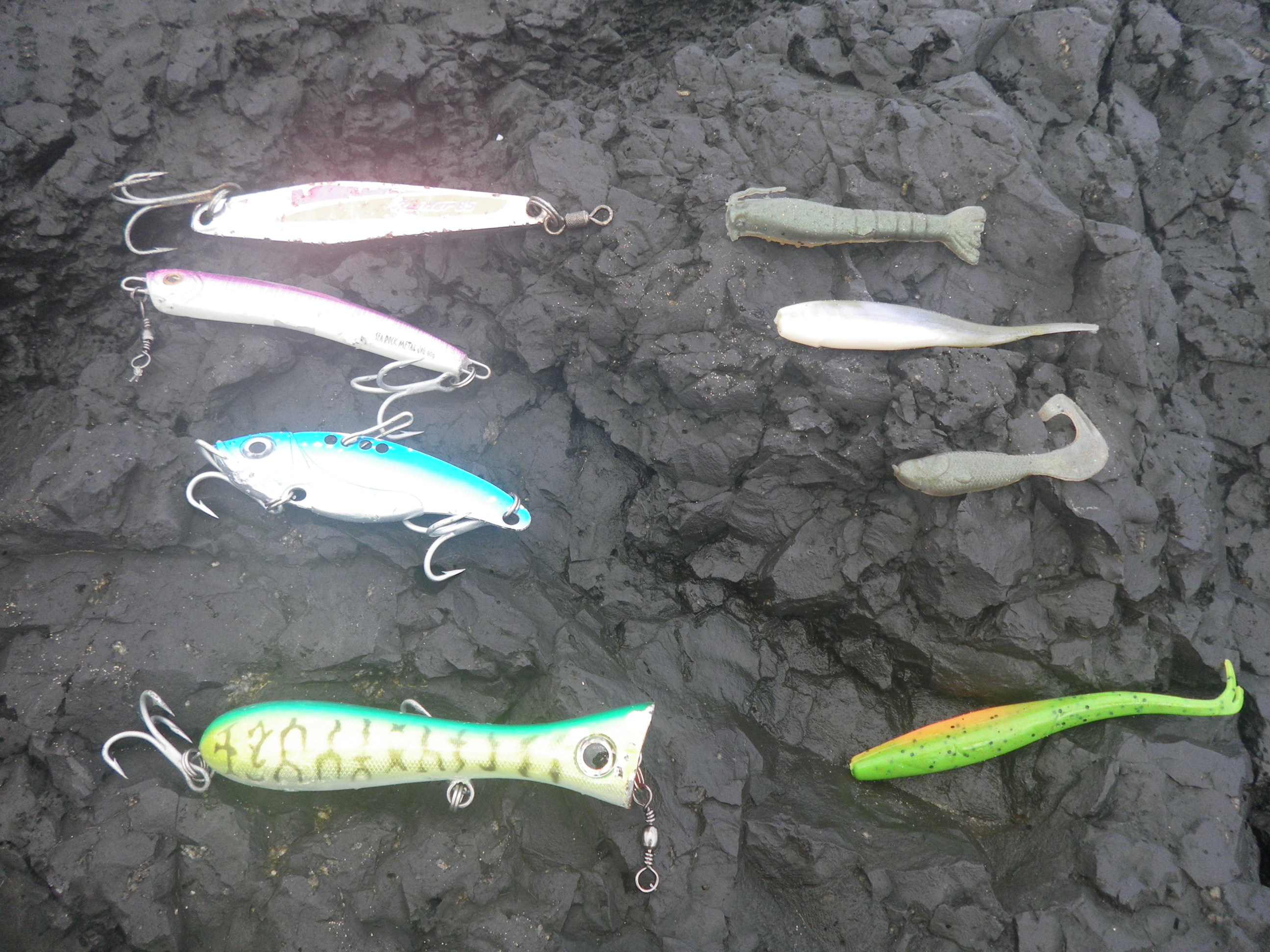
My lure arsenal for the Tweed rockwall

Saturday

Oh dear , oh dear , oh dear – another morning with no fish. As I have said before, this is the worst time of the year for me. The main estuary species – Flathead & Bream – have long finished spawning and as the water temperature climbs and weather patterns get more unpredictable they get harder to find. Add to that – flooded river systems and constant changes in wind patterns and I get stuck focusing on the ocean rock walls and ledges.

In these locations the fish come and go with the bait and the wind. Tailor, Trevally, Kingfish, Queenfish and even good sized Mackerel and Tuna will all come in close to the rocks if the bait is around. The Tailor are particularly voracious in these situations and you can catch them on almost any type of lure or bait. The Trevally are sometimes harder to please, often limiting their feeding period to an hour or so either side of dawn and dusk. The other species require you to be in the right place at the right time and this means putting in the casting hours – and it can be a long time between fish!

This morning I arrived at the north rockwall, at the mouth of the Tweed River at around 4.00 am. The horizon started to glow just as I rigged up and I started by fishing soft plastic lures through the last of the run out tide. I switched to a surface popper for about 30 casts and put in 50 casts with an 85 gram metal slug. Nothing I used produced results. At one point a fellow fisherman caught a 30cm Tarwhine on a fresh beach worm, but that was the only fish I saw caught.

Apparently a few decent Trevally had been caught at dusk, on Friday and everyone was hopeful that this mornings session would produce fish – But it didn’t! I gave up around 7.30 am as another of this summer’s rain showers arrived.

Bribie Island – The Old Oyster Jetty – 17 Nov 2010

Wednesday
I started fishing at about 9.15 am – not ideal, but sometimes life gets in the way of my true calling. It was a fantastic Queensland day with bright sunshine and light breeze from the North West. I was at my usual haunt – Bribie Island. I headed up to Whitepatch where I had caught a few fish on Sunday. The tide was about half way out with low tide forecast for around 12.45pm.
I rigged up with a very light 1/32 oz jig head and put on a Gulp Sandworm in the Camo colour. I was trying for a few whiting. There were plenty around – I suspect their favourite food is the soldier crabs that come out on to the flats, in huge numbers, at low tide.
I caught a couple of very small Whiting and then decided to look for something bigger. There was plenty of bait in the water – whiting, garfish etc. I upgraded to a 1/6th 1/0 jighead and put on a GULP 2” Shrimp in the Peppered prawn colour. I walked up and down the ledge that runs all along this section of the Passage and cast alternately; one over the edge and one out in front of me, into the shallow water on top of the ledge. I did this for well over an hour without success. At one point a hungry Pike made a great lunge at the lure just as I lifted it out of the water, but I did not get it.
At this stage I think it is fair to point out that I usually find November, December, January and February by far the toughest months to fish the Queensland estuaries from the shore. If I look back through my diaries there is a dramatic drop off in my catch rate after the Flathead finish spawning and the water warms up. However, summer brings the possibility of rarer, but exciting species such as Mangrove Jack and Sweetlip and even the occasional pelagic, like Tuna or Mackerel. It is a different style of fishing and requires a bit more work. You have to find them and this means lots of long casts and long walks/ wades.
I decided to switch spots and drove over to the mainland side of the Bribie Island Bridge. I waded out onto the muddy weed banks just to the south of the old oyster jetty. By now these were only covered with about 60cm of water. I put on the Gulp 3” Minnow in the Pearl Watermelon colour – I stuck with the 1/6th 1/0 weight jighead. I was aiming at the sandy patches in between the weed and the edge of the rubble piles that dot the area. There was a bit of weed floating around but not enough to make the fishing difficult. About 40 metres to the south of the jetty I cast into a piece of clear sandy bottom and just as the plastic hit the edge of the weed, I felt a dull thud. Finally, after three hours of fishing I was on to a reasonable fish. I gave it plenty of line and gradually towed it back to the shore to unhook. It was too valuable to try to risk grabbing while wading around in the water. When I got it up and away from the water it was a respectable 46cm Flathead. It was now right on low tide and after a few more casts to see if the fish had any friends around, I gave up.
The fishing is getting harder but the harder they are to find, the sweeter they taste!

Bribie Island – Bridge, Buckleys Hole and Whitepatch – 14 Nov 2010

This slideshow requires JavaScript.

Sunday

After a month away from fishing, I was keen to get a line in the water as soon as possible. I decided to head up to Bribie Island and was on the road from Brisbane at 3.30 am. A lot changes in 4 weeks – the water has warmed up, sunrise is a good deal earlier and there has been plenty of rain. As I waded out under the bridge, on the island side, the first thing that struck me was the murky water and the lack of surface activity. Then I gradually realised that the plus side of all the rain and the northerly winds, was distinct lack of weed floating around.
I started by casting my old favourite soft plastic – the GULP 4” Minnow in the Pearl Watermelon colour – in close to the Bribie Island bridge pylons. Not much happened for half an hour or so. I had a few nudges and bumps, but no hook ups. Finally, I put a cast right into the foot of the second pylon and it scraped the barnacles as it went into the water. Next thing the line went taught but with not much weight on it. I wound in the line and had my first fish of the morning a 10cm Moses Perch! As the sky lightened I caught a couple of small Pike. At about 5.30 am I decided to move on.
I drove down to the sand flats at Buckley’s Hole, at the southern tip of Bribie Island. High tide had been at 3.30 am and now the tide was running out strongly. The water here was very cloudy. I think this is due to the hollowing out of the banks at the mouth of the tidal lagoon. You can see where the current has washed the sand away and revealed the mud underneath. During the run out tide this further clouds the water. Despite the discolouration there was plenty of surface activity and there were Whiting everywhere. On many casts my plastic would land in the middle of a school and send them jumping in all directions. There were also plenty of herring and other small bait fish around. Perhaps because there was so much bait in the water, I was still casting around after an hour or so with no fish. There were plenty of jellyfish around, no doubt blown in on the northerly winds. The turtles were also out in force and at about 6.30 am a Dugong swam past.
I changed plastic to a GULP 2” Shrimp in the Peppered Prawn colour which I was fishing on a 1/6th 1/0 hook jighead. I was using a 10lb fluorocarbon leader tied to 2.8kg Fireline. I had my favourite Loomis GL2 Light spin rod with a Stradic 3000 reel. About 300 metres south of the mouth of the tidal lagoon I got a couple of hits that I took for a Pike or Bream. I cast back again into the same spot and almost instantly felt the solid bite of a Flathead. I was so excited I nearly catapulted him out of the water on to the shore. He was just under the legal size limit so I snapped him and put him back. In the attached pictures you can see just how cloudy the water was. I carried on for another 30 mins without success and then decided to change spots.
I drove up to Whitepatch beach, further up on the inside of Bribie Island. It was now almost low tide, so I stayed out of the water, initially. I cast out the same soft plastic shrimp on to the ledge that forms the edge of the Pumicestone Passage, all along this beach. There was only about 50cm of water covering the ledge and again, the water was very murky. On the third or fourth cast, a fish slammed the soft plastic shrimp and took off over the ledge. I let it have some line then moved down to the edge, tightened the drag a little and pulled it up and over. I then dragged it up on to the sand. It was a nice 52cm Flathead and it went straight into the bag for dinner.
As the tide started to run in, I decided to try my Snapper theory for this spot. My experience suggests that they often feed in this area during the first half hour of the run in tide. This seems to be especially true when these are the conditions just after dawn. I prefer a plastic with a curly tail for Snapper but I didn’t have one, so it was back to the trusty GULP 4” Minnow in the Pearl Watermelon colour. The fish are usually in close to the ledge but I cast a fair way out, let the plastic sink then skip it across the bottom fairly slowly, increasing the pause to five seconds or so, as the plastic comes close to the ledge. Right on cue, on the third cast the rod bends over and I am losing line to something that can only be a Snapper. After a quick tussle and a slight tightening of the drag I successfully pulled it up on to the sand. It was just under legal size at around 34cm but this is a good fish for this spot. As I photographed it, I noticed it had lost one of its fins – it’s a tough ocean out there! I let it go and decided to pack up for the day.
It was 9.00 am and I had fed my craving – watch this space – I will be back out there again soon.