Unknown's avatar

About Landangler

I am a mad keen fisherman - but I am also a seasick one. So I fish the estuaries, beaches, rocks, bays and rivers of the Queensland and NSW coast - from the shore. I like to fish with soft plastics lures, but I will resort to anything to catch dinner!

Caloundra – Golden Beach – 10 November 2011

Thursday

Northerly winds again and forecast to be blowing 25 knots by lunchtime. Fortunately the winds would be light from dawn through until about 10.00 am. I chose to fish at Caloundra again.

Pelican Waters Bridge


Still and hot in the Pumicestone Passage


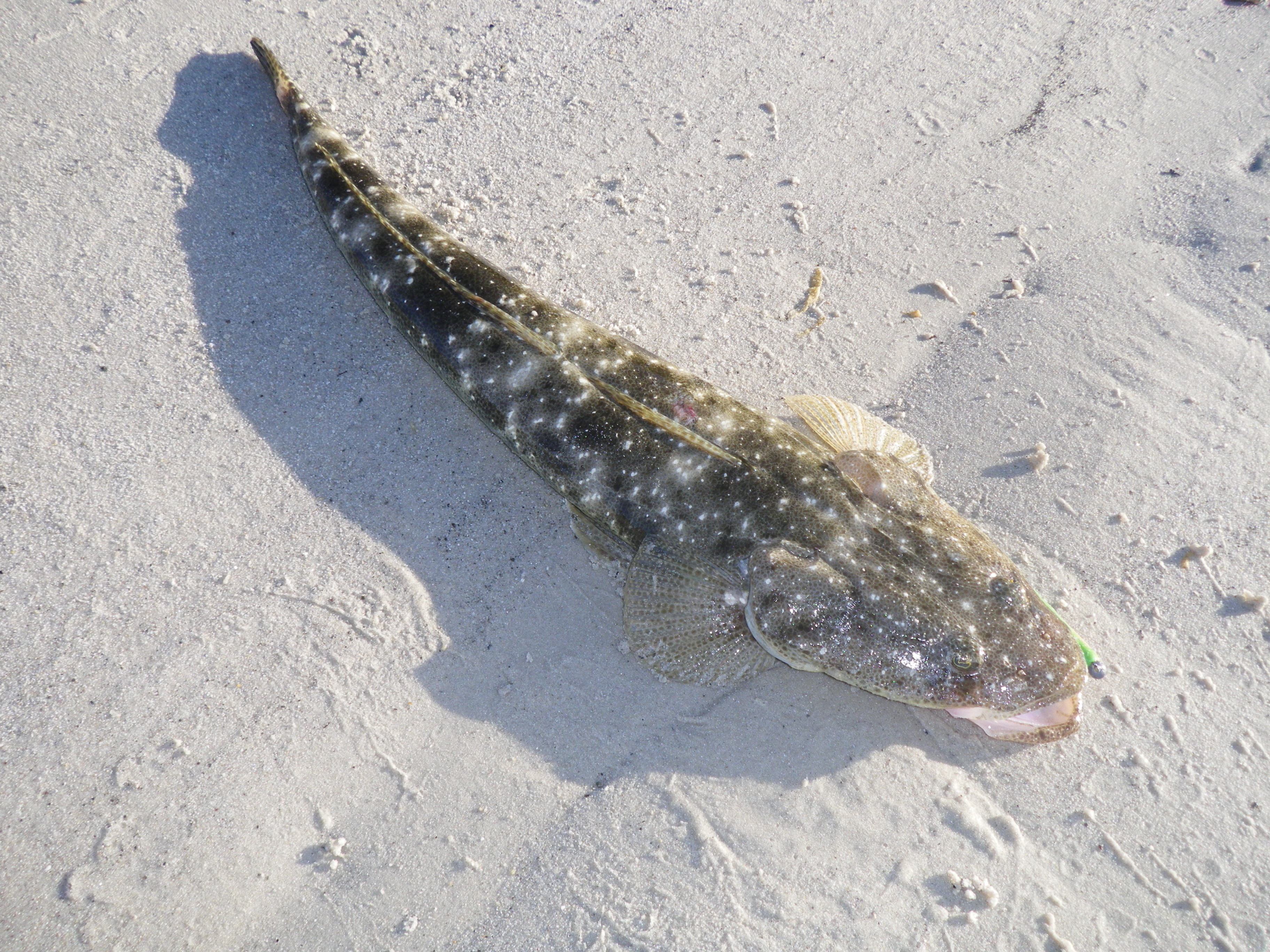
I arrived about 4.00 am – just before first light and decided to put in a few casts under the bridge at the entrance to the Pelican Waters development. There were plenty of herring and other bait fish jumping around. Low tide had been just after 1.00 am so it was now about halfway through the run in phase. The moon was full. I have been fishing with a 2/4 kg 7’6” Nitro spin rod for the last few sessions – just in case I find a good Trevally, Tuna or Queenfish amongst the Flathead. It does not quite have the sensitivity/ flexibility of the Loomis GL2 (my usual estuary rod) but it can apply a little more pressure, if I hook up with a bigger fish. I rigged up with a GULP 4” Minnow soft plastic in the Pumpkinseed colour and cast it all around the bridge pylons. Finally as the sun was coming up I hooked up with a 28cm Flathead.

The first good Flathead of the day - Caloundra

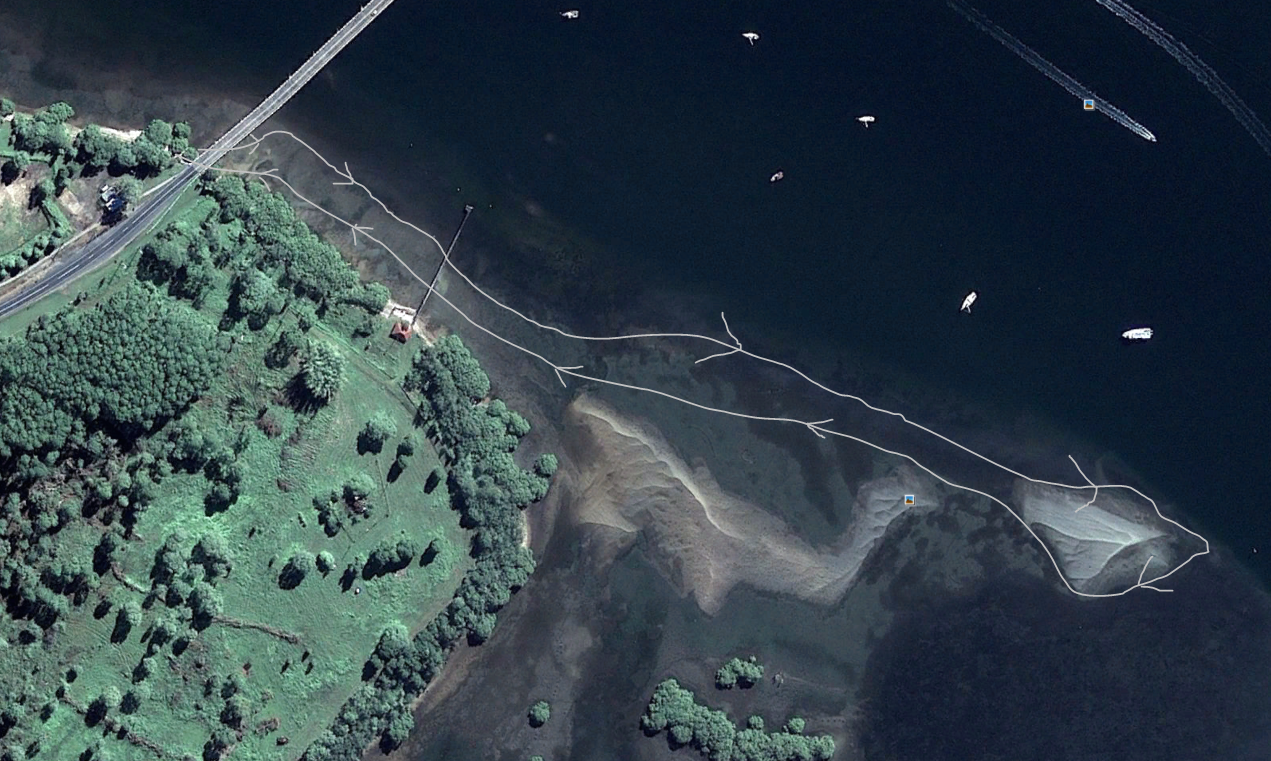
I released it and decided to cross back over the bridge to fish the weed beds in front of the Power Boat Club. I waded out along the sand bank that was now partially covered with water. There were rays everywhere, scattering in all directions as they felt my feet, coming towards them. I waded quietly down to the southern end of the sand bank and then turned around and cast over the weed beds into the incoming tide. I jumped the soft plastic along the bottom, back towards me. I was now using a GULP 5 “Jerkshad in the Lime Tiger colour. After a few casts I hooked a fish but, as I pulled it towards me, the line went slack and it was gone. I cast back in the same spot and a few casts later I felt the solid thud of another bite. This time I paused and slowly counted all the way to ten, before I struck. This one was properly hooked. I dragged it back to the sand and photographed it. It was about 55cm long. It was just after 6.00 am.

TETRAWORKS YURAMEKI sinking pencil lure


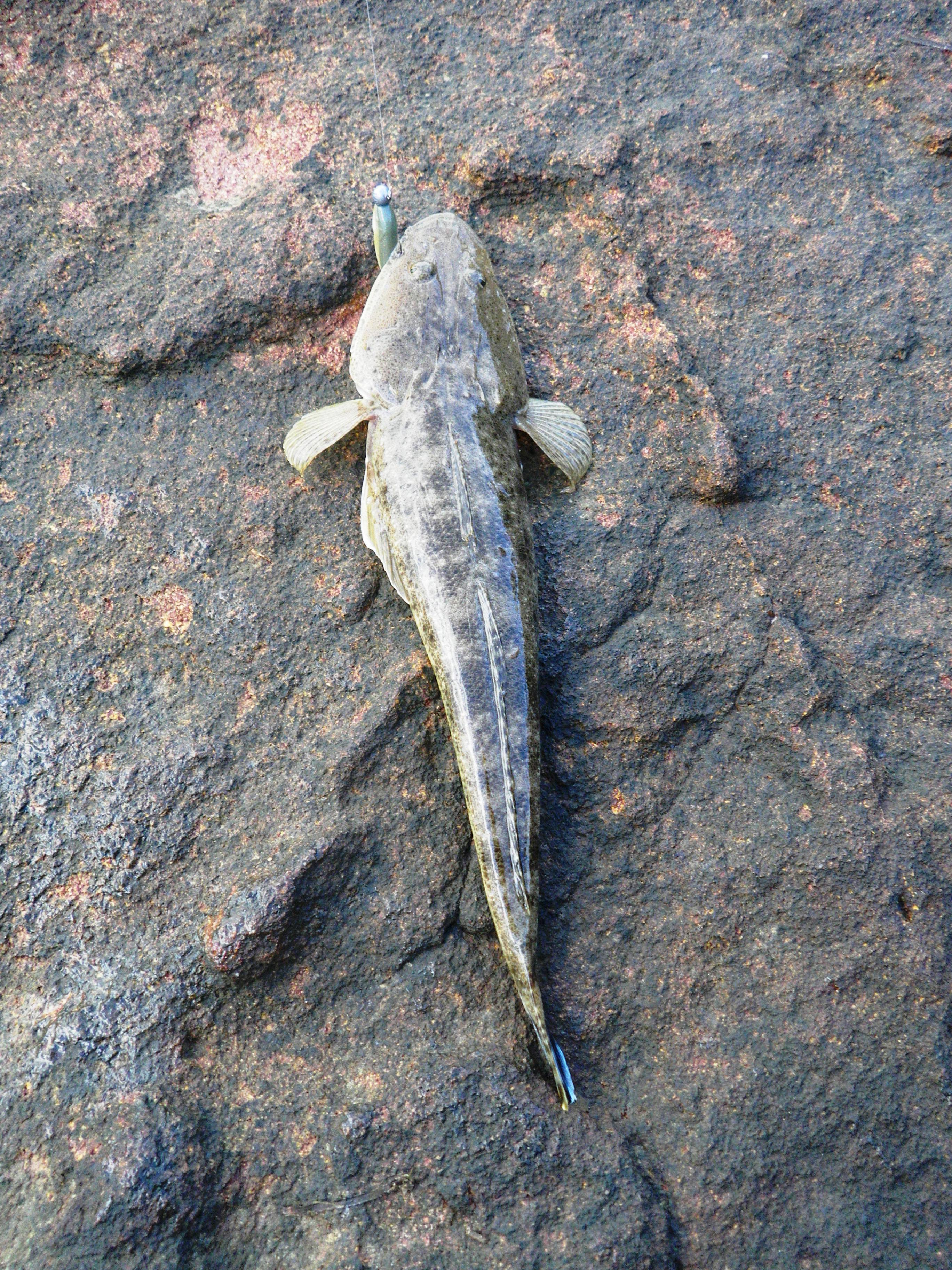
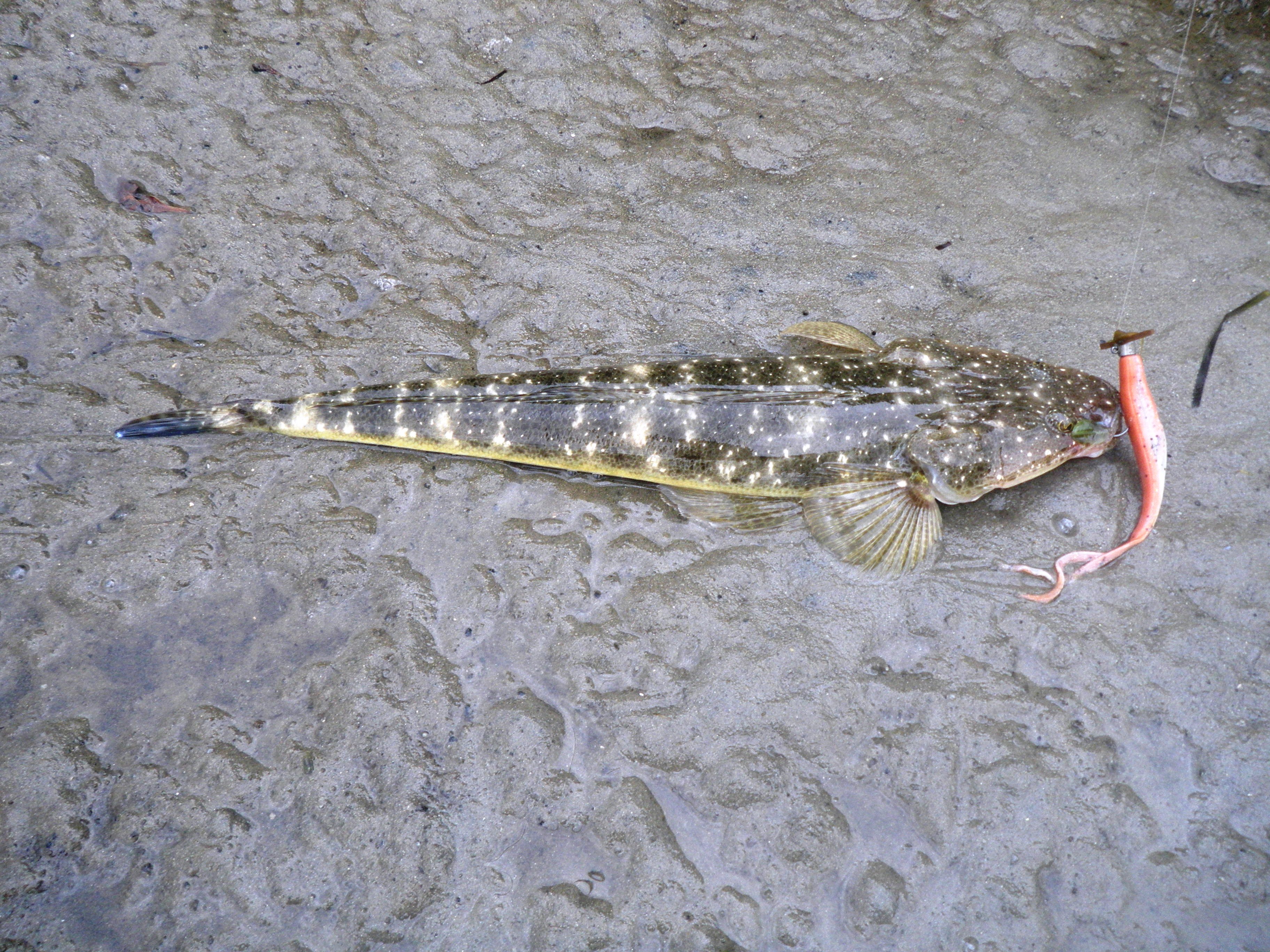
The water was still and the sun was already hot. I decided to fish with another of the Japanese DUO hard bodied lures I had been sent to try out. The DUO TETRAWORKS YURAMEKI is a small sinking pencil lure, 48mm long, weighing 6.3g. Once again, it is nicely weighted and beautifully finished to produce a clever, wriggling tail action. It casts like a bullet and so it’s ideal for covering large areas, when you are prospecting for fish on the sand banks. I knew there were Flathead around and it did not take long – less than five minutes later I felt the bite and hooked up. The Flathead broke the surface and started shaking its head furiously but the treble hooks were lodged. I took the fish back to shore. It was a 46cm Flathead and it swam away unharmed, after I removed the trebles with some pliers. The DUO lure had produced the goods again – two fish from two try outs – pretty impressive.

This Flathead fell for a DUO TETRAWORKS YURAMEKI hard bodied lure

It was very warm but the northerly breeze was starting to pick up. I decided to move down to Golden Beach and fish the edge of the channel that runs out from Diamond Head. There is a big drop off here and I did not want to lose the TETRAWORKS YURAMEKI lure – I only have one and there are too many snags in this area. So I switched back to a GULP Crazylegs Jerkshad soft plastic lure in the New Penny colour on a 1/8th oz 1/0 jighead. I worked the edge of the channel all the way out to the green channel marker. Finally, just as I reached the drop off into the main channel, I got a bite. I paused, and then I struck. I had securely hooked another fish – I brought it in close and released it – a 35cm Flathead.

By now the wind was too strong to cast and there were white caps on the waves, so I waded back to the shore and gave up for the day.

Caloundra – Bulcock Beach and Golden Beach – 8 November 2011

Tuesday

Strong northerly winds were forecast, but not until around 10.00 am. I decided to fish at my new favorite spot – Caloundra – at the northern end of the Pumicestone Passage, about 1 hour north of Brisbane, on the Sunshine Coast.

High tide would be at 7.40 am and it would be a nearly full moon. There would be plenty of power in the tidal flow and it would come up very high. I arrived at first light, just after 4.00 am. I started fishing at the mouth of the Pumicestone Passage, at the southern end of Bulcock Beach, on the rocks. The wind was blowing and it was already fairly choppy. The tide was rushing in, so I focused on casting my soft plastic lure at the eddies, behind the rocks. After a few casts, I caught a 45cm Flathead on a GULP 3” Minnow lure, in the Lime Tiger colour.

It was too windy to stay in this location so at about 6.00 am, I moved south along the Pumicestone Passage to Golden Beach, to fish the weed banks in front of the Power Boat Club. This is a good spot on high tide as the Flathead move up over the weed beds, looking for something to eat. After half an hour of casting I found one, another 45cm Flathead on the same lure. I was fishing with a 1/8th 1/0 jighead and 1.5m long 12lb fluorocarbon leader. I let the fish go and few casts later I got a better one. This time, on a GULP 5” Jerkshad soft plastic., in the Satay Chicken colour. As soon as I felt the initial bite, I had dropped the rod tip and counted to 10. The waiting nearly killed me but when I jerked the rod tip up, the lure lodged firmly in the fish’s throat. The fish was too big to grab in waist deep water so I had to tow it all the way back to the sand – about 100 metres. Luckily, it stayed on and did not saw its way through the leader.

I fished for a few more hours, wading up and down the weed banks. But, by about 9.00 am, it was just too hot to carry on, so I put the fish on ice and went for a swim.

This slideshow requires JavaScript.

Bribie Island – Pacific Harbour Flats – 7 November 2011

Monday

I wasn’t planning to fish today. I couldn’t get away until 8.00 am and thought that might be too late. But it was such a beautiful day that I decided I would go anyway. I drove up to Bribie and dropped in on Nigel at the tackle shop, in Ningi. As usual, he provided some good local knowledge and told me who was catching what, where and when.

I took his advice and decided to fish some new ground, to the north of the mouth of the Pacific Harbour canal development, on Bribie Island. High tide had passed at around 7.00 am and it was now about 9.00 am. This is a great fishing spot. It has everything – weed beds, sand banks and the coffee rock ledge that runs the length of the Pumicestone Passage.

I started just north of the wading bird sanctuary and started casting around with a GULP 5” Jerkshad in the Satay Chicken colour. I had been fishing the longer Crazylegs Jerkshad soft plastics at the end of the previous session and had left the slightly heavier and wider gape 1/6th oz, 2/0 jighead on. I have begun to conclude that anything bigger than a 1/0 hook jighead, can reduce you hook up rate with the Flathead. I don’t think it affects their eagerness to eat the lure but I think the bigger hook does not lodge so effectively in the jaw of the very flat mouth.

This slideshow requires JavaScript.

After about ten minutes I felt a bite, paused and struck, I had a good size fish on, but after about twenty seconds, it wriggled off the jighead. I waded a little further south, towards the mouth of the Pacific Harbour development. Just short of the entrance, I was retrieving my lure and about to lift it from the water to cast again. A Flathead launched itself at the lure and grabbed it, just as it came out of the water. I nearly jumped out of my skin. It turned and ran and I tried to set the hook but failed again and it was gone.

I changed down to a lighter and smaller gauge jighead, a 1/8th 1/0 hook, and moved back north, wading and casting, wading and casting. I tripped over an unmarked crab pot and then another. The water is still quite muddy and murky in places, even though there has been no rain for a while. Finally, after more than one hour, I hooked up with a 25cm Flathead. I released it and decided to switch locations.

I drove down to Bongaree, to the mouth of the tidal lagoon in front of Buckley’s Hole. It was just about low tide by the time I got there. I cast over the edge of the coffee rock ledge and moved south from a spot just in front of the new museum. After a couple of casts, bait started skipping around and I caught a small Chopper Tailor – about 25cm long.

I decided I had missed my chance of catching a good fish earlier in the day and so, at about 12.30 pm, I gave up and went home.

Bribie Island – The Oyster Jetty & Flats – 5 November 2011

Saturday

Early start again, but back to Bribie Island this time. I arrived at the island side of the bridge at about 4.00 am. High tide would be at about 5.30 am. It would be one of the lower highs of the month at about 1.7m.

There was a group of 5 fishermen on the bridge but they were fishing in the main channel, a few pylons out. I have always caught my best fish in this spot, close to the shore in the shallows. So that’s where I started, walking along the bank, casting into the run out current and bouncing my soft plastic along the sandy and weedy bottom.

The problem was not a lack of fish but rather too many. I immediately heard the blow of a couple of dolphins and then saw small mullet flying in all directions as they started breakfast. There were mullet everywhere and as the horizon started to glow, everything started eating them. Every few seconds you would hear a splash as they leapt out of the water, trying to avoid the predators.

I put on a GULP 5” Jerkshad and just kept casting as the surface bust ups. I felt the lure bumping through the mullet schools. The fish were so thick that my lure would crash into them on the retrieve. The problem when there is this much food around, is making your offering stand out. Theoretically, you should be trying to make you soft plastic lure look just like a small mullet as that is what the fish are eating. But in these circumstances this will just mean your lure gets lost among the mass of fish.

As dawn broke I decided to swap sides and drove over to the mainland side of the Pumicestone Passage. I noticed the entrance to the track that leads down to the old oyster jetty is now being fenced off. I think the land was sold recently so perhaps the new owners have grand plans. It was now about 5.30 am. The sun was up and the surface activity had died down. The water had slowed as it approached the top of the tide, but there was a lot less sea grass floating around.

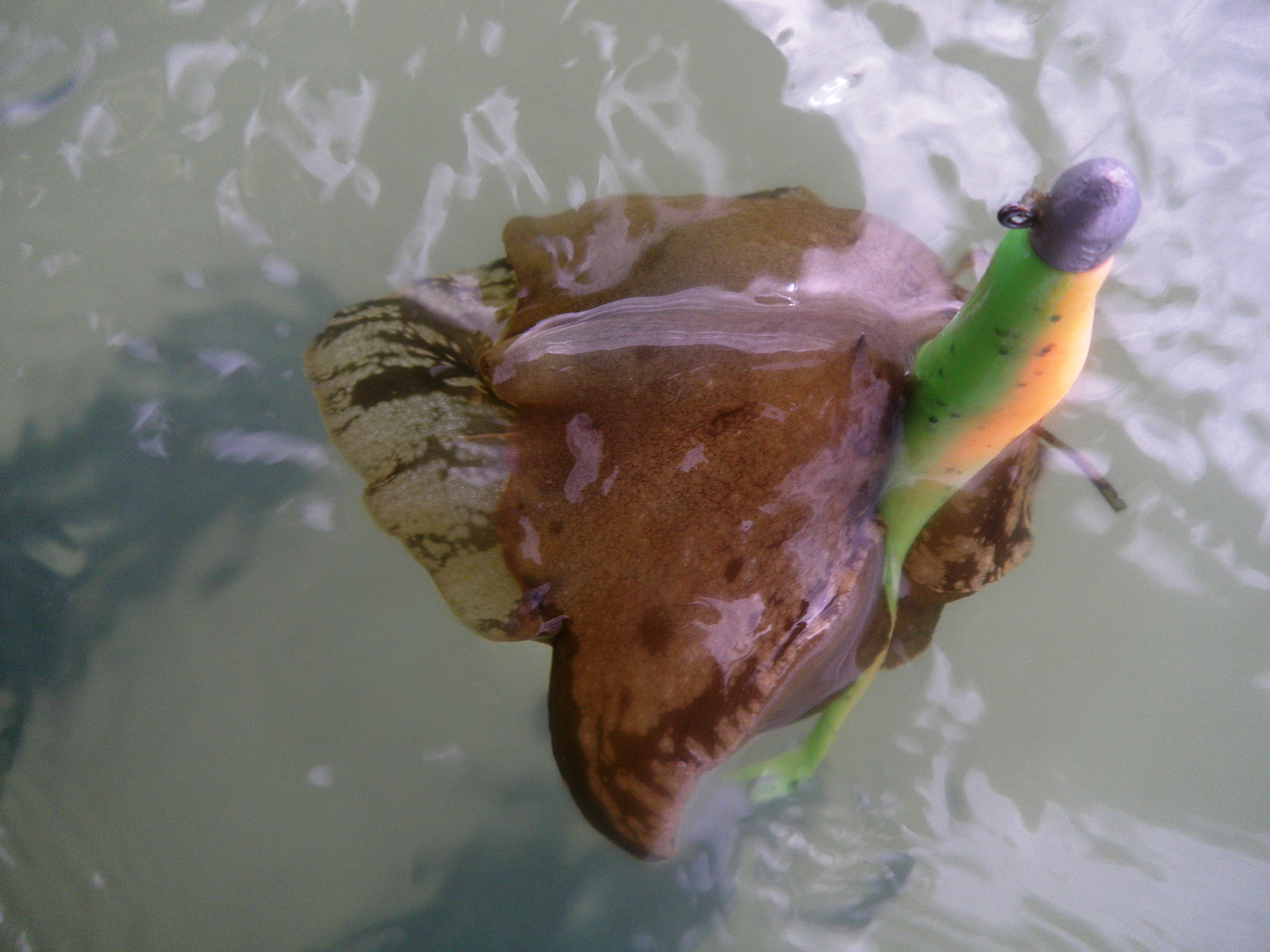
Nudibranch / Sea Snail

I waded south, under the jetty and around the corner towards Sandstone Point. The now disappointingly familiar smell of rotting turtle flesh hit me and I came across a big one, dead, bloated and washed up on the rocks. It had an orange nylon rope wrapped solidly around its head and right fin and I presume this is what had killed it. Maybe it had got tangled up with a crab pot or mooring line – I am not sure how this can be prevented but it is always sad to see them dead. The good news is that I have never seen so many – I cannot remember the last fishing session I had when I did not encounter (a live) one.

Tangled Turtle

The mullet schools were thick all through this area and there is now plenty of sea grass on the bottom. I waded slowly round towards Sandstone Point and just as I turned the corner, a caught a small Flathead on a GULP 3” Pearl Watermelon Minnow.

A 35cm Flathead - near Sandstone Point

The tide was now running out so I waded back across the flats, round towards the weed beds by the old Oyster Jetty. About 40 metres south of the jetty, level with I felt the familiar ‘thud’ of another Flathead bite. I had switched soft plastics and had caught it in a GULP Crazylegs Jerkshad in the New Penny colour. As I waded out to look for another, the heaven’s opened and I was soaked before I could make it to some cover.

Sandstone Point - 45cm Oyster Jetty Flathead

The bountiful natural bait (mullet) had made my fishing difficult and as usual, I had struggled to find the fish on the high tide. More practice required!

Caloundra – Kings Beach Rocks – 3 November 2011

Thursday

I decided to do a bit more exploring at Caloundra. I only had time for a short session so I decided to have a look at the rocks at the northern end of Kings Beach. I arrived just on low tide at about 10.00 am. There was a light southerly breeze, just enough to keep cool but not enough to make the fishing difficult.

I parked in Anzac Park and took a path down to the rocks. This whole shoreline looks very fishy. Where the rocks meet the sand there are numerous overhangs and small bays. The hard thing is timing. If the tide is too high it will be hard to get your lure / bait into the right spot – just beyond the rocks, where the sandy bottom starts. If the tide is too low the fish won’t be there anymore. I was lucky, I was fishing the couple of hours after low tide, which was pretty much ideal.

I decided to fish a 1/8th ounce, 1/0 jighead, so that I would not get snagged too often. I rigged it on my Loomis GL2 light spin rod with a 12lb fluorocarbon leader. I chose a GULP 3” Lime Tiger Minnow soft plastic to start with. Inevitably, I lost a few jigheads in the first 15 minutes, as I worked out where the submerged rocks where.

After casting and moving, casting and moving – a few times, a fish grabbed the lure, just as it came over the rock ledge. I let it have some line then pulled it over the ledge with a wave. It was a nice Bream – about 30cm. I released it and carried non along the shore.

I thought I might find some Flathead, but as time went by and the tide started running in, it was clear the fish had gone to sleep. I enjoyed walking along the rocks and examining the terrain and made a note to return to this spot at dawn or dusk, soon.

Caloundra – Some new ground and a new lure – 1 November 2011

Tuesday

I started early and I could see from the rustling trees that the strong southerly wind had not really dropped off. I set off at 3.30 am, from Brisbane, arriving at Caloundra at about 4.30 am. My trip up here last week had got me interested in the land-based fishing opportunities at this end of the Pumicestone Passage, so I was back to do a little more exploring.

Low tide would be at 7.20 am, with first light just before 5.00 am. The low tide would be better for establishing where the possible fish hiding places would be. I was looking for the rock bars, sand banks and sea grass beds.

I started at the far northern end of the Passage, where it runs out into the ocean. The Caloundra side of the mouth has lots of exposed rocks at low tide. It has a few shallow tidal lagoons, that you need to cross to reach the main channel, nearer to the northern tip of Bribie Island. The water was running out much too fast to fish the main channel.

At about 4.45 am I started casting a 4” GULP Pearl Watermelon Minnow soft plastic lure, on a 1/8th 1/0 jighead back, against the run out tide and then retrieving it along the sandy bottom, close to the submerged and semi-submerged rocks. I could not stop for long as the plastic would get wedged into the rocks by the quick running water. I lost of few jigheads, but that is the price of exploration. I moved a bit further out on to the sandy area and cast into the eddies, where the water had slowed down a little. This paid off and suddenly I felt the solid thud of a Flathead. I paused and forced myself to count to ten, then I struck. I had hooked it and played an angry fish back to the shoreline, It was a 63cm Flathead. As it grew gloomier and the wind picked up, the sky started to spit big splashing rain drops. I decided to wade back to the car and wait until the squall blew over.

It only took about 10 minutes and then I was back out on the rocks, this time I put on a GULP 3” Minnow in the Lime Tiger colour. I moved back along the Pumicestone Passage in the direction of Golden Beach. I was casting around in the shallow water – about 20 cm to 1 metre deep. Every now and then, I would lose a jig head to a patch of rock. I gradually found patches of smaller Flathead and caught 5 fish that were about 35cm long, over the next hour.

Another shower threatened so I decided to move round to the sand flats, just north of the Power Boat Club – near Golden Beach. The rain had passed by the time I arrived. Just in front of the club there a few clumps of sea grass, in a line, about 25 metres from the shore. The tide was now running in and the water was beginning to cover them. I waded out and cast all around them. I was using the 4” Pearl Watermelon Minnow soft plastic on a 1/8th 1/0 jighead and 12lb fluorocarbon leader. I soon caught another fish – a Flathead about 55 cm long. It was lying a metre off the weed beds in about 40cm of water.


Those of you who are regular readers will know that I am hopelessly addicted to soft plastic lures, but I also fish with blades and, more recently, with hard bodied lures. A nice gentleman from DUO Lures in Japan recently asked if I would try some of their products and I agreed. I explained my usual rules which are – if I have been given something for free, to try out, I let my readers know and I will also let them know how the try out goes, good or bad. He was happy with that and confident that his products would catch fish.

He sent me a few lures and I particularly liked the look of one called the TETRAWORKS BIVI. It is basically a nicely weighted 3.8g resin blade. It has a bit more substance than a metal blade but seems to retain the traditional vibe action. As I now knew there were fish in the area, I decided I would give it a try. The colour was a semi-transparent silver on top and a bright yellow underneath. It looked good in the clear water and skittered nicely over the sandy bottom.

I decide I would give it 30 minutes to prove itself. I waded along the weed beds casting all around and trying a few different retrieves. There was a still a bit of sea grass floating around and the wind was now blowing strongly from the south east, but I kept the lure in the water and it did not get clogged up very often. After about 20 minutes I felt a bit of resistance. I thought it might be a clump of weed but then the line went taught and there was some furious splashing. It was another good Flathead about 60 cm long. When I landed it, I saw the lure had got a good grip through the corner of the fishes mouth. So full marks to DUO for this one – you can have a look at the range on their website http://www.duo-inc.co.jp/en/ and now I know they work, I will find out who supplies them in Australia and let you know.

Bribie Bridge – Caloundra Golden Beach – 27 October 2011

Thursday

On Thursday I was relieved to see that the wind would be from the south, but disappointed that it would be up to 20 knots by 10 am. I drove up to Bribie Island for first light, at around 4.30 am and started on the mainland side under the bridge. It would be a big high tide – 2.5m at about 9.30 am. That meant it would run in very quickly, covering my favorite fishing spots in a couple of hours. Most of the places I like to fish are at their best two hours before and after low tide.

I put on a GULP Crazylegs Jerkshad soft plastic in the Black Shad colour and fished it around the rocks, which sit just to the south of the bridge, about 5 pylons from the shore. There was plenty of surface action with the mullet and herring getting attacked under the bridge lights. Every now and then a mullet would skitter by with something fast in hot pursuit. I swapped down to a smaller soft plastic – the GULP 3” Minnow in the Lime Tiger colour. The tide was running in strongly but I did not want to fish any heavier than a 1/8th oz 1/0 jighead – it is too easy to get snagged in this terrain with a 1/6th oz jighead. There is a channel that runs through the middle of the rocks and it has produced a few good fish for me. I cast to the south and hopped the plastic along – pretty quickly, with the current, through the channel, back towards the bridge. There was a tug then a pause then a solid, angry bite and I had hooked up. It came straight up and shook its head angrily then swam away again taking some line. It was a good Flathead about 55cm long.

This slideshow requires JavaScript.


I waded south but again the weed started to cause problems. There is a point when the tide runs in, just as the water submerges the previously exposed sea grass that you just cannot cast without your lure getting instantly clogged up. I had reached that point.

With not many good high tide options available, I decided to drive up to Caloundra and explore the land-based fishing further up the Pumicestone Passage. I parked by the Power Boat Cub and decided to wade north. It was almost high tide, not the best time to be surveying new ground. The big tide had also loosened the weed here. I cast at the edges of the sand banks and after half an hour, I caught a 45cm Flathead on a GULP 4 “ Minnow in the Pearl Watermelon colour.

There were big schools of Mullet everywhere, drifting over the sand banks close to the mangroves. There were also smaller schools of Garfish that followed the plastic right to my feet on the retrieve. I decided to move a further south and drove down to Jensen Park. The park is beside another creek off the Pumicestone Passage and has a small boat ramp. I waded along the shore and found a few more undersize Flathead. At around noon the wind was howling even in this sheltered spot so I decided to give up.

I had caught the best fish in my first 30 minutes of fishing, but I had explored some new ground and caught a few more along the way – not a bad day.

Bribie Island – A few Flathead – but it took a while – 25 October 2011

Tuesday:

I got out amongst the Flathead at Bribie Island again on Tuesday morning. We are back to very early starts if you want to be fishing at first light. I was awake at 3.30 am and standing under the bridge on the mainland side at around 4.30 am, just as the sky began to light up.
The water was dead calm and the tide was running in. It would be high at around 8.00am. There was no breeze but it was forecast to grow into a strong north-easterly by lunchtime. I could see bait everywhere, flickers of silver glinted under the bridge lights. Occasionally there was a splash on the surface, as a predator struck from below.

I cast around with a GULP Crazylegs Jerkshad in the New Penny colour. I felt a few bites but nothing serious. The tide was coming in fairly quickly and the strong south easterlies of previous days had stirred up the weed again.

Mullet like this were everywhere


As it grew light and the tide got higher a constant stream of floating sea grass made the fishing difficult. After a while I jagged a small Mullet. There were big schools of these cruising under the bridge.

I decided to switch locations and drove across the bridge and down to Bongaree, on the island. The tide was really moving now and I could not fish over the ledge in front of Buckley’s Hole, so I gave up after a few minutes and switched locations again. This time I decided to try the flats at White Patch.

I started at the second set of steps and waded south, casting my soft plastic at the edge of the rocks and sunken logs that were now semi-submerged by the rising tide. No luck – but I did see some big fish smash into the Mullet schools that were hovering off the ledge, further out. I could not see what they were. At first I thought Tuna, but I have rarely seen them this far up the Pumicestone Passage. The attacks were highlighted by the calmness of the water in between. After a big swirl sent Mullet flying in all directions I think I saw a good size Queenfish jump clean out of the water in pursuit. I have heard about them being caught here, but not seen them.

Despite the show going on just out of casting distance, I was still without a fish. The weed carpet that had slowed me down earlier now arrived with the top of the tide. Sometimes you need to change the dynamic. I drove down to Scoopys Café and had a coffee, looking out over the Pumicestone Passage. At about 9.00 am I walked back along the beach in front of Buckley’s Hole and went back to basics. I tied on a 12lb fluorocarbon leader, loaded the natural looking GULP 4” Pearl Watermelon Minnow soft plastic on a 1/8th oz, 1/0 jighead . I then moved south along the beach casting into the shallow water, mindful that this was where the fish had been last week – right up close to the beach, in the shallows.

Low tide at the lagoon in front of Buckleys Hole


The tide was running out and the weed had washed away again. After 10 minutes, a fish grabbed the soft plastic a couple of metres from the beach. It was a 45cm Flathead and after 5 hours of fishing I was happy to see it. I continued down the beach and turned around when I reached the no.1 beach flag. I waded out to about waist deep and started to walk back, to the north. I was casting up, into the out-going tide, aiming at an angle back towards the beach. I felt a good bite, but there was no hook up. I carried on and was soon rewarded with another Flathead, a little smaller than the first – things were improving.

The first one took a GULP Pear Watermelon Minnow

This one grabbed a GULP Lime Tiger Minnow

All along this stretch of beach the wind and tide is starting to carve small bays in the sand. At the south edge of each of these bays is a long sand lip. This was where the fish were loitering, in less than 25cm of water. I decided to change to a bigger soft plastic and chose the GULP Crazylegs Jerkshad in the New Penny colour, still on a 1/8th 1/0 jighead. Just short of the next sand lip I disturbed a good-sized Flathead. Then, with the next cast, I felt a solid – thud, as I pulled the lure back to within a few metres of my feet. There was a big swirl and line started peeling. The fish started to swim north, against the current, which meant it got tired quite quickly. I kept the rod tip high and the pressure on. I could see it was a reasonable size and realized in the shallow water it might surface and start shaking its head, so I loosened the drag a little. It made a couple more runs. As I pulled it closer to the beach, I tightened the drag back up a bit and in one long, gentle sweep I pulled it clear of the water. It was a 66cm Flathead.

A 66cm Flathead on a GULP Crazylegs in New Penny


It was just after 11.00 am and I had been fishing since 4.30 am, it had been a long morning and I had covered plenty of ground but it had paid off!

A good size Bribie Island Flathead - 66cm

Bribie Island – Buckley’s Hole and the old Oyster Jetty – 20 October 2011

Tuesday and Thursday

Back in Brisbane and time to zip up to Bribie Island for some local land-based fishing. But the wind had other ideas. I arrived at around 4.30 am on Tuesday and it was blowing hard from the south-east. It was only about 15 knots on dawn but it soon picked up to about 25 knots.

I started fishing at the mouth of the Buckley’s Hole tidal lagoon. The water from this ever changing land mark now comes out almost level with the new Bribie Island seaside museum. Low tide was around 6.00 am and I started fishing here just after first light, at around 5.00 am. I was using my Loomis GL2 light spin rod, Shimano Stradic 3000 reel, 10lb braid, 12lb fluorocarbon leader, a 1/6th oz 1/0 jighead loaded with a GULP 5” Jerkshad soft plastic in the Pumpkinseed colour.

I moved along the edge of the drop off casting up, into the falling tide and jerking the plastic slowly along the bottom, back towards me. The jighead kept slowing and as it got lighter, I realized there were large blue jellyfish everywhere. I was casting the plastic on top of the ledge in no more than 30cm of water. Suddenly I felt a tug and then saw a swirl in the water, then I had a fish on. I played it for a while and after a couple of runs, I started to pull it slowly back towards the sand. But the fish had other ideas and with a couple of furious headshakes it dislodged the jighead and swam slowly back towards the deeper water.

As I stood wondering what went wrong, I was surprised to see a couple of good sized Tuna leap clear of the water right at the edge of the drop off. I cast all around but they were gone in seconds. I am not sure how I would have subdued one if I had hooked up! Back to the Flathead – I cast in every direction but as the sun rose, so did the wind and by about 9.00am it was just too hard.

On Thursday I was back in the same spot just after dawn. The wind had dropped considerably and low tide would be around 8.00 am this time. I started with the same soft plastic – the 5” Pumpkinseed Jerkshad. I waded out to the same area where I had lost the fish on Tuesday and after 20 minutes of peppering the terrain with casts, I was onto a fish. It was a Flattie, I played it very carefully back to the sand and where it measured in at around 55cm. I waded back out and caught another 35 cm Flathead about ten minutes later.

I then decided to move south along the beach towards the southern tip of the island. As a walked across the mouth of the big drain, I caught another undersize Flathead, but spooked a much bigger one, that took off across the sand.

I walked down the beach casting as I went. I swapped through a few different soft plastics but did not get a touch. Finally just as I reached Beach Flag No.1, I sent a large Flathead skittering off across the sandy bottom. I was in ankle deep water and there was absolutely no structure around at all. It was right on low tide. I stopped and cast all around. I swapped down to a 3” Minnow in the Pearl Watermelon colour, still nothing. I turned and walked back towards Buckley’s Hole. I cast inland, in to the shallower water. Infuriatingly, I almost stepped on another three Flathead, who went flying off passed me into the depths. I could see them, but I could not seem to catch them.

I found myself back where I had started and decided to dump the subtle approach. The tide had now just started to run in. I put on a GULP 5” Crazylegs Jerkshad in the Curry Chicken colour. After three or four casts it paid off and I had another fish on. I safely steered it back to land – it was a 42 cm Flathead.

This slideshow requires JavaScript.


I decided it was time to try the other side of the Pumicestone Passage. I drove over to the old oyster jetty and waded out onto the muddy flats. The sea grass is now growing quickly and most of the ‘snot’ weed seems to have died off. I stuck with the GULP 5” Crazylegs Jerkshad and after a few casts, just south of the jetty, I saw a decent Flathead roll over onto the lure just after it hit the water. I paused, then struck. I had it on for a bit and then it spat the lure out. I moved south and after wading for about 50 meters, I cast out and hooked up with another. This time I dragged it carefully, all the way back to the sand. It was a 45cm Flathead.

By now the water was getting to high to fish the edge of the weed banks so I decided to call it quits. I had only landed three fish but encountered many more. There are obviously plenty of Flathead around – but I need to get better at catching them!!

Deepwater National Park, Wreck Rock & Flat Rock – 12 October 2011

Tuesday & Wednesday

I continued to fish the beaches and rocks of Deepwater National Park, just south of Agnes Waters, but the weather was quite changeable. I tended to catch a few fish early in the morning when there was a light south-easterly and then things would go quiet in the afternoon as the wind turned round to a northerly.

This slideshow requires JavaScript.

I fished the morning high tide at Flat Rock on Tuesday. The rock was covered and I cast from the beach at its inner edge. The Stripeys were sitting under the edge and relentlessly attacked the GULP 3” Pearl Watermelon Minnow. Every now and then I would find a patch of Bream and I caught about four keeper size fish, but none were bigger than 30 cm. There were also a few Whiting. A school of something was moving up and down feeding a hundred meters beyond the rock and the birds where dive-bombing.

At low tide on Wednesday I walked out over the oyster covered rocks at the southern tip of Wreck Rock bay. I have been monstered in this spot on several occasions and also seen the Tuna come in close enough to cast at. The overhangs at the base of the rocks hide plenty of resident fish. I decided to try something new and rigged a GULP 7” Sandworm in the Blood colour, on a 1/6th 2/0 jighead. I lost a couple to the small Dart and Butter Bream and then bang! I was hooked up to a better fish. It headed straight down into the rocks and fortunately I had some 16lb leader on. I pulled it out and landed it with the aid of the wash. It was the best Stripey of the week at about 35cm. This is about as big as they get inshore. I cast out again in the same spot and caught a few smaller ones. I carried on fishing around these rocks for about another hour as the water ran out to low tide. As I was retrieving a cast, in close to the rocks, I felt a thump and then zzzzzzzzzzzzzzzzzzzzzzzzz. It was a very hard hit by a decent fish, but suddenly the line went slack and it was gone. I retrieved a mashed soft plastic sand worm. It must have changed its mind.

It had not been a spectacular week of fishing, I had fed myself, enjoyed the surroundings and caught plenty of fish. But I had seen evidence of some monsters lurking and witnessed a few big hook ups. As always, there was just enough to convince me that I need to get back up here soon!

The Catwalk & Tom’s Creek 1770 – 10 October 2011

Monday

I decided it was time to look for some serious fish. This area is a ‘Mecca’ for land based fisherman looking to catch big pelagic species. The one place that everyone heads for when they are up here is the ‘Catwalk’.
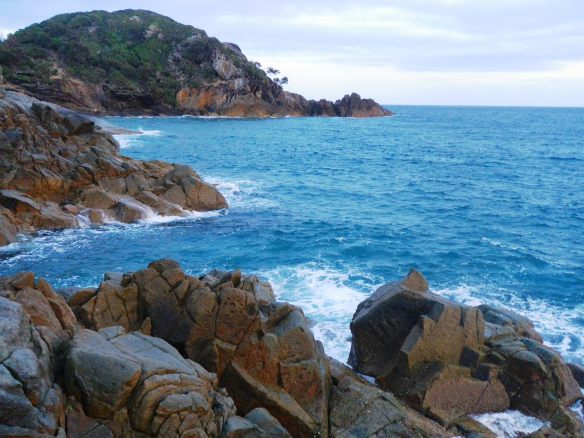
1770 - Looking north towards the Catwalk


The ‘Catwalk’ on the eastern side of 1770 headland is strictly a heavy gear fishing location. It is one of the best land based fishing spots on the east coast of Australia. This is because it is one of the few places where the East Australian Current comes within casting distance of the shore. On a clear, calm day you can see the current line snaking straight past the foot of the rocks. When the pods of Tuna break the surface they are almost always swimming near or along the current line, chasing the bait schools that move with it. This doesn’t mean catching fish here is easy. For one thing most of the fish on offer are big – 10kg and above. This means you need patience, heavy gear and a good gaff, to stand a chance of landing something. The food chain is also highly developed, there are plenty of lazy sharks around who will happily rob you of your fish, as you bring it in and if they don’t get it, the two or three enormous resident Groper will regularly snaffle big fish at the foot of the rocks.
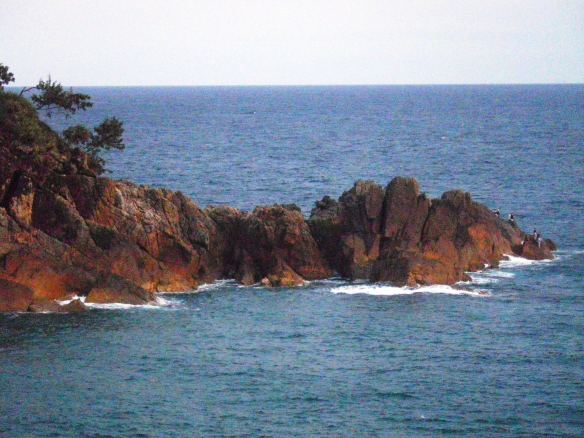
The Catwalk 1770 - on a busy day


My thanks to the various locals who fish these rocks – particularly Dennis and George who are always willing to give me an update on what has been happening and which lures, baits, tides are working best. When I arrived on the Catwalk this week, there had been plenty of big fish hook ups but not many successful captures. The Tuna had arrived in the second week of September and some big Spanish Mackerel had also been wreaking havoc. On the Sunday of my visit George had landed a monster 25kg Giant Trevally which he had snared with a 130mm fluorescent yellow, bibless minnow, cranked along just below the surface. The Spanish Mackerel had been grabbing poppers, slugs and bait and the best bite time seemed to be sunrise through to about 9.00 am.

On the morning I fished the Catwalk there was an experienced crew of land based fisherman from Byron Bay down there and a few others. Just after first light, one guy hooked up with what appeared to be a good sized Spanish Mackerel. He had been casting and retrieving a silvery blue, 140mm surface popper. He played it for a few minutes and began to make some headway. Then suddenly the line went slack as a shark swallowed the fish whole and bit clean through the wire trace.

We all started casting again – slugs, poppers and bibless minnow lures. Then the guys at the top of the rocks shouted that a pod of Blue Fin Tuna were heading our way. As they went by we all timed our casts and let rip. Six of us cast into the pod – one guy hooked up. He had a solid connection with a fish and after a few big initial runs, he started to put some pressure on it. It had headed back towards the mouth of Round Hill Creek. It was clearly a big fish as his attempts to get back line where met with more blistering runs. Unfortunately, it was now heading in shore over the rocky and reefy area directly north of the Catwalk. Suddenly the line went slack – the fish was gone – Shark? Rocks? We will never know.

I rigged a small soft plastic and caught a tiny Trevally which one of the Byron crew put out under a balloon. After 20 minutes or so, no more than 4 metres from the shore there was a huge swirl in the water as a Mackerel hit the live bait and almost simultaneously, was swallowed by a sizeable Shark. Miraculously the livebait was intact, but with a neat triangular Mackerel bite on its side.
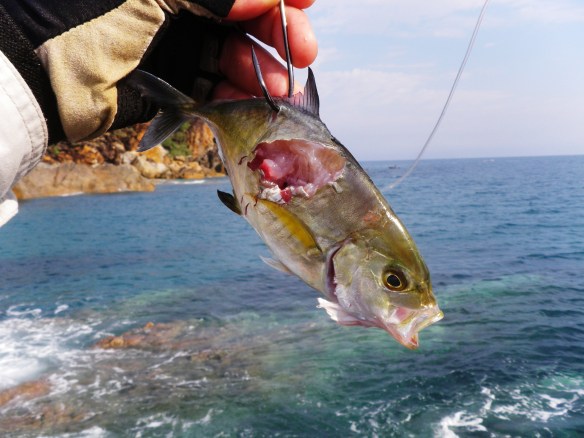
The shark ate the Mackerel that tried to eat this Trevally

After a couple more hours of casting, there had been no more hook ups so I decided to try some of the land based fishing opportunities in Round Hill Creek. I headed down a four wheel drive track to the edge of Toms Creek a small mangrove lined tributary on the south side of Round Hill Creek. There are a few openings in the mangroves where you can fish the creek. It is a shallow system with a strong tidal flow, so it is best to fish it around the high tide, when the water slows.

Mangrove fishing - Tom's Creek 1770


I arrived about noon and rigged a Gulp 3” Minnow soft plastic on a 1/8th 1 jighead. There were already plenty of midges around so I covered my head and gave myself a good coating of insect repellent. The submerged rocks and mangrove roots looked like good hiding places for Mangrove Jacks, but I suspect the water was not yet warm enough for them.
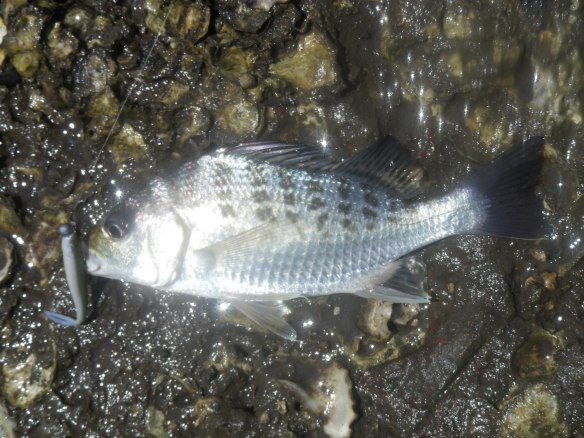
Grunter -Tom's Creek 1770

I fished across the sandy/ muddy bottom of the creek, occasionally getting snagged on submerged rocks and water logged branches. I caught Moses Perch, Bream, Whiting, a few grunter Bream and tiny Trevally, none where big enough to keep but I decided this was definitely a spot to return at dawn or dusk, when the tides were right.

Middle Rock and Flat Rock – 1770 – 9 October 2011

Sunday

The storm passed and I woke around 4.00 am thinking the sun was coming up. In fact it was the moon – high above, in a very clear sky. It was a few days off full and so bright, that I did not need a torch to get the billy on and brew up some tea. After a few nights of instant noodles, I needed some protein, so it was time to stop looking for trophy fish and go and catch something to eat.

I started at dawn at Middle Rock. High tide would be at about 7.00 am and first light was about 5.00 am. It is just a few km north of my campsite at Wreck Rock, in Deepwater National Park. There are three main rocky outcrops with rubble, coral bommies and sandy patches in between. As the sky brightened only the tops of a few of the bommies and the big rocks were visible. I have had a few good Trevally from this spot on high water.

I was using the Shimano Catana Light rod again but put on a 16lb leader – just in case something big appeared. I loaded up with the GULP 3” Minnow in the Pearl Watermelon colour on a 1/8th 1 jighead. I cast out, as close as I could to the edge of the half-submerged bommy. I started a quick retrieve – there are too many rocks to let the soft plastic hang around in one spot. I had only jerked the rod tip a couple of times and then I had a fish. It was a nice Bream about 30cm long. A few more casts produced another. Then I caught a couple of tiny Moses Perch and finally a couple of smaller Bream.

The water was calm and glassy and crystal clear, despite the storm. At about 9.00 am I drove up to Flat Rock and waded out onto the partially submerged rock, to fish the rest of the run out tide. Flat Rock is great to fish on once you can stand safely on the rock itself. There are a couple of breaks in the rock that runs the length of the beach and these are good fish congregating areas.

I started at the south end where the front of the rock has an almost vertical edge, in some places. These are usually a good Bream spots as there is plenty of wash. Sure enough, as I wandered along the rock casting into no more than 1.5m of water, I caught about five more Bream, a handful of small Whiting, a tiny Bar Tailed Flathead, Butter Bream and lots of small Stripey Perch and Dart. All of the Bream were just about 30cm – so I kept the biggest three. I was impressed with the range of fish but disappointed by the size.

This slideshow requires JavaScript.

I moved down to the southern end where the rock breaks down into a surf beach dotted with submerged bommies, but by about 11.00 am the northerly wind had come up again and the fish seemed to stop biting. I cleaned up the Bream in the rock pools and headed back to camp for some hammock time.

Wreck Rock and Middle Creek – 8 October 2011

Saturday

I was still camped at Wreck Rock in Deepwater National Park. The best fishing is around the low tide on the local beaches. But I had morning highs for a few days so I started right out the front of the camp site at Wreck Rock, standing on the southern corner of the bay cast into the wash from the rocks. There was a very light swell and a light north-easterly breeze. As the first glow lit the horizon things looked very promising. I started with a 5” Jerkshad soft plastic in the Pumpkinseed colour, rigged on a 1/8th 1/0 jighead. After a few casts and no hits I swapped down to a smaller 3” Minnow in the Pearl Watermelon colour.

The sun had now crossed the horizon and unfortunately the wind was picking up. Right at the base of the rocks I felt a solid hit and realized I had a fish on. I reeled it clear of the water – it was a Dusky Flathead – around 35cm long. I released it and carried on fishing. Some other campers had pulled two 50cm + Flathead from these rocks the day before so I was hopeful I might find a bigger one. I swapped the plastic for a brighter coloured Nuclear Chicken version and then, for 2” Shrimp pattern in the Pepper Prawn colour – none of these tempted the fish. Finally, I switched to a 5” turtle back worm in the Pepper Prawn colour and I caught a few small Dart.

The wind had been very changeable over the last few days. It was swirling round from the south to the north and back again. Finally it settled into a very solid northerly – 25 knots and forced me off this spot. I needed to find some sheltered water to fish and decided to drive up to Middle Creek, to fish the main channel on the bottom of the tide – which would be around 1.00 pm. Middle Creek is reached along another four-wheel drive track off the road into Agnes Waters. The creek has a wide tidal estuary that forms a fairly narrow channel at its mouth, at low tide. You can walk or wade along the south side of the channel for about a kilometer. The track in is currently very easy but can be a challenge after heavy rain. This whole area is effectively a tidal swamp and parts of the road quickly get submerged in a big storm.

By the time I got out to fish the wind was howling, blowing the sand off the tops of the banks like a scene from Lawrence of Arabia. I walked out towards the mouth and started casting, as I waded across a lagoon of shallow water – less than 30 cms deep , I saw a couple of decent Flathead scatter. They are always in less water than you think! I decided to start with a 4” Minnow in the Pearl Watermelon colour – this is my all time favorite Flathead soft plastic. I rigged it on a 1/6th 1/0 jighead as I needed to keep in touch with the bottom. I cast and cast and cast but to no avail. I swapped down to a 2” Shrimp in the Pepper Prawn colour and almost immediately pulled up a tiny 25cm Bar-tailed Flathead. I walked further out, towards the mouth and after another 30 minutes caught another Flathead – this time it was a Dusky, approximately 30 cm long. Then I caught a few Whiting and saw a few Bream in the clear water, but I could not tempt them.

The sky had turned a scary shade of grey so I walked back to the car. As I got in the heavens opened and a major deluge started. I drove carefully back along the track which was already underwater in a number of places. The ground had not really softened and the going was pretty solid but I could see how easily this track could become impassable. It had been another morning with no really decent fish. The weather had not helped and, in my experience, a northerly wind often turns the fish off. I spent a wet and windy night in my tent which, thankfully kept the rain out and I prayed to wake up to some sunshine and a light south-easterly breeze.

1770 – Ocean Drive Bay – 6 October 2011

Thursday

I have just returned from a week of fishing at 1770 and its surrounds. I camped at Wreck Rock, about 15kms south of the town of 1770. Wreck Rock is located in Deepwater National Park and can be reached by driving south, out of Agnes Waters, on a sandy four-wheel drive track. There are about a dozen campsites dotted through the trees behind the beach, a composting toilet and cold, outdoor shower, fed by bore water. There is also a large rainwater tank for drinking water. It is a very quiet spot and is an ideal base to fish the surrounding headlands and beaches.

I did a little research on Google Earth prior to this trip and located a few spots that I would try to fish. I was looking for spots with a bit of deep water and structure, in close to the shore. My trips to this area, over the last couple of years, have usually produced similar results – I can usually catch a respectable tally of Trevally, Bream, Dart, Whiting, Spanish Flags (Stripey Perch) and the odd Flathead that provide my daily sustenance. But the bigger fish can be harder to locate. There are very fishy looking spots at the end of almost all the beaches and bays, but they do not all hold fish. One problem is that the big fish in this area, the pelagic species – move fast and they keep moving, chasing the bait schools up and down the beaches. If you are land based, you cannot really follow them. You just have to pick a likely spot and hope they will come by. Invariably, by the time they arrive you have downgraded to your light gear, to try to catch the smaller fish and so when the rod bends over and the reel starts screaming, you don’t have the power you need to subdue the fish.

I started by fishing the marked areas in this aerial photo

On Thursday morning I focused on the headlands just south of the main look out at 1770 (see aerial photo). The bay I was fishing was just below Ocean Drive. It is a sheltered cove with plenty of bommies and a beach covered on boulders. I started on the north side, fishing from atop a large rock that sticks out into the bay. I was using a new rod – the Shimano Catana Coastline Light. It is a light weight 10’ 6” rod that is rated 3-6 kg. It is ideal for casting soft plastics on 1/8th oz to 3/8th oz jigheads for Dart, Bream and Whiting but it will also land bigger Tailor, Trevally and even school Jewfish, if carefully handled. The longer length means it casts well in the surf. I was using a Shimano Stradic 3000 spin reel – which is probably a bit small for the rod. I had the reel loaded with 12kg breaking strain braid and a couple of metres of 12lb fluorocarbon leader.

It was about half an hour after dawn when I started fishing. The first cast produced a fish – a 25cm Stripey or Spanish Flag. These fish are everywhere around the rocks. They are part of the Mangrove Jack family and taste fantastic. Unfortunately they rarely get much bigger than 35 to 40cm and when you catch them around the rocks they are usually under 30 cm. The legal size is 25cm but they are not really worth keeping until they reach about 30 cm. At this size they have a couple of decent fillets that will make a meal. I let the first one go and caught a few more on the next few casts. I was using a GULP 3” Minnow soft plastic in the Pearl Watermelon colour on a 1/8th 1 hook jighead.

A 25cm Stripey or Spanish Flag


I moved around to the other side of the bay and cast out into the middle. I felt plenty of hits from small fish and eventually hooked a Whiting – also just about 25cm long. A few more followed and I decided to switch to a 1/4 oz blade lure. This immediately attracted the attention of the Dart and I caught several small ones. They did not get any bigger so I swapped back to the soft plastic Pearl Watermelon minnow and moved further round the bay to the next headland. Here, I cast out into the wash behind a half-submerged bommie. I felt a few more hits and hooked up with more small Stripeys. The wind was getting stronger from the north so I decided to give up for the day. I had not really caught anything decent but I had explored another new spot and caught a few fish.

Brooms Head – Plover Island & Bonito – OOPS! Slimey Mackerel – 23 September 2011

Friday

Crystal clear water at Plover Island


It was to be my last fishing day for a while. I decided to try fishing the rocks at the front of Plover Island, at the mouth of the Sandon River, about 10kms south of Brooms Head in Northern New South Wales. At low tide you can walk across to the sand spit to the Island. The northern side has a number of rocky platforms to fish from. I arrived at about 9.30 am, just before low tide and climbed across a rocky causeway to some really fishy looking water on the northern side.

Plover Island causeway


I started with a GULP 2” Shrimp in the Pepper Prawn colour on a 1/8th 1 jighead. I got a couple of hits on the first cast and on the second, I caught a small Butter Bream. I caught a few more of these and then pulled up a 25cm Tarwhine. I fish this spot again at either dawn or dusk. I moved around to another rocky outcrop and caught a few good sized Pike. I made a mental note to come back and fish this spot again at either dawn or dusk, one day.
For the afternoon session I was back at the Brooms Head lagoon. It would be high tide at about 5.00 pm and decided to clamber along the rock ridge at the eastern end of the Brooms Head lagoon.

Plover Island Tarwhine

I rigged up with the favorite soft plastic of the week –the GULP 3” Pearl Watermelon Minnow. It was fairly choppy – with a strong south easterly blowing. Was using a 1/8thoz, 1/0 jighead, my light 7’6” spinning rod and a 16lb fluorocarbon leader. The bottom in this area is covered in rocks and kelp, with a few sandy holes in between. If you fish with heavy sinkers/ jigheads – you are doomed.

I pulled up a couple small speckled, green coloured fish that are common in amongst the rocks – not sure what they are – but they seem to like the soft plastics. Then I caught a strange red finned Wrasse of some kind. Then I found a few Pike – they always seem to hit the lure really close into the rocks, just as you are about to pull it clear of the water.

Big toothed green fish

Then I noticed a big shimmering area on the surface of the water about 50 metres away that was moving towards me – I waited for it to get in range and then cast the soft plastic straight into the middle of it. I got a couple of bumps but no hook ups. I cast out again and retrieved the lure quickly, so that it was swimming just below the surface. I could now see it was a good sized school of Bonito. I cast out again and this time I raced the lure back through the school and hooked up. I land a small Bonito and released it. For the next half an hour I had a great time catching and releasing Bonito, every time the school came in range. It was a decent size school and it circled the area for about 45 minutes before being chased further out by the Dolphins.

Slimey Mackerel school enters the lagoon

Slimey Mackerel on the surface

Slimey Mackerel

And that was my last session at Brooms Head. The variety of fish had been fantastic, even if there had been no real trophy fish. We had managed to catch dinner most days and I was quite happy with the diet of fresh Flathead and sea Bream. The weather gods had been very kind and I plan to be back again at the same time next year.

Brooms Head – Red Cliff – 22 Sept 2011

Thursday

This slideshow requires JavaScript.


Perfect conditions again, a big contrast to the wild weather of this time last year. I decided to take advantage of the calm waters and have a fish off the rocks at Red Cliff, a few km north of Brooms Head. As its name suggests, it is a large red cliff with a rock platform beneath. The platform offers some excellent fishing spots on the lower half of the tide.

I arrived at about 9.15 am and the tide had been low at 8.50 am. The water was absolutely crystal clear and was able to hop from rock to rock until I reached an outcrop that looked over a couple of holes that were probably about 3 or 4 metres deep. With my polarized sunglasses I could clearly see the Bream sheltering at the base of the rocks in the calmer water. There was virtually now wind.

I decided to cast out towards a spot where the waves were breaking over a rocky promontory. I was fishing with a 1/8th 1 jighead loaded with a GULP 2” Shrimp in the Pepper Prawn colour. This is always a good one to start with and I notice it’s a favorite with a lot of the ABT pros. Hungry Bream can’t resist it. As I hopped it along the sandy bottom towards the rocks, I felt a couple of bites and then a solid grab. I landed a small Bream around 25cm, followed by a couple of slightly bigger ones and then a really solid, 34 cm fish. They had all come from the same spot and perhaps they wised up, because things then went quiet.

I moved round to the other side of the rocks and cast in to some calmer water. I could see the lure float down to the bottom in between a couple of submerged bommies. As soon as I lifted it off the bottom, a small Bream darted out and grabbed it. I wound him in and cast out again, this time they didn’t wait and I was on to a better fish before the lure touched the sand. I landed it and decided to keep it – it was 33 cm long. As I wound it in, it had a couple of other Bream following. After a couple more casts I caught a smaller Bream and then this spot went quiet.

I moved round onto another rocky outcrop and caught a couple more small Bream before calling it quits. It had been a good session and a great opportunity to clearly observe the way the Bream break cover to attack the soft plastic lures. I stopped fishing around 11.30 am.

Brooms Head Lagoon Drain – 21 Sept 2011

Wednesday

It was to be another land based fishing session at Brooms Head just south of Yamba, in Northern New South Wales. At dawn the wind was already gusting strongly from the south-east. It was forecast to blow up to about thirty knots during the morning but the area on the west side of the lagoon was sheltered by the Brooms Head Bluff. I decided it was worth an early morning wade.

Low tide was at 7.30 am and I was wading across the mouth of the lagoon, at the western end, at about 5.45 am. I had broken my lightest rod the day before so I was using my Nitro 7’6” distance spin rod and because of the breeze I had moved up to a heavier 1/8th oz, 1/0 hook jighead and 12lb fluorocarbon leader.

I soon found the fish. They were lurking just on the border of the rocky northern wall of the lagoon, where the weed covered rocks met the sand. I started with a Pike and then 30cm Tarwhine and then three of the striped Trevally. I released them all and with nicely chilled nuts, I waded back for a hot shower and breakfast.

Brooms Head / Sandon River – 20 Sept 2011

Tuesday

I was up early on Tuesday and decided to try the other side of the Brooms Head lagoon. Low tide would be at 6.20 am and I set off just after first light, at about 5.30 am. The wind was blowing at 15 knots, west south westerly, but the main bluff gives this area a bit of cover and so it felt like less.

I waded out through the bottom of the tide and scrambled over the rocks on the northern edge of the lagoon until I reached the series of ridges that form the eastern wall. It gets a bit tricky here -there are deep pools between the ridges so you have to get over them. There are points where you can cross but you need good, non-slip rock boots to avoid ending up in the drink.

This area can be reached and fished only either side of low tide

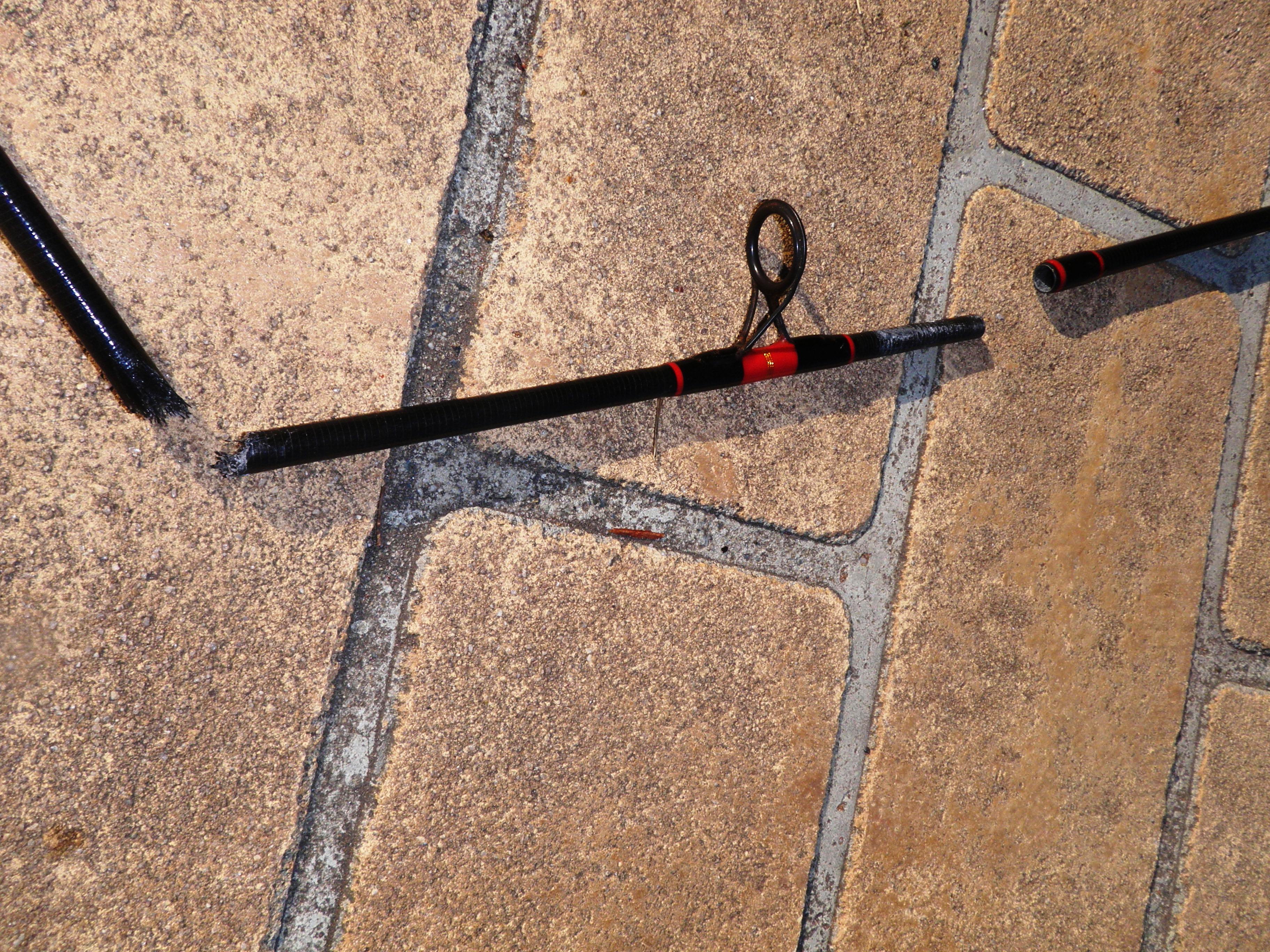
Eventually I was facing east, on the front rock ridge and casting into very fishy looking water. I had the light set up again but had upgraded to 16lb leader as I was hoping for some bigger fish. I used the GULP 3” Pearl Watermelon Minnow soft plastic but rigged it on a 1/6th 1/0 jighead as there was now a bit of swell building up. A few casts produced a few small Pike and a very small Bream and then bang! Something came and grabbed the lure just as I was about to lift it from the water. I had the drag set reasonably tight because of the proximity of the rocks and the whippy Gary Howard Estuary 9’ bent over and line started peeling. The fish took a couple of metres of line then stopped. Then there was another violent surge as it took off again. The rod jerked bent over and I heard the sickening crunch as it snapped just below the join. I attempted to play the fish with the broken rod but it made short work of the leader and soon bit me off. This session was over.

The north east rock ridge in the Brooms Head Lagoon

I trudged back for a shower and breakfast imagining an enormous Snapper. I needed more, but now the wind was howling so I considered the options and decided to drive down to the Sandon River, which is only about 10 kms away. The Sandon River is a small, pristine, shallow river system that holds plenty of Flathead, Bream, Whiting and Luderick. There are lots of points along its banks where you can fish – many, right next to the road. I stopped close to an informal boat launching area that is near an old oyster lease. The remains of the oyster beds have been covered by weed and form good fish holding structure. I stuck with the same soft plastic that had been working well and decided to rig it on a very light 1/16th oz, 1 hook, jighead. I dropped down to a 10lb fluorocarbon leader and I was now fishing with my Nitro 7’6” 2-4kg Distance Spin rod.

The pristine Sandon River


A 50cm Sandon River Flathead


Another Sandon River Flathead


I walked along the bank casting into the run-in tide and bringing the soft plastic back with the current. The tide was running in fast and I just let the soft plastic sink and bump along the bottom with a few jerks and jumps. After working about ten metres of river bank, a fish swallowed the lure. It took a bit of line and then settled into the current. It was a good Flathead just over 50cm long. I put it in the keeper bag and carried on along the river side. I soon found another, this time just over 40 cm. I peppered the same area with casts and found another, smaller Flathead a few casts later. After an hour of fishing, I had dinner and so I gave up and headed home – it was around 11.00 am

Brooms Head – Lagoon Drain – 19 Sept 2011

Monday

The weather was good again. There was a light breeze from the south west. It was sunny and clear and the wind still had some chill in it. The last few sessions, fishing at Brooms Head in Northern New South Wales had suggested light tackle was probably the best option. I decided to fish the drain at the western side of the Brooms Head lagoon. The lagoon sits just north west of the main Bluff and is deepest by the rock ridge at its mouth, to the east. As the tide rises and falls, the water enters and exits close to the beach via a big sandy drain. The drain never fills to more than about waist deep. If you walk across it your reach rocky/ weedy covered bottom that forms the north wall of the lagoon. Further north, where this wall drops off to a sandy bottom is a great fish holding area. They sit here waiting for food to be washed in and out of the lagoon on the rising and falling tides. The area is highlighted in the aerial photo.

Fishing area just north of the Brooms Head lagoon


I was using the Gary Howard 9’ Estuary rod again. I had loaded a very light 1/16th oz 1 hook jighead. I wanted to avoid getting snagged on the rocky weedy bottom. I used about 1.5 m of 10lb breaking strain fluorocarbon leader. I used the soft plastic lure that had been successful the day before – the GULP 3” Minnow in the Pearl Watermelon colour. I waded out into the water, which was surprisingly warm. I put in long casts out over the rocks to the sandy areas to the north. Every time I lifted the lure over the edge of the rocks there would be a small bite or nudge from a fish. The tide was running in and had been low at about 5.30 am. The incoming tide had also produced the fish the day before.

Looking back from the mouth of the lagoon at low tide - Brooms Head


After a bit of wading around up and down the rocky bottom I was onto a fish. It was a good Bream around 30 cm long. I cast back out in the same spot, and the plastic was slammed as soon as it hit the water. The fish pulled hard and took a bit of line. It felt much stronger than the Bream. It kept turning to run as I waded back into the beach, to land it. I saw the stripes in the water and realized it was a small Trevally. It really had pulled hard on the light rod. I released it and headed back out. It was about 8.30 am and the tide was running in strongly.

Lagoon Bream


Lagoon Trevally

Over the next hour I caught two more small Bream, a Tarwhine, three more Trevally and a couple of Pike. The cold southerly breeze eventually made me too cold to carry on but I was delighted to find a few fish. At around 9.45 am I went back to our cabin for a hot shower. Fishing with lighter gear had paid off.

Brooms Head – Back Beach – 18 September

Sunday

I have my 9 year old daughter with me this week so 4.30 am starts are out of the question. She likes to fish, but not that much! At around 8.00 am I persuaded her to walk from Brooms Head south, past the Brooms Head Bluff to Back Beach. It was already warm and fairly still with a very light northerly wind. Low tide had passed at about 5.00 am.

Brooms Head Sunrise


After a disappointing session with the heavier fishing rod and reel the day before, I swapped down to my favorite light beach rod, a Gary Howard Estuary, 9ft. It is excellent for Whiting, Dart and Bream – very whippy with loads for spring and great at hooking fussy fish. It works best with a 1/8th or 1/6th jighead and although it is really designed for an Alvey, I use a Shimano Seido 2500 spinning reel. I have never really mastered the Alvey. I use 10lb Fireline or Braid and usually a 10 or 12lb fluorocarbon leader.

As the fish had been reluctant to bite the day before and because we were outside ideal fish feeding hours (dawn and dusk) I decided to start with a 6lb leader. I waded out to about waist deep and cast in to the northern corner of the bay, just where the rocks meet the sand. I had loaded up with a 2” GULP Shrimp soft plastic in the Banana Prawn colour. I could feel the 1/8th 1 jighead bumping on the rocks and it soon got snagged. I swapped down to a 1/16th 1 hook jighead and put on a 3” GULP Pearl Watermelon Minnow soft plastic. It is not usually possible to cast such a light weight into the surf, but today conditions were calm enough to do it.
After a little while I started to cast over the top of the rocks as the tide was moving up quite quickly. The jighead was now light enough to bump over the top rather than get snagged. Just as the lure reached the edge of the rocks it was grabbed. The rod tip bent over and I had a fish on. It took some line but then swam into the rocks and made short work of the 6lb leader.

I re-rigged with a 10lb leader and cast back out with the same weight jighead and soft plastic lure. After a few casts, I felt a couple of bumps and knocks and then bang, I had a fish. This time the leader held and I steered the fish back up the beach. It was a Bream around 30 cm. I put it in the bag and carried on fishing. About ten minutes later the same thing happened, this time it was a Tarwhine, about the same size, but with much more fight in it.

A Bream from Back Beach at Brooms Head


Now I had dinner so it was time to quit and go for a swim. Conditions were perfect and the water was crystal clear. Even without a mask you could see plenty of Bream swimming around and good schools of bait fish in close to the shore.