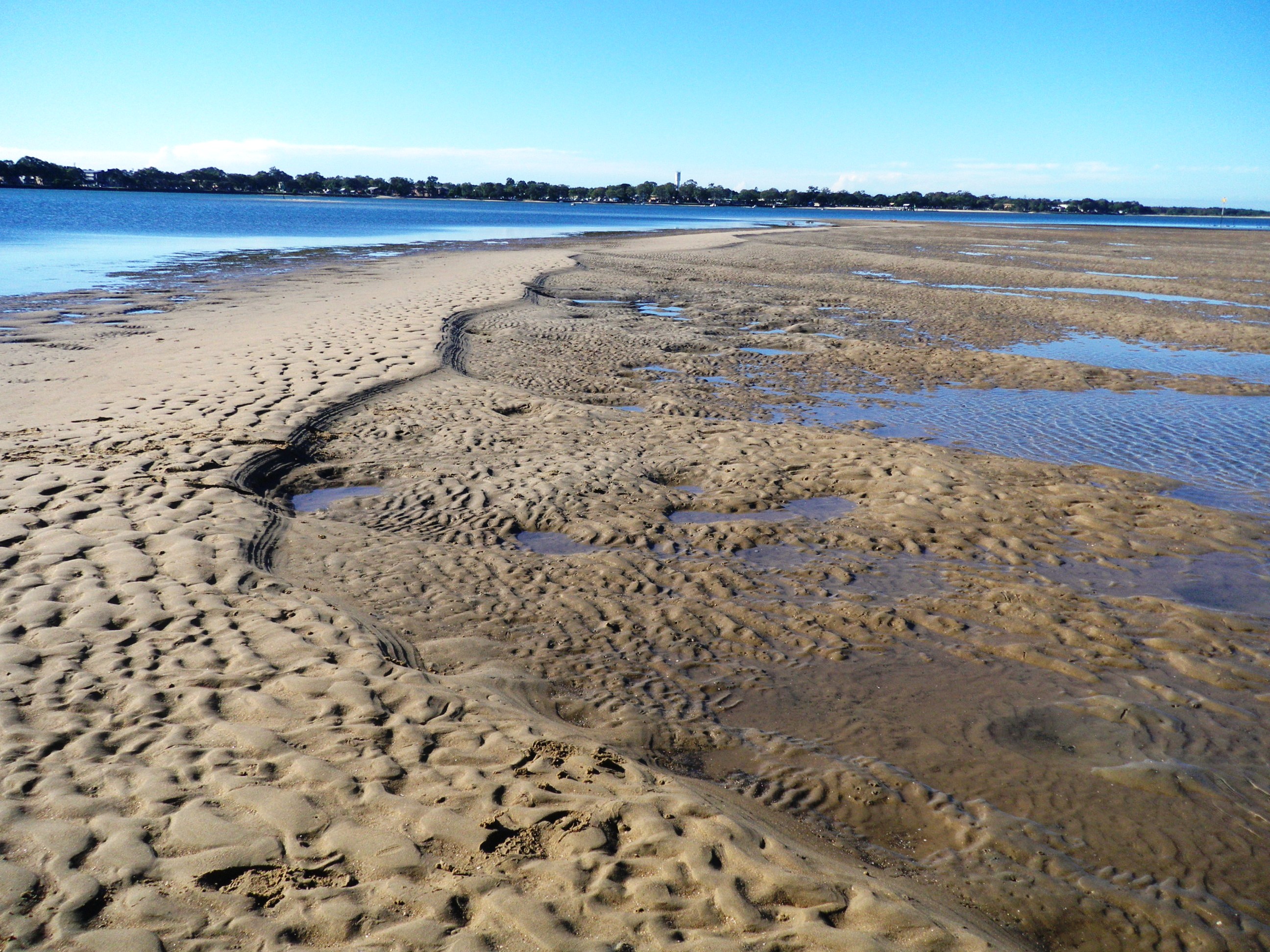
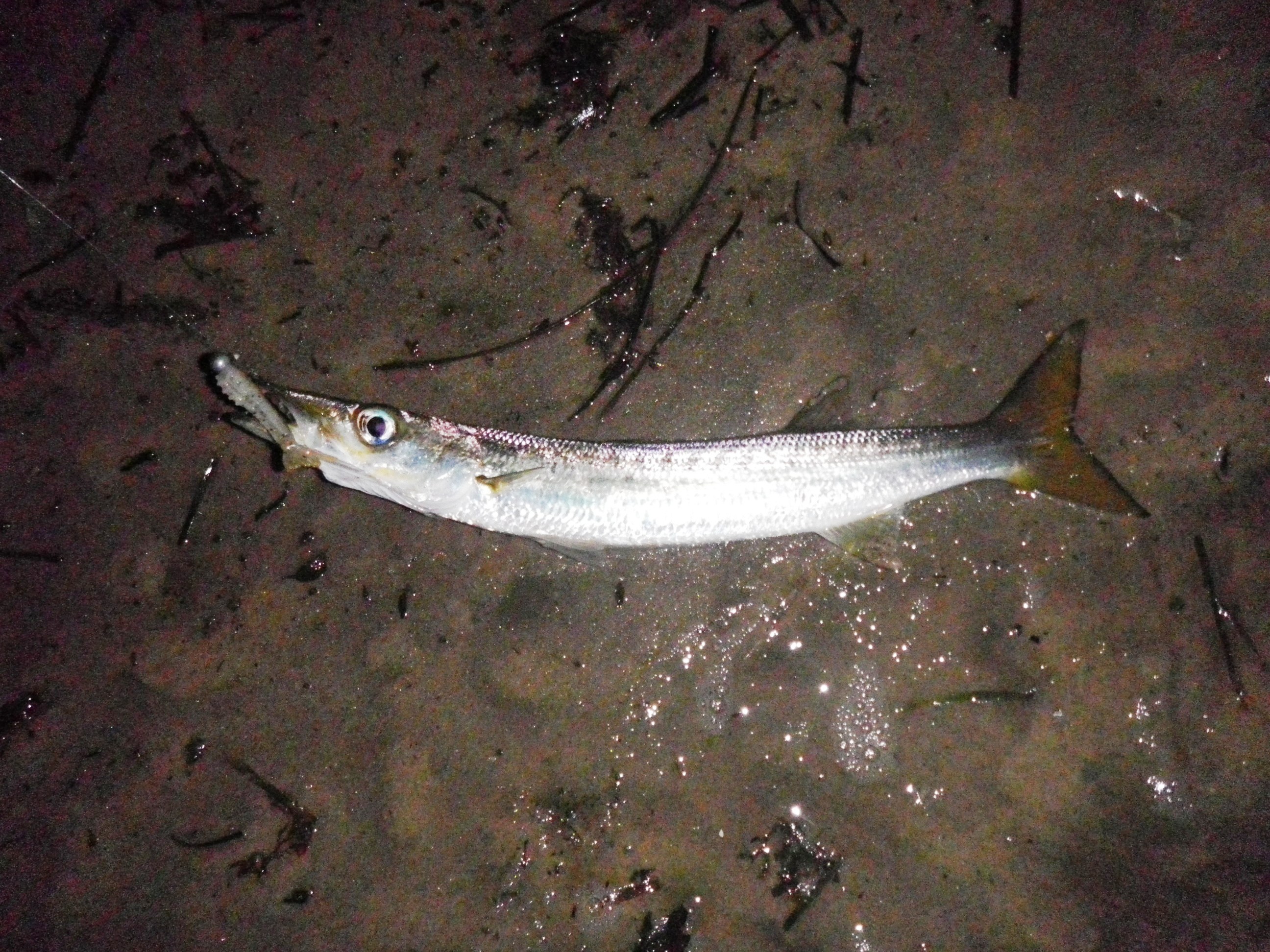
Yeppoon – Byfield National Park – Fishing Creek – 4/5 June 2013

Tuesday/ Wednesday

Byfield is a beautiful spot and I spent Tuesday exploring. The wind was a howling south-easterly, all day, so I focused on scouting out some good sheltered spots. I tried the lee side of the headland that I had fished the day before, at the end of Nine Mile Beach. This looks like a great spot but the waves were crashing in and I could not keep my lures in the dirty water. After a few hours, I gave up on the fishing and climbed up the hill.

It looks like the water is generally quite shallow and the sediment that has poured out of the creeks and bays must get stirred up by the wind. I climbed to the top of the hill and surveyed the whole area. There were a few trawlers working just offshore. I concluded this would be an excellent area to fish land-based, so I will be back.

On Wednesday the wind was still up and it had rained heavily overnight. I decided to try fishing one of the shallow creeks that feed into Corio Bay. I chose Fishing Creek, which comes in from the south and drove down Fishing Creek Road until it petered out at a bend in the creek. It was just after high tide at about 7.00 am. There was a small ledge path on the muddy, mangrove lined banks and I squelched my way along it.

The guys at Barra Jacks in Rockhampton had suggested this spot, when I was in there a few days before. They reckoned that crocodiles were very unlikely to be around at this time of year but that I should keep my eyes peeled. That always adds a little excitement to the session!

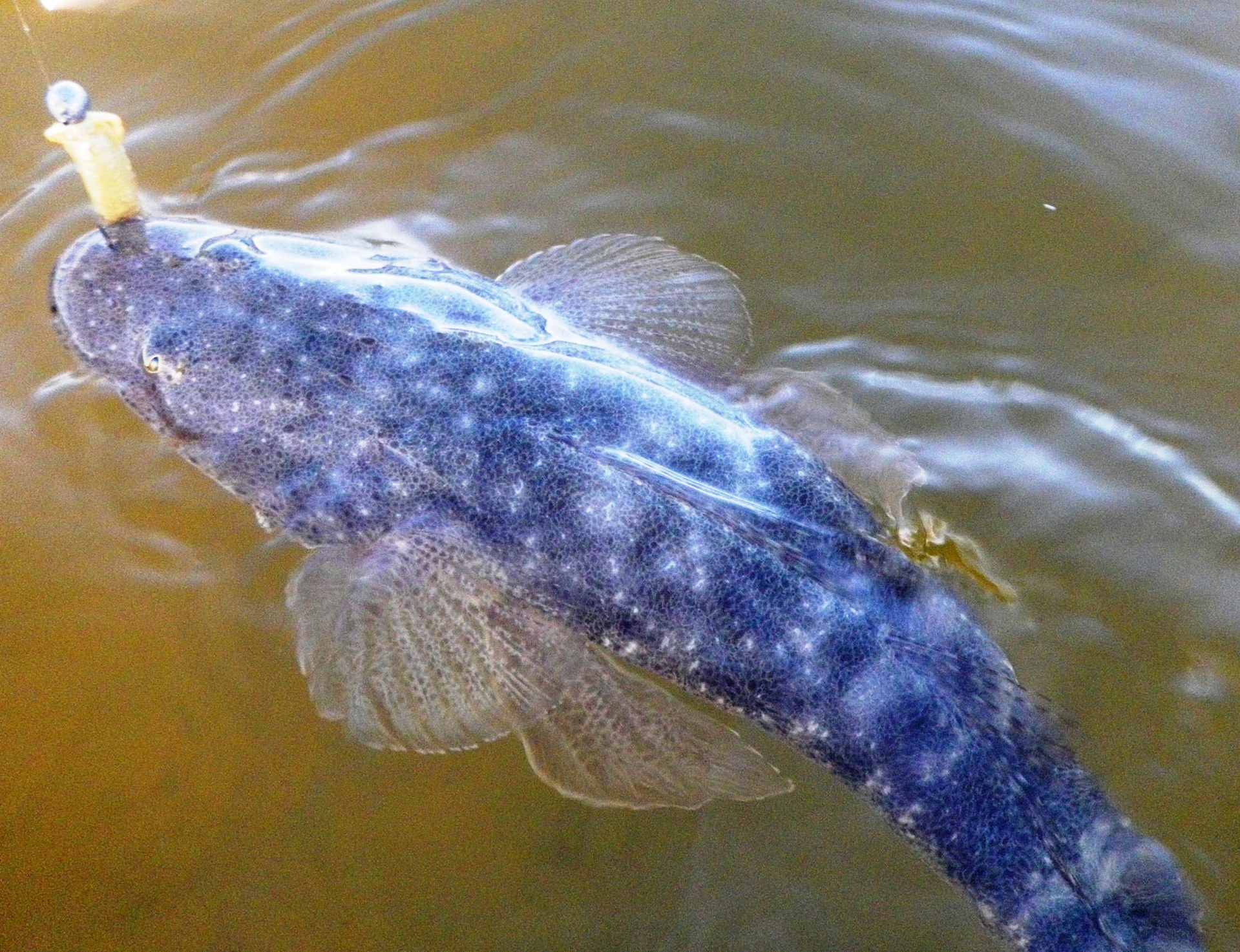
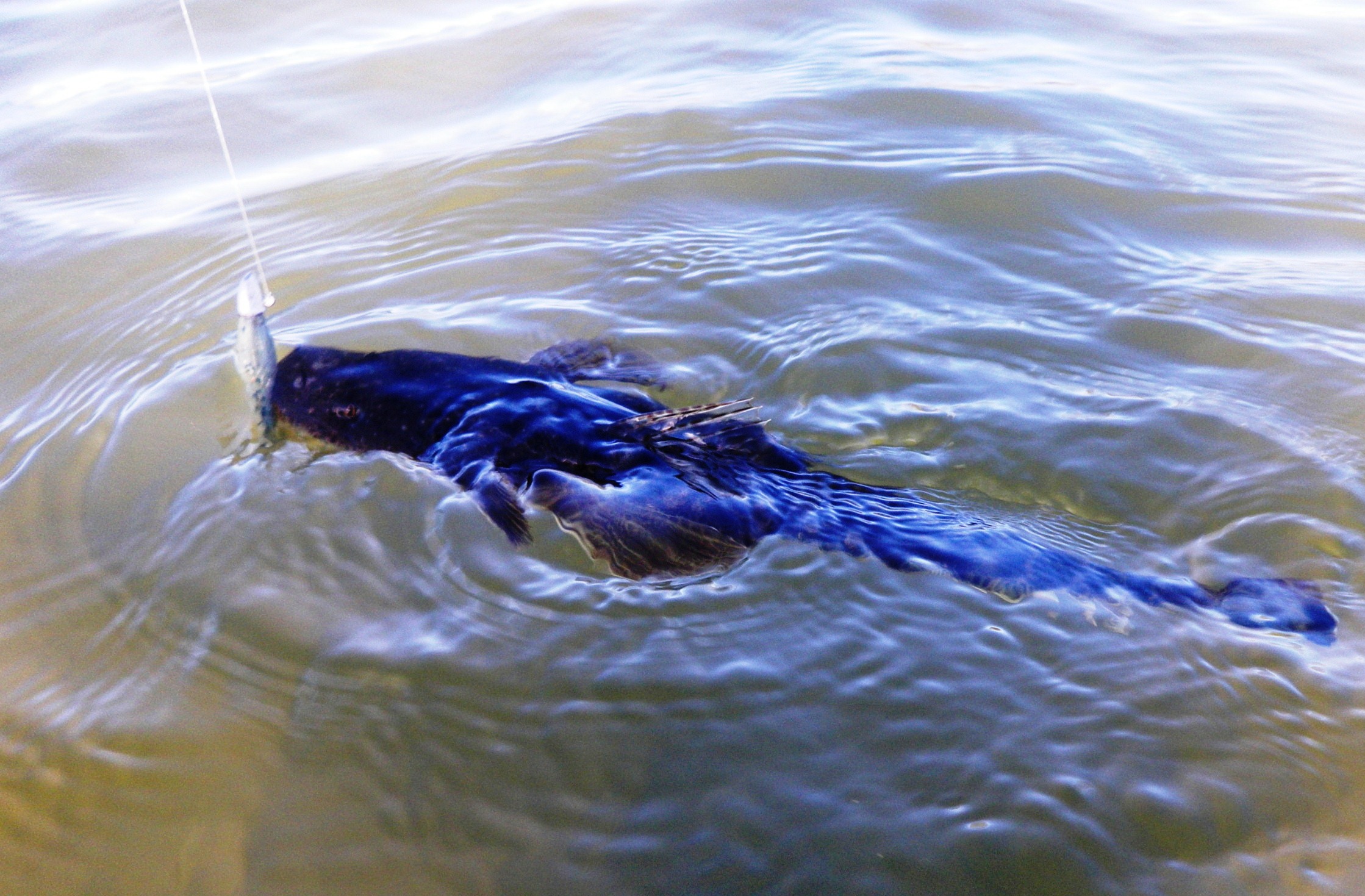
I was fishing with my light spin rig (Loomis GL2 and Shimano Stradic 2500) and I dropped all the way down to 8lb fluorocarbon leader and a 1/8th ounce, size 1 hook, jighead. I decided to stick with natural colours and started with a GULP 4” Minnow in the Peppered Prawn colour. The water was not too dirty as the tide had just peaked. I dropped the soft plastic up current and bounced it back to me, along the bottom. I cast as close to the bank as I could and gradually lengthened the pauses on the bottom. After about ten casts, I felt a bite and was connected to a fast fish for a few seconds, and then it was gone. I stayed in the same area and after about 10 more casts, I landed a small flathead. A few casts later I found another, it was just under 40 cm.

I continued down the creek towards the estuary. The tide was running out quickly revealing various ponds and channel. I was wet and muddy but the sun was out and I was catching fish, so things were looking up. I concentrated on the patches of deeper water and the caught a steady stream of small flathead, over the next 4 hours. The 3” GULP Minnow in the Pearl Watermelon colour was the most successful lure of the day. I tried the paddle-tailed Zman Minnowz, in a couple of colours, but did not catch anything on them.

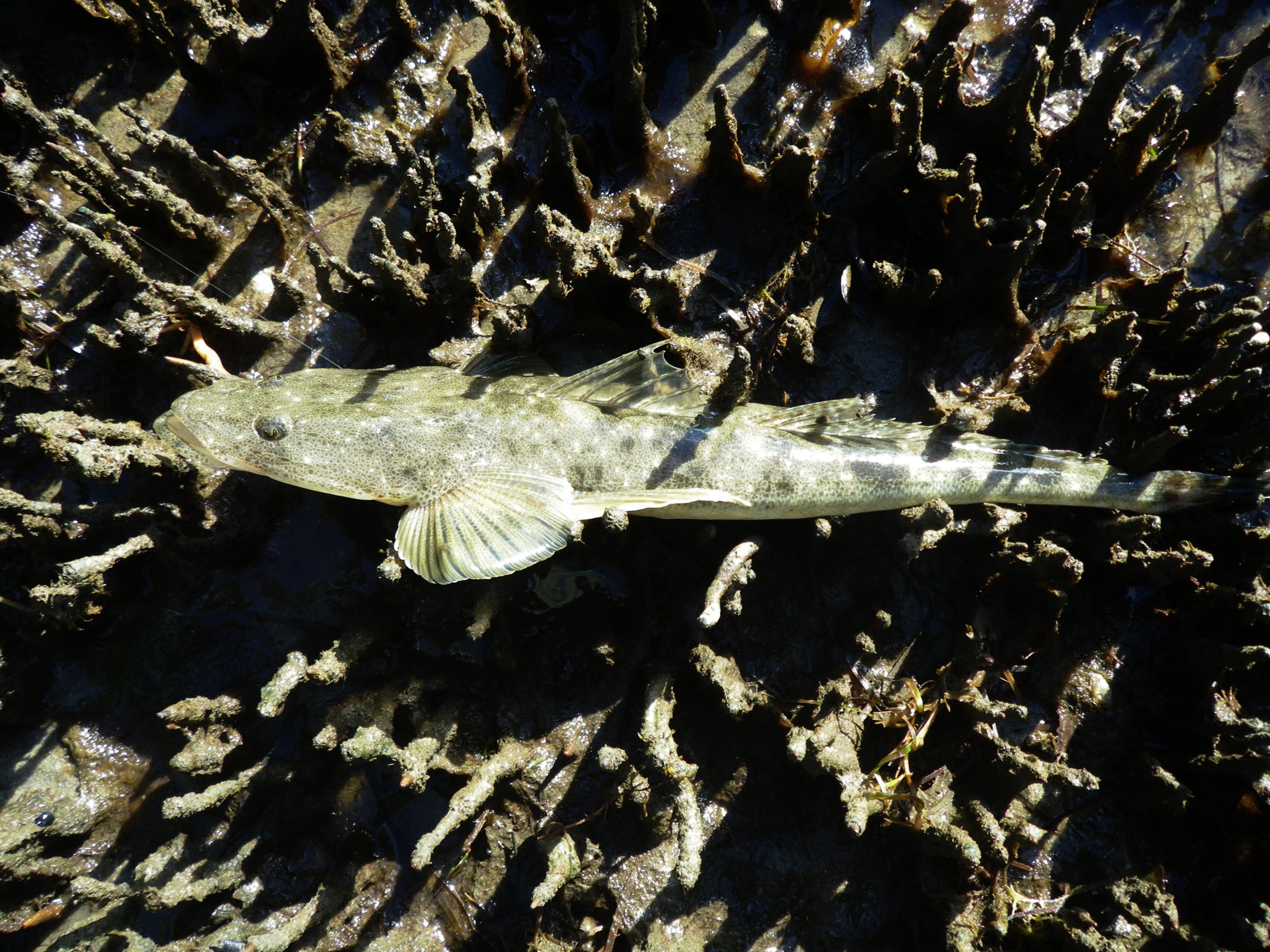
I gradually ran out of water as the creek emptied and at about 12 noon, I turned around and walked back to the car. I caught a couple of fish in the shallow pools on the way back. By the time I reached the car, I had caught 9 flathead – the majority were between 30 and 40 cm long and only two looked like they were big enough to keep.

It had been a much more successful session and had given me confidence that this is a very fishy area, when conditions allow you to get at it.

Bribie – Oyster jetty flats – 26 June 2013

Sunday

I was up early and even though it was cold and windy, I had to get my fishing fix. I drove up to Bribie and waded out under the bridge, on the mainland side, at about 6.00 am. Low tide had been at about 4.30 am. I had filled a bag on Thursday, so I was confident.

My target area would only be in range until about 7.30 am. The sky was clear but the wind made things tough and it was building. I waded straight to the north of the oyster jetty, to target the edge of the weed beds. This is where the fish are usually laying up.

I tried lots of different lures – Gulps, Z-Men, hard bodies, but I could not find the fish. Just as I was being pushed back by the incoming tide, I finally connected with a fish. It was a 46cm Flathead and I caught it with a 4” Gulp Minnow in the Pearl Watermelon colour.

The tide was too high to stay in this spot and the wind was making things tough, so I gave up. There was a big moon in the sky behind me and recent trips suggest the fishing is tougher in this spot when the moon is full. Maybe that is true – but I maybe had just failed to find them today.

Bribie – Under the bridge – again – 7 March 2013

Thursday

The rain is moving off but the strong south-easterly winds are persisting. The brief lull in the wind around dawn is the only time to fish. Back to Bribie and the same area as Tuesday. The tide was bigger and higher as we moved towards the new moon. It would be a 2.2 m high, at 5.44 am.

I arrived at about 4.30 am and found local expert – Colin, rigging up with the same idea. We both thought we would get a bit of shelter from the wind in this area and take advantage of the bait that is drawn to the bridge lights. I started on the north side but after 20 minutes, I had not had a bite so I moved to the south.

There was more bait jumping around on the south side, but nowhere near as much as there had been on Tuesday – no idea why. We both cast around for about 40 minutes but neither of us got a bite.

Colin decided to go off and try another spot. I moved a little further to the south. I swapped to a DUO Realis Shad 59 MR – a small suspending hard bodied minnow lure. I chose one with a white belly and blue back. I put in a couple of casts close to the bridge pylons, working the lure back against the wind. On about the third cast, a fish hit the lure on the pause, but did not connect. Three casts later, with the same lure in the same spot, the trebles lodged and I had the fish. It was a small Flathead, a little under 40cm.

I hoped there were more but I could not find them. I waded a long way south, past the oyster jetty, casting all the time. I swapped back to soft plastics, as the floating weed kept clogging the hard body. I fished for another hour before the wind became too annoying.

It was a pretty disappointing session but DUO had at least saved me from scoring a duck!

Iluka – Woody Bay – 13 February 2013

Wednesday

On Wednesday I woke to more showers which were blowing through on a building south-easterly wind. I made some breakfast and waited for them to pass.

By the time the rain stopped it was about 6.30 am. The south-easterly was already blowing at about 15 knots and was forecast to get stronger through the day. There was not much point in trying to fish the headlands. The tide had been low at 5.00 am and had now turned in. I decided to fish around the rocks beside the boat launching area, on the edge of Woody Bay. This area, directly in front of the camp site, is sheltered by Woody Head. Even in a big south-easterly blow, it stays pretty calm.

A grey morning on Woody bay

A grey morning on Woody bay

I decided to switch to my really light spinning outfit – Shimano Stella 2500 reel, Loomis GL2 rod, 1.8kg Fireline and a 10lb fluorocarbon leader. The bait that had been jumping around close to the rocks, had been some kind of small whitebait, so I chose a GULP 3” minnow soft plastic in the Watermelon Pearl colour, which would represent a similar profile. I rigged up the plastic on a 1/8th oz., 1/0 jighead. As I stood in the shallows, the water was warm and I started casting along the edge of the semi – submerged rock bars. At about 6.45 am the rain started again and just as it did, I felt the familiar double tap bream attack. I did not hook up but on the next cast, I did. I wound in another very respectable bream.

GULP Minnow gets the first bream

GULP Minnow gets the first bream

I let it go and moved on, casting out and trying to rest my soft plastic lure, for as long as possible, right where the rocks met the sand. Just before 7.00 am I felt the faintest of grabs, as I hopped the lure along the bottom beside the rocks. Two more casts in the same spot produced nothing. On the third, the rod bent over as the jighead stopped dead.

It felt like the lure had stuck fast in the rocks but then very slowly the ‘rocks’ started to move. In a long slow run the fish moved about 6 metres to the south. Then paused and did the same thing again. I pulled up on the rod and tried to recover some line. It was only at this point that the fish realised that it was hooked and started really fighting. It was still so slow and heavy that I thought it was a ray or shovel nose shark. After a few more lunges it turned towards me and rose to the surface shaking its head. I could now see it was a big flathead.

With a ten pound leader I could not risk any abrasion from the barnacle-covered rocks so I let the fish play itself out. It had been lurking in less than 30cm of water so it was hard to keep its head down but I took my time and used the swell. I found a nice sloping rock bar and gradually eased the fish up in a breaking wave. It was a nice flathead who measured up at about 74cm. After a few snaps I put her back and she swam away.

The Clarence River is still very de-oxygenated and full of fresh water from the floods. It is likely that all sorts of species (including flathead) have settled around these headlands to wait for it to clear. The birds were very active, constantly swooping in to pick up baitfish. So it looks like a fair amount of bait has also been washed out.

I decided to wade around the shallows in the bay and look for some more fish. I was soaked from the rain and being in the water was warmer than being out of it. I tried all around the rocks with the same soft plastic and a few others, to see if I could find anymore flathead – but I couldn’t. I watched a few long toms follow my lures in and have a snap at them, but did not hook any.

I swapped over to one of my favourite DUO hard bodied lures. With the river out of bounds there was not much water where I could use their range of finesse lures, but this bay was flat enough and clear of weed, so it was perfect. I tied on the DUO Ryuki Spearhead 45s in a gold/ green colour. This is a small trout lure that seems to work well on bream. It weighs 4 grams and is 45mm long with a small bib. As with most of the DUO range it casts a long way and slips into its action almost as soon as it hits the water. Although it is technically a sinking lure, its lightweight means that it effectively suspends, when you pause the retrieve.

I cast it over the flats and around the rock bars as the tide rose. First it attracted a few undersize moses perch. Then, as I moved into slightly deeper water I found a patch of small bream. I caught a couple before they decided they had had enough.

At about 10.00 am I found myself almost back where I had caught the big flathead earlier. I had waded round the bay in a big circle. I continued to cast along the edge of the rocks and suddenly felt a solid hit and run. The fish was hooked and after a few good runs it calmed down and I pulled it up to the sandy beach. It was another good bream – just over 35cm long. I released it and carried on fishing for about another hour with no luck, so I decided to give up for the morning.

Bribie Island – The oyster jetty to the channel marker – 23 June 2012

Saturday

Now there are a whole host of reasons why it would be inappropriate to do your tax return at the weekend – so it will just have to wait until Monday.

The weather looked like it might be on the turn and you have to fish when you can. It was not quite so cold on Saturday morning but the wind was forecast to pick up. I drove back up to Bribie Island and arrived on the mainland side of the bridge at around 6.00 am.

It was still dark and the tide was out. I had a few casts by the bridge but could not raise a bite. I walked along the water line until I had passed the old oyster jetty. Low tide had passed just before six. Here at the edge of the Passage, the water was still slowly running out over the exposed seagrass beds.
I was back to the soft plastics and started with a GULP Jerkshad in the Lime Tiger colour on a 1/8th 1/0 jighead. I cast out and slowly retrieved the soft plastic along the bottom with plenty of pauses. I felt a few small bites and lost a bit of the tail on the soft plastic – probably the Pike.

I moved a bit further south, casting along the edge of the weed beds. The sun was trying to get over the horizon but the scattered low cloud ensured a gloomy, cold start to the day. As it gradually got lighter, I could see where I wanted to cast and not long afterwards I had my first fish on the line. I dragged it up to the sand – it was a Flathead just under 50cm long.

I carried on casting in the same area and had a couple of solid bites and then hooked another Flathead who spat the lure just a few feet from me. I carried on south and swapped to the GULP 4” Minnow in the Pearl Watermelon colour. About ten metres further south, I found another Flathead but it was only just 40 cm, so I put it back. On the next cast – in exactly the same spot, I was rewarded with a bigger one, about 45cm so I kept that one.

The fish in the fridge has all been consumed so I needed to re-stock. I think the 45cm to 55cm fish really taste the best. At this size, you get reasonable size fillets and the flesh is still very tender. Flathead is definitely a favorite in our house – which is fortunate!

I kept moving in the direction of the channel marker and over the next hour, I caught 5 more Flathead – only two of which were too small. With my bag full it was now time to experiment.

I tried a small popper – with no luck. I switched to a regular ¼ oz blade lure and this caught a Pike. Then I tied on the DUO Tetraworks Bivi again. Predictably the Pike got stuck in and I caught three or four. I then slowed the retrieve down and shortened the lure hops. I kept pulling up weed but I persisted. I felt a bit of resistance and then the line started peeling – this was a big fish and it was heading for the main channel. But it was moving very slowly and something did not feel right. I tightened the drag and it started to come towards me. After about three or four minutes I saw a great flap come out of the water and realized it was just a big stingray. Eventually the lure pulled free and of it went.

I now turned back towards the bridge. On the way to the car I kept casting the small DUO Bivi. Just short of the jetty I felt a solid bite and saw a Flathead come to the surface, angrily trying to spit the lure out. It may have succeeded because the line went slack for a moment but then came up tight again. I set the hooks hard and let the fish have some line. It was not too big but there was plenty of structure nearby, so I dragged it back towards the muddy shore and away from the rocky patches. I pulled it up on a sandy patch. The DUO Tetraworks Bivi had finally managed to catch a Flathead. I had my five so I removed the trebles (with my pliers) and sent it on its way.

The keeper bag was heavy and I needed a hot drink so at about 8.45 am, I gave up and headed for the car. It had been another good land-based fishing session.

Caloundra – Power Boat Club & Diamond Head – 3 May 2012

Thursday

I was back on home turf and decided Caloundra was the best bet for Thursday morning. It’s getting a bit colder but the bonus is that you don’t have to get up quite so early to fish the dawn.

I arrived in front of the Power Boat Club at about 6.00 am, just after first light. High tide had been at 5.20 am and it was close to full moon. Light south easterly winds were forecast but around dawn the water was completely flat.

I was fishing with my Loomis GL2 light spin rod and Shimano Stella 2500, now loaded with 6lb braid and a 10lb fluorocarbon leader. The water temperature feels like it has dropped considerably since I was last fishing up here, a few weeks ago.

It was a fairly crisp sunrise on Thursday

It was a fairly crisp sunrise on Thursday

I started with a GULP Jerkshad in the Curry Chicken colour on a 1/8th 1/0 jighead. There were a few schools of bait in close to the shore and these scattered as I pulled the plastic through them. Sometimes they would scatter in all directions but I could not get a bite. I swapped to a 2” GULP Shrimp in the Banana Prawn colour. I worked the plastic along the edge of the weed beds and just after 7.00am, I came up tight on a small Flathead – just under 40cm long.
I tried a small DUO Tetraworks Bivi vibe lure for a while and I felt a few hits but could not hook anything. I swapped back to a GULP Shrimp in the Peppered Prawn Colour and caught another Flathead that was just too small.

The GULP Shrimp got them going today

The GULP Shrimp got them going today

I gave up and drove down to the flats in front of Diamond Head. I waded out to the weed beds and started to cast around. The water was running out fast and it had turned pretty dirty. I think there must have been some pretty heavy localized rain over night.

Angry Flathead - Caloundra

Angry Flathead – Caloundra

Another small Flathead slammed the GULP Shrimp. I pulled it in. This one was just over 40cm, but one fish would not feed my mob so I let it go. With no more action I packed up at about 9.30 am went back to the car.

They were all just the wrong side of 40cm

Port Augusta Wharf – A few Salmon – 18/19 April 2012

On Wednesday I found myself in Port Augusta. The estuary was right in front of my motel so I could not resist another attempt at catching a fish in South Australia. Landangler does not get to fish much when he is working but sometimes you just have to go for it.

I had read the stories of massive Kingfish being caught on live baits, down by the Power Station cooling water outlets. I had about an hour free and a light spin rod, so Kingfish were off the agenda. I decided to fish along the rock walls on the eastern side of the estuary, beside the old wharf.
Summer is hanging on in South Australia and the sunrise was instant and bright. The water was clear with a bit of strap weed floating around on the rising tide. I cast around along the rockwall and very soon felt a few bites.

I was fishing with 10lb fluorocarbon leader, a 1/8th 1/0 jighead and a GULP Shrimp in the Banana Prawn colour. After a few casts a fish grabbed the lure at the base of the rocks. My first fish caught in South Australia, was a humble Flathead. They look a little different to the ones I am used to in Queensland but I expect they taste just as good. It looked like it was a little under 40cm and after a few pictures I threw it back.

The sun was well over the horizon now and the flies were already buzzing. I felt a solid bite then hooked a fish which took off like a rocket. I could see it was small but it was really pulling hard. It leapt clear of the water a few times and I could see it was a small Australian Salmon. I got it up to the rocks – photographed and released it.

A local fisherman explained they taste quite good when they are small and they are a common catch here. I carried on fishing for another 30 minutes and caught another tiny Flathead.

I came back the next morning for another try. I started on the rockwall just before dawn and again the first fish was a small Flathead followed by an even smaller Salmon.

I moved down to the end of the wharf, where I could see a few fish feeding. Every now and then the bait would go flying in all directions. I put on a GULP 3” Minnow in the Pearl Watermelon colour on a 1/12th 1 jighead. The water was clear and still and the tide was very slowly running in. The lighter jighead would let the plastic fall slowly through the water column.

After a few casts there was a solid attack and I was on again. It was another Salmon. As I pulled it in it was followed by the whole school. It was only around 25cm long but again it fought like a fish double the size. I took a few snaps and then threw it back.

I caught about five more as the school moved around the wharf, but at by 8.30am I had to finish my session. It was good to catch something in South Australia.

Bribie Island – The Museum Drain – 4 March 2012

Sunday

I am still working, and slowly getting used to just fishing at the weekend. It’s not much fun is it? Still I can’t complain – I have nearly finished my work project and will be back fishing, full time, in a few weeks.

This morning I drove up to Bribie Island for an early start. It would be a 2.1m high tide at about 6.30 am. I arrived a bit before 5.00 am and started fishing under the bridge on the Island side of the Passage. The tide was running in strongly and was approaching high. The session started with a soaking from an early morning shower. I fished around under the bridge with a soft plastic minnow and had a few bites but could not hook anything. The tide had lifted the weed and, as usual it was floating around in the eddies and clogging up the lure. After 20 minutes, I decided to move on.

I drove down to the drain in front of the new museum. I walked down the rockwall and out, along the sand bank, that runs along the southern edge of the drain. As dawn broke there was a bout of surface feeding, just at the mouth of the fresh water drain. I put on a GULP 3” Minnow in the Banana Prawn colour on a 1/8th 1/0 jighead and positioned myself just to the north of the drain, about 10 metres from the shoreline. I then cast back towards the drain mouth. When there is a 2m high tide the drain mouth is covered by about 1.2m of water. The predators move up in to this area on the rising tide, very quickly, to feed on the fish, crabs, worms and grubs that are washed out through the mouth of the drain. Once the sun was up I could clearly see where the tea- tree stained, run off meets the sea water coming up the Passage. This is a good area to concentrate on. I cast up, under the bridge over the drain and slowly bumped the lure along the bottom. I lost a couple of tails to small fish and changed for a new plastic, each time.

The surface attacks continued, something was feeding on the bait schools that were siting just out of the current, close to the shore. A few more casts and I felt a bite. I struck a bit too soon and pulled the lure out of the fish’s mouth. I dropped the rod tip again and paused for a count of five, then struck. This time it was on and it took off. Fortunately it swam away from the clump of mangroves. I played it out and when it seemed tired enough I pulled it slowly up the rock wall for a few photos. It was a Flathead just over 50cm long. I let it go and went looking for more.


A few more casts in the same spot and I had another fish on. It was a smaller Flathead this time – just over 45cm. I measured, photographed and released it. I cast around closer to the bank and felt a few bites, close to the bridge structure. Then the line went tight on a smaller fish. It was a Moses Perch and I suspect these were what had been causing the commotion on the surface earlier.

I only had a few hours so I had to stop at about 7.00 am. The water was fairly clear and although the midges were buzzing around everywhere, conditions were pretty much perfect. I am looking forward to getting back out again soon.

Caloundra – Bulcock Beach, Golden Beach and Diamond Head – 7 February 2012

Tuesday

Caloundra was my destination. I drove up from Brisbane, leaving just before 4.00 am and arriving at the northern end of the Pumicestone Passage, just before 5.00am. The moon was full and it would be a very big high tide – 1.9m, just before 8.00am.

The tide was running in strongly and the sea was fairly choppy – there was a lot more breeze than the forecast 10 knots west south-west. It was too wild to fish the mouth of the Passage so I walked Bulcock Beach, flicking a soft plastic lure along the edge. About half way along the beach, I felt a solid bite – but did not connect. I was using the 4” Gulp Pearl Watermelon Minnow on a 1/8th 1/0 jighead and still using the 8lb leader. I cast out in the same spot and this time the fish hit the lure on the drop. After a brief fight I pulled it on to the sand – a 40cm Grunter Bream – snorting away. I looked for more but could not find any, so at about 6.00 am, I moved on.

I drove down to the sand bank in front of the Power Boat Club at Golden Beach. The tide was really moving now and the water was really stirred up. There was a very obvious line were the clearer, incoming saltier water met the brown-stained fresher water. The big tides have also started to spread the loose sea grass around, making fishing with the hard bodied lures trickier. I flicked around with a small bibless vibe lure but it kept getting clogged, so I swapped back to a GULP 3” Minnow soft plastic in the Smelt colour. I fished for about an hour without a bite and covered a lot of ground. Eventually I caught a 36cm Flathead on the edge of a weed bed. As I was wading back out, the bait scattered and a good-sized Queenfish lept clear of the water. I cast all around the area but it did not come back. This was turning into hard work, so I decided to move again.

I drove down to Diamond Head and waded out onto the sand flats just to the north of the creek mouth. I swapped to a GULP 2” Shrimp soft plastic in the Peppered Prawn colour. I cast at the weed beds, using a slow ‘lift and drop’ retrieve. I felt a few bumps and nudges on the first few casts, in each location. I kept moving and after a few minutes I connected with a fish. It hit the lure hard, but it was a Bream – about 25cm long. I caught 3 more, around this size, over the next 30 minutes, then it all went very quiet.

I carried on until about 10.00 am and then gave up. The rain has obviously brought the Bream out to feed, but the big tides and dirty water are still making the fishing difficult.

A big Bribie Mother – the old Oyster Farm Jetty and Bongaree – 2 February 2012

Thursday

I could start early on Thursday morning and be fishing on the top of the incoming tide which coincided with dawn, at about 5.30 am at Bribie Island. I started on the mainland side of the Bribie Bridge at about 4.45am.

Just as I waded out into the shallows it started raining. I sheltered under the bridge. The water was not really running in either direction. I started with a 3” Minnow soft plastic in the Pearl Watermelon colour. The fishing had been tough the day before so I stuck with the very light, 8lb fluorocarbon leader. I rigged the plastic on a 1/8th 1/0 jighead. I cast around under the bridge lights for about 15 minutes. There were a few surface bust ups and every so often a Pike would jump out of the water.
The rain stopped and I moved a few metres south of the bridge and cast underneath it. I felt a good solid crunch and paused – then lifted the rod and I had a good Flathead. I walked it back to shore – a 55cm fish – good start.

I waded down toward the old Oyster Jetty, casting all around as I went. I passed under the jetty and just south of it I paused to have a few casts, close to the Mangroves. I have often seen some big Flathead ‘lies’ in this area, surprisingly close to the tree line. They must come up to very shallow water on the bigger high tides. It is tricky to fish this area. There is a big rocky patch next to the jetty, that starts about five metres from the high water mark so you can easily get snagged.

I cast out beyond the rocks and slowly retrieved the soft plastic. It stopped abruptly and felt like it had hit a rock. Then it slowly started moving again, but there was tension on the line. Then zzzzzzzzzzzzzzzzzzzzzzzzzzzzzzz pause zzzzzzzzzzzzzzzzzzzzzzzzzzzzzzzzzzzzzzzzzzzzzzzzzzzzzzzzz pause zzzzzzzzzzzzzzzzzzzzzzzzzzzzzzzzzzzzzzzzzzzzzzzzzzzzzzzzzzzzzzzzz
zzzzzzzzzzzzzzzzzzzzzzzz zzzzzzzzzzzzzzzzzzzzzzzzzzzzzzzzzz. I did not have the drag very tight but this was clearly a big fish. I was only fishing 8lb leader so patience would be the key. First I waded out over the rocks, so that they would not pose a problem. Then I tightened the drag a little. There was another long run and by now the fish was about 50 to 60 metres away heading for the rocks, opposite the end of the Oyster Jetty. I tightened the drag again and started winding faster. The fish slowed and I turned its head and started pulling it towards me. I moved south, away from the rocks near the shore and looked for a gap in the Mangroves. There were a few more runs as the fish came into shallow water. I dropped the rod tip down under the water to make sure I did not pull the fishes head up. A couple of headshakes would probably snap the leader at this stage. Then I slowed everything down. I did not want to pull this fish up on to the shore until it was played out. I kept the tension on but I let it cruise around while I found a nice sandy run up to the shore. Then I tightened the drag once more and slowly moved towards the shore. When I was a couple of metres away I reached down and grabbed the leader. With one long slow pull I pulled the fish onto the shore.

The leader snapped as soon as it had to move the whole weight of the fish, but by then she was on the shore. A beautiful Flathead, just on 75 cm long. I released her after a quick measure and a few snaps and she swam away, ok. A great fish.

It started to rain again, I went and had a cup of coffee to settle my shaking hands. When the sun came out again, I drove down Bongaree and decided to fish the mouth of the drain opposite the new museum. The Japanese lure company DUO have sent me another box of goodies to try out and I picked out one that has been very successful on Flathead – the TETRAWORKS BIVI. It is a 3.8g bibless sinking vibe lure with a very tight vibration action. I chose the orange/ bronze colour. I stuck with the 8lb leader and started working the lure over the sand bank that is on the south side of the drain. I work this lure so that it moves along for about a metre then drops to the bottom. Then I pause for a few seconds and do the same again. After a few casts I caught a really tiny Tarwhine ( 10cm). I moved a bit further out and started casting at the area where the drain runs out over the coffe rock ledge, which forms the edge of the main channel. A fish struck just after a pause in the retrieve. It immediately broke the surface and started shaking its head – it was another Flathead. It was safely hooked and I got it to the shore. It was another good sized fish – just under 60cm.

This slideshow requires JavaScript.

That was enough for one day and I headed home. It had been the best fishing session for some time. If you are interested in knowing more about the DUO range and where you can find them, please contact sales@swldistributions.com.au.

Bribie Island – Buckley’s Hole – A couple of Flathead – 1 Aug 2011

Monday

I only had time for a late morning fishing session today, so I drove up to Bribie Island for a couple of hours this morning, from the 10.00am high tide through to around noon. The wind had dropped significantly, since yesterday. There was still plenty of weed floating around but the water was a little clearer.

I caught a couple of Flathead that were just about 40 cm long. I got the first under the bridge, on the island side, using a GULP 4” Minnow in the Pearl Watermelon colour and the second down on the sand flats, in front of Buckley’s Hole, on a GULP 3” Minnow in the Lime Tiger colour. I was fishing with a 1/6th 1 jighead. Hopefully the calmer weather and smaller tides will mean that the weed will start to settle down for the next week or so.

This slideshow requires JavaScript.

Bribie – The Bridge and from the old Oyster Jetty to the channel marker – 21 June 2011

Tuesday

I managed to persuade myself to brave the cold on Tuesday for another morning of Flathead fishing. As usual I arrived in the dark around 5.30 am, at Bribie Island. I started by fishing soft plastic lures under the bridge lights on the mainland side. The tide would be running out until low at about 8.00 am. There was virtually no wind but it was forecast to become south-westerly at 10 knots, later. I soon found a few small Tailor and numerous Pike. It was a fish a cast, with the Pike, for about the last ten minutes before first light. I could not find any keeper size fish, so I moved back across the bridge and waded out beside the old oyster jetty, just after dawn.

This slideshow requires JavaScript.


I waded along the sand banks, casting along the edge of the weed. I fished right through the bottom of the tide with only some monster Pike to show for my efforts. Finally, well into the run in tide I caught a 30 cm Flathead on a GULP 4″ Minnow, in the Pearl Watermelon colour. I caught another, similar sized fish, from the same spot a minute later. After what seemed like several more hours of wading, I ended up with two legal sized Flathead – at 42cm and 51cm – I caught them using the 5″ Jerkshad in the Pumpkinseed colour rigged on a 1/8th 1/0 jighead.

After some great sessions recently, the fishing was tough. I presume the Flathead have now moved further up the Passage – they must be around somewhere – so get out there and catch a few.

Bribie Island – the Oyster Jetty to the Channel Marker – 19 June 2011

Sunday

I managed a quick dawn session at Bribie on Sunday. I arrived at around 6.00 am. Dawn and low tide were at about the same time. I was fishing the area of sand banks and muddy weed beds south of the old oyster jetty, on the mainland side of the Pumicestone Passage.

I started with a GULP Crazylegs Jerkshad soft plastic in the Pink Shine colour, rigged on a 1/8th 1/0 jighead. I have now upgraded to a 12lb fluorocarbon leader as I have been getting bitten off by the Tailor that are around in the estuaries at the moment.

As I waded out I noted how cold the water has become in the last couple of weeks. I presume this is down to the consistent westerly winds. It was a westerly again this morning but not the predicted 10 to 12 knots. The first hour, through the slack water period on low tide, was a bit slow, but as the sun started to really light up the water, I started to catch fish. I had now switched to the GULP 5” Jerkshad in the Satay Chicken colour – basically, yellow on top of pumpkinseed.

I opened the account with a monster Pike – at just over 45cm I think it’s the biggest I have ever caught. Around 7.00 am I caught the first Flathead. It was about 35cm long. I then put in about ten more casts in a radius of a few metres of where I caught it. After slowing my retrieve and pausing longer, I hooked up to another – this was a much better fish. I dragged it on to the sand, photographed and released it. It was just over 50cm.

I fished on until 8.00am and caught another six Flathead between 30cm and 58cm. They seemed to feed more aggressively once the sun was a little higher over the water and the tide started to run in, solidly. There are plenty of fish in our fridge at present, so I released all the Flathead I caught today. I kept the monster Pike for the cat.

If you want to try land-based fishing with soft plastic lures, now is the time in southern Queensland. I expect they are sitting on sandbanks and weed beds in all the major estuaries at present. You will need to wrap up warm though!

Bribie Island – From the Bridge to Sandstone Point – 29 May 2011

Sunday

I decided on Bribie Island again today. If you fish the flats on the mainland side of the Pumicestone Passage you are fairly sheltered from a cold south-westerly wind. The wind was forecast to be a 10 -12 knot south-westerly, but it was a good deal lighter than at 5.00 am, when I arrived by the bridge across to Bribie Island. I pulled on the waders and beanie and wandered out under the bridge lights, on the island side. There were a few lightning flashes over towards Moreton Island and the stars were blocked out by low cloud.

I fished around the bridge pylons and almost immediately, caught a few Pike, but there was not much surface action. The tide was running in and high water would be just before seven. There was now plenty of water close to the Mangrove roots and I concentrated on the area just to the south of the bridge, where I often see Flathead ‘lies’ at low tide. After a few casts with a GULP 3” Lime Tiger Minnow soft plastic, on a 1/8th 1/0 jighead, I was on to a fish. It struck hard, but it was only small – just under 40 cm. In the process of releasing it, it gave me a good spiking in the side of the thumb. I don’t know what’s on the Flathead spike, but there must be some kind of anti-coagulant, because whenever I get spiked, the blood just pours out – not ideal when standing waist deep in water in the pre-dawn light.

I moved gradually south, about 20 metres from the shore, casting all around. I continued to get the odd Pike but as the water slowed on the high tide, everything went very quiet and I had no bites for about 90 minutes. Then as the tide really started to run out I switched to a heavier 1/6th 1/0 jighead and a bigger GULP 4” Minnow in the Pumpkinseed colour. I was standing to the south-west of the long sandbar at the Sandstone Point corner and casting my lure over it and hopping it back with the run out tide. Suddenly the line went tight and I had a fish. I towed it back to a gap in the Mangroves – it was a nice Flathead at around 61cm. Plenty of fish in our fridge, so I let it go.

61cm Flathead caught on a GULP Pumpkinseed Minnow

The wind was getting up now and as this was a fairly sheltered spot, so was the boat traffic. I caught a couple more fish around the 40 cm size and then finally, just to the north of the oyster jetty, I got a 51cm Flathead. I had caught 4 of the 5 Flathead on the Pumpkinseed coloured soft plastics and the session was a good reminder of how useful this colour can be. At around 9.30 am I gave up and headed home for a warm shower.

51 cm Flathead - Caught on a GULP Pumpkinseed Jerkshad

Bribie Island – A bagful of Flathead – 27 May 2011

Thursday

Back up to Bribie Island, in search of Flathead. I was pleasantly surprised when I arrived around 5.00 am. It really was not too cold and the south westerly wind was far lighter than the predicted 15 knots. High tide had been at about 4.00 am so there was still plenty of water around the bridge pylons. I decide to start on the island side and as soon as arrived I could see and hear the Pike and Chopper Tailor breaking the surface as they grabbed smaller baitfish/ shrimps.

Small Flathead - under the bridge on Bribie Island side

I started with the GULP 4” Minnow soft plastic in the Pearl Watermelon colour, rigged on a 1/6th 1/0 jighead. I was using a 12lb leader and fishing with my Loomis GL2 light spin rod matched with a Shimano Stradic 3000 reel. After a couple of casts I caught a small Flathead – just about 40cm. It must have been lying in the shadows beside the first pylon, in no more than 40cm of water. I released it. The next cast gave me a Pike that was bigger than the Flathead and then, a few casts later, a 25cm Chopper Tailor.

Choppers - Juvenile Tailor under the Bribie Island bridge lights

Before the tide got too low I decided to go back over to the mainland side and fish around the pylons under the bridge lights. I stuck with the same soft plastic and jighead and worked my way around the pylons. I waded quietly, stopping frequently to pepper the spots where I have caught fish before. This soon paid off and just south of the bridge, about 6 metres from the mangrove line, I caught another Flathead. It was around 50cm long so it went in the keeper bag.

A Flathead from the mainland side about 50 cm

There was the glow of dawn on the horizon but the sun was still not up. It was cold now, but this area is shielded from the westerly breeze. The water looked fairly clear so I switched to a bigger GULP Crazylegs Jerkshad in the Curry Chicken colour – basically a flecked combination of pink and yellow with a forked curly tail. After a couple more casts I caught another fish – despite the bigger lure it was a much smaller Flathead at around 42cm – Keeper No.2.

Bigger lure but a smaller fish! around 42cm

The sun came up and I continued wading south, past the old oyster farm jetty. I walked right along the big sand bar – that is exposed at low tide, casting on either side. I reached the pole that warns boats about the remains of the old oyster racks and then turned north again and started wading back, alongside the sandbar, in waist deep water. I swapped back to the Pearl Watermelon Minnow. I was casting back at the sand bar and after about 50 metres I hooked another fish. It was another Flathead, about 48cm long –Keeper No.3. I dragged it up onto the sand and then resumed my course towards the oyster jetty. Over the next half an hour I got two more slightly bigger Flathead (Keepers 4 & 5) and a monster Pike – well over 45cm – which I kept for the cat.

When water covers this spot the Flathead sit along this lip

A bag of five Bribie Flathead and a big Pike for the cat

I now had my bagful of fish and so I decided to call it quits. The forecast wind was really arrived and was starting to blow so I headed back to the car and then the gutting table. It had been another good fishing session in the Pumicestone Passage.

Bribie Island – Buckley’s Hole – Stonefish Encounter – 5 May 2011

Thursday

The weather forecast looked windy but not until about 8.00 am, so I set out early to fish on Bribie Island. I crossed over the bridge around 4.30 am and decided to fish around the base of pylons on the island side. I met another keen fisherman there, flicking soft plastics. It’s always nice to know that there is someone just as mad as me out there!

The bridge lights had attracted the prawns, and they had attracted the Pike and a few small chopper Tailor. We cast either side of the bridge for about 45 minutes. I hooked up with a few Pike, but could not find anything bigger. The other fisherman had found a couple of Flathead earlier and then been busted off.

The Pike are back with the cooler weather

At first light I moved down to fish the drop off in front of Buckley’s Hole. The wind was starting to pick up and it had stirred up the water. The tide was running in. I waded south, in about waist deep water and cast around in the area just before the coffee rock forms a ledge at the main channel. I was using the GULP 3” Crazy Legs Grub on a 1/6th 1/0 hook. After ten minutes or so I hooked up with a Flathead that was just under 50cm. I released it and cast back in the same area. I hooked another fish immediately, but then somehow it wriggled off the lure.

50cm Flathead

I moved further south, parallel with the shore. Then disaster struck. I felt a sharp needle under my wader boot and instinctively hopped away. Something had pierced the gumboot sole and gone into the sole of my foot. I thought things through and concluded it was probably a Stonefish. It did not hurt initially but after about ten minutes all that changed and it really went off! I limped back to the car and fortunately for me, the ambulance station was only a few hundred yards away. It was around 6.30 am, so I rang on the bell. A paramedic sat me down and had a look at the puncture mark. She then put my foot in a bowl of hot water. The relief was pretty much instant. Apparently the heat neutralises the toxin. After 15 minutes the pain was far more manageable and I hobbled off to the car and drove home. A few hours later the pain was just a tingle.

I was lucky. I was wearing my Horne waders which have a very thick soled, Blundstone boot. This meant that only one spike actually got to my foot. I was also able to find a qualified paramedic only a few hundred yards away. The paramedic explained that without the boots on it would have been very messy! If you are ever fishing in that area, I would certainly advise protecting your feet with some form of shoe and being very careful where you tread. I will certainly be a little more cautious in future.

Bribie Island – Sandstone Point – Monster Flathead – 2 May 2011

Monday – Labour Day

10 to 12 knot winds forecast and even though there would be a big swell offshore, the estuaries would be good for fishing. Back up to Bribie, to the Sandstone Point flats where I have been getting some good Flathead.

At about 5.00 am I waded out under the bridge – on the mainland side, to cast around under the lights. The tide was running in, so I was casting from the north side of the bridge, under the bridge, into the shadows and hopping my lure across the bottom, along with the current, back towards me. Theoretically, the Flathead will be lying facing the current flow, waiting for their prey to be washed towards them. After a couple of casts with the GULP 4” Pearl Watermelon soft plastic, I had a fish. This area can be tricky, as there are loads of prominent rocks to trip over and lose the fish on. Unfortunately just as I got a look at a decent 50cm + Flathead, it lunged down behind one, bumped the jighead out of its mouth and slowly swam away.

As the horizon started to glow I walked south and then around the corner onto the Sandstone Point flats. On my way, I caught a small Flathead in the weed beds, about 20 metres from the shore. It was only just 40cm long, so I released it.

I moved past the jetty to the point where the shoreline turns right, casting as I went. I waded over the big sandbar that runs roughly north to south; onto the area I call the Sandstone Point flats. This area is very rocky initially and then softens to sandy weed beds with some central channels and drains. It holds plenty of fish, especially at the top of the tide. The Flathead lie between the rubble and the weed beds waiting to pounce, while the Bream cruise over the top.

I was still fishing with the same soft plastic, but as the water was less than a metre deep, I was only using a 1/8th 1/0 jighead. The tide was still running in and this meant I was casting directly in front of me, as I waded across the flats. Because I had missed a fish on the rocks earlier, I had switched up from a 10lb to a 16lb leader. I was retrieving the lure fairly quickly with very short pauses to avoid getting snagged. I felt a bit of resistance and thought I was snagged. I jerked the jighead up and what felt like a rock, rolled towards me a little and then felt like it was free. I wound in my line and as I was about to lift the plastic from the water, the line went tight again and the ‘rock’, which I now realise was a fish, swam straight past me. Line started peeling at a steady pace and then, as the fish realised it had eaten something sharp, it took off on a powerful initial run, with the current.

My Loomis GL2 6’6 Light spin rod is very sensitive and amazingly flexible but it is not designed for power. If you get a big fish on, patience is the key. I let it run. Then I recovered some line and let it run again. It was obviously nicely hooked, but at the beginning of each run, it would put in a series of angry headshakes. I realised now it was a very big Flathead. I identified a break in the Mangroves and started to steer the fish in that direction. It must have made five or six long, determined runs for freedom and after each one, I had tightened the drag slightly, with little effect. Even 16lb leader will not last forever and the longer the fight goes on, the more likely the fish is to find a conveniently placed rock or snag. I tightened the drag and got the fish into the slacker water close to the shore. There was another short run but it was tired now and had no current to help it. With one long last heave I pulled it up onto the sand. The leader snapped as soon as its weight hit the sand but it was clear of the water.

This slideshow requires JavaScript.

It was a monster female Flathead – well over 75cm. I measured it as best I could with my tape, took a few pictures and released it. I am settling on 75cm for the length, which makes it this year’s ‘personal best ‘Flathead for me.
Ironically, I still had no fish to eat, so I waded on. I caught a few undersize bream cruising over the weed and then in a small sandy depression, I finally picked up a 42cm Flathead. It was a good end to a great mornings fishing.

Bribie Island – Sandstone Point Flats – 1 May 2011

Sunday

After a week of wind I was keen for some fishing this morning. I decided on Bribie Island, as the forecast wind and swell were not great and it offers a few sheltered spots. I drove up from Brisbane and arrived at about 5.00 am. I would be fishing the last few hours of the run in tide and the first few hours of the run out. With all the recent wind and rain, the water was predictably dirty and as high tide approached, there was plenty of weed floating around.

I started in the dark, next to the old oyster farm jetty on the mainland side of the Bribie Bridge. The area under the bridge was being flogged by the cast netters who had a few crab pots out on long ropes. There were already a couple of boats anchored in by the bridge pylons so I decided to wade south towards Sandstone Point.

I have been experimenting with which plastics to fish in the dark and pre-dawn. My latest theory is that the high contrast plastics with a solid silhouette seem to work better than the lighter/ white glow colours. I decided to put it to the test this morning. I started about 5.30am by fishing with a GULP 2” Shrimp soft plastic lure in the Midnight Tiger colour. This is a predominantly black colour with a flash of orange on its underside. It has been a great Bream lure for me at night. I rigged it on a 1/8th 1 hook jighead, as the tide was not running very fast. I was fishing with a 10lb fluorocarbon leader and my light spin rod.

This slideshow requires JavaScript.

Just before six, it was still pretty dark and I was wading south, parallel with the shoreline, about 10 metres out. I cast into a spot about 3 metres out from the Mangrove roots, where the water was around 30cm deep. As the lure hit the water, there was a great splash and line started peeling. The water was shallow and the fish started shaking its head immediately and splashing about. I let get into some deeper water and calm down and then gradually walked it back to a gap in the mangroves and pulled it up onto the beach. It was a good size Flathead at 58cm. I released it and moved back to the same spot to try for more. I could not get another bite so I moved on.

I worked the flats around the corner, towards Sandstone Point. At the top of the tide the water was very dirty close into the Mangroves and the cleaner water was just out of reach of my wading capability. I waded along the edge of the shoreline casting out onto the flats and slowly retrieving my soft plastic. As the tide started to run out at about 8.30 am I got a couple of hits from some Pike and then a few casts later, a solid hook up. I pulled the fish back to the shore and it was another good size Flathead at 54cm. I released it, as well and headed back to the car.

The fish were not thick and there was not much bait around so I was happy with two good fish from my session. Conditions look like they will improve as the week goes on.

Bribie Island – Large Easter Sunday Flathead – 24 April 2011

Easter Sunday

I had a big Easter BBQ planned for Monday. Four Good Friday Flathead was a good start but I would need a bit more fish to make sure my guests didn’t go hungry. That was my excuse for getting out on Easter Sunday!

I arrived at the Bribie Island Bridge at 5.00am and parked on the bank, on the mainland side. I put on my waders and had a few casts around the rocks under the bridge. I caught a small Moses Perch and released it.

Just as it started to get light I moved off to the south. There was lots of surface feeding going on and the tide was running out strongly. Low tide was at around 8.00am. I waded past the oyster jetty with no more bites and then started to fish the drain that runs round from Sandstone Point. I fished all along it without a touch. I moved out to a point where the water was waist deep and started to move north, back towards the bridge.

I was fishing with a new favourite, the GULP 3” Smelt Crazylegs Grub soft plastic. It is a short version of the Crazylegs Jerkshad that has proved so useful. I had it rigged on a 1/6thoz 1/0 jighead. I was using my light spin rod and a 12lb fluorocarbon leader.

I got a couple of solid bites but could not keep the fish on. Then as I moved towards the oyster jetty a fish grabbed the plastic about a metre away from me. I struck with rod and stepped back. It was a good fish but it did not do much, initially. I decided to walk it back to the shore. I loosened the drag a little, as I did not want a bust off. I started to tow it towards the bank and about half way there it really woke up and made a few powerful runs. As I dragged it up onto the muddy shore the leader snapped, but it was clear of the water.

It was a healthy female Flathead, just under 70cm long. I fished around this area for another hour and caught and released several Flathead that were around the legal size limit of 40cm. At about 8.30 I gave up. It had been great morning land-based fishing in the Pumicestone Passage.

70cm Flathead

Bribie Island – Jew and Flathead – Good Friday – 22 April 2011

Good Friday

I am back in Brisbane for Easter and so I decided to drive up to Bribie to fish, wading the flats, early on Good Friday. I arrived by the bridge on the mainland side, at around 4.45am and low tide would be at about 7.00 am, so there was not much water under the bridge lights.

I cast around in that area using the GULP 4” Pearl Watermelon Minnow on a 1/6th 1/0 jighead. There was plenty of surface action with Long Toms and a few Pike cruising around. After wading around for a while I felt a light tug and paused. When I raised the rod tip and set the hook – I had a fish. I assumed it was a Flathead but as I saw a flash of silver I realised it was a Jewfish/ Mulloway at 40cm. I took a picture and released it. These are the one species that really love dirty water and after all the recent rain, conditions are currently perfect for them. I could not find any more and so as first light started to glow above the horizon, I waded south.

I passed under the Oyster Jetty and fished the weed beds, rocky bumps and dips, just to the south. I stuck with the same soft plastic and soon found a few Flathead. I caught 6 in this area in the next couple of hours, of which four were between 42 and 56cm. I kept these for the Easter BBQ and the rest went back. Things seemed to slow down with the turning of the tide and just after 8.00 am, I went home.