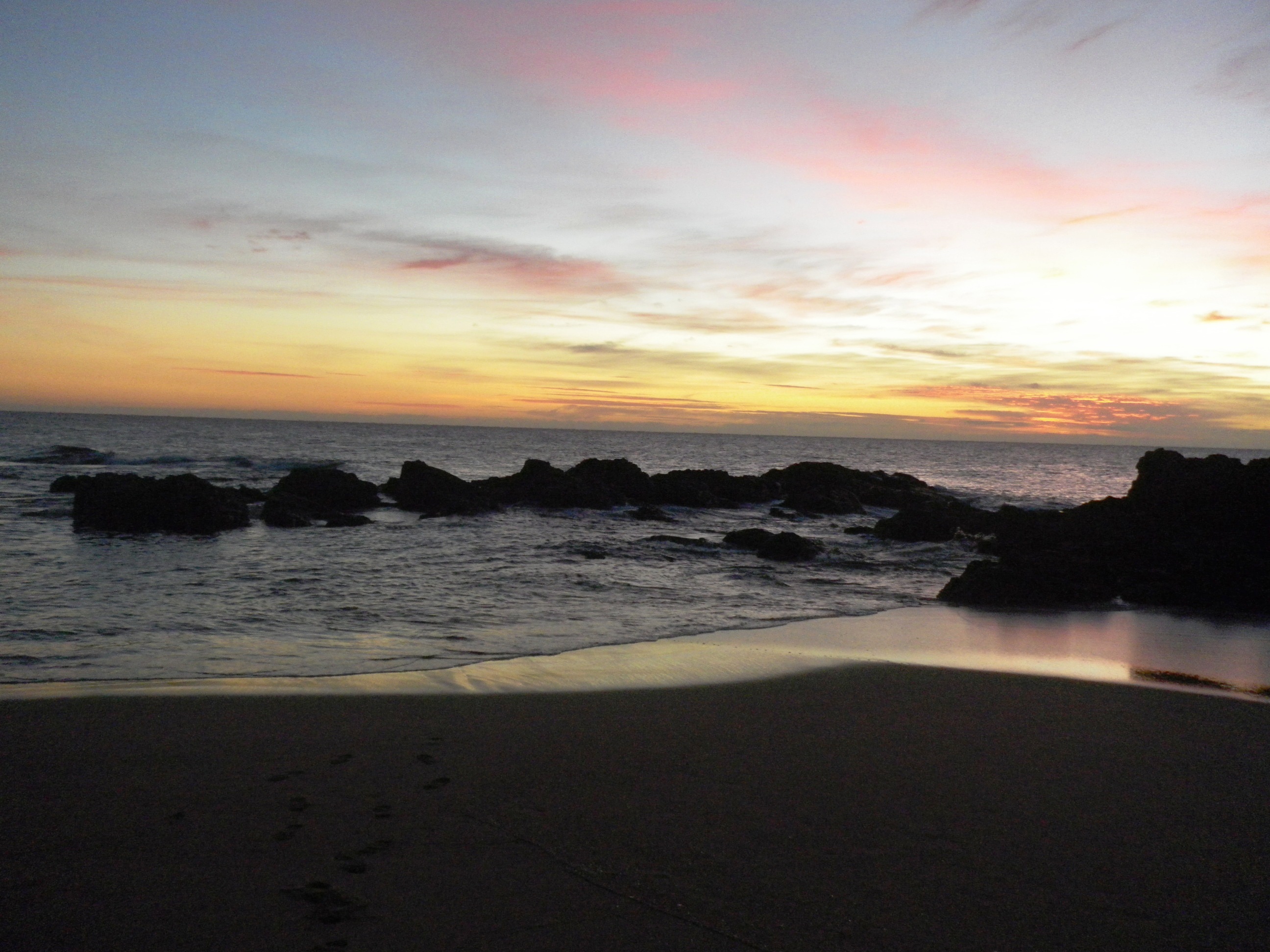
Bribie Island – Whitepatch – 13 February 2014

Thursday

I am afraid this post relates to a fishing session which is now almost three weeks old. My apologies but for the sake of keeping my fishing diary up to date, I will summarize what happened.


I decided to fish at Whitepatch on Bribie Island, low tide had passed at about 2.45 am and it would be a fairly big run in tide. There was a very light south-easterly wind blowing when I arrived, just after 5.30 am.  I parked by the stairs and waded out towards the drop off. I stopped to pepper the area of weed beds just in front of the ledge. I started with a GULP Jerkshad in the Orange Tiger colour. The first few retrieves were grabbed at by something….moses perch, pike, maybe.

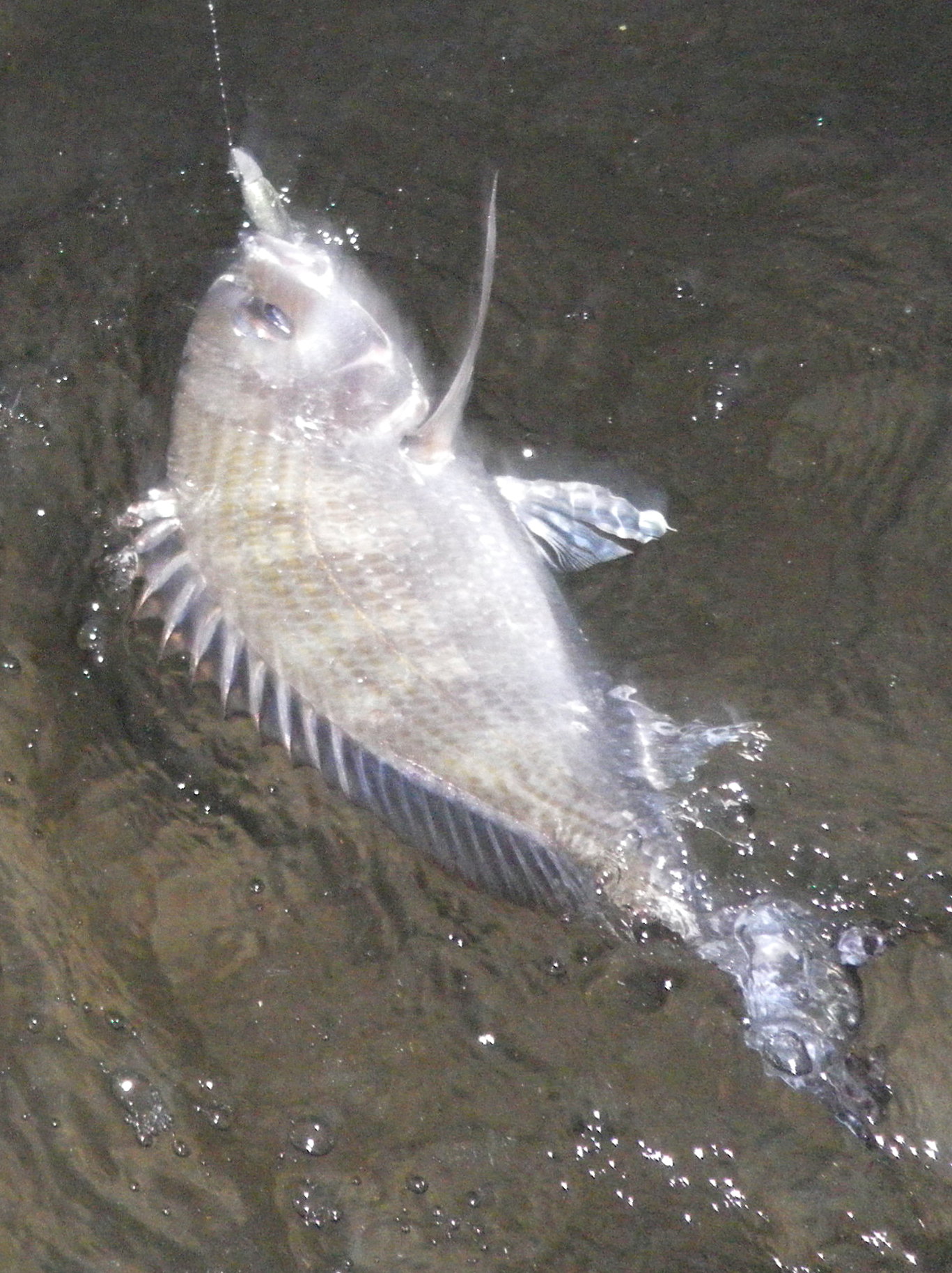
I persisted and after about fifteen minutes I found a small flathead. I released it and carried on fishing. Fish kept hitting the big plastic but I was not hooking them. The tide was getting higher and it was now difficult to cast over the edge of the drop off. I swapped down to a smaller GULP 3” Minnow in the Peppered Prawn colour. This did the trick and I soon caught a few small yellowfin pike.

As the tide came up I waded further south. I kept casting and soon started to catch a few small moses perch. They gradually got bigger but none were bigger than the legal size of 25cm. I swapped through a few different small soft plastics and caught more moses perch and a few tiny whiting.

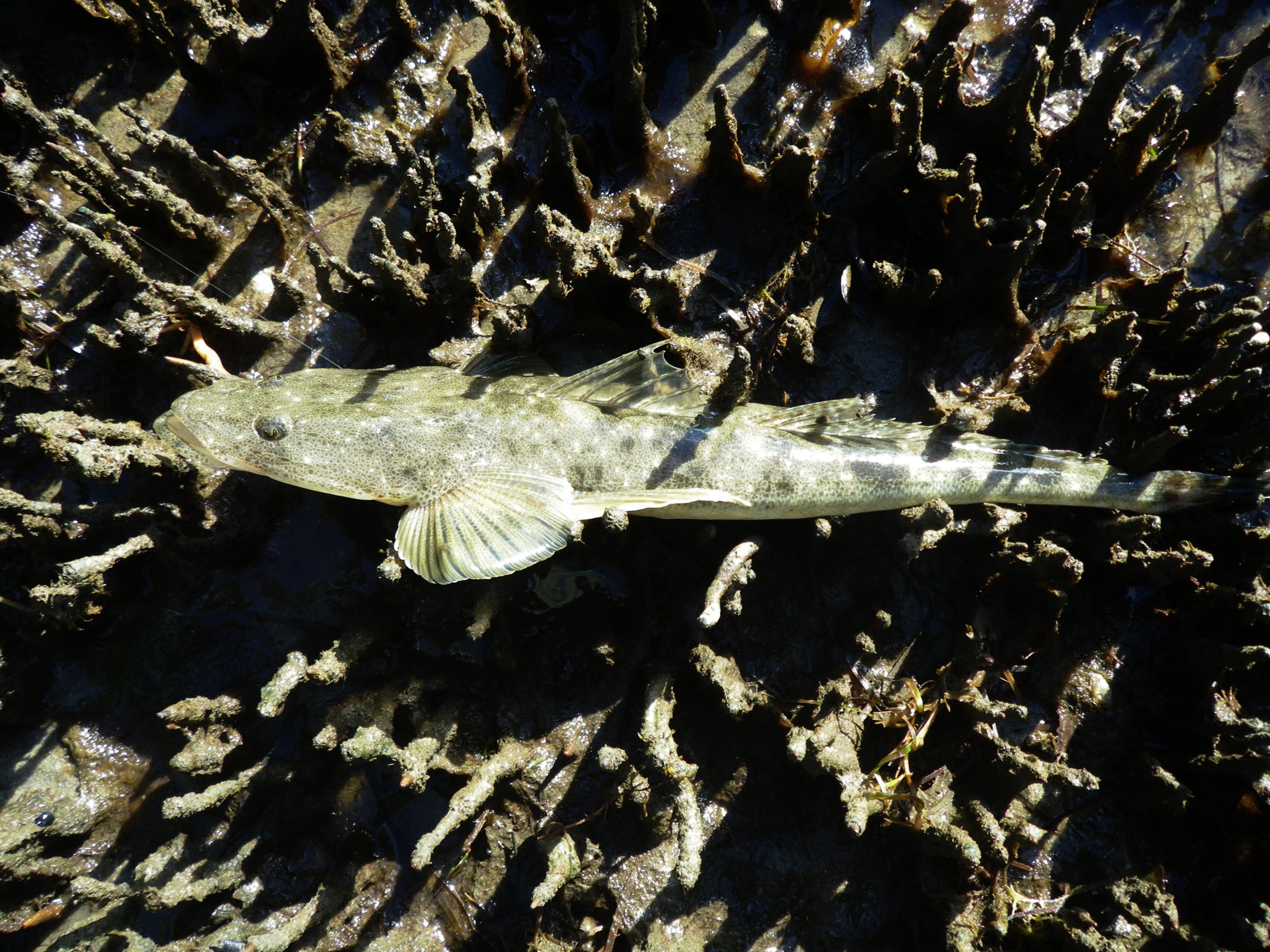
I put on a GULP jerkshad again, in the Satay Chicken colour and turned to wade back to the car. It was now about 8.30 am and heading for high tide. As I waded to the north I cast in front of me. After a few attempts this method produced the best fish of the day – a 46cm flathead.

After this I gave up. I had caught plenty of fish but only one would have been big enough to keep. Despite the lack of dinner it had been an interesting fishing session.

Yeppoon – Fishing Creek – 31 October 2013

Thursday

Time for one last session at Fishing Creek before heading back to work. It would be a late morning low tide with not much wind to start with. There was no need for very early start as the creek would be too full of water to wade along, until about 7.30 am.

I was back to fishing light. I was using my recently acquired Berkley IM6 Dropshot GEN IV 6’6″ Light Spin two piece rod, rated 2-4 kg. I paired it with the Shimano Stella 2500 loaded with 8lb Fireline and a 12lb fluorocarbon leader. I had a few of my favorite GULP soft plastics and small DUO hard bodied lures, in my chest pack.

I started with the trusty GULP 3″ Minnow in the Watermelon Pearl colour on a 1/8th ounce, size 2 hook jighead. This soon found a few small flathead. Wherever I found flathead lies in the sand I cast around until I found the fish and it usually worked.

I swapped to a 3″ Minnow soft plastic in the newly available Red Green Sparkle colour. GULP have recently released a few new colours in Australia and this is my favorite amongst the newcomers. The new colours fill in a few gaps in the range. I will not try to describe the colour but have a look at the photos attached to this post. The new colour did not seem to have much trouble and after a few casts, I christened it with a small flathead.

As the tide ran out I followed it about 3.5 kms down the creek. My constant companion was an eagle looking for a free lunch. I kept catching small flathead but there were not many keeper size ones around. I swapped back to the more natural coloured Watermelon Pearl Minnow and this produced a decent estuary cod.

At about 11.30 am, as the wind picked up and I was about to give up for the day, I found a reasonable sized grunter bream. I released it and made the long trek back to the car. Not many big ones, but plenty of fish – which I think makes for a good session.

Yeppoon – Fishing Creek – 12 October 2013

Saturday

On Saturday I drove back out to Fishing Creek so that I could be fishing as the sun came up. There would be a few hours more water in the creek than the day before and I was sure that would mean some better fish.

I used the same tactics as the day before – light spin rod and reel, light leader, light jigheads and small, natural coloured soft plastic lures. The earlier start paid off and on my first two casts, I caught two small flathead.

As I moved down the creek there were plenty of bait schools moving up and down. I paused at a point where the main channel ran over a sandy drop off. I was now fishing with a GULP 2” Shrimp in the Banana Prawn colour, on a 1/8th ounce, size 1 jighead. I crossed the channel as quietly as I could and cast back up into the tide, which was running out. I caught two small flathead (about 30cm long) and then another one that was just over 40 cm. They were all sitting along this bank. I was convinced there were some bigger ones somewhere here, so I carried on casting.

It was now about 7.20 am and I think it was still a couple of hours off low tide, at this point in the creek. I had now switched to the GULP 4” Minnow soft plastic in the Pearl Watermelon colour. There was good current flow but a 1/8th ounce jighead gave me just the right sink rate. I kept casting as close as I could to the mangrove roots and the deeper water along the edge of the channel. I let the lure get washed along the bottom for about ten seconds on each cast. On one of these casts, I lifted the lure and felt some resistance. I set the hook with a jerk of the rod tip and there was a long, powerful run back up the creek against the current. I had found a decent fish.

Fortunately this one did not seem to want to go back into the roots but it did start to cause problems when it turned and started swimming with the current flow. I just let it run – with a 10lb fluorocarbon leader, I did not have much choice.

It kept its head down but I gradually tired it out. As I brought it into the shallows it created some big swirls and I saw it was a nice flathead. I grabbed the leader and gently pulled it up the sand. It measured about 77cm on my tape and after a few pictures, I let it swim off.

I moved onto the next likely patch of darker water and loaded a new soft plastic in the same pattern. After a couple of casts something ate it. I could feel the fish trying to wedge itself against the terrain on the bottom and knew it was an estuary cod. Eventually a 40cm cod popped up on the surface.

I was now about 3km from the mouth of Fishing Creek and it was just after 9.45 am. I was still using the 4” Minnow soft plastic and something grabbed it and took off. After a tough fight I pulled up a 30cm Trevally which had completely swallowed the lure.

I turned around and headed back to the car. I looked at my legs and realised I had been monstered by sandflies – I would be itching like hell in a few days’ time. On the way back I caught a few more cod and tiny flathead. The fishing had definitely been better than the day before, but I had probably just timed my session better. I’ll be back!

Yeppoon – Fishing Creek – 11 October 2013

Friday

On Thursday, I found myself with time off for a few days. I was in Central Queensland and decided to drive out to Byfield National Park, just north of Yeppoon. I stayed at the Rainforest Ranch Cabins in Byfield (which are very comfortable, but more focused on providing a romantic getaway than fish filleting facilities) and intended to drive over the sand hills, to fish in Corio Bay, as I have done before.

I was up early and reached the foot of the big sand hill that leads over to Nine Mile Beach, at about 6.15 am. I lowered my tyre pressures to about 22 PSI and put the FJ Cruiser into low range. Last time it had floated up this hill – but that was after months of rain. This time it was like wading through treacle. The sand was soft and dry and the track had no doubt been torn up by previous drivers, who had found it as tough as I had. I tried three times and stopped when I started to sink and rolled back down to try again. After three attempts I gave up. I was on my own and I was concerned I would get stuck and not be able to simply roll back down. I need a bit more practice at this sort of thing.

I turned around and looked at my options. It was now just about low tide. I decided to drive back through Byfield and towards Yeppoon. I would go to the end of Fishing Creek and walk down it, towards Corio Bay, fishing in the pools and mangrove lined channels. This spot had produced a few fish for me in the past but it looked like it had potential for far better things.

By the time I got going it was about 8.30 am. Low tide was about 7.30 am in Yeppoon, so I assumed it would be about 1.5 hours later, this far up Fishing Creek. The moon was a somewhere between new and full and it was not a particularly big tide. It was hot – already about 28 degrees. It was still but a northerly wind was forecast to pick up later in the morning.

I was fishing light – 2.8 kg Fireline and a 10lb fluorocarbon leader, Loomis GL2 Fast Action spin rod and Shimano Stella 2500 reel. I started with small soft plastics in natural colours on a 1/8th ounce, size 1 hook jighead. The locals had recommended the GULP 2” Shrimp and 3” Minnow, in the Banana Prawn colour, for flathead and grunter bream.

I waded through the shallows and paused to cast wherever there looked like there was a bit of a hole or drain. There were plenty of schools of small mullet (or perhaps blue salmon) cruising the shallows. I was hoping the bigger predators had followed them up the creek.

I passed plenty of flathead lies on the exposed sand banks, but most looked like the fish would have been under the legal size. My first fish of the day was a tiny flathead that was sitting a metre from the bank, in about 15 cm of water. It was now just after 9.00 am and I expect we were nearly at low tide, as the water was slowing.

I found a slightly deeper channel, on a mangrove lined bend and concentrated on putting my casts in close to the mangrove roots. I lost plenty of jigheads to the trees and roots – but that’s where the fish live so if you are not pretty close, you will not catch them. I had some solid bites and caught another small flathead. At about 9.30 am something grabbed the GULP 2” Shrimp soft plastic and dragged it down into the roots. I could not pull it out so I let the drag off and eventually it swam out and I pulled it up on to the sandbank. It was an estuary cod, but only a small one. I let it go but as it swam away another predator – an eagle, swooped down and grabbed it. It did not have a good grip and dropped it on the sand. It soon swooped for another attempt and this time it was successful. It disappeared into the mangroves to eat its breakfast.

I continued along the creek and caught several more cod, the largest of which would have been just over 40 cm long. At about 11.00 am the tide turned in and I decided I had better head back to the car. I was delighted to be catching fish, even if they were small. I decided to try and get back here a little closer the high tide next time.

Bribie Island – The Seaside Museum flats – 26 July 2013

My apologies for taking so long to post this report but standing waist deep in cold water finally took its toll last week and I caught a miserable man cold. At least 50% or more of my readers will be aware that this is, typically, far more serious than the milder colds that women contract. Frankly, I was surprised at my own courage and resilience. I battled my way out of bed to the sofa each morning and kept operating the remote control with no fuss at all. After about four days I had run out of fishing videos to watch and I realised I was better.

Cold and grey again

The weather has been very poor through to the end of July but the fish have been around if you can brave the elements. Hopefully things will settle down soon.

On the Friday in question, I decided to see if there were anymore bream or jewfish lurking around the mouth of the freshwater creek drain, at Bongaree, on Bribie Island. I arrived just before dawn. Unfortunately, there was another fairly strong cold south-westerly breeze blowing. Once more, nothing happened until the horizon started to glow behind me.

I was looking for bream so I started with a GULP 3″ Minnow in the pearl watermelon colour on a 1/8th ounce, 1/0 jighead. I was fishing with my Loomis GL2 light spin rod and using 12lb fluorocarbon leader, in case the jewfish were around.

As the sun came up I felt couple of hits but could not hook a fish. At about 6.30 am, a fish grabbed the lure, as I pulled it over the edge of the drop off that runs parallel with the shoreline. It was a good one – over 30 cm long. I released it and went looking for more.

Found the first Bream at about 6.30 am

Found the first Bream at about 6.30 am

Should be plenty of bream around at the moment

Should be plenty of bream around at the moment

The wind was bitterly cold from the south west and it was building up. Low tide had passed at 6.03 am and the tide was running in slowly. I fished for another 2 hours, but all I managed was one more small flathead and at about 9.00 am I gave up.

Too cold and windy!

A small flathead could not resist the GULP Shrimp A small flathead could not resist the GULP Shrimp[/caption

Bribie Island – Museum drain & oyster jetty flats – 8 July 2013

Monday

Monday was dry and sunny, with not much wind forecast. I could not get out early but I was determined to fish. I drove up to Bribie Island. As I drove over the bridge I could see the wind rustling in the trees – but at least there were no clouds around.

Monday was the new moon and I had arrived just after high tide at about 9.30 am. This was the smaller high tide of the day. I wanted to survey the area around the Seaside Museum drain and fish the run out tide. The mouth of the tidal lagoon that was emptying near the museum drain, has now almost closed up and a lot of sand has moved around.

I waded out to the south of the drain and cast around. I was using the GULP 4” Minnow soft plastic in the Pearl Watermelon on a 1/8th 1/0 jighead and fishing with 8lb fluorocarbon leader. A Dolphin soon appeared and put on a fairly impressive leaping show. It was a great sight but I doubt it did much for the fishing.

After about 45 minutes with no bites and a steadily building south-westerly wind, I decided to give up on this spot. I stopped for a cup of coffee to consider my options. I then drove back over the bridge to the mainland and parked up. The flats on this side of the Pumicestone Passage are a little more sheltered in a strong south-westerly wind.

I did not have much time left so I waded south, past the old oyster jetty and along the exposed sand spit, towards the green channel marker. I planned to wade back towards the bridge casting along the edge of the weed beds.

The tide was now running out very quickly and lifting big clumps of the ‘snot’ weed off the sea grass. I kept catching them which was really annoying, but even more annoying – my drag on the Stella 2500, was only clicking intermittently. At first, I thought the line might be slipping on the spool but I checked and it wasn’t. The clicker seemed to make a noise if I jerked a bit of line off quickly but not if I pulled it off in a slow, smooth motion.

I started fishing with a Gulp 3” Minnow in the Lime Tiger colour. My first customer was decent Pike who grabbed the plastic after about 20 minutes of casting around. The drag was working but not making any noise. It’s surprising how disconcerting this can be. Although you can feel the fish taking line, the noise that the drag usually produces really helps you gauge where you are in the fight.

After a while I swapped to the Zman range of soft plastics and tied on a Minnowz paddle tail in the Houdini colour. After 20 minutes this had not found the fish so I swapped to a GULP 5” Jerkshad in the Cajun Chicken colour (black and pink). After a few casts, I connected with a fish. I knew it was on but the intermittent drag was confusing me.Almost as a reflex, I reached down to tighten the drag and as I pulled the rod tip up, the 8lb leader snapped.

I re-rigged with the same set up and checked the drag was set right. I cast around in the same spot for about 15 minutes before I had another bite. This time I hooked the fish nicely and left the drag alone. It was a flathead, just under 40cm long. I released it.

It was now about 12.30 pm and we were approaching low tide. It was a bright sunny afternoon but the wind was getting stronger and stronger. I slowly waded back to the car, stopping occasionally to cast at the sandy patches on the weedy bottom. I soon felt another bite, but did not hook up. I stayed in the same place and three casts later, I had another 40cm flathead.

By 1.30pm I was just north of the old oyster jetty. I felt a grab at the soft plastic and suddenly there was an angry, head-shaking flathead coming towards me, across the surface. I wound in quickly and the hook stayed in its mouth. After a minute or two, the fish was beaten. It was the best one of the day, well over 50cm.

I had found a few fish but it had been hard work. I was delighted that the rain had moved on, now we just need the wind to calm down.

Iluka – Woody Bay – 13 February 2013

Wednesday

On Wednesday I woke to more showers which were blowing through on a building south-easterly wind. I made some breakfast and waited for them to pass.

By the time the rain stopped it was about 6.30 am. The south-easterly was already blowing at about 15 knots and was forecast to get stronger through the day. There was not much point in trying to fish the headlands. The tide had been low at 5.00 am and had now turned in. I decided to fish around the rocks beside the boat launching area, on the edge of Woody Bay. This area, directly in front of the camp site, is sheltered by Woody Head. Even in a big south-easterly blow, it stays pretty calm.

A grey morning on Woody bay

A grey morning on Woody bay

I decided to switch to my really light spinning outfit – Shimano Stella 2500 reel, Loomis GL2 rod, 1.8kg Fireline and a 10lb fluorocarbon leader. The bait that had been jumping around close to the rocks, had been some kind of small whitebait, so I chose a GULP 3” minnow soft plastic in the Watermelon Pearl colour, which would represent a similar profile. I rigged up the plastic on a 1/8th oz., 1/0 jighead. As I stood in the shallows, the water was warm and I started casting along the edge of the semi – submerged rock bars. At about 6.45 am the rain started again and just as it did, I felt the familiar double tap bream attack. I did not hook up but on the next cast, I did. I wound in another very respectable bream.
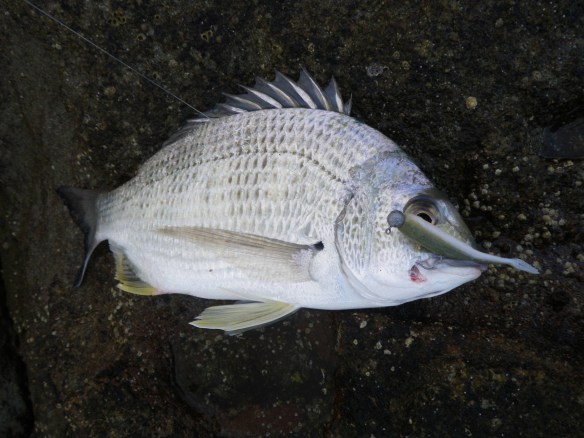
GULP Minnow gets the first bream

GULP Minnow gets the first bream

I let it go and moved on, casting out and trying to rest my soft plastic lure, for as long as possible, right where the rocks met the sand. Just before 7.00 am I felt the faintest of grabs, as I hopped the lure along the bottom beside the rocks. Two more casts in the same spot produced nothing. On the third, the rod bent over as the jighead stopped dead.

It felt like the lure had stuck fast in the rocks but then very slowly the ‘rocks’ started to move. In a long slow run the fish moved about 6 metres to the south. Then paused and did the same thing again. I pulled up on the rod and tried to recover some line. It was only at this point that the fish realised that it was hooked and started really fighting. It was still so slow and heavy that I thought it was a ray or shovel nose shark. After a few more lunges it turned towards me and rose to the surface shaking its head. I could now see it was a big flathead.

With a ten pound leader I could not risk any abrasion from the barnacle-covered rocks so I let the fish play itself out. It had been lurking in less than 30cm of water so it was hard to keep its head down but I took my time and used the swell. I found a nice sloping rock bar and gradually eased the fish up in a breaking wave. It was a nice flathead who measured up at about 74cm. After a few snaps I put her back and she swam away.

The Clarence River is still very de-oxygenated and full of fresh water from the floods. It is likely that all sorts of species (including flathead) have settled around these headlands to wait for it to clear. The birds were very active, constantly swooping in to pick up baitfish. So it looks like a fair amount of bait has also been washed out.

I decided to wade around the shallows in the bay and look for some more fish. I was soaked from the rain and being in the water was warmer than being out of it. I tried all around the rocks with the same soft plastic and a few others, to see if I could find anymore flathead – but I couldn’t. I watched a few long toms follow my lures in and have a snap at them, but did not hook any.

I swapped over to one of my favourite DUO hard bodied lures. With the river out of bounds there was not much water where I could use their range of finesse lures, but this bay was flat enough and clear of weed, so it was perfect. I tied on the DUO Ryuki Spearhead 45s in a gold/ green colour. This is a small trout lure that seems to work well on bream. It weighs 4 grams and is 45mm long with a small bib. As with most of the DUO range it casts a long way and slips into its action almost as soon as it hits the water. Although it is technically a sinking lure, its lightweight means that it effectively suspends, when you pause the retrieve.

I cast it over the flats and around the rock bars as the tide rose. First it attracted a few undersize moses perch. Then, as I moved into slightly deeper water I found a patch of small bream. I caught a couple before they decided they had had enough.

At about 10.00 am I found myself almost back where I had caught the big flathead earlier. I had waded round the bay in a big circle. I continued to cast along the edge of the rocks and suddenly felt a solid hit and run. The fish was hooked and after a few good runs it calmed down and I pulled it up to the sandy beach. It was another good bream – just over 35cm long. I released it and carried on fishing for about another hour with no luck, so I decided to give up for the morning.
Maundy Thursday – Caloundra – Golden Beach – 5 April 2012

Maundy Thursday

Rain, wind, swell, wind, swell – well at least the rain seems to have moved on, but the wind and swell look like they will be sticking around for the whole of Easter. Unfortunately that means that we keen fisherman are all herded in to the few sheltered stretches of estuary that exist along the coast. There are a lot of people looking to wet a line or put the boat, jetski, kayak, dinghy in the water over this weekend and the next one.

My tip for increasing you chances of catching something – start early. Fortunately not everyone is willing to get up in the middle of the night to catch a fish. Most people don’t consider a 4.00 am start relaxing! This means the water is less likely to have been disturbed before you get to it and also means you usually get to fish the calmest few hours of the day – around sunrise.

With all this in mind I set off for Caloundra at about 4.30 am on Thursday morning. It was full moon so it would be a big high tide at around 8.15am. When I arrived, the wind was already starting to rustle the trees and cast a ripple on the surface of the Pumicestone Passage. It has been a while since I have fished here. The water was considerably cooler but much clearer on the top of the tide.

DUO, the Japanese lure manufacturer has sent me some more lures to try out, including the Tetraworks Bivi in a few more colours. This a great lure that has caught a few Flathead for me and with the cooler weather on the horizon, I am sure it will also prove to be a great Bream lure.

It is a hollow body microvibe lure and the colour I was using today was almost black with some rainbow colouring. It is a sinking lure, 3.8 grams and 40mm long. I was back to fishing with my lightest spin rod and reel combo – the Loomis GL2 with a Shimano Stella 2500 reel. I had the reel loaded with 8lb braid and 10lb fluorocarbon leader.

DUO TETRAWORKS BIVI - Great lure in this darker colour


I started on the sand flats in front of the Caloundra Powerboat Club. The tide was still coming in. I cast all around the area of weed banks that line the edge of the various channels, where the boats are moored. It wasn’t long before I felt a nudge and then a solid hit. I was on to a fish. It took a bit of line and it was moving quite fast. It was a decent Bream – perhaps just under 30cm, but it was only just hooked. I started back towards the shore but just as I got a good look at it – it wriggled free and was gone.

Small Flathead - big soft plastic


I trudged back to the weed beds and carried on peppering the area with casts. About 10 mins later I had another solid knock – so I let the lure drop back down. When I lifted it I had a fish on. It was a small Flathead just under legal size. I took a few pictures and released it. A few cast later I hooked up with a bigger one – but again it wriggled free before I could walk it back to shore.

I decided to swap to a soft plastic and put on a GULP 4” Minnow in the Pearl Watermelon colour. This worked but again the fish was too small. I carried on until around 9.15 am but by then the wind was howling again so I gave up.

Caloundra - Pelicans

Caloundra – Bulcock Beach and Golden Beach – 8 November 2011

Tuesday

Strong northerly winds were forecast, but not until around 10.00 am. I decided to fish at my new favorite spot – Caloundra – at the northern end of the Pumicestone Passage, about 1 hour north of Brisbane, on the Sunshine Coast.

High tide would be at 7.40 am and it would be a nearly full moon. There would be plenty of power in the tidal flow and it would come up very high. I arrived at first light, just after 4.00 am. I started fishing at the mouth of the Pumicestone Passage, at the southern end of Bulcock Beach, on the rocks. The wind was blowing and it was already fairly choppy. The tide was rushing in, so I focused on casting my soft plastic lure at the eddies, behind the rocks. After a few casts, I caught a 45cm Flathead on a GULP 3” Minnow lure, in the Lime Tiger colour.

It was too windy to stay in this location so at about 6.00 am, I moved south along the Pumicestone Passage to Golden Beach, to fish the weed banks in front of the Power Boat Club. This is a good spot on high tide as the Flathead move up over the weed beds, looking for something to eat. After half an hour of casting I found one, another 45cm Flathead on the same lure. I was fishing with a 1/8th 1/0 jighead and 1.5m long 12lb fluorocarbon leader. I let the fish go and few casts later I got a better one. This time, on a GULP 5” Jerkshad soft plastic., in the Satay Chicken colour. As soon as I felt the initial bite, I had dropped the rod tip and counted to 10. The waiting nearly killed me but when I jerked the rod tip up, the lure lodged firmly in the fish’s throat. The fish was too big to grab in waist deep water so I had to tow it all the way back to the sand – about 100 metres. Luckily, it stayed on and did not saw its way through the leader.

I fished for a few more hours, wading up and down the weed banks. But, by about 9.00 am, it was just too hot to carry on, so I put the fish on ice and went for a swim.

This slideshow requires JavaScript.

Middle Rock and Flat Rock – 1770 – 9 October 2011

Sunday

The storm passed and I woke around 4.00 am thinking the sun was coming up. In fact it was the moon – high above, in a very clear sky. It was a few days off full and so bright, that I did not need a torch to get the billy on and brew up some tea. After a few nights of instant noodles, I needed some protein, so it was time to stop looking for trophy fish and go and catch something to eat.

I started at dawn at Middle Rock. High tide would be at about 7.00 am and first light was about 5.00 am. It is just a few km north of my campsite at Wreck Rock, in Deepwater National Park. There are three main rocky outcrops with rubble, coral bommies and sandy patches in between. As the sky brightened only the tops of a few of the bommies and the big rocks were visible. I have had a few good Trevally from this spot on high water.

I was using the Shimano Catana Light rod again but put on a 16lb leader – just in case something big appeared. I loaded up with the GULP 3” Minnow in the Pearl Watermelon colour on a 1/8th 1 jighead. I cast out, as close as I could to the edge of the half-submerged bommy. I started a quick retrieve – there are too many rocks to let the soft plastic hang around in one spot. I had only jerked the rod tip a couple of times and then I had a fish. It was a nice Bream about 30cm long. A few more casts produced another. Then I caught a couple of tiny Moses Perch and finally a couple of smaller Bream.

The water was calm and glassy and crystal clear, despite the storm. At about 9.00 am I drove up to Flat Rock and waded out onto the partially submerged rock, to fish the rest of the run out tide. Flat Rock is great to fish on once you can stand safely on the rock itself. There are a couple of breaks in the rock that runs the length of the beach and these are good fish congregating areas.

I started at the south end where the front of the rock has an almost vertical edge, in some places. These are usually a good Bream spots as there is plenty of wash. Sure enough, as I wandered along the rock casting into no more than 1.5m of water, I caught about five more Bream, a handful of small Whiting, a tiny Bar Tailed Flathead, Butter Bream and lots of small Stripey Perch and Dart. All of the Bream were just about 30cm – so I kept the biggest three. I was impressed with the range of fish but disappointed by the size.

This slideshow requires JavaScript.

I moved down to the southern end where the rock breaks down into a surf beach dotted with submerged bommies, but by about 11.00 am the northerly wind had come up again and the fish seemed to stop biting. I cleaned up the Bream in the rock pools and headed back to camp for some hammock time.

Bribie Island – Oyster Jetty Flats – 3 Sept 2011

Saturday

I have been catching fish but not catching dinner. A few trips to unfamiliar fishing locations and my inability to land anything decent , closer to home, has left the fridge empty. I decided to head up to Bribie Island for a land based fishing session on Saturday.

Unfortunately the weather was not kind. I arrived around first light to be greeted by a 20 knot southerly wind which showed no signs of easing off. I tried to fish the mouth of the lagoon in front of Buckley’s Hole but the wind made it too hard.

I crossed back over to the mainland to fish on the flats around the old oyster jetty. You get a bit of shelter from the southerly wind here. Low tide was around 6.30 am and the water was slowing, as I waded along the exposed flats. The sea grass beds are just beginning to grow up through the ‘snot ‘weed. Hopefully in a few weeks it should start to disappear.

I waded south casting along the edge of the weed banks. I fished for an hour or so, with only a couple of bites, which I think were Pike. I stopped for a chat with a fellow fisherman, who was also not having much luck casting soft plastics. Around 8.00 am, just as the tide started to run in properly I felt a good bite and dropped the rod tip. A few seconds later I lifted it and had a fish hooked. It was a small Flathead that was just about legal size. I decided to let it go.

I was fishing with the GULP 4” minnow soft plastic in the pearl watermelon colour. This lure is about as close as you can get to a replica of a small mullet or pilchard and often seems to produce a fish when nothing else can. I was fishing with a 1/6th 1/0 jighead and 10lb fluorocarbon leader. I fished on for another hour but I could not find anymore. The fridge remains empty of fish!

Bribie Island – From the Bridge to Sandstone Point – 29 May 2011

Sunday

I decided on Bribie Island again today. If you fish the flats on the mainland side of the Pumicestone Passage you are fairly sheltered from a cold south-westerly wind. The wind was forecast to be a 10 -12 knot south-westerly, but it was a good deal lighter than at 5.00 am, when I arrived by the bridge across to Bribie Island. I pulled on the waders and beanie and wandered out under the bridge lights, on the island side. There were a few lightning flashes over towards Moreton Island and the stars were blocked out by low cloud.

I fished around the bridge pylons and almost immediately, caught a few Pike, but there was not much surface action. The tide was running in and high water would be just before seven. There was now plenty of water close to the Mangrove roots and I concentrated on the area just to the south of the bridge, where I often see Flathead ‘lies’ at low tide. After a few casts with a GULP 3” Lime Tiger Minnow soft plastic, on a 1/8th 1/0 jighead, I was on to a fish. It struck hard, but it was only small – just under 40 cm. In the process of releasing it, it gave me a good spiking in the side of the thumb. I don’t know what’s on the Flathead spike, but there must be some kind of anti-coagulant, because whenever I get spiked, the blood just pours out – not ideal when standing waist deep in water in the pre-dawn light.

I moved gradually south, about 20 metres from the shore, casting all around. I continued to get the odd Pike but as the water slowed on the high tide, everything went very quiet and I had no bites for about 90 minutes. Then as the tide really started to run out I switched to a heavier 1/6th 1/0 jighead and a bigger GULP 4” Minnow in the Pumpkinseed colour. I was standing to the south-west of the long sandbar at the Sandstone Point corner and casting my lure over it and hopping it back with the run out tide. Suddenly the line went tight and I had a fish. I towed it back to a gap in the Mangroves – it was a nice Flathead at around 61cm. Plenty of fish in our fridge, so I let it go.

61cm Flathead caught on a GULP Pumpkinseed Minnow

The wind was getting up now and as this was a fairly sheltered spot, so was the boat traffic. I caught a couple more fish around the 40 cm size and then finally, just to the north of the oyster jetty, I got a 51cm Flathead. I had caught 4 of the 5 Flathead on the Pumpkinseed coloured soft plastics and the session was a good reminder of how useful this colour can be. At around 9.30 am I gave up and headed home for a warm shower.

51 cm Flathead - Caught on a GULP Pumpkinseed Jerkshad

1770 – Middle Rock – Flat Rock – Deepwater National Park – 15 May 2011

Sunday

On Sunday morning the weather was beginning to change. The breeze was moving round from the south west to the south east. It was much warmer and conditions were good as the south easterly was still light. I had worked out that low tide presented the better fishing opportunities at Flat Rock and Wreck Rock and so, with high tide a few hours after dawn, I headed back to Middle Rock and more specifically the set of rocks in the middle of Middle Rock.

Middle Rock - an hour before high tide pre-dawn

Jupiter and Venus had been bright and visible in the eastern sky just before dawn, all week. Since about Thursday, Mercury was also clearly visible. Venus was so bright that it cast a clear light across the water. It had been similarly bright when I was fishing down at Iluka, in NSW, last month and I wonder if it has an effect on the fish.

I was fishing with the heavy rod – the Daiwa 9’ 6” Demon Blood, matched with a Shimano Stradic 6000 reel, loaded with 20lb braid and a 30lb fluorocarbon leader. I was hoping to encounter some bigger fish at dawn and thought that the cold snap would have got the Tailor going. My camping neighbour had caught a few off the beach to the south of Wreck Rock, the evening before. They had taken cut up Pike baits about an hour after sunset.

I rigged up with a GULP 5” Pumpkinseed Jerkshad soft plastic lure on a 3/8 oz 2/0 jighead. I cast all round the rocks in the pre-dawn light. I could not raise a bite so I dropped down to a ¼ oz 1/0 jighead and 16lb Fluorocarbon leader and cast around again. Third cast, in very shallow water, only a couple of metres from the beach, I had a fish. It was a Bream about 30cm long. I released it and cast back in the same spot. I hooked up straight away – it was another Bream – slightly bigger at around 34cm. I carried on but all I could not find anything bigger so at 8.00 am I went back to camp for breakfast.

Middle Rock Bream

Whilst there were fish around it was becoming clear that this week was right in the middle of the changeover between the dominance of the warm weather species –Tuna, Mackerel, Dart, Whiting and the emergence of the cold weather species – Tailor, Bream, Flathead. The air temperature had been bitterly cold but the water was still very warm. It was hard work trying to figure out what to try next!

After breakfast I decided I would fish the run out tide at Flat Rock. The moon was almost full so the tide would be very low. I arrived just after 10.00 am and the long rock was already exposed. I waded out and climbed up onto it. I was back to the light spin rod, using a 1/6th 1 jig head, 12lb leader and 2” and 3” GULP Shrimp and Minnow soft plastics. For the next few hours I walked all the way along the rock to the northern end of the beach, casting out over the edge. There was no shortage of fish but the problem was size. Everything seemed to be under 30 cm long. I caught Whiting, Flathead, Bream, Stripy Perch, Dart and Long Toms, but nothing was worth keeping. By 2.00 pm the wind was getting up and the tide was running in so I gave up.

Bribie Island – Sandstone Point – Monster Flathead – 2 May 2011

Monday – Labour Day

10 to 12 knot winds forecast and even though there would be a big swell offshore, the estuaries would be good for fishing. Back up to Bribie, to the Sandstone Point flats where I have been getting some good Flathead.

At about 5.00 am I waded out under the bridge – on the mainland side, to cast around under the lights. The tide was running in, so I was casting from the north side of the bridge, under the bridge, into the shadows and hopping my lure across the bottom, along with the current, back towards me. Theoretically, the Flathead will be lying facing the current flow, waiting for their prey to be washed towards them. After a couple of casts with the GULP 4” Pearl Watermelon soft plastic, I had a fish. This area can be tricky, as there are loads of prominent rocks to trip over and lose the fish on. Unfortunately just as I got a look at a decent 50cm + Flathead, it lunged down behind one, bumped the jighead out of its mouth and slowly swam away.

As the horizon started to glow I walked south and then around the corner onto the Sandstone Point flats. On my way, I caught a small Flathead in the weed beds, about 20 metres from the shore. It was only just 40cm long, so I released it.

I moved past the jetty to the point where the shoreline turns right, casting as I went. I waded over the big sandbar that runs roughly north to south; onto the area I call the Sandstone Point flats. This area is very rocky initially and then softens to sandy weed beds with some central channels and drains. It holds plenty of fish, especially at the top of the tide. The Flathead lie between the rubble and the weed beds waiting to pounce, while the Bream cruise over the top.

I was still fishing with the same soft plastic, but as the water was less than a metre deep, I was only using a 1/8th 1/0 jighead. The tide was still running in and this meant I was casting directly in front of me, as I waded across the flats. Because I had missed a fish on the rocks earlier, I had switched up from a 10lb to a 16lb leader. I was retrieving the lure fairly quickly with very short pauses to avoid getting snagged. I felt a bit of resistance and thought I was snagged. I jerked the jighead up and what felt like a rock, rolled towards me a little and then felt like it was free. I wound in my line and as I was about to lift the plastic from the water, the line went tight again and the ‘rock’, which I now realise was a fish, swam straight past me. Line started peeling at a steady pace and then, as the fish realised it had eaten something sharp, it took off on a powerful initial run, with the current.

My Loomis GL2 6’6 Light spin rod is very sensitive and amazingly flexible but it is not designed for power. If you get a big fish on, patience is the key. I let it run. Then I recovered some line and let it run again. It was obviously nicely hooked, but at the beginning of each run, it would put in a series of angry headshakes. I realised now it was a very big Flathead. I identified a break in the Mangroves and started to steer the fish in that direction. It must have made five or six long, determined runs for freedom and after each one, I had tightened the drag slightly, with little effect. Even 16lb leader will not last forever and the longer the fight goes on, the more likely the fish is to find a conveniently placed rock or snag. I tightened the drag and got the fish into the slacker water close to the shore. There was another short run but it was tired now and had no current to help it. With one long last heave I pulled it up onto the sand. The leader snapped as soon as its weight hit the sand but it was clear of the water.

This slideshow requires JavaScript.

It was a monster female Flathead – well over 75cm. I measured it as best I could with my tape, took a few pictures and released it. I am settling on 75cm for the length, which makes it this year’s ‘personal best ‘Flathead for me.
Ironically, I still had no fish to eat, so I waded on. I caught a few undersize bream cruising over the weed and then in a small sandy depression, I finally picked up a 42cm Flathead. It was a good end to a great mornings fishing.

Bribie Island – Large Easter Sunday Flathead – 24 April 2011

Easter Sunday

I had a big Easter BBQ planned for Monday. Four Good Friday Flathead was a good start but I would need a bit more fish to make sure my guests didn’t go hungry. That was my excuse for getting out on Easter Sunday!

I arrived at the Bribie Island Bridge at 5.00am and parked on the bank, on the mainland side. I put on my waders and had a few casts around the rocks under the bridge. I caught a small Moses Perch and released it.

Just as it started to get light I moved off to the south. There was lots of surface feeding going on and the tide was running out strongly. Low tide was at around 8.00am. I waded past the oyster jetty with no more bites and then started to fish the drain that runs round from Sandstone Point. I fished all along it without a touch. I moved out to a point where the water was waist deep and started to move north, back towards the bridge.

I was fishing with a new favourite, the GULP 3” Smelt Crazylegs Grub soft plastic. It is a short version of the Crazylegs Jerkshad that has proved so useful. I had it rigged on a 1/6thoz 1/0 jighead. I was using my light spin rod and a 12lb fluorocarbon leader.

I got a couple of solid bites but could not keep the fish on. Then as I moved towards the oyster jetty a fish grabbed the plastic about a metre away from me. I struck with rod and stepped back. It was a good fish but it did not do much, initially. I decided to walk it back to the shore. I loosened the drag a little, as I did not want a bust off. I started to tow it towards the bank and about half way there it really woke up and made a few powerful runs. As I dragged it up onto the muddy shore the leader snapped, but it was clear of the water.

It was a healthy female Flathead, just under 70cm long. I fished around this area for another hour and caught and released several Flathead that were around the legal size limit of 40cm. At about 8.30 I gave up. It had been great morning land-based fishing in the Pumicestone Passage.

70cm Flathead

Bribie Island – Jew and Flathead – Good Friday – 22 April 2011

Good Friday

I am back in Brisbane for Easter and so I decided to drive up to Bribie to fish, wading the flats, early on Good Friday. I arrived by the bridge on the mainland side, at around 4.45am and low tide would be at about 7.00 am, so there was not much water under the bridge lights.

I cast around in that area using the GULP 4” Pearl Watermelon Minnow on a 1/6th 1/0 jighead. There was plenty of surface action with Long Toms and a few Pike cruising around. After wading around for a while I felt a light tug and paused. When I raised the rod tip and set the hook – I had a fish. I assumed it was a Flathead but as I saw a flash of silver I realised it was a Jewfish/ Mulloway at 40cm. I took a picture and released it. These are the one species that really love dirty water and after all the recent rain, conditions are currently perfect for them. I could not find any more and so as first light started to glow above the horizon, I waded south.

I passed under the Oyster Jetty and fished the weed beds, rocky bumps and dips, just to the south. I stuck with the same soft plastic and soon found a few Flathead. I caught 6 in this area in the next couple of hours, of which four were between 42 and 56cm. I kept these for the Easter BBQ and the rest went back. Things seemed to slow down with the turning of the tide and just after 8.00 am, I went home.

Bribie Island – Bridge, White Patch & Oyster Jetty – 8 March 2011

Tuesday

Up early and back to Bribie Island. I arrived at the mainland side of the bridge at around 4.00 am and started by casting soft plastics in amongst the pylons. The tide was in the last hour of running out and the rain showers overnight had again stirred things up. There is also a storm water drain under the bridge that empties out from time to time, further clouding the water.

I had rigged up a GULP 5” Jerkshad soft plastic in the Satay Chicken colour on a 1/8th 1/0 jighead. I was fishing with 10lb braid and a 12lb fluorocarbon leader, on my light spin combo – a Loomis GL2 rod with a Shimano Stradic 3000 reel.

I started just to the north of the bridge and got no bites for a while. I moved quietly, round to the north and cast into the area where the light and bridge shadows meet. Thud – a solid hit, I dropped the rod tip, paused and then struck. The fish took some line then settled into the current. I gradually eased it up on to the sandy area at the foot of the rocks. It was a nice, 46cm Flathead. I let it go, straightened the plastic on the jighead and peppered the area with more casts. It was about 4.20 am. A few retrieves later there was a smaller bite, in about the same spot and I caught another Flathead. This time it was just on 40 cm. I released it and moved all around the bridge area and down to the street light beside the boat hire outlet, but I could not find any more.

This slideshow requires JavaScript.

As dawn broke, I drove up to White Patch to look for some more fish. I walked down on to the beach and out towards the drop off, that runs all the way along the edge of the Pumicestone Passage. It was just after low tide and I waded along casting in all directions, out over the drop off and on top of it, in the shallow water. I did not get a bite on the soft plastic lures. I swapped to a 1/6thoz weight, Berkley Big Eye vibration blade, but this did not find any fish either. After an hour of wading up and down, I decided to change locations again.

I drove across the bridge to the Oyster Jetty and waded out beside it, on the south side. The tide was now running in solidly and the water was much cleaner than it had been up at White Patch. However, the wind was really getting up and there were some very nasty clouds on the horizon. I hooked a decent fish but was disappointed when it leapt out of the water – a huge Long Tom. I got rid of it and waded south for about 60 metres, casting in front of me, into the run in tide. I swapped to a GULP 4” Pearl Watermelon Minnow soft plastic and rigged it on a 1/8th 1 jighead. After a few casts in this area, the line came up taught and I had another fish. There was a bit of weight to it, so I decided to wade back the shoreline. It was a good size Flathead at 49cm.

I carried on for another 45 minutes but then a couple of monster rain squalls gave me a good soaking and the cooler southerly wind was really getting up. At about 9.45 am I headed home.

Bribie Island – Bridge and Oyster Jetty – 5 March 2011

Saturday

After a stinking hot week – but some pretty good fishing Flathead fishing, the rain was back. A south-easterly change and big wind and seas were forecast but it did not look as if it would get up until around lunchtime, so I decided on a quick early morning Saturday session. I headed for Bribie Island and was out under the bridge lights, on the island side by 4.15am.

A word on waders – I use the A S Horne waders which have a tough Blundstone gum boot. With postage, they are around A$ 120/30 but they are definitely worth the price premium. Before I bought them I went through 7 sets of cheap ones; Wilson, Mojiko, Shakespeare, and various other BCF/ Anaconda offerings, in just under two years. I was constantly patching up holes on these cheap ones. I have now had my A S Horne waders for 2 years and they have no leaks, despite lots of run ins with oyster covered rocks. They are pretty hot at this time of year but with so many jelly fish, Wobbegongs and various other creepy crawlies in the water – I am prepared to suffer the heat.

At 4.15 am this morning it was cool and wet. The tide had just started to run in and the rain had made the water even more murky than usual. I decided to started with a GULP 5” Jerkshad in the Satay Chicken colour – yellow on top and pumpkinseed underneath. I was standing in 30cm of water casting in close to the pylons. After a few retrieves I was on to a fish. I brought him to the shore – a Flathead just on 40cm. The family decided they will go on hunger strike if I bring another Flathead to the table – so it was released. I got a few more hits from what I think where Pike, but as the sun came up an hour later I had not landed anymore fish.

I moved across to the Oyster Jetty on the other side of the Passage. It was now around 5.45am and the tide was running in strongly. I waded out beside the jetty to a point about ¾ of the way along and started putting casts out in a semicircle. I was casting into the run in tide and hopping the plastic along the weedy bottom. After two or three casts I was on to something. After a few short runs, I could see it was a small Flathead, again around 40 cm long. I did not want to wade back to the bank with it so I grabbed it with a cloth and released it.

I could not find any more in that area so I moved further south. I fished the drain, just before you turn the corner for Sandstone Point, but apart from a few Long Toms, I did not get another bite. The wind was now beginning to howl and it was spitting rain again so I waded back to the car and headed home.

Bribie Island – Sandstone Point Drain – 26 Feb 2011

Saturday

After a good session on Thursday, I headed back up to Bribie Island early on Saturday morning. I was wading out under the bridge, on the mainland side, just after high tide, at about 4.30 am. I decided to try some big GULP Crazy Legs Jerkshads, to see if I could find some bigger fish, under the bridge lights. I rigged a pink shine version on a 1/8th 2/0 jig head and cast out to the north side of the bridge. After a few casts, nothing was happening so I moved to the south side. The first cast came up taught as soon as I flicked the reel bail arm over. The fish held on until it was only a couple of metres away and then let the lure go. The same thing happened, a couple of casts later. I could not see what was biting, but I think they were probably Pike or Moses Perch.

As the sun came up I moved south, past the old oyster jetty to the big drain that empties round the corner from the direction of Sandstone Point. The tide was really running out now and I decided to try a 1/5th of an ounce Berkley Big Eye Blade lure. I cast it out let it sink briefly, and jerked it back towards me fairly quickly. To get the right action you really need to keep these lures moving fast. After a few cast, I had a fish. The small, soft hooks on these blades mean I often lose the fish before I can get it back to shore. There was no problem this time. I had a nice Flathead around 48cm.

This slideshow requires JavaScript.

After a 15 minutes more fishing with the blade lure, it got snagged and I lost it. I switched to a GULP 3” Minnow Grub soft plastic in the pepper prawn colour and rigged it on a 1/8th 1/0 jighead. I was now fishing along the edge of the big sand bank that channels the water down through the drain. After a couple of hits I cast back in the same spot about 6 times before I finally connected with the fish. It was another, bigger Flathead at 52cm. I wandered around this area for another hour or so. I hooked up with a couple more fish but dropped them or they spat out the lure. Finally I connected with a good size Long Tom who jumped clean out of the water when it realised it was hooked. These really are ugly fish.

Another great morning fishing and as we have plenty of fish in the fridge, they were all released today, some unintentionally!

Bream & Flathead from the Clarence River – Browns Rocks – 12 Feb 2011

This slideshow requires JavaScript.

Saturday pm

I decided to have a fish in the Clarence River on Saturday afternoon. I had been concentrating on the rocks and beaches at Iluka, as the river water still looked very dark after the recent floods. I decided to try and fish the north bank of the river just to the east of the Norfolk Island dock, near Browns Rocks. You get to this spot by turning left off the Iluka road at Woombah. There is an area of weed beds and sand flats here. There is also an old oyster farm and a few drop offs into the main river channel.

I arrived about 4.30 pm. The tide was about half way out and it was hot and humid. There was a light northerly breeze and it was fairly cloudy. This area is best approached in a pair of waders. I pulled mine on and rigged up my light spin outfit for soft plastics. It is a 6ft Loomis GL2 spin rod matched with a Shimano Stradic 4000 reel. I had spooled it with 6lb (2.8kg) Fireline and tied on a 1.5m long 10lb fluorocarbon leader. I started fishing with a 1/6th 1/0 jighead, but almost immediately changed down in weight and size to a 1/8th 1 hook jighead when I realized there was not much current flow.

I waded out to the point just short of where the sand flats drop off into the main channel and then turned and waded up river, parallel with the river bank. I was therefore casting up, into the run out tide and bouncing my soft plastic over the bottom, along the edge of the weed banks, right along the drop off.

I was looking for Flathead and that was what I found, in almost plague proportions – I caught twenty in an hour and a half. I was using the GULP 2” Shrimp in the Banana Prawn colour and the 3” Minnow in the Lime Tiger and Pear Watermelon colours. They were all catching fish. The problem was size. The vast majority of Flathead were under 20cm long. There were few around the 30cm mark, but only three over 40cm. The best fish was just over 55cm.

There were also plenty of small Bream cruising above the weed beds. Initially, they definitely preferred to hit the Pearl Watermelon minnow but as it got later and darker, they got less fussy. I caught 9 in the session of which three were over 25cm – but I released them all.

Finally around 7.15pm I gave up and drove back to Iluka. It was a great session and shows that there are still plenty of fish in the Clarence River.