Bribie Island – The Oyster Jetty and White Patch – 21 August 2012

Tuesday

Monday’s session had not been very promising – there had been a distinct lack of Flathead in the usual locations at Bribie. Perhaps they were all in 1770.

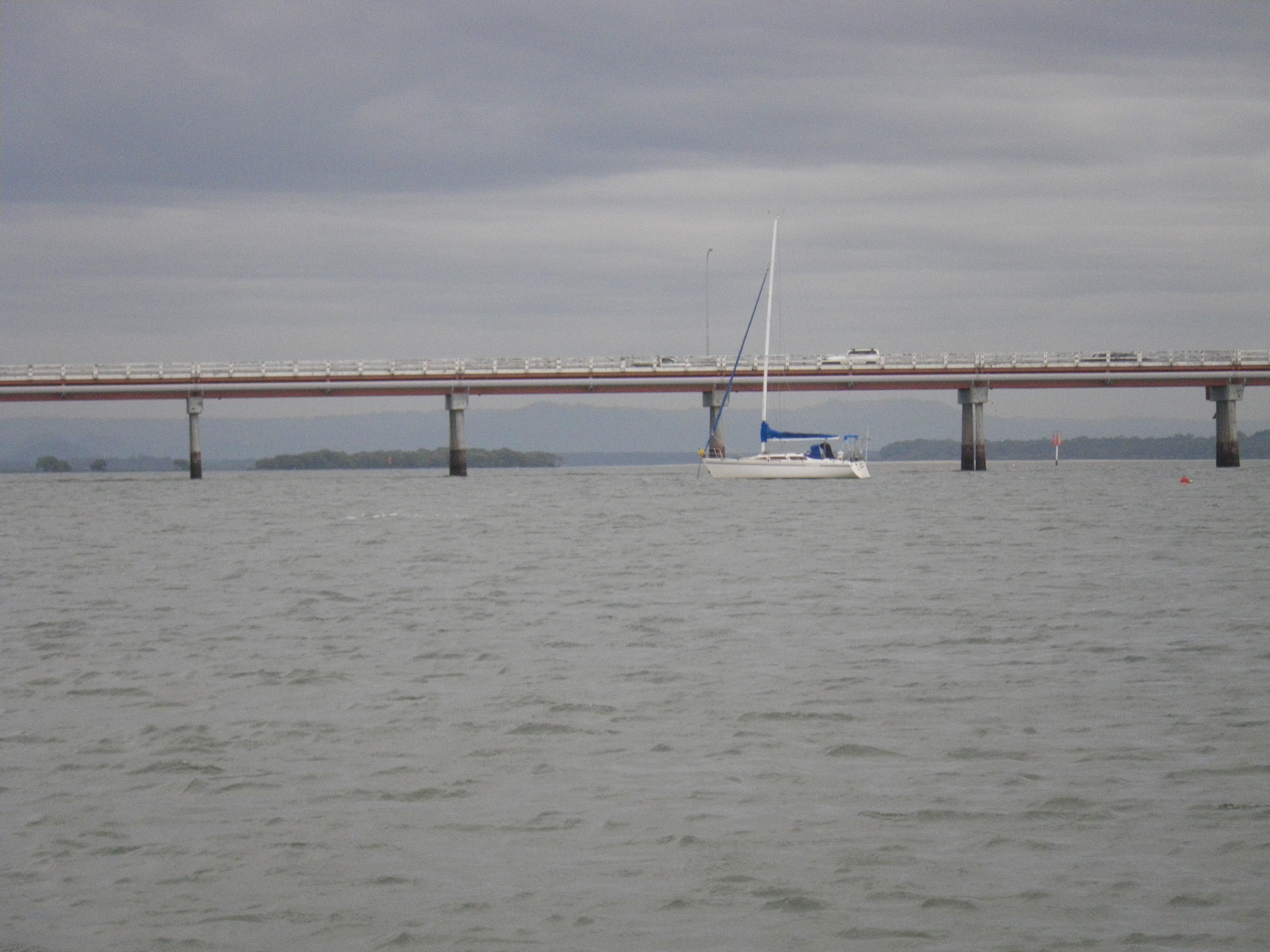
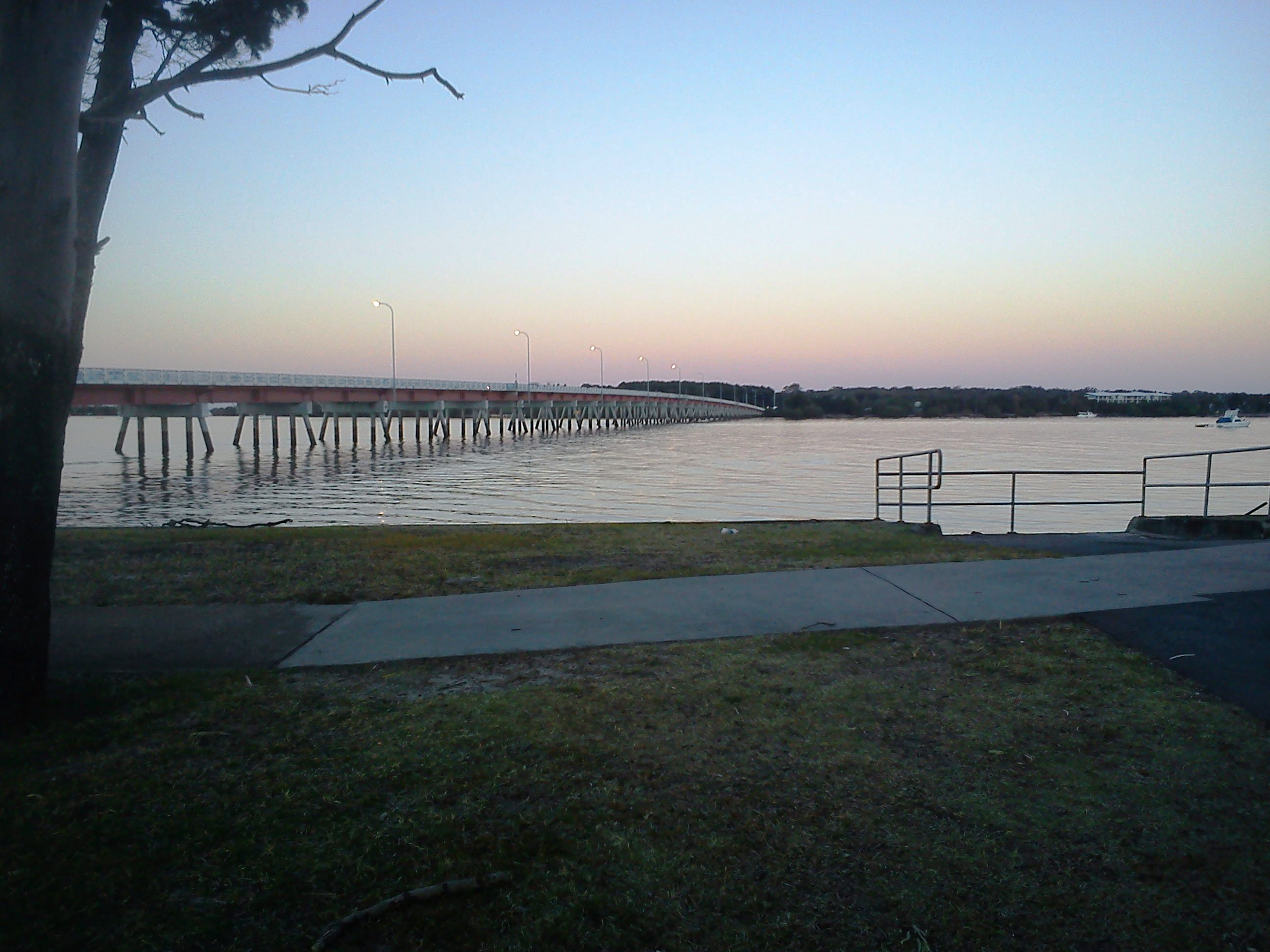
So, on Tuesday I decided to fish the mainland side of the Passage, by the old oyster jetty. Low tide was around 5.30 am and at 0.3m it was a reasonably low, low tide. It is always good to see the areas you fish on a low tide as all of the fish holding structures, such as; banks, drains, gutters and holes, are revealed. The difficulty is remembering where they are once the tide comes in.

It was a cold morning with an overcast sky, the wind was in the process of switching from a south westerly to a northerly and was forecast to drop to nothing midway through the morning. Conditions were calm and I waded through the mud and exposed weed beds until I reached the water’s edge.

I was using my light rod and reel – G.Loomis GL2 4-8lb Fast Action 6’6” Spin Rod and a Shimano Stella 2500FE reel, 6lb braid, 10lb fluorocarbon leader. This set up has almost become an extension of my arm and I reckon it is difficult to beat as a combination for light fishing. Still, if you are reading this Mr. Loomis, I would be happy to give any of you models a try – just pop them in the post.

It was hard work. The tide had passed low but the water was not really moving yet. There was a fair amount of algae weed floating around that kept clogging the jighead. I started with a big GULP Lime Tiger Jerkshad on a 1/8th 1/0 jighead bit after no hits for 45 minutes I decided to try something different.

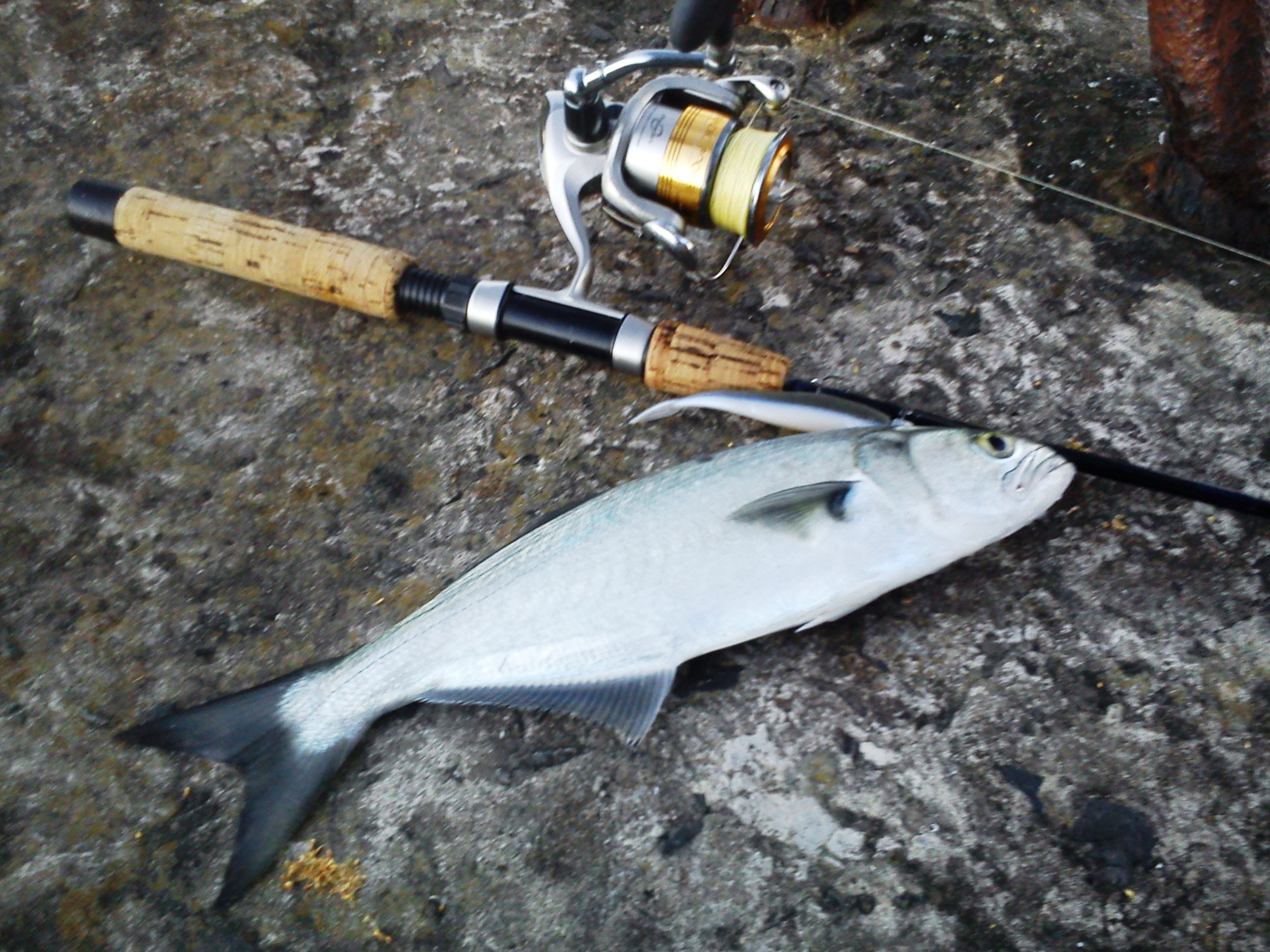
As you know I am a sucker for anything new in the Tackle Store and the GULP Swimmow caught my eye the other day. This is a welcome addition to the arsenal and GULP has been missing this profile. It is basically a Fry or Worm shape with a small thumping paddle tail. It is four inches long but unlike the various other shads on offer it is still fairly small and light. I picked up the Pumpkinseed, Peppered Prawn and Emerald Shine colours. I decided to try the Emerald Shine first. I watched the lure in the clear water and it has an excellent action. The paddle tail thumps furiously on the drop and whenever you jerk the lure through the water.

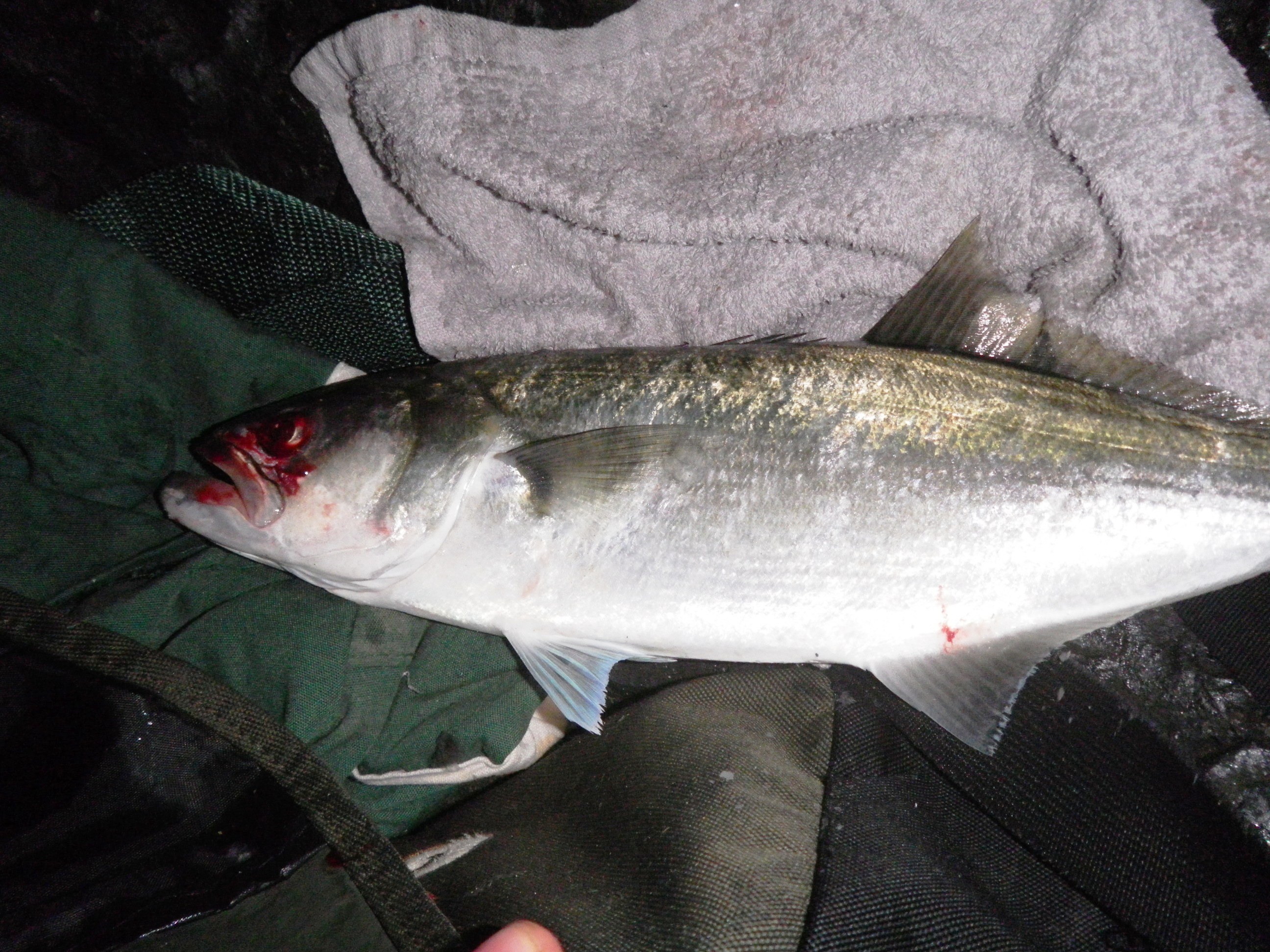
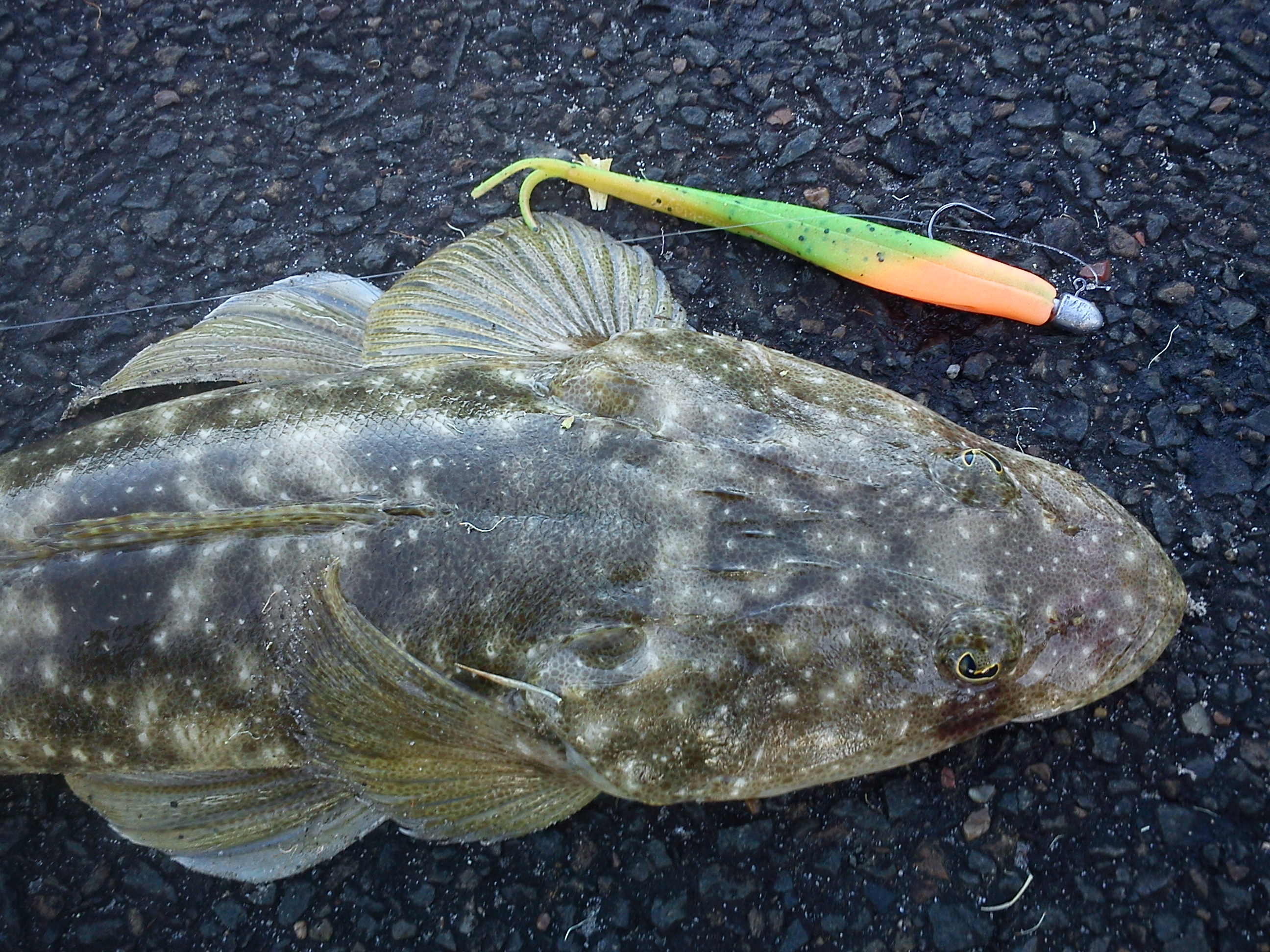
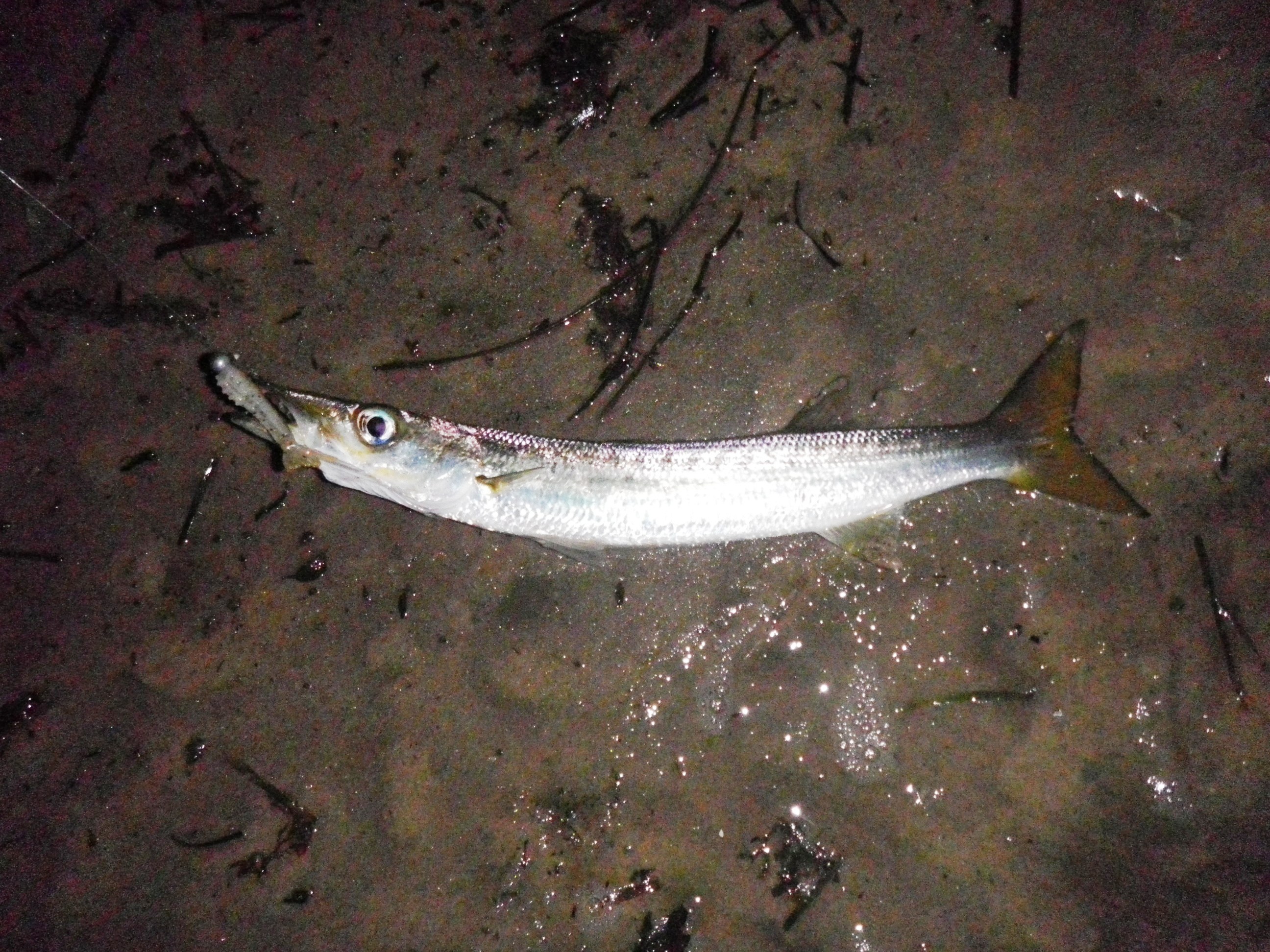
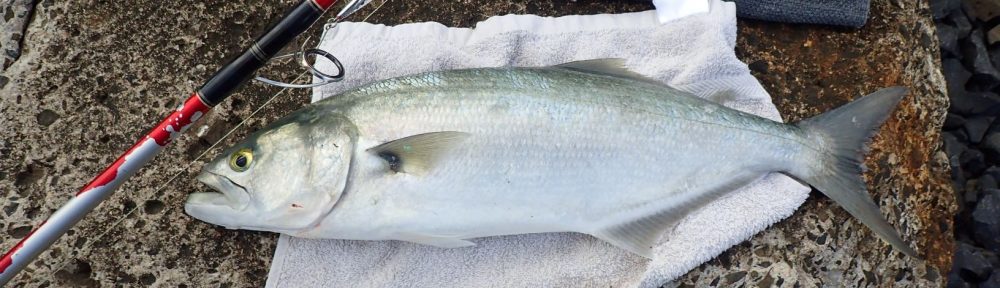
I moved further along the edge of the weed beds towards the green channel marker. About 10 cast after the lure change I felt the unmistakable thump of a Flathead bite just a few metres from my feet. I paused and then struck – I was on. After a few runs I had a dark, speckled, weed dwelling Flathead on the mud flats. Quite a colour contrast to those I had been catching the week before. It was 48cm long. A few casts later I caught another – just under 40 cm. I made it to the channel marker then turned back. The tide was coming in and it soon forced me back from the edge of the weed beds. I felt a few rapid bites and almost hooked something – Bream , Pike – not sure.

I had one good fish but needed at least one more to feed my mob. I decided to try White Patch and drove up there. The water was up to the tree line when I arrived, so I decided to concentrate on a few of the rocky/ sandy drain areas about 10 metres out. I could not cast over the edge of the drop off as it was now too far out. I was still fishing with the GULP Swimmow and the Pike were the first takers – I caught three in quick succession.

I moved along in the shallows, walking south and casting in front of me. It was now just after 11.00am. After about 30 minutes, a fish hit the plastic on the drop and took off. It was hooked straight away and after a few solid runs, I had it in the keeper bag. It was another Flathead, just under 50cm. I spread casts over the whole area and after another ten minutes I had another good bite and though the fish was hooked, but it got off.

Just after noon, with six hours of fishing under my belt, but only two fish in the bag – I gave up.

Bribie Island – Under the Bridge – 26 June 2012

Tuesday

The wind was forecast to start blowing but not until about lunchtime. There was also rain forecast, but unlike the summer downpours, the steady drizzle does not really put the fish off. In fact, I think it can work in you favour, by breaking up the surface of the water and disguising your approach.

You will all be relieved to find out that the tax return is finally done – much more painful than having a tooth pulled and far more expensive!

So I wrapped up warm and set out early. I arrived at Bribie at about 5.30 am and decided to start fishing on the island side, under the bridge lights. There are some good weed covered sandbanks forming just north of the bridge and also a couple of holes, just to the south. This area gets fished a lot and it is also a favourite spot to cast a net for some live-bait. You therefore need to get here early to stand a chance of finding it undisturbed. The fish renew with each tide so a run out tide around dawn is a good time to fish here. Low tide would be at 8.00 am so this morning looked good.

I started fishing with the GULP 4” Minnow soft plastic in the Smelt colour on a 1/8th 1/0 jighead with 12lb fluorocarbon leader, tied on to 8lb braid. Unusually there was not much surface action. There was plenty of bait in the water but the Pike did not seem to be present. I cast around to the north of the bridge for about 20 minutes with no luck, so moved to the south side.

One just before dawn

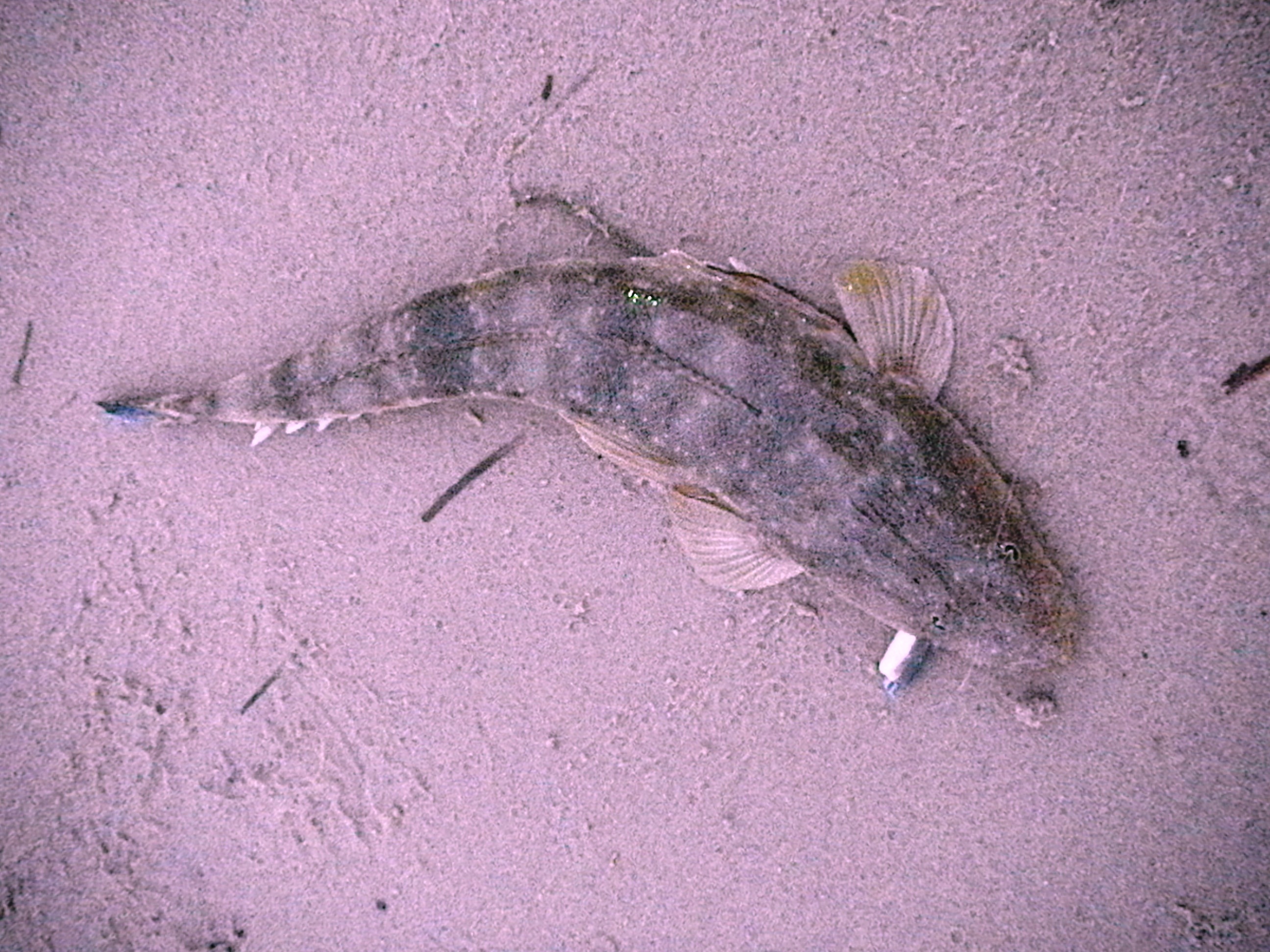
Just on first light I felt a good hit as I pulled the soft plastic cover a weed bed. I dropped the rod tip, paused and counted to 10. I count to 10 pretty fast on the first fish of the day. I lifted the rod tip and set the hook. After a brief fight, I had the first fish of the day up on the sand – a nice Flathead about 50cm long. I released it – the family are in revolt, demanding red meat for a few days. I cast back in the same spot. My lure was hit again, as it sank but this time I was too quick and failed to pause, I struck to soon and did not hook the fish – just pulled the soft plastic out of its mouth.

Just after dawn

There were a few smaller Flathead today

I tried but I could not persuade that fish to try again, so I moved to the north of the bridge. It was getting lighter now and raining, but not heavily. I waded along the edge of the weed bank, casting back, up into the tide, which was still running out. I soon found another Flathead – this one was about 35cm – I let it go and moved on.

I paused in front of the rocky patch, beside the boat hire place and concentrated on this area for a while. This paid off and after a few casts, I caught another 50+cm Flathead. As the tide slowed, things went quiet so I drove back across the bridge and waded out to the flats beside the old oyster jetty.

A pretty dismal morning weather wise

I spent another hour wading in this area with the same soft plastic lure. I caught 4 more Flathead, of which two would have been big enough to keep, at about the 50 cm size. It was now about 8.45 am and the rain started to get serious. It was now too cold and wet for me so I gave up.

Another Bribie Flathead

Unfortunately, it is rubbish weather for the school holidays. But this means there are less boats about and the fish are out there – if you can stay warm and dry long enough to find them.

Perfectly hooked

Bribie Island – The oyster jetty to the channel marker – 23 June 2012

Saturday

Now there are a whole host of reasons why it would be inappropriate to do your tax return at the weekend – so it will just have to wait until Monday.

The weather looked like it might be on the turn and you have to fish when you can. It was not quite so cold on Saturday morning but the wind was forecast to pick up. I drove back up to Bribie Island and arrived on the mainland side of the bridge at around 6.00 am.

It was still dark and the tide was out. I had a few casts by the bridge but could not raise a bite. I walked along the water line until I had passed the old oyster jetty. Low tide had passed just before six. Here at the edge of the Passage, the water was still slowly running out over the exposed seagrass beds.
I was back to the soft plastics and started with a GULP Jerkshad in the Lime Tiger colour on a 1/8th 1/0 jighead. I cast out and slowly retrieved the soft plastic along the bottom with plenty of pauses. I felt a few small bites and lost a bit of the tail on the soft plastic – probably the Pike.

I moved a bit further south, casting along the edge of the weed beds. The sun was trying to get over the horizon but the scattered low cloud ensured a gloomy, cold start to the day. As it gradually got lighter, I could see where I wanted to cast and not long afterwards I had my first fish on the line. I dragged it up to the sand – it was a Flathead just under 50cm long.

I carried on casting in the same area and had a couple of solid bites and then hooked another Flathead who spat the lure just a few feet from me. I carried on south and swapped to the GULP 4” Minnow in the Pearl Watermelon colour. About ten metres further south, I found another Flathead but it was only just 40 cm, so I put it back. On the next cast – in exactly the same spot, I was rewarded with a bigger one, about 45cm so I kept that one.

The fish in the fridge has all been consumed so I needed to re-stock. I think the 45cm to 55cm fish really taste the best. At this size, you get reasonable size fillets and the flesh is still very tender. Flathead is definitely a favorite in our house – which is fortunate!

I kept moving in the direction of the channel marker and over the next hour, I caught 5 more Flathead – only two of which were too small. With my bag full it was now time to experiment.

I tried a small popper – with no luck. I switched to a regular ¼ oz blade lure and this caught a Pike. Then I tied on the DUO Tetraworks Bivi again. Predictably the Pike got stuck in and I caught three or four. I then slowed the retrieve down and shortened the lure hops. I kept pulling up weed but I persisted. I felt a bit of resistance and then the line started peeling – this was a big fish and it was heading for the main channel. But it was moving very slowly and something did not feel right. I tightened the drag and it started to come towards me. After about three or four minutes I saw a great flap come out of the water and realized it was just a big stingray. Eventually the lure pulled free and of it went.

I now turned back towards the bridge. On the way to the car I kept casting the small DUO Bivi. Just short of the jetty I felt a solid bite and saw a Flathead come to the surface, angrily trying to spit the lure out. It may have succeeded because the line went slack for a moment but then came up tight again. I set the hooks hard and let the fish have some line. It was not too big but there was plenty of structure nearby, so I dragged it back towards the muddy shore and away from the rocky patches. I pulled it up on a sandy patch. The DUO Tetraworks Bivi had finally managed to catch a Flathead. I had my five so I removed the trebles (with my pliers) and sent it on its way.

The keeper bag was heavy and I needed a hot drink so at about 8.45 am, I gave up and headed for the car. It had been another good land-based fishing session.

Brooms Head – The Sandon River – 27 March 2012

Tuesday

On Tuesday afternoon the wind and swell were up again, at Iluka, so I decided to drive down to fish the lunchtime high tide on the north side of the Sandon River – near Brooms Head. This is a very shallow estuary but it is sheltered from the wind and can produce some good fish.

I parked on the roadside, just past the first set of shacks, but before you reach the main camp ground. I arrived at about 12.30 pm, just after high tide. I put on my waders and picked out my light spin rod, the 6’6” Loomis GL2 which I am now fishing with Shimano Stella 2500. This is the perfect light weight estuary combo for flicking soft plastics and small hard-bodied lures.

Along the shore line there is lots of structure left over from the now abandoned oyster leases. There are also plenty of weed beds and sandbanks. It’s a perfect spot for wading around and flicking soft plastics.

I started with a GULP 3” Minnow in the Smelt colour. I loaded it on a 1/8th 1/0 jighead, I was not expecting any really big fish so I dropped right down to an 8lb fluorocarbon leader. There are a few oyster covered rocks around but generally it is a sandy bottom.

The tide was just beginning to run out so I cast up river and let the lure sink to the bottom. Then I slowly bumped it back towards me. I gradually moved along parallel with the shore repeating this process. I was wading in a about a metre of water and casting out into no more than two metres.

I soon had a fish – a tiny 25cm Flathead – I released it and carried on. I caught three more over the next twenty minutes – all about the same size. Then, as I reached a patch of slightly deeper water, something hit hard and took off for the middle of the channel. I tightened the drag a little – it was way too fast for a Flathead, and too powerful for a Bream. I tightened up the drag a little more and started to get some line back, but it was still pulling hard. After a couple of minutes, I could see stripes and silver and realized it was a small Trevally. I got it up on the shore, photographed and released it.

I moved further along the shore towards the river mouth. The tide was now running out strongly and the sky was ominously grey. Now I switched to the GULP 3” Minnow in the Banana Prawn colour. A few casts with this lure and I finally caught a Flathead that was just about legal size. I decided to let it go and moved on. The next fish was a small Bream and then another Flathead that might also just have been legal.

Buy now the grey skies were on top of me and the rain started spitting so I beat a hasty retreat to the car as the downpour started.

Tweed Rockwall – Tailor – 4 August 2011

Thursday

On Thursday morning conditions looked perfect – light north-westerly breeze, low tide just before dawn, not much swell and not much moon. I went to bed early but sleep was elusive, the big Snapper encounter of Tuesday morning was playing on my mind. By 3.00 am I gave up on sleeping any longer and decided to go back down to the Tweed River north rockwall. By 4.30 am I was walking along the rockwall under a fantastic night sky. There were a few clouds but no moon so the stars formed and impressive canopy.

I stopped at couple of points along the wall, on the ocean side and put in a few casts. I find fishing these locations on a moonless night pretty difficult. You cannot see where you cast lands or keep track of how fast / slow you are retrieving line. You have to estimate when to ‘jump’ the plastic over the rocks at the end of the retrieve. I caught the line in the rocks a few times, snapped it off and re-rigged. It was now about 5.30 am and I had not had a touch from a fish.

I was fishing with a GULP 5” Jerkshad in the Lime Tiger colour rigged on a 3/8th oz 2/0 jighead. I had about 2 metres of 30lb fluorocarbon leader tied onto 40lb braided main line. This set up will work well with both a heavily weighted soft plastic lure and a metal slug or popper, so it is great for fishing the rock walls.

I moved on to the end of the wall as the horizon began to glow. The first few casts produced nothing. There was no surface action – things did not look good. The hour around dawn is always the most productive for me, in this location – if nothing happens in the first few casts, it is often the same for the rest of the session. I cast all around the end of the rock wall, I changed the plastic from a bright colour to a dark silhouette, from a Jerkshad to a Paddletail, and tried heavier and lighter jigheads – still nothing.

Finally at around 6.00 am, just before the sun came over the horizon, I felt a couple of touches. I was now fishing with the trusted GULP 4” Minnow soft plastic in the Pearl Watermelon colour. I was casting into the river mouth and letting the last of the run out tide sweep the soft plastic around the end of the rock wall. I got another solid hit, then another and I struck. It was a Tailor – just over 35cm – nothing spectacular but at least I had a fish. I confidently let it go – hoping for something bigger. A fish also hit the next cast but there was no hook up – just a solid bite mark through the plastic.

A 35cm Tweed rockwall Tailor


Despite numerous further casts, that was it. I fished on for another hour or so, but there was no further action and needless to say, the Snapper did not reappear. Finally around 8.00 am I gave up. If fishing was easy it would be no fun – but right now, I am struggling with just how hard it can be!

Bribie Island – Buckley’s Hole – A couple of Flathead – 1 Aug 2011

Monday

I only had time for a late morning fishing session today, so I drove up to Bribie Island for a couple of hours this morning, from the 10.00am high tide through to around noon. The wind had dropped significantly, since yesterday. There was still plenty of weed floating around but the water was a little clearer.

I caught a couple of Flathead that were just about 40 cm long. I got the first under the bridge, on the island side, using a GULP 4” Minnow in the Pearl Watermelon colour and the second down on the sand flats, in front of Buckley’s Hole, on a GULP 3” Minnow in the Lime Tiger colour. I was fishing with a 1/6th 1 jighead. Hopefully the calmer weather and smaller tides will mean that the weed will start to settle down for the next week or so.

This slideshow requires JavaScript.

Bribie Island – Buckley’s Hole – Tailor, Flathead, Bream – 24 July 2011

Unfortunately paid employment has limited my fishing opportunities of late. The weather has also made things tricky with some windy mornings. Sunday was not ideal but I had to get my fix. I arrived at Bribie Island about 5.45 am and conditions were better than I expected. The tide was running out and would be low at around 9.00 am. The wind was from the south at less than 10 knots, but it was building.

Bribie Island Bridge - just before dawn


I started under the bridge on the island side. After a few casts I could see there was a lot less of the clinging ‘snot’ weed floating around. There was no surface action under the bridge lights. I decided to cast a soft plastic around just to the north of the bridge. After five or six casts with a GULP 4″ Minnow in the Pearl Watermelon colour, I felt a couple of bites. Next cast and the rod tip went mad. It was a Tailor just under 30cm. I caught a few more around the same size and then decided to move down to the mouth of the tidal lagoon, in front of Buckley’s Hole.

A 30cm Tailor - under the Bribie Bridge

I waded out just to the south of the new Bribie Island Seaside Museum. Looks very flash – but I would have preferred to see my tax dollar spent on something a little more essential! Like more gutting tables, hot showers and massages for tired fisherman, etc.

There is a small drain here, just to the south of the main island jetty, and on a run-out tide there are often fish around. After a few casts I had a Tailor – about the same size as the previous ones. I had switched to a GULP 5″ Jerkshad in the Lime Tiger colour. I let it go and carried on casting over the coffee rock drop off, that forms the edge of the Pumicestone Passage. I have not caught a Pike for a few weeks – I can only assume the marauding Tailor have either eaten them or scared them off.

Flathead love the Lime Tiger colour

A few casts later a fish grabbed the plastic, just on the top of the ledge. It was slower and heavier than the Tailor, as I dragged it back to the sand I could see it was a Flathead. It was around 45cm – things were looking up.

I started to head south, casting out of over the ledge and gradually skipping my soft plastic in close to the edge. There were small ‘hardy heads’ all along the drop off and every now and then they would scatter as something smashed into them from below. I switched to a 3″ Minnow in the Lime Tiger colour. After a couple of casts, a fish grabbed it and tried to hide down under the ledge. I gave it a bit of line then tightened the drag and pulled it up and over. It was a decent Bream around 30 cm long. A few more casts produced another fish, about the same size.

A 30cm Bribie Island Bream


I carried on moving up and down the ledge for another hour. A couple of times I was bitten off by what I assume were Tailor, but I did not land any more fish. I was fishing with 10lb leader which is no match for their teeth, but necessary to tempt the Bream. Overall, it had been a better session than last week.

Bribie Island – Buckley’s Hole – Stonefish Encounter – 5 May 2011

Thursday

The weather forecast looked windy but not until about 8.00 am, so I set out early to fish on Bribie Island. I crossed over the bridge around 4.30 am and decided to fish around the base of pylons on the island side. I met another keen fisherman there, flicking soft plastics. It’s always nice to know that there is someone just as mad as me out there!

The bridge lights had attracted the prawns, and they had attracted the Pike and a few small chopper Tailor. We cast either side of the bridge for about 45 minutes. I hooked up with a few Pike, but could not find anything bigger. The other fisherman had found a couple of Flathead earlier and then been busted off.

The Pike are back with the cooler weather

At first light I moved down to fish the drop off in front of Buckley’s Hole. The wind was starting to pick up and it had stirred up the water. The tide was running in. I waded south, in about waist deep water and cast around in the area just before the coffee rock forms a ledge at the main channel. I was using the GULP 3” Crazy Legs Grub on a 1/6th 1/0 hook. After ten minutes or so I hooked up with a Flathead that was just under 50cm. I released it and cast back in the same area. I hooked another fish immediately, but then somehow it wriggled off the lure.

50cm Flathead

I moved further south, parallel with the shore. Then disaster struck. I felt a sharp needle under my wader boot and instinctively hopped away. Something had pierced the gumboot sole and gone into the sole of my foot. I thought things through and concluded it was probably a Stonefish. It did not hurt initially but after about ten minutes all that changed and it really went off! I limped back to the car and fortunately for me, the ambulance station was only a few hundred yards away. It was around 6.30 am, so I rang on the bell. A paramedic sat me down and had a look at the puncture mark. She then put my foot in a bowl of hot water. The relief was pretty much instant. Apparently the heat neutralises the toxin. After 15 minutes the pain was far more manageable and I hobbled off to the car and drove home. A few hours later the pain was just a tingle.

I was lucky. I was wearing my Horne waders which have a very thick soled, Blundstone boot. This meant that only one spike actually got to my foot. I was also able to find a qualified paramedic only a few hundred yards away. The paramedic explained that without the boots on it would have been very messy! If you are ever fishing in that area, I would certainly advise protecting your feet with some form of shoe and being very careful where you tread. I will certainly be a little more cautious in future.

Bribie Island – Sandstone Point – Monster Flathead – 2 May 2011

Monday – Labour Day

10 to 12 knot winds forecast and even though there would be a big swell offshore, the estuaries would be good for fishing. Back up to Bribie, to the Sandstone Point flats where I have been getting some good Flathead.

At about 5.00 am I waded out under the bridge – on the mainland side, to cast around under the lights. The tide was running in, so I was casting from the north side of the bridge, under the bridge, into the shadows and hopping my lure across the bottom, along with the current, back towards me. Theoretically, the Flathead will be lying facing the current flow, waiting for their prey to be washed towards them. After a couple of casts with the GULP 4” Pearl Watermelon soft plastic, I had a fish. This area can be tricky, as there are loads of prominent rocks to trip over and lose the fish on. Unfortunately just as I got a look at a decent 50cm + Flathead, it lunged down behind one, bumped the jighead out of its mouth and slowly swam away.

As the horizon started to glow I walked south and then around the corner onto the Sandstone Point flats. On my way, I caught a small Flathead in the weed beds, about 20 metres from the shore. It was only just 40cm long, so I released it.

I moved past the jetty to the point where the shoreline turns right, casting as I went. I waded over the big sandbar that runs roughly north to south; onto the area I call the Sandstone Point flats. This area is very rocky initially and then softens to sandy weed beds with some central channels and drains. It holds plenty of fish, especially at the top of the tide. The Flathead lie between the rubble and the weed beds waiting to pounce, while the Bream cruise over the top.

I was still fishing with the same soft plastic, but as the water was less than a metre deep, I was only using a 1/8th 1/0 jighead. The tide was still running in and this meant I was casting directly in front of me, as I waded across the flats. Because I had missed a fish on the rocks earlier, I had switched up from a 10lb to a 16lb leader. I was retrieving the lure fairly quickly with very short pauses to avoid getting snagged. I felt a bit of resistance and thought I was snagged. I jerked the jighead up and what felt like a rock, rolled towards me a little and then felt like it was free. I wound in my line and as I was about to lift the plastic from the water, the line went tight again and the ‘rock’, which I now realise was a fish, swam straight past me. Line started peeling at a steady pace and then, as the fish realised it had eaten something sharp, it took off on a powerful initial run, with the current.

My Loomis GL2 6’6 Light spin rod is very sensitive and amazingly flexible but it is not designed for power. If you get a big fish on, patience is the key. I let it run. Then I recovered some line and let it run again. It was obviously nicely hooked, but at the beginning of each run, it would put in a series of angry headshakes. I realised now it was a very big Flathead. I identified a break in the Mangroves and started to steer the fish in that direction. It must have made five or six long, determined runs for freedom and after each one, I had tightened the drag slightly, with little effect. Even 16lb leader will not last forever and the longer the fight goes on, the more likely the fish is to find a conveniently placed rock or snag. I tightened the drag and got the fish into the slacker water close to the shore. There was another short run but it was tired now and had no current to help it. With one long last heave I pulled it up onto the sand. The leader snapped as soon as its weight hit the sand but it was clear of the water.

This slideshow requires JavaScript.

It was a monster female Flathead – well over 75cm. I measured it as best I could with my tape, took a few pictures and released it. I am settling on 75cm for the length, which makes it this year’s ‘personal best ‘Flathead for me.
Ironically, I still had no fish to eat, so I waded on. I caught a few undersize bream cruising over the weed and then in a small sandy depression, I finally picked up a 42cm Flathead. It was a good end to a great mornings fishing.

Bribie Island – Sandstone Point Flats – 1 May 2011

Sunday

After a week of wind I was keen for some fishing this morning. I decided on Bribie Island, as the forecast wind and swell were not great and it offers a few sheltered spots. I drove up from Brisbane and arrived at about 5.00 am. I would be fishing the last few hours of the run in tide and the first few hours of the run out. With all the recent wind and rain, the water was predictably dirty and as high tide approached, there was plenty of weed floating around.

I started in the dark, next to the old oyster farm jetty on the mainland side of the Bribie Bridge. The area under the bridge was being flogged by the cast netters who had a few crab pots out on long ropes. There were already a couple of boats anchored in by the bridge pylons so I decided to wade south towards Sandstone Point.

I have been experimenting with which plastics to fish in the dark and pre-dawn. My latest theory is that the high contrast plastics with a solid silhouette seem to work better than the lighter/ white glow colours. I decided to put it to the test this morning. I started about 5.30am by fishing with a GULP 2” Shrimp soft plastic lure in the Midnight Tiger colour. This is a predominantly black colour with a flash of orange on its underside. It has been a great Bream lure for me at night. I rigged it on a 1/8th 1 hook jighead, as the tide was not running very fast. I was fishing with a 10lb fluorocarbon leader and my light spin rod.

This slideshow requires JavaScript.

Just before six, it was still pretty dark and I was wading south, parallel with the shoreline, about 10 metres out. I cast into a spot about 3 metres out from the Mangrove roots, where the water was around 30cm deep. As the lure hit the water, there was a great splash and line started peeling. The water was shallow and the fish started shaking its head immediately and splashing about. I let get into some deeper water and calm down and then gradually walked it back to a gap in the mangroves and pulled it up onto the beach. It was a good size Flathead at 58cm. I released it and moved back to the same spot to try for more. I could not get another bite so I moved on.

I worked the flats around the corner, towards Sandstone Point. At the top of the tide the water was very dirty close into the Mangroves and the cleaner water was just out of reach of my wading capability. I waded along the edge of the shoreline casting out onto the flats and slowly retrieving my soft plastic. As the tide started to run out at about 8.30 am I got a couple of hits from some Pike and then a few casts later, a solid hook up. I pulled the fish back to the shore and it was another good size Flathead at 54cm. I released it, as well and headed back to the car.

The fish were not thick and there was not much bait around so I was happy with two good fish from my session. Conditions look like they will improve as the week goes on.

Bribie Island – Large Easter Sunday Flathead – 24 April 2011

Easter Sunday

I had a big Easter BBQ planned for Monday. Four Good Friday Flathead was a good start but I would need a bit more fish to make sure my guests didn’t go hungry. That was my excuse for getting out on Easter Sunday!

I arrived at the Bribie Island Bridge at 5.00am and parked on the bank, on the mainland side. I put on my waders and had a few casts around the rocks under the bridge. I caught a small Moses Perch and released it.

Just as it started to get light I moved off to the south. There was lots of surface feeding going on and the tide was running out strongly. Low tide was at around 8.00am. I waded past the oyster jetty with no more bites and then started to fish the drain that runs round from Sandstone Point. I fished all along it without a touch. I moved out to a point where the water was waist deep and started to move north, back towards the bridge.

I was fishing with a new favourite, the GULP 3” Smelt Crazylegs Grub soft plastic. It is a short version of the Crazylegs Jerkshad that has proved so useful. I had it rigged on a 1/6thoz 1/0 jighead. I was using my light spin rod and a 12lb fluorocarbon leader.

I got a couple of solid bites but could not keep the fish on. Then as I moved towards the oyster jetty a fish grabbed the plastic about a metre away from me. I struck with rod and stepped back. It was a good fish but it did not do much, initially. I decided to walk it back to the shore. I loosened the drag a little, as I did not want a bust off. I started to tow it towards the bank and about half way there it really woke up and made a few powerful runs. As I dragged it up onto the muddy shore the leader snapped, but it was clear of the water.

It was a healthy female Flathead, just under 70cm long. I fished around this area for another hour and caught and released several Flathead that were around the legal size limit of 40cm. At about 8.30 I gave up. It had been great morning land-based fishing in the Pumicestone Passage.

70cm Flathead

Bribie Island – Jew and Flathead – Good Friday – 22 April 2011

Good Friday

I am back in Brisbane for Easter and so I decided to drive up to Bribie to fish, wading the flats, early on Good Friday. I arrived by the bridge on the mainland side, at around 4.45am and low tide would be at about 7.00 am, so there was not much water under the bridge lights.

I cast around in that area using the GULP 4” Pearl Watermelon Minnow on a 1/6th 1/0 jighead. There was plenty of surface action with Long Toms and a few Pike cruising around. After wading around for a while I felt a light tug and paused. When I raised the rod tip and set the hook – I had a fish. I assumed it was a Flathead but as I saw a flash of silver I realised it was a Jewfish/ Mulloway at 40cm. I took a picture and released it. These are the one species that really love dirty water and after all the recent rain, conditions are currently perfect for them. I could not find any more and so as first light started to glow above the horizon, I waded south.

I passed under the Oyster Jetty and fished the weed beds, rocky bumps and dips, just to the south. I stuck with the same soft plastic and soon found a few Flathead. I caught 6 in this area in the next couple of hours, of which four were between 42 and 56cm. I kept these for the Easter BBQ and the rest went back. Things seemed to slow down with the turning of the tide and just after 8.00 am, I went home.

Brisbane River – Pinkenba Rockwall – More Trevally – 7 April 2011

This slideshow requires JavaScript.

Thursday

Everywhere I looked the wind was blowing 20 knots – add a few showers and things did not look promising. I decided that the Brisbane River was the best option so I drove down to Pinkenba around 9.30 am and walked along the rock wall.

The tide was running in and the water was still very cloudy – I am not sure if it is the wind, the recent rain or left over silt from the floods. I was still using my light spin rod – the Loomis GL2 – but I had upgraded my leader to 14lb. I tied on a 1/6th 1/0 jighead and loaded it with a GULP Crazylegs Jerkshad in the Pink Shine colour.

I was hoping for a few more Trevally and it was not long before I ran into them. I was walking along the shore towards the river mouth, putting out fairly short casts, straight from the bank. I had started beside the cement plant and walked about 500 metres without any bites. Just before I crossed the oil pipeline, the lure was snatched right at the bank and the fish took off. It was a nice junior Trevally and I soon had it under control. I put it back and moved on.

The first Trevally of the day - close to the pipeline

After another half an hour or so, the wind got really gusty and a rain squall came over. I sheltered under some trees and switched to a small GULP 2” Shrimp soft plastic in the Pepper Prawn colour. I cast it out under the tree branches and just as I got it back to the bank, I felt a few tugs and then I was losing line at a blistering pace. I bumbled through the tree branches following the fish along the bank. I tightened the drag but initially, it did not make much difference. It kept pulling line but eventually I got some back and after a few more runs I grabbed the leader and pulled a good size Trevally up the rocks. It would have been around the 45cm mark. I put it back and carried on towards the river mouth looking for more.

Second Trevally - around 45cm


The tide was now running out strongly and the wind was probably blowing well over twenty knots. It was a challenge to cast. I reached a spot where water was running over the rockwall and I cast around on either side. I switched back to the GULP Crazylegs Jerkshad in the Pink Shine colour and after a couple of casts; it was snaffled at my feet. It was another blistering initial run. I made a mental note that the GL2 light spin rod is not the right rod for these fish, and hung on. This was another good fish and I was very concerned it would rub me off on the oyster covered rocks. It took a while and I must have scrambled up and down about 10 metres of shoreline but eventually the fish surrendered and I grabbed the leader. I lifted it out of the water and the leader broke just as I did. Luckily it fell into a little depression in the rocks and I got a couple of pictures before I released it. It was another solid Trevally that measured approximately 50 cm.

The biggest Trevally of the day at 50cm


I walked until I could walk no further – because the rockwall was submerged and cast around on both sides. It was now about 1.15pm and the tide was running out, strongly. Again the lure was grabbed right next to the rocks on the river side of the wall. This fish was tough and it decided to cross over the partially submerged rockwall and try to escape on the other side. I watched as it swam in between the oyster covered rocks and somehow did not manage to bust me off. It was a smaller Trevally and I released it.

At around 1.30pm I got drenched in another rain squall and decided the make the long walk back to the car. It had been another great session fishing with soft plastics on the Brisbane River.

Brisbane River – Boggy Creek Shark – 29 March 2011

Tuesday

With the wind still blowing and rain threatening there were not many good options on Tuesday. I decided to go down to Boggy Creek on the Brisbane River again. I arrived about 7.15am and the tide had only just started to run out.

There was lots of surface action, close to the far bank, just under the foot bridge, so I focused on that area. I started with a 1/6th 1/0 jighead, rigged with a GULP 4” Minnow in the Pearl Watermelon colour. Once the tide starts to run, the water flows very fast under the bridge. The narrowing of the creek at the bridge footings creates a fast-moving channel that is reasonably deep in the middle. I have caught Bream, Flathead, Tailor, Estuary Cod and Jewfish in this spot. The fish seem to gather in the eddies, that form on either side, depending on which way the tide is running.

A predator was surging up into the bait schools or jelly prawns that were sitting in these eddies, but I could not tempt it with my soft plastic lure. I switched to a ¼ oz vibration blade in a silvery green colour. I covered the same area with casts but still did not get any bites.

I moved along the bank, towards the creek mouth and came across a dead shark. It must have been caught the night before. It seems a shame to leave a creature like this to die on the river side. My fishing philosophy is – if you are not going to eat it, photograph and release it.

This slideshow requires JavaScript.

I switched to a lighter jighead – 1/8th 1/0 and put on a GULP 2” Shrimp in the Peppered Prawn colour. I was now fishing in the slower water, up close to the Mangrove fringe. At an opening next to the abandoned timber log boat ramp, I felt a very faint bite. I cast back in the same spot and slowed the retrieve right down – counting to five in between each hop. After a few hops, I got a solid bite and I was on. It was no monster but it was a keeper flathead, at around 44 cm.

I moved on along the bank and watched the numerous mullet schools swim by. As the water cools I presume the Pike and Bream will get thicker and thicker and the bigger Flathead will start to follow them. The fishing should be excellent in the coming cooler months. After another 30 minutes I decided to give up at around 9.00 am.

Brisbane River – Boggy Creek – 28 March 2011

A trip away, a cold and car trouble have all conspired to keep me away from fishing for a few weeks. To those of you who have been checking in to see what is biting – I apologise.

I managed to sneek out yesterday morning for a quick fix. I only had a couple of hours, so I headed down to Boggy Creek. A small swampy tributary on the north side of the Brisbane River, only a few kms from where it opens into Moreton Bay. I parked up by the foot bridge that crosses the creek and leads to the oil refinery. I arrived around 10 am and the tide would be low around midday. I would be fishing the last few hours of the run out. This is not a great time to fish, as there is very little water – but beggars cant be choosers.

This slideshow requires JavaScript.

I have not fished in the River since the floods and I was delighted to see so much bait in the water. There were jelly prawns in close to the shore and lots of roving schools of small mullet. I decided to fish the soft plastic lures and went for a natural colour – a 2″ GULP Shrimp in the Peppered Prawn colour. I rigged it on a 1/6th 1/0 jighead. I was fishing a light spin rod with a 10lb Fluorocarbon leader. I moved along the bank, casting my lure into the middle of the main channel and bouncing it along the bottom with the run out tide, until it reached my feet.

I cast around on each side of the bridge and got a few bites but no hook ups. I moved east, in the direction of the creek mouth and switched to a lighter, 1/8th 1 jighead. I changed the plastic to a 2″ Minnow pattern, in the same colour. I was putting in a couple of casts at each break in the Mangroves when, at the third spot, a small bream grabbed it. I took a picture and let it go – my first fish for three weeks – a trifle small but very satisfying.

I carried on moving east, casting into the channel as the water got shallower and shallower. At the mouth of a drain, about 60 metres from the bridge, I felt a light thud. I paused, then lifted the rod tip. The line came up taught and there were a few head shakes. I had a 30cm Flathead.

At noon I gave up, just as the tide was starting to run in again. With the smell and noise of the refinery, this is not the prettiest environment to fish in. But after a three weeks off I was glad to get out there and see that there are plenty of fish around.

Bribie Island – Bridge, White Patch & Oyster Jetty – 8 March 2011

Tuesday

Up early and back to Bribie Island. I arrived at the mainland side of the bridge at around 4.00 am and started by casting soft plastics in amongst the pylons. The tide was in the last hour of running out and the rain showers overnight had again stirred things up. There is also a storm water drain under the bridge that empties out from time to time, further clouding the water.

I had rigged up a GULP 5” Jerkshad soft plastic in the Satay Chicken colour on a 1/8th 1/0 jighead. I was fishing with 10lb braid and a 12lb fluorocarbon leader, on my light spin combo – a Loomis GL2 rod with a Shimano Stradic 3000 reel.

I started just to the north of the bridge and got no bites for a while. I moved quietly, round to the north and cast into the area where the light and bridge shadows meet. Thud – a solid hit, I dropped the rod tip, paused and then struck. The fish took some line then settled into the current. I gradually eased it up on to the sandy area at the foot of the rocks. It was a nice, 46cm Flathead. I let it go, straightened the plastic on the jighead and peppered the area with more casts. It was about 4.20 am. A few retrieves later there was a smaller bite, in about the same spot and I caught another Flathead. This time it was just on 40 cm. I released it and moved all around the bridge area and down to the street light beside the boat hire outlet, but I could not find any more.

This slideshow requires JavaScript.

As dawn broke, I drove up to White Patch to look for some more fish. I walked down on to the beach and out towards the drop off, that runs all the way along the edge of the Pumicestone Passage. It was just after low tide and I waded along casting in all directions, out over the drop off and on top of it, in the shallow water. I did not get a bite on the soft plastic lures. I swapped to a 1/6thoz weight, Berkley Big Eye vibration blade, but this did not find any fish either. After an hour of wading up and down, I decided to change locations again.

I drove across the bridge to the Oyster Jetty and waded out beside it, on the south side. The tide was now running in solidly and the water was much cleaner than it had been up at White Patch. However, the wind was really getting up and there were some very nasty clouds on the horizon. I hooked a decent fish but was disappointed when it leapt out of the water – a huge Long Tom. I got rid of it and waded south for about 60 metres, casting in front of me, into the run in tide. I swapped to a GULP 4” Pearl Watermelon Minnow soft plastic and rigged it on a 1/8th 1 jighead. After a few casts in this area, the line came up taught and I had another fish. There was a bit of weight to it, so I decided to wade back the shoreline. It was a good size Flathead at 49cm.

I carried on for another 45 minutes but then a couple of monster rain squalls gave me a good soaking and the cooler southerly wind was really getting up. At about 9.45 am I headed home.

Bribie Island – Bridge & Sandstone Point – 3 March 2011

Thursday

Thursday was set to be another hot day with a possible thunderstorm. There would be a slight northerly wind in the Pumicestone Passage, which would freshen through the day. I decided to keep looking for Flathead, as these have been the only consistent fish for me, in recent weeks.

I started under the bridge on the Island side about 4.15 am. The tide was running in and there was about 30cm of water at the base of the rockwall by the shore, to the north of the bridge. There was not much surface action and I think the Pike prefer a little more depth, to feel safe. I cast out a GULP 2” Shrimp soft plastic in the Banana Prawn colour, on a 1/8th 1/0 jighead and bounced it along the bottom under the lights. Three casts later, after a pause on the bottom, the line came up tight. There were a few head shakes and a short run and then the fish was gone. A couple of casts later; same soft plastic, same place, maybe the same fish, I hooked up again. This time I got him to the rocks – a Flathead – around 45cm, but as I was lifting him in to the bag, he spiked me and slithered out of my grip to freedom.

Dawn by the Bribie Island bridge - the fish come to the lights

After 30 minutes more, prospecting both north and south of the bridge, I could not find any more fish so I decided to change location. Just as the sun was coming up, I drove round to Pebble Beach and walked along the beach to the far end, towards Sandstone Point. The water was fairly high but there were still a couple of hours before high tide. It was a beautiful, calm, still morning. The thunderstorms had passed over earlier and there were still a few flashes of lightning as they moved in land, but the sky was bright red.

A very calm morning

At the end of the beach, I walked out in front of the fringing Mangroves and cast out over the rubble and boulders that dot the ground. I was aiming for the sandy patches in between the rocks, where the Flathead often shelter. As I moved nearer to the corner I had a few encounters with the Long Toms, who kept grabbing and then dropping, the lure. When one finally did get hooked it started leaping and splashing and effectively shredded the 16lb Fluorocarbon leader I was using. I re- rigged and tied on a new leader and put on a GULP 4” Jigging Grub soft plastic in the Pepper Prawn colour, on a 1/8th 1/0 jighead. A few cast later as the lure bumped over the rocky bottom, a fish grabbed it and took off. It only made a small run and then settled in the current. I pulled it on to some rocks – a 48cm Flathead – I released it and carried on casting. A few casts later I had another on the same plastic, this time it was just over 50cm.

After working the corner thoroughly I move round it, heading north and on to the broad flats of Sandstone Point, which almost form a tidal lagoon. With another hour to go before a 2.3m high tide, I could still wade out to the middle of the area and cast back in towards the Mangrove roots along the shore. The Long Toms where patrolling and I had a couple of tussles with them. After 30 minutes, the water was getting too deep to stay in the middle so I turned and headed south, in closer. I switched to a GULP 2” Shrimp in the Pepper Prawn colour and put in long casts parallel with the shore. A fish grabbed the lure as it landed and this time it was a Flathead, I dragged it in under the Mangroves – it was around 40cm – and after a quick picture, I unhooked it and sent it on its way.

That was the last fish for the morning and even thought it was only 8.15 am, it was already blisteringly hot. I dumped the gear in the car and had a quick swim before heading home. Another good session, the water is still full of sediment on these big tides but there is plenty of bait around and so the fish will come.

This slideshow requires JavaScript.

Bribie Island – Sandstone Point Drain – 27 Feb 2011

Sunday

Up early, 3.30am and back to Bribie to see if the Flathead were still around. There was no real wind but officially the wind direction had turned to a northerly. When I arrived at about 4.20am the bridge resembled Scapa Flow submarine base during WW2. There were about ten lines in the water from the north side of the bridge and a couple of cast nets kept splashing over the side. There were also a couple of crab pots hanging off the bridge further along. It was good to see so many land based anglers out fishing but a stealthy approach in this area, was out of the question.

As I was rigging up I ran into a local fisherman who also patrols this area with lures and we waded out under the bridge together. The tide was still running in but as there had been a lot of disturbance on the north side of the bridge, we decided to fish the south side. There were lots of surface breaks and tiny jumping jelly prawns. We both hooked into some Pike – I was also bitten off, but I think it was only and aggressive Pike. They can really chomp as I had a 16lb fluorocarbon leader tied on.

After 30 mins of fishing, neither of us had a Flathead so I decided to move south and my friend headed off to Pebble Beach. I continued south, casting along the shore line in front of me. The surface bust ups continued, but died off as the sun came up. The tide was slowing now and about to turn. I walked south and round the corner towards Sandstone Point.

As the tide started to run out, I positioned myself in the mouth of a big sandy drain that is just on this corner. I took out a GULP 2” Shrimp in the Banana Prawn colour and rigged it on a 1/8th 1/0 jighead. I cast it into the run out tide and jigged it along the bottom of the drain with the current. A few jumps into my retrieve I felt the unmistakable ‘thud’ of a Flathead bite. I paused, counted to five, then struck – I was on. I pulled it clear of the Mangroves and walked it round the corner to a small bay where I pulled it up onto the sand. It was a 48cm Flathead and it was just after 6.10 am. I released it and went in search of more.

The Long Toms arrived and made a couple of impressive aerial lunges for the plastic, especially when I speeded up the retrieve. After half an hour or so of fishing with the same soft plastic lure, I swapped to a GULP 4” Jigging Grub in the Pepper Prawn colour. This is a fairly robust grub tail soft plastic. The tail vibrates nicely and when the water is not very clear I think this helps the fish find it. It worked this time as it was grabbed on the first cast. In fact, it had hardly hit the water when something ate it. It took a couple of turns of the reel to realise it was hooked and then it made a great tail splash and took a bit of line. Again I gradually walked it back to shore to unhook it. It was another Flathead, around 43cm long.

I photographed and released the fish and carried on for another hour without any luck. The water was very murky, as the big tide had stirred up the all the sediment again. I was pleased to see there were still fish around but I would like a bit of south-easterly wind to come back soon.

Bribie Island – Old Oyster Jetty – Flathead & Cod – 20 Feb 2011

This slideshow requires JavaScript.

Sunday

Back in Brisbane and it was time to go looking for some fish in the Pumicestone Passage at Bribie Island. Conditions looked pretty good for Sunday morning so I was wading out in the pre-dawn light, by the old oyster jetty, on the mainland side of the Bribie Bridge at around 4.45 am.

It was just after low tide and there was no real current flow. The water was very murky with plenty of sediment stirred up by the big tides of the full moon (which was the night before). I started with a 1/8th 1 hook jighead and a GULP 3” minnow soft plastic in the lime tiger colour.

There is plenty of debate about the use of bright coloured soft plastics for murky water. I am yet to be convinced that they work better than natural colours, in these conditions. I think darker, natural colours, which create a clear silhouette in the water, probably work better. I am also a convert to using bright colours in extremely clear water, although this is somewhat counter intuitive and has taken a while for me to accept. Today the lime tiger had produced nothing in the first twenty minutes and as this was the bite window around dawn, I switched to a more natural coloured pearl watermelon minnow in the 4” size.
I waded slowly south, parallel with the shoreline casting in between the patches of rocky reef that are exposed on a low, low tide in this area. I got a couple of bites from what felt like Bream, or perhaps Long Toms, but no hook ups. At about 6.00 am the tide started to flow in with a bit more power and the water began to clear slightly.

At a point about 50 metres to the south of the old oyster jetty, I felt a light thud as I jerked the soft plastic off the bottom. I waited and then struck, but there was no fish. I cast back in the same direction and in the same spot, another thud. I dropped the rod tip slowly and then struck and I got the fish. It was a very small Flathead, around 20cm long, but at least I was off the mark.

The tide was really moving now and it was covering the weed beds very quickly. I found a patch of weed in about one metre of water. I cast up current and let the plastic hop across the bottom. As it reached the weed patch – thud. I set the hook and realized this time I had a better sized fish. I walked it back to the shoreline – it was another Flathead – just over 40cm long. With plenty of fish in the fridge I decided to let this one go.

I waded back out to the same area and over the next hour or so caught three more similar sized Flathead and a 40cm Estuary Cod – all on the same 4” pearl water melon coloured soft plastic. The water had been quite clear for a while at the beginning of the run in tide but now it was full of stirred up sediment again. By 8.45 am it was already around 30 ° C so I stopped fishing and headed for the air con.

Bream & Flathead from the Clarence River – Browns Rocks – 12 Feb 2011

This slideshow requires JavaScript.

Saturday pm

I decided to have a fish in the Clarence River on Saturday afternoon. I had been concentrating on the rocks and beaches at Iluka, as the river water still looked very dark after the recent floods. I decided to try and fish the north bank of the river just to the east of the Norfolk Island dock, near Browns Rocks. You get to this spot by turning left off the Iluka road at Woombah. There is an area of weed beds and sand flats here. There is also an old oyster farm and a few drop offs into the main river channel.

I arrived about 4.30 pm. The tide was about half way out and it was hot and humid. There was a light northerly breeze and it was fairly cloudy. This area is best approached in a pair of waders. I pulled mine on and rigged up my light spin outfit for soft plastics. It is a 6ft Loomis GL2 spin rod matched with a Shimano Stradic 4000 reel. I had spooled it with 6lb (2.8kg) Fireline and tied on a 1.5m long 10lb fluorocarbon leader. I started fishing with a 1/6th 1/0 jighead, but almost immediately changed down in weight and size to a 1/8th 1 hook jighead when I realized there was not much current flow.

I waded out to the point just short of where the sand flats drop off into the main channel and then turned and waded up river, parallel with the river bank. I was therefore casting up, into the run out tide and bouncing my soft plastic over the bottom, along the edge of the weed banks, right along the drop off.

I was looking for Flathead and that was what I found, in almost plague proportions – I caught twenty in an hour and a half. I was using the GULP 2” Shrimp in the Banana Prawn colour and the 3” Minnow in the Lime Tiger and Pear Watermelon colours. They were all catching fish. The problem was size. The vast majority of Flathead were under 20cm long. There were few around the 30cm mark, but only three over 40cm. The best fish was just over 55cm.

There were also plenty of small Bream cruising above the weed beds. Initially, they definitely preferred to hit the Pearl Watermelon minnow but as it got later and darker, they got less fussy. I caught 9 in the session of which three were over 25cm – but I released them all.

Finally around 7.15pm I gave up and drove back to Iluka. It was a great session and shows that there are still plenty of fish in the Clarence River.