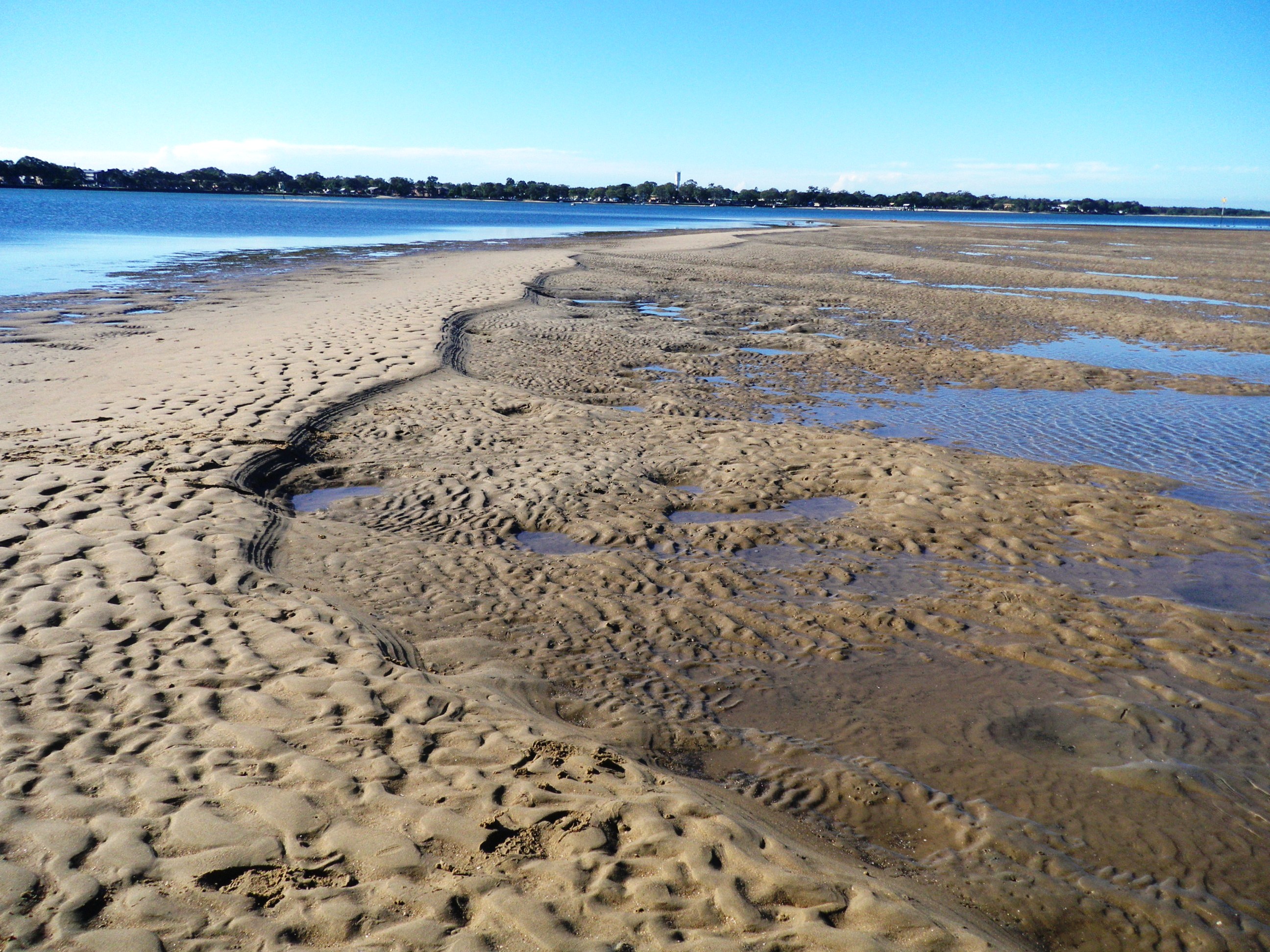
Iluka – Woody Head – The Barnacles – 12 February 2013

Tuesday

It rained hard over night and I actually woke up cold on Tuesday morning. I made a huge mug of tea and fished out a long sleeve t-shirt. It was just after 5.00 am. The wind had already moved round from the south-west to blow from the east, but it was still fairly light. Low tide had been at 4.13 am. The swell might have eased a little overnight so I decided to start on the rock platform, out front at Woody Head. I walked out to the ‘Barnacles’ in the pre-dawn and things looked promising. There was only the occasional wave coming over the top and I would have an hour or so to fish before the tide got too high. It looked like it would even be possible to put out a few casts in front of ‘Barnacle Bob’.

The day before I had noticed the 20lb Fireline had started to fray on the heavy rod and I had lost a fair amount of the 10lb Platil Millenium braid, on the light rod. The Platil braid was getting a bit water-logged and heavy and not casting well. I decided neither was working particularly well in these conditions, so I drove into Big River Bait and Tackle at Maclean and asked for some suggestions on re-spooling. They were all a bit fed up after the floods. The Clarence River was still black and smelly and logically the fish looked like they had all fled out to sea for a while. The Clarence is a huge system and it will be a couple of weeks before the river improves.

As usual, the team gave me some good advice and suggested I re-spool both with 20lb Super PE braid. This would be thin enough to cast well on the light rig, but robust enough to handle a decent fish on the heavy rig. Best of all, they stripped off the old line and re-spooled both reels while I went off for a Pot Belly Pie (a local speciality) and a coffee.

So back at Woody Head the next morning I was fishing with perfectly loaded reels. This makes a huge difference when casting in difficult conditions. Every line change takes a little getting used too but the Sunline Super PE was a massive improvement. I started with the heavy rod and a GULP Jerkshad in the Lime Tiger colour on a ¼ oz, 3/0 jighead. I moved out carefully over the rocks to a spot just in front of ‘Barnacle Bob’. This has been the scene of a couple of big fish captures for me and whenever it’s safe I try a few casts here. I put the lure exactly where I wanted it but after five or six casts I had not found anything. I swapped through a few more soft plastic colours, but these did not produce any interest.

I moved south along the front of rocks to a safer spot and swapped down to the lighter rod. I put on a 1/6th oz, 2/0 jighead and tied on a 12lb fluorocarbon leader. I decided to try a different soft plastic lure. I have never been a fan of the pure white lures, I have always assumed they are an offshore, deep water idea. But I had a packet of GULP jerkshads in white and I was not having much luck, so I decided to give them a try.

It was a wise choice; I cast out wide and let the lure waft in on the swell. I left it as long as I could and it got snagged. I re-rigged with the same set up. This time, right at the base of the rocks, I felt a bite, dropped the rod down and then struck. I had a fish. I let the swell wash it up. It was a nice Bream, well over 30 cm long.

I cast out again and felt another bite, but did not hook up. I carried on for a few more casts, using exactly the same technique. About five minutes later at 6.15 am I felt a gentle tug and then a solid bite. A wave came crashing over the top and I thought the fish was gone but as the water drained, the line was still tight. On the next swell I tightened the drag a little and pulled hard. A school Jewfish came into view. It had a bit of fight left in it and I only had a 12lb leader so I let it swim back out again. The next wave was a big one and it washed the fish over the rocks and back, past me into the drain behind me. I waited for the water to drain away again and when it did the fish was stranded and I grabbed it.

It was the first school jewfish of the week and it had been lurking right at the base of the rocks waiting for dinner. It was no monster at about 50cm long (NSW size limit is 45cm) but it would make a good meal. I despatched it and put it in a keeper rock pool. I looked for more and fished for another two hours but could not find any. I lost plenty of gear trying to get my lures into the strike zone but as the tide rose and the wind picked up, it became harder and harder. At about 8.45 am the water was sloshing over the rocks with every surge and I had to retreat.

Jewfish stomach contents

I went back to wash clean up the jewfish. I gutted it and had a look in the stomach. It was full of the tiny whitebait I had seen jumping by the rocks. As I was doing this I was standing in the shallow rock pool. After a few minutes of cleaning and scaling, I nearly jumped out of my skin as I heard a loud snap and splash, just behind my heal.

I found a big hungry wobbegong already in attendance. It had swum up a series of very shallow rapids to reach the pool, just below where I had lay the jewfish. The blood and guts had attracted him. I hopped out of the water and quickly found another (stranded) patch of water to finish the cleaning. By the time I finished cleaning the bream there were four of them swimming around, like toothy puppies waiting for lunch.

I had cut off the bream’s head as I intended to pan fry it on my camp stove. I left it on the edge of the rock pool and was amazed as two of the wobbegongs wriggled out of the water, in their attempts to reach it. Eventually the bigger of the two lunged forward and inhaled the head, with a loud snap.

In the afternoon I came back to the same spot as soon as the tide would allow, at about 2.30 pm. I fished all through the afternoon but the swell and wash made it difficult again. I caught one good Bream, about 33 cm and dropped a bigger one, both on a smaller GULP 3” Minnow in the Banana Prawn colour, on a 1/6th, 1/0 jighead, around 3.00pm. There was plenty of bait, jumping, in close to the rocks but I just could keep the lure where I wanted it.

By 5.00 pm I was soaked through and decided to give up and head for the wood fire, fried bream and a bottle of red.

Bribie Island – Banksia Beach and Whitepatch – 31 December 2012

New Years Eve

I was still at Bribie Island and the big south-easterly wind and swell would make it just too hard to fish on the surf side. This gave me an excuse to go over to the western side of the island and fish in the Pumicestone Passage.

The wind would still be a pain but usually it calms down for a few hours either side of dawn and this morning was no exception. I started at Banksia Beach, just to the north of the wading bird roost. There is a nice coffee rock ledge along here and the area produces snapper in the cooler months and plenty of Flathead, all year round.

Low tide was just before 5.00 am and this is when I arrived. I waded out to the ledge and cast around on top of it and just over it. I was using might light spin rod and reel and had rigged a GULP satay chicken Jerkshad on a 1/8th 1/0 jighead, on 10lb fluorocarbon leader. After a few casts a felt a solid thud and the rod tip started wriggling. I struck a bit too hard and the fish was gone. Too long between fish and this can easily happen!

I peppered the same area with about 50 casts but could not find the fish again. I gradually went smaller and lighter with my jighead and soft plastics, until I caught an angry 20cm moses perch, on a GULP 3” minnow, in the emerald shine colour. I got a good soaking from a passing shower and at about 7.30 am, decided to move locations. I drove up to the north end of Whitepatch and waded out into the water.

The tide was about half way in and I focused on an area where I had seen some flathead lies the week before. I had swapped to the more natural coloured GULP Jerkshad in the smelt colour but was still using a 1/8th 1/0 jighead. I was casting at the area, just on top of the ledge which now has some thick weed beds growing on it. I felt a very slight hit and decided to cast into the same spot again. As soon as the plastic hit the water the fish swallowed it and took off. It hooked itself and I just had to hang on. I soon had it back at the tree line and safely out of the water. It was a handsome 57cm flathead.

I was so relieved to have broken my duck that I decided not to push my luck. I took a few photos, released the fish and gave up for the 2012.

Bribie Island – Woorim & Spinnaker Sounds Marina – 29/30 December 2012

Saturday & Sunday

On Saturday, I decided to brave the strong forecast north-easterly on the ocean beaches of Bribie Island again. The wind was not the strong northerly, as forecast and was actually a westerly, at first. The tide was coming in and would be high at 9.44 am. The moon was full and the predawn sky was an amazing red colour.

This time I walked from Skirmish Point to the end of Red Beach, across the southern end of the island. I used my light spinning outfit, casting small soft plastics on a 1/8th 1/0 jighead. Every time I saw some bait or surface action, I would cast a soft plastic minnow or shrimp in that direction.

I got a few bites and lost a few soft plastic tails but after two hours fishing, I had landed nothing and the wind was blowing 20 knots towards the north east.

On Sunday, I woke to a howling south-easterly and decided there was nowhere worth fishing, first thing. The wind blew all day and if anything, was even more powerful by late afternoon. I drove round to the mouth of the Spinnaker Sound Marina. I assumed no one would be mad enough to put their boat in so much wind – but at Christmas there are some real die-hards out there. There was a steady stream of boats going out and then coming back, 20 minutes later.

I caught nothing and went home about 30 minutes after sunset.

This will be the last post for 2012 – lets hope for some monster catches and great stories for 2013 – Happy New Year!

Fingal Head – Jew & Tailor – 1 November 2012

Thursday

I was up early again – full moon had passed on Wednesday. Low tide would be just before 4.00 am. It would still be a pretty big tidal flow. A northerly blow was forecast but it would be calm around dawn. I decided to drive back down to Fingal Head.

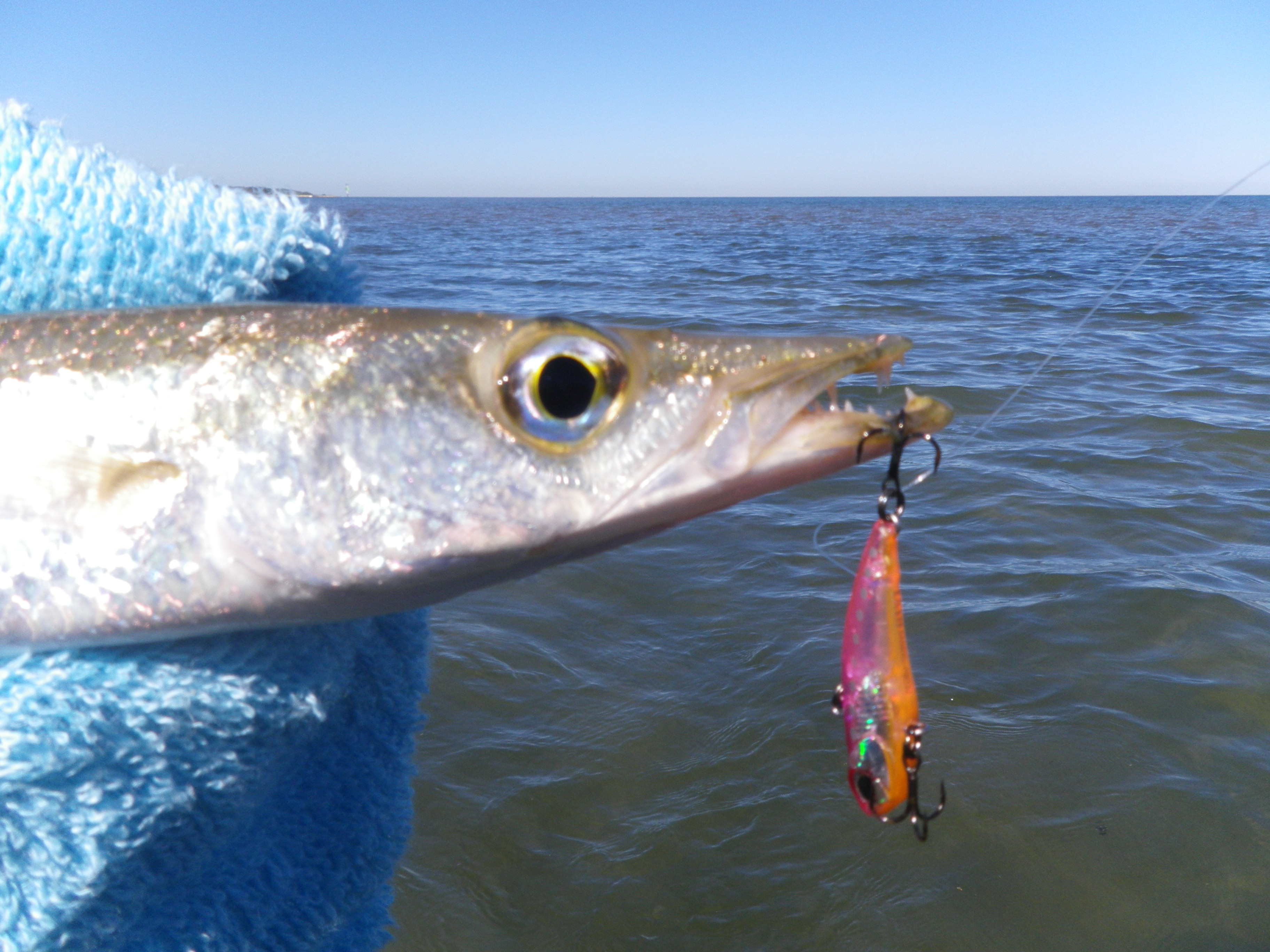
I arrived in between dawn and first light – just a little late. It was cloudy but as the northerly picked up it turned into a beautiful morning. I started with DUO Beachwalker MD 120 hard-bodied minnow in the orange colour. I had swapped back to treble hooks. There were bumps and splashes on each of my first three casts. On the fourth cast I hooked something. It pulled pretty hard and I thought I had connected with a good fish and then I realised it was a small Tailor – hooked through the back. I let it go and carried on casting but could not hook anything else.

I swapped over to a 65g Raider metal slug and moved round to the north edge of the rock platform and cast as far as I could. After about 20 casts I felt a knock at the base of the rocks. Then, on the next cast, a fish hit the lure right at the base of the rocks. It was a small Tailor – around 40cm long. I let that one go. I decided to try some soft plastics on the lighter rod and reel combo – the Shimano Catana Coastline light rod, 2500 reel, 6lb braided main line and 10lb leader.

A local fisho, Bill arrived with his Alvey and big rod and threw out a fresh prawn. His first cast produced an excellent Tarwhine, which looked to be about the 1kg mark. There were definitely fish around.

The strong northerly was making it easier to fish on the southern side of the rock platform now. I cast out a GULP 4” Minnow in the Smelt colour, on a 1/6th 1 jighead and let it slowly sink. I cast in all directions and did not get any interest for about an hour. The water was very clear and just in the mouth of the channel that separates the causeway from the mainland; there was a school of small baitfish, hugging the rocks. There is a slight overhang here and some deeper water close to the rocks. I dropped the plastic into the middle of the channel and thought I felt the faintest of bites. I flicked the bail arm over and released a metre or two of line. As I slowly retrieved it, it flicked tight and the rod bent over. Line started peeling and I started thinking – how and where will I land this?

I decided from the slow and powerful runs it was not a Tailor. I would try to coax it round the rocky outcrop, to the front of the rock platform. The northerly had flattened the sea and it was safe to jump down a few steps to the wash area, to grab a fish between waves, if I could get it that far. It did not want to come round the rocks and with the light rod and 10lb leader I could not apply much pressure. I left the drag quite light and just kept winding. Eventually I dragged the fish round the rocks and saw it was a small Jew. I used the surge to get it onto a flat rock at the water line and then hopped down and picked it up, between waves. It was a good looking 55cm fish. I slit its throat and put it in the keeper pool.

The plastic and leader was a bit gnarled but OK, so I threw it back out. Two or three casts later and I was on again. This time it was a much bigger fish and initially I really was not making much of an impression. But Jewfish tire quickly and after a while the fish was beaten but the swell was still making things tricky. I aborted a couple of attempts to pull the fish round the rocks but eventually it swam in the right direction. I got it on to the same ledge as the previous one, jumped down and grabbed it under the gills. This was a much bigger fish at about 75cm. I decided to keep this one as well. It was 8.15 am.

I swapped the soft plastic for bigger one – a GULP Crazylegs Jerkshad in the Black Shad colour. I stuck with the 10lb leader and the 1/6th 1 jighead. After about 10 more minutes of casting and retrieving, close to the overhang – bang, I was on to a fish. This one was bigger again and after a long tussle I got it to the same spot. But this one was too much for the 10lb leader and as I pulled the fish onto the rock ledge, it snapped.

I decided to upgrade to the bigger rod and use 20lb leader. I stuck with the 1/6th 1 jighead and the same soft plastic. I carried on or another hour but did not get another bite. Was it the heavier leader or had I spooked them? I am not sure. All the fish were caught in no more than 2m of water – the Jewfish certainly don’t mind feeding in the shallows.

At about 10.00am I left the platform to Bill, cleaned up the Jewfish and went in search of ice.

Bribie Island – The Seaside Museum drain – 24 August 2012

Friday

The wind is starting its undecided phase with a big northerly blow predicted for Friday afternoon. Friday morning looked ok, so I decided to revisit my favorite Bream location – Bongaree, on Bribie Island.

In years gone by, the Bream have shown up along the coffee rock ledge that runs along the edge of the Pumicestone Passage. They have often schooled up to spawn in the areas around the mouth of the tidal lagoon, in front of Buckley’s Hole. Typically, the best time to chase them has been either side of the new moons in July and August. Sometimes they are also around in June and September, depending on the water temperature.

The GULP 3” Minnow or 2” Shrimp have always been my favorite soft plastic lures for Bream. I prefer the more natural colours. When I am fishing the rocky headlands, I have caught plenty of big Bream on Jerkshads and other big soft plastics, but in the estuaries these fish can be fussy.

I started just after first light at about 5.45am. I was in front of the Seaside Museum again. The tide was running out and would be low at 7.45 am. This is the perfect time to fish this spot. I stopped about three metres from the drop off and cast over it, to the north. I was fishing with my light spin rig, with 10lb fluorocarbon leader and 1/8th, 1/0 jighead. I thought there might be some Flathead around so I had chosen a compromise soft plastic – the GULP 4“ Minnow in the Smelt colour. Big Bream should still be interested in it and if I passed over any Flathead, they would also go for it.

I counted to ten and let the lure sink. I am not sure how deep it is here but I would guess no more than 2.5 to 4 metres, in most places. The first couple of casts produced nothing and then the dolphins swam buy. It is always a pleasant sight but I presume the fish head for cover. About twenty minutes later there were some surface bust ups and just as I pulled the lure over the top of the ledge, there was a fast snatch and I was on. Playing fish here is tricky. It’s best to get close to the edge and play them out in the open water. If you have to hall them over, you risk sawing off your leader when they lunge back down, close to the edge.

This was a good Bream – 32cm and I pulled it safely onto the sand. I waded back out and cast over the edge again. The lure was hit on the drop but the mad head shakes meant it was not a Bream or Flathead. A few moments later I pulled a 35cm Chopper Tailor onto the sand. I fished for another 30 minutes with a few bites but no hook ups.

The wind, a north westerly, was now picking up. I moved to the south of the lagoon mouth and tried a few different soft plastics. I swapped back to the Smelt Minnow and started casting again in the same spot where I had caught the first Bream. At about 7.30 am, I cast out and let the lure sit on the bottom for a while. When I lifted it, I had a fish on. It was another good Bream just over 30cm long. I landed it and decided to pack up.

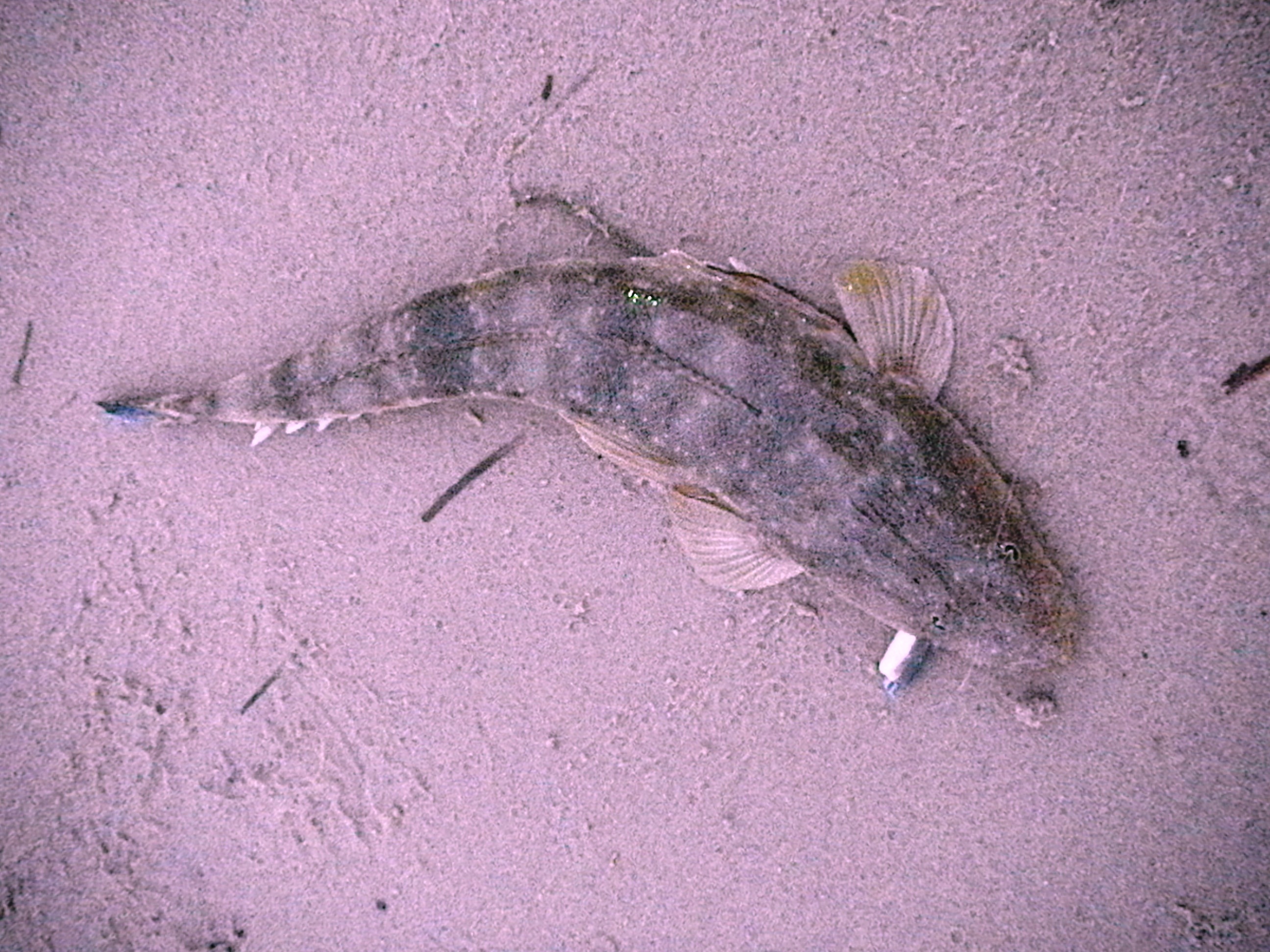
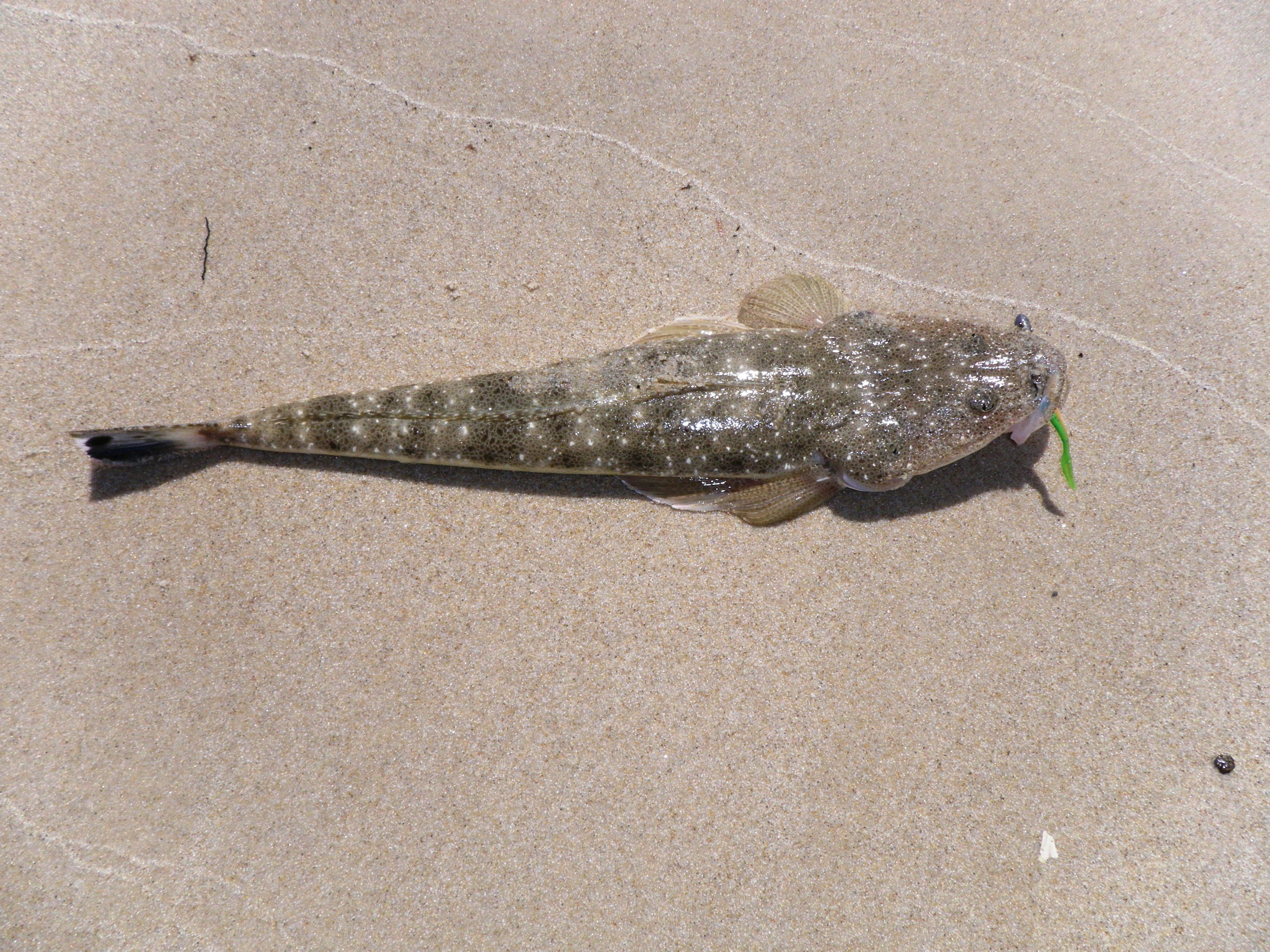
I had a coffee then decided to try fishing at Whitepatch, further up the Island. I stuck with the same soft plastic and jighead and walked along the drop off casting and retrieving. There was quite a bit of bait in the water and the birds kept turning up for a dive, but I could not find the fish. I did however, pull up a Stonefish – seriously ugly.

It had been a tough session but I had caught two quality fish and had dinner organized – so no complaints.

Bribie Island – Under the Bridge – 26 June 2012

Tuesday

The wind was forecast to start blowing but not until about lunchtime. There was also rain forecast, but unlike the summer downpours, the steady drizzle does not really put the fish off. In fact, I think it can work in you favour, by breaking up the surface of the water and disguising your approach.

You will all be relieved to find out that the tax return is finally done – much more painful than having a tooth pulled and far more expensive!

So I wrapped up warm and set out early. I arrived at Bribie at about 5.30 am and decided to start fishing on the island side, under the bridge lights. There are some good weed covered sandbanks forming just north of the bridge and also a couple of holes, just to the south. This area gets fished a lot and it is also a favourite spot to cast a net for some live-bait. You therefore need to get here early to stand a chance of finding it undisturbed. The fish renew with each tide so a run out tide around dawn is a good time to fish here. Low tide would be at 8.00 am so this morning looked good.

I started fishing with the GULP 4” Minnow soft plastic in the Smelt colour on a 1/8th 1/0 jighead with 12lb fluorocarbon leader, tied on to 8lb braid. Unusually there was not much surface action. There was plenty of bait in the water but the Pike did not seem to be present. I cast around to the north of the bridge for about 20 minutes with no luck, so moved to the south side.

One just before dawn

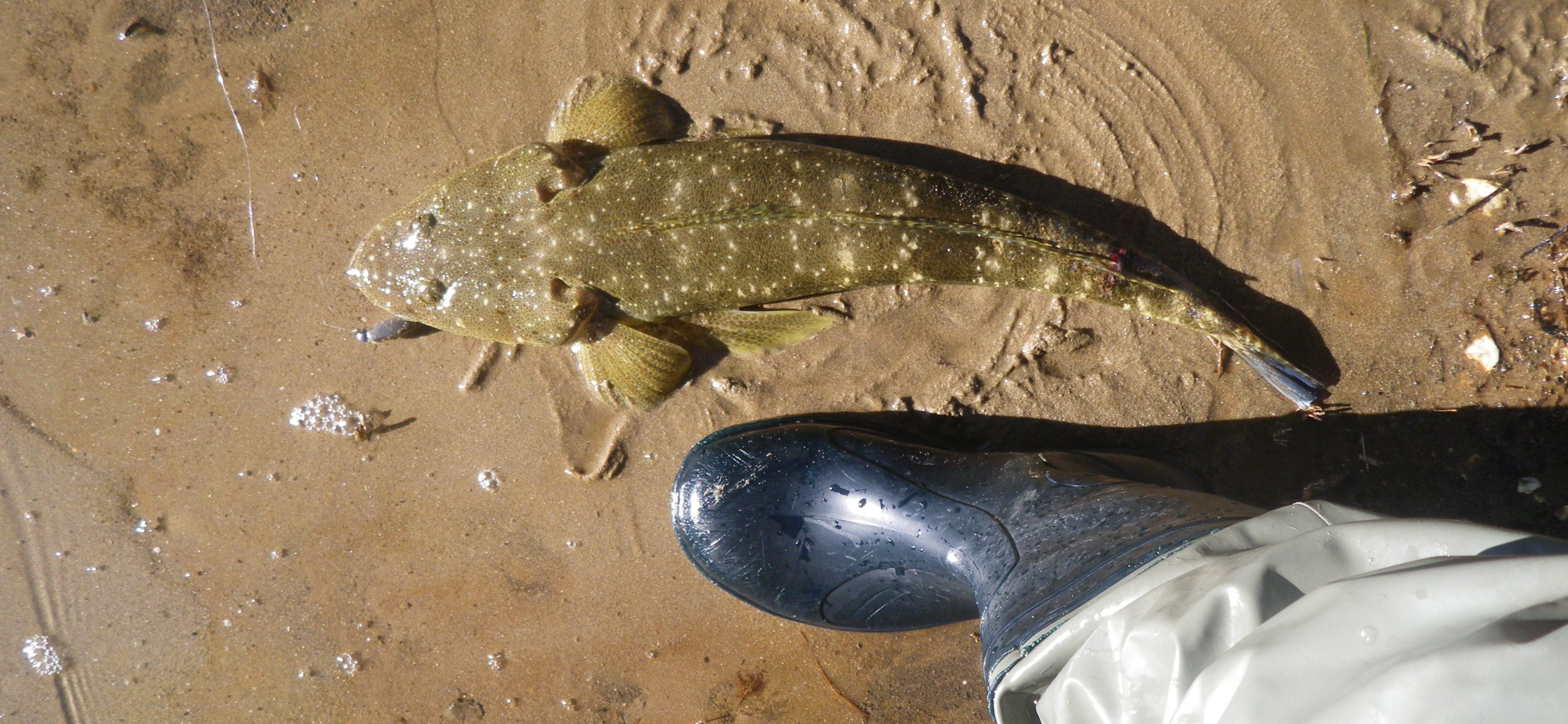
Just on first light I felt a good hit as I pulled the soft plastic cover a weed bed. I dropped the rod tip, paused and counted to 10. I count to 10 pretty fast on the first fish of the day. I lifted the rod tip and set the hook. After a brief fight, I had the first fish of the day up on the sand – a nice Flathead about 50cm long. I released it – the family are in revolt, demanding red meat for a few days. I cast back in the same spot. My lure was hit again, as it sank but this time I was too quick and failed to pause, I struck to soon and did not hook the fish – just pulled the soft plastic out of its mouth.

Just after dawn

There were a few smaller Flathead today

I tried but I could not persuade that fish to try again, so I moved to the north of the bridge. It was getting lighter now and raining, but not heavily. I waded along the edge of the weed bank, casting back, up into the tide, which was still running out. I soon found another Flathead – this one was about 35cm – I let it go and moved on.

I paused in front of the rocky patch, beside the boat hire place and concentrated on this area for a while. This paid off and after a few casts, I caught another 50+cm Flathead. As the tide slowed, things went quiet so I drove back across the bridge and waded out to the flats beside the old oyster jetty.

A pretty dismal morning weather wise

I spent another hour wading in this area with the same soft plastic lure. I caught 4 more Flathead, of which two would have been big enough to keep, at about the 50 cm size. It was now about 8.45 am and the rain started to get serious. It was now too cold and wet for me so I gave up.

Another Bribie Flathead

Unfortunately, it is rubbish weather for the school holidays. But this means there are less boats about and the fish are out there – if you can stay warm and dry long enough to find them.

Perfectly hooked

Bribie Island – The oyster jetty to the channel marker – 23 June 2012

Saturday

Now there are a whole host of reasons why it would be inappropriate to do your tax return at the weekend – so it will just have to wait until Monday.

The weather looked like it might be on the turn and you have to fish when you can. It was not quite so cold on Saturday morning but the wind was forecast to pick up. I drove back up to Bribie Island and arrived on the mainland side of the bridge at around 6.00 am.

It was still dark and the tide was out. I had a few casts by the bridge but could not raise a bite. I walked along the water line until I had passed the old oyster jetty. Low tide had passed just before six. Here at the edge of the Passage, the water was still slowly running out over the exposed seagrass beds.
I was back to the soft plastics and started with a GULP Jerkshad in the Lime Tiger colour on a 1/8th 1/0 jighead. I cast out and slowly retrieved the soft plastic along the bottom with plenty of pauses. I felt a few small bites and lost a bit of the tail on the soft plastic – probably the Pike.

I moved a bit further south, casting along the edge of the weed beds. The sun was trying to get over the horizon but the scattered low cloud ensured a gloomy, cold start to the day. As it gradually got lighter, I could see where I wanted to cast and not long afterwards I had my first fish on the line. I dragged it up to the sand – it was a Flathead just under 50cm long.

I carried on casting in the same area and had a couple of solid bites and then hooked another Flathead who spat the lure just a few feet from me. I carried on south and swapped to the GULP 4” Minnow in the Pearl Watermelon colour. About ten metres further south, I found another Flathead but it was only just 40 cm, so I put it back. On the next cast – in exactly the same spot, I was rewarded with a bigger one, about 45cm so I kept that one.

The fish in the fridge has all been consumed so I needed to re-stock. I think the 45cm to 55cm fish really taste the best. At this size, you get reasonable size fillets and the flesh is still very tender. Flathead is definitely a favorite in our house – which is fortunate!

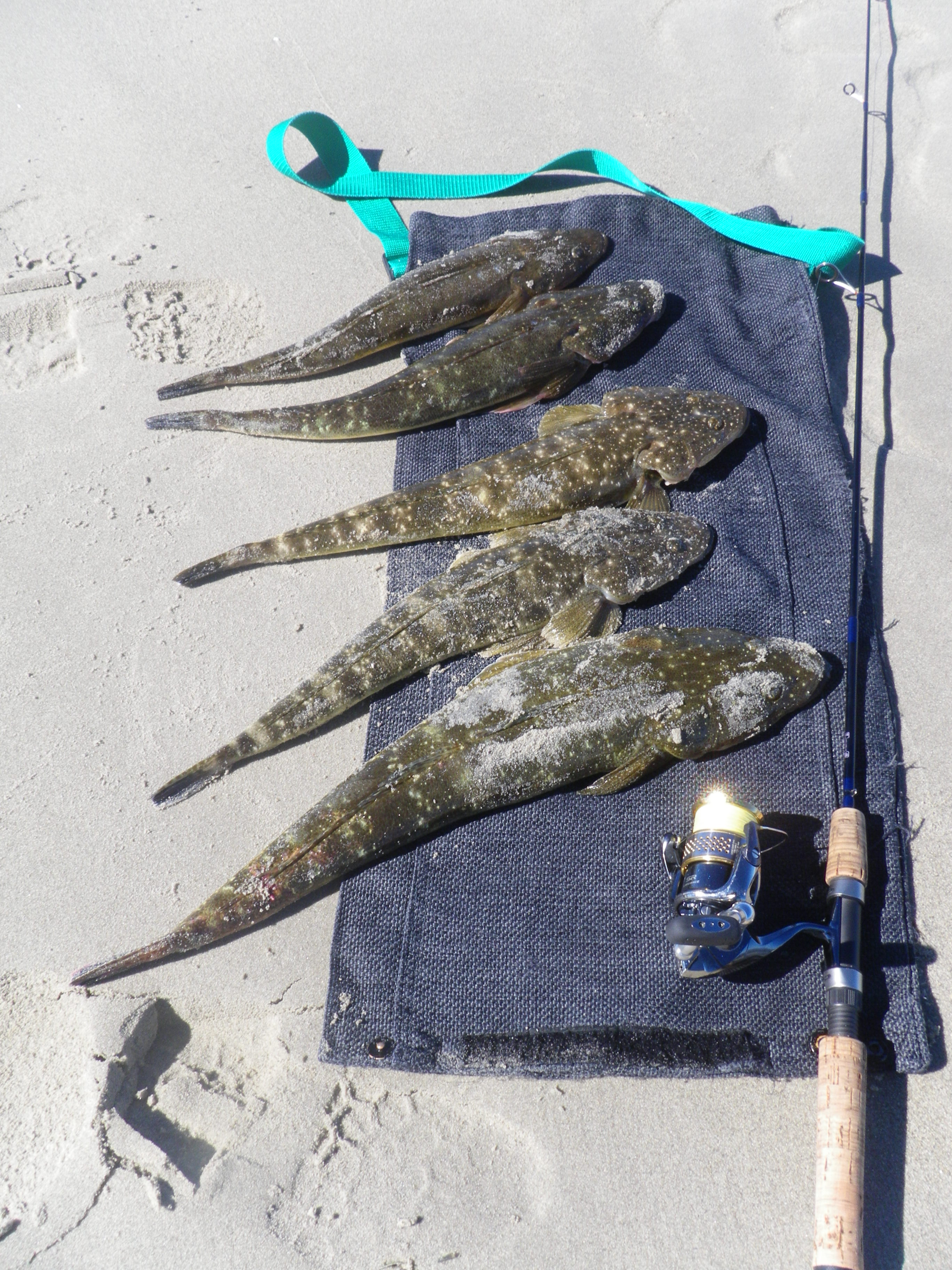
I kept moving in the direction of the channel marker and over the next hour, I caught 5 more Flathead – only two of which were too small. With my bag full it was now time to experiment.

I tried a small popper – with no luck. I switched to a regular ¼ oz blade lure and this caught a Pike. Then I tied on the DUO Tetraworks Bivi again. Predictably the Pike got stuck in and I caught three or four. I then slowed the retrieve down and shortened the lure hops. I kept pulling up weed but I persisted. I felt a bit of resistance and then the line started peeling – this was a big fish and it was heading for the main channel. But it was moving very slowly and something did not feel right. I tightened the drag and it started to come towards me. After about three or four minutes I saw a great flap come out of the water and realized it was just a big stingray. Eventually the lure pulled free and of it went.

I now turned back towards the bridge. On the way to the car I kept casting the small DUO Bivi. Just short of the jetty I felt a solid bite and saw a Flathead come to the surface, angrily trying to spit the lure out. It may have succeeded because the line went slack for a moment but then came up tight again. I set the hooks hard and let the fish have some line. It was not too big but there was plenty of structure nearby, so I dragged it back towards the muddy shore and away from the rocky patches. I pulled it up on a sandy patch. The DUO Tetraworks Bivi had finally managed to catch a Flathead. I had my five so I removed the trebles (with my pliers) and sent it on its way.

The keeper bag was heavy and I needed a hot drink so at about 8.45 am, I gave up and headed for the car. It had been another good land-based fishing session.

Bribie Island – The Oyster Jetty to the channel marker – 17 June 2012

Monday

I had to do the tax return on Monday. But one look at the weather and I decided that Wayne Swan would have to wait another few days. Fishing conditions were perfect. I could not start early so I arrived at the Bribie Bridge just after 8.30am. It was just after high tide. There was no real wind and the new moon was due on Tuesday. The water was very clear despite the recent high winds.

I got straight down to business with a GULP 4” Minnow in the Smelt colour, on a 1/8th 1/0 jig head. I was using my light spin rod and had it loaded with 8lb braid and a 12lb fluorocarbon leader. I waded out to the north of the bridge, on the mainland side. The Flathead come right up to the edge of the mangroves on a high tide and this was what I was looking for.

It started with Smelt

It was a 1.8 m high tide which is a fairly ‘low’ high tide for this area. I waded out a bit further on the north side of the bridge to cast at the rocky area, just in front of the third set of bridge legs. The lure bumped on a few rocks and then the line went tight and started wiggling. It was a 44cm Flathead and my first decent fish for a while.

Under the Bribie Bridge

The first decent fish for a while

I moved south towards the oyster jetty. The tide was just starting to run out. I cast all around the rocky reef just south of the bridge, with no luck. As I got a bit closer to the jetty I felt a solid bite. I paused, counted to ten, then struck. This one was a bigger Flathead – just under 50 cm. It tried a few headshakes, as I waded up into the shallows, but I soon had it landed by the mangroves.

Also took the Smelt colour

Then came a bigger one

I moved under the oyster jetty and continued to cast out into the Passage. I was casting into the run out tide and working my lure back along the bottom with the flow. I felt a good bite and cast back in the same spot. This time I saw the Flathead follow the plastic but it turned away at the last minute. I kept casting at the same spot and felt another bite, but I just could not hook it.

I swapped soft plastics to a GULP 5” Jerkshad in the Cajun Chicken colour. I moved further south, over the sand flats towards the green channel markers. At about 10.30 am I felt a solid hit and the line started peeling. This was a bigger fish and it had grabbed the lure on the drop, so it was a long way away from me. The tide was running out but there was still no nearby sand bank to land the fish on. I decided to play it out and try and grab it – this usually ends in tears – with me getting a quick spike and then dropping the fish. This time, I let the fish make lots of runs and then maneuvered my keeper bag, like a landing net, under the fish. I shortened the line and pulled the fish into the bag. I then took out the hook in the bag. This was the best fish of the day at just under 60cm.

This one took a Cajun Chicken

I continued wading across the flats and soon caught two more Flathead on the same soft plastic, about 50cm long. With a full bag it was now catch and release for the rest of the day.

A bag of Bribie Flathead

A bag of Bribie Flathead

I had reached a sandy patch by the green channel marker and decided to try the DUO Tetraworks Bivi small hard body vibe lure. After a couple of casts I found some Pike. The lure may have worked on the Flathead but the problem was getting passed the Pike. I caught seven Pike in ten casts and realized that I was not going to beat them.

The DUO Bivi could net get past the Pike

I swapped back to a GULP Jerkshad – this time in the Satay Chicken colour. The Pike left this alone so I turned around and started to wade back in the direction of the old oyster jetty. At the edge of the weed banks I found the Flathead again. I caught another six on the way back to the bridge – all were legal size, from about 50 to 60 cm. They all went back for someone else to catch.

Satay Chicken for this one

The weather was perfect and the fishing matched the weather – shame about the tax return!

Conditions were perfect

The spectators were unimpressed

Bribie Island – The bridge and surrounds – 5 June 2012

Tuesday

I was back on local turf and although the wind did not look promising at least the rain was holding off. At 4.30 am I set off for Bribie Island to see if I could find some Flathead. Looking back over the blog and my fishing diaries, May to October have produced by far the best catches of Flathead for me. I have been busy with other things this year, so I hardly fished in April and May and I am planning to make up for it in June / July.

I started under the bridge on the mainland side with my light spin rod and reel: Loomis GL2 and Shimano Stella 2500. I was using 6lb braid and a 12lb fluorocarbon leader. I started with a 1/8th 1/0 jighead and a GULP 4” Minnow soft plastic in the Smelt colour.

It was about 5.15 am and the tide was just starting to build up momentum for the run out. There were a few jumps on the surface under the lights. I cast at them and felt the odd bump and grab, as the smaller fish made their inquiries. I caught a small pike that jumped clear of the water to grab the plastic. Then I got snagged on the small piece of reef just south of the bridge, so I decided to give the small DUO Tetraworks Bivi vibe lure a try. I picked an orange coloured model and tied it on. I love this lure. It has a great action at low speed and a good profile. Fish will often grab it as it is paused on the bottom. In this terrain I had to keep it moving or I would lose it to the rocks. After a few casts, it did the trick – a tiny Flathead grabbed it, just to the north of the bridge. I got rid of the fish and carried on. I caught a few more Pike but could not find a better fish.

After about 30 minutes of peppering the area with casts, I moved across to the other side of the bridge and had a fish around the lights. The tide was running in now but the wind was blowing all the weed and debris across into this area, so it was difficult to fish with the Bivi lure. There is now a nice ridge in the sandbank along here and some good weedy patches. There are nearly always Pike along here and I caught a couple. Then a small Whiting grabbed the Bivi lure – there was no shortage of variety.

As the sun came up I moved down to the sandy drain in front of the Seaside Museum, towards Bongaree. I fished along the edge of the tea tree stained water that was running out of the drain. I had been monstered by a big fish here, a few weeks ago. It had grabbed a big plastic (Jerkshad) and taken off. I only had the light rod and could not subdue it. Today, I started with the DUO Tetraworks Bivi and, after a few casts it produced another fish. Unfortunately, it was another tiny Flathead. I swapped back to a GULP Jerkshad soft plastic in the Satay Chicken colour. I cast around, gradually moving to the south, along the drop off. I felt a few bites and lost the tail from the Jerkshad. I swapped down to a GULP3” Minnow in the Nuclear Chicken colour and something grabbed it on the first cast. It was another small fish and I could tell by the mad headshakes it was a Tailor.

This slideshow requires JavaScript.

The water was now too deep to fish along here. I stopped for a chat with Colin – who always has his finger on the Bribie fishing pulse and he brought me up to date on what is biting where. It is good to know someone is keeping the Flathead on their toes. There have also been a few bigger Tailor and the occasional Jewfish around. As the water temperature drops there should be a few more Tailor.

By now, the wind was up but I was too cold. I went off to find a hot cup of coffee. It was a beautiful, if breezy day and the massive full moon had been clearly visible all morning. Nothing for dinner though! I think I am paying the price for not putting in the hours – fishing can be a hard taskmaster.

Caloundra – Bulcock & Golden Beaches – a big Flathead and a runaway – 15 November 2011

Tuesday

Ok – forget about the wind, I told myself. Yes it would be from the north – but the fish must still be there – somewhere, and it was not forecast to pick up until about 9.00 am. Low tide would be at 4.00 am at Caloundra and the top end of the Pumicestone Passage is a little more sheltered than the bottom end, in a Northerly – so that was my destination.

It would have to be an early start – first light would officially be at about 4.15 am , but over the last few weeks, the fish appear to be out hunting for their breakfast as soon as the horizon starts to glow – from about 3.45am. So I set out from Brisbane at 2.45am and reached the rocks on Bulcock Beach at about 3.50 am.

There was no wind and the tide was still running out, but beginning to slow. I started with a GULP 5” Lime Tiger Jerkshad on a 1/6th 2/0 jighead. I cast around the base of the rocks and then waded a fair way out into the shallows. The sand gives way under foot and is constantly moving so you have to watch your step. I was casting just on the edge of the rock bar, which skirts the bank beneath the boardwalk and the car park. I got snagged and re-rigged.

A couple of seconds after the soft plastic hit the water a fish hit it. It must have been slowly sinking down the water column. Unfortunately, after a few days fishing with my heavier spin rod (Nitro 2-4kg) I had swapped back to the light one – the Loomis GL2. It was bent over and the reel was screaming. I had a 12lb leader and the knots would probably hold but I could not exert any pressure on the fish, through the rod. It was running all over the place, out in the middle of the channel. I tightened the drag but it made little difference. It went where it wanted. After about a minute and a half, it changed tactics and headed back in towards the rock bar. As soon as it got next to the rocks, the line went slack and it was gone. I think it had just knocked the jighead and plastic loose on the rocks. Given the powerful runs and its speed, I would think it was a Trevally – who knows?

I cast around hoping there might be a school of them but there were no more takers. I moved into the shallows and decided to try another of the DUO lures I have been sent from Japan. This time I would be using the REALIS VIBRATION 62. It is another beautifully crafted lure. It is a blade shaped vibe lure made of resin with a clever weighting system that means a really consistent swimming action, even when retrieved quickly. The rattle is loud and effective – I think it annoys the hell out of the Flathead – and can stimulate a strike from a fish that would not otherwise be feeding. It weighs 11 grams and is 62mm long, so it can be cast a fair distance and hugs the bottom, even on a fairly fast retrieve.

I carefully worked the REALIS lure over the sandy patches, I could hear the rattle from several metres away. I felt a bite – or was it a snag? I kept it moving pretty fast as I did not want to lose it. The next cast, across the same piece of sand was definitely grabbed and then dropped. Third time lucky – I cast back out and this time the fish made no mistake. There was a splash and head shake as it realized it had eaten something prickly, but it was solidly hooked. I pulled it up on the sand, it was a 52cm Flathead.

I went back to the same area and worked the lure closer and closer to the rocks until, inevitably, it got caught amongst the rocks and that was that. This seems to happen to a lot of my lures!

I took the hint and moved down the Passage to fish amongst the weed beds and sandbanks around Diamond Head. The water had just started to cover the weed along the edge of the channel. I walked across the sand bar to the green channel marker that marks the deeper water in the main channel. There were small flathead lies all over the sand bar, clustered in little groups. I cast around and caught a few small Flathead on a GULP 3” Minnow soft plastic in the Pearl Watermelon colour – between 25 and 35 cm.

After an hour of wading along the edge of the main channel, I decided to drive back up to Golden Beach and try my luck there. The tide was now almost high and the weed banks in front of the Powerboat Club looked like a good target. I waded north from the club, casting along the edge of the sand banks. It was now about 10.30 am and the Northerly wind was starting to pick up, roughening the surface of the water. I waded slowly, changing the soft plastic lure regularly and making sure I moved carefully and quietly. It may be choppy on the surface but it is calm down below. After 45 minutes of this I felt a nice solid bite close in to a clump of weed. I paused, counted to ten, then struck. There was a long slow pull, then a pause, then zzzzzzzzzzzzzzzzzzzzzzzzzzz and zzzzzzzzzzzzzzzzzzzz and zzzzzzzzzzzzzzzzzzzzz. I checked the drag, it was set right with a fair bit of pressure – this was a decent fish. I started to get some line back and moved towards the shore. There were plenty more solid runs but eventually I got a look at a very good Flathead. I kept the rod tip bent and slowly dragged the fish up on to the sandy beach. It was a big female that measured in at just under 75cm. I thought about it, but she was too good-looking to keep for dinner. The lure was now a long way down her throat so I decided to cut the line and leave it to be digested. After a few snaps, she swam away. She had been caught on GULP Lime Tiger coloured 5″ Jerkshad on a 1/8th 1/0 jighead and 12lb fluorocarbon leader.

This slideshow requires JavaScript.

Despite the northerly wind it had been a good session with a cracker of a fish to finish up. I’ll be back!

Bribie Island – Pacific Harbour Flats – 7 November 2011

Monday

I wasn’t planning to fish today. I couldn’t get away until 8.00 am and thought that might be too late. But it was such a beautiful day that I decided I would go anyway. I drove up to Bribie and dropped in on Nigel at the tackle shop, in Ningi. As usual, he provided some good local knowledge and told me who was catching what, where and when.

I took his advice and decided to fish some new ground, to the north of the mouth of the Pacific Harbour canal development, on Bribie Island. High tide had passed at around 7.00 am and it was now about 9.00 am. This is a great fishing spot. It has everything – weed beds, sand banks and the coffee rock ledge that runs the length of the Pumicestone Passage.

I started just north of the wading bird sanctuary and started casting around with a GULP 5” Jerkshad in the Satay Chicken colour. I had been fishing the longer Crazylegs Jerkshad soft plastics at the end of the previous session and had left the slightly heavier and wider gape 1/6th oz, 2/0 jighead on. I have begun to conclude that anything bigger than a 1/0 hook jighead, can reduce you hook up rate with the Flathead. I don’t think it affects their eagerness to eat the lure but I think the bigger hook does not lodge so effectively in the jaw of the very flat mouth.

This slideshow requires JavaScript.

After about ten minutes I felt a bite, paused and struck, I had a good size fish on, but after about twenty seconds, it wriggled off the jighead. I waded a little further south, towards the mouth of the Pacific Harbour development. Just short of the entrance, I was retrieving my lure and about to lift it from the water to cast again. A Flathead launched itself at the lure and grabbed it, just as it came out of the water. I nearly jumped out of my skin. It turned and ran and I tried to set the hook but failed again and it was gone.

I changed down to a lighter and smaller gauge jighead, a 1/8th 1/0 hook, and moved back north, wading and casting, wading and casting. I tripped over an unmarked crab pot and then another. The water is still quite muddy and murky in places, even though there has been no rain for a while. Finally, after more than one hour, I hooked up with a 25cm Flathead. I released it and decided to switch locations.

I drove down to Bongaree, to the mouth of the tidal lagoon in front of Buckley’s Hole. It was just about low tide by the time I got there. I cast over the edge of the coffee rock ledge and moved south from a spot just in front of the new museum. After a couple of casts, bait started skipping around and I caught a small Chopper Tailor – about 25cm long.

I decided I had missed my chance of catching a good fish earlier in the day and so, at about 12.30 pm, I gave up and went home.

Bribie Island – A few Flathead – but it took a while – 25 October 2011

Tuesday:

I got out amongst the Flathead at Bribie Island again on Tuesday morning. We are back to very early starts if you want to be fishing at first light. I was awake at 3.30 am and standing under the bridge on the mainland side at around 4.30 am, just as the sky began to light up.
The water was dead calm and the tide was running in. It would be high at around 8.00am. There was no breeze but it was forecast to grow into a strong north-easterly by lunchtime. I could see bait everywhere, flickers of silver glinted under the bridge lights. Occasionally there was a splash on the surface, as a predator struck from below.

I cast around with a GULP Crazylegs Jerkshad in the New Penny colour. I felt a few bites but nothing serious. The tide was coming in fairly quickly and the strong south easterlies of previous days had stirred up the weed again.

Mullet like this were everywhere


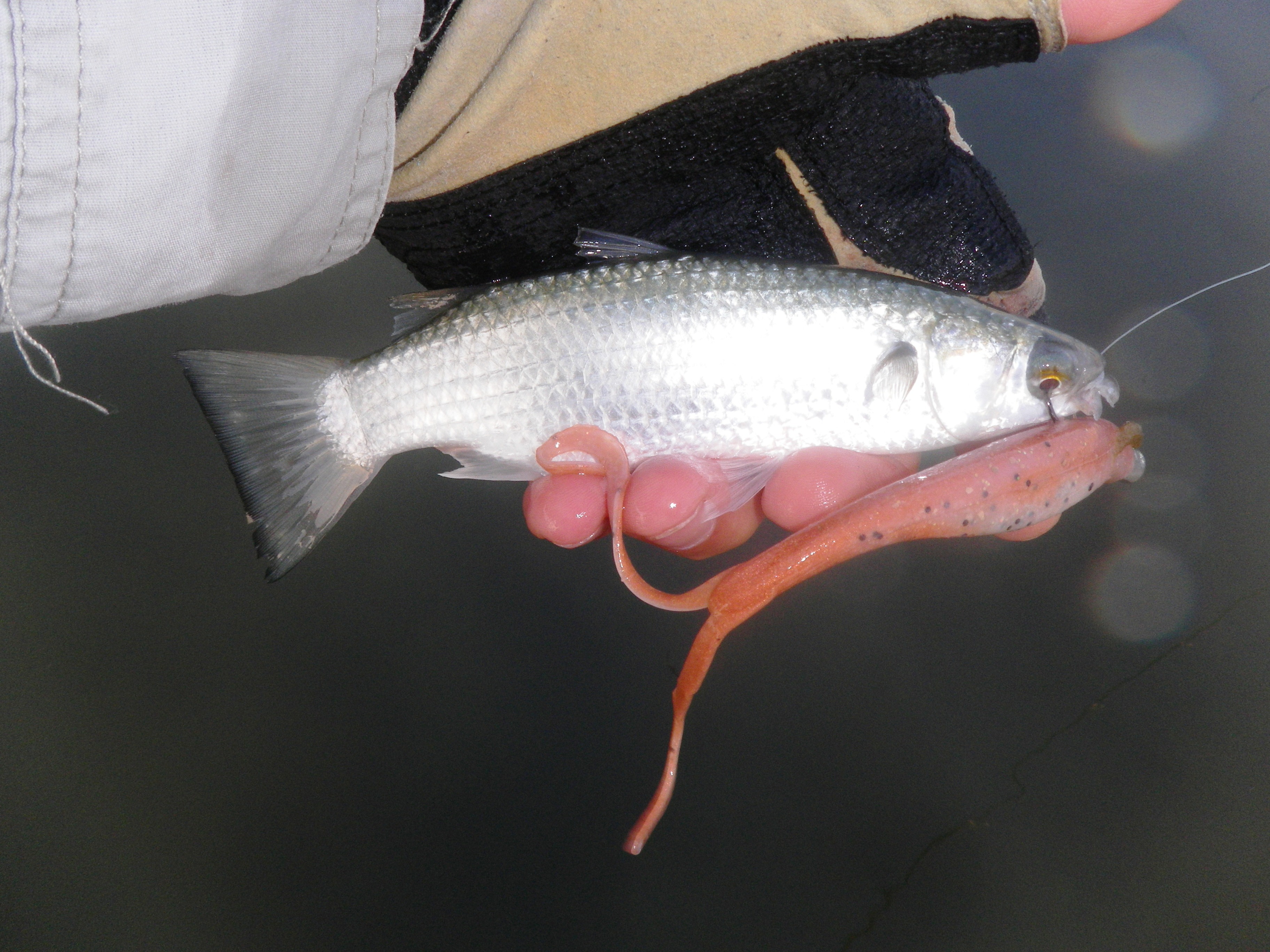
As it grew light and the tide got higher a constant stream of floating sea grass made the fishing difficult. After a while I jagged a small Mullet. There were big schools of these cruising under the bridge.

I decided to switch locations and drove across the bridge and down to Bongaree, on the island. The tide was really moving now and I could not fish over the ledge in front of Buckley’s Hole, so I gave up after a few minutes and switched locations again. This time I decided to try the flats at White Patch.

I started at the second set of steps and waded south, casting my soft plastic at the edge of the rocks and sunken logs that were now semi-submerged by the rising tide. No luck – but I did see some big fish smash into the Mullet schools that were hovering off the ledge, further out. I could not see what they were. At first I thought Tuna, but I have rarely seen them this far up the Pumicestone Passage. The attacks were highlighted by the calmness of the water in between. After a big swirl sent Mullet flying in all directions I think I saw a good size Queenfish jump clean out of the water in pursuit. I have heard about them being caught here, but not seen them.

Despite the show going on just out of casting distance, I was still without a fish. The weed carpet that had slowed me down earlier now arrived with the top of the tide. Sometimes you need to change the dynamic. I drove down to Scoopys Café and had a coffee, looking out over the Pumicestone Passage. At about 9.00 am I walked back along the beach in front of Buckley’s Hole and went back to basics. I tied on a 12lb fluorocarbon leader, loaded the natural looking GULP 4” Pearl Watermelon Minnow soft plastic on a 1/8th oz, 1/0 jighead . I then moved south along the beach casting into the shallow water, mindful that this was where the fish had been last week – right up close to the beach, in the shallows.

Low tide at the lagoon in front of Buckleys Hole


The tide was running out and the weed had washed away again. After 10 minutes, a fish grabbed the soft plastic a couple of metres from the beach. It was a 45cm Flathead and after 5 hours of fishing I was happy to see it. I continued down the beach and turned around when I reached the no.1 beach flag. I waded out to about waist deep and started to walk back, to the north. I was casting up, into the out-going tide, aiming at an angle back towards the beach. I felt a good bite, but there was no hook up. I carried on and was soon rewarded with another Flathead, a little smaller than the first – things were improving.

The first one took a GULP Pear Watermelon Minnow

This one grabbed a GULP Lime Tiger Minnow

All along this stretch of beach the wind and tide is starting to carve small bays in the sand. At the south edge of each of these bays is a long sand lip. This was where the fish were loitering, in less than 25cm of water. I decided to change to a bigger soft plastic and chose the GULP Crazylegs Jerkshad in the New Penny colour, still on a 1/8th 1/0 jighead. Just short of the next sand lip I disturbed a good-sized Flathead. Then, with the next cast, I felt a solid – thud, as I pulled the lure back to within a few metres of my feet. There was a big swirl and line started peeling. The fish started to swim north, against the current, which meant it got tired quite quickly. I kept the rod tip high and the pressure on. I could see it was a reasonable size and realized in the shallow water it might surface and start shaking its head, so I loosened the drag a little. It made a couple more runs. As I pulled it closer to the beach, I tightened the drag back up a bit and in one long, gentle sweep I pulled it clear of the water. It was a 66cm Flathead.

A 66cm Flathead on a GULP Crazylegs in New Penny


It was just after 11.00 am and I had been fishing since 4.30 am, it had been a long morning and I had covered plenty of ground but it had paid off!

A good size Bribie Island Flathead - 66cm

Bribie Island – More Flathead from around that jetty – 31 May 2011

Tuesday

When you are catching fish in a particular spot, it is difficult to tear yourself away. So at sunrise this morning I found myself back to the south of the old oyster jetty, on the mainland, opposite Bribie Island.

I started at about 6.00 am, just on first light. High tide would be just after 8.00 am. The wind was a very light south-westerly. From 6.00 am to 8.00 am, all I could find were a couple Pike. I often find the last hour of the run in tide is difficult. I think the fish need a bit of current to get them in feeding mood. When the water is completely still, at high tide, they just stop biting. Around high tide I was also limited by the water depth, to within 30 metres of the Mangrove fringed shoreline.

Around 8.30 am, as the tide started running out, I caught my first Flathead of the day – 42cm long, on a 1/6th 1/0 jighead loaded with a GULP 4” Minnow soft plastic in the Pumpkinseed Colour. As the run out tide grew stronger and the water level dropped, I walked further and further south, catching Flathead all the way along the big sandbar. I turned around when I reached the green channel marker and waded back up the Passage, casting into the run out tide. I swapped between the Pumpkinseed and Pearl Watermelon colour soft plastics and both caught fish. In total I caught 11 Flathead, of which 7 were over 40cm – the biggest was 61cm. I caught 4 fish on the sand right next to the green channel marker. All the fish were caught in less than a metre of water.

I finished up back at the bridge by about 11.00 am. All the fish caught today were released, so get out there and catch them!

This slideshow requires JavaScript.

Bribie Island – A bagful of Flathead – 27 May 2011

Thursday

Back up to Bribie Island, in search of Flathead. I was pleasantly surprised when I arrived around 5.00 am. It really was not too cold and the south westerly wind was far lighter than the predicted 15 knots. High tide had been at about 4.00 am so there was still plenty of water around the bridge pylons. I decide to start on the island side and as soon as arrived I could see and hear the Pike and Chopper Tailor breaking the surface as they grabbed smaller baitfish/ shrimps.

Small Flathead - under the bridge on Bribie Island side

I started with the GULP 4” Minnow soft plastic in the Pearl Watermelon colour, rigged on a 1/6th 1/0 jighead. I was using a 12lb leader and fishing with my Loomis GL2 light spin rod matched with a Shimano Stradic 3000 reel. After a couple of casts I caught a small Flathead – just about 40cm. It must have been lying in the shadows beside the first pylon, in no more than 40cm of water. I released it. The next cast gave me a Pike that was bigger than the Flathead and then, a few casts later, a 25cm Chopper Tailor.

Choppers - Juvenile Tailor under the Bribie Island bridge lights

Before the tide got too low I decided to go back over to the mainland side and fish around the pylons under the bridge lights. I stuck with the same soft plastic and jighead and worked my way around the pylons. I waded quietly, stopping frequently to pepper the spots where I have caught fish before. This soon paid off and just south of the bridge, about 6 metres from the mangrove line, I caught another Flathead. It was around 50cm long so it went in the keeper bag.

A Flathead from the mainland side about 50 cm

There was the glow of dawn on the horizon but the sun was still not up. It was cold now, but this area is shielded from the westerly breeze. The water looked fairly clear so I switched to a bigger GULP Crazylegs Jerkshad in the Curry Chicken colour – basically a flecked combination of pink and yellow with a forked curly tail. After a couple more casts I caught another fish – despite the bigger lure it was a much smaller Flathead at around 42cm – Keeper No.2.

Bigger lure but a smaller fish! around 42cm

The sun came up and I continued wading south, past the old oyster farm jetty. I walked right along the big sand bar – that is exposed at low tide, casting on either side. I reached the pole that warns boats about the remains of the old oyster racks and then turned north again and started wading back, alongside the sandbar, in waist deep water. I swapped back to the Pearl Watermelon Minnow. I was casting back at the sand bar and after about 50 metres I hooked another fish. It was another Flathead, about 48cm long –Keeper No.3. I dragged it up onto the sand and then resumed my course towards the oyster jetty. Over the next half an hour I got two more slightly bigger Flathead (Keepers 4 & 5) and a monster Pike – well over 45cm – which I kept for the cat.

When water covers this spot the Flathead sit along this lip

A bag of five Bribie Flathead and a big Pike for the cat

I now had my bagful of fish and so I decided to call it quits. The forecast wind was really arrived and was starting to blow so I headed back to the car and then the gutting table. It had been another good fishing session in the Pumicestone Passage.

Bribie Island – Bridge & Sandstone Point – 3 March 2011

Thursday

Thursday was set to be another hot day with a possible thunderstorm. There would be a slight northerly wind in the Pumicestone Passage, which would freshen through the day. I decided to keep looking for Flathead, as these have been the only consistent fish for me, in recent weeks.

I started under the bridge on the Island side about 4.15 am. The tide was running in and there was about 30cm of water at the base of the rockwall by the shore, to the north of the bridge. There was not much surface action and I think the Pike prefer a little more depth, to feel safe. I cast out a GULP 2” Shrimp soft plastic in the Banana Prawn colour, on a 1/8th 1/0 jighead and bounced it along the bottom under the lights. Three casts later, after a pause on the bottom, the line came up tight. There were a few head shakes and a short run and then the fish was gone. A couple of casts later; same soft plastic, same place, maybe the same fish, I hooked up again. This time I got him to the rocks – a Flathead – around 45cm, but as I was lifting him in to the bag, he spiked me and slithered out of my grip to freedom.

Dawn by the Bribie Island bridge - the fish come to the lights

After 30 minutes more, prospecting both north and south of the bridge, I could not find any more fish so I decided to change location. Just as the sun was coming up, I drove round to Pebble Beach and walked along the beach to the far end, towards Sandstone Point. The water was fairly high but there were still a couple of hours before high tide. It was a beautiful, calm, still morning. The thunderstorms had passed over earlier and there were still a few flashes of lightning as they moved in land, but the sky was bright red.

A very calm morning

At the end of the beach, I walked out in front of the fringing Mangroves and cast out over the rubble and boulders that dot the ground. I was aiming for the sandy patches in between the rocks, where the Flathead often shelter. As I moved nearer to the corner I had a few encounters with the Long Toms, who kept grabbing and then dropping, the lure. When one finally did get hooked it started leaping and splashing and effectively shredded the 16lb Fluorocarbon leader I was using. I re- rigged and tied on a new leader and put on a GULP 4” Jigging Grub soft plastic in the Pepper Prawn colour, on a 1/8th 1/0 jighead. A few cast later as the lure bumped over the rocky bottom, a fish grabbed it and took off. It only made a small run and then settled in the current. I pulled it on to some rocks – a 48cm Flathead – I released it and carried on casting. A few casts later I had another on the same plastic, this time it was just over 50cm.

After working the corner thoroughly I move round it, heading north and on to the broad flats of Sandstone Point, which almost form a tidal lagoon. With another hour to go before a 2.3m high tide, I could still wade out to the middle of the area and cast back in towards the Mangrove roots along the shore. The Long Toms where patrolling and I had a couple of tussles with them. After 30 minutes, the water was getting too deep to stay in the middle so I turned and headed south, in closer. I switched to a GULP 2” Shrimp in the Pepper Prawn colour and put in long casts parallel with the shore. A fish grabbed the lure as it landed and this time it was a Flathead, I dragged it in under the Mangroves – it was around 40cm – and after a quick picture, I unhooked it and sent it on its way.

That was the last fish for the morning and even thought it was only 8.15 am, it was already blisteringly hot. I dumped the gear in the car and had a quick swim before heading home. Another good session, the water is still full of sediment on these big tides but there is plenty of bait around and so the fish will come.

This slideshow requires JavaScript.

Tweed River – The Rockwall – Tailor & Queenfish – 23 Dec 2010

On Wednesday morning – the rain looked like it would stop for a bit and as the wind was forecast to come from the south for a while, I decided to go for one more Tweed rockwall session before Christmas. The couple of hours either side of dawn has always been the most productive for me in this spot, so I was up at 3.00 am again. I drove down from Brisbane and was at the end of the rockwall, watching the red glow on the horizon at about 4.15 am.
There was a light south westerly blowing and it was quite cool. There was a little more swell as a result. I started with a River 2 Sea 110mm Dumbell Popper in the Pilchard colour. I was blooping it back slowly across the front of the rockwall. Suddenly there was a boil on the surface so I cast out, in that direction. The popper was knocked out of the water by a marauding fish but there was no hook up. After several more casts and hits – but no connections. I quickly tied on a GULP 5” Jerkshad in the lime tiger colour. I used a ½ oz 4/0 jighead. As soon as it hit the water is was snaffled by a solid fish. I had the drag fairly tight and got the fish round to the left (north) side of the rockwall, fairly quickly. Its head was shaking and then there were a few leaps and I could see it was a Tailor. I got it up the rocks and it measured up at just over 60cm.
Then everything went quiet. I switched from popper to metal slug, to plastic, several times but I could not raise a bite. I could not find any Kingfish but after another hour or so, I had another hook up on a GULP 4” Minnow soft plastic in the pearl watermelon colour. This time it was a tiny Queenfish. The range of species in this spot is amazing. After a quick snap I returned it to the water. I carried on for another ½ hour without success and finally headed home around 7.30 am.
Happy Christmas to all and I wish you the best of luck for your holiday trips. Get out there (in your rain gear) and find some good fish. Even if it is raining, the fish still have to eat!

Bribie Island – Bridge, Buckleys Hole and Whitepatch – 14 Nov 2010

This slideshow requires JavaScript.

Sunday

After a month away from fishing, I was keen to get a line in the water as soon as possible. I decided to head up to Bribie Island and was on the road from Brisbane at 3.30 am. A lot changes in 4 weeks – the water has warmed up, sunrise is a good deal earlier and there has been plenty of rain. As I waded out under the bridge, on the island side, the first thing that struck me was the murky water and the lack of surface activity. Then I gradually realised that the plus side of all the rain and the northerly winds, was distinct lack of weed floating around.
I started by casting my old favourite soft plastic – the GULP 4” Minnow in the Pearl Watermelon colour – in close to the Bribie Island bridge pylons. Not much happened for half an hour or so. I had a few nudges and bumps, but no hook ups. Finally, I put a cast right into the foot of the second pylon and it scraped the barnacles as it went into the water. Next thing the line went taught but with not much weight on it. I wound in the line and had my first fish of the morning a 10cm Moses Perch! As the sky lightened I caught a couple of small Pike. At about 5.30 am I decided to move on.
I drove down to the sand flats at Buckley’s Hole, at the southern tip of Bribie Island. High tide had been at 3.30 am and now the tide was running out strongly. The water here was very cloudy. I think this is due to the hollowing out of the banks at the mouth of the tidal lagoon. You can see where the current has washed the sand away and revealed the mud underneath. During the run out tide this further clouds the water. Despite the discolouration there was plenty of surface activity and there were Whiting everywhere. On many casts my plastic would land in the middle of a school and send them jumping in all directions. There were also plenty of herring and other small bait fish around. Perhaps because there was so much bait in the water, I was still casting around after an hour or so with no fish. There were plenty of jellyfish around, no doubt blown in on the northerly winds. The turtles were also out in force and at about 6.30 am a Dugong swam past.
I changed plastic to a GULP 2” Shrimp in the Peppered Prawn colour which I was fishing on a 1/6th 1/0 hook jighead. I was using a 10lb fluorocarbon leader tied to 2.8kg Fireline. I had my favourite Loomis GL2 Light spin rod with a Stradic 3000 reel. About 300 metres south of the mouth of the tidal lagoon I got a couple of hits that I took for a Pike or Bream. I cast back again into the same spot and almost instantly felt the solid bite of a Flathead. I was so excited I nearly catapulted him out of the water on to the shore. He was just under the legal size limit so I snapped him and put him back. In the attached pictures you can see just how cloudy the water was. I carried on for another 30 mins without success and then decided to change spots.
I drove up to Whitepatch beach, further up on the inside of Bribie Island. It was now almost low tide, so I stayed out of the water, initially. I cast out the same soft plastic shrimp on to the ledge that forms the edge of the Pumicestone Passage, all along this beach. There was only about 50cm of water covering the ledge and again, the water was very murky. On the third or fourth cast, a fish slammed the soft plastic shrimp and took off over the ledge. I let it have some line then moved down to the edge, tightened the drag a little and pulled it up and over. I then dragged it up on to the sand. It was a nice 52cm Flathead and it went straight into the bag for dinner.
As the tide started to run in, I decided to try my Snapper theory for this spot. My experience suggests that they often feed in this area during the first half hour of the run in tide. This seems to be especially true when these are the conditions just after dawn. I prefer a plastic with a curly tail for Snapper but I didn’t have one, so it was back to the trusty GULP 4” Minnow in the Pearl Watermelon colour. The fish are usually in close to the ledge but I cast a fair way out, let the plastic sink then skip it across the bottom fairly slowly, increasing the pause to five seconds or so, as the plastic comes close to the ledge. Right on cue, on the third cast the rod bends over and I am losing line to something that can only be a Snapper. After a quick tussle and a slight tightening of the drag I successfully pulled it up on to the sand. It was just under legal size at around 34cm but this is a good fish for this spot. As I photographed it, I noticed it had lost one of its fins – it’s a tough ocean out there! I let it go and decided to pack up for the day.
It was 9.00 am and I had fed my craving – watch this space – I will be back out there again soon.