1770 – Flat Rock – Dart – 7 April 2015

Tuesday

The family took off for Lady Musgrave Island to have a look at the reef. But the prospect of ninety minutes battling high seas had me close to throwing up so I dropped them off at about 8.00 am and drove back down to Flat Rock.

The sun was out when I arrived and there was a light northerly wind blowing. I had the beach to myself and walked south to the spot where I had been fishing the day before. I was fishing the same fairly light rig and was sticking with the 12lb fluorocarbon leader. I would not stop any toothy fish with light leader but even if I upped it to a 30lb breaking strain, I doubt I would be able to hang on to a mackerel or big trevally. I prefer to fish lighter and lose a few fish than not get the bites. I tied on a 1/6th ounce, size 2 hook jighead and loaded it with a GULP 3” Minnow soft plastic in the sardine colour. It was now about 9.45 am and just about high tide. I started by fishing the gutter on the inside of the Flat Rock without much success. The sky turned grey and the wind started to pick up.

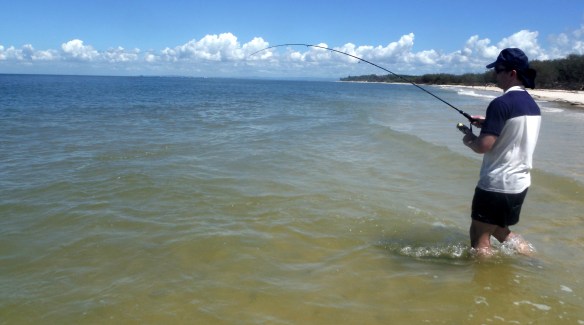
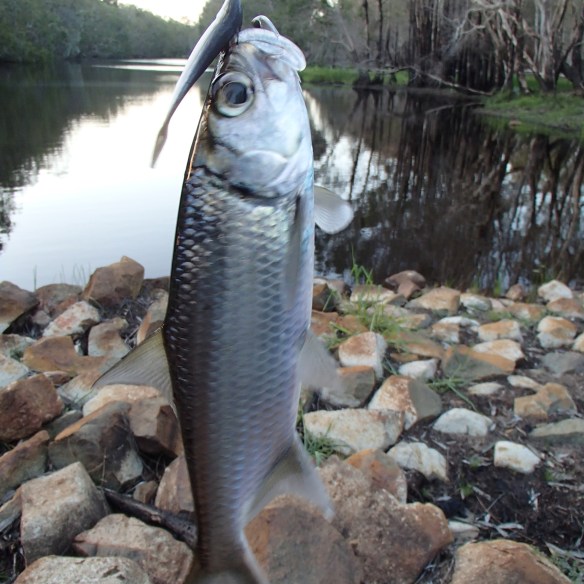
After about an hour I had had a few bites but caught nothing. I moved south and as the tide started to run out I waded across the gutter in a fairly shallow spot and stood up on the Flat Rock in ankle deep water. I started casting out beyond the rock. This immediately resulted in fish contact. I could see and feel the moses perch swiping at the soft plastic lure close to the front edge.

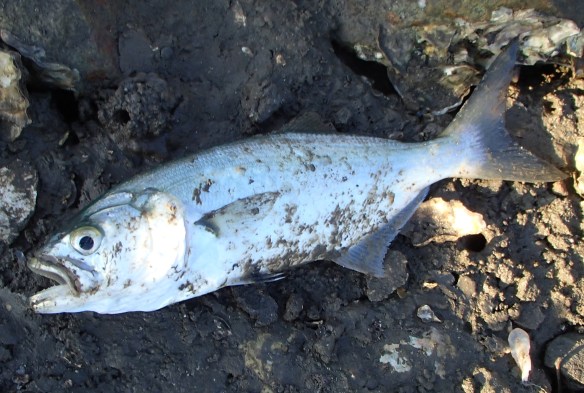
I cast out a bit further and found a small dart. I caught a few more and then changed to bigger 4” Minnow soft plastic. The dart kept hitting the bigger plastic but could not swallow it. I swapped back down to the 3” Minnow in the New Penny colour and instantly hooked another, slightly bigger dart.  I moved up and down the front face of the rock and tried different plastics. The dart kept coming but they did not get much bigger. The rain came too and gave me a good soaking. At about 1.00 pm, I gave up for the day.

1770 – Flat Rock – Slatey Bream, Dart & Stripy Perch – 6 April 2015

Monday

I managed to persuade the family that my beloved 1770 would be a good place to spend some of the Easter school holidays. Fishing was strictly rationed, but I did get a few sessions in.

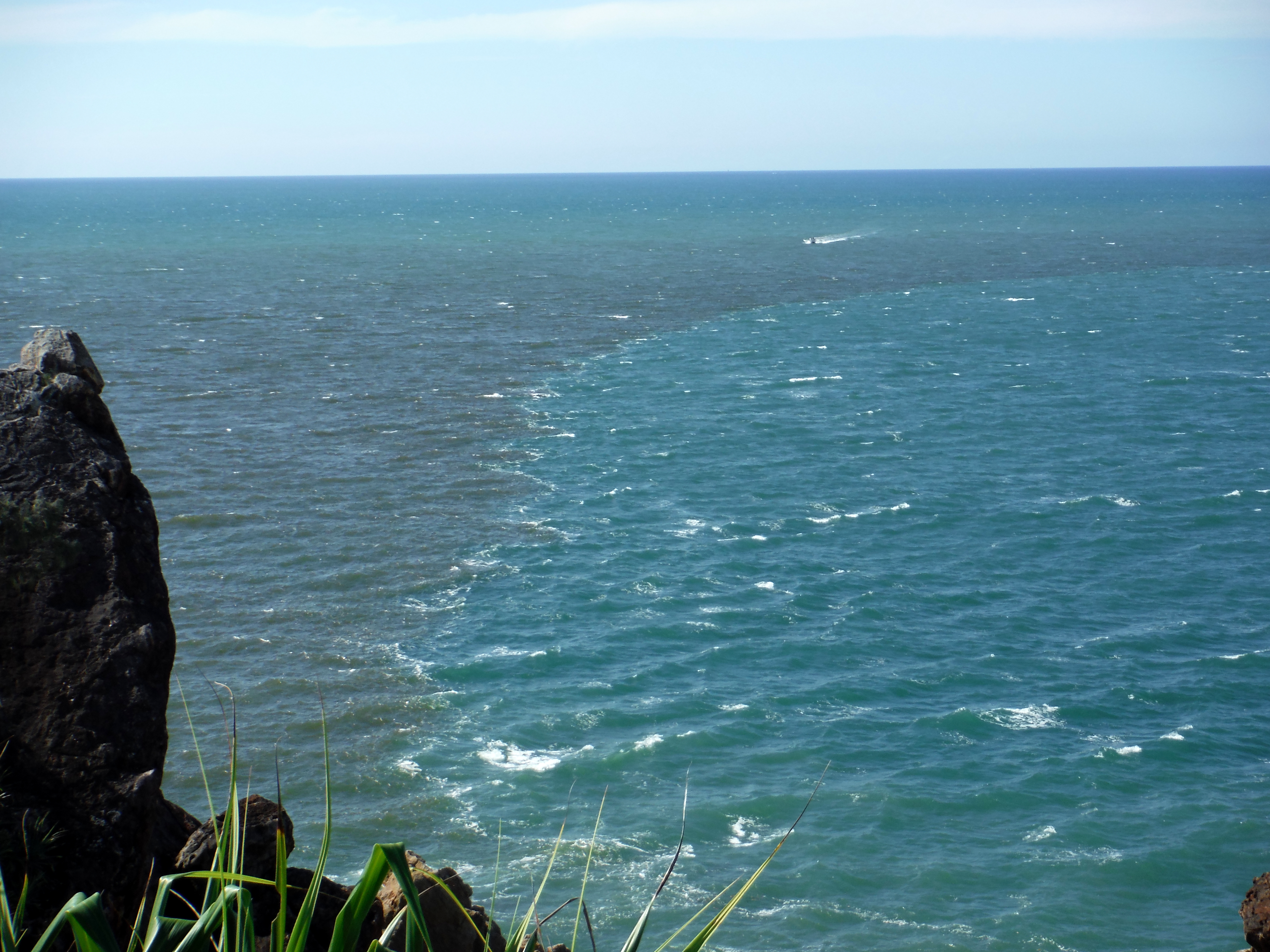
We drove up from Brisbane and passed through some monster storms on Sunday. We visited Cooks Monument and walked out to the tip of the headland on arrival. You could see there had been plenty of rain. The dirty water was clearly visible, running out into the sea from the creek.

Dirty Water at the bottom of the tide 1770

On Monday morning the skies had cleared and the wind had dropped so we drove down to deserted Flat Rock beach in Deepwater National Park. Despite the recent heavy rain and lots of Easter holiday visitors the sandy four wheel drive track down through the park was in good order.

I like to fish this spot on a falling tide and anything can happen. Locals have told me they have caught saltwater barramundi, mackerel, tuna and jewfish here. I have caught the bread and butter species – stripey perch, estuary cod, dart, tailor, bream, whiting, flathead, all along the flat rock that runs parallel with the shore. I have also been bitten off by plenty of powerful predators, but I have never landed any trophy fish here.

I find the best time to start fishing is about an hour after high tide, through to about an hour before low tide. I wade out to the Flat Rock and walk along it fishing over the edge into the surf which breaks on its front edge. There are a couple of places where the rock breaks and the water runs out. These are great spots, the fish accumulate to feed on what is being washed out from the beach gutter.

The tide reveals Flat Rock

I was fishing with my lighter rock fishing rod and reel setup – the NS Blackhole Cabin 2 S862L, rated 8-14lb, 2.59 m long matched with a Shimano Sustain – 4000 reel. I use 12 lb braid and a 12 lb fluorocarbon leader.

I started by choosing my current favourite fish finding soft plastic lure – the GULP 3” Minnow in the lime tiger colour. I rigged it on a 1/8th 1/0 jighead and cast out. Within a few minutes I caught a small dart and then a small moses perch. I had started fishing at the side of one of the breaks in the rock and the water was gushing through the gap. I kept casting the soft plastic just on to the edge of the Flat Rock and let the water push it out through the gap.

After about half an hour a fish grabbed the soft plastic and shot under the rock. I had the drag fairly loose and by the time I tightened it, the fish had tucked himself right in. I tried to put a bit of pressure on it but the light leader quickly snapped.

I tied on another Lime Tiger Minnow but it did not tempt another fish. After another 20 minutes, I swapped to a GULP Mantis Shrimp in the Peppered Prawn colour and a slightly heavier, 1/6th ounce, size 1 hook, jighead. It was now just before 1.00 pm and the resident sea eagle who had been watching me form the tree line, was getting restless. I cast out the Mantis Shrimp and let it sink and be carried off by the fast running tide. I paused for about 15 seconds, to make absolutely sure it was on the bottom, then slowly lifted the rod tip and started hopping the soft plastic back towards me. On about the 3rd hop, a fish snaffled it and turned to run out to sea. It was not very fast but it was powerful. It took plenty of line but eventually I slowed it down and it just sat in the current, about a metre from the rocks. I used the light swell to heave it over the rocks and on to the beach. It was a slatey bream (painted sweetlip) with magnificent red flashes behind its lips and around its gills. It was about 40 cm long. As long as they are quickly bled and carefully filleted, these fish taste great. They have flaky white fillets and are great fried in a little olive oil. This one was coming home for supper.

It was now lunch time and the fainthearted tourists (my family) had had enough of watching me fishing, so we packed up.

Bribie – the old oyster jetty flats – 75cm flathead – March 29, 2015

Sunday March 29, 2015

I had the bit between my teeth now, so I woke up early on Sunday and drove up to fish the run out tide, on the flats beside the old oyster jetty on the mainland side of the Pumicestone Passage, beside the Bribie Island Bridge.

Last year, March had been a fantastic month for flathead in this location, so I was hopeful. I had planned to arrive in the dark and fish the high water under the bridge but I woke up too late. When I waded out under the bridge, it was already getting light at about 5.30 am. There was virtually no wind and there had been some rain overnight. High tide had passed at 5.05 am.

Local fisherman Colin had beaten me to it and already had a 55cm flathead in his bag. He explained the recent heavy rain (following the cyclones) has slowed things down a bit and the fishing around Bribie is very patchy.

I put a GULP Jerkshad in the Peppered Prawn colour on a 1/8th ounce, 1/0 jighead and started casting around. There were plenty of prawns skipping on the surface so I dropped down to GULP 2” Prawn in the Banana Prawn colour. Neither of these interested the fish by the bridge so I waded south.

The tide was now slowly running out. I moved along the edge of the mangroves, casting my soft plastic in to a few feet of water and slowly bouncing it along the bottom.  A couple of long toms soon found it and kept snapping at it. They seem to like cruising the shallows in this area.

I was now at the drain that runs round the corner from Sandstone Point, in to the Passage. The terrain has flattened out considerably here and the drain is much less pronounced than it was last year, but there is still a nice sandy hollow in the middle of it.  I was fishing with a new favourite – the GULP 4” Minnow in the Green Camo colour. I had dropped down to a 10lb fluorocarbon leader. The long toms where still attacking the lure every so often. I briefly hooked one and it started leaping around before it unhooked itself.

I cast at the centre of the drain and let the plastic sink. Something grabbed it as I lifted it off the bottom, but I struck a little too quickly and missed it. I dropped the rod tip back down and left the plastic on the bottom for about 15 seconds. When I lifted it again the fish slammed it and hooked itself. It slowly took some line, not realising its meal was not all it seemed. As soon as it felt the hook it took off on a long initial run. It paused and then took off again. It was a solid fish and I only had a 10lb leader so I would need to take my time.

This spot is tricky as there are plenty of oyster covered boulders and as the water level drops the tide seems to run faster over them. The fish slowed but the fast running current was helping it. I slowly waded back toward a gap in the mangroves and after a few minutes pulled a big female flathead up on to a pile of washed up seagrass.

I put the tape to her and she was somewhere between 72cm and 76cm (she was not much interested in sitting still). I removed the jighead and soft plastic with my long nosed pliers and then sent her on her way. She paused and then took off.

I snipped off the end of the leader, which was quite frayed and then re-rigged with the same jighead and soft plastic and waded back to the same area to continue casting.

I soon found another 30 cm flathead, hiding on the edge of the weed. I released and carried on wading to the south. I slowed things down and methodically started to cast around in a semicircle. On about my fifth cast a fish hit hard and took off. It soon slowed and turned towards me. It was a 50cm flathead and I safely manoeuvred it into the keeper bag.

I carried on towards the green channel marker. It was now about 7.45 am. I passed by a few cunningly hidden stingrays and a couple of blue bottle jellyfish (this is why I sweat it out in waders). I dropped down to a GULP 3” Minnow in the Pearl Watermelon colour on a 1/8th ounce, size 2 hook jighead. This instantly produced results and I found a patch of hungry bream. I caught three fish in the next ten minutes. One had had a very hard life and appeared to have half his back missing. All the bream were legal sized but I had flathead for dinner, so I released them.

As the water ran out, it gradually deteriorated in quality and by about 9.00 am it was very murky. I did not get any bites on my way back to the car and at about 9.30 am, I gave up for the day.

Fingal Head – Moses Perch, Tailor, Bream & Dart – 26 March 2015

Thursday

I was delighted that my cousin’s visit had shamed me into carving out time for another fishing session and we decided to drive south to fish the rocks at Fingal Head in northern New South Wales, on Thursday morning.

I usually find the hour either side of dawn most productive in this location. This means an early start, so we left at about 4.30 am. The weather was grey and rainy for most of the drive down and we arrived at about 5.30 am, close to first light. Fortunately the rain had stopped.

We walked up to the lighthouse and down to the small causeway the leads out to the rock platform.  The headland was first spotted and recorded by James Cook in 1770, and its strange regular shaped basalt pillars were pushed up by the long extinct Tweed volcano. The advantage of the overnight rain was a light swell and virtually no wind.

I was fishing with my N.S Black Hole Cabin II – S-862 L Spin Rodlight rock fishing rod matched with a Shimano Sustain 3000 reel. The rod is 2.59m long (8’6”) and rated 8-14 lb. This is rigged with 15lb braid and I usually fish it with a 12lb to 20lb fluorocarbon leader. Today, I started with 12lb leader. I provided cousin Joe with a similair set up based on a Shimano Coastline Light rod of the same length.

Flushed with recent success fishing the GULP 3’ Minnow in the Lime Tiger colour we decided to start with this soft plastic again. We both rigged up with 1/8th ounce, size 1 hook jigheads. After a few casts the fish were tapping at the lure and it did not take long for Joe to hook and land a small 30cm ‘chopper’ tailor. He learned the ‘wet’ way about getting too close to the edge and was given a good soaking by a decent set of waves. The rain then started pouring down so I got nicely soaked, in sympathy.

I moved around to the front of the rock platform and tried a few different shapes and sizes of soft plastics before something grabbed my GULP 3 inch Lime Tiger Minnow, very close to the base of the rocks. I am not sure what it was but it moved around slowly at first, suggesting it did not know it was hooked. Once it realised something was wrong it headed for the nearest bommy and snap went my hopelessly light leader.

I re-rigged and Joe moved into position in roughly the same spot, with the same soft plastic lure pattern. A few casts later a fish struck at the base of the rocks. The Shimano Catana bent over and ot took some line. Joe was not going to let this one go. As he moved closer to the edge of the rocks I had visions of him floating up on a beach, face down, somewhere near Ballina.  Fortunately the swell was light and when he did get a soaking, it was a fairly gentle one.  The fish was doing its best to bury itself in the barnacle covered rocks but Joe swung it round and I grabbed the leader. It was a chunky 33 cm bream and would be dinner.

I tried a few different larger soft plastics but it was the 3 inch minnow that was consistently getting hit. I caught a few small Moses perch and then swapped to a 3 inch minnow in the Pumpkinseed colour. After a few casts something grabbed it and headed straight for the rocks. It felt like a good sized fish but when I pulled it clear of the water it was just a small, but very fat, Moses perch.

Over the next hour we pulled out a few more dart, one of which was missing its tail. As we got further away from sunrise the fishing slowed and at about 9.00 am we gave up and went for breakfast.

Bribie Island – Jan to March 2015 – Catch Up – 24 March 2015

I am ashamed to admit that January to March 2015 has been a fishing black hole as far as the Landangler Blog is concerned. I apologise to those of you who check back here regularly for a fishing fix.

Once more the irrational requirements of modern society – funding for food, clothing and shelter – have diverted me from the most noble of pursuits. I have fished a few sessions at Bribie since returning from 1770 in December, but I have largely been overseas working.

As usual, when you increase the time between fishing sessions it gets much harder. You lose track of which tides work best and where and when the fish are feeding.  You lose your touch with the rod and start to forget what a snag feels like and what a fish feels like. Fishing is often a process of elimination. If you fish in one general location for three or four sessions in a row, in a short time frame, you get a far more accurate idea of what works and what does not. So the moral of this story is fish as often as you can!

In late December 2014 I had a couple of session on the flats beside the old oyster jetty at Bribie and caught a few flathead on each occasion. There were always flathead lies under the bridge after the big night time high tides and because there had not been much rain, up to that point, the water was fairly clear. The GULP 4” Minnow in the New Penny colour proved successful as did the 4” Minnow in the Pearl Watermelon colour. I rigged both on 1/8th ounce, 1/0 jigheads with a 10lb fluorocarbon leader and I was using my light spinning rod and reel combination.

My next session was a beautiful morning in early February. Conditions were good with an early morning run out tide and a light south easterly wind, but I fished the same area for dismal results. There was no evidence of bait around and no lies under the bridge lights. I fished from pre-dawn to low tide with all sorts of soft plastics and hard bodies. The only thing I caught was a tiny foul hooked whiting. At low tide it was very clear that the consistent summer wind pattern of early morning south easterly followed by afternoon northerly had flattened out the terrain quite considerably. This could also be a result of the cleared area where the new resort is being built creating a wind tunnel.

My next session was early March on Red Beach at Skirmish Point, on the southern tip of Bribie Island. I fished the last of the low tide on a beautiful hot morning. I did not start until after 9.00 am and stuck with a light leader and 1/8th ounce, size 1 jighead. I was using the ‘dart slayer’ soft plastic – the GULP 3” Minnow in the Lime Tiger colour. This plastic seems to really work well off the beach. After a few casts I hooked, then dropped, a small flathead. I found the point where the current flows from either side of the island meet and started casting in to it. I could see plenty of small garfish schools and every now and then something would send the schools of smaller bait flying in all directions. The soft plastic lure was getting bumped and snapped at and I soon caught a small dart and then a bigger dart. The next taker was a tiny chopper tailor. They continued to nibble but I did not get any more and left when the tide turned.

In late March I returned to the same spot at about the same time of day with almost identical results. My cousin was visiting from the UK and I was keen to put him onto a fish or two. A great gutter had formed along the beach at Skirmish Point. At its mouth there was constant activity with garfish and other small bait schooling up. There was virtually no breeze, but the tide was coming in this time. I caught a small dart and half an hour later I was delighted to see cousin Joe land a feisty bigger dart. That was it for the day.

Cousin Dangler

Hooked up on a Skirmish Point dart


That’s a quick round up of the story so far this year. I hope to be posting more regularly now – sharks permitting.

1770 – Tom’s Creek Barramundi – 6 December 2014

Saturday

After a great capture on Thursday, I had to go back to Tom’s Creek on Saturday. It was pouring with rain in the morning and pretty miserable, so I had a lie in and decided to fish the afternoon run out tide. It would be a big tide with plenty of run, as it was full moon.

Low tide at 1770 would be at 2.12 pm, so I assumed it would be half an hour to an hour later, up in Toms Creek. On previous days there had been plenty of bait in the creek, even on the last of the run out tide. I arrived to fish at about 1.00 pm.

I started with the soft plastic that had been fishing well on previous days – the GULP Jerkshad, this time in the Camo colour. Because it was the middle of the day and the water was fairly clear, I had dropped down to 12 lb fluorocarbon leader. The rain started to fall again and the skies were grey. The midges and mosquitoes were biting. It seems that being very uncomfortable is a prerequisite for a good fishing session.

I started off fishing through the gaps in the mangroves, as the tide was too high to walk along the edge. I caught a few small Moses perch, but my first decent fish was a dusky flathead who was obviously sitting on the bottom, just behind a rock. I let the flathead go and as the tide had now receded I walked up the creek a little.

It is very shallow and by this stage boats could not come up. This means the few hours around the bottom of the tide are very quiet. There are some deeper channels and holes and this is where I focused my efforts. I dropped down to a smaller 2” GULP Shrimp soft plastic in the Peppered Prawn colour. I soon found a few more flathead but these were the bar-tailed variety. They were all too small to keep but it was encouraging to see that the fish were here.

I moved further up the creek, casting into the deeper pools where the water had carved out a vertical bank at the foot of the mangrove roots. On the next corner I found a small cod – about 30 cm long. I was now running out of water to fish so I went back to the car for a drink and a break from the insects.

Refreshed, I decided to give the fishing another try. This time walking south towards the mouth of the creek. I beefed up my leader to 16lb fluorocarbon and put on a 1/6th ounce, 1/0 jighead and a GULP Mantis Shrimp, in the Peppered Prawn colour. There were big yabby holes all along the bank so I felt the mantis shrimp shape was my best match for a yabby.

I slowly moved along the muddy bank casting at the far side. It was about 3.30 pm. I could see a fair bit of bait around and every now and then, something was taking a swipe at it from below. I was moving as slowly and quietly as I could, in the thick mud.

At about 4.00 pm, I was standing in about 30 cm of water and casting into no more than a metre when something engulfed the soft plastic,as it landed, on the surface of the water. The fish took off and launched itself out the water at the end of its initial run. It was a medium sized barramundi. I had a chance with 16 lb leader but I was fishing with my light NS Blackhole Trout rod. There was no possibility of muscling this fish in. It was a long fight but fortunately we were in an area of sandy bottom and the water level was below the mangrove roots. It surfaced a few more times, shaking its head but the hook was firmly set.

After what felt like a lifetime but was actually about 5 minutes. It came to the surface on its side. It was a beautiful looking fish, around 60 cm long. But it was closed season on Barramundi so after a few pictures , it swam back to wonder what had happened and grow bigger.

By now, it was raining again, I was hot, knackered and the bugs were humming. I packed up with a smile on my face and headed home for a cold shower and an even colder beer.

1770 – Tom’s Creek – 4 December 2014

Thursday

On Thursday morning I drove down to Wreck Rock to fish through dawn. When I arrived the wind and swell was up and the tide was higher than I had expected. After an hour and a spectacular sunrise, I decided to give up and look elsewhere for some fish.

I stopped in town for a quick breakfast and decided to go back to Tom’s Creek. I wanted to know what had bitten me off the day before. By the time I drove down the four wheel drive track to Tom’s Creek, it was about 10.30 am. I rigged up the light rod with relatively tough, 16lb fluorocarbon leader and a 1/6th ounce, 1/0 jighead. I started with a GULP Jerkshad in the Peppered Prawn colour. I cast this around in the same area I had been fishing the day before.

The tide was about half way out and was running quickly. I used the same technique as previously. I was casting at the base of the mangrove roots on the far bank. Inevitably I lost a couple more jigheads but when I finally put the soft plastic right up against the roots, something slammed it again. I tried to pull it out but the rod did not have the power and with the aid of the current the fish slipped into the rock bar and that’s where I left the jighead.

I re-rigged using a heavier ¼ ounce, 1/0 hook jighead and the same 16lb fluorocarbon leader. This enabled me to cast more accurately at the base of the mangroves, and helped the soft plastic get down in the water column faster. The first taker was a small grunter bream. I released it and carried on casting.

I swapped to a GULP Mantis Shrimp in the Peppered Prawn colour. There were big yabby holes all over the banks, so I thought this might be a good shape to offer up. After a few casts I was on again, but after a short and furious fight I got half the yabby back with a bent jighead, but no fish.

It was now just after 11.00 am. I re-rigged with another ¼ ounce jighead, but I had no more Mantis Shrimp soft plastics, so I went back to a Jerkshad – this time in the Pearl Watermelon colour. Just a few casts later, a solid fish grabbed it. This time I had the drag tight and I pulled hard straight away. The fast running current helped me get the fish away from the rocks. It put in a few more determined runs but after a few minutes, I had the fish subdued at my feet. It was a great looking crimson coloured mangrove jack. I measured it at about 47cm, took a few pictures and released it to fight another day.

I fished on for about half an hour but could not find another fish so, at about noon, I gave up for the day.

1770 – Getaway Beach and Tom’s Creek – 3 December 2014

Wednesday

Wednesday was a beautiful morning but a disappointing one, from a fishing point of view.  I was still at 1770 and I decided to walk round from the beach that has the desalination plant intake to Getaway Beach. There is some really fantastic looking fishy terrain along here but apart from small dart and Moses Perch I have yet to catch anything decent here. I started at about 4.30 am and witnessed a beautiful sunrise but after a couple of hours of casting hard bodies and soft plastics all I had caught was a tiny sand flathead.

OLYMPUS DIGITAL CAMERA

I decided to retire and do something different for the afternoon session. I drove down to Tom’s Creek which is a tributary of Round Hill Creek. The boats can only get up to it for an hour or so, either side of high tide, but there are a few spots where you can fish it from the shore. I have had some powerful hit and runs, whilst fishing with soft plastics here but, apart from a few good grunter bream (javelin fish), I have landed very little.

It was now about 9.30 am and I started fishing with my light rod and 10lb fluorocarbon leader. I fitted a 1/8th  ounce, 1/0 jighead and loaded it with a GULP 4” Minnow in the New Penny colour. I lost a few rigs working out where the snags were located.  I kept getting fast, aggressive bites but was struggling to hook up. I slowed things down and after about twenty minutes I connected with a mad fish – it was a Tarpon about 35 cm long, and it leapt around all over the place. I photographed and released it. I had a couple more bites from its mates, but could not hook up.

The tide was running out fast and so I swapped to a slightly heavier, 1/6th ounce, 1/0 jighead, but continued with the same soft plastic lure. This soon produced results and I caught a couple of grunter bream, the largest of which was about 35cm long.

I swapped to a bigger GULP jerkshad soft plastic in the Pearl Watermelon colour. I was casting as close as I could to the mangrove roots, on the far bank. At about 10.30 am something slammed the soft plastic, as it sank. It immediately headed for some rocks and after a couple of runs, it unhooked itself.

By about noon the water was fairly shallow and the tide had slowed, so I gave up for the day.

1770 – Wreck Rock – 2 December 2014

Tuesday

Once again I apologize for not writing up my fishing reports sooner but Christmas got in the way.  This one and the few that I will publish over the next few days, are from early December 2014 – better late than never.

I managed to get a few days off in Gladstone in early December. That enabled me to shoot back down to Agnes Water and 1770. Once again Gavin and Kim found me a great deal at Loka Santi – through http://www.1770beachaccommodation.com.au/. These apartments could easily become my home away from home.

I started at Wreck Rock on Tuesday morning. Low tide would be mid-morning and there was a light north-easterly wind blowing. It was a bright sunny day and the water was fairly clear. I was using my NS Blackhole light surf/ rock fishing rig and started with 12lb fluorocarbon leader and 1/6th ounce, size 1/0 hook jighead. I was fishing on the northern set of rocks.

I started at about 9.20 am but did not get a bite until around 10.00 am. I was using a GULP 3” Minnow in the Sardine colour. I was right at the north end of the line of rocks that are exposed as the tide runs out. Over my last few trips there have always been fish at the end of this set of rocks. Last time, it was mostly dart and stripey perch but in the cooler months it is often tailor, trevally and bream. You regularly see the tuna further out but they very rarely come close enough to cast at.

Today the first fish was a small trevally. It was followed by two more, in quick succession. None of them were more than about 35 cm long. Then things went quiet so I walked over to the rocks at the south end of the bay. I fished all round these and even dropped right down to 10lb fluorocarbon leader, but I did not get a bite.

By noon the easterly wind was making things tough so I gave up for the day.

Iluka – Woody Head – 27 November 2014

Thursday

It was another grey and humid start on Thursday morning in Iluka. There had been several showers overnight and the rain seem to have stifled the wind and swell. I had been doing well at Woody Head so I drove back out there, before dawn.  It would be an early morning low tide – which is pretty much perfect for fishing the rock ledges.

The recent bite offs suggested there was something big and toothy around so I tried again with a big shallow running hard bodied lure – the DUO Jerkbait 120 SP. I cast it around all through dawn but could not stir anything up.

I moved south along the rocks and swapped to a GULP 3 “ Minnow in the Lime Tiger colour on a 1/6th ounce, size 1/0 jighead. I was now on my lighter rock fishing NS Blackhole rod. I was using 14 lb fluorocarbon leader. I caught a small bream at about 5 am, from the spot which I believe the locals call the ‘Jew Hole’. It is a large inlet with a deeper channel in the middle, to the south of the area known as the ‘Barnacles’, where I usually start my fishing.

The sun came over the horizon and there was a brief glow of red before it got lost again, in the thick cloud. At about 5.30 am I hooked a fish and it took off. It was moving fast and I caught a flash of silver and realized it was a solid dart. I soon subdued it.  I caught another on the next cast and about 4 more, smaller ones over the next 20 minutes.  Then, I swapped to a GULP 3“ Minnow in the Green Camo colour and caught another, bigger dart. I bled the two bigger dart and left them in a rock pool that had a ledge overhanging it. Hopefully the various freeloaders – kites, pelicans, crows, crabs and wobbegongs, etc, would not find them.

Things slowed down a little so I moved further south to an area known as ‘Mossies’. This is a large, flat set of rocks covered in ankle deep green weed, at the southern end of the Woody Head platform. It is really only safe to fish here in gentle conditions, around low tide.  It was now about 6.00 am and low tide had been at 5.51 am. The first fish to grab the plastic was another solid 30 cm + bream. Another bream followed, on the next cast.

I was now almost as far south as I could go on the Woody Head rocks. I cast out the Green Camo minnow and let it waft down beside the ledge. Before it hit the bottom something smashed it. It took off to the south with a blistering run then turned back and torpedoed into the base of the rocks and snap went the leader.

I looked for tougher leader but I had used it all, so it was 14lb or 10lb. I tied a strong knot with the 14lb and put the same soft plastic minnow on a 1/8th ounce, size 1/0 hook jighead. I cast back in the same spot and after a couple of tries, I was on to a fish again. I had the drag set tighter this time and I pulled pretty hard from the minute I hooked up. It was a tough fish but this time I kept it out of the rocks. After a few minutes it was tired and I landed it with the aid of the swell. It was a small king fish (or possibly an Amberjack – not sure) about 55cm long. I took some pictures and threw it back. A few casts later I was on to another one. This one was slightly smaller but put up just as tough a fight.

Next taker was a golden trevally which was longer than the king fish but not quite as mad. It was still a tough fight on the lighter rod and great fun. It was not even 6.30 am and I had caught four species. That is the beauty of Iluka.

I fished for another hour until the sun was really out and the cloud had burned away. Things slowed down a little but the bream and dart kept coming. I ended up keeping a few of the bigger dart, the trevally and a couple of bream, to make a mixed fish fried rice. I find using different flavoured and textured fish is great for this kind of dish. I fillet the fish and fry it, then add it to the cooked rice with some fried spring onions, crushed garlic, fresh coriander, Thai fish sauce and fresh lime juice.

By 8.00 am I was back at the car after a great mornings fishing.

Iluka – Woody Head – 26 November 2014

Wednesday

Morning

It rained overnight on Tuesday and it was warm and cloudy on Wednesday morning. I chose to fish at Woody Head again. The wind had settled down and had turned north-easterly again. I was in position early. With first light at just after 5.00 am local time (which is 4.00 am Queensland time) bedtime is about 8.00 pm.

I arrived on the rock platform just before first light and rigged up my heavy rod. Low tide would be about 5.00 am.  I was using 30lb fluorocarbon leader and I put a GULP 5” Jerkshad in the Peppered Prawn colour on a 1/6th ounce, size 1/0 hook jighead. The swell had settled considerably and I could safely get fairly close to the edge of the rock ledges.  I knew where to cast – as close as I could to the edge of the rocks. Sure enough, on my third attempt I felt the gentle pull of a jewfish mouthing the plastic. I paused, then struck. With the big rod and light swell, this fish was fairly easy to subdue. It was 5.30 am and I had my first jewfish of the day. It was probably just over 70 cm, but I had left over fish from the day before, so I speared it back into the foamy wash.

I stayed with the heavy rod for about another thirty minutes  and caught a great bream but I was having trouble keeping in touch with the soft plastic, so I swapped to the lighter rod with a 14lb fluorocarbon leader. I moved to the south along the rocks, casting at any likely looking water. I soon found a few more good bream. I caught about 6 over the next hour – most were over 35cm. I used both big and small soft plastics in various patterns and colours.

At one point something bit hard on a 3 “ minnow soft plastic and took off, after a few seconds the line went slack and I retrieved just half a jighead. You need good teeth to bite clean through the jighead – mackerel? Shark?

At about 8.30 am the rain started falling and gradually got heavier until I decided to stop for the morning.

Afternoon

At about 3.00 pm the rain stopped and I went back to Woody Head to fish the afternoon low tide. The wind had picked up a bit from the north. I caught a few more bream on soft plastics all along the front of the rock platform. I caught one 35 cm on a GULP Jerkshad, but in general the fish where smaller than they had been in the morning.

As the sunset behind the headland the wild weather turned the sky a great colour. I fished through dusk and kept catching small bream and a couple of dart. At about 6.30 pm I decided I had had enough and walked back to the carpark.

Iluka – Woody Head – 25 November 2014

Tuesday

Morning

Monday had been a tough day. The weather had really made it too hard to fish. Any normal person would have had a day relaxing at the pub or fixing up their gear – but by now regular readers will realize that I am far from normal.

Tuesday morning was a different story weather wise. The north-easterly had dropped off considerably to about 10 knots.  I decided to try fishing the rock platform at Woody Head. I arrived about 4.00 am and rigged up my heavy rig. Having seen the popper working the day before. I tied on a DUO Realis Popper 64 in a red colour. I tied it on with 30lb leader and lobbed it out. With a fair breeze it was hard to cast it very far on the heavy rig. However I eventually succeeded in getting more or less parallel with the edge of the rock ledges and worked the popper through the foamy wash. On about my tenth cast there was an explosive strike, short run and then my leader was flapping in the wind. Whatever it was, 30lb leader was clearly not going to stop it. It was only just light enough to see. I tied on another bigger RIVER TO SEA Dumbbell Popper but this did not interest the fish.

As the sun came up I decided to switch to soft plastic lures. GULP have a fairly new pattern – the 3” Mantis Shrimp. This is basically a prong tailed shrimp shape. I had it in the Molting Shrimp colour. I tied it on with 30lb fluorocarbon leader on a ¼ ounce, 1/0 jighead. I cast it out and let it sink for as long as  I felt it would take to get to the bottom. The problem with fishing these ledges is that the fish are always very close in. This means getting you soft plastic to the bottom and keeping it there long enough for something to grab it – without getting snagged. The Jewfish like to sit under the overhangs and in the caves that are under the ledges. You have to use your lures in a way that will persuade them to come out and eat.

The sun was now over the horizon. I dropped the soft plastic just over the edge into the foamy water. After a couple of hops my line was almost touching the face of the rocks. There was gentle tug and I dropped the rod tip – rock, swell or fish? I paused for a few seconds then struck hard – it was a fish. It had plenty of power and it took off to the south in a long and powerful initial run. But it was slow and powerful so I was pretty sure it was a jewfish/mulloway. I took a little line back, as it paused for a breather, but I could not turn its head. It put in another powerful run but then it slowed and I tightened the drag and put some pressure on. It was tired now but it still kept trying to dive down underneath the rocky ledge. I used the swell to get it to the foot of the rocks. I could now see it was a very decent fish – perhaps 80 or 90 cm. On a couple of wave surges I tried to get it up on the stepped ledges below me. I succeeded initially but as soon as the wave receded the dead weight of the fish was unmovable and it would wriggle back off with the receding water. It seemed solidly hooked and pretty tired so I waited for a decent wave set and heaved it up two steps. I waited for the next surge but as I pulled, the hook came free. It slid back down, and with the next wave and swam away.

When I examined the jighead I could see it had started to straighten. I suspect that the only way I would have landed that fish would have been with a long handled gaff and I do not intend to start carrying one of those around the rocks with me. I re-rigged with the same outfit but after 30 minutes I had not had another bite so I decided to change to another soft plastic. I chose the GULP 4” Minnow in the Lime Tiger colour. After two casts, something slammed this and briefly headed out to sea before biting through the leader. I tied on a repeat rig and fished around for another 20 minutes with no result.

I decided it was time to switch to the light rig and lighter leader. I started with 20lb fluorocarbon and tied on a smaller, GULP 3” minnow in the Lime Tiger colour. I stuck with the ¼ ounce, 1/0 hook jighead. It had been an interesting morning and it wasn’t even 6.00 am yet.

I cast the smaller lure out and it was hit, at the base of the rocks on the first cast. I soon landed a solid bream – well over 35cm. I released it – I was determined to get a jewfish that I could keep for supper. About 5 minutes later I had another fish on. I was sure it was another jewfish but I only had the light rod this time so patience was the key. I left the drag alone and gradually tired the fish out. The tide would be high at 11.00 am so the rising water was gradually improving my chances of using the waves to help wash the fish up on to the rocks. I pulled the fish up the ledges in a couple of stages and safely grabbed the leader. Finally I had a keeper size Jewfish – just on 72cm. I put it in a keeper pool and cast out again.  The fish were suddenly on the bite, I caught another decent bream and then was on to a similair sized jewfish but once more I was unable to get it up the rocks.

By about 6.30 am I had swapped to a GULP 5 inch Jerkshad in the Cajun Chicken colour. After a few casts I connected with another jewfish. I managed to land this one but it was just under 70cm, so I sent it on its way.


By about 7.30 am the wind had picked up again and the tide was washing over the ledges so I had to give up. I cleaned up my jewfish and walked back to the car.

Afternoon

The wind was forecast to drop off and then turn south-easterly in the afternoon. After a great morning I decided I had to go back to Woody Head and fish through dusk. I arrived at about 3.30pm and walked out to ‘the Barnacles’ area. The tide was running out to an afternoon low at about 5.30 pm. The moon was a waxing crescent – 11% full.

I used my heavy rod with 30lb fluorocarbon leader. This area is tough to fish as you are casting over lots of shallow reef to reach a drop off. A surface lure is a therefore a good option. I tied on a River to Sea 110m Dumbbell Pop surface popper and hurled it out. I wore myself out for twenty minutes casting this in all directions but I could not stir anything up. I swapped over to a ¼ ounce, 1/0 jighead and GULP 5 “ Jerkshad in the Cajun Chicken colour.  On the first cast I caught another good (35 cm+) bream and then I lost the jighead to the rocks.

I re-rigged and cast out again. There were a few fish knocking and bumping the plastic just as it reached the ledge, but I could not seem to hook them. Just before 4.00 pm something grabbed the plastic just as I finished my retrieve. It tried to dart under the rocks but it was not a big fish and the heavier rod and tightened drag soon pulled it clear. It was an amazing coloured wrasse of some sort – a really pretty fish. After a few pictures I released it.

I caught a couple more bream on smaller soft plastics but the south easterly started to blow hard at about 4.30 pm, so I gave up for the day.

Wrasse

Soft plastics will catch anything

Iluka – the Clarence River and Iluka Bluff – 24 November 2014

I woke up to a rising 25 knot north-easterly wind. So I could not fish the rocky headlands. I would have to find some shelter from the wind. I decided to go back to where I had been fishing the night before.

So just after first light, I walked along the top of the rock wall, to the south of the boat ramp. I started with my light spin rod and a GULP 3 “ Minnow soft plastic in the Peppered Prawn colour. I caught a tiny bream after a couple of casts and then saw a school of fish come through the gap in the rocks. They splashing and gulping on the surface and I realized they were small tailor. I suddenly understood the term ‘choppers’ as this is exactly what they were doing to the surface of the water. I cast into them and got a bite but no hook up. When I retrieved my lure its tails was missing.

Clarence River tailor The gap in the rockwalls Clarence River

As I re-rigged a trailer boat came through the gap. The owner of the boat left his two-stroke running while he jigged for bait in the gap a few times. He did not get anything and after a few more goes he revved up and took off. Not surprisingly the fishing went quite for about 20 minutes. Then the choppers were back.

This time I cast my soft plastic 3” minnow right into the middle of the school and let it sink. It was whacked about three times as it floated towards the bottom. I jerked the rod tip up and connected with a fish. It was a small (30cm) ‘chopper’ tailor and it was soon jumping around in the mud at my feet.

Another boat came through and repeated the process that the first one had, with similair results. I had not realized this gap in the rocks was such a heavily used thoroughfare. The water must be consistently deep as a couple more boats soon came hurtling through. I decided it was getting a bit too noisy for the fish to hang around so I went back to find a coffee in town.

The wind kept howling all day. At about 3.30 pm I decided to see if the sheltered side of Iluka Bluff was worth fishing. A couple of other keen fisho’s were also braving the wind. They already had a couple of good-sized (45cm+) tailor from the foamy water. I big popper in the Qantas (red and white) colour had been the most successful. I did not have a popper with me so I tried a DUO Jerkbait 120 SP sub surface shallow diving hard bodied minnow. After few casts I lost this to the rocks. I tried a few plastics but the wind just blew them away. After 30 minutes of battling I finally decided that the day was not suitable for fishing and headed for the pub.

Iluka – Middle Bluff and the Clarence River – 23 November 2014

Sunday

With another year almost over I was determined to get in a few more days of fishing down at Iluka. The weather looked good so on Saturday, I drove down from Brisbane in the afternoon. I rented a unit in the Riverview Apartments – which look straight out on to the Clarence River. I love to camp at Woody Head, but the weather looked a bit tricky so I chickened out. I arrived in time for a beautiful sunset. I sorted out my rock fishing gear, checked the weather forecast for the morning and went to bed early, with the alarm set for 3.30 am, NSW time.

On Sunday morning I got up in the dark had a cup of tea. Then I drove round to Frazers Reef beach car park. I walked down the path and onto the beach. There was not much moon in the sky – it had been ‘new’ on Saturday. There were a few clouds along the horizon and there was a light north-easterly wind blowing. A couple of kangaroos were close to the water but they decided to bounce back to the undergrowth, when they saw me walking along the beach.

I walked north, past Frasers Reef to Middle Bluff. This rocky platform sits about half way between Iluka Bluff and Woody Head. My favorite spot to fish is at the north end. Before I start, I will offer my words of warning. The wind and swell are very unpredictable here, so always take care. I now wear a pfd and felt-soled rock fishing boots. The wave sets and swell heights vary dramatically between high and low tide, so tread carefully and watch what’s coming all the time.

This morning the swell was fairly tame but every 15 minutes a big set would come through and slap against the rocks. The tide had been low at about 3.30 am and it was now running in. I rigged up the heavier of my two rock fishing outfits – the Daiwa Demon Blood 962H rod matched with a Shimano Stradic FJ 8000 reel.

Now a whinge for Shimano – I have had a lot of trouble with the drag clicker arrangement on your reels. On the previous Stradics – the problem was the part kept breaking. This has now been changed to a more robust part. But it keeps going silent on me.  Aside form the springs and clips that keep failing or popping out, I think the basic problem is the clicker is metal and the wheel it clicks against, is plastic. I know I use my reels a lot and I treat them mean, but I think this sort of basic design fault should not keep appearing.  To add to my disappointment in Shimano it took three months for you to find a new bearing for my Stella, last year. I could have flown to Japan (Kuala Lumpur, Shenzhen) myself and machined one. The folks at Jones Tackle have done a great job of repairing the reels and covering for you, but overall the product is not robust enough for Australian conditions. I have decided my next reel of this size will have to be another brand.

Back to Middle Bluff – I started by casting big shallow diving hard bodies without much luck. You can catch just about anything off these rocks. Tailor are around all year, as are jewfish, dart, trevally and some monster bream.  I have seen a 25 kg Spanish mackerel caught off here, on a 40 cm live tailor. It’s a very fishy place.

However, this morning it was proving tough. I swapped from the hard bodies to big soft plastics – a GULP Jerkshad in the Lime Tiger colour. To counter the swell I initially rigged it on a ¼ ounce jighead and later dropped down to a 1/6th ounce jighead. I moved up and down the rocks without much luck. I was fishing with 30lb fluorocarbon leader. The water was murky because of the big tides of the last few days.

I fished through the dawn with hardly a bite. I swapped rods to my lighter rock fishing rig – the N.S Black Hole Cabin II – S-862 L Spin Rod. It is 2.59m long (8’6”) and rated 8-14 lb. I dropped the leader down to 20lb fluorocarbon. I put on a smaller GULP 3” Minnow, also in the Lime Tiger colour. The smaller soft plastic immediately attracted attention, with a couple of grabs and even a solid bite, but I did not hook anything. After another 20 minutes of casting I connected with a fast fish, I soon subdued it and pulled it clear of the water. It was a dart.

I moved a little further south. I cast down into some foamy water and let the plastic sink to the bottom. I paused for about 20 seconds and as I lifted it – bang – something grabbed it and took off. It went hard and fast and I struggled to slow it down. I tightened the drag a little and it paused, then took off again. I just kept pumping and winding, whenever I could and eventually it started back towards the base of the rocks. I suddenly realized I was a long way away from anywhere I could safely land this fish. I was standing about four or five metres above the water on the rocks and there was no way the 20lb leader would pull this fish up. I saw a flash of blue/silver as it headed in to try and bury itself. Kingfish/ Tailor/ Salmon – I am not sure, but it was a good size. I started to walk it towards the south, where I might be able to land it. I got about 20 metres along the rocks and after a big surge, the line went slack. I pulled up the mashed plastic. The hook must have just fallen out.

Now I had found some fish I decided to go back to the bigger soft plastic and tied on a 5” Lime Tiger jerkshad. I fished this around the rocks hoping to find the fish that got away. It was only about 7.00 a.m. but it felt like I had been fishing all day. The sun was high in the sky and it was very hot. At about 7.15 am a fish grabbed the lure close in to the rocks. After a brief site it pretty much gave up. It was a small jewfish about 45cm long. After a few pictures I threw it back. At about 8.00 am I set off back to the car, stopping for a morning swim on the way.

The wind picked up during the day and the sky clouded over. I decided to try fishing the rock walls just to the south of the boat ramp, in town. I started at about 4.00 pm. It was almost low tide. I dropped down to my light spin rod with a 10lb fluorocarbon leader. I was expecting a few bream to be swimming around this area, so I started fishing with a GULP 3” Minnow in the Smelt colour. I had it rigged on a 1/8th ounce, size 1 hook jighead. I cast parallel with the base of the rock wall and soon found a few bream. I moved to cast at a gap in the wall and swapped to a GULP 3” Minnow in the Peppered Prawn colour. I felt a few bites, so I left the plastic to sit in the bottom for a while. This did the trick and when I lifted the rod tip there was a fish on it. It was heavier than a bream and after a while I saw a longer flash of silver – it was a school jewfish, about 40 cm long. On the way back along the rock wall, I caught a small flathead.

With good weather and a few fish, it had been a good start to the week.

Bribie – the old oyster jetty flats – 18 November 2014

Tuesday

Back home to Brisbane for some work. I have done a fair bit of fishing recently but once again paid work has interfered with writing up my sessions, so these reports are far from fresh.

On Tuesday I had a window to fish in the morning, so I grabbed it. The tide would be running out to low at Bribie and it would be low just after noon.

It had rained overnight and there had been a big downpour a few days earlier. I could not get away for dawn, but I arrived and pulled on my waders at about 8.00 am. That is about four hours after first light, at this time of year. It was not a big tide. It was very humid and overcast and the wind was from the north east.

I started just south of the old oyster jetty on the mainland side of the Pumicestone Passage, close to the mangroves roots, in the shallows. I was fishing with a GULP 4” Minnow in the Pearl Watermelon colour – the perfect small mullet/pilchard imitation. I was using my light spin rod and a 1/8th ounce, size 1/0 hook jighead and 10lb fluorocarbon leader. At about 8.30am I caught a small (about 40 cm flathead). I took a picture and released it. It was sitting only a few feet away from the shore in about 35 cm of water. This is typical flathead behavior. They move up to the mangrove roots on the overnight high tide and just stay put until there is almost no water over the top of them.

I moved further south, following the run out tide as it gradually revealed the sand banks and weed beds. I had enjoyed fishing with the small surface poppers at 1770, so I decided to try one on the flats. I cast the small Rebel as far as I could in front of me and retrieved it slowly with quite a few long pauses. It took a while but as I took up the slack after a pause a fish smashed the popper and took off. It some tired and I could see it was a bream – about 30 cm long. I released and peppered the area with more casts. A few casts later, I caught another much smaller bream.

I carried on towards the green channel marker and swapped back to the soft plastic minnow. I found three more flathead, two of which would have been keepers. It was now just before noon and the run out tide had slowed. I turned and walked north, back towards the car. I caught one smaller flathead on the way and by 12.15 pm, I was back at the bridge.

It had taken a while and there were some long gaps between them, but I had found a few fish. The Christmas holiday fishing should be pretty good.

1770 – Wreck Rock and Deepwater Creek – 8 November 2011

Saturday

It was my last day in 1770 for a while. I decided to fish the afternoon low tide at Wreck Rock. It was full moon so the water would get quite shallow around the rocks. There was a fairly light north easterly wind and not much swell.

I arrived at about 3.00 pm and rigged up with a 16lb fluorocarbon leader and 3 “ GULP Minnow on a 1/6th ounce, 1/0 hook jighead. This produced a small dart on the first cast and almost a fish a cast thereafter, for the next 30 minutes. I gradually moved along the rocks and it was usually the first cast, in a new location that produced the bigger dart. I soon had a few worth keeping.

By about 3.30 pm I had almost arrived at the end of the rocks. I had now swapped to a Zman 4” Jerkshad in the Shiner colour. A cast it out, about 5 metres directly in front of the rocks and the lure fluttered towards the bottom. I set the hook on another dart. Dart fight hard and love to turn sideways like trevally, but this one was positively hyperactive. I pulled it clear of the water and then released it. The next cast produced another dart, a little smaller but equally frantic. Then I saw why the fish were so spooked. I long, slow moving grey shape swam along the base of the rocks. It looked about 1.5 metres long and had clear black markings on its fin – so I presume it was a black tipped reef shark. This probably explains numerous bite offs I have had around these rocks.

The dart kept coming but as the tide turned in I caught a few small trevally – including  a strange looking bumpnose trevally. As the tide started to run in at about 5.00 pm,  I decided to swap locations.

I drove down to Deepwater Creek to fish through dusk. I thought the big tide and full moon might create some good conditions. I arrived about 5.30 pm and fished through the dusk with poppers and small soft plastics on a 10lb fluorocarbon leader. I tried both the freshwater and saltwater sections. I was surprised to get a catfish from the salt water side. It grabbed a GULP Swimmow soft plastic in the Peppered Prawn colour, presented on a 1/16th, size 1 jighead. Meanwhile as the sun dropped below the horizon something swiped at the popper on the freshwater side. On the saltwater side, in the pitch dark, I could hear plenty of surface slurps and bust ups. The moon was not up yet and as I dragged the popper slowly across the surface, it was getting bumped and nudged all the way through the retrieve. Finally I hooked something and it pulled quite hard. I turned the headlamp on to reveal a small mullet. There was a big school of them cruising round.

I gave up for the night and marked this spot down for a future visit. Once again, I would like to recommend Gavin and Kim of 1770 Beach Accommodation. I stayed at Loka Santi which are very smart apartments, but they have accommodation to rent at every budget level and can offer some really great rates – visit their website for more information  www.1770beachaccommodation.com.au


1770 Getaway Beach, Flat Rock & Wreck Rock – 6/7 November 2014

Thursday/ Friday

The weather stayed good at 1770 on Thursday and Friday. The winds were light northerlies and the sea flattened out. Unfortunately the low tide was in the middle of the day which meant the fishing timetable was not ideal. Low tide just after dawn and dusk would be my favourite, but you cannot have everything you desire.

I fished at Flat Rock and Wreck Rock on the dawn high tides without much luck. As the tide ran out towards lunch time, I found more and more fish. But they were generally small dart, stripey and moses perch and the odd whiting. During these middle of the day low tides I had to drop down to a 1/8thounce, size 2 hook jighead, 8lb fluorocarbon leader and GULP 3” Minnow soft plastics to entice the fish into action. Typically each session would produce a couple of good size dart and I kept a few for dinner.

Dart is really about the only fish I enjoy eating raw. It needs to be bled soon after capture, filleted and refrigerated and then left for about 12 hours.Then comes the tricky bit – take it out of the fridge and let it come to room temperature, before you eat it. The flesh is firm and perfect with a little chilli soy or fish sauce and lime.

Incidentally, the more I catch fish the less I eat it in restaurants. When you know the texture, feel and taste of really fresh fish, it is very hard to eat something that has been sitting around, even a few days. I encourage everybody to catch some bream, whiting or flathead during the holidays, fillet them and eat them. Yes, it’s a bit of a hassle to take the fish home and clean it up, and sometimes it hardly seems worth it – but you will definitely taste the difference. It is also often the smaller fish like dart and whiting, that taste the sweetest.

In desperation I even tried a tiny popper at Flat Rock – hoping to tempt some larger whiting. Instead, this just caught another small dart. A constant stream of small fish still made the fishing fun and as usual the scenery and sunrises were spectacular.

1770 – Wreck Rock & Deepwater Creek – 5 November 2014

Wednesday

Lunchtime

I had a lie in on Friday morning and waited to fish the lunchtime low tide at Wreck Rock Beach. I drove down into Deepwater National Park at about 10.00 am. The skies were clear and the forecast strong north easterly wind had not materialised. I rock hopped out, about half way along the peninsula and cast out a  GULP 3” Minnow soft plastic, in the Lime Tiger colour. I was fishing with 10lb fluorocarbon leader and a 1/8th ounce, 1/0 sized hook jighead. The first taker was a small moses perch, who was hiding close to the rocks. I caught a few of these, (none big enough to keep) then moved a little further along.

I cast out in front of the rocks, into the gaps between the bommies. I soon found some more moses perch and then some small dart. I moved around the rocks and swapped through a few different coloured soft plastics. The brighter colours in the three inch size soft plastic minnows – particularly those with some speckle in the colour, seemed to catch the best fish and the dart gradually got bigger. But I could not find any significant fish at Wreck Rock and by about 3.30 pm, the incoming tide pushed me off my fishing perch.

Early evening

I dried off, pulled on some long pants and drove back down to Deepwater Creek. I arrived just after 4.00 pm and rigged up with another small DUO Poco Poco surface popper. I cast out into the fresh water section. I jerked the popper slowly back towards me. There were a couple of swipes behind it, but I did not hook up.

I moved back to the saltwater section and re-rigged with a GULP 3 “ Minnow on a 1/16th ounce, size 2 hook jighead. Tarpon have quite small hard mouths so I hoped the smaller hook gauge might slide home more easily. This did the trick and after a number of hits and dropped fish I finally hooked a good one. They fight so hard and leap around all over the place – they are just great fun to catch. I landed three but hooked up to about ten as the sun dropped and the cicadas started to produce a deafening hum, the action got faster and hotter and then slowly died down.

By about 6.45 pm it was dark and quiet. I tried a few casts with a popper and then gave up.


Tarpon Salty water tarpon

Fish stealing friends – Shark Bay – November 2014

Every time I fish at Shark Bay, near Iluka in Northern New South Wales,  I clean my fish in the rock pools. It is not uncommon to have an octopus stick a tentacle out and grab some floating fish guts or watch a crab sneak out to grab a free meal. But without fail, about three to five minutes after first drawing blood, the wobbegongs arrive.

Last time I was down there I caught a tiny moses perch on a big DUO lure and got mugged as I reeled it in. Watch where you are paddling in those rock pools!


1770 – Deepwater Creek – 4 November 2014

Tuesday

On Tuesday I had some work to do in the morning and the wind was blowing hard. By lunchtime, I was keen for a fish, so I decided to drive down to Deepwater Creek, which is just south of 1770 and see what I could catch.

At about 3.00 pm I set out to explore. I have fished a few sections of the creek. It has both freshwater and saltwater parts with a weir separating the two. When it rains heavily, the water runs over the weir and it would be possible for fish who can survive in both, to move up stream. Last year I caught my first tiny barramundi in this creek. I am sure that there are some bigger ones lurking in this system.

It’s important to protect yourself from the bugs. You want to be fishing at dawn or dusk and unfortunately this is the time when they are at their fiercest.  This is a fresh/ saltwater swamp, so after a bit of rain it is buzzing. I find minimising your exposed skin is really the best solution, so I wear long trousers and a long sleeve shirt and fishing gloves. I then use a good repellent on my neck and face.

I started on a section of the fresh side of the creek. Finding a spot to cast from is always a challenge. There are overhanging branches and vegetation everywhere. There are also fallen trees and stumps at regular intervals. You must be prepared to lose plenty of gear. I was fishing light. I was using my G.Loomis TJR fast action, light spin rod, Shimano Stella 2500 reel, 10lb braid with a 10lb fluorocarbon leader. There was no movement and the wind was ruffling the tree tops. I decided it was time to think out of the box – the DUO lure box. With so many snags I decided to give a small surface popper a try. I tied on the DUO Tetraworks Pocopoco in the Clear Rainbow colour. This is a very small popper that is great for catching bream over weed beds. It is well made with the usual great DUO paint job and excellent finish – but its real strength is its noisy blooping action.

I cast it out to mid-stream and let it sit for about ten seconds. I took up the slack and it loudly blooped towards me. After each jerk with the rod tip there was another bloop and splash and then I would pause. After three pauses, there was a swirl in the tea tree stained water behind the lure. On the next bloop a fish attacked and ran for bit but then spat the lure out. I could not see what it was.

I cast out to the same spot, there was another swirl and then a surface strike but the fish missed the lure. Popper fishing is always like this – you swing from delight to disappointment, all within a 10 second retrieve. I cast out again and again and I had another bite and run but no hook up. I decided to return later.


I moved down to the saltwater section and found a good looking stretch of bank with sunken timber and lots of mangrove roots. I swapped to a soft plastic lure – a GULP 3” Smelt Minnow and as the water was hardly moving, I dropped down to 1/12th ounce, size 1 hook jighead. As I cast along parallel with the bank, small bait fish hopped along in front of my lure. It was now about 4.30 pm and there were a few surface bust ups, in close to the mangrove roots. I lost a few jigheads and leaders to the submerged timber, but I kept re-rigging.  At about 5.00 pm something slammed my lure just before I was going to lift it clear of the water. The rod bent over and it tried to head straight back towards the mangrove roots. With 10lb leader I was not going to force the fish out once it buried itself – so I quickly tightened the drag and gambled that the G.Loomis would be a good enough shock absorber. This worked and I turned the fish back towards mid-stream. It pulled hard but after a minute or two it was tired and I carefully pulled it clear of the water. It was a Mangrove Jack and measured 38cm. I took a few pictures and released it.

After another 30 minutes I decided to turn my attentions back to the fresh water section of the creek. I wanted to see if I could catch what had been chasing my popper, earlier. I went back to the other spot and I tied the popper back on. It was now about 5.30 pm and the shadows where getting longer. I cast into the middle of the stream, where the fish had been earlier, but with no luck. I cast closer to some tall swamp grass on the far bank and saw a faint swirl behind the popper. I put the next cast back in the same spot and this time the fish took it in one great gulp. It was a chunky spangled perch – about 30 cm long. There is obviously plenty to eat in this system.

I don’t think the strikes earlier in the day had been from this species, they had been much more aggressive. Perhaps they were from some tarpon, which can be caught all through this system.  By about 6.30 pm it was too dark to carry on so I stopped for the day. Exploring new systems can be hit and miss but this afternoon was definitely a hit!