Brunswick Heads – Joe Blake – 3 August 2015

Monday

I could not resist returning to the same beach gutter at Brunswick Heads on Monday evening to see if the fish were still there. The gutter that had produced so many tailor in the morning now only seemed to hold a few dart. After a while I caught one tiny flathead on a small soft plastic. The birds were nowhere to be seen and the wind had turned to a northerly.

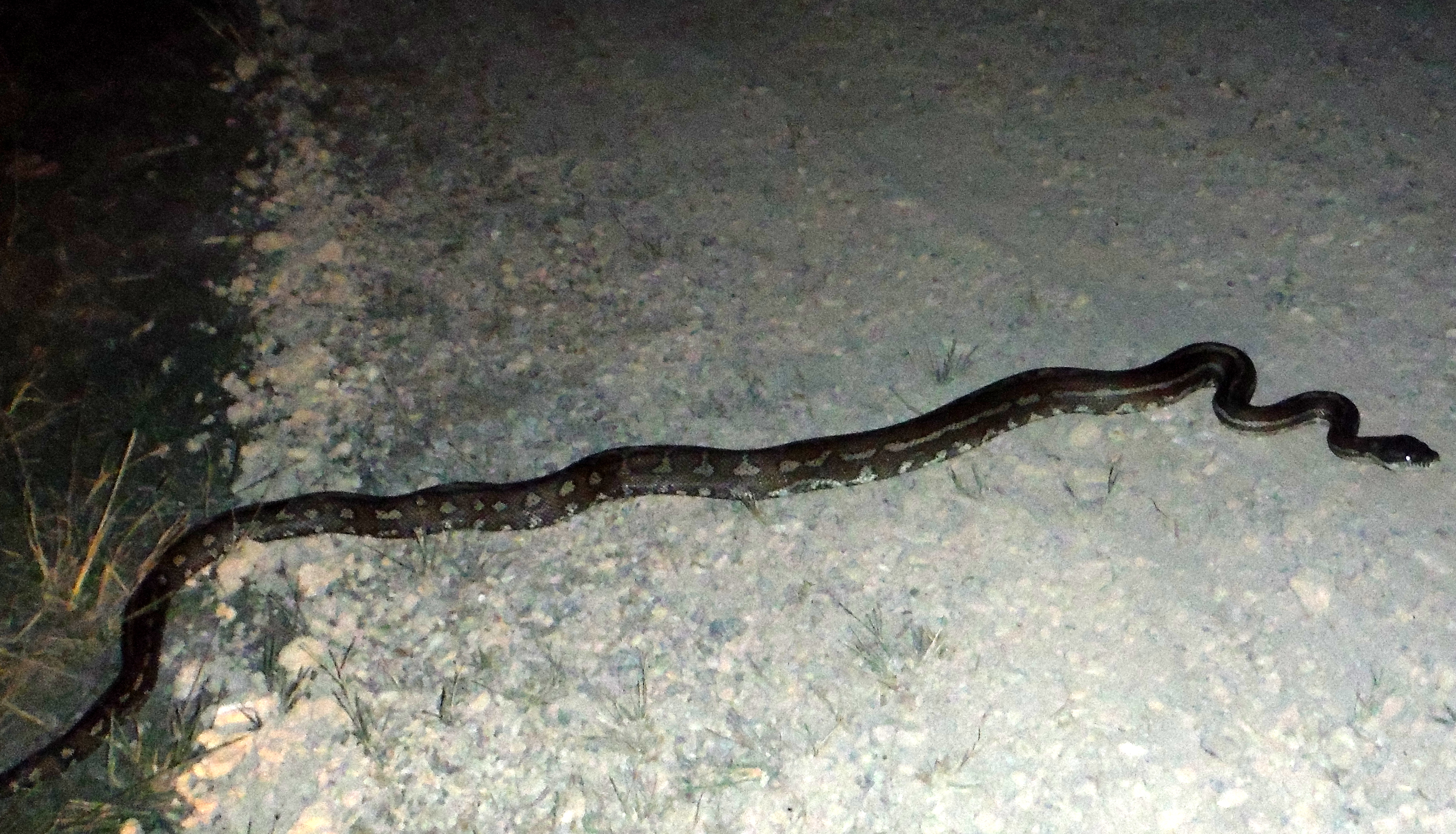
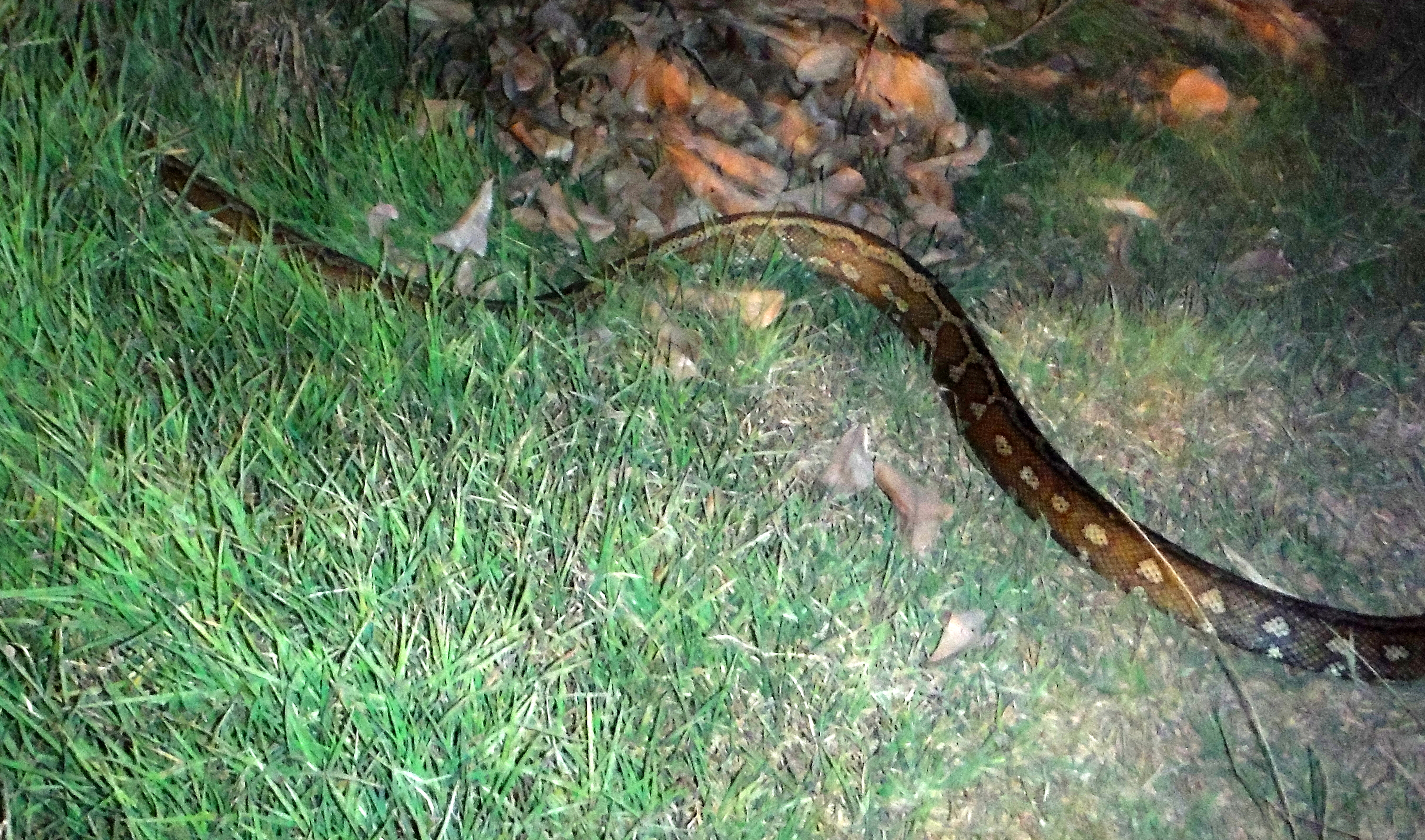
As the sun dropped below the horizon I walked to the car and drove back along the dirt road that runs alongside Marshalls Creek. I slowed down when I saw what looked like a big stick on the road in front of me. The stick suddenly moved so I jumped out to have a look. It was a good sized python of some kind. It was fairly sluggish in the cool evening and after sticking its tongue out at me, it slowly slithered off into the undergrowth.

Remember – it’s a jungle out there!

A bit slow in the cold Marshalls Creek - Python Snake in the grass Stuck its tongue out

Brunswick Heads – tailor time – 3 August 2015

Sunday – Monday

I had managed to get a few days down at South Golden Beach in Northern New South Wales and was very keen to see if the Tailor where around on the beaches.

On Sunday morning I was up before dawn. I wrapped up in warm clothes and pulled on my waders. The house we were staying in was right behind the beach and I had seen a few fisherman pull in some small Tailor the night before, using pilchards.

As I came out on to the beach conditions were very calm. I had noticed a long wide gutter the day before so I tied on a 55g HALCO Twisty in the brassy/ gold colour and started putting in long casts towards the mouth of the gutter. I was doing a fairly fast steady retrieve and this soon warmed me up. Just after first light I briefly hooked a fish but it shook itself free after a few seconds. I carried on for another 30 minutes and just before the sun came over the horizon, I felt the rod tip bend over. It was a fair way out but I gradually pulled it in. It was soon at my feet in the surf, but as I pulled it clear of the water the treble pulled out of its lip and it was gone. I put in a few more casts before changing to a jerkshad soft plastic but I did not find another fish.

On Monday morning I decided to explore the mouth of the Brunswick River. I picked the rock wall on the north side and arrived just after first light at about 5.45 am. It was another fantastic sunrise with the whole horizon glowing a rich orange colour. I walked to the end of the rock wall with my light rock fishing rig. The NS Blackhole rod and Shimano Sustain 4000 reel, 15lb braid and 30lb fluoro-carbon leader. I tied on a 55g HALCO Twisty and cast it diagonally across the river mouth. I cast about 15 times in various directions with no luck. I swapped to a suspending YOZURI Crystal Minnow hard bodied lure and cast this across the same area. On my third cast a fish hit the lure and I set the hooks. It was a small (approx.35cm long) tailor. I photographed and threw it back. On the next cast a fish hit the lure again but I did not connect. I continued for another 20 minutes in this spot with no further action so I decided to swap to a small soft plastic lure.

I moved a little way back along the rock wall, up river. I dropped the fluorocarbon leader down to 12lb, tied on a 1/6th ounce, size 1/ hook jighead and loaded it with a GULP 2.5 cm Crabbie in the Chocolate sparkle colour. This immediately attracted the attention of some Bream, I caught a couple and threw them back, both were between 25cm and 30 cm long.

The wind had picked up but I could see a big flock of birds dive bombing a little way up the beach. I decided to go and investigate. They were about 300 metres offshore but gradually moving in closer around the small rocky platform, just north of the rockwall. There was clearly a big school of bait with something feeding on it from below, which had attracted their attention. I walked along the beach and found a long gutter that runs up to the rocky platform. This looked about 1.5m deep at its deepest point and the main channel was very well defined. When I got level with the birds I started casting my soft plastic. The first takers were a few small dart, close to the beach. Then something bigger grabbed the soft plastic and started shaking its head. It presume it was a tailor and it soon chewed through the leader. I tied on the 30lb leader again and rigged up a GULP Jerkshad in the Cajun Chicken colour and threw this out. A fish grabbed it almost as soon as it hit the water. This time I pulled it almost to the wave break, then it wriggled free.

I decided treble hooks would give me a better chance of landing a fish so I swapped back to the suspending YOZURI Crystal Minnow. My strategy paid off. The lure was slammed as soon as I started the retrieve. I managed to get this tailor, safely up the beach. Now the fish were clearly feeding in the gutter and almost every cast hooked up. I caught somewhere between 10 and 15 fish over the next 40 minutes. The largest was 48cm long. I dropped plenty before they reached the beach, but kept a couple of bigger ones. Then just after 9.00 am, I hooked up again but the YOZURI Crystal Minnow was bitten clean off after just a few reel turns. I tied on the HALCO 55g Twisty again and landed a couple of smaller tailor with this lure, but then the same thing happened.

At about 9.15 am I swapped to a larger floating YOZURI Tobimaru 130mm hard bodied bibbed minnow. I tied this on with a 40lb rated wire trace and threw it out. More or less as soon as it landed I felt the fish bashing it around and about 2-3 metres into the retrieve I hooked up. I turned the reel a couple of times and then the line went slack. Clearly there was now something very toothy out there and I am not sure I really wanted to catch it, so at about 9.30 am I gave up for the morning.

It had been a great tailor session and confirmed for me that they will eat anything when they are feeding in big schools like this. I think lure choice was fairly unimportant but I did get the slightly larger fish on the hard bodied minnows, rather than the metal slugs.

Bribie – the old oyster jetty flats – A bagful of flathead – 28 July 2015

Tuesday

I could not get away for dawn and it has been so cold lately that I was glad I did not have to. But I could make it to Bribie to fish my favourite spot, for a few hours, mid-morning. High tide had passed at about 6.30 am and it would be low at 12.30 pm. The wind was a light south-westerly.

I arrived at about 9.00 am, pulled on my waders and wandered out under the bridge. The full moon was three days away, but the bigger of the daily high tides had been in the morning. This sometimes helps the fishing. On the bigger overnight high tides the fish have deeper water, to follow the bait up into the shallows and feed. Flathead will often remain in the shallows until they are only covered by 10 cm of water as the tide runs out.

I was fishing with my NS Blackhole light spin rod and Shimano Stradic 2500 reel. I was using 10lb braid and 12lb fluorocarbon leader. I was trying out my new favourite GULP soft plastic – the 5 inch Jerkshad in the BBQ Chicken colour. I had it rigged on a 1/8th ounce, 1/0 jighead.

I soon found a flathead just to the north of the jetty on the edge of the weed. It was about 45cm long. I then found the pike who seemed to also like the jerkshad. They were clustered around the larger weed clumps.

I moved south and kept catching flathead. I caught 8 more fish over 45cm in the next three hours and a few that were too small. I kept the bag limit of five and released the rest. They were spread all along the edge of the weed beds and the pike were everywhere. As the run out tide slackened towards low, the bite dropped off a little. I finished up at 12.30 pm after another great session.

Bribie – the old oyster jetty flats – 20 July 2015

Monday

On Monday the weather looked windy and unsettled but it was forecast to get worse through the week, so I thought I would try an early morning session on the Bribie oyster jetty flats, in front of the new Sandstone Point Hotel.

The wind was a cold south-westerly forecast to turn northerly around lunch time. In a south-westerly it is better to fish the mainland side of the Pumicestone Passage, as the land gives you some shelter.

Low tide would be at 6.00 am. So I could probably stay fishing the best areas until about 9.00 am. By then the incoming tide would push me back away from the edge of the weed beds, where the flathead seem to congregate.

I waded out just after 6.30 am and the sky was very cloudy. The water was fairly dirty and not really running in yet. The sun came up at about 6.45 am and briefly showed beneath the clouds. I was fishing with a GULP 4” Minnow soft plastic in the Lime Tiger colour rigged on a 1/8th ounce, size 1/0 hook jighead. I was using 12lb leader.

I found the pike first, just to the south of the old oyster jetty. They were actually pretty hard to get past. They were also big and aggressive – several were over 40cm long. They finally seemed to leave the lures alone as I moved further south.

I found the first flathead of the day at about 7.10 am. It was a solid fish about 55cm long. I carried on wading south and found a steady stream of fish. The pike kept up turning up and a couple of times I was bitten off clean (could have been tailor or perhaps just really big toothy pike).

At 7.30 am I found another slightly smaller flathead. Then I came across several more. I soon had 4 keeper size flathead in the bag all form the same soft plastic. Then a big nasty grey cloud came over and gave me a good soaking.

The wind picked up and I was cold so I turned around and waded back towards the bridge. I kept casting and found a couple more undersized flathead. Fortunately I found one more 45cm fish just short of the end of the jetty, so I managed a full bag.

The weather was dodgy but the fish are definitely there at the moment.

Iluka – Middle Bluff – Shark Bay – Iluka Bluff – Tailor – 16 June 2015

Tuesday

Tuesday morning was dry but the big swell was still hanging around. I decided to try fishing for some more Tailor at Middle Bluff and set off before dawn. The walk from the Frasers Reef carpark along the beach to Middle Bluff in the pre-dawn light is always great. The sky is usually beginning to glow and I am conjuring visions of huge jewfish, tailor and tuna in my mind.

The wind was light from the east and not particularly cold. It was the day of the new moon so it would be a big tide. High tide would be at 7.45 am so I had to watch the rising water levels and surges carefully.

I started fishing at about 6.20 am with the River to Sea 110mm Dumbbell Popper. I cast this around until my shoulders were sore and did not get any hits. I swapped over to the 50g DUO Pressbait Saira jig/ slug and started to put in some long casts, off the north end of the headland. This soon paid off and at about 7.00 am, just before the sun came over the horizon, I hooked up and then dropped two tailor before finally holding on to a chunky 50 cm model.

I carried on spinning the Pressbait until the inevitable happened and I lost it to the rocks. I decided to try a soft plastic and rigged up a GULP Crazylegs Jerkshad in the New Penny colour on a ¼ ounce, size 3.0 hook jighead. I was using my heavier Daiwa Demonblood rod with a 30lb fluorocarbon leader. You really need to tie on at least a ¼ ounce jighead to make this combination work. Anything lighter and you cannot feel the jighead or cast it past the rocks close that line the shore. By way of proof, even with the ¼ ounce weight, I lost the first rig to the rocks on the first cast. I re-rigged and cast out again.

The sun was up but it was still cloudy and it was just after 7.30 am. After a few casts I felt a solid thump and then another and another. I let the plastic go for a few seconds then pulled the rod up hard and I had a fish on. It managed to keep it on and pull it, wriggling hard, over the rocks with the help of the swell and landed it safely. It was another bigger Tailor about 55 cm long.

I noticed the tailor had a good sized bite mark on its back (probably from another fish in the same school). I photographed and released it and re-rigged with a fresh Crazylegs Jerkshad. I fished around for another hour, but the rising tide made things very difficult so at about 8.30 am I gave up.

I went for breakfast and then thought I would try the Shark Bay jewfish spot again. The sky had clouded over again but with a new moon and big swell I thought I had a pretty good chance of catching another jewfish/ mulloway. I arrived just after 1.00 pm and fished around with the heavy rod and leader and some big jerkshads, without much luck. I swapped down to the light rod and 12lb leader. This did the trick and I caught another stonker 38 cm bream on a GULP Crazylegs Jerkshad. The rain arrived again and forced another break.

At about 4.00 pm it had eased off so I decided to try fishing at Iluka Bluff. A keen Korean fisherman from the Gold Coast had been there all afternoon and had caught a few good sized silver trevally and some small giant trevally and also been bitten off a couple of times. The swell was tricky and the tide was running, I was tired and had only brought my light surf rig with me form the car. I rigged up a GULP Jerkshad in the Orange Tiger colour. As I pulled it close to the rocks on the retrieve it was slammed and the fish took off. I had no chance and after a few seconds I was bitten off.

I re-rigged with 20lb leader and cast out the same colour soft plastic. After a few casts I was hit again and this time I held on to the fish. It was a 45cm silver trevally. The other fisherman was regularly broadcasting berley and had been doing so all afternoon which may well have brought the fish in.

I decided to try a small 18g MARIA Duplex hard bodied sinking minnow. This lure is only about 60mm long and has a tight action. It casts like a bullet. I threw it around for about ten minute. On about the sixth cast something absolutely slammed it and took off.  I immediately regretted having only brought the light rod. It bent over and the line continued to peel. The fish was moving straight and fast out to sea and I was very quickly into the backing line. I held the spool and tried to slow it and then turned the drag slightly tighter. None of this made any difference and the fish was still running. I tightened the drag and pop, the line went slack. It was faster than a jewfish but I have no idea what it actually was. It was certainly the biggest fish I had interacted with all week but I did not have the right gear to face it. The leader was still attached when I wound in but there was no sign of the lure.

It was getting dark and I did not have another lure so I gave up for the day.

Iluka – Shark Bay – Jewfish – 12 June 2015

Friday

On Friday the wind was a 10-15 knot south-westerly. I woke to heavy rain at about 5.00 am and it was cold. I had decided to go back to Shark Bay but low tide would not be until about 10.00 am, so there was no hurry. I had breakfast and put on a few layers.

I drove down to Shark Bay again and headed out to the northern end of the rocks. It was about 6.30 am by the time I reached the fishing spot.I rigged up a DUO Realis Jerkbait 110 SP – which is a shallow running hard body that has caught tailor here for me before. I tied it on with 35lb fluorocarbon leader and threw it out. On about the third cast I felt a grab and then some resistance but it did not feel like a Tailor. I kept winding and was surprised to see a big bream attached to the lure.

I carried on fishing with the DUO lure, but it did not find me any tailor so I swapped to a DUO Pressbait Saira. DUO call this a ‘slim and long-bodied jig minnow’. It is basically a 50 gram, 175mm long slug with a wobble tail action. The long baitfish profile means it should attract everything from tailor to tuna, but today after about 30 casts, it had attracted nothing.

I switched down to the lighter rock fishing rig and a soft plastic Jerkshad on a ¼ ounce, 1/0 hook jighead. I fished this around, the drop off and in amongst the kelp beds. I felt a few grabs but could not connect so I dropped down to a small 3” Minnow soft plastic in the Banana Prawn colour. This soon found another smaller bream.

I moved south to the other side of the rocks. I started with the heavy rod and big soft plastics and gradually dropped down to the light rod and GULP 3” Minnows in various colours. I was now fishing 16lb fluorocarbon leader and 1/8th ounce, size 1 hook jighead. It was about 30 minutes to low tide and the swell seemed to be picking up. I changed up to a heavier 1/6th ounce 1/0 hook fine wire Breampro jighead and loaded up with a GULP Jerkshad in the BBQ Chicken colour.

This is a colour I have never tried before and subsequent events suggest it pays to try something new, from time to time. The bigger plastic and slightly heavier jighead meant I could put in a slightly longer cast. On about my third attempt, I landed it beyond the breaking waves and waited for it to sink. As it floated down I felt a gentle tug. I paused for a few seconds then lifted the rod tip and felt a fish. It took off along the line of the surf towards some kelp covered rocks. I played it for a while and it felt like a jewfish. Unfortunately, it managed to find a good tuft of kelp to wrap itself around and the line went slack.  When I got the jighead back the fine wire hook had straightened so I tied on a heavier gauge one and put on another BBQ Chicken Jerkshad.

It did not take long, perhaps 3 or 4 more casts, then I was on to another fish.  This one was a little smaller and less powerful. It made a long initial run but then I was able to turn its head and use the wave surges to bring it in. It was a beautiful school jewfish but I was not sure if it was big enough, so I took out the tape and checked. It was 73cm long and therefore big enough to keep for dinner in New South Wales.

I threw a few more casts and felt a few more bites but as the tide slackened, the bites stopped. Another rain shower came over so I cleaned up my fish and decided to make for the car.

Iluka – Shark Bay – 11 June 2015

Thursday

As is so often the case in Iluka – the weather was not easy to deal with. The week before it had looked good with light winds and no rain forecast. I woke up early on Thursday to a howling south-easterly wind and intermittent rain, so I rolled over and tried to go back to sleep. That did not really work so I got up, had breakfast and then thought about where to fish in a powerful south-easterly. The northern edge of the rock platform at Shark Bay, at low tide was the only option, so I set off.

The mullet fisherman were waiting at the corner of Shark Bay looking out for some late season schools. Apparently it has been a terrible season. With the big rain events last month flushing out all the fish. One keen fisherman was on his way back from the rocks with a 40 cm tailor in his bag. He had spun it up on an 85 g Raider metal slug, just after dawn.

I spun an 85 g Raider for about 25 casts but could not raise another tailor so I swapped to the light rod and tied on a 1/6th ounce, size 1 hook jighead and GULP Mantis Shrimp soft plastic in the Lime Tiger colour. I was using 16lb fluorocarbon leader. In this area there is a kelp covered drop off about 10 metres out from the edge of the rock platform at low tide. This is where the bream sit. I felt a couple of solid bites as I pulled the soft plastic over the ledge, but did not hook up.

I swapped to 3“Minnow soft plastic in the Smelt colour and kept casting. In exactly the same spot a small bream grabbed it and I had my first fish of the day. It was now about 9.45 am and I was soaked and cold.

The wind had dropped a little so I moved south across the rock platform to fish on the southern edge. This area is full of kelp covered rocks but there are some deep, sandy bottomed holes and I have caught good bream here in the past.

I swapped plastics to a GULP Swimmow in the dark green Emerald Shine colour. This was getting hit on the first cast but it took a while to actually connect with a fish. At about 11.00 am after slowing everything down I connected with another bream. This was a good one – well over 35 cm long. I continued with the Swimmow soft plastic for another 20 mins and was rewarded with another, about the same size.

I swapped back down to a 3“Minnow soft plastic in the Smelt colour and  this produced another big bream, at about 11.30 am.  The rain started again and I decided to give up. It had been a tough session but there had been constant action and I had caught three excellent fish –  the largest of which later measured 38 cm.

Bribie – the old oyster jetty – a bagful of flathead – 10 May 2015

Sunday

In to May and time to get back on to the flathead at Bribie. Big wind and rain were forecast for later in the week so I decided I had to get out on Sunday morning. It was going to be bright and cool with light south westerly winds.

I waded out under the bridge at Bribie Island just before dawn and despite the cooler nights the water remains surprisingly warm. I cast around in the shallows under the bridge but there was not much going on so I moved slowly to the south.

I was fishing with a GULP 4“Minnow soft plastic in the Lime Tiger colour, initially. This did not seem to stir any interest so I swapped to a similair sized Minnow in the Pearl Watermelon colour. I was fishing with my new light rod – a G.Loomis SJR6400. This is a very short, very fast action, light spinning rod. It is only 5’ 4” long which should make it easier to use in the smaller creeks that I hope to fish later in the year, up north. Loomis describe it as a ‘magnum ultralight’ rod which sounds more like a diet ice cream to me.  It is designed to have slightly more strength than their ultra-light series, while retaining its sensitivity. I was using it with my Shimano Stella 2500 loaded with 12lb braid and about a metre of 10lb fluorocarbon. The tide was slowly running out so I was using a 1/8th ounce, 1/0 jighead and aiming it at any spot where the sand met the weed.

It was hard work. I disturbed a few sting rays and eventually hooked one, which dragged me around for a while before breaking the light leader. I had now been fishing for 2 hours without connecting with a flathead. The water was getting dirtier as we approached low tide, which would be just after 8.00 am.

I move along towards the green channel marker. It was now right on low tide. I had been joined by a few more keen fishermen on the edge of the sand bank. Just as I was beginning to think the new rod was cursed, I felt the tell-tale thud of the flathead bite. I was now using the GULP 2” Shrimp in the Peppered Prawn colour. I paused then struck. It is always a little tricky catching your first fish on a new rod. You have to calibrate the drag setting to the rod bend and this can take a while. The fish hardly managed to take any line, which meant I had it too tight. It was a flathead about 42cm long and I soon had it in the keeper bag. I loosened the drag a little and carried on casting. A few minutes later I caught a small Pike then things went quiet for about 20 minutes.

The water was still and dirty. I moved slightly north, back towards the old oyster jetty. I felt a bite but did not hook up. This happened twice and each time the fish was a little nearer to me. I moved back a few paces and tried again with a short cast and a long pause. When I lifted the rod the fish was on the soft plastic. It was another flathead about the same size as the first. Over the next 30 minutes I caught two more – one more over 40cm and one just under.

I carried on moving south. The tide was starting to turn and flow in. I kept casting at the edge of the weed beds and was rewarded with another flathead. This time it was a bigger one at about 55 cm. I now had a family dinner in the keeper bag.

I kept casting as I waded back towards the car and I was rewarded with another flathead, just before I passed the jetty. After a slow start it had turned into a great morning. The new rod had proved itself and I had my bag limit for the day.

Bribie Island – the oyster jetty flats – 27 April 2015

Monday

Another big gap between fishing sessions but by the end of April I was back in Brisbane for a few days and the weather was calm, cool and bright. As soon as I had time, I drove up to Bribie Island to see if the flathead where around. March and April always seem to produce plenty of good flathead from the flats around the island.

I hit my favourite spot – the muddy, weedy, sand flats to the south of the old oyster jetty, in front of the Sandstone Point Hotel, which is currently under development. This will be a huge pub when it is finished. I think it is great to see a development that seems to fit in with the natural landscape. My only disappointment was the wholesale removal of the native gum trees behind the mangrove line, to make way for the project. These used to provide a good break when the cold south-westerly winds blow.

I started a little after first light and a bit before dawn at about 6.00 am. I think this short window between getting light and the sun coming over the horizon is an excellent time to fish. The change in light triggers the feeding response and the low intensity means they are bold enough to chase lures and baits into the shallows.

A 2.0m high tide had passed at 4.09 am, so I was fishing the run out tide. The moon was about half full which meant that the tidal flow would not be that significant. There was about 50cm of water at the base of the mangroves, as I waded towards the old oyster jetty.

I was fishing with my very light spin rod – NS Blackhole 6’ SGII 602L Trout rod I picked up in Tumut last year. It is rated for 2 to 8lb line and 2 to 10 gram lures. My beloved Loomis GL2 had a fatal accident in 1770 and the gang at Jones Tackle are seeking out a replacement for me. In the meantime this light, fast action rod is great for flathead, bream and other estuary targets.

It was now about 6.45 am, I had rigged a GULP 4” Minnow soft plastic in the Pearl Watermelon colour on a 1/8th ounce, size 1 jighead and I was using just over a metre of 10lb breaking strain fluorocarbon leader.  I was casting ahead of me in to the shallows. The water was clear but a little cooler than it had been fishing at 1770, a few weeks before. I had just passed the cable crossing warning sign when I felt a faint grab at the soft plastic. I dropped the rod tip and paused but did not entice a strike. I cast back at the same spot and felt the same slight grab. I cast to the right – nothing. I cast to the left – nothing. Then I cast back along the original trajectory and paused with the soft plastic on the bottom, for a good ten seconds. When I lifted it the fish struck. It was a flathead – a little over 50cm. It was good to know persistence pays off.

I waded under the jetty and slowly fished my way to the point where the shoreline turns the corner towards Sandstone Point. I paused here and threw a few casts along the drain that channels the run out tide round the corner and over the flats. I felt a couple mad grabs and swipes and realised that the Long Toms must be snapping at the soft plastic. I could not find a flathead in the drain so I moved on.

I waded along the gradually emerging sand bank until I was almost at the green channel marker. I stuck with the same soft plastic all the way. I then turned back to walk along the edge of the weed beds, in the direction of the jetty.

About half way back to the jetty, I felt a solid hit and paused. When I lifted it, the fish was hooked. It was another, slightly smaller 45cm flathead. I now had two in the bag, but would need at least one more to feed my mob.

I slowly moved north, casting and casting. After another 1 hour I still only had two fish. I was back at the jetty and the water was clear and almost still. It was now about 9.30 am and nearly low tide. I out in a few casts alongside the jetty. On about the third cast a very angry flathead slammed my soft plastic.  I subdued it and carefully pulled it ashore.

That was enough for me. Three fish, four nice fillets from each, that’s twelve good pieces of fish – which makes a very decent family meal. It took 3 hours to catch and about 12 minutes to eat. Good to be back on my home turf.

1770 – Wreck Rock – Dart & Slatey Bream – 9 April 2015

By Thursday, the rain had passed over but the wind had picked up considerably. I was up early and decided to try fishing at Wreck Rock. The tide would only be low enough to reach the rocks I wanted to fish from, for about 90 minutes.  The incoming tide would then force me back.

I arrived in the pre-dawn light and walked out to the beach. The sky was gradually turning orange and the wind had dropped right off. It was very light and cool, from the south-west.I walked out on to the rocks on the north edge and picked my way out as far as I could go. The wind had dropped but the swell was up and although the water was warm the cold breeze was nasty.

I knew there would be dart around and predictably, my first cast with a 3” GULP Lime Tiger Minnow soft plastic was just what they wanted. I pulled the first small dart out of the water just after 6.00am.I was sticking with a light 12lb fluorocarbon leader but went with the slightly heavier 1/6th ounce, size 1 hook jighead to counteract the swell.

The dart kept coming but I was hoping for something more significant so I put on the GULP Mantis Shrimp that had caught the slatey bream on Monday. I fished this around for 20 minutes with only a few small hits from the dart. I swapped back to a GULP 2” Shrimp soft plastic in the Banana Prawn colour. This instantly caught the dart again.

I decided to change up to a bigger profile again and tied on a GULP 5” Jerkshad in the Peppered Prawn colour. I cast this one a fair way out towards some a nearby bommie. On its way back to me it was swiped at by a couple of Long Toms, but I did not hook them.

I hit the same area with a few more casts and suddenly there was a quick tug and the reel started screaming. The rod bent over and the fish took plenty of line in a blistering initial run. As soon as it paused I checked the drag tension and realised it was actually quite tight. I tried to get some line back but the fish immediately set off again and snapped the leader. Trevally or maybe a Mackerel, either way a 12lb leader was not going to stop it. I re-rigged with the heaviest leader I had in the bag – 20lb fluorocarbon and cast back out. I peppered the area with casts but whatever it was had moved on.


The wind was now picking up again and the incoming tide was forcing me back along the rocks. I swapped to a GULP Green Camo 4” Minnow and carried on fishing. The dart kept hitting this one and then something slower and heavier grabbed it. It turned with the swell and took a bit of line. It then started swimming away faster, once it realised it was hooked. After a few minutes I pulled it up onto the rocks with the aid of a breaking wave. It was another good sized slatey bream with bright orange markings behind its lips.

I decided to keep this one for supper and so I retreated to the dryer rocks to bleed and clean it. By the time it was gutted the tide had come up further and the wind was really starting to blow so I gave up for the day.

1770 – Flat Rock – Dart – 7 April 2015

Tuesday

The family took off for Lady Musgrave Island to have a look at the reef. But the prospect of ninety minutes battling high seas had me close to throwing up so I dropped them off at about 8.00 am and drove back down to Flat Rock.

The sun was out when I arrived and there was a light northerly wind blowing. I had the beach to myself and walked south to the spot where I had been fishing the day before. I was fishing the same fairly light rig and was sticking with the 12lb fluorocarbon leader. I would not stop any toothy fish with light leader but even if I upped it to a 30lb breaking strain, I doubt I would be able to hang on to a mackerel or big trevally. I prefer to fish lighter and lose a few fish than not get the bites. I tied on a 1/6th ounce, size 2 hook jighead and loaded it with a GULP 3” Minnow soft plastic in the sardine colour. It was now about 9.45 am and just about high tide. I started by fishing the gutter on the inside of the Flat Rock without much success. The sky turned grey and the wind started to pick up.

After about an hour I had had a few bites but caught nothing. I moved south and as the tide started to run out I waded across the gutter in a fairly shallow spot and stood up on the Flat Rock in ankle deep water. I started casting out beyond the rock. This immediately resulted in fish contact. I could see and feel the moses perch swiping at the soft plastic lure close to the front edge.

I cast out a bit further and found a small dart. I caught a few more and then changed to bigger 4” Minnow soft plastic. The dart kept hitting the bigger plastic but could not swallow it. I swapped back down to the 3” Minnow in the New Penny colour and instantly hooked another, slightly bigger dart.  I moved up and down the front face of the rock and tried different plastics. The dart kept coming but they did not get much bigger. The rain came too and gave me a good soaking. At about 1.00 pm, I gave up for the day.

Fish & Colours – by Dr. David Ross

I came across this article recently. Although it primarily relates to choosing colours for fly fishing, it is an excellent scientific explanation of how fish view colour. I thought I would share it just to give everyone another excuse to buy some different coloured lures!

Fish Eyesight: Does Color Matter?

by David Ross
Read this article and you may never look at your flies the same way again.

Do fish see color?IS COLOR IMPORTANT? This is a serious question for fly tiers and fly fishermen to ask. Some anglers maintain that the choice of color is critical, while others say it is not important. Scientifically speaking, there is evidence to suggest that both points of view may be correct. There is good evidence that picking the appropriate color or colors will, under certain conditions, improve your chances of attracting fish, but science can also show that in other situations, the color of your fly is of limited value or no importance whatsoever.

Fish have been around for more than 450 million years and are remarkable creatures. Over the thousands of centuries, they have made many superb adaptations to survive in the marine environment. Living in the world of water is not easy, but it does present some environmental opportunities as well as serious challenges. Sound, for example, travels almost five times faster and much better in water than it does in air. The ocean is actually a very noisy place. Fish capitalize on this by having an excellent sense of hearing, using both their inner ears and lateral lines to detect prey or avoid enemies.

Water also contains unique chemical compounds that fish utilize to identify other members of their species, tell when reproduction time has arrived, find food, detect predators, and perform other functions. Fish have evolved a remarkable sense of smell that is thought to be about one million times better than that of humans.

Water, however, presents a serious challenge for fish and fishermen when it comes to vision and color. Many characteristics of light quickly change as it moves through water. The first thing to realize is that the color of your fly in the water is almost always different from what it is in the air. I have to be a little technical to explain this, but I think if you bear with me, you’ll have a better understanding of how fish perceive color and how this impacts the flies we tie and use. And while I mostly refer to fish and fishing in salt water, these same principles apply to the freshwater environment.

Attenuation of Light

The light that humans see is just a small part of the total electromagnetic radiation that is received from the sun. We see what is called the visible spectrum. The actual colors within the visible spectrum are determined by the wavelengths of the light: the longer wavelengths are red and orange; the shorter wavelengths are green, blue, and violet. Many fish, however, can see colors that we do not, including ultraviolet.

When light enters water, its intensity quickly decreases and its color changes. These changes are called attenuation. Attenuation is the result of two processes: scattering and absorption. The scattering of light is caused by particles or other small objects suspended in the water — the more the particles, the more the scattering. The scattering of light in water is somewhat similar to the effect of smoke or fog in the atmosphere. Coastal waters generally have more suspended material due to river input, material stirred up from the bottom, and increased plankton. Because of this greater amount of suspended material, light usually penetrates to a lesser depth. In relatively clear offshore water, light penetrates to a greater depth.

Light absorption is caused by several things, such as the light being converted into heat or used in chemical reactions such as photosynthesis. The most important aspect for fishing is the influence of the water itself on the absorption of light. The amount of absorption is different for different wavelengths of light; in other words, various colors are absorbed differently. The longer wavelengths, such as red and orange, are absorbed very quickly and penetrate into the water to a much shallower depth than the shorter blue and violet wavelengths.

Absorption also restricts how far light penetrates into the water. At about three meters (about 10 feet), roughly 60 percent of the total light (sunlight or moonlight) and almost all the red light will be absorbed. At 10 meters (about 33 feet), about 85 percent of the total light and all the red, orange, and yellow light have been absorbed. This has a direct bearing on how a fish perceives a fly. At a depth of 10 feet, a red fly appears gray, and it eventually appears black as the depth increases. With the increasing depth, the now dimming light becomes bluish and eventually black when all the other colors are absorbed.

The absorption or filtering out of color also works in a horizontal direction. So again, a red fly that is only a few feet from a fish appears gray. Similarly, other colors also change with distance. For a color to be seen, it must be hit by light of the same color and then reflected in the direction of the fish. If the water has already attenuated or filtered out) a color, that color will appear gray or black. (Fluorescent colors, which I will come to shortly, behave a little differently.)

It should now be clear how the depth of the water or distance from a fish affects the visibility of your fly. In extremely shallow and very clear water, colors may look similar to their appearance in the air; as your fly gets just three feet deep or three feet away from a fish — or less if the water has limited clarity — the colors will start to change, often with surprising results.

What Do Fish See?

Scientists really do not know exactly what fish see, or in other words, what images reach their brains. Most research on the vision of fish is done either by physical or chemical examination of different parts of their eyes or by determining how laboratory fish respond to various images or stimuli. Making broad generalizations about a fish’s vision is complicated by the fact that different species may have different vision capabilities and that laboratory results may not represent what happens in the real world of an ocean, lake, or river.

Physical studies of the eyes and retinas of fish show that the majority can obtain a clearly focused image, detect motion, and have good contrast-detection ability. A limited number of experiments have shown that a minimum level of light is necessary before a fish can recognize colors. Another finding, but one that needs more study, is that some fish favor a specific color. This point may contradict or affirm your own fishing experiences, but remember that the attractiveness of your fly is a combination of many things, including its motion, shape, and color, as well as the scents in and depth of the water.

Most fish have an adequate sense of vision, but this is usually not so impressive as their sense of smell and ability to detect vibrations through their lateral lines. Fish usually use their sense of hearing or smell to initially perceive their prey, and then use their vision only in the final attack. Most fish can see in low-light conditions or dirty water, and a few can see objects over moderately long distances. Fish such as tuna have especially good vision; others less so. Fish are usually nearsighted, although it is believed that sharks are farsighted.

The majority of fish have developed eyes that will detect the type of colors typical of their environment. For example, inshore fish have good color vision, whereas offshore pelagic fish have limited color vision and detect only a few if any colors other than black and white. This is not surprising from an evolutionary point of view, because nearshore waters are lit with many colors; offshore waters, on the other hand, are mainly blue or green and contain few other colors.

The actual ability of a specific color to attract or even repel fish has fascinated both anglers and scientists. While there are no uniform answers, scientists have conducted experiments on this interesting question. For example, studies of sticklebacks during their spawning season have shown that males, which then have bright red coloring on their bellies, become very aggressive to decoys that also have bright red bellies. Similarly, decoys with extended bellies, which look like females carrying eggs, attract the males. But it isn’t that simple: it wasn’t just the case of a perfect decoy imitation, but rather the color or shape of the decoy. In addition, it was noted that a passing red car, seen from the fish tank, also excited male sticklebacks.

Color Suggestions

This is perhaps the most important point to remember: Most gamefish detect their prey by seeing the contrast of the forage against various colored backgrounds. The level or type of contrast depends upon many factors: time of day, type of bottom, transparency of the water, whether it is cloudy or sunny, and perhaps even the time of year. I wish I could be more specific, but such scientific information is not available. The best I can do is provide some general suggestions and information; determining the right color or color combinations will take a lot of fishing and experimenting under various conditions. Keep these ideas in mind the next time you tie or select flies.

  • Try to consider what the colors in your fly will look like at the depth you are fishing, and chose appropriately. For example, since red is the first and blue is the last color absorbed, it makes more sense to use a blue fly when fishing deep.
  • If you are trying to match a particular bait, the color of your fly should match the color of the bait for the depth you are fishing. In other words, try to match the underwater color rather than the color of the bait in air.
  • Many fish feed by looking up toward the surface of the water. In doing so, however, they have difficulty distinguishing specific colors, and the contrast of the prey against the surface becomes more important. When a feeding fish is looking up, a dark silhouette, even against a dark night sky, provides the maximum contrast and is attractive to predators. Selecting a fly based on contrast, rather than on specific colors, is often the key to enticing a fish to strike.
  • Black is the least transparent color and gives the best silhouette at night. Black is probably the most visible color under most conditions.
  • If your fly has two or more colors, the darker color should be over the lighter colors. Almost all baitfish have this color arrangement, and dark over light usually produces good contrast.
  • Different colored flies may be equally effective or ineffective simply because they are similar in color at the depth the fish see them.
  • If you are fishing your fly in deep water, the motion and any noise or disturbance it makes might be much more important than its color.
  • Increase the contrast of the fly if the water is dirty; decrease the contrast if it is clear.
  • A good profile is important when vision conditions are low (nighttime or dirty water). Black and red flies offer good profiles.
  • Some colors, such as chartreuse, always seem to work better than other colors. Yellow-and-white and chartreuse-and-white are also favorite pairings. Red and white, which provide good contrast under many conditions, is a popular combination for many anglers.

Understanding Polarized Light

Recent research shows that many fish sense polarized light. Humans do not have the ability to separate polarized from regular light. Regular light vibrates in all directions perpendicular to its direction of travel; polarized light, however, vibrates only in one plane. When light is reflected off many nonmetallic surfaces, including the ocean surface, it is polarized to some degree. This explains how polarizing sunglasses work: they block out the horizontally reflected polarized component of light from the ocean surface which causes most of the glare but permit the vertically reflected component to pass through.

It is not fully understood why some fish have the ability to sense polarized light, but there are interesting possibilities. Being able to detect polarized light might help fish in their migrations and ability to swim closely with others of the same species. The ability to sense polarized light must certainly be related to the fact that when light is reflected off surfaces, like the scales on a baitfish, it is polarized. Fish that can detect polarized light have an advantage in finding food. Polarizing vision can also enhance the contrast between almost transparent prey and the background, making the prey easier to see. Another conjecture is that having polarizing vision can let fish see objects that are farther away — perhaps three times the distance — as fish without this ability. If this speculation is correct, it may answer the question why some fish can feed under very low-light conditions. And there is more polarized light at dawn and dusk, which might explain why some fish, such as striped bass, seem to feed more aggressively at these times of the day.

If the ability to sense polarized light helps fish to find food, then it follows that flies that reflect polarized light should be more attractive to such fish. Some natural fly-tying materials, such as polar bear fur, are especially good reflectors of polarized light. Bucktail, on the other hand, is a relatively poor reflector of polarized light. There are artificial materials that simulate fish scales and various tinsels that claim to be excellent reflectors of polarized light. Flies with irregular surfaces may reflect more polarized light than smooth flies. I suspect that in the coming years, as we learn more, there will be an increased use of polarizing materials in flies and lures.

Fluorescent Colors Increase Visibility

Fluorescent colors, especially chartreuse, are very popular with saltwater fly fishermen. I almost always start fishing with a chartreuse Half & Half, even if it’s just to see if there are any fish in the area. Under the right conditions, fluorescent colors, which are not naturally found in nature, can be very visible under water and seen for considerable distances. A fluorescent color is one that will be bright when exposed to light having a shorter wavelength. For example, fluorescent yellow appears as bright yellow when exposed to ultra-violet, blue, or green light. Alternatively, fluorescent yellow does not appear yellow when struck by red light that has a longer wavelength. Because of this unique characteristic of fluorescent colors, they do not have as dramatic a change of color when they are fished deeper.

The fluorescence of fluorescent colors is mainly due to ultraviolet (UV) light, a color that is invisible to us. Humans cannot see UV light, but we can see how it brings out the fluorescence in certain colors. Ultraviolet light is especially dominant on cloudy or gray days, and when UV light hits something having fluorescent material, its color becomes especially visible and vibrant. On bright sunlit days, the fluorescent effect is considerably less, and of course if there is no light, there will be no fluorescence.

Research shows that fluorescent colors are visible and distinct for longer distances than regular colors, and that a fly with fluorescent materials often attracts fish. To be more precise, a fluorescent color having a slightly longer wavelength than the color of the water has better long-distance visibility. For example, in greenish waters, the brightest colors would be fluorescent green or chartreuse. As good as fluorescent colors may be, they will usually not work if the fish are actively feeding on a specific bait, since it is highly improbable that the fluorescent color will resemble any color in that bait.

As you can see, light and color can get pretty complicated. But let’s not forget what we are trying to do: have our flies imitate pieces of fish food. Fish are not very clever, and they attack prey — or flies — as an instinctive behavior motivated (or so we think) by one or more stimuli. These stimuli include movement, shape, sound, contrast, smell, color, presentation, and certainly other things unknown to us. Successful flies should probably include some of these stimuli, and then we need to consider other variables such as the time of day, the tide, and the presence of other fish or fishermen. This is a complicated venture, of which color can sometimes be an important aspect, but only if the fish can see the color.

MidCurrent Fly Fishing

Dr. David Ross is a scientist emeritus at the Woods Hole Oceanographic Institution and the author of The Fisherman’s Ocean (Stackpole Books). He is also a regular columnist for Saltwater Fly Fishing Magazine. He can be contacted atDRoss@whoi.edu. This article first appeared in Fly Tyer Magazine. Copyright © 2005-2006 Dr. David A. Ross and Fly Tyer Magazine.

1770 – Flat Rock – Slatey Bream, Dart & Stripy Perch – 6 April 2015

Monday

I managed to persuade the family that my beloved 1770 would be a good place to spend some of the Easter school holidays. Fishing was strictly rationed, but I did get a few sessions in.

We drove up from Brisbane and passed through some monster storms on Sunday. We visited Cooks Monument and walked out to the tip of the headland on arrival. You could see there had been plenty of rain. The dirty water was clearly visible, running out into the sea from the creek.

Dirty Water at the bottom of the tide 1770

On Monday morning the skies had cleared and the wind had dropped so we drove down to deserted Flat Rock beach in Deepwater National Park. Despite the recent heavy rain and lots of Easter holiday visitors the sandy four wheel drive track down through the park was in good order.

I like to fish this spot on a falling tide and anything can happen. Locals have told me they have caught saltwater barramundi, mackerel, tuna and jewfish here. I have caught the bread and butter species – stripey perch, estuary cod, dart, tailor, bream, whiting, flathead, all along the flat rock that runs parallel with the shore. I have also been bitten off by plenty of powerful predators, but I have never landed any trophy fish here.

I find the best time to start fishing is about an hour after high tide, through to about an hour before low tide. I wade out to the Flat Rock and walk along it fishing over the edge into the surf which breaks on its front edge. There are a couple of places where the rock breaks and the water runs out. These are great spots, the fish accumulate to feed on what is being washed out from the beach gutter.

The tide reveals Flat Rock

I was fishing with my lighter rock fishing rod and reel setup – the NS Blackhole Cabin 2 S862L, rated 8-14lb, 2.59 m long matched with a Shimano Sustain – 4000 reel. I use 12 lb braid and a 12 lb fluorocarbon leader.

I started by choosing my current favourite fish finding soft plastic lure – the GULP 3” Minnow in the lime tiger colour. I rigged it on a 1/8th 1/0 jighead and cast out. Within a few minutes I caught a small dart and then a small moses perch. I had started fishing at the side of one of the breaks in the rock and the water was gushing through the gap. I kept casting the soft plastic just on to the edge of the Flat Rock and let the water push it out through the gap.

After about half an hour a fish grabbed the soft plastic and shot under the rock. I had the drag fairly loose and by the time I tightened it, the fish had tucked himself right in. I tried to put a bit of pressure on it but the light leader quickly snapped.

I tied on another Lime Tiger Minnow but it did not tempt another fish. After another 20 minutes, I swapped to a GULP Mantis Shrimp in the Peppered Prawn colour and a slightly heavier, 1/6th ounce, size 1 hook, jighead. It was now just before 1.00 pm and the resident sea eagle who had been watching me form the tree line, was getting restless. I cast out the Mantis Shrimp and let it sink and be carried off by the fast running tide. I paused for about 15 seconds, to make absolutely sure it was on the bottom, then slowly lifted the rod tip and started hopping the soft plastic back towards me. On about the 3rd hop, a fish snaffled it and turned to run out to sea. It was not very fast but it was powerful. It took plenty of line but eventually I slowed it down and it just sat in the current, about a metre from the rocks. I used the light swell to heave it over the rocks and on to the beach. It was a slatey bream (painted sweetlip) with magnificent red flashes behind its lips and around its gills. It was about 40 cm long. As long as they are quickly bled and carefully filleted, these fish taste great. They have flaky white fillets and are great fried in a little olive oil. This one was coming home for supper.

It was now lunch time and the fainthearted tourists (my family) had had enough of watching me fishing, so we packed up.

Bribie – the old oyster jetty flats – 75cm flathead – March 29, 2015

Sunday March 29, 2015

I had the bit between my teeth now, so I woke up early on Sunday and drove up to fish the run out tide, on the flats beside the old oyster jetty on the mainland side of the Pumicestone Passage, beside the Bribie Island Bridge.

Last year, March had been a fantastic month for flathead in this location, so I was hopeful. I had planned to arrive in the dark and fish the high water under the bridge but I woke up too late. When I waded out under the bridge, it was already getting light at about 5.30 am. There was virtually no wind and there had been some rain overnight. High tide had passed at 5.05 am.

Local fisherman Colin had beaten me to it and already had a 55cm flathead in his bag. He explained the recent heavy rain (following the cyclones) has slowed things down a bit and the fishing around Bribie is very patchy.

I put a GULP Jerkshad in the Peppered Prawn colour on a 1/8th ounce, 1/0 jighead and started casting around. There were plenty of prawns skipping on the surface so I dropped down to GULP 2” Prawn in the Banana Prawn colour. Neither of these interested the fish by the bridge so I waded south.

The tide was now slowly running out. I moved along the edge of the mangroves, casting my soft plastic in to a few feet of water and slowly bouncing it along the bottom.  A couple of long toms soon found it and kept snapping at it. They seem to like cruising the shallows in this area.

I was now at the drain that runs round the corner from Sandstone Point, in to the Passage. The terrain has flattened out considerably here and the drain is much less pronounced than it was last year, but there is still a nice sandy hollow in the middle of it.  I was fishing with a new favourite – the GULP 4” Minnow in the Green Camo colour. I had dropped down to a 10lb fluorocarbon leader. The long toms where still attacking the lure every so often. I briefly hooked one and it started leaping around before it unhooked itself.

I cast at the centre of the drain and let the plastic sink. Something grabbed it as I lifted it off the bottom, but I struck a little too quickly and missed it. I dropped the rod tip back down and left the plastic on the bottom for about 15 seconds. When I lifted it again the fish slammed it and hooked itself. It slowly took some line, not realising its meal was not all it seemed. As soon as it felt the hook it took off on a long initial run. It paused and then took off again. It was a solid fish and I only had a 10lb leader so I would need to take my time.

This spot is tricky as there are plenty of oyster covered boulders and as the water level drops the tide seems to run faster over them. The fish slowed but the fast running current was helping it. I slowly waded back toward a gap in the mangroves and after a few minutes pulled a big female flathead up on to a pile of washed up seagrass.

I put the tape to her and she was somewhere between 72cm and 76cm (she was not much interested in sitting still). I removed the jighead and soft plastic with my long nosed pliers and then sent her on her way. She paused and then took off.

I snipped off the end of the leader, which was quite frayed and then re-rigged with the same jighead and soft plastic and waded back to the same area to continue casting.

I soon found another 30 cm flathead, hiding on the edge of the weed. I released and carried on wading to the south. I slowed things down and methodically started to cast around in a semicircle. On about my fifth cast a fish hit hard and took off. It soon slowed and turned towards me. It was a 50cm flathead and I safely manoeuvred it into the keeper bag.

I carried on towards the green channel marker. It was now about 7.45 am. I passed by a few cunningly hidden stingrays and a couple of blue bottle jellyfish (this is why I sweat it out in waders). I dropped down to a GULP 3” Minnow in the Pearl Watermelon colour on a 1/8th ounce, size 2 hook jighead. This instantly produced results and I found a patch of hungry bream. I caught three fish in the next ten minutes. One had had a very hard life and appeared to have half his back missing. All the bream were legal sized but I had flathead for dinner, so I released them.

As the water ran out, it gradually deteriorated in quality and by about 9.00 am it was very murky. I did not get any bites on my way back to the car and at about 9.30 am, I gave up for the day.

1770 – Tom’s Creek Barramundi – 6 December 2014

Saturday

After a great capture on Thursday, I had to go back to Tom’s Creek on Saturday. It was pouring with rain in the morning and pretty miserable, so I had a lie in and decided to fish the afternoon run out tide. It would be a big tide with plenty of run, as it was full moon.

Low tide at 1770 would be at 2.12 pm, so I assumed it would be half an hour to an hour later, up in Toms Creek. On previous days there had been plenty of bait in the creek, even on the last of the run out tide. I arrived to fish at about 1.00 pm.

I started with the soft plastic that had been fishing well on previous days – the GULP Jerkshad, this time in the Camo colour. Because it was the middle of the day and the water was fairly clear, I had dropped down to 12 lb fluorocarbon leader. The rain started to fall again and the skies were grey. The midges and mosquitoes were biting. It seems that being very uncomfortable is a prerequisite for a good fishing session.

I started off fishing through the gaps in the mangroves, as the tide was too high to walk along the edge. I caught a few small Moses perch, but my first decent fish was a dusky flathead who was obviously sitting on the bottom, just behind a rock. I let the flathead go and as the tide had now receded I walked up the creek a little.

It is very shallow and by this stage boats could not come up. This means the few hours around the bottom of the tide are very quiet. There are some deeper channels and holes and this is where I focused my efforts. I dropped down to a smaller 2” GULP Shrimp soft plastic in the Peppered Prawn colour. I soon found a few more flathead but these were the bar-tailed variety. They were all too small to keep but it was encouraging to see that the fish were here.

I moved further up the creek, casting into the deeper pools where the water had carved out a vertical bank at the foot of the mangrove roots. On the next corner I found a small cod – about 30 cm long. I was now running out of water to fish so I went back to the car for a drink and a break from the insects.

Refreshed, I decided to give the fishing another try. This time walking south towards the mouth of the creek. I beefed up my leader to 16lb fluorocarbon and put on a 1/6th ounce, 1/0 jighead and a GULP Mantis Shrimp, in the Peppered Prawn colour. There were big yabby holes all along the bank so I felt the mantis shrimp shape was my best match for a yabby.

I slowly moved along the muddy bank casting at the far side. It was about 3.30 pm. I could see a fair bit of bait around and every now and then, something was taking a swipe at it from below. I was moving as slowly and quietly as I could, in the thick mud.

At about 4.00 pm, I was standing in about 30 cm of water and casting into no more than a metre when something engulfed the soft plastic,as it landed, on the surface of the water. The fish took off and launched itself out the water at the end of its initial run. It was a medium sized barramundi. I had a chance with 16 lb leader but I was fishing with my light NS Blackhole Trout rod. There was no possibility of muscling this fish in. It was a long fight but fortunately we were in an area of sandy bottom and the water level was below the mangrove roots. It surfaced a few more times, shaking its head but the hook was firmly set.

After what felt like a lifetime but was actually about 5 minutes. It came to the surface on its side. It was a beautiful looking fish, around 60 cm long. But it was closed season on Barramundi so after a few pictures , it swam back to wonder what had happened and grow bigger.

By now, it was raining again, I was hot, knackered and the bugs were humming. I packed up with a smile on my face and headed home for a cold shower and an even colder beer.

1770 – Tom’s Creek – 4 December 2014

Thursday

On Thursday morning I drove down to Wreck Rock to fish through dawn. When I arrived the wind and swell was up and the tide was higher than I had expected. After an hour and a spectacular sunrise, I decided to give up and look elsewhere for some fish.

I stopped in town for a quick breakfast and decided to go back to Tom’s Creek. I wanted to know what had bitten me off the day before. By the time I drove down the four wheel drive track to Tom’s Creek, it was about 10.30 am. I rigged up the light rod with relatively tough, 16lb fluorocarbon leader and a 1/6th ounce, 1/0 jighead. I started with a GULP Jerkshad in the Peppered Prawn colour. I cast this around in the same area I had been fishing the day before.

The tide was about half way out and was running quickly. I used the same technique as previously. I was casting at the base of the mangrove roots on the far bank. Inevitably I lost a couple more jigheads but when I finally put the soft plastic right up against the roots, something slammed it again. I tried to pull it out but the rod did not have the power and with the aid of the current the fish slipped into the rock bar and that’s where I left the jighead.

I re-rigged using a heavier ¼ ounce, 1/0 hook jighead and the same 16lb fluorocarbon leader. This enabled me to cast more accurately at the base of the mangroves, and helped the soft plastic get down in the water column faster. The first taker was a small grunter bream. I released it and carried on casting.

I swapped to a GULP Mantis Shrimp in the Peppered Prawn colour. There were big yabby holes all over the banks, so I thought this might be a good shape to offer up. After a few casts I was on again, but after a short and furious fight I got half the yabby back with a bent jighead, but no fish.

It was now just after 11.00 am. I re-rigged with another ¼ ounce jighead, but I had no more Mantis Shrimp soft plastics, so I went back to a Jerkshad – this time in the Pearl Watermelon colour. Just a few casts later, a solid fish grabbed it. This time I had the drag tight and I pulled hard straight away. The fast running current helped me get the fish away from the rocks. It put in a few more determined runs but after a few minutes, I had the fish subdued at my feet. It was a great looking crimson coloured mangrove jack. I measured it at about 47cm, took a few pictures and released it to fight another day.

I fished on for about half an hour but could not find another fish so, at about noon, I gave up for the day.

1770 – Getaway Beach and Tom’s Creek – 3 December 2014

Wednesday

Wednesday was a beautiful morning but a disappointing one, from a fishing point of view.  I was still at 1770 and I decided to walk round from the beach that has the desalination plant intake to Getaway Beach. There is some really fantastic looking fishy terrain along here but apart from small dart and Moses Perch I have yet to catch anything decent here. I started at about 4.30 am and witnessed a beautiful sunrise but after a couple of hours of casting hard bodies and soft plastics all I had caught was a tiny sand flathead.

OLYMPUS DIGITAL CAMERA

I decided to retire and do something different for the afternoon session. I drove down to Tom’s Creek which is a tributary of Round Hill Creek. The boats can only get up to it for an hour or so, either side of high tide, but there are a few spots where you can fish it from the shore. I have had some powerful hit and runs, whilst fishing with soft plastics here but, apart from a few good grunter bream (javelin fish), I have landed very little.

It was now about 9.30 am and I started fishing with my light rod and 10lb fluorocarbon leader. I fitted a 1/8th  ounce, 1/0 jighead and loaded it with a GULP 4” Minnow in the New Penny colour. I lost a few rigs working out where the snags were located.  I kept getting fast, aggressive bites but was struggling to hook up. I slowed things down and after about twenty minutes I connected with a mad fish – it was a Tarpon about 35 cm long, and it leapt around all over the place. I photographed and released it. I had a couple more bites from its mates, but could not hook up.

The tide was running out fast and so I swapped to a slightly heavier, 1/6th ounce, 1/0 jighead, but continued with the same soft plastic lure. This soon produced results and I caught a couple of grunter bream, the largest of which was about 35cm long.

I swapped to a bigger GULP jerkshad soft plastic in the Pearl Watermelon colour. I was casting as close as I could to the mangrove roots, on the far bank. At about 10.30 am something slammed the soft plastic, as it sank. It immediately headed for some rocks and after a couple of runs, it unhooked itself.

By about noon the water was fairly shallow and the tide had slowed, so I gave up for the day.

1770 – Wreck Rock – 2 December 2014

Tuesday

Once again I apologize for not writing up my fishing reports sooner but Christmas got in the way.  This one and the few that I will publish over the next few days, are from early December 2014 – better late than never.

I managed to get a few days off in Gladstone in early December. That enabled me to shoot back down to Agnes Water and 1770. Once again Gavin and Kim found me a great deal at Loka Santi – through http://www.1770beachaccommodation.com.au/. These apartments could easily become my home away from home.

I started at Wreck Rock on Tuesday morning. Low tide would be mid-morning and there was a light north-easterly wind blowing. It was a bright sunny day and the water was fairly clear. I was using my NS Blackhole light surf/ rock fishing rig and started with 12lb fluorocarbon leader and 1/6th ounce, size 1/0 hook jighead. I was fishing on the northern set of rocks.

I started at about 9.20 am but did not get a bite until around 10.00 am. I was using a GULP 3” Minnow in the Sardine colour. I was right at the north end of the line of rocks that are exposed as the tide runs out. Over my last few trips there have always been fish at the end of this set of rocks. Last time, it was mostly dart and stripey perch but in the cooler months it is often tailor, trevally and bream. You regularly see the tuna further out but they very rarely come close enough to cast at.

Today the first fish was a small trevally. It was followed by two more, in quick succession. None of them were more than about 35 cm long. Then things went quiet so I walked over to the rocks at the south end of the bay. I fished all round these and even dropped right down to 10lb fluorocarbon leader, but I did not get a bite.

By noon the easterly wind was making things tough so I gave up for the day.

Iluka – Woody Head – 27 November 2014

Thursday

It was another grey and humid start on Thursday morning in Iluka. There had been several showers overnight and the rain seem to have stifled the wind and swell. I had been doing well at Woody Head so I drove back out there, before dawn.  It would be an early morning low tide – which is pretty much perfect for fishing the rock ledges.

The recent bite offs suggested there was something big and toothy around so I tried again with a big shallow running hard bodied lure – the DUO Jerkbait 120 SP. I cast it around all through dawn but could not stir anything up.

I moved south along the rocks and swapped to a GULP 3 “ Minnow in the Lime Tiger colour on a 1/6th ounce, size 1/0 jighead. I was now on my lighter rock fishing NS Blackhole rod. I was using 14 lb fluorocarbon leader. I caught a small bream at about 5 am, from the spot which I believe the locals call the ‘Jew Hole’. It is a large inlet with a deeper channel in the middle, to the south of the area known as the ‘Barnacles’, where I usually start my fishing.

The sun came over the horizon and there was a brief glow of red before it got lost again, in the thick cloud. At about 5.30 am I hooked a fish and it took off. It was moving fast and I caught a flash of silver and realized it was a solid dart. I soon subdued it.  I caught another on the next cast and about 4 more, smaller ones over the next 20 minutes.  Then, I swapped to a GULP 3“ Minnow in the Green Camo colour and caught another, bigger dart. I bled the two bigger dart and left them in a rock pool that had a ledge overhanging it. Hopefully the various freeloaders – kites, pelicans, crows, crabs and wobbegongs, etc, would not find them.

Things slowed down a little so I moved further south to an area known as ‘Mossies’. This is a large, flat set of rocks covered in ankle deep green weed, at the southern end of the Woody Head platform. It is really only safe to fish here in gentle conditions, around low tide.  It was now about 6.00 am and low tide had been at 5.51 am. The first fish to grab the plastic was another solid 30 cm + bream. Another bream followed, on the next cast.

I was now almost as far south as I could go on the Woody Head rocks. I cast out the Green Camo minnow and let it waft down beside the ledge. Before it hit the bottom something smashed it. It took off to the south with a blistering run then turned back and torpedoed into the base of the rocks and snap went the leader.

I looked for tougher leader but I had used it all, so it was 14lb or 10lb. I tied a strong knot with the 14lb and put the same soft plastic minnow on a 1/8th ounce, size 1/0 hook jighead. I cast back in the same spot and after a couple of tries, I was on to a fish again. I had the drag set tighter this time and I pulled pretty hard from the minute I hooked up. It was a tough fish but this time I kept it out of the rocks. After a few minutes it was tired and I landed it with the aid of the swell. It was a small king fish (or possibly an Amberjack – not sure) about 55cm long. I took some pictures and threw it back. A few casts later I was on to another one. This one was slightly smaller but put up just as tough a fight.

Next taker was a golden trevally which was longer than the king fish but not quite as mad. It was still a tough fight on the lighter rod and great fun. It was not even 6.30 am and I had caught four species. That is the beauty of Iluka.

I fished for another hour until the sun was really out and the cloud had burned away. Things slowed down a little but the bream and dart kept coming. I ended up keeping a few of the bigger dart, the trevally and a couple of bream, to make a mixed fish fried rice. I find using different flavoured and textured fish is great for this kind of dish. I fillet the fish and fry it, then add it to the cooked rice with some fried spring onions, crushed garlic, fresh coriander, Thai fish sauce and fresh lime juice.

By 8.00 am I was back at the car after a great mornings fishing.

Iluka – Middle Bluff and the Clarence River – 23 November 2014

Sunday

With another year almost over I was determined to get in a few more days of fishing down at Iluka. The weather looked good so on Saturday, I drove down from Brisbane in the afternoon. I rented a unit in the Riverview Apartments – which look straight out on to the Clarence River. I love to camp at Woody Head, but the weather looked a bit tricky so I chickened out. I arrived in time for a beautiful sunset. I sorted out my rock fishing gear, checked the weather forecast for the morning and went to bed early, with the alarm set for 3.30 am, NSW time.

On Sunday morning I got up in the dark had a cup of tea. Then I drove round to Frazers Reef beach car park. I walked down the path and onto the beach. There was not much moon in the sky – it had been ‘new’ on Saturday. There were a few clouds along the horizon and there was a light north-easterly wind blowing. A couple of kangaroos were close to the water but they decided to bounce back to the undergrowth, when they saw me walking along the beach.

I walked north, past Frasers Reef to Middle Bluff. This rocky platform sits about half way between Iluka Bluff and Woody Head. My favorite spot to fish is at the north end. Before I start, I will offer my words of warning. The wind and swell are very unpredictable here, so always take care. I now wear a pfd and felt-soled rock fishing boots. The wave sets and swell heights vary dramatically between high and low tide, so tread carefully and watch what’s coming all the time.

This morning the swell was fairly tame but every 15 minutes a big set would come through and slap against the rocks. The tide had been low at about 3.30 am and it was now running in. I rigged up the heavier of my two rock fishing outfits – the Daiwa Demon Blood 962H rod matched with a Shimano Stradic FJ 8000 reel.

Now a whinge for Shimano – I have had a lot of trouble with the drag clicker arrangement on your reels. On the previous Stradics – the problem was the part kept breaking. This has now been changed to a more robust part. But it keeps going silent on me.  Aside form the springs and clips that keep failing or popping out, I think the basic problem is the clicker is metal and the wheel it clicks against, is plastic. I know I use my reels a lot and I treat them mean, but I think this sort of basic design fault should not keep appearing.  To add to my disappointment in Shimano it took three months for you to find a new bearing for my Stella, last year. I could have flown to Japan (Kuala Lumpur, Shenzhen) myself and machined one. The folks at Jones Tackle have done a great job of repairing the reels and covering for you, but overall the product is not robust enough for Australian conditions. I have decided my next reel of this size will have to be another brand.

Back to Middle Bluff – I started by casting big shallow diving hard bodies without much luck. You can catch just about anything off these rocks. Tailor are around all year, as are jewfish, dart, trevally and some monster bream.  I have seen a 25 kg Spanish mackerel caught off here, on a 40 cm live tailor. It’s a very fishy place.

However, this morning it was proving tough. I swapped from the hard bodies to big soft plastics – a GULP Jerkshad in the Lime Tiger colour. To counter the swell I initially rigged it on a ¼ ounce jighead and later dropped down to a 1/6th ounce jighead. I moved up and down the rocks without much luck. I was fishing with 30lb fluorocarbon leader. The water was murky because of the big tides of the last few days.

I fished through the dawn with hardly a bite. I swapped rods to my lighter rock fishing rig – the N.S Black Hole Cabin II – S-862 L Spin Rod. It is 2.59m long (8’6”) and rated 8-14 lb. I dropped the leader down to 20lb fluorocarbon. I put on a smaller GULP 3” Minnow, also in the Lime Tiger colour. The smaller soft plastic immediately attracted attention, with a couple of grabs and even a solid bite, but I did not hook anything. After another 20 minutes of casting I connected with a fast fish, I soon subdued it and pulled it clear of the water. It was a dart.

I moved a little further south. I cast down into some foamy water and let the plastic sink to the bottom. I paused for about 20 seconds and as I lifted it – bang – something grabbed it and took off. It went hard and fast and I struggled to slow it down. I tightened the drag a little and it paused, then took off again. I just kept pumping and winding, whenever I could and eventually it started back towards the base of the rocks. I suddenly realized I was a long way away from anywhere I could safely land this fish. I was standing about four or five metres above the water on the rocks and there was no way the 20lb leader would pull this fish up. I saw a flash of blue/silver as it headed in to try and bury itself. Kingfish/ Tailor/ Salmon – I am not sure, but it was a good size. I started to walk it towards the south, where I might be able to land it. I got about 20 metres along the rocks and after a big surge, the line went slack. I pulled up the mashed plastic. The hook must have just fallen out.

Now I had found some fish I decided to go back to the bigger soft plastic and tied on a 5” Lime Tiger jerkshad. I fished this around the rocks hoping to find the fish that got away. It was only about 7.00 a.m. but it felt like I had been fishing all day. The sun was high in the sky and it was very hot. At about 7.15 am a fish grabbed the lure close in to the rocks. After a brief site it pretty much gave up. It was a small jewfish about 45cm long. After a few pictures I threw it back. At about 8.00 am I set off back to the car, stopping for a morning swim on the way.

The wind picked up during the day and the sky clouded over. I decided to try fishing the rock walls just to the south of the boat ramp, in town. I started at about 4.00 pm. It was almost low tide. I dropped down to my light spin rod with a 10lb fluorocarbon leader. I was expecting a few bream to be swimming around this area, so I started fishing with a GULP 3” Minnow in the Smelt colour. I had it rigged on a 1/8th ounce, size 1 hook jighead. I cast parallel with the base of the rock wall and soon found a few bream. I moved to cast at a gap in the wall and swapped to a GULP 3” Minnow in the Peppered Prawn colour. I felt a few bites, so I left the plastic to sit in the bottom for a while. This did the trick and when I lifted the rod tip there was a fish on it. It was heavier than a bream and after a while I saw a longer flash of silver – it was a school jewfish, about 40 cm long. On the way back along the rock wall, I caught a small flathead.

With good weather and a few fish, it had been a good start to the week.