Iluka – Woody Bay – 13 February 2013

Wednesday

On Wednesday I woke to more showers which were blowing through on a building south-easterly wind. I made some breakfast and waited for them to pass.

By the time the rain stopped it was about 6.30 am. The south-easterly was already blowing at about 15 knots and was forecast to get stronger through the day. There was not much point in trying to fish the headlands. The tide had been low at 5.00 am and had now turned in. I decided to fish around the rocks beside the boat launching area, on the edge of Woody Bay. This area, directly in front of the camp site, is sheltered by Woody Head. Even in a big south-easterly blow, it stays pretty calm.
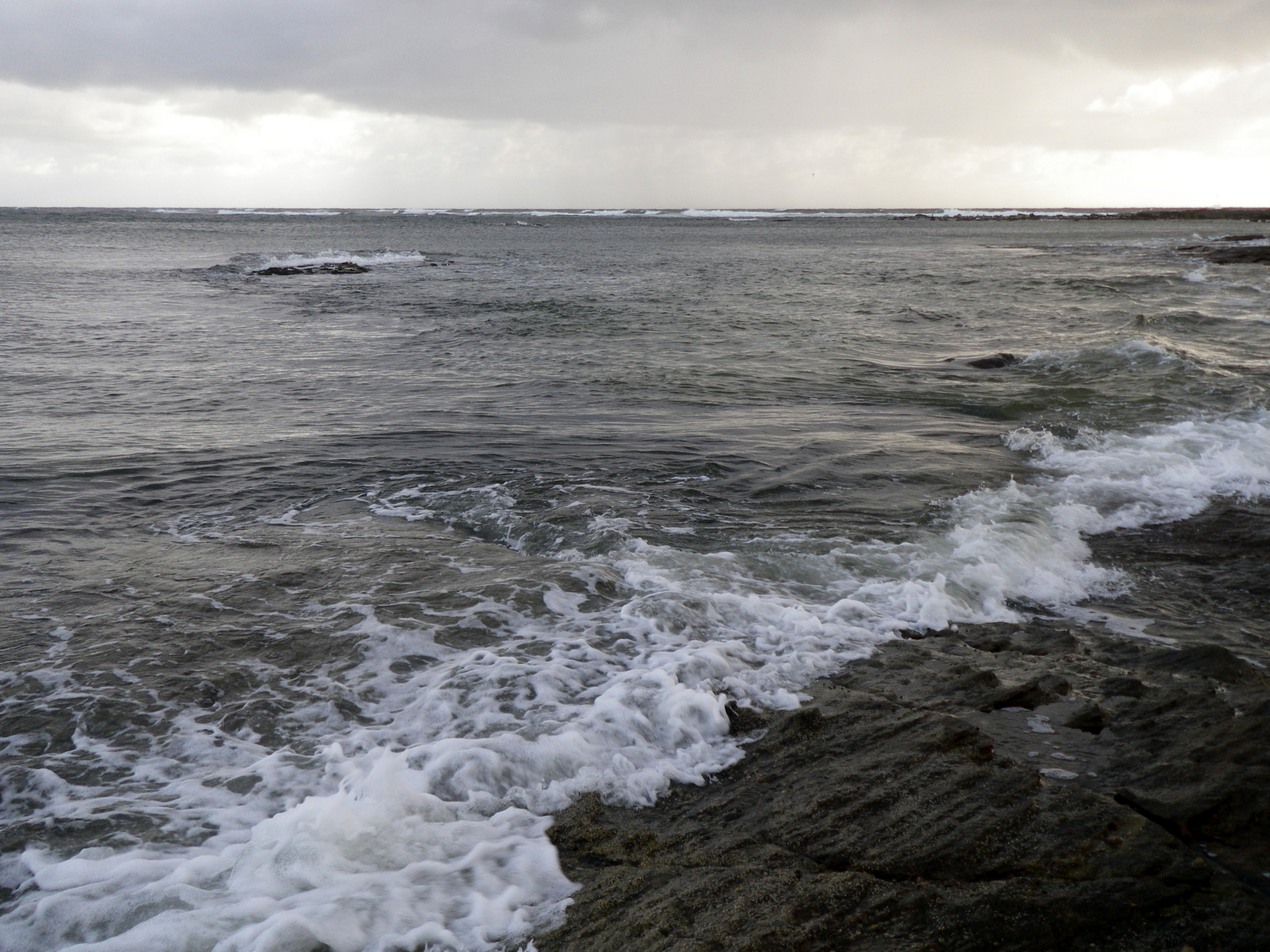
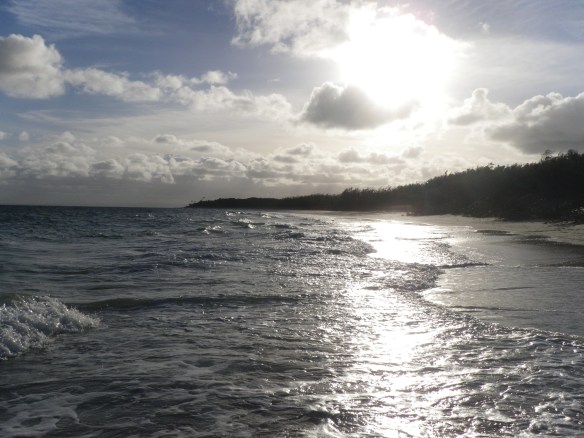
A grey morning on Woody bay

A grey morning on Woody bay

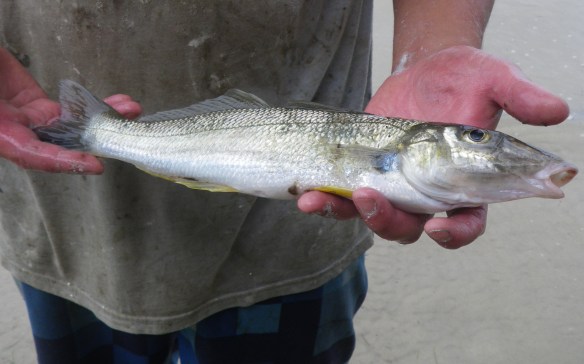
I decided to switch to my really light spinning outfit – Shimano Stella 2500 reel, Loomis GL2 rod, 1.8kg Fireline and a 10lb fluorocarbon leader. The bait that had been jumping around close to the rocks, had been some kind of small whitebait, so I chose a GULP 3” minnow soft plastic in the Watermelon Pearl colour, which would represent a similar profile. I rigged up the plastic on a 1/8th oz., 1/0 jighead. As I stood in the shallows, the water was warm and I started casting along the edge of the semi – submerged rock bars. At about 6.45 am the rain started again and just as it did, I felt the familiar double tap bream attack. I did not hook up but on the next cast, I did. I wound in another very respectable bream.

GULP Minnow gets the first bream

GULP Minnow gets the first bream

I let it go and moved on, casting out and trying to rest my soft plastic lure, for as long as possible, right where the rocks met the sand. Just before 7.00 am I felt the faintest of grabs, as I hopped the lure along the bottom beside the rocks. Two more casts in the same spot produced nothing. On the third, the rod bent over as the jighead stopped dead.

It felt like the lure had stuck fast in the rocks but then very slowly the ‘rocks’ started to move. In a long slow run the fish moved about 6 metres to the south. Then paused and did the same thing again. I pulled up on the rod and tried to recover some line. It was only at this point that the fish realised that it was hooked and started really fighting. It was still so slow and heavy that I thought it was a ray or shovel nose shark. After a few more lunges it turned towards me and rose to the surface shaking its head. I could now see it was a big flathead.

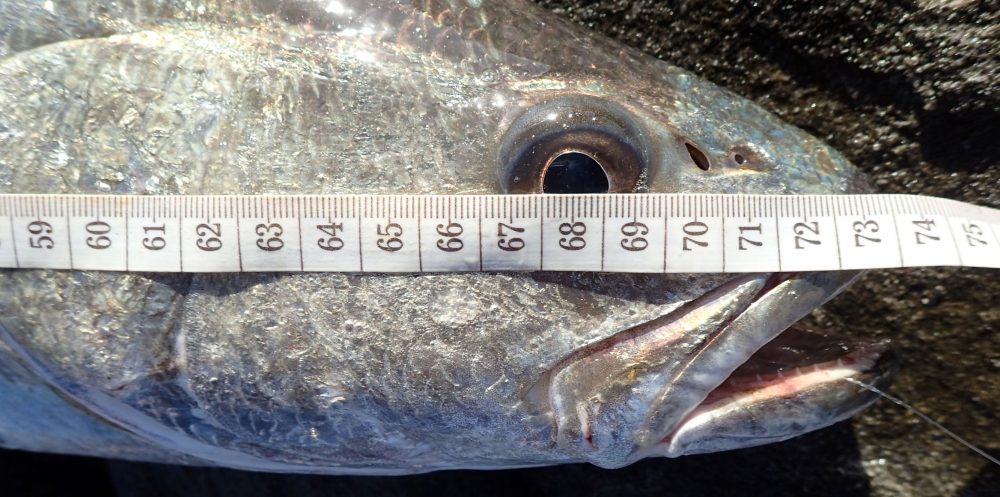
With a ten pound leader I could not risk any abrasion from the barnacle-covered rocks so I let the fish play itself out. It had been lurking in less than 30cm of water so it was hard to keep its head down but I took my time and used the swell. I found a nice sloping rock bar and gradually eased the fish up in a breaking wave. It was a nice flathead who measured up at about 74cm. After a few snaps I put her back and she swam away.

The Clarence River is still very de-oxygenated and full of fresh water from the floods. It is likely that all sorts of species (including flathead) have settled around these headlands to wait for it to clear. The birds were very active, constantly swooping in to pick up baitfish. So it looks like a fair amount of bait has also been washed out.

I decided to wade around the shallows in the bay and look for some more fish. I was soaked from the rain and being in the water was warmer than being out of it. I tried all around the rocks with the same soft plastic and a few others, to see if I could find anymore flathead – but I couldn’t. I watched a few long toms follow my lures in and have a snap at them, but did not hook any.

I swapped over to one of my favourite DUO hard bodied lures. With the river out of bounds there was not much water where I could use their range of finesse lures, but this bay was flat enough and clear of weed, so it was perfect. I tied on the DUO Ryuki Spearhead 45s in a gold/ green colour. This is a small trout lure that seems to work well on bream. It weighs 4 grams and is 45mm long with a small bib. As with most of the DUO range it casts a long way and slips into its action almost as soon as it hits the water. Although it is technically a sinking lure, its lightweight means that it effectively suspends, when you pause the retrieve.

I cast it over the flats and around the rock bars as the tide rose. First it attracted a few undersize moses perch. Then, as I moved into slightly deeper water I found a patch of small bream. I caught a couple before they decided they had had enough.

At about 10.00 am I found myself almost back where I had caught the big flathead earlier. I had waded round the bay in a big circle. I continued to cast along the edge of the rocks and suddenly felt a solid hit and run. The fish was hooked and after a few good runs it calmed down and I pulled it up to the sandy beach. It was another good bream – just over 35cm long. I released it and carried on fishing for about another hour with no luck, so I decided to give up for the morning.

Iluka – Woody Head – The Barnacles – 12 February 2013

Tuesday

It rained hard over night and I actually woke up cold on Tuesday morning. I made a huge mug of tea and fished out a long sleeve t-shirt. It was just after 5.00 am. The wind had already moved round from the south-west to blow from the east, but it was still fairly light. Low tide had been at 4.13 am. The swell might have eased a little overnight so I decided to start on the rock platform, out front at Woody Head. I walked out to the ‘Barnacles’ in the pre-dawn and things looked promising. There was only the occasional wave coming over the top and I would have an hour or so to fish before the tide got too high. It looked like it would even be possible to put out a few casts in front of ‘Barnacle Bob’.

The day before I had noticed the 20lb Fireline had started to fray on the heavy rod and I had lost a fair amount of the 10lb Platil Millenium braid, on the light rod. The Platil braid was getting a bit water-logged and heavy and not casting well. I decided neither was working particularly well in these conditions, so I drove into Big River Bait and Tackle at Maclean and asked for some suggestions on re-spooling. They were all a bit fed up after the floods. The Clarence River was still black and smelly and logically the fish looked like they had all fled out to sea for a while. The Clarence is a huge system and it will be a couple of weeks before the river improves.

As usual, the team gave me some good advice and suggested I re-spool both with 20lb Super PE braid. This would be thin enough to cast well on the light rig, but robust enough to handle a decent fish on the heavy rig. Best of all, they stripped off the old line and re-spooled both reels while I went off for a Pot Belly Pie (a local speciality) and a coffee.

So back at Woody Head the next morning I was fishing with perfectly loaded reels. This makes a huge difference when casting in difficult conditions. Every line change takes a little getting used too but the Sunline Super PE was a massive improvement. I started with the heavy rod and a GULP Jerkshad in the Lime Tiger colour on a ¼ oz, 3/0 jighead. I moved out carefully over the rocks to a spot just in front of ‘Barnacle Bob’. This has been the scene of a couple of big fish captures for me and whenever it’s safe I try a few casts here. I put the lure exactly where I wanted it but after five or six casts I had not found anything. I swapped through a few more soft plastic colours, but these did not produce any interest.

I moved south along the front of rocks to a safer spot and swapped down to the lighter rod. I put on a 1/6th oz, 2/0 jighead and tied on a 12lb fluorocarbon leader. I decided to try a different soft plastic lure. I have never been a fan of the pure white lures, I have always assumed they are an offshore, deep water idea. But I had a packet of GULP jerkshads in white and I was not having much luck, so I decided to give them a try.

It was a wise choice; I cast out wide and let the lure waft in on the swell. I left it as long as I could and it got snagged. I re-rigged with the same set up. This time, right at the base of the rocks, I felt a bite, dropped the rod down and then struck. I had a fish. I let the swell wash it up. It was a nice Bream, well over 30 cm long.

I cast out again and felt another bite, but did not hook up. I carried on for a few more casts, using exactly the same technique. About five minutes later at 6.15 am I felt a gentle tug and then a solid bite. A wave came crashing over the top and I thought the fish was gone but as the water drained, the line was still tight. On the next swell I tightened the drag a little and pulled hard. A school Jewfish came into view. It had a bit of fight left in it and I only had a 12lb leader so I let it swim back out again. The next wave was a big one and it washed the fish over the rocks and back, past me into the drain behind me. I waited for the water to drain away again and when it did the fish was stranded and I grabbed it.

It was the first school jewfish of the week and it had been lurking right at the base of the rocks waiting for dinner. It was no monster at about 50cm long (NSW size limit is 45cm) but it would make a good meal. I despatched it and put it in a keeper rock pool. I looked for more and fished for another two hours but could not find any. I lost plenty of gear trying to get my lures into the strike zone but as the tide rose and the wind picked up, it became harder and harder. At about 8.45 am the water was sloshing over the rocks with every surge and I had to retreat.

Jewfish stomach contents

I went back to wash clean up the jewfish. I gutted it and had a look in the stomach. It was full of the tiny whitebait I had seen jumping by the rocks. As I was doing this I was standing in the shallow rock pool. After a few minutes of cleaning and scaling, I nearly jumped out of my skin as I heard a loud snap and splash, just behind my heal.

I found a big hungry wobbegong already in attendance. It had swum up a series of very shallow rapids to reach the pool, just below where I had lay the jewfish. The blood and guts had attracted him. I hopped out of the water and quickly found another (stranded) patch of water to finish the cleaning. By the time I finished cleaning the bream there were four of them swimming around, like toothy puppies waiting for lunch.

I had cut off the bream’s head as I intended to pan fry it on my camp stove. I left it on the edge of the rock pool and was amazed as two of the wobbegongs wriggled out of the water, in their attempts to reach it. Eventually the bigger of the two lunged forward and inhaled the head, with a loud snap.

In the afternoon I came back to the same spot as soon as the tide would allow, at about 2.30 pm. I fished all through the afternoon but the swell and wash made it difficult again. I caught one good Bream, about 33 cm and dropped a bigger one, both on a smaller GULP 3” Minnow in the Banana Prawn colour, on a 1/6th, 1/0 jighead, around 3.00pm. There was plenty of bait, jumping, in close to the rocks but I just could keep the lure where I wanted it.

By 5.00 pm I was soaked through and decided to give up and head for the wood fire, fried bream and a bottle of red.

Iluka – Frasers Reef/ Middle Bluff – 9 February 2013

Saturday/ Sunday

I woke at about 4.30am on Saturday, to a big storm. I must be getting less keen. In the past I would have put my wet weather gear on and headed straight out to fish the dawn. Instead, I rolled over and slept for another hour. When I woke up the rain had stopped so I pulled on my fishing boots and drove down to Fraser’s Reef.

As I pulled in to the car park the sun was well and truly up. My late arrival was underscored when a local acquaintance – John, appeared with a bag full of Blackfish. He had caught them all using the green string weed and had already finished for the day. He did not tap his fingers on his watch but he may as well have. It was about 8.30 am and I was only just starting.

I walked out to Middle Bluff, which is the headland to the north of Fraser’s Reef. The swell may have herded the Blackfish into a few holes where they could be easily extracted, but it made fishing for anything else pretty difficult. I started with the heavy rod and a GULP Crazylegs Jerkshad in the Curry Chicken colour , which I rigged on a 3/8th oz, 3/0 jighead. I cast out a few times but the sweep and swell threw the lure around and I could not really control it. I worked through a few more soft plastic lures in various colours and shapes. I tried the heavier, ½ oz, 3/0 jigheads, but these just kept getting snagged.

In a repeat of the conditions of the day before I just could not get the lure into the area close to the base of the rocks where, I was pretty sure the school jewfish would be hiding. While I was trying, I had to retreat a couple of times to avoid a soaking but, inevitably, I soon copped a drenching from a big wave set. You cannot run across these rocks and the recent rain and big seas means there is a thick coating of black green slippery, slimy weed. If you have barnacles under foot you are ok, but the black and green stuff is like ice. I use felt soled rock boots from Cabelas in the US, but even these can slip in the slime.

I swapped down to the light rig and put on a GULP Jerkshad, in the Pumpkinseed colour on a ¼ oz, 2/0 jighead. I threw this into the foamy swell and hoped it would sink a few feet before getting washed against the rocks. It did and as I took up the slack I felt a fish on the line. I did not have to do much, as the swell more or less threw the fish at me. It was a good sized Bream, just over 34cm long. I moved along the headland trying to fish in a few spots but as the morning went on, the swell got worse and I gave up at about 10.30 am.

In the afternoon, the tide was low at about 3.40 pm so I tried to fish around the Frasers Reef headland, but this yielded nothing except a lot of lost gear. I could see bait in close to the rocks, jumping ahead of my lure but I could not leave the lure in the strike zone long enough. I had caught dinner and avoided a duck but only just.

I tried the same spots on Sunday morning. This time I was in position to see the sunrise. The swell had eased a little but it was still making it pretty tough to fish. The wind dropped off around dawn but then gradually built up again until it was blowing at about 15 knots from the east. I tried a few spells with some big hard bodies and slugs but these did not tempt the fish.

In the afternoon I tried fishing off the rock platform at Woody Head but the wind and swell made it impossible. So after an hour of trying and losing gear, I gave up. So on Sunday I scored a duck and went for dinner at the pub. I went to bed on Sunday night hoping that the wind and swell would ease off soon.

Iluka – Woody Head – the ‘Barnacles’ – 8 February 2013

Friday

After a few delays and cancellations, I decided it was time for an Iluka fishing trip. I had a booking at Woody Head for the week before, but with the Clarence River pouring out mud, I delayed it for a week. By Friday the weather looked reasonable, so I decided to go for it.

I arrived at Woody Head at about lunchtime and set up camp. When I camp, I use the Oztent RV2 as it is quick to set up and very durable. It took about 20 minutes to get sorted and then ten more to get my fishing boots on and light and heavy rods rigged.

For the purposes of rock fishing I use the following outfits:

Heavy – Daiwa Demonblood rod, Stradic 8000FJ reel, 20lb Fireline and usually a 25lb or 30lb fluorocarbon leader.

Light – Shimano Catana Coastline Light rod, Sustain 4000 reel, 10lb Platil Millenium braid and 10lb or 12lb fluorocarbon leader.

I usually carry both out to the rocks with me. My general plan is to start with the heavy rig, throwing big lures or soft plastics and gradually work through to the lighter rig. It is amazing how often down-sizing in this way, produces fish.

I walked round the headland to a spot called ‘the Barnacles’, by the locals. This is a fairly treacherous place and you need to watch the swell carefully for 30 minutes or so before figuring out where is safe to fish. Even then, you can still get caught by a rogue wave, so good boots, a pfd and a willingness to get wet are essential.

I soon got wet as a huge wave slapped against the rocks and came down on top of me. In the bright sunshine, it was quite refreshing but it was a timely reminder to watch my step. I cast around with the big rod using the GULP Crazylegs Jerkshad soft plastics in the Lime Tiger and New Penny colours. I initially rigged them on 3/8 oz 3/0 jigheads and then dropped back to the ¼ oz 2/0 size.

Low tide had been at 2.15pm and the swell was making keeping the lures in the strike zone hard. The water was pretty dirty, but each time I pulled the lure in close to the rocks, small whitebait would scatter in front of it.

This was perfect jewfish water but the problem was getting my lure to them. During the daytime they will hug the rocks and sit underneath the overhangs. If you want to catch them you lure has to be on the bottom right in front of the overhang. They also can be fussy, so you have to fish light, even a ¼ oz jighead is sometimes too heavy. With a 1.5m swell it was very difficult to keep my lure where I wanted it.

I swapped to the light rig and dropped to a finer wire 1/6th 2/0 jighead and 12lb leader. I put on a plain GULP Jerkshad in the Lime Tiger colour. It was now just after 3.00pm. After a few casts, something hit the lure right beside the rocks and took off. It was fast and stripped some line. It was not a jewfish. I waited for the swell to bring it up over the ledge and then tightened the drag a little. It was a big eye trevally, about 40cm long. I snapped it and bled it – just enough for dinner.

I continued fishing but as the tide turned and the afternoon breeze picked up, I was forced off ‘the Barnacles’. I walked back to camp cleaned the fish and washed up. I got the fire going and the red wine open and planned the next morning’s session.

Bribie Bridge and surrounds – 3 February 2013

Sunday

After a trip up to Asia I had eaten plenty of good seafood but now I wanted to catch some. Unfortunately the cyclone and its aftermath had slowed me down a bit.

On Sunday morning I could wait no longer and I decided to drive up to Bribie to have a look at conditions and try some fishing. Things were far from ideal. There was a strong south-easterly blowing and the tide had been high at about 2.00 am. The moon was waning and about 50% full. I would be fishing a not particularly powerful run out tide through to a low of 0.8 m, at about 8.30 am.

After a flood it is best to fish around high tide as this is when the concentration of salty water is highest in the estuaries – unfortunately this was not really an option. I arrived at the west end of the Bribie Island Bridge just after 4.00 am and rigged up. The tide was about half way out.

As I waded out, under the bridge, there was plenty of surface action under the lights and the water, in the shallows at least, was fairly clear. I put on a GULP 3” Minnow in the Pearl Watermelon colour , on a 1/8th 1/0 jighead and cast out. There was a pull as the lure dropped in to the water and then nothing. I let the lure sink and as I lifted it from the bottom the line pulled tight and I wound in a 30cm Flathead. It’s always good to get a fish on your first cast – even a small one.

There were a few prawns skidding across the surface and so after a few more casts, I moved over to the shallows on the south side of the bridge. I cast at the pylons and wherever I saw a splash or a prawn jump. I retrieved the lure with the tide, hopping it over the sand and rubble bottom. Each time I cast in close to the pylons I would get a couple of hits. After a few repeats in the same spot I caught a small Moses Perch.

I decided to match what the fish were eating and swapped to a GULP 2” Shrimp in the natural colour. I was fishing with my light spin rod and reel combination. I had the reel spooled with 2.8kg Fireline and about 1.5m of 10lb fluorocarbon leader. I concentrated on the area around the base of bridge pylons. The water was running out fast and the sun was just coming over the horizon. I let the soft plastic lure bump along the bottom. At about 5.25 am I lifted the rod to cast again and felt a solid tug. I dropped the tip for a few seconds then struck. I had a fish and it turned out to be the only keeper of the day – a flathead, 42cm long.

As the sun came up I moved south to fish around the old oyster jetty. As the tide dropped the water got dirtier and dirtier, especially in the main channel. I tried a few different soft plastics but did not get a touch. I waded from the jetty to the green channel marker and all the way back but did not get any hits. At about 8.00 am the tidal flow dropped off and the Passage was pretty much a brown muddy soup, so I gave up.

It was encouraging to catch a few fish and hopefully by next weekend the water should have cleared considerably. The prawns were a good sign and hopefully they will bring the predators in.

Not worth fishing – so here are a few pics of my favourite lures in action – 31 January 2013

Surveying the dirty brown waters of our estuaries and Moreton Bay – I have decided this week, and probably most of next, will be a write off as far as land based fishing is concerned. But there is nothing more depressing than not being able to fish and not having any fishy pictures to look at, so I have put up a few of my favourite captures and lures from the last few years.

If you have a sore back from cleaning the mud out of some flooded area of your house I hope these will represent light at the end of the tunnel!

Bribie Island – the oyster jetty flats and Whitepatch – 2 January 2013

Wednesday

Flushed with the success of New Years Day, I invited a friend to come and fish the flats around Sandstone point with me on Wednesday morning. Andre is the perfect fishing companion. He comes well prepared, does not talk much, always pays for the coffee, but most importantly – he wants to catch fish.

It may sound odd but when you say you are a fisherman almost everyone seems to think you are in desperate need of company. Wives in particular, are constantly volunteering their husbands to go fishing with you. I think the problem might be that the annual ‘fishing trip’ away with the lads rarely yields any fish – this is because it is primarily a drinking trip. Perhaps the wives are thinking after 12 years of buying new gear, going to Fraser and coming back with 4 small dart and a shocking 3 day hangover, their husbands need some tips!

This slideshow requires JavaScript.

When I fish with Andre we have none of that ‘well it was a beautiful morning even though we did not catch anything” nonsense. The focus is on the fishing. However I have noticed that it is often a lot harder to find and catch fish when you are with someone else. Perhaps you over plan or analyse or maybe the two of you and wading and casting causes more disturbance either way today was not easy fishing.

It started very well – we waded out under the bridge on to the exposed mud flats on the mainland side of the Pumicestone Passage, at about 4.30 am. The tide was running out but was just slowing. The sun was not yet over the horizon and the air was still and warm. The south easterly that had been blowing up until the day before, had died away. Low tide would be at 5.52am. We waded down along the exposed sandbank to a point about half way between the old oyster jetty and the green channel marker – where I had caught plenty of fish the day before. The only real difference was that we would be fishing the last of the run out tide, whereas the day before, I had caught most of my fish on the beginning of the run in.

I rigged up with a GULP 4” Minnow in the Lime Tiger colour on a 1/8th oz, 1/0 jighead, 10lb fluorocarbon leader. I cast the soft plastic at the edge of the weed beds and a fish hit it almost as soon as I lifted it off the bottom. It was a nice 45cm flathead. A few casts later I pulled up a sub 40cm flathead which released itself before I could get a picture. Then, a little while later Andre pulled in another fish that was just about 40cm.

We gradually waded north as a couple of boat based anglers slowly electric motored right along the line of the edge of the weed banks. We carried on towards the old oyster jetty. I swapped to a Minnow in the smelt colour and caught another sub 40cm flathead. On the bottom of the tide the weed started to lift and made the fishing difficult so we decided to switch locations.

We drove up to the north end of Whitepatch and waded around on the edge of the drop off, trying to rustle up some more fish, but we could not find anything. Eventually the weed problem also arrived there on the incoming tide, so we gave up for the day.

Bribie Island – Banksia Beach and Whitepatch – 31 December 2012

New Years Eve

I was still at Bribie Island and the big south-easterly wind and swell would make it just too hard to fish on the surf side. This gave me an excuse to go over to the western side of the island and fish in the Pumicestone Passage.

The wind would still be a pain but usually it calms down for a few hours either side of dawn and this morning was no exception. I started at Banksia Beach, just to the north of the wading bird roost. There is a nice coffee rock ledge along here and the area produces snapper in the cooler months and plenty of Flathead, all year round.

Low tide was just before 5.00 am and this is when I arrived. I waded out to the ledge and cast around on top of it and just over it. I was using might light spin rod and reel and had rigged a GULP satay chicken Jerkshad on a 1/8th 1/0 jighead, on 10lb fluorocarbon leader. After a few casts a felt a solid thud and the rod tip started wriggling. I struck a bit too hard and the fish was gone. Too long between fish and this can easily happen!

I peppered the same area with about 50 casts but could not find the fish again. I gradually went smaller and lighter with my jighead and soft plastics, until I caught an angry 20cm moses perch, on a GULP 3” minnow, in the emerald shine colour. I got a good soaking from a passing shower and at about 7.30 am, decided to move locations. I drove up to the north end of Whitepatch and waded out into the water.

The tide was about half way in and I focused on an area where I had seen some flathead lies the week before. I had swapped to the more natural coloured GULP Jerkshad in the smelt colour but was still using a 1/8th 1/0 jighead. I was casting at the area, just on top of the ledge which now has some thick weed beds growing on it. I felt a very slight hit and decided to cast into the same spot again. As soon as the plastic hit the water the fish swallowed it and took off. It hooked itself and I just had to hang on. I soon had it back at the tree line and safely out of the water. It was a handsome 57cm flathead.

I was so relieved to have broken my duck that I decided not to push my luck. I took a few photos, released the fish and gave up for the 2012.

Bribie Island – Skirmish Point – 28 December 2012

Friday

Christmas has left me feeling knackered – all that eating and drinking wears you out. As many of you will have realised Landangler is almost a nocturnal creature at this time of year. I am not a good sleeper at the best of times but the full moon seems to really wind me up. So I went to bed early on Thursday night but tossed and turned and it only felt like I had just got off to sleep when I realised it was already light outside. I really did not feel like getting out of bed but I looked out of the window and saw a clear, still sky. The forecast big winds were not blowing so I decided I’d better get going.

I decided to put in the hours at Skirmish Point again. I would be fishing the incoming tide. High tide would be 2.4m at 9.32am. I walked along the beach from Woorim and arrived at Skirmish just after 6.00am. The sun was bright and the water was comparatively still. I stuck with the Catana Coastline Light rod but decided to try a lighter leader and 1/16thoz jighead, for the calmer conditions. I put on a GULP 3” Minnow in the Peppered Prawn colour. I immediately felt a few hits and there were a few bait sprays as something attacked the small bait fish that were sitting on the wave break.

I could see tiny mullet all around in the clear water. It looked like small tailor were feeding on them. I kept up a fairly quick retrieve with the soft plastics, to avoid dragging up the glass weed that was all over the bottom. Almost every cast I would feel a bite or a bump, but I could not hook up. The fish kept snapping at the tails right up to the beach, where they would let go and swim away. After about 15 minutes of this, I hooked one and landed it – a 15cm tailor.

It was now about 6.30 am and over the next three hours of run in tide I walked up and down this area of beach, casting all sorts of 2”, 3”, 4” soft plastics and small hard bodied lures. The water was clear enough to see the schools of tiny mullet follow the lures in. I caught five more tailor – the largest of which was just about 25cm. I tried brighter colours – the GULP 3” Minnow in the lime tiger colour. Something bigger hit this and took off. It felt big but everything is relative – it was only a 25cm Dart, but things were looking up.

Unfortunately as the sun got higher in the sky even the small fish decided to slow down. I caught a tiny Whiting at about 8.00 am and then it all went quiet. It had been a better morning and at least I had caught a few fish – just enough to keep me coming back!

Bribie Island – Skirmish Point – 27 December 2012

Thursday

After the Christmas festivities I felt like I was suffering from fudge poisoning, so I was glad to get back up to Bribie where there is a bit less food in the fridge. I walked out on to the beach at Skirmish Point, south of Woorim, on the ocean side, at about 4.30pm. The tide was coming in and would be high at about 8.30pm.

I was fishing with the Shimano Catana Coastline Light, 10lb braid, 20lb leader. The wind was an easterly, blowing about 20 knots and there was a fair swell. I started with a big hard body minnow and then gradually worked my way through lighter hard bodies until I decided to swap over to soft plastics.

Bribie Island - Skirmish Point looking towards Red Beach

Bribie Island – Skirmish Point looking towards Red Beach

Fairly windy and choppy

Fairly windy and choppy

The water was clear and every so often I caught a glimpse of a small school of Dart or Mullet in the waves. I started with a GULP Jerkshad in the Lime Tiger colour on a 1/6th 1/0 jighead. This got a couple of bites and then lost its tail. This usually means small Tailor are around. I dropped down to a GULP 3” Minnow soft plastic, also in the Lime Tiger colour. Again, I got a few bites but I did not hook up with anything.

I swapped through a few different soft plastics but could not hook anything, so I gave up just after sunset. This is proving to be a tough spot.

Christmas Eve – Mulloway – Fingal Head – 24 December 2012

Christmas Eve

Twas the night before Christmas and all through the House – not a creature did stir – not even a mouse – except for a man with rod – who snuck out of the house.

I found myself awake at 2.30 am dreaming not of sugarplums, but of big fish. I loaded up my gear and arrived at Fingal Head at about 4.00 am. There were already a few cars in the car park. Clearly, some other fisherman needed their pre-Christmas fix.

The wandered out to the rocks to find a cloudy sky, virtually no breeze and a very big south-easterly swell rolling through. The tide was running in and would be high about 8.00 am QLD time. It took a while to cross the causeway out to the fishing platform – I watched the wave sets carefully and eventually found a gap. There were some big swells crashing through. A couple of fishermen were already out there and as the sky brightened I could see rods sticking up all along the headland.

The big swell made it pretty difficult to fish the front of the platform and I soon got a soaking from a big wave. At this time of year the water is warm enough to not be a problem – the risk is getting knocked off your feet.

I started with my heavy rod – the 9ft Daiwa Demonblood. I was using 20lb Fireline and a 25lb fluorocarbon leader. I tied on a RAPALA XRS 12 in the ghost colour and cast around. The other fishermen pulled up a couple of 35 to 45 cm tailor. They were casting directly to the north of the platform. They caught their fish on lures, one on an XRAP hard body and one on a Shimano Waxwing lure. I could not find anything on the XRS12, so I swapped to a smaller, suspending YOZURI Crystal Minnow in a silver colour. This produced a bite – in fact I had contact with a few fish before I finally set the hook in one. It was only a small tailor – probably between 25 and 30cm long.

The swell was creating plenty of white water; a bird kept diving and coming up with fish so I knew there was bait around. We are now in the run up to the full moon so I was pretty sure there would be some jewfish / mulloway around. I stuck with the heavy rod and put on a ¼ oz jighead with a 2/0 hook and rigged up a GULP Crazylegs Jerkshad in the New Penny colour. I cast around the south east side of the rock platform – withdrawing to a safe distance, every time a big wave set came through. As I started to cast more east than south, I felt a tug and then a bite and the rod bent over. The fish decided to swim north which immediately posed problem. With swell crashing straight against this side of the rock platform there was nowhere to land the fish. I moved it a little way north but as huge wave set was coming in I had to retreat, keep contact and hope for the best. I survived a few waves but now the fish was getting bashed against the rocks and soon, the line snapped.

I re-rigged, this time with a soft plastic that I have been meaning to try out for ages – a Powerbait 4” Ripple shad Swimbait. I had it in the black and white ‘natural’ colour. I wanted to try it because when there is lots of foamy water I think a paddle tail vibration can attract the fish more effectively than the simple minnow shapes. I also decided to use a heavier 3/8th oz, 2/0 jighead. I moved back round to the south side and cast into the mouth of the channel that runs up to the causeway. I let the soft plastic lure sink to the bottom and then retrieved it, in short bursts. The swell was throwing the plastic around but I could still feel the paddle tail vibrating. After about three casts I felt a solid hit and the drag went to work. This time the fish stayed in the channel and I gradually walked it back towards the causeway. In a big swell this was the only place I would be able to land it.

I let it play itself out as I did not want it thrashing around once I was pulling it clear of the water. I soon had it close to the causeway and, with the aid of a big surge, I pulled it up on to the rocks at the bridge. It was still in the swell zone so I watched the waves and then stepped down and grabbed it behind the gills and lifted it to safety. It was a nice jewfish/mulloway – just over 70cm long.

While I was re-rigging I spotted a rod bend over from the top of the cliff, on the mainland. Peter, a local fisherman, had a long surf rod/alvey combination and was fishing with worms. He clearly had a good fish on his line, but he was going to really struggle to find somewhere to land it. He played it for a few minutes from the top of the cliff then slowly slid down to a lower rock platform. A few more minutes went by and although he was now closer to the fish, the swell was crashing in and he was at least 3 metres above the water.

A big surge lifted the fish onto a rock ledge. But as Peter tried to lift the fish by the leader, the line snapped or the hook pulled. The fish was pretty tried, so it just sat on the ledge – Peter was not going to let this one get away. He climbed along the rocks and down to the fish. He grabbed it behind the gills just as he was completely obscured by a huge wave. It crashed over the top of him. Somehow, when the water drained away, he was there, drenched but still holding his jewfish and clinging to the rocks. He made his way to safety and we all breathed a sigh of relief. It was a good fish – I would estimate it was about 90cm long.

Landangler’s advice – don’t try this at home!

It seems the jewfish/ mulloway love the rough water and stirred up conditions, especially if it is near the full moon. It had been a very exciting morning and was not even 7.30 am. I left, off to find a Christmas recipe for stuffed jewfish.

Happy Christmas to all and please remember rock fishing can be very dangerous – so take sensible precautions, wear good boots and a flotation vest, fish with a mate and stay safe.

Bribie Island – The old oyster jetty flats – 18 December 2012

Tuesday

It was great to wake up at 4.00 am and only have a few minutes’ drive to wherever I wanted to fish on Bribie Island. My problem was that I was struggling to find fish. Was it the northerly winds or increased fishing and boating activity or was I just not looking in the right places?

Sunday and Monday had been dismal days. I had put in the hours in spots where I have often found fish and caught very little. There definitely was not much bait around. I have often found fishing at this time of the year tough and the last few days had been evidence of that.

I decided to try the mainland side of the Pumicestone Passage, around the old oyster jetty, just south of the Bribie Island bridge. This is an area of mud and sandbanks with extensive weed beds. It usually fishes quite well on the bottom of the run out tide. Low tide would be at about 0.5m at 6.32 am.

I arrived at about 4.45 am and waded out across the mud flats. The tide was still running out slowly but the water was dead calm and it was already stinking hot. I started with a GULP 4” Minnow soft plastic in the Pearl Watermelon colour. I waded south, casting at the edges of the weed beds.

At first, there was a little cloud in front of the sun as it came over the horizon but when it emerged, it was already white hot. The water was so shallow and warm that it provided no relief. I fished my way south and was encouraged to see a few patches of very tiny squid (about 3cm long) swimming around.

The northerly winds had blown hundreds of blue jellyfish in from the ocean and these were now dotted all over the sandbanks, like cake decorations. I walked down to the green channel marker and fished around but did not feel any bites. As the tide turned in, I turned back and walked parallel with the sandbanks. I slowly waded back towards the oyster jetty.

As the tide picked up pace it washed the loose weed away and the water became clearer. It was now easier to see the edge of the weed beds and that’s where I kept casting. I had swapped to a GULP Jerkshad soft plastic, in the Lime Tiger colour. Suddenly I felt the tell-tale ‘thud’ and I immediately dropped the rod tip. I paused and then struck. The rod tip started wriggling but the drag was silent. I realised it was working but the clicking mechanism was buggered. It was surprisingly disconcerting to play the fish without the noise of a clicking drag. I slowly waded back to the sand bank, playing the fish very gently – it hard been hard to find. It was a dark green, carefully camouflaged flathead – about 50cm long and I was very glad to see it.

I took some photos, bagged it then followed my muddy footsteps back to the edge of the weed beds. A few more casts, in the same area and bang, I had another. I still was not going to risk grabbing it, so I waded back to the sand bank again. It was another flathead, about the same size. I repeated this process three more times along the edge of the weed banks and caught three larger Flathead – the biggest was just over 60cm. I got them all on the same GULP Jerkshad in lime Tiger.

So I had fished for three days and caught the only five legal size fish, all within about 30 minutes. They had all been on the same 50 metre stretch of shoreline. And this was the same stretch I had covered in casts an hour before.

It was a relief to have a bag of fish for Christmas entertaining and even more of a relief to know there must be a few more out there. At that point I decided it was time for a cold shower, so I gave up for the day and waded back to the car.

Bribie Island – Whitepatch – 16 December 2012

Sunday

A hasy still morning at Whitepatch

A hasy still morning at Whitepatch

I was back in Brisbane and after a few interesting but largely fishless sessions, I decided to give Bribie Island a try, on Sunday morning.

Now, on the first Sunday of the school holidays it is not likely to be quiet anywhere. Also with a hot, sunny day on Saturday, a lot of popular spots will have been fairly thoroughly fished and disturbed. So I decided to try the north end of Whitepatch beach, about half way up the west coast of the island. I arrived at about 4.15 am and pulled in next to Colin, an experienced local fisherman, who obviously had the same idea. He explained he had caught a few Flathead earlier in the week, but they had been pretty hard to find.

The sky was thick with smoke haze and the wind had died down to nothing. The water was still and it was hot. Low tide would be a very low one at 0.2m at 5.22 am. The water was still slowly running out but there was not much pace in it.

I was back with my Loomis GL2 light spin rod and started with a GULP Lime Tiger Jerkshad soft plastic on a 1/8th 1/0 jighead. I was only fishing an 8lbh leader as the water was quite clear, initially. Colin started with a small jerkbait, an Ecogear, I think. He caught a couple of small moses perch.

Troy arrived and put out a pilchard bait, which was grabbed pretty much straight away, and then bitten off. Colin waded south and I waded north. Neither of us found much. Eventually I ended up back at the bottom of the steps close to Troy, where I caught a just legal size moses perch – but it released itself before having its photo taken.

The tide was now running in. Troy was trying various baits and I knowingly told him that the squid would not catch anything. I wandered along the shore for another twenty minutes or so, and when I came back he had caught the fattest Whiting I have ever seen…………on the squid!

Troys very fat whiting

Troys very fat whiting

By about 8.30am, fishermen were lined up all along the beach. I was now fishing with a smaller GULP 3” Minnow soft plastic. I felt a few aggressive hits and saw some swirls but could not hook up. Then I saw a thrashing long tom, chasing the lure.  A few minutes later Troy landed one…… on the squid. It was time to give up!

The flathead were around - somewhere

The flathead were around – somewhere

Fingal Head predator – 21 November 2012

Wednesday

A couple of big storms over the weekend and this week, the wind was back to blowing from the south east. The tailor have been pretty solid at Fingal Head and despite the long drive and the early start, that looked like the best option on Wednesday. The wind was forecast to gradually drop through the morning, from about 15 knots down to 10 knots. Low tide would be just before 8.00 am.

I arrived about 4.15 am (QLD time) and it was already past first light. There was a small shower of drizzle as I walked out to the rocks. It was cloudy and overcast but the south easterly was blowing a good deal harder than 15 knots.

I rigged the heavy rod – I am still using the 20lb Fireline and a 30lb fluorocarbon leader, for the first casts of the day. I tied on the RAPALA SXR 14 hard bodied minnow. After only a few rock fishing sessions it is looking a bit battered, but I always think you should try the biggest, most daring lure in the bag for your first cast, as it might just tempt something which has been lurking around all night.

It hit the water and bait sprayed in all directions which was a great sign. They were tiny smelt coloured anchovies about 3cm long. They certainly did not look much like a red headed RAPALA SXR 14 but on the next cast – tug, tug – zzzzzzzzzzzzzzzz. That’s how the tailor seem to play. Sometimes I think a couple of fish hit the lure at about the same time and that’s why there is a slight delay before they start running. It’s only when the faster/ more aggressive fish wins and clamps down on the lure that the fun starts. This one tried to head south but with the heavy gear I turned its head and soon had it round on the north side and safely landed. It was another very handsome Tailor – just over 50cm long. It was spitting up plenty of the 3cm bait fish.

It had given the RAPALA SXR 14 a good work over. As I have mentioned, I like these lures – great action, good colours, consistent swimming depth and tough trebles and rings but the paint job and their lack of overall durability lets them down. This one had now lost more than 50% of its paint, it was missing a chunk off its rear end and the wire frame was bent sideways. It had caught three or four fish and was only in its third session. This not a cheap lure at approximately A$20, so it should be tougher than it is. I straightened out the wire frame and peppered the areas with casts again. But I did not get another hit.

After about 10 minutes, I swapped to a smaller RAPALA Clackin Rap CNM11 hard bodied minnow. This lure is 110mm long and weighs 20 grams. I had it in the Grey Ghost colour. RAPALA describe it as ‘slow sinking’ which really means it suspends in a big swell. The ‘clack’ is caused by a big ball bearing that rattles on a cylinder across the body of the lure. It has a lighter set of trebles and, on the back treble, one of the hooks is slightly elongated. It has a fairly standard slashbait /minnow action. The smaller profile or the louder rattle obviously did the trick because I hooked up on the first cast. It was a smaller tailor – about 35cm long.

By 6.30 am things had gone quiet, so I decided to try a soft plastic lure. I tied on a 3/8th ounce, 2/0 hook, jighead and loaded it with a GULP 4” minnow in the pearl water melon colour. I still had the heavy rod but I had dropped down to 20lb fluorocarbon leader. I dropped the lure down close to rocks on the eastern side of the rock platform. I could see a thick school of bait sitting there. I let it sink to the bottom and immediately got snagged. I broke off the line and re-rigged. This time I cast out a bit further and let the plastic waft in, close to the rocks, as I retrieved it.

Just before I lifted it from the water there was a big bait spray and a Jewfish engulfed it. The fish turned and took off. I had got a clear look and it looked like a 10kg fish. At first it started heading north but it soon turned south, in the direction of a load of rocky snags. Even with the big rod and a fairly tight drag, it was taking plenty of line. After a few minutes of sustained pressure I brought it to the surface, close to the rocks. Landing it would be very tricky, but the problem was solved before I had to think about it. With a shake of its head, it spat the bent hook out and was gone.

I swapped the bent jighead and mangled soft plastic for a tougher one and cast out again. After a few casts and a couple more jigheads lost to the bottom, I hooked up again. I did not get a look at it this time. It swam straight around the corner to the south and broke the leader on the rocks. This was getting frustrating.

Con – another local rock fisherman was spinning with a ’waxwing’ lure on the north side of the rocks. He gave me a shout and I went over. He had hooked a small tailor and something had decided to eat half of it on the way in – ouch. I tried a few casts in the area with a soft plastic but could only manage to catch a dart and then a long tom, neither of which seemed like likely suspects for the tailor robbery. Something bigger was prowling around but despite trying every lure in the bag, neither of us could tempt it.

At about 8.30 am I gave up for the day and drove back up to Brisbane. Still plenty of bait and plenty of fish around.

Fingal Head – Trevally, Tailor, Dart and Bream – 16 November 2012

Friday

The weather was going from one extreme to the other. On Monday the strong south-easterly had lifted the seas and made things tough. By Friday a howling north easterly was forecast. I managed to find a space for a quick fish but with the wind forecast to be blowing at 30 knots, I wasn’t sure if it would be worth it.

I wanted to have another try with the RAPALA lures I had been sent so I woke at 2.45 am and went outside to see what the wind was doing. In Brisbane there was no breeze at all so I decided to go for it. By the time I reached the rocks at Fingal Head, an hour and a half later, the wind was well and truly up.

I tried to walk over the headland to the rock platform and nearly got blown over. There was no point trying to fish off the rock platform so I had a look to the south for a more sheltered spot. The northerly had completely flattened the swell. I climbed down on to a ledge just to the south of the main platform.

I tied on the RAPALA SXR 14 – a 140mm hard bodied minnow. They describe it as a ‘slashbait’. This just means that it will move more violently from side to side than a normal minnow, but you need to work it, quite aggressively, to achieve this type of action. I had it in the ‘Clown’ colour – red head and yellowish body. I picked the size 14 as it looked like it would be the only one heavy enough to cast against the wind. It weighs 43 grams but with the wind blowing this hard from the north, my attempts to cast against it were fruitless.

The sun was just coming over the horizon and now all I could do was cast to the south and retrieve against the wind. The tide was just past low and would be high at 11.00 am so I was not fishing in much water.

After a couple of casts I felt a really powerful hit and then line started peeling. The drag was set pretty tight but the fish had no trouble stripping line. Initially it went south, with the current and wind, but then it turned north which helped me. I got back some line and climbed down as close to the base of the rocks as I could. It was not a tailor – it was too calm and powerful. I played it for few minutes but still could not get a look at it. Each time I got it towards the foot of the rocks it took off again. Eventually it came into view – a good looking trevally. It was pretty tired now so I used a wave to lift it onto a safe looking ledge and then hopped down and picked it up. It was a very handsome grunting fish, just about 70cm long. After a few pictures, I pulled out the treble and let the fish swim away.

I carried on fishing the SXR 14 and a few casts later it hooked a small tailor. Then all went quiet – except for the wind which just got stronger and stronger. I decided to switch locations and move round to the more sheltered southern side of the headland. There is not much sea bed structure here but there are a couple of large rock pools that are constantly filling and draining. I cast around these with the SXR 14 and then tried an 85g Raider. Neither produced a fish so I decided to swap down to the light rod.

I swapped over to the DUO Tetraworks Yurameki lure. This is a small bibless sinking lure. It has a tight action. It weighs 6.3 grams and is 48mm long. Normally it sinks fairly fast but with the wind blowing a big bow in the line, it dropped very slowly. I could see the Bream come up to look at it but they did not strike. I cast around and got a few hits further out. I persisted in the same area, leaving the lure for a long time, to make sure it had reached the bottom before I started the retrieve. After a long wait I lifted the lure for its first hop and a fish hit it. It pulled hard on the light rod and as it came to the surface I saw it was a swallowtail dart. It was a good size and another species notched up on the DUO Tetraworks Yurameki. I threw it back and carried on battling the wind.

I eventually swapped over to a GULP 4” Minnow soft plastic lure, on a 1/6th ounce, 1/0 jighead and this got the bream going. I kept feeling them hit the plastic but could not hook up. Eventually I caught one and then another, and another but they were only just legal size, at about 28cm. The wind was now too difficult to deal with so, at about 10.00 am, I gave up and headed home.

Fingal Head – Plenty of Tailor – 5 November 2012

Monday

The weather looked OK for some rock fishing on Monday. It was forecast as a slight south easterly breeze and swell. It has been a while since we have had the wind from this direction, at dawn. It means that the swell can be difficult but I think the dawn bite is more aggressive when the wind is blowing this way.

I decided on Fingal Head again. I have been catching fish there and it is a beautiful spot even when you are not. I arrived just after 4.30 am to find 3 fishermen out on the rocks already and I could see one was half way through a battle with a decent fish. He had a very light rig and had tempted the fish with a metal slug. He landed it safely and it was a good sized Tailor around 55cm. By now one of the others had hooked up. He was fishing with a shallow diving 110mm Minnow and a wire trace. He landed his fish and several others over the next 30 minutes.

I wasted no time rigging up but in my excitement lost a DUO Beachwalker MD 120 minnow to the rocks, on my first cast. I put on another and moved round to the front of the platform. The wind was stronger than forecast and this made getting down low on the rocks to get the most action out of the shallow diving minnow, difficult. The fish seemed pretty aggressive so I switched to a RAPALA ‘walk the dog’ lure. I got the fish to follow this one and even saw a couple of aborted strikes, but I could not hook up.

In the meantime the other three now had about 6 good fish in the bleeding pond. I swapped again, this time to a the DUO Bay Ruf Manic sub surface stick bait. I had toughened this one up a bit with stronger single hooks and split rings. A fish knocked it out of the water and then there was a good swirl beside it, but I still could not hook up. This was a good bite but the shallow diving minnow was definitely out fishing everything else. I looked for something similar in the tackle box. I found an 18 gram, 90mm, sinking YOZURI Crystal Minnow in a silvery colour and tied this on with 30lb fluorocarbon leader.

This slideshow requires JavaScript.

Things had slowed a little and the others had stopped to clean their fish – they had about 10 between them – all between 50 and 60cm. This gave me access to a bit more waterfront. The swell was slapping against the rocks and making it tricky to finish the retrieve without getting the lure snagged. I cast out at 45 degress to the north east of the rock platform and let the lure drop down in the water column. I retrieved it fairly slowly with plenty of pauses. Three casts in and bang – a fish grabbed it. The line slackened momentarily, as it pushed the lure towards me and then it took off. It was a decent Tailor and it put in a few jumps trying to head south. The only place to land them safely when the swell is up, is on the north side of the platform, but the current is usually pulling them round to the south and so you have too subdue them fairly quickly.

I took the sting out of this one and got it round to the north, where the trebles pulled free, just as it came up on to the rocks. Fortunately the fish fell between two rocks and I reached down and grabbed it behind the gills. It was a good Tailor just short of 50cm. I bled the fish and cast out the lure again. I felt another hit in the same spot but on the next retrieve I connected with a rock and lost the lure. I was reminded once again why I should buy shares in lure manufacturers.

I looked through the tackle box and was disappointed to discover that I did not have another shallow diving minnow with me. I tried an 85g and 65g Raider metal slug, but these did not raise a bite. By about 8.30 am I had switched to soft plastic lures and I was fishing on the lighter Shimano Catana rod. I was using a GULP 4” Minnow soft plastic in the Smelt colour and because of the swell I had put it on a ¼ ounce 1/0 jighead. As I was finishing a retrieve, a fish hit the plastic right at the base of the rocks. I set the hook and it took off. It broke the surface a few metres out and it looked like a small Tailor. Then it managed to bite through or rub off the 10lb leader I had dropped down to.

At about 9.00am with the swell building so I decided to give up. The hour either side of dawn remains the most consistent fishing time at the moment. I will be back again soon.

Fingal Head – Jew & Tailor – 1 November 2012

Thursday

I was up early again – full moon had passed on Wednesday. Low tide would be just before 4.00 am. It would still be a pretty big tidal flow. A northerly blow was forecast but it would be calm around dawn. I decided to drive back down to Fingal Head.

I arrived in between dawn and first light – just a little late. It was cloudy but as the northerly picked up it turned into a beautiful morning. I started with DUO Beachwalker MD 120 hard-bodied minnow in the orange colour. I had swapped back to treble hooks. There were bumps and splashes on each of my first three casts. On the fourth cast I hooked something. It pulled pretty hard and I thought I had connected with a good fish and then I realised it was a small Tailor – hooked through the back. I let it go and carried on casting but could not hook anything else.

I swapped over to a 65g Raider metal slug and moved round to the north edge of the rock platform and cast as far as I could. After about 20 casts I felt a knock at the base of the rocks. Then, on the next cast, a fish hit the lure right at the base of the rocks. It was a small Tailor – around 40cm long. I let that one go. I decided to try some soft plastics on the lighter rod and reel combo – the Shimano Catana Coastline light rod, 2500 reel, 6lb braided main line and 10lb leader.

A local fisho, Bill arrived with his Alvey and big rod and threw out a fresh prawn. His first cast produced an excellent Tarwhine, which looked to be about the 1kg mark. There were definitely fish around.

The strong northerly was making it easier to fish on the southern side of the rock platform now. I cast out a GULP 4” Minnow in the Smelt colour, on a 1/6th 1 jighead and let it slowly sink. I cast in all directions and did not get any interest for about an hour. The water was very clear and just in the mouth of the channel that separates the causeway from the mainland; there was a school of small baitfish, hugging the rocks. There is a slight overhang here and some deeper water close to the rocks. I dropped the plastic into the middle of the channel and thought I felt the faintest of bites. I flicked the bail arm over and released a metre or two of line. As I slowly retrieved it, it flicked tight and the rod bent over. Line started peeling and I started thinking – how and where will I land this?

I decided from the slow and powerful runs it was not a Tailor. I would try to coax it round the rocky outcrop, to the front of the rock platform. The northerly had flattened the sea and it was safe to jump down a few steps to the wash area, to grab a fish between waves, if I could get it that far. It did not want to come round the rocks and with the light rod and 10lb leader I could not apply much pressure. I left the drag quite light and just kept winding. Eventually I dragged the fish round the rocks and saw it was a small Jew. I used the surge to get it onto a flat rock at the water line and then hopped down and picked it up, between waves. It was a good looking 55cm fish. I slit its throat and put it in the keeper pool.

The plastic and leader was a bit gnarled but OK, so I threw it back out. Two or three casts later and I was on again. This time it was a much bigger fish and initially I really was not making much of an impression. But Jewfish tire quickly and after a while the fish was beaten but the swell was still making things tricky. I aborted a couple of attempts to pull the fish round the rocks but eventually it swam in the right direction. I got it on to the same ledge as the previous one, jumped down and grabbed it under the gills. This was a much bigger fish at about 75cm. I decided to keep this one as well. It was 8.15 am.

I swapped the soft plastic for bigger one – a GULP Crazylegs Jerkshad in the Black Shad colour. I stuck with the 10lb leader and the 1/6th 1 jighead. After about 10 more minutes of casting and retrieving, close to the overhang – bang, I was on to a fish. This one was bigger again and after a long tussle I got it to the same spot. But this one was too much for the 10lb leader and as I pulled the fish onto the rock ledge, it snapped.

I decided to upgrade to the bigger rod and use 20lb leader. I stuck with the 1/6th 1 jighead and the same soft plastic. I carried on or another hour but did not get another bite. Was it the heavier leader or had I spooked them? I am not sure. All the fish were caught in no more than 2m of water – the Jewfish certainly don’t mind feeding in the shallows.

At about 10.00am I left the platform to Bill, cleaned up the Jewfish and went in search of ice.

Fingal Head – Tailor – 30 October 2012

Tuesday

I never get bored of catching fish but I have enough Flathead in the fridge so it was time for a change of scene. I decided to drive down to Fingal Head on Tuesday morning, to fish the rocks around the lighthouse and the causeway.

My view is there are some things you can be late for – work, submitting your tax return, your wedding, the births of your children, etc – and then there are some things you must never be late for – fishing. I am ashamed to admit that I was late on Tuesday morning. I was up at 3.45 am and on the road south, a few minutes later, but the sun was well over the horizon as I pulled into the car park, at Fingal Head l. It was just before 5.00 am (QLD time). I quickly pulled my rock boots on and hiked out to the causeway and promontory, below the lighthouse. The skies were grey and rain was on the way. The wind was from the south east, initially.

There were a couple of guys fishing and plenty of fresh blood in the rock pools. This just emphasised for me, the need to arrive just before dawn (rather than just after). One of the fisherman confirmed they had landed a good Tailor just after first light.

I rigged up one of my DUO hard bodied favorites – the Beachwalker Mid120. This is a fairly shallow diving minnow. I have swapped a few of my lures over to single hooks to see how this affects my hook up and capture rates. I think trebles may connect with more fish but bigger, single hooks give you a better chance of landing the fish, from the rocks, once it is hooked. I was using a bright orange coloured DUO Beachwalker and after a few casts I saw the small Tailor following it in. There were some splashes behind the lure and a couple of knocks but I did not hook up.

I swapped to a soft plastic GULP Crazylegs Jerkshad in the Black shad colour on a 3/8th oz, 3/0 jighead and threw that out. I was fishing with my Daiwa Demonblood, 9’6” rod, 30lb braid and 20lb fluorocarbon leader. The soft plastic did not seem to interest the fish. In fact, I did not even lose the tail to the smaller fish, which is what usually happens here.

I swapped through a few more plastics and hard bodies but could not connect with anything. At about 8.15am I swapped down to my lighter Shimano Catana Coastline rod and 2500 size reel 8lb Fireline Exceed and 16lb fluorocarbon leader. I tried fishing a few smaller soft plastics on light jigheads but they did not attract any fish.

I swapped over to another of my DUO lures – the Bay Ruf Manic 115. This is an 18 gram stick bait that is cleverly weighted to cast long distances and sink slowly. At only 18 grams it is a little light to cast with my big rig but it is perfect with the Catana. I had left the original trebles on this one. It does not look like it has much action but on closer inspection, it has a very tight sub-surface wobble which leaves a pulsing wake.

This slideshow requires JavaScript.

I cast it out and let it sink for a few seconds. On the first retrieve I saw a fish come up behind it then turn away. On the next cast a fish grabbed it right at the base of the rocks and took off. It was at this moment that I remembered the rod is called the Shimano Catana Coastline LIGHT. It bends over nicely and is a great shock absorbed but it cannot apply much pressure to decent sized Tailor. After a few frenetic runs, I started to get a bit of line back. The fish jumped and I saw it was going to be a headache to land – it was a good Tailor well over 50cm.

I steered it round the rocks and tried to pull it in close to a ledge where I might be able to grab the leader and pull it up. I increased the pressure and tightened the drag but then the lure pulled free of the mouth and the fish was gone. I pulled up the lure which had scale on it and a slightly bent rear treble. Things went quiet again and I had a chat with another angler – Steve. We were distracted from our chat by a few swooping birds who started dive bombing the swell, a few metres out in front of us.

We both chucked a lure at the boil – I had the Bay Ruf Manic and Steve had a 45g metal slug. We both hooked up straight away. After a brief fight I had a 50cm Tailor at my feet and Steve had landed a slightly smaller model. The Bay Ruf Manic had lost its tail-end treble – half of which I later found lodged in the roof of its mouth. DUO lures had produced for me again.
By this point my shoulders and back were killing me, so I decided one fish would do. I walked back to the car – covered it in ice and drove back to Brisbane.

Bribie Island – the Seaside Museum drain – Big Flathead – 26 October 2012

Friday

Back to Bribie Island on Friday morning, but I decided I would miss dawn and arrive closer to the bottom half of the run out tide. It was a perfect morning with a light northerly wind and a clear blue sky. High tide had passed at 7.00 am and I arrived at about 8.30 am.

I waded out just south of the main Jetty and cast around in the sand flats. As I drew level with the Seaside Museum a solid fish grabbed my soft plastic lure. I was fishing with a GULP 4” Minnow in the Smelt colour, on a 1/8th 1/0 jighead with about 1.5m of 10lb fluorocarbon leader. The fish made a couple of runs but was soon safe on the sand. It was a good size – just under 60cm. I released it and cast out again and, after a few hops I felt another solid fish bite. I brought it in and even got a look at it, but when it realised it was headed for the shore it shook itself free.

I carried on casting in the same area and after about 15 minutes, I felt a good hit and I had another Flathead. This one was a little smaller, about 48cm. I photographed it and released it. Things went quiet for a while so I waded to the south. I caught two more undersized Flathead and one keeper (about 45cm), as I waded along, casting over the ledge. Each time, the fish were sitting on the sand above the ledge.

After about an hour and a half, I had walked down to the south end of the tidal lagoon and back up to where I had started catching fish in the morning, by the museum. It was now about 11.30 am and the tide was much lower. This made it easier to see the ledge and cast the plastic just over it and hop it back in. I was now using a GULP Crazylegs Jerkshad soft plastic in the Pumpkinseed colour.

I was about to give up for the day when I felt a tug, paused and then struck. There was plenty of weight and at first I thought I was snagged on the edge. The rod tip started wiggling and there was a slow steady run. I tightened the drag a little and tried to pull it over the ledge. At this point the fish woke up and put in three blistering runs out towards the middle of the Passage. I slowly got my line back and then tightened the drag some more to make sure I could get the fish over the ledge. I pulled it over and got my first look at a very big Flathead.

By now the fish was pretty tired but it still tried to change direction several times before I grabbed the leader and pulled it gently up onto the sand. It was a Monster. I have a 40, 50, 60 and 70 cm marked on my rod and it was much bigger than these – somewhere between 70 and 80 cm. It was also an unlucky fish because it had my jighead through the left side of its mouth and recent hook wound from what must have been a much bigger hook, on the right side of its mouth. I took a few photos and then released it. It paused in the shallows for a while and then took off at a healthy speed, when I waded closer.

That was it for the day. It has been a while since I have tangled with a really big Flathead and it had been another very successful fishing session. If you want to catch a Flathead on soft plastics, now is the time!

Bribie Island – More Flathead from Bongaree – 25 October 2012

Thursday

I was stuck with my usual problem at Bribie Island. High tide would be an hour or so after dawn at about 6.00 am. I never know where to fish on the first few hours of the run out tide. Once the water comes flooding over the ledge (that runs almost the entire edge of the Pumicestone Passage) it quickly floods on to the sand flats. It brings plenty of hungry fish with it and I have caught big Flathead and other species in this shallow water, but it can sometimes be difficult to know where to start the search. It feels like there is just too much ground to cover.
The low tide was also getting higher and the tidal flow was slowing, as we moved away from the new moon. The wind was swapping around between northerly and south-easterly but it had been a fairly strong south easterly on most early mornings through the week.

By Thursday the wind was forecast to ease off a little around dawn so I started on the flats in front of the creek drain, which comes out under the bridge, by the Seaside Museum. At high tide all of the rocky structure is submerged and the Flathead move right up to the creek mouth to feed on what is being washed out. They like to tuck themselves in in the grooves in the rocks or bury themselves in the sand just beside them.

The wind was a strong south easterly and there where soon a few white caps on the surface. It was a stark contrast to the still waters of the week before. I fished around the rocky ground but did not get any hits so I waded south, to the new opening at the south end of the tidal lagoon. I cast around, but it was very windy. The bait was certainly not so thick and the big schools of Mullet had moved on.

I moved back to the south. Just passed the museum I felt a tug at my soft plastic – a GULP Jerkshad in the Cajun Chicken colour. I paused but there was no fish there when I struck. Two casts later, in the same spot, the fish grabbed it again. I paused again and this time, when I lifted the rod tip, the fish was hooked. It was a good Flathead and it used the run out tide to make some good runs, but after a short fight it was on the beach. You have to be patient and wear them out when you are fishing with 10lb leader. The last drag up on to the sand can often be the point when the leader snaps. Everything held and this was a handsome fish, measuring just over 64cm. It was just after 8.30am.

This slideshow requires JavaScript.

As the tide ran out, I continued south and found another three Flathead – between 45cm and 50 cm. I caught three on the Cajun Chicken Jerkshad and the last on a bigger Crazylegs Jerkshad in the Pumpkinseed colour. All the fish were caught on a 1/8th 1/0 jighead. I did not get a bite from the Pike or small Tailor so the bait really does seem to have thinned out.