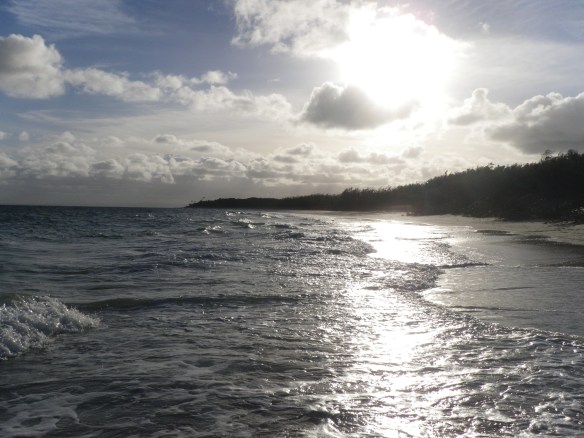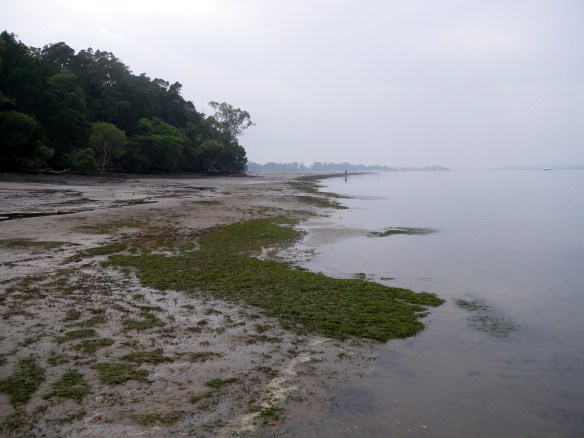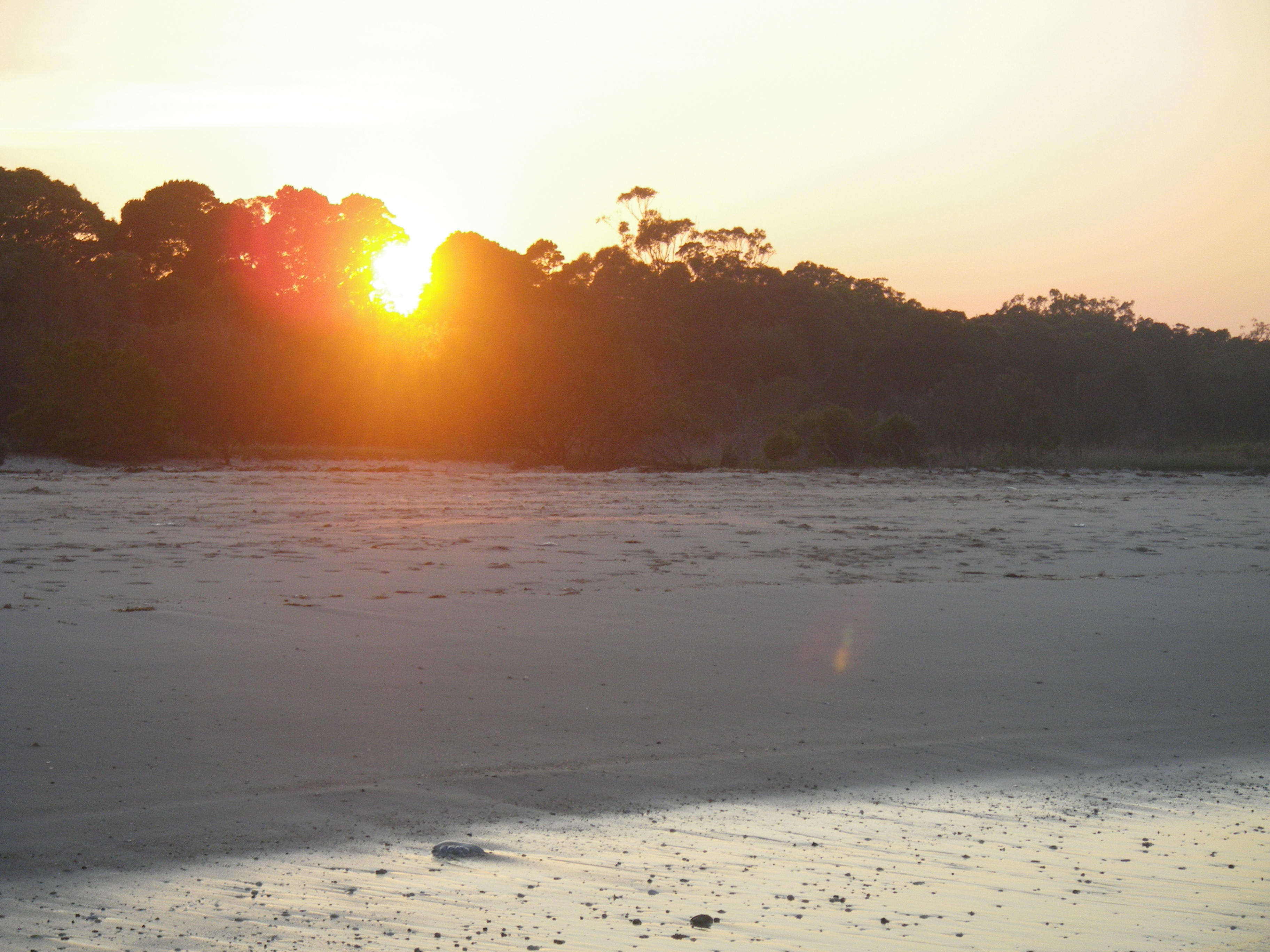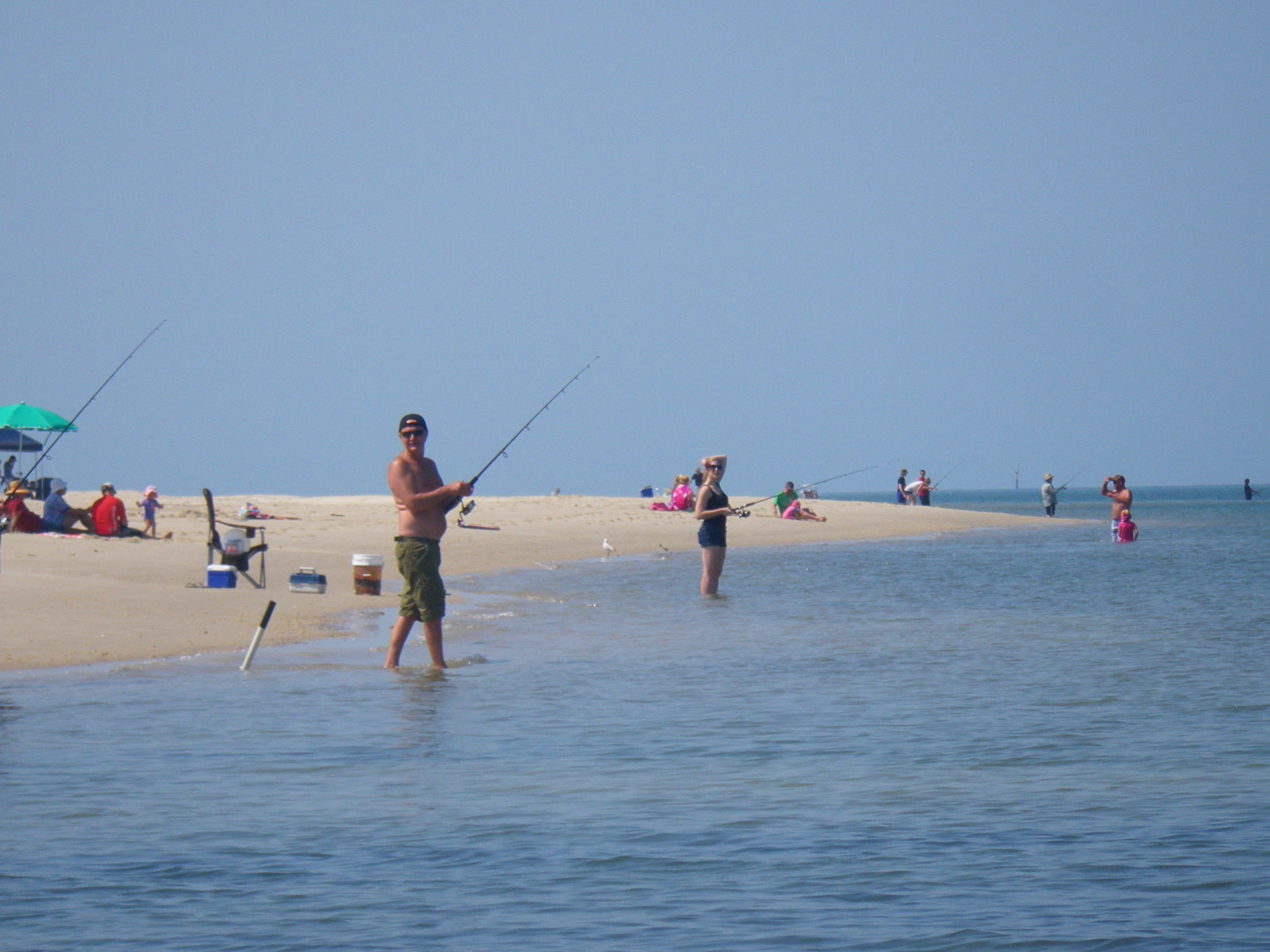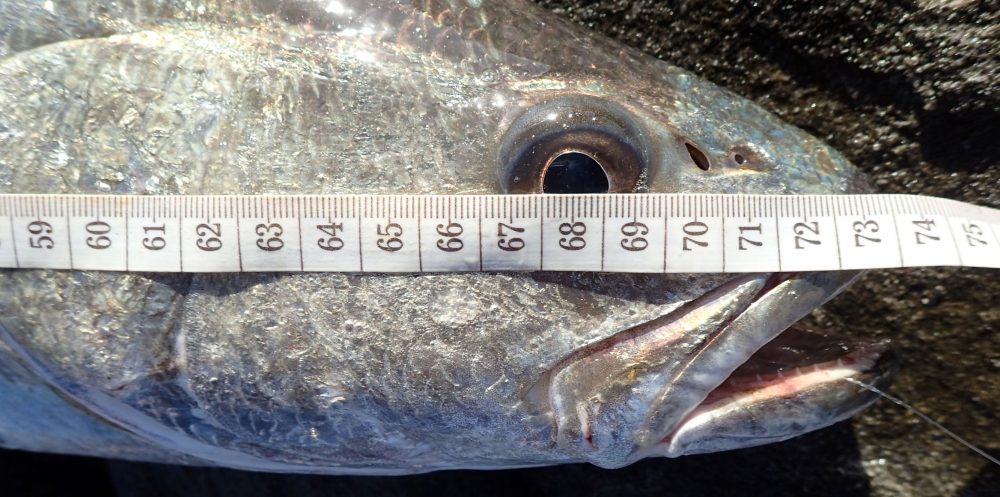
Bribie – under the bridge – 28 February 2013

Thursday

Midweek, the rain was easing off, but we have had so much that the estuaries and Moreton Bay are a muddy mess. Thursday morning looked like it might be worth a fish.

Full moon had passed on Tuesday and I expect the jewfish would be cruising around in the dirty water. Unfortunately, it would be a low tide around dawn. This would mean the water would be at its dirtiest at the optimum fishing time.

I decided to return to where I had caught fish last week – the flats around the old oyster jetty, just south of the Bribie Island bridge, on the mainland side of the Pumicestone Passage. I know I fish here a lot but it has been one of the most consistent fish producing spots for me over the years.

As I left Brisbane just after 4.00 am, it was drizzling. Then as I got on to the highway it really started chucking it down. Fortunately it was just a passing shower and I arrived at Bribie at about 5.00 am, just after low tide. I rigged up, pulled on the waders and wandered out under the bridge, in the dark.

The tide was a low low – about 0.4 m, because of the moon phase. The water’s edge was a long way from the mangroves. It was cloudy but the black sky was just beginning to turn grey in an attempt to signal dawn. The water was like milky tea in the shallows, but there was a bit of bait jumping around and the occasional prawn skittering across the surface.

When the water is as dirty as this I have no idea which colour soft plastic to go with. A hard bodied lure with a rattle or vibe would probably be best, but this area is very rocky, so that would have to wait. I decided to try a GULP jerkshad in the white colour on a 1/8 th oz, 1/0 jighead. It was tied on with 10 lb fluorocarbon leader.

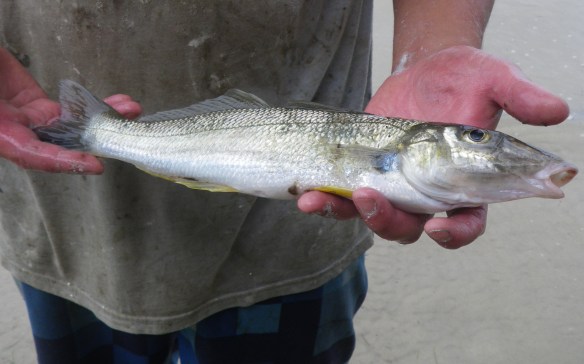
On the first cast I felt a bump and saw a bit of movement behind the lure, in the water. I cast back in the same location and on the first hop, I had a fish. I could not figure out what it was. It was quite heavy and slow but made a few quite powerful quick runs – maybe it was a soapie jewfish or a ray. There are a number of oyster covered boulders in this spot so I took my time. It tired pretty quickly and I dragged it safely on to the mud. I was fairly surprised to see a stonker Luderick at my feet.

As most fisho’s will know Luderick are a largely vegetarian fish who prefer to eat green string and other weeds. They will also sometimes take live yabbies. They have tiny mouths and are usually targeted using weed, tiny hooks and very light leaders, under floats. This one was very hungry or perhaps, very confused by all the rain. It was a good fish and it later weighed in at a little over 1.5 kg.

I cast around this area in the shallows with a variety of soft plastics – big and small. I felt a few more touches as the sun poked over the horizon, but I did not hook up. I waded further south, casting as I went. There were more attacks, probably from the small moses perch or bream that hang around here. I passed under the jetty as the tide started to run in.

The hardest thing about wading in such dirty water is that you cannot see any contours on the bottom. I am always looking for the edge of weed beds or the small humps and channels that are dotted around this area. In these conditions you are just casting at where you think they are. Sometimes the surface movement of the water will help you but really, you just have to keep prospecting with long casts and slow retrieves.

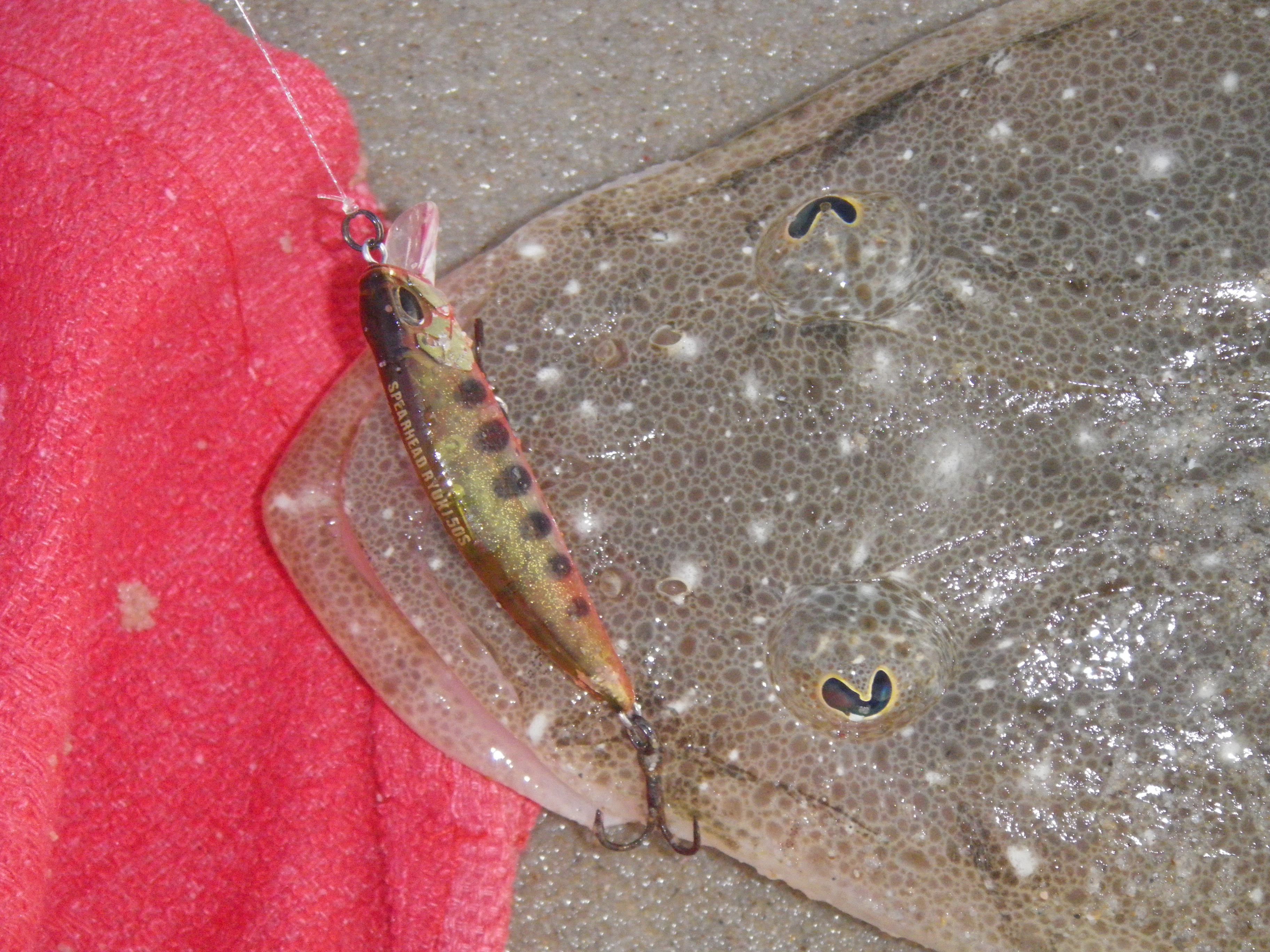
The tide was now running in strongly but there was not much debris or weed floating by. I swapped to my DUO Ryuki Spearhead 45s. It’s a small sinking hard body that has been catching plenty of fish for me lately. I particularly like this gold/ green coloured one. It is looking a bit battered as it is rapidly becoming my favourite – that usually means its days are numbered! I was now casting over the sea grass so I had to keep the lure moving. I could only pause momentarily, to allow the fish to strike, every few seconds. The lure kept catching clumps of sea-grass on the bottom, but that just proved I was at the right depth – just off the bottom. At about 6.45 am the skies had clouded over again and it looked like it would rain yet again. I persisted with the hard body and thought I had a few knocks. I was about to swap back to a soft plastic when I felt some resistance and saw a splash. I lifted the rod tip and the lure caught in the mouth of a small flathead – just under 40 cm long.

I released the fish and decided to swap back to a soft plastic lure. I tied on a GULP jerkshad in the orange tiger colour. A paddle tail soft plastic might have been better in these conditions but I did not have one with me. I continued south, wading against the incoming tide, towards the green channel marker. I was soaked by another shower. The water was running in fast but it was no cleaner. I was casting towards the middle of the Passage and bouncing the soft plastic along the bottom until I felt it hit the edge of the weed beds. At about 7.10 am I felt a fish snatch the plastic and take off on a short run before dropping it. I stayed put and spent the next five minutes peppering the same area with casts. As I paused on one of the retrieves I felt a small hit, then a proper bite. I dropped the rod tip, then struck. It was another flathead. When it emerged from the cloudy water I could see it was only about 35cm long.

I was wet through and there was clearly more rain on the way. I trudged back to the car, dreaming of crystal clear waters and sunny skies. If you are prepared to get wet and fish blind there are things to catch – but it is not much fun at the moment.

Bribie Island – the oyster jetty flats – 22 February 2013

Friday

I was back in Brisbane considering the land based fishing options. Next week it looks like mad weather – just about everywhere. It’s a tragedy – I have no work on the horizon so I could go and fish just about anywhere, but it looks like the east coast of Australia, will be washed out.

Friday morning did not look very promising locally, either. The big south-easterly blow was not forecast to drop off until about midday and the Pumicestone Passage was pretty much full of fresh water, after all the recent rain.

But the point about fishing is you must never give up. So at about 8.00 am, as the sun came out, I set off for Bribie hoping to find some sheltered spots, where I could put in a few casts.

I arrived just before 9.00 am and decided to fish the mainland side of the Passage around the old oyster jetty. Despite the major tree clearance that took place last year, this area is still quite sheltered from a southerly wind and is a viable option, especially as the tide runs out. High tide had passed at 7.22 am at 2.2 m. I waded south, under the Bribie Bridge. The water was still lapping at the mangroves, but it was running out fairly fast. Predictably the water was pretty brown and full of sediment but you could still just see your feet through about 60cm of it.

I started by casting all around the bridge pylons. I was using a neutral coloured 3” GULP minnow soft plastic in ‘smelt’on a 1/8th 1/0 jighead. This produced nothing so I moved further south, to cast alongside and underneath the oyster jetty. I felt a few grabs in this area and soon realised there were some hungry long toms cruising around.

I crossed to the area just to the south of the jetty and swapped to a DUO Ryuki Spearhead hard body which is usually a great bream lure. Unfortunately I sacrificed this in the shallows to a patch of rocky bottom. I moved further south and changed tactics. I swapped back to soft plastics and tied on a GULP Crazylegs Jerkshad in the lime tiger colour – still on a 1/8th oz, 1/0 jighead. I was using about 1.5 m of 10lb breaking strain fluorocarbon leader.

By about 11.00 am the tide was about halfway out and I had reached the area where the water drains off the Sandstone Point flats, round the corner. You could not see the bottom but you could tell from the eddies on the surface where the slack water was. I put in a couple of long casts (the southerly wind was helping me). I felt the plastic pull through the see grass but it did not pick up too much. The advantage of all the rain and wild weather is that it washes away any loose stuff.

A few casts later there was a big splash, as the lure hit the water and then a solid tug and run. Line was peeling straight away but as I lifted the rod I clearly felt the jighead pop through the fishes’ lip. This was a sizeable fish so I let it run. There is not much structure in this area, just a line of rocky bottom as you move back towards the mangroves. This fish was too big to tangle with in the water so I would have to walk it back to the shore line. I slowly took back some line and started wading towards the mangroves. The water was now shallower and dirtier, so I had to be careful to steer it over the rocky patches and onto the shore.

It was a solid flathead. I pulled it up on to a ready-made envorimat; a pair of abandoned trawlerman’s waders, that had washed up on the shore. I measured it against the rod and could see it was pushing 70cm. I took a couple of pictures then released it.
Although the water was now very cloudy, there was not much weed floating around so I decided to try out my latest DUO favourite – the Realis Shad MR 59 hard body minnow. It is a small suspending lure and that has caught plenty of flathead for me, but I am sure it will catch good bream over the weed beds. I picked out a white and blue one tied it on and cast out. This lure has a great action but it is the pauses that seem to entice the strikes. So I slowly retrieved it with lots of long pauses. On the second cast my theory panned out as, on the first pause, the lure was first knocked out of the water and then, a moment later, connected to a fish.

The hooked fish was too fast for a flathead – although it may have been a flathead that attacked the lure first. I soon had it subdued – it was a solid 30cm + bream. After a few pictures I released it but I could not find any more.

As the tide level fell I moved further and further south, towards the green channel marker. I was trying to fish the edge of the weed banks but in the dirty water on the bottom of the tide, I was finding it hard to see the edges. I swapped back to a GULP 4” minnow soft plastic in the smelt colour, on the 1/8th 1/0 jighead. This drew the attention of the long toms who I saw follow it in a couple of times. Eventually I got the lure into the right spot and the line started peeling. It was another flathead – just over 50cm. I decided to keep this one and after playing it for a while I managed to grab it with my rag and slip it in my keeper bag.

I swapped to a different colour in the same soft plastic – banana prawn. A few casts later this produced a fish – it was a very lively long tom. It did plenty of leaping around and made a couple of runs straight at me which was not that much fun. Usually these fish will cut through the leader pretty quickly but this one seemed to be hooked on the side of its long snout. I managed to flick it off the hook and carried on prospecting for flathead.

Just before 2.00 pm I caught another flathead who was perched on the edge of the weed line. This one was just under 50 cm. I swapped over to the bigger GULP Crazylegs Jerkshad soft plastic in the lime tiger colour. This did not produce a fish but it did pull up two sand crabs. I am not sure if they were hungry or mating – either way they ended up in a right tangle. I had been playing football with the crabs all morning – perhaps they were finding it difficult to see me coming in the muddy water.

Just after a 2.00 pm, a set of squally showers moved through and I decided to give up. Conditions had been very average but the fish were there – and I suppose that is all that really matters!

Bribie Bridge and surrounds – 3 February 2013

Sunday

After a trip up to Asia I had eaten plenty of good seafood but now I wanted to catch some. Unfortunately the cyclone and its aftermath had slowed me down a bit.

On Sunday morning I could wait no longer and I decided to drive up to Bribie to have a look at conditions and try some fishing. Things were far from ideal. There was a strong south-easterly blowing and the tide had been high at about 2.00 am. The moon was waning and about 50% full. I would be fishing a not particularly powerful run out tide through to a low of 0.8 m, at about 8.30 am.

After a flood it is best to fish around high tide as this is when the concentration of salty water is highest in the estuaries – unfortunately this was not really an option. I arrived at the west end of the Bribie Island Bridge just after 4.00 am and rigged up. The tide was about half way out.

As I waded out, under the bridge, there was plenty of surface action under the lights and the water, in the shallows at least, was fairly clear. I put on a GULP 3” Minnow in the Pearl Watermelon colour , on a 1/8th 1/0 jighead and cast out. There was a pull as the lure dropped in to the water and then nothing. I let the lure sink and as I lifted it from the bottom the line pulled tight and I wound in a 30cm Flathead. It’s always good to get a fish on your first cast – even a small one.

There were a few prawns skidding across the surface and so after a few more casts, I moved over to the shallows on the south side of the bridge. I cast at the pylons and wherever I saw a splash or a prawn jump. I retrieved the lure with the tide, hopping it over the sand and rubble bottom. Each time I cast in close to the pylons I would get a couple of hits. After a few repeats in the same spot I caught a small Moses Perch.

I decided to match what the fish were eating and swapped to a GULP 2” Shrimp in the natural colour. I was fishing with my light spin rod and reel combination. I had the reel spooled with 2.8kg Fireline and about 1.5m of 10lb fluorocarbon leader. I concentrated on the area around the base of bridge pylons. The water was running out fast and the sun was just coming over the horizon. I let the soft plastic lure bump along the bottom. At about 5.25 am I lifted the rod to cast again and felt a solid tug. I dropped the tip for a few seconds then struck. I had a fish and it turned out to be the only keeper of the day – a flathead, 42cm long.

As the sun came up I moved south to fish around the old oyster jetty. As the tide dropped the water got dirtier and dirtier, especially in the main channel. I tried a few different soft plastics but did not get a touch. I waded from the jetty to the green channel marker and all the way back but did not get any hits. At about 8.00 am the tidal flow dropped off and the Passage was pretty much a brown muddy soup, so I gave up.

It was encouraging to catch a few fish and hopefully by next weekend the water should have cleared considerably. The prawns were a good sign and hopefully they will bring the predators in.

Bribie Island – Bongaree – 8 January 2013

Tuesday

High tide at Bribie Island would be at 6.20 am. Conditions were still but the fires were getting going on the north side of the island and there was a strong charcoal smell and a hazy sky. I started at about 5.00 am.

I waded around on the sand flats beside the drain in front of the Seaside Museum and tried fishing with just about everything I had in my lure box.

The water was fairly clear and there was plenty of bait around. I cast over the broken ground with soft plastics and hard bodied lures, but I could not raise a bite.

At about 7.40 am I caught a 30 cm Flathead on a GULP Lime Tiger Jerkshad. I fished on for another hour but caught nothing.

The fishing in this area is definitely challenging at the moment!

Bribie – Oyster jetty flats – 7 January 2013

Monday

The fishing was still tough but I had found fish in one location, so that is where I returned on Monday. It was a pretty high high tide at 2.4m, at about 7.30 am. I started fishing the last of the run in at about 5.45 am.

I waded south from the bridge, casting parallel with the edge of the mangroves into about a metre of water. I started with a suspending YOZURI Crystal Minnow lure, as I am convinced a big flathead would happily attack one, in the right conditions. Unfortunately these were not the right conditions and this one came up covered in weed on each cast. I gave up swapped to a GULP Jerkshad in the Lime Tiger colour, rigged on a 1/8th 1/0 NITRO Saltwater Pro jighead with OWNER hooks.

There is a quite a range of NITRO stock in most shops and over the years it seems to have been called all sorts of different things. Basically, I like their jigheads that have black OWNER hooks (thin) and don’t much like their jigheads that have silver hooks (thick).

Jig head selection can be important when the fish are fussy. Generally, the less metal that is sticking out of the plastic the better – especially when you are fishing in the estuaries. This needs to be balanced with strength requirements.But as long as your drag is set correctly and you can be patient – even the softer (cheaper)hook styles will safely pull in very big fish.

I waded further south past the jetty, towards the drain that runs off the Sandstone Points flats. This often holds a few fish. I stayed close to the mangroves and cast round in a semi-circle, retrieving my lure slowly and methodically. Just before 7.00 am I found my first fish of the day – a solid 50cm Flathead. I released it and fished on.

The tide was running out now and unfortunately it was taking even more weed with it. I carried on fishing the drain area as I was sure there would be more fish there. At about 7.20 am I connected with another, slightly smaller Flathead, but it wriggled free before I could photograph it. At 7.25 am, I either caught it again, or caught another one, about the same size. I took this one back to the Mangroves to photograph and release. It was another handsome fish, just under 50cm.

By now the weed and wind were again making things difficult and although the tide run and the water level were ideal, it was just impractical to carry on. That’s fishing – too many variables. Just when you think it’s all falling into place some element of the environment changes and its back to the drawing board.

Bribie Island – old oyster jetty flats – 6 January 2012

Sunday

Between the wind and the increased traffic, finding the fish has been far from easy over the Christmas period at Bribie. All you can do is keep trying your favourite spots, on your favourite tides and hope things improve. As I look back over the blog and my dairies, which precede it – I see that December and January have been my toughest fishing months in the Pumicestone Passage for the last few years. Partly because if this, I have often run away to fish the rocks at Iluka or elsewhere, at this time of year.

The only spot that has been consistently producing fish for me is the area to the south of the old oyster jetty on the mainland side of the Passage, so this is where I started on Sunday morning. To add to the challenge high tide was just on dawn (3.57 am at 1.9m) and there would be a fairly strong south-easterly blowing at about 10 to 15 knots. This had the advantage of frightening off the boat traffic but would make casting less simple.

I started with a hard bodied lure as there was not much weed around. I love the DUO Realis Shad 59 MR. It is another of DUO’s finesse range, probably designed with bass in mind, but it annoys the hell out the flathead. It is 59mm long and weighs a little less than 5 grams. This is rapidly becoming my favourite suspending lure. It casts a mile and it seems to be able to just hang for ages in the water column. It’s great in this terrain, where you want to stay off the bottom. I was using an olive coloured model.

I was fishing a stretch of sandy bottom about 6 metres out from the edge of the mangroves. It was covered in about 80cm of water. I was retrieving the lure over the edge of a weed bed when suddenly something grabbed it. First it ran away from me and then it changed direction and hurtled back towards me. This must have left some slack in the line and as it came tight again, the drag screamed and the lure pulled free. Not sure what it was but it seemed a bit fast for a flathead – who knows?

I carried on working the same area and about 10 minutes later, there was a tug and a splash and an angry flathead appeared, shaking its head on the surface. After a brief fight I had it subdued and pulled it over to a gap in the Mangroves. It was about 55cm with a small open wound on its back and a pattern on its scales that looked as if it had been mauled by something with a broad mouth. Perhaps a wobbegong had had a go at it. I have seen some big ones cruising these flats.

I let the fish go and carried on peppering the area with casts. I felt another tug and lunge but again the hook pulled after a brief fight. The weed was starting to become a nuisance so I decided to swap to a soft plastic lure. I picked out a GULP jerkshad in the lime tiger colour, which has been doing quite well lately. I was fishing with a 1/8th 1/0 jighead. On the first cast I saw a flathead appear from the weed, grab the lure and immediately roll over, flashing its white belly, to release itself. I kept going and soon hooked it again. This time I kept it on the line. It was another nice fish, about the same size as the first.

As the tide started to run out strongly I gradually followed it, casting over the weed and sand banks. The gradually increasing high tides and big south-easterly blow had lifted a lot of sea grass and this was now clogging almost every cast. I reached the green channel marker and walked slowly back towards the oyster jetty. About half way along I connected with another fish, but it shook out the hook. I carried on casting in the same area for about 10 minutes until I felt another solid thud. I paused and then lifted the rod. It was another flathead about 45cm. I released it and battled the wind and weed for a further 30 minutes before giving up. I had found a few fish but also lost a few – not a bad session.

Bribie Island – the oyster jetty flats and Whitepatch – 2 January 2013

Wednesday

Flushed with the success of New Years Day, I invited a friend to come and fish the flats around Sandstone point with me on Wednesday morning. Andre is the perfect fishing companion. He comes well prepared, does not talk much, always pays for the coffee, but most importantly – he wants to catch fish.

It may sound odd but when you say you are a fisherman almost everyone seems to think you are in desperate need of company. Wives in particular, are constantly volunteering their husbands to go fishing with you. I think the problem might be that the annual ‘fishing trip’ away with the lads rarely yields any fish – this is because it is primarily a drinking trip. Perhaps the wives are thinking after 12 years of buying new gear, going to Fraser and coming back with 4 small dart and a shocking 3 day hangover, their husbands need some tips!

This slideshow requires JavaScript.

When I fish with Andre we have none of that ‘well it was a beautiful morning even though we did not catch anything” nonsense. The focus is on the fishing. However I have noticed that it is often a lot harder to find and catch fish when you are with someone else. Perhaps you over plan or analyse or maybe the two of you and wading and casting causes more disturbance either way today was not easy fishing.

It started very well – we waded out under the bridge on to the exposed mud flats on the mainland side of the Pumicestone Passage, at about 4.30 am. The tide was running out but was just slowing. The sun was not yet over the horizon and the air was still and warm. The south easterly that had been blowing up until the day before, had died away. Low tide would be at 5.52am. We waded down along the exposed sandbank to a point about half way between the old oyster jetty and the green channel marker – where I had caught plenty of fish the day before. The only real difference was that we would be fishing the last of the run out tide, whereas the day before, I had caught most of my fish on the beginning of the run in.

I rigged up with a GULP 4” Minnow in the Lime Tiger colour on a 1/8th oz, 1/0 jighead, 10lb fluorocarbon leader. I cast the soft plastic at the edge of the weed beds and a fish hit it almost as soon as I lifted it off the bottom. It was a nice 45cm flathead. A few casts later I pulled up a sub 40cm flathead which released itself before I could get a picture. Then, a little while later Andre pulled in another fish that was just about 40cm.

We gradually waded north as a couple of boat based anglers slowly electric motored right along the line of the edge of the weed banks. We carried on towards the old oyster jetty. I swapped to a Minnow in the smelt colour and caught another sub 40cm flathead. On the bottom of the tide the weed started to lift and made the fishing difficult so we decided to switch locations.

We drove up to the north end of Whitepatch and waded around on the edge of the drop off, trying to rustle up some more fish, but we could not find anything. Eventually the weed problem also arrived there on the incoming tide, so we gave up for the day.

Bribie – Oyster jetty flats – 1 January 2013

New Year’s Day – Tuesday

The wind was calming down and the low tide around dawn meant that fishing the Passage again would be a good option. I decided to go and have a look around on the flats in front of the old oyster jetty, on the mainland side.

I arrived beside the bridge just after 4.30 am. Low tide would be at 5.12 am so I started fishing in the slack water. The strong south-easterly had died away in the night and there wasn’t much breeze. I waded south, along the exposed sand spit, towards the green channel marker.

About half way between the end of the oyster jetty and the channel marker, I waded out to just short of the edge of the weed beds. I started with a GULP Crazylegs Jerkshad in the Lime Tiger colour, on a 1/8th 1/0 jighead. I was using 10lb fluorocarbon leader. Just after 5.00 am the water started to run in. I waded towards the channel marker, casting into the water, as the tide picked up pace. At about 5.30 am I felt a couple of hits and could see some bait scattering around my lure. I kept casting in the same location and 5 minutes later I had my first flathead of the day. It was a dark coloured weed dweller, just over 45cm. I was releasing everything today – as we are still struggling through the Christmas ham!

I did not want to change a winning formula so I threw the same soft plastic lure back out, in the same direction and after a few casts, I had another. This one was a little bigger – perhaps 50cm. I let it go and persisted in the same general area. The next fish hit the soft plastic on four separate casts before it finally got serious. I had slowed everything down and lengthened the pause in the area that I estimated it had reached. After a long pause, I lifted the rod and the plastic was half way down its throat. This one was also about 45cm. I moved gradually south and caught two more undersized flathead within 10 meters.

I decided to see if I could tempt them with one of my small DUO hard bodies. The DUO Ryuki Spearhead 70S is a 70mm, 9g, sinking, flat-sided minnow designed to catch trout in fast flowing streams. Once the current is running it will swim in one spot with a great action and good rattle, just from the water flow. It is built to the usual DUO high standards and comes in some great colours. There is a pink stripy silver one which I selected, which looks like it would be the perfect flathead lolly.

The lure has a bit more weight than the shorter version and therefore casts well on my light spin combo. I decided to cast with the current flow and then retrieve the lure back through the run-in tide to get the most of the action. I kept plenty of long pauses in the retrieve and it was as I lifted the lure off the bottom, for about the fifth time on the first cast, that the flathead struck. The fish always seem angrier when they hit a hard bodied lure – maybe it’s the treble hooks. I hauled this one back to the sand to release it. It’s is never a good idea to try removing a treble from a wriggling flathead that you have clutched to your chest whilst wading, better to deal with it on the sand with a good set of pliers.

I let it go and then waded back out to where I had been fishing, along the edge of the weed beds. The next fish took a while to find but about twenty minutes later, I had another on the same DUO lure. It was also somewhere between 40 and 50cm.

The tide was now running in strongly and lifting plenty of sea grass. This gradually made it impossible to keep fishing with the hard body lure. The tide was also pushing me back from the edge so, at about 8.00 am I decided to give up.

I had travelled from flathead famine to feast in 48 hours. Was it the strong south-easterly blow that had brought the fish in, or the run in tide, or the lure choice – that is the trouble with fishing – too many variables!

Bribie Island – Banksia Beach and Whitepatch – 31 December 2012

New Years Eve

I was still at Bribie Island and the big south-easterly wind and swell would make it just too hard to fish on the surf side. This gave me an excuse to go over to the western side of the island and fish in the Pumicestone Passage.

The wind would still be a pain but usually it calms down for a few hours either side of dawn and this morning was no exception. I started at Banksia Beach, just to the north of the wading bird roost. There is a nice coffee rock ledge along here and the area produces snapper in the cooler months and plenty of Flathead, all year round.

Low tide was just before 5.00 am and this is when I arrived. I waded out to the ledge and cast around on top of it and just over it. I was using might light spin rod and reel and had rigged a GULP satay chicken Jerkshad on a 1/8th 1/0 jighead, on 10lb fluorocarbon leader. After a few casts a felt a solid thud and the rod tip started wriggling. I struck a bit too hard and the fish was gone. Too long between fish and this can easily happen!

I peppered the same area with about 50 casts but could not find the fish again. I gradually went smaller and lighter with my jighead and soft plastics, until I caught an angry 20cm moses perch, on a GULP 3” minnow, in the emerald shine colour. I got a good soaking from a passing shower and at about 7.30 am, decided to move locations. I drove up to the north end of Whitepatch and waded out into the water.

The tide was about half way in and I focused on an area where I had seen some flathead lies the week before. I had swapped to the more natural coloured GULP Jerkshad in the smelt colour but was still using a 1/8th 1/0 jighead. I was casting at the area, just on top of the ledge which now has some thick weed beds growing on it. I felt a very slight hit and decided to cast into the same spot again. As soon as the plastic hit the water the fish swallowed it and took off. It hooked itself and I just had to hang on. I soon had it back at the tree line and safely out of the water. It was a handsome 57cm flathead.

I was so relieved to have broken my duck that I decided not to push my luck. I took a few photos, released the fish and gave up for the 2012.

Bribie Island – Woorim & Spinnaker Sounds Marina – 29/30 December 2012

Saturday & Sunday

On Saturday, I decided to brave the strong forecast north-easterly on the ocean beaches of Bribie Island again. The wind was not the strong northerly, as forecast and was actually a westerly, at first. The tide was coming in and would be high at 9.44 am. The moon was full and the predawn sky was an amazing red colour.

This time I walked from Skirmish Point to the end of Red Beach, across the southern end of the island. I used my light spinning outfit, casting small soft plastics on a 1/8th 1/0 jighead. Every time I saw some bait or surface action, I would cast a soft plastic minnow or shrimp in that direction.

I got a few bites and lost a few soft plastic tails but after two hours fishing, I had landed nothing and the wind was blowing 20 knots towards the north east.

On Sunday, I woke to a howling south-easterly and decided there was nowhere worth fishing, first thing. The wind blew all day and if anything, was even more powerful by late afternoon. I drove round to the mouth of the Spinnaker Sound Marina. I assumed no one would be mad enough to put their boat in so much wind – but at Christmas there are some real die-hards out there. There was a steady stream of boats going out and then coming back, 20 minutes later.

I caught nothing and went home about 30 minutes after sunset.

This will be the last post for 2012 – lets hope for some monster catches and great stories for 2013 – Happy New Year!

Bribie Island – Skirmish Point – 28 December 2012

Friday

Christmas has left me feeling knackered – all that eating and drinking wears you out. As many of you will have realised Landangler is almost a nocturnal creature at this time of year. I am not a good sleeper at the best of times but the full moon seems to really wind me up. So I went to bed early on Thursday night but tossed and turned and it only felt like I had just got off to sleep when I realised it was already light outside. I really did not feel like getting out of bed but I looked out of the window and saw a clear, still sky. The forecast big winds were not blowing so I decided I’d better get going.

I decided to put in the hours at Skirmish Point again. I would be fishing the incoming tide. High tide would be 2.4m at 9.32am. I walked along the beach from Woorim and arrived at Skirmish just after 6.00am. The sun was bright and the water was comparatively still. I stuck with the Catana Coastline Light rod but decided to try a lighter leader and 1/16thoz jighead, for the calmer conditions. I put on a GULP 3” Minnow in the Peppered Prawn colour. I immediately felt a few hits and there were a few bait sprays as something attacked the small bait fish that were sitting on the wave break.

I could see tiny mullet all around in the clear water. It looked like small tailor were feeding on them. I kept up a fairly quick retrieve with the soft plastics, to avoid dragging up the glass weed that was all over the bottom. Almost every cast I would feel a bite or a bump, but I could not hook up. The fish kept snapping at the tails right up to the beach, where they would let go and swim away. After about 15 minutes of this, I hooked one and landed it – a 15cm tailor.

It was now about 6.30 am and over the next three hours of run in tide I walked up and down this area of beach, casting all sorts of 2”, 3”, 4” soft plastics and small hard bodied lures. The water was clear enough to see the schools of tiny mullet follow the lures in. I caught five more tailor – the largest of which was just about 25cm. I tried brighter colours – the GULP 3” Minnow in the lime tiger colour. Something bigger hit this and took off. It felt big but everything is relative – it was only a 25cm Dart, but things were looking up.

Unfortunately as the sun got higher in the sky even the small fish decided to slow down. I caught a tiny Whiting at about 8.00 am and then it all went quiet. It had been a better morning and at least I had caught a few fish – just enough to keep me coming back!

Bribie Island – Skirmish Point – 27 December 2012

Thursday

After the Christmas festivities I felt like I was suffering from fudge poisoning, so I was glad to get back up to Bribie where there is a bit less food in the fridge. I walked out on to the beach at Skirmish Point, south of Woorim, on the ocean side, at about 4.30pm. The tide was coming in and would be high at about 8.30pm.

I was fishing with the Shimano Catana Coastline Light, 10lb braid, 20lb leader. The wind was an easterly, blowing about 20 knots and there was a fair swell. I started with a big hard body minnow and then gradually worked my way through lighter hard bodies until I decided to swap over to soft plastics.

Bribie Island - Skirmish Point looking towards Red Beach

Bribie Island – Skirmish Point looking towards Red Beach

Fairly windy and choppy

Fairly windy and choppy

The water was clear and every so often I caught a glimpse of a small school of Dart or Mullet in the waves. I started with a GULP Jerkshad in the Lime Tiger colour on a 1/6th 1/0 jighead. This got a couple of bites and then lost its tail. This usually means small Tailor are around. I dropped down to a GULP 3” Minnow soft plastic, also in the Lime Tiger colour. Again, I got a few bites but I did not hook up with anything.

I swapped through a few different soft plastics but could not hook anything, so I gave up just after sunset. This is proving to be a tough spot.

Bribie Island – The old oyster jetty flats – 18 December 2012

Tuesday

It was great to wake up at 4.00 am and only have a few minutes’ drive to wherever I wanted to fish on Bribie Island. My problem was that I was struggling to find fish. Was it the northerly winds or increased fishing and boating activity or was I just not looking in the right places?

Sunday and Monday had been dismal days. I had put in the hours in spots where I have often found fish and caught very little. There definitely was not much bait around. I have often found fishing at this time of the year tough and the last few days had been evidence of that.

I decided to try the mainland side of the Pumicestone Passage, around the old oyster jetty, just south of the Bribie Island bridge. This is an area of mud and sandbanks with extensive weed beds. It usually fishes quite well on the bottom of the run out tide. Low tide would be at about 0.5m at 6.32 am.

I arrived at about 4.45 am and waded out across the mud flats. The tide was still running out slowly but the water was dead calm and it was already stinking hot. I started with a GULP 4” Minnow soft plastic in the Pearl Watermelon colour. I waded south, casting at the edges of the weed beds.

At first, there was a little cloud in front of the sun as it came over the horizon but when it emerged, it was already white hot. The water was so shallow and warm that it provided no relief. I fished my way south and was encouraged to see a few patches of very tiny squid (about 3cm long) swimming around.

The northerly winds had blown hundreds of blue jellyfish in from the ocean and these were now dotted all over the sandbanks, like cake decorations. I walked down to the green channel marker and fished around but did not feel any bites. As the tide turned in, I turned back and walked parallel with the sandbanks. I slowly waded back towards the oyster jetty.

As the tide picked up pace it washed the loose weed away and the water became clearer. It was now easier to see the edge of the weed beds and that’s where I kept casting. I had swapped to a GULP Jerkshad soft plastic, in the Lime Tiger colour. Suddenly I felt the tell-tale ‘thud’ and I immediately dropped the rod tip. I paused and then struck. The rod tip started wriggling but the drag was silent. I realised it was working but the clicking mechanism was buggered. It was surprisingly disconcerting to play the fish without the noise of a clicking drag. I slowly waded back to the sand bank, playing the fish very gently – it hard been hard to find. It was a dark green, carefully camouflaged flathead – about 50cm long and I was very glad to see it.

I took some photos, bagged it then followed my muddy footsteps back to the edge of the weed beds. A few more casts, in the same area and bang, I had another. I still was not going to risk grabbing it, so I waded back to the sand bank again. It was another flathead, about the same size. I repeated this process three more times along the edge of the weed banks and caught three larger Flathead – the biggest was just over 60cm. I got them all on the same GULP Jerkshad in lime Tiger.

So I had fished for three days and caught the only five legal size fish, all within about 30 minutes. They had all been on the same 50 metre stretch of shoreline. And this was the same stretch I had covered in casts an hour before.

It was a relief to have a bag of fish for Christmas entertaining and even more of a relief to know there must be a few more out there. At that point I decided it was time for a cold shower, so I gave up for the day and waded back to the car.

Bribie Island – Bongaree & Woorim – Tough Times – 17 December 2012

Sunday / Monday

I have rented a place at Bribie Island for December and January, on the surf side of the island. I am determined to get to know the fishing on the ocean beach and particularly, around Skirmish Point and Red Beach. I have always found these to be tough spots but I am convinced the fish must be there, somewhere.

On Sunday evening I had braved the howling northerly winds to try and fish around Skirmish Point, on the dusk low tide. I tried plastics and a few hard bodies but the wind and weed made things difficult. I caught nothing but was delighted to watch the dolphins having a bit more luck, chasing the baitfish right up on to the sand. I walked all the way from Skirmish Point to the end of Red Beach with just a few nibbles on the soft plastic lures. Red Beach is the only wind free spot in a big northerly blow.

For the Monday morning low tide (which would be at about 5.45 am) I decided to fish the drop off at Bongaree, along beside the saltwater lagoon, in front of Buckley’s Hole. The lagoon now has an opening much further to the south, which should fish well on the higher tides. On Monday, I waded out, close to the ledge at about 4.30 am and stopped about 10 feet away to cast along it, to see if any Flathead were lurking just on top. I waded up and down and gradually started casting over the ledge. I was using a GULP Swimmow soft plastic in the Banana Prawn colour on a 1/8th 1/0 jighead, with 10lb fluorocarbon leader. Nothing stirred – no surface action, no bait sprays, it would appear that the fish were asleep. The water was still and the sun was just coming up behind me.

Suddenly, I felt a solid hit, then another and then the fish hooked itself, before I even struck. It was a tiny Tailor. I unhooked it and let it go and cast out to see if there were any other predators nearby. But again, nothing happened. In fact nothing happened for the next two hours, so at about 8.30 am, hot and bothered in my waders, I gave up.

By afternoon, the northerly had blown up again and I walked down the beach to Skirmish Point to fish through dusk. Things looked promising with a flock of birds circling just out of casting range. I was using my beach rig which is a SHIMANO Catana Coastline Light 9’ rod with a Sustain 4000 reel. This will throw any lure under about 30 grams and is also good for 1/8th to 1/2 oz jigheads with bigger soft plastics. My plan down here will be to cast away with hard bodies and plastics, on dawn and dusk, for as long as it takes!

It could be a long time. I cast and cast and cast and did not get a touch. The RAPALA Clackin Rap hard bodied minnow that I was using, eventually gave up before I did. It lost its bib to nothing harder than the current and a sandy bottom – more evidence that RAPALA need to toughen these lures up. On sunset a kite swooped down to pluck a Mullet from the shallows, right in front of me. At about 6.45pm I gave up.

It had been a tough day and I am beginning to feel like Ricky Ponting!

Bribie Island – Whitepatch – 16 December 2012

Sunday

A hasy still morning at Whitepatch

A hasy still morning at Whitepatch

I was back in Brisbane and after a few interesting but largely fishless sessions, I decided to give Bribie Island a try, on Sunday morning.

Now, on the first Sunday of the school holidays it is not likely to be quiet anywhere. Also with a hot, sunny day on Saturday, a lot of popular spots will have been fairly thoroughly fished and disturbed. So I decided to try the north end of Whitepatch beach, about half way up the west coast of the island. I arrived at about 4.15 am and pulled in next to Colin, an experienced local fisherman, who obviously had the same idea. He explained he had caught a few Flathead earlier in the week, but they had been pretty hard to find.

The sky was thick with smoke haze and the wind had died down to nothing. The water was still and it was hot. Low tide would be a very low one at 0.2m at 5.22 am. The water was still slowly running out but there was not much pace in it.

I was back with my Loomis GL2 light spin rod and started with a GULP Lime Tiger Jerkshad soft plastic on a 1/8th 1/0 jighead. I was only fishing an 8lbh leader as the water was quite clear, initially. Colin started with a small jerkbait, an Ecogear, I think. He caught a couple of small moses perch.

Troy arrived and put out a pilchard bait, which was grabbed pretty much straight away, and then bitten off. Colin waded south and I waded north. Neither of us found much. Eventually I ended up back at the bottom of the steps close to Troy, where I caught a just legal size moses perch – but it released itself before having its photo taken.

The tide was now running in. Troy was trying various baits and I knowingly told him that the squid would not catch anything. I wandered along the shore for another twenty minutes or so, and when I came back he had caught the fattest Whiting I have ever seen…………on the squid!

Troys very fat whiting

Troys very fat whiting

By about 8.30am, fishermen were lined up all along the beach. I was now fishing with a smaller GULP 3” Minnow soft plastic. I felt a few aggressive hits and saw some swirls but could not hook up. Then I saw a thrashing long tom, chasing the lure.  A few minutes later Troy landed one…… on the squid. It was time to give up!

The flathead were around - somewhere

The flathead were around – somewhere

Bribie Island – Dawn & Dusk – 22 November 2012

Thursday evening and Friday morning

I decided to look for some Flathead at Bribie Island. I was able to fish through dusk on Thursday and dawn on Friday.

Only one fish south of the Oyster jetty at dusk

Only one fish south of the Oyster jetty at dusk

On Thursday I drove up from Brisbane at about 4.30pm with a huge storm cloud blackening the sky to the west. I waded around the area just to the south of the old oyster jetty, on the top of the tide. I fished with a GULP 4“ minnow and various other shapes, but it was tough to find the fish. I hooked and then lost a fish at about 5.00pm, which felt like a small flathead. A little later, and a bit further to the south, I tangled with a Long Tom and saw it thrashing around but it bit through my 10 lb leader.

But a really spectacular sunset

But a really spectacular sunset

At about 5.30pm I finally hooked up with a 30cm flathead on a GULP 4” minnow in the Lime Tiger colour. That was it for the fishing but I did witness a fantastic sunset behind the oyster shed as I waded back to the car.
The next morning I tried the sand flats at Bongaree, on the island side of the Pumicestone Passage. As usual I was a bit stuck for ideas as I would be fishing the top of the tide. I know the flathead move up very quickly with the rising tide but I find it much easier to predict where they might be, on a falling tide. When the tide is high there is just too much ground to cover.

I started at about 4.40 am, just south of the jetty, with a GULP 3” Minnow in the Lime Tiger colour. The water was clear and still and high tide would be at 5.40 am. My plan was to move south from the jetty casting soft plastic lures over the exposed rocks and sand between it and the creek mouth that drains in front of the Seaside Museum.

I could not find anything under, or around the jetty. I hooked my first fish just after 5.00 am, little to the south of it. It was a flathead. I carried on casting all around the same spot but could not find another one.

I moved a little further south and swapped plastics to a GULP 4” minnow in the pearl watermelon colour. I was using a 1/8th 1/0 jighead and 10lb fluorocarbon leader. The water was still and it was hard works. I moved slowly south casting all around the creek/ drain mouth. Eventually, just after 7.00 am I caught another Flathead – about 40cm long.

I persevered and found just one more flathead at about 8.30am. This one was smaller, at about 35cm. At this point I gave up. I had found a few fish, but it had been another tough high tide fishing session. I had not seen much bait in the water and wind had been solid from the north for a few days. The moon was about half way to full. I think we may have reached the point in the year where the flathead get harder to find!

Bribie Island – the oyster jetty flats – 4 November 2012

Sunday

Sunday was a grey and rainy morning. The early starts and drives south had worn me out so I had a lie I, until 4.15 am and then decided on a quick wading session at Bribie.

I drove through a few showers on the way up and decided to stay on the mainland and fish the weed banks and mud/ sand flats, south of the old oyster jetty. The jetty is now out of bounds pending re-development but it has been repaired and made safe. The complete removal of the tree cover in the area has made the light quite different and I have been wondering if it will affect the weed growth and therefore the fishing. The terrain has flattened out a quite considerably but I think that has more to do with the change of wind and current, as we settle into a more obvious summer weather pattern.

I arrived just after 5.00 am and the sun was up, but buried behind the grey clouds. I waded past the jetty and had a look around. It was just about slack water on low tide. There was no surface action and the water was pretty murky. I tied on a 1/8th 1/0 jighead and loaded it with a GULP 5” Jerkshad in the Curry Chicken colour – red and yellow. Unfortunately the bright dry sunny days have encouraged the growth of the ‘snot weed’ or algae. This takes particular hold in the areas where there is not much current flow. It means you get a jighead full of slime if you hit the bottom.

Once you reach the edge of the weed beds you can cast parallel with them and avoid it. But don’t go past the sandy patches between the weed as these often harbour a few fish and this was where the first Flathead came from today. It slammed the plastic as soon as it hit the water and I hooked up without really trying, as it tried to swim off with it. It was just under 50cm.

I let the fish go and swapped to a another small hard body from DUO that I have been wanting to try out – the DUO Realis Shad 59 MR. This is a small suspending lure designed for bass but suitable for plenty of other species. It is finished to the usual superb standard and I chose one in the olive colour to try out. I had upgraded the trebles and split rings for saltwater work – the Flathead don’t take prisoners!

I was pretty sure there was more than one Flathead in the sandy patch in front of me and my first cast with the Realis Shad confirmed it. After two quick hops of the lure, a fish knocked it out of the water and then swiped again with a splash. But I did not hook up, so I wound the lure back in and cast out again. This time I let it sit for about 10 seconds – and then gave it a short pull. A fish attacked again and this time it was hooked. But the fish was only about 30 cm long.

I let it go and tried again. After about three more casts, the line pulled tight and a really angry fish surfaced. I pulled this one over to some exposed reef and landed it. This time good Flathead about the same size as the first of the day. I sent it on its way and moved south.

The tide was now flowing in strongly. I waded along casting over the weed beds. I caught two more Flathead – both about 45cm long, on the Realis Shad. The incoming tide had now lifted lots of strap weed and this was starting to clog the hard bodied lure. I swapped back the GULP curry chicken Jerkshad and this tempted two more 45cm fish before I gave up at about 8.30 am.

As I waded back along the shoreline there were Flathead ’lies’ everywhere. Many were very close to the Mangrove roots, showing that the fish will move up into very shallow water on the higher overnight tides.

You have a very good chance of catching dinner at the moment, especially if you get up early!

Bribie Island – the Seaside Museum drain – Big Flathead – 26 October 2012

Friday

Back to Bribie Island on Friday morning, but I decided I would miss dawn and arrive closer to the bottom half of the run out tide. It was a perfect morning with a light northerly wind and a clear blue sky. High tide had passed at 7.00 am and I arrived at about 8.30 am.

I waded out just south of the main Jetty and cast around in the sand flats. As I drew level with the Seaside Museum a solid fish grabbed my soft plastic lure. I was fishing with a GULP 4” Minnow in the Smelt colour, on a 1/8th 1/0 jighead with about 1.5m of 10lb fluorocarbon leader. The fish made a couple of runs but was soon safe on the sand. It was a good size – just under 60cm. I released it and cast out again and, after a few hops I felt another solid fish bite. I brought it in and even got a look at it, but when it realised it was headed for the shore it shook itself free.

I carried on casting in the same area and after about 15 minutes, I felt a good hit and I had another Flathead. This one was a little smaller, about 48cm. I photographed it and released it. Things went quiet for a while so I waded to the south. I caught two more undersized Flathead and one keeper (about 45cm), as I waded along, casting over the ledge. Each time, the fish were sitting on the sand above the ledge.

After about an hour and a half, I had walked down to the south end of the tidal lagoon and back up to where I had started catching fish in the morning, by the museum. It was now about 11.30 am and the tide was much lower. This made it easier to see the ledge and cast the plastic just over it and hop it back in. I was now using a GULP Crazylegs Jerkshad soft plastic in the Pumpkinseed colour.

I was about to give up for the day when I felt a tug, paused and then struck. There was plenty of weight and at first I thought I was snagged on the edge. The rod tip started wiggling and there was a slow steady run. I tightened the drag a little and tried to pull it over the ledge. At this point the fish woke up and put in three blistering runs out towards the middle of the Passage. I slowly got my line back and then tightened the drag some more to make sure I could get the fish over the ledge. I pulled it over and got my first look at a very big Flathead.

By now the fish was pretty tired but it still tried to change direction several times before I grabbed the leader and pulled it gently up onto the sand. It was a Monster. I have a 40, 50, 60 and 70 cm marked on my rod and it was much bigger than these – somewhere between 70 and 80 cm. It was also an unlucky fish because it had my jighead through the left side of its mouth and recent hook wound from what must have been a much bigger hook, on the right side of its mouth. I took a few photos and then released it. It paused in the shallows for a while and then took off at a healthy speed, when I waded closer.

That was it for the day. It has been a while since I have tangled with a really big Flathead and it had been another very successful fishing session. If you want to catch a Flathead on soft plastics, now is the time!

Bribie Island – More Flathead from Bongaree – 25 October 2012

Thursday

I was stuck with my usual problem at Bribie Island. High tide would be an hour or so after dawn at about 6.00 am. I never know where to fish on the first few hours of the run out tide. Once the water comes flooding over the ledge (that runs almost the entire edge of the Pumicestone Passage) it quickly floods on to the sand flats. It brings plenty of hungry fish with it and I have caught big Flathead and other species in this shallow water, but it can sometimes be difficult to know where to start the search. It feels like there is just too much ground to cover.
The low tide was also getting higher and the tidal flow was slowing, as we moved away from the new moon. The wind was swapping around between northerly and south-easterly but it had been a fairly strong south easterly on most early mornings through the week.

By Thursday the wind was forecast to ease off a little around dawn so I started on the flats in front of the creek drain, which comes out under the bridge, by the Seaside Museum. At high tide all of the rocky structure is submerged and the Flathead move right up to the creek mouth to feed on what is being washed out. They like to tuck themselves in in the grooves in the rocks or bury themselves in the sand just beside them.

The wind was a strong south easterly and there where soon a few white caps on the surface. It was a stark contrast to the still waters of the week before. I fished around the rocky ground but did not get any hits so I waded south, to the new opening at the south end of the tidal lagoon. I cast around, but it was very windy. The bait was certainly not so thick and the big schools of Mullet had moved on.

I moved back to the south. Just passed the museum I felt a tug at my soft plastic – a GULP Jerkshad in the Cajun Chicken colour. I paused but there was no fish there when I struck. Two casts later, in the same spot, the fish grabbed it again. I paused again and this time, when I lifted the rod tip, the fish was hooked. It was a good Flathead and it used the run out tide to make some good runs, but after a short fight it was on the beach. You have to be patient and wear them out when you are fishing with 10lb leader. The last drag up on to the sand can often be the point when the leader snaps. Everything held and this was a handsome fish, measuring just over 64cm. It was just after 8.30am.

This slideshow requires JavaScript.

As the tide ran out, I continued south and found another three Flathead – between 45cm and 50 cm. I caught three on the Cajun Chicken Jerkshad and the last on a bigger Crazylegs Jerkshad in the Pumpkinseed colour. All the fish were caught on a 1/8th 1/0 jighead. I did not get a bite from the Pike or small Tailor so the bait really does seem to have thinned out.

Bribie Island – Bongaree Flats – 21 October 2012

Sunday

Sunday saw me back at Bongaree on Bribie Island, again. It was another morning low tide at about 7.00 am. I arrived at about 4.45 am and started fishing on the flats in front of Buckley’s Hole. The water was almost completely still and the midges were everywhere. The sun came up behind me and lit up the school of Mullet, that were finning around on the flats.

The first fish came just after the sun rose

I put on another small DUO hard bodied lure – the Spearhead Ryuki 50s. This is designed as a freshwater trout lure but it will catch just about anything. It is a 50mm long, sinking minnow and weighs 4.5 grams. It has a great wiggling action and is perfect when there is no weed floating around. I cast it towards the drop off and hopped it back along the sandy bottom. After about three casts I connected with a fish. The start of the fight is often very lively with the hard bodied lure – I think the trebles are more painful when they first get lodged and the fish reacts accordingly. It settled down and after a few runs, I had it on the beach. It was a 55cm Flathead. It was just before 6.00 am.

A 55cm Flathead on the DUO Spearhead Ryuki

Kenny arrived and explained that the Jewfish had been breaking the surface to lunge into the Mullet on Saturday morning. The fish were clearly listening because about ten minutes later there was a huge surge about a metre in front of us and loud boof, as a big Jew tried to engulf a Mullet or Pike. It must have missed, as it chased the bait over the ledge and up towards the beach before turning away.

DUO Spearhead Ryuki 50S – annoys the Flathead into striking

Kenny caught some Pike on a bait jig and put one out. We saw the Jewfish repeat its bait attack about 30 metres further north. I decided to wade north and fish around the drain in front of the Seaside Museum. I picked up another small Flathead – just under 40cm. A couple of guys had landed three good ones, a little further north. There were bust ups every 15 minutes or so at various points along the ledge. The bait was everywhere and the bigger fish were making the most it.

Plenty of rods in the water by 9.30 am

By 9.00 am there were rods everywhere and boats, kayaks and jet skis humming up and down. I decided to give up for the day.