1770 – Baffle Creek – Flat Rock Ramp – 10/11 June 2013

Monday/ Tuesday

By Monday work was done and I was on my way back to Brisbane. I did have time for a quick stop at 1770. The weather was far from encouraging with heavy rain and persistent strong southeasterly winds. So on Monday morning I trekked round to the stretch of coast between Workman’s Beach and the beach I call Getaway Beach. This area is quite sheltered in a strong southerly. The top of the tide was just before dawn and I tried everything, big and small soft plastic and hard bodies – nothing raised a bite. The water was stirred up and murky and the swell made things tough. Every time I fished with heavy lures, I pulled up lots of weed and displaced rubbish from the bottom. When I fished lighter, I could not keep the lures in the water. After a few hours I gave up.

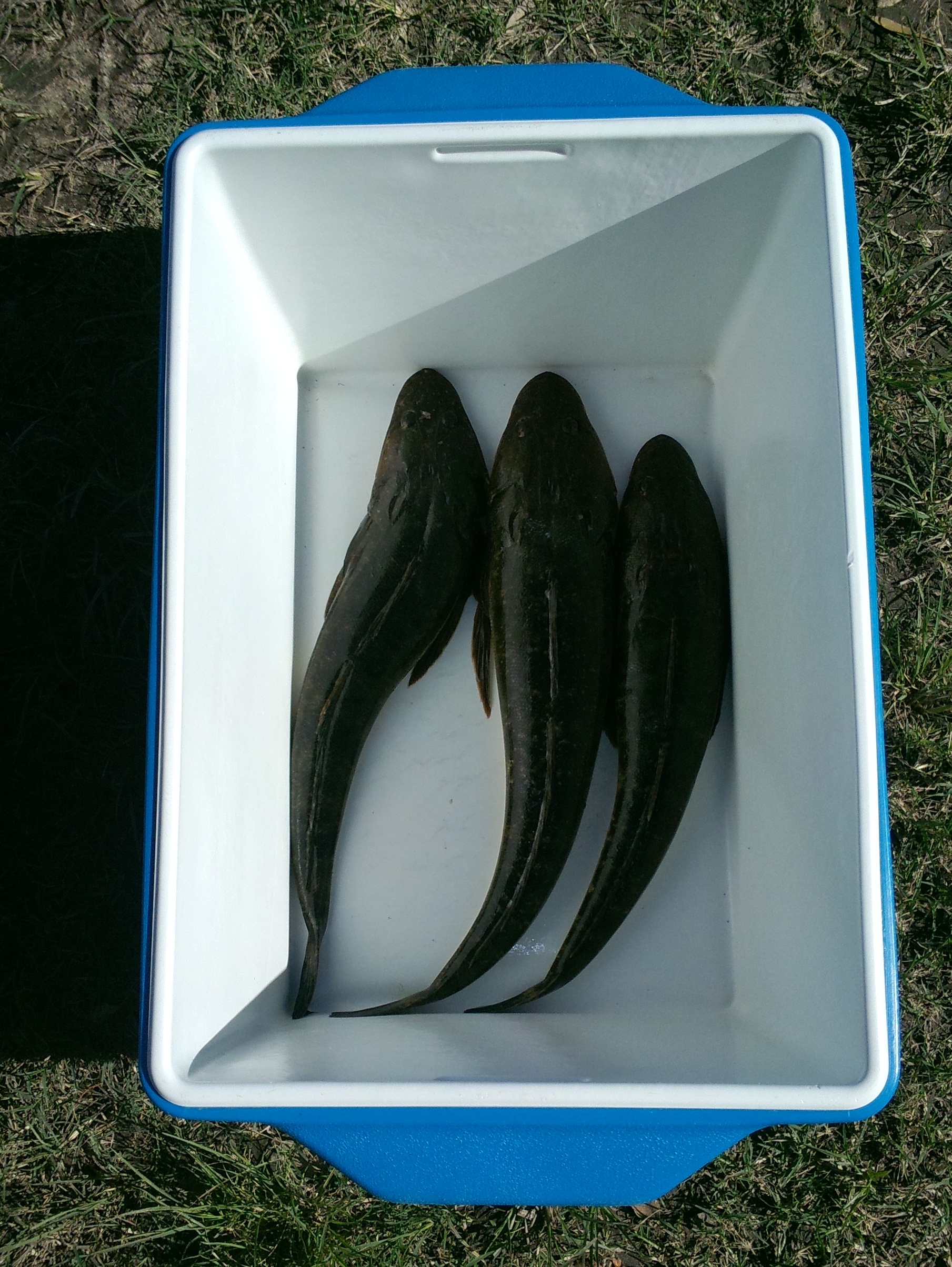
The weather looked good for Jewfish at 1770

The weather looked good for Jewfish at 1770

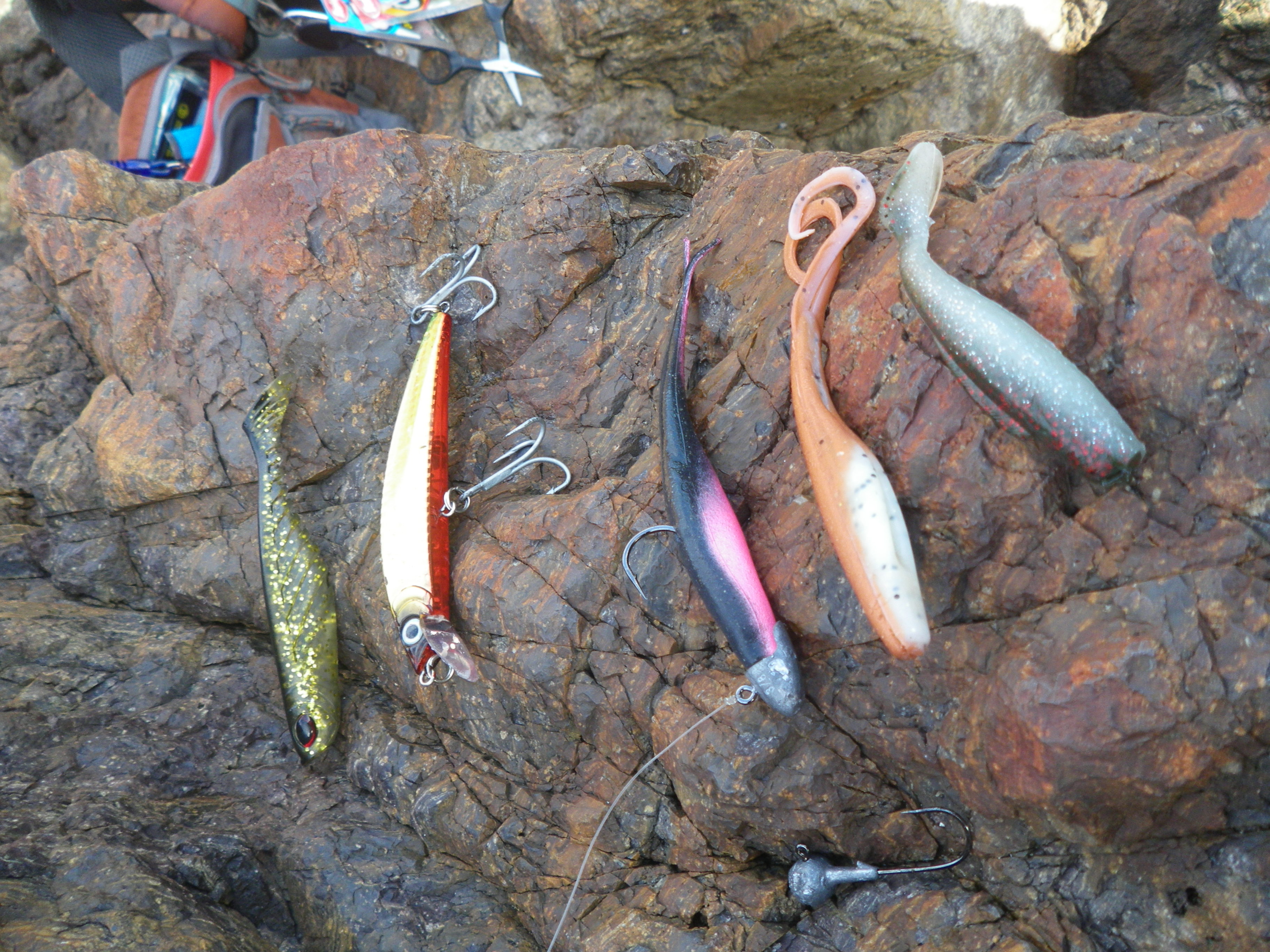
Tried everything in the tackle bag

Tried everything in the tackle bag

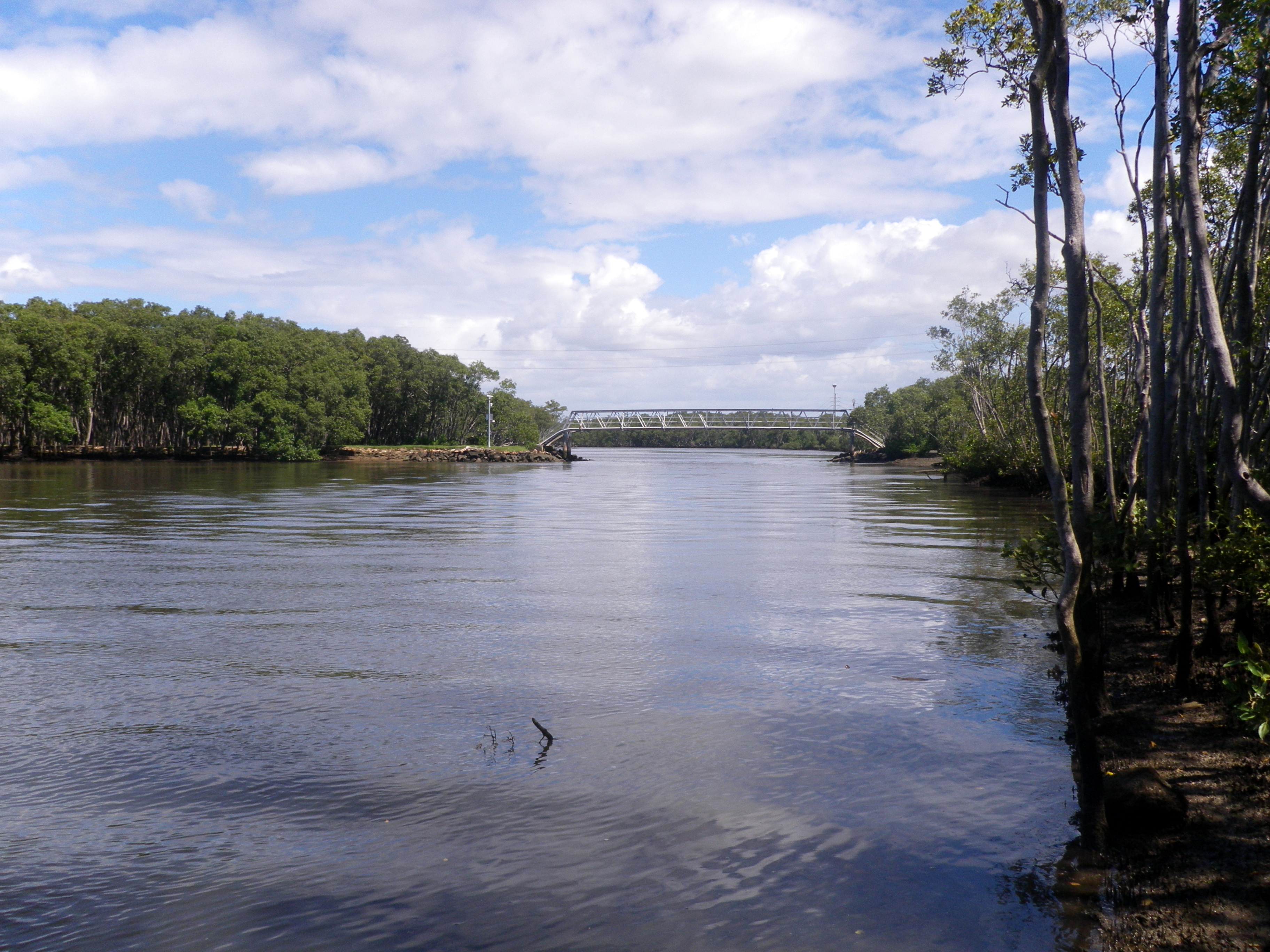
In the afternoon I decided to drive back to Brisbane, via Baffle Creek. I arrived at the Flat Rock boat ramp, just after lunch, at the top of the incoming tide. The wind was still a strong southerly and the rock bars to the east of the boat ramp were all covered in at least 30 cm of water. This area took a pummeling from the flooding, earlier in the year and there was plenty of evidence, with grass and debris still high up, in the mangroves. The ramp and picnic area were badly damaged but have now been repaired.

I waded out on the biggest rock bar just west of the picnic area and cast around the edges. The tide turned and started to run out just after 1.00 pm. There are big rock bars on either side of this channel. They form a funnel in the middle and on a big tide the water really races through. The water was quite clean at high tide, but got dirtier and dirtier as it ran out.

I started with GULP and Zman soft plastic on 1/6th oz, 1/0 jigheads. I had a few bites and watch the bait fish follow the lures in. Across from me on the other side of the channel, something was feeding in the eddies, formed by the opposite rock bar. I tried to land a few long casts in the right spot but I could not tempt them.

After about an hour, I move back upstream to the west of the boat ramp and cast around in the shallows. I was now fishing with my all-time favourite plastic, the humble 4 “ GULP Minnow in the Pearl Watermelon colour, on a 1/8th oz, 1 jighead. I was now down to 8lb leader, in the hopes of attracting a fish. After a few casts I did. It was a small dusky flathead. I continued along the sandy banks, casting at the base of the mangroves and soon found some more. I caught six in the next hour, but only two would have been just over 40 cm.

At about 3.00pm it was time to pack up. Overall, I had had a pretty disappointing couple of weeks on the fishing front. The fish had been small and hard to find. However, I had enjoyed exploring some new territory and as always, learning what does not work can be as important as learning what does. I found that when the going gets tough small, natural coloured soft plastics, like the GULP 4/3″ Minnows and light leaders, still produce results. The Zman Minnowz did not produce a fish on this trip – and they had plenty of outings. I will have to try their natural coloured minnow shaped range, but I still think the GULP scent and softer texture give their lures the edge. The weather had made things very hard but I believe the big flush out will set the area up for some great fishing in late winter. I am planning to get back up here as soon as I can.

Yeppoon – Byfield National Park – Kellys Landing – 8 June 2013

Saturday

On Saturday, I was back in Byfield National Park, so I decided to try fishing further up Water Park Creek, near Kelly’s Landing. There are thick mangroves lining the creek with only a few openings on to the muddy banks, along this stretch. A few visitors had arrived to camp beside the river and although we are well into the ‘dry’ season, the day started with rain patches, grey skies and drizzle.

This is another muddy spot and I was soon ankle-deep in the stuff. I squelched up river, using the same technique as I had on Wednesday. I was fishing with 8lb fluorocarbon leader, my light spin rig, small soft plastic minnows and shrimps on a 1/8th ounce, # 1 hook jighead. It was a new moon so there was a big, powerful outgoing tide.

The water was fairly shallow but formed some deeper channels close to the bank. In a few places there were oyster covered rocky outcrops and I settled in the mud, a few metres short of one of these and concentrated my efforts casting close to it.

I was using the GULP 3” Minnow in the Pearl Watermelon Colour. This was as close as I could get to the small bait fish. They were cruising up and down beside the rocks in small schools. After a few minutes, there was a surge and splash as something hit them from below.

I dropped my lure as close as I could to the rocks and let it sink. After about 10 seconds, I hopped it up, off the bottom and felt some resistance. I had a small flathead, about 35cm long. I persisted, casting along the edge of the mangrove roots and I soon had another – a bit over 40cm. I had found a patch and I caught three more over the next 30 minutes, all about the same size, in the same general area.

I kept fishing this spot for more than hour. As the tide went out I was able to climb onto the rocks and cast further upstream, from them. I was soaked, muddy, cold and kept losing gear to the oyster covered rocks and mangrove roots. I was pondering the long squelch back to the car when a freight train smashed the soft plastic, very close to the base of the rocks.

The fish took off, but fortunately it swam out into mid-stream. I only had 8lb leader on so I left the drag alone but did everything I could to keep the fish way from the rocks. It darted back into the mangrove roots and I thought it was gone. I kept the pressure on, but did not try to pull it out – I would just have snapped the light leader. After what seemed like a few minutes but was most likely 30 seconds, I saw the leader wiggle and the fish swam out. I pulled it a little further out and then tightened the drag and quickly lifted it clear of the water. It was a handsome mangrove jack – no monster – about 30 cm long. I took a few pictures and released it.

I decided to finish the session on a high note and so I gradually squelched and slid my way back to the car. On the way, I caught a couple more small flathead. Despite several interludes with the Zman Minnowz, I had not been successful with them – it was a GULP day today. Perhaps a different profile Zman would have worked as well as the GULP Minnow, but I think in the muddy water, the GULP scent may have been an advantage.

Yeppoon – Byfield National Park – Fishing Creek – 4/5 June 2013

Tuesday/ Wednesday

Byfield is a beautiful spot and I spent Tuesday exploring. The wind was a howling south-easterly, all day, so I focused on scouting out some good sheltered spots. I tried the lee side of the headland that I had fished the day before, at the end of Nine Mile Beach. This looks like a great spot but the waves were crashing in and I could not keep my lures in the dirty water. After a few hours, I gave up on the fishing and climbed up the hill.

It looks like the water is generally quite shallow and the sediment that has poured out of the creeks and bays must get stirred up by the wind. I climbed to the top of the hill and surveyed the whole area. There were a few trawlers working just offshore. I concluded this would be an excellent area to fish land-based, so I will be back.

On Wednesday the wind was still up and it had rained heavily overnight. I decided to try fishing one of the shallow creeks that feed into Corio Bay. I chose Fishing Creek, which comes in from the south and drove down Fishing Creek Road until it petered out at a bend in the creek. It was just after high tide at about 7.00 am. There was a small ledge path on the muddy, mangrove lined banks and I squelched my way along it.

The guys at Barra Jacks in Rockhampton had suggested this spot, when I was in there a few days before. They reckoned that crocodiles were very unlikely to be around at this time of year but that I should keep my eyes peeled. That always adds a little excitement to the session!

I was fishing with my light spin rig (Loomis GL2 and Shimano Stradic 2500) and I dropped all the way down to 8lb fluorocarbon leader and a 1/8th ounce, size 1 hook, jighead. I decided to stick with natural colours and started with a GULP 4” Minnow in the Peppered Prawn colour. The water was not too dirty as the tide had just peaked. I dropped the soft plastic up current and bounced it back to me, along the bottom. I cast as close to the bank as I could and gradually lengthened the pauses on the bottom. After about ten casts, I felt a bite and was connected to a fast fish for a few seconds, and then it was gone. I stayed in the same area and after about 10 more casts, I landed a small flathead. A few casts later I found another, it was just under 40 cm.

I continued down the creek towards the estuary. The tide was running out quickly revealing various ponds and channel. I was wet and muddy but the sun was out and I was catching fish, so things were looking up. I concentrated on the patches of deeper water and the caught a steady stream of small flathead, over the next 4 hours. The 3” GULP Minnow in the Pearl Watermelon colour was the most successful lure of the day. I tried the paddle-tailed Zman Minnowz, in a couple of colours, but did not catch anything on them.

I gradually ran out of water as the creek emptied and at about 12 noon, I turned around and walked back to the car. I caught a couple of fish in the shallow pools on the way back. By the time I reached the car, I had caught 9 flathead – the majority were between 30 and 40 cm long and only two looked like they were big enough to keep.

It had been a much more successful session and had given me confidence that this is a very fishy area, when conditions allow you to get at it.

Bribie – Oyster jetty flats – 26 June 2013

Sunday

I was up early and even though it was cold and windy, I had to get my fishing fix. I drove up to Bribie and waded out under the bridge, on the mainland side, at about 6.00 am. Low tide had been at about 4.30 am. I had filled a bag on Thursday, so I was confident.

My target area would only be in range until about 7.30 am. The sky was clear but the wind made things tough and it was building. I waded straight to the north of the oyster jetty, to target the edge of the weed beds. This is where the fish are usually laying up.

I tried lots of different lures – Gulps, Z-Men, hard bodies, but I could not find the fish. Just as I was being pushed back by the incoming tide, I finally connected with a fish. It was a 46cm Flathead and I caught it with a 4” Gulp Minnow in the Pearl Watermelon colour.

The tide was too high to stay in this spot and the wind was making things tough, so I gave up. There was a big moon in the sky behind me and recent trips suggest the fishing is tougher in this spot when the moon is full. Maybe that is true – but I maybe had just failed to find them today.

Bribie – Oyster jetty flats – 23 May 2013

Thursday

I was back in Brisbane and keen to fish at Bribie Island again. I wanted to see if the Flathead were still around, so I drove up, just after dawn on Thursday morning. The wind was light, but cold from the southwest. I had come through lots of fog on the drive up but by the time I reached the Bribie Bridge, the sky was clear.

I started on the island side of the bridge, fishing from the bank, without my waders on. The water was very clear and the tide was slacking off. It was about 6.30am and it would be high tide at 7.32 am. I tried a few plastics here and felt a few bites, then lost a few tails form various soft plastic lures. Small Tailor or Pike are usually the culprits in this location.

At 7.30 am I decided to warm up with a coffee while the tide turned. This period of slack water does not produce many fish for me so I decided to wait 30 minutes. Then, I drove back over the bridge, to the mainland side and pulled on my waders.

It was now about 8.15 am and there was still plenty of water at the mangrove line. As I waded out into the clear water I was shocked at how cold it had turned in just a few weeks. Unfortunately, the bright sunshine and clear days have triggered the algal bloom (snot weed) in the weed beds and this will soon be a pain in the neck.

There was plenty of bait in the shallows and I waded south to the oyster jetty. I started with a GULP 4” Minnow in the Smelt colour. My legs were already cold after ten minutes in the water and I backed out on to the shoreline to warm up.

In the crystal clear water I could see a very fresh looking flathead lie. I paused at the jetty and put in a few casts just south of it in the shallows. On the second cast a fish hit the plastic hard and then dropped it. I dropped the rod tip hoping it would have another go – and it did. It took off but was nicely hooked. When I subdued it and pulled it closer I could see a nice, 60cm flathead in the clear water. I pulled it up on to the shoreline and put it in the bag for supper.

I moved to the south and swapped over to a Zman Minnowz in the Rednone colour and fished around the base of the mangroves, near the drain that empties off the flats. After a few casts I had another good flathead – this on measured just over 50cm.

As the tide receded I moved further south, towards the channel marker. Over the next three hours I fished with both the Zmen and the Gulps and caught another 9 flathead. I kept 3 more, all around 45cm, to fill my bag for a good family fish feed. Of the 9 only two were undersize.

The fish had been quite spread out but they kept coming. It was a couple of days before the full moon and the tide I was fishing had been the smaller of the two on that 24 hour period. This moon and tide combination seems to be proving pretty a pretty successful fishing period for me.

Yeppoon – Byfield National Park – Corio Bay – 12 May 2013

Saturday

Paid work had left me in Rockhampton on Friday, so I decided to have a go at fishing in Byfield National Park, over the weekend. I have a new car – an FJ Cruiser – the perfect fishing car. I love it – great clearance, plenty of power and a hose out interior. I needed to give it a workout and to get it dirty and Byfield, with its many creek crossings and sandy hills, looked like the perfect spot. There had been plenty of rain, so there would be water in the creeks, but the sand tracks would have firmed up.

I set out before first light on Saturday and drove from Rockhampton to Byfield. I grabbed a cup of coffee and breakfast in Yeppoon and arrived at the Waterpark Creek causeway, that leads into the park, at about 7.30 am. Water was flooding over the causeway. According to the depth markers it was about 400 mm deep – no problem for the new motor. You have to watch this spot when there are showers around, as a lot of rain runs off into this creek. The water level can rise very quickly and leave you stuck on the wrong side.

I had wanted to visit Five Rocks Beach but due to the recent wet weather, the tracks in that direction were closed. I headed for Nine Mile Beach, instead. It takes about 45 minutes to an hour to get to the beach from the causeway. The biggest obstacle is a climb up a big sand hill. The track was a bit churned up towards the top but it was fairly firm. I am not sure that the old Suzuki Grand Vitara would have had the clearance to make it, but the FJ rolled over the top.

Nine Mile Beach is spectacular and looked particularly wild with the grey clouds rolling in. The wind was howling so I decided to drive down the beach to find some shelter and fish in Corio Bay. At the end of the beach there is a small track that leads across the back of the headland. I took this and found some sheltered water. I believe this area is Corio Bay. The rain kept coming over in squally showers.

I took out my light spin rod and reel and wandered along the mangrove fringed banks of a sandy channel. In between the mangroves, rock bars protruded into the channel at regular intervals, forming a couple of small bays. The tidal variation is huge here, often rising 5 metres from low to high. By the time I started fishing it was about 11.15 am – low tide had passed at about 10.30 am. The water was dark grey and very muddy. The area looked very fishy and I heard a few big gulps, in the eddies around the edges of the rock bars – could have been cod or even a barra – who knows?

I started with a Zman Minnowz in the Houdini colour, on 1/8th oz, 1/0 jighead. I was fishing with 10lb fluorocarbon leader. I lost a few soft plastics and jigheads to the rocks. I re-rigged with the same plastic and cast out and suddenly a fish connected, tight against the rocks. It pulled hard and kept taking short determined runs. I thought it might be a cod but it did not stop still, like a cod would. I got some line back, but it was now under an overhanging rock and I could feel the line rubbing. I did not have the power to pull it out with the light rod. I saw a flash of silver but could not identify it and then it must have loosened the jighead against the rocks, and it was gone.

I decided to try something a little more colourful and tied on a GULP Jerkshad in the Satay Chicken colour – a mixture of yellow and pumpkinseed. I stayed with the 1/8th 1/0 jighead and light leader. I cast it into the fast flowing water, in the middle of channel and let it sink. It was hit on the drop by something very fast and powerful. The fish ran with the fast current and took plenty of line very quickly. Then it jumped clear of the water and I could see it was Queenfish. Every time I got it close to shore it took off again, but eventually I pulled it clear of the water. I am sure it would only be considered a baby in local circles – but it was the biggest Queenfish I have ever caught. I took a few pictures and let it go.

I tried more and swapped through hard bodied lures, vibes and a few more soft plastics. I ended up fishing with the Zman Minnowz again. I fished around the rockbars and felt a few bites. I left the lure on the bottom for long pauses. About an hour after the Queenfish capture, I hooked something else. It pulled hard and hugged the rocks. In the end I pulled up another fish I have never caught before. Not sure what it was – see pictures. I released it and decided to give up, as another shower was coming over the headland.

I drove back through the rain, safely crossed the causeway and drove back to Yeppoon. This is a fantastic spot. I will be back!

1770 – Eurimbula Creek – 8 May 2013

Wednesday

With the weather showing no signs of improving, I decided it was futile to keep trying on the rocks, so on Wednesday, I drove back out to Eurimbula Creek. I arrived a little after first light and the tide was running in. The water was not quite so dirty here. I went back to basics and started by fishing with small, lightly weighted soft plastics, first a GULP 3” Minnow in the Lime Tiger and then a 2” Shrimp in the Banana Prawn colour. After an hour with no luck I switched to a DUO Tetraworks Bivi, small, hard bodied vibe lure. This did not stir anything up either.

I decided to try a slightly bigger soft plastic and put on a GULP 4” Minnow, in the Pearl Watermelon colour. The tide was running in fast, so I also upped the weight to a 1/6th ounce, 1/0 hook jighead. The water had now come over the sandy edge of the main channel. I dropped the lure over the edge and then retrieved it, pausing for as long as I could, right at the edge. I felt the small bait fish attack the lure on each retrieve and then, after about 10 casts, a bigger fish grabbed it. It was a dusky Flathead – just over 40 cm. After a few pictures it went back.

I moved nearer to the mouth of the creek and put on a GULP 3” Jigging Grub in the Pumpkinseed colour. I lost a few of these to the fast flowing current and the fallen trees. I rigged up for the third time and aimed the soft plastic at eddies around one of the snags. It was hit on the drop and the fish went straight into the tangle of roots. With the Loomis GL2 light spin rod and 10lb fluorocarbon leader, I really did not have the power to fight a determined fish in heavy current – the fish was in charge. I backed off the drag a little and it swam out. I let it move about a metre away from the snag, tightened the drag and then increased the pressure again. It headed straight back in. We repeated this process 3 times until I eventually pulled out a 45 cm estuary cod. It was perfect cod terrain with overhanging mangrove roots and plenty of snags.

The rain showers kept coming. At about 10.00 am, I caught a couple of small grunter bream (javelin fish) – about 30 cm long. I had swapped back to the GULP 2” Shrimp in the Banana Prawn colour. I have caught plenty of these in the creeks around here, especially after heavy rain. I put them back and carried on fishing, up and down the creek bank, as high tide came and went.

By about 11.00 am I had had enough and drove back to Agnes Water.

1770 – Workmans Beach – 7 May 2013

Tuesday

The wild weather continued; strong south-easterly winds and plenty of rain. On Tuesday morning I braved the rocks at the southern end of Workman’s Beach, near Agnes Water. This area is sheltered from a southerly and south-easterly and there is plenty of fishy looking territory.

After a few days of big seas, the water was all stirred up and a milky brown colour. I started with soft plastics and then switched to slugs and hard bodies, but nothing yielded results. The sun came out mid-morning, but not for long. As the day wore on, the wind picked up. It then brought the clouds back in. Just after lunch, there was another downpour, so I gave up. Tuesday had been my first zero fish session for quite some time!

Nothing seemed to work today

Nothing seemed to work today

1770 – Eurimbula Creek – 6 May 2013

Monday

Where did the weather come from? I had checked the forecast before I left Brisbane and apart from a bit of south-easterly wind there was virtually no rain forecast for the week. I woke up on Sunday night to a massive rain storm at 1770. By dawn on Monday the rain was pouring down and the wind was blowing 20 knots from the south-east.

At about 10.00 am I went for a drive down towards 1770 to try and fish the north, sheltered side of the headland. I parked by the Captain Cook monument and walked down the water’s edge. The water was already brown and muddy after all the rain and the tide was about half way through the run out. I fished for 30 minutes and then another heavy shower came over and soaked me so I gave up.

I dried off and drove back out of Agnes Water and down the track to the mouth Eurimbula Creek. This area is pretty flat and there was plenty of water over the road at various spots along the route. A few hours of solid rain and the drains and creeks soon fill up. I got through alright and parked at the edge of the camp ground. Unsurprisingly there were no campers around.

The sky looked ominous but it had briefly stopped raining. Eurimbula Creek mouth is also a bit sheltered from a south-easterly. The water was just as dirty as Round Hill Creek and the tide was still running out. As the tide drops it reveals a steep mangrove lined bank on the south side of the creek mouth. This is great fish holding structure but it is a little difficult to get to and fish from. The tide runs out fast creating some good eddies around the fallen trees and mangrove roots.

I fished with a few different soft plastics – bright colours, natural colours, paddle tails, shrimps and minnows. I had a few bites and whenever I pulled a lure in, it was surrounded by bait but I did not catch anything.

I swapped to a DUO Tetraworks Bivi, a small sinking vibe lure and hoped the vibrations might stir the fish up. There had been a few surface bust ups, so there were some fish around. The DUO Bivi weighs 3.8 grams and 40mm long. It casts like a bullet and has a great action. I cast it out, up-stream towards the far bank and let it sink. I then hopped it along the bottom with the current and tried to swim it as close to the snags as I could. I repeated this a few times and felt a few bumps. After about 20 minutes of fishing this lure, it was smashed close to the snags. Fortunately the fish took off towards the middle of the stream. I was fishing with the light spin rod so I did not have much power. The fish used the current and felt decent. After a little bit of back and forth, I pulled a trevally up the sandy bank. It was hooked through the tail.

That was it for the day – the rain came pouring down again and I headed home.

1770 – Getaway Beach – Jewfish – 5 May 2013

Monday

A friendly tackle supplier is fed up with reading about my exploits with the very capable Shimano Catana and decided to give me an alternative rod to try out. It arrived on Saturday – a N.S Black Hole Cabin II – S-862 L Spin Rod. It is 2.59m long (8’6”) and rated 8-14 lb. It will throw up to a 30g lure or ½ oz jighead, for a soft plastic. It is designed for throwing small lures in the surf or off the rocks. NS Black Hole rods are made in Korea and have forged a strong reputation for durability, mainly in the US. It seemed like a good idea to put it to work. So on Sunday I decided to head for Agnes Water and 1770 for a few days.

I arrived in the late afternoon and went straight down to the beach opposite the 1770 Getaway resort, where I like to stay – http://www.1770getaway.com.au . They have great stand-alone cottages and an on-site restaurant / coffee shop which produces a magnificent lamb spit roast, twice a week. The best thing about the resort is that Michael, the owner, is a mad keen fisherman. He has good information on where to fish when the wind is blowing from almost any direction. He is always very willing to share his knowledge, just sit him down over a coffee and pick his brains.
I had matched the new N.S Black Hole Cabin II with my Shimano Sustain 4000 reel. I had it loaded with 15lb Super PE braid and decided on a 16lb fluorocarbon leader, to start with. The beach is about a 10 minute walk from the resort and has a number of rocky out crops. It is just round the corner from Workman’s Beach, which is a little more sheltered, if there is a strong south-easterly blowing.

It was about 3.30 pm by the time I was ready to fish. The water was pretty stirred up and the swell was building. The wind was on shore at about 10 to 15 knots and it was bright and sunny. High tide would be at about 5.45 pm and the moon was about three days off new. I walked out on to one of the rocky out crops and loaded up with a Powerbait 4” Ripple Shad on the gold and black colour on a ¼ 2/0 jighead. I fished the lure along the edges of the rocks but after about 15 minutes, I had not had a bite. I decided to change to a heavier 3/8th 2/0 jighead, to make sure my lure was on the bottom. I also swapped soft plastics to a 5” GULP Crazylegs Jerkshad in the New Penny colour.

I fished around the rocks for another 20 minutes or so and felt a few bumps. The swell was up, I had a new rod and I did not know the terrain, so it was hard to tell if I was bumping into fish or the bottom.

Just before 4.00 pm, I lifted the lure from the bottom and felt a bit of resistance. I dropped it back down for a few moments, then struck. The rod tip started to wiggle and bent over. The new rod behaved well and soaked up the lunges and the Shimano Sustain drag took care of the hard initial runs. The tricky bit was the swell and the rocks – 16lb leader will withstand a Jewfish mouth for a while but it won’t last long if it rubs against the barnacles.

Fortunately the swell was pushing the fish in and there was a nice ledge at water level. I took my time and left the drag alone. The swell pushed the fish on to the ledge and I jumped down and grabbed it.

It was a great looking Jewfish – 77cm long and in fantastic condition. It had completely swallowed the jighead, which was now very obviously lodged in its throat. It had little chance of survival, so I decided to keep it and share it with my hosts at the 1770 Getaway resort.

I continued fishing until dusk but did not find any more. It had been a great opening session and I had successfully christened the new rod which had performed well.

Bribie – flathead bonanza on the oyster jetty flats – 2 May 2013

Thursday

The moon was waning, the winds had dropped and the tides looked perfect. Low tide would be at 9.16 am, at 0.6 m. There had been a strong south-easterly wind the day before, but this would ease off in the morning and pick up as a pure southerly, later.

I was confident that the fish would be in my favourite spots – so I drove back up to Bribie at about 4.30 am. I was hopeful that I would find some flathead under the bridge lights. I waded out just after 5.00 am. The sky was clear and the moon was about 40% full.

There has not been much surface activity under the lights in recent weeks and today was no exception. I cast around the drains and weed beds on the edges of the illuminated pools created by the lights. I caught one very small flathead on a GULP 2” Shrimp soft plastic in the Banana Prawn colour.

After about 30 minutes, I waded south, past the oyster jetty and started casting around the Sandstone Point corner drain. The water over this area was already pretty shallow – only about 50 cm, in most places. I moved to the edge of the sand bank and launched a few casts directly into the main drain. After three or four – I felt the lure stop dead. I thought it had snagged on the tufty seagrass at the edge of the drain. Then there was a tug and powerful, long, initial run. This was a good fish and it towed me around for a bit. I wanted to tire it out, as there were a few boulders and abandoned crab pots between and a gap in the mangroves, where I planned to land it. It soon tired and I pulled it up, on to the mangrove roots. It was a great start to the day – a good flathead – 66cm. I was still using the GULP 2” Shrimp soft plastic in the Banana Prawn colour.

I stopped for a chat with a keen local angler who had also waded out along the mangrove line – very keen – he is in his mid-eighties! He took to soft plastics after many years of fishing with an Alvey and bait, and now loves them. I hope I am still embracing change at his age – fantastic!

I wandered out a bit deeper, in front of the long sand bank and put in a few casts back towards the oyster jetty. The sun was up now. I hooked a couple of fish but dropped both. I was still fishing with the GULP 2” Shrimp. I stayed put and methodically sprayed the areas, where I had dropped the fish, with casts. I soon found one again and it was just under 40 cm, so I shook it free. A couple of casts later I had a better fish on and after a few solid runs, I decided to walk it back to the sand bank. It was just under 60cm.

As the tide dropped, I waded down towards the green channel marker and back again. The fishing got better and better. I caught another nine fish between 7.00 am and 8.20 am on GULP Jerkshads in the Cajun Chicken and Satay Chicken colours.

It was my turn to try something new. Many readers have been asking why I don’t use the Z-Man soft plastic lures. Steve, at Jones Tackle – http://jonestackle.com.au/ (and many others) have been trying hard to persuade me of their brilliance. I recognise they are cheaper and more durable than the GULP range but I have not really got used to their colours and I find their texture a lit too ‘rubbery’. I think the colours look very good in the water, but not very good on the packets. Steve insisted I buy a packet of Minnowz in the Houdini colour and try them out. I chose this moment to give them a work out. The Minnowz have a standard minnow shape with an additional paddle tail.

Well you can probably guess what happened. On the first cast, a fish hit the lure on the drop and I pulled in a tiny, 25cm flathead. On the second cast, I pulled up a 40cm flathead and from then on the Z-Man Minnowz caught a flathead about once every 10 minutes, until I gave up at about 10.00 am. At first they appeared to be catching smaller fish than the GULP Jerkshads but then I caught two 50cm+ specimens towards the end of the session.

So Steve, and everybody else – you are right, they do catch fish. Could this be the end of Landangler’s exclusive love affair with GULP? Well, one swallow does not make a summer. I have a feeling anything would have caught fish today. But I was impressed enough to buy a few more packets!

Bribie – oyster jetty to the channel marker – 28 April 2013

Sunday

When the fish have been biting in a particular spot it is hard to tear yourself away, so it was back to Bribie Island. It is also good to fish the same spot for a few weeks, so that you can see if any patterns appear in fish behaviour.

Sunday looked more promising than Friday had been. The moon was still pretty full but low tide was at 5.21 am. I would not be able to fish much of the run out tide, but I could reach my favourite target area, for a couple of hours, as the tide started to run in. In general, I have had more success on the ‘run out’ rather than ‘run in’ tide, in this area, on the edge of the main channel. The moon is also a factor. As I mentioned in my previous post the big moon means a very big tidal flow and this is not very helpful here.

There are a different current flows that run over and around the sand banks, at different times of the tide. You feel this very obviously in your waders, as you move between cold water – rushing in from Moreton Bay and warmer water, flowing out, off the sand flats and shallows, from the Pumicestone Passage. This can make deciding which direction to cast in, quite confusing. If possible, you should always cast up, in to the current and hop the lure back along the bottom, towards you.

I started early, around 5.30 am and made straight for the green channel marker. It took about 20 minutes to get out there and I started by fishing with GULP Jerkshads in various colours, but these did not find the fish. I swapped down to a GULP 4” Minnow soft plastic in the Watermelon Pearl colour. I was using a 1/8th 1/0 jighead and the usual 10lb fluorocarbon leader. By 6.45 am the tide was running in and I found a small flathead in a sandy patch, about half way between the channel marker and the oyster jetty. I could only find one in this spot so, after 10 minutes of casting, I moved on.

It took more than hour to find the next one – at about 8.00 am. This one was over 40 cm, but I was releasing them all today. I covered the surrounding area with casts but could not find any more.

The incoming tide was now starting to push me out of reach of the main edge of the weed beds. I swapped to the GULP Jerkshad in the Cajun Chicken colour – black and pink colour. At 8.15 am I caught another small flathead – about 35cm long.

At about 9.00 am I was back at the bridge and had not caught any more. The combination of full moon and incoming tide had stirred the sediment in the water up and it was very murky again. I had only caught three fish. It seems that fishing the incoming tide is not working so well for me. We will have to see what happens when I get a chance to fish the ‘run out’ tide, next week.

Bribie – Oyster jetty flats – 24 April 2013

Wednesday

The tide was all wrong but the fish were around, so I decided on Bribie again. We would have a 2.2m high tide at 8.05 am. This would mean the tide would be just over half way in, at first light.

I arrived just before sunrise and wandered south along the shoreline, on the mainland side of the bridge. I passed the oyster jetty, casting soft plastics on the flats on either side. I felt a few tugs in the area just south of the oyster jetty, but I could not hook up with anything. I was fishing with a GULP Jerkshad in the Lime Tiger colour, on a 1/8th 1/0 jighead. I was using 10lb fluorocarbon leader.

I find the last of the run-in tide the hardest to fish, land-based, at Bribie. You can no longer reach the various drop offs on either side of the Pumicestone Passage. The fish move up quickly but suddenly there is no obvious structure for them to hide in; they spread out over the open expanse of flats and it is difficult to know where to concentrate your efforts.

As I thought about where to fish a huge flock of cormorants came into land. I have never seen a group as big as this before. They settled on the water for a few minutes then took off again.

In this area the only obvious structure is the slight drain that runs round the corner from Sandstone Point. Even this seems to be gradually silting up at the moment. This is where I decided to focus my efforts. The water was flowing round the corner from the south. I stood beside the mangroves and cast to the south, in the direction of the long, now submerged, sandbar.

It was now about 7.00 am. After a couple of casts, a fish grabbed the plastic, made a short run then it let it go. This also happened on the next cast and I saw the familiar snout of a long tom, following my lure in. I cast a little more towards the south east and when I took up the slack I had a fish on the line. I set the hook and it took off with the current. I soon had it under control and waded back to a gap in the mangroves. It was a good flathead, about 50cm long. I let it go.

I waded back to the same spot and cast out again. I continued fishing this area as the tide came up. I swapped to GULP Jerkshad in the Curry Chicken colour. After a few casts the line pulled tight again and I had another flathead, about the same size. It was about 7.30 am. In the next twenty minutes I dropped two more fish and caught one smaller one.

Things went quiet around the tide change so I decided to wait out the slack water over breakfast and coffee. I waded back to the car and went off for breakfast. The wind was picking up from the south-east, but it was a beautiful morning.

By 10.00 am I had waded back to almost the same spot that I had been fishing earlier. The water level was much lower but I put in a few casts anyway. After about 10 casts, I caught another 45+ cm flathead, on a GULP Jerkshad, in the Satay Chicken colour.

The tide was now running out strongly and the big sand bar, down by the green channel marker, was clearly in view. With the wind behind me, I could reach the edge of the main channel and the sea grass beds, with some long casts. I started to make my way towards the green channel marker, casting as I went. I hooked a stingray which towed me around for a while and then broke me off. I also connected with an spiky puffer fish which grunted, spat jets of water at me and fluttered round in circles for a while before cut the line and got rid of it.

I re-rigged with a GULP Jerkshad in the Cajun Chicken colour. The water was now really running and lifting more and more sediment as the tide got lower. This did not seem to bother the fish. I averaged one every 15 minutes or so, for about the next three hours. The colour of plastic did not seem to matter. Most were around the 40 to 45 cm size, but there were several more 50+ cm models amongst them.

At about 1.30 pm, I had to tear myself away – always hard to do when you are catching fish. I had caught more than 15 flathead through the morning and it does not get much better than that!

Bribie – Oyster jetty flats again – 22 April 2013

Monday

After a good session at Bribie last week, I was keen to get back out there. The wind was light and the moon phase was good, with the tides getting bigger in the run up to the full moon, on Friday. I could not fish the dawn, but I could fish the run out tide for a few hours before low tide, at about 1.00 pm.

I arrived just before 9.00 am and decided to keep fishing the flats on the mainland side of the Bribie Bridge. There had been plenty of flathead around and I presumed they would still be there. There was not much wind and the sky was cloudy.

I understand it is New South Wales school holidays this week so I expected a bit more boat traffic than normal but as I walked out at about 9.30 am, there were crab pots as far as the eye could see. As I waded south from the bridge, they were everywhere. I counted 50 in sight before I gave up. It made casting a little difficult, in places. There were plenty of sand crabs around, as I kept kicking them. However the density of pots meant that there was a boat arriving to; figure out which were theirs, check them and reset them, every five minutes.

This did not do much for the fishing but after all the crap weather we have had, is was good to see boats out and about and the odd pot being pulled up with a few keepers in it. I decided to stay in the shallows and find some undisturbed areas to fish.

The tide was running out quite fast and so the boats and pots gradually retreated, leaving me to fish the edge of the sand and weed banks, which were now covered in only 800 mm of water. This is where I concentrated my casts. I tried to pause my retrieve right at the edge of the banks. This was where my first fish of the day hit just before 10.00 am. I was using a GULP Jerkshad in the red and yellow Curried Chicken colour on a 1/8th, 2/0 jighead. It was a good flathead but the sand banks where not yet exposed so I had nowhere to land it. I tried the tricky manoeuvre of pulling the fish into my body then grabbing it with a rag. The fish promptly spiked me hard, unhooked itself and wriggled free. It was a good spike right in the middle of my thumb. I could not rub some slime into it to ease the sting, as the fish had gone and taken all its slime with it! I wrapped it up in a bit of rag.

When you get spiked like this the blood does not clot very quickly, as the venom in the spike is slightly anti-coagulant. So if you are not careful, you end up dripping blood everywhere. This is not ideal in waist deep water! The thumb calmed down after a while and I carried on casting. I kept peppering the same spot with casts and I soon hooked up again. This was a slightly smaller fish and made sure it was tired out before pulling it in close and grabbing it with the rag. It ended up being a bit over 45cm.

I moved further south and was soon close to the green channel marker. I swapped to a GULP Jerkshad in the Cajun Chicken – the black and purple colour. I used the usual technique along the edge of the sand bank and soon caught two more undersized (35cm) flathead. I persisted in the same area and after about ten more casts, I felt a good bite. I paused and dropped the rod tip. When I lifted it I had another fish on. This one was about 45 cm again, and I safely grabbed it and put it in the bag.

It was now about 12.45pm and I turned back and waded towards the bridge. In the shallows, just short of the jetty, I hooked another flathead and pulled it up to the shore. It was also a keeper, at about 50cm long.

Three little flathead went swimming one day...

Three little flathead went swimming one day…

I had to give up at about 1.15 pm, just as the tide stopped moving. I had forgotten the camera today, so only one snap of the keepers is included, from my phone. Considering the late start and all the boat traffic, it had been another good session.

Bribie Island – Oyster Jetty to the channel marker – 18 April 2013

Thursday

At last the cooler (and hopefully drier) weather is beginning to show itself. I love this time of year. Dawn is later so I become slightly less nocturnal and the fishing improves exponentially with the cooling water temperatures and the more consistent south-easterly winds.

It was back to Bribie Island – my home fishing territory. I was in position under the mainland side of the Bribie Island Bridge at 5.00 am, about an hour before dawn. Low tide would be just before 9.00 am. This is the ideal tide situation for fishing these flats. The tide is about halfway out and running nicely. The fish have moved up into the shallows during the night with the high tide and are now gradually retreating. They stay in shallower water in the pre-dawn light, as they still feel fairly safe.

I cast around but the water was already too shallow directly under the bridge lights, to warrant fishing that area, so I gradually moved up, past the old oyster jetty and concentrated on an area of weed banks, about level with the end of the jetty. There are sandy hollows in the weed and when the water depth is just right the flathead like this spot.

I started with a GULP 4” Minnow in the Smelt colour on a 1/8th oz, 1/0 jighead. I was fishing with a 10lb fluorocarbon leader and my Loomis GL2/ Shimano Stella 2500 spinning outfit. It was still dark. It was now just before 6.00 am. There was just a faint glow on the horizon. I put a few casts out into the shallows and the fun started. The first fish was a good one – a flathead, just over 55cm long. I was going to release them all today but this one had half a tackle shop hanging out of its mouth, so I put it in the keeper bag. It looked like it had swallowed at least one hook and had some pretty heavy trace with another broken hook hanging off it.

I cast out again and felt another bite, but did not connect. On the next cast, I caught it – another Flathead – but this one was just a baby – about 30cm long. I kept going in the same spot and about 5 minutes later, I felt a good fish connect. This was another good fish, a little over 60 cm.

The sun was now up and I gradually moved further to the south. There were a few long toms around and these would occasionally attack the soft plastic. I caught another undersized flathead at about 6.30 am and then things went quite for about an hour.

By 7.30 am I was about half way to the green channel marker. I had swapped to a GULP Jerkshad soft plastic in the Cajun Chicken colour. The water had started fairly clear but as we got closer to low tide it became murkier. Suddenly I felt a solid bite and I was on to another fish. I pulled it on to the sand. It was about 45cm. I then caught a couple more, of about the same size, on the same soft plastic.

I was sure there were more fish in the area but after another 20 minutes of casting, they seemed to have calmed down or perhaps, grown wary of the soft plastic. I swapped over to a small hard-bodied lure – the DUO Realis Shad 59MR. I have had success with the lure in this area before, but today I was using a new colour – purple/ silver called HD Gill. It is a 4.7 gram, 59mm suspending minnow with a great action. It will hover for a few seconds at the end of a swim and maintain its depth, to about 1.5 metres below the surface.

This soon stirred the fish up. I worked it along the edge of the weed beds, out by the channel marker and soon started hooking up. The first couple of fish were small. I turned back and covered the same ground I had been over with the soft plastic jerkshad and after an hour and half, I had caught six more flathead. They were all over 45cm and had all attacked the Realis Shad 59MR.

By about 9.45 am I was back at the bridge. I had three of the better fish in the keeper bag for a meal and I had really enjoyed the session. Early in the tide the water had been very clear and there had been no rain – let’s hope the fishing and weather stays this good.

Iluka – Woody Head – Middle Bluff – More Tuna – 11 April 2013

Thursday

On Thursday morning I decided to fish from Middle Bluff, just north of Frasers Reef. This is a short drive south from the Woody Head camp ground. I arrived just before dawn and got rained on straight away. I now had a good waterproof jacket on, which helped. The wind was a slight south easterly/ westerly – swapping from one to the other. Low tide had passed at about 2.45 am.

I decided to start with the heavy rod. My theory was that if the Tuna were around, I would have more chance of landing one on my Daiwa 9’ Demonblood with 30lb leader. I have been trying out another couple of excellent hard body lures from DUO, on this trip. I decided to start with the DUO Tide Vib Slim140. This is effectively a large sinking vibe lure. It weighs 32g, has the usual superb DUO paint job and casts like a bullet.

The rain had passed over and I started casting the Tide Vib Slim in a semicircle and retrieving it in long, sideways sweeps, to get the most of the action. Just before sunrise, I felt some solid knocks. I was casting out about 50 metres and the lure was getting attention just after it hit the water and started vibrating. After about ten minutes, there were two big bumps and a bite. I dropped the rod tip, then struck hard and the fish took off. It was another blistering initial run. This time I was fishing with my Stradic 8000 reel and the heavier rod and leader, but that initial run felt just as powerful as the mac tuna, earlier in the week. I just held on and watched 250 metres of braid peel off the spool. I was pretty sure it was another tuna. It went straight out to sea. Eventually it slowed, so I gradually cranked the reel and turned its head. Now it was sitting parallel to the shore, about 200 metres out and the Daiwa Demonblood rod tip was fluttering in time to its tail beats.

I started to gain line but each wind was met with solid resistance – this fish was far from worn out. I left the drag alone and was determined to be patient. With the fish this far out, there was not much structure to tangle with. It made another short run, taking perhaps 50 metres of line, but I just let it go and then started the pressure again. I gave some thought to where I would land it. If I was lucky I would be able to coax it round to some stepped ledges on the north side of the headland and grab it, between wave sets. As it came closer to shore, I started to put more pressure on it but it was hard to move. Every time I brought it within sight of the rocks it took off again. The runs were getting shorter but they were just as powerful.

And then with no real sign of why, the line went slack and it was gone – bugger. I had not felt a bite off or seen any evidence of a bigger predator and I still had the lure, when I wound in. I suspect it had been hooked on the side of the mouth, through some of the softer tissue and I had just pulled the hooks.

I gathered my thoughts, checked my knots and cast out again. Half way through the retrieve, there was a grab followed by zzzzzzzzzzzzzzzz pht! The leader snapped and the lure and fish were gone. Not sure what it was, but that was the end of my DUO Tide Vib Slim 140. I have had four of these lures, to test drive this year and they have all hooked fish before disappearing. I am pretty sure two were grabbed by Kingfish, earlier in the year, off Fingal Head and the last two tangled with Tuna. I will definitely be getting more.

I tried casting a popper for a while but this did not produce anything so I decided to swap to a metal lure – a 95g Sniper slug. After ten or so casts, I felt a bit of resistance and realised I had a small fish on. I pulled up a Tailor that was only just longer than the lure. A few more casts with the slug did not yield anything. So I swapped to the lighter Shimano Catana rod and decided to try some soft plastic lures.

I started with a GULP Jerkshad in the Lime Tiger colour on a 3/8th oz, 2/0 jighead. Something hit the plastic on the first cast and took it for a quick run, then dropped it. I got it back with the tail mashed and I guessed it was a Tailor. I dropped down to a 4” Minnow in the Banana Prawn colour and after a few more casts, I connected with a better Tailor – about 40 cm long and landed it.

The tide was rising but the swell was very light, so I dropped back to a ¼ oz and then a 1/6th oz, jighead and selected a 16lb fluorocarbon leader. I put on a few different colours and caught a few more tailor – the biggest was about 45cm long. I also caught good sized dart and bream.

Things started to slow down so I decided to put on a smaller, 3” GULP Minnow in the Lime Tiger colour, on a ¼ oz, 1/0 jighead. This was the same lure that had caught the mac tuna a few days before. I fished around, varying my casts; some in close to the rocks, some further out. It was now about 8.45 am and another line of rain clouds was lining up and the wind was picking up. I put out a long cast and dropped the lure into the water about 25 metres out.

I felt a few grabs and pulls as the lure sank and suddenly I was connected with another fish. It pulled left, then right and suddenly took off in another blistering run. I was pretty sure it was another tuna as the line kept peeling. I was on the light rod so I just held on. It was another very long initial run but this time the fish was smaller and tired faster. I turned its head and gradually got my line back. I was playing it very carefully as I knew the 16lb leader would not stand any contact with the rocks. I gradually walked it round towards the rock ledges to my left. I checked my watch and I had been fighting the fish for 12 minutes, but it felt like much longer.

Once the fish saw the rocks it took off again. The Catana did not have the strength to apply much pressure but the tuna was gradually tiring. I watched the wave sets. I could see the fish now and it was a small mac tuna. It was on its side but still furiously beating its tail. Unfortunately a big wave set was coming through and I had little choice but to pull the fish up on to the lower ledge with the wave. It came up effortlessly on the surge but once it realised it was out of the water, it went ballistic and before I could get down to it, it had wriggled free of the jighead and bounced down the rocks to freedom – double bugger.

Appropriately, the heavens chose that moment to open above me and add insult to injury by covering me in a downpour. As I squelched back to the car I was rewarded with a great rainbow – but I would rather have had another tuna!

In the afternoon the rain stopped again and so I walked out to the rocks in front of Woody Head to fish “the barnacles” again. Not much happened through the afternoon. I caught a few more dart and bream on soft plastics. A watched as another fisherman caught a few 45cm Tailor casting slugs into the white water zones.

As the sun dropped behind Woody Head, the bite rate increased and I caught three good bream in quick succession. I swapped up to a bigger GULP 4″ Minnow in the Smelt colour on a 1/4 oz, 2/0 jighead. The swell and wind was picking up a little and it was getting dark quickly. I put in a long cast and let the lure waft down in the swell. As soon as I took up the slack a fish hit it. It pulled pretty hard on the Catana and then a good size tailor leaped out of the water. I subdued it and pulled it in. It was just over 50cm long. By then I had had enough for the day so I cleaned it and headed home for a fish supper.

Brisbane River – Pinkenba – Boggy Creek – 13 March, 2013

Wednesday

I did not have time for a real fishing session but I wanted to do a recce of some local spots. You have to keep your eye on things so that when the weather is difficult, or you only have limited time, you still have a few locations to try.

Boggy Creek, at Pinkenba, is a shallow muddy water way that runs along next to the oil refinery, near the mouth of the Brisbane River. It is not a particularly picturesque spot, but it has produced some great fish for me and it is always fun to catch stuff so close to the city. I have caught bream, tailor, pike, flathead, cod and even a 6 kg jewfish. I have also seen a few good size mangrove jacks pulled out of the water.

I had a couple of hours around lunch time so went down to have a look. I arrived about 11.00 am, just after a big high tide. I started by casting soft plastics under the bridge. The water was very murky, as it often is here. After a few minutes, a big school of bait (looked like small mullet) passed under the bridge. They were being harassed by something from underneath. A few minutes later a big school of bigger mullet passed through.

The bait came and went and there was plenty of it. The occasional prawn skittered past. I lost a few jigheads to the rocks, shopping trolleys and car tyres under the bridge and did not get any strikes, so I move towards the mouth of the creek and cast around from a gap in the mangroves. I had a few double tap strikes from small bream or perhaps tiny tailor, but I did not hook anything.

The GULP minnow range matches the bait profile

The GULP minnow range matches the bait profile

The GULP minnow profile is a pretty good replica of the real thing

The GULP minnow profile is a pretty good replica of the real thing

Boggy Creek bait - a good copy of the GULP minnow

Boggy Creek bait – a good copy of the GULP minnow

Boggy Creek - a great Brisbane River fishing spot

Boggy Creek – a great Brisbane River fishing spot

The mosquitos where thick and were pretty successful at biting through my long sleeved fishing shirt. After all the rain, don’t come down here without a head to toe covering in Aerogard. After a couple of hours, I gave up. By now there were a few keen anglers using their lunch break to chase a few.

The bait was everywhere and I would think this spot is definitely worth a fish at dawn and dusk when the bigger predators will be around. I’ll be back.

Bribie – Under the bridge – 5 March 2013

Tuesday

The rain is easing but it is just being replaced by howling south-easterly winds. The only real option would be to fish the couple of hours either side of dawn, in a fairly sheltered location. So it was off to Bribie again, to fish the area under the bridge, on the mainland side of the Pumicestone Passage, as the tide fell.

I arrived at about 4-45 am to find I was not the only mad angler wetting a line. A couple of fishos were on the bridge casting to the north – a few pylons out. A couple of good jewfish have been landed from the middle of the bridge, at night, recently. The favoured technique is to fish with very heavy gear then drop a grappling hook down once the fish is worn out. This strikes me as a pretty tough proposition – but it does work.

I rigged up and waded along the edge of the mangroves, to the south of the bridge. The wind was from the south east and was blowing around 15 knots. The water was dirty and running out, against the wind. High tide had been at about 3.00 am.

I started by fishing with a GULP Jerkshad in the Orange Tiger colour, on a 1/8th oz, 2/0 jighead. There was a bit of surface action on the edge of the pools of light, cast by the bridge lights. Every so often, I could trace the path of a cruising predator by the scattering bait fish. There were some pretty big surges and splashes which made me reluctant to wade out further.

I had no luck with the brightly coloured Jerkshad, so I made a counter-intuitive switch to a 3” GULP Shrimp soft plastic in the Banana Prawn colour. This is a gold colour that would not really stand out at all in the sediment rich, murky water. After about ten minutes of casting without result, I switched my attention to the deeper water, just out of reach of the bridge lights. I carried on peppering the area and was about to swap soft plastics again when I felt a solid bite and a few moments later, I set the hook on a good fish. As I pulled it in between the mangroves, bait went flying everywhere. There is plenty of food around. It was a good flathead, about 55cm long and I kept it for dinner. It was 5.10 am and its possible that the sun was trying brighten the sky but the clouds were too thick.

The heavens opened and I retired under the bridge. The fishos on the bridge had disappeared – probably washed away by the relentless rain. I started casting to the north and gradually moved along between the pylons. It was now a little lighter and the rain had stopped. The water was getting dirtier as the tide ran out. As I cast out, around the base of the third bridge pylon, I felt a good bite, but did not connect. I cast back in exactly the same spot and got hit again, still no hook up. I cast another ten times in the same spot gradually slowing the retrieve right down and increasing the length of my pauses. On the eleventh cast I felt the solid bite of a committed fish. I dropped the rod tip and slowly counted to ten. After what seemed like an eternity, I lifted it and felt the lure lodge in the mouth of the fish. The rod bent over, I felt the resistance and the tip started wobbling. I waded back to the shoreline and safely landed my second flathead. It was a little smaller than the first, just under 50 cm. It was 5.23 am. I also kept this one for dinner.

I swapped to a 4” GULP Minnow soft plastic in the Smelt colour. I concentrated in the same area, around the third pylon. At 5.34 am I caught another flathead, almost exactly the same size. Three fish is about right to feed my mob for dinner.

It was now light but the sun could not break out above the clouds and the rain showers just kept coming. I persisted in the same area but things seemed to go a bit quiet, as the traffic on the bridge built up and the water receded. I swapped down to 3” GULP Minnow in the Smelt colour and moved a bit further out, to the south of the bridge. I felt a couple of taps and then hooked a small Bream. It was now just after 6.00 am. A few casts later the same plastic produced flathead number four. The smallest of the morning, but it was still a healthy fish, at 47cm.

I waded south, past the oyster jetty and on to the windy flats. The sun almost emerged above the clouds but the now howling south-easterly immediately blew some more rain clouds in, to block it out. One of these gave me a thorough soaking and despite casting around for more than an hour, I did not get a bite out here.

Just before 8.00 am another nasty black cloud opened above me and I decided to call it quits. It had been a successful morning but the wild weather had made it a challenge.

Iluka – Shark Bay – 14 February 2013

Thursday

On Wednesday afternoon the south-easterly wind had not really dropped off, as forecast. I had a quick fish around Woody Bay but it only yielded one very small flathead, on a GULP 3” Minnow soft plastic.

Thursday was my last day and once again it started with rain and a strong south-easterly wind. Low tide was due at 5.40 am, just after first light. I decided to sit out the rain. Once it stopped, at about 6.30 am, I drove round to Frasers Reef and walked along the beach to Middle Bluff. The swell was just too big here and after an hour of losing gear to the rocks and getting soaked, I gave up.

By afternoon the weather had improved and the sun was out. The wind was still blowing from the south-east, so I decided to try fishing on the Shark Bay rock platform, as the tide ran out. I had intended to fish the north side of the rock platform, but when I arrived the wind was light enough and the tide was at just the right level to make it possible to fish on the south side.

After a week of fairly tough fishing, I was not confident of finding big tailor or jewfish, so I started fishing with my ‘light’ rock fishing outfit. I was using a 10lb fluorocarbon leader and a GULP 3” Minnow in the Banana Prawn colour. The swell was light and the water fairly clear so I dropped right down to a 1/8th oz 1/0 jighead. There are a number of low rocky outcrops on this side of the platform that extend into the sea like fingers. There a kelp and barnacle covered bommies all round. The area is dotted with patches of open sand and I concentrated on casting around the edges of these patches. I moved the lure slowly, letting it waft around in the surf. At about 3.00 pm a fish grabbed the lure and took off. It bit hard and took some line. It soon settled and it was not long before I had it safely on shore. It was a cracker bream that measured just fewer than 40 cm long. It had almost swallowed the soft plastic and jighead, whole.

I felt a few other nips over the next couple of hours and I swapped through a range of soft plastics and small hard bodies, but I could not find another fish.

Although the weather had made life tough it had actually been a pretty good week of fishing. I had caught some good bream and a great flathead. I am sure the school jewfish were around but I had just failed to find a spot where I could successfully get at them.

I hope the bait sticks around for a while and then as we move into the cooler months the land-based fishing will only improve.

Bribie Bridge and surrounds – 3 February 2013

Sunday

After a trip up to Asia I had eaten plenty of good seafood but now I wanted to catch some. Unfortunately the cyclone and its aftermath had slowed me down a bit.

On Sunday morning I could wait no longer and I decided to drive up to Bribie to have a look at conditions and try some fishing. Things were far from ideal. There was a strong south-easterly blowing and the tide had been high at about 2.00 am. The moon was waning and about 50% full. I would be fishing a not particularly powerful run out tide through to a low of 0.8 m, at about 8.30 am.

After a flood it is best to fish around high tide as this is when the concentration of salty water is highest in the estuaries – unfortunately this was not really an option. I arrived at the west end of the Bribie Island Bridge just after 4.00 am and rigged up. The tide was about half way out.

As I waded out, under the bridge, there was plenty of surface action under the lights and the water, in the shallows at least, was fairly clear. I put on a GULP 3” Minnow in the Pearl Watermelon colour , on a 1/8th 1/0 jighead and cast out. There was a pull as the lure dropped in to the water and then nothing. I let the lure sink and as I lifted it from the bottom the line pulled tight and I wound in a 30cm Flathead. It’s always good to get a fish on your first cast – even a small one.

There were a few prawns skidding across the surface and so after a few more casts, I moved over to the shallows on the south side of the bridge. I cast at the pylons and wherever I saw a splash or a prawn jump. I retrieved the lure with the tide, hopping it over the sand and rubble bottom. Each time I cast in close to the pylons I would get a couple of hits. After a few repeats in the same spot I caught a small Moses Perch.

I decided to match what the fish were eating and swapped to a GULP 2” Shrimp in the natural colour. I was fishing with my light spin rod and reel combination. I had the reel spooled with 2.8kg Fireline and about 1.5m of 10lb fluorocarbon leader. I concentrated on the area around the base of bridge pylons. The water was running out fast and the sun was just coming over the horizon. I let the soft plastic lure bump along the bottom. At about 5.25 am I lifted the rod to cast again and felt a solid tug. I dropped the tip for a few seconds then struck. I had a fish and it turned out to be the only keeper of the day – a flathead, 42cm long.

As the sun came up I moved south to fish around the old oyster jetty. As the tide dropped the water got dirtier and dirtier, especially in the main channel. I tried a few different soft plastics but did not get a touch. I waded from the jetty to the green channel marker and all the way back but did not get any hits. At about 8.00 am the tidal flow dropped off and the Passage was pretty much a brown muddy soup, so I gave up.

It was encouraging to catch a few fish and hopefully by next weekend the water should have cleared considerably. The prawns were a good sign and hopefully they will bring the predators in.