Iluka – Woody Head – 1 October 2014

Wednesday

Many claim it was Einstein who said the definition of insanity is doing the same thing over and over again and expecting different results. But there is no evidence that he ever said it, thought it or wrote it.  However as with all good clichés, there is an element of truth in it, especially for fishermen.

For this reason I decided not to return to Middle Bluff on Wednesday morning and to go instead to Woody Head – the next headland to the north. When the swell is light and the tide is low or falling, there are few better fishing spots.

I parked up and walked out on to the rock platform at about 5.00 am. The wind had stayed a northerly and the swell was fairly gentle, but there was still the odd large set of waves coming through. Boots with felt soles or studs, or both are essential, if you intend to venture out here, as is a PFD. The tides ensure almost every surface is a suitable home for green and black slimy weed and the barnacles here are responsible for plenty of long term scar tissue. So it is only relatively safe when the swell is under 1 metre and the tide is about half way out and falling.

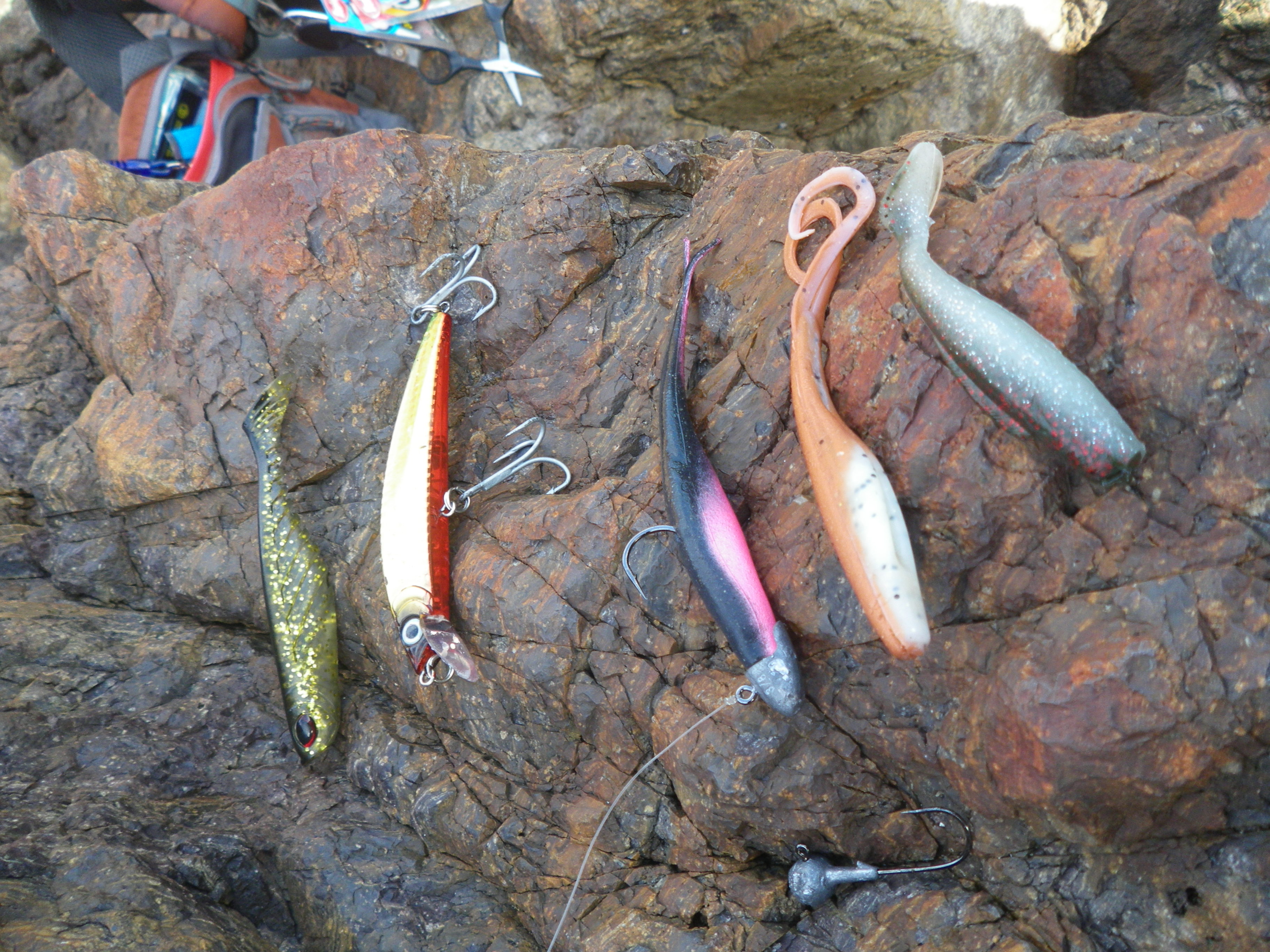
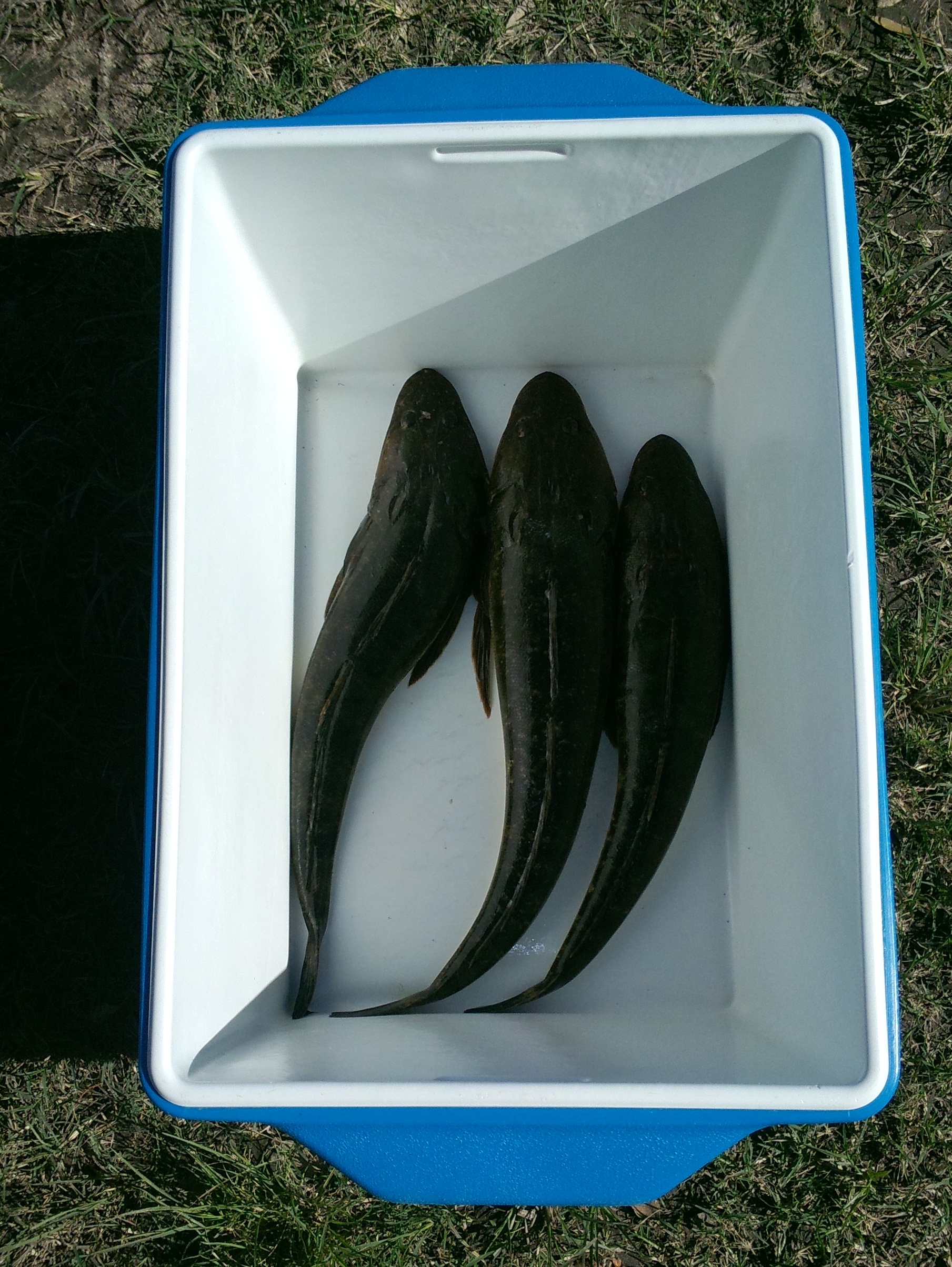
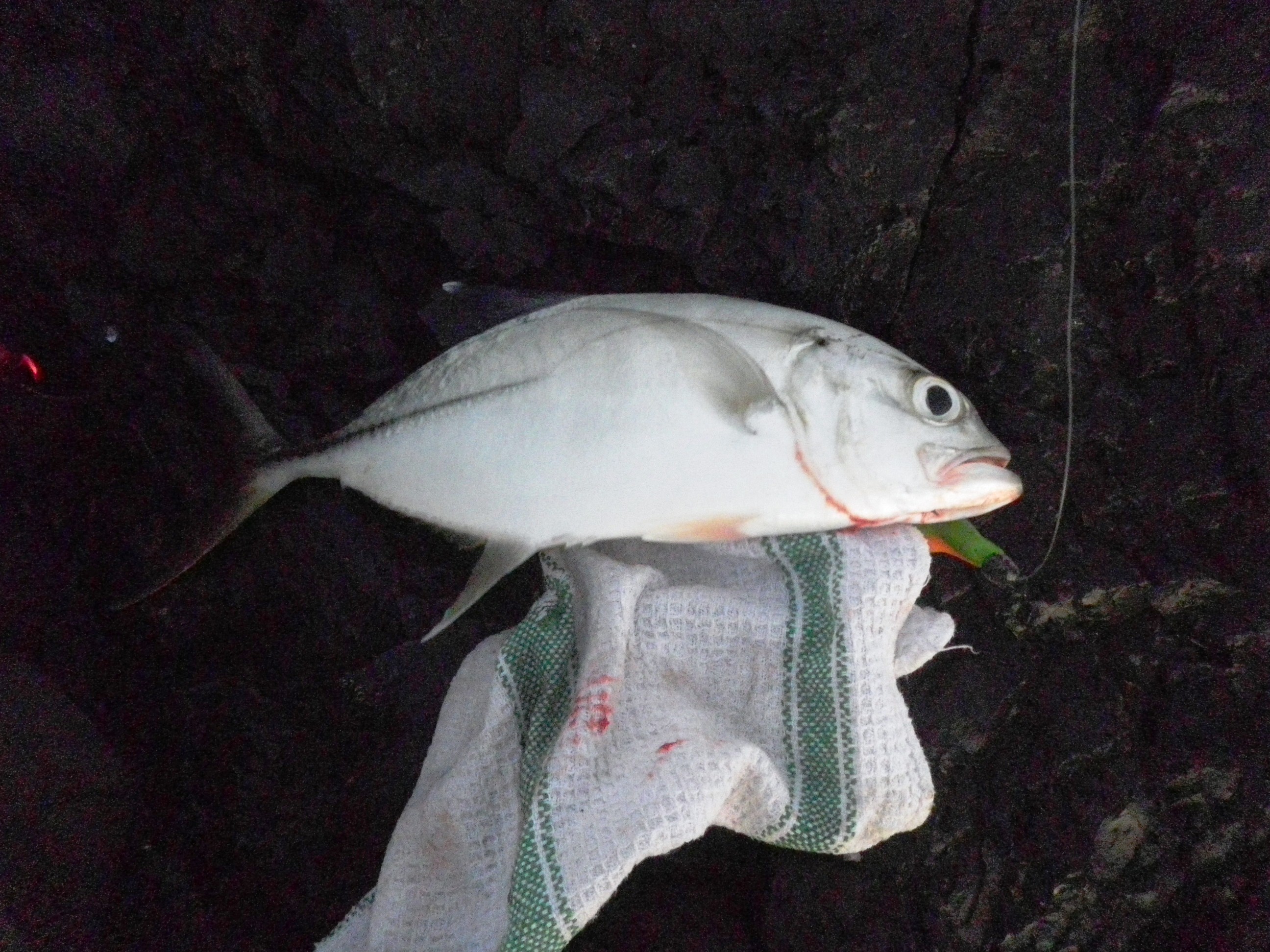
It was another magnificent sunrise. I wandered out to the front of the rock platform to a spot called the Barnacles. I rigged up the light rod (NS Blackhole) with 14 lb fluorocarbon leader and ¼ ounce, 1/0 size hook jighead and a GULP Crazylegs Jerkshad, in the Curry Chicken colour. I lost the first rig to the rocks – fishing is expensive in this kind of terrain. I rigged up again with the same set up. I cast out and let the jig head sink. I left it as long as I dared and then hopped it in a little closer to the rocks. As I lifted it again I felt it stop and then line started peeling. The fish ploughed off to the south, parallel with the rocks. This was tricky as I could not stay lined up with it for long. I Let it run and then fairly quickly took back some line and tightened the drag a little. It turned but tried to bury itself at the foot of the rocks. It was now weakening but the leader was caught on some rocks and I could feel it rubbing. I loosed the drag right off and waited. Fortunately it swam out and freed the leader. Now I tightened again and pulled it up on the next surge of water. After a couple more waves I had it at my feet. A solid mulloway –  it was 76 cm and legal size in both Queensland and NSW. At last we would have a taste of the fish I had been catching all week and releasing.

I dispatched it, gutted and cleaned it. Then I headed back to the rocks for another try. It had destroyed my last GULP Crazy Legs Jerkshad so I put on a 4” Minnow in the Green Camo colour. Back to the same spot – bang, first cast and I have a fish on again. The drag was still set too tight from the final stages of the fight with the last one and after a big initial run, before I realised, it found a rock and snapped me off.  I assume it was another mulloway. I re-rigged and continued fishing for another 30 minutes with no result. The swell was building and the tide rising. So at about 7.45am, I gave up and took my prize back to the cabin.

Iluka – Middle Bluff – 30 September 2014

Tuesday – Morning

I had not given up on finding a keeper size mulloway at Iluka, so at 4.45 am on Tuesday, I walked along the beach towards Middle Bluff. I surprised a couple of Kangaroos who were up on the rocks. Conditions were similair to the day before (light northerly) but the sea seemed a little more stirred up and foamy. Low tide would be at about 5.20 am – just on sunrise. The beginning of the run in tide offers good fishing in this spot, so I was hopeful.

I started with my big rod and a big GULP Crazylegs Jerkshad in the Curry Chicken colour, on a ¼ ounce, size 1/0 jighead. I was fishing with 20lb fluorocarbon leader. I flicked this around, close to the base of the rocks and it soon came back minus its curly tail. I swapped to a GULP 4” Minnow in the Pearl Watermelon colour. The sun was up and the sky and water were very clear. After about 20 casts with the GULP Minnow I was getting pretty good at leaving it in the wash at the base of the rocks, without getting snagged. As I was about to lift it, at the end of a retrieve, I felt a grab. The fish swam for a bit with the plastic then let it go. A few casts later I connected with another fish. This time I dropped the rod tip as soon as I felt the resistance and paused. When I struck, the fish was hooked. Once more the light swell made things easy and I soon had a mulloway/ jewfish of about 48cm at my feet. I took a few pictures and threw it back.

I was starting to see a bit of bait jumping around close to the base of the rocks and it all looked pretty small.  I dropped down to my lighter rod and a 14lb fluorocarbon leader. I swapped down to a 2 inch GULP Shrimp soft plastic in the new Green Camo colour, but stuck with the ¼ ounce jighead.

A fish struck this hard on the first cast, but I did not hook up. About ten minutes later, I swapped to a 3 inch GULP Minnow in the New Penny colour. I had another hit on the first cast. This fish was not big but by the way it started pulling, I knew it was a tailor. They thrash about very hard and never give up. It was only small, about 35 cm long. It was good to see they are around. I took a picture and threw it back.

It had mashed up the plastic so I put the 2 inch GULP Shrimp in Green Camo on again. The tailor had obviously moved on. But after about 20 minutes of cast into the wash, I felt a good bite and was onto another fish.  This time it was another solid bream – a little over 34cm. I decided to keep this one for supper.

I continued fishing and kept felling small bites. Eventually I pulled up a butter bream. I had caught no trophy fish but had found great variety. The session had been a good example of how changing soft plastics can often produce results. At about 9.30 am I gave up and walked back to the car.

Tuesday  – Afternoon

In the afternoon I waded back out on to the flats beside the Clarence River, at dusk. They are covered in yabby holes which is a good sign for a fisherman. I flicked around a GULP Jerkshad in the Pearl Watermelon colour. I caught three flathead – the first would have been big enough to keep, the rest were too small. The sun dropped behind the trees on the horizon at about 5.40 pm and the midges and mozzies became unbearable, so I waded back to the cabin.

Iluka – Middle Bluff – 29 September 2104

Sunday – Morning

It was another mild morning in Iluka. A light northerly wind was doing its best to flatten the sea. I decided to fish Middle Bluff again and see if I could find a legal sized mulloway (jewfish).

At this point I will say my piece about the raising of the jewfish size limit in NSW. I have read a bit about the surveys that were done to determine whether or not the existing limit of 45 cm, was adequate to protect the species. They were very small surveys that relied on a lot of subjective judgments by local fisherman and fisheries officers, but it would have been financially impossible for them to be developed any other way. After putting together these surveys, NSW fisheries concluded that fish at 45cm were not having a chance to reproduce before being caught, so they have raised the legal size to 70 cm and set a bag limit of two. Commercial fishermen also have to obey by the new rules, although they are allowed to keep some smaller fish, under by catch rules. If I have got any of this factually wrong, please comment and correct me.

If we want sustainable fish stocks we need to carry out credible scientific research. Our duplicated state fisheries departments do not need any more boats, trailers, life jackets, uniforms or rulebooks. They need scientists and scientific rigour in their research processes. The science used to support this decision may be proved right but I would have liked to see much more comprehensive studies. We now have the ridiculous situation where on one side of the Tweed River the Mulloway size limit is 70cm and on the other, it is 75cm.

It was another spectacular sunrise at Middle Bluff. I decided to fish with the light rig from the beginning and stick to the soft plastics. I was using 16lb fluorocarbon leader and a ¼ ounce, size 1/0 hook Nitro jighead. I loaded up with a GULP 4” Minnow in the new Green Camo colour.

The sun came over the horizon at about 5.30am and by 5.45am, I had my first fish. It was another mulloway/ jewfish, but it would not be dinner because it was only about 45cm long. I unhooked it in a rock pool and took a few pictures, then speared it back down in to the wash. It had grabbed the plastic very close to the rocks again.

I put in plenty of casts but could not get another. I swapped down to a lighter 10lb fluorocarbon leader and put on a GULP 2” Shrimp, also in the Green Camo colour. I moved a little further north along the rocks and cast down into the wash. I let the soft plastic waft around, but I left it too long and got snagged. I re-rigged and put it back in the same spot. After a couple of casts I felt a solid hit and the rod bent over. Fortunately, the swell was light and I was able to get down quite close to the water. I let the fish take some line then tightened the drag a little and lifted it up, onto the rocks with the help of a wave. It was a very solid 37cm bream. So I would have something for dinner.


I fished on for another hour but the wind picked up and the tide started in, making fishing a bit hard. At about 9.00 am, I cleaned up the bream and walked back along the beach to the car.

Sunday Afternoon

On Sunday afternoon I decided to wade out on the stretch of the Clarence River – just in front of the Anchorage Holiday Park. There are sand banks and weed beds and it looks like an ideal flathead spot. I started just before 5.00 pm. The tide was running out and I waded across the sandy and muddy bottom until I came to the weed banks that fringe the deeper main river channel. As I was exploring, I started by fishing with a soft plastic that I am very confident using – the GULP 4” Minnow in the Pearl Watermelon colour. I was fishing with my estuary light spin rod, 10lb fluorocarbon leader and 1/8th ounce, size 1 hook jighead.

It did not take long to find the fish. I caught a couple of small flathead first and then a legal one (40cm), that was sitting in a sandy hollow. I waded up river and decided to switch to a DUO Realis Shad 59 MR hard bodied lure. This is a medium diving lure and the flathead and bream love it. As the sun set, I caught a couple more small flathead on this lure.

I had fished at dawn and dusk and caught fish at both sessions – and had a nice bream for dinner – living the dream!

Bribie Island – the oyster jetty flats – 6 December 2013

I was delighted to be back on home turf but shocked at just how early sunrise is. With first light just after four you have to be up at three. Low tide at Bongaree, on Bribie Island would be at 5.10 am. At first light, I would just catch the last of the run out tide – which is usually a very good time to fish.

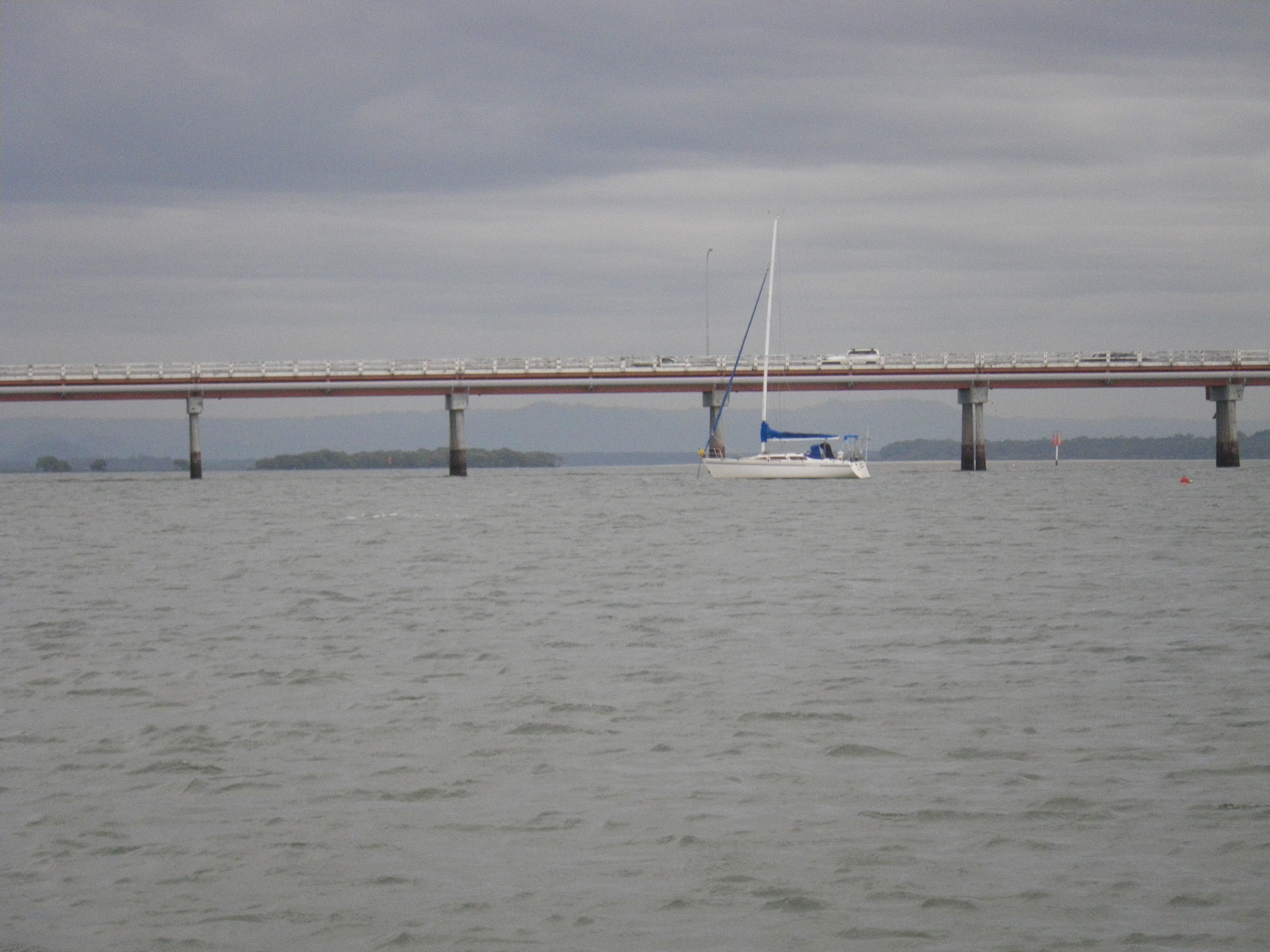
As I pulled into the car park beside the bridge, on the mainland side, I saw Colin’s car already parked up. Colin is the local flathead specialist -great minds think alike! I pulled on my waders and wandered out for a chat. He was chucking a few hard bodied lures around under the bridge and soon found a small flathead. He gave me an update on what has happening in the Passage and, as always it was a comprehensive briefng.

It was now about 4.45 am, so I set off to fish the weed beds, to the south of the old oyster jetty. It was a big tide so I had a good view of how the drains and channels had changed in the the 3 months that I have not fished here. The weed beds are thick and healthy but the drain that used to run out round the corner from Sandstone Point, is now much less well defined. The persistent northerly winds may have flattened the sand banks, a little.

The breeze was light but quite cool, from the south-west. I started fishing at about 4.45am and the tide was still running out. I was fishing with my new G.Loomis Trout Series (TSR) spinning rod. I was using a 10lb fluorocarbon leader tied on to 10lb Super PE braid. This rod is excellent but I am still getting used to its sensitivity. Pulling a soft plastic through the weedy bottom was confusing at first, I thought I was getting bites but was not sure. Then I saw a few skid dart past and I realised they had been biting the plastic.

I kept moving south. The sun came up behind the clouds. I started fishing with a GULP 4″ Minnow in the Smelt colour. This caught a couple of small flathead just after 5.00 am. Then there was a pause, as the tide turned. I swapped over to a GULP 5″ Jerkshad in the Watermelon Pearl colour.

Flathead

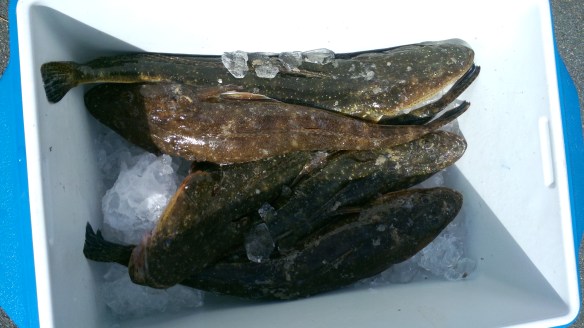
An esky full of Bribie flathead

At about 5.45 am the incoming tide picked up pace and I found a patch of keeper size fish. Over the next hour, I caught 12 fish along a 50 metre stretch of the weed beds. I kept five but forgot my camera. So all I have is the full esky to show you. The smallest fish was 44cm and the largest 59cm. I caught most of the keepers on the 5″ GULP Jerkshad but also found a few with the Zman Minnowz in the Redbone colour.

It was great to have such a successful first session back on home turf.

1770 – Baffle Creek – Flat Rock Ramp – 10/11 June 2013

Monday/ Tuesday

By Monday work was done and I was on my way back to Brisbane. I did have time for a quick stop at 1770. The weather was far from encouraging with heavy rain and persistent strong southeasterly winds. So on Monday morning I trekked round to the stretch of coast between Workman’s Beach and the beach I call Getaway Beach. This area is quite sheltered in a strong southerly. The top of the tide was just before dawn and I tried everything, big and small soft plastic and hard bodies – nothing raised a bite. The water was stirred up and murky and the swell made things tough. Every time I fished with heavy lures, I pulled up lots of weed and displaced rubbish from the bottom. When I fished lighter, I could not keep the lures in the water. After a few hours I gave up.

The weather looked good for Jewfish at 1770

The weather looked good for Jewfish at 1770

Tried everything in the tackle bag

Tried everything in the tackle bag

In the afternoon I decided to drive back to Brisbane, via Baffle Creek. I arrived at the Flat Rock boat ramp, just after lunch, at the top of the incoming tide. The wind was still a strong southerly and the rock bars to the east of the boat ramp were all covered in at least 30 cm of water. This area took a pummeling from the flooding, earlier in the year and there was plenty of evidence, with grass and debris still high up, in the mangroves. The ramp and picnic area were badly damaged but have now been repaired.

I waded out on the biggest rock bar just west of the picnic area and cast around the edges. The tide turned and started to run out just after 1.00 pm. There are big rock bars on either side of this channel. They form a funnel in the middle and on a big tide the water really races through. The water was quite clean at high tide, but got dirtier and dirtier as it ran out.

I started with GULP and Zman soft plastic on 1/6th oz, 1/0 jigheads. I had a few bites and watch the bait fish follow the lures in. Across from me on the other side of the channel, something was feeding in the eddies, formed by the opposite rock bar. I tried to land a few long casts in the right spot but I could not tempt them.

After about an hour, I move back upstream to the west of the boat ramp and cast around in the shallows. I was now fishing with my all-time favourite plastic, the humble 4 “ GULP Minnow in the Pearl Watermelon colour, on a 1/8th oz, 1 jighead. I was now down to 8lb leader, in the hopes of attracting a fish. After a few casts I did. It was a small dusky flathead. I continued along the sandy banks, casting at the base of the mangroves and soon found some more. I caught six in the next hour, but only two would have been just over 40 cm.

At about 3.00pm it was time to pack up. Overall, I had had a pretty disappointing couple of weeks on the fishing front. The fish had been small and hard to find. However, I had enjoyed exploring some new territory and as always, learning what does not work can be as important as learning what does. I found that when the going gets tough small, natural coloured soft plastics, like the GULP 4/3″ Minnows and light leaders, still produce results. The Zman Minnowz did not produce a fish on this trip – and they had plenty of outings. I will have to try their natural coloured minnow shaped range, but I still think the GULP scent and softer texture give their lures the edge. The weather had made things very hard but I believe the big flush out will set the area up for some great fishing in late winter. I am planning to get back up here as soon as I can.

1770 – Workmans Beach – 7 May 2013

Tuesday

The wild weather continued; strong south-easterly winds and plenty of rain. On Tuesday morning I braved the rocks at the southern end of Workman’s Beach, near Agnes Water. This area is sheltered from a southerly and south-easterly and there is plenty of fishy looking territory.

After a few days of big seas, the water was all stirred up and a milky brown colour. I started with soft plastics and then switched to slugs and hard bodies, but nothing yielded results. The sun came out mid-morning, but not for long. As the day wore on, the wind picked up. It then brought the clouds back in. Just after lunch, there was another downpour, so I gave up. Tuesday had been my first zero fish session for quite some time!

Nothing seemed to work today

Nothing seemed to work today

Bribie – Oyster jetty flats – 24 April 2013

Wednesday

The tide was all wrong but the fish were around, so I decided on Bribie again. We would have a 2.2m high tide at 8.05 am. This would mean the tide would be just over half way in, at first light.

I arrived just before sunrise and wandered south along the shoreline, on the mainland side of the bridge. I passed the oyster jetty, casting soft plastics on the flats on either side. I felt a few tugs in the area just south of the oyster jetty, but I could not hook up with anything. I was fishing with a GULP Jerkshad in the Lime Tiger colour, on a 1/8th 1/0 jighead. I was using 10lb fluorocarbon leader.

I find the last of the run-in tide the hardest to fish, land-based, at Bribie. You can no longer reach the various drop offs on either side of the Pumicestone Passage. The fish move up quickly but suddenly there is no obvious structure for them to hide in; they spread out over the open expanse of flats and it is difficult to know where to concentrate your efforts.

As I thought about where to fish a huge flock of cormorants came into land. I have never seen a group as big as this before. They settled on the water for a few minutes then took off again.

In this area the only obvious structure is the slight drain that runs round the corner from Sandstone Point. Even this seems to be gradually silting up at the moment. This is where I decided to focus my efforts. The water was flowing round the corner from the south. I stood beside the mangroves and cast to the south, in the direction of the long, now submerged, sandbar.

It was now about 7.00 am. After a couple of casts, a fish grabbed the plastic, made a short run then it let it go. This also happened on the next cast and I saw the familiar snout of a long tom, following my lure in. I cast a little more towards the south east and when I took up the slack I had a fish on the line. I set the hook and it took off with the current. I soon had it under control and waded back to a gap in the mangroves. It was a good flathead, about 50cm long. I let it go.

I waded back to the same spot and cast out again. I continued fishing this area as the tide came up. I swapped to GULP Jerkshad in the Curry Chicken colour. After a few casts the line pulled tight again and I had another flathead, about the same size. It was about 7.30 am. In the next twenty minutes I dropped two more fish and caught one smaller one.

Things went quiet around the tide change so I decided to wait out the slack water over breakfast and coffee. I waded back to the car and went off for breakfast. The wind was picking up from the south-east, but it was a beautiful morning.

By 10.00 am I had waded back to almost the same spot that I had been fishing earlier. The water level was much lower but I put in a few casts anyway. After about 10 casts, I caught another 45+ cm flathead, on a GULP Jerkshad, in the Satay Chicken colour.

The tide was now running out strongly and the big sand bar, down by the green channel marker, was clearly in view. With the wind behind me, I could reach the edge of the main channel and the sea grass beds, with some long casts. I started to make my way towards the green channel marker, casting as I went. I hooked a stingray which towed me around for a while and then broke me off. I also connected with an spiky puffer fish which grunted, spat jets of water at me and fluttered round in circles for a while before cut the line and got rid of it.

I re-rigged with a GULP Jerkshad in the Cajun Chicken colour. The water was now really running and lifting more and more sediment as the tide got lower. This did not seem to bother the fish. I averaged one every 15 minutes or so, for about the next three hours. The colour of plastic did not seem to matter. Most were around the 40 to 45 cm size, but there were several more 50+ cm models amongst them.

At about 1.30 pm, I had to tear myself away – always hard to do when you are catching fish. I had caught more than 15 flathead through the morning and it does not get much better than that!

Bribie – Oyster jetty flats again – 22 April 2013

Monday

After a good session at Bribie last week, I was keen to get back out there. The wind was light and the moon phase was good, with the tides getting bigger in the run up to the full moon, on Friday. I could not fish the dawn, but I could fish the run out tide for a few hours before low tide, at about 1.00 pm.

I arrived just before 9.00 am and decided to keep fishing the flats on the mainland side of the Bribie Bridge. There had been plenty of flathead around and I presumed they would still be there. There was not much wind and the sky was cloudy.

I understand it is New South Wales school holidays this week so I expected a bit more boat traffic than normal but as I walked out at about 9.30 am, there were crab pots as far as the eye could see. As I waded south from the bridge, they were everywhere. I counted 50 in sight before I gave up. It made casting a little difficult, in places. There were plenty of sand crabs around, as I kept kicking them. However the density of pots meant that there was a boat arriving to; figure out which were theirs, check them and reset them, every five minutes.

This did not do much for the fishing but after all the crap weather we have had, is was good to see boats out and about and the odd pot being pulled up with a few keepers in it. I decided to stay in the shallows and find some undisturbed areas to fish.

The tide was running out quite fast and so the boats and pots gradually retreated, leaving me to fish the edge of the sand and weed banks, which were now covered in only 800 mm of water. This is where I concentrated my casts. I tried to pause my retrieve right at the edge of the banks. This was where my first fish of the day hit just before 10.00 am. I was using a GULP Jerkshad in the red and yellow Curried Chicken colour on a 1/8th, 2/0 jighead. It was a good flathead but the sand banks where not yet exposed so I had nowhere to land it. I tried the tricky manoeuvre of pulling the fish into my body then grabbing it with a rag. The fish promptly spiked me hard, unhooked itself and wriggled free. It was a good spike right in the middle of my thumb. I could not rub some slime into it to ease the sting, as the fish had gone and taken all its slime with it! I wrapped it up in a bit of rag.

When you get spiked like this the blood does not clot very quickly, as the venom in the spike is slightly anti-coagulant. So if you are not careful, you end up dripping blood everywhere. This is not ideal in waist deep water! The thumb calmed down after a while and I carried on casting. I kept peppering the same spot with casts and I soon hooked up again. This was a slightly smaller fish and made sure it was tired out before pulling it in close and grabbing it with the rag. It ended up being a bit over 45cm.

I moved further south and was soon close to the green channel marker. I swapped to a GULP Jerkshad in the Cajun Chicken – the black and purple colour. I used the usual technique along the edge of the sand bank and soon caught two more undersized (35cm) flathead. I persisted in the same area and after about ten more casts, I felt a good bite. I paused and dropped the rod tip. When I lifted it I had another fish on. This one was about 45 cm again, and I safely grabbed it and put it in the bag.

It was now about 12.45pm and I turned back and waded towards the bridge. In the shallows, just short of the jetty, I hooked another flathead and pulled it up to the shore. It was also a keeper, at about 50cm long.

Three little flathead went swimming one day...

Three little flathead went swimming one day…

I had to give up at about 1.15 pm, just as the tide stopped moving. I had forgotten the camera today, so only one snap of the keepers is included, from my phone. Considering the late start and all the boat traffic, it had been another good session.

Iluka – Woody Head – Middle Bluff – More Tuna – 11 April 2013

Thursday

On Thursday morning I decided to fish from Middle Bluff, just north of Frasers Reef. This is a short drive south from the Woody Head camp ground. I arrived just before dawn and got rained on straight away. I now had a good waterproof jacket on, which helped. The wind was a slight south easterly/ westerly – swapping from one to the other. Low tide had passed at about 2.45 am.

I decided to start with the heavy rod. My theory was that if the Tuna were around, I would have more chance of landing one on my Daiwa 9’ Demonblood with 30lb leader. I have been trying out another couple of excellent hard body lures from DUO, on this trip. I decided to start with the DUO Tide Vib Slim140. This is effectively a large sinking vibe lure. It weighs 32g, has the usual superb DUO paint job and casts like a bullet.

The rain had passed over and I started casting the Tide Vib Slim in a semicircle and retrieving it in long, sideways sweeps, to get the most of the action. Just before sunrise, I felt some solid knocks. I was casting out about 50 metres and the lure was getting attention just after it hit the water and started vibrating. After about ten minutes, there were two big bumps and a bite. I dropped the rod tip, then struck hard and the fish took off. It was another blistering initial run. This time I was fishing with my Stradic 8000 reel and the heavier rod and leader, but that initial run felt just as powerful as the mac tuna, earlier in the week. I just held on and watched 250 metres of braid peel off the spool. I was pretty sure it was another tuna. It went straight out to sea. Eventually it slowed, so I gradually cranked the reel and turned its head. Now it was sitting parallel to the shore, about 200 metres out and the Daiwa Demonblood rod tip was fluttering in time to its tail beats.

I started to gain line but each wind was met with solid resistance – this fish was far from worn out. I left the drag alone and was determined to be patient. With the fish this far out, there was not much structure to tangle with. It made another short run, taking perhaps 50 metres of line, but I just let it go and then started the pressure again. I gave some thought to where I would land it. If I was lucky I would be able to coax it round to some stepped ledges on the north side of the headland and grab it, between wave sets. As it came closer to shore, I started to put more pressure on it but it was hard to move. Every time I brought it within sight of the rocks it took off again. The runs were getting shorter but they were just as powerful.

And then with no real sign of why, the line went slack and it was gone – bugger. I had not felt a bite off or seen any evidence of a bigger predator and I still had the lure, when I wound in. I suspect it had been hooked on the side of the mouth, through some of the softer tissue and I had just pulled the hooks.

I gathered my thoughts, checked my knots and cast out again. Half way through the retrieve, there was a grab followed by zzzzzzzzzzzzzzzz pht! The leader snapped and the lure and fish were gone. Not sure what it was, but that was the end of my DUO Tide Vib Slim 140. I have had four of these lures, to test drive this year and they have all hooked fish before disappearing. I am pretty sure two were grabbed by Kingfish, earlier in the year, off Fingal Head and the last two tangled with Tuna. I will definitely be getting more.

I tried casting a popper for a while but this did not produce anything so I decided to swap to a metal lure – a 95g Sniper slug. After ten or so casts, I felt a bit of resistance and realised I had a small fish on. I pulled up a Tailor that was only just longer than the lure. A few more casts with the slug did not yield anything. So I swapped to the lighter Shimano Catana rod and decided to try some soft plastic lures.

I started with a GULP Jerkshad in the Lime Tiger colour on a 3/8th oz, 2/0 jighead. Something hit the plastic on the first cast and took it for a quick run, then dropped it. I got it back with the tail mashed and I guessed it was a Tailor. I dropped down to a 4” Minnow in the Banana Prawn colour and after a few more casts, I connected with a better Tailor – about 40 cm long and landed it.

The tide was rising but the swell was very light, so I dropped back to a ¼ oz and then a 1/6th oz, jighead and selected a 16lb fluorocarbon leader. I put on a few different colours and caught a few more tailor – the biggest was about 45cm long. I also caught good sized dart and bream.

Things started to slow down so I decided to put on a smaller, 3” GULP Minnow in the Lime Tiger colour, on a ¼ oz, 1/0 jighead. This was the same lure that had caught the mac tuna a few days before. I fished around, varying my casts; some in close to the rocks, some further out. It was now about 8.45 am and another line of rain clouds was lining up and the wind was picking up. I put out a long cast and dropped the lure into the water about 25 metres out.

I felt a few grabs and pulls as the lure sank and suddenly I was connected with another fish. It pulled left, then right and suddenly took off in another blistering run. I was pretty sure it was another tuna as the line kept peeling. I was on the light rod so I just held on. It was another very long initial run but this time the fish was smaller and tired faster. I turned its head and gradually got my line back. I was playing it very carefully as I knew the 16lb leader would not stand any contact with the rocks. I gradually walked it round towards the rock ledges to my left. I checked my watch and I had been fighting the fish for 12 minutes, but it felt like much longer.

Once the fish saw the rocks it took off again. The Catana did not have the strength to apply much pressure but the tuna was gradually tiring. I watched the wave sets. I could see the fish now and it was a small mac tuna. It was on its side but still furiously beating its tail. Unfortunately a big wave set was coming through and I had little choice but to pull the fish up on to the lower ledge with the wave. It came up effortlessly on the surge but once it realised it was out of the water, it went ballistic and before I could get down to it, it had wriggled free of the jighead and bounced down the rocks to freedom – double bugger.

Appropriately, the heavens chose that moment to open above me and add insult to injury by covering me in a downpour. As I squelched back to the car I was rewarded with a great rainbow – but I would rather have had another tuna!

In the afternoon the rain stopped again and so I walked out to the rocks in front of Woody Head to fish “the barnacles” again. Not much happened through the afternoon. I caught a few more dart and bream on soft plastics. A watched as another fisherman caught a few 45cm Tailor casting slugs into the white water zones.

As the sun dropped behind Woody Head, the bite rate increased and I caught three good bream in quick succession. I swapped up to a bigger GULP 4″ Minnow in the Smelt colour on a 1/4 oz, 2/0 jighead. The swell and wind was picking up a little and it was getting dark quickly. I put in a long cast and let the lure waft down in the swell. As soon as I took up the slack a fish hit it. It pulled pretty hard on the Catana and then a good size tailor leaped out of the water. I subdued it and pulled it in. It was just over 50cm long. By then I had had enough for the day so I cleaned it and headed home for a fish supper.

Iluka – Woody Head – The Barnacles – 12 February 2013

Tuesday

It rained hard over night and I actually woke up cold on Tuesday morning. I made a huge mug of tea and fished out a long sleeve t-shirt. It was just after 5.00 am. The wind had already moved round from the south-west to blow from the east, but it was still fairly light. Low tide had been at 4.13 am. The swell might have eased a little overnight so I decided to start on the rock platform, out front at Woody Head. I walked out to the ‘Barnacles’ in the pre-dawn and things looked promising. There was only the occasional wave coming over the top and I would have an hour or so to fish before the tide got too high. It looked like it would even be possible to put out a few casts in front of ‘Barnacle Bob’.

The day before I had noticed the 20lb Fireline had started to fray on the heavy rod and I had lost a fair amount of the 10lb Platil Millenium braid, on the light rod. The Platil braid was getting a bit water-logged and heavy and not casting well. I decided neither was working particularly well in these conditions, so I drove into Big River Bait and Tackle at Maclean and asked for some suggestions on re-spooling. They were all a bit fed up after the floods. The Clarence River was still black and smelly and logically the fish looked like they had all fled out to sea for a while. The Clarence is a huge system and it will be a couple of weeks before the river improves.

As usual, the team gave me some good advice and suggested I re-spool both with 20lb Super PE braid. This would be thin enough to cast well on the light rig, but robust enough to handle a decent fish on the heavy rig. Best of all, they stripped off the old line and re-spooled both reels while I went off for a Pot Belly Pie (a local speciality) and a coffee.

So back at Woody Head the next morning I was fishing with perfectly loaded reels. This makes a huge difference when casting in difficult conditions. Every line change takes a little getting used too but the Sunline Super PE was a massive improvement. I started with the heavy rod and a GULP Jerkshad in the Lime Tiger colour on a ¼ oz, 3/0 jighead. I moved out carefully over the rocks to a spot just in front of ‘Barnacle Bob’. This has been the scene of a couple of big fish captures for me and whenever it’s safe I try a few casts here. I put the lure exactly where I wanted it but after five or six casts I had not found anything. I swapped through a few more soft plastic colours, but these did not produce any interest.

I moved south along the front of rocks to a safer spot and swapped down to the lighter rod. I put on a 1/6th oz, 2/0 jighead and tied on a 12lb fluorocarbon leader. I decided to try a different soft plastic lure. I have never been a fan of the pure white lures, I have always assumed they are an offshore, deep water idea. But I had a packet of GULP jerkshads in white and I was not having much luck, so I decided to give them a try.

It was a wise choice; I cast out wide and let the lure waft in on the swell. I left it as long as I could and it got snagged. I re-rigged with the same set up. This time, right at the base of the rocks, I felt a bite, dropped the rod down and then struck. I had a fish. I let the swell wash it up. It was a nice Bream, well over 30 cm long.

I cast out again and felt another bite, but did not hook up. I carried on for a few more casts, using exactly the same technique. About five minutes later at 6.15 am I felt a gentle tug and then a solid bite. A wave came crashing over the top and I thought the fish was gone but as the water drained, the line was still tight. On the next swell I tightened the drag a little and pulled hard. A school Jewfish came into view. It had a bit of fight left in it and I only had a 12lb leader so I let it swim back out again. The next wave was a big one and it washed the fish over the rocks and back, past me into the drain behind me. I waited for the water to drain away again and when it did the fish was stranded and I grabbed it.

It was the first school jewfish of the week and it had been lurking right at the base of the rocks waiting for dinner. It was no monster at about 50cm long (NSW size limit is 45cm) but it would make a good meal. I despatched it and put it in a keeper rock pool. I looked for more and fished for another two hours but could not find any. I lost plenty of gear trying to get my lures into the strike zone but as the tide rose and the wind picked up, it became harder and harder. At about 8.45 am the water was sloshing over the rocks with every surge and I had to retreat.

Jewfish stomach contents

I went back to wash clean up the jewfish. I gutted it and had a look in the stomach. It was full of the tiny whitebait I had seen jumping by the rocks. As I was doing this I was standing in the shallow rock pool. After a few minutes of cleaning and scaling, I nearly jumped out of my skin as I heard a loud snap and splash, just behind my heal.

I found a big hungry wobbegong already in attendance. It had swum up a series of very shallow rapids to reach the pool, just below where I had lay the jewfish. The blood and guts had attracted him. I hopped out of the water and quickly found another (stranded) patch of water to finish the cleaning. By the time I finished cleaning the bream there were four of them swimming around, like toothy puppies waiting for lunch.

I had cut off the bream’s head as I intended to pan fry it on my camp stove. I left it on the edge of the rock pool and was amazed as two of the wobbegongs wriggled out of the water, in their attempts to reach it. Eventually the bigger of the two lunged forward and inhaled the head, with a loud snap.

In the afternoon I came back to the same spot as soon as the tide would allow, at about 2.30 pm. I fished all through the afternoon but the swell and wash made it difficult again. I caught one good Bream, about 33 cm and dropped a bigger one, both on a smaller GULP 3” Minnow in the Banana Prawn colour, on a 1/6th, 1/0 jighead, around 3.00pm. There was plenty of bait, jumping, in close to the rocks but I just could keep the lure where I wanted it.

By 5.00 pm I was soaked through and decided to give up and head for the wood fire, fried bream and a bottle of red.

Bribie Bridge and surrounds – 3 February 2013

Sunday

After a trip up to Asia I had eaten plenty of good seafood but now I wanted to catch some. Unfortunately the cyclone and its aftermath had slowed me down a bit.

On Sunday morning I could wait no longer and I decided to drive up to Bribie to have a look at conditions and try some fishing. Things were far from ideal. There was a strong south-easterly blowing and the tide had been high at about 2.00 am. The moon was waning and about 50% full. I would be fishing a not particularly powerful run out tide through to a low of 0.8 m, at about 8.30 am.

After a flood it is best to fish around high tide as this is when the concentration of salty water is highest in the estuaries – unfortunately this was not really an option. I arrived at the west end of the Bribie Island Bridge just after 4.00 am and rigged up. The tide was about half way out.

As I waded out, under the bridge, there was plenty of surface action under the lights and the water, in the shallows at least, was fairly clear. I put on a GULP 3” Minnow in the Pearl Watermelon colour , on a 1/8th 1/0 jighead and cast out. There was a pull as the lure dropped in to the water and then nothing. I let the lure sink and as I lifted it from the bottom the line pulled tight and I wound in a 30cm Flathead. It’s always good to get a fish on your first cast – even a small one.

There were a few prawns skidding across the surface and so after a few more casts, I moved over to the shallows on the south side of the bridge. I cast at the pylons and wherever I saw a splash or a prawn jump. I retrieved the lure with the tide, hopping it over the sand and rubble bottom. Each time I cast in close to the pylons I would get a couple of hits. After a few repeats in the same spot I caught a small Moses Perch.

I decided to match what the fish were eating and swapped to a GULP 2” Shrimp in the natural colour. I was fishing with my light spin rod and reel combination. I had the reel spooled with 2.8kg Fireline and about 1.5m of 10lb fluorocarbon leader. I concentrated on the area around the base of bridge pylons. The water was running out fast and the sun was just coming over the horizon. I let the soft plastic lure bump along the bottom. At about 5.25 am I lifted the rod to cast again and felt a solid tug. I dropped the tip for a few seconds then struck. I had a fish and it turned out to be the only keeper of the day – a flathead, 42cm long.

As the sun came up I moved south to fish around the old oyster jetty. As the tide dropped the water got dirtier and dirtier, especially in the main channel. I tried a few different soft plastics but did not get a touch. I waded from the jetty to the green channel marker and all the way back but did not get any hits. At about 8.00 am the tidal flow dropped off and the Passage was pretty much a brown muddy soup, so I gave up.

It was encouraging to catch a few fish and hopefully by next weekend the water should have cleared considerably. The prawns were a good sign and hopefully they will bring the predators in.

Fingal Head – Plenty of Tailor – 5 November 2012

Monday

The weather looked OK for some rock fishing on Monday. It was forecast as a slight south easterly breeze and swell. It has been a while since we have had the wind from this direction, at dawn. It means that the swell can be difficult but I think the dawn bite is more aggressive when the wind is blowing this way.

I decided on Fingal Head again. I have been catching fish there and it is a beautiful spot even when you are not. I arrived just after 4.30 am to find 3 fishermen out on the rocks already and I could see one was half way through a battle with a decent fish. He had a very light rig and had tempted the fish with a metal slug. He landed it safely and it was a good sized Tailor around 55cm. By now one of the others had hooked up. He was fishing with a shallow diving 110mm Minnow and a wire trace. He landed his fish and several others over the next 30 minutes.

I wasted no time rigging up but in my excitement lost a DUO Beachwalker MD 120 minnow to the rocks, on my first cast. I put on another and moved round to the front of the platform. The wind was stronger than forecast and this made getting down low on the rocks to get the most action out of the shallow diving minnow, difficult. The fish seemed pretty aggressive so I switched to a RAPALA ‘walk the dog’ lure. I got the fish to follow this one and even saw a couple of aborted strikes, but I could not hook up.

In the meantime the other three now had about 6 good fish in the bleeding pond. I swapped again, this time to a the DUO Bay Ruf Manic sub surface stick bait. I had toughened this one up a bit with stronger single hooks and split rings. A fish knocked it out of the water and then there was a good swirl beside it, but I still could not hook up. This was a good bite but the shallow diving minnow was definitely out fishing everything else. I looked for something similar in the tackle box. I found an 18 gram, 90mm, sinking YOZURI Crystal Minnow in a silvery colour and tied this on with 30lb fluorocarbon leader.

This slideshow requires JavaScript.

Things had slowed a little and the others had stopped to clean their fish – they had about 10 between them – all between 50 and 60cm. This gave me access to a bit more waterfront. The swell was slapping against the rocks and making it tricky to finish the retrieve without getting the lure snagged. I cast out at 45 degress to the north east of the rock platform and let the lure drop down in the water column. I retrieved it fairly slowly with plenty of pauses. Three casts in and bang – a fish grabbed it. The line slackened momentarily, as it pushed the lure towards me and then it took off. It was a decent Tailor and it put in a few jumps trying to head south. The only place to land them safely when the swell is up, is on the north side of the platform, but the current is usually pulling them round to the south and so you have too subdue them fairly quickly.

I took the sting out of this one and got it round to the north, where the trebles pulled free, just as it came up on to the rocks. Fortunately the fish fell between two rocks and I reached down and grabbed it behind the gills. It was a good Tailor just short of 50cm. I bled the fish and cast out the lure again. I felt another hit in the same spot but on the next retrieve I connected with a rock and lost the lure. I was reminded once again why I should buy shares in lure manufacturers.

I looked through the tackle box and was disappointed to discover that I did not have another shallow diving minnow with me. I tried an 85g and 65g Raider metal slug, but these did not raise a bite. By about 8.30 am I had switched to soft plastic lures and I was fishing on the lighter Shimano Catana rod. I was using a GULP 4” Minnow soft plastic in the Smelt colour and because of the swell I had put it on a ¼ ounce 1/0 jighead. As I was finishing a retrieve, a fish hit the plastic right at the base of the rocks. I set the hook and it took off. It broke the surface a few metres out and it looked like a small Tailor. Then it managed to bite through or rub off the 10lb leader I had dropped down to.

At about 9.00am with the swell building so I decided to give up. The hour either side of dawn remains the most consistent fishing time at the moment. I will be back again soon.

Bribie Island – The Seaside Museum drain – 24 August 2012

Friday

The wind is starting its undecided phase with a big northerly blow predicted for Friday afternoon. Friday morning looked ok, so I decided to revisit my favorite Bream location – Bongaree, on Bribie Island.

In years gone by, the Bream have shown up along the coffee rock ledge that runs along the edge of the Pumicestone Passage. They have often schooled up to spawn in the areas around the mouth of the tidal lagoon, in front of Buckley’s Hole. Typically, the best time to chase them has been either side of the new moons in July and August. Sometimes they are also around in June and September, depending on the water temperature.

The GULP 3” Minnow or 2” Shrimp have always been my favorite soft plastic lures for Bream. I prefer the more natural colours. When I am fishing the rocky headlands, I have caught plenty of big Bream on Jerkshads and other big soft plastics, but in the estuaries these fish can be fussy.

I started just after first light at about 5.45am. I was in front of the Seaside Museum again. The tide was running out and would be low at 7.45 am. This is the perfect time to fish this spot. I stopped about three metres from the drop off and cast over it, to the north. I was fishing with my light spin rig, with 10lb fluorocarbon leader and 1/8th, 1/0 jighead. I thought there might be some Flathead around so I had chosen a compromise soft plastic – the GULP 4“ Minnow in the Smelt colour. Big Bream should still be interested in it and if I passed over any Flathead, they would also go for it.

I counted to ten and let the lure sink. I am not sure how deep it is here but I would guess no more than 2.5 to 4 metres, in most places. The first couple of casts produced nothing and then the dolphins swam buy. It is always a pleasant sight but I presume the fish head for cover. About twenty minutes later there were some surface bust ups and just as I pulled the lure over the top of the ledge, there was a fast snatch and I was on. Playing fish here is tricky. It’s best to get close to the edge and play them out in the open water. If you have to hall them over, you risk sawing off your leader when they lunge back down, close to the edge.

This was a good Bream – 32cm and I pulled it safely onto the sand. I waded back out and cast over the edge again. The lure was hit on the drop but the mad head shakes meant it was not a Bream or Flathead. A few moments later I pulled a 35cm Chopper Tailor onto the sand. I fished for another 30 minutes with a few bites but no hook ups.

The wind, a north westerly, was now picking up. I moved to the south of the lagoon mouth and tried a few different soft plastics. I swapped back to the Smelt Minnow and started casting again in the same spot where I had caught the first Bream. At about 7.30 am, I cast out and let the lure sit on the bottom for a while. When I lifted it, I had a fish on. It was another good Bream just over 30cm long. I landed it and decided to pack up.

I had a coffee then decided to try fishing at Whitepatch, further up the Island. I stuck with the same soft plastic and jighead and walked along the drop off casting and retrieving. There was quite a bit of bait in the water and the birds kept turning up for a dive, but I could not find the fish. I did however, pull up a Stonefish – seriously ugly.

It had been a tough session but I had caught two quality fish and had dinner organized – so no complaints.

Bribie Island – Under the Bridge – 26 June 2012

Tuesday

The wind was forecast to start blowing but not until about lunchtime. There was also rain forecast, but unlike the summer downpours, the steady drizzle does not really put the fish off. In fact, I think it can work in you favour, by breaking up the surface of the water and disguising your approach.

You will all be relieved to find out that the tax return is finally done – much more painful than having a tooth pulled and far more expensive!

So I wrapped up warm and set out early. I arrived at Bribie at about 5.30 am and decided to start fishing on the island side, under the bridge lights. There are some good weed covered sandbanks forming just north of the bridge and also a couple of holes, just to the south. This area gets fished a lot and it is also a favourite spot to cast a net for some live-bait. You therefore need to get here early to stand a chance of finding it undisturbed. The fish renew with each tide so a run out tide around dawn is a good time to fish here. Low tide would be at 8.00 am so this morning looked good.

I started fishing with the GULP 4” Minnow soft plastic in the Smelt colour on a 1/8th 1/0 jighead with 12lb fluorocarbon leader, tied on to 8lb braid. Unusually there was not much surface action. There was plenty of bait in the water but the Pike did not seem to be present. I cast around to the north of the bridge for about 20 minutes with no luck, so moved to the south side.

One just before dawn

Just on first light I felt a good hit as I pulled the soft plastic cover a weed bed. I dropped the rod tip, paused and counted to 10. I count to 10 pretty fast on the first fish of the day. I lifted the rod tip and set the hook. After a brief fight, I had the first fish of the day up on the sand – a nice Flathead about 50cm long. I released it – the family are in revolt, demanding red meat for a few days. I cast back in the same spot. My lure was hit again, as it sank but this time I was too quick and failed to pause, I struck to soon and did not hook the fish – just pulled the soft plastic out of its mouth.

Just after dawn

There were a few smaller Flathead today

I tried but I could not persuade that fish to try again, so I moved to the north of the bridge. It was getting lighter now and raining, but not heavily. I waded along the edge of the weed bank, casting back, up into the tide, which was still running out. I soon found another Flathead – this one was about 35cm – I let it go and moved on.

I paused in front of the rocky patch, beside the boat hire place and concentrated on this area for a while. This paid off and after a few casts, I caught another 50+cm Flathead. As the tide slowed, things went quiet so I drove back across the bridge and waded out to the flats beside the old oyster jetty.

A pretty dismal morning weather wise

I spent another hour wading in this area with the same soft plastic lure. I caught 4 more Flathead, of which two would have been big enough to keep, at about the 50 cm size. It was now about 8.45 am and the rain started to get serious. It was now too cold and wet for me so I gave up.

Another Bribie Flathead

Unfortunately, it is rubbish weather for the school holidays. But this means there are less boats about and the fish are out there – if you can stay warm and dry long enough to find them.

Perfectly hooked

Tweed River – South Rockwall – Tailor, Trevally – 6 Aug 2011

Saturday

I have not been doing so well at Bribie Island lately so I decided to fish the Tweed River mouth on Saturday morning. I chose to fish the southern rock wall which you reach by driving through Fingal Head.

The forecast was for a light northerly wind and low tide would be just before dawn. You have to be in this spot before dawn, as the light change often brings the fish on to the bite – often just for half an hour or so. I left Brisbane around 3.45 am and arrived just after 5.00 am. I walked out the end of the rock wall and rigged up with my headlamp. I try to keep the light off the water when I am doing this.
I rigged up a GULP 5” Jerkshad in the Cajun Chicken colour – this is a black soft plastic with a purple/ pink underbody. I put it on a ½ oz 3/0 hook jighead. I had the Daiwa Demon Blood 9 foot rod loaded with 40lb braid and about 2 metres of 30lb fluorocarbon leader. I had a couple of casts in the dark, but with no bites, I decided to wait for some light.

A choppy morning on the South Rockwall at the Tweed River mouth

About 10 minutes later, I could see what I was doing and I cast my soft plastic straight out into the river mouth. It landed about 15 metres off shore and slowly sank, as it ran out with the tide. Before it reached the bottom I felt a couple of solid strikes. I jerked the lure up and then paused and let it sink again. As I started to repeat the process there was a solid pull on the end of the line and the rod tip started wiggling. The fish took some line and then raced out towards the middle of the river. It was moving fast and then broke the surface with a vertical, head shaking leap. It was a good size Tailor – probably around 60 cm long. I tightened the drag a little and played it to the base of the rocks. I tightened the drag some more and gradually heaved it up the rocks towards me – just as I grabbed the leader the hook pulled from its mouth and it was gone. Bugger!

I checked the plastic – it was pretty mauled but serviceable, so I cast it back out. This time the action was instant – bitten off, as soon as it hit the water. I re-rigged – same colour plastic, same weight jighead. First cast – nothing, but I hooked up again on the second. This time it was a small Tailor – about 40cm and I pulled him safely over the rocks. I presumed they had just moved up the river and would be back again shortly but they did not return. It was just before 7.00 am and it had all gone quiet.

A Tweed Tailor grabs the GULP Crazylegs Jerkshad

I finished the session with this Trevally

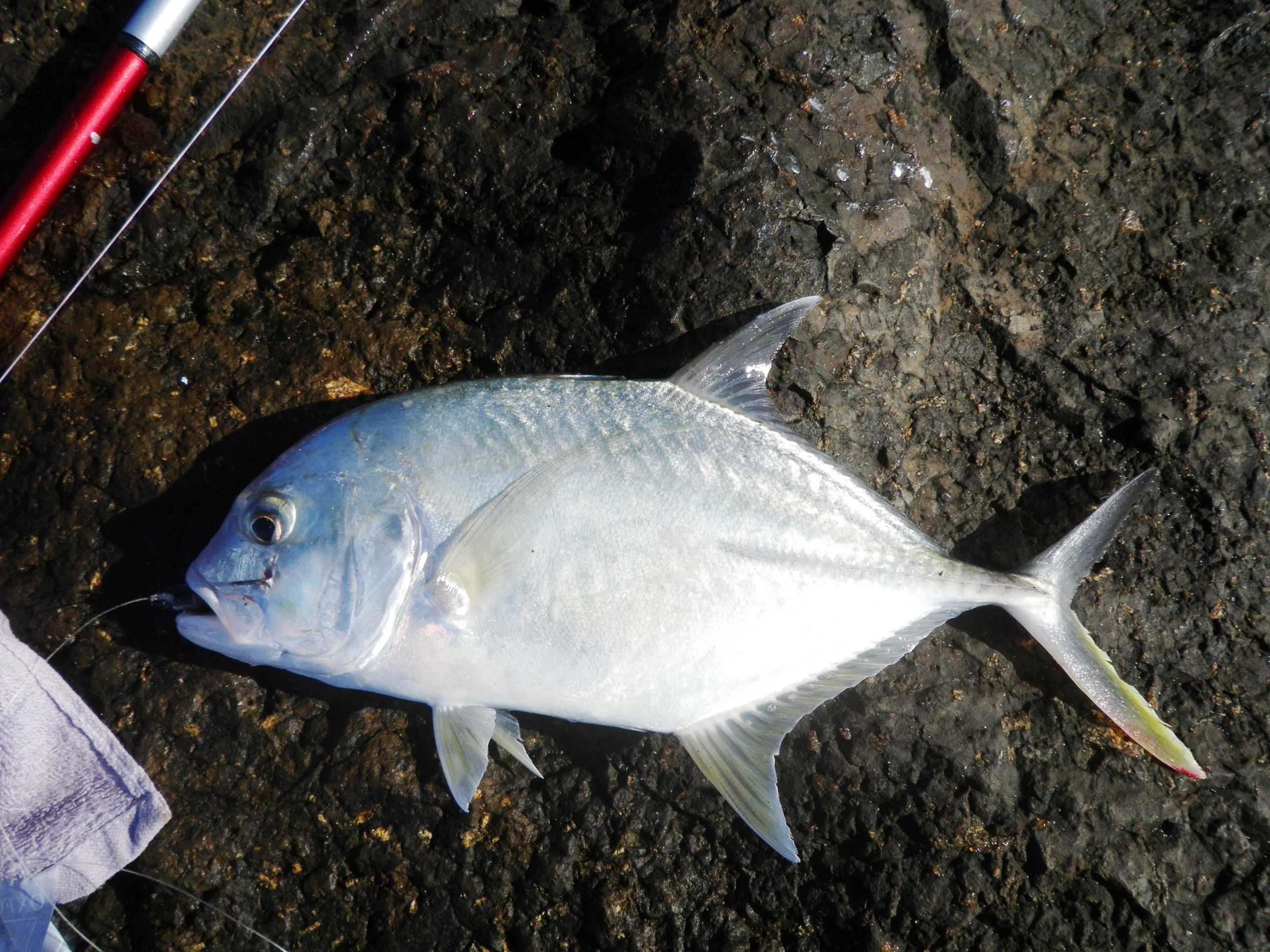
I moved around the front of the rockwall casting in a broad semicircle. I changed to different colored plastics, I tried lighter jigheads. I tried various minnows and grub shapes. By 8.00 am the sun was up and the choppy swell had started to settle down a bit. The tide was now running in again. I had dropped right down to a 3/8th oz 2/0 jighead and I was using a 4” Gulp Minnow in the Pearl Watermelon colour. Just as I was about to flick it up, out of the water, at the base of the rocks, a Trevally grabbed it. It was around 40cm long and I landed it safely. I hoped there would be more but after another 30 minutes without a bite I decided to pack up and head home.

Tweed Rockwall – Trevally and a Snapper encounter – 02 Aug 2011

Tuesday

I was fed up with the weed in the Pumicestone Passage so this morning, I decided to head south from Brisbane and spend the morning fishing the north side of the Tweed River rock wall. Conditions were perfect – a light breeze, low tide just before dawn and very little swell.I arrived about 5.30 am and walked to the very end of the wall in the dark. I used my head lamp to rig up. I was fishing with the big rod – the Daiwa 9’ 6” Demon Blood and the Shimano Stradic 6000 reel. I had it loaded with 40lb braid and a 30lb fluorocarbon leader. I decided to start with a soft plastic and chose a GULP Crazylegs Jerkshad in the Curry Chicken colour. I rigged it on a Squidgy fish-shaped jighead – 9 gram, 2/0 hook.

Tweed Rockwall - Trevally

The first glow of dawn was on the horizon but sunrise was still about 30 minutes away. There was virtually no moon and the sky was pretty clear. I cast out about 15 metres and counted to 10 while I let the lure sink. As I picked it up there was a solid ‘thud’ as something took a swipe at it. Next cast there were a couple of bites and then, as I paused, a hook up. It was a small Trevally , I released it and cast out in the same spot. A few casts later I caught another about the same size. I lost the next one – which was a bit bigger, as I tried to haul it up the rocks. I switched to a Gulp 5”Jerkshad in the Lime Tiger colour. I caught yet another small Trevally.

Another Tweed Trev


I moved round to the river side of the rock wall and cast out into the river. The sun was just over the horizon now. A big fish grabbed the soft plastic as it sunk. It took line for about ten seconds, in a solid run back around towards the ocean side of the rockwall. It soon had my line tight against the rocks and after a couple of seconds the line snapped. I tied on a new 40lb fluorocarbon leader and another of the same jigheads. I decided to try a different plastic – the GULP 5” Crazylegs Jerkshad in the New Penny colour.

I cast out into the same spot and bang – the lure was slammed on the drop. This time I put the pressure on straight away and kept its head out of the rocks. It had plenty of power but it was not fast like a Tailor or Trevally. I thought it might be a Jew but it kept making determined attempts to burrow down into the base of the rockwall. It was too fast for a Jew. After about 10 minutes of play I had the fish coming round to the ocean side of the wall where I thought I might be able to grab the leader. I slid down the rocks on my backside to the lowest rock that was fairly dry. I tightened the drag a little and heaved – suddenly a big pink tail slapped the surface of the water – it was a Snapper. It was a good size with a big knobby forehead, perhaps 60 or 70 cm long. It was exhausted but still had plenty of kick. It lolled over on its side and I grabbed the leader just as a surge washed it over the rocks at my feet and pushed it down into a gap in the rocks, behind me. It was now temporarily stuck but out of reach. I had no gaff and therefore no choice but to try to pull the fish out by the leader. As I tried to pull it up, another surge washed over and it wriggled off the hook. With the next set of waves it wriggled free – and slowly swam off! I rarely get Snapper from the rocks and to lose a great fish like this was heart-breaking. Still he is there for someone else to catch now.

Close but no Snapper


I sat trembling for 10 minutes or so and then re-rigged and put in a few more casts. By now my heart was not really in it. Just out of casting distance the birds were working over a bait school that was being smashed from beneath. I put on a slug but I could not reach them. Around 8.30 am I headed home – but I’ll be back!

Bribie Island – the Oyster Jetty to the Channel Marker – 19 June 2011

Sunday

I managed a quick dawn session at Bribie on Sunday. I arrived at around 6.00 am. Dawn and low tide were at about the same time. I was fishing the area of sand banks and muddy weed beds south of the old oyster jetty, on the mainland side of the Pumicestone Passage.

I started with a GULP Crazylegs Jerkshad soft plastic in the Pink Shine colour, rigged on a 1/8th 1/0 jighead. I have now upgraded to a 12lb fluorocarbon leader as I have been getting bitten off by the Tailor that are around in the estuaries at the moment.

As I waded out I noted how cold the water has become in the last couple of weeks. I presume this is down to the consistent westerly winds. It was a westerly again this morning but not the predicted 10 to 12 knots. The first hour, through the slack water period on low tide, was a bit slow, but as the sun started to really light up the water, I started to catch fish. I had now switched to the GULP 5” Jerkshad in the Satay Chicken colour – basically, yellow on top of pumpkinseed.

I opened the account with a monster Pike – at just over 45cm I think it’s the biggest I have ever caught. Around 7.00 am I caught the first Flathead. It was about 35cm long. I then put in about ten more casts in a radius of a few metres of where I caught it. After slowing my retrieve and pausing longer, I hooked up to another – this was a much better fish. I dragged it on to the sand, photographed and released it. It was just over 50cm.

I fished on until 8.00am and caught another six Flathead between 30cm and 58cm. They seemed to feed more aggressively once the sun was a little higher over the water and the tide started to run in, solidly. There are plenty of fish in our fridge at present, so I released all the Flathead I caught today. I kept the monster Pike for the cat.

If you want to try land-based fishing with soft plastic lures, now is the time in southern Queensland. I expect they are sitting on sandbanks and weed beds in all the major estuaries at present. You will need to wrap up warm though!

Flathead Paradise on Bribie Island – 9 June 2011

Thursday

The weather was awful again – but at least it was not raining. There would be a cold westerly all morning, getting up to about 12 knots again. You have to suffer the cold but you do not have to get up in the middle of the night to fish the dawn, at this time of year. I woke up at 4.00 am and reached Bribie just after 5.00 am.
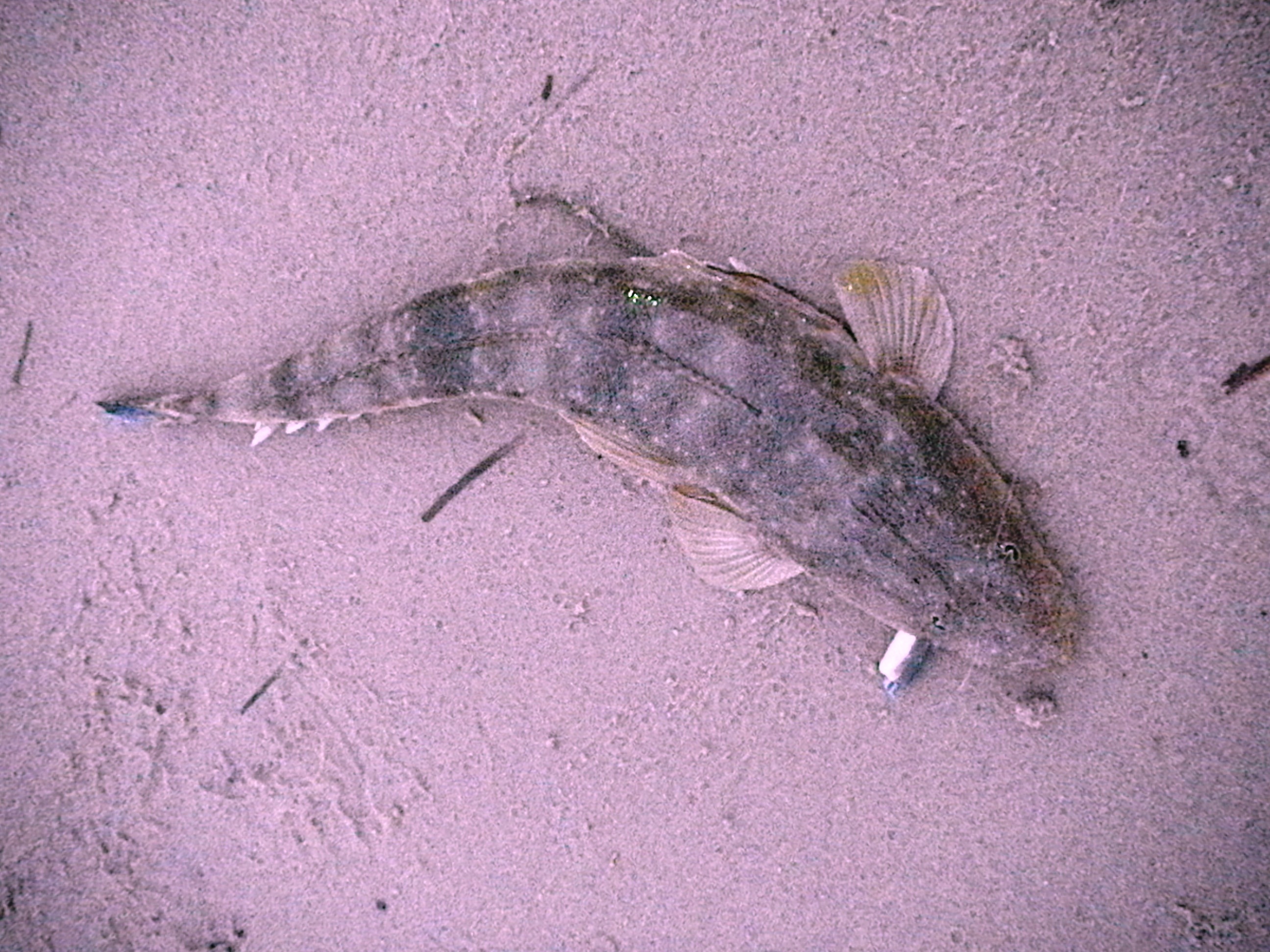
First light would be just after 6.00 am and low tide would be at about 10 am. I started on the Island side – beside the boat hire jetty, under the big light on the walkway. First cast, with 3” Pearl Watermelon Minnow on a 1/8th 1/0 jighead, produced a fish. A 25 cm Flathead – it grabbed the lure right at the base of the rocks. I walked south, along the bank and caught a few more – they were all still too small to keep. I soon found a few Pike and then a couple of Tailor, as I got closer to the bridge lights. I caught a few more Pike, under the bridge and then I heard the familiar sound of dolphins exhaling and the fish went quiet.

It was just before six, so as the horizon started to glow, I drove down to the mouth of the tidal lagoon in front of Buckley’s Hole. The lagoon now drains out close to the new Bribie Island Museum. As the sun came up, I waded out into the mouth of the drain, where it empties into the Pumicestone Passage. The westerly wind had blown plenty of weed on to the shore but my first cast was grabbed and then dropped by something. A couple of cast later, the same thing happened. I was still fishing with the same soft plastic minnow. I slowed down the retrieve and this time I hooked the fish. It took a bit of line and felt pretty decent then it was gone again. Next cast as lure hit the water, bang – zzzzzzzzzzzzzzzzzzzzzzzzzzzz……………..ptff and I was bitten off. Could have been the Long Tom’s but, from the head shakes, I think it was a Tailor.

I re – rigged with a GULP 4” Jigging Grub in the Peppered Prawn colour on a 1/8th 1/0 jig head. I was using my light, Loomis GL2 with a Shimano Stradic 3000 reel. I had loaded it with 10lb braid and about a metre of 10lb Fluorocarbon leader tied on with a uni knot. It was now just after 7.00 am. After a couple of casts over the sand, I caught another small Flathead. Then 10 minutes later I got the first keeper of the day – another Flathead around 42 cm long.

Well this spot gradually revealed itself as a Flathead paradise. As I moved up and down I caught over 30 Flathead in the next four hours – all over a 200 metre stretch of shore. I tried almost every soft plastic in my bag and they all worked. Of the 30 fish, just over half were legal size. I kept a couple of 50 cm fish for dinner and the rest were released.

This slideshow requires JavaScript.


Conditions continued to get worse with the cold south-westerly wind gradually getting colder and stronger and more and more weed washing up – but it did not bother the fish. By just after 11.00 am – my teeth were chattering and I was feeling vaguely hypothermic so I went back to the car, warmed up and headed home. What a morning!

Bribie Island – Sandstone Point – Monster Flathead – 2 May 2011

Monday – Labour Day

10 to 12 knot winds forecast and even though there would be a big swell offshore, the estuaries would be good for fishing. Back up to Bribie, to the Sandstone Point flats where I have been getting some good Flathead.

At about 5.00 am I waded out under the bridge – on the mainland side, to cast around under the lights. The tide was running in, so I was casting from the north side of the bridge, under the bridge, into the shadows and hopping my lure across the bottom, along with the current, back towards me. Theoretically, the Flathead will be lying facing the current flow, waiting for their prey to be washed towards them. After a couple of casts with the GULP 4” Pearl Watermelon soft plastic, I had a fish. This area can be tricky, as there are loads of prominent rocks to trip over and lose the fish on. Unfortunately just as I got a look at a decent 50cm + Flathead, it lunged down behind one, bumped the jighead out of its mouth and slowly swam away.

As the horizon started to glow I walked south and then around the corner onto the Sandstone Point flats. On my way, I caught a small Flathead in the weed beds, about 20 metres from the shore. It was only just 40cm long, so I released it.

I moved past the jetty to the point where the shoreline turns right, casting as I went. I waded over the big sandbar that runs roughly north to south; onto the area I call the Sandstone Point flats. This area is very rocky initially and then softens to sandy weed beds with some central channels and drains. It holds plenty of fish, especially at the top of the tide. The Flathead lie between the rubble and the weed beds waiting to pounce, while the Bream cruise over the top.

I was still fishing with the same soft plastic, but as the water was less than a metre deep, I was only using a 1/8th 1/0 jighead. The tide was still running in and this meant I was casting directly in front of me, as I waded across the flats. Because I had missed a fish on the rocks earlier, I had switched up from a 10lb to a 16lb leader. I was retrieving the lure fairly quickly with very short pauses to avoid getting snagged. I felt a bit of resistance and thought I was snagged. I jerked the jighead up and what felt like a rock, rolled towards me a little and then felt like it was free. I wound in my line and as I was about to lift the plastic from the water, the line went tight again and the ‘rock’, which I now realise was a fish, swam straight past me. Line started peeling at a steady pace and then, as the fish realised it had eaten something sharp, it took off on a powerful initial run, with the current.

My Loomis GL2 6’6 Light spin rod is very sensitive and amazingly flexible but it is not designed for power. If you get a big fish on, patience is the key. I let it run. Then I recovered some line and let it run again. It was obviously nicely hooked, but at the beginning of each run, it would put in a series of angry headshakes. I realised now it was a very big Flathead. I identified a break in the Mangroves and started to steer the fish in that direction. It must have made five or six long, determined runs for freedom and after each one, I had tightened the drag slightly, with little effect. Even 16lb leader will not last forever and the longer the fight goes on, the more likely the fish is to find a conveniently placed rock or snag. I tightened the drag and got the fish into the slacker water close to the shore. There was another short run but it was tired now and had no current to help it. With one long last heave I pulled it up onto the sand. The leader snapped as soon as its weight hit the sand but it was clear of the water.
This slideshow requires JavaScript.

It was a monster female Flathead – well over 75cm. I measured it as best I could with my tape, took a few pictures and released it. I am settling on 75cm for the length, which makes it this year’s ‘personal best ‘Flathead for me.
Ironically, I still had no fish to eat, so I waded on. I caught a few undersize bream cruising over the weed and then in a small sandy depression, I finally picked up a 42cm Flathead. It was a good end to a great mornings fishing.

Bribie Island – Sandstone Point Flats – 1 May 2011

Sunday

After a week of wind I was keen for some fishing this morning. I decided on Bribie Island, as the forecast wind and swell were not great and it offers a few sheltered spots. I drove up from Brisbane and arrived at about 5.00 am. I would be fishing the last few hours of the run in tide and the first few hours of the run out. With all the recent wind and rain, the water was predictably dirty and as high tide approached, there was plenty of weed floating around.

I started in the dark, next to the old oyster farm jetty on the mainland side of the Bribie Bridge. The area under the bridge was being flogged by the cast netters who had a few crab pots out on long ropes. There were already a couple of boats anchored in by the bridge pylons so I decided to wade south towards Sandstone Point.

I have been experimenting with which plastics to fish in the dark and pre-dawn. My latest theory is that the high contrast plastics with a solid silhouette seem to work better than the lighter/ white glow colours. I decided to put it to the test this morning. I started about 5.30am by fishing with a GULP 2” Shrimp soft plastic lure in the Midnight Tiger colour. This is a predominantly black colour with a flash of orange on its underside. It has been a great Bream lure for me at night. I rigged it on a 1/8th 1 hook jighead, as the tide was not running very fast. I was fishing with a 10lb fluorocarbon leader and my light spin rod.

This slideshow requires JavaScript.

Just before six, it was still pretty dark and I was wading south, parallel with the shoreline, about 10 metres out. I cast into a spot about 3 metres out from the Mangrove roots, where the water was around 30cm deep. As the lure hit the water, there was a great splash and line started peeling. The water was shallow and the fish started shaking its head immediately and splashing about. I let get into some deeper water and calm down and then gradually walked it back to a gap in the mangroves and pulled it up onto the beach. It was a good size Flathead at 58cm. I released it and moved back to the same spot to try for more. I could not get another bite so I moved on.

I worked the flats around the corner, towards Sandstone Point. At the top of the tide the water was very dirty close into the Mangroves and the cleaner water was just out of reach of my wading capability. I waded along the edge of the shoreline casting out onto the flats and slowly retrieving my soft plastic. As the tide started to run out at about 8.30 am I got a couple of hits from some Pike and then a few casts later, a solid hook up. I pulled the fish back to the shore and it was another good size Flathead at 54cm. I released it, as well and headed back to the car.

The fish were not thick and there was not much bait around so I was happy with two good fish from my session. Conditions look like they will improve as the week goes on.