Bribie – the old oyster jetty & Bongaree – October 2016

October

In the interests of catching up and giving you a feel for what I have been catching over the last few months, I am just going to post a few monthly summaries, so here goes.

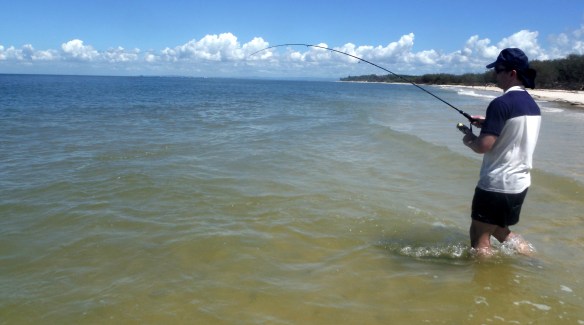
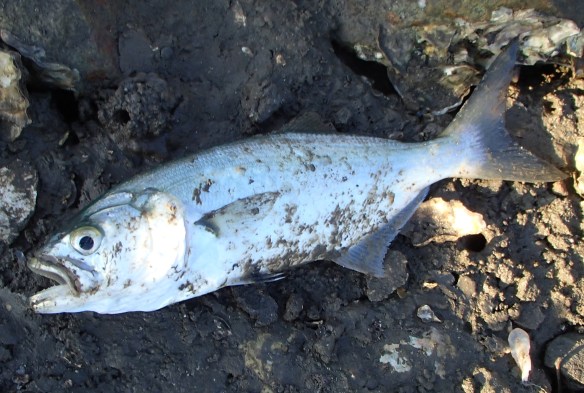
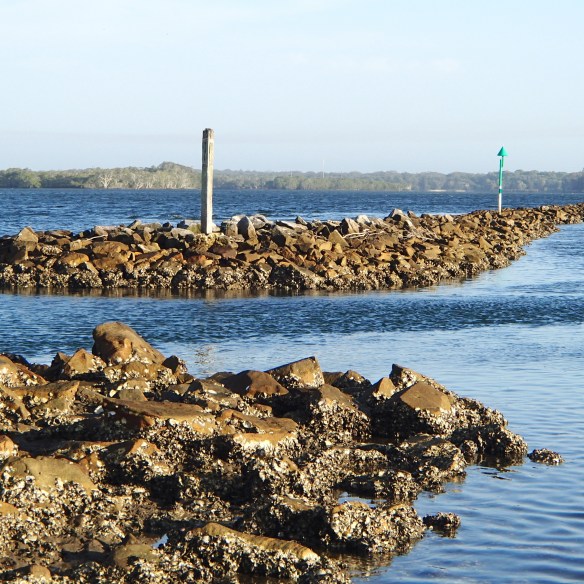
In the rest of October 2016, I fished on four more mornings at Bribie – favouring the run out tide. I put in a total of about 14 hours, mostly on the flats in front of the Sandstone Point Hotel but also in front of the museum at Bongaree. It was hard work and I caught only two keeper size flathead at each session and nothing else. The wind was mostly light around dawn and then building to a stronger north or north-easterly by about lunch time.

I fished with my usual assortment of soft plastics including Gulp Jerkshad and Minnow patterns and sometimes I tried my beloved DUO Realis series hard bodied minnows. I caught everything on a 10lb fluorocarbon leader and used mostly 1/8th ounce, size 1 hook jigheads.

Port Augusta – Spencer Gulf – Mulloway – 17 October 2016

Monday

Back in October I was on my way up to a mine in South Australia, and I had to stop at Port Augusta overnight. I had my Shimano telescopic rod and a few soft plastics lures and so I wandered through the Arid Lands Australian Botanic Gardens http://www.aalbg.sa.gov.au/ and down to the river, by the railway bridge, in the afternoon.

This spot is almost at the top of the Spencer Gulf. It was fairly windy but the water was clear and the terrain looks very fishy, with mangrove lines banks and a mixture of sand, mud and rubble on the bottom.

The Shimano telescopic rod is a very unsophisticated tool, but it is easy to pack and if you put on a decent reel (in this case my Shimano Stradic 4000) it functions well. The tide was running in and it was about 3.30 pm when I started fishing.

I was using 12lb fluorocarbon leader and 16lb braid for my main line. I put a GULP 3” Minnow soft plastic in the Pearl Watermelon colour on a 1/8th ounce, size 1 hook jighead and cast at the bottom of the railway bridge pylons.  The first takers were a few juvenile salmon, that always seem to be present in the area.

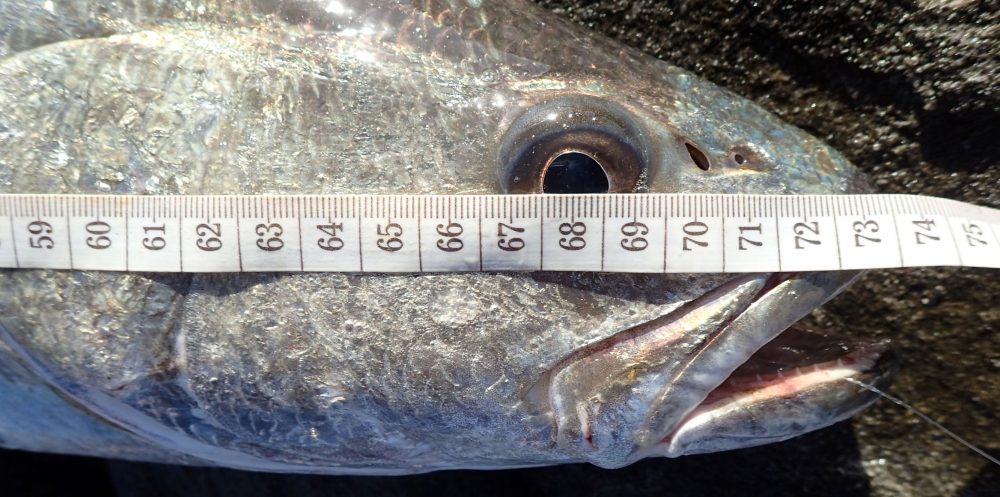
I lost a couple of rigs to the rocks on the bottom. At about 4.00 pm I thought I was snagged again but the rod tip started moving. The fish took a bit of line in a long initial run and then paused sitting in the strong current. I made sure the drag was not to tight and let the fish run again. I kept winding and after a few minutes I had a healthy mulloway/ jewfish at my feet. It was about 60cm long and after a few pictures I released it.

I could not find anymore and at about 5.15 pm I gave up. However, the episode reinforced my belief in never travelling without a rod – however unsophisticated.


The River Loddon – Trout – 12 July 2016

Thursday

On my next Thursday in London I was keen to get down to the River Loddon again to continue my fly fishing revision. It was turning in to a typical English summer – wet and fairly cold. At Wimbledon they had been playing make up matches on the Sunday because of the terrible and continuous rain.

As we set off to drive down to the river it was raining fairly hard. By the time we got there it had eased off to a light drizzle. If you can’t fish in the rain don’t go fishing in Europe. We pulled on our waterproofs and (appropriately named) Wellington boots and walked down to the river. The rain soon stopped.

Today we were fishing another beat on the Duke of Wellington’s estate – Strathfield Saye, so the terrain was a little different. The cool weather and rain mean’t I was unlikely to find the fish feeding on the surface so I by passed the dry flys and went straight for the brass headed sinking nymphs. I started with a grey wolf. This is a slightly hairier looking fly that sinks fairly slowly. The beat we were fishing had some deeper channels and I settled on a bend. I cast upstream at a corner where there was a fairly deep hole. I let the fly slowly waft down in the current with a couple of twitches as I stripped line (retrieved the fly). After a few repeats I was on. The rod took the strain and I let the fish run took. It headed for the reeds but I pulled it out and after a couple more pulls and runs I had it safely in the landing net. It was a 1.5 pound rainbow trout.

We put it too sleep with a whack on the head from a priest (a small metal ended club). Then it was time to look for a few more. The water was not terribly clear but despite all the rain, I could see more fish. I had better polarised sunglasses this week which probably helped. One group of three rainbow trout drove me mad. They were weaving in and out of the current under the shade of a large willow. At various times each one of the three, closely followed my sinking fly before turning away at the last moment. I swapped to a sinking black nymph and then to a pheasant tailed nymph but I could not interest them again. After about 50 casts, I reluctantly moved down the river to try elsewhere.

At another reed lined stretch of bank I hooked another good rainbow. This one put up a good fight with a couple of leaps clear of the water. I held onto it a steered it safely into the net. It was a little heavier than the first. The rain started again so we retired to the hut to open our thermos flask of tea and have a sandwich – all very civilised. I introduced my father to Doritos which were a new experience for him at 78 years old.

The rain stopped and we got back to work. After a few hours my father also had a couple of nice rainbow trout. We fished out the afternoon and both found two more to fill our bags. I dropped a bigger rainbow trout, perhaps 3 or 4 lbs. I was not ready for its power and held too tight to the leader until it snapped. I caught and landed two more 1.5 lb rainbows and my father caught a similair sized brown trout and finished the afternoon with a nice 3.5lb rainbow.

At about 3.00 pm we were all finished and the rain was heading our way again, so we gave up for the day. I had thoroughly enjoyed fishing at Strathfield Saye with all its magnificent history. I had even enjoyed getting reacquainted with the fly and may need a spell in Tasmania once I am back in the southern hemisphere.

The River Loddon – Trout – 5 July 2016

Thursday

In early July I found myself in the UK and my father (a keen fly fisherman) invited me to join him for an afternoon of trout fishing on the River Loddon at Strathfield Saye  http://www.stratfield-saye.co.uk/  – the Duke of Wellington’s country estate. The estate was gifted to Wellington in 1817 to thank him for giving Napoleon a bloody nose at the Battle of Waterloo. More recently the cavalry scenes from the film Warhorse were filmed here.

The River Lodden is actually a tributary of the Thames that runs through Berkshire and Hampshire. It rises near Basingstoke and runs through a mixture of agricultural land and urban landscape before reaching the Strathfield Saye estate. In days gone by it supported a number of mills along its course. The river is carefully managed by a River Keeper and anglers pay an annual fee to fish it on dedicated days through the trout fishing season which runs from 1st of April to the 30th September. On the estate the river is stocked with both rainbows and browns but also contains a variety of coarse fish including carp, chub, tench and roach.

On the estate the river is divided into about 6 ‘beats’, each about a half a mile long. The anglers, who pay an annual subscription for a ‘rod’ typically have access to the river one afternoon per week and rotate through the beats. On Thursday we were fishing the Duke’s beat. Each beat has a small hut to shelter anglers from the highly variable English summer weather. The rules are clear; only up stream fly fishing with dry fly or nymph is permitted with a bag limit of four trout per angler/ day. All coarse fish must be returned. My GULPS would not be welcome here!

I have not fly fished for a while but it is like riding a bike. The challenge on a tight stream like this one is to avoid losing your flys in the foliage on the back cast. We were using a four pound breaking strain fluorocarbon leader and I started with a grey wolf fly. Consistent rain over the previous few days meant the water was not very clear. It was also fairly cold with the forecast high being about 15 degrees Celsius.

My father walked me the length of the beat pointing out the key features in the riverbed. The stream meanders through the estates fields and the banks are planted with a mixture of mature weeping willows and the odd majestic oak or ash. The river is carefully tended and the banks are dug out and replanted from time to time to ensure good water flow and the right mix of vegetation. Much of it was only about 50cm deep on the day we were fishing but at various bends there are metre plus deep holes to give the fish cover.

The stream is stocked before the season starts with a mixture of juvenile brown and rainbow trout. Most of the fish are removed over winter when there would not be adequate food to support the population. Some of the bigger fish avoid being stunned and removed at the end of the season and these veterans survive year round in the river. The typical fish is between two and four pounds in weight but there are a few monster eight pounders lurking in the shadows.

I got my casting technique sorted out on a fairly open stretch of river bank. It took about 30 minutes to remember that it is all in the wrist and timing is far more important than power. As I became more confident I found a good looking patch of shade over some slow moving water under a willow and cast up into the current. After a couple of tries the fly land where I wanted it and sure enough I saw a decent swirl as a trout came after it then turned away. I cast a few more times but it was not interested.

My father caught a nice two pound rainbow trout further down the beat. I decided to swap to a slightly heavier brass headed black nymph fly with a strand of blue in it. I found another patch of shaded slow moving water and put in a few casts. I was retrieving line fairly slowly when a fish swept in form the side and the line pulled tight. My first instinct was to wind and rely on the drag but when fly fishing you actually release line through your fingers and try to let the rod deal with the lunges. The fish was nicely hooked and my father appeared to provide some expert guidance:” No towing, keep the rod tip up……”. After a short fight I had it on the bank.

I carried on moving along the beat and hooked another fish about thirty minutes later. I was too eager and hurried it towards the net only for it to pull away and snap the leader. I tied on the only other fly I had in my pocket that happened to be a brass headed pheasant tailed nymph. I think this is the fly that almost everyone starts their fly fishing career with. It is a wet fly (sinking) traditionally made from the pheasant’s tail feathers and can be heavily or lightly weighted.

By now the sun had come out and it was a beautiful summer afternoon. I found another good spot beside some reeds and started casting. It did not take long to find another fish. This time it was a good sized brown trout that slammed into the fly on about my fifth cast. I played the fish carefully and patiently. I made sure it was tired out before I put the net beneath it.

We continued fish until about 2.00 pm by which time we had four good fish and gave up for the day.

Coffin Bay – Point Avoid and the Ledge -12 June 2016

Sunday

On Sunday it was cold and wet again, but at least the rain had kept the wind down. I drove out to Point Avoid in Coffin Bay National Park, again and started casting in the pre-dawn light. I had lost a few slugs and now only had a couple of Halco Raiders left. I tied on a 40 gram with some 20 lb fluorocarbon leader. I hooked up after a few casts – a small salmon about 30 cm long. They kept coming and the skies started to clear.

Just after dawn I noticed a seal bounding threw the waves – salmon for breakfast. I kept casting. At about 7.30 am, I hooked a big fish and almost immediately knew I would not be able to stop it. I tightened the drag until the line snapped, but it never slowed. I swapped to the 80mm version of the MARIA MJ Twitch suspending hard bodied minnow. I cast this out and the salmon started smashing it immediately. I caught a few small ones and then a slightly bigger fish unhooked itself on a submerged bit of reef and left the lure there.

I swapped over to a 4” GULP Pearl Watermelon Minnow on a 1/6th ounce, size 1 hook jighead. I could not cast this lure as far and so it was once again the brown spotted wrasse that grabbed it. I threw a small one back and shook off a couple of small salmon. Then a bigger fish grabbed it and zipped straight under a rock. I could not muscle it out, so I loosened the drag and after a minute or so, it swam out. This time I pulled it in. It was a bigger wrasse with magnificent green lips. After a few pictures I released it and gave up for the morning.

In the afternoon I drove round to fish off the ledge opposite the Coffin Bay boat ramp. The tide was running out the wind had dropped away and it was very cold. I picked a spot where it looked like the main channel was close to the shore. I was fishing with an 8 lb fluorocarbon leader and started with a 2” GULP Crabby in the New Penny colour. This soft plastic looks like a small yabby. I put it on a 1/12th ounce, size 2 hook jighead and cast it out. The salmon appeared and ate a few and then, fortunately moved on. I could feel a few bites from what I thought were whiting, but I could not seem to hook them. I decided to try some patience. I cast the soft plastic out, left the bail arm open on the reel and waited a full 3 minutes. When I flicked it over and took up the slack I had a King George Whiting on the line. It pulled pretty hard and when I landed it and held against the tape it was about 35 cm long. I caught a few more small ones as the sun set and then just as it was getting really dark, I managed two more legal fish, using the same method.

I cleaned them in the cold water and set off for a warm shower.

Bribie – the old oyster jetty flats – 28 April, 2016

Thursday

I was back in Brisbane and it was time to get amongst the flathead. This has traditionally been a very productive time on the flats around Bribie Island. But this year I have fished far less in this area than usual. The weather has also been very warm and fairly dry, which may have affected the movement of the flathead.  In my last few sessions I had found fish, but not in the big groups that have been around in the last few years. I think this may change as the water cools down.

The moon was 67% full. The day would start with a light south-westerly wind, that would turn south-easterly later in the day. Low tide would be at 7.17 am and I was fishing with my light spinning rod and reel (Shimano Stella 2500 and NS Blackhole 6′ SGII 602L trout rod). This was loaded with the ALDI 8lb yellow braid and I had tied on a 12lb fluorocarbon leader.

I arrived, on the mainland side of the Pumicestone Passage at about 5.30 am and waded out on to the sandy/ muddy flats under the bridge. The horizon was beginning to glow and the water had a slight ripple on the surface from the cool breeze. The tide was running out quickly. I cast some big and small GULP soft plastics around the reefy area, just to the south of the bridge, without success.

As dawn approached I moved south and started fishing the area south of the old oyster jetty. I was now using the GULP 4” Minnow soft plastic in the Pearl Watermelon colour on a 1/8th ounce, size 1/0 hook jighead. It was 5.50 am. A fish grabbed the lure and scurried off. Then it felt like it was stuck. This is typical estuary cod behaviour. I loosened the drag and dropped the rod tip. After about 30 seconds the leader started moving and the fish swam out. I re-tightened the drag and soon had a 40 cm cod on the surface. I released it and moved on.

About thirty minutes later I was casting around the weed beds by the drain that comes off the Sandstone Point flats and I felt a solid bite. I dropped the rod tip, paused and hooked a 43cm flathead. It went in the bag for dinner. There did not appear to be much bait around.  I put on a bigger GULP soft plastic Jerkshad in the BBQ Chicken colour.  I connected and then dropped what I thought was a flathead, just after 7.00 am.

I continued to the south. The sun came up through the clouds and I moved along the edge of the weed beds. I felt another good bite but did not hook up and then things went quiet. The tide was slowing and the water was now fairly murky. I waded all the way down to the green channel marker without another bite.

At about 7.30am as the tide turned back in, I turned around and walked back towards the bridge. I was now fishing with a GULP 4” Minnow in the Lime Tiger colour on a 1/8th ounce, size 1/0 hook jighead.  My next catch was a blue swimmer/ sand crab that took a swipe at the soft plastic.

About half way back to the bridge I caught another, bigger flathead about 50cm, which I also kept. I kept moving and stuck with the same soft plastic. Frustratingly, I dropped two more flathead before hanging on to a third, just north of the bridge. At about 10.00 am I left the water with three keepers in the fishing bag.

It had felt like hard work but on reflection, there were plenty of fish around.

Perth -Fremantle – Australian Salmon – 20 April 2016

Wednesday/ Thursday

On a Wednesday morning in April, I found myself up early (as always) and in Perth. I was here for a week and although I would not get to Ningaloo Reef or the more glamorous WA fishing spots, I would have time for a few early morning sessions near Perth.

I checked the internet for land based fishing spots near Perth CBD and realised that North and South Mole (the big rockwalls at the entrance the Port of Freemantle) were my best option. Dawn is refreshingly late in Western Australia at this time of year and so I woke at about 5.30 am and drove out to Fremantle.

I had packed a light spin rod and reel – Berkley Dropshot 7”, 1-3 kg IM-6 Dropshot and my Shimano Sustain 4000 reel. The mainline was 8lb Aldi yellow braid and I started with a 12lb fluorocarbon leader. It was just before sunrise when I clambered over the rocks on the right side of North Mole Drive and I was amazed at how many cars and fisherman were already there. The water was flat, crystal clear and there was virtually no wind.

I rigged up a 1/8th ounce, size 1/0 hook jighead and put on a GULP 4” minnow soft plastic in the Pearl Watermelon colour. Just before sunrise I caught a small bream. I could now see fishermen everywhere with a variety of rigs including slugs/ baits and both big and small rods. I asked a guy next to me, what was going on and he explained big schools of Australian salmon had been coming through, so everybody had come down to catch one. All around me fishermen were casting metal slugs, hard bodies, poppers and baits.

I swapped down to a GULP 3” Minnow in the Peppered Prawn colour. Right on cue, on about my third cast I felt the bite, followed by the charge. A good sized Australian salmon soon came leaping out of the water, trying to spit the jighead out. It was well hooked but with a very light rod and 12lb leader, I was not in charge.

Things were made more complex by the fact that I was going to have to go with him. Which meant walking initially north, along the rock wall. There were lines to the right and left and interestingly no one seemed particularly interested in winding them in, to avoid a tangle. Somehow I only got tangled with one and we soon managed to undo the crossover. The fish was still leaping around but it was slowing. The small rod had no power but by gradually tightening the drag I managed to tire the fish.

No one had a net but the lack of swell meant I could get down safely to the base of the rocks, which I gradually did. I had been playing the fish for about 15 minutes when it started to come in much closer. I chose my spot and started to pull the fish in towards it. At the last minute it revived and put its head down in the weed around the rocks. That was all it needed to knock the lure out and it was gone.

Dejected but excited I then had to give up for the day and go and do some work. But the next morning I was back. This time with 20lb leader (the heaviest I had). I decided to fish the other side of the North Mole, at the entrance of the small harbour, facing the mouth of the river.

I arrived pre-dawn and cast around some big and small soft plastics and small metal slugs, without much success. I could see fisherman on the other side casting in to the main channel and catching a salmon, every now and then.

At about 7.00 am I was fishing with a GULP Jerkshad in the BBQ Chicken colour, on a ¼ ounce, size 1/0 hook jighead. I kept getting hits close to the base of the rocks. Eventually something connected with the plastic and took off. It felt quite powerful but was faster than a salmon. As it came in to view I could see it was a junior samson fish (I presume this is, or is from the Amberjack family). It pulled very hard and took a little while to subdue. I photographed and released it. A little while later, Tom, a keen local angler caught a good salmon on a hard bodied minnow, right next to me. Fortunately another angler had a landing net that enabled me to help him get it safely up the rocks.

I swapped to one of my favourite small hard bodied lures – the DUO Realis Vib 62. This is a bass lure made in Japan, but fortunately fish have an open mind when it comes to trying foreign dishes. It is a sinking vibe and casts a long way. I started casting it out, into the main channel. It did not take long to get some interest. I felt a few knocks and then watched a big salmon follow it all the way to the base of the rocks before whacking it.

Today I was better prepared. Although the rod could not really put much pressure on the fish, the stronger leader meant I could pull a bit harder. It jumped around, as salmon do, but a treble was quite firmly lodged in its cheek. I was also lucky to have Tom’s assistance with the net. We soon landed the fish.

By now the rock walls were packed, but it was time for me to go to work again. I packed up and gave the fish to the guy who provided the net. Nice to catch a fish in Western Australia – I hope I will be back.
Iluka – Shark Bay – Jewfish – 19 March 2016

Saturday would be my last morning in Iluka for a while. Despite praying for calmer weather the wind was forecast to pick up. I had a lie in as low tide would not be until 2.30 pm. I arrived at Shark Bay at about 10.30 am.

All week I had been expecting the stirred up seas to reveal a few Jewfish/ Mulloway. There was lots of bait around and previous trips, at this time of year have nearly always produced a few. The big seas had made it difficult to reach my favourite spots – perhaps the fish were there but I just could not get to them.

With this in mind I decided to start on the southern side of the Shark Bay rock platform. I would be casting straight in to the south-easterly wind so I needed to fish with something fairly heavy. There are lots of rocks on this side of the platform so I was not confident I would keep my lure.

I have a couple of Rapala 13g, 6cm Clackin Raps, lipless vibe lures which have been rattling around the bottom of the tackle bag for ages. I have never caught anything on these lures so I was not too worried about losing them. I rigged up the lighter of my rock fishing rods (the Daiwa Air Edge) and tied the lure on to my Aldi braid and 20lb fluorocarbon carbon leader. I cast the lure into the surf and waited for it to sink. The sea was very lively and I could only just feel the juddering vibrations as I yanked the lure along. After about three casts the lure pulled tight on something and I thought I had hit some kelp. I pulled the rod tip up and then line started peeling. I knew it was a Jewfish straight away. It made three long powerful steady runs and then started swimming back towards me. The game of cat and mouse continued for about 10 minutes. The rod was not powerful enough to force the issue, so I just had to be patient. After a couple more minutes the fish popped over on its side, a few meters from the shore. It looked as if it was beaten, so I tightened the drag a little and tried to pull it over the rocks with the next surge. Either the wave or sense of impending doom caused it to suddenly wake up and it put its head back down and tried to bury itself. The leader slipped down between the cunjevoi and I could not free it. I could see the fish and lure hanging on by just the single big hook on the front treble, a few metres in front of me, but could not get to it. Another big wave came over and when it receded the fish was gone and the lure was lodge firmly in the cunjevoi. They always getting bigger in your memory but I think it was about a 6kg fish. I realised I did not have my camera with me – perhaps that’s why I could not hold on to the fish.

Rapala

I had another, bigger Clackin Rap and I cast this around without success. As the tide lowered I moved to the front of the rock platform, also on the southern side. I swapped to a soft plastic on a ¼ ounce 2/0 jighead. I needed the weight to cast against the wind. I put on a GULP Jerkshad in the Peppered Prawn colour. I lost the first to the rocks and tied another one on. After a few casts this was slammed in the surf, close in. The fished pulled hard and when I finally subdued it, I was surprised to only see a small Trevally.

The challenge in this spot was losing gear to the rocks and I lost a few more rigs over the next hour or so. I swapped to a Gulp Jerkshad soft plastic in the Sweet and Sour Chicken colour and when I got this one in to a good foamy patch of water just beyond the rocks, I almost instantly hooked up. This time it was a 55cm tailor and I managed to pull it in.

I finished the session casting the long DUO Pressbait Saira hard body off the northern end of the rock platform. As it had done all week the lure found lots of long toms and a few more small tailor.

Just after low tide I stopped for the day. It had been another great week of fishing at Iluka.

Iluka – Shark Bay – Tailor – 18 March 2016

Friday.

It was Friday and although the wind and swell was forecast to drop off slightly in the morning – it would soon pick up again. I stuck with Shark Bay and arrived at about 5.45am. The skies were the clearest they had been all week and I was treated to a magnificent sunrise.

I fished in the bays on each side of the rocks while I waited for the tide to recede. I started with a small no name popper and attracted plenty of long tom interest but nothing else. At about 7.00 am I waded through the tide and out on to the north side of the rock platform.

At this stage of the run out tide I had to stick with a surface lure so that I could cast out over the kelp covered ledge. I chose the Fluoro Pink Roosta Popper again.  This hooked up to a good tailor straight away but it wriggled off. I kept casting and the long toms kept swiping. After about 30 casts, I found another smaller tailor but it also wriggled off in the shallows. I swapped to the Spanyid Maniac 45g wide metal spoon. I soon caught a 25cm Tailor and then a few casts later, a 50cm model.

I swapped lures again. This time to a 55g HALCO Twisty in the gold colour – this was the most successful lure of the morning. But the fish were not feeding furiously. They seemed to come and go. I caught 5 more fish over the next 90 minutes. But none of them were over 35cm long.

As low tide approached I decided to switch locations and walked back to the car and drove round to Woody Head. I wandered out to the area known as ‘the Barnacles’. The sun was finally out and the swell had dropped off a little.

I tied on a ¼ ounce, size 1/0 hook jighead and cast out a GULP Crazylegs Jerkshad in the Curry Chicken colours. As is so often the case in this spot, a fish grabbed the lure on the first cast, as I started to retrieve it. I landed it with the aid of an incoming wave. It was a 35cm bream. As a warning, the next wave came up and soaked me so I decided it was time to retire. No monsters and interestingly, no jewfish but plenty of action.

I was soaked but the sun was out and the water was warm so I took a dip in one of the many rock pools (which were even warmer). I can just see the advert – Woody Head Day Spa with sea minerals and slimy kelp rub – what would they pay for one of those in Sydney?

Iluka – Shark Bay – Tailor / Bream – 16 March 2016

Wednesday

Wednesday in Iluka and more rain was forecast.  I woke to grey skies and the persistent south easterly wind and swell.

Shark Bay would be the only sensible place to fish. Low tide would be about 9.30 am. By standing on the north side of the rocky outcrop, I would be able to cast out with the wind behind me. I was fishing with the Rovex Bario (good) and the Penn Spinfisher (awful, but just about functional).

My current line of choice for the big rod is the 17lb breaking strain Aldi ‘Crane’ braid, in the yellow colour. I picked up about ten 250 metre reels when they were reduced to A$ 11.99 each to clear, earlier in the year. This stuff is great. Alibaba offers me 184 braided fishing line suppliers in China so it could be from anyone but my sources tell me that braid this good is probably made by either Sunline or by Innovative Textiles (now owned by Shimano). I am pretty certain the breaking strain is almost double the listed 17lbs. It’s tough and does not fray. The colour fades after a while but that happens with almost all the brands I have used. When it comes round again, grab some.

I started with a big (150 mm) red and white Classic Lures plastic popper. This stirred up the long toms, initially. But after about twenty minutes of casting around it connected with a good size tailor. Unfortunately the fish swam straight for a bommie and managed to unhook itself but leave the popper firmly lodged in the cunjevoi. To add insult to injury the heavens then opened and I got soaked by a brief downpour.

I swapped to a big new Spanyid Maniac 45g metal spoon. This looks like a great lure. It’s a nice wide target for the tailor to attack. The only downside is that it’s much wider profile makes it less aerodynamic and therefore hard to cast long distances. I could still get it 40 metres or so out, which would be enough. It proved irresistible and after a few retrieves during which it was bumped and nudged a few times, a fish grabbed it and the rod bent over. It was another tailor about 35 cm long. I continued casting and soon caught two more fish of about the same size.

By about 10.00 am the tailor seemed to have gone off the bite. I swapped to the light rod and tied on a GULP 4” Minnow soft plastic on a 1/6th ounce, 1/0 jighead. After a few casts this found a fish. This time it was a bream. It was about 30 cm long so I put it aside for dinner. The next cast produced another bream, about the same size, so I kept that as well.  Things quietened down again, so I cleaned my fish and went home to dry out.

By 4.00pm I was ready for more fishing. I drove out to Iluka Bluff. The swell was still pretty lively. Between waves I managed a few casts with the lighter rig and caught another good bream – about 38cm long – on a GULP Jerkshad in the Sweet & Sour Chicken colour.

There was no shortage of fish in the area but I just needed the swell to go away. At about 6.00pm I packed up for the day.

Bribie – the old oyster jetty flats – 7 March 2016

Monday

The wind and wild weather persists. A look back at my fishing reports suggest that the run up to the full and new moons around February, March, April have produced the most consistent catches of flathead. The latter half of the run out tide also appears to be a good time to get at them.

So on Monday I ignored the wind and grey skies and drove up to Bribie at about 10.30 am, to fish the run out tide on the flats in front of the jetty and the Sandstone Point  Hotel. Low tide would be at 2.38 pm. The wind was about a 15 to 20 knot east-south-easterly by the time I arrived.

As regular readers know, I love my GULP soft plastics (and just for the record I don’t think I have ever received a free packet from anyone – so this is definitely not sponsor induced waffle). We all tend to use bait and tackle that we are confident with. If something works for us we go back to it – whether it’s a fishing spot/ area or favourite lure type. When I first caught a few flathead on a GULP Minnow Grub in the Pumpkinseed colour, I soon convinced myself that this was the only colour and shape that would catch fish. It caught plenty of fish for me but fortunately I was brave / frustrated enough at some point, to experiment with some alternative shapes and colours and even try hard bodied lures.

So this morning I resolved to stick with the ZMAN soft plastics that I carry around but rarely seem to use. My principal problem with them is additional buoyancy in the material they are made of and the lack of scent. I am convinced by the amount of strikes I get when I introduce a GULP soft plastic that is just out of the packet, that the scent is the thing that makes a difference.  Having said that they have a range of shapes in their paddle tail varieties that put GULP to shame. I started with a ZMAN Minnowz in the Redbone colour on a 1/8th 1/0 Headlockz jighead. These jigheads are specially designed to hold the ZMAN soft plastics in place and perhaps also counter the additional buoyancy, they are based on Mustad hooks.

I fished around the bridge and felt a few nudges and bumps from either the resident Moses Perch or perhaps some Pike. After a thorough peppering of the area I moved south, under the jetty and fished along the edge of the weed beds all the way along to the farthest green channel marker. About halfway I swapped colours to the same shape ZMAN in the Rootbeer Gold colour. Unfortunately this made no difference.

I had been fishing for an hour without a bite and I no longer believed the ZMAN soft plastics were going to catch a fish. Confidence is so important when fishing and I just don’t have it when it comes to these plastics. I reached into the tackle bag for a GULP Jerkshad in the BBQ Chicken colour and swapped over. I started back over the ground I had covered and after another 10 minutes, I caught the first fish of the day – a 45cm flathead, close to the edge of the weed.

I carried on moving slowly back towards the jetty, fishing with the same Jerkshad soft plastic. It was now almost 1.00 pm and I caught another flathead, about the same size. Twenty minutes later I caught another much smaller flathead.

There was huge (no doubt multi-million dollar)  fisheries patrol vessel moored in front of the bridge. I think I would rather see our taxes spent on hospitals and schools and just have boats checked in their way in/ out. Especially since the numbers of boats seized, fines issued or commercial licenses cancelled is miniscule. Since we send so much of our good seafood overseas it seems crazy to spend all this money just to race around persecuting recreational anglers.

By now I was casting around just south of the jetty. The jighead stuck fast in to something. It felt like a stick or lump of coral but it was moving. I slowly brought it to the surface with a tightened drag. I was a welcome surprise – a big mud crab with the jighead stuck nicely in one of its back legs. I checked it was male and big enough and I manoeuvred it into my keeper bag and gave up for the day.

Bribie – Whitepatch and the old oyster jetty flats – 22 January 2016

Thursday’s fishing had not been that great but when I woke up on Friday I was confident that the fish would be there. The moon was virtually full and it would be a big high tide at about 8.30 am. More importantly the wind had dropped off considerably.

I decided to fish the first half of the run out tide at Whitepatch on Bribie Island. On a big tide the water comes right up to the tree line and the fish will often move up with it. There are often good whiting in the shallows here and where there are whiting there are usually flathead.

I started at the north of end of Whitepatch beach, fishing with a GULP 3 inch Minnow in the New Penny colour. I waded off to the north casting in the direction of the outflowing tide and then hopping the lure back towards me. I soon caught a tiny flathead that was sitting right next to a ledge of coffee rock at the foot of the tree lined beach. When I cast the lure out further it was grabbed a few times by what I think where the cruising long toms. I fished for about two hours but could not find any more fish.

At about 11.15 am I moved down to the old oyster jetty flats. The tide was still fairly high so I waded along close to the mangrove line, casting out towards deeper water. I was now fishing with a GULP Jerkshad in the Satay Chicken colour on a 1/8th ounce, 1/0 hook jighead. The wind was picking up and there was lots of weed floating around. The tide was running out fast and by about 12.30 pm I was about 30 metres to the south of the old oyster jetty. I felt a solid bite and hooked a nice 55cm flathead. When I pulled it in it had a nasty scar on its back.

I carried on towards the channel marker and about 40 minutes later picked up another 45cm flathead. As I moved south I caught two more, a 48 cm and a 50cm in fairly quick succession. By 2.00 pm I was hot and knackered and the wind was really blowing so I decided to give up. It had been a long session but I had found some decent fish.

Muscat, Oman – Al Ghubra beach – 15 January 2016

Friday

Friday would be my last chance to fish the beach in Muscat, Oman. I woke well before dawn and pulled on my back pack. It is always difficult to know what types of lures and leaders to bring to a previously unknown fishing spot. I brought a packet of mixed GULP 3” Minnow soft plastics in various colours, a packet of GULP 4” Minnows in Lime Tiger, a packet of GULP 4” Swimmows in the Peppered Prawn colour and a packet of mixed coloured GULP Jerkshads. I also had 1/4, 1/8th and 1/6th ounce jigheads and 6lb, 10lb, 16lb and 30lb fluorocarbon leader. I packed three Maria MJ Twitch small hard bodied minnows in different sizes and a few bigger DUO Realis Jerkbait hard bodied minnows.

On Friday I walked in the opposite direction along the beach, past the Al Ghubra market and a big camp of tuna boats. The beach was pebbly with patches of sandy bottom and I could see some rocky structure beneath the waves. After about 600 metres I crossed the mouth of a shallow wadi.

I had been fishing all the way along with a GULP Minnow with no luck. Now I decided to swap to a small MARIA MJ twitch suspending hard bodied minnow. I could cast this a bit further out, beyond the wave break. This soon stirred things up and after two or three retrieves I was on to a fish. It was another grinner/ lizard fish. I had seen these in the market, so they obviously eat them here. At home in Queensland, they are pretty much considered to be only good for bait. I let it go and cast out again. I had obviously found a solid school because for the next 30 minutes I caught grinner after grinner. I swapped to a GULP Swimmow in the peppered prawn colour, but this just caught a few more grinners.

It was now well past sunrise and I was moving back towards the Chedi resort. I had tied on a heavier, 1/6th ounce jighead and loaded a GULP 3” Minnow in the New Penny colour. I cast this around leaving it for long pauses on the bottom. After a while I felt another good bite and paused. When I lifted the rod tip the fish was hooked. It was another flounder, but a much bigger one. I decided to keep it. I dispatched it and put it to one side. The soft plastic was all mashed up so I put on another GULP Swimmow and carried on casting. I had found a good patch of flounder (or goat fish as the locals call it). I caught about four more and released them all.

I wandered back to the Chedi, where a helpful waiter arrived with a plate and whisked the still flapping flounder off to the kitchens. I had a shower and made my way to breakfast. The fish was cleaned, filleted and grilled and arrived at my breakfast table with some fresh lemon, olives and hummus.

I had loved visiting Oman and was delighted by the friendly people and the beautiful scenery. It is a Muslim country but I never felt threatened or uncomfortable. The Ibadi Muslims who are the religious majority, preach tolerance and respect for other religions and cultures.  It is a pocket of calm in a troubled part of the world. I hope it stays peaceful and I will get the chance to come back.

Brunswick Heads – the beach – 18 October 2015

Sunday

Half way through October, I managed to get down to Brunswick Heads for the weekend and had a few mornings fishing on South Golden Beach. Earlier in the year, in the cooler water, I had found plenty of tailor and bream down here.

The moon was in its first quarter and the tides were not big. The wind was a light south easterly, turning northerly in the afternoons. As you all know I love to fish with soft plastics lures. On the beach, success with plastics requires a bit of persistence – especially in the warmer months.

As usual you have to be up early or be prepared to fish through dusk. I prefer the dawn session, as I am an early riser and you know the water has not really been fished/ surfed/ disturbed overnight.

In spring and summer I fish with very light gear. The predominant summer species; dart, whiting, bream can be very picky and the water is often clear. I rarely use more than a 12lb fluorocarbon leader and will often go down to 8lb to get the bites. This means you have to have a good, functioning drag on your reel and make sure it is set correctly. You will certainly lose a big bream/ or dart in the surf, if your drag is set to tight. If you get a fish hooked you have to bring it in patiently, using the rhythm of the surf. If a big mackerel is passing through, your are doomed, but that is fairly unlikely.

I like to use small brightly coloured soft plastics when the water is clear. My favourite for dart is the GULP 3” Minnow in the lime tiger colour. If the water is stirred up I swap to paddle and grub tailed soft plastics in darker colours. In these conditions it is often the vibration that will bring the fish to the lure.

On Sunday, I decided fish the rocks and beach on the north shore of the Brunswick River mouth. There is often a nice big gutter here and the rocky/ reefy area on the north side of the river rock wall also provides some good structure to fish around. I arrived at the carpark at about 5.30 am, just after first light.

The water was a little stirred up so I started with a GULP 3” Minnow soft plastic in the Pearl Watermelon colour. I was using my Daiwa Air Edge 96L light surf rod and initially fishing with a 1/6th ounce, size 1 hook jighead. I was fishing with 10lb fluorocarbon leader. After a while I was not getting any bites, so I swapped down to a lighter 1/8th ounce jighead. I moved a little closer to the rocks.

The fishing was tough. I had a couple of bites from what I assume were dart. Low tide had passed at about 5.40 am and the water was now starting to run in. Perhaps this was the catalyst for action and I hooked a small bream (about 25cm long) and then another.

There was a pause of about 20 minutes then I caught a few more. At about 8.15 am the sun was high in the sky – and my fishing spot was right at the start of the surfer route out to their favoured spot. They kept, very politely, swimming through the fishing zone, so I decided to give up for the morning.

Hat Head – Connors Beach– 30 September 2015

Wednesday

On Wednesday conditions where calm again with a light northerly wind blowing. First light was about 5.00 am. I could not face another tramp out to the spinning ledge so I decided to try fishing the rocks at the north eastern corner of Connors Beach.  This area always looks very fishy and there is often a long gutter that drains out through a group of rocky bommies, from the northern corner of the beach.

There are a couple of rocky outcrops that you can safely stand on in light seas. About 45 metres to the east of these ledges there is a circle of large rocks which are riddled with overhangs and caves. They are pretty hard to cast at, but they are full of fish.

I started with a 65g Raider, tied on to the main line with 30lb breaking strain fluorocarbon leader. I was using the heavy rod – Daiwa Demonblood, and I was casting a metal slug about 40 to metres out towards the edge of one of the semi submerged rocky outcrops. I was reeling in line pretty quickly on my retrieve.

The sun was not yet over the horizon, at about 5.20 am, when I hooked and landed the first tailor of the day. This was quickly followed by a few more. Then, as the sun up and the glare started to build, the bites slackened off and having caught four 40 cm tailor in quick succession, it took an hour to catch another.

By about 7.30 am all was quiet. The water was crystal clear and my metal slugs, hard bodied minnows and poppers could not rustle up a bite. I decided to give up for the morning.

At about 5.00 pm I came back and carefully climbed down the rocky headland that sticks out between Gap Beach and Connors Beach. There is a small inlet here that looks very fishy and with a fairly light swell I could cast right into it.

I started with a 40g HALCO Streaker metal slug. I cast it out into the foamy water around the rocks.  After a few casts, I hooked a fish but it wriggled off at the base of the rocks. I hooked a couple more that also got off. At about 5.30 pm, just as the sun was dropping to the horizon I finally held on to one. It was another 35cm tailor. As the sun set I hooked what felt like a smaller fish. After a short fight I was surprised to see a solid bream on the end of the Streaker.

I fished on through the amazing sunset but did not catch anything else.

Hat Head – More Tailor – 27 September 2015

Sunday

The rain came back for a little while on Sunday morning, so I stayed in bed. The rest of the day was clear but the strong southerly winds were pretty consistent. As I walked along the beach, I had seen birds working on schools of bait a long way out. The commercial netters were also parked on the beach, so the fish were still around.

I headed for the same location as the day before – the spinning ledge. I arrived about 4.00pm. The moon was full, huge and clearly visible. The skies were clear but the strong southerly wind was still blowing and there was a very big swell. I ran in to Hat Head local, Tim. He and a couple of relatives had been there most of the afternoon, catching 30 to 45 cm tailor on 40 to 60g metal slugs. He gave me quick update on what was being caught. No one had been boat fishing due to the bad weather but it had certainly stirred up the tailor, who were cruising around all the local rock platforms feeding on tiny whitebait.

When I know the fish are around I like to experiment to see what works and what does not. My first choice was a large River to Sea Popper in the Qantas (red & white) colour. I had swapped up to my heavier Daiwa Demonblood rod and Shimano Stradic 6000 combo to throw this lure around. The others were still pulling in tailor on the metal slugs but the fish would not hit the popper. Next, I tried the big GULP Crazylegs Jerkshad that had worked the day before. This enticed a few hits and eventually lost its tail, but I could not get a hook up with it. I then swapped to a large 65g HALCO Twisty in the bronze/ gold colour. I slung this out and started pulling it back towards me at a fairly quick pace. I felt it getting knocked around and then there was a brief tightening of the line and it went slack. I had a look at the leader and it was a clean bite off.

I re-rigged with 40lb fluorocarbon leader and my last 65g HALCO Twisty lure. About three casts later a fish walloped the lure, a fair way out. It stayed connected and turned out to be a 35 cm tailor. The birds were circling now but they were finding it hard to hold their positions in the strong southerly wind. We could see big bait balls almost breaking the surface very close to the shore. The sun was just dropping below the horizon and the tailor kept smashing in to the bait. Unfortunately, I chose this moment to snag the Twisty on the rocks and had to re-rig.

I tied on one of my favourites. The DUO Realis Jerkbait 120 SP hard bodied minnow. This is a beautifully designed bibbed minnow lure with a loud rattle. I tend to swap the trebles for a set of single hook on these. I am not sure that it makes a hook up more / less likely but it means I lose less to the rocks. The great advantage with the DUO range is their casting distances. With smooth knots you can cast these aerodynamically designed minnow shapes almost as far as a metal slug.

On my first cast I was attached to a fish in seconds and they kept coming. I caught about 4 in the next 20 minutes. Now we were all catching fish again, as the latest school of tailor passed the headland. All the fish were between about 30 and 45 cm long with the exception of one very fat looking fish (60 cm +)  that wriggled off Matt uncles’ bent treble hook, at the base of the rocks.

It was great fun and we carried on until things seemed to slow down a little after dusk. The full moon was so bright that it lit the walk back but by the end, I needed my headlamp to make sure I did not blunder off the path. Another great session of rock fishing at Hat Head.

Brunswick Heads – Birds Working – 3 August 2015

Monday

People often ask me about birds and what do fishermen mean by “look out for the birds working”. Whilst fishing off the beach at Brunswick Heads recently I managed to film a good example.

It is hard to say exactly what was going on but the most like scenario is that there is a large school of bait – mullet, anchovies or something similair, that has drawn the attention of a big school of tailor that are migrating north to spawn. The tailor are attacking the bait school from below whilst the birds are dive bombing from above. Pretty soon this leads to a lot of blood and fishy residue in the water and the larger predators, sharks, trevally, mackerel will start to get involved.

The key challenge for the land based fisherman is getting a cast out to where the action is. You can watch this type of activity going on all day but it often is just out of reach. My advice is to make sure you tie on a very tough leader and a heavy metal lure and then hurl it out in the direction of the fish. There is often a big school under the water that you cannot see and it could be a hundred metres ahead of where the birds are.

If you can get you lure in amongst this kind of action you are definitely going to hook something.

Bribie Island – Jan to March 2015 – Catch Up – 24 March 2015

I am ashamed to admit that January to March 2015 has been a fishing black hole as far as the Landangler Blog is concerned. I apologise to those of you who check back here regularly for a fishing fix.

Once more the irrational requirements of modern society – funding for food, clothing and shelter – have diverted me from the most noble of pursuits. I have fished a few sessions at Bribie since returning from 1770 in December, but I have largely been overseas working.

As usual, when you increase the time between fishing sessions it gets much harder. You lose track of which tides work best and where and when the fish are feeding.  You lose your touch with the rod and start to forget what a snag feels like and what a fish feels like. Fishing is often a process of elimination. If you fish in one general location for three or four sessions in a row, in a short time frame, you get a far more accurate idea of what works and what does not. So the moral of this story is fish as often as you can!

In late December 2014 I had a couple of session on the flats beside the old oyster jetty at Bribie and caught a few flathead on each occasion. There were always flathead lies under the bridge after the big night time high tides and because there had not been much rain, up to that point, the water was fairly clear. The GULP 4” Minnow in the New Penny colour proved successful as did the 4” Minnow in the Pearl Watermelon colour. I rigged both on 1/8th ounce, 1/0 jigheads with a 10lb fluorocarbon leader and I was using my light spinning rod and reel combination.

My next session was a beautiful morning in early February. Conditions were good with an early morning run out tide and a light south easterly wind, but I fished the same area for dismal results. There was no evidence of bait around and no lies under the bridge lights. I fished from pre-dawn to low tide with all sorts of soft plastics and hard bodies. The only thing I caught was a tiny foul hooked whiting. At low tide it was very clear that the consistent summer wind pattern of early morning south easterly followed by afternoon northerly had flattened out the terrain quite considerably. This could also be a result of the cleared area where the new resort is being built creating a wind tunnel.

My next session was early March on Red Beach at Skirmish Point, on the southern tip of Bribie Island. I fished the last of the low tide on a beautiful hot morning. I did not start until after 9.00 am and stuck with a light leader and 1/8th ounce, size 1 jighead. I was using the ‘dart slayer’ soft plastic – the GULP 3” Minnow in the Lime Tiger colour. This plastic seems to really work well off the beach. After a few casts I hooked, then dropped, a small flathead. I found the point where the current flows from either side of the island meet and started casting in to it. I could see plenty of small garfish schools and every now and then something would send the schools of smaller bait flying in all directions. The soft plastic lure was getting bumped and snapped at and I soon caught a small dart and then a bigger dart. The next taker was a tiny chopper tailor. They continued to nibble but I did not get any more and left when the tide turned.

In late March I returned to the same spot at about the same time of day with almost identical results. My cousin was visiting from the UK and I was keen to put him onto a fish or two. A great gutter had formed along the beach at Skirmish Point. At its mouth there was constant activity with garfish and other small bait schooling up. There was virtually no breeze, but the tide was coming in this time. I caught a small dart and half an hour later I was delighted to see cousin Joe land a feisty bigger dart. That was it for the day.

Cousin Dangler

Hooked up on a Skirmish Point dart


That’s a quick round up of the story so far this year. I hope to be posting more regularly now – sharks permitting.

1770 – Tom’s Creek Barramundi – 6 December 2014

Saturday

After a great capture on Thursday, I had to go back to Tom’s Creek on Saturday. It was pouring with rain in the morning and pretty miserable, so I had a lie in and decided to fish the afternoon run out tide. It would be a big tide with plenty of run, as it was full moon.

Low tide at 1770 would be at 2.12 pm, so I assumed it would be half an hour to an hour later, up in Toms Creek. On previous days there had been plenty of bait in the creek, even on the last of the run out tide. I arrived to fish at about 1.00 pm.

I started with the soft plastic that had been fishing well on previous days – the GULP Jerkshad, this time in the Camo colour. Because it was the middle of the day and the water was fairly clear, I had dropped down to 12 lb fluorocarbon leader. The rain started to fall again and the skies were grey. The midges and mosquitoes were biting. It seems that being very uncomfortable is a prerequisite for a good fishing session.

I started off fishing through the gaps in the mangroves, as the tide was too high to walk along the edge. I caught a few small Moses perch, but my first decent fish was a dusky flathead who was obviously sitting on the bottom, just behind a rock. I let the flathead go and as the tide had now receded I walked up the creek a little.

It is very shallow and by this stage boats could not come up. This means the few hours around the bottom of the tide are very quiet. There are some deeper channels and holes and this is where I focused my efforts. I dropped down to a smaller 2” GULP Shrimp soft plastic in the Peppered Prawn colour. I soon found a few more flathead but these were the bar-tailed variety. They were all too small to keep but it was encouraging to see that the fish were here.

I moved further up the creek, casting into the deeper pools where the water had carved out a vertical bank at the foot of the mangrove roots. On the next corner I found a small cod – about 30 cm long. I was now running out of water to fish so I went back to the car for a drink and a break from the insects.

Refreshed, I decided to give the fishing another try. This time walking south towards the mouth of the creek. I beefed up my leader to 16lb fluorocarbon and put on a 1/6th ounce, 1/0 jighead and a GULP Mantis Shrimp, in the Peppered Prawn colour. There were big yabby holes all along the bank so I felt the mantis shrimp shape was my best match for a yabby.

I slowly moved along the muddy bank casting at the far side. It was about 3.30 pm. I could see a fair bit of bait around and every now and then, something was taking a swipe at it from below. I was moving as slowly and quietly as I could, in the thick mud.

At about 4.00 pm, I was standing in about 30 cm of water and casting into no more than a metre when something engulfed the soft plastic,as it landed, on the surface of the water. The fish took off and launched itself out the water at the end of its initial run. It was a medium sized barramundi. I had a chance with 16 lb leader but I was fishing with my light NS Blackhole Trout rod. There was no possibility of muscling this fish in. It was a long fight but fortunately we were in an area of sandy bottom and the water level was below the mangrove roots. It surfaced a few more times, shaking its head but the hook was firmly set.

After what felt like a lifetime but was actually about 5 minutes. It came to the surface on its side. It was a beautiful looking fish, around 60 cm long. But it was closed season on Barramundi so after a few pictures , it swam back to wonder what had happened and grow bigger.

By now, it was raining again, I was hot, knackered and the bugs were humming. I packed up with a smile on my face and headed home for a cold shower and an even colder beer.

Iluka – the Clarence River and Iluka Bluff – 24 November 2014

I woke up to a rising 25 knot north-easterly wind. So I could not fish the rocky headlands. I would have to find some shelter from the wind. I decided to go back to where I had been fishing the night before.

So just after first light, I walked along the top of the rock wall, to the south of the boat ramp. I started with my light spin rod and a GULP 3 “ Minnow soft plastic in the Peppered Prawn colour. I caught a tiny bream after a couple of casts and then saw a school of fish come through the gap in the rocks. They splashing and gulping on the surface and I realized they were small tailor. I suddenly understood the term ‘choppers’ as this is exactly what they were doing to the surface of the water. I cast into them and got a bite but no hook up. When I retrieved my lure its tails was missing.

Clarence River tailor The gap in the rockwalls Clarence River

As I re-rigged a trailer boat came through the gap. The owner of the boat left his two-stroke running while he jigged for bait in the gap a few times. He did not get anything and after a few more goes he revved up and took off. Not surprisingly the fishing went quite for about 20 minutes. Then the choppers were back.

This time I cast my soft plastic 3” minnow right into the middle of the school and let it sink. It was whacked about three times as it floated towards the bottom. I jerked the rod tip up and connected with a fish. It was a small (30cm) ‘chopper’ tailor and it was soon jumping around in the mud at my feet.

Another boat came through and repeated the process that the first one had, with similair results. I had not realized this gap in the rocks was such a heavily used thoroughfare. The water must be consistently deep as a couple more boats soon came hurtling through. I decided it was getting a bit too noisy for the fish to hang around so I went back to find a coffee in town.

The wind kept howling all day. At about 3.30 pm I decided to see if the sheltered side of Iluka Bluff was worth fishing. A couple of other keen fisho’s were also braving the wind. They already had a couple of good-sized (45cm+) tailor from the foamy water. I big popper in the Qantas (red and white) colour had been the most successful. I did not have a popper with me so I tried a DUO Jerkbait 120 SP sub surface shallow diving hard bodied minnow. After few casts I lost this to the rocks. I tried a few plastics but the wind just blew them away. After 30 minutes of battling I finally decided that the day was not suitable for fishing and headed for the pub.