Bribie – the old oyster jetty flats – 16 December 2013

Monday

Back up to Bribie to play with the flathead again. Usually the flathead fishing goes off a bit after November, during the hotter summer months. But my last two sessions had showed there were still plenty of lurking lizards hanging around on the sand flats.

The sunrise is gradually working its way towards a more reasonable hour, but it has a long way to go. First light was due at about 4.15 am and I like to ready to fish by then. Low tide had been at about 2.00 am, so I would not be able to fish my favourite spots for long. Over the years I have caught good fish at all stages of the tide, but the last few hours of a big run out tide are probably my favourite time to fish around the Pumicestone Passage.

It was the day before full moon, so the tide would be running in fast. I headed a favourite spot, just south of the old oyster jetty, on the mainland side of the Pumicestone Passage. There was a light south–easterly wind blowing which was forecast to pick up significantly.

Just before the sun came over the horizon I had my first bite, but no hook up. I was fishing with a GULP 4” Minnow in the Smelt colour on a 1/8th ounce, size 1/0 hook jighead. I was using 10lb fluorocarbon leader. The same thing happened on the next cast.

I swapped to the bigger GULP 5” Jerkshad in the Watermelon Pearl colour. A few casts later a flathead struck. In fact, it cleared the surface to make sure it hit the plastic. I subdued it and could see it was about 45cm long. I was not keeping today so I loosened the tension on the line, grabbed the leader and the fish and released it.

I caught two more in the next ten minutes, in the same spot just after the sun had come up. Both were about the same size. I waded south trying to fish in the gaps between the weed beds but with a low bright sun, it was difficult to see where the fish might be.

After a fruitless hour, the weed was everywhere and the tide was coming up fast, so I turned back towards the shoreline and started casting at the large exposed sand bank. There was now about 20cm of water on the sand patch between the bank and the weed beds. I cast at this patch. It was about 5.40am, almost four hours after low tide. This patch of sand had been covered with water for only about 20 to 30 minutes.

After working my way along about ten metres of the sand bank, my lure was slammed as it hit the water. I thought I had picked up a big clump of weed but then the rod tip started wiggling and realised it was a fish. It was a good flathead, about 55cm long. I released it and marvelled at just how quickly these fish will move up, into the shallows, on a rising tide.

I tried for more but the big tide had lifted so much weed that I eventually got fed up and gave up at about 7.00 am. The fish are still around!

Bribie – the old oyster jetty flats – 10 December 2013

Tuesday

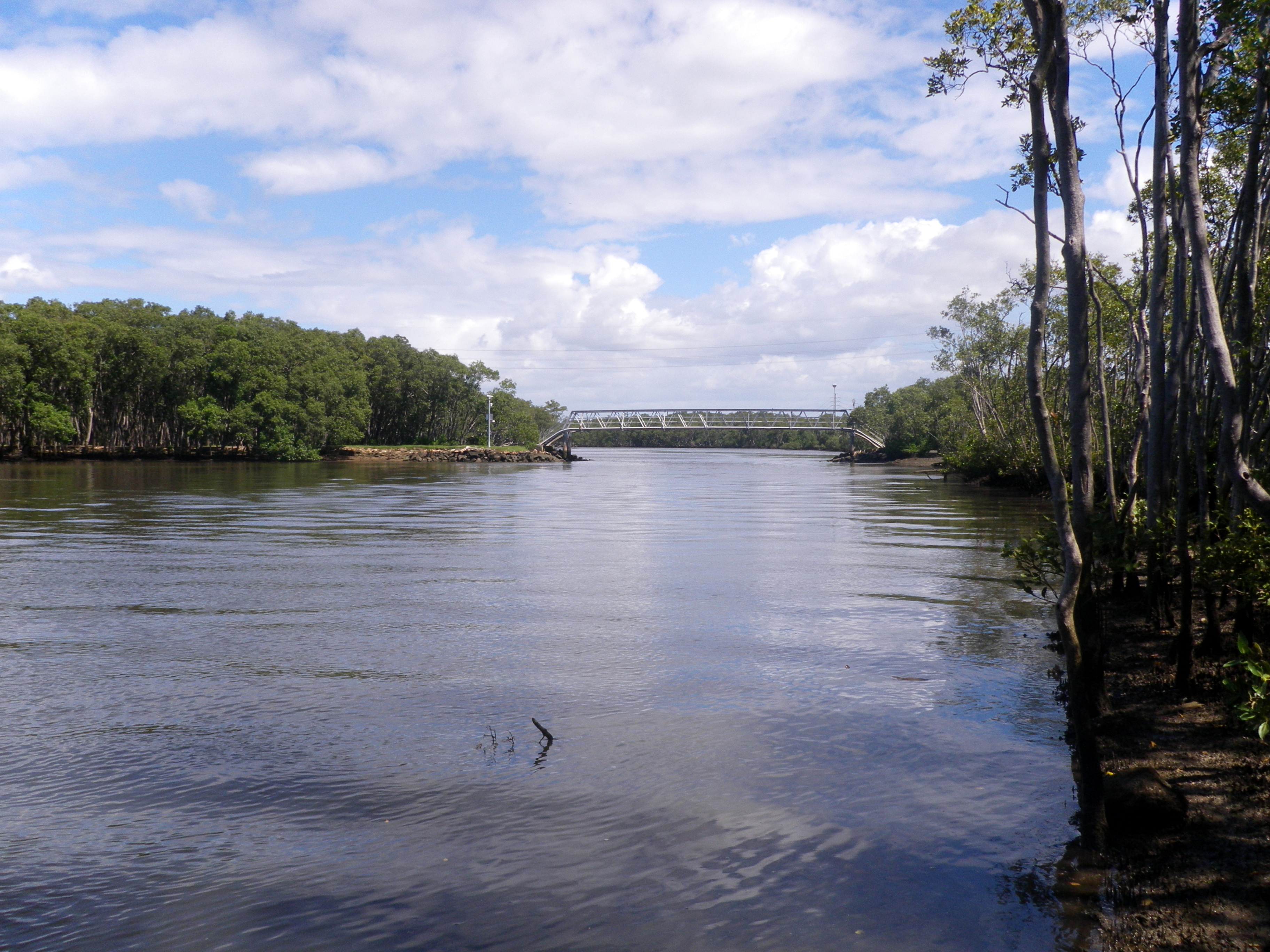
I arrived on the mainland side of the Bribie Bridge at 4.30 am, just after first light. I waded straight out to the area just south of the old oyster jetty, where I had done well on the flathead, during my last session.

The tide was on its way out. It had been a 1.8m high, at about 3.30 am. There was not much flow as the moon was in its first quarter. It was a building northerly blowing with a stronger, south-easterly forecast to take over, later in the day.

There was not much weed moving around, so I decided to give one of my DUO hard-bodied lures an outing. My latest favourite is the Realis Shad 59 MR. This is a shallow diving, suspending, 59mm minnow, with a great rattle and the usual superb DUO finish. It is perfect for fishing over the weed beds and I was keen to try it with the new G.Loomis TSR series light spinning rod that I am now using. I picked out a gold/ bronze coloured one and tied it on.

The sun broke over the horizon just before 5.00am. There were a few mullet jumping around and as a few cormorants flew over, they spooked a large school of whiting/ mullet in the shallows. I started casting the Realis Shad 59 MR all around in a semi-circle in front of me.

I felt a few nudges and a couple of real bites. After about ten minutes a fish attacked hard and swam away with it. It too a bit of line but soon settled. It was a nice Bream – about 30cm long that had been cruising above the weed. About 10 minutes later, there were a few more knocks on successive casts and I hooked another smaller one.

I had made my way south, towards the green channel marker. It was just about 6.00 am and I could now cast over the edge of the major weed bank that runs along here. I felt an angry bite and then another. I pulled the trebles home and saw a Pike leap out of the water. I pulled it up close and shook it off the hooks.

The tide was now lifting a lot of sea grass so I decided to switch lures to a soft plastic. I chose the GULP 5” Jerkshad in the Watermelon Pearl colour. I loaded it on to a 1/8th ounce, 2/0 jighead and started fishing it along the edge of the weed.

I waded back towards the bridge but did not get a bite for more than hour. About 60 metres from the end of the old oyster jetty, I felt a grab, but I did not hook up. I cast back in the same spot six more times – slowing my retrieve down to a crawl. On number seven…. thud. I dropped the rod tip and slowly counted to ten. When I lifted it, I felt the hook slide home and I had a flathead on the line. This one was a keeper, about 45cm, but I was releasing everything today. It was just before 8.30 am.

Five minutes later and ten metres closer to the jetty, I found another slightly bigger one. Just before 9.00 am, I cast into the shallows – between me and the mangrove lined shore and the line went tight, immediately. It was the best fish of the day, about 60cm long. It was diminishing returns from then on. I caught two more fish, but both were around 35cm long.

By 10.00 am, the wind was blowing hard and I had Christmas shopping to get on with, so that was it for the day.

Bribie Island – the oyster jetty flats – 6 December 2013

I was delighted to be back on home turf but shocked at just how early sunrise is. With first light just after four you have to be up at three. Low tide at Bongaree, on Bribie Island would be at 5.10 am. At first light, I would just catch the last of the run out tide – which is usually a very good time to fish.

As I pulled into the car park beside the bridge, on the mainland side, I saw Colin’s car already parked up. Colin is the local flathead specialist -great minds think alike! I pulled on my waders and wandered out for a chat. He was chucking a few hard bodied lures around under the bridge and soon found a small flathead. He gave me an update on what has happening in the Passage and, as always it was a comprehensive briefng.

It was now about 4.45 am, so I set off to fish the weed beds, to the south of the old oyster jetty. It was a big tide so I had a good view of how the drains and channels had changed in the the 3 months that I have not fished here. The weed beds are thick and healthy but the drain that used to run out round the corner from Sandstone Point, is now much less well defined. The persistent northerly winds may have flattened the sand banks, a little.

The breeze was light but quite cool, from the south-west. I started fishing at about 4.45am and the tide was still running out. I was fishing with my new G.Loomis Trout Series (TSR) spinning rod. I was using a 10lb fluorocarbon leader tied on to 10lb Super PE braid. This rod is excellent but I am still getting used to its sensitivity. Pulling a soft plastic through the weedy bottom was confusing at first, I thought I was getting bites but was not sure. Then I saw a few skid dart past and I realised they had been biting the plastic.

I kept moving south. The sun came up behind the clouds. I started fishing with a GULP 4″ Minnow in the Smelt colour. This caught a couple of small flathead just after 5.00 am. Then there was a pause, as the tide turned. I swapped over to a GULP 5″ Jerkshad in the Watermelon Pearl colour.

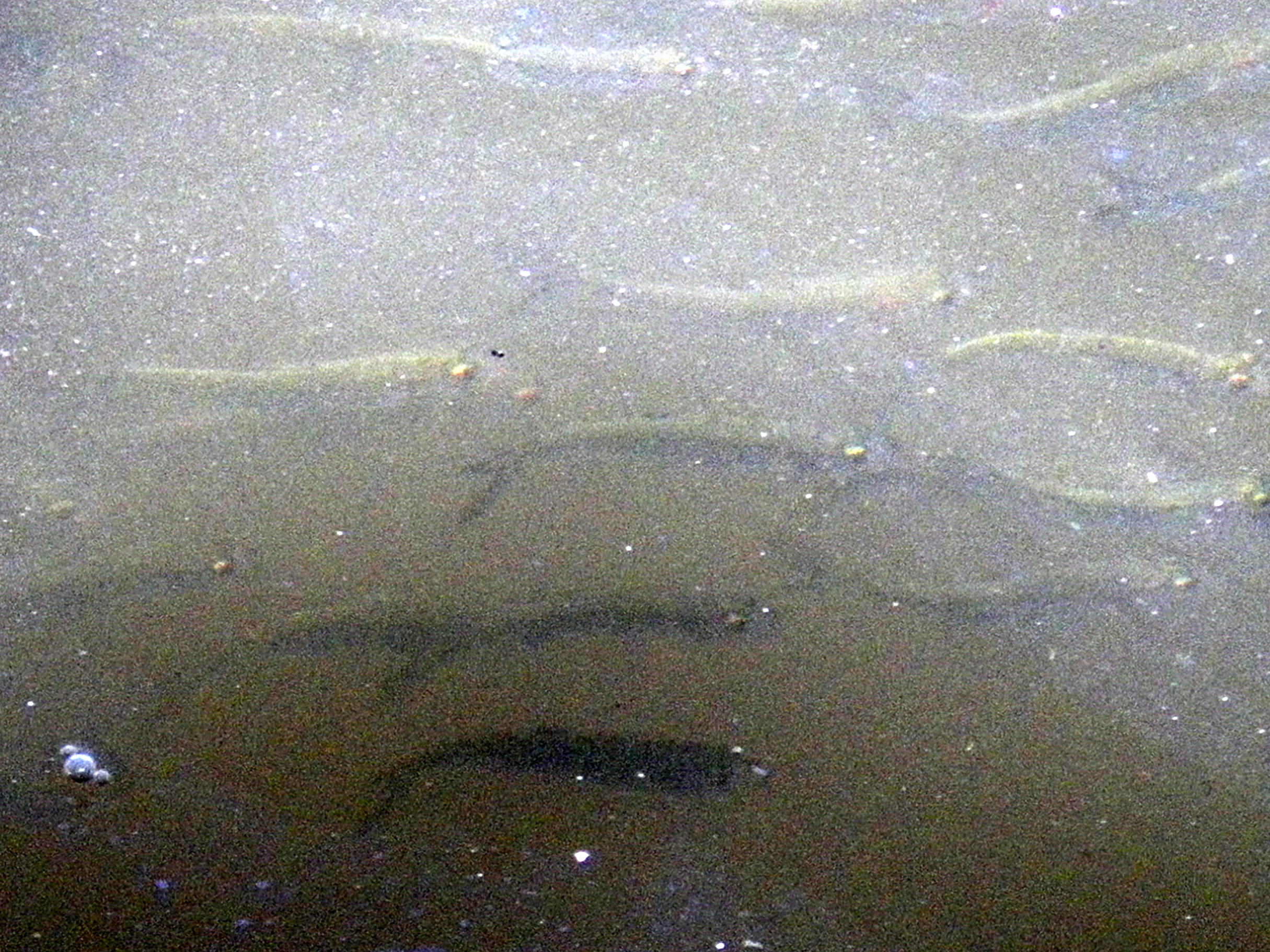
Flathead

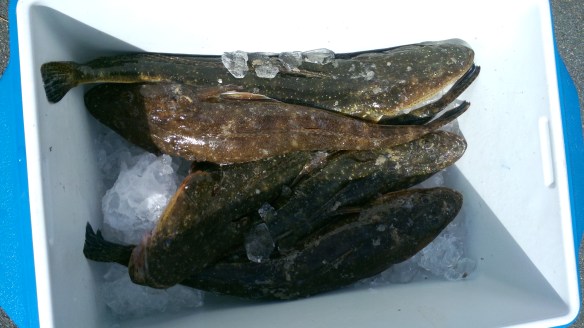
An esky full of Bribie flathead

At about 5.45 am the incoming tide picked up pace and I found a patch of keeper size fish. Over the next hour, I caught 12 fish along a 50 metre stretch of the weed beds. I kept five but forgot my camera. So all I have is the full esky to show you. The smallest fish was 44cm and the largest 59cm. I caught most of the keepers on the 5″ GULP Jerkshad but also found a few with the Zman Minnowz in the Redbone colour.

It was great to have such a successful first session back on home turf.

Yeppoon – Fishing Creek – 31 October 2013

Thursday

Time for one last session at Fishing Creek before heading back to work. It would be a late morning low tide with not much wind to start with. There was no need for very early start as the creek would be too full of water to wade along, until about 7.30 am.

I was back to fishing light. I was using my recently acquired Berkley IM6 Dropshot GEN IV 6’6″ Light Spin two piece rod, rated 2-4 kg. I paired it with the Shimano Stella 2500 loaded with 8lb Fireline and a 12lb fluorocarbon leader. I had a few of my favorite GULP soft plastics and small DUO hard bodied lures, in my chest pack.

I started with the trusty GULP 3″ Minnow in the Watermelon Pearl colour on a 1/8th ounce, size 2 hook jighead. This soon found a few small flathead. Wherever I found flathead lies in the sand I cast around until I found the fish and it usually worked.

I swapped to a 3″ Minnow soft plastic in the newly available Red Green Sparkle colour. GULP have recently released a few new colours in Australia and this is my favorite amongst the newcomers. The new colours fill in a few gaps in the range. I will not try to describe the colour but have a look at the photos attached to this post. The new colour did not seem to have much trouble and after a few casts, I christened it with a small flathead.

As the tide ran out I followed it about 3.5 kms down the creek. My constant companion was an eagle looking for a free lunch. I kept catching small flathead but there were not many keeper size ones around. I swapped back to the more natural coloured Watermelon Pearl Minnow and this produced a decent estuary cod.

At about 11.30 am, as the wind picked up and I was about to give up for the day, I found a reasonable sized grunter bream. I released it and made the long trek back to the car. Not many big ones, but plenty of fish – which I think makes for a good session.

Walilly Creek nr Lake Monduran – 25 October 2013

Friday

After a week at home with no time to fish it was time to get back to work. Apologies to my regular Bribie Island readers, but I have not had a chance to fish on my home territory for a while. Whilst I am missing the best time for flathead fishing in the Pumicestone Passage, I am sure there are plenty of people out there catching good fish.

I was headed from Brisbane to Rockhampton again on Friday and decided to break the journey at a suitable looking creek to have a quick fish. I chose Walilly Creek just to the west of Lake Monduran. The Bruce Highway crosses the creek via a small bridge. I parked up to stretch my legs after a few hours driving and decided the sunken timber on the western side of the bridge looked promising. It was overcast but hot and it was about 11.00am.

I rigged up the light spin outfit and loaded it with an 1/8th ounce, size 1 hook, jighead on a 2.5 inch GULP Crabbie in the Peppered Prawn colour. I was fishing with 10lb fluorocarbon leader and 8lb original fused Fireline.

I cast the soft plastic at some fallen trees and immediately got snagged. People often ask why I used the softer, light wire TT jighead series (they come in the green backed packet). I like them because, as in this case, they give and bend when you apply pressure. This has a downside if you hook a monster fish but it means that you can often bend the hook slightly and pull it out of a snag, then bend it back into shape. This means you lose a few fish but you lose a lot less gear, while you are working out what is going on under the water. The problem with fishing soft plastics in the freshwater is that the fish are always buried deep in the structure, so you have to put your casts right into the middle of it.

I straightened the hook on the jighead, pulled it free and then reshaped it with my pliers. Don’t do it with your teeth – I learned the consequence of putting a hook in your mouth fairly early on – not good! I straightened the soft plastic lure so that it was sitting right and cast a few feet to the left of the fallen tree. As soon as I lifted my rod something took the plastic into the timber. I felt the leader pulling against the branches so I loosened the drag and waited for perhaps twenty seconds. I retightened and pulled the fish free. I saw the slime covered leader and realised it was a catfish. I think I can safely say I now know how to catch catfish.

I moved further away from the bridge and caught a catfish. I moved closer to the bridge and caught two more catfish. In fact, I caught about 8 in the next 30 minutes. I change soft plastics and tried some small hard bodies. The different soft plastics caught more catfish and the hard bodies did not get a hit.
I looked at my watch. It was time to get going. I had found another creek full of fish; the only problem was they were catfish. Still it was better than sitting at the service station with a bad cup of coffee!

Yeppoon – Fishing Creek – 12 October 2013

Saturday

On Saturday I drove back out to Fishing Creek so that I could be fishing as the sun came up. There would be a few hours more water in the creek than the day before and I was sure that would mean some better fish.

I used the same tactics as the day before – light spin rod and reel, light leader, light jigheads and small, natural coloured soft plastic lures. The earlier start paid off and on my first two casts, I caught two small flathead.

As I moved down the creek there were plenty of bait schools moving up and down. I paused at a point where the main channel ran over a sandy drop off. I was now fishing with a GULP 2” Shrimp in the Banana Prawn colour, on a 1/8th ounce, size 1 jighead. I crossed the channel as quietly as I could and cast back up into the tide, which was running out. I caught two small flathead (about 30cm long) and then another one that was just over 40 cm. They were all sitting along this bank. I was convinced there were some bigger ones somewhere here, so I carried on casting.

It was now about 7.20 am and I think it was still a couple of hours off low tide, at this point in the creek. I had now switched to the GULP 4” Minnow soft plastic in the Pearl Watermelon colour. There was good current flow but a 1/8th ounce jighead gave me just the right sink rate. I kept casting as close as I could to the mangrove roots and the deeper water along the edge of the channel. I let the lure get washed along the bottom for about ten seconds on each cast. On one of these casts, I lifted the lure and felt some resistance. I set the hook with a jerk of the rod tip and there was a long, powerful run back up the creek against the current. I had found a decent fish.

Fortunately this one did not seem to want to go back into the roots but it did start to cause problems when it turned and started swimming with the current flow. I just let it run – with a 10lb fluorocarbon leader, I did not have much choice.

It kept its head down but I gradually tired it out. As I brought it into the shallows it created some big swirls and I saw it was a nice flathead. I grabbed the leader and gently pulled it up the sand. It measured about 77cm on my tape and after a few pictures, I let it swim off.

I moved onto the next likely patch of darker water and loaded a new soft plastic in the same pattern. After a couple of casts something ate it. I could feel the fish trying to wedge itself against the terrain on the bottom and knew it was an estuary cod. Eventually a 40cm cod popped up on the surface.

I was now about 3km from the mouth of Fishing Creek and it was just after 9.45 am. I was still using the 4” Minnow soft plastic and something grabbed it and took off. After a tough fight I pulled up a 30cm Trevally which had completely swallowed the lure.

I turned around and headed back to the car. I looked at my legs and realised I had been monstered by sandflies – I would be itching like hell in a few days’ time. On the way back I caught a few more cod and tiny flathead. The fishing had definitely been better than the day before, but I had probably just timed my session better. I’ll be back!

Yeppoon – Fishing Creek – 11 October 2013

Friday

On Thursday, I found myself with time off for a few days. I was in Central Queensland and decided to drive out to Byfield National Park, just north of Yeppoon. I stayed at the Rainforest Ranch Cabins in Byfield (which are very comfortable, but more focused on providing a romantic getaway than fish filleting facilities) and intended to drive over the sand hills, to fish in Corio Bay, as I have done before.

I was up early and reached the foot of the big sand hill that leads over to Nine Mile Beach, at about 6.15 am. I lowered my tyre pressures to about 22 PSI and put the FJ Cruiser into low range. Last time it had floated up this hill – but that was after months of rain. This time it was like wading through treacle. The sand was soft and dry and the track had no doubt been torn up by previous drivers, who had found it as tough as I had. I tried three times and stopped when I started to sink and rolled back down to try again. After three attempts I gave up. I was on my own and I was concerned I would get stuck and not be able to simply roll back down. I need a bit more practice at this sort of thing.

I turned around and looked at my options. It was now just about low tide. I decided to drive back through Byfield and towards Yeppoon. I would go to the end of Fishing Creek and walk down it, towards Corio Bay, fishing in the pools and mangrove lined channels. This spot had produced a few fish for me in the past but it looked like it had potential for far better things.

By the time I got going it was about 8.30 am. Low tide was about 7.30 am in Yeppoon, so I assumed it would be about 1.5 hours later, this far up Fishing Creek. The moon was a somewhere between new and full and it was not a particularly big tide. It was hot – already about 28 degrees. It was still but a northerly wind was forecast to pick up later in the morning.

I was fishing light – 2.8 kg Fireline and a 10lb fluorocarbon leader, Loomis GL2 Fast Action spin rod and Shimano Stella 2500 reel. I started with small soft plastics in natural colours on a 1/8th ounce, size 1 hook jighead. The locals had recommended the GULP 2” Shrimp and 3” Minnow, in the Banana Prawn colour, for flathead and grunter bream.

I waded through the shallows and paused to cast wherever there looked like there was a bit of a hole or drain. There were plenty of schools of small mullet (or perhaps blue salmon) cruising the shallows. I was hoping the bigger predators had followed them up the creek.

I passed plenty of flathead lies on the exposed sand banks, but most looked like the fish would have been under the legal size. My first fish of the day was a tiny flathead that was sitting a metre from the bank, in about 15 cm of water. It was now just after 9.00 am and I expect we were nearly at low tide, as the water was slowing.

I found a slightly deeper channel, on a mangrove lined bend and concentrated on putting my casts in close to the mangrove roots. I lost plenty of jigheads to the trees and roots – but that’s where the fish live so if you are not pretty close, you will not catch them. I had some solid bites and caught another small flathead. At about 9.30 am something grabbed the GULP 2” Shrimp soft plastic and dragged it down into the roots. I could not pull it out so I let the drag off and eventually it swam out and I pulled it up on to the sandbank. It was an estuary cod, but only a small one. I let it go but as it swam away another predator – an eagle, swooped down and grabbed it. It did not have a good grip and dropped it on the sand. It soon swooped for another attempt and this time it was successful. It disappeared into the mangroves to eat its breakfast.

I continued along the creek and caught several more cod, the largest of which would have been just over 40 cm long. At about 11.00 am the tide turned in and I decided I had better head back to the car. I was delighted to be catching fish, even if they were small. I decided to try and get back here a little closer the high tide next time.

1770 – The headlands , beaches and Round Hill Creek – 8 September 2013

Thursday to Sunday

Unfortunately, there is not much to report from the remaining days I had at 1770. The south-easterly blow persisted, so I was pretty much limited to fishing the rocks on the northern side of the 1770 headland and the creeks. The high seas stirred up the water and so it was soon fairly murky.

I drove into Eurimbula National Park and fished the creeks. I fished lighter and lighter, until I finally found a few whiting and small bream. I also went back down to Baffle Creek and failed to catch anything. I tried Wreck Rock and Flat Rock beaches, but the water was just too stirred up and the wind was still howling.

As you will see from previous trip reports, you often have to work hard for your dinner here, but this was a disaster. I gave up on Sunday and drove back inland to do a bit of work and see if I could catch something other than catfish, in the inland waterways.

1770 – Baffle Creek – Deepwater Creek – 4 September 2013

Wednesday

From Gayndah I drove north to Agnes Waters/ 1770 for the important part of the trip. Unfortunately the weather messed up my plans. No rain this time but a howling south-easterly blow.

I decided to do some exploring around Baffle Creek. I started on Wednesday morning at Flat Rock on Baffle Creek. There are a few submerged rock bars in this area. I walked out onto one in the pre-dawn light and cast a few soft plastics along the edge of the Mangroves.

Just after first light I caught a decent Bream – about 32 cm long, but as the sun came up everything went quiet. I moved down to the flats to the south of the boat ramp and cast around with a GULP 4” Minnow in the Pearl Watermelon colour. I had a few hits in the shallows but I could not hook up. I slowed the retrieve and caught a small flounder.

I carried on for an hour but I could not catch anything more, so I decided to switch locations. I drove into Deepwater National Park and decided to stop and fish along Deepwater Creek. This is a long meandering waterway that works its way out to the sea near Rules Beach. It is fresh at the top end but then flows over a small weir to meet the salty water. It is shallow and tannin stained but there are a few deep holes.

I swapped down to very light gear – 8lb leader and 1/8th, 1 hook jighead and a 3” GULP Crazylegs shad in the smelt colour. After all the rain earlier in the year, there was plenty of water in the system, but it was not running over the weir. I stopped at a few breaks in the vegetation on the bank and put in a few casts – no luck.

I followed a track off the road, down to the weir itself and decided to cast at the snags along the banks. There was plenty of bait close to the bank and something was lunging at it, periodically. I cast in close to the snags and lost a few jig heads.

After about an hour of peppering the area, I had not had a touch. I was about to give up. I cast in, under an overhanging branch, a few inches from the bank. The lure started to sink and there was a tail splash as something engulfed it. It took off hard for mid-stream. Then it leapt out of the water and I could see it was a small Barramundi.

It calmed down and I pulled it up onto the concrete. I was delighted to have my first barramundi. It was sitting on the salty side of the weir and was a golden bronze colour. I did not measure it but it was about 40 cm long. I took a few photos and sent it on its way. It was just before noon.

The wind had forced me to spend time exploring and it had paid off.

Bribie Island – Bongaree and White Patch – 22 August 2013

Thursday

Clear skies and 10 knot south-westerly winds – it would be cold but quite reasonable fishing weather. Low tide would be 4.17 am, about an hour before first light and the moon had been full the day before.

I decided I would start on Bribie Island at the Seaside Museum drain at Bongaree, again. I waded out into the shallows at about 5.30 am and the big moon was still high and bright. There was a cold breeze and a bit of chop on the water.

There were some cormorants swimming around and there were a few surface bust ups, as the sky gradually lightened. I started with a big soft plastic – a GULP 5” Jerkshad in the Lime Tiger colour. The water was already running fast – it would be a powerful tide, so close to the full moon. I was back to 8lb fluorocarbon leader, as I genuinely believe fishing light can make a difference when chasing bream – which were the main target.

It did not take long. At 6.15 am I had a solid bite and the fish ran with the lure for about a metre, but then I lost it. A few casts later I hooked another. It must have been sitting just below the edge. It grabbed the lure and ran off to the north, with the current. After a few runs, I got it over the ledge and walked it back to the sand. It was a good bream – over 30 cm. I have not caught large numbers of bream in this spot, this year, but almost all the fish I have caught have been over 30 cm.

The tide was getting too high to fish over the ledge so I opted to switch locations. I grabbed a hot cup of coffee at Scoopys and drove up to White Patch. This time I went up to the north end to fish around the weed beds.

The water was clear and it was well past dawn so I opted for a natural coloured, 2” GULP Minnow in the Banana Prawn colour. I chose a fine wire 1/8th ounce, #1/0 hook jighead and stuck with the 8lb leader. It was now about 8.15 am. I was casting into the incoming tide and hopping the lure back towards me. I would put in about three or four casts from one location, then move a few metres south and repeat the process.

At about 9.00 am I connected with a flathead and got a look at it, but it wriggled off before I could land it. I stayed in the same spot and methodically covered the area with casts. At about 9.15 am I hooked another fish and this time I set the jighead firmly. I pulled it up to the shoreline – it was a keeper flathead at 45 cm. Using the same plastic, same technique, in the same area, I caught another bigger flathead, about 50cm long, ten minutes later.

Five minutes later, I thought I had another small flathead but it was pulling very hard. It put up a tremendous fight and as it came into view I was surprised to see it was a whiting. It was probably the fattest whiting I have ever caught and measured 36cm.

At this point I had the makings of a good fish pie in my bag, so I gave up and went off to clean my catch.

Bribie Island – the Seaside Museum flats – 12 August 2013

Monday

Sunday had been a disappointment I had fished for three hours and caught nothing. Had my fishing mojo deserted me? There was only one way to find out – get straight back out there. So, on Monday, I was up early, to beat the forecast building south-westerly winds.
I decided to head for Bongaree on Bribie. I would go back to a familiar spot where I felt confident that I would catch something. I was heading for the freshwater drain in front of the seaside museum.

It would be low tide at 6.28 am and at this stage there was no wind. I arrived at about 5.45 am. I put on my waders and walked out in front of the drain down to within a couple of metres of the drop off into the main channel. After a disappointing day on Sunday, I decided to fish very light with 8lb fluorocarbon leader. I chose to stick with natural coloured small soft plastic lures. These were most likely to tempt the bream.

I started with the 2” GULP Shrimp in the Banana Prawn colour. After a few casts, in the pre-dawn light, I felt a tug and then the pressure was gone and so was the jighead. Something sharp toothed had swallowed the lot. I re-rigged, and upgraded to 12lb fluorocarbon leader. I was out of shrimps so I tied on a 3” GULP Minnow in the Banana Prawn colour.

I cast into the running tide and hopped the lure along the bottom back towards me. At about 6.20 am I broke my duck with a decent bream, about 30cm long. About 15 minutes later, I caught another – a little smaller. Then things went quiet.

The cormorants and the dolphins like to fish in this area which suggests there are plenty of bait fish around but I could not see them in the water. I swapped through a few soft plastics and tried a small hard body vibe lure for a while.

By about 7.00 am I was back with the 3” GULP Minnow in the banana prawn colour. In an effort to get something going I was leaving the lure on the bottom for as long as possible between rod lifts. This can sometimes entice bored fish to strike. It did the trick and the rod bent over and something powerful took 3 metres of line and disappeared under the ledge.

I presumed it was a cod by the tactics. Brute force was not going to pull it out, I only had my light rod and 12lb leader. I tried a few angles but there was no movement. I decided my only option was to loosen the drag and see if it swam out. This requires the patience of a saint. You cannot put the tension back on until you are sure the fish is clear of the overhang. I waited about two minutes and then the line very slowly started to float out and away on the current. I waded along with it for about another 20 seconds then tightened the drag and pulled the fish over the ledge and slowly back to the beach.

It was a nice estuary cod – it measured up at 49cm and proved how good these fish are at ambush attacks. I decided it had earned its freedom and released it after a few pictures. The wind was up and although it had not been an easy session I had caught fish – so I went home happy.

Bribie Island – White Patch – 11 August 2013

Sunday

On Sunday I decided to try fishing at White Patch on Bribie Island. There have been a few Snapper around – just watch a few of Nigel Newman’s great video fishing reports on https://www.facebook.com/gatewaybaitandtackle. He, and others have caught some nice keepers lately. They seem to come a fair way up the Passage at this time of year and, in my experience, they often come on the bite just as the tide turns in.

This slideshow requires JavaScript.

I arrived at about 5.30 am and parked by the first set of steps that lead down to the shore, at White Patch. My favourite soft plastic for tempting a snapper is the GULP Turtlebackworm in the Pumpkinseed colour. So I started with this one, on a 1/8th ounce, 1/0 hook jighead. Low tide was at 6.20 am and the moon was a waxing crescent. There was no wind to speak of, but the water was quite dirty. As the tide turned, it lifted the weed and this made it difficult to keep the lure swimming.

As the tide really began to run in I was hoping the action would start. The weed floated off up the Passage and I kept casting. After 3 hours, I could no longer reach over the ledge without getting snagged on every other cast, so I gave up.
A morning with no fish, what is the world coming to?

Caloundra – Bulcock Beach and the Power Boat Club flats – 5 August 2013

Monday

As we were approaching the new moon I wanted to have a fish, pre- dawn. I was hoping to find some bream, which should, by now be schooling up to spawn, around the estuary mouths. I have not found many at Bribie, so I decided to try Caloundra.

I like to fish the rocky area, right at the mouth of the northern end of the Pumicestone Passage, off Bulcock Beach. There is always good tidal flow here and lots of structure. At night, the street lights bring the bait in and the predators follow.

I started about 5.30 am, in my waders on Bulcock Beach. I rigged up with the GULP 2” Shrimp in the Banana Prawn colour – which is gold with a black fleck. I put it on a 1/8th ounce, size 1 jighead. I was fishing with my 6’6” Loomis GL2 light spin rod. I opted for 8lb fluorocarbon leader as the water was very clear. High tide would be at 7.02 am, there was no real wind at this stage. It was forecast to pick up from the south west later in the morning. There would be a new moon in a couple of days’ time.

It was very dark and there were a few prawns skipping around on the surface. I cast the soft plastic into the fast moving water in the middle of the channel and let it sink. After about ten seconds, it was on the bottom, so I started hopping it back towards me. I paused for few seconds close to the shore line and when I picked up the rod tip I had a fish. My first customer of the day was a small pike.

I continued fishing, slowly moving towards the sea and soon picked up a bream about 28cm. I was hopeful I had found a patch of them, as my next few casts were all hit on the drop. I could not hook whatever was biting the soft plastic and so I moved on towards the mouth of the Passage.

Now the sun was up and the tide was running in. I decided to swap locations and drove down to the Caloundra Power Boat Club to fish the flats and weed beds. I generally find flathead in this area, so I rigged up a larger GULP 5 “ Jerkshad in the Satay Chicken colour – which is a mix of pumpkinseed and yellow. I found the edge of the weed beds that line the edge of the main channel and focused on leaving the soft plastic on the bottom, just where the sandy slope drops away to deeper water.

I took a while but at about 7.45am, I felt a solid bite and after a pause, I lifted the rod tip and set the hook. After a brief tussle I subdued a just legal 40cm flathead. I took some pictures and let it go, hoping I would find a better one. I covered the same area in casts but I could not find another one, so waded further along the edge of the channel.

I had no luck for about an hour and the wind was really picking up and making casting difficult. At about 8.45 am I felt another solid bite. Again the fish was less than a meter from the edge of the weed and was waiting to ambush anything that came its way. It was another flathead, about the same size as the previous one, so I released it.

I had not secured a fish supper but I had connected with a few fish and enjoyed a beautiful morning.

Bribie – Oyster jetty flats – 26 June 2013

Sunday

I was up early and even though it was cold and windy, I had to get my fishing fix. I drove up to Bribie and waded out under the bridge, on the mainland side, at about 6.00 am. Low tide had been at about 4.30 am. I had filled a bag on Thursday, so I was confident.

My target area would only be in range until about 7.30 am. The sky was clear but the wind made things tough and it was building. I waded straight to the north of the oyster jetty, to target the edge of the weed beds. This is where the fish are usually laying up.

I tried lots of different lures – Gulps, Z-Men, hard bodies, but I could not find the fish. Just as I was being pushed back by the incoming tide, I finally connected with a fish. It was a 46cm Flathead and I caught it with a 4” Gulp Minnow in the Pearl Watermelon colour.

The tide was too high to stay in this spot and the wind was making things tough, so I gave up. There was a big moon in the sky behind me and recent trips suggest the fishing is tougher in this spot when the moon is full. Maybe that is true – but I maybe had just failed to find them today.

Yeppoon – Byfield National Park – Corio Bay – 12 May 2013

Saturday

Paid work had left me in Rockhampton on Friday, so I decided to have a go at fishing in Byfield National Park, over the weekend. I have a new car – an FJ Cruiser – the perfect fishing car. I love it – great clearance, plenty of power and a hose out interior. I needed to give it a workout and to get it dirty and Byfield, with its many creek crossings and sandy hills, looked like the perfect spot. There had been plenty of rain, so there would be water in the creeks, but the sand tracks would have firmed up.

I set out before first light on Saturday and drove from Rockhampton to Byfield. I grabbed a cup of coffee and breakfast in Yeppoon and arrived at the Waterpark Creek causeway, that leads into the park, at about 7.30 am. Water was flooding over the causeway. According to the depth markers it was about 400 mm deep – no problem for the new motor. You have to watch this spot when there are showers around, as a lot of rain runs off into this creek. The water level can rise very quickly and leave you stuck on the wrong side.

I had wanted to visit Five Rocks Beach but due to the recent wet weather, the tracks in that direction were closed. I headed for Nine Mile Beach, instead. It takes about 45 minutes to an hour to get to the beach from the causeway. The biggest obstacle is a climb up a big sand hill. The track was a bit churned up towards the top but it was fairly firm. I am not sure that the old Suzuki Grand Vitara would have had the clearance to make it, but the FJ rolled over the top.

Nine Mile Beach is spectacular and looked particularly wild with the grey clouds rolling in. The wind was howling so I decided to drive down the beach to find some shelter and fish in Corio Bay. At the end of the beach there is a small track that leads across the back of the headland. I took this and found some sheltered water. I believe this area is Corio Bay. The rain kept coming over in squally showers.

I took out my light spin rod and reel and wandered along the mangrove fringed banks of a sandy channel. In between the mangroves, rock bars protruded into the channel at regular intervals, forming a couple of small bays. The tidal variation is huge here, often rising 5 metres from low to high. By the time I started fishing it was about 11.15 am – low tide had passed at about 10.30 am. The water was dark grey and very muddy. The area looked very fishy and I heard a few big gulps, in the eddies around the edges of the rock bars – could have been cod or even a barra – who knows?

I started with a Zman Minnowz in the Houdini colour, on 1/8th oz, 1/0 jighead. I was fishing with 10lb fluorocarbon leader. I lost a few soft plastics and jigheads to the rocks. I re-rigged with the same plastic and cast out and suddenly a fish connected, tight against the rocks. It pulled hard and kept taking short determined runs. I thought it might be a cod but it did not stop still, like a cod would. I got some line back, but it was now under an overhanging rock and I could feel the line rubbing. I did not have the power to pull it out with the light rod. I saw a flash of silver but could not identify it and then it must have loosened the jighead against the rocks, and it was gone.

I decided to try something a little more colourful and tied on a GULP Jerkshad in the Satay Chicken colour – a mixture of yellow and pumpkinseed. I stayed with the 1/8th 1/0 jighead and light leader. I cast it into the fast flowing water, in the middle of channel and let it sink. It was hit on the drop by something very fast and powerful. The fish ran with the fast current and took plenty of line very quickly. Then it jumped clear of the water and I could see it was Queenfish. Every time I got it close to shore it took off again, but eventually I pulled it clear of the water. I am sure it would only be considered a baby in local circles – but it was the biggest Queenfish I have ever caught. I took a few pictures and let it go.

I tried more and swapped through hard bodied lures, vibes and a few more soft plastics. I ended up fishing with the Zman Minnowz again. I fished around the rockbars and felt a few bites. I left the lure on the bottom for long pauses. About an hour after the Queenfish capture, I hooked something else. It pulled hard and hugged the rocks. In the end I pulled up another fish I have never caught before. Not sure what it was – see pictures. I released it and decided to give up, as another shower was coming over the headland.

I drove back through the rain, safely crossed the causeway and drove back to Yeppoon. This is a fantastic spot. I will be back!

1770 – Eurimbula Creek – 8 May 2013

Wednesday

With the weather showing no signs of improving, I decided it was futile to keep trying on the rocks, so on Wednesday, I drove back out to Eurimbula Creek. I arrived a little after first light and the tide was running in. The water was not quite so dirty here. I went back to basics and started by fishing with small, lightly weighted soft plastics, first a GULP 3” Minnow in the Lime Tiger and then a 2” Shrimp in the Banana Prawn colour. After an hour with no luck I switched to a DUO Tetraworks Bivi, small, hard bodied vibe lure. This did not stir anything up either.

I decided to try a slightly bigger soft plastic and put on a GULP 4” Minnow, in the Pearl Watermelon colour. The tide was running in fast, so I also upped the weight to a 1/6th ounce, 1/0 hook jighead. The water had now come over the sandy edge of the main channel. I dropped the lure over the edge and then retrieved it, pausing for as long as I could, right at the edge. I felt the small bait fish attack the lure on each retrieve and then, after about 10 casts, a bigger fish grabbed it. It was a dusky Flathead – just over 40 cm. After a few pictures it went back.

I moved nearer to the mouth of the creek and put on a GULP 3” Jigging Grub in the Pumpkinseed colour. I lost a few of these to the fast flowing current and the fallen trees. I rigged up for the third time and aimed the soft plastic at eddies around one of the snags. It was hit on the drop and the fish went straight into the tangle of roots. With the Loomis GL2 light spin rod and 10lb fluorocarbon leader, I really did not have the power to fight a determined fish in heavy current – the fish was in charge. I backed off the drag a little and it swam out. I let it move about a metre away from the snag, tightened the drag and then increased the pressure again. It headed straight back in. We repeated this process 3 times until I eventually pulled out a 45 cm estuary cod. It was perfect cod terrain with overhanging mangrove roots and plenty of snags.

The rain showers kept coming. At about 10.00 am, I caught a couple of small grunter bream (javelin fish) – about 30 cm long. I had swapped back to the GULP 2” Shrimp in the Banana Prawn colour. I have caught plenty of these in the creeks around here, especially after heavy rain. I put them back and carried on fishing, up and down the creek bank, as high tide came and went.

By about 11.00 am I had had enough and drove back to Agnes Water.

Bribie Island – Oyster Jetty to the channel marker – 18 April 2013

Thursday

At last the cooler (and hopefully drier) weather is beginning to show itself. I love this time of year. Dawn is later so I become slightly less nocturnal and the fishing improves exponentially with the cooling water temperatures and the more consistent south-easterly winds.

It was back to Bribie Island – my home fishing territory. I was in position under the mainland side of the Bribie Island Bridge at 5.00 am, about an hour before dawn. Low tide would be just before 9.00 am. This is the ideal tide situation for fishing these flats. The tide is about halfway out and running nicely. The fish have moved up into the shallows during the night with the high tide and are now gradually retreating. They stay in shallower water in the pre-dawn light, as they still feel fairly safe.

I cast around but the water was already too shallow directly under the bridge lights, to warrant fishing that area, so I gradually moved up, past the old oyster jetty and concentrated on an area of weed banks, about level with the end of the jetty. There are sandy hollows in the weed and when the water depth is just right the flathead like this spot.

I started with a GULP 4” Minnow in the Smelt colour on a 1/8th oz, 1/0 jighead. I was fishing with a 10lb fluorocarbon leader and my Loomis GL2/ Shimano Stella 2500 spinning outfit. It was still dark. It was now just before 6.00 am. There was just a faint glow on the horizon. I put a few casts out into the shallows and the fun started. The first fish was a good one – a flathead, just over 55cm long. I was going to release them all today but this one had half a tackle shop hanging out of its mouth, so I put it in the keeper bag. It looked like it had swallowed at least one hook and had some pretty heavy trace with another broken hook hanging off it.

I cast out again and felt another bite, but did not connect. On the next cast, I caught it – another Flathead – but this one was just a baby – about 30cm long. I kept going in the same spot and about 5 minutes later, I felt a good fish connect. This was another good fish, a little over 60 cm.

The sun was now up and I gradually moved further to the south. There were a few long toms around and these would occasionally attack the soft plastic. I caught another undersized flathead at about 6.30 am and then things went quite for about an hour.

By 7.30 am I was about half way to the green channel marker. I had swapped to a GULP Jerkshad soft plastic in the Cajun Chicken colour. The water had started fairly clear but as we got closer to low tide it became murkier. Suddenly I felt a solid bite and I was on to another fish. I pulled it on to the sand. It was about 45cm. I then caught a couple more, of about the same size, on the same soft plastic.

I was sure there were more fish in the area but after another 20 minutes of casting, they seemed to have calmed down or perhaps, grown wary of the soft plastic. I swapped over to a small hard-bodied lure – the DUO Realis Shad 59MR. I have had success with the lure in this area before, but today I was using a new colour – purple/ silver called HD Gill. It is a 4.7 gram, 59mm suspending minnow with a great action. It will hover for a few seconds at the end of a swim and maintain its depth, to about 1.5 metres below the surface.

This soon stirred the fish up. I worked it along the edge of the weed beds, out by the channel marker and soon started hooking up. The first couple of fish were small. I turned back and covered the same ground I had been over with the soft plastic jerkshad and after an hour and half, I had caught six more flathead. They were all over 45cm and had all attacked the Realis Shad 59MR.

By about 9.45 am I was back at the bridge. I had three of the better fish in the keeper bag for a meal and I had really enjoyed the session. Early in the tide the water had been very clear and there had been no rain – let’s hope the fishing and weather stays this good.

Iluka – Shark Bay – Tailor, Tailor, Tailor – 12 April 2013

Friday

Friday was my last morning in Iluka. The weather had been good for fishing – light winds and swell. But it had been miserable for camping, with endless rain showers and no time to dry out in between. Fortunately, I had been in a cabin.

A big south-easterly blow was forecast for the weekend and on Friday morning; it was already about 15 knots on the Woody Head platform. The seas had not really picked up yet but it would be too hard to cast from ‘ the Barnacles’ so I decided to give the Shark Bay rock platform a try. This is a great spot in a south-easterly wind, as you can cast off the north tip with the wind behind you.

I arrived just after 6.00 am. The sky was fairly clear, initially. Low tide had been at about 3.40 am. The wind was blowing hard so it would only be possible to fish on the north edge and cast to the north-west. These were perfect conditions to get some long casts out of some hard bodied lures.

I knew there might be some big fish around but I have really enjoyed fishing with the lighter 10 ft Shimano Catana Coastline Light, this week – so I stuck with it. It is rated 3-5kg, but as long as you have a tough leader and a good drag, it can land some pretty hefty fish. When I break it (which I inevitably will) I will look for a better quality alternative – but so far, so good.

It has a poor reputation for durability and most coastal tackle shops have put their fair share of new tips on. Despite this, it is a very nicely balanced rod and I particularly like the way you can feel the action of the lighter hard bodied lures through the tip. I really wanted to catch some fish using my latest favourite DUO lure – the Realis Jerkbait 120SP and the Catana is perfect for it. The Realis Jerkbait 120SP is a clever sub-surface suspending lure that you can get down to about a metre below the surface without too much trouble . It is long (120mm) thin and flat sided, which accentuates light reflection, as it moves through the water and it has both a good slow and fast action. I have had a few of these in some great colours and lost them all to fish.

Now I was down to my last one, in a yellow/ cream/ gold colour known as S70 – Dead Ayu. I have swapped the trebles for single hooks, in the hope of hanging on to the lure for a bit longer! I had lost one to a good fish a few days before so I was determined to land something with this one.

I cast to the northwest into the choppy, white water. There is a patch of reef that breaks the surface, about 125 metres to the north-west of the rock platform. I aimed at this and with the wind behind me, I was able to put in a very respectable long distance cast. I started the retrieve, jerking the lure along for a few metres, then pausing and allowing it to suspend. There was action behind the lure on the first cast with splashes and surges, but it took about six casts to hook up.

I am fairly new to single hooks and my view is that they do not connect with as many fish as trebles do, but once they do connect, the fish stays hooked. That was the case this time and I soon had a 40cm tailor at my feet. I cast straight back out and watched as another tailor knocked the Realis Jerkbait 120SP out of the water but then failed to get hooked. Almost every cast was getting hit. Sometimes I could see the snouts and tails of long toms but usually, it felt like tailor.

About 10 minutes after the first tailor, I was on to another better one. This one put on an acrobatic performance with several jumps, before I tamed it. It was just over 60cm and the best of the week. There then followed a good tailor session with the DUO Realis Jerkbait 120SP accounting for six tailor around the 40 to 45cm mark, over the next 20 minutes. It also pulled up a couple of over enthusiastic long toms.

At about 7.00 am things went quiet so I swapped to a 65g Raider metal slug. I tried this for about twenty casts with no result, so I swapped to a soft plastic lure. I started with the small GULP 3” Minnow in Lime Tiger, that had proved so appealing to the mac tuna. I put it on a ¼ oz, 1/0 jighead and cast it out. There were no more tuna but after a few retrieves another good bream took it. I landed it and then caught another.

There was another quiet spell so I swapped to a bigger GULP Jerkshad in the Sweet & Sour Chicken colour. The tailor must have been passing through again because after a number of bites, pulls and aborted runs, I hooked up again. It was another 40cm fish.

The tide was now almost up to my waist so it was time to retreat. It had been a great session and good way to end the week. Bream, dart, tailor, tuna, trevally and flathead – another great week of fishing in Iluka.

Bribie – The oyster jetty flats – 14 March 2013

Thursday

The wind had finally blown the rain away. It had turned round to a south-westerly and was quite cool on Thursday morning. It had been forecast to drop right off but was still pretty persistent in the trees as I drove up to the Pumicestone Passage. I arrived at the small car park, on the mainland side of the Bribie Bridge at about 4.30 am. The sky was clear for a change.
The tide was still running out but had slowed right down. Low tide would be at 4.52 am. I waded out under the bridge lights to find Colin (a local Bribie fishing expert) in position again – there are some big advantages to living 5 minutes away.

He was fishing to the north of the bridge so I took the south side. The water was murky and still and there was no sign of any bait. At this time, there is usually a fair amount jumping around, but there was not much water under the bridge lights and it was now almost still. The water was very dirty – as you would expect it to be on the bottom of the tide. I realised that I have not seen a dolphin in the area for a few weeks which may mean there is no bait for them to chase, but it could also be that the water is still a little too fresh for their liking.

I tried a white coloured GULP Jerkshad and then a more natural coloured smaller, 3” Smelt Minnow soft plastic. I rigged both on 1/8th, 1/0 jigheads and I was fishing with 10lb fluorocarbon leader down to 6lb Fireline in the luminous green colour. There are now a number of different colours available in Fireline but this green colour is the easiest to see in low light. I got snagged a couple of times and re-rigged with various soft plastics.

I did not get a touch from any fish but for the first time in weeks, I was treated to a magnificent sunrise. This is a great time of the day to be out and about. I waded south and fished along the edge of where I thought the weed beds would be. It was hard to see where I should put the lure with the sun low on the horizon and the water so murky. The tide started to run in and gradually picked up pace. As it did so it lifted bits of loose weed and debris so I could not swap to fishing with small hard bodies. I thought these might have a more success in the shallow dirty water.

Just after 7.00 am, I was half way between the end of the old oyster jetty and the green channel marker, in about waist deep water. Having tried a few brightly coloured plastics and few natural coloured plastics, I had swapped to a GULP Jerkshad in the Cajun Chicken colour. This is a black colour with a bright pink underside. The tide was running in so quickly that I had put on a heavier 1/6th oz, 1/0 jighead. This also helped me figure out quickly where the edge of the weed bed was. I carried on casting up, into the incoming tide and bouncing the lure along the bottom, with lots of long pauses. At about 7.20 am I felt a pretty solid hit and saw some bait fish go flying. I cast back in the same spot about 6 or seven times – nothing. On cast number eight, there was a surge and splash and the fish took the lure, almost on the surface. It was a small flathead – under 40cm. I was relieved to find it. I took a few pictures and released it.

I continued south and stuck with the same soft plastic. Perhaps the dark silhouette was the only thing that was working in the sediment filled water. It was a big tide and now it was a little short of half way in to the run in and the water was getting too deep to stay close to the edge of the weed. Just short of the green channel marker, there is an exposed sand bank and just to the north-west, there is a drain where water from the bay floods in. This must be why the fish congregate here. Without looking, I knew I had reached it because the water temperature dropped a few degrees and I instantly felt the change, through my waders. I turned back towards the oyster jetty and kept moving. After about another 15 minutes I found another flathead of about the same size. It did not put up much of a fight. I photographed and released it.

I waded slowly back to the bridge, casting as I went, but I did not catch any more fish. I arrived at the bridge at about 8.45 am and the wind had picked up again. A tough session – the fish may be reluctant, but they are there.

Brisbane River – Pinkenba – Boggy Creek – 13 March, 2013

Wednesday

I did not have time for a real fishing session but I wanted to do a recce of some local spots. You have to keep your eye on things so that when the weather is difficult, or you only have limited time, you still have a few locations to try.

Boggy Creek, at Pinkenba, is a shallow muddy water way that runs along next to the oil refinery, near the mouth of the Brisbane River. It is not a particularly picturesque spot, but it has produced some great fish for me and it is always fun to catch stuff so close to the city. I have caught bream, tailor, pike, flathead, cod and even a 6 kg jewfish. I have also seen a few good size mangrove jacks pulled out of the water.

I had a couple of hours around lunch time so went down to have a look. I arrived about 11.00 am, just after a big high tide. I started by casting soft plastics under the bridge. The water was very murky, as it often is here. After a few minutes, a big school of bait (looked like small mullet) passed under the bridge. They were being harassed by something from underneath. A few minutes later a big school of bigger mullet passed through.

The bait came and went and there was plenty of it. The occasional prawn skittered past. I lost a few jigheads to the rocks, shopping trolleys and car tyres under the bridge and did not get any strikes, so I move towards the mouth of the creek and cast around from a gap in the mangroves. I had a few double tap strikes from small bream or perhaps tiny tailor, but I did not hook anything.

The GULP minnow range matches the bait profile

The GULP minnow range matches the bait profile

The GULP minnow profile is a pretty good replica of the real thing

The GULP minnow profile is a pretty good replica of the real thing

Boggy Creek bait - a good copy of the GULP minnow

Boggy Creek bait – a good copy of the GULP minnow

Boggy Creek - a great Brisbane River fishing spot

Boggy Creek – a great Brisbane River fishing spot

The mosquitos where thick and were pretty successful at biting through my long sleeved fishing shirt. After all the rain, don’t come down here without a head to toe covering in Aerogard. After a couple of hours, I gave up. By now there were a few keen anglers using their lunch break to chase a few.

The bait was everywhere and I would think this spot is definitely worth a fish at dawn and dusk when the bigger predators will be around. I’ll be back.