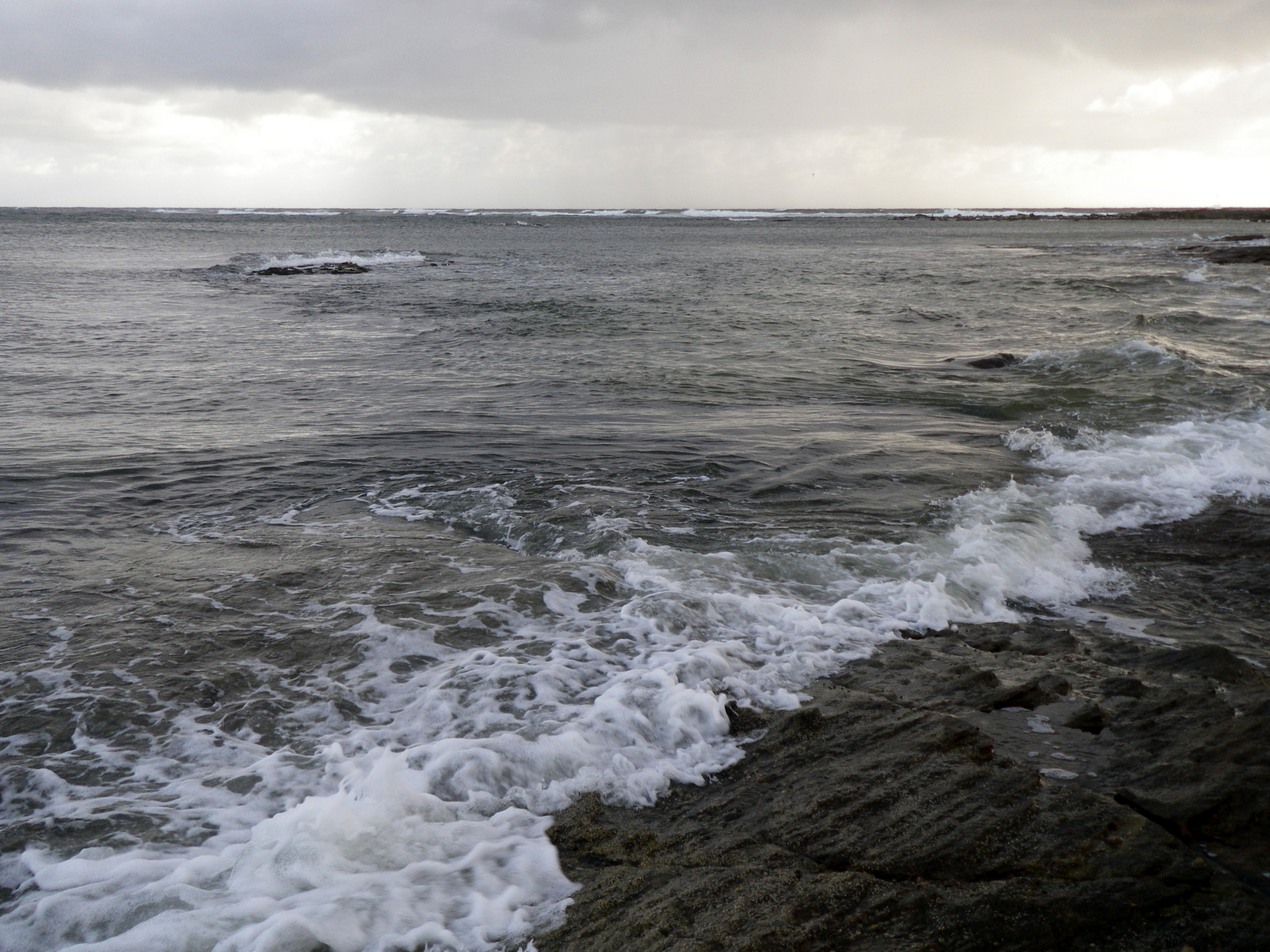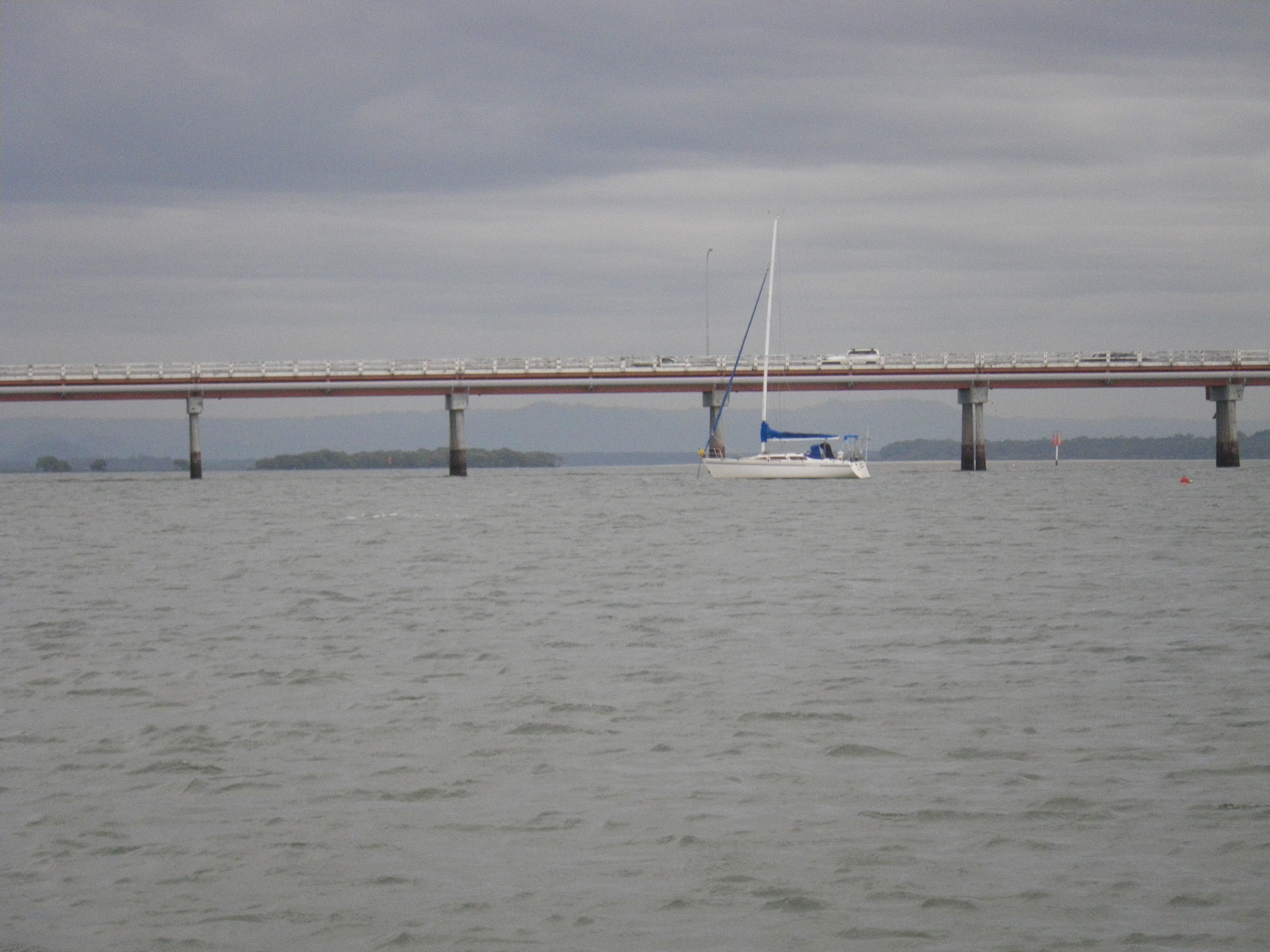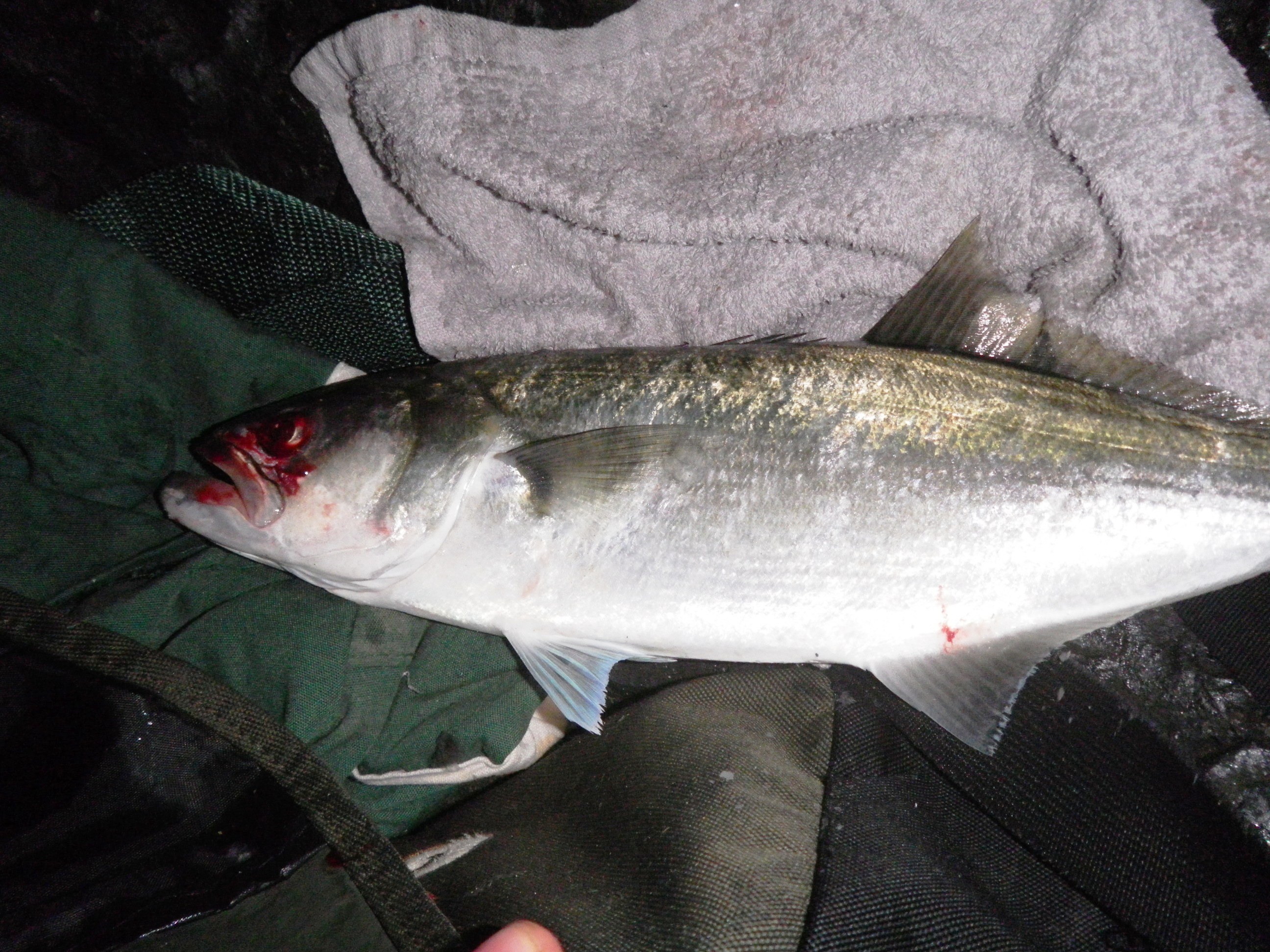
Bribie – The old oyster jetty flats – 2 January 2016

Saturday

With Christmas done and dusted and the New Year underway. It was time to find an interesting activity other than eating and drinking. When your waders are getting tight you know you are in trouble. I needed to get moving and a morning fishing session is a great way of doing that.

The weather has been far from ideal for the trailer boat based angler over the Christmas and New Year holidays. High winds and seas have pushed a lot of boats into the Pumicestone Passage. This means things have been fairly busy during daylight hours.

On Saturday I was up at 3.45am and drove up to Bribie Island for a 4.30 am start. Low tide would be at about 8.30 am and the wind was forecast to pick up to a 10 knot south westerly. The moon was waning and had been full about a week earlier. I decided to fish the flats in front of the Sandstone Point Hotel and waded out under the bridge just as the light went out.

I started fishing with a GULP Jerkshad in the Pearl Watermelon colour, mounted on a 1/8th ounce, size 1/0 hook jighead. After a couple of tough sessions in this area I chose a 10lb fluorocarbon leader. I cast around under the bridge without any luck.

I waded towards the old oyster jetty and swapped to a smaller GULP 3” Minnow soft plastic in the Smelt colour. I felt couple of bites from small fish and then a solid thud from a flathead. I struck a bit too soon and missed hooking the fish.

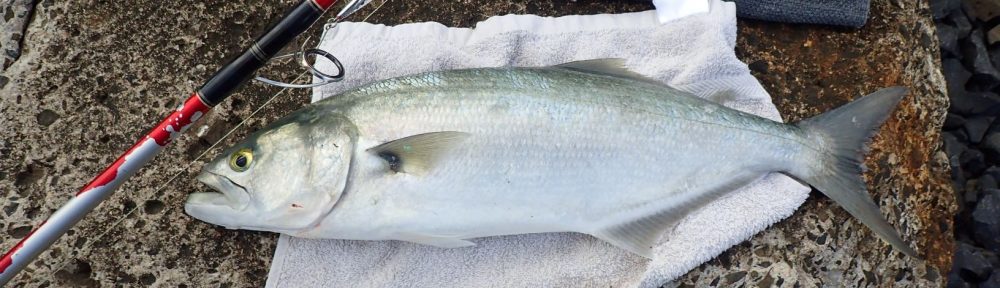
I swapped soft plastic lure again just as the sun broke the horizon. This time I chose a Jerkshad in the BBQ chicken colour. I was now just to the south of the jetty standing about 15 metres form the mangroves casting in to the areas of sandy bottom between the weed beds. There was lots of bait around and every now and then something would smash into it from below. I slowed down my retrieve and paused longer between hops. This worked and at about 5.15 I safely landed a 45cm flathead.

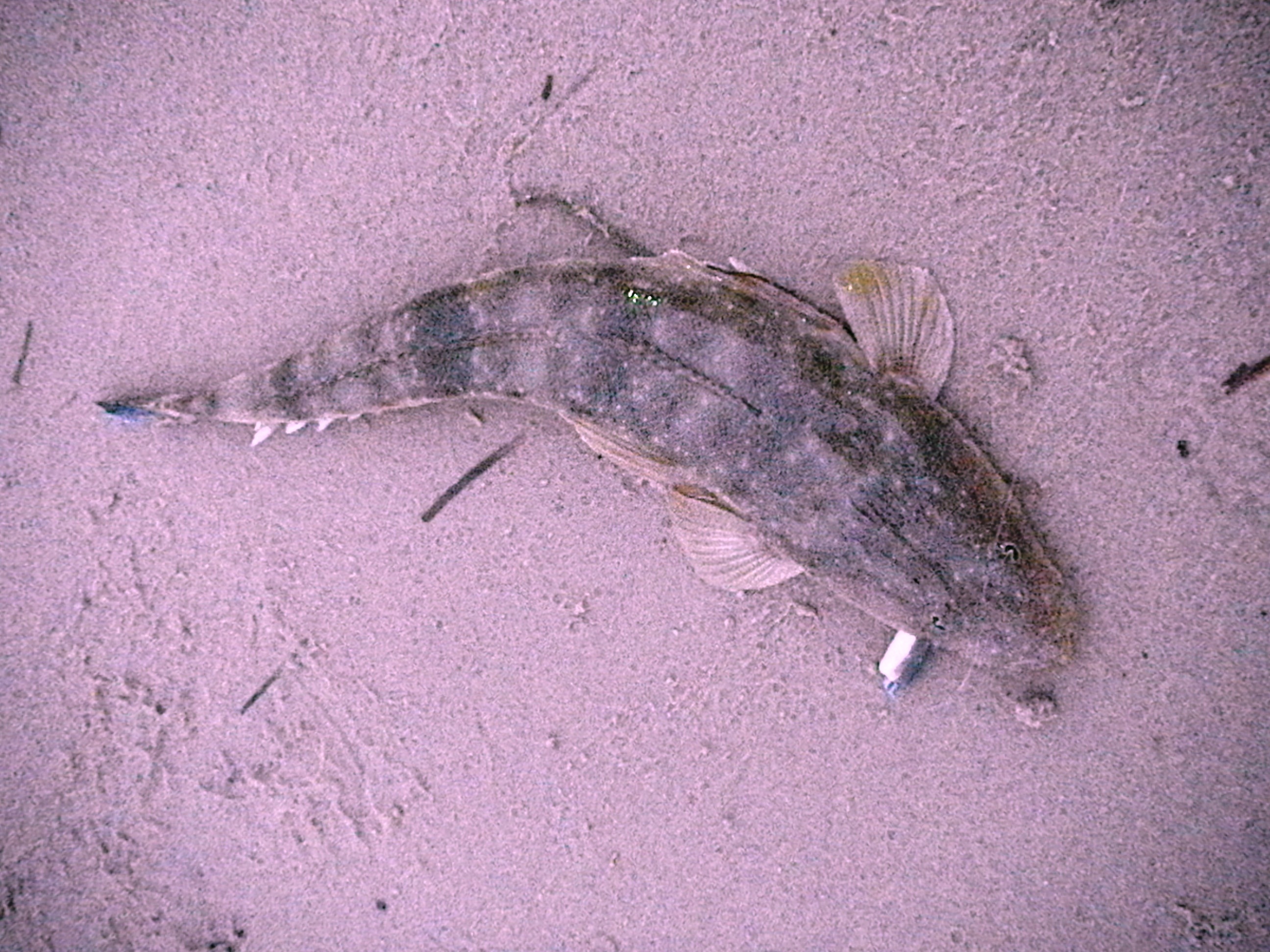
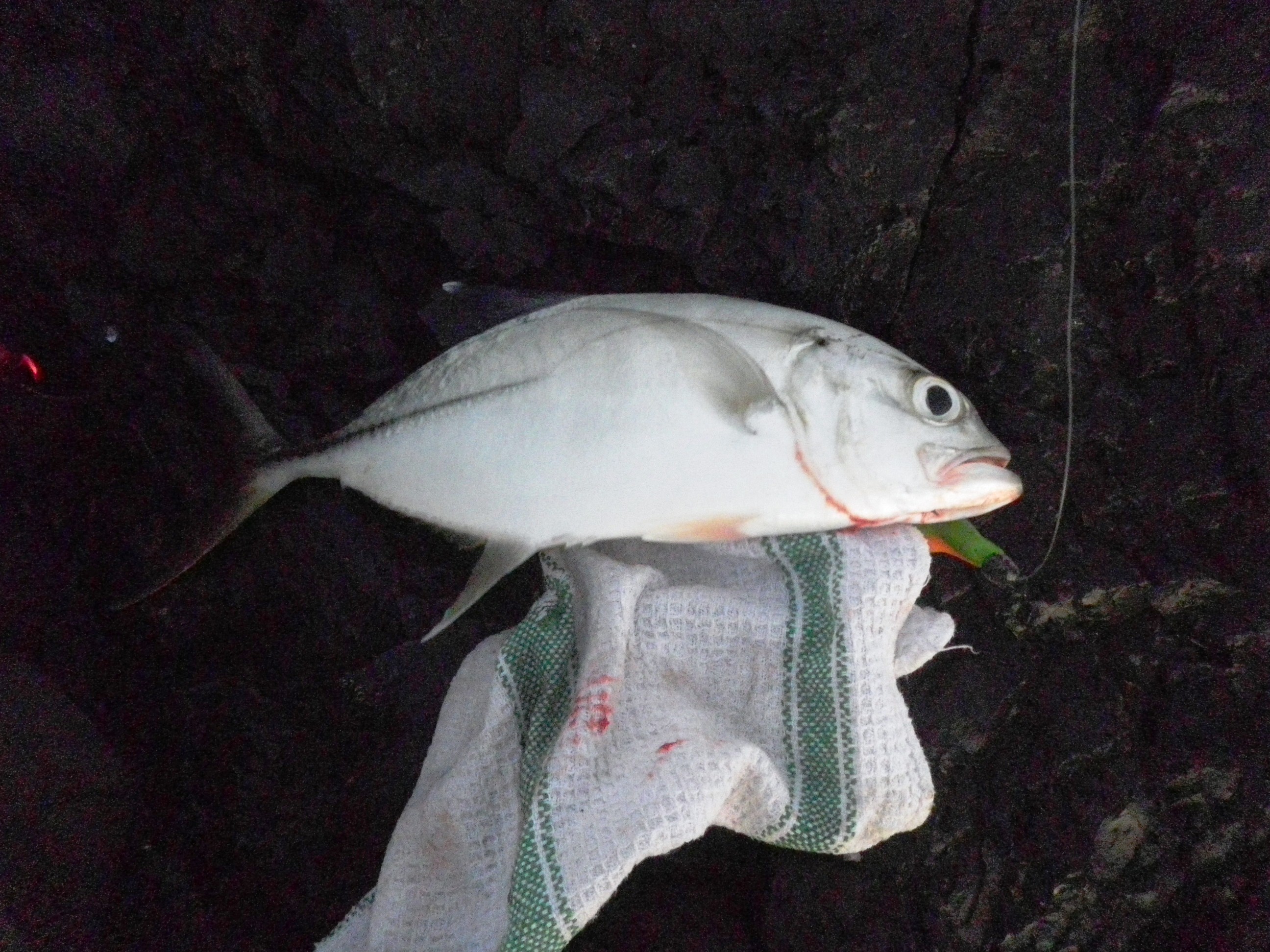
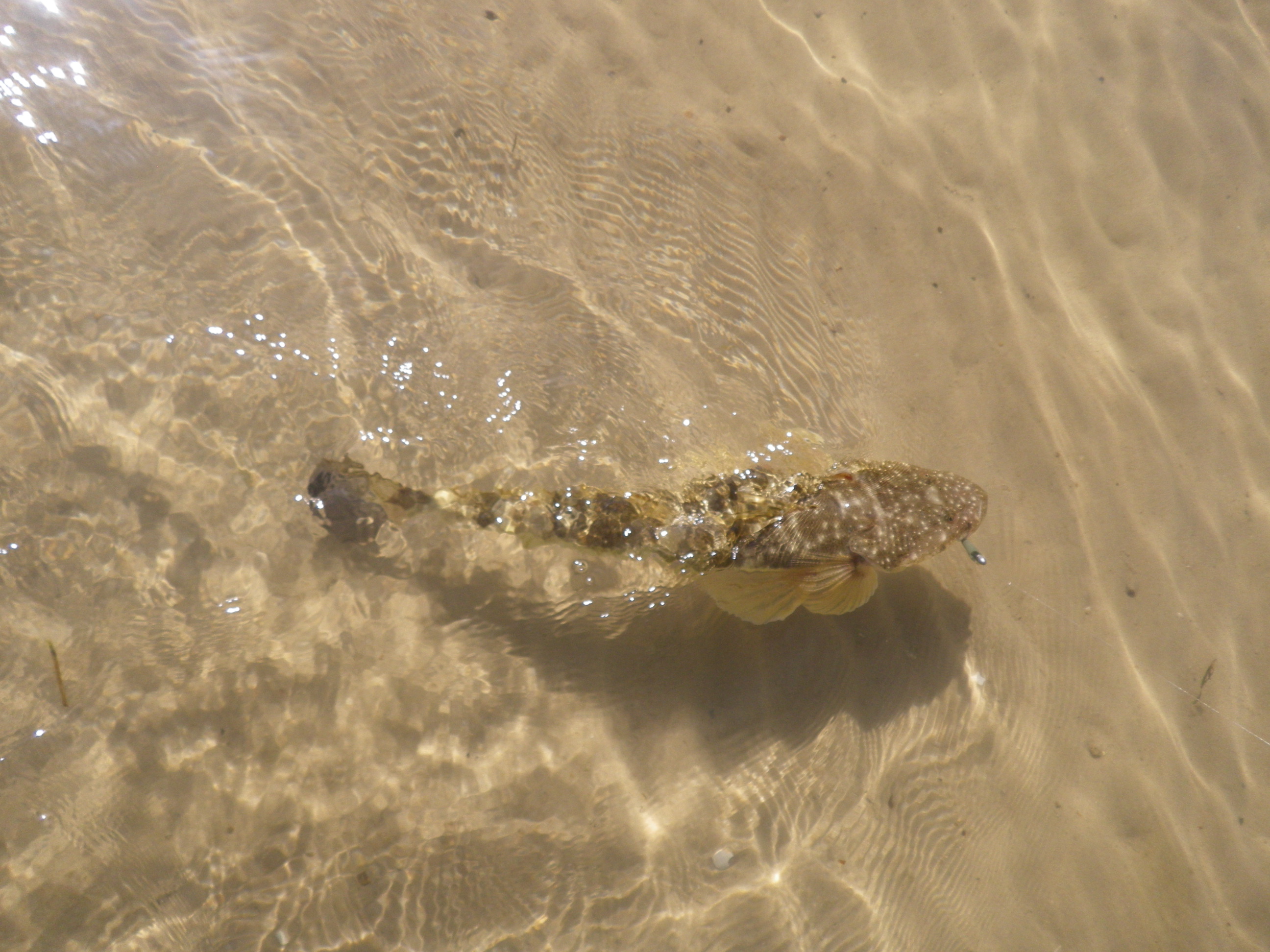
About ten minutes later I caught another. This one was about 50 cm long and things were now looking good. I continued to pepper the area with casts but I could not find another. I moved slowly south casting as I waded. At about 6.00 am the wind started to pick up and by the time I reached the green channel marker at about 7.00 am, it was really blowing. Despite the wind there were now plenty of boats running out into the bay. I caught a tiny bar-tailed (sand) flathead by the green channel marker and then turned to wade back towards the bridge.

I got all the way back to the jetty before I got another bite and infuriatingly, after a brief run the fish slipped off or spat out my plastic. I was now fishing with the GULP 4 “Minnow soft plastic in the Pearl Watermelon colour. Just as I came close to the bridge and was about to wade out of the water, I felt a good bite and dropped the rod tip. I paused for what seemed like eternity but was actually about 5 seconds and then lifted the rod tip. The jig head’s hook set in the fish’s mouth and it took off. After a short run it settled and I pulled it ashore. It was another flathead, about 50cm long.

I had three good fish for dinner. As always the key was getting out early, before the boat and recreational traffic got going. I am looking forward to some more peaceful sessions in the near future.

Bribie – the old oyster jetty flats – 7 December 2015

Monday

I had time for a quick fishing session on the flats at Bribie Island. School holidays had not really started so I was still hopeful that I would find dinner. I wanted to fish the run out tide. Low tide would be at 12.40 pm. It had been fairly windy with strong northerlies blowing for the few previous days. Today a strong south-easterly was forecast and it was blowing at about 20 knots from that direction, when I arrived at the Bribie Island Bridge.

I parked on the mainland side and walked out under the bridge.  The new café is now open at the old oyster jetty so there is now plenty of space to observe the fishing opportunities in this area. I don’t think there will be a sudden flood of anglers, as the mud and oyster covered rocks will put all but the diehard flathead hunters off.

I was fishing with my light rod and reel spinning combination. I have swapped back to the NS Blackhole 6′ SGII 602L trout rod. This rod picks up even the slightest of bites and although it does not have any grunt it can handle a good sized flathead. I was using the 2500 size Shimano Stella reel with it. I think the braid on the reel is about 8lb breaking strain Sunline Super PE in the bright green colour. I was using about 1.5m of 10lb fluorocarbon leader.

I started fishing with a large GULP Jerkshad in the Cajun Chicken colour on a 1/8th ounce, size 1/0 hook jighead. After twenty minutes, I had passed the jetty with no bites, so I swapped down to GULP 4” Minnow in the green camo colour. Perhaps I had just found the fish or the change of lure and the fresh scent it contained, woke the fish up, but I almost immediately got a bite. I thought I had the fish hooked but after a couple of runs it was gone. I cast back at the same spot and slowed things down. On about my sixth repeat cast the fish grabbed the soft plastic again. I paused and dropped the rod tip for a few seconds. It took off again and I was sure it was hooked but unfortunately it wriggled off again.

I waded slowly south. Just before I reached the green channel marker, I saw a couple of big squid hovering in the shallows. I cast my plastic at them and managed to hook one through the wing. I slowly pulled it in, relieved that I would at least bring home something for supper.

The tide slowed and then started to run in. The wind made things very tough but I just could not find the fish. I swapped through lots of different shaped and coloured soft plastics but did not stir up any interest.

Finally at about 1.50 pm, with the tide running in and the water very stirred up, I felt an obvious bite. I was now fishing with the GULP 4” Minnow in the Pearl Watermelon colour (probably my all-time favourite flathead soft plastic). This time the jighead pulled home and I reeled the fish in. It was only a 30cm flathead – but at least it was a fish! I photographed it and let it go.

I waded slowly back across the exposed flats. There were soldier crabs everywhere so there is plenty of food for the fish here. I did not see any flathead lies so maybe the persistent northerly winds have blown them off to another spot for a while. The northerlies seem to have flattened out the terrain quite a bit in the last few months. At about 2.30 pm I gave up for the afternoon.

Iluka – Middle Buff – Tailor – 14 June 2015

Sunday

The wind had picked up from the south-east on Saturday afternoon and then dropped off again overnight. I was not sure where to fish on Sunday morning. The swell had made the fishing tricky all week. I decided to try Middle Bluff, the headland between Frazer’s Reef and Woody Head, in the Bundjalung National Park.

I was up early and was pleased to walk out on to the beach to only a light breeze. It was about 6.00 am and the remainder of the moon was clearly visible as the horizon started to glow. I disturbed a couple of big kangaroos who were standing around down at the water’s edge. They took off into the undergrowth.  The broken clouds made for a fantastic pre-dawn with the red sun taking a quite a while to break through. The tranquillity was soon broken by the sound of the waves crashing against the rocks. The wind was light but the swell was definitely still up.

I walked round to the northern end of Middle Bluff and watched the surf for a while. Fishing safely off the front of the Bluff was going to be impossible. I decided to move to plan B and try spinning for some Tailor.

I rigged up the heavy rod. I wanted to try the DUO Pressbait Saira 175. This is effectively just a beautifully crafted and weighted 175mm, 50g sinking metal slug/jig. I fish it just like any other metal slug – long casts with a mixture stop/ start, continuous, slow or fast retrieves depending in the conditions and terrain. I was sure this would appeal to the tailor, if they were around.

The rocks protrude a long way into the bay at this spot so you need to put in long casts and keep the lure moving. I was now using a fairly short (0.6m) 30 lb leader tied on to 20lb braid with a long, solid uni-knot. The DUO Pressbait Saira is nicely weighted so you really do not need to hurl it out there. You just let gravity do the work.

I started casting at about 6-30 am, well after first light but before the sun had come over the horizon. On very long casts it is difficult to keep contact with the lure. The long length of line means there is a fair amount of slack which often initially disguises a hook-up. The rod tip only starts wiggling as the line gets really tight. After a few long casts and high-speed retrieves I felt a bit of weight and then the rod tip bent over. I had found a tailor. Frustratingly, about 20 metres from the shore it started leaping around and managed to free itself. I cast out in roughly the same location and after a few turns of the reel I had another fish. This one stayed hooked and I landed it successfully. I took a few pictures and threw it back, then cast out again.

Things went quiet for a while and the sun came over the horizon. At about 7.00 am I had the lure about 40 metres from the shore when something grabbed it and the reel started screaming. I held on tight but after taking about 15 metres of line the fish was gone and so was the Pressbait. I wound in a severed leader. I re-rigged with a 65 gram Raider metal slug and tried to find the fish with this. After another 30 minutes I had had no luck and I was exhausted.

I walked down to the corner of back beach and cast some soft plastics around in the shallows, I watched as a few schools of garfish follow and grab at the lures but I did not hook any. The swell showed no signs of calming down so at about 8.30 am I went off to find breakfast.

Gayndah – Burnett River – Mount Debateable Bridge – 2 September 2013

Monday

I did some exploring of the Burnett River at Gayndah on Sunday afternoon and spent the night there. I was up before dawn and drove a few minutes up river on the town side to another bridge that leads to Mount Debateable Road.
The river widens here and there is a large sand bar in the middle. The sides are full of submerged trees and rocks. It looked like another good fishing spot, with access to either bank on foot. I decided to stick with what had worked the day before and rigged up with the same small soft plastic and 6lb fluorocarbon leader. I put the plastic on a 1/8th 1 hook, jighead and started casting at the various bits of submerged timber.

I had arrived just after first light and before dawn. As the sky brightened I saw fish coming to the surface in various locations. I walked out about 10 metres, towards the middle of the bridge and cast back towards the snags, along the bank. I lost a couple of jigheads and felt a couple of bites, but by sun up I still did not have a fish.
I started casting close to the bridge and letting the soft plastic sit on the bottom for longer. Just after dawn the line slowly pulled tight and I realised I had a fish on. It did not realise initially but when it did it took off. I played it patiently – with a 6lb leader and my light rod – I could not muscle it in. I let it wear itself out in mid-stream, before gradually pulling it towards the bank.

I could see it was another freshwater catfish. It made a few attempts to bury itself in the snags but it was tired out and I soon had it on the bank. I took a few pictures and let it go. It was time to move on.

Bribie – Oyster jetty flats – 23 May 2013

Thursday

I was back in Brisbane and keen to fish at Bribie Island again. I wanted to see if the Flathead were still around, so I drove up, just after dawn on Thursday morning. The wind was light, but cold from the southwest. I had come through lots of fog on the drive up but by the time I reached the Bribie Bridge, the sky was clear.

I started on the island side of the bridge, fishing from the bank, without my waders on. The water was very clear and the tide was slacking off. It was about 6.30am and it would be high tide at 7.32 am. I tried a few plastics here and felt a few bites, then lost a few tails form various soft plastic lures. Small Tailor or Pike are usually the culprits in this location.

At 7.30 am I decided to warm up with a coffee while the tide turned. This period of slack water does not produce many fish for me so I decided to wait 30 minutes. Then, I drove back over the bridge, to the mainland side and pulled on my waders.

It was now about 8.15 am and there was still plenty of water at the mangrove line. As I waded out into the clear water I was shocked at how cold it had turned in just a few weeks. Unfortunately, the bright sunshine and clear days have triggered the algal bloom (snot weed) in the weed beds and this will soon be a pain in the neck.

There was plenty of bait in the shallows and I waded south to the oyster jetty. I started with a GULP 4” Minnow in the Smelt colour. My legs were already cold after ten minutes in the water and I backed out on to the shoreline to warm up.

In the crystal clear water I could see a very fresh looking flathead lie. I paused at the jetty and put in a few casts just south of it in the shallows. On the second cast a fish hit the plastic hard and then dropped it. I dropped the rod tip hoping it would have another go – and it did. It took off but was nicely hooked. When I subdued it and pulled it closer I could see a nice, 60cm flathead in the clear water. I pulled it up on to the shoreline and put it in the bag for supper.

I moved to the south and swapped over to a Zman Minnowz in the Rednone colour and fished around the base of the mangroves, near the drain that empties off the flats. After a few casts I had another good flathead – this on measured just over 50cm.

As the tide receded I moved further south, towards the channel marker. Over the next three hours I fished with both the Zmen and the Gulps and caught another 9 flathead. I kept 3 more, all around 45cm, to fill my bag for a good family fish feed. Of the 9 only two were undersize.

The fish had been quite spread out but they kept coming. It was a couple of days before the full moon and the tide I was fishing had been the smaller of the two on that 24 hour period. This moon and tide combination seems to be proving pretty a pretty successful fishing period for me.

1770 – Workmans Beach – 7 May 2013

Tuesday

The wild weather continued; strong south-easterly winds and plenty of rain. On Tuesday morning I braved the rocks at the southern end of Workman’s Beach, near Agnes Water. This area is sheltered from a southerly and south-easterly and there is plenty of fishy looking territory.

After a few days of big seas, the water was all stirred up and a milky brown colour. I started with soft plastics and then switched to slugs and hard bodies, but nothing yielded results. The sun came out mid-morning, but not for long. As the day wore on, the wind picked up. It then brought the clouds back in. Just after lunch, there was another downpour, so I gave up. Tuesday had been my first zero fish session for quite some time!

Nothing seemed to work today

Nothing seemed to work today

Bribie – Under the bridge/ The Seaside Museum creek drain – 11 March 2013

Monday

There is still a strong south-easterly blowing and it is still dumping rain on us. New moon is Tuesday and with all the recent rain the Bream should be around. With the big tides and the top up showers that water is not clearing up as fast as I thought it would.

I went for an early start again, as the hour before dawn has produced the best fishing recently. The wind was forecast to get stronger through the day, so I had a very limited choice of locations. I decided I would rely on the bridge lights at Bribie again.

I arrived just after 4.00 am. Low tide had passed at 2.50 am. The water was already running in fast and it was very muddy and weedy. I started with a GULP 4” minnow in the smelt colour on a 1/8th 1/0 jighead. I started on the south side of the bridge. I cast into the shadows and slowly hopped the plastic along the bottom, under the lights.

I spent 30 minutes methodically covering the ground to the south of the bridge. I did not get a touch and I did not see much bait moving around. At about 4.30 am, I moved round to the north side of the bridge. There is a good channel here, between two rocky patches. It is very difficult to get your lure to move along the bottom without getting snagged, but if you can leave it in the strike zone long enough, you are in with a chance.

On my first cast I got snagged. The water is shallow enough in this area to wade over and retrieve the lure, but if I did that, I would spook any fish in the vicinity, so I had to break it off and re-rig. I tied on the same lure again. But this time I put it on a 1/6th oz, 2/0 jighead. The water was running fast and even though I was more likely to get snagged, I wanted the lure on, or near the bottom, all the time.

I stayed in the shadows under the bridge and after a few casts, a flathead grabbed the plastic, just over a metre away from me and took off. It hooked itself and I steered it over the rocky bottom to the shoreline. It was just over 50cm and it was 4.57 am.

I swapped to a GULP 4” shrimp in the banana prawn colour (gold). I kept casting around the area and after about 5 minutes, I caught another flathead, just a little smaller than the first.

GULP Shrimp in Banana Prawn for the second one

GULP Shrimp in Banana Prawn for the second one

At about 5.15 am, I crossed the bridge to the other side of the Passage, to see if the bridge lights on that side offered any fishing opportunities. The weed banks in this area seem to have either been washed away or covered in sediment. There is a storm water drain that empties fresh water into the Passage just under the bridge – this will have been flowing pretty constantly recently. I waded up and down but did not get a touch. A big rain shower passed over just when the sun should have been coming up and all the time the wind was building.

I swapped locations again and had a quick cast around by the Seaside Museum creek drain. I spent about 40 minutes here but did not get a bite. By 8.00 am it was too blowy to carry on so I packed up. I had caught a couple of fish but would kill for some flat, clean water to fish in!

Bribie – Under the bridge – 5 March 2013

Tuesday

The rain is easing but it is just being replaced by howling south-easterly winds. The only real option would be to fish the couple of hours either side of dawn, in a fairly sheltered location. So it was off to Bribie again, to fish the area under the bridge, on the mainland side of the Pumicestone Passage, as the tide fell.

I arrived at about 4-45 am to find I was not the only mad angler wetting a line. A couple of fishos were on the bridge casting to the north – a few pylons out. A couple of good jewfish have been landed from the middle of the bridge, at night, recently. The favoured technique is to fish with very heavy gear then drop a grappling hook down once the fish is worn out. This strikes me as a pretty tough proposition – but it does work.

I rigged up and waded along the edge of the mangroves, to the south of the bridge. The wind was from the south east and was blowing around 15 knots. The water was dirty and running out, against the wind. High tide had been at about 3.00 am.

I started by fishing with a GULP Jerkshad in the Orange Tiger colour, on a 1/8th oz, 2/0 jighead. There was a bit of surface action on the edge of the pools of light, cast by the bridge lights. Every so often, I could trace the path of a cruising predator by the scattering bait fish. There were some pretty big surges and splashes which made me reluctant to wade out further.

I had no luck with the brightly coloured Jerkshad, so I made a counter-intuitive switch to a 3” GULP Shrimp soft plastic in the Banana Prawn colour. This is a gold colour that would not really stand out at all in the sediment rich, murky water. After about ten minutes of casting without result, I switched my attention to the deeper water, just out of reach of the bridge lights. I carried on peppering the area and was about to swap soft plastics again when I felt a solid bite and a few moments later, I set the hook on a good fish. As I pulled it in between the mangroves, bait went flying everywhere. There is plenty of food around. It was a good flathead, about 55cm long and I kept it for dinner. It was 5.10 am and its possible that the sun was trying brighten the sky but the clouds were too thick.

The heavens opened and I retired under the bridge. The fishos on the bridge had disappeared – probably washed away by the relentless rain. I started casting to the north and gradually moved along between the pylons. It was now a little lighter and the rain had stopped. The water was getting dirtier as the tide ran out. As I cast out, around the base of the third bridge pylon, I felt a good bite, but did not connect. I cast back in exactly the same spot and got hit again, still no hook up. I cast another ten times in the same spot gradually slowing the retrieve right down and increasing the length of my pauses. On the eleventh cast I felt the solid bite of a committed fish. I dropped the rod tip and slowly counted to ten. After what seemed like an eternity, I lifted it and felt the lure lodge in the mouth of the fish. The rod bent over, I felt the resistance and the tip started wobbling. I waded back to the shoreline and safely landed my second flathead. It was a little smaller than the first, just under 50 cm. It was 5.23 am. I also kept this one for dinner.

I swapped to a 4” GULP Minnow soft plastic in the Smelt colour. I concentrated in the same area, around the third pylon. At 5.34 am I caught another flathead, almost exactly the same size. Three fish is about right to feed my mob for dinner.

It was now light but the sun could not break out above the clouds and the rain showers just kept coming. I persisted in the same area but things seemed to go a bit quiet, as the traffic on the bridge built up and the water receded. I swapped down to 3” GULP Minnow in the Smelt colour and moved a bit further out, to the south of the bridge. I felt a couple of taps and then hooked a small Bream. It was now just after 6.00 am. A few casts later the same plastic produced flathead number four. The smallest of the morning, but it was still a healthy fish, at 47cm.

I waded south, past the oyster jetty and on to the windy flats. The sun almost emerged above the clouds but the now howling south-easterly immediately blew some more rain clouds in, to block it out. One of these gave me a thorough soaking and despite casting around for more than an hour, I did not get a bite out here.

Just before 8.00 am another nasty black cloud opened above me and I decided to call it quits. It had been a successful morning but the wild weather had made it a challenge.

Iluka – Shark Bay – 14 February 2013

Thursday

On Wednesday afternoon the south-easterly wind had not really dropped off, as forecast. I had a quick fish around Woody Bay but it only yielded one very small flathead, on a GULP 3” Minnow soft plastic.

Thursday was my last day and once again it started with rain and a strong south-easterly wind. Low tide was due at 5.40 am, just after first light. I decided to sit out the rain. Once it stopped, at about 6.30 am, I drove round to Frasers Reef and walked along the beach to Middle Bluff. The swell was just too big here and after an hour of losing gear to the rocks and getting soaked, I gave up.

By afternoon the weather had improved and the sun was out. The wind was still blowing from the south-east, so I decided to try fishing on the Shark Bay rock platform, as the tide ran out. I had intended to fish the north side of the rock platform, but when I arrived the wind was light enough and the tide was at just the right level to make it possible to fish on the south side.

After a week of fairly tough fishing, I was not confident of finding big tailor or jewfish, so I started fishing with my ‘light’ rock fishing outfit. I was using a 10lb fluorocarbon leader and a GULP 3” Minnow in the Banana Prawn colour. The swell was light and the water fairly clear so I dropped right down to a 1/8th oz 1/0 jighead. There are a number of low rocky outcrops on this side of the platform that extend into the sea like fingers. There a kelp and barnacle covered bommies all round. The area is dotted with patches of open sand and I concentrated on casting around the edges of these patches. I moved the lure slowly, letting it waft around in the surf. At about 3.00 pm a fish grabbed the lure and took off. It bit hard and took some line. It soon settled and it was not long before I had it safely on shore. It was a cracker bream that measured just fewer than 40 cm long. It had almost swallowed the soft plastic and jighead, whole.

I felt a few other nips over the next couple of hours and I swapped through a range of soft plastics and small hard bodies, but I could not find another fish.

Although the weather had made life tough it had actually been a pretty good week of fishing. I had caught some good bream and a great flathead. I am sure the school jewfish were around but I had just failed to find a spot where I could successfully get at them.

I hope the bait sticks around for a while and then as we move into the cooler months the land-based fishing will only improve.

Iluka – Woody Bay – 13 February 2013

Wednesday

On Wednesday I woke to more showers which were blowing through on a building south-easterly wind. I made some breakfast and waited for them to pass.

By the time the rain stopped it was about 6.30 am. The south-easterly was already blowing at about 15 knots and was forecast to get stronger through the day. There was not much point in trying to fish the headlands. The tide had been low at 5.00 am and had now turned in. I decided to fish around the rocks beside the boat launching area, on the edge of Woody Bay. This area, directly in front of the camp site, is sheltered by Woody Head. Even in a big south-easterly blow, it stays pretty calm.

A grey morning on Woody bay

A grey morning on Woody bay

I decided to switch to my really light spinning outfit – Shimano Stella 2500 reel, Loomis GL2 rod, 1.8kg Fireline and a 10lb fluorocarbon leader. The bait that had been jumping around close to the rocks, had been some kind of small whitebait, so I chose a GULP 3” minnow soft plastic in the Watermelon Pearl colour, which would represent a similar profile. I rigged up the plastic on a 1/8th oz., 1/0 jighead. As I stood in the shallows, the water was warm and I started casting along the edge of the semi – submerged rock bars. At about 6.45 am the rain started again and just as it did, I felt the familiar double tap bream attack. I did not hook up but on the next cast, I did. I wound in another very respectable bream.

GULP Minnow gets the first bream

GULP Minnow gets the first bream

I let it go and moved on, casting out and trying to rest my soft plastic lure, for as long as possible, right where the rocks met the sand. Just before 7.00 am I felt the faintest of grabs, as I hopped the lure along the bottom beside the rocks. Two more casts in the same spot produced nothing. On the third, the rod bent over as the jighead stopped dead.

It felt like the lure had stuck fast in the rocks but then very slowly the ‘rocks’ started to move. In a long slow run the fish moved about 6 metres to the south. Then paused and did the same thing again. I pulled up on the rod and tried to recover some line. It was only at this point that the fish realised that it was hooked and started really fighting. It was still so slow and heavy that I thought it was a ray or shovel nose shark. After a few more lunges it turned towards me and rose to the surface shaking its head. I could now see it was a big flathead.

With a ten pound leader I could not risk any abrasion from the barnacle-covered rocks so I let the fish play itself out. It had been lurking in less than 30cm of water so it was hard to keep its head down but I took my time and used the swell. I found a nice sloping rock bar and gradually eased the fish up in a breaking wave. It was a nice flathead who measured up at about 74cm. After a few snaps I put her back and she swam away.

The Clarence River is still very de-oxygenated and full of fresh water from the floods. It is likely that all sorts of species (including flathead) have settled around these headlands to wait for it to clear. The birds were very active, constantly swooping in to pick up baitfish. So it looks like a fair amount of bait has also been washed out.

I decided to wade around the shallows in the bay and look for some more fish. I was soaked from the rain and being in the water was warmer than being out of it. I tried all around the rocks with the same soft plastic and a few others, to see if I could find anymore flathead – but I couldn’t. I watched a few long toms follow my lures in and have a snap at them, but did not hook any.

I swapped over to one of my favourite DUO hard bodied lures. With the river out of bounds there was not much water where I could use their range of finesse lures, but this bay was flat enough and clear of weed, so it was perfect. I tied on the DUO Ryuki Spearhead 45s in a gold/ green colour. This is a small trout lure that seems to work well on bream. It weighs 4 grams and is 45mm long with a small bib. As with most of the DUO range it casts a long way and slips into its action almost as soon as it hits the water. Although it is technically a sinking lure, its lightweight means that it effectively suspends, when you pause the retrieve.

I cast it over the flats and around the rock bars as the tide rose. First it attracted a few undersize moses perch. Then, as I moved into slightly deeper water I found a patch of small bream. I caught a couple before they decided they had had enough.

At about 10.00 am I found myself almost back where I had caught the big flathead earlier. I had waded round the bay in a big circle. I continued to cast along the edge of the rocks and suddenly felt a solid hit and run. The fish was hooked and after a few good runs it calmed down and I pulled it up to the sandy beach. It was another good bream – just over 35cm long. I released it and carried on fishing for about another hour with no luck, so I decided to give up for the morning.

Bribie Island – The Oyster Jetty and White Patch – 21 August 2012

Tuesday

Monday’s session had not been very promising – there had been a distinct lack of Flathead in the usual locations at Bribie. Perhaps they were all in 1770.

So, on Tuesday I decided to fish the mainland side of the Passage, by the old oyster jetty. Low tide was around 5.30 am and at 0.3m it was a reasonably low, low tide. It is always good to see the areas you fish on a low tide as all of the fish holding structures, such as; banks, drains, gutters and holes, are revealed. The difficulty is remembering where they are once the tide comes in.

It was a cold morning with an overcast sky, the wind was in the process of switching from a south westerly to a northerly and was forecast to drop to nothing midway through the morning. Conditions were calm and I waded through the mud and exposed weed beds until I reached the water’s edge.

I was using my light rod and reel – G.Loomis GL2 4-8lb Fast Action 6’6” Spin Rod and a Shimano Stella 2500FE reel, 6lb braid, 10lb fluorocarbon leader. This set up has almost become an extension of my arm and I reckon it is difficult to beat as a combination for light fishing. Still, if you are reading this Mr. Loomis, I would be happy to give any of you models a try – just pop them in the post.

It was hard work. The tide had passed low but the water was not really moving yet. There was a fair amount of algae weed floating around that kept clogging the jighead. I started with a big GULP Lime Tiger Jerkshad on a 1/8th 1/0 jighead bit after no hits for 45 minutes I decided to try something different.

As you know I am a sucker for anything new in the Tackle Store and the GULP Swimmow caught my eye the other day. This is a welcome addition to the arsenal and GULP has been missing this profile. It is basically a Fry or Worm shape with a small thumping paddle tail. It is four inches long but unlike the various other shads on offer it is still fairly small and light. I picked up the Pumpkinseed, Peppered Prawn and Emerald Shine colours. I decided to try the Emerald Shine first. I watched the lure in the clear water and it has an excellent action. The paddle tail thumps furiously on the drop and whenever you jerk the lure through the water.

I moved further along the edge of the weed beds towards the green channel marker. About 10 cast after the lure change I felt the unmistakable thump of a Flathead bite just a few metres from my feet. I paused and then struck – I was on. After a few runs I had a dark, speckled, weed dwelling Flathead on the mud flats. Quite a colour contrast to those I had been catching the week before. It was 48cm long. A few casts later I caught another – just under 40 cm. I made it to the channel marker then turned back. The tide was coming in and it soon forced me back from the edge of the weed beds. I felt a few rapid bites and almost hooked something – Bream , Pike – not sure.

I had one good fish but needed at least one more to feed my mob. I decided to try White Patch and drove up there. The water was up to the tree line when I arrived, so I decided to concentrate on a few of the rocky/ sandy drain areas about 10 metres out. I could not cast over the edge of the drop off as it was now too far out. I was still fishing with the GULP Swimmow and the Pike were the first takers – I caught three in quick succession.

I moved along in the shallows, walking south and casting in front of me. It was now just after 11.00am. After about 30 minutes, a fish hit the plastic on the drop and took off. It was hooked straight away and after a few solid runs, I had it in the keeper bag. It was another Flathead, just under 50cm. I spread casts over the whole area and after another ten minutes I had another good bite and though the fish was hooked, but it got off.

Just after noon, with six hours of fishing under my belt, but only two fish in the bag – I gave up.

Bribie Island – Under the Bridge – 26 June 2012

Tuesday

The wind was forecast to start blowing but not until about lunchtime. There was also rain forecast, but unlike the summer downpours, the steady drizzle does not really put the fish off. In fact, I think it can work in you favour, by breaking up the surface of the water and disguising your approach.

You will all be relieved to find out that the tax return is finally done – much more painful than having a tooth pulled and far more expensive!

So I wrapped up warm and set out early. I arrived at Bribie at about 5.30 am and decided to start fishing on the island side, under the bridge lights. There are some good weed covered sandbanks forming just north of the bridge and also a couple of holes, just to the south. This area gets fished a lot and it is also a favourite spot to cast a net for some live-bait. You therefore need to get here early to stand a chance of finding it undisturbed. The fish renew with each tide so a run out tide around dawn is a good time to fish here. Low tide would be at 8.00 am so this morning looked good.

I started fishing with the GULP 4” Minnow soft plastic in the Smelt colour on a 1/8th 1/0 jighead with 12lb fluorocarbon leader, tied on to 8lb braid. Unusually there was not much surface action. There was plenty of bait in the water but the Pike did not seem to be present. I cast around to the north of the bridge for about 20 minutes with no luck, so moved to the south side.

One just before dawn

Just on first light I felt a good hit as I pulled the soft plastic cover a weed bed. I dropped the rod tip, paused and counted to 10. I count to 10 pretty fast on the first fish of the day. I lifted the rod tip and set the hook. After a brief fight, I had the first fish of the day up on the sand – a nice Flathead about 50cm long. I released it – the family are in revolt, demanding red meat for a few days. I cast back in the same spot. My lure was hit again, as it sank but this time I was too quick and failed to pause, I struck to soon and did not hook the fish – just pulled the soft plastic out of its mouth.

Just after dawn

There were a few smaller Flathead today

I tried but I could not persuade that fish to try again, so I moved to the north of the bridge. It was getting lighter now and raining, but not heavily. I waded along the edge of the weed bank, casting back, up into the tide, which was still running out. I soon found another Flathead – this one was about 35cm – I let it go and moved on.

I paused in front of the rocky patch, beside the boat hire place and concentrated on this area for a while. This paid off and after a few casts, I caught another 50+cm Flathead. As the tide slowed, things went quiet so I drove back across the bridge and waded out to the flats beside the old oyster jetty.

A pretty dismal morning weather wise

I spent another hour wading in this area with the same soft plastic lure. I caught 4 more Flathead, of which two would have been big enough to keep, at about the 50 cm size. It was now about 8.45 am and the rain started to get serious. It was now too cold and wet for me so I gave up.

Another Bribie Flathead

Unfortunately, it is rubbish weather for the school holidays. But this means there are less boats about and the fish are out there – if you can stay warm and dry long enough to find them.

Perfectly hooked

A quick fish in the Hunter River – Newcastle – 19 February 2012

Sunday

Unfortunately paid work has been interfering with my fishing again. Last Sunday night I found myself in Newcastle and luckily enough, I packed the travel rod. I have been using a Berkley Nomadic Spin rod when I am on the road. It fits in the travel bag and although the tip is a bit too soft, it works pretty well.

I wandered down to the rock wall at the mouth of the Hunter River at about 6.30pm. I walked out onto the rockwall, but it was a bit too breezy to fish out the front. I moved around to a more sheltered patch, on the south bank of the Hunter River and rigged up. I was using 3.8kg Fireline, 10lb fluorocarbon leader, a 1/8th 1/0 jighead, loaded with a GULP 2” Shrimp soft plastic in the Banana Prawn colour.

There were a few Pelicans chasing some bait and as the sun went down, there were a few surface bust ups. It was a fairly rocky bottom but there was a drop off a few metres out and I concentrated my casts in this area. I got snagged a few times and then had a few bites. After about 20 minutes I felt a bite and struck. I had a small fish on, that turned out to be a Tailor. I caught a few more as the sun dropped.

This slideshow requires JavaScript.


I moved further towards the mouth of the river but still kept losing gear to the rocks. I caught another small Tailor and then just on the edge of the rock line I caught another fish. I am not sure what it was (see picture) but it was spotted like a cod and I think I have caught similar around Iluka. I let it go and fished on for a while until it was dark.

It was fun to fish a different location and I would love to try the rockwall on a calm morning.

Tweed Rockwall – Tailor – 4 August 2011

Thursday

On Thursday morning conditions looked perfect – light north-westerly breeze, low tide just before dawn, not much swell and not much moon. I went to bed early but sleep was elusive, the big Snapper encounter of Tuesday morning was playing on my mind. By 3.00 am I gave up on sleeping any longer and decided to go back down to the Tweed River north rockwall. By 4.30 am I was walking along the rockwall under a fantastic night sky. There were a few clouds but no moon so the stars formed and impressive canopy.

I stopped at couple of points along the wall, on the ocean side and put in a few casts. I find fishing these locations on a moonless night pretty difficult. You cannot see where you cast lands or keep track of how fast / slow you are retrieving line. You have to estimate when to ‘jump’ the plastic over the rocks at the end of the retrieve. I caught the line in the rocks a few times, snapped it off and re-rigged. It was now about 5.30 am and I had not had a touch from a fish.

I was fishing with a GULP 5” Jerkshad in the Lime Tiger colour rigged on a 3/8th oz 2/0 jighead. I had about 2 metres of 30lb fluorocarbon leader tied onto 40lb braided main line. This set up will work well with both a heavily weighted soft plastic lure and a metal slug or popper, so it is great for fishing the rock walls.

I moved on to the end of the wall as the horizon began to glow. The first few casts produced nothing. There was no surface action – things did not look good. The hour around dawn is always the most productive for me, in this location – if nothing happens in the first few casts, it is often the same for the rest of the session. I cast all around the end of the rock wall, I changed the plastic from a bright colour to a dark silhouette, from a Jerkshad to a Paddletail, and tried heavier and lighter jigheads – still nothing.

Finally at around 6.00 am, just before the sun came over the horizon, I felt a couple of touches. I was now fishing with the trusted GULP 4” Minnow soft plastic in the Pearl Watermelon colour. I was casting into the river mouth and letting the last of the run out tide sweep the soft plastic around the end of the rock wall. I got another solid hit, then another and I struck. It was a Tailor – just over 35cm – nothing spectacular but at least I had a fish. I confidently let it go – hoping for something bigger. A fish also hit the next cast but there was no hook up – just a solid bite mark through the plastic.

A 35cm Tweed rockwall Tailor


Despite numerous further casts, that was it. I fished on for another hour or so, but there was no further action and needless to say, the Snapper did not reappear. Finally around 8.00 am I gave up. If fishing was easy it would be no fun – but right now, I am struggling with just how hard it can be!

Tweed Rockwall – Trevally and a Snapper encounter – 02 Aug 2011

Tuesday

I was fed up with the weed in the Pumicestone Passage so this morning, I decided to head south from Brisbane and spend the morning fishing the north side of the Tweed River rock wall. Conditions were perfect – a light breeze, low tide just before dawn and very little swell.I arrived about 5.30 am and walked to the very end of the wall in the dark. I used my head lamp to rig up. I was fishing with the big rod – the Daiwa 9’ 6” Demon Blood and the Shimano Stradic 6000 reel. I had it loaded with 40lb braid and a 30lb fluorocarbon leader. I decided to start with a soft plastic and chose a GULP Crazylegs Jerkshad in the Curry Chicken colour. I rigged it on a Squidgy fish-shaped jighead – 9 gram, 2/0 hook.

Tweed Rockwall - Trevally

The first glow of dawn was on the horizon but sunrise was still about 30 minutes away. There was virtually no moon and the sky was pretty clear. I cast out about 15 metres and counted to 10 while I let the lure sink. As I picked it up there was a solid ‘thud’ as something took a swipe at it. Next cast there were a couple of bites and then, as I paused, a hook up. It was a small Trevally , I released it and cast out in the same spot. A few casts later I caught another about the same size. I lost the next one – which was a bit bigger, as I tried to haul it up the rocks. I switched to a Gulp 5”Jerkshad in the Lime Tiger colour. I caught yet another small Trevally.

Another Tweed Trev


I moved round to the river side of the rock wall and cast out into the river. The sun was just over the horizon now. A big fish grabbed the soft plastic as it sunk. It took line for about ten seconds, in a solid run back around towards the ocean side of the rockwall. It soon had my line tight against the rocks and after a couple of seconds the line snapped. I tied on a new 40lb fluorocarbon leader and another of the same jigheads. I decided to try a different plastic – the GULP 5” Crazylegs Jerkshad in the New Penny colour.

I cast out into the same spot and bang – the lure was slammed on the drop. This time I put the pressure on straight away and kept its head out of the rocks. It had plenty of power but it was not fast like a Tailor or Trevally. I thought it might be a Jew but it kept making determined attempts to burrow down into the base of the rockwall. It was too fast for a Jew. After about 10 minutes of play I had the fish coming round to the ocean side of the wall where I thought I might be able to grab the leader. I slid down the rocks on my backside to the lowest rock that was fairly dry. I tightened the drag a little and heaved – suddenly a big pink tail slapped the surface of the water – it was a Snapper. It was a good size with a big knobby forehead, perhaps 60 or 70 cm long. It was exhausted but still had plenty of kick. It lolled over on its side and I grabbed the leader just as a surge washed it over the rocks at my feet and pushed it down into a gap in the rocks, behind me. It was now temporarily stuck but out of reach. I had no gaff and therefore no choice but to try to pull the fish out by the leader. As I tried to pull it up, another surge washed over and it wriggled off the hook. With the next set of waves it wriggled free – and slowly swam off! I rarely get Snapper from the rocks and to lose a great fish like this was heart-breaking. Still he is there for someone else to catch now.

Close but no Snapper


I sat trembling for 10 minutes or so and then re-rigged and put in a few more casts. By now my heart was not really in it. Just out of casting distance the birds were working over a bait school that was being smashed from beneath. I put on a slug but I could not reach them. Around 8.30 am I headed home – but I’ll be back!

Bribie Island – Buckley’s Hole – A couple of Flathead – 1 Aug 2011

Monday

I only had time for a late morning fishing session today, so I drove up to Bribie Island for a couple of hours this morning, from the 10.00am high tide through to around noon. The wind had dropped significantly, since yesterday. There was still plenty of weed floating around but the water was a little clearer.

I caught a couple of Flathead that were just about 40 cm long. I got the first under the bridge, on the island side, using a GULP 4” Minnow in the Pearl Watermelon colour and the second down on the sand flats, in front of Buckley’s Hole, on a GULP 3” Minnow in the Lime Tiger colour. I was fishing with a 1/6th 1 jighead. Hopefully the calmer weather and smaller tides will mean that the weed will start to settle down for the next week or so.

This slideshow requires JavaScript.

Bribie Island – From Buckley’s Hole Lagoon to the Jetty – 15 June 2011

Wednesday

I only had time for a late morning session on Wednesday. I decided on the Pumicestone Passage again. I arrived at Bribie Island around 9.00 am. It was just about high tide. I decided to go back to the area where I had caught so many Flathead last week – the mouth of the tidal lagoon in front of Buckley’s Hole.

The sky was clear but there was a cold, westerly breeze blowing at about 10 knots. The wind was blowing the weed on shore. I waded out onto the sand spit and started walking north, along it to the point where the lagoon drains over the coffee rock ledge into the Passage.

I was fishing with a 1/8th 1/0 jighead and using the old favourite GULP 4” Minnow soft plastic lure, in the Pearl Watermelon colour. I had a 10lb fluorocarbon leader. Something aggressive grabbed at the plastic a couple of times but I could not seem to hook up. Usually this means small Choppers (juvenile Tailor) are hanging around. A few casts later, I lost the lure to a bite off. I re-rigged with the same set up. With my first cast I hooked another fish. The frantic headshakes suggested it was a Tailor and then it leapt out of the water to give me a better view. It was hooked nicely in the mouth and I dragged it back to the sand. It was just about legal at around 35 cm, but I released it.

35 cm Tailor


Unfortunately then Dolphins turned up. They are beautiful creatures and it is nice to get close to them but their presence does nothing for the fishing! They splashed around just beyond the drop off and made a couple of surges, sending bait flying everywhere.

55 cm Flathead


I moved a bit further north and waited for things to settle down. The tide was really running out now. The weed had cleared and the wind had dropped away. As I waded towards the Island jetty I caught my first Flathead of the day – it was just under 40cm so I released it. I then caught two more small ones from the same spot. I moved further north and cast into the shallow water, just before the drop off. There was a solid thud – I dropped the rod tip and counted to ten. When I picked it up, I had a decent Flathead on the end. I waded back to the steps and landed the fish. I kept this one for supper – it was just over 55cm.

At about 12.45pm I gave up and went home, to thaw out. The fish were certainly not as thick as last week but they are definitely still around.

Bribie Island – Buckley’s Hole to Red Beach and back – 7 June 2011

Tuesday

With the wind forecast to kick up to a 15 knot south-westerly around 7.00 am on Tuesday, I had no real choice but to fish in the Pumicestone Passage again. When I arrived at Bribie at around 5.00 am the wind was nowhere near that level, so I decided to fish on the island side of the Passage.

Bribie Island Bridge - Chopper

Low tide would be at about 7.30 am. I started under the bridge with a GULP 4” Turtleback worm in the BBQ Chicken colour on a 1/6th 2/0 jighead. As I waded, quietly in the shadows, there was no surface action and everything was very quiet. I realised why, when two dolphins popped up less than 5 metres away. They usually do a good job of eating or scaring the fish. They were wallowing around in less than a metre of water, they must have known I was there but it did not seem to put them off. A third one joined them and they headed over to the other side of the bridge. I moved to the south and caught a few Pike. After about twenty minutes I moved back north of the bridge and caught a few small Tailor. Then the dolphins came back again so I decided to move on.

The Flounder seem to love the GULP Minnow soft plastic lures

It was now just after first light – about 6.15 am. I drove down to the car park beside the saltwater lagoon that sits just in front of Buckley’s Hole. This lagoon and the drain at its mouth, has been completely transformed by the wild weather of the last year or so. The mouth has gradually moved further north, towards the main Bribie Island Jetty. The drop off into the main channel of the Passage is only a few metres from the shore at low tide. I walked out of the car park and on to the sand.

I started by casting just over the drop off and walking along it, heading south. As the current slowed there was weed everywhere, this made things difficult. I was hoping for a few Bream, as they like to school up by this drop off, when they are spawning. Initially, all I caught were a few Pike.

I waded all the way down to the corner of Red Beach. On the way I landed a couple of Flounder and I kept the biggest of them. By now I was fishing with a GULP 4” Minnow in the Pearl Watermelon colour. I waded and cast for about 3 hours without much success. I walked back towards the car park and carried on north towards the Bribie Island main jetty.
I had now switched to a GULP 3” Minnow in the Peppered Prawn colour. I had also swapped to a lighter jighead – a 1/8th 1 hook. I was using 10lb leader. About 100 metres short of the jetty I caught a small bream – around 27cm.

Then I found the Flathead. The tide was running in, solidly and the weed had cleared up. Just after 10.00 am, I caught the first one – around 30cm long. It was quickly followed by a couple of 40cm + fish. I switched to a Gulp Crazylegs Jerkshad in the Curry Chicken colour. I caught a couple more undersize fish and then two good ones – at 48cm and 54cm. All the fish were caught on the same 30 metre stretch of sand and by 11.30 am, I had a full bag limit of five.

A full bag of Bribie Flathead from 41cm to 54cm

It had been a cold and blustery morning and I had put in a lot of hours before I found the good fish, but eventually I located them. It may have been the tide change that encouraged them to feed. Once I had my five I decided to head for home and thaw out.

1770 – Flat Rock & Red Rock – Blubber Lip – Deep Water National Park – 16 May 2011

Monday

I woke up at around 5.00 am with the wind rustling in the trees. Out on the beach at Wreck Rock, it was a howling south-easterly, so I drove up the track to 1770. I was hoping to have a fish on the sheltered side of the headland but when I arrived, I realised that even that was too blowy. I watched the sunrise and then had a coffee and some breakfast from the bakery at Agnes Waters. I found a sunny spot and pondered where to fish next.
I decided to head for the northern end of Flat Rock beach. At the end of the beach there is rocky headland known as Red Rock. It’s a long walk – about 2.5 km, but the sun was shining and on the way there, at least, the wind was behind me.

I stopped to cast in a few spots along the way. I had to use a ¼ oz size 1 hook jighead to make an impact on the wind. I was fishing it with the GULP 3” Pearl Watermelon Minnow which resembles the small whitebait that the Tuna have been feeding on. I caught a few Dart and Whiting towards the northern end of the rock, where the water was running out of the long gutter and into the ocean.

Eventually I reached the end of the beach and clambered over the rocks known as Red Rock. There is a small corner in this spot that is sheltered from the south-easterly winds and a couple of hours either side of high water, it is a good fishing spot. I cast the Minnow soft plastic close into the foot of the rocks and immediately got a few bites. Next cast I caught a small Dart and then a Stripy Perch – about 30 cm long. The fish were in close to the rocks in just over a metre of water. After half an hour I was running out of water and I had not caught anything worth keeping.

I headed back over the rocks to Flat Rock and waded out onto the northern tip of the rock. I then walked back south along the top of the rock, casting all along the edge. About 600 metres from the northern end of the beach there is a gig drain through a gap in the rock. I cast out in front of it and a fish grabbed the lure and made a short run. I struck but the fish dropped the lure. I paused and struck again – zzzzzzzzzzzzzzzz I was on. The fish swam straight under the rock and soon I could feel my line rubbing every time I tried to put some tension on it. I let it go slack and after 10 seconds or so pulled it tight again. I made a bit of head way but then zzzzzzzzzzzzzzzz straight back under the rock. I employed the same procedure 3 or 4 times and eventually the fish swam out. It was a big Blubber Lip Bream around 50 cm long and over 2 kg. I bled and gutted it straight away and decided to keep it for supper. I made the long trek back along the beach – into the wind and decided it was time to head back to Brisbane. I have read a lot of criticism of the taste of the Blubber Lip Bream but my mob scoffed the lot at dinner – the fillets tasted pretty good pan-fried with lime and fish sauce.

This slideshow requires JavaScript.


It had been a great week but the fishing had been hard work. I was constantly struggling to find the better fish and the Tailor and better sized Bream, really had not shown up. By the next full moon I would think the Tailor will be more prolific around 1770 – particularly if the Whitebait thicken up their numbers. The water needs to cool a bit more for the winter species, but I think the fishing will get better and better this year, so I hope I am back up here before too long.

Bribie Island – Sandstone Point – Monster Flathead – 2 May 2011

Monday – Labour Day

10 to 12 knot winds forecast and even though there would be a big swell offshore, the estuaries would be good for fishing. Back up to Bribie, to the Sandstone Point flats where I have been getting some good Flathead.

At about 5.00 am I waded out under the bridge – on the mainland side, to cast around under the lights. The tide was running in, so I was casting from the north side of the bridge, under the bridge, into the shadows and hopping my lure across the bottom, along with the current, back towards me. Theoretically, the Flathead will be lying facing the current flow, waiting for their prey to be washed towards them. After a couple of casts with the GULP 4” Pearl Watermelon soft plastic, I had a fish. This area can be tricky, as there are loads of prominent rocks to trip over and lose the fish on. Unfortunately just as I got a look at a decent 50cm + Flathead, it lunged down behind one, bumped the jighead out of its mouth and slowly swam away.

As the horizon started to glow I walked south and then around the corner onto the Sandstone Point flats. On my way, I caught a small Flathead in the weed beds, about 20 metres from the shore. It was only just 40cm long, so I released it.

I moved past the jetty to the point where the shoreline turns right, casting as I went. I waded over the big sandbar that runs roughly north to south; onto the area I call the Sandstone Point flats. This area is very rocky initially and then softens to sandy weed beds with some central channels and drains. It holds plenty of fish, especially at the top of the tide. The Flathead lie between the rubble and the weed beds waiting to pounce, while the Bream cruise over the top.

I was still fishing with the same soft plastic, but as the water was less than a metre deep, I was only using a 1/8th 1/0 jighead. The tide was still running in and this meant I was casting directly in front of me, as I waded across the flats. Because I had missed a fish on the rocks earlier, I had switched up from a 10lb to a 16lb leader. I was retrieving the lure fairly quickly with very short pauses to avoid getting snagged. I felt a bit of resistance and thought I was snagged. I jerked the jighead up and what felt like a rock, rolled towards me a little and then felt like it was free. I wound in my line and as I was about to lift the plastic from the water, the line went tight again and the ‘rock’, which I now realise was a fish, swam straight past me. Line started peeling at a steady pace and then, as the fish realised it had eaten something sharp, it took off on a powerful initial run, with the current.

My Loomis GL2 6’6 Light spin rod is very sensitive and amazingly flexible but it is not designed for power. If you get a big fish on, patience is the key. I let it run. Then I recovered some line and let it run again. It was obviously nicely hooked, but at the beginning of each run, it would put in a series of angry headshakes. I realised now it was a very big Flathead. I identified a break in the Mangroves and started to steer the fish in that direction. It must have made five or six long, determined runs for freedom and after each one, I had tightened the drag slightly, with little effect. Even 16lb leader will not last forever and the longer the fight goes on, the more likely the fish is to find a conveniently placed rock or snag. I tightened the drag and got the fish into the slacker water close to the shore. There was another short run but it was tired now and had no current to help it. With one long last heave I pulled it up onto the sand. The leader snapped as soon as its weight hit the sand but it was clear of the water.

This slideshow requires JavaScript.

It was a monster female Flathead – well over 75cm. I measured it as best I could with my tape, took a few pictures and released it. I am settling on 75cm for the length, which makes it this year’s ‘personal best ‘Flathead for me.
Ironically, I still had no fish to eat, so I waded on. I caught a few undersize bream cruising over the weed and then in a small sandy depression, I finally picked up a 42cm Flathead. It was a good end to a great mornings fishing.