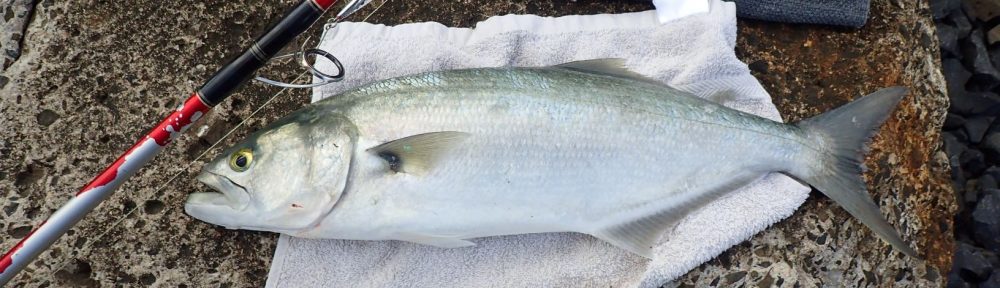
Bribie – the old oyster jetty flats – 10 May 2016

Tuesday

A few days on home turf gave me another opportunity to visit the Bribie Pumicestone Passage flats in search of flathead. I am enjoying the later starts for fishing trips at this time of year. I woke at about 4.45 am and drove up to Bribie, from Brisbane.Low tide would be at 6.18 am, coinciding almost exactly with sunrise. It was 4 days after the new moon. The wind would be a very light south easterly. I pulled on my waders and waded out under the Bribie bridge at about 5.40 am.

As the seasons come and go and the predominant wind direction alters, the tidal flats change shape quite dramatically. For example, just to the north of the bridge on the mainland side a big sand bank is forming and the weed is growing very quickly. However just to the south of the bridge the rubble bottom is becoming more exposed and there is less weed. These changes are best viewed at absolute low tide and it is good to keep an eye on them.

I started fishing with a GULP Crazylegs Jerkshad in the Curried Chicken colour, on a 1/8th ounce, size 1/0 hook jighead, tied on with 12lb fluorocarbon leader. It was still dark but the sky was starting to turn a magnificent red colour. I was standing on the rubble bottom just to the south of the bridge. I was casting towards the bridge and hopping the lure back along the bottom towards me, in line with the tidal flow. I cast the soft plastic lure in the direction of a pylon and kept it moving quite quickly, to avoid getting snagged on the many rocks in this area. The tide was ebbing and the water flow was slowing as we got close to low.As is often the case in the predawn light, a flathead slammed the lure and almost jumped out of the water in its desire to swallow it. It was well hooked and I soon had my first fish of the day – it was just short of 50 cm long.

The sun came up and I moved south. The tide slowed and so did the fishing. I covered a lot of ground without a bite. I worked through a few soft plastics and tried a small hard bodied minnow for a while. I caught nothing for the next 90 minutes as the tide turned, and started to run in.

At about 8.30 am I was fishing with a GULP 4” Minnow soft plastic in the Pearl Watermelon colour. I was just to the south of the old oyster jetty. A flathead burst out of the water behind my lure as I lifted it out of the water, at the end of the retrieve. It missed. I moved back and let things settle down. About two minutes later I threw a short cast at the area and felt the bite. This time I hooked it. It safely pulled it ashore. This one later measured 46 cm.

I carried on back towards the bridge as the tide pushed in. I caught another flathead just north of the jetty, but it was under 40 cm long, so it went back. It was just after 9.00 am when I reached the bridge. I cast around just to the south of the bridge where I had caught the first fish of the day and was rewarded with another 45 cm flathead.

As I waded north under the bridge I put in a few casts and caught my final fish. It was a small flathead of some kind with frilly fins. I released it and gave up for the morning.

Perth -Fremantle – Australian Salmon – 20 April 2016

Wednesday/ Thursday

On a Wednesday morning in April, I found myself up early (as always) and in Perth. I was here for a week and although I would not get to Ningaloo Reef or the more glamorous WA fishing spots, I would have time for a few early morning sessions near Perth.

I checked the internet for land based fishing spots near Perth CBD and realised that North and South Mole (the big rockwalls at the entrance the Port of Freemantle) were my best option. Dawn is refreshingly late in Western Australia at this time of year and so I woke at about 5.30 am and drove out to Fremantle.

I had packed a light spin rod and reel – Berkley Dropshot 7”, 1-3 kg IM-6 Dropshot and my Shimano Sustain 4000 reel. The mainline was 8lb Aldi yellow braid and I started with a 12lb fluorocarbon leader. It was just before sunrise when I clambered over the rocks on the right side of North Mole Drive and I was amazed at how many cars and fisherman were already there. The water was flat, crystal clear and there was virtually no wind.

I rigged up a 1/8th ounce, size 1/0 hook jighead and put on a GULP 4” minnow soft plastic in the Pearl Watermelon colour. Just before sunrise I caught a small bream. I could now see fishermen everywhere with a variety of rigs including slugs/ baits and both big and small rods. I asked a guy next to me, what was going on and he explained big schools of Australian salmon had been coming through, so everybody had come down to catch one. All around me fishermen were casting metal slugs, hard bodies, poppers and baits.

I swapped down to a GULP 3” Minnow in the Peppered Prawn colour. Right on cue, on about my third cast I felt the bite, followed by the charge. A good sized Australian salmon soon came leaping out of the water, trying to spit the jighead out. It was well hooked but with a very light rod and 12lb leader, I was not in charge.

Things were made more complex by the fact that I was going to have to go with him. Which meant walking initially north, along the rock wall. There were lines to the right and left and interestingly no one seemed particularly interested in winding them in, to avoid a tangle. Somehow I only got tangled with one and we soon managed to undo the crossover. The fish was still leaping around but it was slowing. The small rod had no power but by gradually tightening the drag I managed to tire the fish.

No one had a net but the lack of swell meant I could get down safely to the base of the rocks, which I gradually did. I had been playing the fish for about 15 minutes when it started to come in much closer. I chose my spot and started to pull the fish in towards it. At the last minute it revived and put its head down in the weed around the rocks. That was all it needed to knock the lure out and it was gone.

Dejected but excited I then had to give up for the day and go and do some work. But the next morning I was back. This time with 20lb leader (the heaviest I had). I decided to fish the other side of the North Mole, at the entrance of the small harbour, facing the mouth of the river.

I arrived pre-dawn and cast around some big and small soft plastics and small metal slugs, without much success. I could see fisherman on the other side casting in to the main channel and catching a salmon, every now and then.

At about 7.00 am I was fishing with a GULP Jerkshad in the BBQ Chicken colour, on a ¼ ounce, size 1/0 hook jighead. I kept getting hits close to the base of the rocks. Eventually something connected with the plastic and took off. It felt quite powerful but was faster than a salmon. As it came in to view I could see it was a junior samson fish (I presume this is, or is from the Amberjack family). It pulled very hard and took a little while to subdue. I photographed and released it. A little while later, Tom, a keen local angler caught a good salmon on a hard bodied minnow, right next to me. Fortunately another angler had a landing net that enabled me to help him get it safely up the rocks.

I swapped to one of my favourite small hard bodied lures – the DUO Realis Vib 62. This is a bass lure made in Japan, but fortunately fish have an open mind when it comes to trying foreign dishes. It is a sinking vibe and casts a long way. I started casting it out, into the main channel. It did not take long to get some interest. I felt a few knocks and then watched a big salmon follow it all the way to the base of the rocks before whacking it.

Today I was better prepared. Although the rod could not really put much pressure on the fish, the stronger leader meant I could pull a bit harder. It jumped around, as salmon do, but a treble was quite firmly lodged in its cheek. I was also lucky to have Tom’s assistance with the net. We soon landed the fish.

By now the rock walls were packed, but it was time for me to go to work again. I packed up and gave the fish to the guy who provided the net. Nice to catch a fish in Western Australia – I hope I will be back.

Iluka – Shark Bay – Jewfish – 19 March 2016

Saturday would be my last morning in Iluka for a while. Despite praying for calmer weather the wind was forecast to pick up. I had a lie in as low tide would not be until 2.30 pm. I arrived at Shark Bay at about 10.30 am.

All week I had been expecting the stirred up seas to reveal a few Jewfish/ Mulloway. There was lots of bait around and previous trips, at this time of year have nearly always produced a few. The big seas had made it difficult to reach my favourite spots – perhaps the fish were there but I just could not get to them.

With this in mind I decided to start on the southern side of the Shark Bay rock platform. I would be casting straight in to the south-easterly wind so I needed to fish with something fairly heavy. There are lots of rocks on this side of the platform so I was not confident I would keep my lure.

I have a couple of Rapala 13g, 6cm Clackin Raps, lipless vibe lures which have been rattling around the bottom of the tackle bag for ages. I have never caught anything on these lures so I was not too worried about losing them. I rigged up the lighter of my rock fishing rods (the Daiwa Air Edge) and tied the lure on to my Aldi braid and 20lb fluorocarbon carbon leader. I cast the lure into the surf and waited for it to sink. The sea was very lively and I could only just feel the juddering vibrations as I yanked the lure along. After about three casts the lure pulled tight on something and I thought I had hit some kelp. I pulled the rod tip up and then line started peeling. I knew it was a Jewfish straight away. It made three long powerful steady runs and then started swimming back towards me. The game of cat and mouse continued for about 10 minutes. The rod was not powerful enough to force the issue, so I just had to be patient. After a couple more minutes the fish popped over on its side, a few meters from the shore. It looked as if it was beaten, so I tightened the drag a little and tried to pull it over the rocks with the next surge. Either the wave or sense of impending doom caused it to suddenly wake up and it put its head back down and tried to bury itself. The leader slipped down between the cunjevoi and I could not free it. I could see the fish and lure hanging on by just the single big hook on the front treble, a few metres in front of me, but could not get to it. Another big wave came over and when it receded the fish was gone and the lure was lodge firmly in the cunjevoi. They always getting bigger in your memory but I think it was about a 6kg fish. I realised I did not have my camera with me – perhaps that’s why I could not hold on to the fish.

Rapala

I had another, bigger Clackin Rap and I cast this around without success. As the tide lowered I moved to the front of the rock platform, also on the southern side. I swapped to a soft plastic on a ¼ ounce 2/0 jighead. I needed the weight to cast against the wind. I put on a GULP Jerkshad in the Peppered Prawn colour. I lost the first to the rocks and tied another one on. After a few casts this was slammed in the surf, close in. The fished pulled hard and when I finally subdued it, I was surprised to only see a small Trevally.

The challenge in this spot was losing gear to the rocks and I lost a few more rigs over the next hour or so. I swapped to a Gulp Jerkshad soft plastic in the Sweet and Sour Chicken colour and when I got this one in to a good foamy patch of water just beyond the rocks, I almost instantly hooked up. This time it was a 55cm tailor and I managed to pull it in.

I finished the session casting the long DUO Pressbait Saira hard body off the northern end of the rock platform. As it had done all week the lure found lots of long toms and a few more small tailor.

Just after low tide I stopped for the day. It had been another great week of fishing at Iluka.

Bribie – the Sandstone Point flats – 21 January 2016

Thursday

The forecast was for a 10 knot northerly wind which looked good for a quick fishing session. So I drove up to Bribie, to fish the run out tide on the old oyster jetty flats. It was a few days before full moon and the tides were getting big. It had been a 2.39m high tide at 7.35 am. Ideal fishing time on the flats would therefore be between about 10.00 am and 1.00 pm.

I started fishing at about 9.30 am. I rigged up my light spin ring and waded out under the bridge. There was still plenty of water so I cat around under the bridge for a while. I did not get any bites and the high tide meant there was a lot of weed floating around so I decided  to wade south alongside the mangroves and fish around the corner on the Sandstone Point flats.

On a big tide these flats are covered in 2 metres of water in places and there is plenty of structure and food for the fish that move up into these areas. There are a number of piles of oyster covered rocks and the remains of some old fish traps and old oyster racks.  There are also some big weed beds and patches of sandy bottom.

Today I could see some big mullet schools finning around and as I came around the corner I saw a couple of small tuna, of some kind, chase a school of smaller baitfish into the shallows. I was initially fishing with a GULP 4” Minnow in the Lime tiger colour. I was using 10lb fluorocarbon leader and a 1/8th ounce, size 1/0 jighead. I saw a few long toms grabbing at the plastic and hooked and then dropped one. They seem to love this area.

The wind was picking up and now coming from the north-east at about 20 knots. I was about waist deep behind a mangrove island and fishing alongside a small submerged rockwall. I felt a solid bite but struck a little too quickly and probably pulled the lure out of the fish’s mouth. I cast back in the same spot about five times and on the sixth the fish struck again. This time I dropped the rod tip for a full ten seconds and when I lifted it again I hooked the fish. It was a healthy looking 45cm flathead and I kept it for dinner.

It was now about 10. 45 am and I could not find any more fish around the mangrove island so I wandered back towards the main channel. There was still plenty of bait around and a cormorant was successfully fishing in the shallows. I waded along the sand bar that runs down towards the green channel marker, casting along the edges of the weed. I was now in less than a metre of water and the tide was running out quickly.  I felt a very aggressive smash and grab and a fish took off with the same Lime Tiger Minnow. It was a bigger fish and after a short fight I pulled it up onto the sand. I later measured it at 63cm.

By about 11.45 am the wind and weed were making fishing just too hard. I am sure the fish were there but I did not have the patience to carrying on battling the elements to find them.

Bribie – The old oyster jetty flats – 2 January 2016

Saturday

With Christmas done and dusted and the New Year underway. It was time to find an interesting activity other than eating and drinking. When your waders are getting tight you know you are in trouble. I needed to get moving and a morning fishing session is a great way of doing that.

The weather has been far from ideal for the trailer boat based angler over the Christmas and New Year holidays. High winds and seas have pushed a lot of boats into the Pumicestone Passage. This means things have been fairly busy during daylight hours.

On Saturday I was up at 3.45am and drove up to Bribie Island for a 4.30 am start. Low tide would be at about 8.30 am and the wind was forecast to pick up to a 10 knot south westerly. The moon was waning and had been full about a week earlier. I decided to fish the flats in front of the Sandstone Point Hotel and waded out under the bridge just as the light went out.

I started fishing with a GULP Jerkshad in the Pearl Watermelon colour, mounted on a 1/8th ounce, size 1/0 hook jighead. After a couple of tough sessions in this area I chose a 10lb fluorocarbon leader. I cast around under the bridge without any luck.

I waded towards the old oyster jetty and swapped to a smaller GULP 3” Minnow soft plastic in the Smelt colour. I felt couple of bites from small fish and then a solid thud from a flathead. I struck a bit too soon and missed hooking the fish.

I swapped soft plastic lure again just as the sun broke the horizon. This time I chose a Jerkshad in the BBQ chicken colour. I was now just to the south of the jetty standing about 15 metres form the mangroves casting in to the areas of sandy bottom between the weed beds. There was lots of bait around and every now and then something would smash into it from below. I slowed down my retrieve and paused longer between hops. This worked and at about 5.15 I safely landed a 45cm flathead.

About ten minutes later I caught another. This one was about 50 cm long and things were now looking good. I continued to pepper the area with casts but I could not find another. I moved slowly south casting as I waded. At about 6.00 am the wind started to pick up and by the time I reached the green channel marker at about 7.00 am, it was really blowing. Despite the wind there were now plenty of boats running out into the bay. I caught a tiny bar-tailed (sand) flathead by the green channel marker and then turned to wade back towards the bridge.

I got all the way back to the jetty before I got another bite and infuriatingly, after a brief run the fish slipped off or spat out my plastic. I was now fishing with the GULP 4 “Minnow soft plastic in the Pearl Watermelon colour. Just as I came close to the bridge and was about to wade out of the water, I felt a good bite and dropped the rod tip. I paused for what seemed like eternity but was actually about 5 seconds and then lifted the rod tip. The jig head’s hook set in the fish’s mouth and it took off. After a short run it settled and I pulled it ashore. It was another flathead, about 50cm long.

I had three good fish for dinner. As always the key was getting out early, before the boat and recreational traffic got going. I am looking forward to some more peaceful sessions in the near future.

Hat Head – Connors Beach– 30 September 2015

Wednesday

On Wednesday conditions where calm again with a light northerly wind blowing. First light was about 5.00 am. I could not face another tramp out to the spinning ledge so I decided to try fishing the rocks at the north eastern corner of Connors Beach.  This area always looks very fishy and there is often a long gutter that drains out through a group of rocky bommies, from the northern corner of the beach.

There are a couple of rocky outcrops that you can safely stand on in light seas. About 45 metres to the east of these ledges there is a circle of large rocks which are riddled with overhangs and caves. They are pretty hard to cast at, but they are full of fish.

I started with a 65g Raider, tied on to the main line with 30lb breaking strain fluorocarbon leader. I was using the heavy rod – Daiwa Demonblood, and I was casting a metal slug about 40 to metres out towards the edge of one of the semi submerged rocky outcrops. I was reeling in line pretty quickly on my retrieve.

The sun was not yet over the horizon, at about 5.20 am, when I hooked and landed the first tailor of the day. This was quickly followed by a few more. Then, as the sun up and the glare started to build, the bites slackened off and having caught four 40 cm tailor in quick succession, it took an hour to catch another.

By about 7.30 am all was quiet. The water was crystal clear and my metal slugs, hard bodied minnows and poppers could not rustle up a bite. I decided to give up for the morning.

At about 5.00 pm I came back and carefully climbed down the rocky headland that sticks out between Gap Beach and Connors Beach. There is a small inlet here that looks very fishy and with a fairly light swell I could cast right into it.

I started with a 40g HALCO Streaker metal slug. I cast it out into the foamy water around the rocks.  After a few casts, I hooked a fish but it wriggled off at the base of the rocks. I hooked a couple more that also got off. At about 5.30 pm, just as the sun was dropping to the horizon I finally held on to one. It was another 35cm tailor. As the sun set I hooked what felt like a smaller fish. After a short fight I was surprised to see a solid bream on the end of the Streaker.

I fished on through the amazing sunset but did not catch anything else.

Iluka – Middle Buff – Tailor – 14 June 2015

Sunday

The wind had picked up from the south-east on Saturday afternoon and then dropped off again overnight. I was not sure where to fish on Sunday morning. The swell had made the fishing tricky all week. I decided to try Middle Bluff, the headland between Frazer’s Reef and Woody Head, in the Bundjalung National Park.

I was up early and was pleased to walk out on to the beach to only a light breeze. It was about 6.00 am and the remainder of the moon was clearly visible as the horizon started to glow. I disturbed a couple of big kangaroos who were standing around down at the water’s edge. They took off into the undergrowth.  The broken clouds made for a fantastic pre-dawn with the red sun taking a quite a while to break through. The tranquillity was soon broken by the sound of the waves crashing against the rocks. The wind was light but the swell was definitely still up.

I walked round to the northern end of Middle Bluff and watched the surf for a while. Fishing safely off the front of the Bluff was going to be impossible. I decided to move to plan B and try spinning for some Tailor.

I rigged up the heavy rod. I wanted to try the DUO Pressbait Saira 175. This is effectively just a beautifully crafted and weighted 175mm, 50g sinking metal slug/jig. I fish it just like any other metal slug – long casts with a mixture stop/ start, continuous, slow or fast retrieves depending in the conditions and terrain. I was sure this would appeal to the tailor, if they were around.

The rocks protrude a long way into the bay at this spot so you need to put in long casts and keep the lure moving. I was now using a fairly short (0.6m) 30 lb leader tied on to 20lb braid with a long, solid uni-knot. The DUO Pressbait Saira is nicely weighted so you really do not need to hurl it out there. You just let gravity do the work.

I started casting at about 6-30 am, well after first light but before the sun had come over the horizon. On very long casts it is difficult to keep contact with the lure. The long length of line means there is a fair amount of slack which often initially disguises a hook-up. The rod tip only starts wiggling as the line gets really tight. After a few long casts and high-speed retrieves I felt a bit of weight and then the rod tip bent over. I had found a tailor. Frustratingly, about 20 metres from the shore it started leaping around and managed to free itself. I cast out in roughly the same location and after a few turns of the reel I had another fish. This one stayed hooked and I landed it successfully. I took a few pictures and threw it back, then cast out again.

Things went quiet for a while and the sun came over the horizon. At about 7.00 am I had the lure about 40 metres from the shore when something grabbed it and the reel started screaming. I held on tight but after taking about 15 metres of line the fish was gone and so was the Pressbait. I wound in a severed leader. I re-rigged with a 65 gram Raider metal slug and tried to find the fish with this. After another 30 minutes I had had no luck and I was exhausted.

I walked down to the corner of back beach and cast some soft plastics around in the shallows, I watched as a few schools of garfish follow and grab at the lures but I did not hook any. The swell showed no signs of calming down so at about 8.30 am I went off to find breakfast.

Iluka – Woody Head – 9 June 2015

Tuesday

Having confirmed the winter species are well and truly biting at Bribie Island, I decided to head south to Iluka to fish the headlands of the Bundjalung National Park.  I rented a unit for a week and set off on Tuesday morning. I arrived about 1.30 pm, quickly covered all available surfaces with my fishing gear and considered my options. Low tide would be at about 7.30 pm but with not much swell Woody Head looked like a good bet.

I took two set ups with me. The first – my heavy rig – is a Daiwa Demonblood 962H rod matched with a Shimano Stradic FJ 8000 reel. I rigged this with 25lb Super PE braid and a 35lb fluorocarbon leader. This is great for casting metal slugs, bigger poppers and hard bodied lures but it will also work reasonably well with big soft plastic lures on ¼ ounce (and above) jigheads. If you hook a big fish, this rod has the power to drag it up the rocks. The second – my light rig is an N.S Black Hole Cabin II – S-862 L Spin Rod. It is 2.59m long (8’6”) and rated 8-14 lb. I match this rod with a Shimano Sustain 3000 reel. I rigged this with 12lb braid and 12lb fluorocarbon leader.

I walked out on to the Woody Head rock platform and headed for the prominent rock opposite the wooden stairs. The wind was light but the swell was still quite powerful and I watched it for a while before moving forward to fish. I have left plenty of skin on these barnacles over the years so I am now very cautious when I fish here. At any moment a big set of waves can come through with the potential to knock you off your feet. I now wear a lightweight PFD, just in case I end up in the drink.

I started with my heavy rig fishing a 120 mm DUO Realis Jerkbait – this is a shallow diving hard body that has caught plenty of tailor for me. I would use it more, but there are not may spots where you can fish it without fear of losing it to the rocks. After about 20 casts in semi-circle, I had had no hits so I decided to put it away and switch to soft plastics.


I switched to the light rod and put on a 1/6th ounce, 1/0 jighead loaded with a GULP Jerkshad in the Lime Tiger colour.  I cast in to the wash about 10 metres from the edge of the rock ledge and counted to 10 while I let the soft plastic waft down in the foamy water. As I lifted it a fish slammed it. It was fairly powerful and took a bit of line, helped by the receding wash. I soon had it under control and pulled it over the barnacle covered terrain with the aid of the next wave. It was a very solid bream – about 35cm long. I cleaned it for supper and carried on fishing.

I swapped through a few soft plastics and had a couple of good bites on various jerkshads. I swapped to the GULP Mantis Shrimp in the Lime Tiger colour and caught another smaller bream.

At about 4.45 am the wind had picked up and  the sun had dropped behind the hill so I decided to give up for the day.

1770 – Wreck Rock – More Dart & Slatey Bream – 10 April 2015

Friday

The wind had been blowing all day on Thursday, from the south-east. So on Friday morning the swell was up. Low tide would be just after dawn at about 6.30 am. The fish had been around at Wreck Rock and after a run in with something big the day before, I had to go back. I arrived about 5.45 am, just after first light but before sunrise.

The wind was cool but the water was warm. It was washing over the rocks where I wanted to fish so I had to stop on high rock, some way back from the end of the rocky outcrop runs out from the north end of the small bay.

I started with heavier, 20lb fluorocarbon leader and bigger GULP 5” Jerkshads in various colours. These did not stir any interest and as the surf and swell picked up I re-rigged with lighter 12lb fluorocarbon leader. I decided to choose a smaller Gulp 3” Minnow in the Sardine colour and stuck with the 1/6th ounce, size 2 hook jighead. This instantly attracted a few bites and after a few casts, I started catching dart.

Perhaps it was the rough seas but the dart seemed more aggressive than they had been in previous days and they were bigger too. I swapped through a few soft plastics, and they seemed to like the GULP Swimmow and the GULP 2” Shrimp, both in the Peppered Prawn colour.

The swell was picking up so I was now casting into the calmer water behind the rocks. I was using the GULP 2” Shrimp, letting it sink slowly in the wash and suddenly something swallowed it. Once again the slow but powerful run told me it was not a dart. It was another painted sweetlip / slatey bream. I released it, as this was my last session for the week and we would be heading for Brisbane later in the day.

By 7.45 am the swell had pushed me off the rocks so I gave up. It had been another great week in this beautiful part of the world. Cleary the fish species come and go with the seasons here, just like anywhere else. This week it was dart and slatey bream. I am hoping to come back up in the cooler months to see if the jewfish and tailor are around.

1770 – Wreck Rock – Dart & Slatey Bream – 9 April 2015

By Thursday, the rain had passed over but the wind had picked up considerably. I was up early and decided to try fishing at Wreck Rock. The tide would only be low enough to reach the rocks I wanted to fish from, for about 90 minutes.  The incoming tide would then force me back.

I arrived in the pre-dawn light and walked out to the beach. The sky was gradually turning orange and the wind had dropped right off. It was very light and cool, from the south-west.I walked out on to the rocks on the north edge and picked my way out as far as I could go. The wind had dropped but the swell was up and although the water was warm the cold breeze was nasty.

I knew there would be dart around and predictably, my first cast with a 3” GULP Lime Tiger Minnow soft plastic was just what they wanted. I pulled the first small dart out of the water just after 6.00am.I was sticking with a light 12lb fluorocarbon leader but went with the slightly heavier 1/6th ounce, size 1 hook jighead to counteract the swell.

The dart kept coming but I was hoping for something more significant so I put on the GULP Mantis Shrimp that had caught the slatey bream on Monday. I fished this around for 20 minutes with only a few small hits from the dart. I swapped back to a GULP 2” Shrimp soft plastic in the Banana Prawn colour. This instantly caught the dart again.

I decided to change up to a bigger profile again and tied on a GULP 5” Jerkshad in the Peppered Prawn colour. I cast this one a fair way out towards some a nearby bommie. On its way back to me it was swiped at by a couple of Long Toms, but I did not hook them.

I hit the same area with a few more casts and suddenly there was a quick tug and the reel started screaming. The rod bent over and the fish took plenty of line in a blistering initial run. As soon as it paused I checked the drag tension and realised it was actually quite tight. I tried to get some line back but the fish immediately set off again and snapped the leader. Trevally or maybe a Mackerel, either way a 12lb leader was not going to stop it. I re-rigged with the heaviest leader I had in the bag – 20lb fluorocarbon and cast back out. I peppered the area with casts but whatever it was had moved on.


The wind was now picking up again and the incoming tide was forcing me back along the rocks. I swapped to a GULP Green Camo 4” Minnow and carried on fishing. The dart kept hitting this one and then something slower and heavier grabbed it. It turned with the swell and took a bit of line. It then started swimming away faster, once it realised it was hooked. After a few minutes I pulled it up onto the rocks with the aid of a breaking wave. It was another good sized slatey bream with bright orange markings behind its lips.

I decided to keep this one for supper and so I retreated to the dryer rocks to bleed and clean it. By the time it was gutted the tide had come up further and the wind was really starting to blow so I gave up for the day.

Bribie – the old oyster jetty flats – 75cm flathead – March 29, 2015

Sunday March 29, 2015

I had the bit between my teeth now, so I woke up early on Sunday and drove up to fish the run out tide, on the flats beside the old oyster jetty on the mainland side of the Pumicestone Passage, beside the Bribie Island Bridge.

Last year, March had been a fantastic month for flathead in this location, so I was hopeful. I had planned to arrive in the dark and fish the high water under the bridge but I woke up too late. When I waded out under the bridge, it was already getting light at about 5.30 am. There was virtually no wind and there had been some rain overnight. High tide had passed at 5.05 am.

Local fisherman Colin had beaten me to it and already had a 55cm flathead in his bag. He explained the recent heavy rain (following the cyclones) has slowed things down a bit and the fishing around Bribie is very patchy.

I put a GULP Jerkshad in the Peppered Prawn colour on a 1/8th ounce, 1/0 jighead and started casting around. There were plenty of prawns skipping on the surface so I dropped down to GULP 2” Prawn in the Banana Prawn colour. Neither of these interested the fish by the bridge so I waded south.

The tide was now slowly running out. I moved along the edge of the mangroves, casting my soft plastic in to a few feet of water and slowly bouncing it along the bottom.  A couple of long toms soon found it and kept snapping at it. They seem to like cruising the shallows in this area.

I was now at the drain that runs round the corner from Sandstone Point, in to the Passage. The terrain has flattened out considerably here and the drain is much less pronounced than it was last year, but there is still a nice sandy hollow in the middle of it.  I was fishing with a new favourite – the GULP 4” Minnow in the Green Camo colour. I had dropped down to a 10lb fluorocarbon leader. The long toms where still attacking the lure every so often. I briefly hooked one and it started leaping around before it unhooked itself.

I cast at the centre of the drain and let the plastic sink. Something grabbed it as I lifted it off the bottom, but I struck a little too quickly and missed it. I dropped the rod tip back down and left the plastic on the bottom for about 15 seconds. When I lifted it again the fish slammed it and hooked itself. It slowly took some line, not realising its meal was not all it seemed. As soon as it felt the hook it took off on a long initial run. It paused and then took off again. It was a solid fish and I only had a 10lb leader so I would need to take my time.

This spot is tricky as there are plenty of oyster covered boulders and as the water level drops the tide seems to run faster over them. The fish slowed but the fast running current was helping it. I slowly waded back toward a gap in the mangroves and after a few minutes pulled a big female flathead up on to a pile of washed up seagrass.

I put the tape to her and she was somewhere between 72cm and 76cm (she was not much interested in sitting still). I removed the jighead and soft plastic with my long nosed pliers and then sent her on her way. She paused and then took off.

I snipped off the end of the leader, which was quite frayed and then re-rigged with the same jighead and soft plastic and waded back to the same area to continue casting.

I soon found another 30 cm flathead, hiding on the edge of the weed. I released and carried on wading to the south. I slowed things down and methodically started to cast around in a semicircle. On about my fifth cast a fish hit hard and took off. It soon slowed and turned towards me. It was a 50cm flathead and I safely manoeuvred it into the keeper bag.

I carried on towards the green channel marker. It was now about 7.45 am. I passed by a few cunningly hidden stingrays and a couple of blue bottle jellyfish (this is why I sweat it out in waders). I dropped down to a GULP 3” Minnow in the Pearl Watermelon colour on a 1/8th ounce, size 2 hook jighead. This instantly produced results and I found a patch of hungry bream. I caught three fish in the next ten minutes. One had had a very hard life and appeared to have half his back missing. All the bream were legal sized but I had flathead for dinner, so I released them.

As the water ran out, it gradually deteriorated in quality and by about 9.00 am it was very murky. I did not get any bites on my way back to the car and at about 9.30 am, I gave up for the day.

Iluka – Woody Head – 26 November 2014

Wednesday

Morning

It rained overnight on Tuesday and it was warm and cloudy on Wednesday morning. I chose to fish at Woody Head again. The wind had settled down and had turned north-easterly again. I was in position early. With first light at just after 5.00 am local time (which is 4.00 am Queensland time) bedtime is about 8.00 pm.

I arrived on the rock platform just before first light and rigged up my heavy rod. Low tide would be about 5.00 am.  I was using 30lb fluorocarbon leader and I put a GULP 5” Jerkshad in the Peppered Prawn colour on a 1/6th ounce, size 1/0 hook jighead. The swell had settled considerably and I could safely get fairly close to the edge of the rock ledges.  I knew where to cast – as close as I could to the edge of the rocks. Sure enough, on my third attempt I felt the gentle pull of a jewfish mouthing the plastic. I paused, then struck. With the big rod and light swell, this fish was fairly easy to subdue. It was 5.30 am and I had my first jewfish of the day. It was probably just over 70 cm, but I had left over fish from the day before, so I speared it back into the foamy wash.

I stayed with the heavy rod for about another thirty minutes  and caught a great bream but I was having trouble keeping in touch with the soft plastic, so I swapped to the lighter rod with a 14lb fluorocarbon leader. I moved to the south along the rocks, casting at any likely looking water. I soon found a few more good bream. I caught about 6 over the next hour – most were over 35cm. I used both big and small soft plastics in various patterns and colours.

At one point something bit hard on a 3 “ minnow soft plastic and took off, after a few seconds the line went slack and I retrieved just half a jighead. You need good teeth to bite clean through the jighead – mackerel? Shark?

At about 8.30 am the rain started falling and gradually got heavier until I decided to stop for the morning.

Afternoon

At about 3.00 pm the rain stopped and I went back to Woody Head to fish the afternoon low tide. The wind had picked up a bit from the north. I caught a few more bream on soft plastics all along the front of the rock platform. I caught one 35 cm on a GULP Jerkshad, but in general the fish where smaller than they had been in the morning.

As the sunset behind the headland the wild weather turned the sky a great colour. I fished through dusk and kept catching small bream and a couple of dart. At about 6.30 pm I decided I had had enough and walked back to the carpark.

Iluka – Woody Head – 25 November 2014

Tuesday

Morning

Monday had been a tough day. The weather had really made it too hard to fish. Any normal person would have had a day relaxing at the pub or fixing up their gear – but by now regular readers will realize that I am far from normal.

Tuesday morning was a different story weather wise. The north-easterly had dropped off considerably to about 10 knots.  I decided to try fishing the rock platform at Woody Head. I arrived about 4.00 am and rigged up my heavy rig. Having seen the popper working the day before. I tied on a DUO Realis Popper 64 in a red colour. I tied it on with 30lb leader and lobbed it out. With a fair breeze it was hard to cast it very far on the heavy rig. However I eventually succeeded in getting more or less parallel with the edge of the rock ledges and worked the popper through the foamy wash. On about my tenth cast there was an explosive strike, short run and then my leader was flapping in the wind. Whatever it was, 30lb leader was clearly not going to stop it. It was only just light enough to see. I tied on another bigger RIVER TO SEA Dumbbell Popper but this did not interest the fish.

As the sun came up I decided to switch to soft plastic lures. GULP have a fairly new pattern – the 3” Mantis Shrimp. This is basically a prong tailed shrimp shape. I had it in the Molting Shrimp colour. I tied it on with 30lb fluorocarbon leader on a ¼ ounce, 1/0 jighead. I cast it out and let it sink for as long as  I felt it would take to get to the bottom. The problem with fishing these ledges is that the fish are always very close in. This means getting you soft plastic to the bottom and keeping it there long enough for something to grab it – without getting snagged. The Jewfish like to sit under the overhangs and in the caves that are under the ledges. You have to use your lures in a way that will persuade them to come out and eat.

The sun was now over the horizon. I dropped the soft plastic just over the edge into the foamy water. After a couple of hops my line was almost touching the face of the rocks. There was gentle tug and I dropped the rod tip – rock, swell or fish? I paused for a few seconds then struck hard – it was a fish. It had plenty of power and it took off to the south in a long and powerful initial run. But it was slow and powerful so I was pretty sure it was a jewfish/mulloway. I took a little line back, as it paused for a breather, but I could not turn its head. It put in another powerful run but then it slowed and I tightened the drag and put some pressure on. It was tired now but it still kept trying to dive down underneath the rocky ledge. I used the swell to get it to the foot of the rocks. I could now see it was a very decent fish – perhaps 80 or 90 cm. On a couple of wave surges I tried to get it up on the stepped ledges below me. I succeeded initially but as soon as the wave receded the dead weight of the fish was unmovable and it would wriggle back off with the receding water. It seemed solidly hooked and pretty tired so I waited for a decent wave set and heaved it up two steps. I waited for the next surge but as I pulled, the hook came free. It slid back down, and with the next wave and swam away.

When I examined the jighead I could see it had started to straighten. I suspect that the only way I would have landed that fish would have been with a long handled gaff and I do not intend to start carrying one of those around the rocks with me. I re-rigged with the same outfit but after 30 minutes I had not had another bite so I decided to change to another soft plastic. I chose the GULP 4” Minnow in the Lime Tiger colour. After two casts, something slammed this and briefly headed out to sea before biting through the leader. I tied on a repeat rig and fished around for another 20 minutes with no result.

I decided it was time to switch to the light rig and lighter leader. I started with 20lb fluorocarbon and tied on a smaller, GULP 3” minnow in the Lime Tiger colour. I stuck with the ¼ ounce, 1/0 hook jighead. It had been an interesting morning and it wasn’t even 6.00 am yet.

I cast the smaller lure out and it was hit, at the base of the rocks on the first cast. I soon landed a solid bream – well over 35cm. I released it – I was determined to get a jewfish that I could keep for supper. About 5 minutes later I had another fish on. I was sure it was another jewfish but I only had the light rod this time so patience was the key. I left the drag alone and gradually tired the fish out. The tide would be high at 11.00 am so the rising water was gradually improving my chances of using the waves to help wash the fish up on to the rocks. I pulled the fish up the ledges in a couple of stages and safely grabbed the leader. Finally I had a keeper size Jewfish – just on 72cm. I put it in a keeper pool and cast out again.  The fish were suddenly on the bite, I caught another decent bream and then was on to a similair sized jewfish but once more I was unable to get it up the rocks.

By about 6.30 am I had swapped to a GULP 5 inch Jerkshad in the Cajun Chicken colour. After a few casts I connected with another jewfish. I managed to land this one but it was just under 70cm, so I sent it on its way.


By about 7.30 am the wind had picked up again and the tide was washing over the ledges so I had to give up. I cleaned up my jewfish and walked back to the car.

Afternoon

The wind was forecast to drop off and then turn south-easterly in the afternoon. After a great morning I decided I had to go back to Woody Head and fish through dusk. I arrived at about 3.30pm and walked out to ‘the Barnacles’ area. The tide was running out to an afternoon low at about 5.30 pm. The moon was a waxing crescent – 11% full.

I used my heavy rod with 30lb fluorocarbon leader. This area is tough to fish as you are casting over lots of shallow reef to reach a drop off. A surface lure is a therefore a good option. I tied on a River to Sea 110m Dumbbell Pop surface popper and hurled it out. I wore myself out for twenty minutes casting this in all directions but I could not stir anything up. I swapped over to a ¼ ounce, 1/0 jighead and GULP 5 “ Jerkshad in the Cajun Chicken colour.  On the first cast I caught another good (35 cm+) bream and then I lost the jighead to the rocks.

I re-rigged and cast out again. There were a few fish knocking and bumping the plastic just as it reached the ledge, but I could not seem to hook them. Just before 4.00 pm something grabbed the plastic just as I finished my retrieve. It tried to dart under the rocks but it was not a big fish and the heavier rod and tightened drag soon pulled it clear. It was an amazing coloured wrasse of some sort – a really pretty fish. After a few pictures I released it.

I caught a couple more bream on smaller soft plastics but the south easterly started to blow hard at about 4.30 pm, so I gave up for the day.

Wrasse

Soft plastics will catch anything

Bribie – the old oyster jetty flats – 18 November 2014

Tuesday

Back home to Brisbane for some work. I have done a fair bit of fishing recently but once again paid work has interfered with writing up my sessions, so these reports are far from fresh.

On Tuesday I had a window to fish in the morning, so I grabbed it. The tide would be running out to low at Bribie and it would be low just after noon.

It had rained overnight and there had been a big downpour a few days earlier. I could not get away for dawn, but I arrived and pulled on my waders at about 8.00 am. That is about four hours after first light, at this time of year. It was not a big tide. It was very humid and overcast and the wind was from the north east.

I started just south of the old oyster jetty on the mainland side of the Pumicestone Passage, close to the mangroves roots, in the shallows. I was fishing with a GULP 4” Minnow in the Pearl Watermelon colour – the perfect small mullet/pilchard imitation. I was using my light spin rod and a 1/8th ounce, size 1/0 hook jighead and 10lb fluorocarbon leader. At about 8.30am I caught a small (about 40 cm flathead). I took a picture and released it. It was sitting only a few feet away from the shore in about 35 cm of water. This is typical flathead behavior. They move up to the mangrove roots on the overnight high tide and just stay put until there is almost no water over the top of them.

I moved further south, following the run out tide as it gradually revealed the sand banks and weed beds. I had enjoyed fishing with the small surface poppers at 1770, so I decided to try one on the flats. I cast the small Rebel as far as I could in front of me and retrieved it slowly with quite a few long pauses. It took a while but as I took up the slack after a pause a fish smashed the popper and took off. It some tired and I could see it was a bream – about 30 cm long. I released and peppered the area with more casts. A few casts later, I caught another much smaller bream.

I carried on towards the green channel marker and swapped back to the soft plastic minnow. I found three more flathead, two of which would have been keepers. It was now just before noon and the run out tide had slowed. I turned and walked north, back towards the car. I caught one smaller flathead on the way and by 12.15 pm, I was back at the bridge.

It had taken a while and there were some long gaps between them, but I had found a few fish. The Christmas holiday fishing should be pretty good.

1770 – Wreck Rock and Deepwater Creek – 8 November 2011

Saturday

It was my last day in 1770 for a while. I decided to fish the afternoon low tide at Wreck Rock. It was full moon so the water would get quite shallow around the rocks. There was a fairly light north easterly wind and not much swell.

I arrived at about 3.00 pm and rigged up with a 16lb fluorocarbon leader and 3 “ GULP Minnow on a 1/6th ounce, 1/0 hook jighead. This produced a small dart on the first cast and almost a fish a cast thereafter, for the next 30 minutes. I gradually moved along the rocks and it was usually the first cast, in a new location that produced the bigger dart. I soon had a few worth keeping.

By about 3.30 pm I had almost arrived at the end of the rocks. I had now swapped to a Zman 4” Jerkshad in the Shiner colour. A cast it out, about 5 metres directly in front of the rocks and the lure fluttered towards the bottom. I set the hook on another dart. Dart fight hard and love to turn sideways like trevally, but this one was positively hyperactive. I pulled it clear of the water and then released it. The next cast produced another dart, a little smaller but equally frantic. Then I saw why the fish were so spooked. I long, slow moving grey shape swam along the base of the rocks. It looked about 1.5 metres long and had clear black markings on its fin – so I presume it was a black tipped reef shark. This probably explains numerous bite offs I have had around these rocks.

The dart kept coming but as the tide turned in I caught a few small trevally – including  a strange looking bumpnose trevally. As the tide started to run in at about 5.00 pm,  I decided to swap locations.

I drove down to Deepwater Creek to fish through dusk. I thought the big tide and full moon might create some good conditions. I arrived about 5.30 pm and fished through the dusk with poppers and small soft plastics on a 10lb fluorocarbon leader. I tried both the freshwater and saltwater sections. I was surprised to get a catfish from the salt water side. It grabbed a GULP Swimmow soft plastic in the Peppered Prawn colour, presented on a 1/16th, size 1 jighead. Meanwhile as the sun dropped below the horizon something swiped at the popper on the freshwater side. On the saltwater side, in the pitch dark, I could hear plenty of surface slurps and bust ups. The moon was not up yet and as I dragged the popper slowly across the surface, it was getting bumped and nudged all the way through the retrieve. Finally I hooked something and it pulled quite hard. I turned the headlamp on to reveal a small mullet. There was a big school of them cruising round.

I gave up for the night and marked this spot down for a future visit. Once again, I would like to recommend Gavin and Kim of 1770 Beach Accommodation. I stayed at Loka Santi which are very smart apartments, but they have accommodation to rent at every budget level and can offer some really great rates – visit their website for more information  www.1770beachaccommodation.com.au


1770 Getaway Beach, Flat Rock & Wreck Rock – 6/7 November 2014

Thursday/ Friday

The weather stayed good at 1770 on Thursday and Friday. The winds were light northerlies and the sea flattened out. Unfortunately the low tide was in the middle of the day which meant the fishing timetable was not ideal. Low tide just after dawn and dusk would be my favourite, but you cannot have everything you desire.

I fished at Flat Rock and Wreck Rock on the dawn high tides without much luck. As the tide ran out towards lunch time, I found more and more fish. But they were generally small dart, stripey and moses perch and the odd whiting. During these middle of the day low tides I had to drop down to a 1/8thounce, size 2 hook jighead, 8lb fluorocarbon leader and GULP 3” Minnow soft plastics to entice the fish into action. Typically each session would produce a couple of good size dart and I kept a few for dinner.

Dart is really about the only fish I enjoy eating raw. It needs to be bled soon after capture, filleted and refrigerated and then left for about 12 hours.Then comes the tricky bit – take it out of the fridge and let it come to room temperature, before you eat it. The flesh is firm and perfect with a little chilli soy or fish sauce and lime.

Incidentally, the more I catch fish the less I eat it in restaurants. When you know the texture, feel and taste of really fresh fish, it is very hard to eat something that has been sitting around, even a few days. I encourage everybody to catch some bream, whiting or flathead during the holidays, fillet them and eat them. Yes, it’s a bit of a hassle to take the fish home and clean it up, and sometimes it hardly seems worth it – but you will definitely taste the difference. It is also often the smaller fish like dart and whiting, that taste the sweetest.

In desperation I even tried a tiny popper at Flat Rock – hoping to tempt some larger whiting. Instead, this just caught another small dart. A constant stream of small fish still made the fishing fun and as usual the scenery and sunrises were spectacular.

1770 Getaway Beach and Wreck Rock – 24 October 2014

Friday

With the wind and swell dropping and turning into a light north-easterly, Friday looked like the perfect fishing day. I was awake at 4.00 am and decided to fish at Getaway Beach. I walked down to the small bay in the pre-dawn light.

I started at the north end of the beach on the rocky promontory. The tide was coming in and would be high at about 8.30 am. I cast at a semi-submerged bommie. I started with a GULP Jerkshad in the Lime Tiger colour on a 1/8th 2/0 jighead. I was still hoping there might be a jewfish/mulloway lurking somewhere around here. The first taker was a small stripey perch – not much longer than the jerkshad. I cast out again and got another. I moved further round and caught another. After about 30 minutes I had caught and released about 10 fish – all too small for a meal. The tide was coming in and I had to get off the rock if I wanted to avoid getting stranded.

I walked back to the south side of the rocky headland. I was now fishing with a GULP 4“ Minnow in the Pearl Watermelon colour. I cast it at a bommie and let it sink. N.B – The word ‘bommie’ is unique to Australia and is derived from a local aboriginal word – ‘bombora’ which can be loosely translated as coral reef outcrop. The sea was settling down but it was still not very clear and I could smell and see the algal bloom in the water. As I lifted my rod tip a fish attacked and hooked itself. It turned and tried to bury itself in the rocks. I pulled it out and landed it. It was a chunky stripey perch about 35cm long – I kept it. I believe these fall under the ‘all tropical sea perch’ category and have a minimum size of 25cm (but please correct me if I have misinterpreted the current Queensland rules).

I did not find another one but I did pull out small, bream, dart and trevally, after swapping down to smaller 3” GULP Minnows in various colours. I swapped to a small DUO hard bodied vibe lure and this caught also caught a few small dart. By about 9.00 am, as we passed the top of the tide, the sea was calm and the fish seemed to stop biting. I decided to go for breakfast and a sleep.

At about 2.00 pm I drove back down to Wreck Rock to fish the bottom of the tide. This was another good session. I caught plenty of dart and small bream and the catch rate picked up as the afternoon moved on and the tide started to run in. At about 3.30 pm, I upgraded to 15lb leader and swapped to a slightly heavier 1/6th ounce jighead, to counter the strong afternoon north-easterly wind, which had picked up. I was now fishing with a GULP 4” Minnow, in the Pearl Watermelon colour.

Just on 4.00 pm I felt a sudden hit and line started peeling. It felt like a chunky fish but in the swell it was hard to tell. It was fast and trying get down into the rocks. I felt more confident with the 15lb leader and I tightened the drag and put some pressure on. It fought hard but after a few minutes I pulled it up on a wave and grabbed it. It was another decent trevally, about 50cm long. They must cruise up and down these rocks. I have seen some much bigger shapes in the waves out front but they could be anything in this spot. By 4.30 pm the incoming tide pushed me off the rocks so I gave up for the day.


1770 – Flat Rock at Baffle Creek and Wreck Rock – 23 October 2014

Thursday

On Thursday the seas were still up and low tide would not be until about 2.30 pm. The wind would hopefully have dropped by then and I could try fishing the beaches and rocks again. In the morning I decided to drive back out to Flat Rock on Baffle Creek and see if I could have some more fun with the Tarpon.

It takes about an hour to drive south from 1770, down the four wheel drive sand track, past Flat Rock, Middle Rock and Wreck Rock beaches, across Deepwater Creek and on to Flat Rock boat ramp on Baffle Creek.

By the time I arrived, the sun was already up and the insects were humming in my ears. You need plenty of insect repellent in these parts! The wind had dropped away and the tide was coming in. It would be high at about 9.00 am.  There were a few surface strikes and the bait was jumping around. I worked through a few different soft plastics on the light rod. The usual minnows, jerkshads and shrimps did not work, so I swapped to a Watermelon coloured GULP Minnow grub. I slowed the retrieve and let it flutter around in the current. After a few casts, there was a solid bite and I hooked up. The fish headed for the rocks and immediately tried to get under them. I was still fishing with 14lb leader so I tightened the drag and pulled it out. It was an estuary cod – about 45cm long. I released it and after another hour with no luck, I went off to the Baffle Creek Township, to find some breakfast.

The wind had dropped off so I decided to make my way to Wreck Rock to fish the last few hours of the run out tide. It would not be possible to get out to the spots I like to fish there, until two to three hours before low tide, from about 10.30 am onwards. So I drove back up the sand track and stopped for a nap in a shady spot. I woke to some rustling and found a mother emu and three chicks walking past. This really is a very unspoilt spot!

I drove on to Wreck Rock and walked out on to the beach. The sun was out and there was no one else around. The wind was now a 10 to 15 knot north-easterly and the swell was dropping. I decided to stay with the light spinning rod and 10lb leader. It was the middle of the day and I thought the fish would be fairly picky.

I started fishing on the calmer side of the rocky peninsula that sticks out to the north of the little bay. I put on a 1/8th ounce, size 1 hook jighead with a 2” GULP Shrimp soft plastic, in the Banana Prawn colour. After a few casts, the first taker was a small stripey perch, this was followed by an equally small bream. Both these fish where sitting at the base of the rocks in a few feet of water. About 20 minutes later, I dropped a bigger bream, as I tried to land it.

It was pretty warm so I decided to risk getting wet and wandered a bit further out along the rocks. I wanted something chunkier to throw out into the breaking waves, in front of the rocks and I chose a GULP Jerkshad in the Waremelon Pearl colour. I also upped my jighead to a slightly bigger 1/6th ounce with a 1/0 hook. I cast this out in to the gaps between the rocks and let it sink for as long as I could before hopping it back towards me. I lost a couple of rigs to the rocks and gradually moved further out as the tide dropped. At about noon I was almost at the end of the rocky peninsula. I cast clear of the rocks and let the jerkshad sink. On the drop, it was slammed and line started peeling. The swell was still significant and this fish new how to use it. As soon as I applied some pressure, it took off. There were rocks everywhere and I had a 10lb fluorocarbon leader on the end of a very light, fast action trout spinning rod. Patience – Patience – Patience would be necessary. I got a little line back and tightened the drag, very slightly. I watched the swell and used the waves to steer the fish towards me. I took several tries but eventually I had it out of the water and at my feet. It was a trevally, about 50cm long.  I love to eat fresh trevally, so I killed and bled it and put it in a keeper pond, about 10 metres back from the shoreline.

A climbed back out along the rocky peninsula and put on another Jerkshad soft plastic. This time it was in the green and orange Lime Tiger colour. I cast around for another trevally but could not find any out the front. I started casting into the foamy water right at the end of the line of rocks. Small dart kept attacking the soft plastic just as it reached the rocks and on a few occasions they almost beached themselves trying to eat it. On the next cast there was a solid hit and then a clean bite off. I re-rigged with 14lb fluorocarbon leader and put the same soft plastic/ jighead combination on again.

I cast out wide again and let the jighead sink but then I added some urgency to the retrieve, a few quicker, more violent jerks. This did the trick and just before I got the soft plastic back to the rocks, a fish grabbed it, dropped it, and then grabbed it again. I felt the hook set in the jaw and then the fish went ballistic. I knew it was a Tailor before I could see it and I suspect this was what had bitten me off, before.


I pulled up a wriggling 40 cm tailor – I photographed it and released it. I shortened the mashed soft plastic then cast it out again. After a few jerks of the rod tip I had caught another slightly bigger one. Over the next 20 minutes I caught 4 more and dropped a few. The biggest was about 45cm. I am not sure how long they would stay in this area, but I suspect they are nearly always around until the water really warms up.

By 1.30 pm I was soaked and the fish seemed to slow a bit, as the wind and swell picked up again. I waded back towards the keeper pool, where I had left my trevally but I could not find it. Then I saw a big brahminy kite circling the shallows, about 50 metres away towards the beach. I watched as it swooped and plucked up the trevally – which it or another bird must have dropped halfway back to its nest. It struggled to get airborne again but eventually it got its full wingspan deployed and made it to the tree line. That was the end of my fish supper.

I decided to give up for the day and drove back up to 1770.

1770 – Baffle Creek – Flat Rock – 22 October 2014

Wednesday

After a windy and stormy night with a fair amount of rain, I woke to grey skies on Wednesday. Agnes Water and 1770 can be a tough place to fish. Half the problem is that everywhere just looks so fishy. The mangrove lined creeks, the rocky headlands and unspoiled beaches. It raises your expectations but as with fishing everywhere, you still need to put in the hard work. That means fishing at dawn and dusk – when the fish eat. It also means trying everything in the tackle box and trying lots of different locations.

Wednesday morning would be wet with rough seas but it was still worth a fish. I was up at 4-15 am and drove down to Flat Rock Beach in Deepwater National Park. I walked out on to the beach and watched the sun come up as I cast a few soft plastics around. The water was murky and it was just too windy, so I retreated and put plan B in to action.

Plan B was to drive further down the sandy track and head for Flat Rock boat ramp on Baffle Creek. It is a fairly wide stretch of Baffle Creek with a few scattered rock bars and mangrove lined edges. The main attraction is a wide rock bar that juts out into the channel and is submerged on high tide. Sadly, despite its fairly remote location, this spot seems to get fished quite a lot and there is a fair amount of boat traffic coming and going from the nearby ramp, especially at weekends and later in the day. When its windy out on the ocean this is the only option.

I arrived at about 11.00 am and only had to share the space with one other land based fisherman – a friendly Kiwi called Chris – who was camping nearby at Wreck Rock. He had had a fair bit of success using flesh baits and pilchards, he had landed a nice mangrove jack, a day previously.  There was sickly sweet smell and I could see it was coming from the nasty green algal bloom covering the mud and the sand, as the tide receded.


I started with my light spinning rig and 10lb fluorocarbon leader. I was fishing with a 1/8th 1/0 jighead and a GULP 2” Shrimp in the Banana Prawn colour. I cast along parallel with the mangroves. The tide was running out. I soon picked up a dusky flathead – 50 cm long. A few casts later the lure was slammed by a fairly significant fish. I hooked up instantly and it took off. On the first leap I could not see what it was. On the second, its black back gave it away as a pretty big (60cm +) Tarpon. It leapt three or four times and kept making blistering runs. With 10lb leader I could not muscle it in so I let it have its head. Unfortunately, as soon as I tried to tighten the drag and put some pressure on, it snapped the leader.


I fished for a little longer with the GULP Shrimp, then swapped to a Jerkshad in the Lime Tiger colour. I had now re-rigged with 15lb leader. After a few casts I had a solid bite and about 3 casts later, another smaller Tarpon hit hard. I set the hook and let it take line and leap around for a few minutes. When it had worn itself out I reeled it in, unhooked it and released it. These are tough fighting fish with small hard mouths, so they can be hard to hook.

I fished on through the falling tide but the wind got stronger and stronger and even made fishing this sheltered spot hard. I had a few bites from smaller fish but at about noon. I gave up for the day.

1770 Round Hill Creek – 20 October 2014

Monday – Dusk

On Monday afternoon, the south easterly wind was blowing hard and the beaches south of 1770 were impossible to fish. I decided to fish on the northern side of the 1770 headland, in Round Hill Creek. I drove to the car park by Captain Cooks Monument and followed the path down to the creek.

1770 is one of the few places you can actually see great sunrises and sunsets. I started fishing with small soft plastics at about 4.00 pm. I moved along the shoreline towards the mouth of the creek. At one point a small school of what looked like trevally came by, busting up into some bait on the surface. As is so often the case, they remained just out of casting range.

The shoreline is rocky, interspersed with patches of sandy bottom. As with everywhere in this town it looks very fishy! I swapped to a slightly bigger 4” GULP Minnow in the Pearl Watermelon colour. As I pulled this carefully over the top of the submerged rocks a small cod shot out and grabbed it. It did its best to bury itself in the rocks but I just let the pressure off and waited for it to swim out. It was about 30 cm long – so I sent it on its way.


I swapped to a bigger soft plastic a GULP Crazylegs Jerkshad in the Lime Tiger colour. I was still fishing with my light rig – 10lb fluorocarbon leader and a 1/8th, 1/0 jighead. After a few casts, I felt a solid bite at the foot of the rocks and was sure I had a fish on for a few seconds. But it must have dropped the soft plastic. I carried on along the shore and turned back as the sun began to drop towards the horizon. I stopped where I had felt the bite previously and put in another cast. I slowed it all down and let the plastic sit on the bottom for a good 10 seconds. I then hopped it back towards the shore. On the third attempt the fish hit the plastic hard.  It hooked itself and started thrashing around in the fairly shallow water. I let it make a few runs then tightened the drag and pulled it up on to the pebbly beach. It was another flathead – but a dusky this time. It was a little bigger the mornings version at about 55 cm. By the time I had photographed and released it, I had a violent red sunset to watch.

Nothing spectacular but a decent fish and sunrise at the beginning of the day and a decent fish and sunset at the end of the day – perfect!